Ed Nisley's Blog: Shop notes, electronics, firmware, machinery, 3D printing, laser cuttery, and curiosities. Contents: 100% human thinking, 0% AI slop.
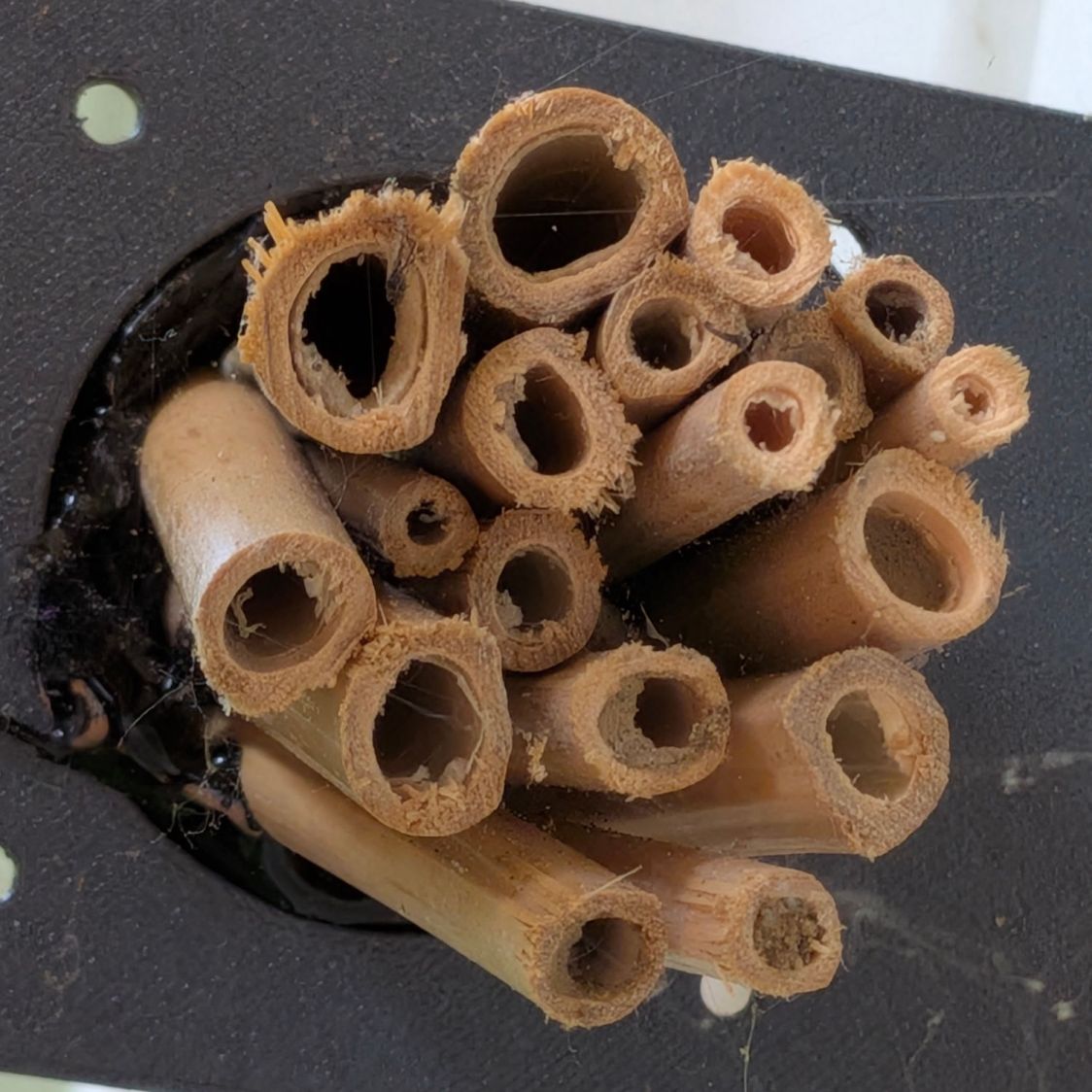
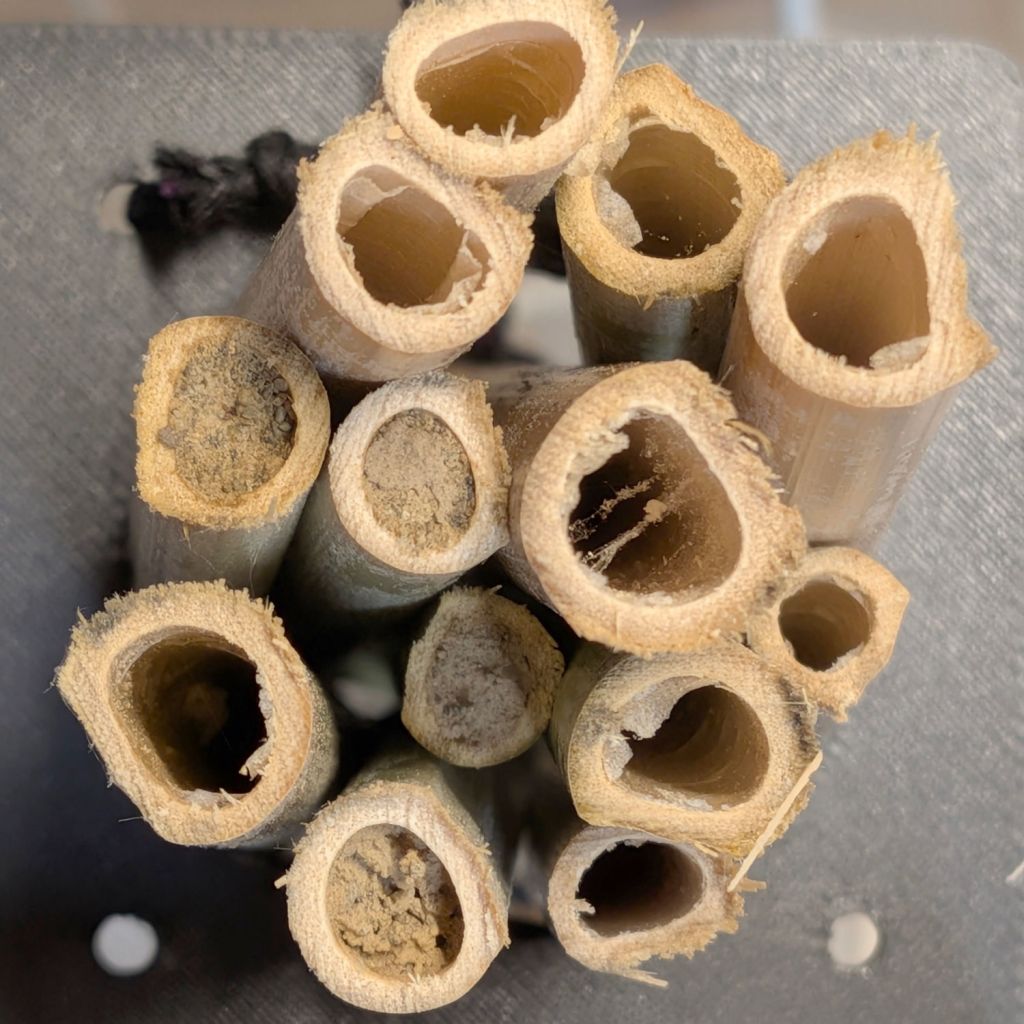
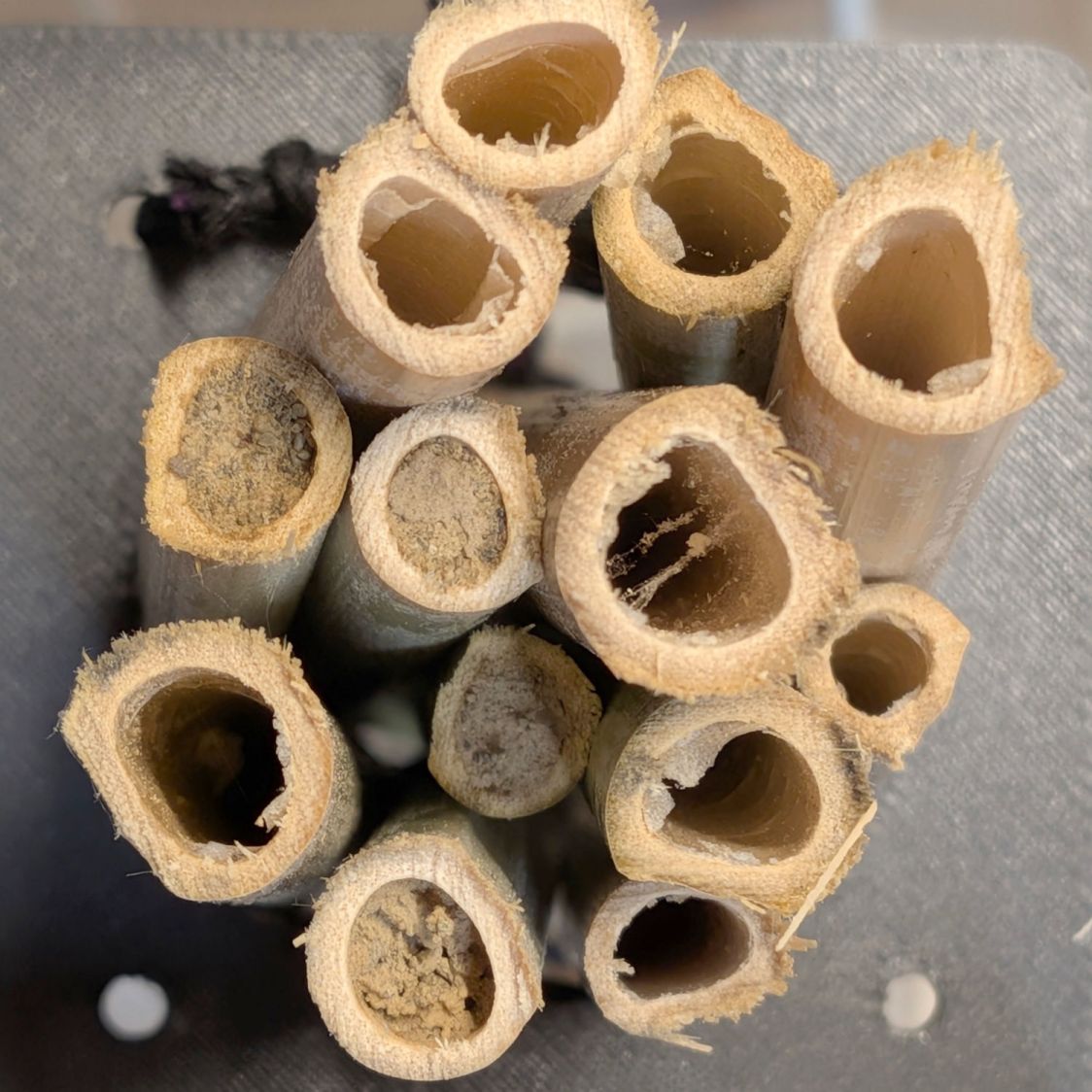
One of the bundles of small (a few mm ID) stalks on the kitchen window:
Bee Tunnel Nest – small A
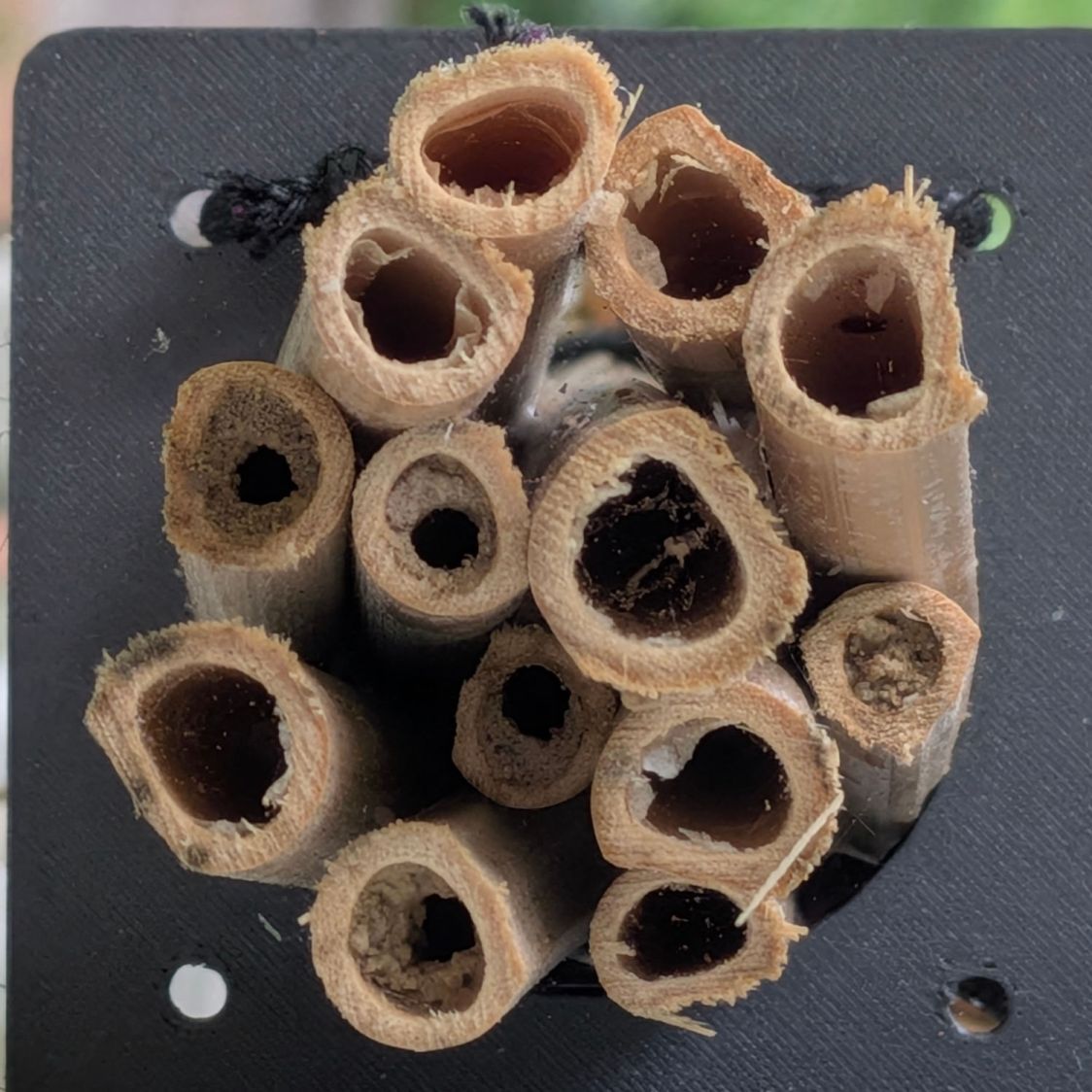
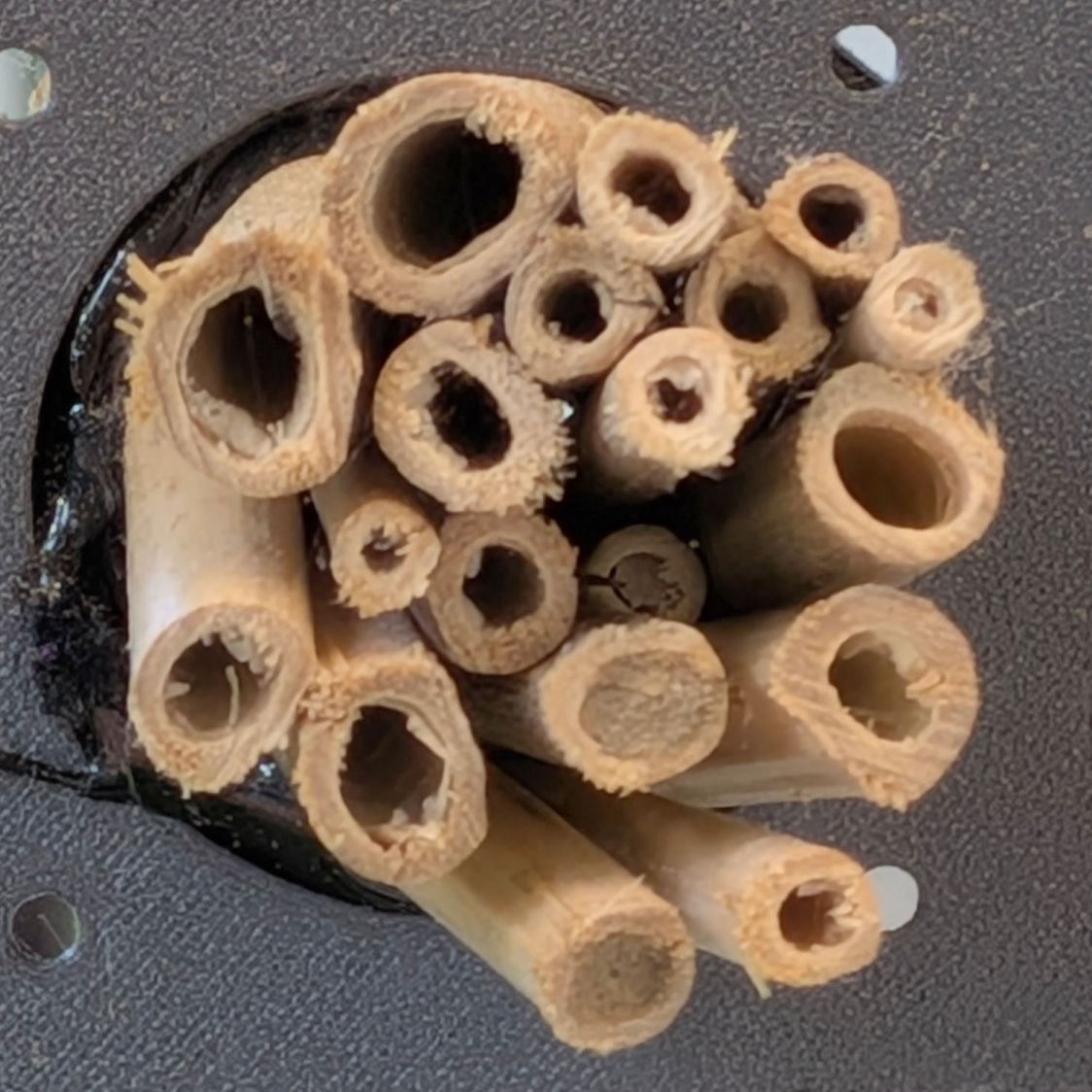
Another bundle of small stalks on a window a dozen feet away:
Bee Tunnel Nest – small B
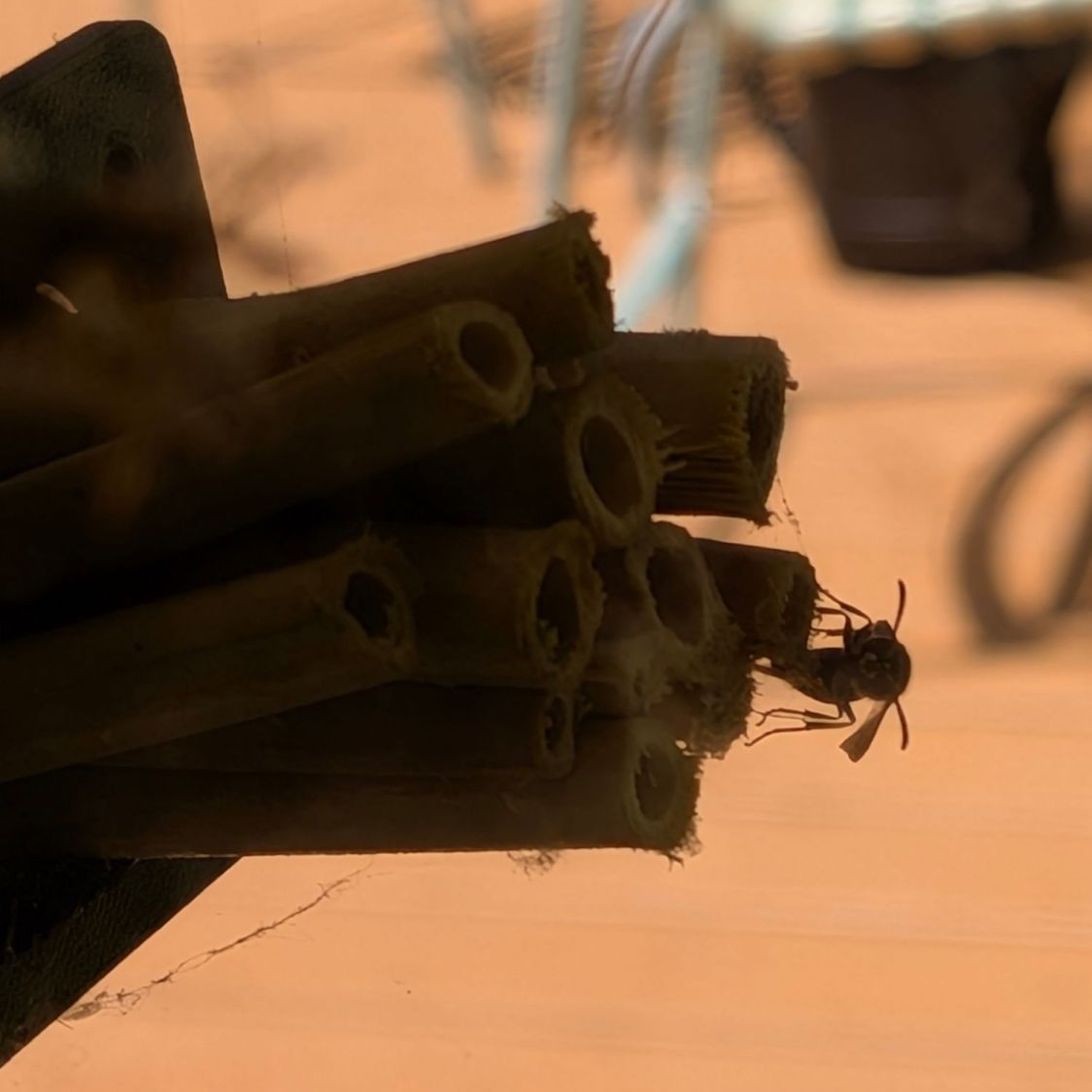
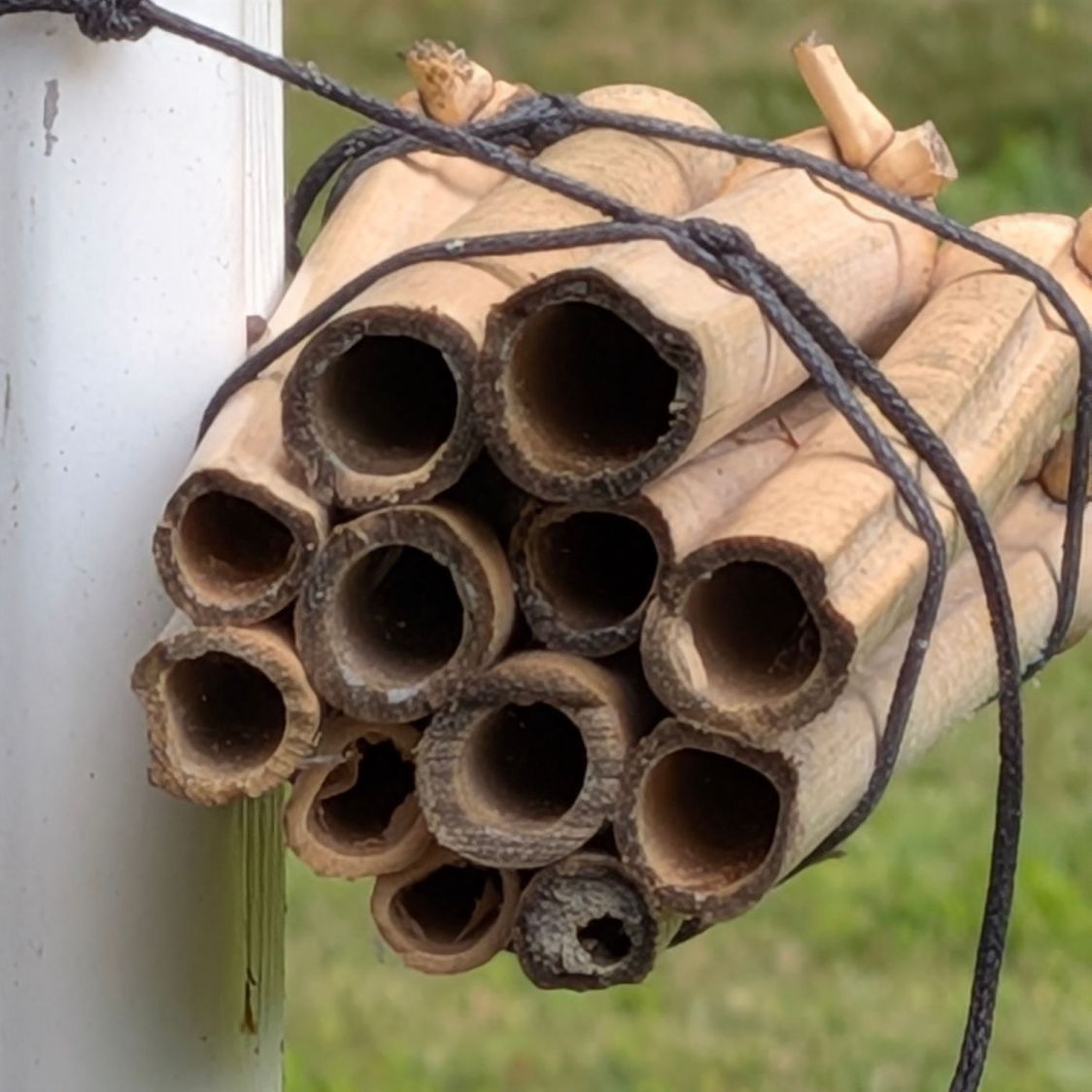
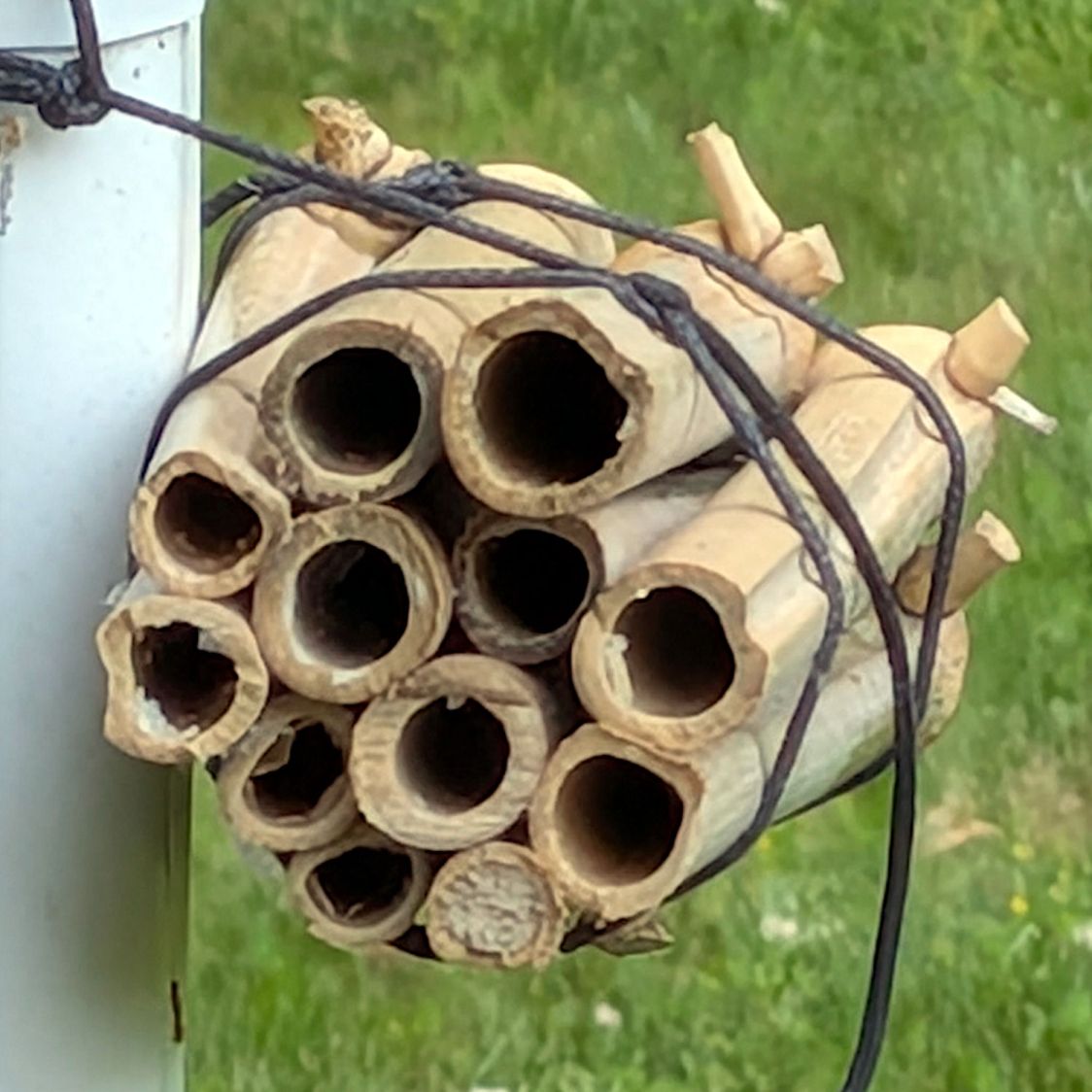
A bundle of medium (five to ten mm ID) stalks lashed to a downspout:
Bee Tunnel Nest – medium
Unlike the mud dauber wasps decorating our previous house, these little bees dart in and out without announcing their presence: we’ve never seen them at work.
Assuming a single bee works on each bundle, she apparently starts with the lowest stalk and moves upward after filling & capping it.
Larger bees have yet to discover the bundles of larger stalks out on the trees, but … so far, so good!
Although you’d want to set that up to run automagically when the RPi starts up, for now I just fire it off as needed through an SSH session, with the ampersand letting it run after that terminal session closes.
The RTSP port (5886) and stream (wrens) can be anything you like, which comes in handy when squirting streams through port-forwarded firewall pinholes using a router that cannot handle different external and internal port numbers.
Mary suggested converting wild bamboo up the hill into tunnel nests (per a xerces.org paper) for native bees buzzing around flowers in the yard, so:
Bee Tunnel Nest – downspout installation
I hung bundles of larger tubes in trees out back, in hopes of attracting huge carpenter bees.
3D printed mounts hold smaller bundles on the windows to let us keep an eye on the proceedings:
Bee Tunnel Nest Mount – installed
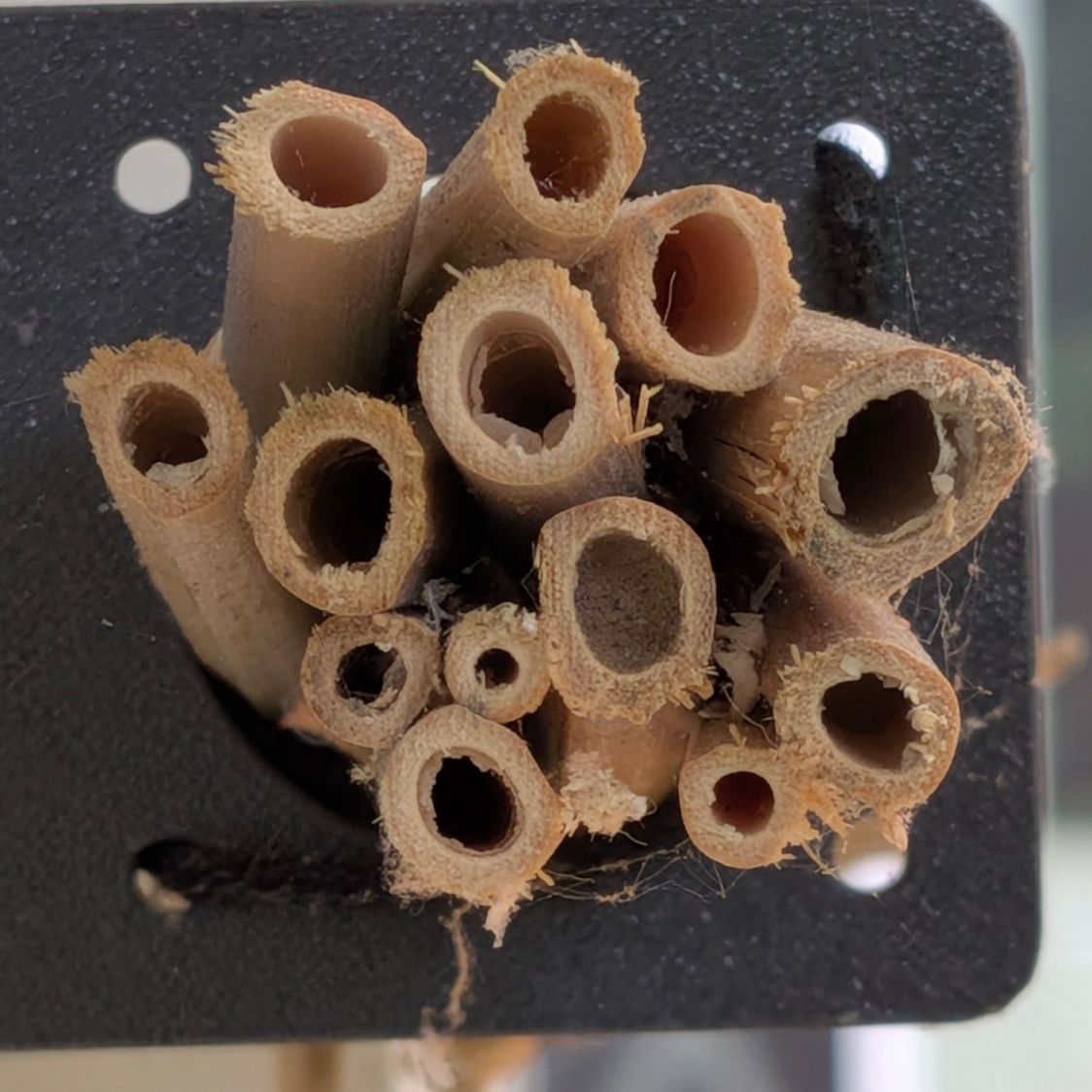
Which look better when not seen though two layers of glass in desperate need of Spring Cleaning:
Bee Tunnel Nest Mounts
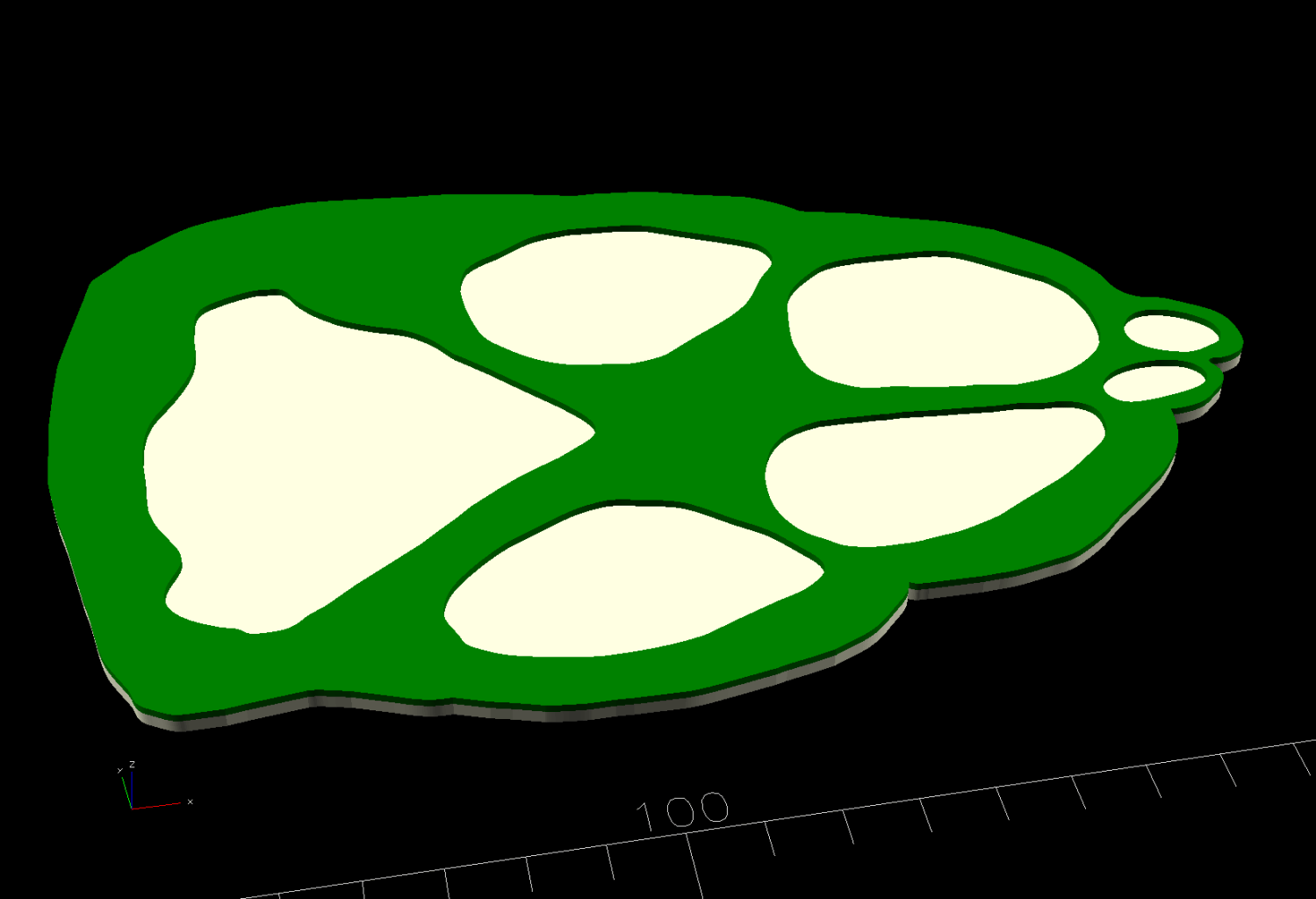
The tabs provide a bit of pressure to hold the mounts in place, although I don’t know if they have enough springiness or will survive contact with the elements:
Bee Tunnel Nest Mount – tab section – solid model
The key advantage of not building bigger bee motels: these little bundles don’t need annual cleaning / maintenance and will eventually fall apart.
If the bees find them suitable, more power to ’em!
And I realized the cut-off ends fit in the rotary. Witticisms engraved on bamboo could become the New Hotness:
Laser engraved bamboo
Stipulated: I’m barely half-right about being a wit …
This file contains hidden or bidirectional Unicode text that may be interpreted or compiled differently than what appears below. To review, open the file in an editor that reveals hidden Unicode characters.
Learn more about bidirectional Unicode characters
Skunks are generally crespecular animals, so seeing this critter in broad daylight was unusual:
Sickly Skunk
That’s taken through two layers of half-century old glass, for obvious reasons.
What may not be obvious: that skunk was not behaving at all like the ones in our previous sightings. It had unkempt fur, staggered around the house twice while twitching uncontrollably, slumping face-down, and falling on its side. I am not qualified to diagnose animal diseases, but rabies seems likely.
It eventually staggered off and, we hope, died quietly in a very secluded spot.
The Town of Poughkeepsie’s Animal Control officer now specializes in dog problems across several towns, with “all other animals” handled by the county’s Department of Health.
The deer managed to unfurl enough tongue to reach over the edge, but the birds leave very few intact seeds and I suspect the result was just a mouthful of dry hulls.
The woods beyond that large tree is Vassar College territory, with its conspicuous lack of undergrowth due to the overly large deer population eating essentially everything. Vassar has an annual deer cull in the Preserve, but plenty of deer remain in the surrounding area and it’s not unusual to see six deer browsing in our yard.
Chickadees can perch between the wires and squirrels apparently just ignore the sharp ends:
Squirrel on WS-5000 Anemometer spikes
No matter how hard that squirrel looked, there were no nuts to be found anywhere in that tree. Moments later it ran down the pole and loped across the yard to forage under the seed feeder.
The terrible picture quality comes from a Pixel 6a phone camera zoomed all the way tight. I want an optical telephoto lens built into the phone, but those phones seem intended to reduce the risks of having severe wallet overpressure.
(The last three digits in the caption tick along at 60 frame/s. Opening each iamge in a new tab will let you embiggen the details, although the images aren’t all that great.)
The second wingbeat, over on the left, is more visible as the hawk lifts off:
Hawk with snake 2025-11-04 – 112
This was about when I figured out what was going on:
Hawk with snake 2025-11-04 – 151
A hawk can easily outfly me!
Hawk with snake 2025-11-04 – 207
The snake dangling from the hawk’s talons didn’t see it coming, either:
Hawk with snake 2025-11-04 – 213
Up and away!
Hawk with snake 2025-11-04 – 225
About 2.3 s of elapsed time: plenty for a hawk and not nearly enough for me. Or the snake, for that matter.