The Smell of Molten Projects in the Morning

Ed Nisley's Blog: Shop notes, electronics, firmware, machinery, 3D printing, laser cuttery, and curiosities. Contents: 100% human thinking, 0% AI slop.

Author: Ed

  • Tour Easy Headset Wrench

    The headset on my Tour Easy ‘bent worked its way loose, which led to a disturbing discovery: the headset wrench I made from a discarded flat wrench vanished with the shop tools donated to MakerSmiths.

    Fortunately, we live in the future:
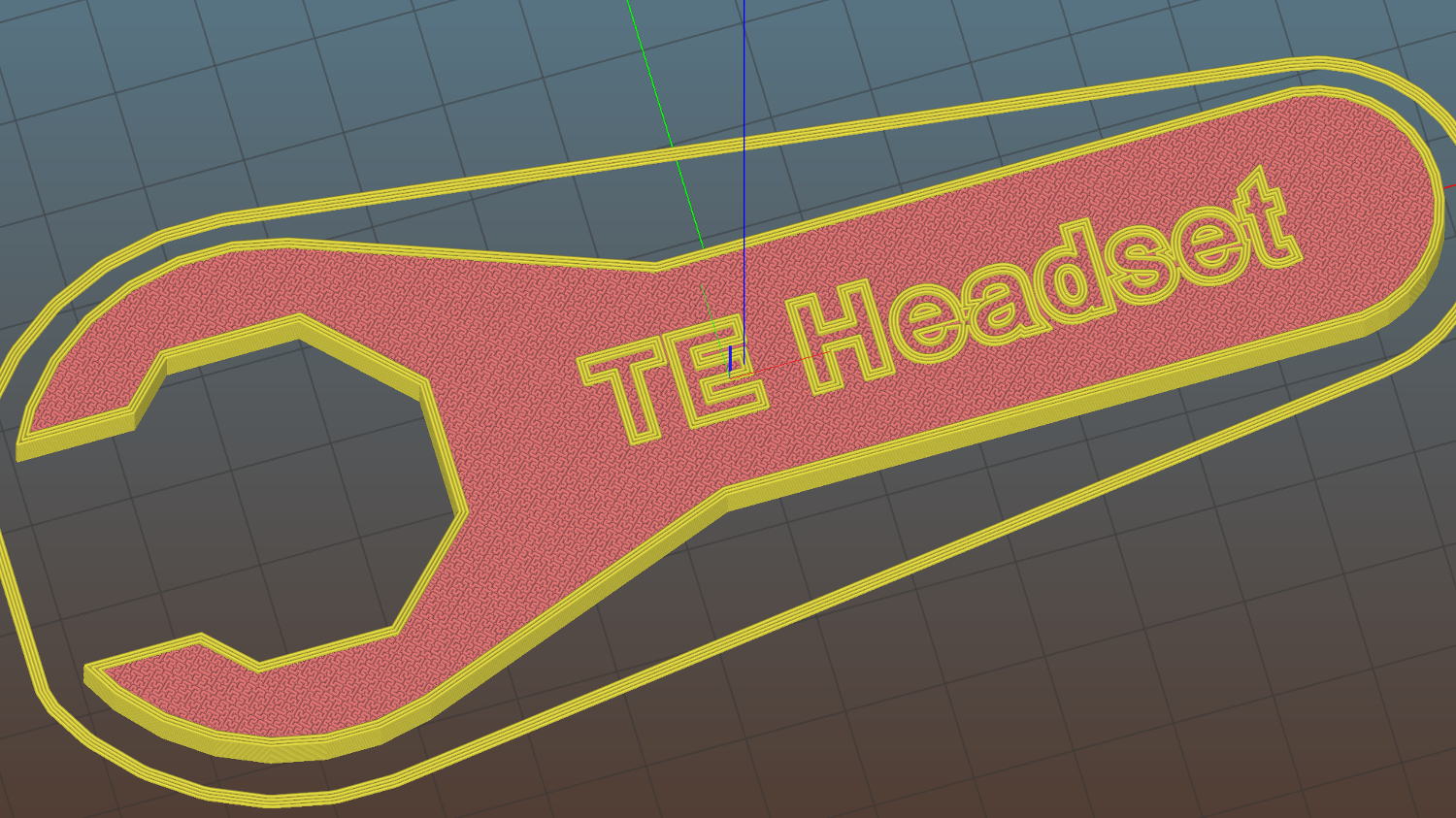
    Tour Easy Headset Wrench - Slic3r preview
    Tour Easy Headset Wrench – Slic3r preview

    A thin plastic wrench is absolutely no good for torquing down the locknut, but that’s not what it’s for. Adjust the bearing race to the proper preload with this wrench, hold it in place, then torque the locknut with the BFW.

    The OpenSCAD source code as a GitHub Gist:

    // Tour Easy Headset Wrench
    // Ed Nisley KE4ZNU – September 2017
    /* [Extrusion] */
    ThreadThick = 0.25; // [0.20, 0.25]
    ThreadWidth = 0.40; // [0.40]
    function IntegerMultiple(Size,Unit) = Unit * ceil(Size / Unit);
    Protrusion = 0.01; // [0.01, 0.1]
    HoleWindage = 0.2;
    //- Sizes
    /* [Dimensions] */
    WrenchSize = 32.0; // headset race across-the-flats size
    NumFlats = 8;
    JawWidth = 10.0;
    JawOD = 2*JawWidth + WrenchSize;
    echo(str("Jaw OD: ",JawOD));
    StemOD = 23.0;
    WrenchThick = 5.0;
    HandleLength = 2*JawOD;
    HandleWidth = 25.0;
    //- Build things
    difference() {
    linear_extrude(height=WrenchThick,convexity=4) {
    hull() { // taper wrench body to handle
    circle(d=JawOD);
    translate([0.75*JawOD,0,0])
    circle(d=HandleWidth);
    }
    hull() { // handle
    translate([0.75*JawOD,0,0])
    circle(d=HandleWidth);
    translate([HandleLength,0,0])
    circle(d=HandleWidth);
    }
    }
    translate([0,0,-Protrusion])
    rotate(1*180/NumFlats) { // cosine converts across-flats to circle dia
    cylinder(d=WrenchSize/cos(180/NumFlats),h=(WrenchThick + 2*Protrusion),$fn=NumFlats);
    }
    translate([-StemOD,0,WrenchThick/2])
    cube([2*StemOD,StemOD,(WrenchThick + 2*Protrusion)],center=true);
    translate([WrenchSize,0,WrenchThick – 3*ThreadThick])
    linear_extrude(3*ThreadThick + Protrusion,convexity=10)
    text(text=str("TE Headset"),size=8,spacing=1.20,font="Arial",halign="left",valign="center");
    }

    Now, I’d like to say that was easy, but in actual point of fact …

    First, I forgot to divide by cos(180/6) to convert the across-the-flats size to the diameter of OpenSCAD’s circumscribed hexagon-as-circle, which made the wrench uselessly small:

    Tour Easy Headset Wrench - v1
    Tour Easy Headset Wrench – v1

    If you have a 28 mm nut with low torque requirements, though, I’ve got your back.

    While I had the hood up, I slenderized the handle into a much shapelier figure:
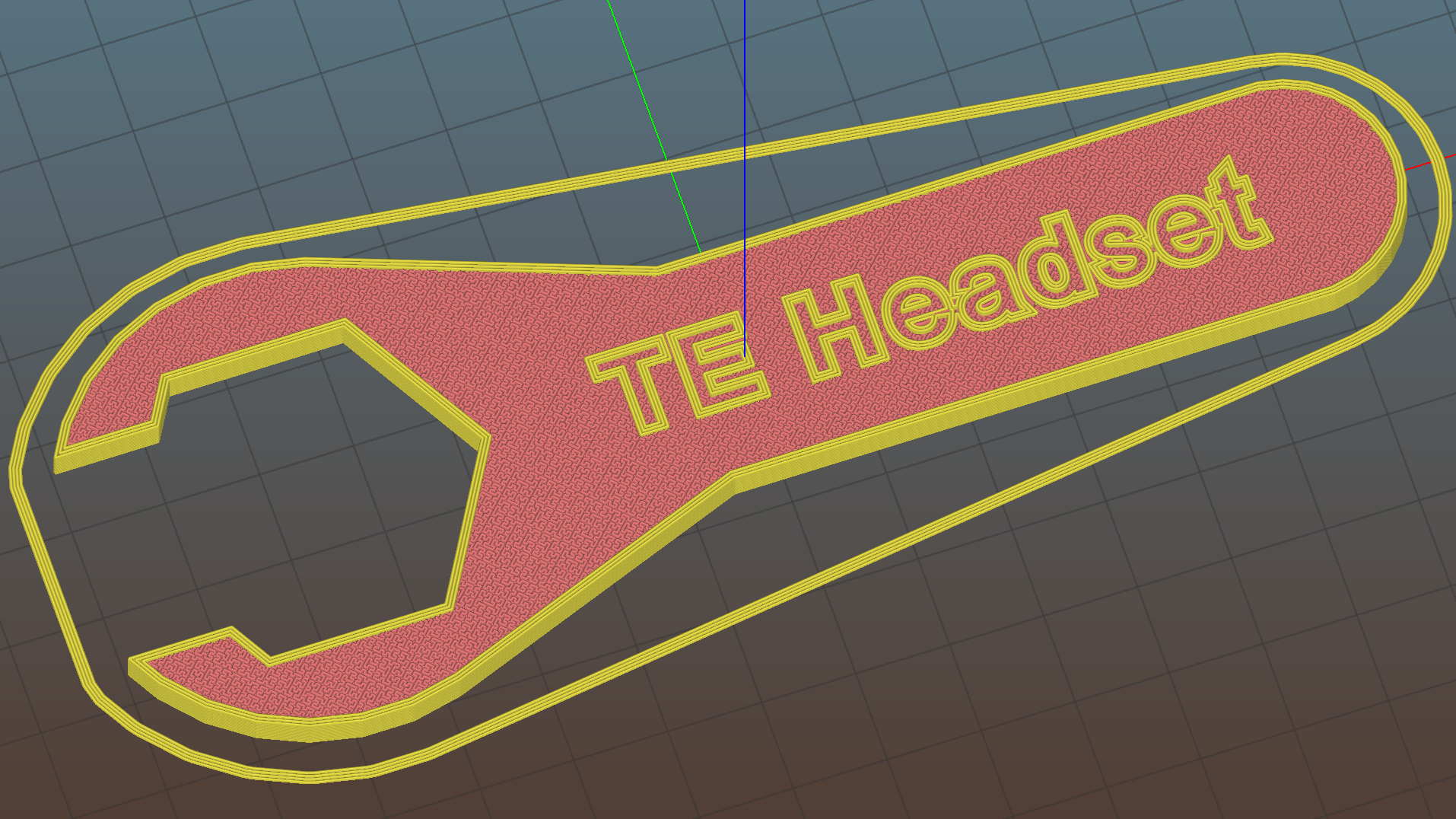
    Tour Easy Headset Wrench
    Tour Easy Headset Wrench

    Trotting off to the garage with a warm plastic wrench in hand, I discovered the blindingly obvious fact that the headset nuts have eight sides. On the upside, the number of sides became a parameter, so, should you happen to need a five-sided wrench (perhaps on Mars), you can have one.

    So, yeah, it’s rapid prototyping in full effect:
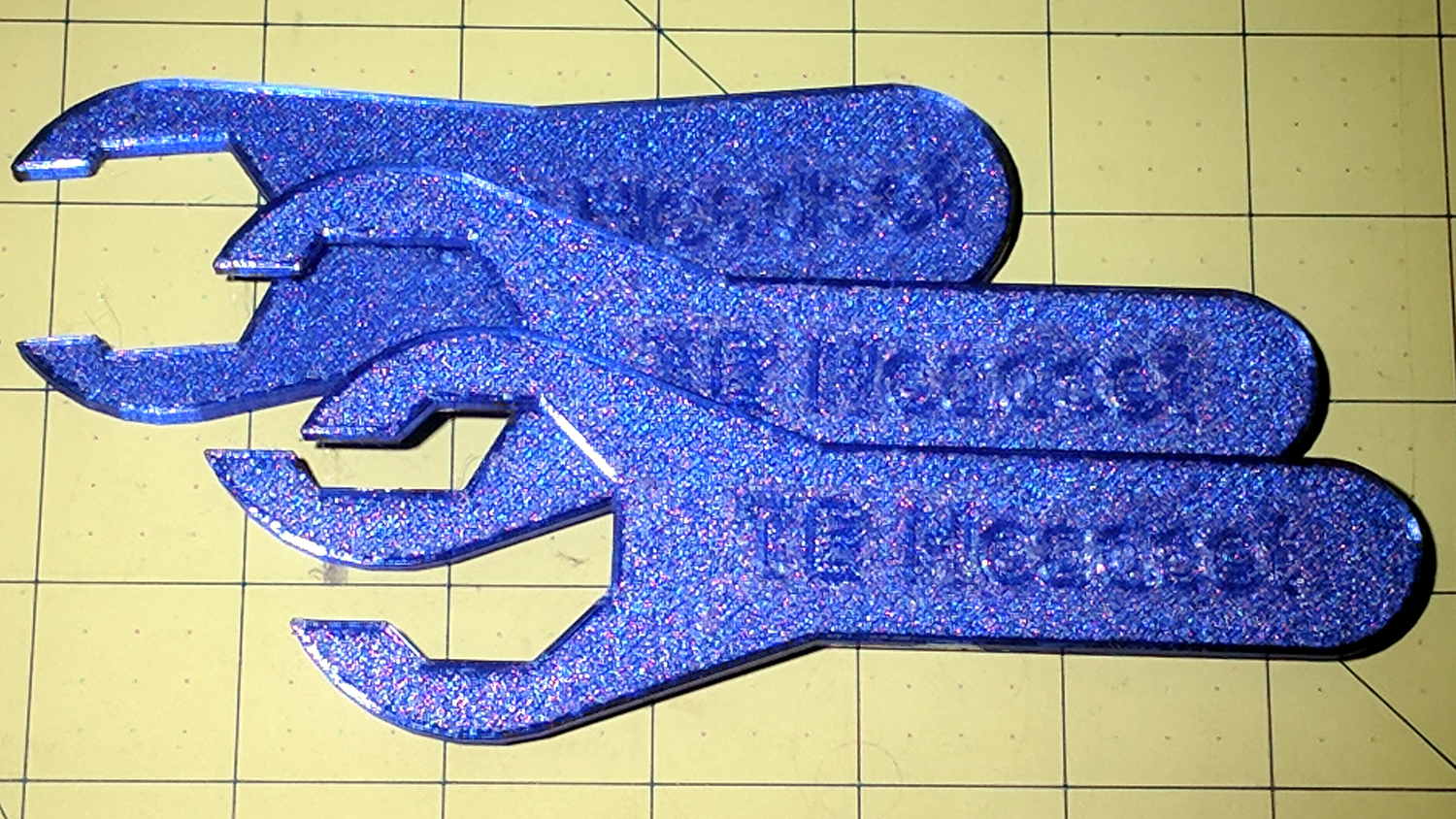
    Tour Easy Headset Wrench Iterations
    Tour Easy Headset Wrench Iterations

    Remember, kids, never design while distracted …
  • 60 kHz Tuning Fork Resonator: Maximum Overdrive

    Datasheets loosely associated with the tuning fork resonators in hand suggest 1 μW maximum drive power, which works out to maybe 100 mVrms = 150 mVpk at about 10 kΩ ESR. If you inadvertently apply 500 mVpk = 375 mVrms, the resulting 14 μW does this:

    Broken 60 kHz Tuning Fork Resonator - overview
    Broken 60 kHz Tuning Fork Resonator – overview

    I was applying a precisely tuned 60 kHz sine wave to the first pass at a crystal filter grafted onto the loop antenna preamp and wasn’t paying attention to the amplitude. For all I know, though, the poor thing died from a power-on transient. I’m pretty sure I didn’t break it during extraction, because it stopped being a resonator while in the circuit.

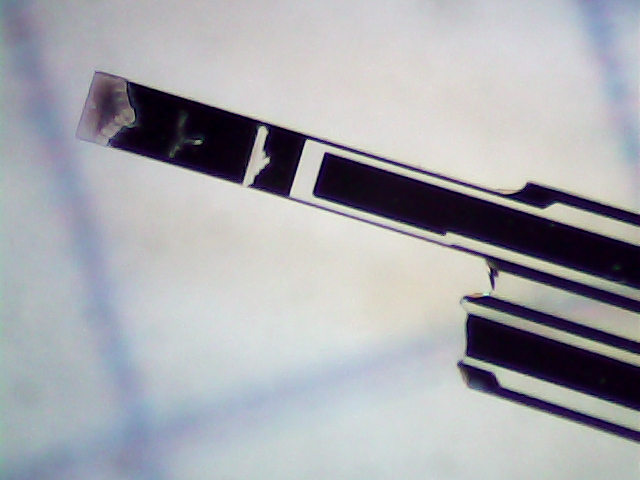
    The missing tine fell out of the can:

    Broken 60 kHz Tuning Fork Resonator - tine detail
    Broken 60 kHz Tuning Fork Resonator – tine detail

    Laser trim scars form a triangle near the tip, a T a bit further down, a slot just above the nicely etched gap.

    A closer look at the fractured base:

    Broken 60 kHz Tuning Fork Resonator - detail
    Broken 60 kHz Tuning Fork Resonator – detail

    The metalization appears black here and gold in person.

    So, yeah, one down and 49 to go …

  • Sharing the Road on Raymond Avenue: Passing into the Roundabout

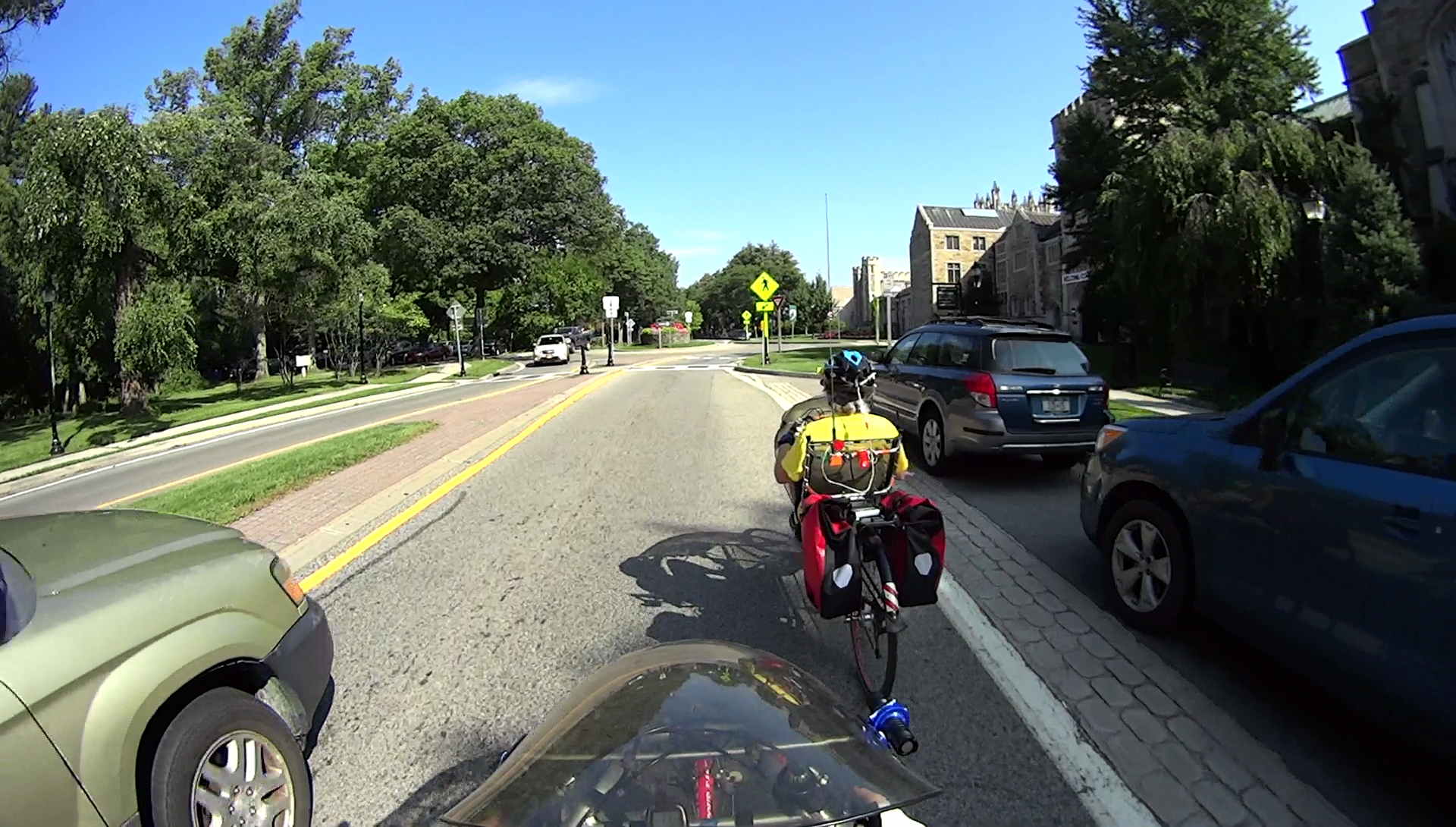
    We’re approaching the Vassar Main gate roundabout on Raymond Avenue. I’m signaling for the middle of the lane, which involves extending my left arm straight out and pointing downward:

    Raymond Avenue - Passing at Main Gate 1 rear - 2017-08-31
    Raymond Avenue – Passing at Main Gate 1 rear – 2017-08-31

    Evidently, the driver figures he can get past us into the roundabout, missing my hand by maybe a foot:

    Raymond Avenue - Passing at Main Gate 2 - 2017-08-31
    Raymond Avenue – Passing at Main Gate 2 – 2017-08-31

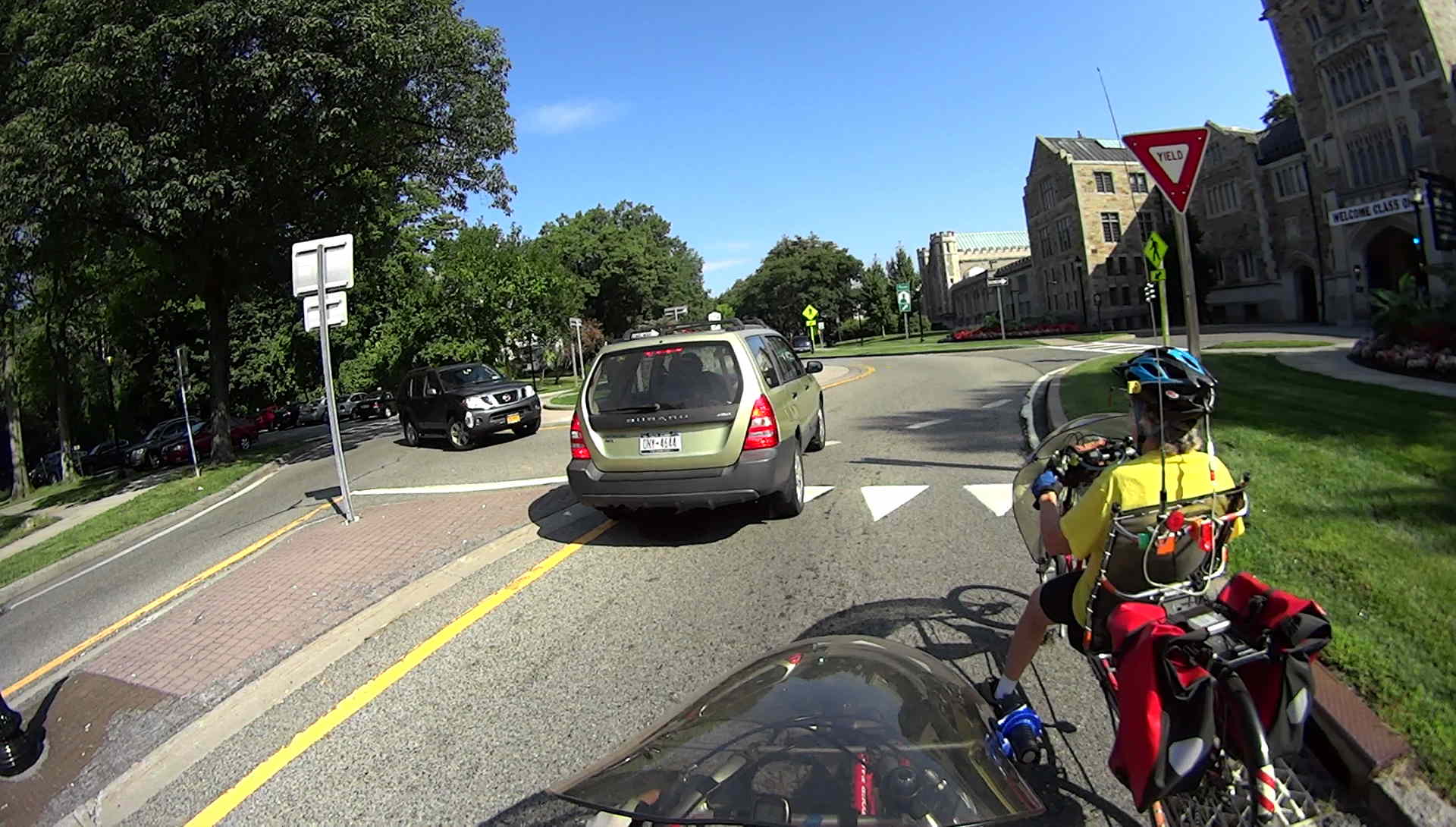
    Six seconds later, we’re all stopped, because the planter in the middle of the roundabout is designed to hide the oncoming traffic and make you slow down:

    Raymond Avenue - Passing at Main Gate 1 - 2017-08-31
    Raymond Avenue – Passing at Main Gate 1 – 2017-08-31

    I’m getting more assertive about moving leftward before we enter the approach, but obviously I’m not quite far enough over.

    So it goes.

  • Amazon Packaging: PAR30 LED Bulb

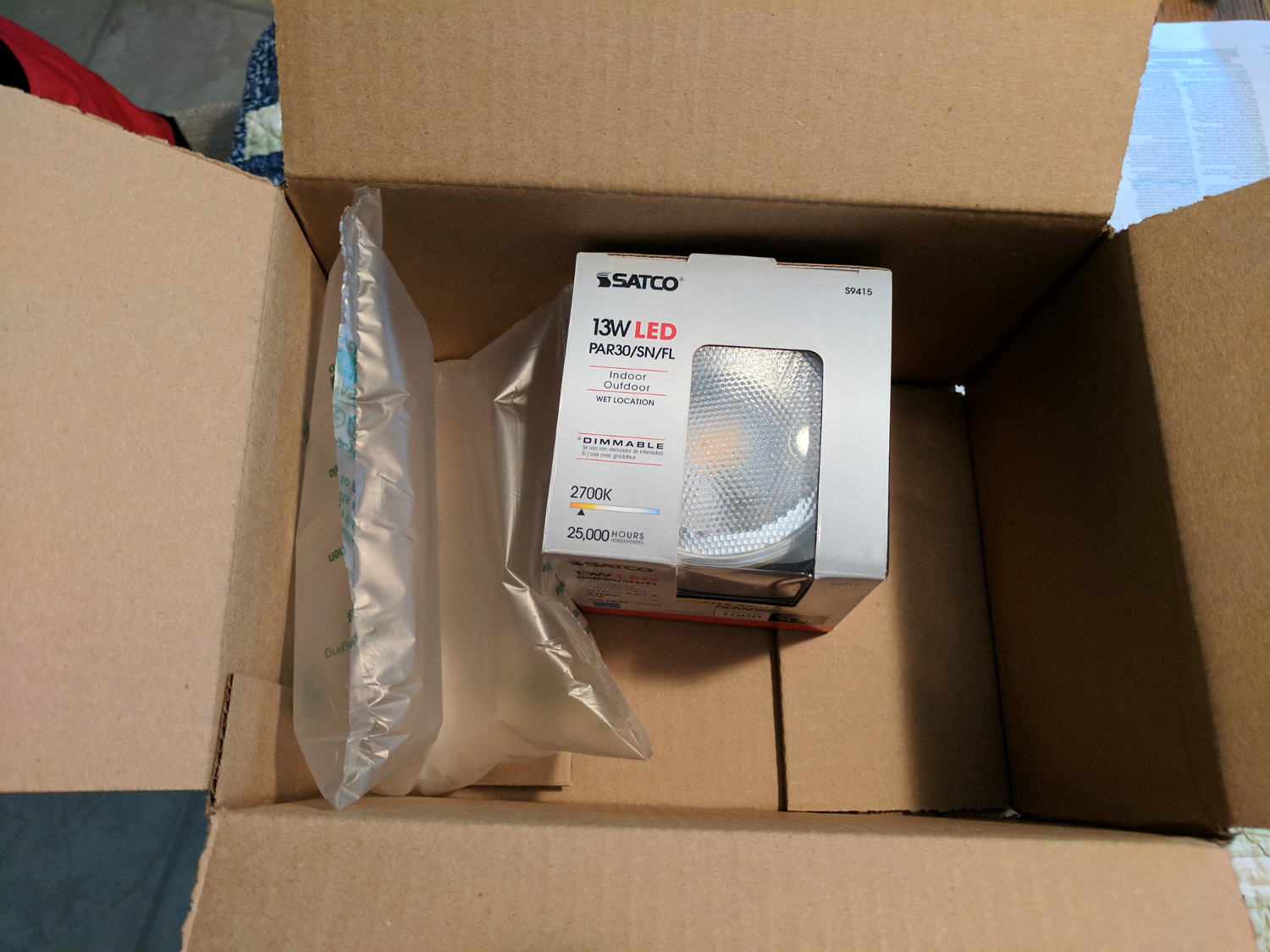
    The second incandescent bulb over the kitchen sink popped and a replacement LED bulb arrived with the by-now-familiar homeopathic Amazon padding:

    Amazon Packaging - Satco LED bulb
    Amazon Packaging – Satco LED bulb

    Turns out the new bulb is slightly brighter than the old one:

    Satco S9415 LED PAR30 bulbs
    Satco S9415 LED PAR30 bulbs

    Oh, and it’s three bucks cheaper, too.

    Eyeballometrically, 5% makes no difference whatsoever, even in a side-by-side comparison.

    Life is good.

  • Eyeglasses: New Nose Pads

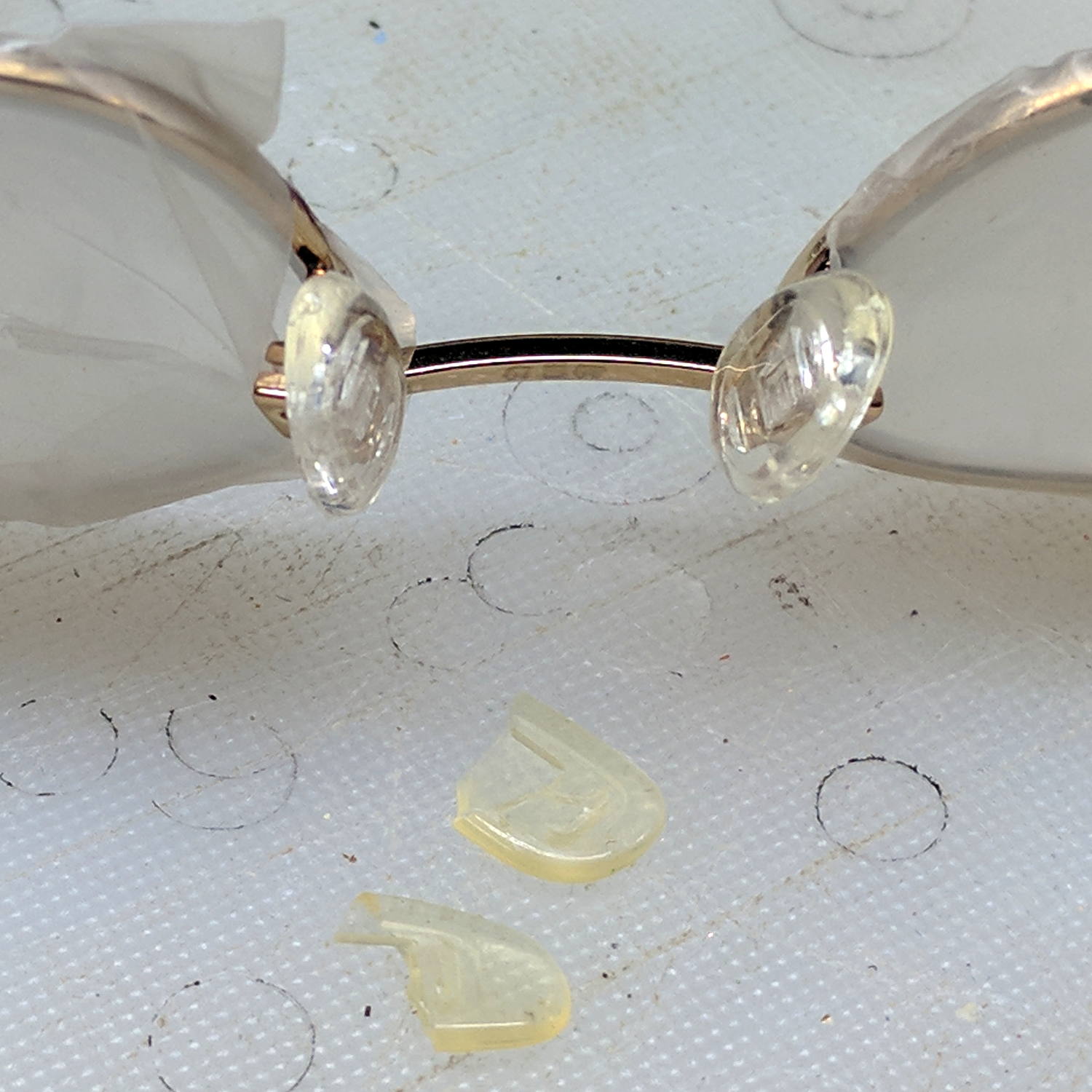
    A stray nose pad appeared on the kitchen floor and, after some investigation, it corresponded with the stub in Mary’s oldest reading glasses. Some rummaging in the Bag o’ Eyeglass Stuff produced a similar pair of pads:

    Glasses - missing nose pad
    Glasses – missing nose pad

    Although the lenses have become somewhat scuffed over the years, masking the optics with Parafilm is always Good Practice:

    Glasses - new nose pads - masked
    Glasses – new nose pads – masked

    The split boxes clamped around the pad stems required a bit of delicate opening-up with a utility knife blade before the new ones pressed firmly into place.

    This was significantly easier than the Silhouette frame repair!

  • American Standard Kitchen Faucet: Cleaning and O-Rings

    The O-rings on the spout of our American Standard kitchen faucet wore out again; having described that repair many times, there’s no need to say much more about it. I didn’t want to get into this repair while thinking about the hot limit problem, but I did check to make sure the box under the sink had some O-ring replacement kits.

    A bench vise with soft jaws holds the spout while you remove the escutcheon ring retainer:

    Kitchen faucet spout - in vise
    Kitchen faucet spout – in vise

    Basically, just tap around the ring with a long drift punch and it’ll eventually fall out onto the reasonably clean rag below it.

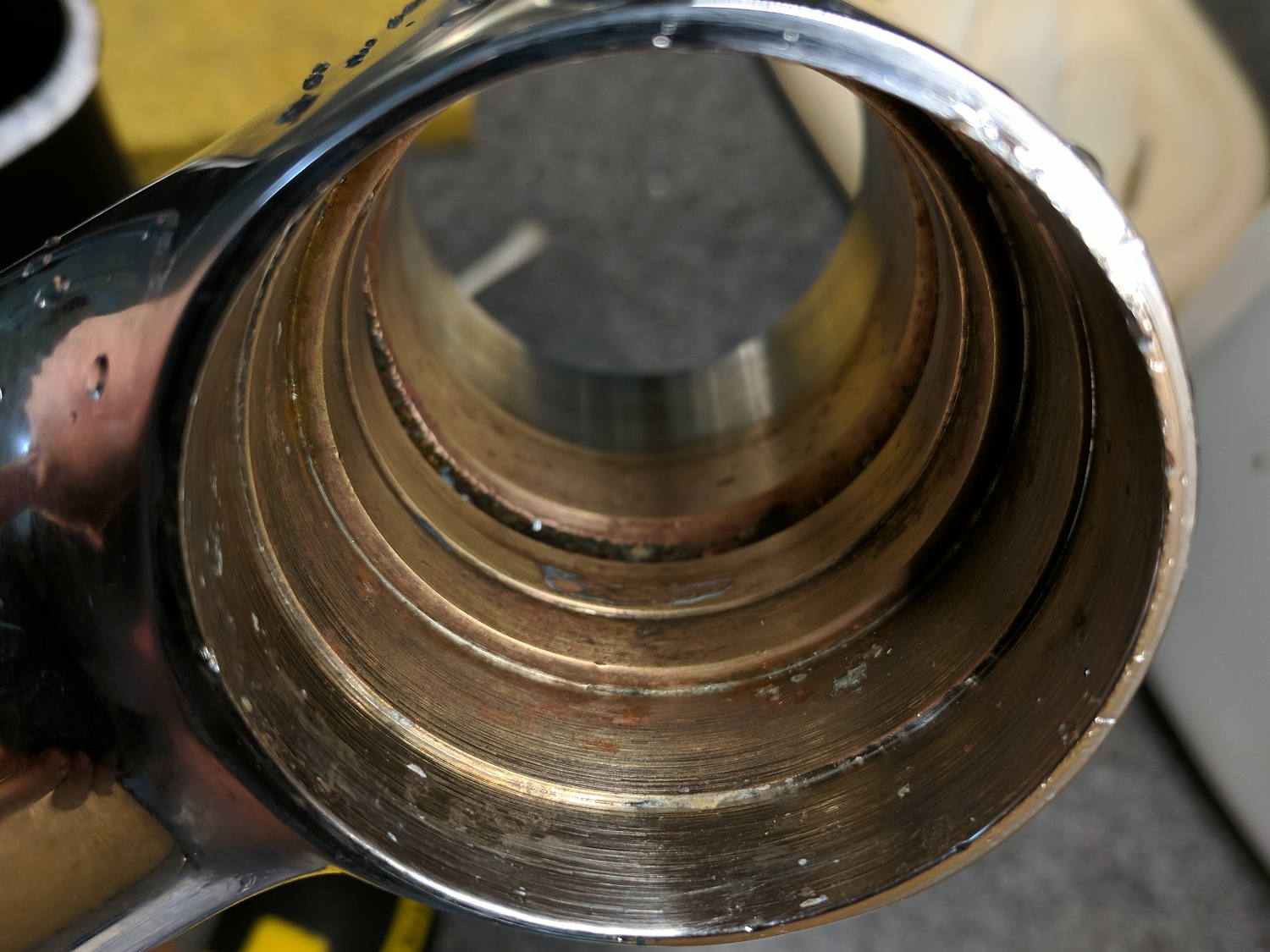
    The interior of the spout before cleaning shows why you should never look into your plumbing:

    Kitchen faucet spout interior - before
    Kitchen faucet spout interior – before

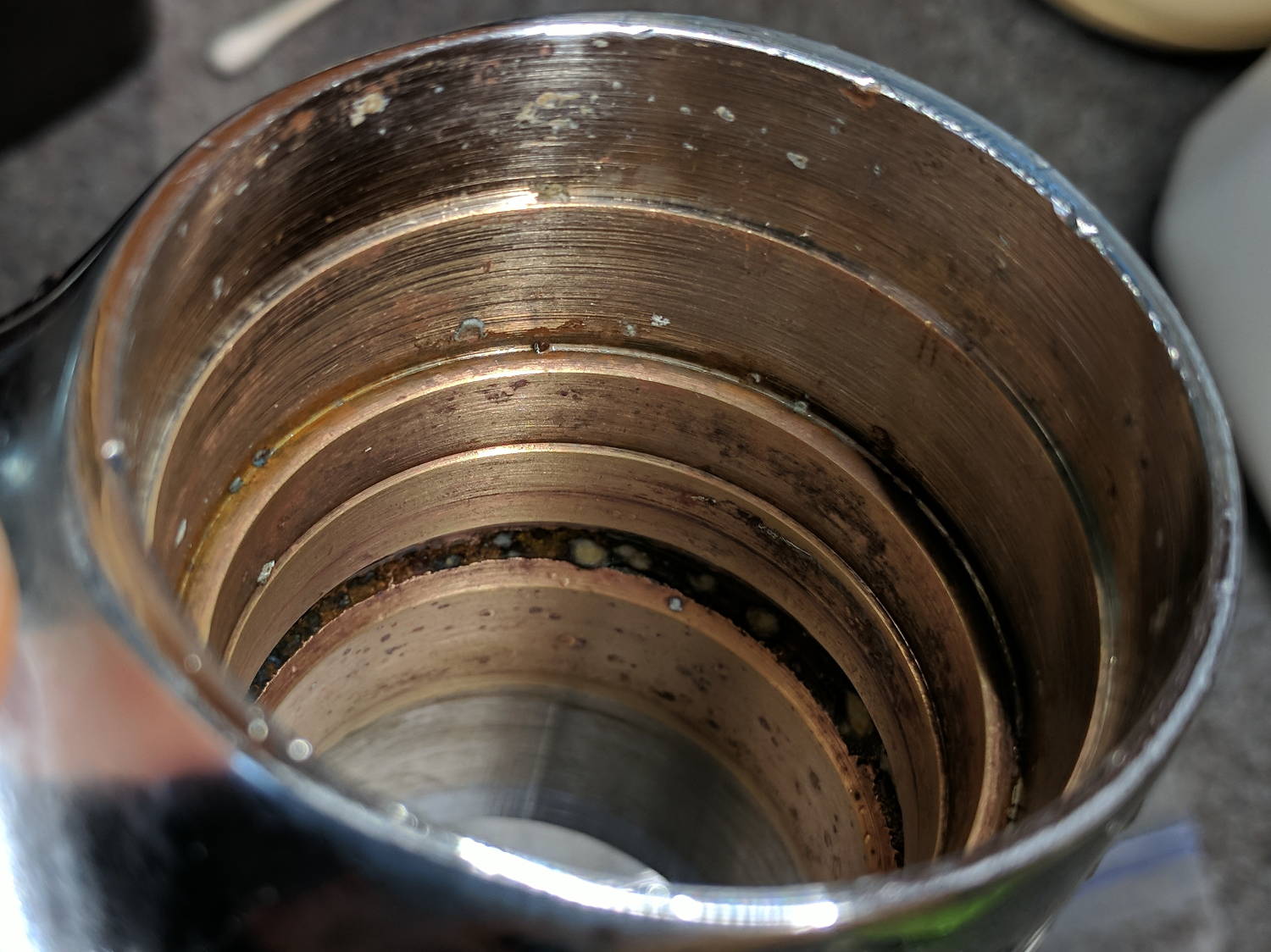
    After a few hours in a white vinegar bath and a few minutes of scrubbing with a ScotchBrite pad:

    Kitchen faucet spout interior - after - 1
    Kitchen faucet spout interior – after – 1

    Another view:

    Kitchen faucet spout interior - after - 2
    Kitchen faucet spout interior – after – 2

    Obviously, you could do better, but it’s hard to get excited about the last few nodules. For whatever it’s worth, the nodules grow despite our water softener; I have no clue what’s going on in there.

    A few wipes of silicone grease, reassemble in reverse order, apply a firm shove, and it’s leakless again. For a while, anyhow.

  • Monthly Image: Orb-Weaving Spider

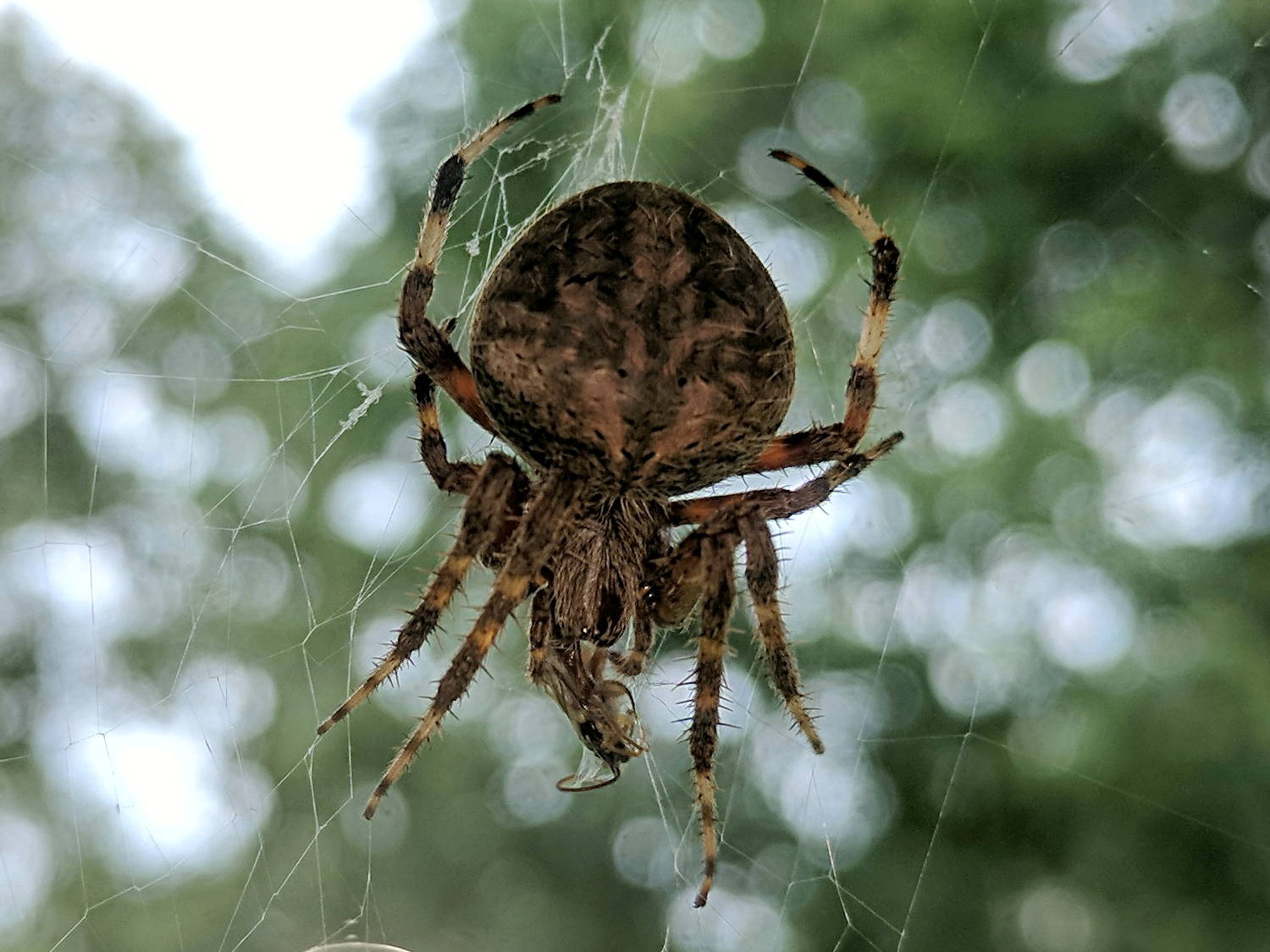
    Once again, the season of orb-weaving spiders has arrived, with this one building her web across a living room window:

    Orb Weaving Spider - with insect
    Orb Weaving Spider – with insect

    I set the Sony HDR-AS30V atop a tripod, told it to take photos at 5 second intervals, then stitched the images into a Youtube video. It won’t go viral, but watching the spider construct her web over the course of two hours was fascinating.

    She finishes the spiral at about 1 m video = 1.25 h real time, settles down for what might be a nap (it’s hard to tell with spiders), and has an insect join her for supper at 1:28, half an hour later. Spiders go from “inert” to “death incoming” almost instantly, even in real time running.

    Another orb weaver set up shop in the adjacent window, but moved out the next day. Perhaps there’s a minimum spacing requirement?

    Two more orb weavers guard windows in the kitchen and laundry room. We sometimes leave the lights on for them.

    YouTube has other web-building videos with far more detail, of course.

    The magic incantation to create the video from a directory of images in the form DSC01234.JPG:

    sn=1 ; for f in *JPG ; do printf -v dn 'dsc%04d.jpg' "$(( sn++ ))" ; mv $f $dn ; done
    ffmpeg -r 15 -i /mnt/video/2017-09-03/100MSDCF/dsc%04d.jpg -q 1 Orb-Weaving-2017-09-03.mp4