Ed Nisley's Blog: Shop notes, electronics, firmware, machinery, 3D printing, laser cuttery, and curiosities. Contents: 100% human thinking, 0% AI slop.
I just got a new pair of Wasabi Power NP-BX1 batteries for the HDR-AS30V helmet camera, charged them up, and ran them through the CBA:
Sony NP-BX1 – Wasabi FGHI – 2017-08-08
Huh.
The new ones (H and I) cost near twice as much as the 2-1/2 year old previous pair (F and G), while delivering less energy at a lower terminal voltage. Tested ’em twice to be sure and the curves overlay just about perfectly, so it’s not a fluke.
The rep assures me the replacement cells will deliver their promised capacity. We shall see.
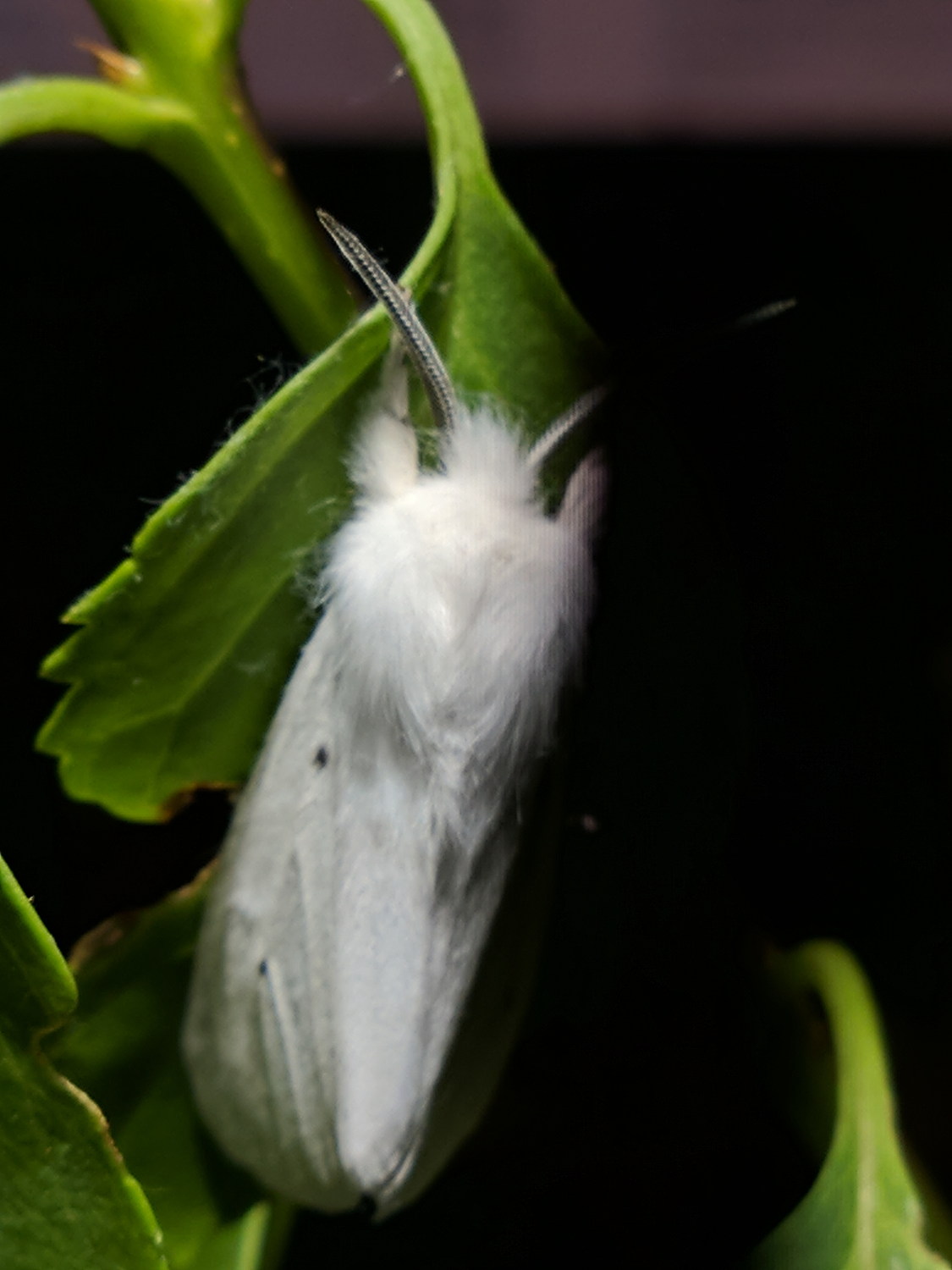
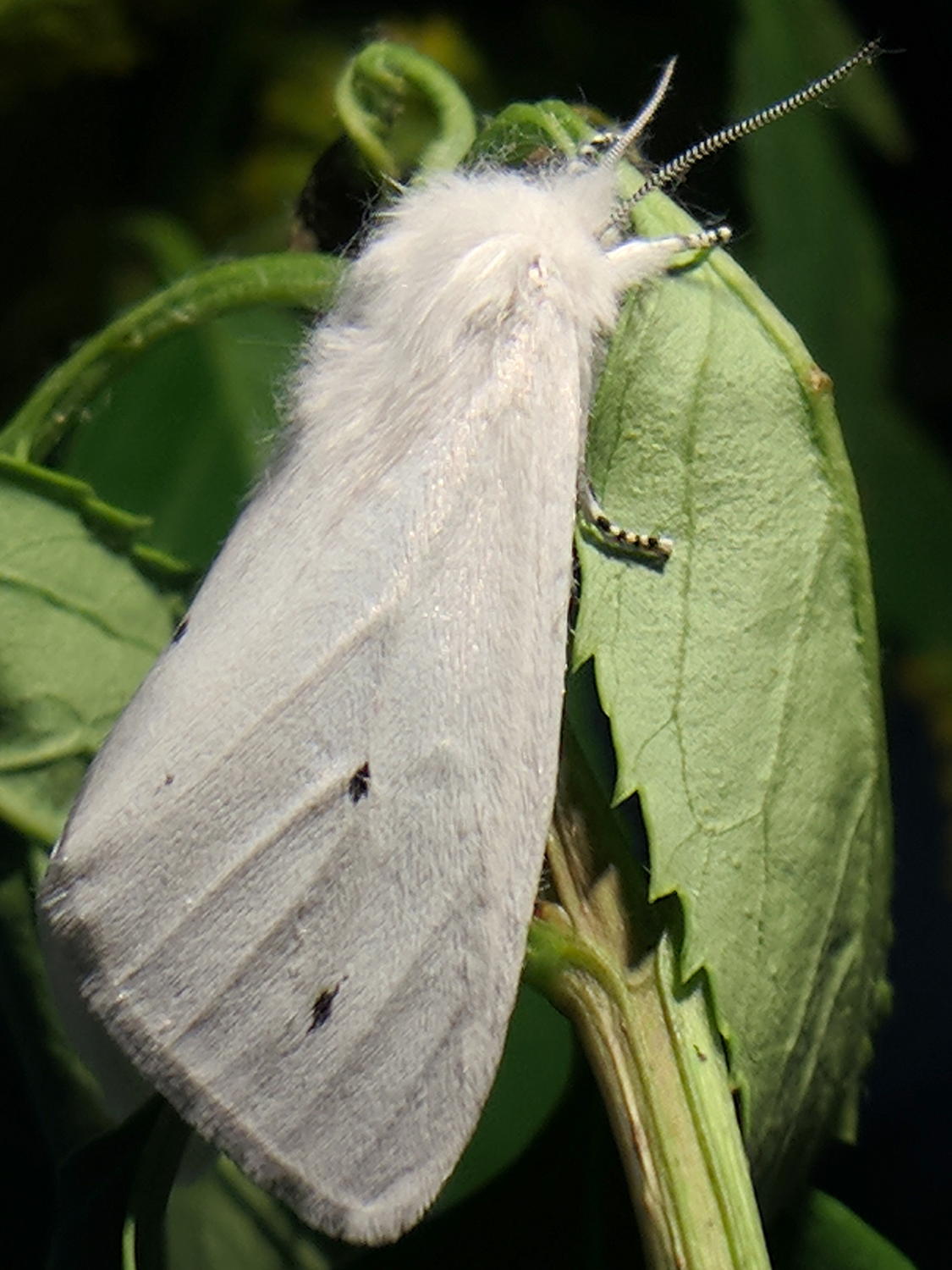
Right now, it’s a two-day-old cross-striped cabbageworm. Its kin are voracious consumers of Brassicacae out in the garden and Mary’s raising it as a show-n-tell exhibit for her Master Gardener compadres; she advised it to not start any long novels.
From the start, the (second) J5 V2 flashlight had an erratic switch that flickered the LED at the slightest pressure. Not enough to switch modes, as it does with a half press, but enough to show something’s not quite right inside.
Taking it apart requires a pin wrench, which I have, but the deeply recessed ring required more reach than any of the tips I’ve made over the years. Introducing a pair of stainless steel 10-32 screws to Mr Grinder added two more pins to the collection:
J5V2 Flashlight – custom pin wrench
The lock ring in the flashlight cap turned out to be finger-loose, certainly contributing to the problem. Removing the lock ring, peeling the rubber dome out of the cap, and poking with a punch sufficed to drive out the guts of the switch assembly:
J5V2 Flashlight – switch parts
Which consists of, as you’d expect, the cheapest possible parts that don’t immediately fail.
The (steel) tab sticking out of the actual switch (in the upper right) contacts the inside of the (aluminum) cap. I bent it slightly outward, added a trace of DeoxIT Red, reassembled everything in reverse order, and it’s all good for the first time in its brief life.
The J5 V2 light claims 750 lumen output, but the spot is nowhere near twice as bright as the LC40 lights on the bikes and much dimmer than the LC90 light (which is too big for the bikes), all tweaked for equivalent-size illuminated areas. Given that lumens measure total output and candela measure lumen/steradian, there’s some wiggle room for misinterpretation.
An ice pack, with a lump of ice in the middle, snuggled under the chocolate carton. The box arrived UPS Next Day from Amazon’sKentucky distribution center, with the carton inside still cold to the touch.
On the average, I suppose, Amazon’s packaging averages out, but I’d rather they paid more attention to protecting hazardous material.
The picture shows a reenactment of actual events, because we were in the middle of something else when the UPS truck arrived.
Each time it molts, it eats all of its skin except for the transparent cap over the first body segment:
Monarch Windshield – 2017-08-09
If the rest of the caterpillar were behind the windshield, it’d be feet-upward with its “face” at the top.
The picture comes from a focus-stacked set of microscope images captured with VLC; I turned the positioner’s elevation knob the smallest possible amount between each of 16 images along the 1 mm (-ish) height of the capsule. This magic incantation applies more weight to high-contrast and high-entropy regions:
align_image_stack -C -a monarch vlcsnap-2017-08-09-18h4*
enfuse --contrast-weight=0.8 --entropy-weight=0.8 -o Monarch_Windshield.jpg monarch00*
# empty line to reveal underscores in previous line
The original ball around the flashlight consisted of two identical parts joined with 2 mm screws and brass inserts:
Flashlight Ball Mount – flattening fins
Providing enough space for the inserts made the ball bigger than it really ought be, so I designed a one-piece ball with “expansion joints” between the fingers:
Fairing Flashlight Mount – Finger Ball – solid model
Having Slic3r put a 3 mm brim around the bottom almost worked. Adding a little support flange, then building with a brim, kept each segment upright and the whole affair firmly anchored.
Fairing Flashlight Mount – Finger Ball – solid model – support fins
Those had to be part of the model, because I also wanted to anchor the perimeter threads to prevent upward warping. Worked great and cleanup was surprisingly easy: apply the flush cutter, introduce the ball to Mr Belt Sander, then rotate the ball around the flashlight wrapped with fine sandpaper to wear off the nubs.
The joints between the fingers provide enough flexibility to expand slightly around the flashlight body:
Flashlight Mount – finger ball
I made that one the same size as the original screw + insert balls to fit the original clamp, where it worked fine. The clamp ring applies enough pressure to the ball to secure the flashlight and prevent the ball from rotating unless you (well, I) apply more-than-incidental force.
Then I shrank the ball to the flashlight diameter + 10 mm (= 5 mm thick at the equator) and reduced the size of the clamp ring accordingly, which made the whole mount much more compact:
Flashlight Mount – LC40 – finger ball – side
Here’s what the larger mount looks like in action:
The flashlights allegedly puts out 400 lumen in a fairly tight beam. The fairings produce a much larger and brighter glint in full sunlight than the flashlights, so I think they’re about the right brightness.
The OpenSCAD source code for the new ball as a GitHub Gist:
This file contains hidden or bidirectional Unicode text that may be interpreted or compiled differently than what appears below. To review, open the file in an editor that reveals hidden Unicode characters.
Learn more about bidirectional Unicode characters
My pocket camera has begun kvetching about a low battery rather more often than before, which suggests the batteries I’ve been using since 2014 have gone beyond their best-used-by date.
This came as no surprise:
Canon NB-5L – 2017-08-05
I re-ran a couple of the batteries to make sure they hadn’t faded away from disuse, which didn’t materially change the results. The lightly used Canon OEM battery continues to lead the, ah, pack.
The camera’s lens capsule accumulated a fair bit of dust from many years in my pocket, which lowers its overall contrast and wrecks the high f/ images produced with the microscope adapter.