Ed Nisley's Blog: Shop notes, electronics, firmware, machinery, 3D printing, laser cuttery, and curiosities. Contents: 100% human thinking, 0% AI slop.
Littelfuse Mini Auto Fuse Puller-tester – as opened
Somewhat to my surprise, the other side of the PCB has components:
Littelfuse Mini Auto Fuse Puller-tester – circuitry
It looks like a transistor switch to minimize the current through the fuse and protect the LED from over / reverse voltage, should you apply it to a live circuit.
A pair of new cells had it working just fine, not that I expect to need it in real life.
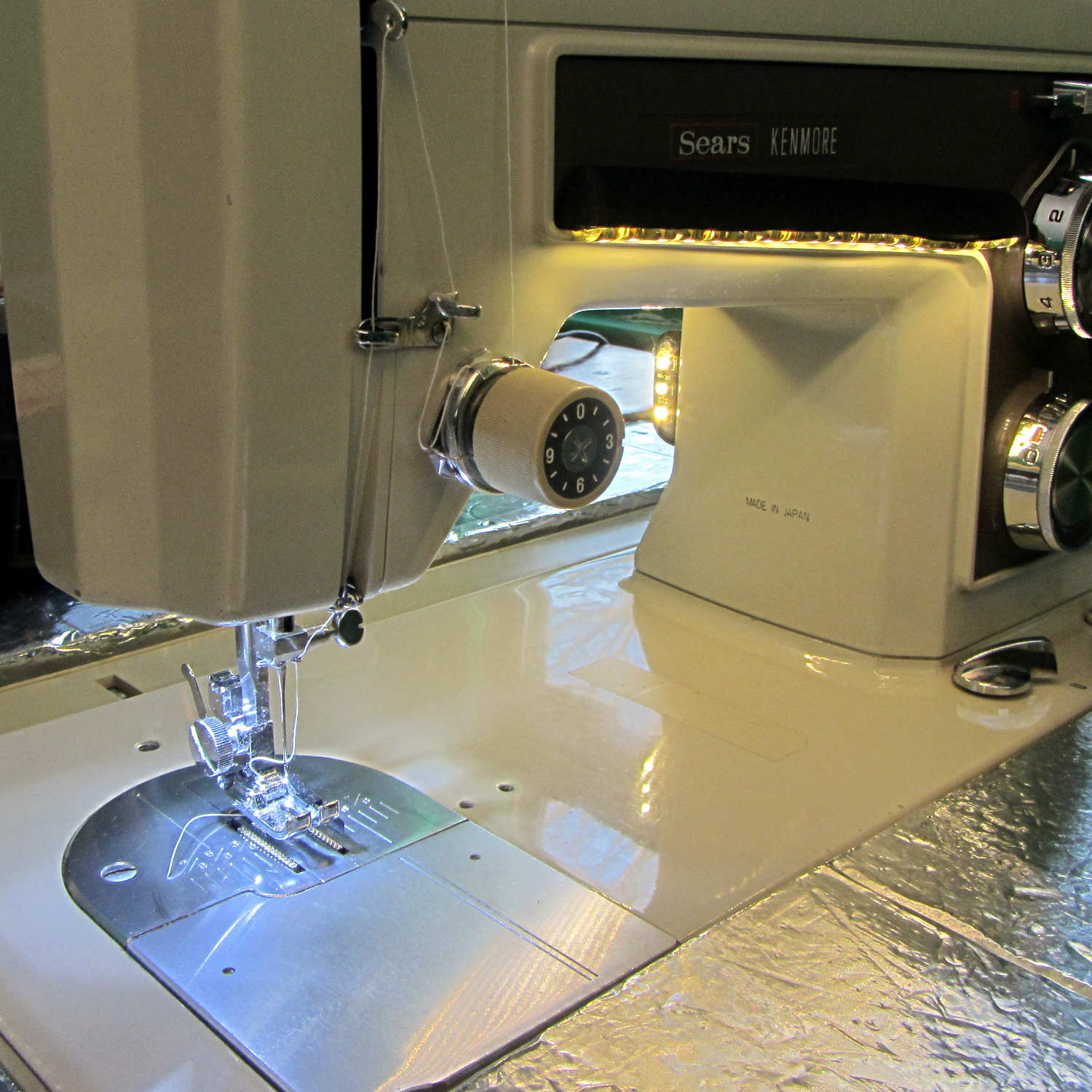
The first white LED fixture built to illuminate one of Mary’s Kenmore 158 sewing machines has been in regular use for the last four years:
Kenmore 158 Sewing Machine – mixed LED lighting
We never found a good time to rip-and-replace the “prototype” with brighter SMD LEDs and one of the LEDs finally gave up.
They’re 10 mm white LEDs with five chips wired in parallel, which is obvious when you look into the remaining LED running at 1 mA:
10 mm white LED – chips
The center chip is just dimmer than the others, which means their QC doesn’t tightly control the forward voltage spec.
The wire bonds on the anode terminal of the failed LED look a bit sketchy:
10 mm white LED – wire bonds
Fortunately, I hadn’t removed the 120 VAC wiring for the original bulb and I have two OEM bulbs from other machines, so I just removed my LED gimcrackery, installed a good old incandescent bulb, and she’s back to sewing with a pleasantly warm machine.
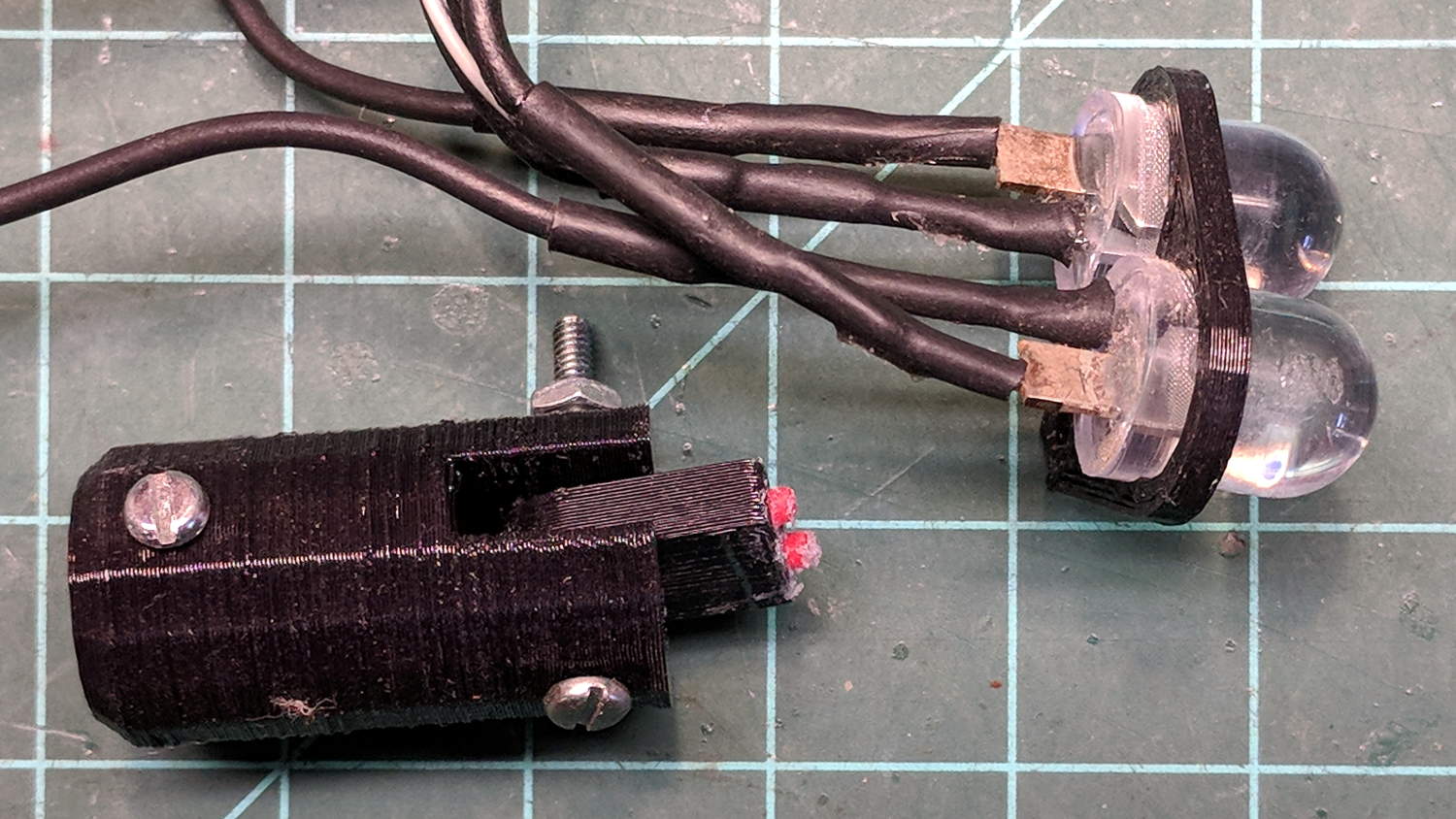
The fixture holding the LEDs broke apart as I extracted it, but it’ll never be used again:
10 mm white LED – fixture
The LEDs are rated at 3.5 V and 200 mA (!), but were reasonably bright in series from a 6 V unregulated supply. Perhaps a power glitch killed the poor thing? We’ll never know.
LEDs are reputed to have lifetimes in the multiple tens of thousands of hours, but I’ve seen plenty of failed automotive LEDs and fancy new LED streetlights out there, not to mention many dead and dying traffic signals. Seeing as how they’re in (presumably) well-engineered fixtures with good power supplies and are at most only a few years old, there shouldn’t be any failures yet.
The back tire on my bike was flat when I rolled it out for a ride (the day after replacing the front shifter cable), which ought not be possible with a Michelin Protek Max tube inside. On the other paw, we’ve had zero flats in the not quite two years since installing the things, which says they’re doing very well, and I’ll take a flat in the garage over a flat on the road any day.
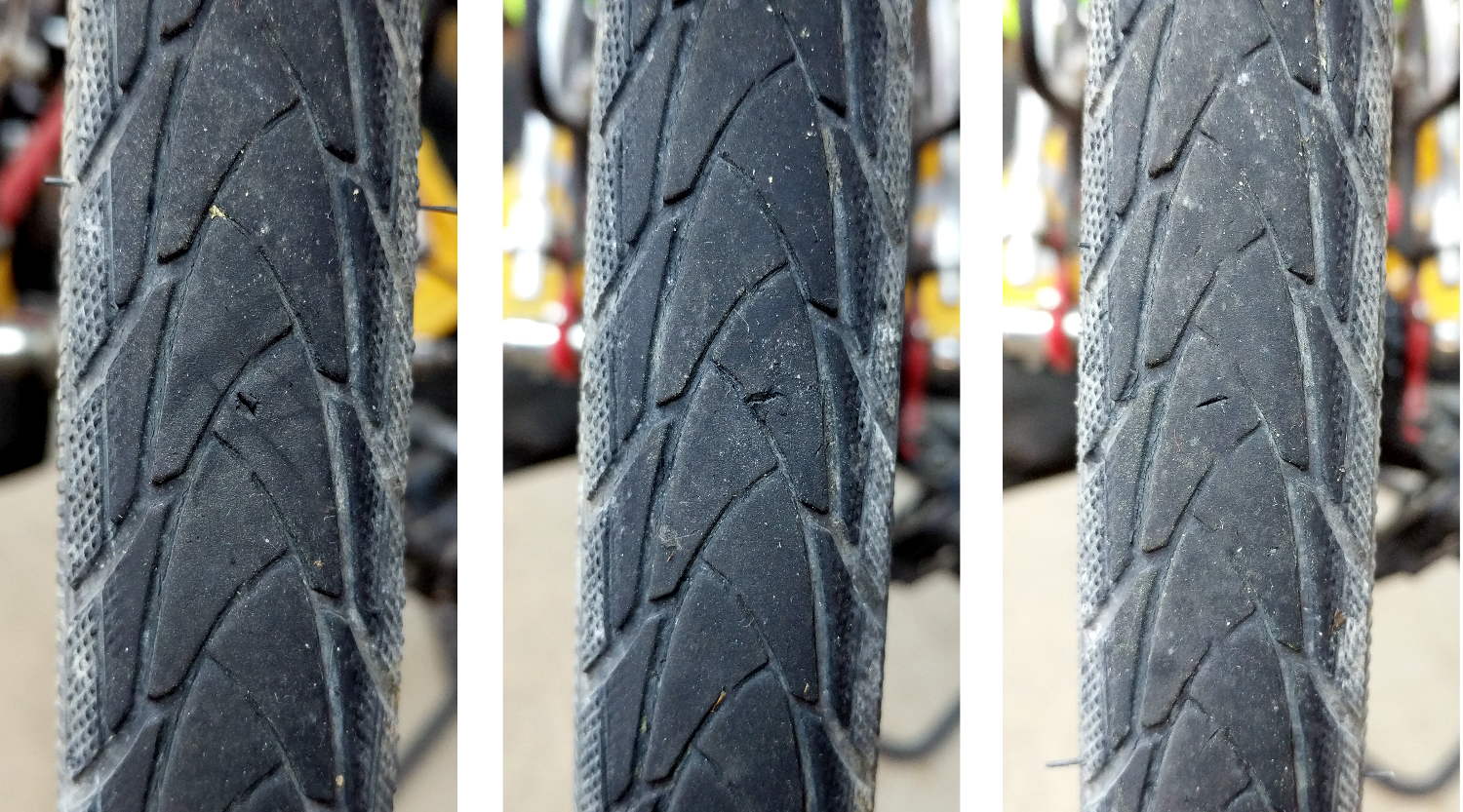
With the bike up on the stand, I didn’t spot the expected large glass chip or sharp wire, but I did find three smaller gashes:
Bike tire tread gashes – composite – 2017-05-13
… from which I extracted two small glass shards. Perhaps a wee puncture spent four days parked at the top of the wheel, with the ProTek’s internal goop drained away and unable to plug the slow leak.
Having spun the tire a few times while looking for trouble, I pumped it back up to 80 psi. After delaying the ride for half an hour, the tire pressure remained constant, and we enjoyed a fine ride around the block.
Because I’m writing this in the future, I know it’ll hold pressure just fine, which means I can declare victory and move on.
The tube & tire weigh more than some frames, but they’re worth it!
The rear shifter on my Tour Easy stopped working when we were most of the way to the grocery store, due to what turned out to be due to a broken cable. I managed to yank the frayed end out of the shifter, pulled the derailleur into a middling gear, and belayed the cable into a deadly cactus:
SRAM X.9 Rear Shifter – frayed cable
A three-speed recumbent got me home again, albeit with spin-it-out high gear and a low gear barely sufficient for trailer hauling.
Attempting to remove the frayed cable from the SRAM X.9 grip shifter didn’t go well at all:
SRAM X.9 Rear Shifter – cable tangle
I managed to extract the lead pellet, but, while it may be possible to extract the remaining tangle, even pulling on individual wires wasn’t productive.
AFAICT, the shifter came as original equipment on the bike, so it’s been in constant use for the last 17-ish years. The nice soft grip material (and the cover over the cable port) turned into gummy sludge under the cheerful silicone tape I applied some years ago, so I sliced the old grip and pulled it off:
SRAM X.9 Rear Shifter – gummified grip
Popping a new-old-stock X.9 shifter from the Big Box o’ Bike Parts and installing it proceeded without problems. This being the rear shifter, I had to remove the shiny OEM cable and replace it with a PTFE-coated tandem-length rear cable, but that’s normal for a long wheelbase recumbent.
For the record, both black shift indicator tabs still show no signs of failing after half a year, so a bent piece of polypropylene sheet looks like a win.
Although I knew the Sienna showed signs of a leaky head gasket, the exhaust system needed some attention, and a sporty used car recently put it in the shade, this still came as a surprise:
I’m trying to get a crew … together and live the demolition derby dream
By the time I arrived, the dashboard trim had vanished and the air bags were safely out:
I managed to pry the glass off using a Gasket Scraper and considerable muttering.
With all the exterior trim, lights, and mirrors gone, the Sienna was in fine race trim:
Sienna – Demo derby race trim
But, being no longer street-legal, it required trailering. For the record, not all huge pickup trucks have bulky guys with pot bellies behind the wheel:
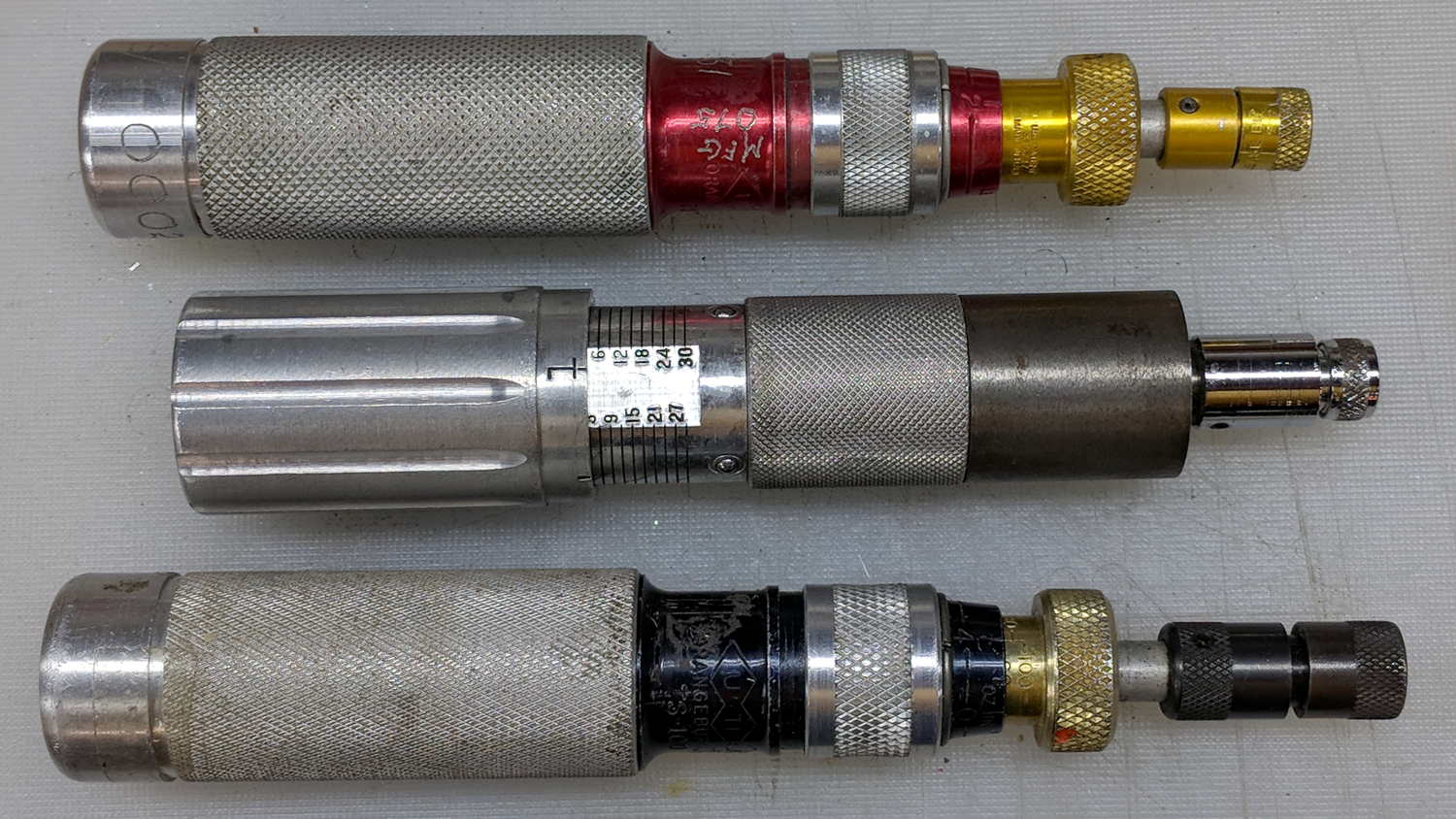
A stack of loot boxesprize crates treasure chests on the Squidwrench Operating Table yielded a big box of torque drivers, two of which now grace my collection:
Torque Drivers
As with clocks: when you have more than one torque wrench, you don’t know what torque it is. The black driver had a solder blob in its adjustment socket, obviously intended to prevent unqualified people (that would be me) from bungling a production-critical calibration.
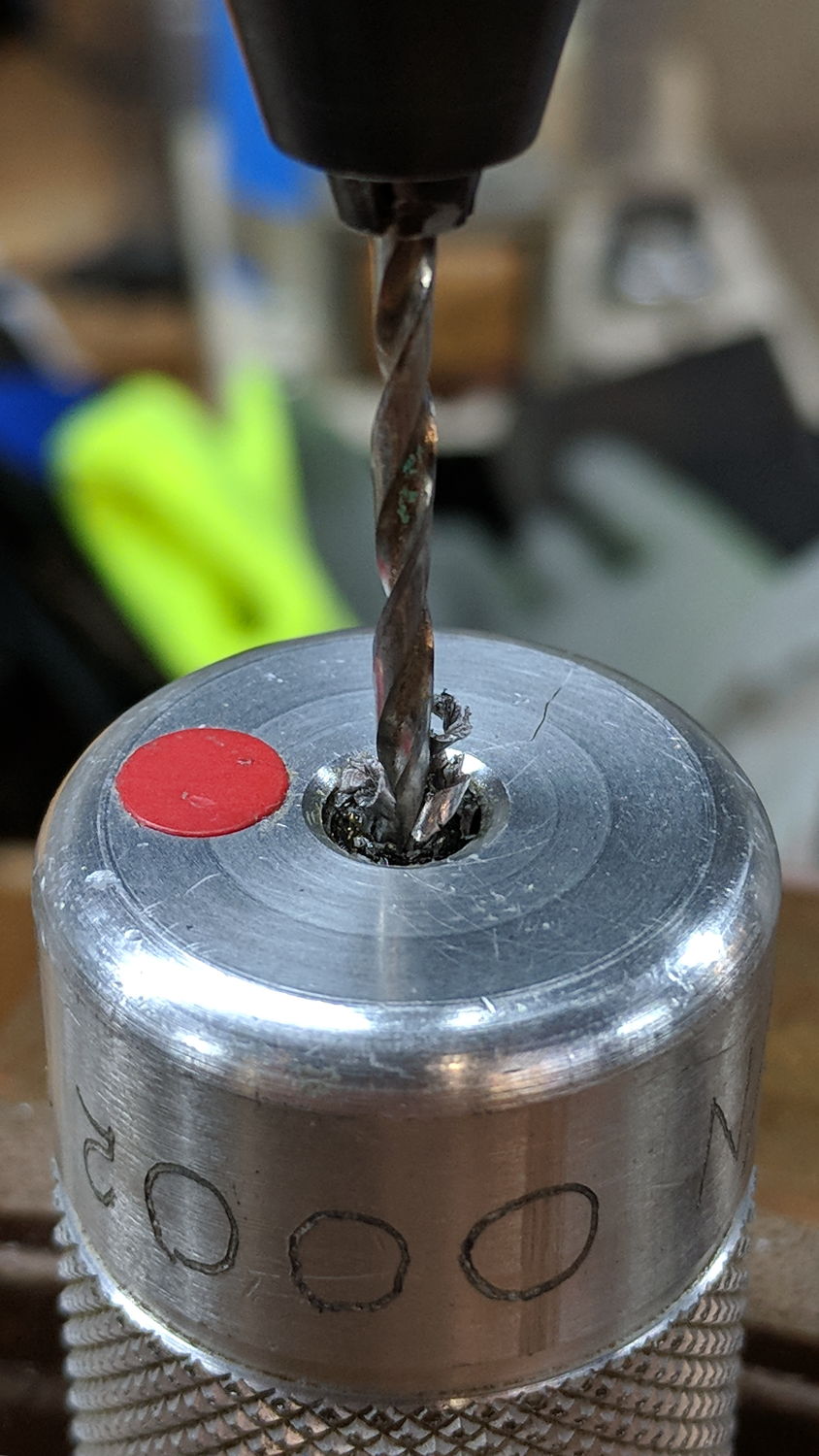
A suitable drill in a pin vise put a hole down the middle of the blob:
Torque Driver – lead calibration seal
Turning a tap into the hole produced enough traction to yank the solder shell straight out of the hex. Whew!
The red driver goes to 30 lb·in, the silver to 30 lb·in, and the black to 100 oz·in. The red and black now agree to within maybe 4 oz·in, which I think is Good Enough, and both within 4 lb·ft of my Harbor Freight 200 lb·ft clicky wrench, which probably doesn’t mean much at the low end of the wrench’s scale.
The silver driver refuses to agree with anything, which suggests somebody else monkeyed with its calibration before I laid hands on it.













 The Smell of Molten Projects in the Morning