Ed Nisley's Blog: Shop notes, electronics, firmware, machinery, 3D printing, laser cuttery, and curiosities. Contents: 100% human thinking, 0% AI slop.
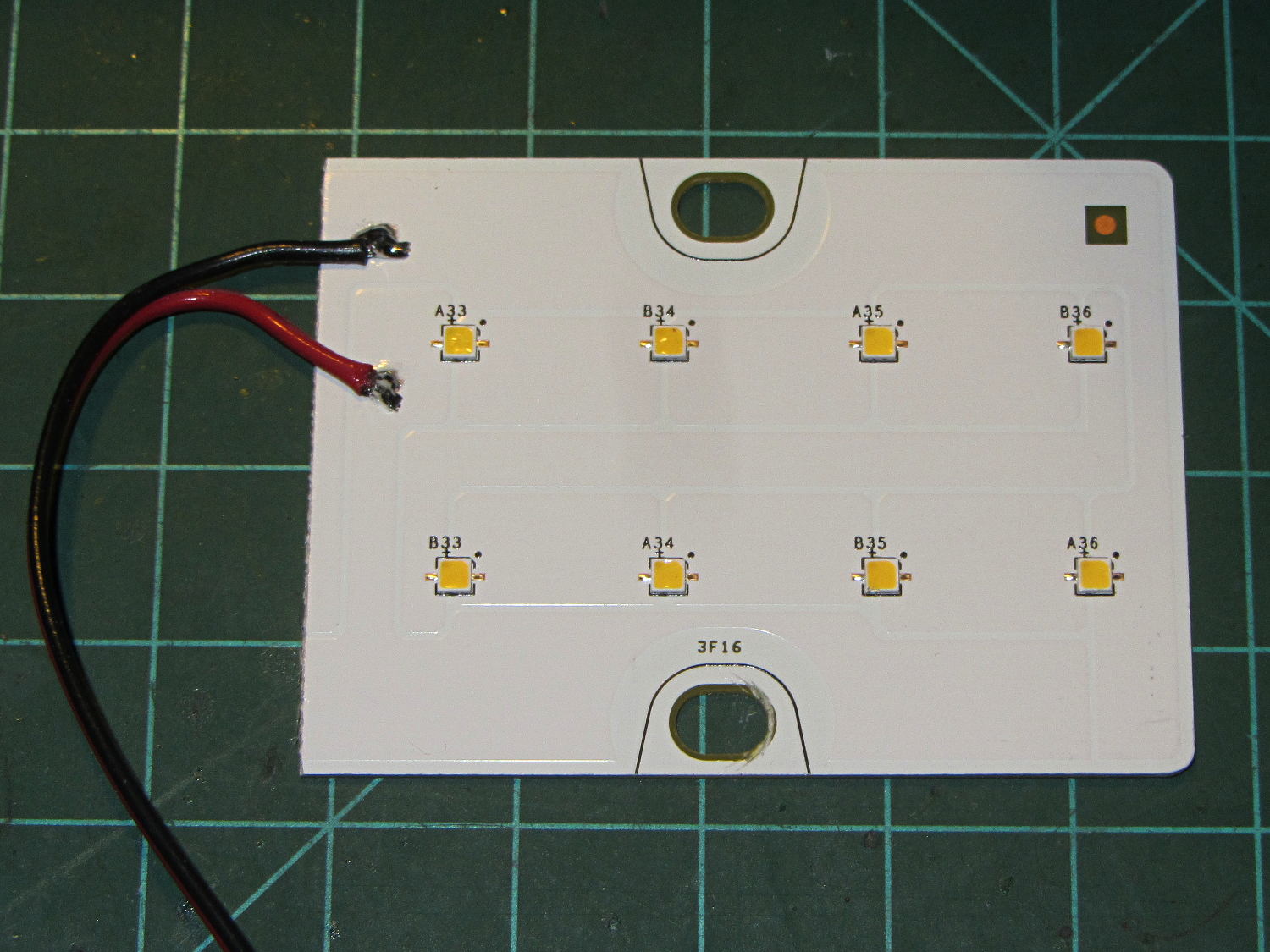
A surplus haul of 24 V / 150 mA white LED panels arrived:
LED Panel – 24 V 150 mA
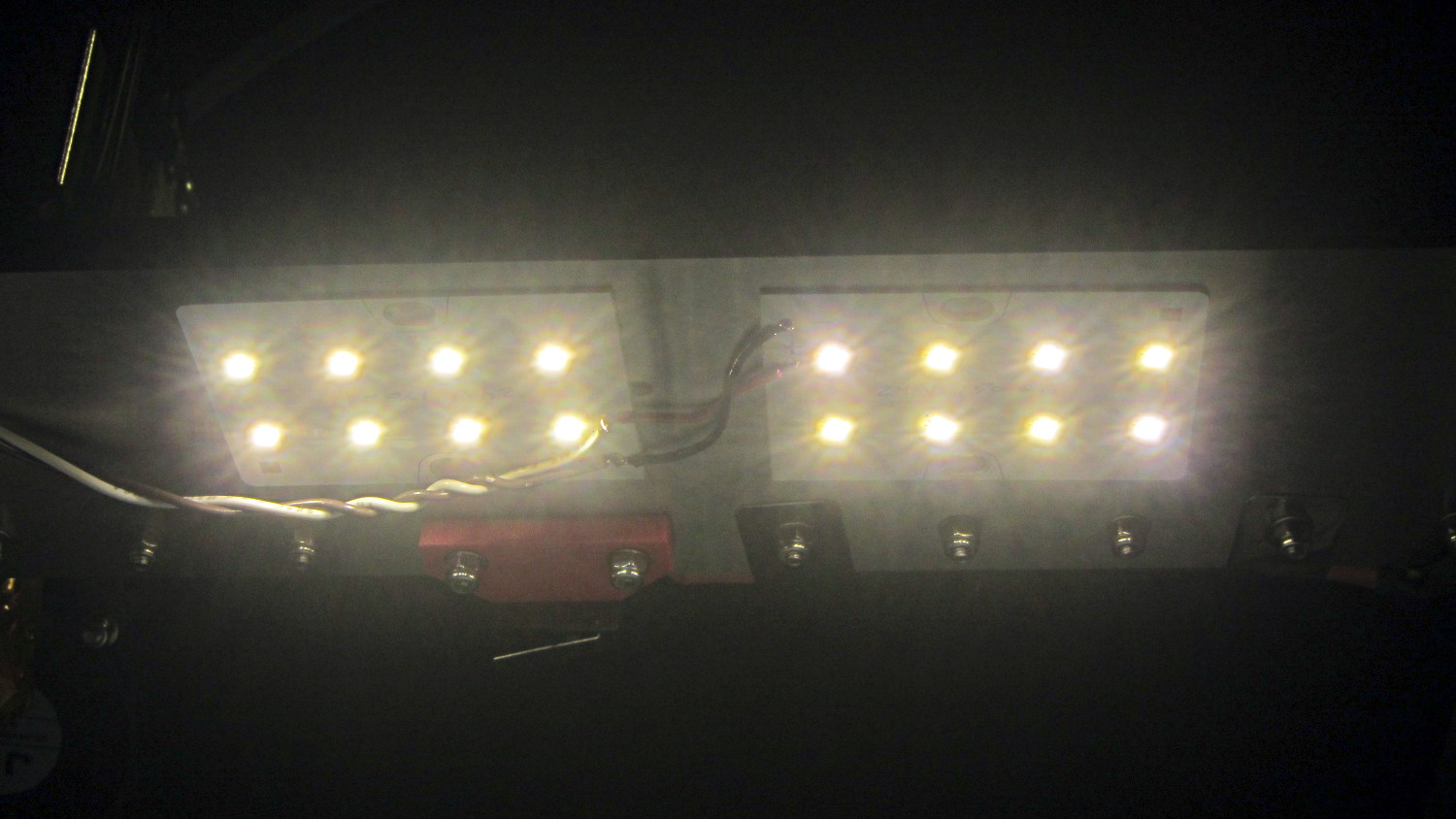
I wired a pair to a 24 V wall wart and stuck them under the M2’s bridge supporting the X stage:
LED Panel – on M2 Gantry
I thought about epoxying them in place to get better heatsinking to the metal bridge. The ever-trustworthy description said the big copper baseplate meant the panels didn’t need any heatsinking, so I used tapeless sticky and will hope for the best. Should the sticky give out, then I’ll use epoxy.
They’re much better than the previous white LED strip, although it’s tough to tell in the pictures. The chain mail armor appears under the new lights; some older pictures will creep in from time to time.
A red-bellied woodpecker landed on the seed feeder, but the flapping tells you something’s not right:
Red-bellied woodpecker at feeder – closing
After the fluttering stopped, the seeds had vanished:
Red-bellied woodpecker at feeder – puzzled
According to our books, a red-bellied woodpecker weighed 72.5 g = 2.6 oz back in 1952. The feeder counterweight reads 3 oz and that’s confirmed by my pull scale. Perhaps woodpeckers suffer from the obesity epidemic, too?
The feeder closes with one cardinal (44 g) and two tufted titmouses (2 x 22 g), all of whom seem rather surprised at the situation.
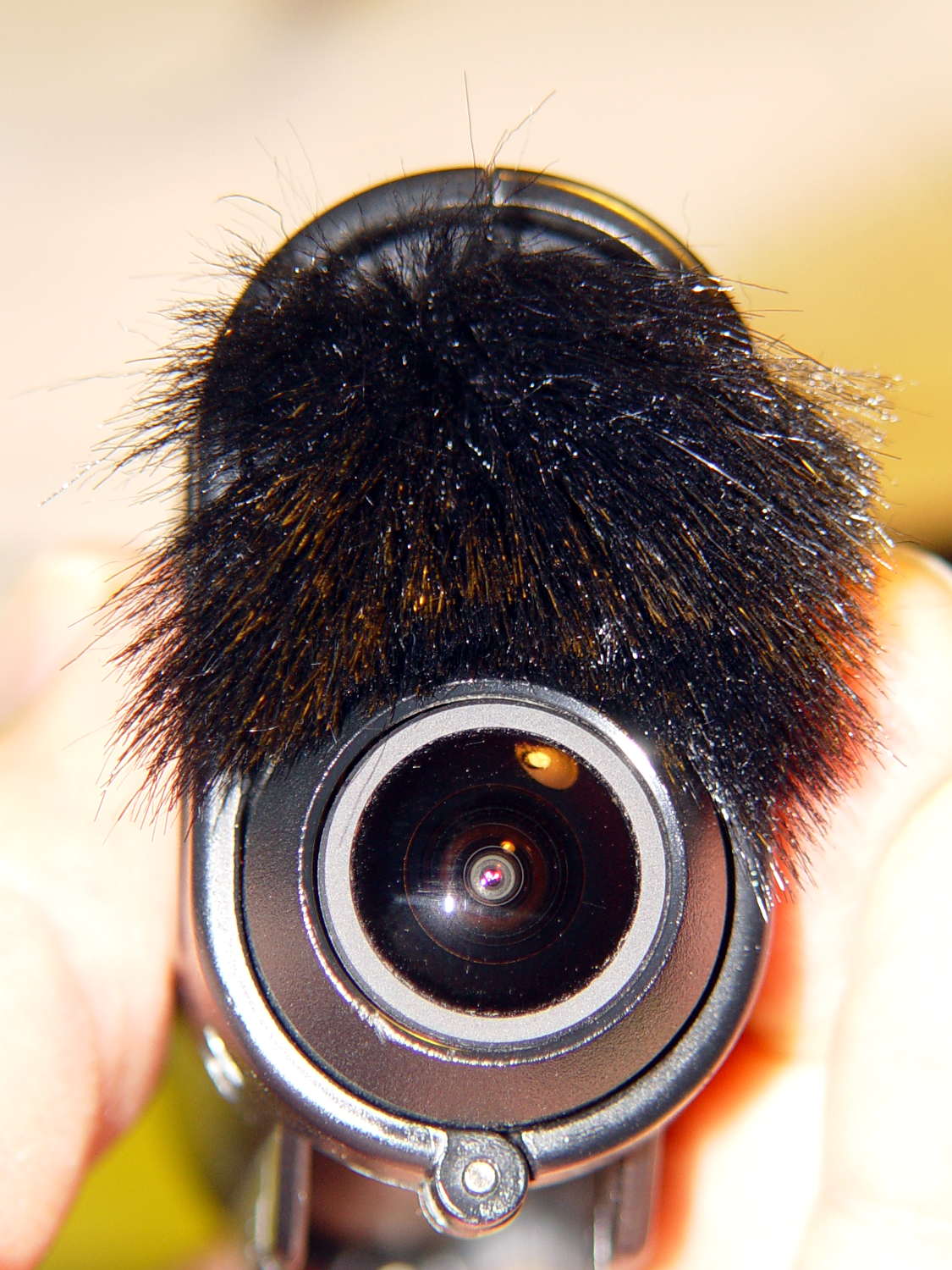
A scrap of fake fur cut to fit the outline of the Sony HDR-AS30V helmet camera and stuck in place with a square of double-stick foam centered above (or below, in the normal orientation) the lens:
Sony HDR-AS30V – fake fur installed
Snippy remarks about what that looks like will not be tolerated, m’kay?
It reduces wind noise to an occasional rumble from strong gusts and even those don’t crush the AGC. My side of our radio conversations became clearly audible, as did shifters clicking and gravel crunching. There’s still plenty of noise, but now it comes from actual sound sources that don’t overwhelm the amp.
A layer of ordinary adhesive tape still covers the mic pores and the fur’s fabric backing extends over the tape, so the combination must muffle the sound at least a little bit. Given the source material and my hearing, it’s Good Enough; Golden Eared Audiophiles need not apply.
I also cannot detect any difference between the left and right audio channels, so the stereo separation at 15 mm isn’t worth much. I don’t know if the camera swaps the audio channels in video flip mode; that would be a nice touch.
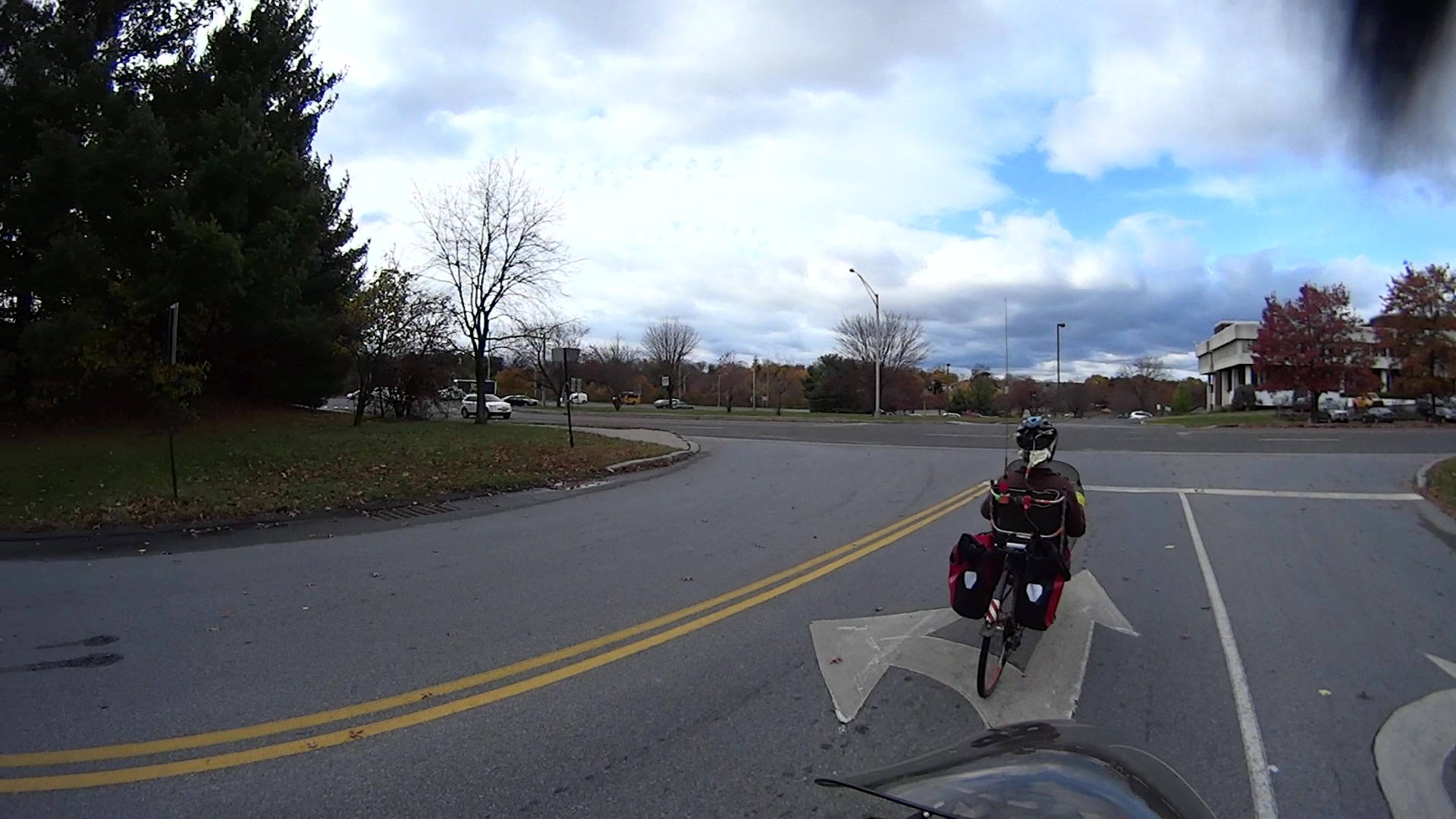
The hairs extending outward beside the lens occasionally blew into view, so a haircut is in order:
mah00242-075 – Fake Fur in view
Perhaps a clip that snaps over the skeleton frame to hold a neat patch of fur in place without adhesive on the camera body would be even better?
With the Sony HDR-AS30V in its skeleton frame atop my bike helmet, the audio track for all my rides consists entirely of horrendous wind noise. You can get an idea of the baseline quality from the sound track of a recent Walkway Over The Hudson crossing.
The camera has two mics, although I’m not sure 15 mm of separation really produces meaningful stereo sound:
Sony HDR-AS30V – front view
Note that two of the five pores on each side are closed flat-bottom pits. As with earbud vents , it must be a stylin’ thing.
I added a rounded pad of the same acoustic foam that forms an effective wind noise buffer for the boom mic:
Sony HDR-AS30V – foam mic cover
That reduced the overall noise load by buffering direct wind impact, but non-radio conversations remained unintelligible; there’s just too much low-frequency energy.
Surprisingly, closing the mic pores with ordinary adhesive tape didn’t impair the audio in a quiet room:
Sony HDR-AS30V – closed mic pores
Out on the road that’s even better than foam over open mic pores; I think it reduces the peak volume enough that the internal compression can regain control. Sticking the foam pad over the tape slightly reduced the noise during high-speed (for me, anyhow) parts of the ride, but didn’t make much difference overall.
The wind noise remains too high for comfort, even if I can now hear cleats clicking into pedals, shifters snapping, and even the horrible background music when I’m stopped next to the Mobil gas station on the corner.
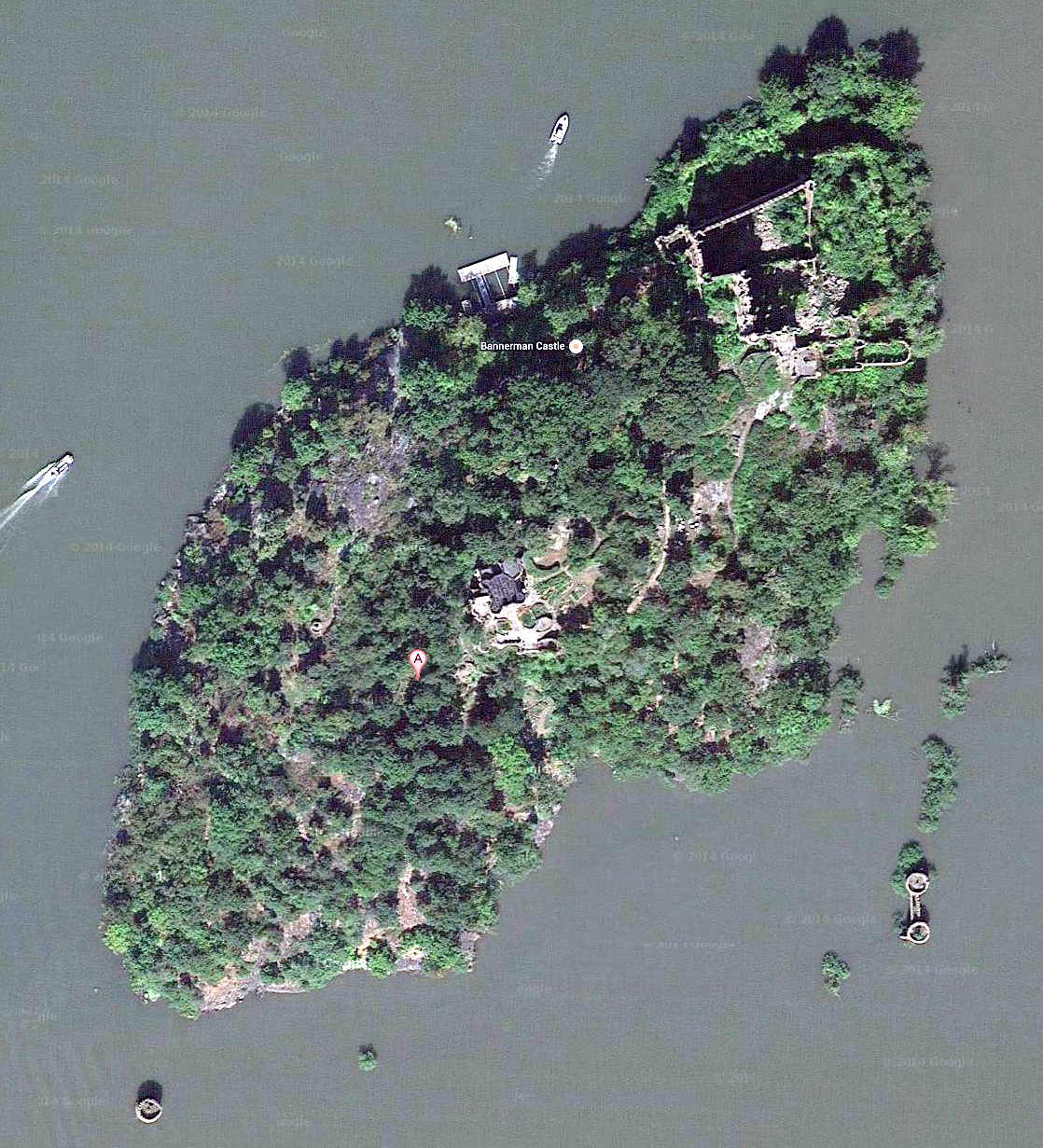
Back in the day, the only way you could get there was by kayak and that just isn’t my style. Nowadays, the Bannerman Castle Trust runs weekend tour boats and that I can do.
The view from the dock:
Bannermans Island Arsenal – from dock
All the pictures you’ll see of the buildings look the basically the same, because you cannot get off the tour route:
Bannermans Island – Building Collapse Zone sign
Of course, that fine might be irrelevant after they dig you out from under the rubble.
Struts hold the fragile walls in place, but it’s not long for this world:
Bannermans Island Arsenal – SW corner
You can tell that Frank Bannerman got exactly what he wanted in the way of architecture; the buildings bear an uncanny resemblance to his “make it look like this” sketches. In the normal course of a design-and-build project, somebody in the loop will suggest that, mmmm, Boss, you can’t actually build it that way. In this case, the normal course of events went along the lines of “Sir? Yes, Sir!”
Money changes everything.
Their summer house sits dead center in the island with a commanding view of the Hudson to the south. Again, you can tell it looked just exactly like he wanted:
Bannermans Island – House
The natural state of Pollepel Island was barren rock; they hauled in all the soil when Mrs. Bannerman wanted flower gardens around the house.
That crack in the northwest tower can’t possibly be a Good Thing:
Bannermans Island Arsenal – W wall
Back in late 2005, the castle looked marginally better:
Bannermans Island Arsenal – 2005-10-22
That was from a small boat in the middle of the Hudson.
In the unlikely event you’re in the area, take the trip: it’s worthwhile just to see what one man’s obsession looks like. Wear one more layer than you think necessary, put on your lug-soled boots, and realize that nobody’s going to visit the ruins of your summer house a century from now…
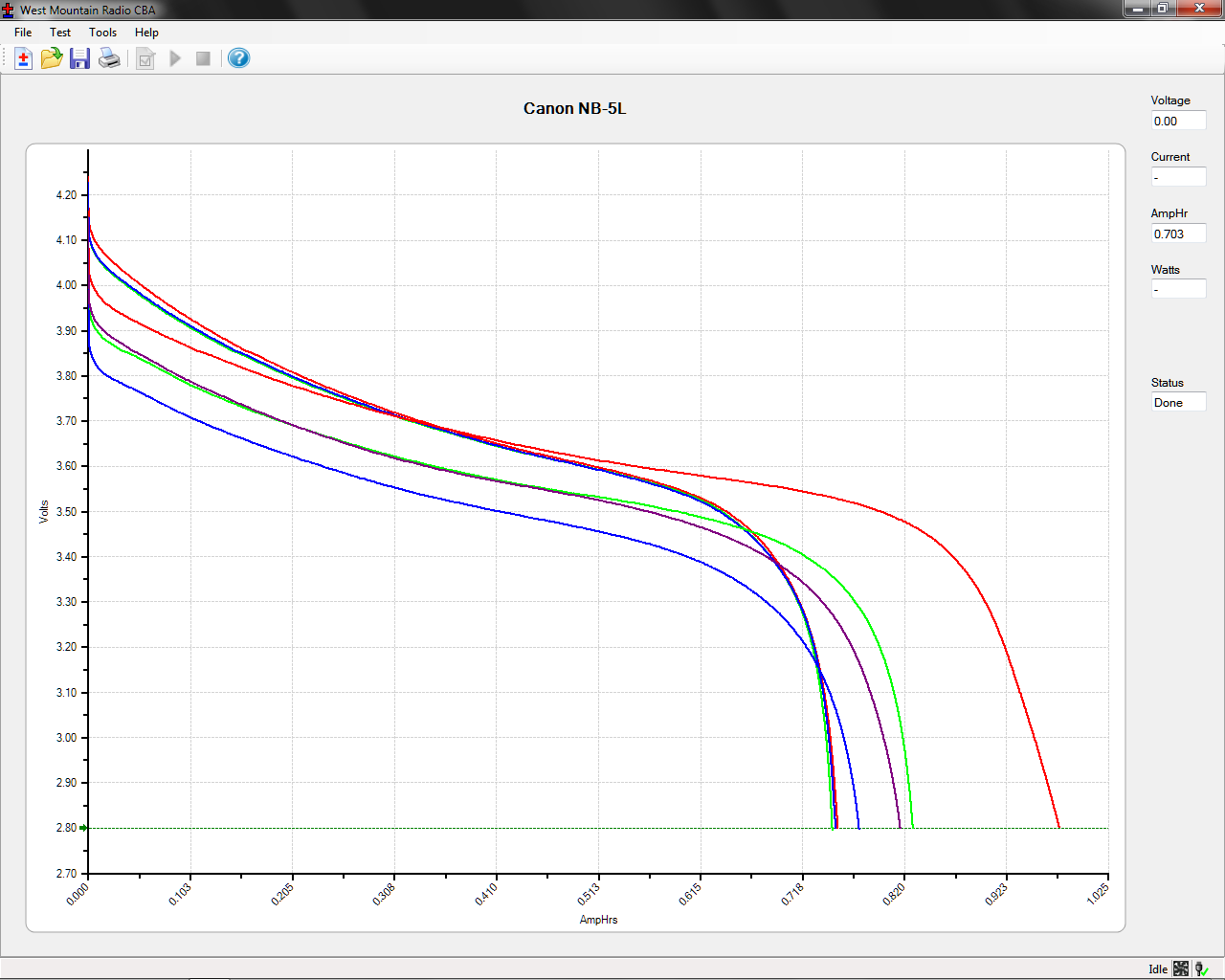
Based on the poor performance of the NB-5L batteries I bought from Blue Nook, they sent me three NB-5L batteries from a fresh batch (date code BNI13) and I ran them through the same discharge test:
Canon NB-5L – OEM Wasabi – 2014-10-29
The red line off to the far right is the three year old Canon OEM battery, which remains far and away the best battery at 1 A·h.
The previous cells (BNF27) produced the three scattered traces with the lowest initial voltages, ending around 0.8 A·h.
The new cells (BNI13) produced the three tightly clustered traces. They have a higher initial voltage than the OEM cell, but much lower total capacity (about 0.75 A·h).
These batteries obviously don’t come close to their 1400 mA·h rating. The capacity depends on the load current, but I’m using 500 mA because that’s close to the camera’s drain; the results should correlate reasonably well with actual use.
The higher voltage from the new batteries will produce a longer runtime than the previous duds, but their total capacity is lower and they’re still no match for the old Canon OEM battery.
The new ones start out very similar to each other, but the previous batch hasn’t aged well on their shelf. If the date codes mean what I think, all of these batteries will fail quickly.
All that’s quite disappointing, because their NP-BX1 batteries for the Sony camera turned out quite well. The date codes all have the same format and typography, so I think they come from the same factory.
For whatever it’s worth, I think the date coding works like this:
B – factory? shift? OEM? Blue Nook?
M – last two digits of year: M=13, N=14
K – month: F=6, I=9, K=11
20 – day
For the four batteries / lots I have on hand:
BMK20 = 2013 Nov 20 – NP-BX1 bought in early 2014
BNI18 = 2014 Sep 18 – NP-BX1 bought in October – new lot
BNF27 = 2014 Jun 27 – NB-5L bought in October – old lot
BNI13 = 2014 Sep 13 – NB-5L supplied in late October – new lot