Ed Nisley's Blog: Shop notes, electronics, firmware, machinery, 3D printing, laser cuttery, and curiosities. Contents: 100% human thinking, 0% AI slop.
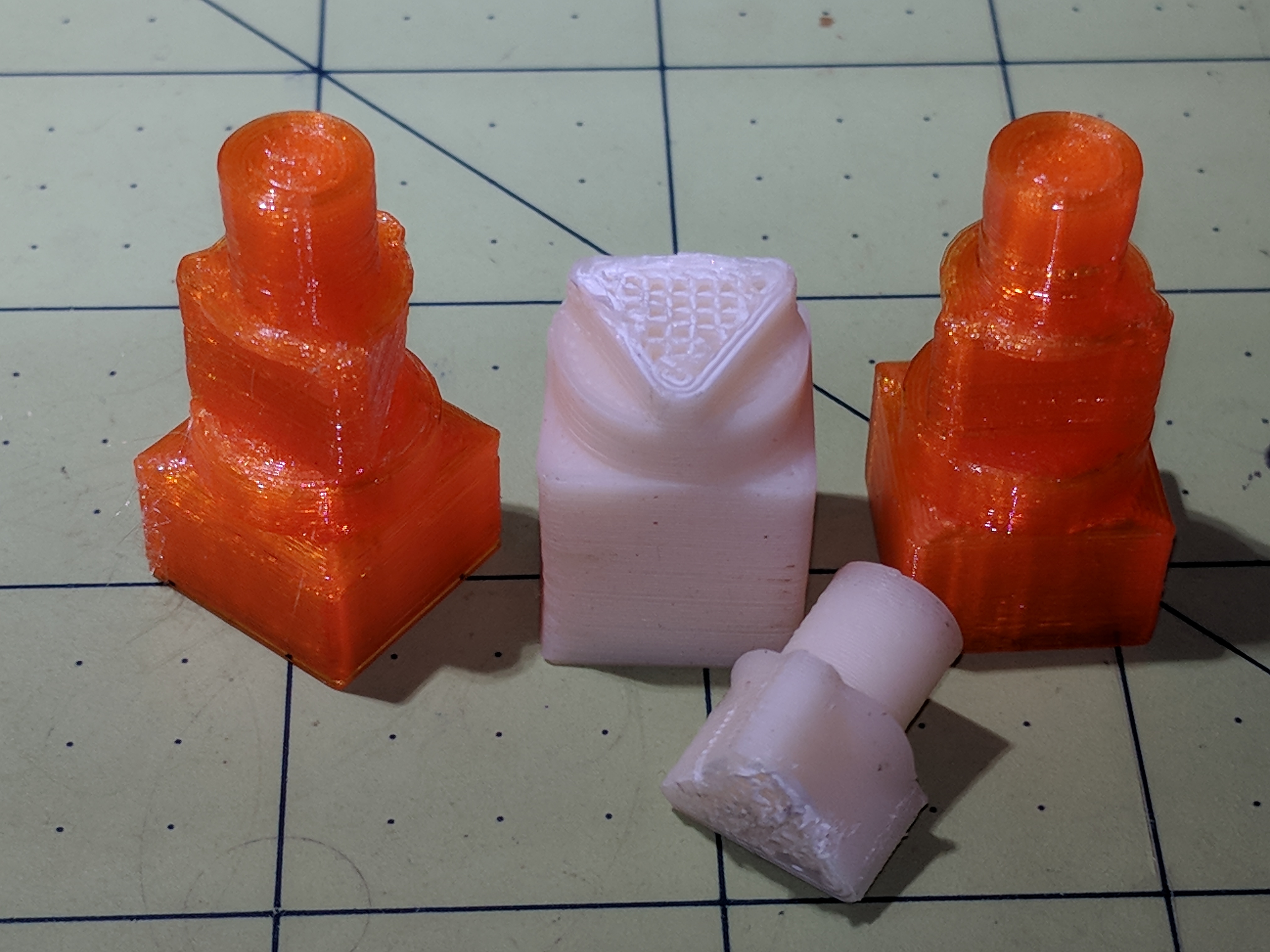
Smoking bacon during the winter months brought the third tank into play, requiring the POL-to-QD adapter I’d had in the drawer for just such an occasion. Not much to my surprise, the old PLA fitting adapter snapped along the layers near the outside end of the triangular snout:
IMG_20180408_125018
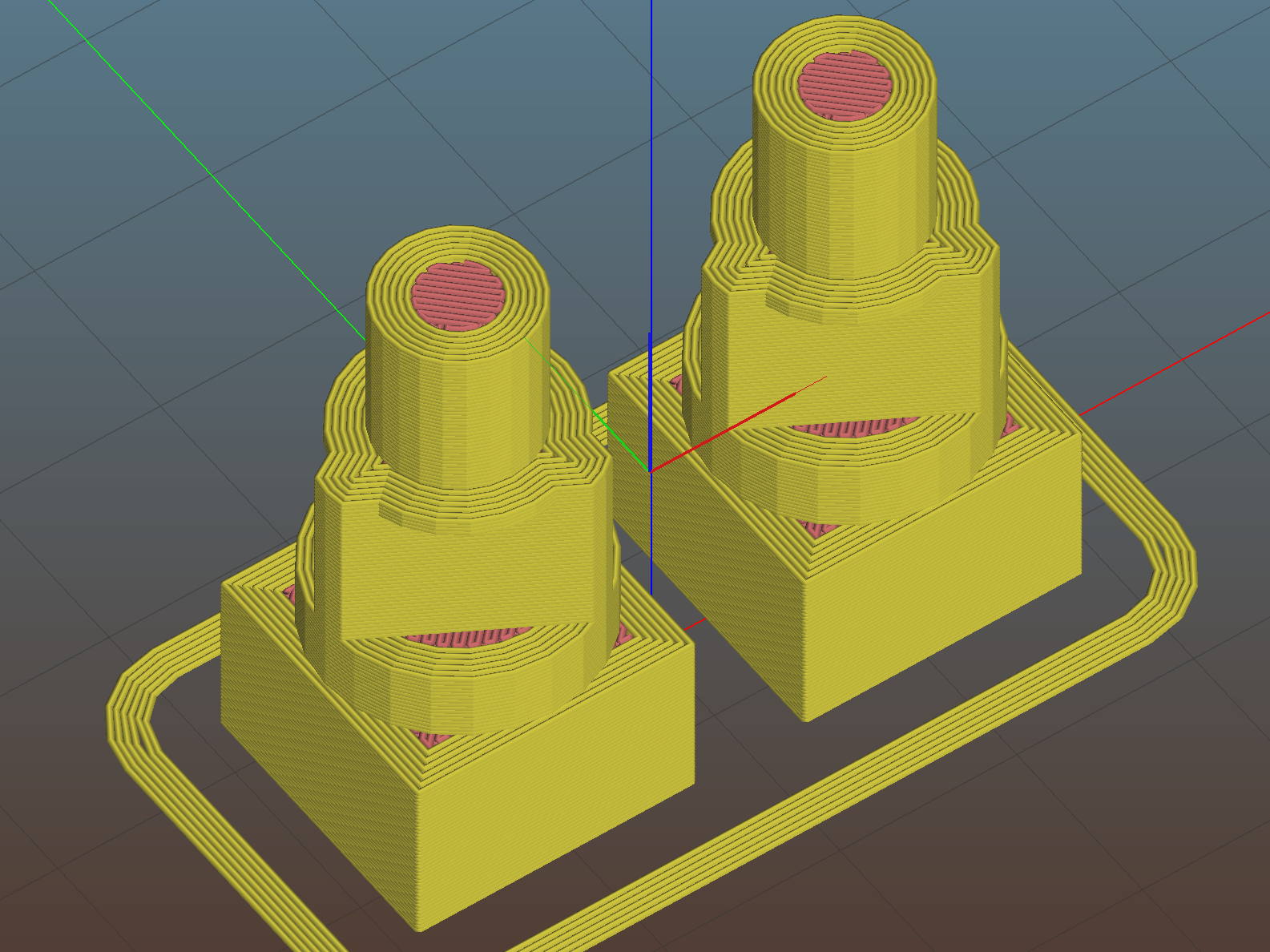
So I ran off the two orange ones in PETG with six perimeter layers and 50% infill density:
This file contains hidden or bidirectional Unicode text that may be interpreted or compiled differently than what appears below. To review, open the file in an editor that reveals hidden Unicode characters.
Learn more about bidirectional Unicode characters
I have often kvetched about Amazon’s casual approach to packaging, so this took me completely by surprise:
Amazon packaging – 16 mm linear motion rod
There’s a 500 mm length of 16 mm round linear motion rod / shaft inside the small blue-and-white box. Previous shipments of similar rod have arrived in a lightly padded envelope or rattling loose in a box of other stuff.
The small blue-and-white corrugated cardboard box contains a bag protecting the well-oiled shaft, with padded end caps preventing the shaft from escaping or whacking against anything.
The middle box is made from two U-shaped sheets of molded (not corrugated) fiberboard, with one rigid U stapled into those wood end caps, the other U fitting over the assembly, and plenty of packing tape securing the two. Enough bubble wrap fills the cavity to surround and completely immobilize the inner box.
FedEx carried the armored box from Thomson to an Amazon warehouse in February, so it wasn’t packed specifically for me.
The upper box is a standard Amazon corrugated carton, with slightly more than a token amount of paper packed around the fiberboard box. The paper didn’t completely immobilize the middle box, but did serve to keep it from rattling loose.
I paid twenty bucks for the rod, with “free” Amazon Prime shipping, and UPS delivered it in the usual two days.
The whole affair weighs 7 pounds. If I were to reship it to somebody using UPS 2nd Day, they’d charge me $39 just for the shipping.
I felt unworthy …
On the other paw, Amazon recently sent a dozen LED lights with a casual disregard for protection:
Amazon packaging – shredded LED lamp carton
Both ends of the carton were shredded, although all of the cardboard tubes and LED lamps remained still inside. Not all the tube end caps completed the journey, however.
The carton didn’t sport the usual Box Certificate mark found on all Amazon cartons and was made of brittle Chinese cardboard, so it was intended for protected shipping, perhaps inside a freight container, not as a business-to-consumer shipping box.
Somewhat to my surprise, all the LED lights worked, including several that shrugged off their tube caps, as in the upper right, or broke their white cardboard end plates, as in the rest. The plastic protectors on the LED pins served their purpose!
Amazon provided a partial refund when I filed Package Feedback, so they’re paying attention to damages.
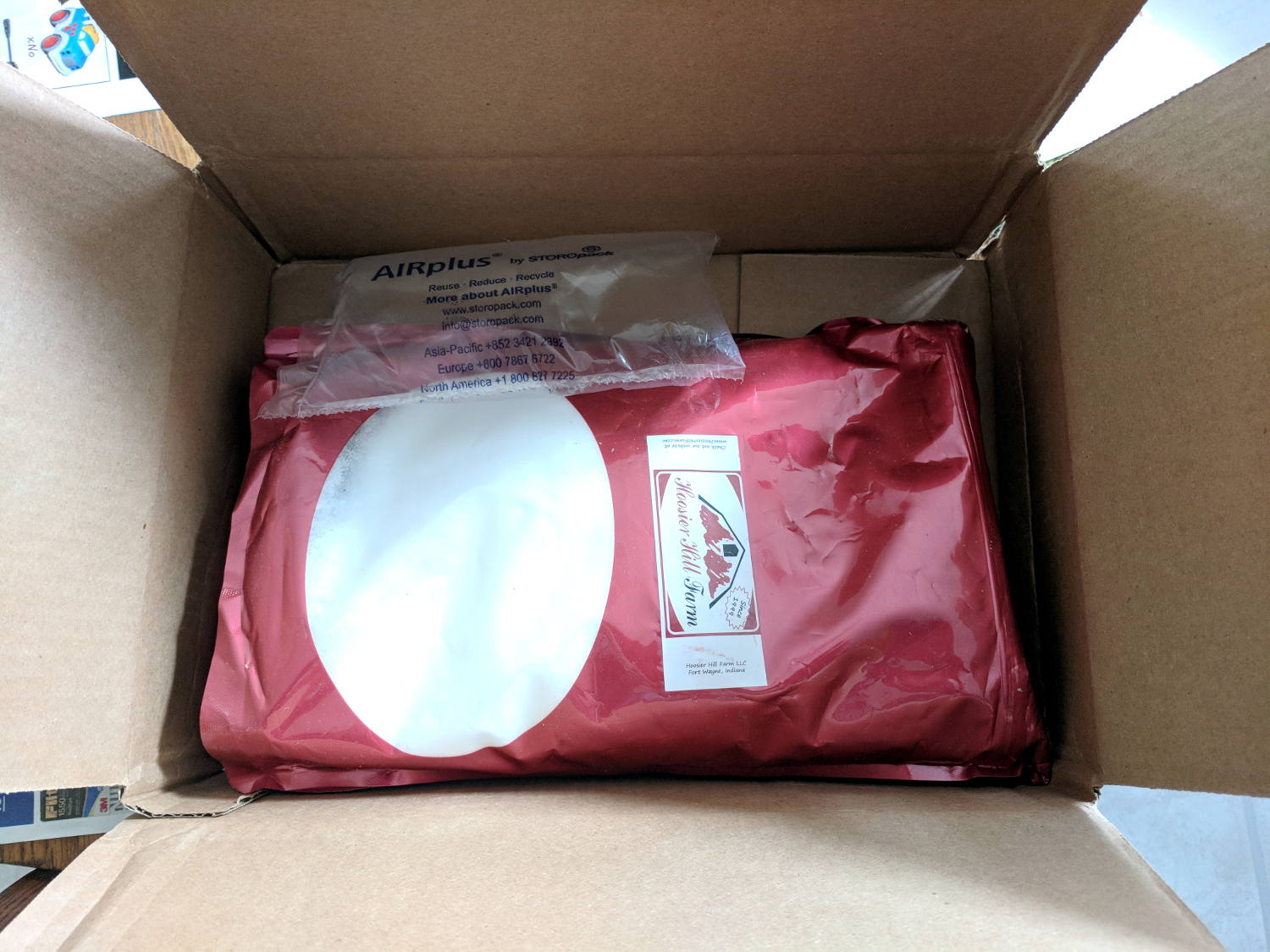
Five pounds of granular erythritol fared better, with a token air pillow contributing nothing:
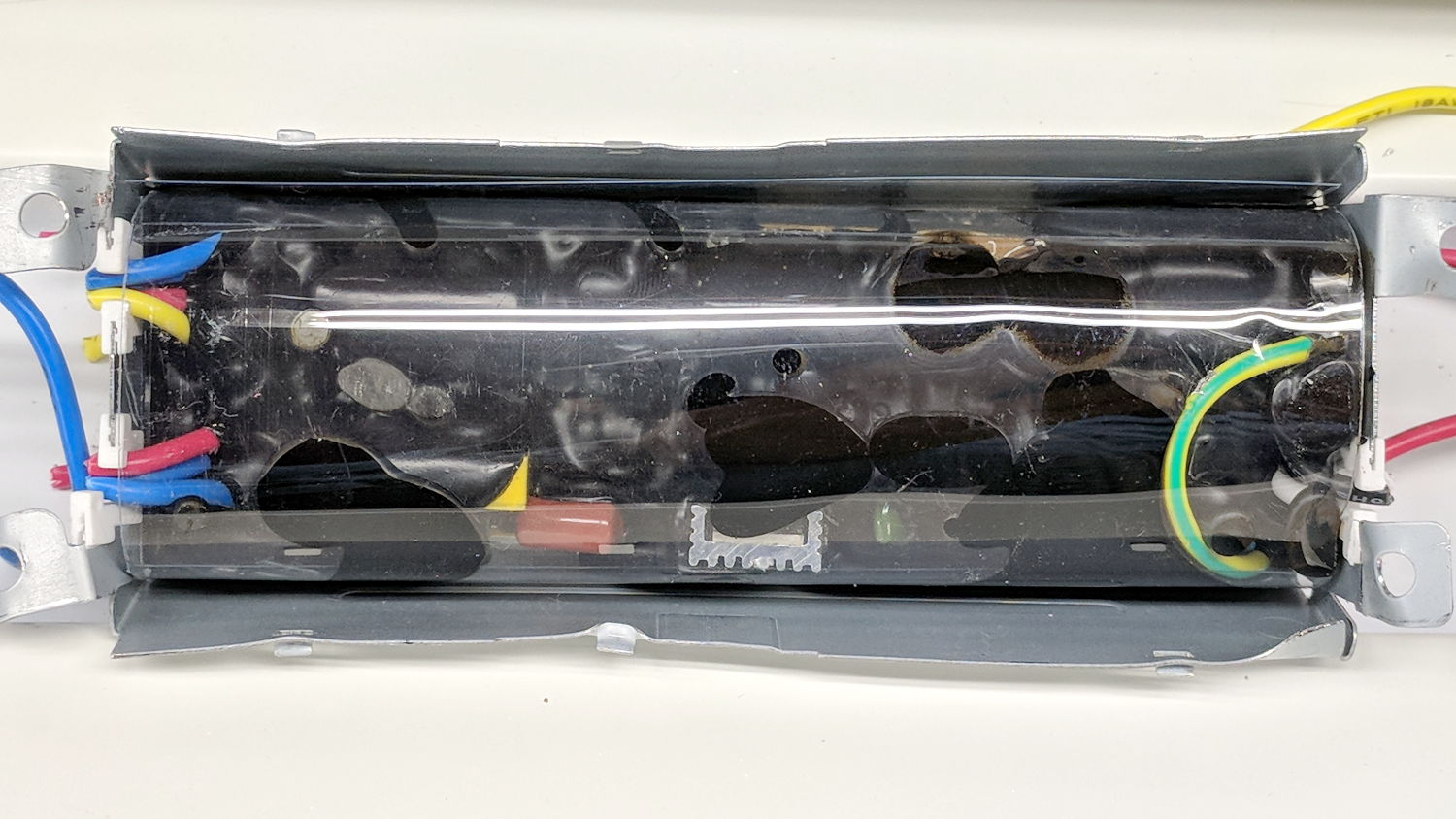
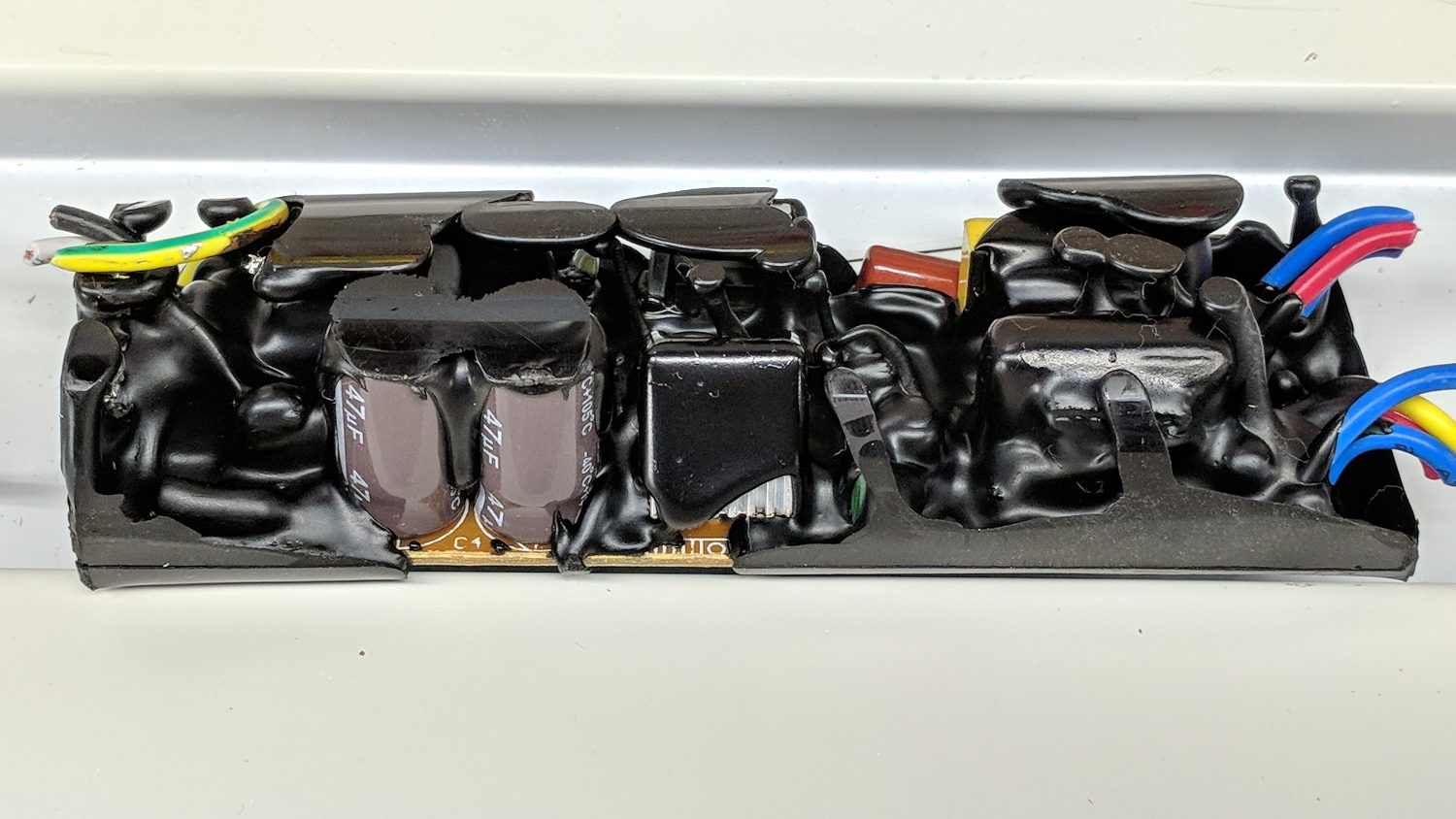
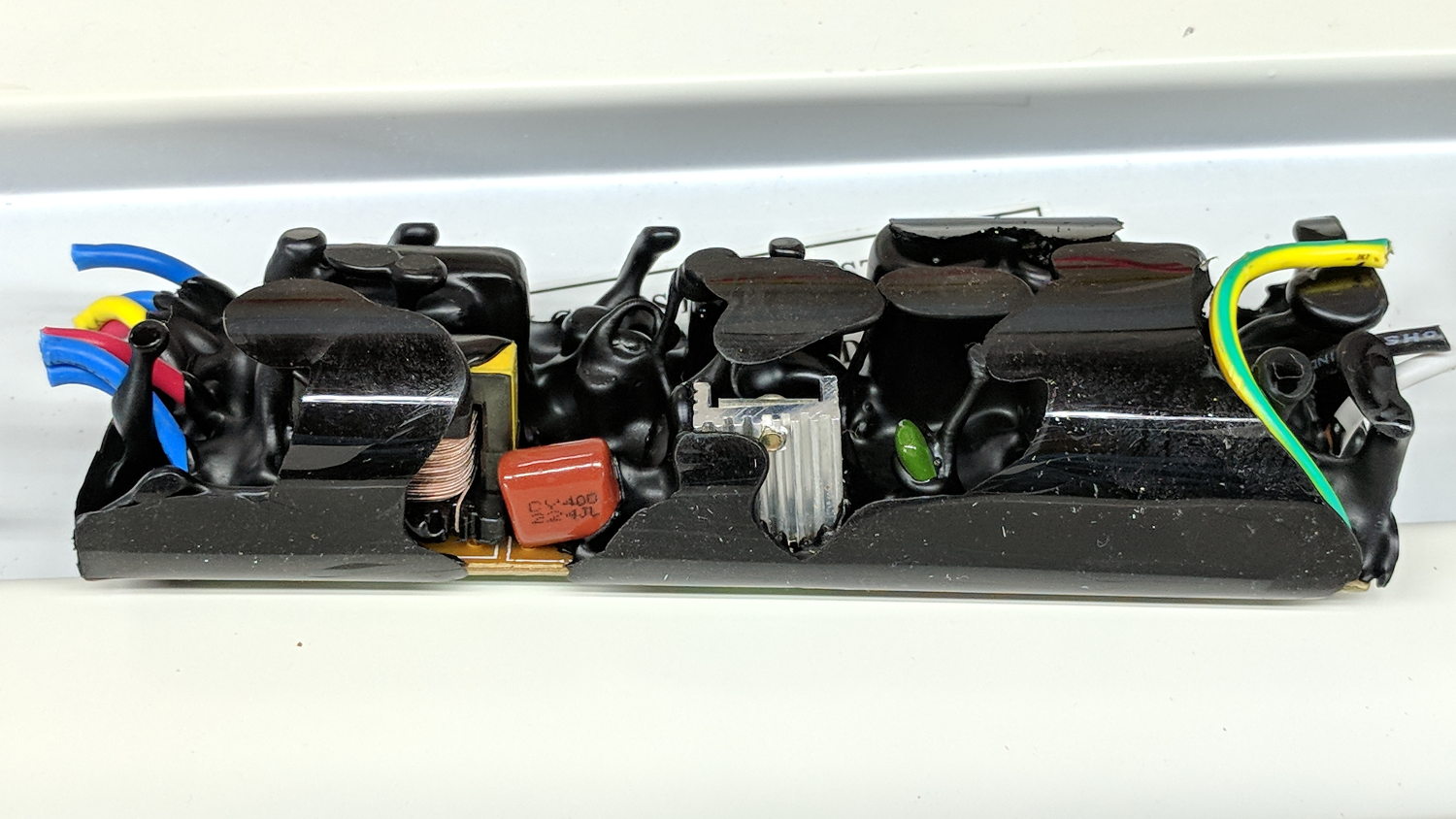
The black gunk smells more like plastic and less like old-school tar. It’s definitely not a peel-able conformal coating.
One the other paw, the two magnetic ballasts in another lamp sported actual metal-film capacitors, which I harvested and tossed into the Big Box o’ Film Caps:
Shoplight choke ballast – film cap
If a dying ballast didn’t also kill its fluorescent tube(s), I’d be less annoyed. I’m running the remaining tubes through the surviving fixtures, but the end is nigh for both.
The new LED tubes produce more light than the old fluorescents, although I still don’t like their 6500 K “daylight glow” color.
This 2 GB flash drive arrived with datasheets & sample files for a (computerized) sewing machine Mary eventually decided she wasn’t going to get (because computerized):
Fake Flash drive
Being of sound mind, we reformatted it and dropped it in the bag o’ random drives. She eventually used it for one of her gardening presentations, whereupon the library’s (Windows) laptop said it needed formatting; she pulled out a backup drive and continued the mission.
Lather, rinse, verify a good format, verify presentation files on the Token Windows Box, and repeat, right down to having another library’s laptop kvetch about the drive.
Soooo, I did what I should have done in the first place:
sudo f3probe -t /dev/sdc
F3 probe 6.0
Copyright (C) 2010 Digirati Internet LTDA.
This is free software; see the source for copying conditions.

WARNING: Probing normally takes from a few seconds to 15 minutes, but
         it can take longer. Please be patient.

Probe finished, recovering blocks... Done

Bad news: The device `/dev/sdc' is a counterfeit of type limbo

You can "fix" this device using the following command:
f3fix --last-sec=25154 /dev/sdc

Device geometry:
	         *Usable* size: 12.28 MB (25155 blocks)
	        Announced size: 1.86 GB (3893248 blocks)
	                Module: 2.00 GB (2^31 Bytes)
	Approximate cache size: 511.00 MB (1046528 blocks), need-reset=no
	   Physical block size: 512.00 Byte (2^9 Bytes)

Probe time: 55'18"
 Operation: total time / count = avg time
      Read: 8'35" / 3145715 = 163us
     Write: 46'37" / 18838872 = 148us
     Reset: 350.7ms / 2 = 175.3ms
Huh.
As long as you don’t write more than a few megabytes, it’s all good, which was apparently enough for its original use.
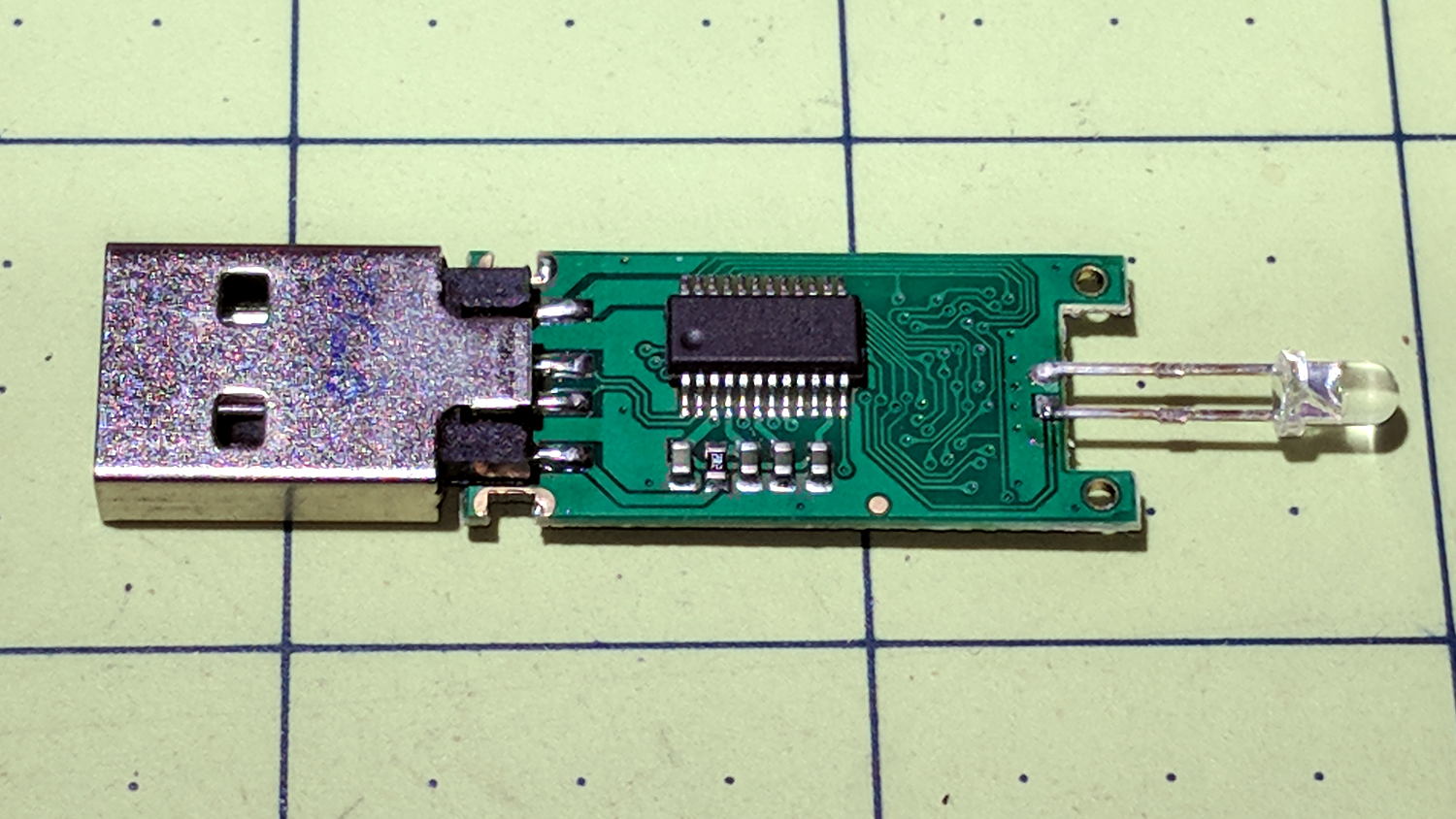
The front of the PCB looks normal:
Fake Flash – controller
But it seems they really didn’t want you to see the flash chip:
Fake Flash – covered chip
Given the two rows of unused pads, it must be a really small chip!
Memo to Self: Always examine the dentition of any Equus ferus received as a gift.