Ed Nisley's Blog: Shop notes, electronics, firmware, machinery, 3D printing, laser cuttery, and curiosities. Contents: 100% human thinking, 0% AI slop.
We have several high-intensity / long-attention-span home projects scheduled this summer, all of which will keep me away from the Basement Laboratory.
We’re OK, all is right with our world, but painting rooms and yard maintenance always take way more time than they should, while having close to zero intellectual content.
Like, for example, the result of a strenuous morning devoted to removing a severely overgrown holly bush:
Mother of All Holly Bush Stumps
I’ll post odd & ends a few times a week until maybe mid-August, whereupon I should get back to more usual pursuits.
Despite what look like “squeeze here” markings, you must push the license plate bulb holders toward the center of the car:
Subaru Forester 2015 – license plate bulb holders
They were both stuck firmly to the trim plate, so I braced a screwdriver against the outboard edge of the trim panel, after which it becomes obvious how pressing inward compresses the (plastic) spring clip so you can pull the outward side of the holder away from the hatch.
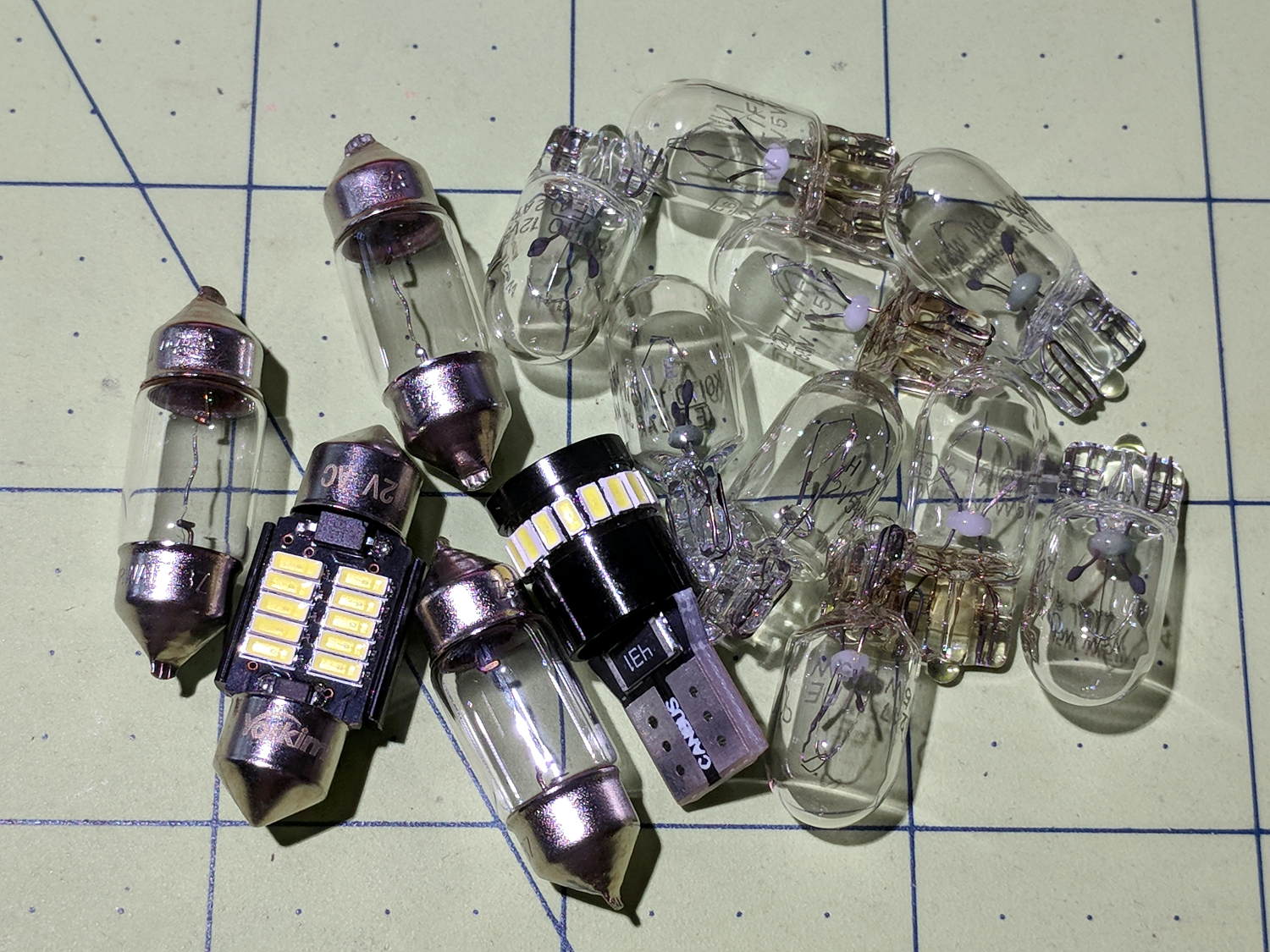
The bulbs with conical ends, known as “festoon” lamps, (unsurprisingly) come in several lengths. The Forester bulbs are about 25 mm long, (unsurprisingly) much shorter than the 31 mm LEDs that seem to be the smallest available replacements, but (surprisingly) the socket tabs have barely enough compliance for the extra half dozen millimeters:
Subaru Forester 2015 – dome with 31 mm festoon LED bulb
The LEDs are much much much brighter than the incandescents, although I’d prefer warm white to cool white. The cargo compartment lamp in the back is still way too dim; I don’t understand how Subaru decided on a plastic cover tinted dark smoke gray.
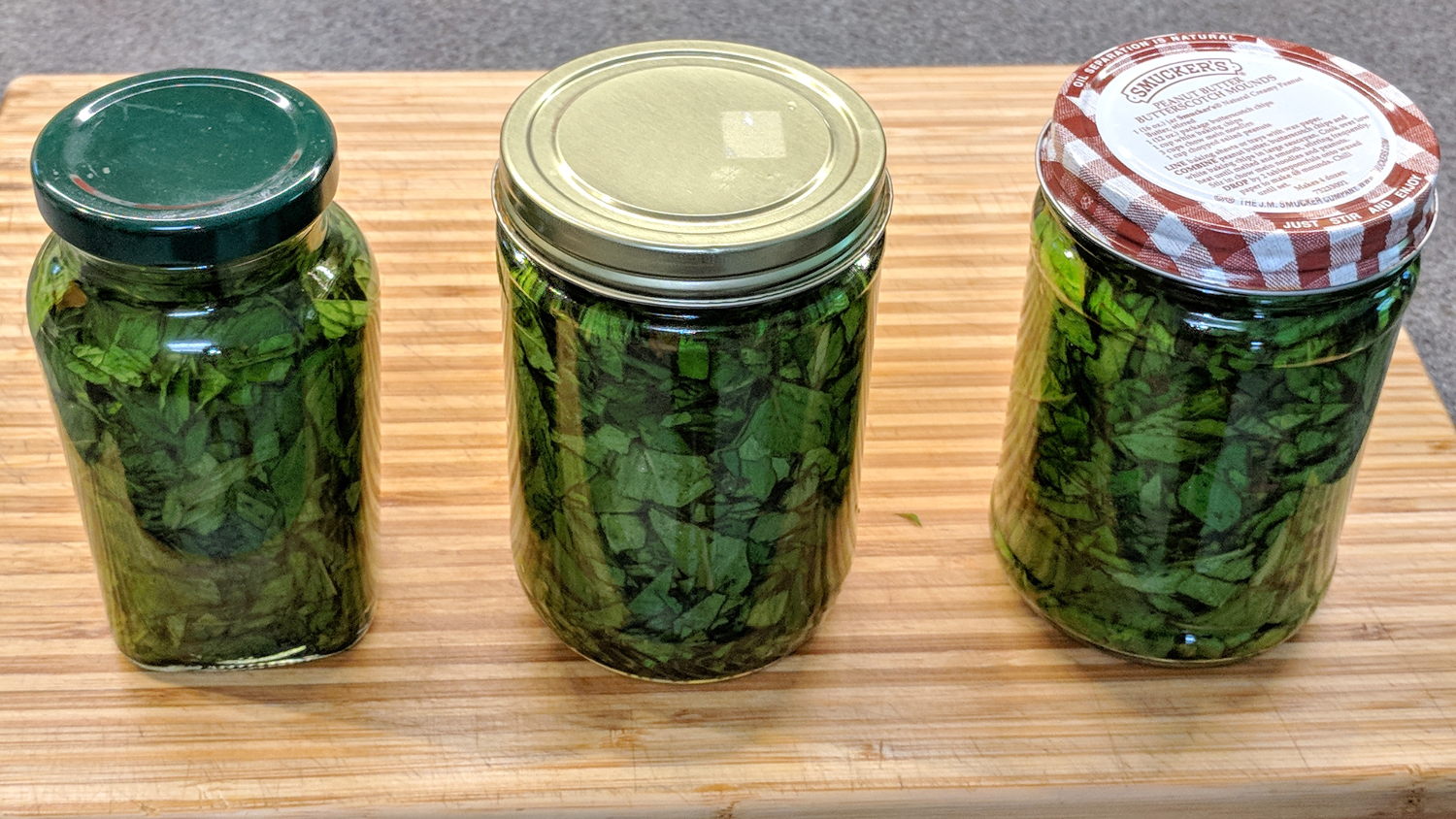
Mary harvested a great bunch of spearmint from a place where it wouldn’t be missed and, after rinsing, plucking, and chopping, we now have a liter of Mint Extract in the making:
Mint Extract – start – 2018-05-29
The big jars got 3 oz of coarse-chopped leaves apiece, the smaller jar 1 oz, and the (removed) stems added up to 3.5 oz, so call it 1/3 waste. Not that this is an exact science, but I’d say 3/4 pound of just-picked mint, packed slightly tighter than those jars, would produce a liter of extract.
Because we started with fresh-picked leaves, a liter of 190 proof = 95% ethanol Everclear (*) will extract the oil better than the 80 proof = 40% ethanol vodka I used for dried vanilla beans.
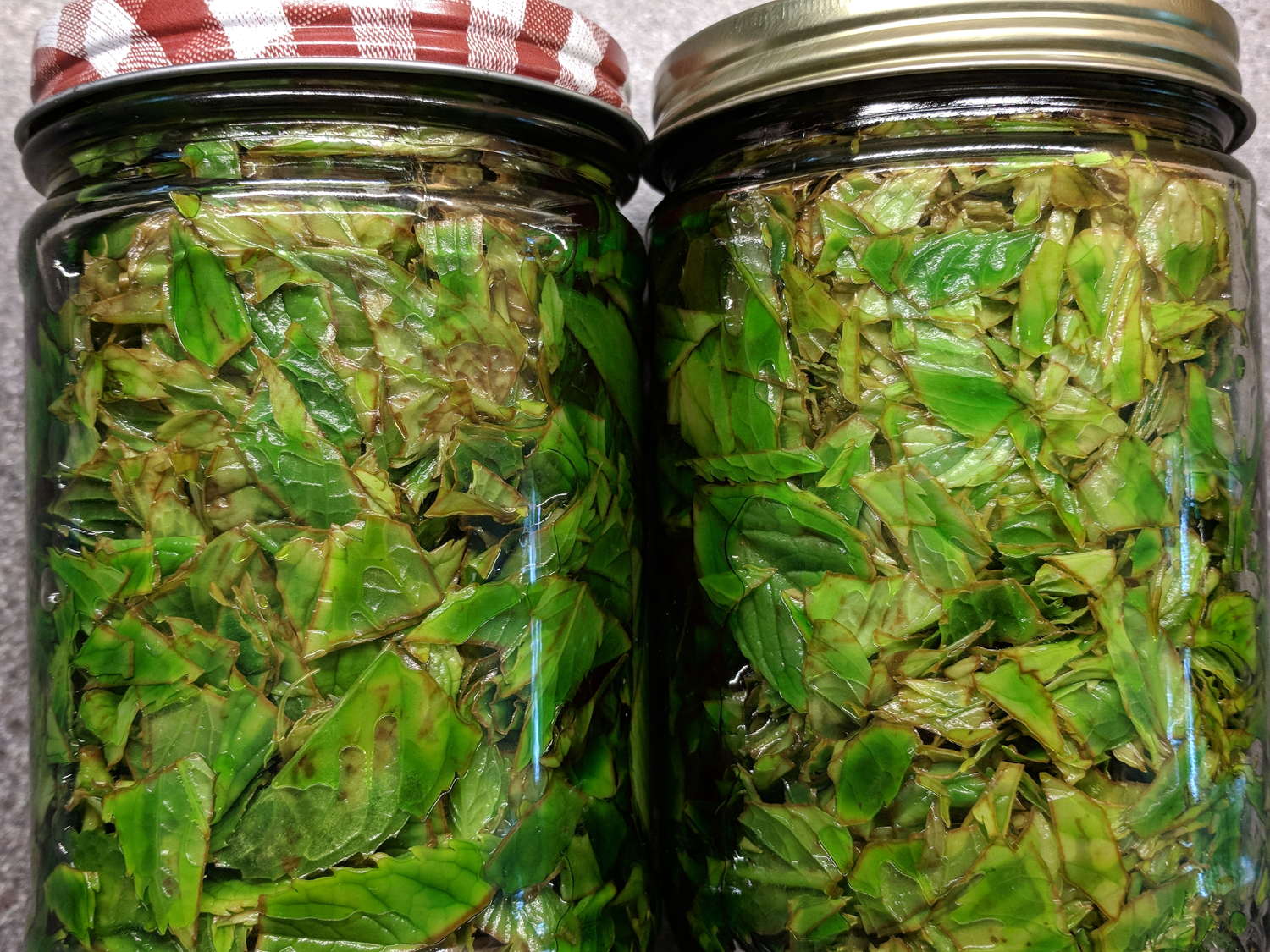
A day later, the leaves definitely look dehydrated:
Mint Extract – browning leaves – 2018-05-30
Those bottles are lying on their sides with the camera above, looking through the air bubble to the leaves. Unlike commercial mint extract, this stuff is green!
It’ll be finished after a month of daily agitation, but surely it’s an exponential process: a few hundred μl already pep up a mug o’ cocoa just fine.
In very round numbers, I get 10 drops / 0.1 ml, so 1 drop = 10 μl.
Bonus: the cutting board smells wonderful.
(*) It may be Olde White Guy Privilege, but clerks don’t even blink when I stagger up to the counter clutching a bottle of high-octane hooch; they don’t even card my age!
For the record, a 5/8 inch socket works fine. One could surely use a 16 mm socket in a pinch.
Wear leather gloves to prevent a nasty gash from the stamped-steel muffler shroud as you pull the sparkle plug cap to avoid an absolutely impossible engine startup while you’re wrenching under the deck.
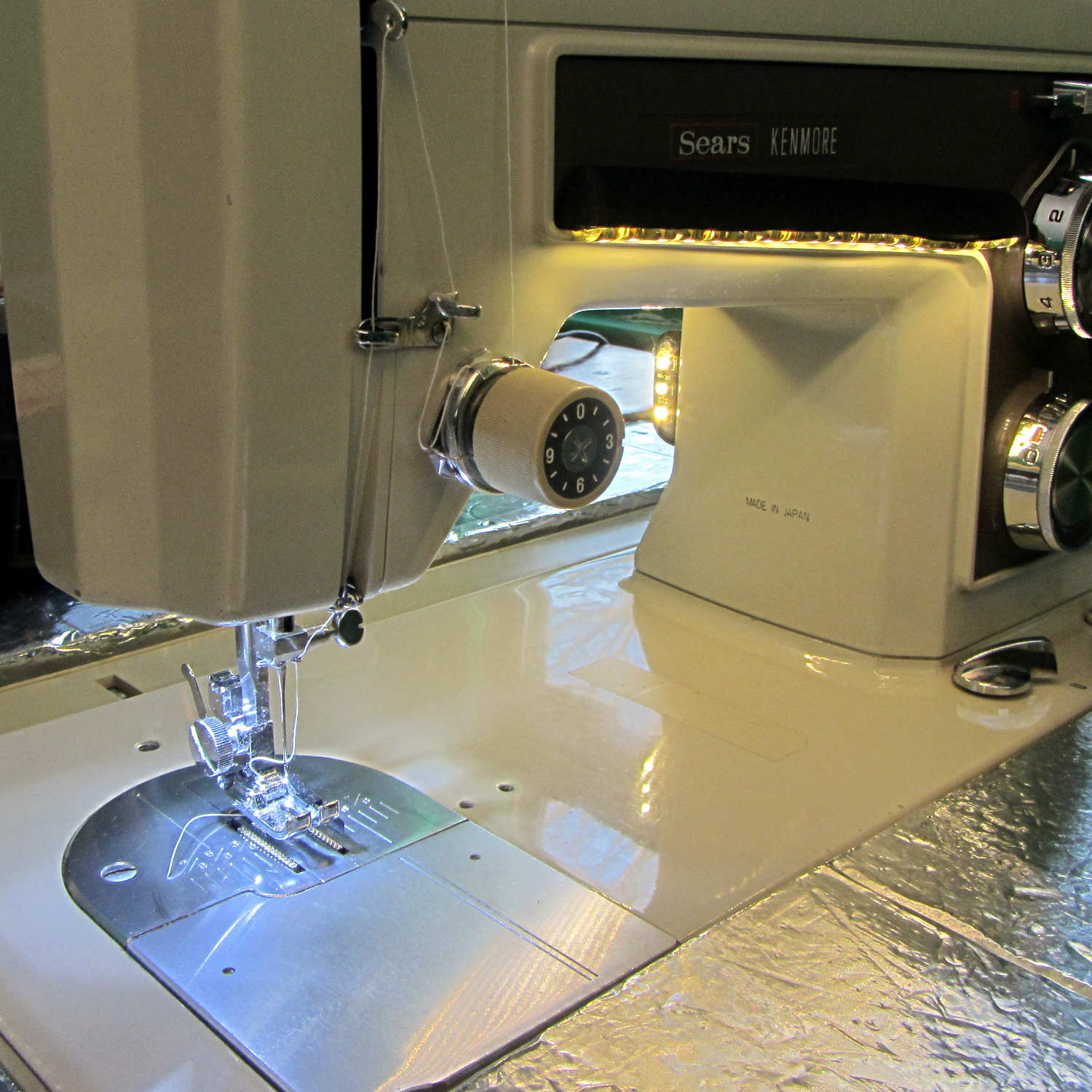
The first white LED fixture built to illuminate one of Mary’s Kenmore 158 sewing machines has been in regular use for the last four years:
Kenmore 158 Sewing Machine – mixed LED lighting
We never found a good time to rip-and-replace the “prototype” with brighter SMD LEDs and one of the LEDs finally gave up.
They’re 10 mm white LEDs with five chips wired in parallel, which is obvious when you look into the remaining LED running at 1 mA:
10 mm white LED – chips
The center chip is just dimmer than the others, which means their QC doesn’t tightly control the forward voltage spec.
The wire bonds on the anode terminal of the failed LED look a bit sketchy:
10 mm white LED – wire bonds
Fortunately, I hadn’t removed the 120 VAC wiring for the original bulb and I have two OEM bulbs from other machines, so I just removed my LED gimcrackery, installed a good old incandescent bulb, and she’s back to sewing with a pleasantly warm machine.
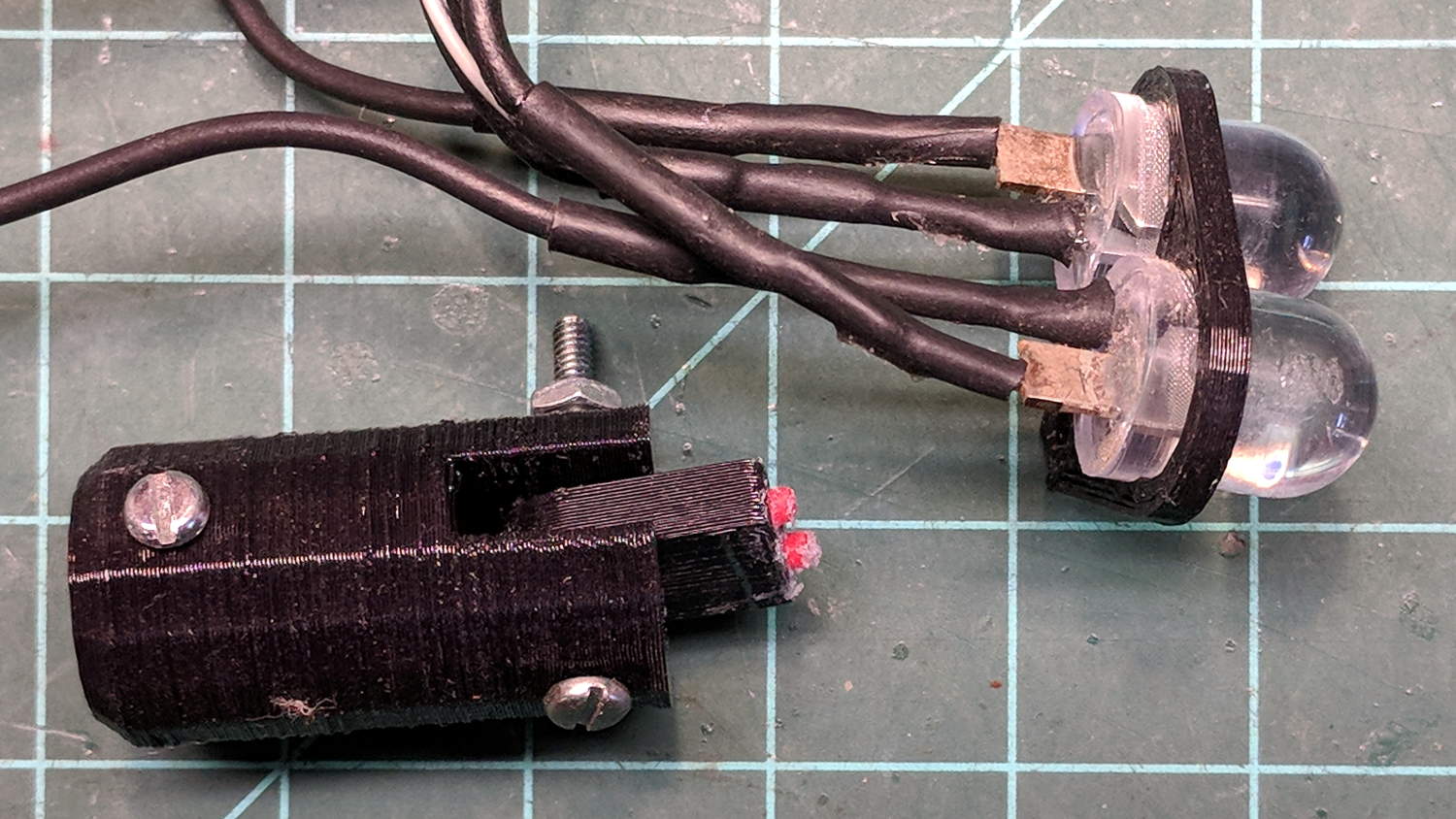
The fixture holding the LEDs broke apart as I extracted it, but it’ll never be used again:
10 mm white LED – fixture
The LEDs are rated at 3.5 V and 200 mA (!), but were reasonably bright in series from a 6 V unregulated supply. Perhaps a power glitch killed the poor thing? We’ll never know.
LEDs are reputed to have lifetimes in the multiple tens of thousands of hours, but I’ve seen plenty of failed automotive LEDs and fancy new LED streetlights out there, not to mention many dead and dying traffic signals. Seeing as how they’re in (presumably) well-engineered fixtures with good power supplies and are at most only a few years old, there shouldn’t be any failures yet.
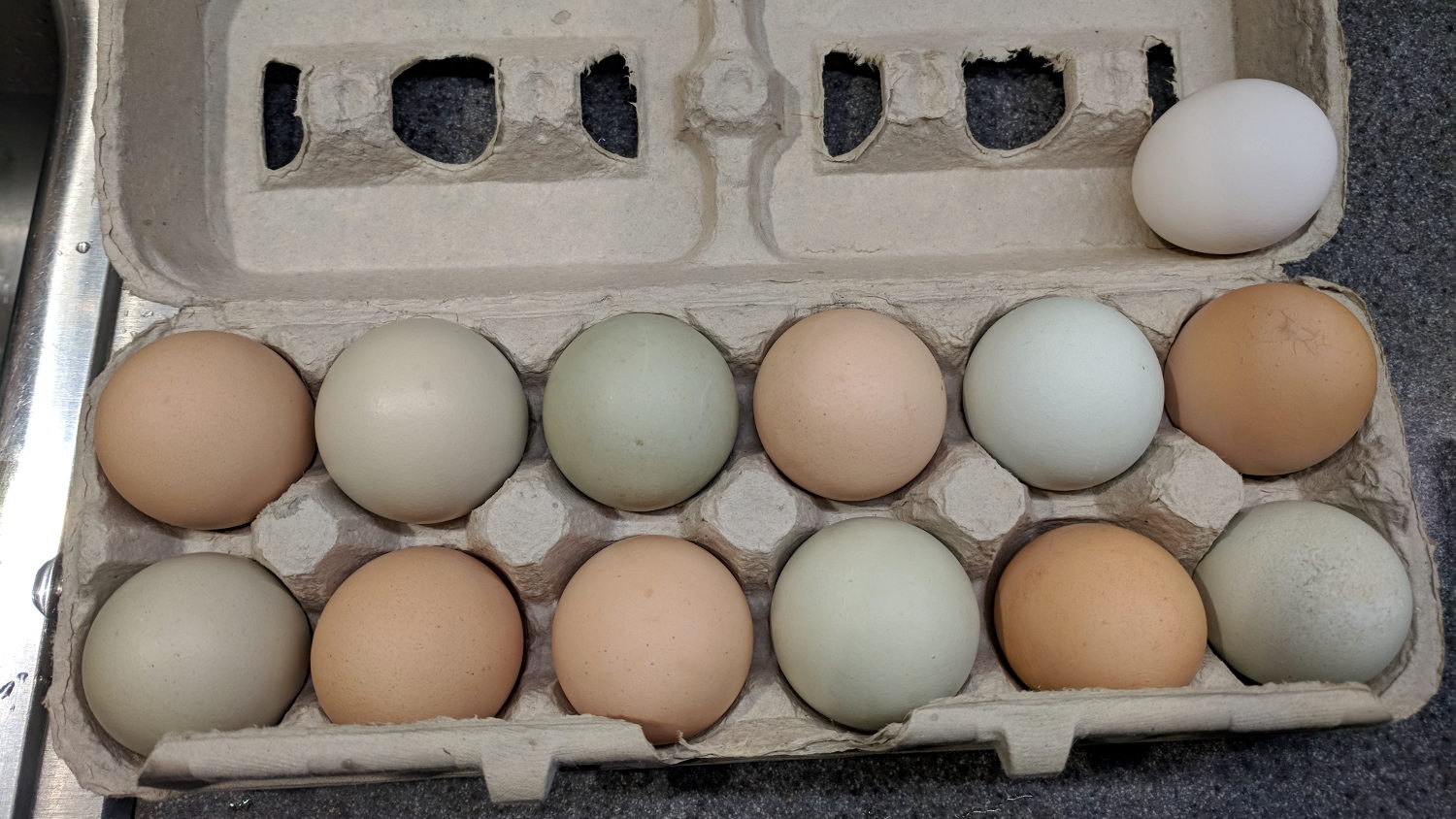
This cheerful assortment came from a friend with an assortment of happy chickens:
Multicolored chicken eggs
The lonely Medium white egg, obviously strictly from commercial, serves as a size and color reference. Most of the others weighed in the Large to Extra-Large range.
Even though none of the chickens had the digital upgrade, the morning omelet tasted just fine!
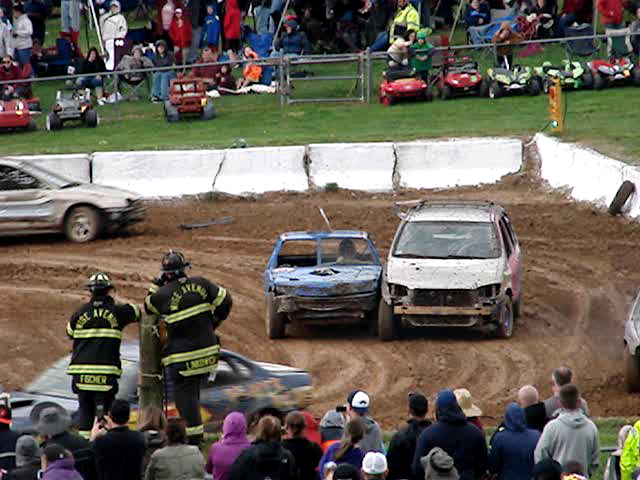
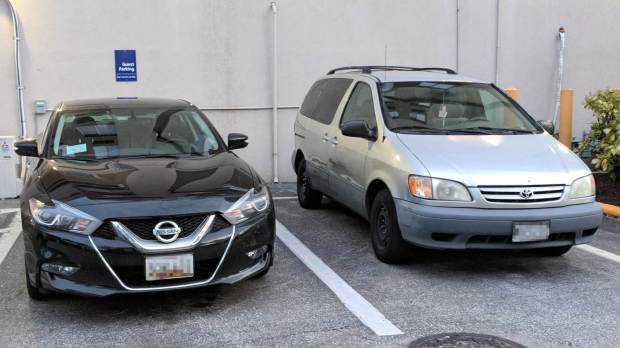
Although I knew the Sienna showed signs of a leaky head gasket, the exhaust system needed some attention, and a sporty used car recently put it in the shade, this still came as a surprise:
I’m trying to get a crew … together and live the demolition derby dream
By the time I arrived, the dashboard trim had vanished and the air bags were safely out:
I managed to pry the glass off using a Gasket Scraper and considerable muttering.
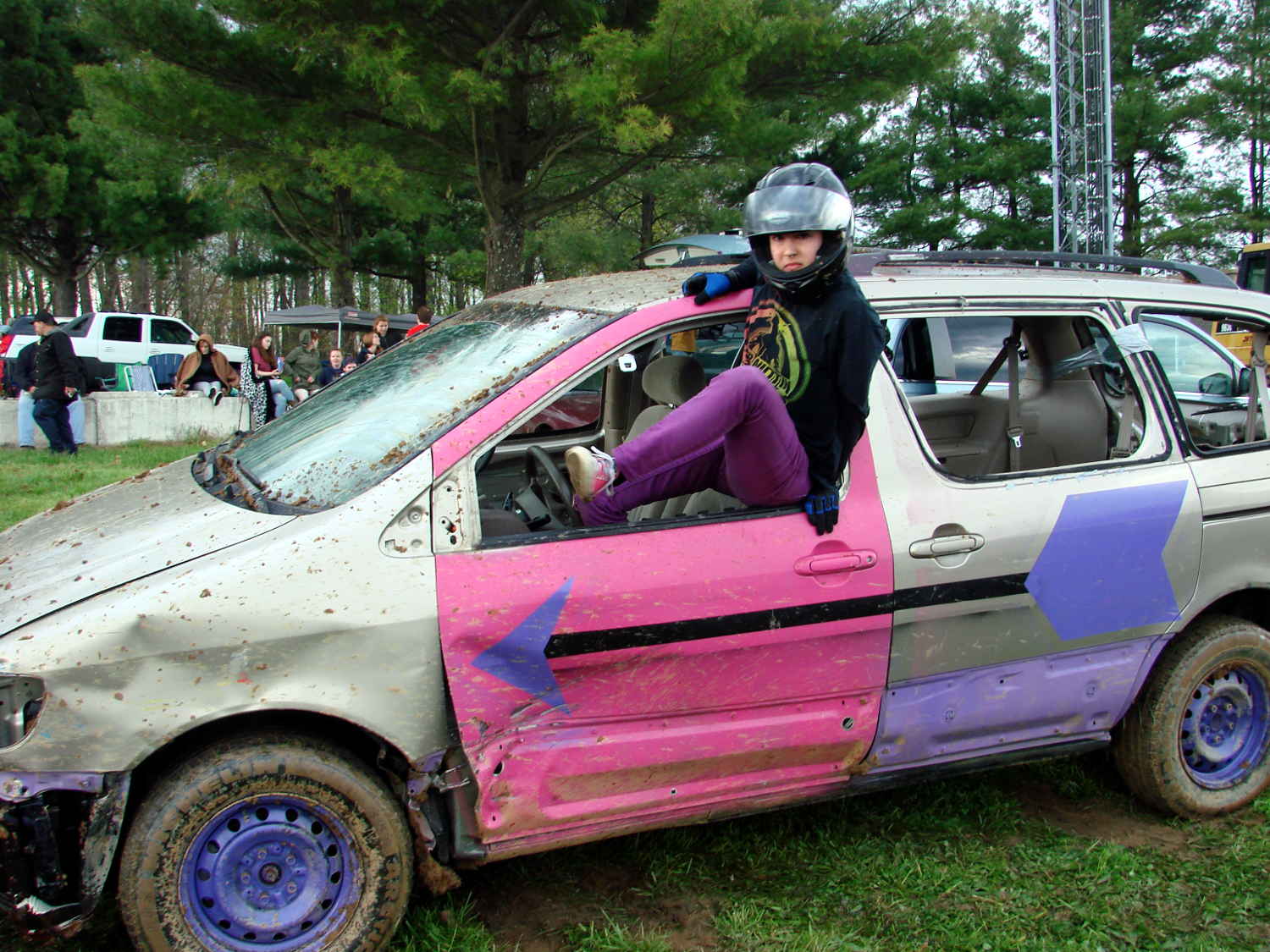
With all the exterior trim, lights, and mirrors gone, the Sienna was in fine race trim:
Sienna – Demo derby race trim
But, being no longer street-legal, it required trailering. For the record, not all huge pickup trucks have bulky guys with pot bellies behind the wheel: