The Smell of Molten Projects in the Morning

Ed Nisley's Blog: Shop notes, electronics, firmware, machinery, 3D printing, laser cuttery, and curiosities. Contents: 100% human thinking, 0% AI slop.

Category: Home Ec

Things around the home & hearth

  • Whirlpool Refrigerator Drawer Slide: Another Bracket

    Thirteen years after the original repair on the left side and eight years after I fixed the drawer slide on the right side, this happened:

    Refrigerator shelf slide - failed parts
    Refrigerator shelf slide – failed parts

    The general idea is to wrap a new bracket around the old bracket, because trying to remove the old one will probably cause more damage:
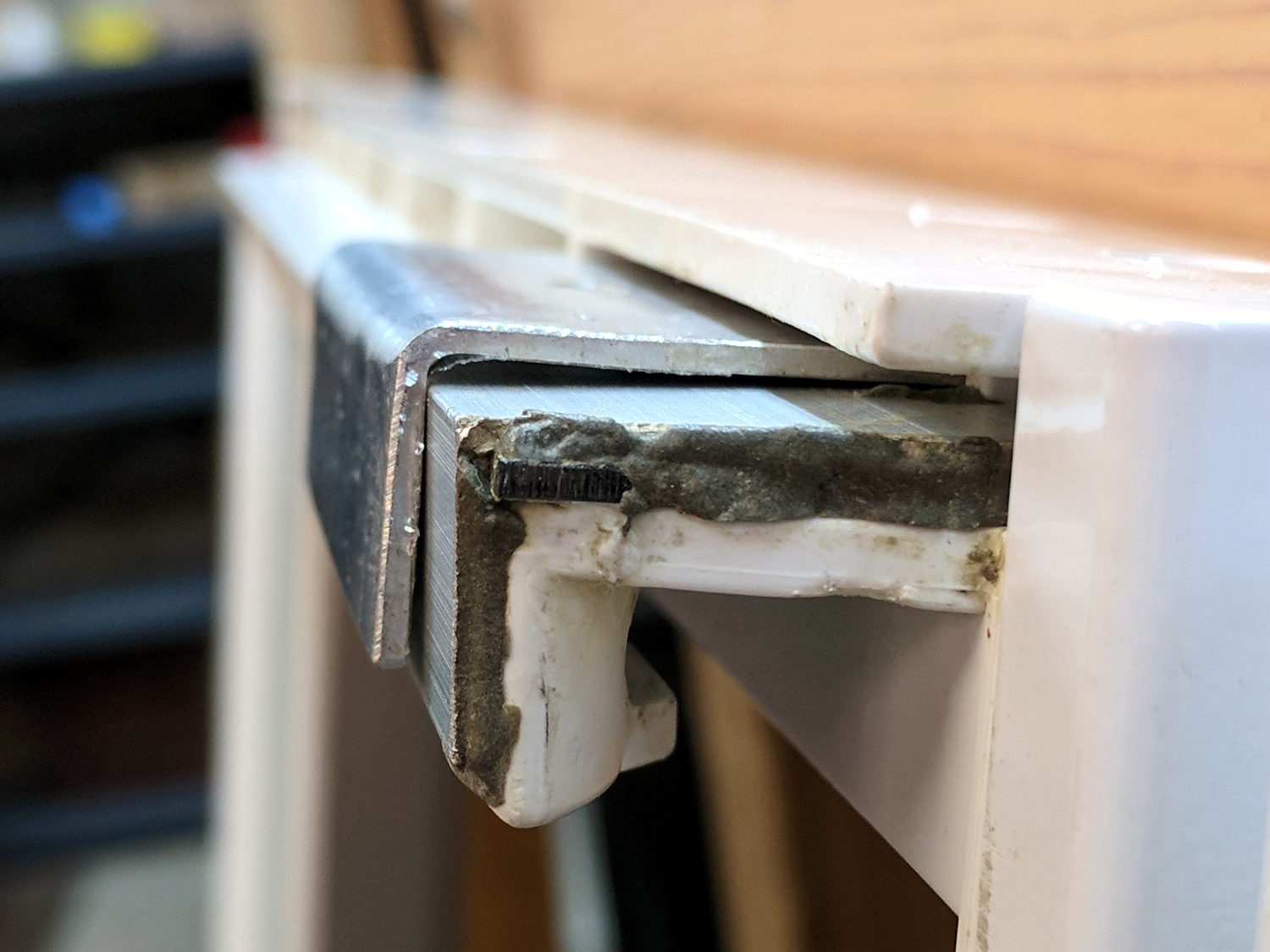
    Refrigerator shelf slide - trial assembly
    Refrigerator shelf slide – trial assembly

    A pair of screws hold the new bracket to the shelf support:
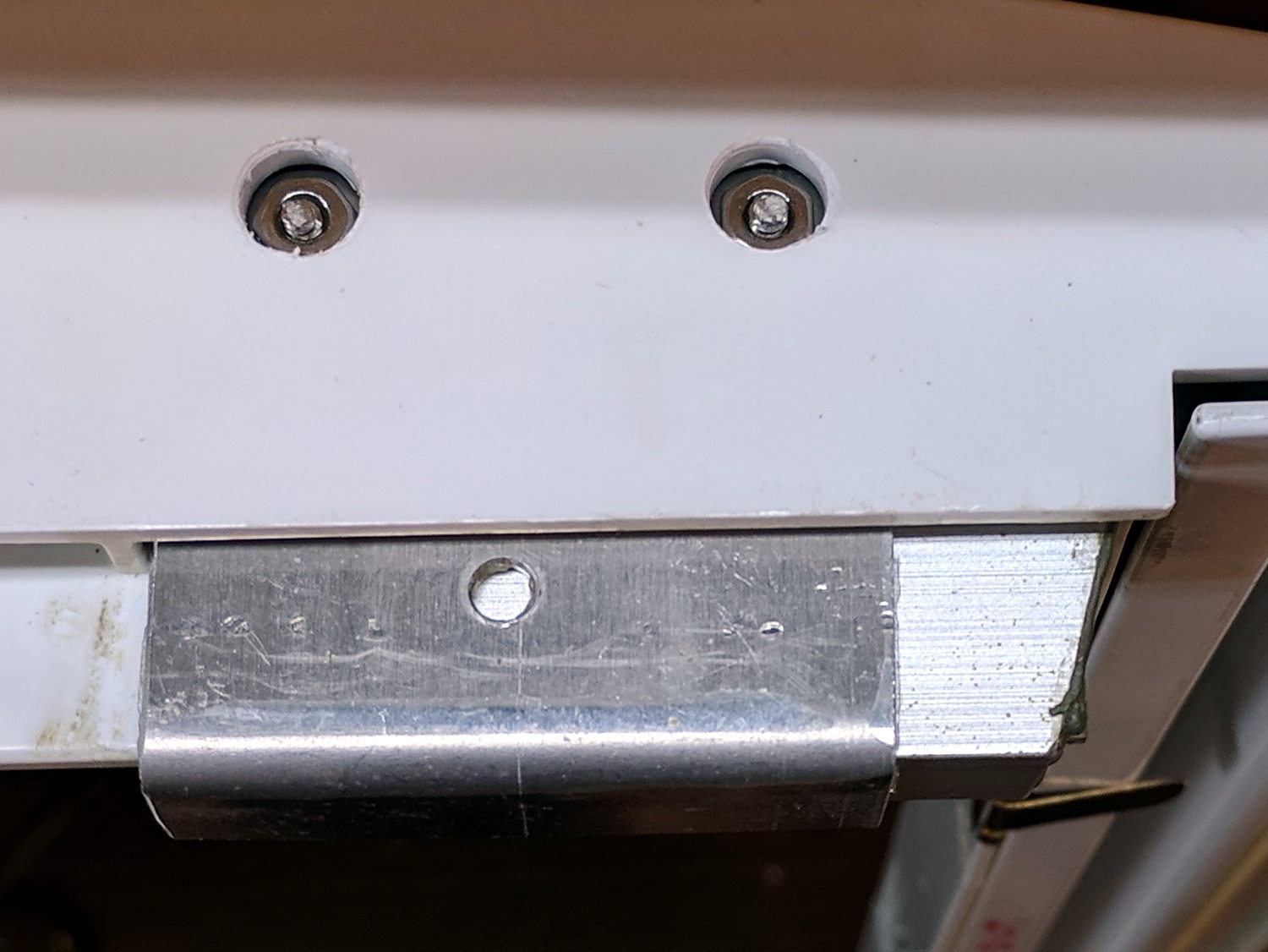
    Refrigerator shelf slide - support screw nut openings
    Refrigerator shelf slide – support screw nut openings

    Those two screws must support the entire weight of the drawer, which is exactly what broke the original all-plastic frame and slide.

    The epoxy chip and transparent plastic sheet in the first picture spaced the old aluminum bracket away from the shelf support and reduced the space beyond the new bracket enough to require drilling access holes. Fortunately, they’re hidden inside the support frame, so nobody will ever know.

    The shelf support is a huge floppy rectangle, so I clamped it to the bench vise while drilling the holes:

    Refrigerator shelf slide - upright vise clamp
    Refrigerator shelf slide – upright vise clamp

    The new bracket is on the right, with a sheet of white acrylic spacing it away from the shelf support by exactly the same distance as the angled aluminum snippet replacing the failed epoxy & plastic on the broken part:

    Refrigerator shelf slide - bracket parts
    Refrigerator shelf slide – bracket parts

    The two holes in the middle of the aluminum parts show that I used exactly the same angle brackets as raw material. It’ll be a sad day when I eventually use the last of those brackets.

    Putting the parts together, with double-stick tape holding all the parts in place, shows how they fit:
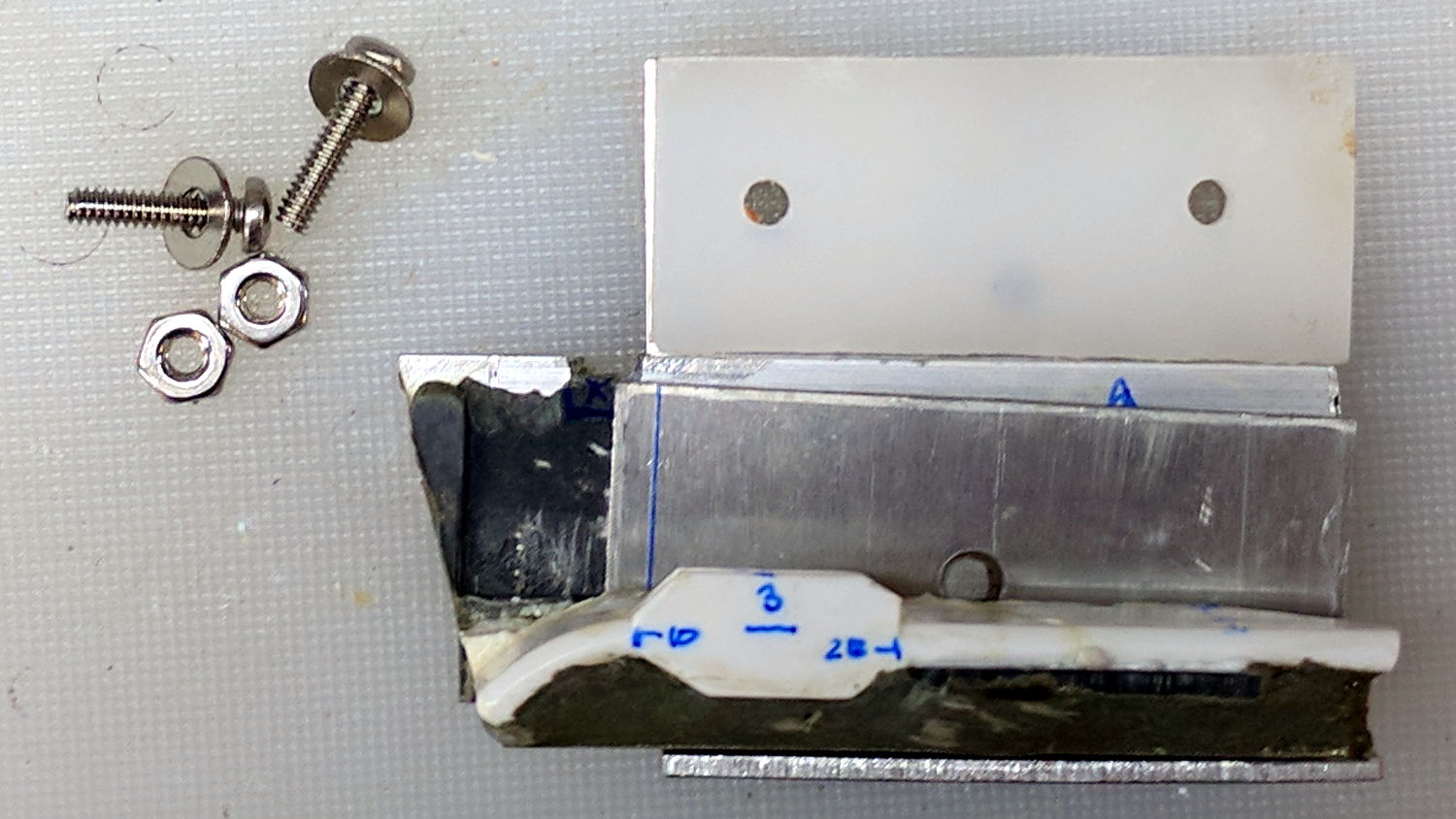
    Refrigerator shelf slide - repair trial assembly
    Refrigerator shelf slide – repair trial assembly

    And then it just snapped into place. I didn’t bother pretending solvent glue would help anything, nor did I apply any epoxy, so this whole thing hangs from those two 4-40 screws. On the other paw, their steel beats the original white plastic.

    I devoutly hope to never rebuild the actual drawer slide, but these dimensions may help somebody else out of a jam:

    Refrigerator shelf slide - dimensions
    Refrigerator shelf slide – dimensions

    The vertical “40” dimension refers to the available space from the bottom of the white plastic part to the top of the shelf support frame; the new bracket is a tad shorter than that.

    The plastic parts in that refrigerator have been a complete disappointment: were it not for my relentless repair jones, we’d likely be on our third or fourth refrigerator by now. Oddly, the cooling parts continue to chug along (*), without more than the occasional loud noise in the middle of the night.

    We’re definitely doing our part to reduce our waste stream.

    (*) The most recent freezer fan hasn’t failed yet!
  • Amazon Packaging: PAR30 LED Bulb

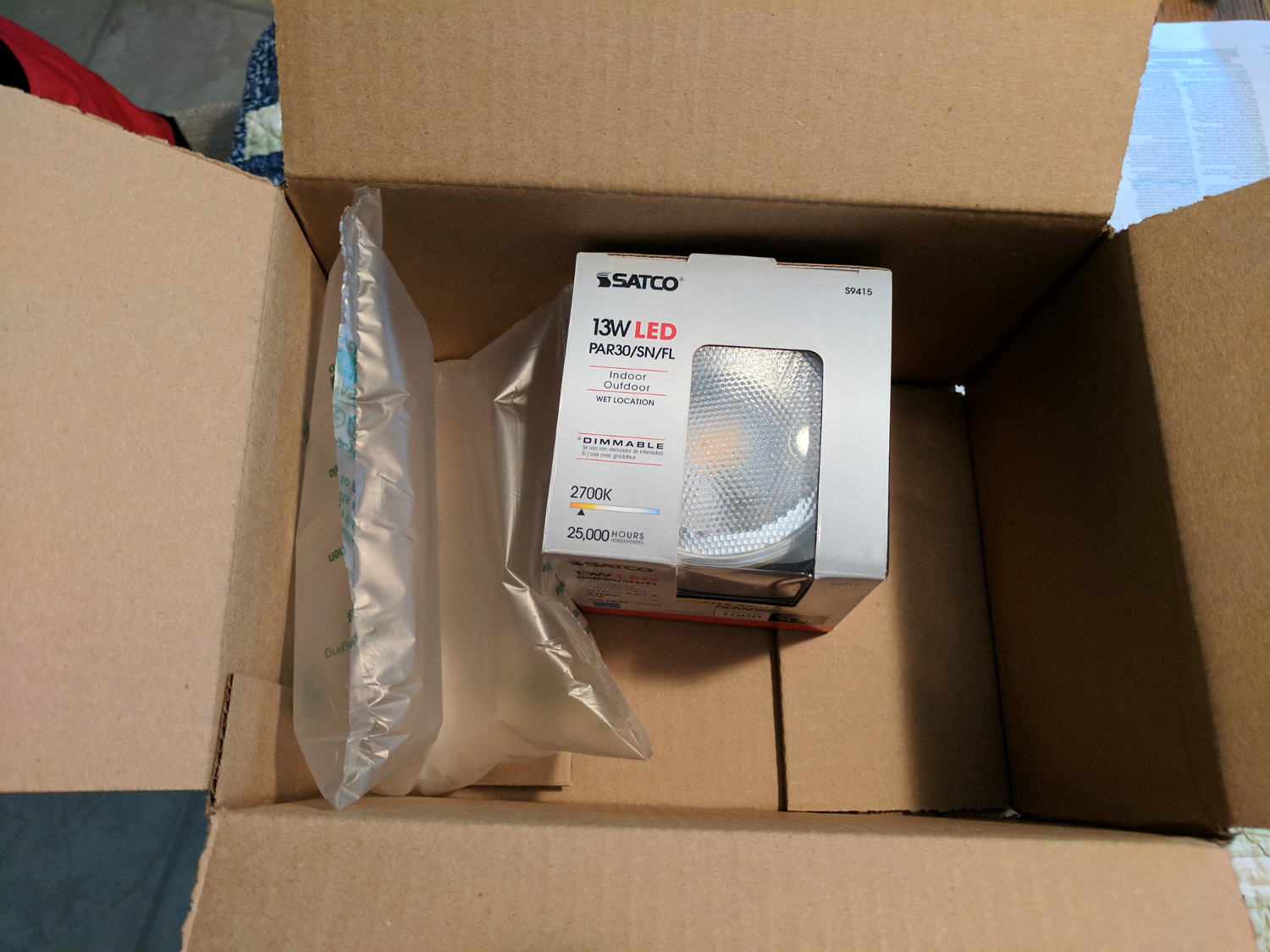
    The second incandescent bulb over the kitchen sink popped and a replacement LED bulb arrived with the by-now-familiar homeopathic Amazon padding:

    Amazon Packaging - Satco LED bulb
    Amazon Packaging – Satco LED bulb

    Turns out the new bulb is slightly brighter than the old one:

    Satco S9415 LED PAR30 bulbs
    Satco S9415 LED PAR30 bulbs

    Oh, and it’s three bucks cheaper, too.

    Eyeballometrically, 5% makes no difference whatsoever, even in a side-by-side comparison.

    Life is good.

  • Eyeglasses: New Nose Pads

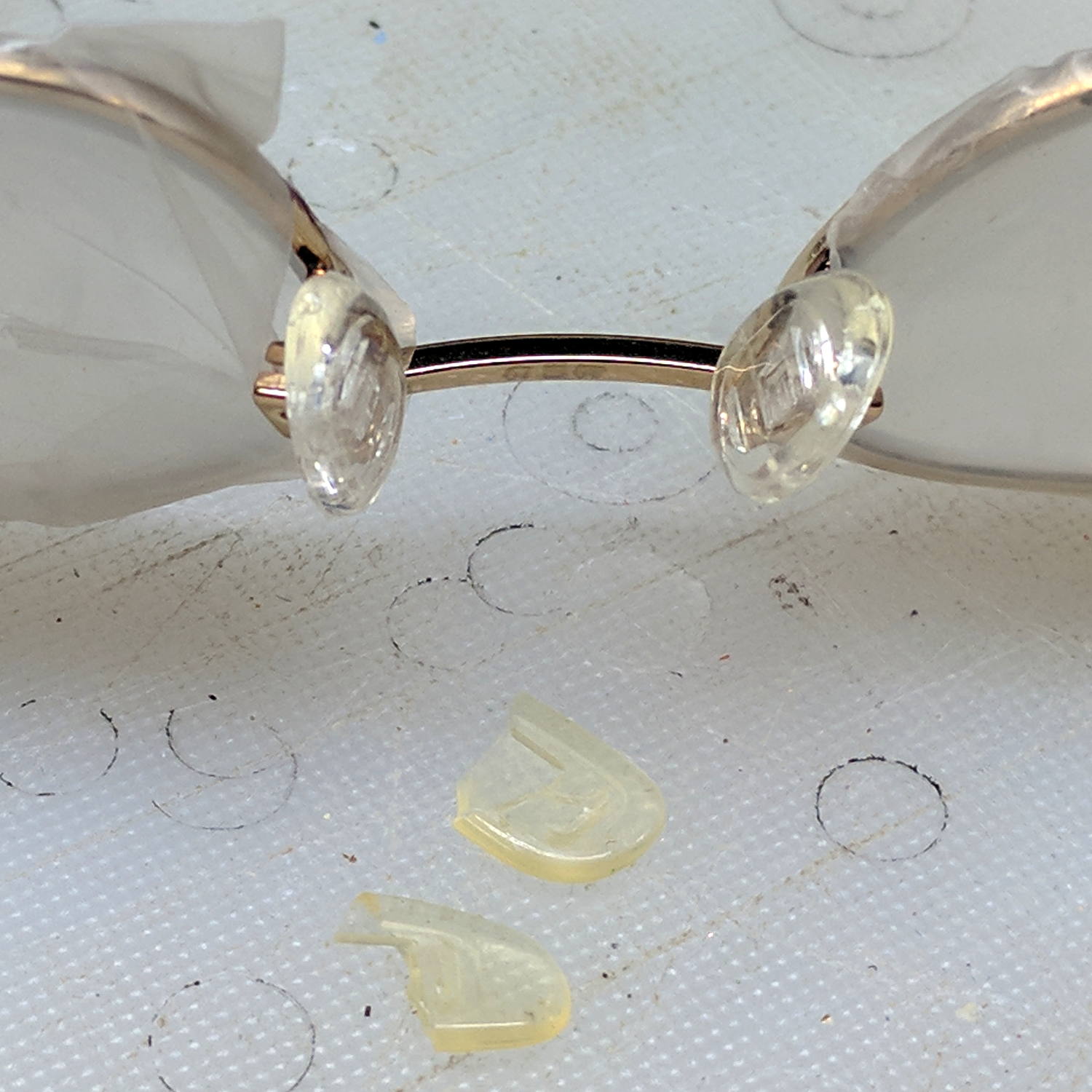
    A stray nose pad appeared on the kitchen floor and, after some investigation, it corresponded with the stub in Mary’s oldest reading glasses. Some rummaging in the Bag o’ Eyeglass Stuff produced a similar pair of pads:

    Glasses - missing nose pad
    Glasses – missing nose pad

    Although the lenses have become somewhat scuffed over the years, masking the optics with Parafilm is always Good Practice:

    Glasses - new nose pads - masked
    Glasses – new nose pads – masked

    The split boxes clamped around the pad stems required a bit of delicate opening-up with a utility knife blade before the new ones pressed firmly into place.

    This was significantly easier than the Silhouette frame repair!

  • American Standard Kitchen Faucet: Cleaning and O-Rings

    The O-rings on the spout of our American Standard kitchen faucet wore out again; having described that repair many times, there’s no need to say much more about it. I didn’t want to get into this repair while thinking about the hot limit problem, but I did check to make sure the box under the sink had some O-ring replacement kits.

    A bench vise with soft jaws holds the spout while you remove the escutcheon ring retainer:

    Kitchen faucet spout - in vise
    Kitchen faucet spout – in vise

    Basically, just tap around the ring with a long drift punch and it’ll eventually fall out onto the reasonably clean rag below it.

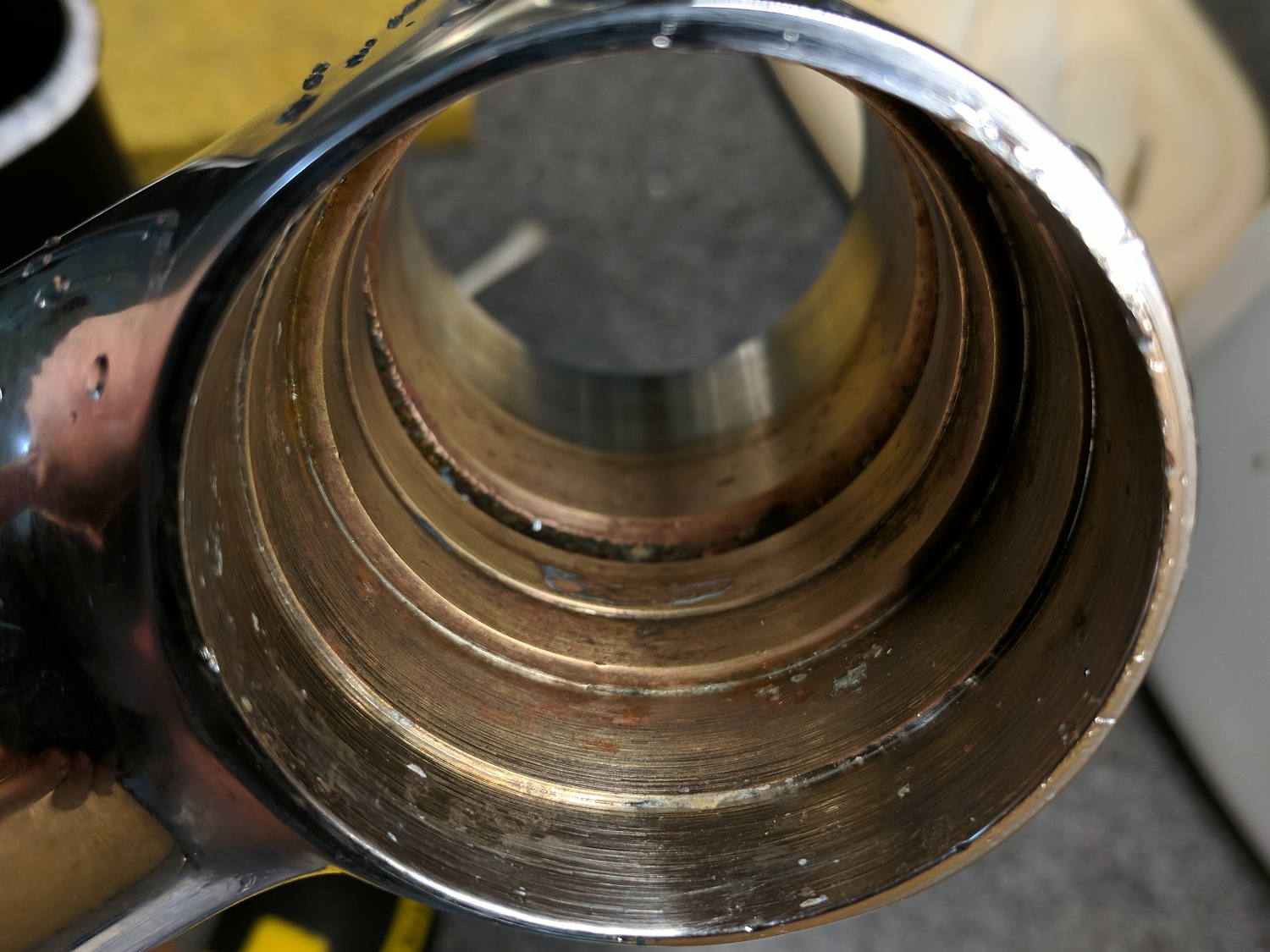
    The interior of the spout before cleaning shows why you should never look into your plumbing:

    Kitchen faucet spout interior - before
    Kitchen faucet spout interior – before

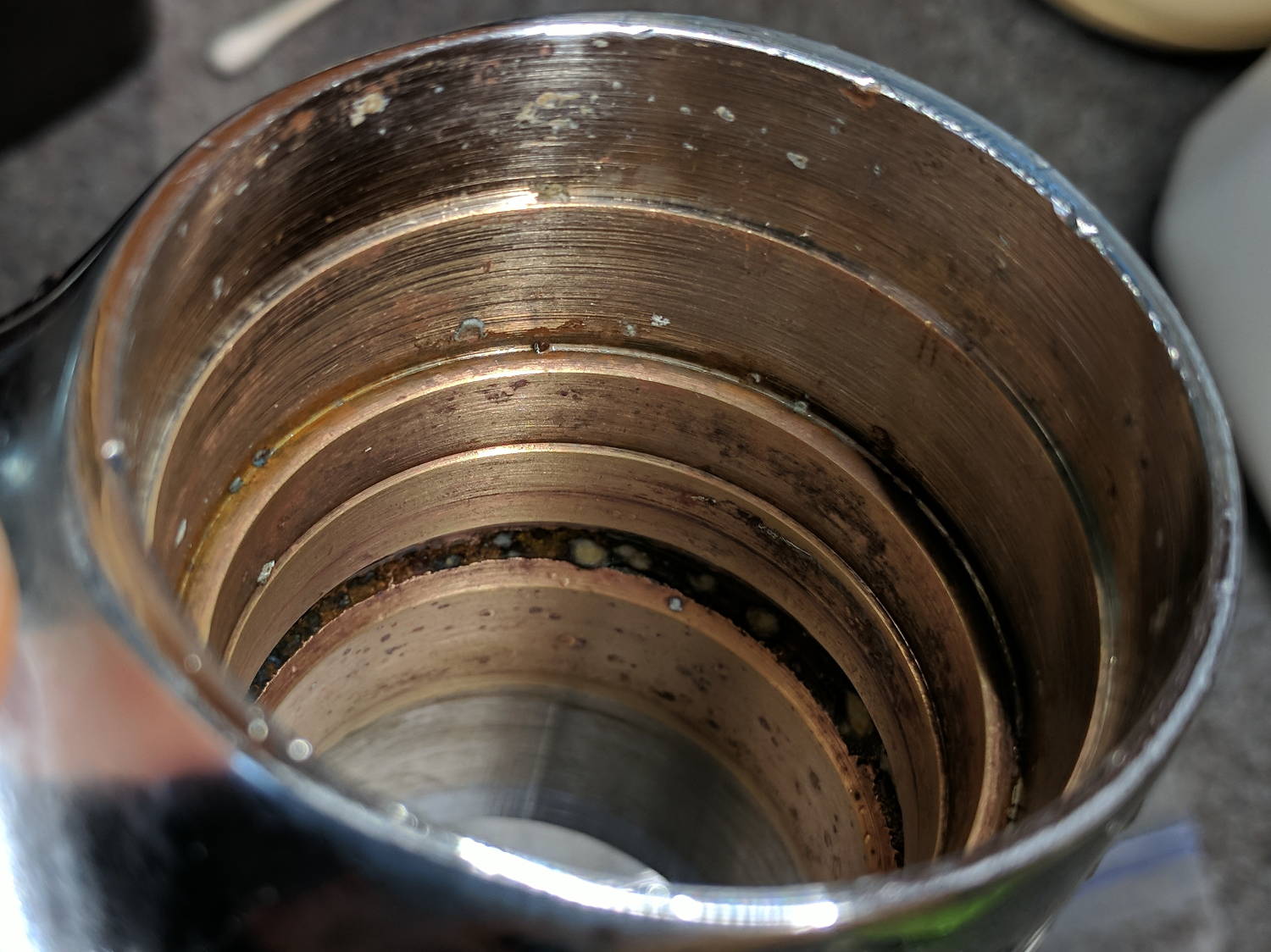
    After a few hours in a white vinegar bath and a few minutes of scrubbing with a ScotchBrite pad:

    Kitchen faucet spout interior - after - 1
    Kitchen faucet spout interior – after – 1

    Another view:

    Kitchen faucet spout interior - after - 2
    Kitchen faucet spout interior – after – 2

    Obviously, you could do better, but it’s hard to get excited about the last few nodules. For whatever it’s worth, the nodules grow despite our water softener; I have no clue what’s going on in there.

    A few wipes of silicone grease, reassemble in reverse order, apply a firm shove, and it’s leakless again. For a while, anyhow.

  • Garden Y Valve Corrosion: Partial Fix

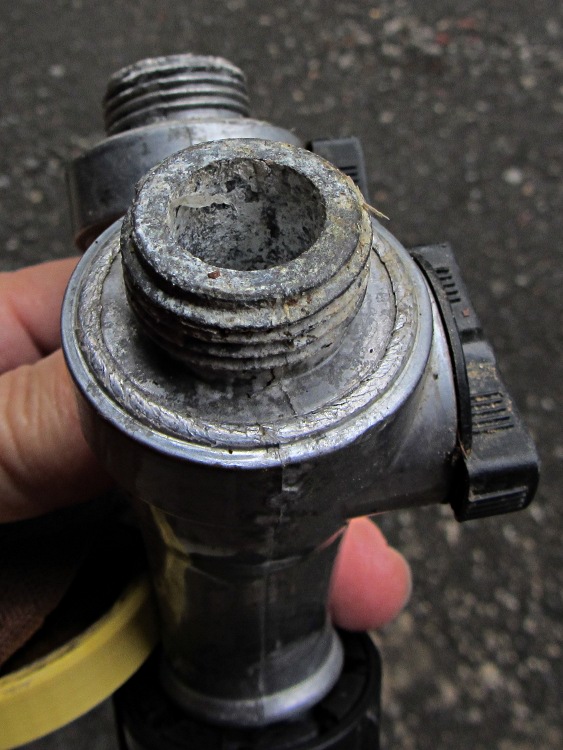
    The corroded Y valve, minus another failed hose fitting, recently emerged from a heap o’ stuff on the Basement Laboratory Bench. This old photo gives you an idea of what happens to cheap pot metal in a garden:

    Corroded Garden Y Valve
    Corroded Garden Y Valve

    I dropped it Y-end-down into a container of white vinegar for a week, after which a few minutes of scrubbing produced a workable result:

    Garden hose Y valve - after vinegar soak
    Garden hose Y valve – after vinegar soak

    The threads on the left side are pretty much gone. The hose fitting protected the threads on the right, but was corroded firmly in place; a penetrating oil soak and concerted muttering removed it.

    All of the garden hoses and fittings out in Mary’s Vassar Farms plot have survived well beyond their best-used-by date. Given that we salvaged many hoses from the Farm’s end-of-season midden heaps, they don’t owe us much …

    The next iteration will have more brass …

  • Buck Season

    This eight-pointer was one of two browsing in the back-yard grove:

    Eight point buck deer in velvet
    Eight point buck deer in velvet

    The other was a mere four-pointer. In a few weeks they’ll get all feisty and browse the grove in shifts.

    The notion of a “suburban hunting license”, perhaps with crossbows, may eventually gain traction.

    A few days later, Mary awoke to a great clattering caused by a buck fighting free of the slot between the garden’s mesh “deer fence” and the neighbor’s wood fence, flattening the corner post in the process. A similar encounter a few years ago ended poorly.

  • American Standard Elite Kitchen Faucet: Hot Limit Safety Stop Mystery

    For the second time in a few months, the kitchen faucet handle stopped moving all the way to the left and the spout stopped dispensing hot water. The last time I did nothing and, after a few days, it resumed normal operation. Having had a while to think it over, this time I removed the handle and saw exactly what I expected:

    American Standard faucet - hot limit ring
    American Standard faucet – hot limit ring

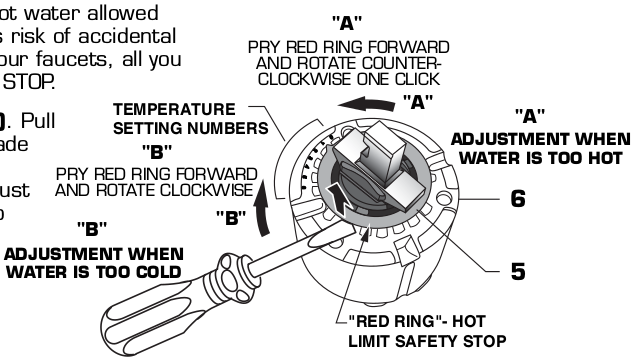
    The installation manual has a useful diagram:

    American Standard Elite 4453 4454 faucet - hot limit stop diagram
    American Standard Elite 4453 4454 faucet – hot limit stop diagram

    The red ring (the “hot limit safety stop”) fits into one of eight click-stop positions; the photo shows it in position 5, with 0 being just to the right of the bottom screw and 7 just below the horizontal notch across the middle.

    The dark gray plastic feature inside the ring connects the metal handle (the out-of-focus silver stud aimed at you) to the valve assembly. The two lugs sticking out to its left and right bump into the inward-pointing red lugs as you rotate the handle leftward = clockwise = more hot. With the ring set to the 0 position, the red lugs overlap similar lugs molded into the light gray valve body that limit the rotation in both directions.

    Observations:

    • You must pry the red ring upward to disengage the splines locking it into position
    • The gray lugs impose a hard stop in the counterclockwise direction = cold
    • There’s no upward force on the ring for any reason that I can imagine
    • We don’t pound on the faucet handle, so there’s no shock loading

    I have no idea how the red ring could disengage its splines and move counterclockwise by five clicks all by itself.

    I reset it to 0, reassembled the faucet with a dot of penetrating oil in the set screw, and it’s all good.

    We’ll see how long that lasts …