Ed Nisley's Blog: Shop notes, electronics, firmware, machinery, 3D printing, laser cuttery, and curiosities. Contents: 100% human thinking, 0% AI slop.
All the work on Mary’s bike reminded me of the rear fender bracket I meant to install on mine, with more clearance for the strut stabilizing the under-seat packs:
Tour Easy Rear Fender Bracket – long setback – solid model – show
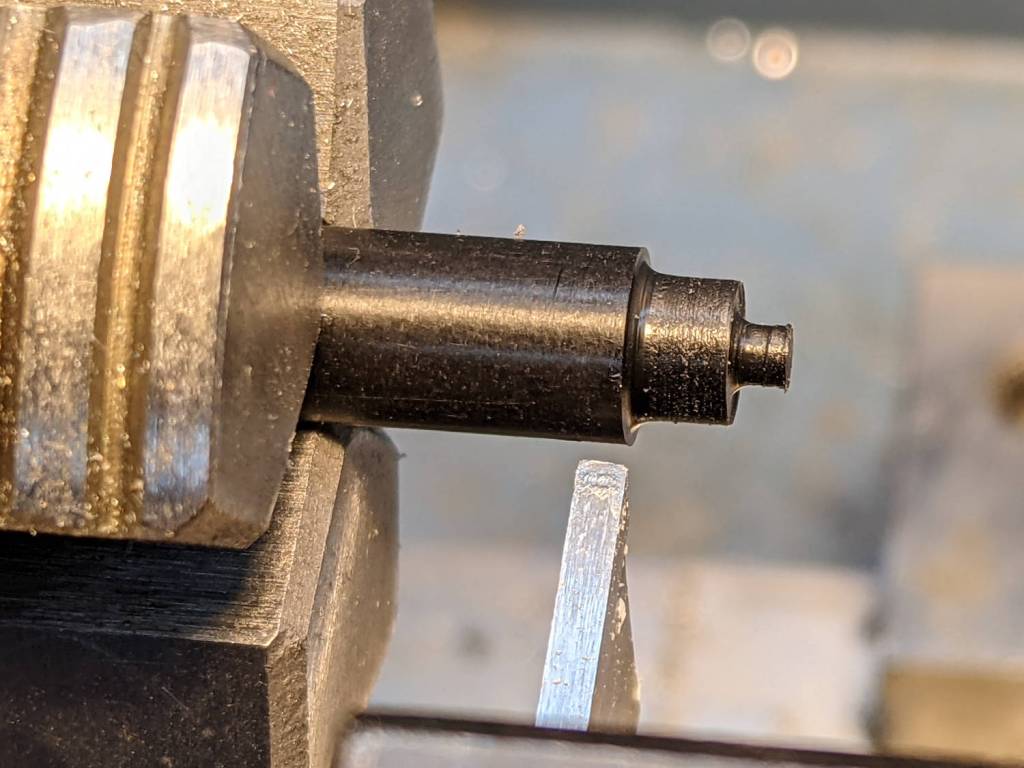
Rather than glue a PETG filament snippet into a screw, I turned a little Delrin plug:
Tour Easy Rear Fender Bracket – screw insert
It’s ready for installation when I’m willing to put the bike up on the rack and pull the rear wheel:
Tour Easy Rear Fender Bracket – screw detail
That’s actually the second iteration for the screw, as the first suffered a lethal encounter with the Greater Shopvac. I know exactly where it is, but I’m not going there …
This happened while switching from natural to black PETG:
M2 nozzle clog – exterior
A closer look:
M2 nozzle clog – exterior detail
Those pix happened after trying to extract whatever-it-is with tweezers, so it’s definitely something with a higher melting point than PETG.
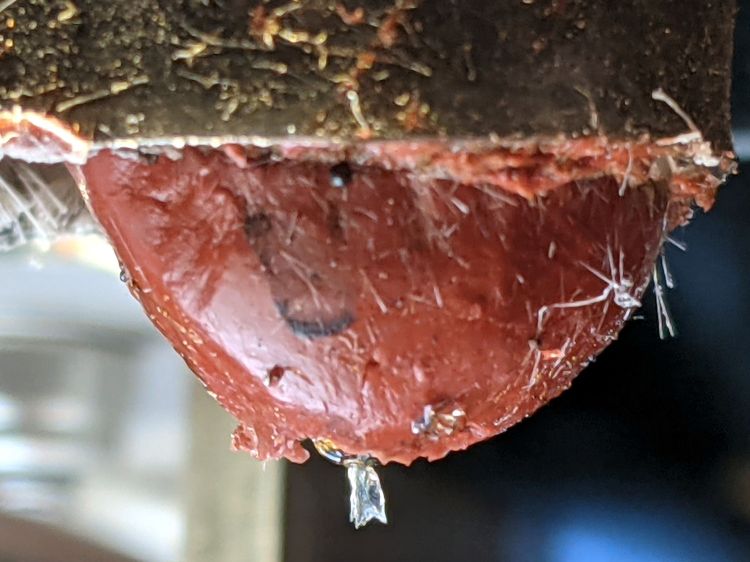
Removing the (warm) nozzle with the block held in a vise reveals a tuft of something:
M2 nozzle clog – interior
The tuft accumulated several turns while unthreading the nozzle from the hot end.
Heating the nozzle a bit more released the tuft:
M2 nozzle clog – extracted tuft
The black-to-clear transition tailing off at the bottom came from the PETG around the tuft in the cone-shaped end of the nozzle above the aperture. The 100 mil squares suggest the tuft was a distinct entity, rather than a collection of threads, and might have been over 5 mm long.
Perhaps a fragment of PTFE or another high-melting-point plastic?
Reassemble in reverse order, reset the nozzle to Z=0 on the platform, and it’s all good.
The plastic frame failed at the pull cord opening, obviously a weak and, alas, non-repairable point.
A quick trip to Lowe’s produced a new miniblind with mounting hardware completely different from the old one. This came as no surprise, as every new miniblind differs from all previous ones; miniblind mounting hardware is not strongly conserved.
The broken frame fit into the plastic end caps mounted just beyond the scarred paint marking the bracket location required for the previous miniblind:
Miniblind bracket – V3
Note that the caps mount with a single screw in the homebrew bracket’s face, which has two holes to match the previous-previous cap.
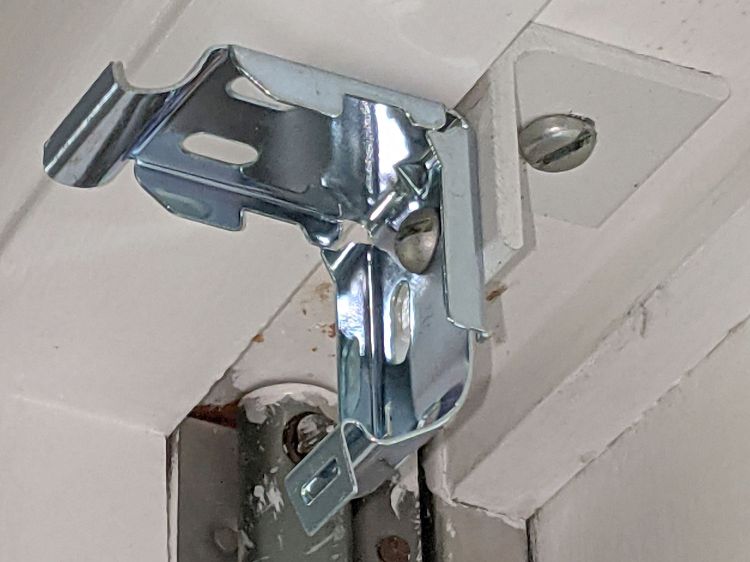
Although the shiny new hardware had two slots, they neither lined up with the existing bracket holes nor extended quite far enough vertically. I lined things up, marked and drilled a single midline hole in both the new hardware and the old bracket, and reused the old screw and nut:
Miniblind bracket – V4 side
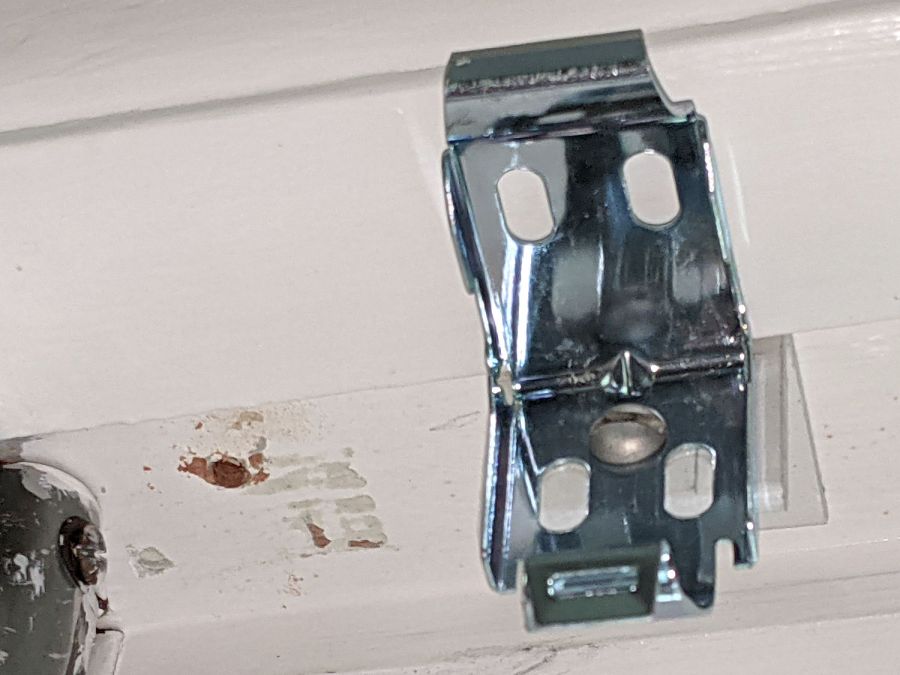
Moving the bracket back to its previous-previous location exposed the scarred paint under the previous position:
Miniblind bracket – V4 front
Fortunately, it’s hidden by the installed miniblind.
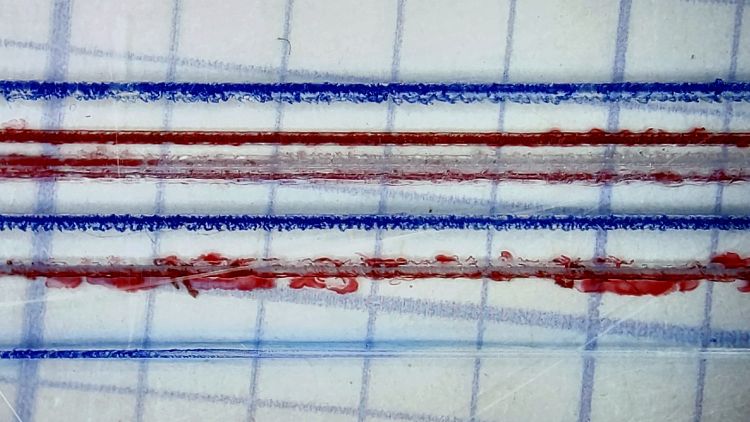
Hairline V tool – 0.2 0.3 0.4 DOC 10K RPM – water cool mid
The bottom blue hairline started with a good cut and ended with the V tool skating along the surface without cutting. The raggedy red one just above it is what happens when you (well, I) try engraving a hairline through Kapton tape without coolant; just don’t do that thing.
The 3D printed fixture holding the cursor came from a neurotically aligned Makergear M2 and the tooling plate has never had much attention to its alignment, so I figured the tilt probably came from crud between the tooling plate and the Sherline’s X axis table, with the printed fixture contributing zilch to the problem.
Which turned out to be the case. Scraping a few flakes from the bottom of the plate and top of the table, dissolving old crud with water + alcohol, and passing a file over both surfaces definitely made a difference. I converted a sheet of 0.1 mm laminating plastic film into a pad by punching holes for the T-nuts:
Sherline tooling plate pad
Snugging the tooling plate down produced perfect alignment along the length of three 0.3 mm deep hairlines:
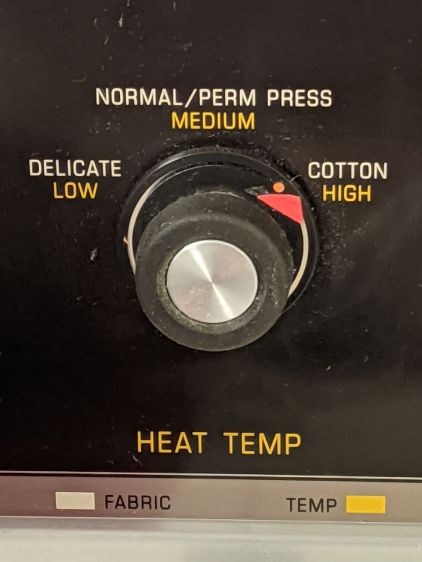
On rare occasions, our longsuffering and much-repaired Kenmoreclothesdryer will sometimes not fully dry a load, as if the heater didn’t turn on. Setting the temperature selector to High:
Kenmore dryer temperature selector – front panel
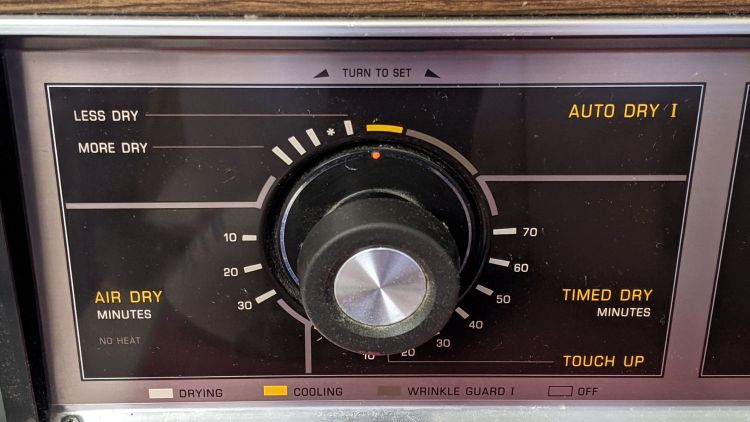
Then resetting the cycle timer to the spot marked with the otherwise unlabeled asterisk to activate the humidity sensor gets the job done:
Kenmore dryer cycle select dial
We normally crank the knob to the asterisk, leave the temperature set to Normal, and mostly it works.
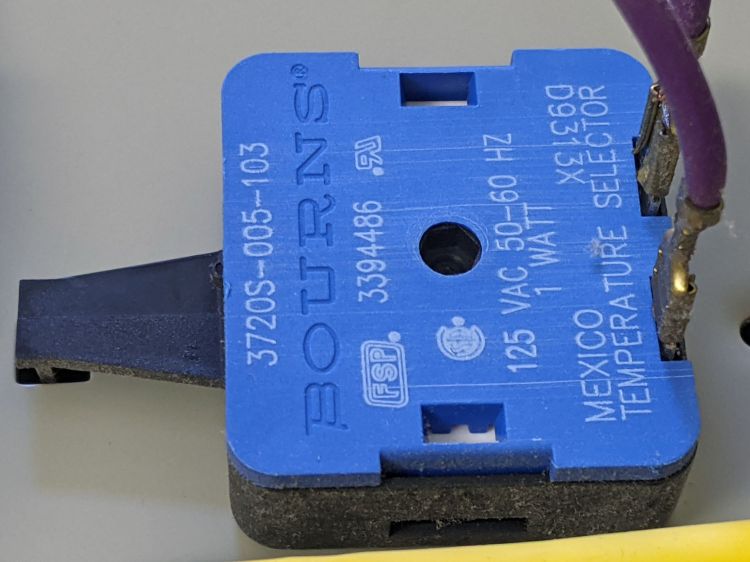
I thought perhaps the temperature selector had become intermittent, along the lines of the temperature control knob on the oven, so I turned off the breaker, verified the dryer was disconnected, and popped the top:
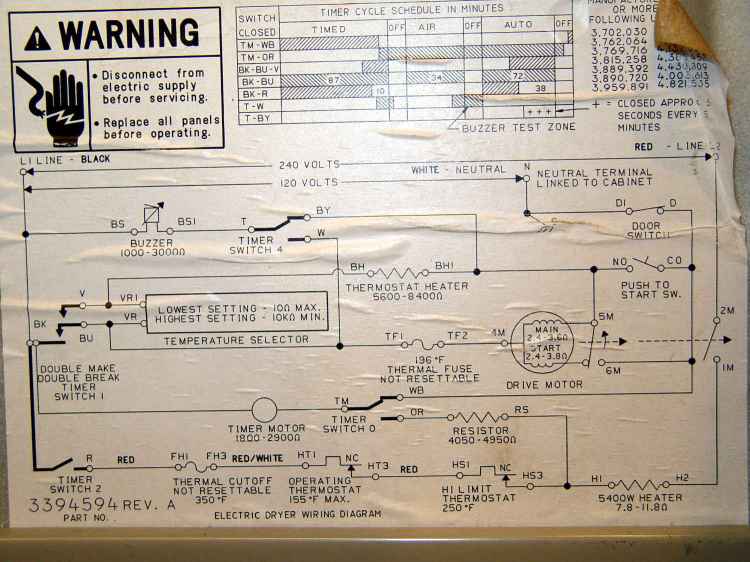
Kenmore dryer temperature selector – part detail
It turns out that part is no longer available from any of the usual sources; one describes their inventory as both “used” and “out of stock”; if it’s dead, a resurrection will be in order.
The selector knob has three positions:
Low = 0 Ω, as in a closed switch
Medium = 5.8 kΩ, most likely a fixed resistor
High = open circuit, as in an open switch
The Low and High positions meet the limits shown in the diagram and Medium falls in between, so it seems to be working as designed. If it intermittently fails as a short, then the clothes would get Low heat and (I think) would emerge somewhat more dry than we notice.
I put it all back together, but we won’t know for a while if my laying-on-of-hands non-repair had any effect.
One terrifying possibility, which we reject out of hand, is that we occasionally forget to crank the cycle knob around to the asterisk before punching the Start button. That would explain all the observed facts and contradict none, but is inconceivable.
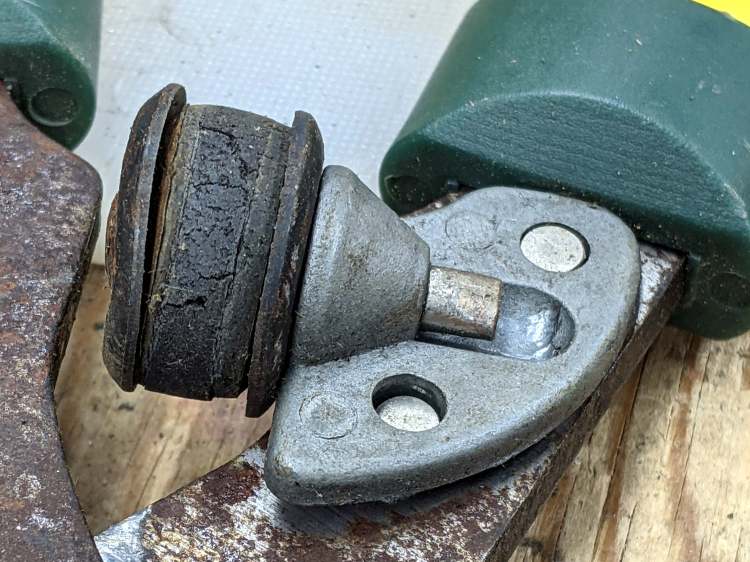
Contrary to what you might think, those rivets never had a head on this side and the bumper seems to be held in place by an interference fit with the plastic handle cover.
A bit of cutoff wheel work removed the crimped end on the 5 mm stud holding the bumper to the pot-metal dingus:
Bypass Lopper – shaft cut
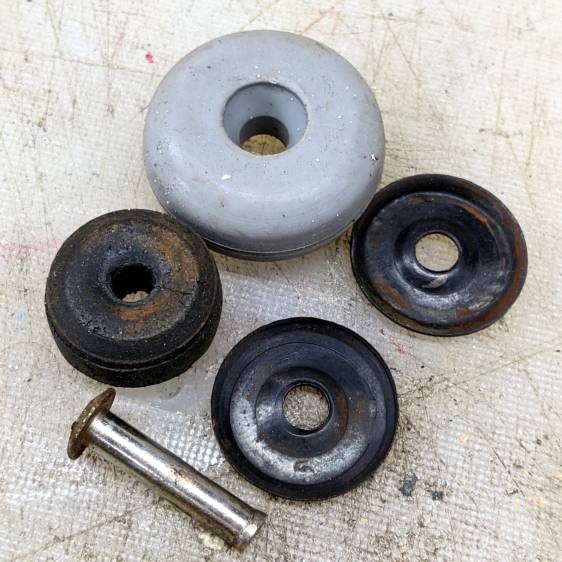
Whacking it with a punch separated all the parts:
Bypass Lopper – bumper parts
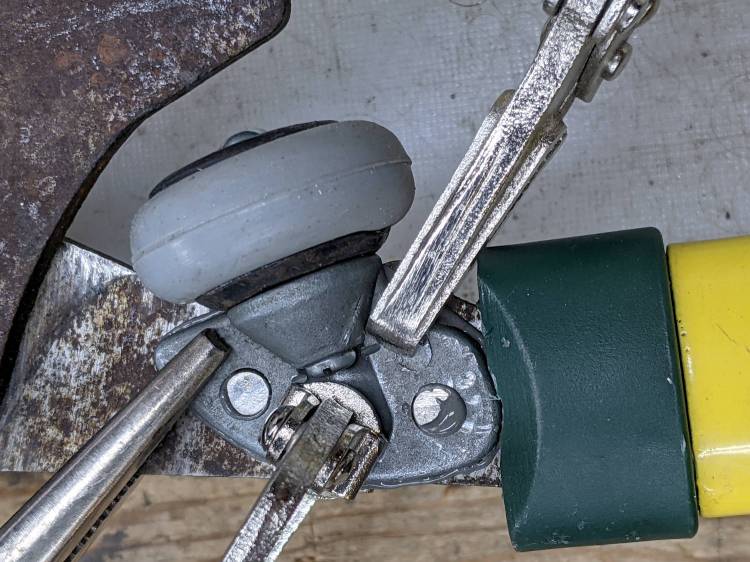
The gray thing is a silicone rubber vibration isolator that’s a bit too large in all dimensions, but surely Close Enough™ for present purposes.
A length of 5 mm shaft became the new stud, with M3×0.5 threads tapped into both ends and a pair of random screws held in place with red Loctite:
Bypass Lopper – epoxy curing
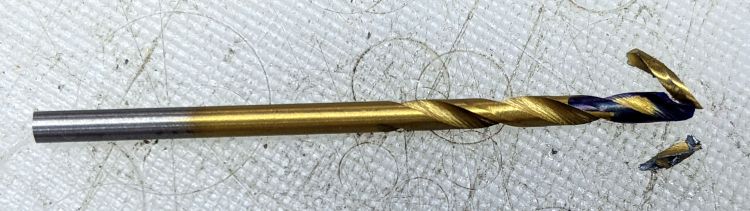
There are no pix of the drilling and threading, as it was accomplished after a shiny-new 2.7 mm “titanium” metric drill from a not-dirt-cheap set shattered in the shaft:
Shattered metric drill
The blue color on the flutes is Sharpie to remind me it’s defunct. I completed the mission using a #36 drill with no further excitement.
The dingus is now held to the lopper with JB Weld and, should that fail, I’ll drill-n-tap the rivets and be done with it.
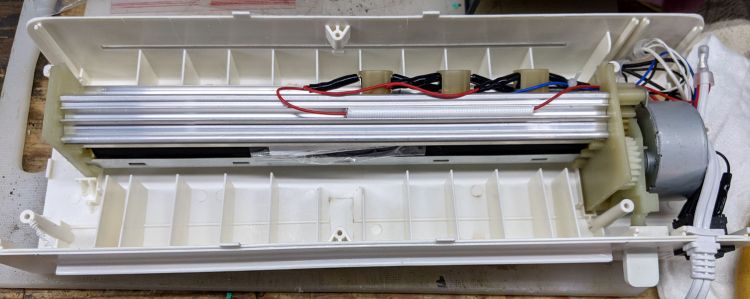
My AmazonBasics laminator wrapped a small card around one of its rollers and jammed solid:
AmazonBasics laminator – interior bottom
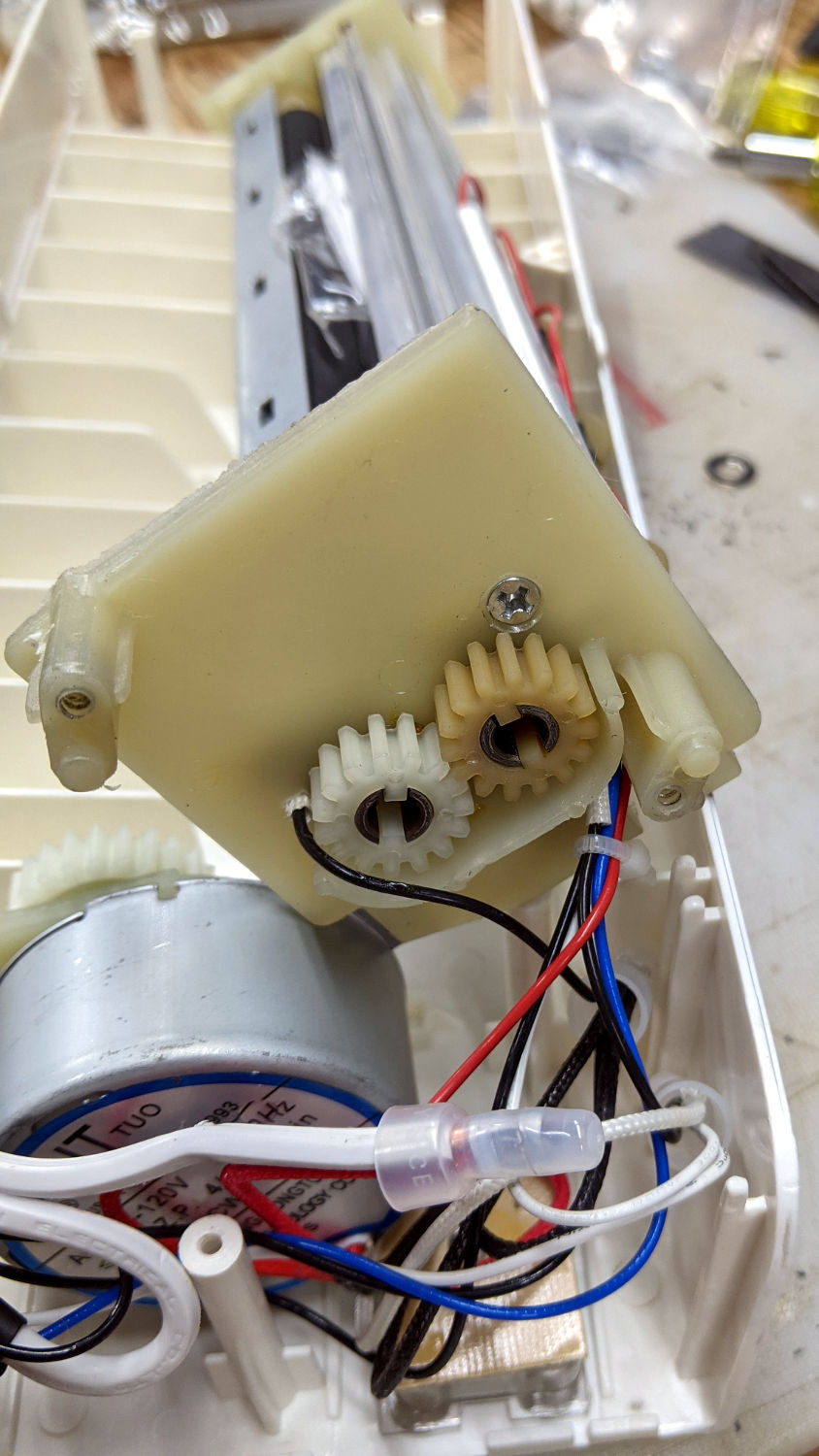
The lever sticking out on the lower right (above) drives the rollers in reverse by moving the motor from one gear to the other:
AmazonBasics laminator – roller gears
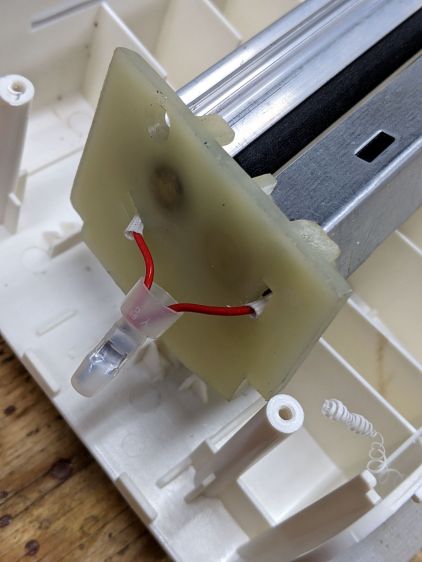
Obviously, reverse gear wouldn’t get me anywhere, but dismantling the rollers required cutting the junction between the heating elements running through the aluminum extrusions:
AmazonBasics laminator – heater junction
I spliced a few inches of wire onto those leads. If there’s a next time, I can cut the splice in the middle and use a wire nut.
The white plastic curl in the lower right showed they ran a deburring tool around the exit slot and called it Good Enough™.
The gears slide off the roller shafts and the rollers out of the extrusions, after which removing the tightly wrapped and completely useless card posed no problem.
One lone, short, and eagerly self-tapping screw holds each plastic end plate to the extrusion, so be careful about cross-threading.
All in all, this was easy enough, although I’m sure I was supposed to just throw the laminator away and buy a new one.