Ed Nisley's Blog: Shop notes, electronics, firmware, machinery, 3D printing, laser cuttery, and curiosities. Contents: 100% human thinking, 0% AI slop.
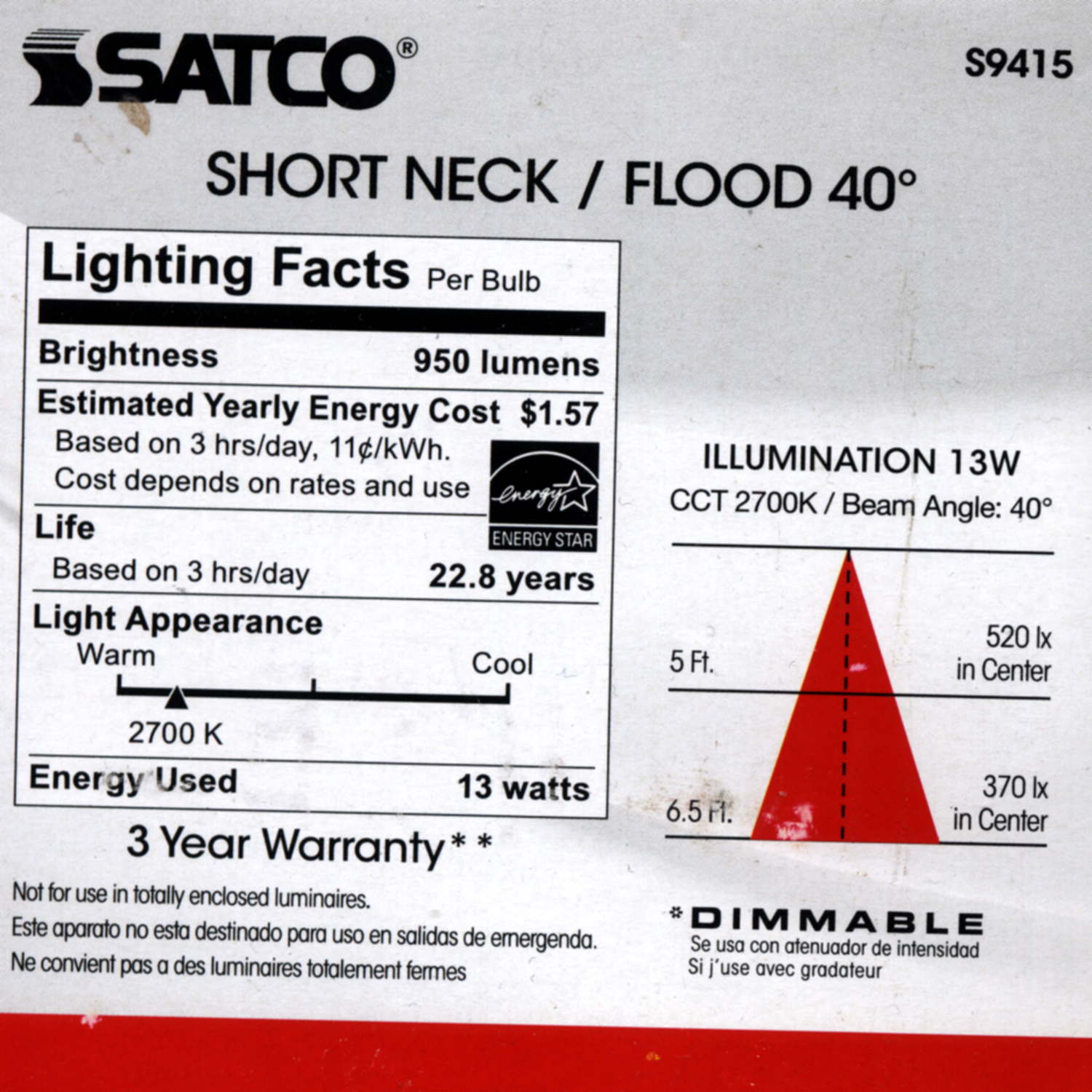
I replaced a dead 75 W halogen PAR30 bulb over the kitchen sink with a Satco S9415 LED bulb that was, at the time, advertised as “75 W equivalent”:
Satco S9415 PAR30 LED Bulb – specs
It’s noticeably less bright than the surviving halogen bulb, which is what you’d expect when 950 lm goes head-to-head with 1100+ lm (based on casual searching), but with a similar color temperature and beam pattern, so it’s Good Enough. I should have bought two and converted the halogens into glass sculptures.
The difference between the 22.8 year Life and the 3 Year Warranty always seems amusing. The warranty requires returning the bulb, so that’s about useless …
This relentlessly organized doodle happened while reading some tech docs on the Comfy Couch:
Sakura Pen Width Examples
The first two lines obviously belong in their own group, but, hey, it’s a doodle.
The two Uni-Ball Kuru Toga pencils, in 0.5 and 0.7 mm, have diamond-impregnated lead that’s supposed to be much more break-resistant than usual. I fear that they’ll land point-downward and wreck the rotating sleeve surrounding the lead, so I’ve managed zero drops so far. Even I hesitated at the 0.3 mm version.
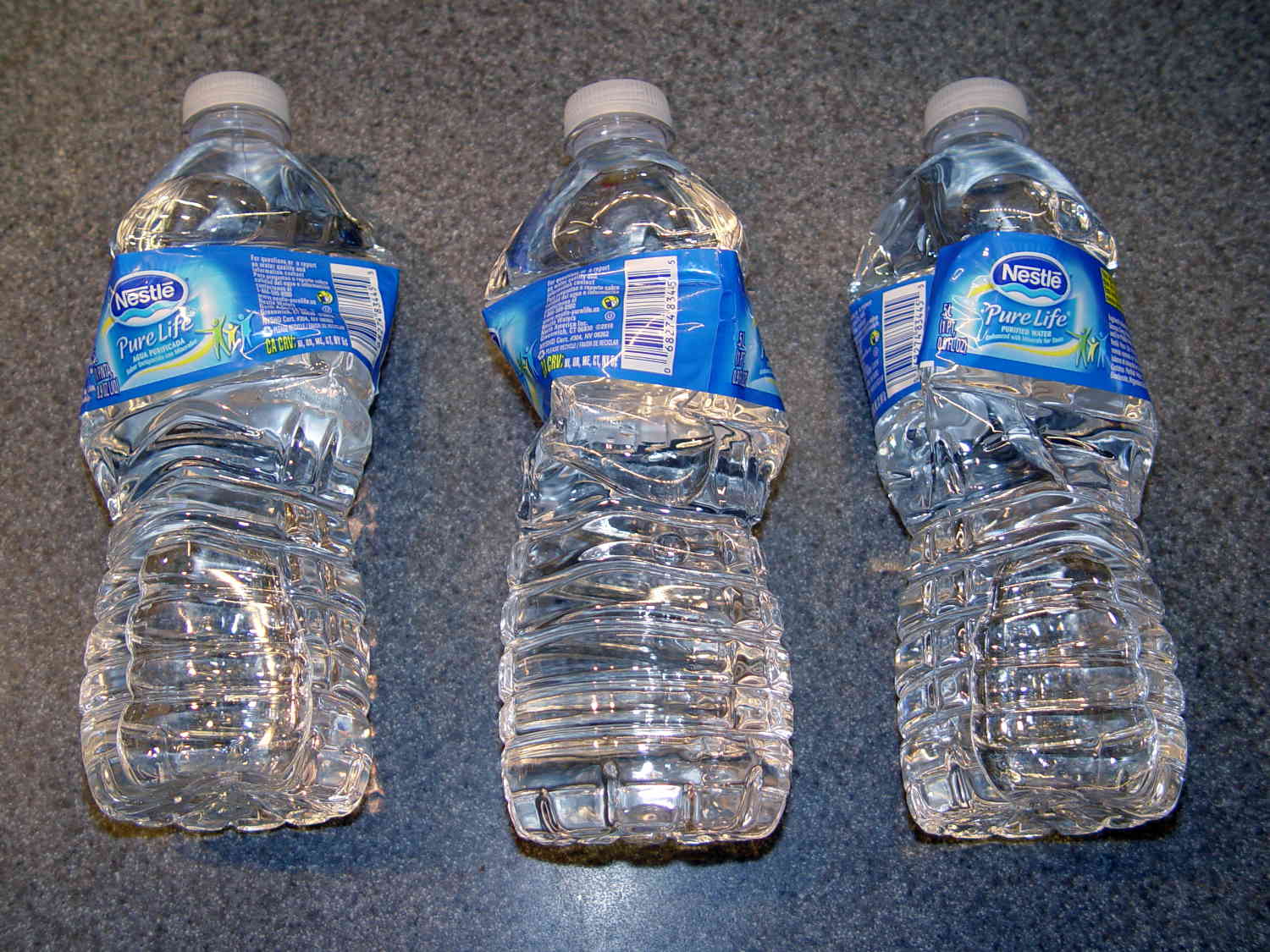
These emerged from a hidden corner of a basement shelf, where they’ve been sitting undisturbed for far too long:
Bottled Water Evaporation
I’ve known for a while that the PETE plastic used for nearly all bottles isn’t completely waterproof, but never had occasion to measure the results.
The laser-etched date code on the bottles says they “expired” in late August 2012, so, assuming one year of shelf life, they’ve been quietly evaporating for five years.
Sampling a few bottles shows a nearly uniform weight of 459 g. A drained bottles weighs 13 g, so let’s say the bottles now contain 445 g of water. They should start out with 500 g, although I’d be mildly surprised if it wasn’t a bit over that to prevent some dork from complaining about getting only 498 g.
Rounding in all the right directions, losing 60 g during five years works out to a tidy 1 g/month in a basement room at 60% RH.
The surface area of those wonderfully convoluted bottles might be 300 cm², so they lose 3 mg/cm²·month.
They’re near enough to 0.10 mm thick, which I’m sure is a compromise between reducing weight (and, thus, plastic cost) and incurring messy failures during normal handling. The evaporation rate surely varies as an inverse exponential of thickness, but I’m not going there.
I’m certain water bottlers know those numbers to several decimal places and can plot them versus all the interesting variables.
Memo to Self: don’t lose track of the water bottles!
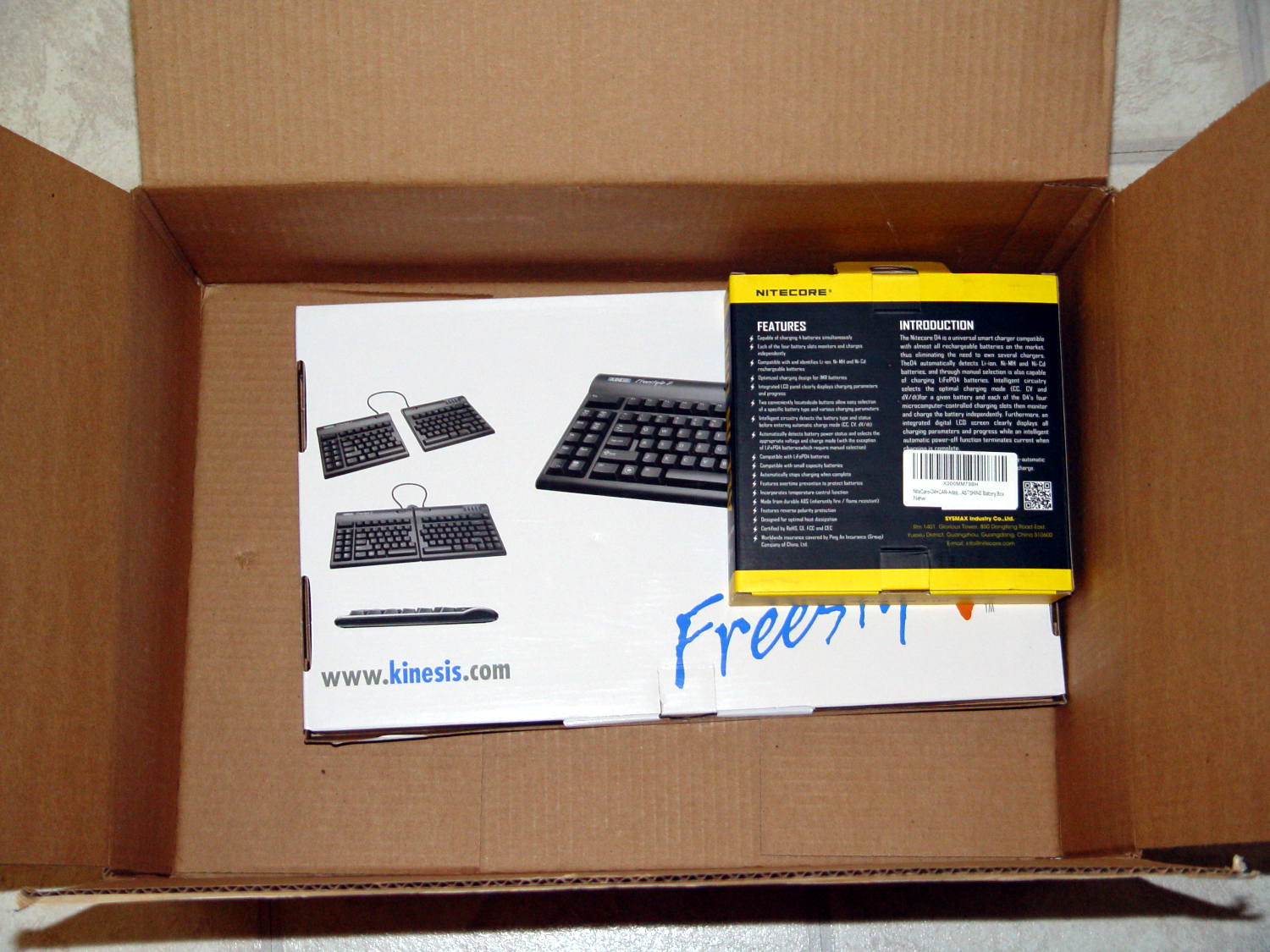
A keyboard and cylindrical cell charger arrived intact, with absolutely no credit due to Amazon’s careful packaging:
Keyboard and charger – Amazon packaging
Sometimes, a box does arrive with a token scrap of padding dropped inside, but, as nearly as I can tell, it’s cheaper for Amazon to replace the occasional damaged item than to waste time and material stuffing the boxes with air pillows, eco-foam peanuts, or, heaven forfend, space-filling foam.
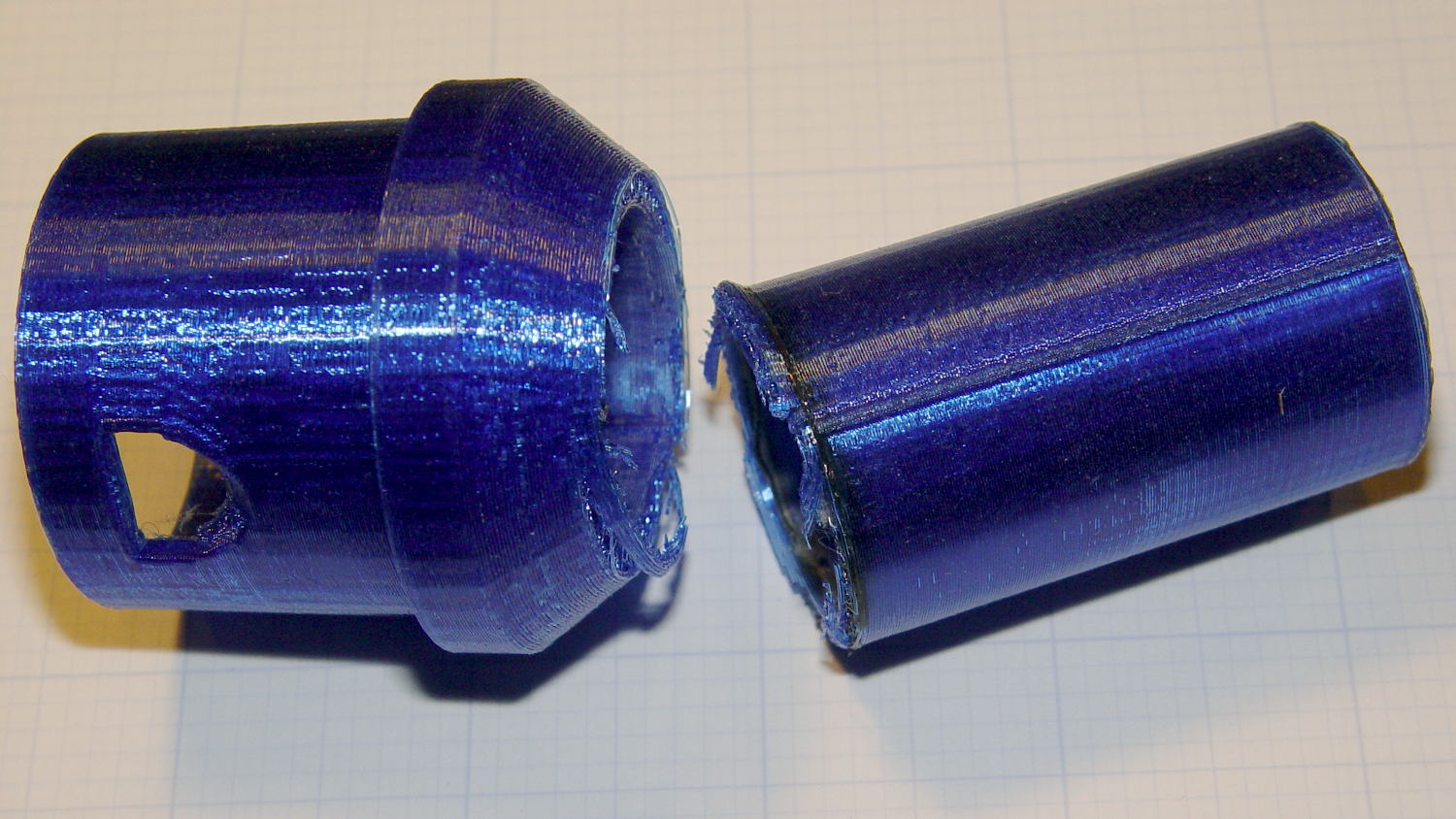
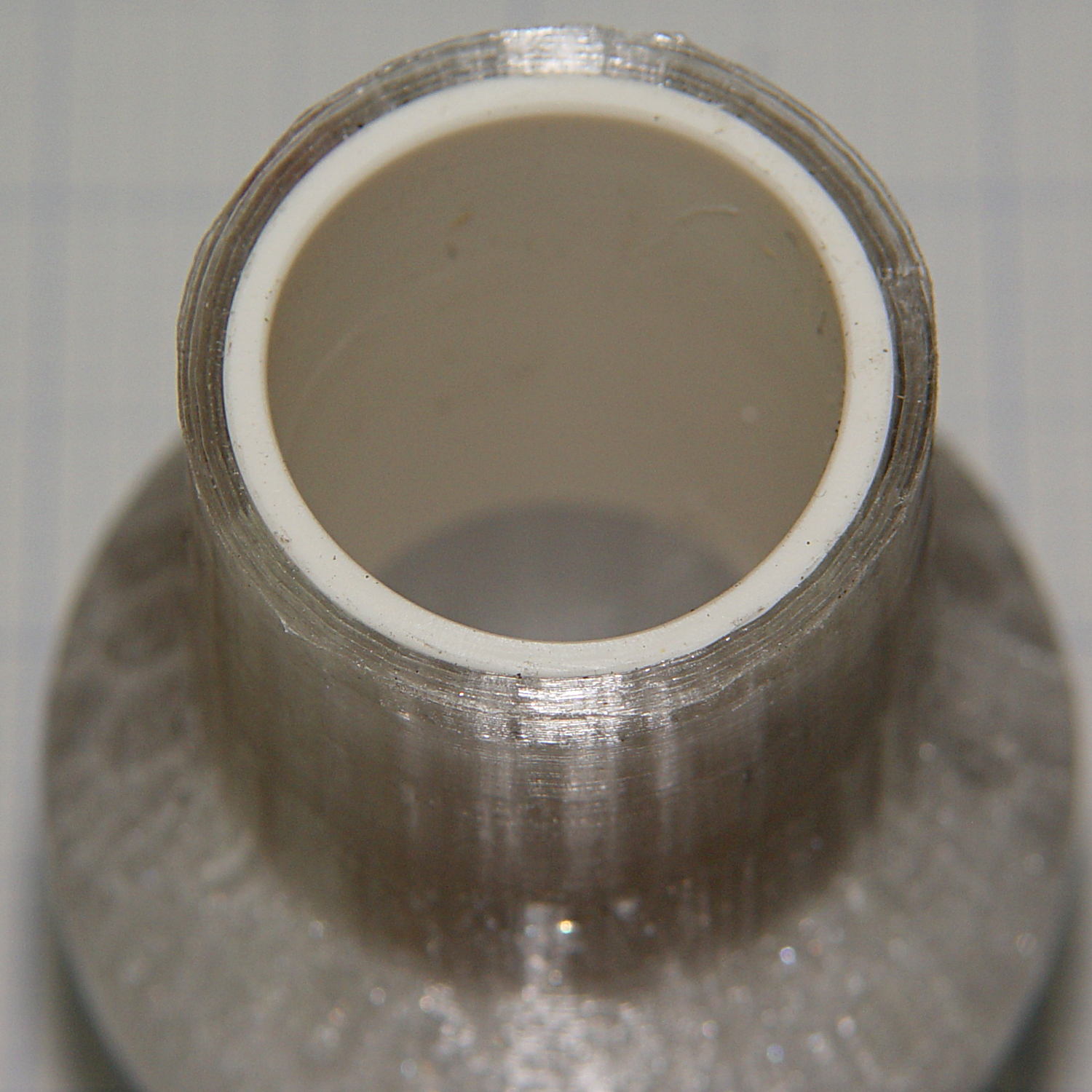
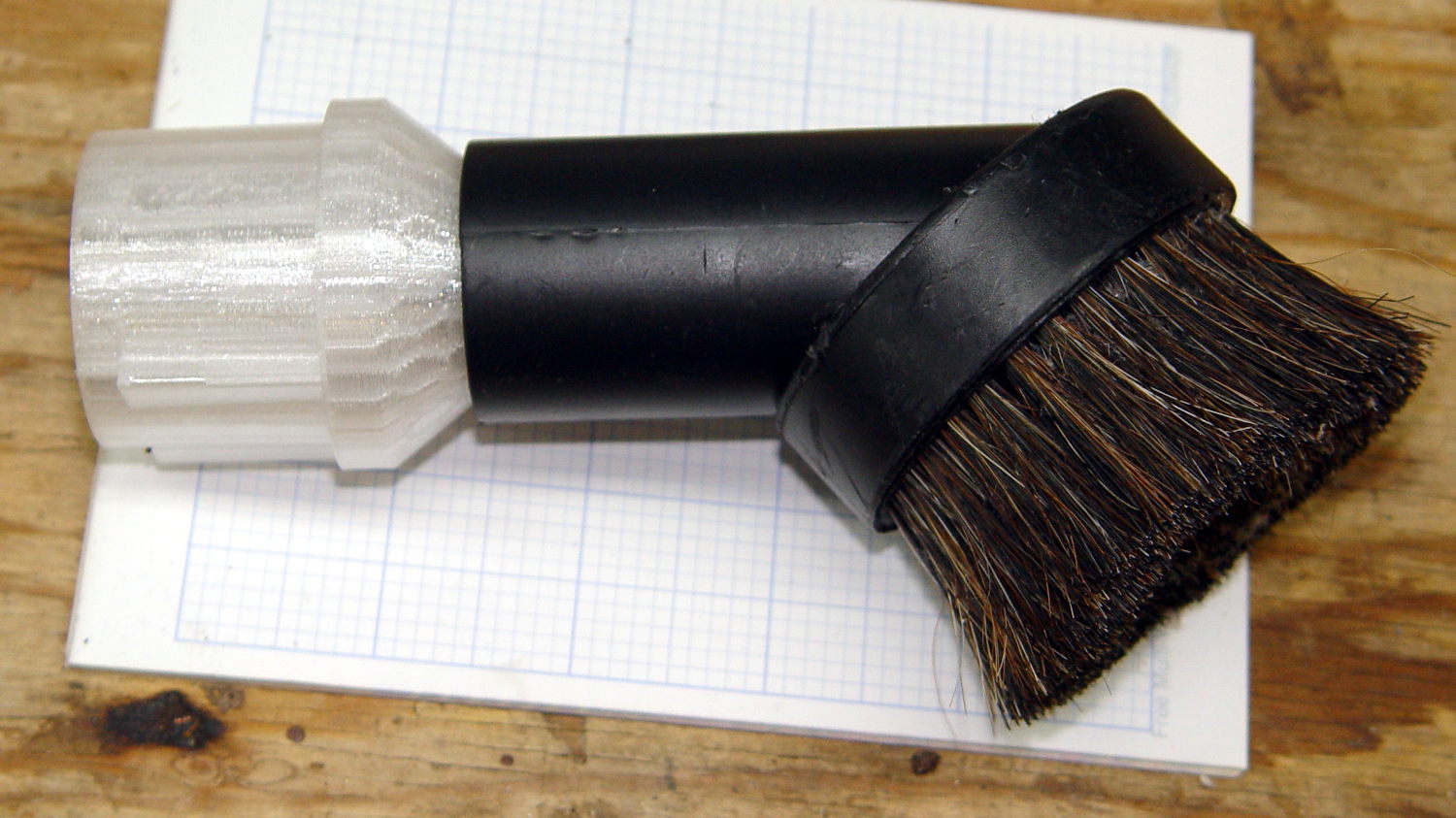
A bit of rummaging turned up some ¾ inch Schedule 40 PVC pipe which, despite the fact that no plumbing measurement corresponds to any physical attribute, had about the right OD to fit inside the adapter’s ID:
Dust brush – PVC reinforcement
The enlarged bore leaves just barely enough space for a few threads around the circumference. Fortunately, the pipe OD is a controlled dimension, because it must fit inside all the molded PVC elbows / tees / caps / whatever.
The pipe ID isn’t a controlled dimension and, given that the walls seemed far too thick for this purpose, I deployed the boring bar:
Dust brush adapter – reinforced tube – boring
That’s probably too much sticking out of the chuck, but sissy cuts saved the day. The carriage stop keeps the boring bar 1 mm away from the whirling chuck.
Bandsaw it to length and face the ends:
Dust brush adapter – reinforcement
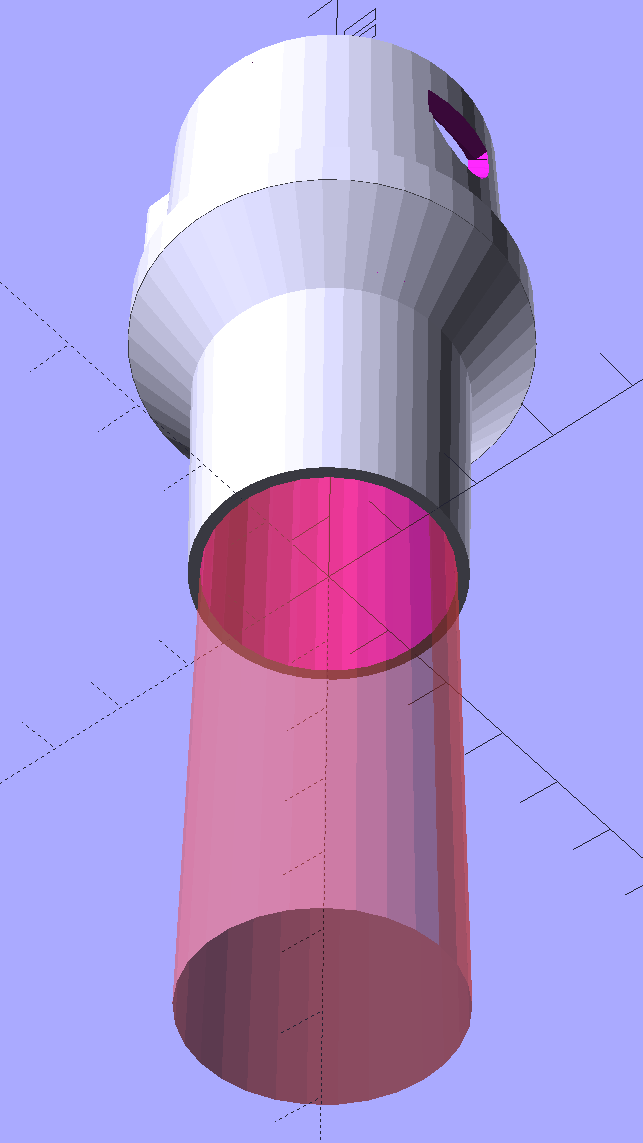
The PVC tube extends from about halfway along the steep taper from the handle fitting out to the end, with the section closest to the handle making the most difference.
Ram it flush with the end:
Dust brush adapter – reinforced tube – detail
I thought about gluing it in place, but it’s a sufficiently snug press fit that I’m sure it won’t go anywhere.
This file contains hidden or bidirectional Unicode text that may be interpreted or compiled differently than what appears below. To review, open the file in an editor that reveals hidden Unicode characters.
Learn more about bidirectional Unicode characters
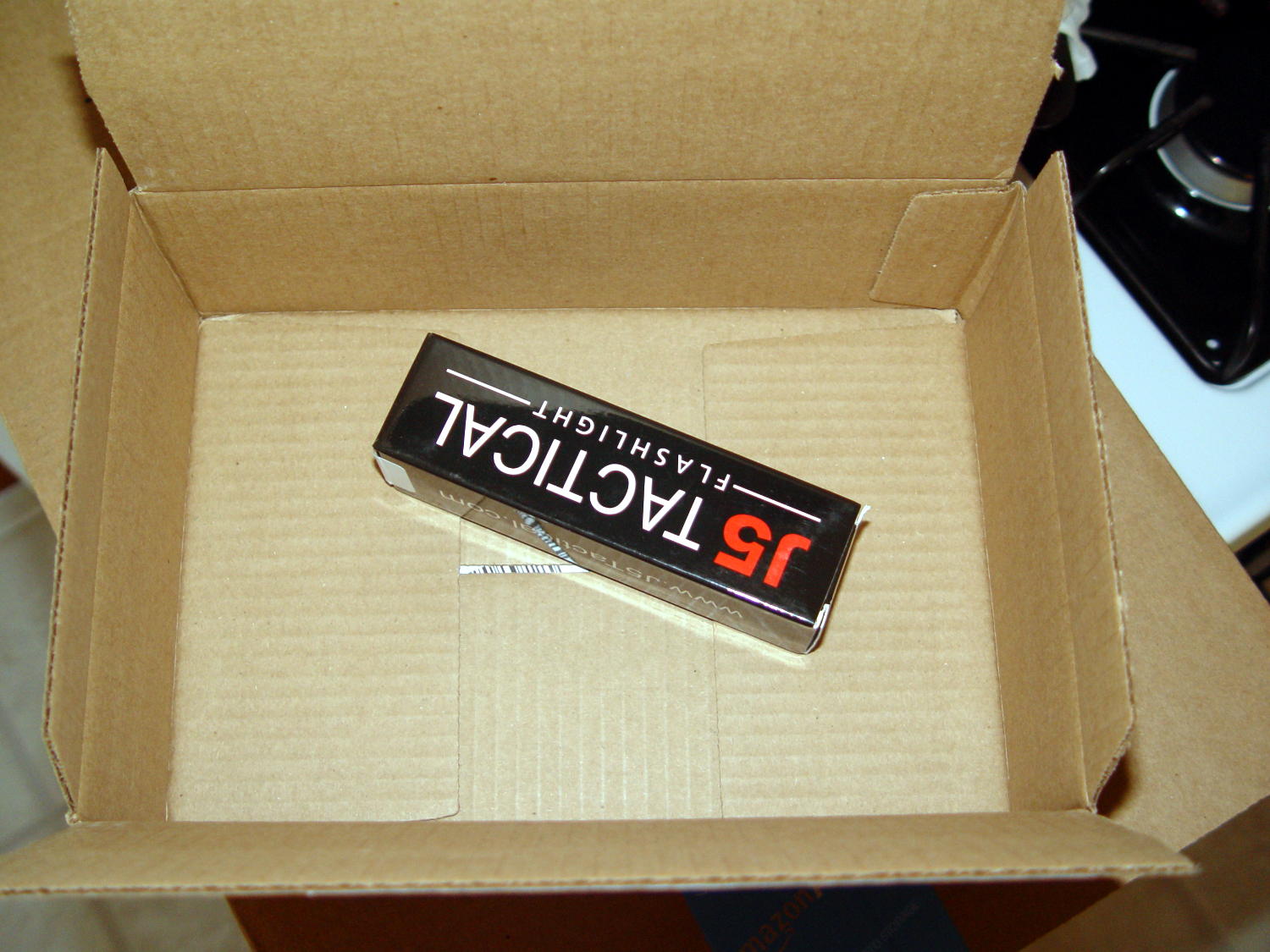
So I picked up a J5-V2 Tactical Flashlight as a possible bike headlight, on the basis of a 750 (“max output”) lumen LED, zoomable beam, and use of standard 18650 lithium cells (rather than USB charging). The geometry required to stick it on the Tour Easy remains a puzzle, but an az-el dingus replacing an upper fairing mount may work well enough.
Anyhow, it seems the LED in this flashlight fell on the floor during assembly, where the (silicone?) LED emitter lens picked up a remarkable amount of dirt:
J5-V2 Flashlight – LED crud
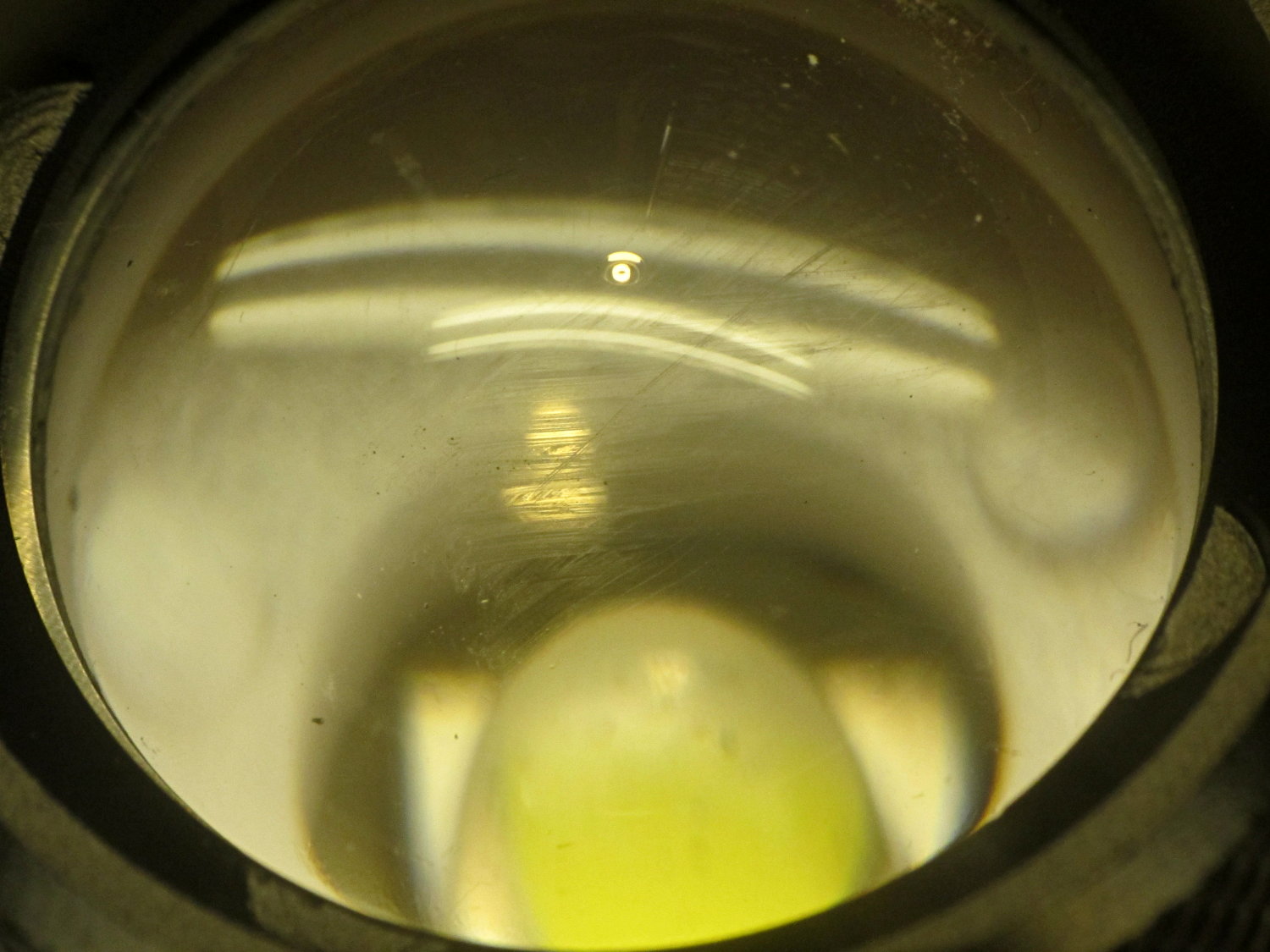
The inside of the front focusing lens carries an array of scratches or, perhaps, a greasy fingerprint that serves the same purpose:
J5-V2 Flashlight – internal lens scratches
All vendors tell you to contact them before posting a critical review, although they often don’t provide much in the way of contact information. I sent a note with photos to J5 through their website’s contact info; having not heard anything after three days, I’ll fire up the Amazon return process …
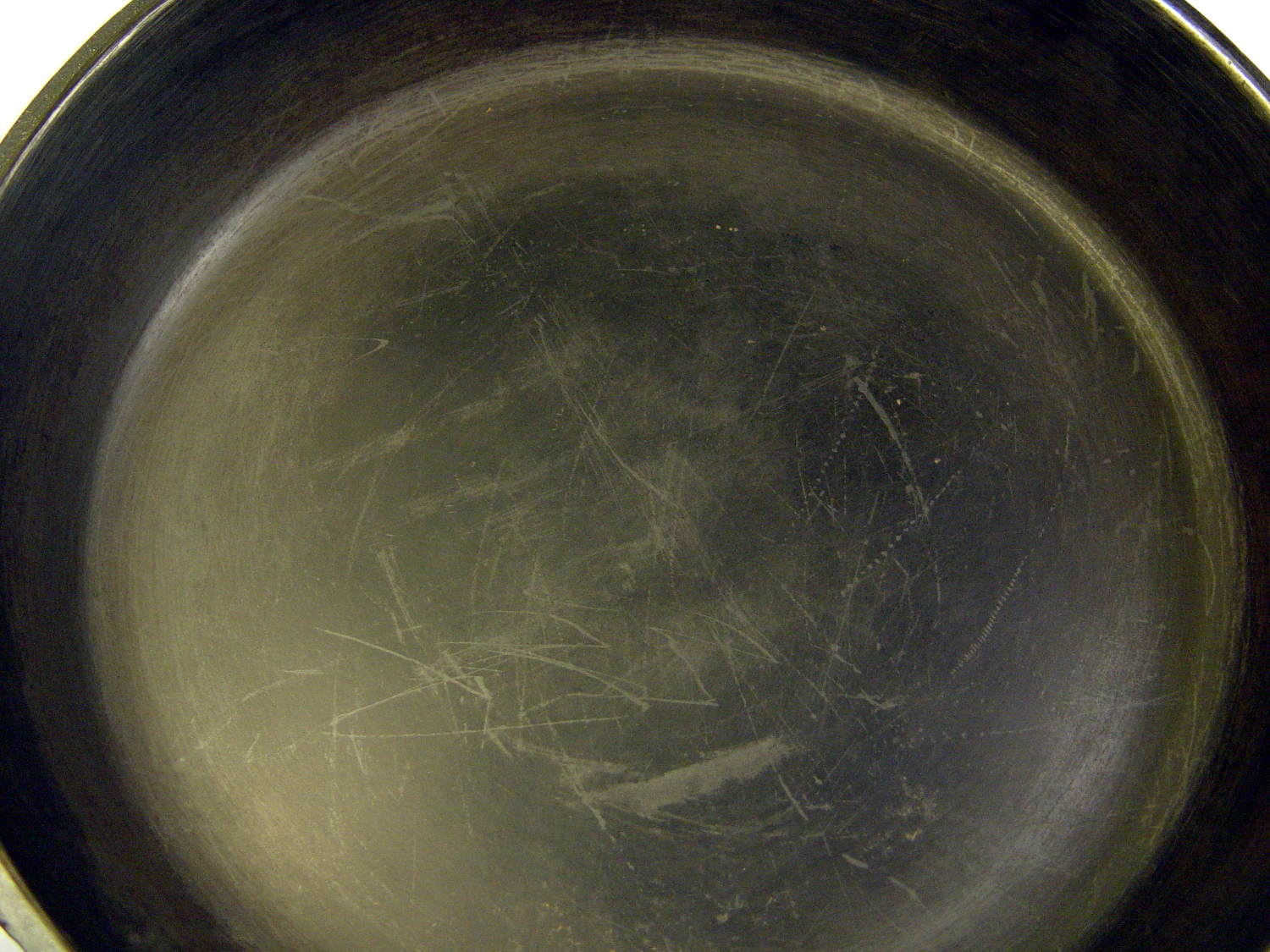
The seasoning in between the scuffs & scrapes remains in fine shape. Running the Scotchbrite pad around the perimeter obviously wears the coating, but, on the whole, nothing sticks anywhere.
I’ve started re-seasoning it after each use, which isn’t a big deal, and we’ll see how the scratches level out.
The lovely gray-black patina on the nubbly outside surface from the original moderate-woo oven seasoning requires no further attention.





 The Smell of Molten Projects in the Morning