We just scrapped out the old dish drainer, only to find the gadget bin on the new drainer let the measuring spoons fall over and lie along its bottom. After a week of fishing them out from under paring knives, cheese slicers, and suchlike, I gimmicked up a holder:

One might suggest natural PETG, rather than orange, thereby displaying a shocking ignorance of the MVP concept. We’ll run with orange for the shakedown trials, then build-measure-learn, iterate, and, for all I know, we may even pivot.
A bottom-up view of the solid model shows the trench accommodating the bin lip:
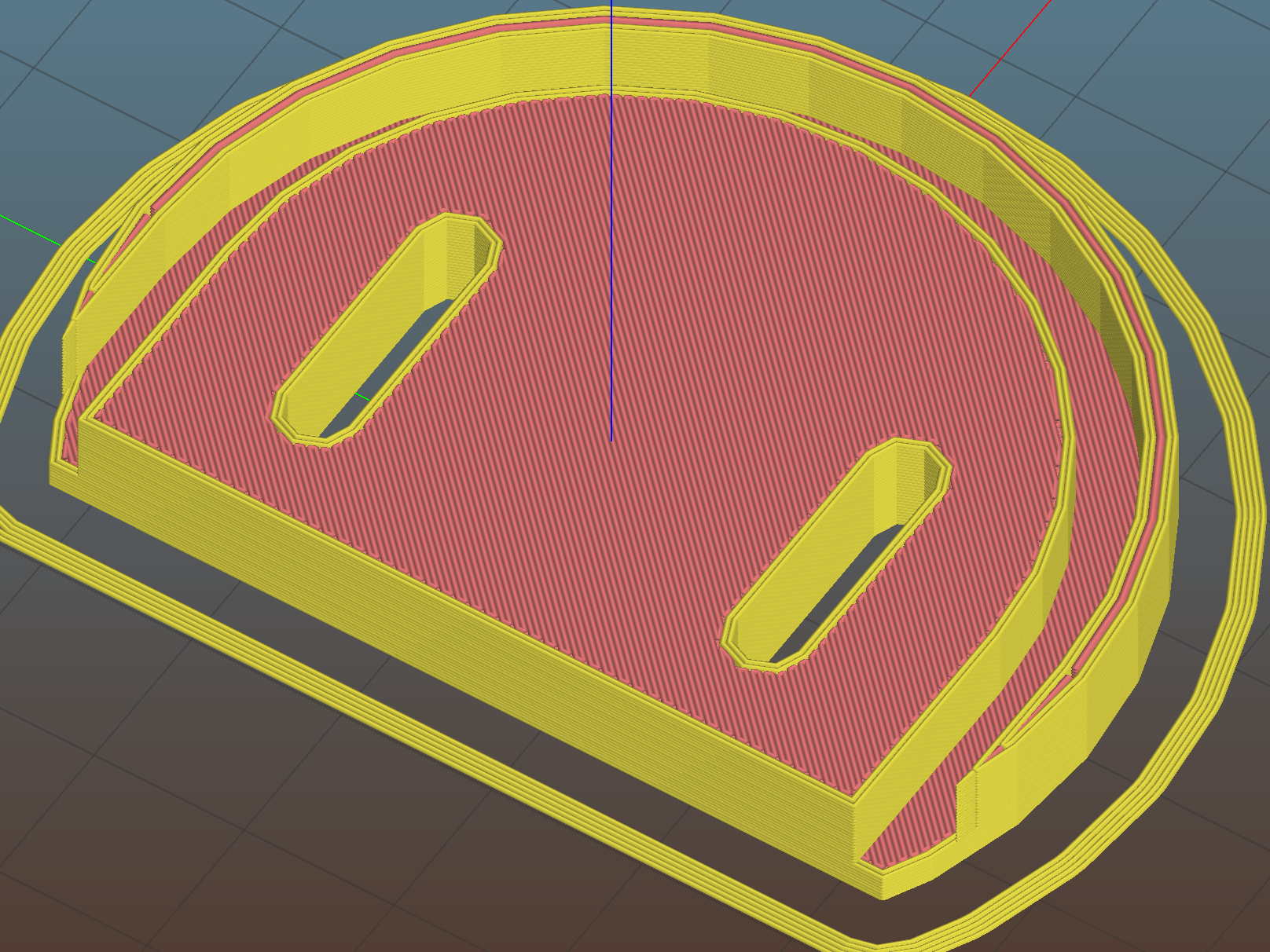
The OpenSCAD source code as a GitHub Gist:
This file contains hidden or bidirectional Unicode text that may be interpreted or compiled differently than what appears below. To review, open the file in an editor that reveals hidden Unicode characters.
Learn more about bidirectional Unicode characters
| // Measuring spoon drainer | |
| // Ed Nisley KE4ZNU – 2018-01-13 | |
| /* [Extrusion] */ | |
| ThreadThick = 0.25; // [0.20, 0.25] | |
| ThreadWidth = 0.40; // [0.40] | |
| /* [Hidden] */ | |
| Protrusion = 0.1; // [0.01, 0.1] | |
| HoleWindage = 0.2; | |
| function IntegerMultiple(Size,Unit) = Unit * ceil(Size / Unit); | |
| ID = 0; | |
| OD = 1; | |
| LENGTH = 2; | |
| //- Adjust hole diameter to make the size come out right | |
| module PolyCyl(Dia,Height,ForceSides=0) { // based on nophead's polyholes | |
| Sides = (ForceSides != 0) ? ForceSides : (ceil(Dia) + 2); | |
| FixDia = Dia / cos(180/Sides); | |
| cylinder(r=(FixDia + HoleWindage)/2,h=Height,$fn=Sides); | |
| } | |
| /* [Spoon] */ | |
| SpoonOD = IntegerMultiple(3.3,2); | |
| SpoonWidth = IntegerMultiple(16.5,2.0); | |
| SpoonOC = 30.0; | |
| /* [Drainer] */ | |
| Drainer = [52.0,59.5,100.0]; // overall drainer cup | |
| DrainerRimWidth = (Drainer[1] – Drainer[0])/2; | |
| DrainerRimHeight = 2.5; | |
| DrainerExtent = 15.0; | |
| /* [Hidden] */ | |
| WallThick = 2.0; // basic wall & floor thickness | |
| PlateThick = WallThick + 2*DrainerRimHeight; | |
| NumSides = 8*4; | |
| //—– | |
| // Define shapes | |
| module CoverPlate() { | |
| OD = Drainer[OD] + 2*WallThick; | |
| difference() { | |
| cylinder(d=OD,h=PlateThick,$fn=NumSides); | |
| for (j=[-1,1]) | |
| translate([-(OD/2 – Protrusion),j*(Drainer[ID]/2 + DrainerRimWidth/2),WallThick + DrainerRimHeight + Protrusion/2]) | |
| cube([OD,DrainerRimWidth,2*DrainerRimHeight + Protrusion],center=true); | |
| translate([0,0,WallThick + PlateThick/2]) | |
| rotate(-90) | |
| rotate_extrude(angle=180,$fn=NumSides) | |
| translate([Drainer[ID]/2 + DrainerRimWidth/2,0]) | |
| square([DrainerRimWidth,PlateThick],center=true); | |
| translate([-(OD/2 + DrainerExtent),0,PlateThick/2]) | |
| cube([OD,OD,PlateThick + 2*Protrusion],center=true); | |
| } | |
| } | |
| //—– | |
| // Build it | |
| difference() { | |
| CoverPlate(); | |
| for (j=[-1,1]) | |
| translate([0,j*(SpoonOC/2),-Protrusion]) | |
| linear_extrude(height=PlateThick + 2*Protrusion) | |
| hull() | |
| for (i=[-1,1]) | |
| translate([i*(SpoonWidth – SpoonOD)/2,0]) | |
| circle(d=SpoonOD,$fn=8); | |
| } | |
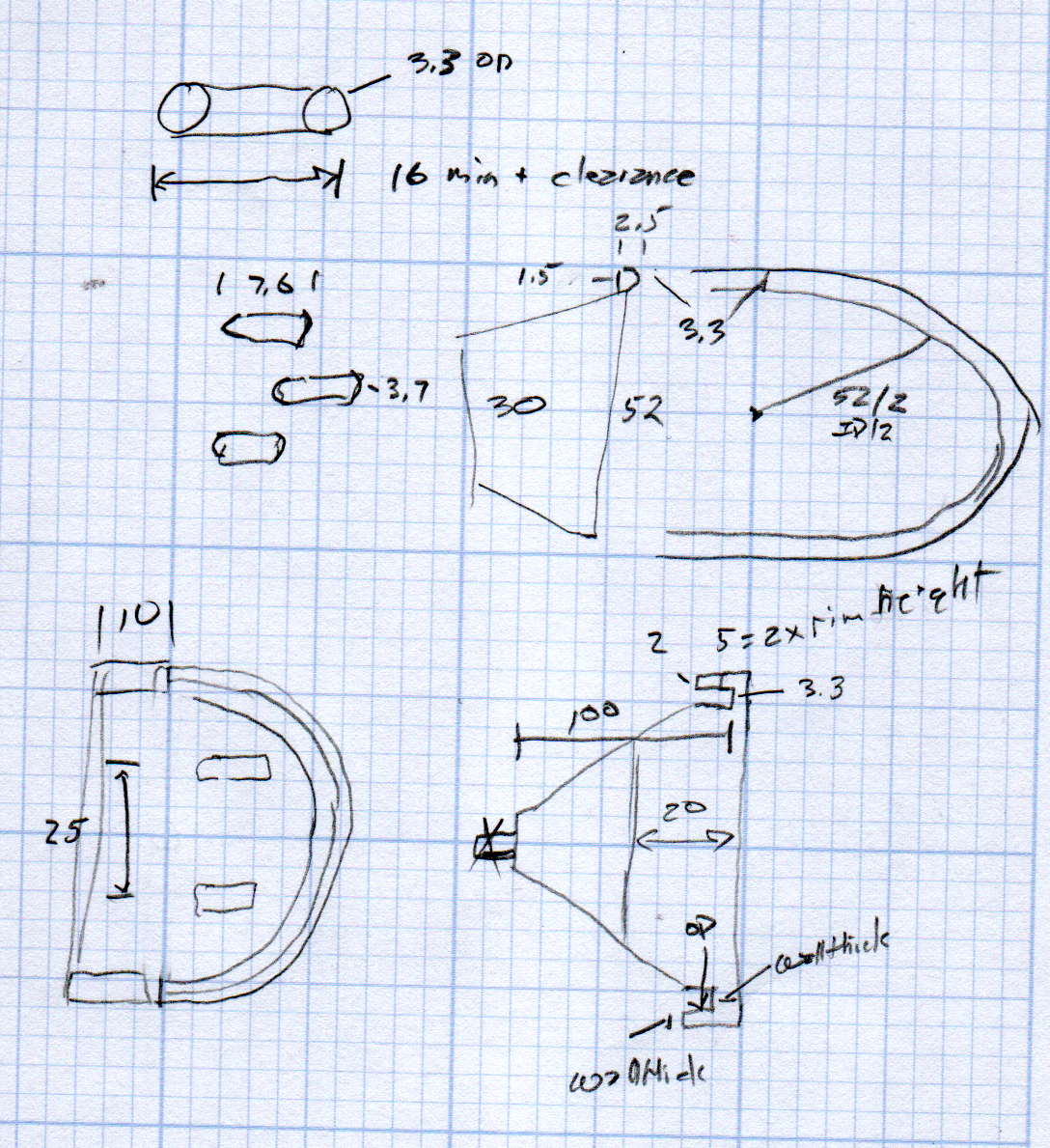
The original doodle has useful dimensions, along with the usual over-elaborate features sacrificed in order to get it made: