Ed Nisley's Blog: Shop notes, electronics, firmware, machinery, 3D printing, laser cuttery, and curiosities. Contents: 100% human thinking, 0% AI slop.
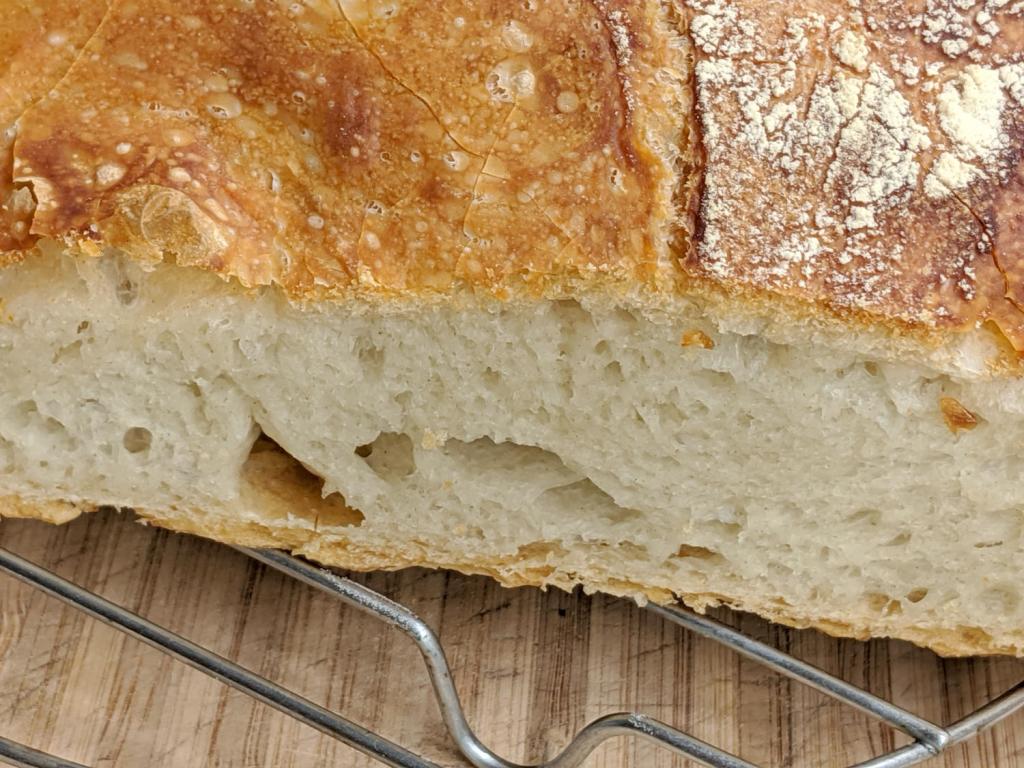
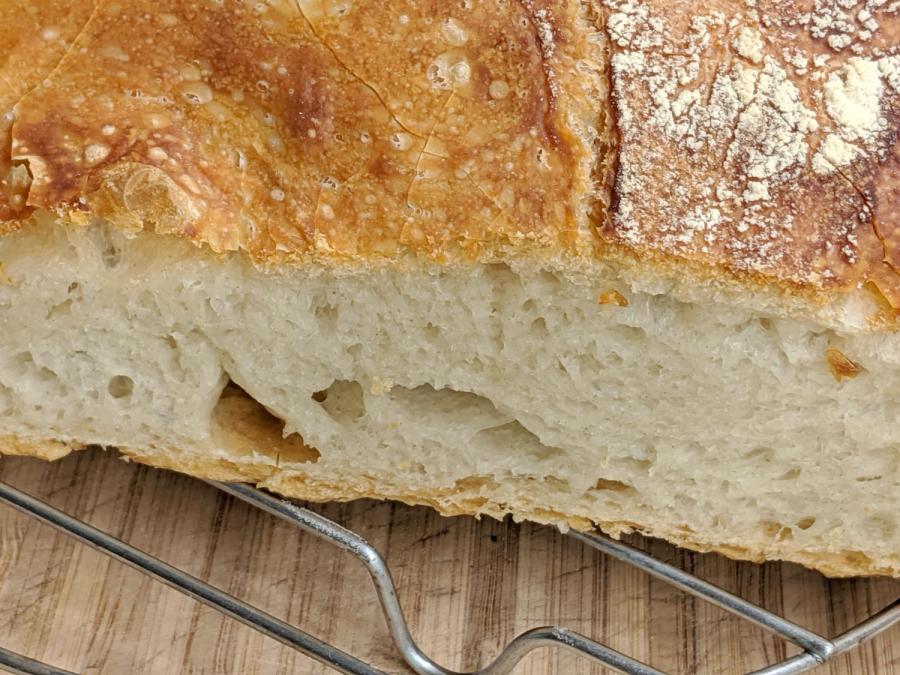
Wow, that tasted good and definitely added a bit more pep to my morning bike rides!
The receipe produces a rather wet lump of dough in the mixing bowl:
No-knead bread – mixed
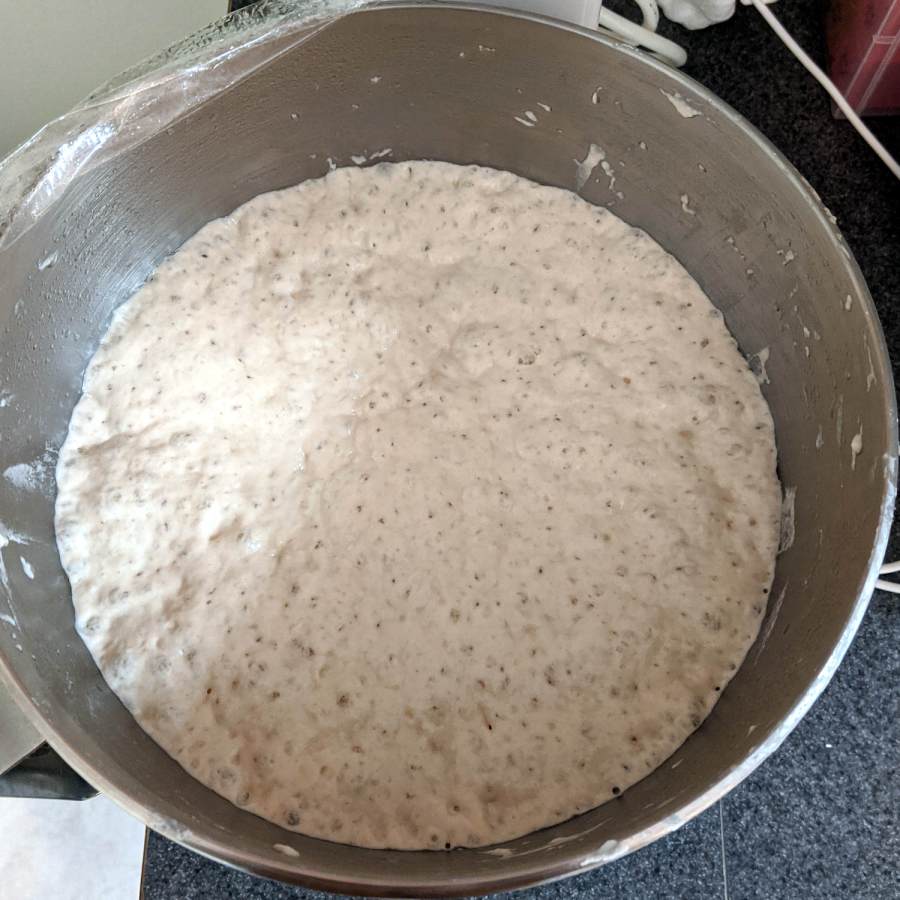
It looks much more promising after rising for 18 hours:
No-knead bread – 18 hour rise
The recipe calls for a large heavy pot, which produced a long-disused nickel-plated cast iron Wagner Ware No. 8 Drip-Drop Roaster from the attic:
No-knead bread – Wagner No 8 Roaster
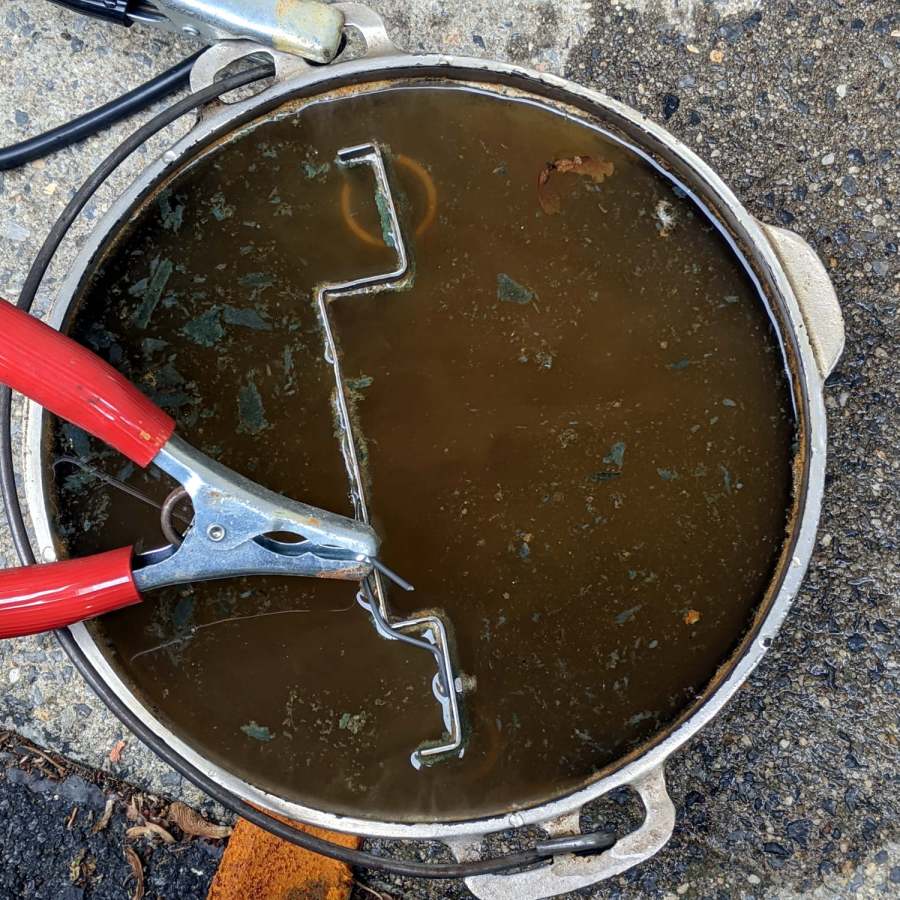
I scrubbed out the interior and used it as-found to good effect. After the cookin’ was done, a few hours of electrolytic stripping seemed in order:
No-knead bread – electrolytic pot strip
The lovely nickel plating on the outside of the pot didn’t need stripping, but the interior is once again a nice flat black surface and the next loaf should drop right out …
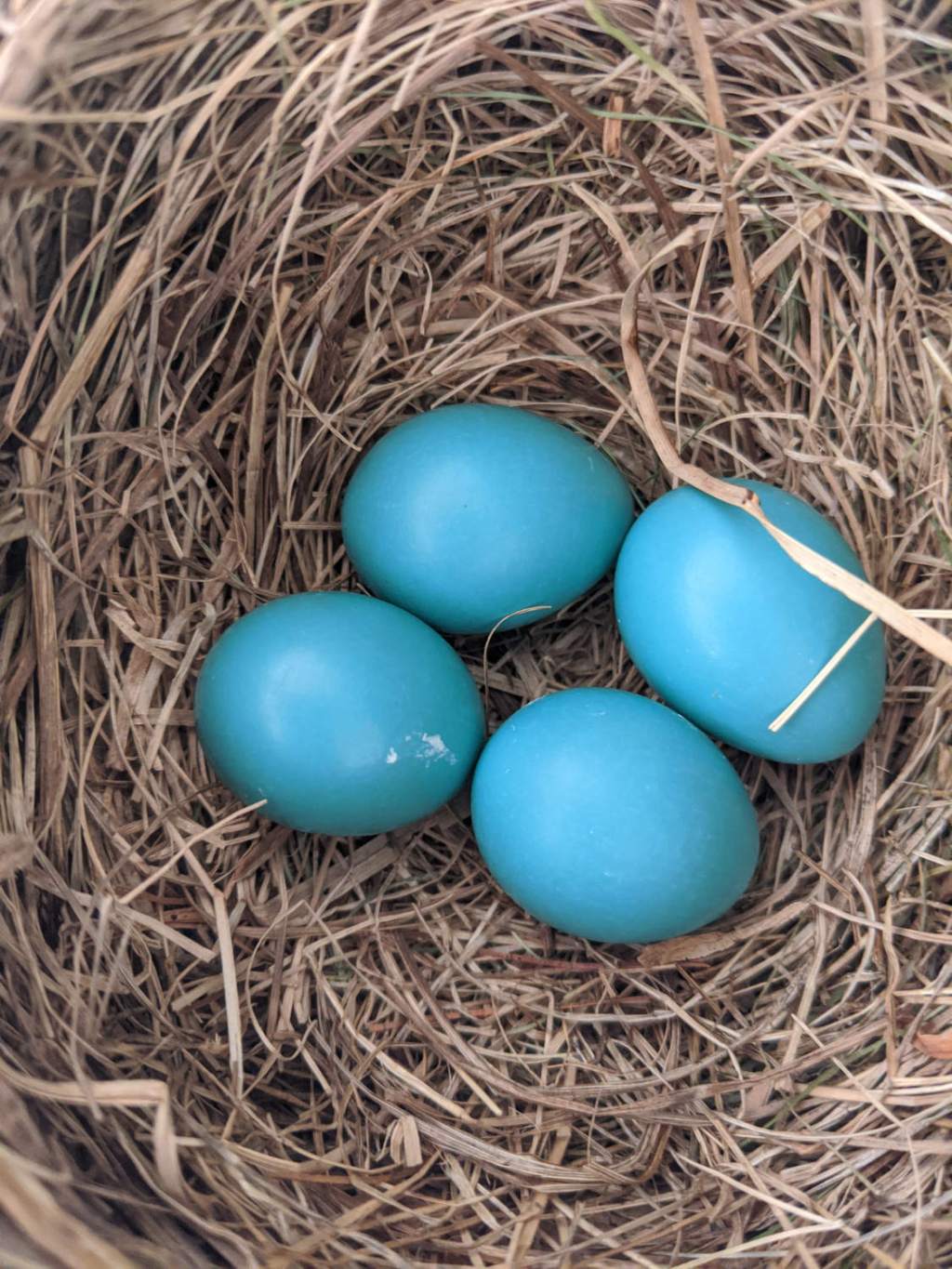
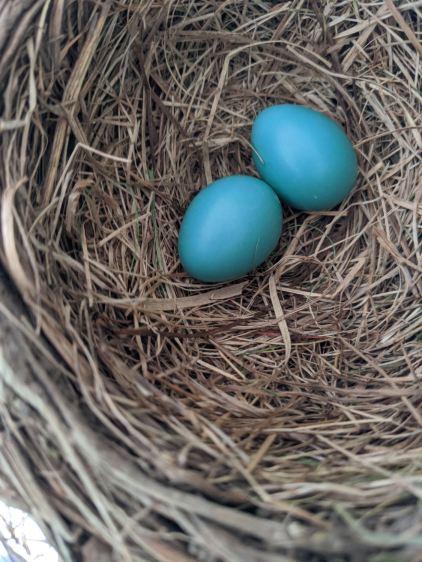
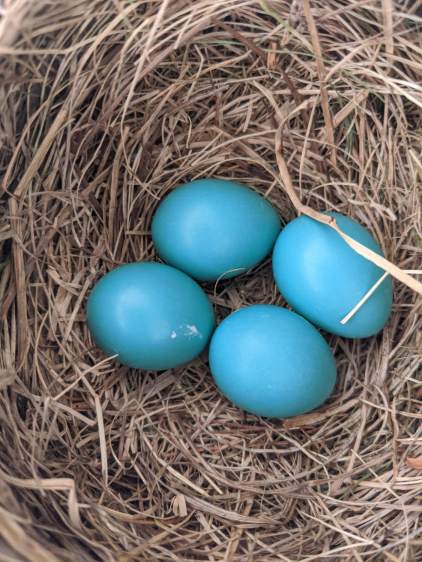
She’s surprisingly tolerant of our comings and goings, as well as garage door openings and closings:
Garage Robin Nest – robin brooding
We’re trying to stay out of her way as much as possible.
The gallery pix come from my phone, held against the soffit over the nest, and aimed entirely by feel, while standing on the Greater Ladder. If I had access to the top of the soffit, I’d drill a webcam hole, but …
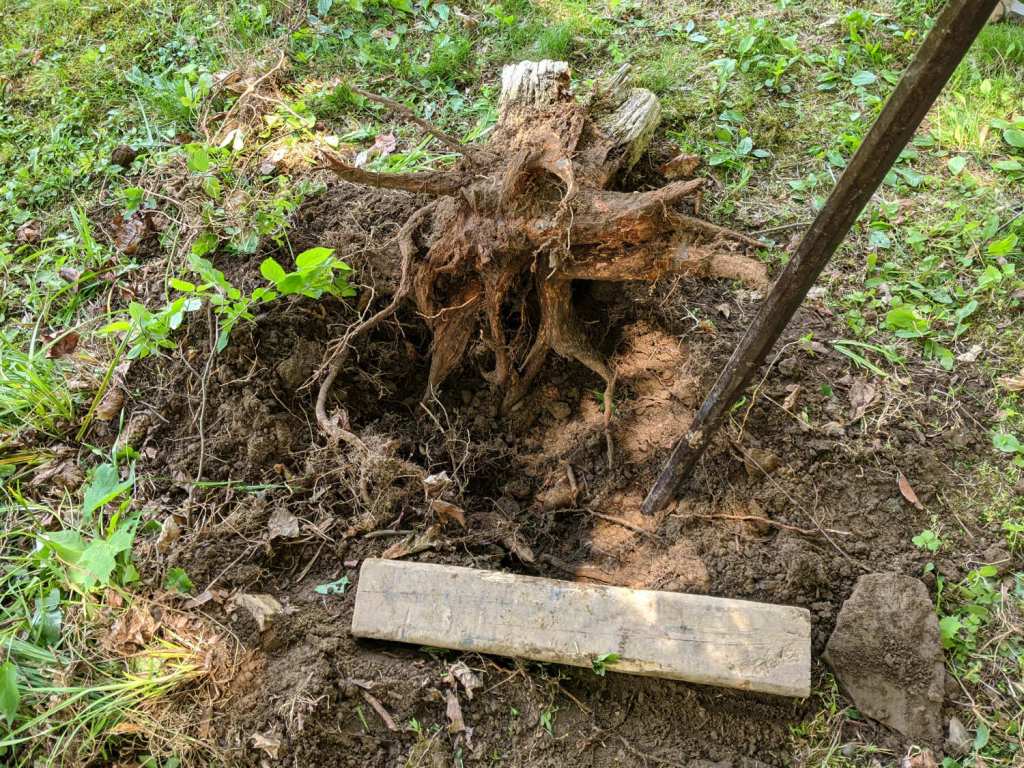
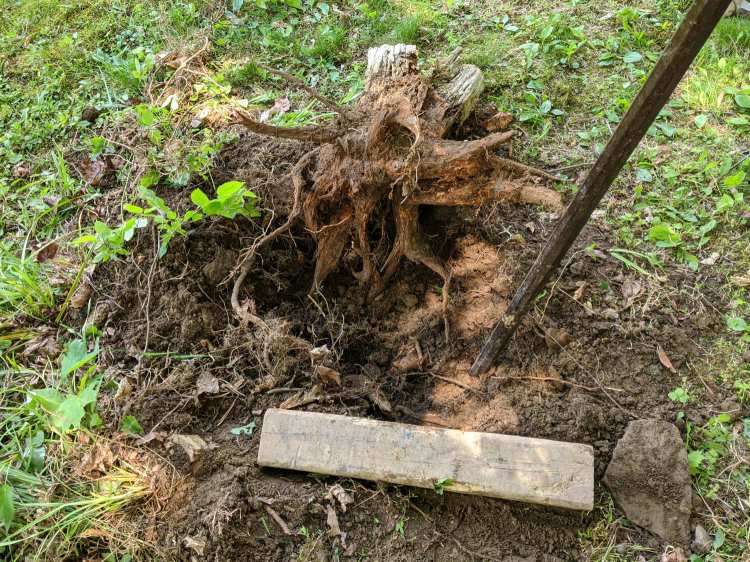
The previous owners apparently surrounded a cedar (?) tree with a ring of large, decorative rocks. The tree vanished long before we arrived, with the stump accreting random stones, bricks, and similar impedimenta ever since; my first task involved (re)moving a couple hundred pounds of rocky debris.
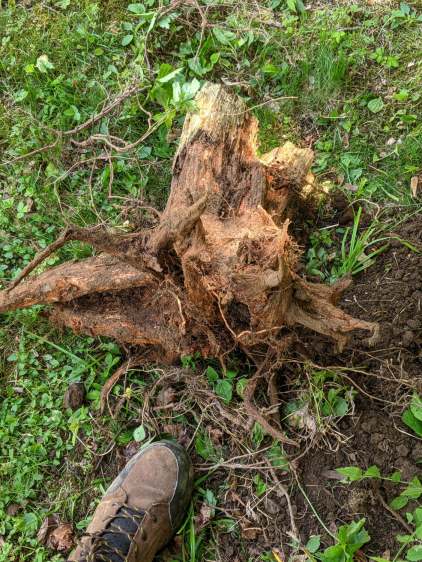
After using the stump as a fulcrum for that steel bar to break the rotted roots and loosen the surrounding soil, it’s out and away:
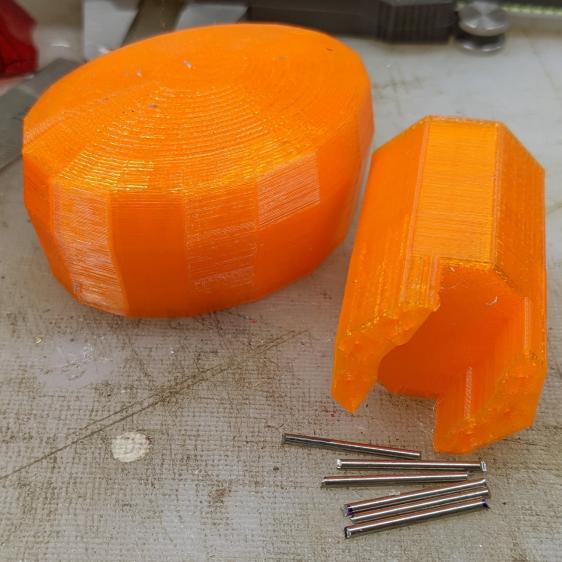
Although Jason’s comment suggesting carbon-fiber reinforcing rods didn’t prompt me to lay in a stock, ordinary music wire should serve the same purpose:
Hose Valve Knob – cut pins
The pins are 1.6 mm diameter and 20 mm long, chopped off with hardened diagonal cutters. Next time, I must (remember to) grind the ends flat.
The solid model needs holes in appropriate spots:
Hose Valve Knob – Reinforced – Slic3r
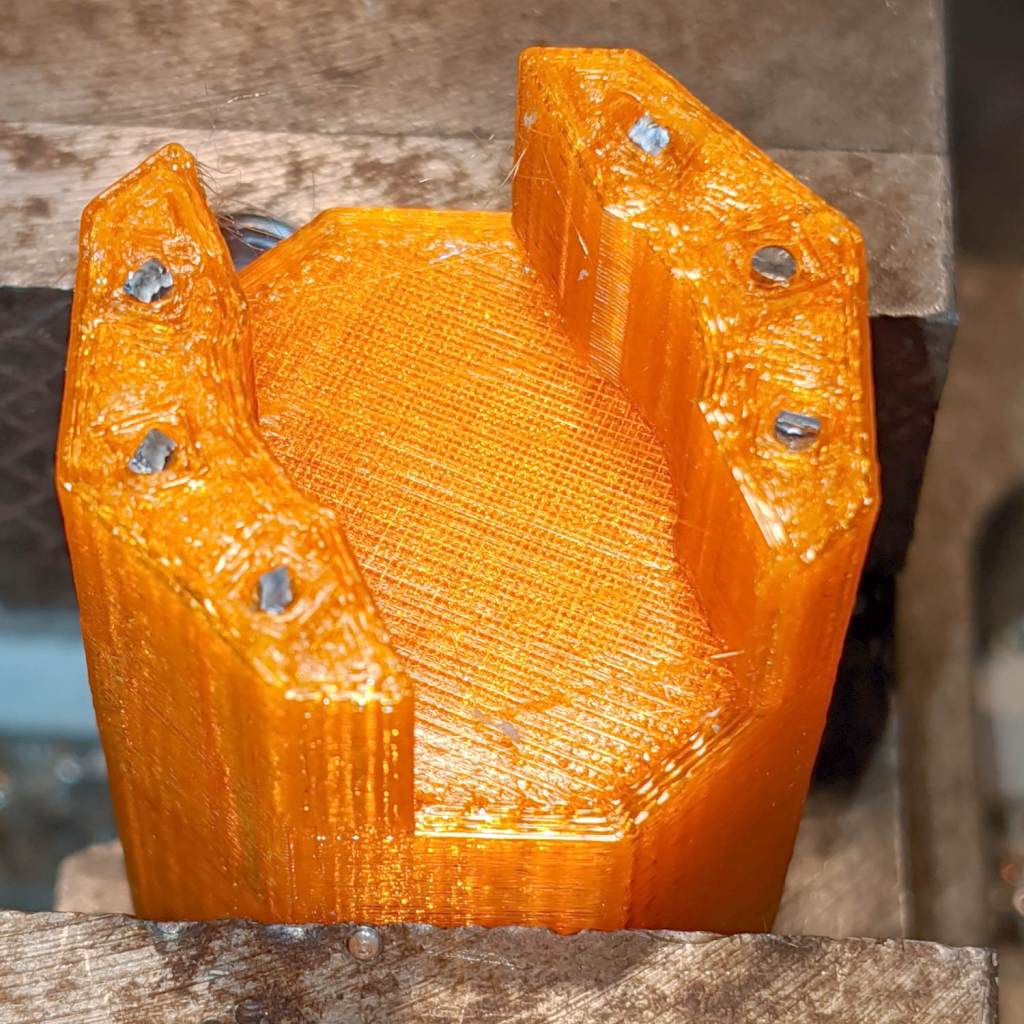
Yes, I’m going to put round pins in square holes, without drilling the holes to the proper diameter: no epoxy, no adhesive, just 20 mm of pure friction.
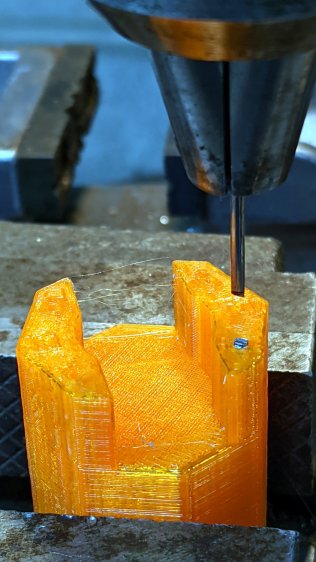
The drill press aligns the pins:
Hose Valve Knob – pin ready
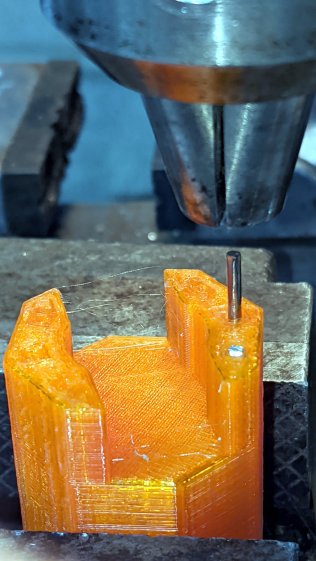
And rams them about halfway down:
Hose Valve Knob – pin midway
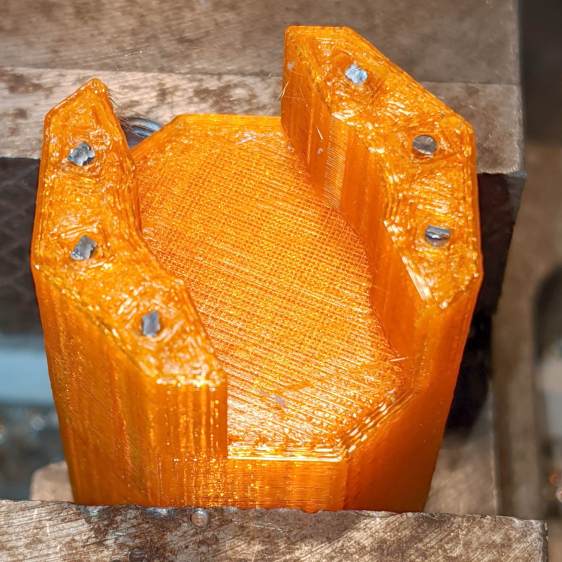
Close the chuck jaws and shove them flush with the surface:
Hose Valve Knob – pins installed
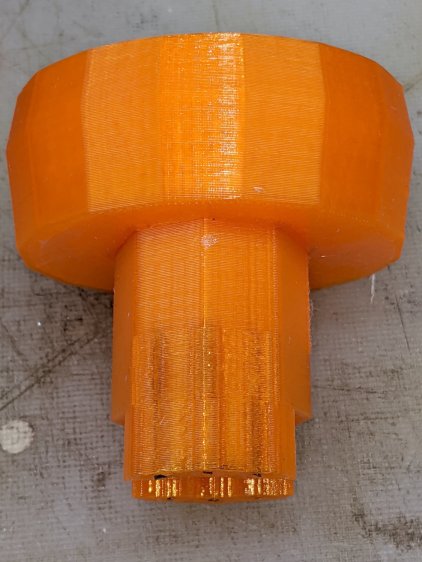
You can see the pins and their solid plastic shells through the wrench stem:
Hose Valve Knob – assembled
Early testing shows the reinforced wrench works just as well as the previous version, even on some new valves sporting different handles, with an equally sloppy fit for all. No surprise: I just poked holes in the existing model and left all the other dimensions alone.
This file contains hidden or bidirectional Unicode text that may be interpreted or compiled differently than what appears below. To review, open the file in an editor that reveals hidden Unicode characters.
Learn more about bidirectional Unicode characters
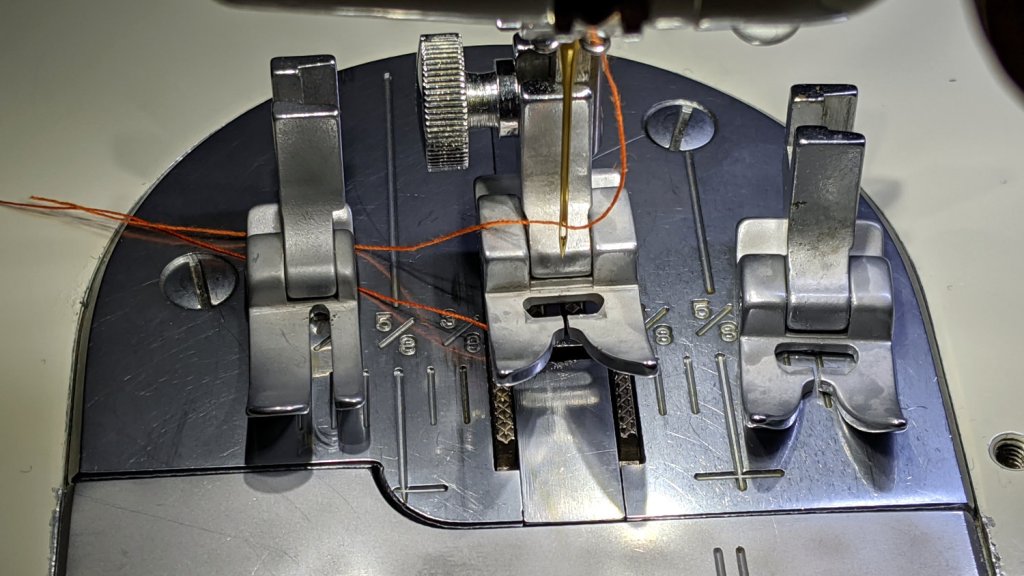
That worked surprisingly well for surprisingly long, but the edges eventually came loose and, after far too long, I deployed the Tiny Sandblaster™:
Kenmore 158 – matte cover plate – feet
The mottled matte effect isn’t quite what I expected, but it’s better-looking in person and we deemed it Good Enough™ for the purpose.
You saw the foot on the left in the previous effort:
Kenmore 158 – matte cover plate – feet – detail
The rounded plate directly under the needle sits far enough back to not reflect any of the LEDs toward her normal operating position, so we decided it didn’t need sandblasting.
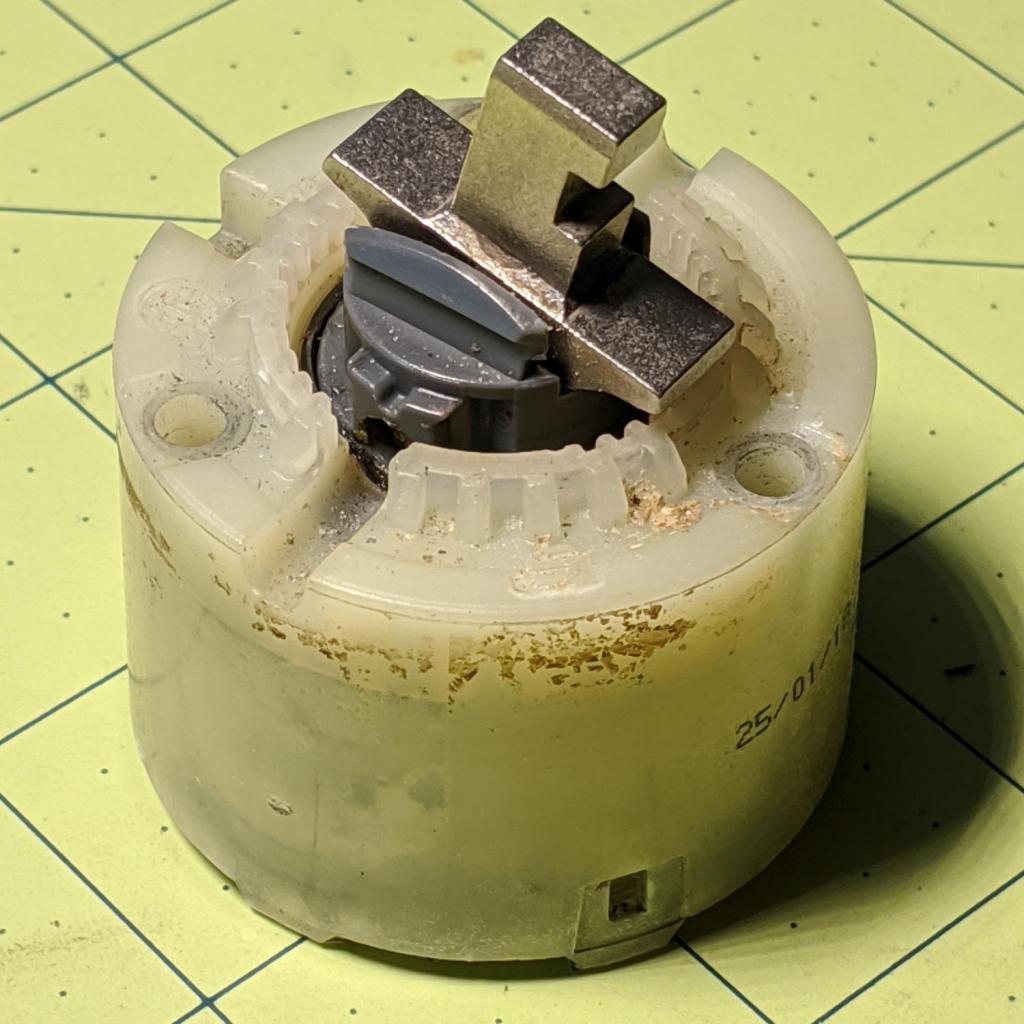
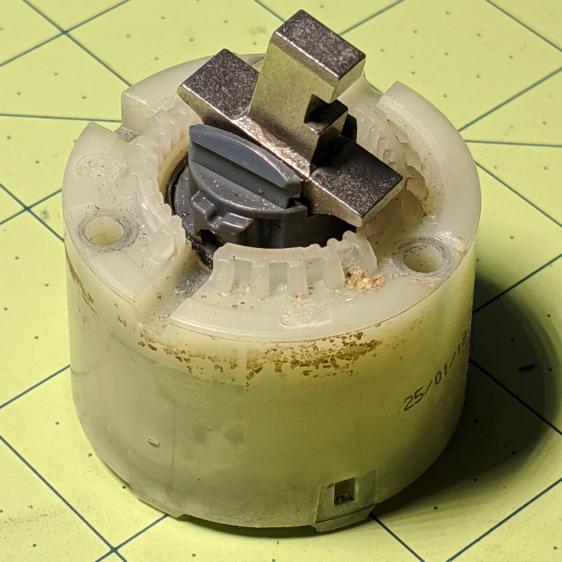
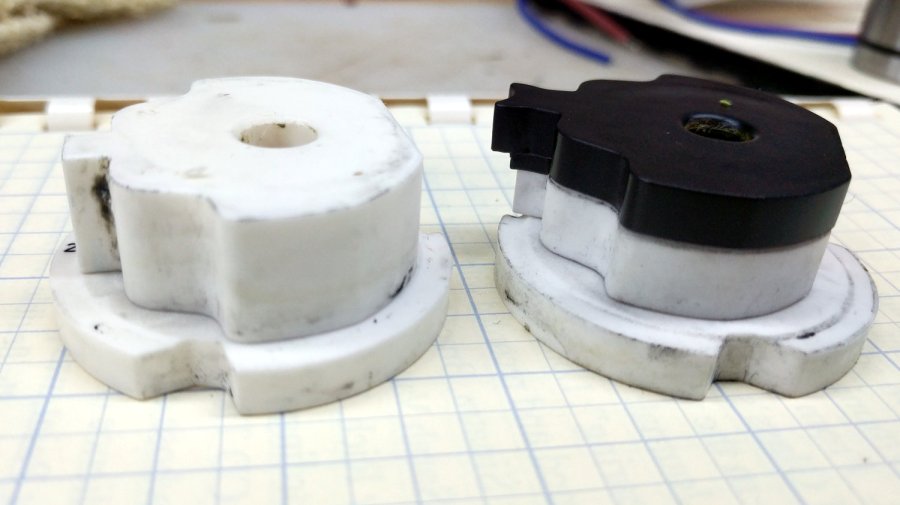
American Standard Ceramic Faucet Valve Cores – old vs new
I think the sliding fit between the two ceramic blocks laps itself into a more perfect joint, to the extent it’s wrung together and can’t be moved. Even after filtering, our town-supplied water apperently has enough micro-fine grit for the purpose.
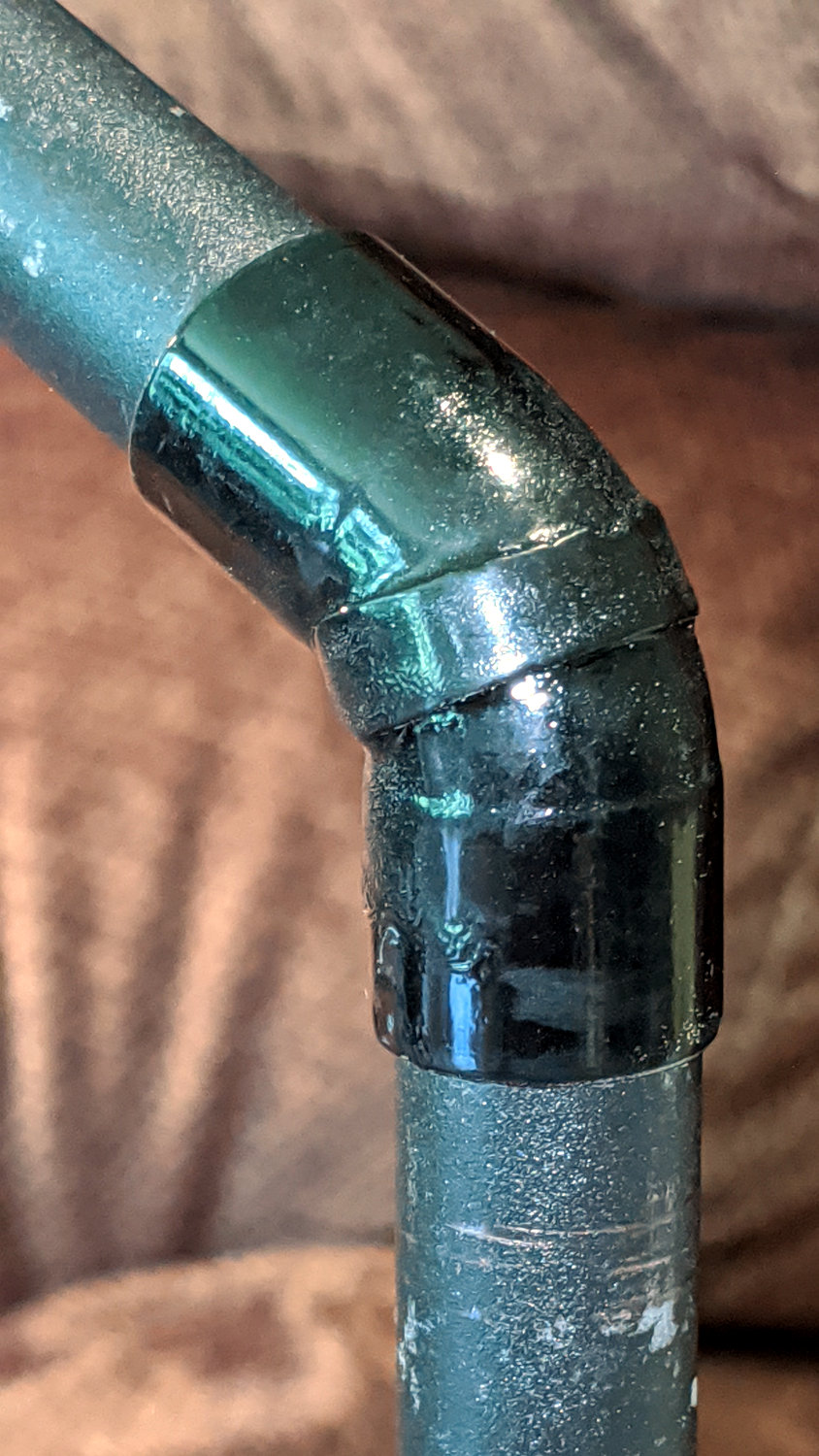
Shooting the modified copper elbow with gloss black atop gray primer definitely improved its disposition:
Floor Lamp – painted elbow – installed
I’d have been more inclined to apply several light coats if the wind weren’t blowing up a storm. As it was, I shot enough black to cover the not-quite-dry primer (“top coat at any time”) and called it a day.
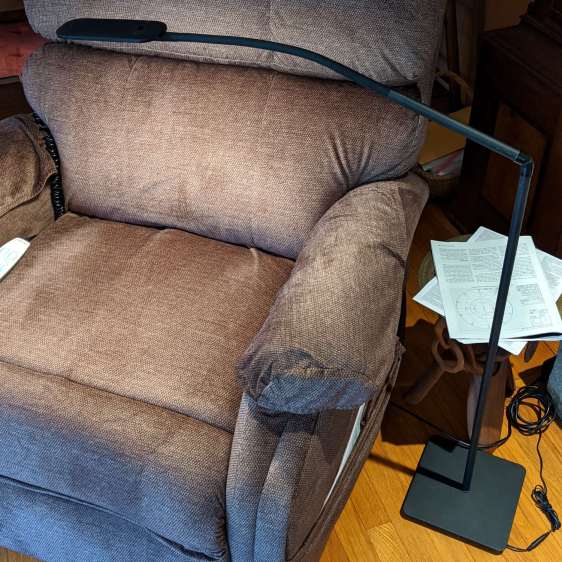
The scuffed tubes aren’t quite that ugly in person, but they have suffered some abuse along the way. Seen from a normal working distance, however, it’s all good:
Floor Lamp – finished
The lamp isn’t quite as tippy as I feared, so I’ll try it without the broken truck spring counterweight until something untoward happens.