Ed Nisley's Blog: Shop notes, electronics, firmware, machinery, 3D printing, laser cuttery, and curiosities. Contents: 100% human thinking, 0% AI slop.
When we bought this house, it had its original clothes dryer, which was vented directly through the wall with a few inches of 3×10 inch square duct. Alas, contemporary dryers use 4 inch round hoses, so I conjured a round-to-square adapter from a length of air handler duct:
Dryer Vent – end view
I’d used … wait for it … duct tape to hold the end caps on, because I knew I’d be taking it apart to clean out the fuzz every now & again. The most recent cleanout occurred when I noticed the end cap had eased its way out of the adapter, releasing warm fuzzy air behind the dryer.
The solution, which I should have done decades ago, holds the end caps in place with sheet metal screws:
Dryer Vent – screws installed
A pair of small clamps held everything in the proper location while I applied a suitable step drill and installed the screw:
Dryer Vent – screw clamps
Now the duct tape just seals the gaps, rather than holding against the minimal pressure in the box, and it should be all good until the next cleanout.
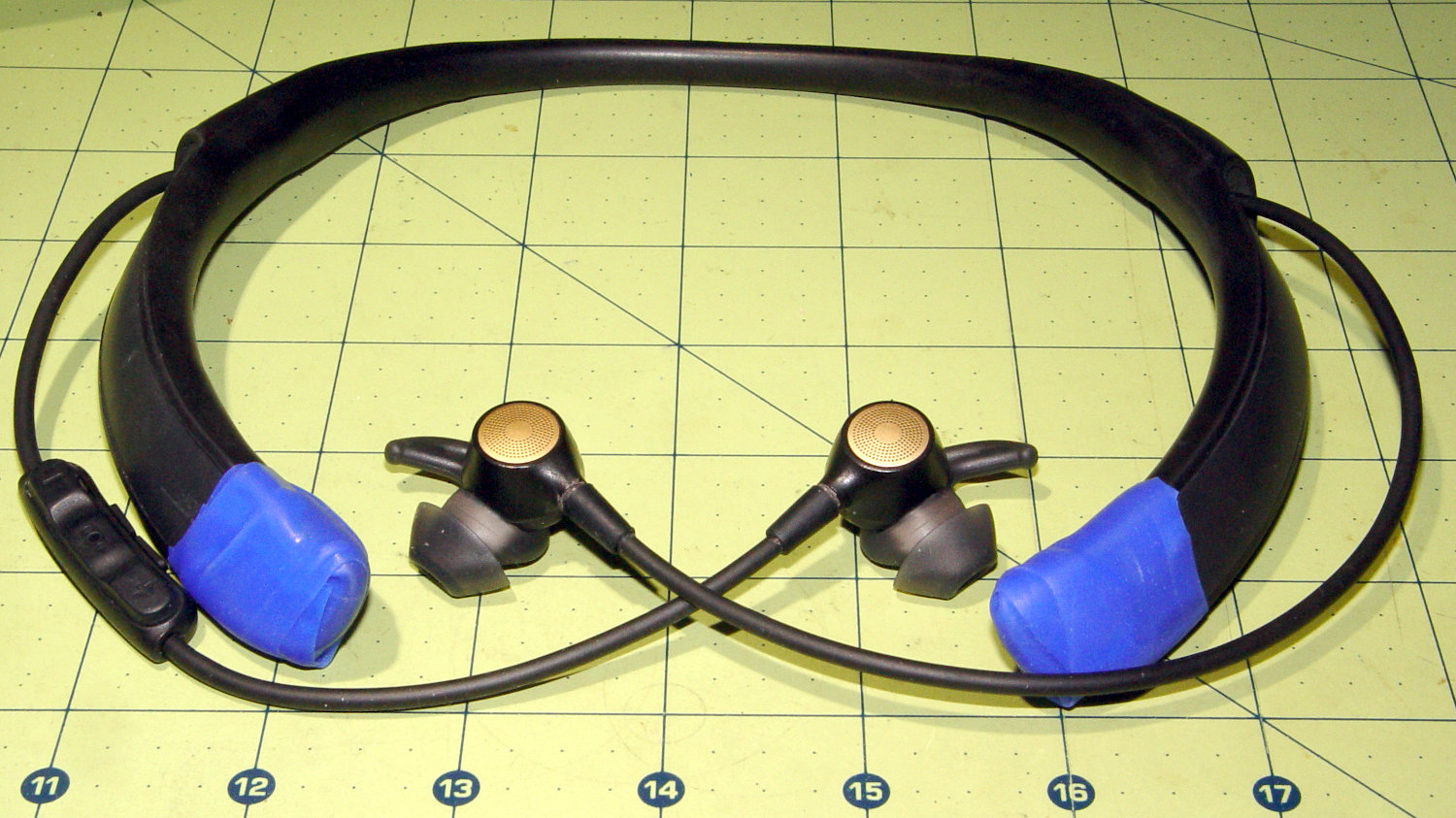
I bought my Bose Hearphones in late August 2017, so they’re just shy of two years old, and have used them more-or-less daily since then. Although the innards still improve my hearing, the exterior is falling apart:
Bose Hearphones – cosmetic repairs
The conspicuous blue tips come from silicone tape holding the “soft touch” silicone shell together:
Bose Hearphones – detached band cover
The white line seems to be silicone glue holding the hard cover plate to the equally hard base. So far, it’s working, but the two-piece soft cover is peeling away from the very thin adhesive (?) holding it to the hard parts.
The silicone glue under the flexy cover on the control pod along the right earbud cable hasn’t fared as well:
Bose Hearphones – failed control cover
I blobbed ordinary RTV silicone under the cover, ignoring the caveats about acetic acid corrosion, because I don’t have any platinum-cure silicone on the shelf.
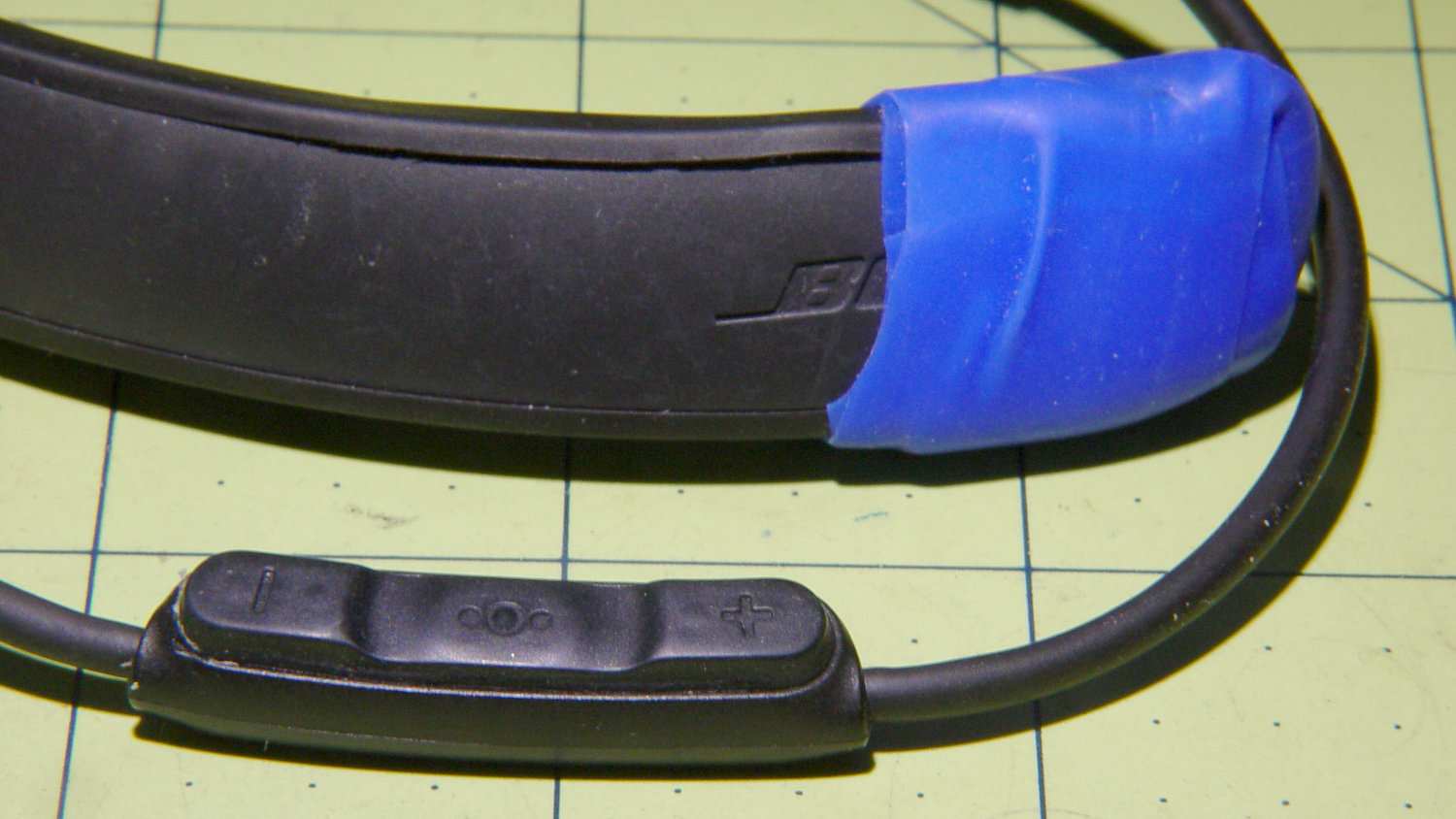
When the blue tape wears out / falls off, I’ll replace it with black silicone tape going further up the ring to hold the rest of the soft cover in place:
Bose Hearphones – cosmetic repairs – detail
The ear buds have soft silicone strain relief tubes around the cables. The friction holding them in place failed long ago and, because no adhesive will work with silicone, I wrapped enough double-sided tape around the cables to produce a sticky lump jamming them in place:
Bose Hearphones – ear piece strain relief
A bit of the muck sticks out on both ends and I expect to replace the tape every now and again:
[Update: Bose apparently had a QC failure on the silicone covering and, much to my surprise, swapped me entirely new Hearphones. The new covering feels slightly different, the USB cable hatch is a distinct piece of plastic, and maybe it’ll survive until the battery gives out. Color me satisfied! ]
Following the same drill as before, the Epson R380 printer once again thinks I’ve changed its diaper before resetting its waste ink counter. Instead, I’ve poured what would be a moderate fortune of waste ink down the drain from the external tank, had I not grafted a continuous flow ink supply onto the thing.
To judge from how often I must reset the counters, I’m expected to buy a new printer every three years. For sure, it’s uneconomical to have anybody else (the nearest Epson Authorized Customer Care Centers is 68 miles away on Long Island) do the deed. As Epson delicately puts it “replacement of ink pads may not be a good investment for lower-cost printers”.
Epson now provides a utility allowing you to reset the counters exactly one time. Having a scrap Windows PC ready to go, I didn’t bother capturing the partition before firing off the previous Sketchy Utility™, nor did I restore it, so the whole process took about half an hour.
The hard drive platters will eventually become nightlights.
We’ll be tackling several long-delayed household projects during the next month. As a consequence, I won’t be doing my usual techie tinkering and will post shop notes only occasionally.
There’s not much to say about scraping, priming, and repainting, other than that it’s an ugly job which must get done!
Turkey on patio rail
If only we could train the turkeys to scrape the rail …
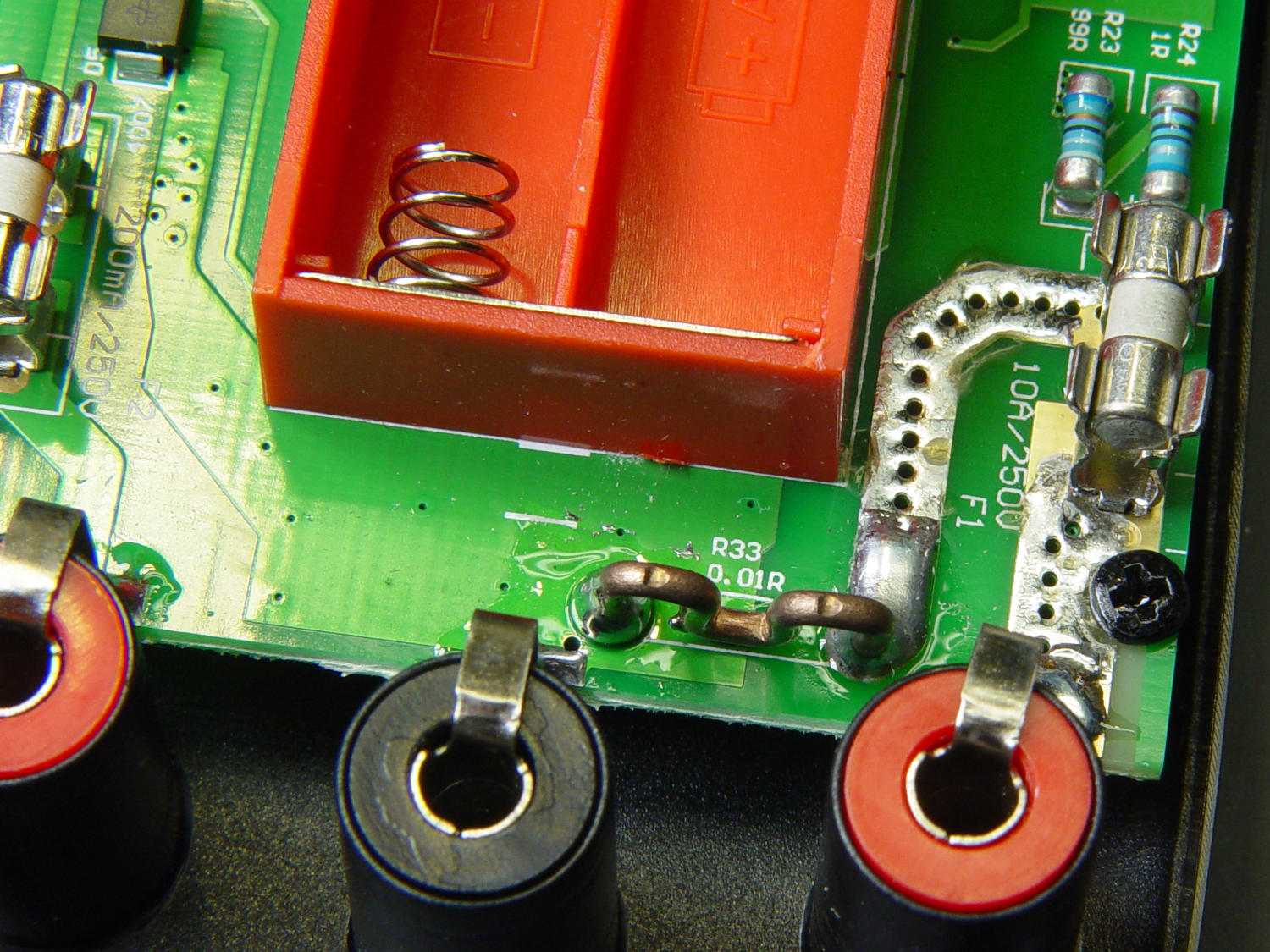
The ANENG AN8008 / AN8009 multimeters have 3.6×10 mm ceramic fuses on their inputs:
AN8009 10 A current shunt – top view
Based on past experience, at some point over the next year or five, I’ll forget to plug the hot probe back in the voltage hole before measuring a power supply:
AN8008 multimeter jacks
Whereupon the fuse will blow.
So, for about five bucks, a bag of 10 A and 0.5 A axial lead fast-blow glass fuses just arrived from halfway around the planet:
3.6×10 mm axial fuses
They have the right body size and, in this application, fine points concerning current ratings and cartridge composition don’t make much difference. If I actually need one, I’ll snip off the leads, jam it in the holder, and move on.
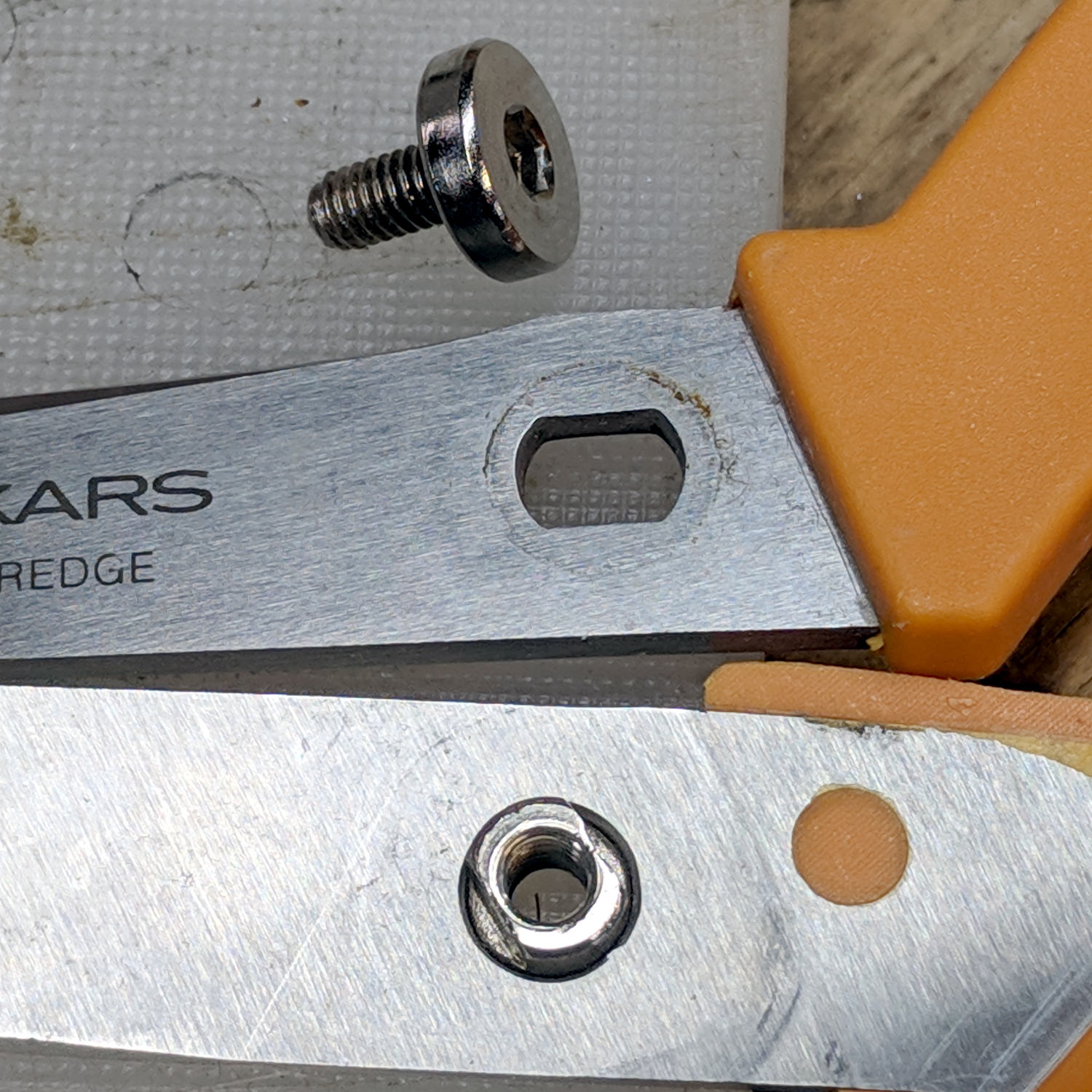
A new-to-us Fiskars scissors arrived with a loose pivot of a type I’d never seen before:
Fiskars scissors – pivot nut in place
The nut fits into the slot in the upper blade, making the nut and screw turn together. Although there’s no torque between the two, the screw had no threadlock and, well, loosening happens.
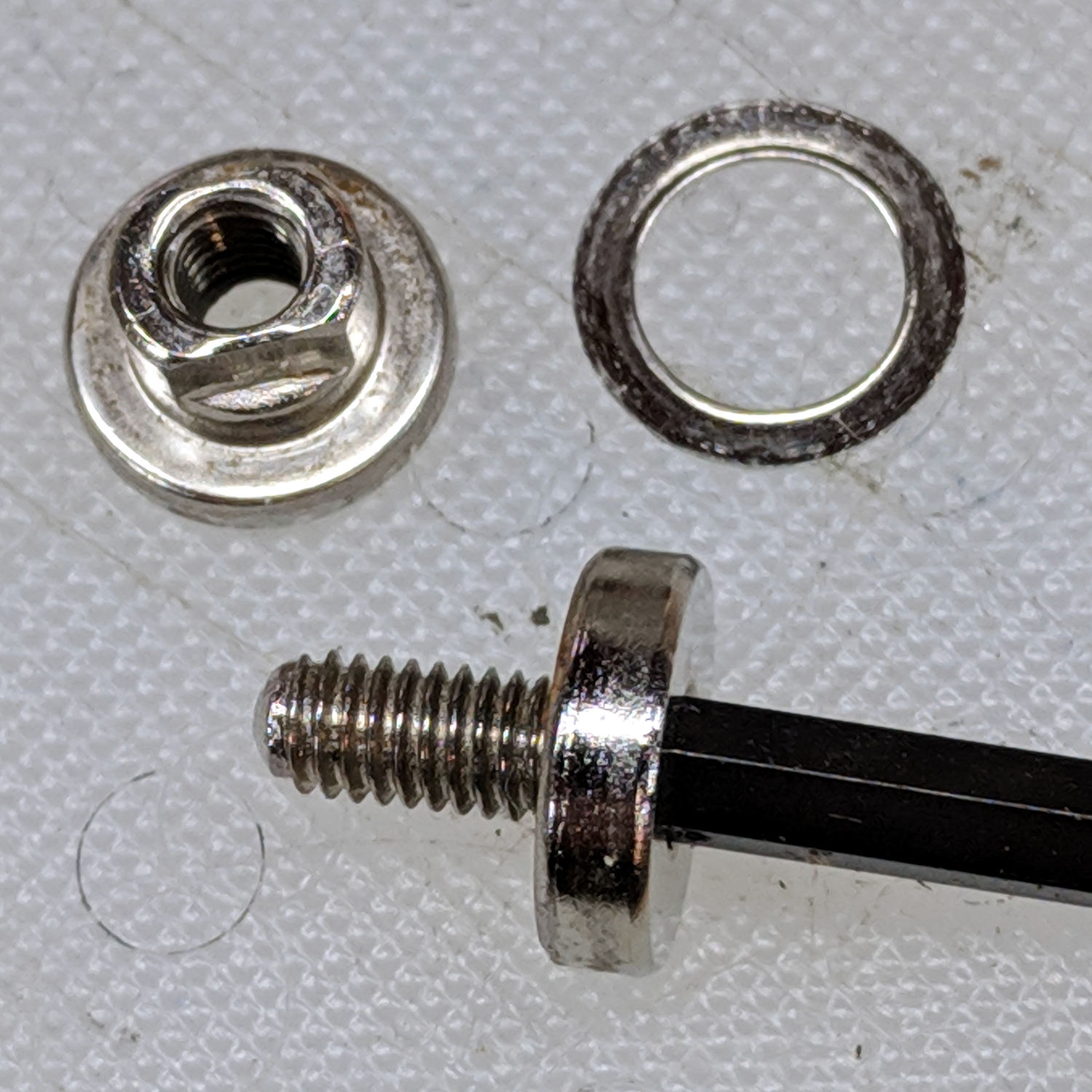
The pivot parts include a thin washer between the nut and the lower blade to reduce friction between the moving parts:
Fiskars scissors – pivot parts
With a dot of Loctite on the screw, it’s ready for reassembly:










 The Smell of Molten Projects in the Morning