Ed Nisley's Blog: Shop notes, electronics, firmware, machinery, 3D printing, laser cuttery, and curiosities. Contents: 100% human thinking, 0% AI slop.
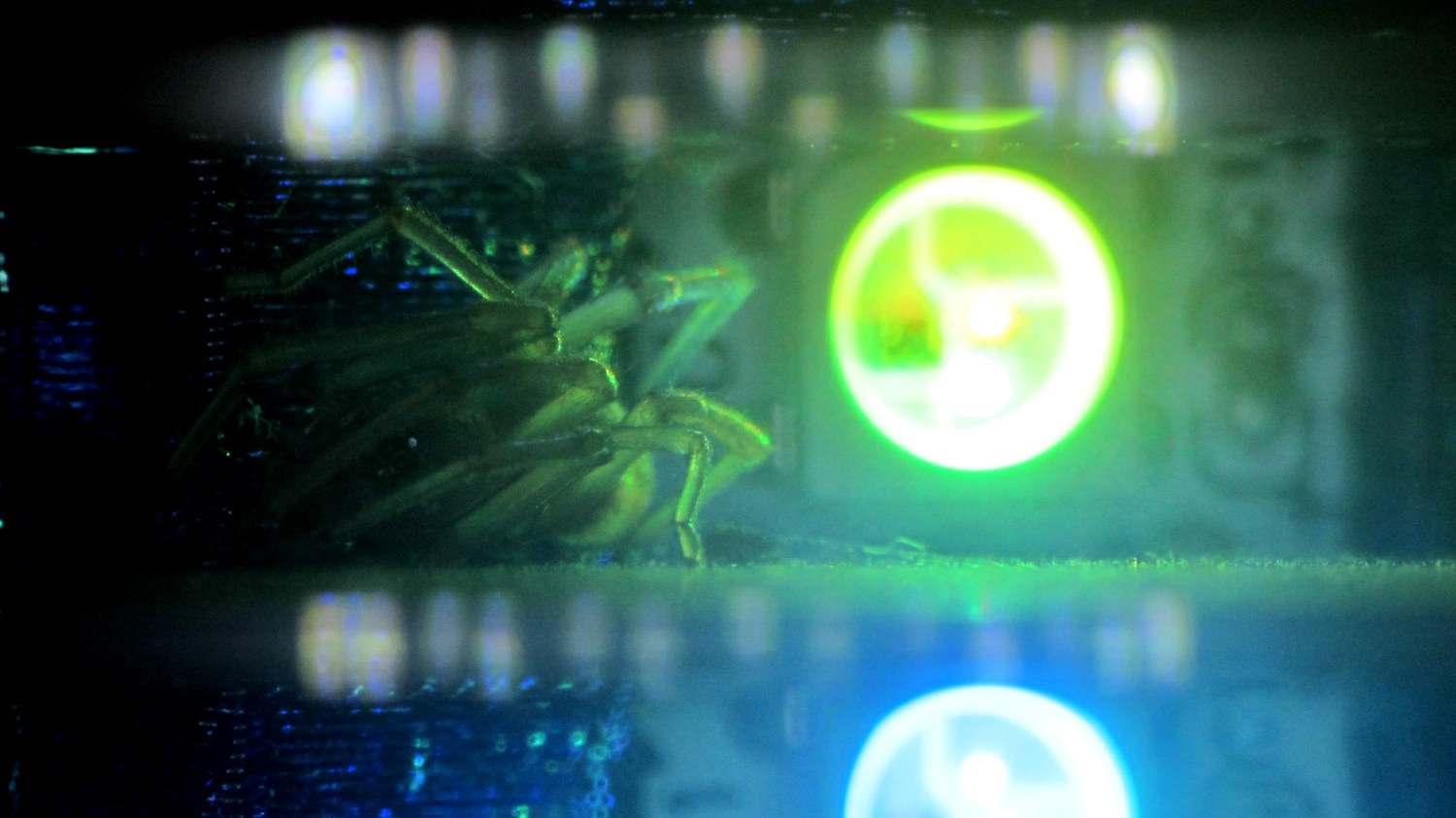
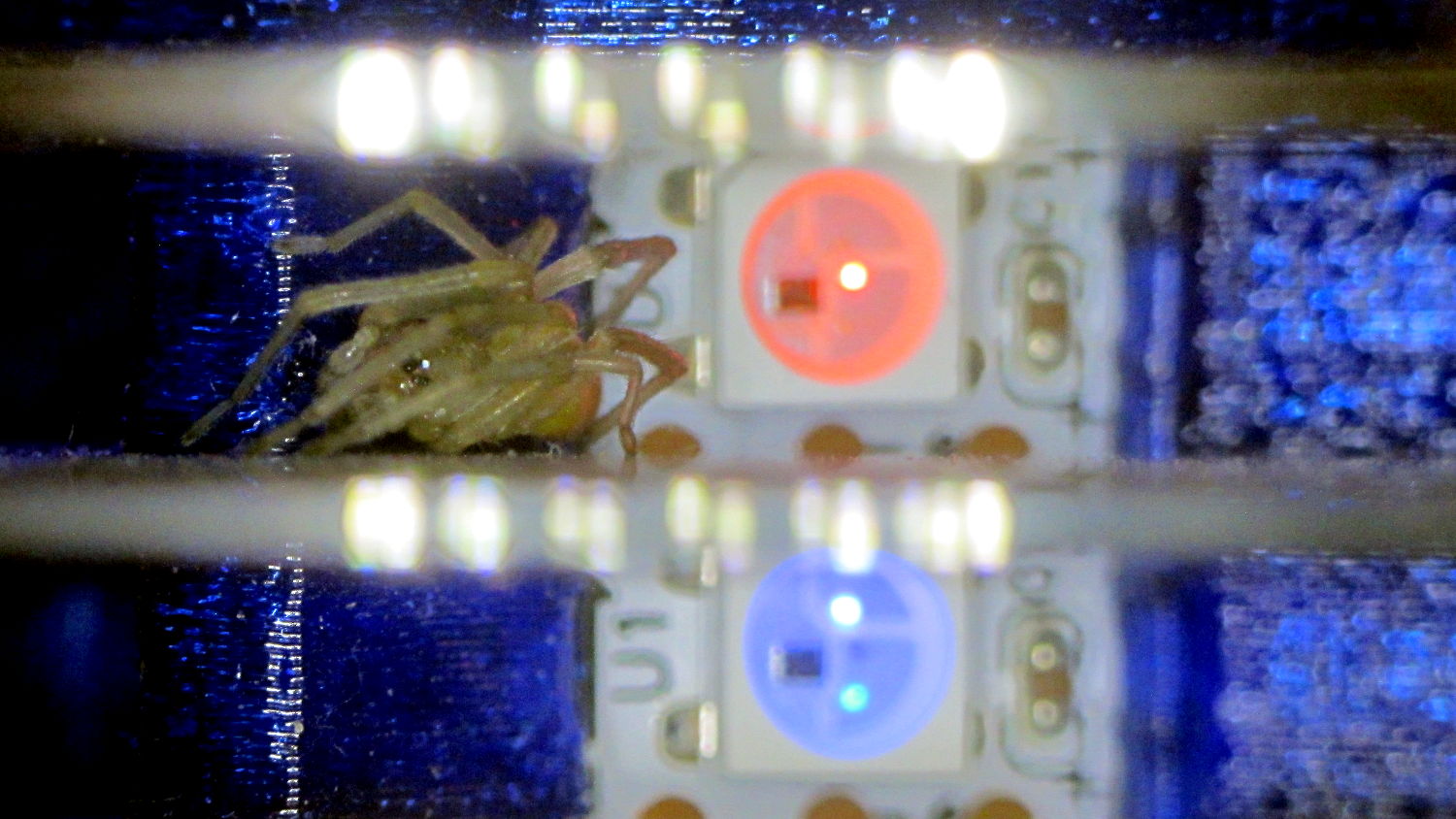
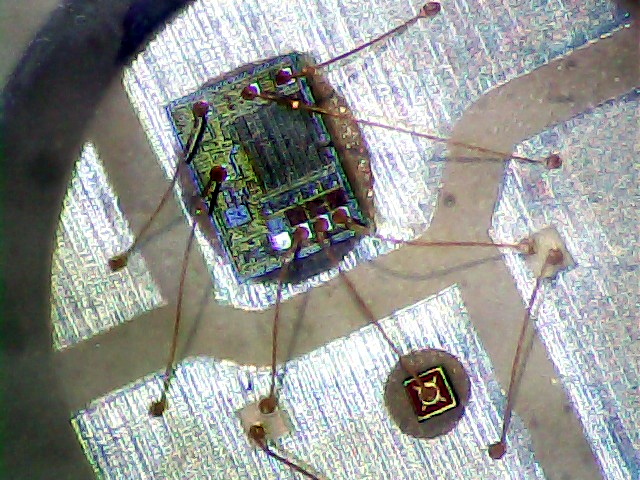
Another of the knockoff Neopixels in the Hard Drive Platter Mood Light failed, even limited to PWM 63 to reduce the temperature. This time, however, I had some help finding the failed blue LED:
Hard Drive Mood Light – failed LED with spider – green
Hard Drive Mood Light – failed LED with spider – white
A day later, she’d built a small web, presumably to improve the odds of catching something yummy. Who am I to disagree?
I should set up a test fixture for all the knockoff Neopixels and run some numbers. They’re definitely a disappointment, even to a bottom feeder such as I …
It didn’t involve waiting: by random chance, a fifth NYSDOT road repair crew happened to be in that area when Mary rode by. She stopped directly atop the sinkhole and screamed at the flagger until he came over. She explained the problem and, wonder of wonders, this time they put asphalt in the right spot.
The patch looks hand-tamped and will pop out after a while, but it’ll be great while it lasts.
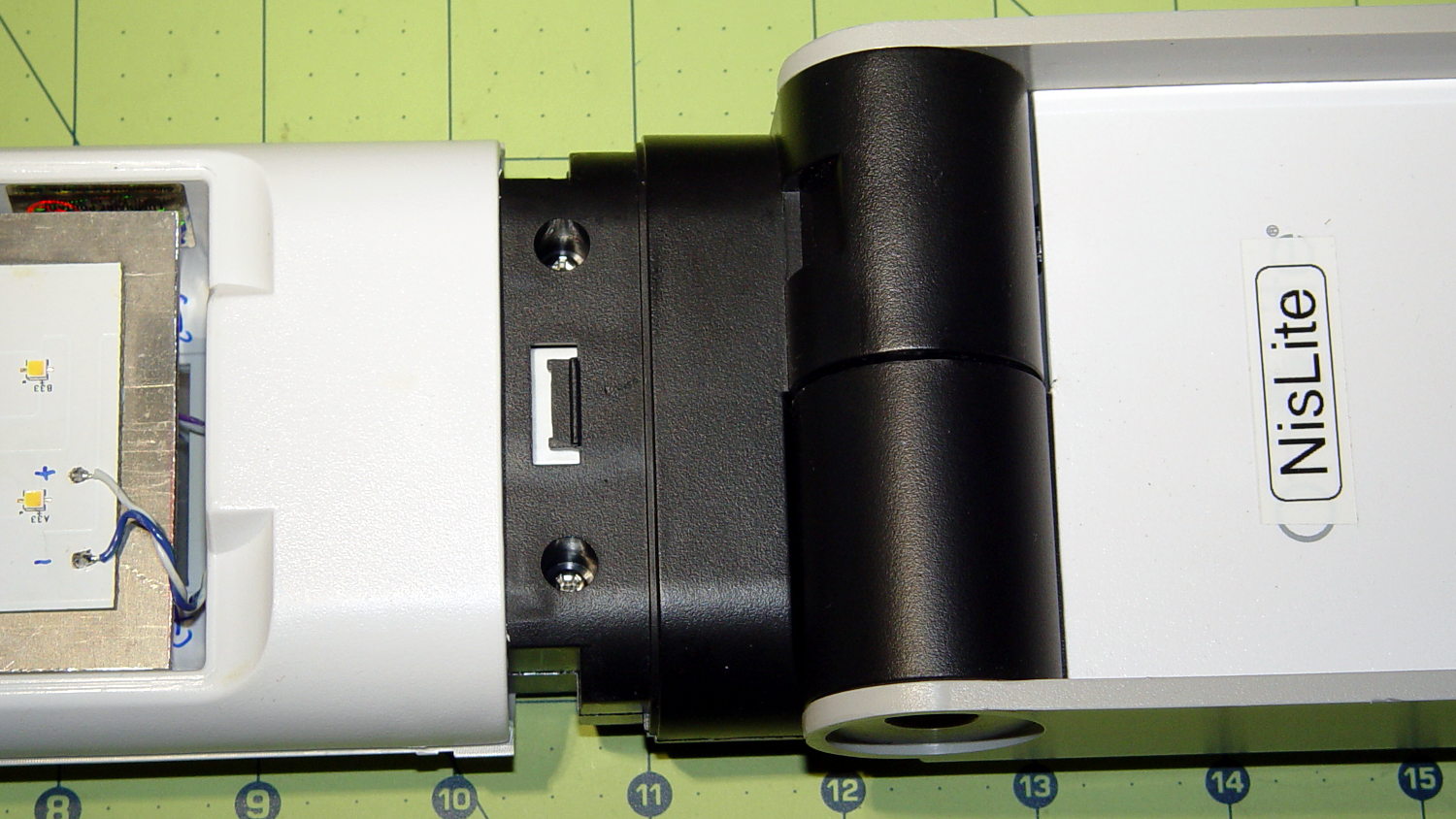
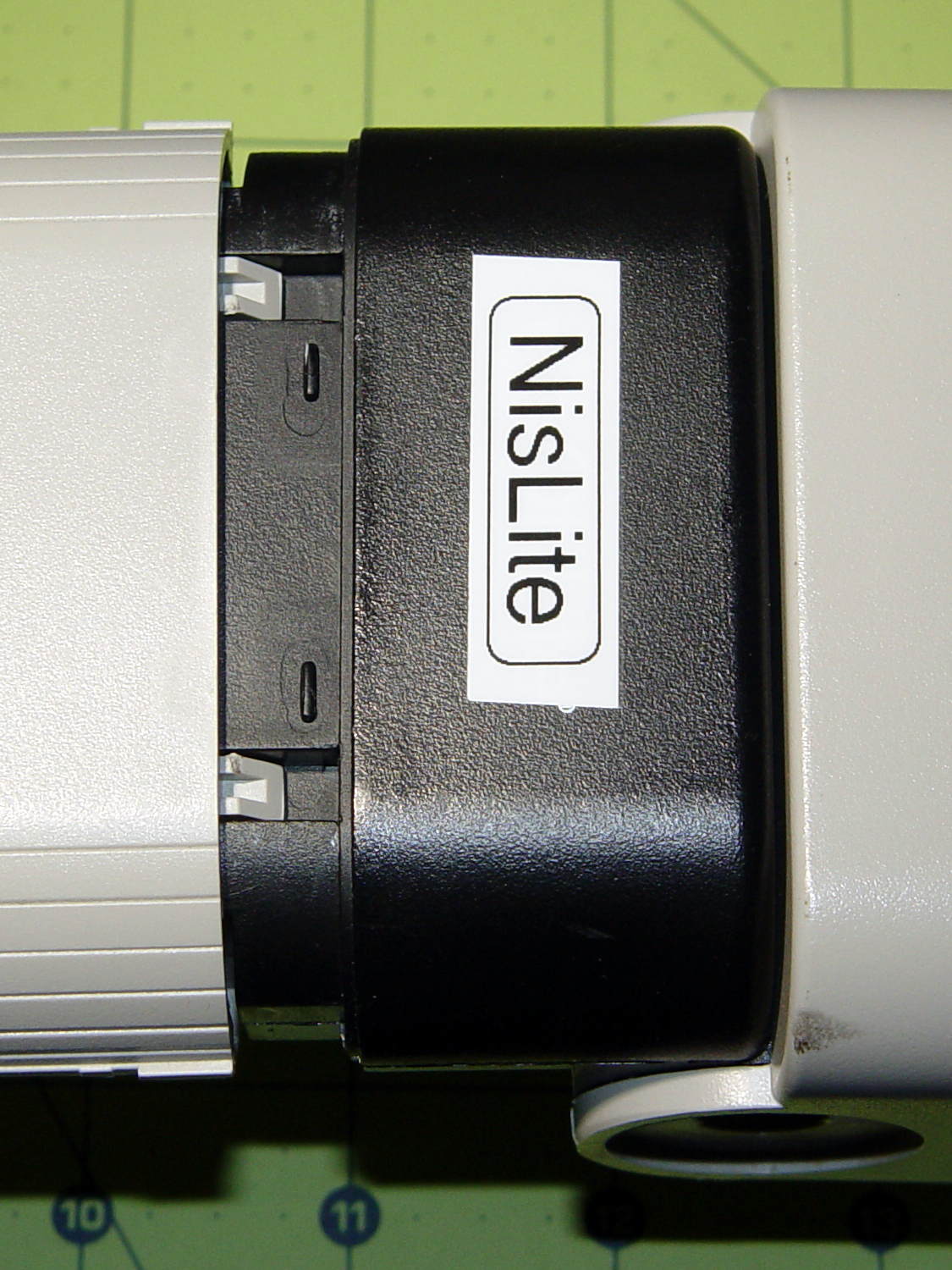
The converted OttLite hit the floor again and, this time, the shell around the lamp popped free. Given that I didn’t know how to take it apart before, this is new news.
There’s a small snap latch inside the bottom / inner surface:
OttLite LED Conversion – lamp shell – ventral
And two guide notches + latch nubs inside the top / outer surface:
OttLite LED Conversion – lamp shell – dorsal
So, if you had to get it apart by hand, a spudger-like tool applied to the bottom / inside of the shell and a bit of tugging should do the trick.
It snapped back together without incident, but I really must figure out a bigger base for the damn thing.
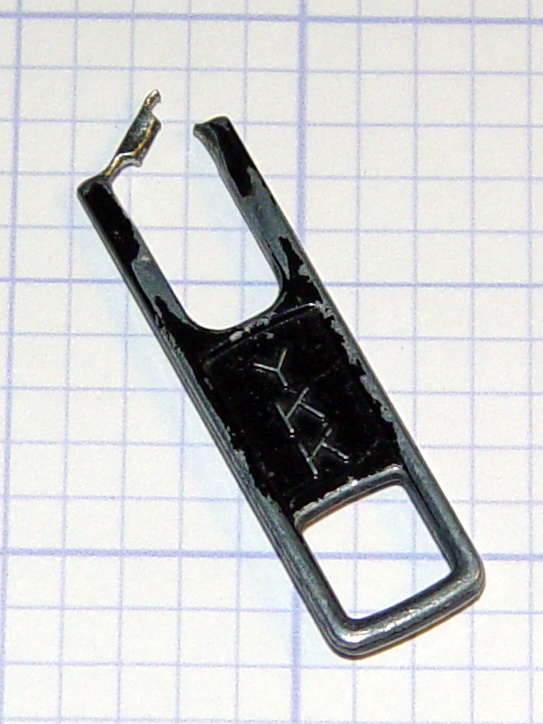
In our last episode, the zipper tab on my belt pack had worn through:
Eroded YKK Zipper Tab
I “fixed” that by the simple expedient of running a key ring through the latch that used to hold the tab. That held for half a year, which isn’t to be sniffed at for a zero-cost repair.
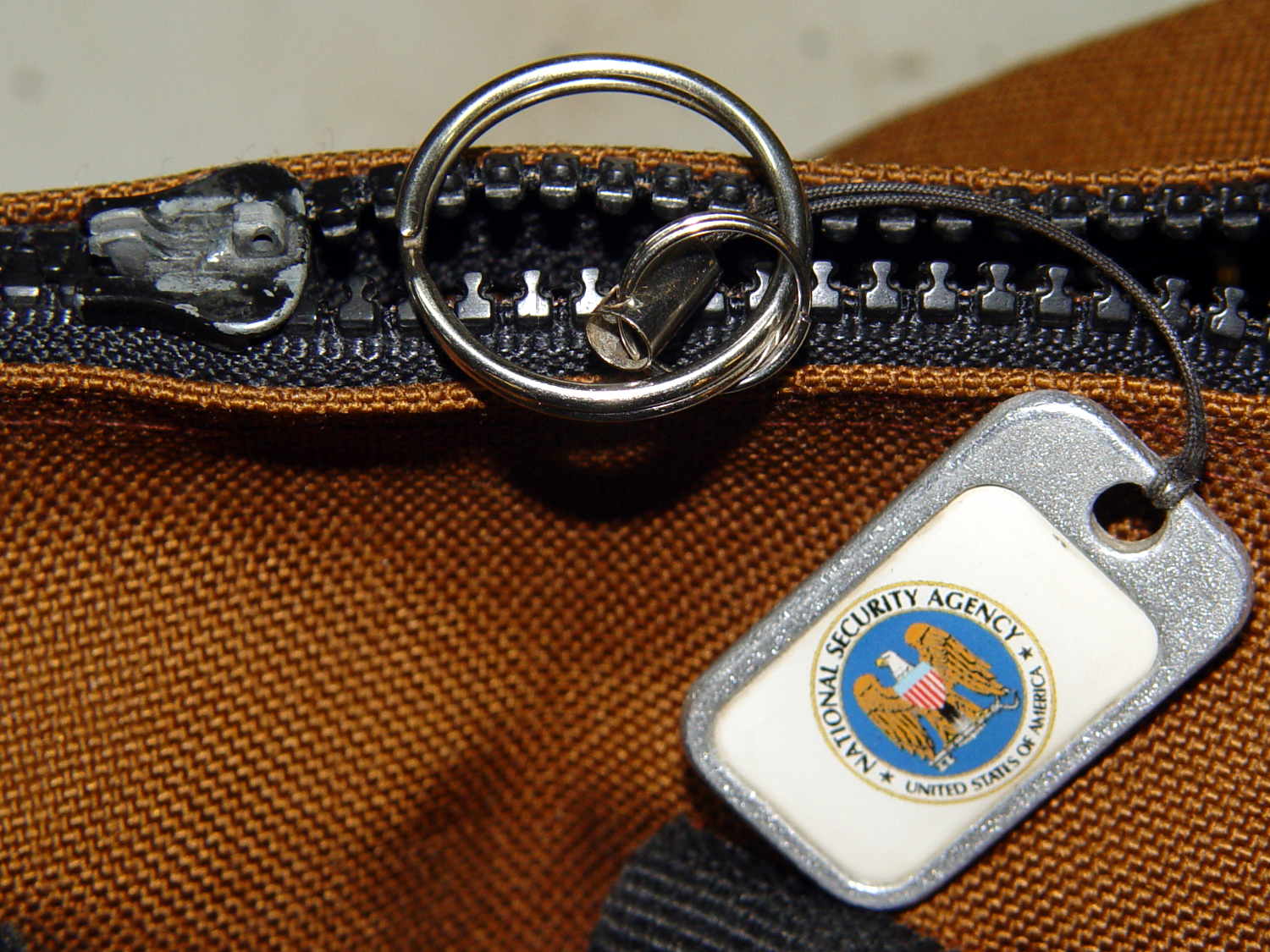
A few days ago, the abused latch popped off the slider, leaving the NSA tag and ring in my hand:
Belt Pack Zipper – missing tab and latch
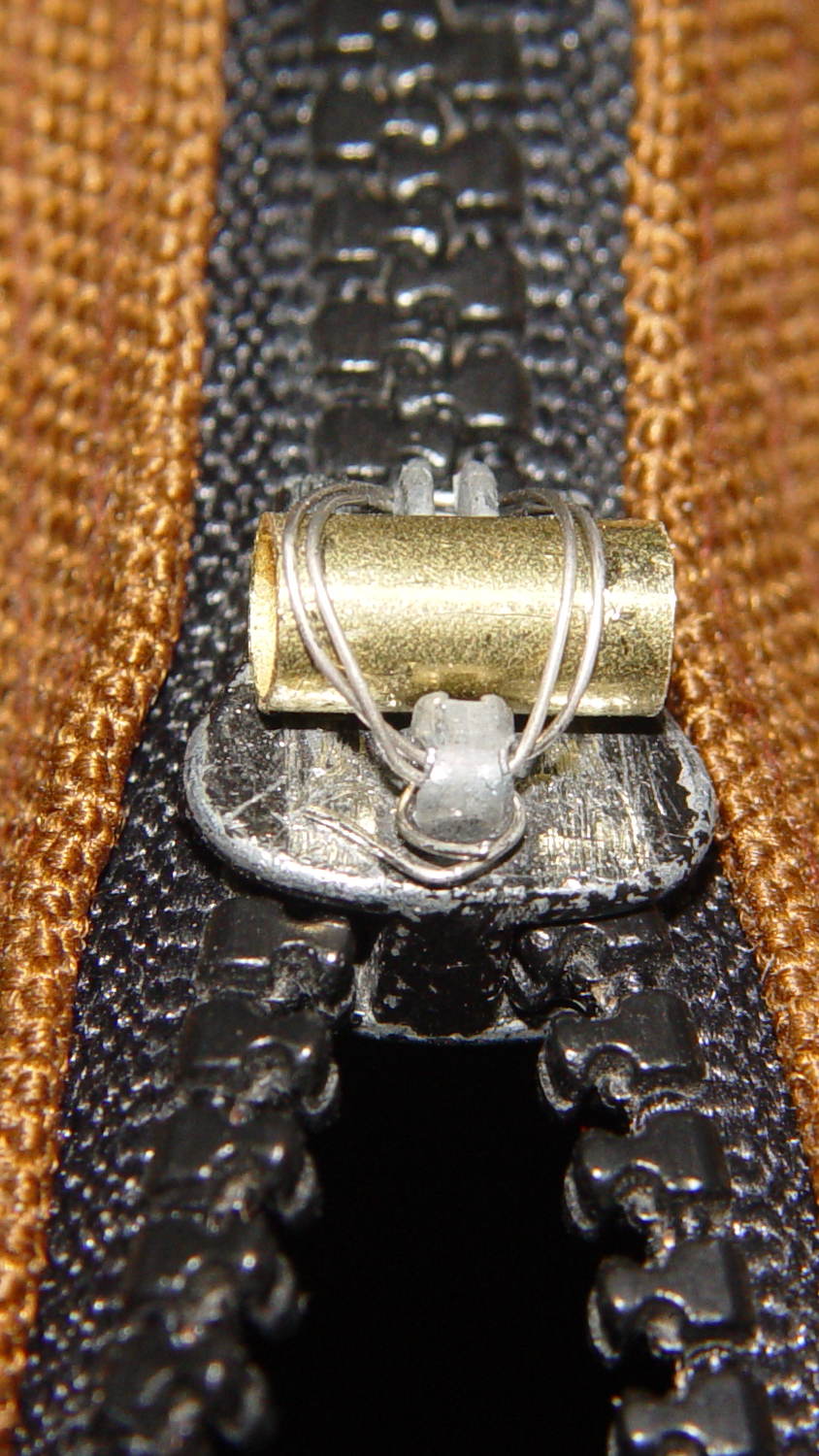
I scuffed up the surface with a file to provide a bit more grip for the inevitable epoxy, then clamped a brass tube athwart the slider:
Belt Pack Zipper – wired brass tube
The tube ID passes the ring with enough clearance to make it work out. The general idea is that the tube provides rigidity for the ring, the wires hold the tube against the pull, and the epoxy holds the wires in place. I fully expect the sharp edges around the tube’s ID will gradually wear away.
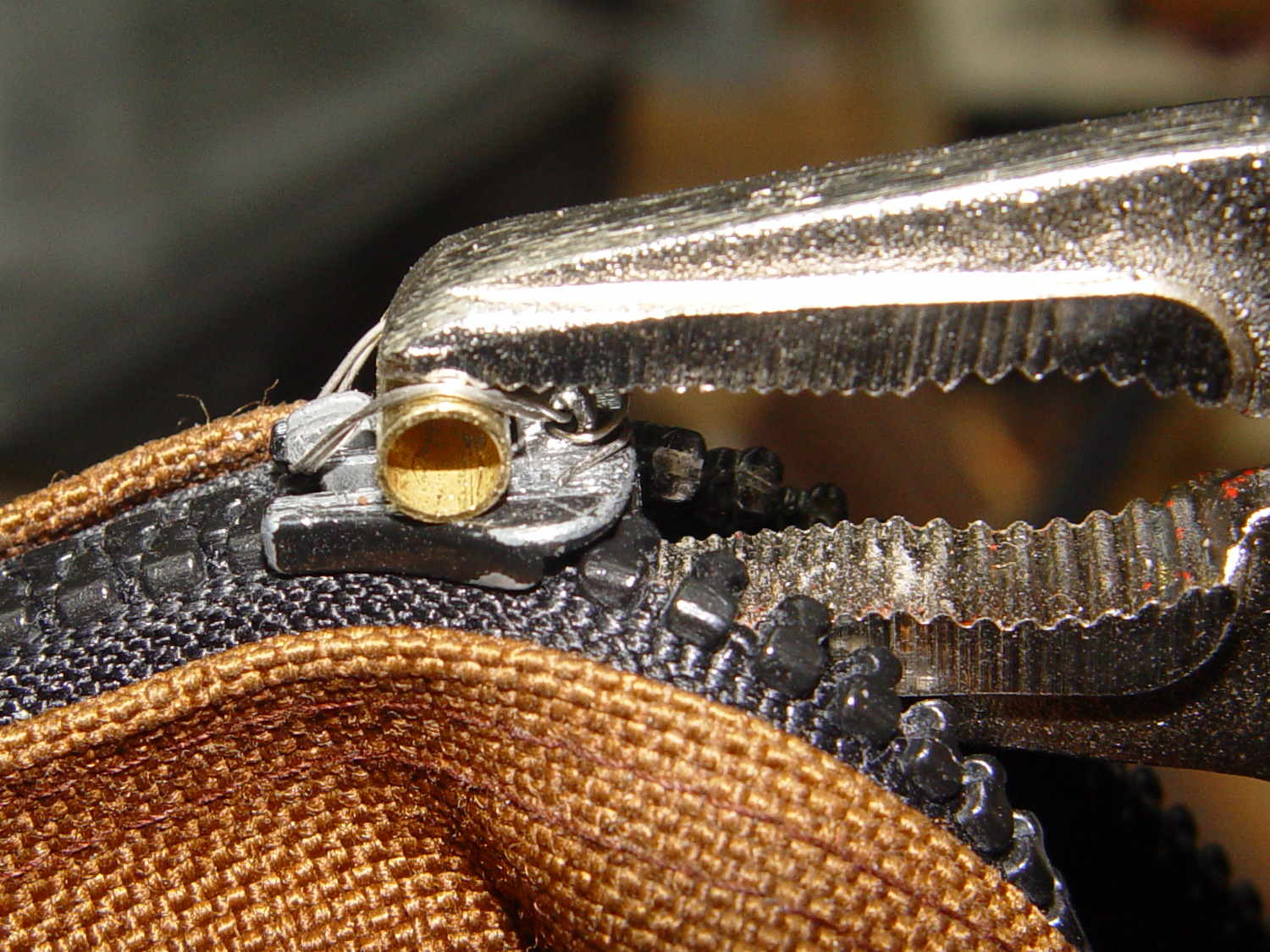
Threading 14 mil stainless steel wire through the slider’s pivot hole:
Belt Pack Zipper – wire opened end
… and under the latch guide:
Belt Pack Zipper – wire closed end
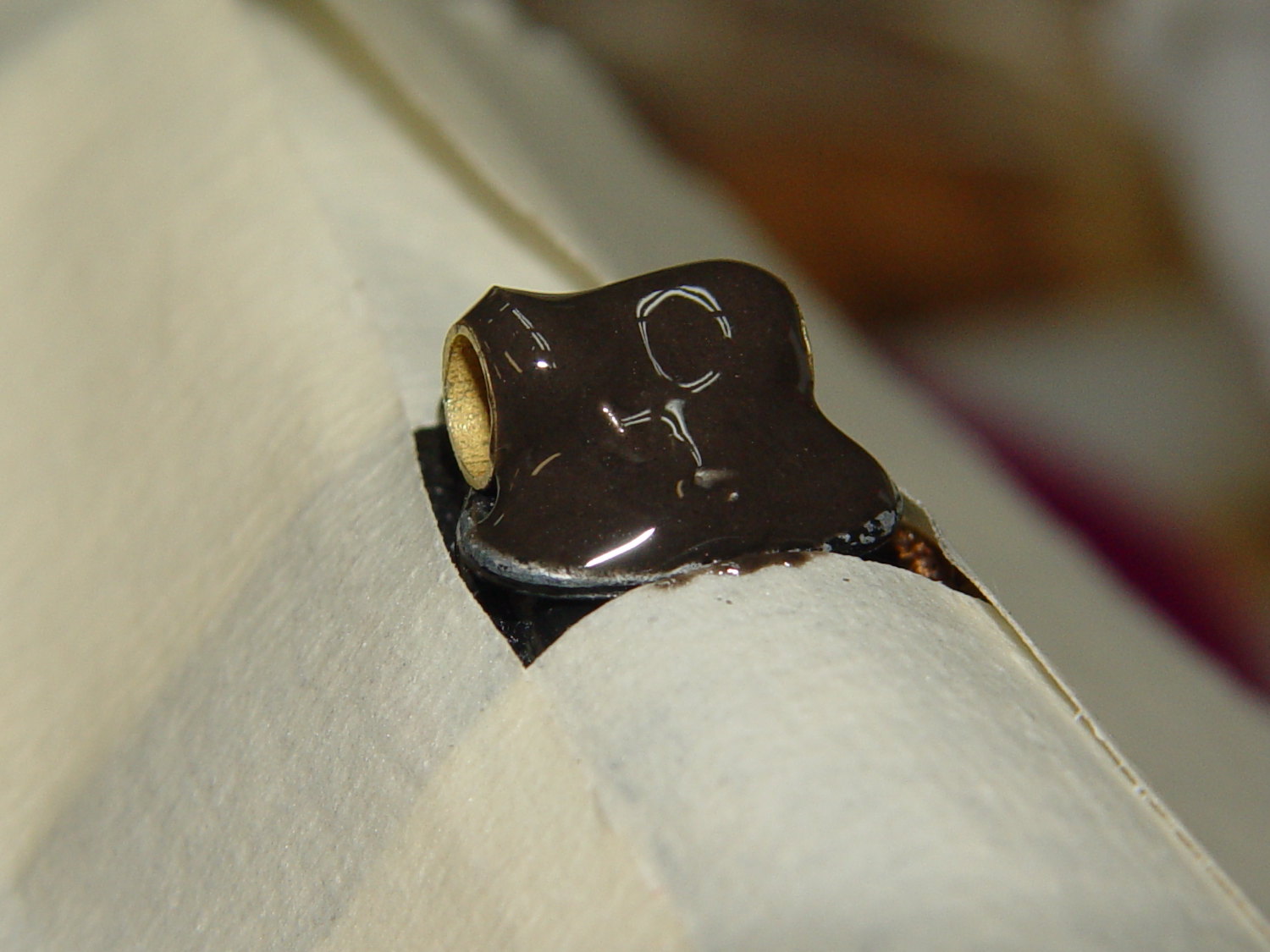
… required a few tries and produced some nasty puncture wounds, but eventually it all hung together long enough to let me tuck some JB Kwik epoxy into all the nooks and crannies:
Belt Pack Zipper – epoxy curing
That’s wide masking tape covering the work area. As it turned out, good preparation like that meant I didn’t slobber epoxy anywhere it shouldn’t go; had I omitted the tape, there’d be a smear down the side of the pack.
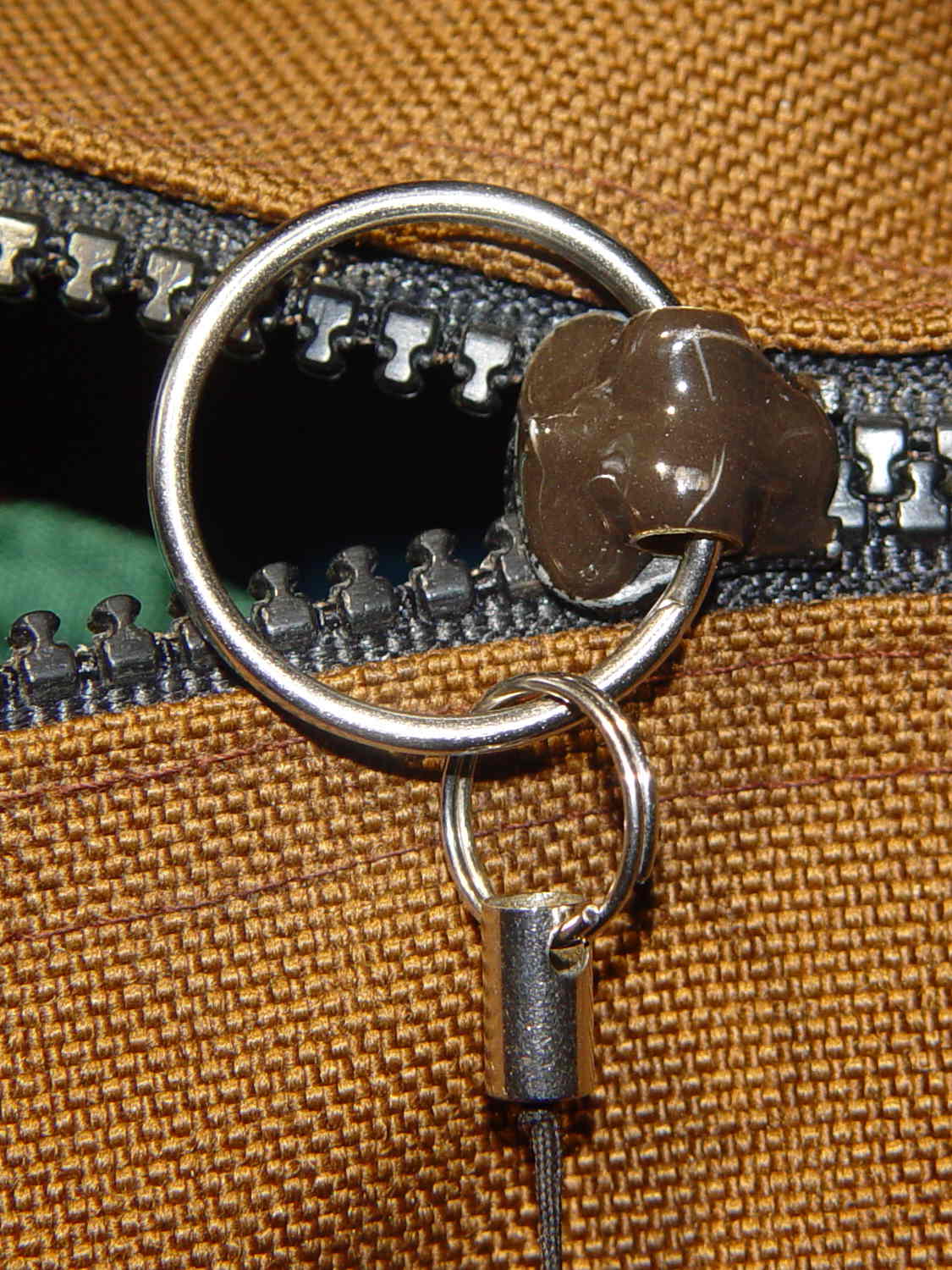
Fast-forward to the next morning and it’s all good:
Belt Pack Zipper – repaired
The missing latch locked the slider in place, but I think I can eke out a miserable existence with a loose slider…
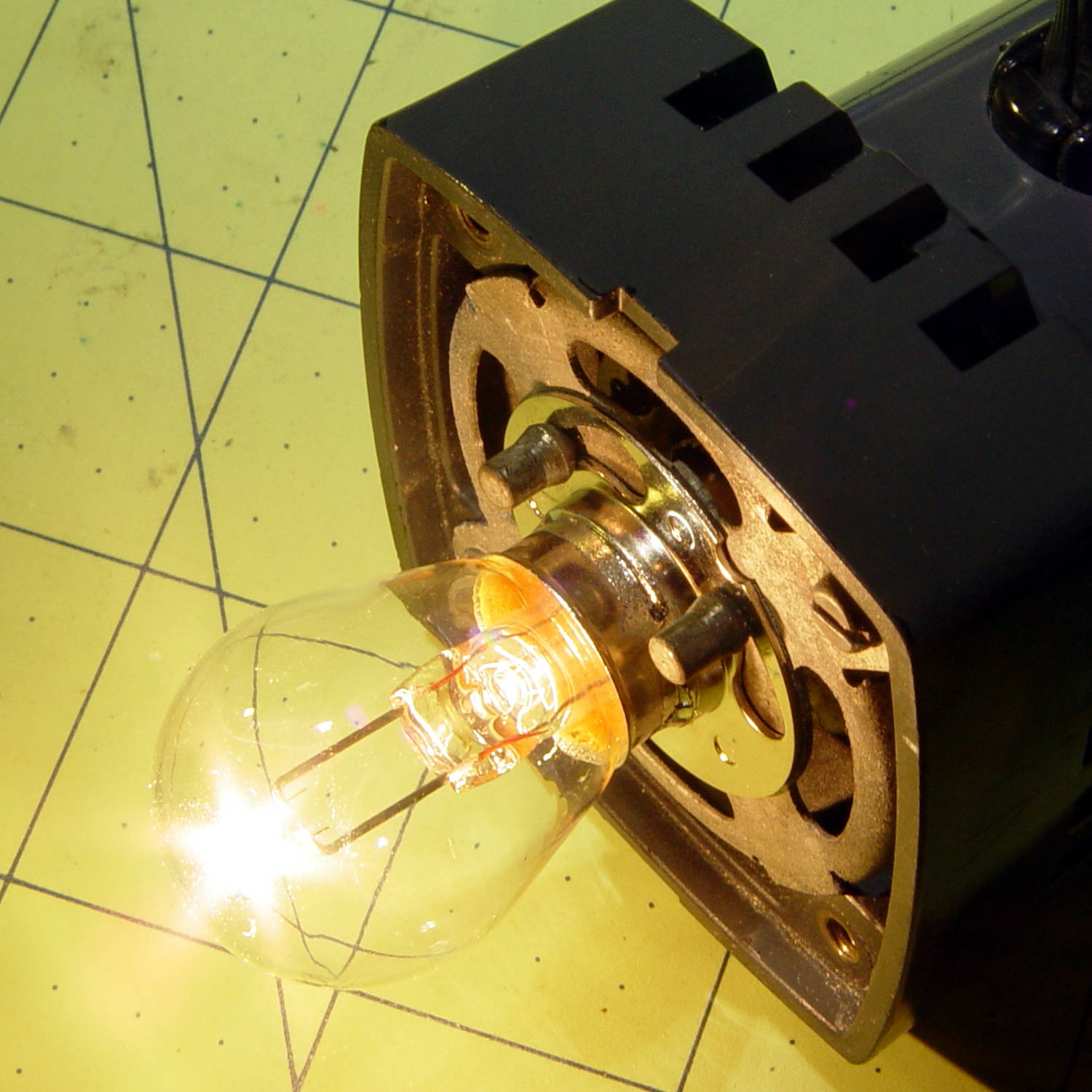
A classic American Optical microscope illuminator emerged from a box, minus its bulb. Some rummaging turned up a reference for AO bulbs, so I knew I needed a GE 1460 prefocused bulb. Those seem to be a bit rare these days, with 1460X bulbs sharing the same base with a slightly different glass envelope shape. As nearly as I can tell, as long as the filament sits in the same location relative to the base, it’s all good. Five bucks and a few days brought a new 1460X bulb to the bench, a few drops of Caig DeoxIT slicked the holder’s rather gritty contact patches, and the new bulb fit perfectly:
Microscope Illuminator – 1460X bulb – detail
And it lit up just fine, too:
Microscope Illuminator – 1460X bulb – turned on
That’s running at the lowest of three selectable voltages: 5, 6, and 7.5 VAC, respectively. Given that the bulb spec says 6.5 V (at 2.75 A!), you best have a spare bulb on hand if you need the highest setting. At the nominal 6.5 V, it’s good for 100 hours; 6 V should eke out many more hours.
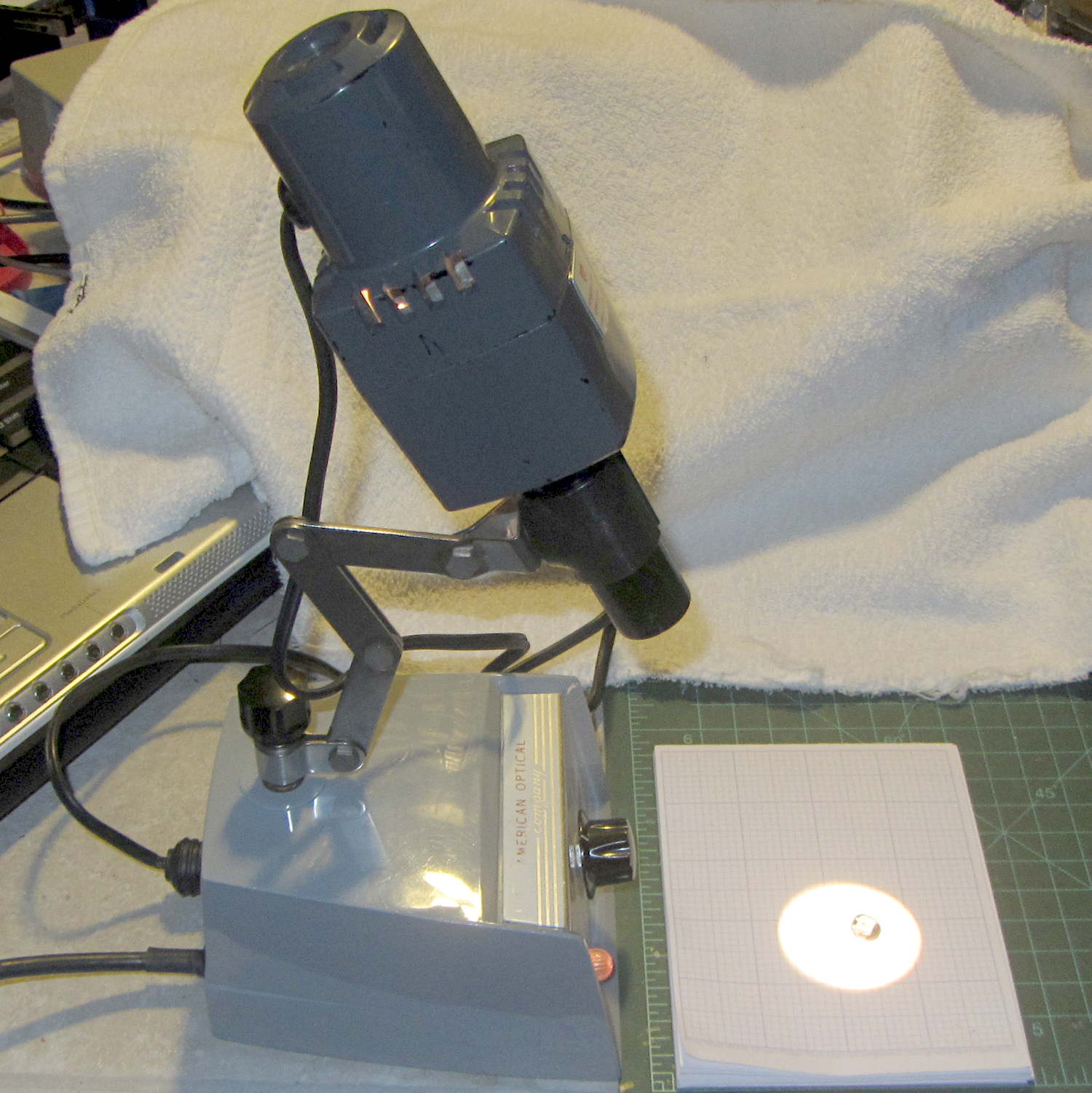
A generously articulated arm holds the illuminator for desk work:
American Optical Model 651 Microscope Illuminator – on base
That long snout fits into the pair of holes in the arm of my stereo zoom microscope to cast a bright light directly on the subject. The LED ring light makes that less necessary than before, although sometimes distinct shadows help pick out the details:
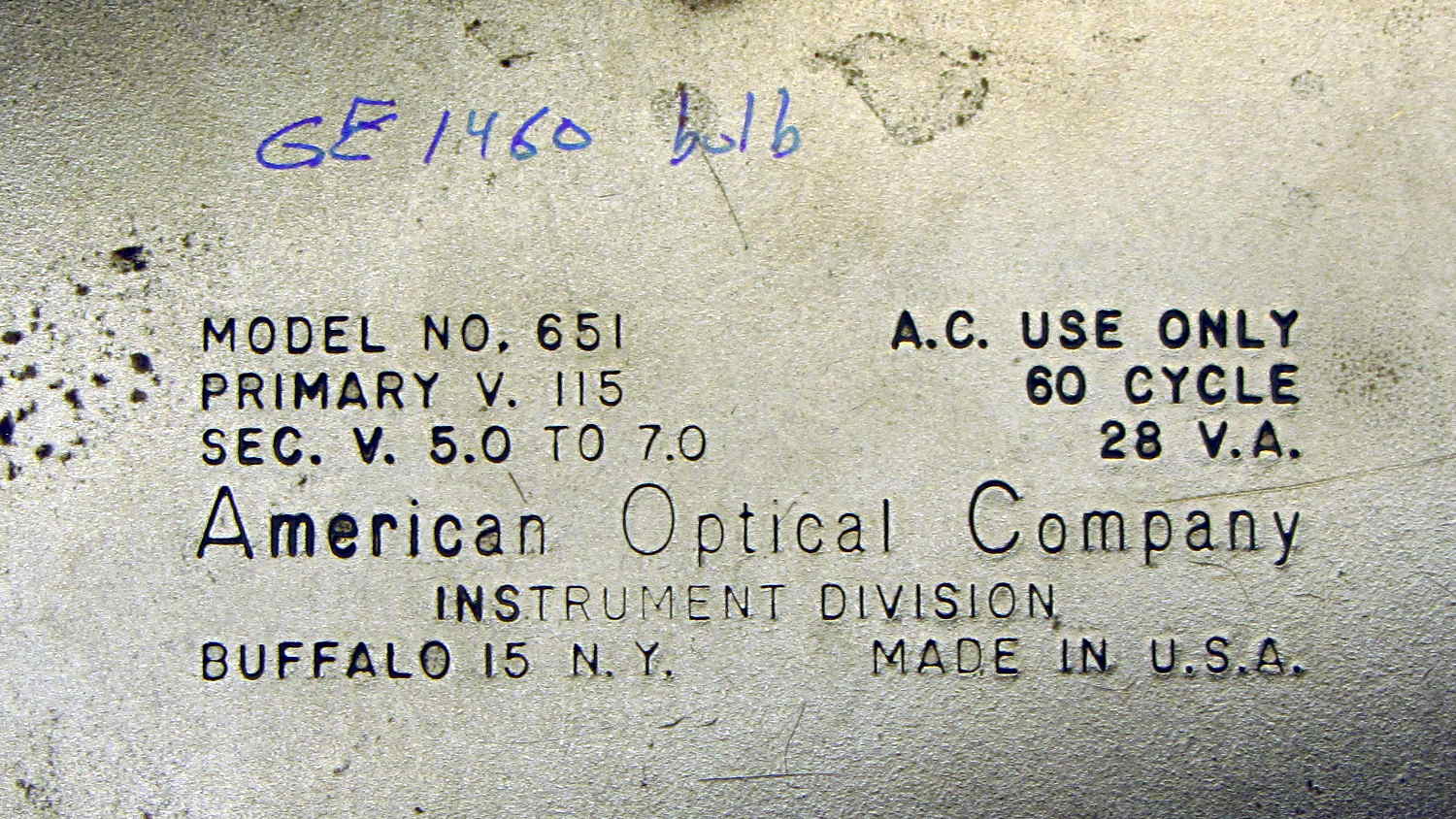
The data plate on the bottom of the illuminator, should someone need it:
American Optical Model 651 Microscope Illuminator – data plate
The optics cast an image of that white-hot filament out into space, so I think the diffuse active area of a white LED wouldn’t produce the same amount of light on the target. I have some Pirhana LEDs, though, so (when this bulb fails) I’ll see about that.
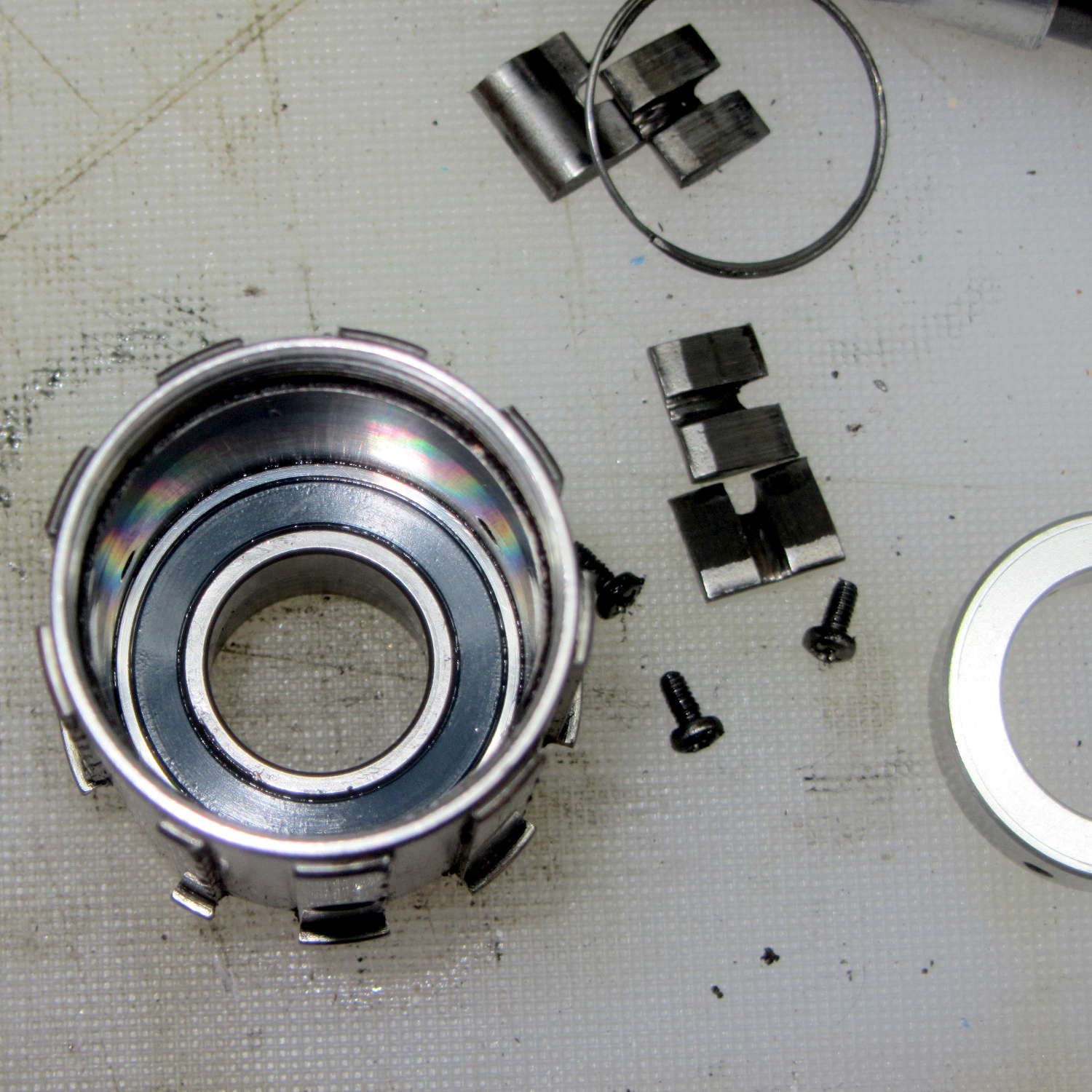
As part of replacing the entire drivetrain on my Tour Easy, I finally got around to replacing the bearings in the Phil Wood rear hub. The rear axle supports four bearings, with the innermost one captured between the end of the freehub and the aluminum retainer:
Phil Wood hub – internal bearing
The three small screws secure the retaining ring (sitting off to the right) against the bearing. If you don’t know what’s inside, you’d think they hold the freehub in place. Removing them doesn’t do anything useful unless you’re replacing the bearings and, if the retainer rotates even slightly inside the hub, you’re faced with taking the whole damn thing apart.
That bearing is lightly loaded, well-protected on all sides, and felt just fine, so I slathered more grease around it and left it in place. The other three bearings hit the trash can with a resounding clang…
I volunteered to update an old Inspiron Mini 10 netbook (or whatever they called the things) with Mint Linux and wanted to see what replacing the dead-slow 5400 rpm hard drive with an SSD would do for the struggling Intel Atom Inside. Dell provides a Service Manual showing how to remove the three screws on the bottom of the case, then gently remove the keyboard (!) to get access to the innards.
You start by covering the screen with some low-tack plastic film that you’ve been saving for this very purpose, sticking a small screwdriver into the center screw hole, and pushing the keyboard firmly away from the case. This bends the keyboard enough to get your fingernails underneath, after which you can pull / pry it away from the latches on each side.
The left side of the keyboard (as seen from the normal vantage point) comes out first, after clearing a small latch just over the single left-side USB port:
Dell Inspiron Mini 10 – left keyboard latch
The right side pops free from its latch over the HMDI port when you push the keyboard firmly to the left:
Dell Inspiron Mini 10 – right keyboard latch
Then release the keyboard’s ribbon cable clamp, pull the cable out, remove the keyboard, remove the single screw holding the hard drive carrier in place, and swap drives in the obvious manner.
Conclusion: an SSD helps a lot, but Firefox on an Atom CPU remains pretty slow off the starting blocks …






 The Smell of Molten Projects in the Morning