Ed Nisley's Blog: Shop notes, electronics, firmware, machinery, 3D printing, laser cuttery, and curiosities. Contents: 100% human thinking, 0% AI slop.
Despite carrying a glass-fronted gadget in my pocket for most of the past two decades, this is the first time I’ve done this:
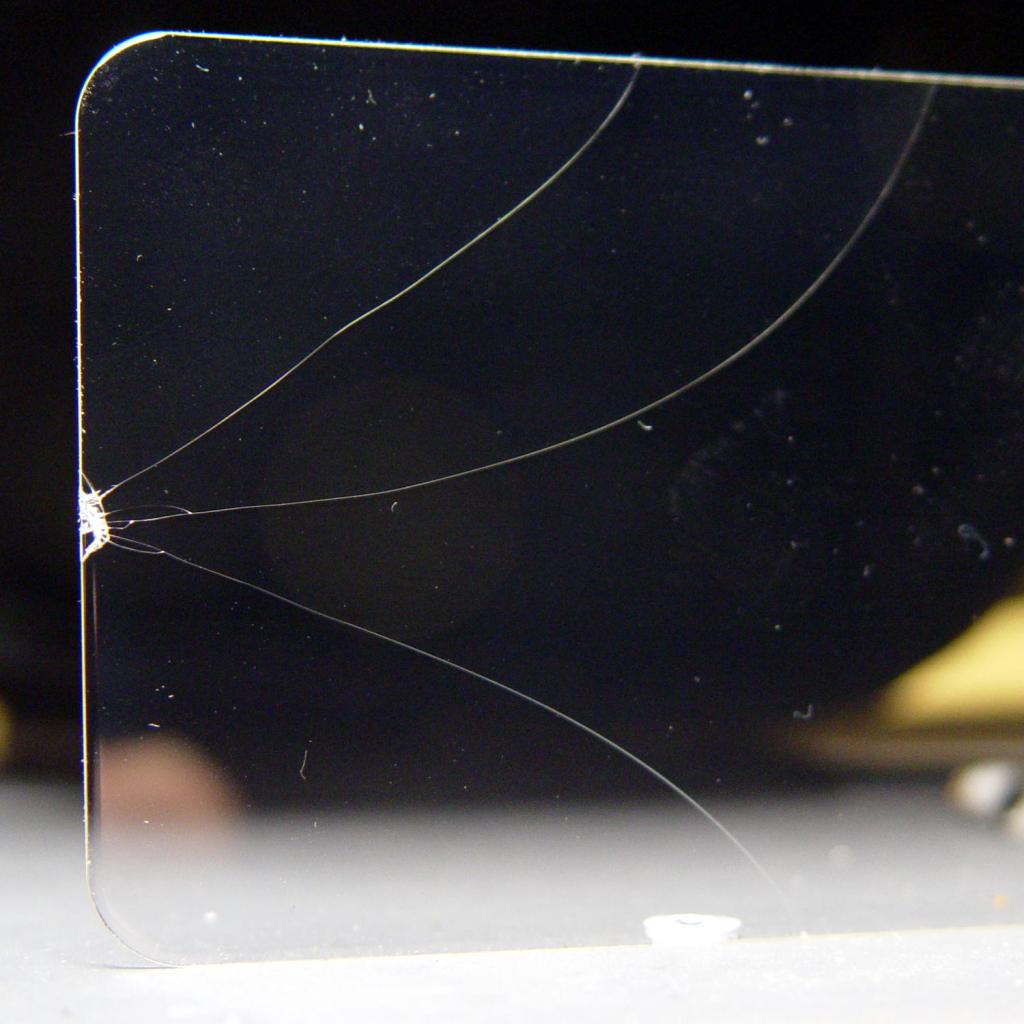
Pixel 3a screen protector – as broken
Turns out you can’t trust a rolling seat on a slightly unlevel surface, as shifting your weight can let the thing roll out from under you with no warning. If you’re taking a picture at the same time, the phone reaches the impact point before your hand: even a nice case with bumpers all around won’t be quite enough protection.
I was tempted to leave it un-fixed as a constant reminder to not do that again, but the broken glass was rough to the touch and interfered with Android’s swipe-upward gestures.
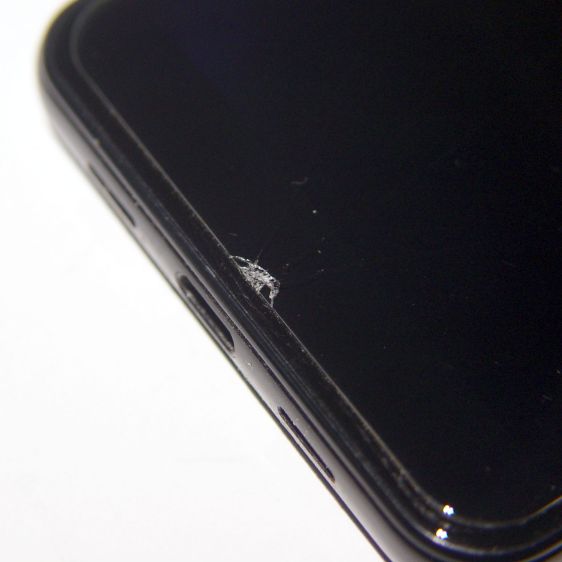
Fortunately, the tempered-glass screen protector absorbed the energy without damage to the actual screen:
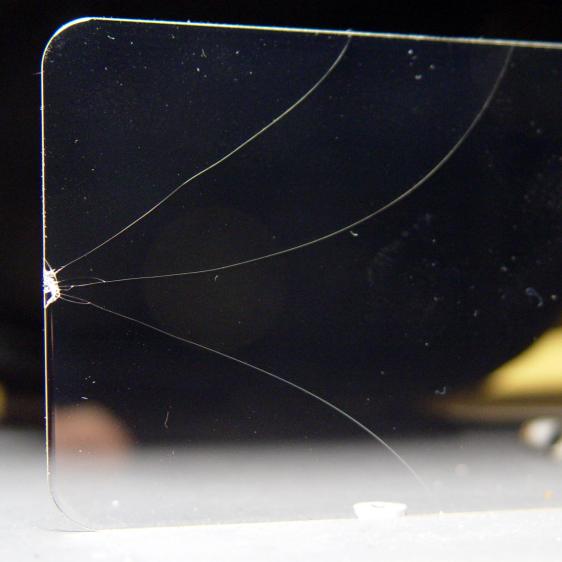
Pixel 3a screen protector – sidelit
A thin plastic layer holds the protector’s fragments together; I hadn’t known it was a two-layer structure.
Being that type of guy, I had a spare protector in a desk drawer and managed to apply it without trapping any bubbles or fuzz underneath.
The switch I installed on Mary’s bike a year ago was intended for indoor use only and, without any trace of weather sealing, recently became intermittent. No surprise, as it’s happened before, but, by regarding my vast assortment of little switches as consumables, we get a low-profile / tactile / E-Z push PTT button without forming a deep emotional attachment.
Anyhow, you can see the unsealed square perimeter of the switch actuator:
Tour Easy – PTT button
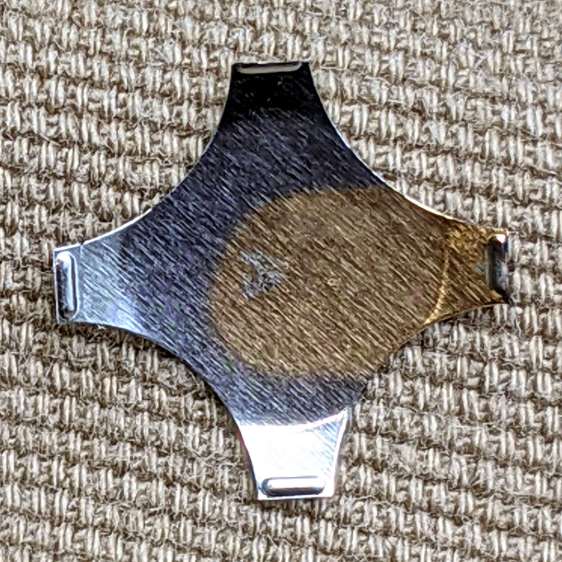
The light-gray button sits on a post molded into the actuator. Pry the actuator out and the switch dome shows crud worn off the cross-shaped plunger:
Tour Easy – PTT button – dome plate
The underside of the dome has a weird golden discoloration that surely wasn’t original:
Tour Easy – PTT button – dome plate discoloration
I have no idea how a liquid (?) could have gotten in there and done that without leaving other traces along the way. The contact bump on the discolored leg had some crud built up around it which responded well to a small screwdriver.
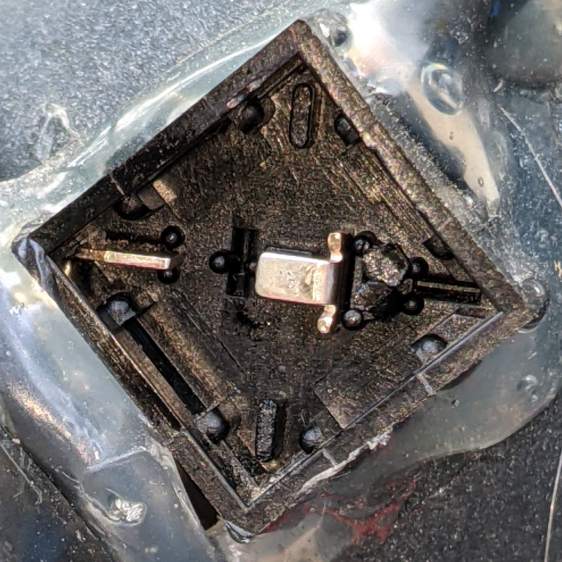
Contrary to what the symmetrical four-legged dome might suggest, only one leg rests on a contact in a corner:
Tour Easy – PTT button – contacts
So, yes, a bit of dirt / corrosion / mystery juice in a single spot could render the whole thing intermittent.
I removed the obvious crud from the obvious spots, wiped everything down with some Caig DeoxIT, reassembled in reverse order, and it seems to be all good again. Of course, these things only fail on the road, so it’ll take a few rides to verify the fix.
Rummaging through the Big Box o’ Optics in search of something else produced this doodad:
Microscope objective illuminator – overview
It carries no brand name or identifier, suggesting it was shop-made for a very specific and completely unknown purpose. The 5× objective also came from the BBo’O, but wasn’t related in any way other than fitting the threads, so the original purpose probably didn’t include it.
The little bulb fit into a cute and obviously heat-stressed socket:
Microscope objective illuminator – bulb detail
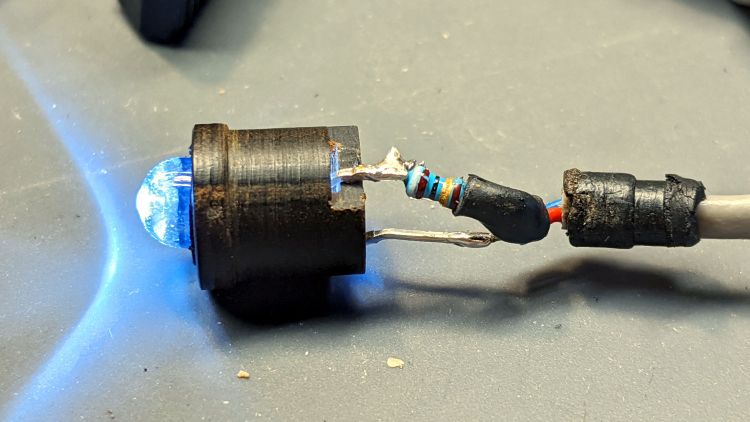
The filament was, of course, broken, so I dismantled the socket and conjured a quick-n-dirty white LED that appears blue under the warm-white bench lighting:
Microscope objective illuminator – white LED
The socket fits into the housing on the left, which screws onto a fitting I would have sworn was glued / frozen in place. Eventually, I found a slotted grub screw hidden under a glob of dirt:
Microscope objective illuminator – lock screw
Releasing the screw let the fitting slide right out:
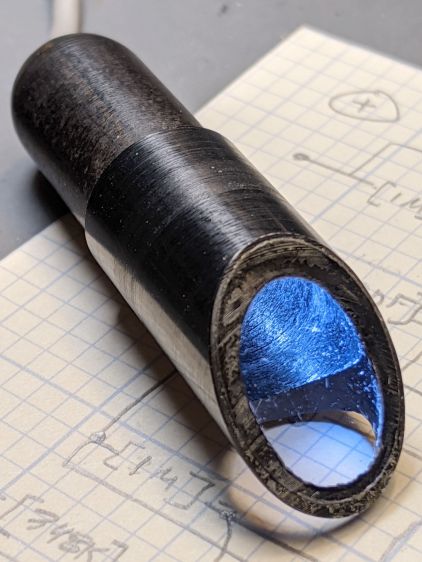
Microscope objective illuminator – lamp reflector
The glass reflector sits at 45° to direct the light coaxially down into the objective (or whatever optics it was originally intended for), with the other end of the widget having a clear view straight through. I cleaned the usual collection of fuzz & dirt off the glass, then centered and aligned the reflection with the objective.
Unfortunately, the objective lens lacks antireflection coatings:
Microscope objective illuminator – stray light
The LED tube is off to the right at 2 o’clock, with the bar across the reflector coming from stray light bouncing back from the far wall of the interior. The brilliant dot in the middle comes from light reflected off the various surfaces inside the objective.
An unimpeachable source tells me microscope objectives are designed to form a real image 180 mm up inside the ‘scope tube with the lens at the design height above the object. I have the luxury of being able to ignore all that, so I perched a lensless Raspberry Pi V1 camera on a short brass tube and affixed it to a three-axis positioner:
Microscope objective illuminator – RPi camera lashup
A closer look at the lashup reveals the utter crudity:
Microscope objective illuminator – RPi camera lashup – detail
It’s better than I expected:
Microscope objective illuminator – RPi V1 camera image – unprocessed
What you’re seeing is the real image formed by the objective lens directly on the RPi V1 camera’s sensor: in effect, the objective replaces the itsy-bitsy camera lens. It’s a screen capture from VLC using V4L2 loopback trickery.
Those are 0.1 inch squares printed on the paper, so the view is about 150×110 mil. Positioning the camera further from the objective would reduce both the view (increase the magnification) and the amount of light, so this may be about as good as it get.
The image started out with low contrast from all the stray light, but can be coerced into usability:
The weird violet-to-greenish color shading apparently comes from the lens shading correction matrix baked into the RPi image capture pipeline and can, with some difficulty, be fixed if you have a mind to do so.
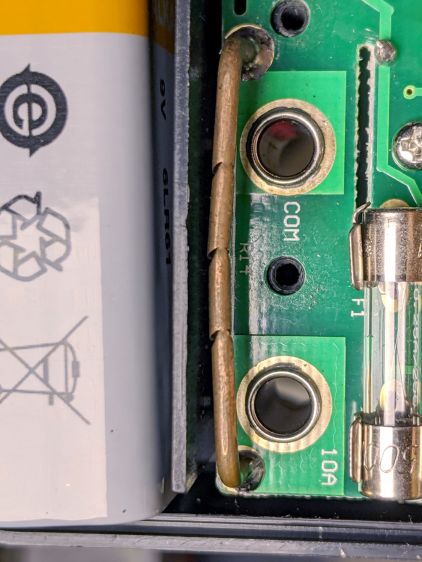
Replacing the battery in an old Craftsman (!) multimeter brought its 10 A current-sense resistor into the light:
Multimeter current resistor – nipped copper wire
Unlike the contemporary AN8008/9 meters, it looks like an ordinary copper wire trimmed to the proper resistance by nipping it with a cutter.
It measures something under 10 mΩ, so I’m sure they adjusted the resistance by applying a known current and watching the meter reading while crunching the wire until the proper value appears.
I may have actually used the 10 A range, but I’d be hard pressed to say when or why, so the resistor is at least as good as it needs to be!
This critter took up residence in our kitchen window:
Funnel web spider in window
She’s between the outer storm window and the inner sash, having secured her funnel web to both panes across the entire width of the window. We’d opened the storm window to clear an air conditioner vent and spiders know a good location when they see it.
We know she’s female, because a (smaller) male appeared and conducted negotiations for the better part of an afternoon. After she accepted his offer of a small, somewhat battered, moth, the two hooked up for the rest of the day; we feared for his life, but he hung around until the next afternoon, then departed.
She normally stays tucked inside the channel running along the edge of the window frame, with only the tips of those two front legs visible, and retreats at the slightest vibration, so we’ll leave her in peace until we must close the storm window.
These appeared while I was extricating the 3-axis positioner from an old project:
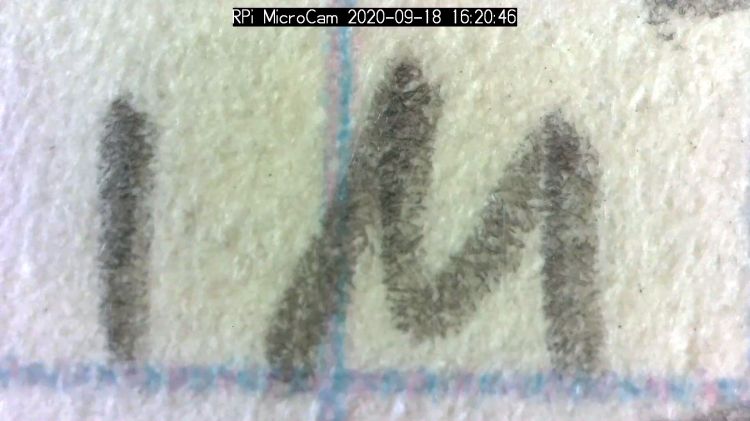
Migrated felt-tip pen labels
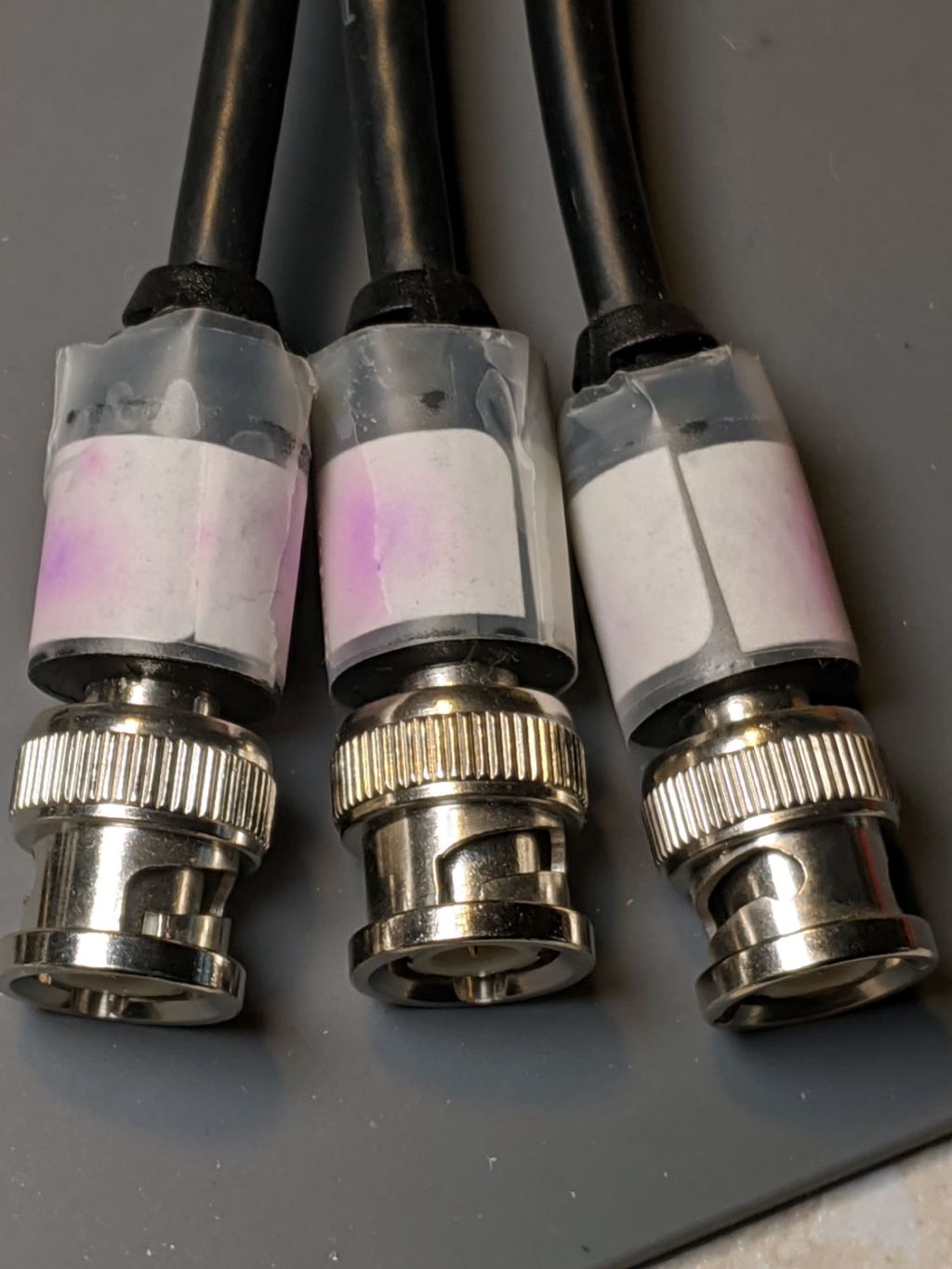
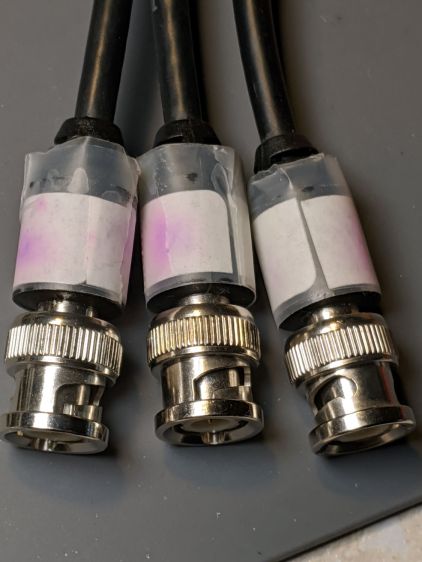
I’m reasonably sure those labels started with blue ink from my all-time favorite Ultra-Fine-Point Sharpie markers on address labels covered with ordinary matte tape. Fourteen years on, the X, Y, and Drive legends are pretty much indistinguishable.
The Praying Mantis in the Butterfly Bush is definitely female:
Praying Mantis Mating – front
I’d noticed her distended abdomen a day or two earlier, when it was highlighted in the sun and pulsing slowly. The indentations under the male’s legs shows the surface is definitely softer than the hard chitin of most insect armor:
Praying Mantis Mating – rear
The tip of the male’s abdomen twisted around to make contact, but I have no idea what all the little doodads common to both of them back there were doing.













 The Smell of Molten Projects in the Morning