The Smell of Molten Projects in the Morning

Ed Nisley's Blog: Shop notes, electronics, firmware, machinery, 3D printing, laser cuttery, and curiosities. Contents: 100% human thinking, 0% AI slop.

Author: Ed

  • Disaster Tourism

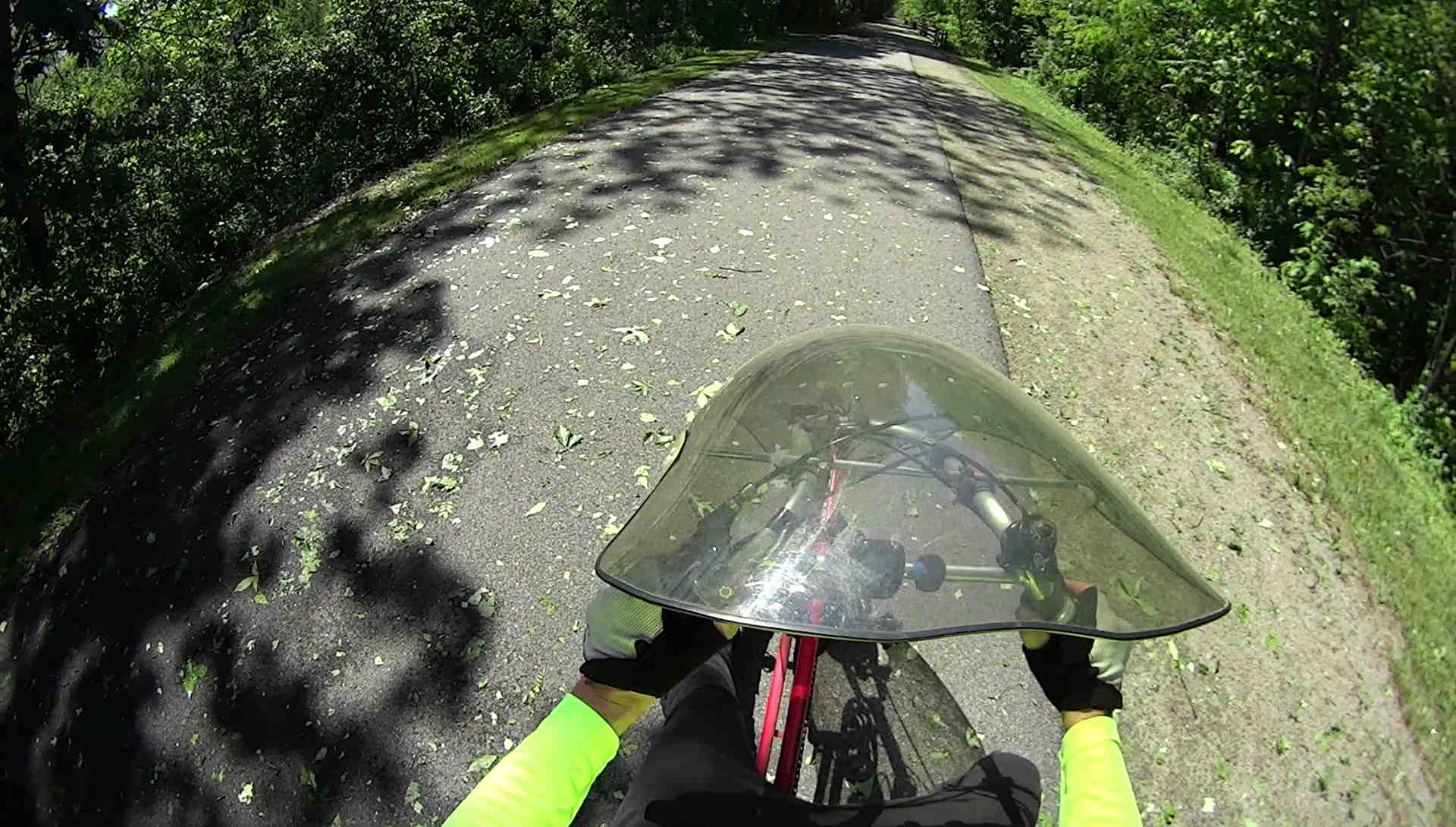
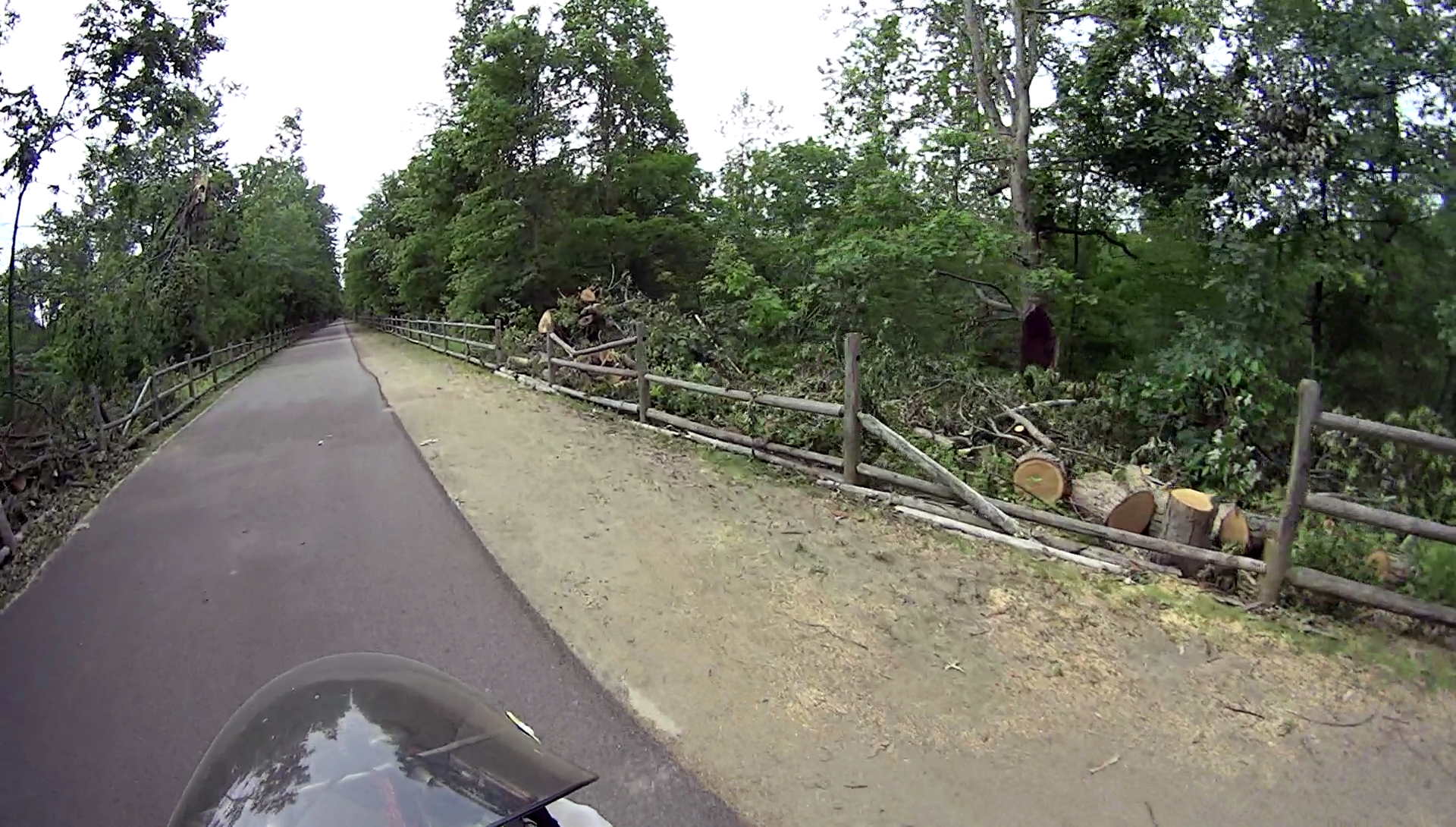
    Riding around the block after a nasty storm showed far more than the usual number of leaves on the Dutchess Rail Trail:

    Wappinger Tornado - Rail Trail near Titusville Rd - 2017-06-01
    Wappinger Tornado – Rail Trail near Titusville Rd – 2017-06-01

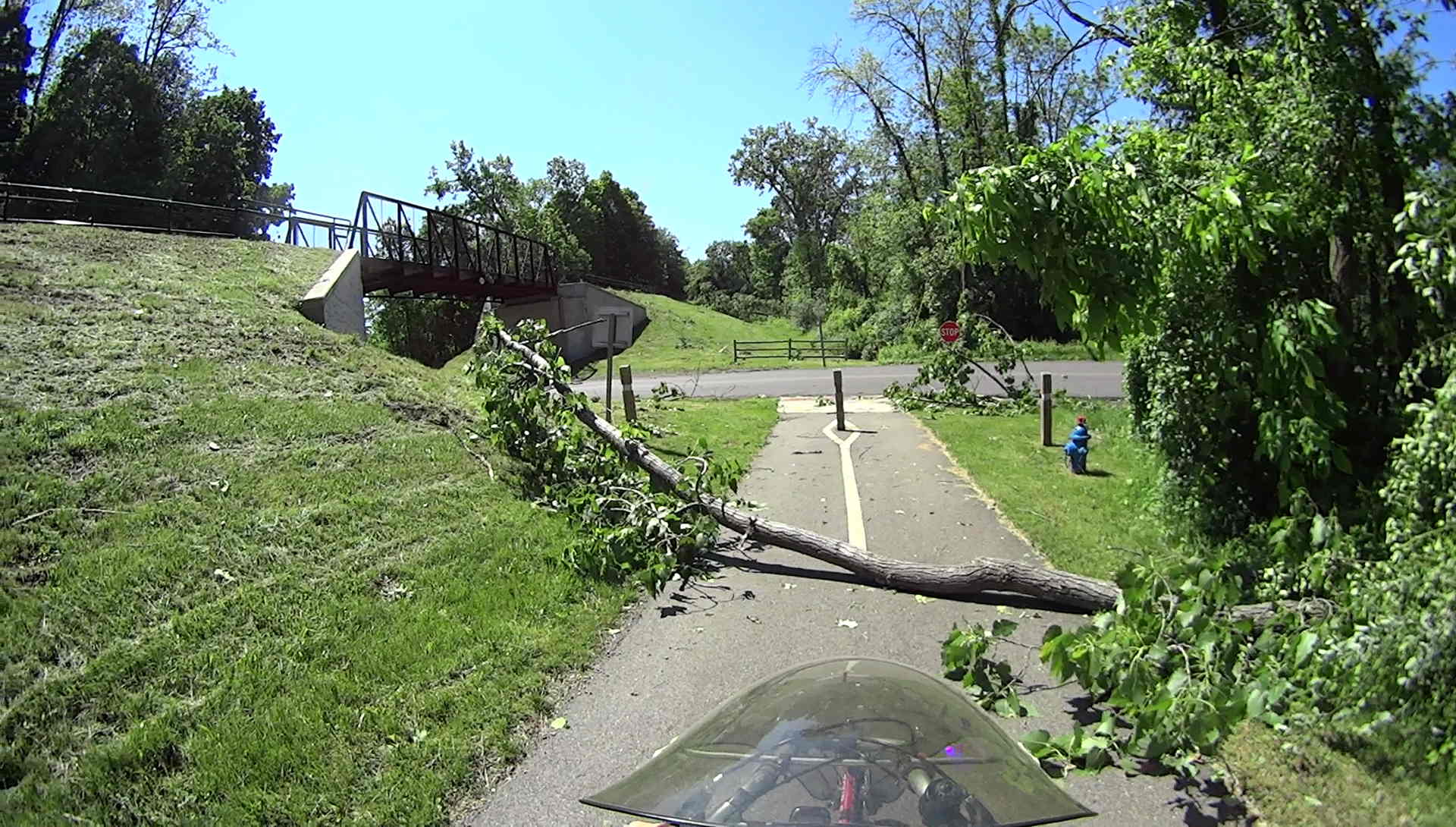
    I spotted several trees down on both sides of the trail approaching Maloney Road, with another large branch across that access ramp:

    Wappinger Tornado - Maloney Rd Rail Trail ramp - 2017-06-01
    Wappinger Tornado – Maloney Rd Rail Trail ramp – 2017-06-01

    You might be able to see the large tree down across the trail on the far side of the road, up the slope.

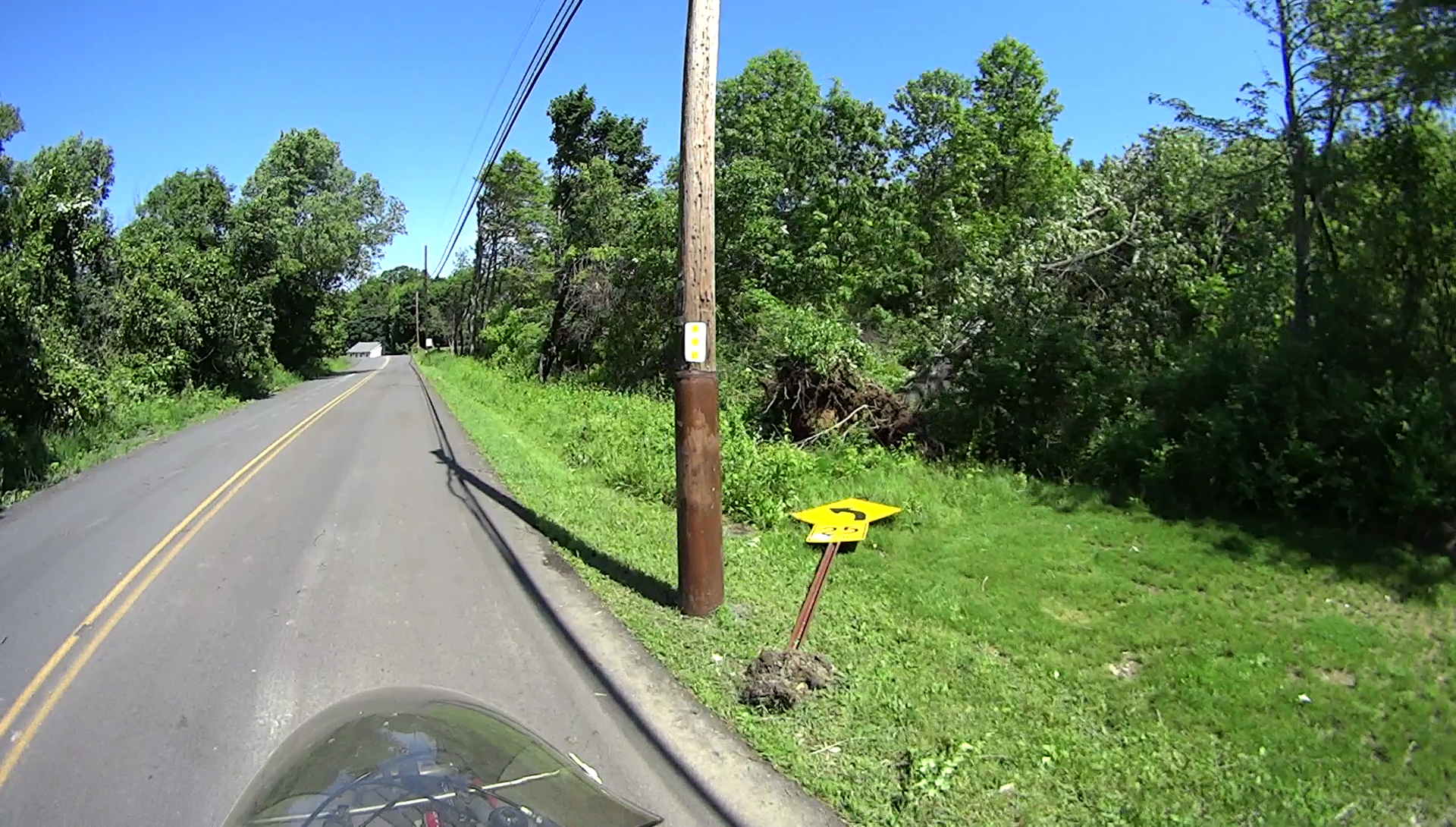
    Maloney Rd had many downed trees:

    Wappinger Tornado - Maloney Rd 1 - 2017-06-01
    Wappinger Tornado – Maloney Rd 1 – 2017-06-01

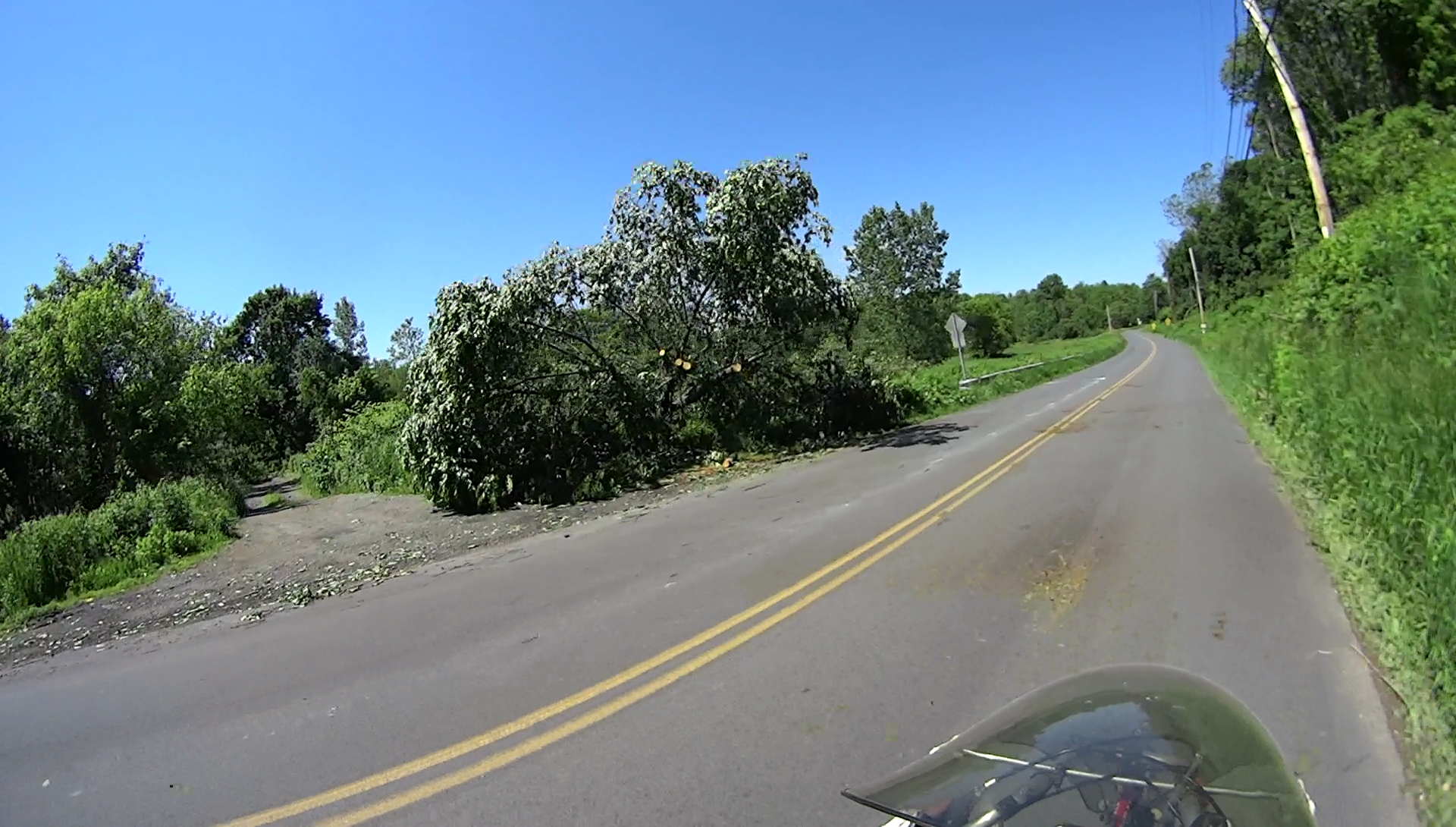
    With chainsaw chips and flare ash piles everywhere:

    Wappinger Tornado - Maloney Rd 2 - 2017-06-01
    Wappinger Tornado – Maloney Rd 2 – 2017-06-01

    From the National Weather Service:

    The National Weather Service in coordination with Dutchess County Emergency Management officials, have confirmed a brief touchdown of a tornado on May 31. The tornado path began near the intersection of Maloney Road and Route 376. The tornado traveled due east along and just north of Maloney Road for approximately 1.25 miles before dissipating. Damage included numerous snapped hardwood and softwood trees and the roof lifted off a shed.

    Both of Mary’s gardens suffered beatdowns, with the Vassar Farm plot pretty thoroughly pulverized by marble-size hail; she’s not in a good mood right now.

    The DPW crews had plenty on their to-do list, but that branch was gone a day later.

    Update: The top of the barely visible tree in the second picture just kissed the trail fence, but a much larger tree smashed both fences on its way across the trail:

    Wappinger Tornado - Rail Trail S of Maloney - 2017-06-04
    Wappinger Tornado – Rail Trail S of Maloney – 2017-06-04

    If you need some firewood, maybe you can make a deal …

  • Golden Tortoise Beetle

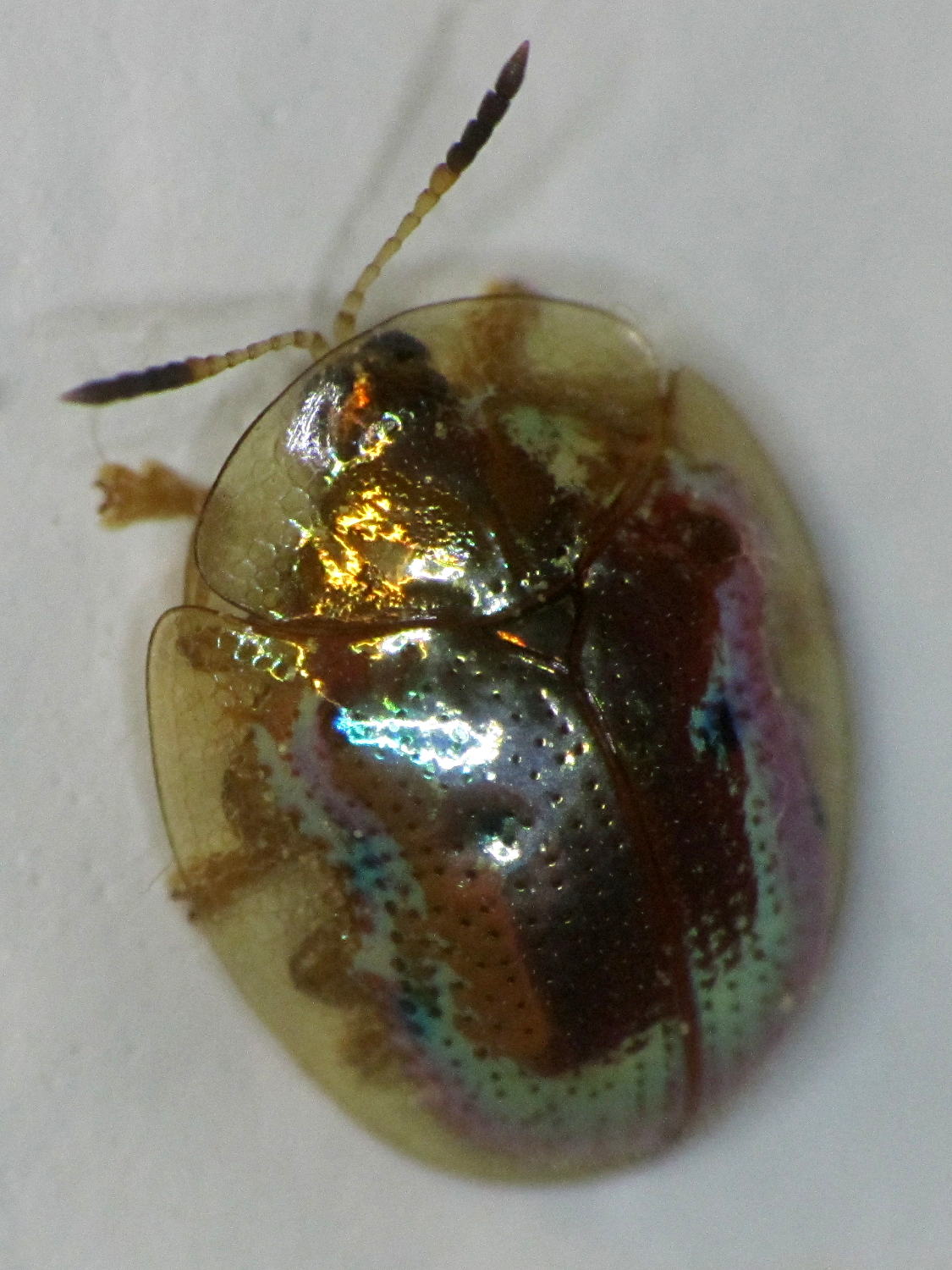
    An iridescent ball appeared on the kitchen wall:

    Golden Tortoise Beetle - left top - light
    Golden Tortoise Beetle – left top – light

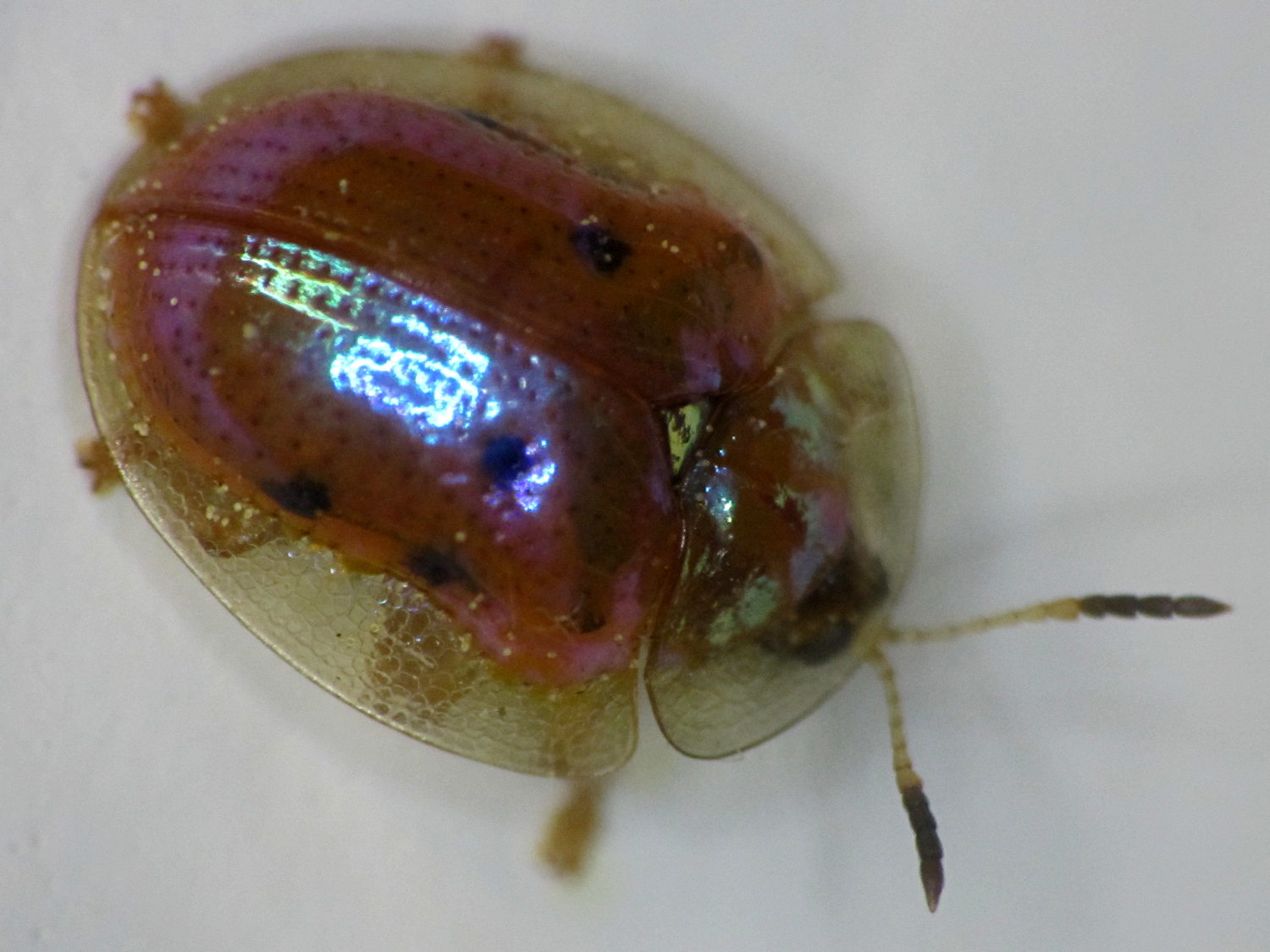
    Despite the silvery shine under LED lighting, it was a Golden Tortoise Beetle:

    Golden Tortoise Beetle - right top
    Golden Tortoise Beetle – right top

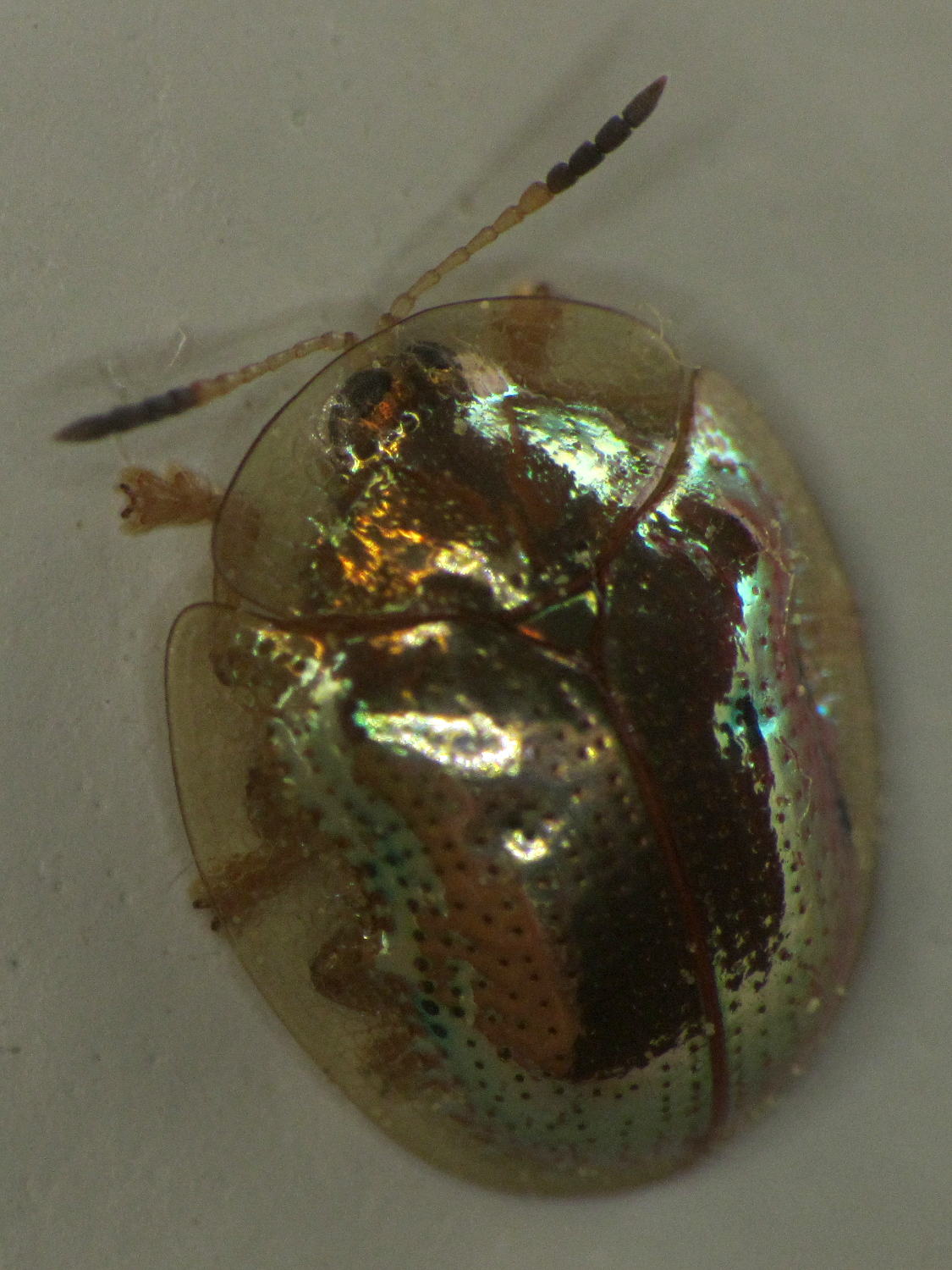
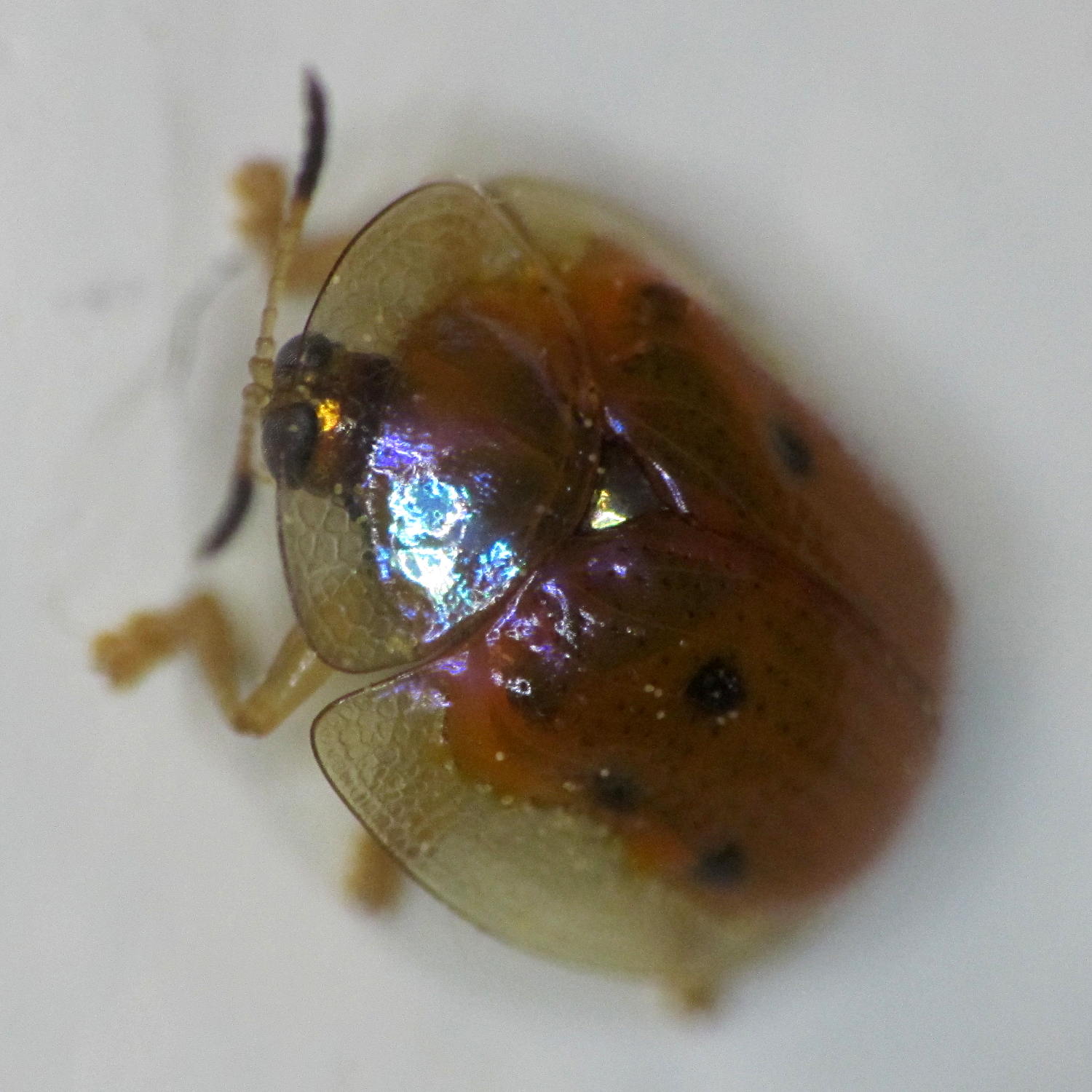
    The iridescence shows up better with a bit of underexposure:

    Golden Tortoise Beetle - left top - dark
    Golden Tortoise Beetle – left top – dark

    Transparent armor: who’d’a thunk it?

    Golden Tortoise Beetle - left front
    Golden Tortoise Beetle – left front

    Mary spotted one in the garden some years ago; I’ve never seen such a thing.

  • AD9850 DDS Module: OLED Display

    Those little OLED displays might just work:

    Arduino with OLED - simulated DDS
    Arduino with OLED – simulated DDS

    The U8X8 driver produces those double-size bitmap characters; the default 8×8 matrix seem pretty much unreadable on a 0.96 inch OLED at any practical distance from a benchtop instrument. They might be workable on a 1.3 inch white OLED, minus the attractive yellow highlight for the frequency in the top line.

    The OLED uses an SPI interface, although the U8X8 library clobbers my (simpleminded) SPI configuration for the AD9850 DDS and I’ve dummied out the DDS outputs. A soon-to-arrive I²C OLED should resolve that problem; changing the interface from SPI to I²C involves changing the single line of code constructing the driver object, so It Should Just Work.

    The U8X8 driver writes directly to the display, thus eliminating the need for a backing buffer in the Arduino’s painfully limited RAM. I think the library hauls in all possible fonts to support font selection at runtime, even though I need at most two fonts, so it may be worthwhile to hack the unneeded ones from the library (or figure out if I misunderstand the situation and the Flash image includes only the fonts actually used). Each font occupies anywhere from 200 to 2000 bytes, which I’d rather have available for program code. Chopping out unused functions would certainly be less useful.

    The display formatting is a crude hack just to see what the numbers look like:

        int ln = 0;
        u8x8.draw2x2String(0,ln,Buffer);
        ln += 2;
    
        TestFreq.fx_64 = ScanTo.fx_64 - ScanFrom.fx_64;
        PrintFixedPtRounded(Buffer,TestFreq,1);
        u8x8.draw2x2String(0,ln,"W       ");
        u8x8.draw2x2String(2*(8-strlen(Buffer)),ln,Buffer);
        ln += 2;
    
        PrintFixedPtRounded(Buffer,ScanStep,3);
        u8x8.draw2x2String(0,ln,"S       ");
        u8x8.draw2x2String(2*(8-strlen(Buffer)),ln,Buffer);
        ln += 2;
    
        TestFreq.fx_32.high = SCAN_SETTLE;                    // milliseconds
        TestFreq.fx_32.low = 0;
        TestFreq.fx_64 /= KILO;                               // to seconds
        PrintFixedPtRounded(Buffer,TestFreq,3);
        u8x8.draw2x2String(0,ln,"T       ");
        u8x8.draw2x2String(2*(8-strlen(Buffer)),ln,Buffer);
        ln += 2;
    

    Updating the display produces a noticeable and annoying flicker, which isn’t too surprising, so each value should have an “update me” flag to avoid gratuitous writes. Abstracting the display formatting into a table-driven routine might be appropriate, when I need more than one layout, but sheesh.

    I calculate the actual frequency from the 32 bit integer delta phase word written to the DDS, rather than use the achingly precise fixed point value, so a tidy 0.100 Hz frequency step doesn’t produce neat results. Instead, the displayed value will be within ±0.0291 Hz (the frequency resolution) of the desired frequency, which probably makes more sense for the very narrow bandwidths involved in a quartz crystal test gadget.

    Computing the frequency step size makes heavy use of 64 bit integers:

    //  ScanStep.fx_64 = One.fx_64 / 4;                       // 0.25 Hz = 8 or 9 tuning register steps
      ScanStep.fx_64 = One.fx_64 / 10;                    // 0.1 Hz = 3 or 4 tuning register steps
    //  ScanStep.fx_64 = One.fx_64 / 20;                    // 0.05 Hz = 2 or 3 tuning register steps
    //  ScanStep = HzPerCt;                                   // smallest possible frequency step
    

    The fixed point numbers resulting from those divisions will be accurate to nine decimal places; good enough for what I need.

    The sensible way of handling discrete scan width / step size / settling time options is through menus showing the allowed choices, with joystick / joyswitch navigation & selection, rather than keyboard entry. An analog joystick has the distinct advantage of using two analog inputs, not four digital pins, although the U8X8 driver includes a switch-driven menu handler.

    There’s a definite need to log all the values through the serial output for data collection without hand transcription.

    The Arduino source code as a GitHub Gist:

    // OLED display test for 60 kHz crystal tester
    #include <avr/pgmspace.h>
    //#include <SPI.h>
    #include <U8g2lib.h>
    #include <U8x8lib.h>
    // Turn off DDS SPI for display checkout
    #define DOSPI 0
    //———————
    // Pin locations
    // SPI uses hardware support: those pins are predetermined
    #define PIN_HEARTBEAT 9
    #define PIN_DDS_RESET 7
    #define PIN_DDS_LATCH 8
    #define PIN_DISP_SEL 4
    #define PIN_DISP_DC 5
    #define PIN_DISP_RST 6
    #define PIN_SCK 13
    #define PIN_MISO 12
    #define PIN_MOSI 11
    #define PIN_SS 10
    char Buffer[10+1+10+1]; // string buffer for long long conversions
    #define GIGA 1000000000LL
    #define MEGA 1000000LL
    #define KILO 1000LL
    struct ll_fx {
    uint32_t low; // fractional part
    uint32_t high; // integer part
    };
    union ll_u {
    uint64_t fx_64;
    struct ll_fx fx_32;
    };
    union ll_u CtPerHz; // will be 2^32 / 125 MHz
    union ll_u HzPerCt; // will be 125 MHz / 2^32
    union ll_u One; // 1.0 as fixed point
    union ll_u Tenth; // 0.1 as fixed point
    union ll_u TenthHzCt; // 0.1 Hz in counts
    // All nominal values are integers for simplicity
    #define OSC_NOMINAL (125 * MEGA)
    #define OSC_OFFSET_NOMINAL (-344LL)
    union ll_u OscillatorNominal; // nominal oscillator frequency
    union ll_u OscOffset; // … and offset, which will be signed 64-bit value
    union ll_u Oscillator; // true oscillator frequency with offset
    union ll_u CenterFreq; // center of scan width
    #define SCAN_WIDTH 6
    #define SCAN_SETTLE 2000
    union ll_u ScanFrom, ScanTo, ScanFreq, ScanStep; // frequency scan settings
    uint8_t ScanStepCounter;
    union ll_u TestFreq,TestCount; // useful variables
    //U8X8_SH1106_128X64_NONAME_4W_HW_SPI u8x8(PIN_DISP_SEL, PIN_DISP_DC , PIN_DISP_RST);
    U8X8_SH1106_128X64_NONAME_4W_SW_SPI u8x8(PIN_SCK, PIN_MOSI, PIN_DISP_SEL, PIN_DISP_DC , PIN_DISP_RST);
    //U8X8_SH1106_128X64_NONAME_HW_I2C u8x8(U8X8_PIN_NONE);
    #define HEARTBEAT_MS 3000
    unsigned long MillisNow,MillisThen;
    //———–
    // Useful functions
    // Pin twiddling
    void TogglePin(char bitpin) {
    digitalWrite(bitpin,!digitalRead(bitpin)); // toggle the bit based on previous output
    }
    void PulsePin(char bitpin) {
    TogglePin(bitpin);
    TogglePin(bitpin);
    }
    // SPI I/O
    void EnableSPI(void) {
    digitalWrite(PIN_SS,HIGH); // set SPI into Master mode
    SPCR |= 1 << SPE;
    }
    void DisableSPI(void) {
    SPCR &= ~(1 << SPE);
    }
    void WaitSPIF(void) {
    while (! (SPSR & (1 << SPIF))) {
    TogglePin(PIN_HEARTBEAT);
    TogglePin(PIN_HEARTBEAT);
    continue;
    }
    }
    byte SendRecSPI(byte Dbyte) { // send one byte, get another in exchange
    SPDR = Dbyte;
    WaitSPIF();
    return SPDR; // SPIF will be cleared
    }
    // DDS module
    void EnableDDS(void) {
    digitalWrite(PIN_DDS_LATCH,LOW); // ensure proper startup
    digitalWrite(PIN_DDS_RESET,HIGH); // minimum reset pulse 40 ns, not a problem
    digitalWrite(PIN_DDS_RESET,LOW);
    delayMicroseconds(1); // max latency 100 ns, not a problem
    DisableSPI(); // allow manual control of outputs
    digitalWrite(PIN_SCK,LOW); // ensure clean SCK pulse
    PulsePin(PIN_SCK); // … to latch hardwired config bits
    PulsePin(PIN_DDS_LATCH); // load hardwired config bits = begin serial mode
    EnableSPI(); // turn on hardware SPI controls
    SendRecSPI(0x00); // shift in serial config bits
    PulsePin(PIN_DDS_LATCH); // load serial config bits
    }
    // Write delta phase count to DDS
    // This comes from the integer part of a 64-bit scaled value
    void WriteDDS(uint32_t DeltaPhase) {
    SendRecSPI((byte)DeltaPhase); // low-order byte first
    SendRecSPI((byte)(DeltaPhase >> 8));
    SendRecSPI((byte)(DeltaPhase >> 16));
    SendRecSPI((byte)(DeltaPhase >> 24));
    SendRecSPI(0x00); // 5 MSBs = phase = 0, 3 LSBs must be zero
    PulsePin(PIN_DDS_LATCH); // write data to DDS
    }
    //———–
    // Round scaled fixed point to specific number of decimal places: 0 through 8
    // You should display the value with only Decimals characters beyond the point
    // Must calculate rounding value as separate variable to avoid mystery error
    uint64_t RoundFixedPt(union ll_u TheNumber,unsigned Decimals) {
    union ll_u Rnd;
    Rnd.fx_64 = (One.fx_64 / 2) / (pow(10LL,Decimals));
    TheNumber.fx_64 = TheNumber.fx_64 + Rnd.fx_64;
    return TheNumber.fx_64;
    }
    //———–
    // Multiply two unsigned scaled fixed point numbers without overflowing a 64 bit value
    // The product of the two integer parts mut be < 2^32
    uint64_t MultiplyFixedPt(union ll_u Mcand, union ll_u Mplier) {
    union ll_u Result;
    Result.fx_64 = ((uint64_t)Mcand.fx_32.high * (uint64_t)Mplier.fx_32.high) << 32; // integer parts (clear fract)
    Result.fx_64 += ((uint64_t)Mcand.fx_32.low * (uint64_t)Mplier.fx_32.low) >> 32; // fraction parts (always < 1)
    Result.fx_64 += (uint64_t)Mcand.fx_32.high * (uint64_t)Mplier.fx_32.low; // cross products
    Result.fx_64 += (uint64_t)Mcand.fx_32.low * (uint64_t)Mplier.fx_32.high;
    return Result.fx_64;
    }
    //———–
    // Long long print-to-buffer helpers
    // Assumes little-Endian layout
    void PrintHexLL(char *pBuffer,union ll_u FixedPt) {
    sprintf(pBuffer,"%08lx %08lx",FixedPt.fx_32.high,FixedPt.fx_32.low);
    }
    // converts all 9 decimal digits of fraction, which should suffice
    void PrintFractionLL(char *pBuffer,union ll_u FixedPt) {
    union ll_u Fraction;
    Fraction.fx_64 = FixedPt.fx_32.low; // copy 32 fraction bits, high order = 0
    Fraction.fx_64 *= GIGA; // times 10^9 for conversion
    Fraction.fx_64 >>= 32; // align integer part in low long
    sprintf(pBuffer,"%09lu",Fraction.fx_32.low); // convert low long to decimal
    }
    void PrintIntegerLL(char *pBuffer,union ll_u FixedPt) {
    sprintf(pBuffer,"%lu",FixedPt.fx_32.high);
    }
    void PrintFixedPt(char *pBuffer,union ll_u FixedPt) {
    PrintIntegerLL(pBuffer,FixedPt); // do the integer part
    pBuffer += strlen(pBuffer); // aim pointer beyond integer
    *pBuffer++ = '.'; // drop in the decimal point, tick pointer
    PrintFractionLL(pBuffer,FixedPt);
    }
    void PrintFixedPtRounded(char *pBuffer,union ll_u FixedPt,unsigned Decimals) {
    char *pDecPt;
    FixedPt.fx_64 = RoundFixedPt(FixedPt,Decimals);
    PrintIntegerLL(pBuffer,FixedPt); // do the integer part
    pBuffer += strlen(pBuffer); // aim pointer beyond integer
    pDecPt = pBuffer; // save the point location
    *pBuffer++ = '.'; // drop in the decimal point, tick pointer
    PrintFractionLL(pBuffer,FixedPt); // do the fraction
    if (Decimals == 0)
    *pDecPt = 0; // 0 places means discard the decimal point
    else
    *(pDecPt + Decimals + 1) = 0; // truncate string to leave . and Decimals chars
    }
    //———–
    // Calculate useful "constants" from oscillator info
    // Args are integer constants in Hz
    void CalcOscillator(uint32_t Base,uint32_t Offset) {
    union ll_u Temp;
    Oscillator.fx_32.high = Base + Offset; // get true osc frequency from integers
    Oscillator.fx_32.low = 0;
    HzPerCt.fx_32.low = Oscillator.fx_32.high; // divide oscillator by 2^32 with simple shifting
    HzPerCt.fx_32.high = 0;
    CtPerHz.fx_64 = -1; // Compute (2^32 – 1) / oscillator
    CtPerHz.fx_64 /= (uint64_t)Oscillator.fx_32.high; // remove 2^32 scale factor from divisor
    TenthHzCt.fx_64 = MultiplyFixedPt(Tenth,CtPerHz); // 0.1 Hz as delta-phase count
    #if 0
    printf("Inputs: %ld = %ld%+ld\n",Base+Offset,Base,Offset);
    PrintFixedPt(Buffer,Oscillator);
    printf("Osc freq: %s\n",Buffer);
    PrintFixedPt(Buffer,HzPerCt);
    printf("Hz/Ct: %s\n",Buffer);
    PrintFixedPt(Buffer,CtPerHz);
    printf("Ct/Hz: %s\n",Buffer);
    PrintFixedPt(Buffer,TenthHzCt);
    printf("0.1 Hz Ct: %s",Buffer);
    #endif
    }
    //– Helper routine for printf()
    int s_putc(char c, FILE *t) {
    Serial.write(c);
    }
    //———–
    void setup ()
    {
    pinMode(PIN_HEARTBEAT,OUTPUT);
    digitalWrite(PIN_HEARTBEAT,HIGH); // show we got here
    Serial.begin (115200);
    fdevopen(&s_putc,0); // set up serial output for printf()
    Serial.println (F("DDS OLED exercise"));
    Serial.println (F("Ed Nisley – KE4ZNU – May 2017\n"));
    // DDS module controls
    pinMode(PIN_DDS_LATCH,OUTPUT);
    digitalWrite(PIN_DDS_LATCH,LOW);
    pinMode(PIN_DDS_RESET,OUTPUT);
    digitalWrite(PIN_DDS_RESET,HIGH);
    // Light up the display
    Serial.println("Initialize OLED");
    u8x8.begin();
    u8x8.setPowerSave(0);
    u8x8.setFont(u8x8_font_pxplusibmcga_f);
    u8x8.draw2x2String(0,0,"OLEDTest");
    u8x8.drawString(0,2,"Ed Nisley");
    u8x8.drawString(0,3," KE4ZNU");
    u8x8.drawString(0,4,"May 2017");
    // configure SPI hardware
    #if DOSPI
    SPCR = B01110001; // Auto SPI: no int, enable, LSB first, master, + edge, leading, f/16
    SPSR = B00000000; // not double data rate
    pinMode(PIN_SS,OUTPUT);
    digitalWrite(PIN_SCK,HIGH);
    pinMode(PIN_SCK,OUTPUT);
    digitalWrite(PIN_SCK,LOW);
    pinMode(PIN_MOSI,OUTPUT);
    digitalWrite(PIN_MOSI,LOW);
    pinMode(PIN_MISO,INPUT_PULLUP);
    #endif
    TogglePin(PIN_HEARTBEAT); // show we got here
    // Calculate useful constants
    One.fx_64 = 1LL << 32; // Set up 1.0, a very useful constant
    Tenth.fx_64 = One.fx_64 / 10; // Likewise, 0.1
    // Set oscillator "constants"
    CalcOscillator(OSC_NOMINAL,OSC_OFFSET_NOMINAL);
    TogglePin(PIN_HEARTBEAT); // show we got here
    // Set the crystal-under-test nominal frequency
    CenterFreq.fx_64 = One.fx_64 * (60 * KILO);
    #if 1
    PrintFixedPtRounded(Buffer,CenterFreq,1);
    printf("Center: %s\n",Buffer);
    #endif
    // Set up scan limits based on center frequency
    ScanFrom.fx_64 = CenterFreq.fx_64 – SCAN_WIDTH * (One.fx_64 >> 1);
    ScanTo.fx_64 = CenterFreq.fx_64 + SCAN_WIDTH * (One.fx_64 >> 1);
    ScanFreq = ScanFrom; // start scan at lower limit
    // ScanStep.fx_64 = One.fx_64 / 4; // 0.25 Hz = 8 or 9 tuning register steps
    ScanStep.fx_64 = One.fx_64 / 10; // 0.1 Hz = 3 or 4 tuning register steps
    // ScanStep.fx_64 = One.fx_64 / 20; // 0.05 Hz = 2 or 3 tuning register steps
    // ScanStep = HzPerCt; // smallest possible frequency step
    #if 1
    Serial.println("\nScan limits");
    PrintFixedPtRounded(Buffer,ScanFrom,1);
    printf(" from: %11s\n",Buffer);
    PrintFixedPtRounded(Buffer,ScanFreq,1);
    printf(" at: %11s\n",Buffer);
    PrintFixedPtRounded(Buffer,ScanTo,1);
    printf(" to: %11s\n",Buffer);
    PrintFixedPtRounded(Buffer,ScanStep,3);
    printf(" step: %s\n",Buffer);
    #endif
    // Wake up and load the DDS
    #if DOSPI
    TestCount.fx_64 = MultiplyFixedPt(ScanFreq,CtPerHz);
    EnableDDS();
    WriteDDS(TestCount.fx_32.high);
    #endif
    delay(2000);
    u8x8.clearDisplay();
    u8x8.setFont(u8x8_font_artossans8_r);
    Serial.println("\nStartup done!");
    MillisThen = millis();
    }
    //———–
    void loop () {
    MillisNow = millis();
    if ((MillisNow – MillisThen) >= SCAN_SETTLE) {
    TogglePin(PIN_HEARTBEAT);
    MillisThen = MillisNow;
    PrintFixedPtRounded(Buffer,ScanFreq,2);
    TestCount.fx_64 = MultiplyFixedPt(ScanFreq,CtPerHz);
    // printf("%12s -> %9ld\n",Buffer,TestCount.fx_32.high);
    #if DOSPI
    WriteDDS(TestCount.fx_32.high);
    #endif
    TestCount.fx_32.low = 0; // truncate to integer
    TestFreq.fx_64 = MultiplyFixedPt(TestCount,HzPerCt); // recompute frequency
    PrintFixedPtRounded(Buffer,TestFreq,2);
    int ln = 0;
    u8x8.draw2x2String(0,ln,Buffer);
    ln += 2;
    TestFreq.fx_64 = ScanTo.fx_64 – ScanFrom.fx_64;
    PrintFixedPtRounded(Buffer,TestFreq,1);
    u8x8.draw2x2String(0,ln,"W ");
    u8x8.draw2x2String(2*(8-strlen(Buffer)),ln,Buffer);
    ln += 2;
    PrintFixedPtRounded(Buffer,ScanStep,3);
    u8x8.draw2x2String(0,ln,"S ");
    u8x8.draw2x2String(2*(8-strlen(Buffer)),ln,Buffer);
    ln += 2;
    TestFreq.fx_32.high = SCAN_SETTLE; // milliseconds
    TestFreq.fx_32.low = 0;
    TestFreq.fx_64 /= KILO; // to seconds
    PrintFixedPtRounded(Buffer,TestFreq,3);
    u8x8.draw2x2String(0,ln,"T ");
    u8x8.draw2x2String(2*(8-strlen(Buffer)),ln,Buffer);
    ln += 2;
    ScanFreq.fx_64 += ScanStep.fx_64;
    if (ScanFreq.fx_64 > (ScanTo.fx_64 + ScanStep.fx_64 / 2)) {
    ScanFreq = ScanFrom;
    }
    }
    }
    view raw DDSOLEDTest.ino hosted with ❤ by GitHub
  • Beckman DM73 Circuitmate: Back From the Dead!

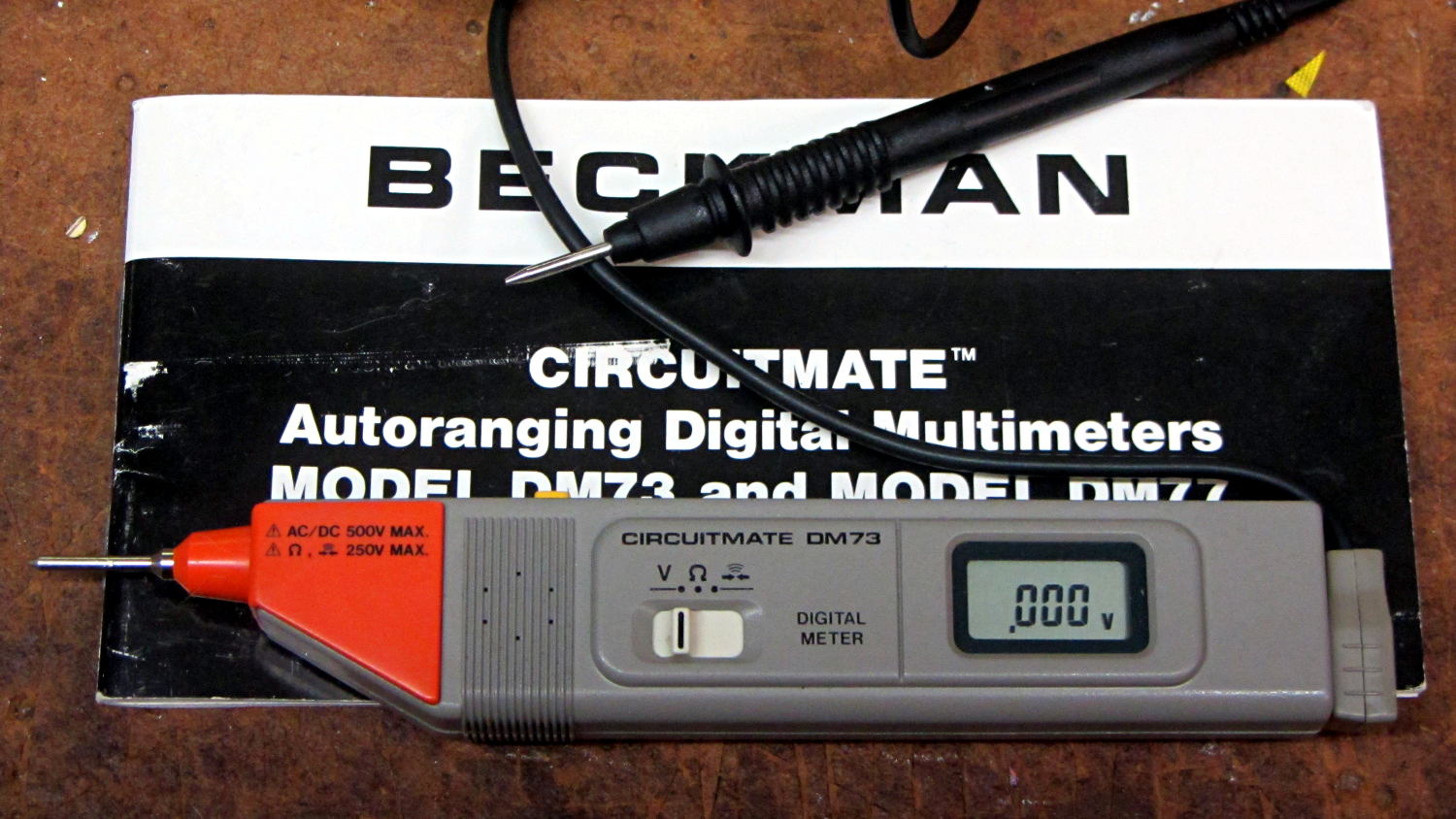
    Prompted by the condolences on the death of my Beckman DM73 Circuitmate, I brought the carcass back to Squidwrench, took it apart, annoyed the switches, and re-soldered the battery connections:

    Beckman DM73 Circuitmate - restored
    Beckman DM73 Circuitmate – restored

    I worked minute dots of Caig DeoxIT into the switches, without disassembling them, with magical thinking guiding my technique. One of the battery connections seemed suspect, but we’ll never know.

    In any event, it beeps happily when turned on (*), the LCD behaves properly, it’s no longer pressure-sensitive, and life is good! It surely needs calibration, but that’s definitely in the nature of fine tuning.

    Thanks for nudging me into Doing The Right Thing™.

    (*) Including the double beep with the AC/DC button held down.

  • Monthly Science: Significant Figures vs. Accuracy vs. Precision, Marathon Edition

    The rail trail recently sprouted white mile markers:

    Rail Trail - Marathon 13 mile marker
    Rail Trail – Marathon 13 mile marker

    This one stood out:

    Rail Trail - Marathon 13.10938 mile marker
    Rail Trail – Marathon 13.10938 mile marker

    Not being a marathoner, I had the vague notion a marathon should be an even number of kilometers, because it’s not an even number of miles, but nooooo it’s just an arbitrary distance everybody agreed would be about right for a good long run.

    During the rest of the ride, I worked out that 1 micro mile = 5+ milli foot = 60+ milli inch, so the rightmost significant figure in that marker represents increments of, oh, a smidge under ¾ inch. Middle of the hash line marks the spot, perhaps?

    I’ve seen similar markers along other courses, with varying numbers of ahem significant figures, and will not say how long it took me to recognize what it represented.

  • AD9850 DDS Module: Temperature Sensitivity

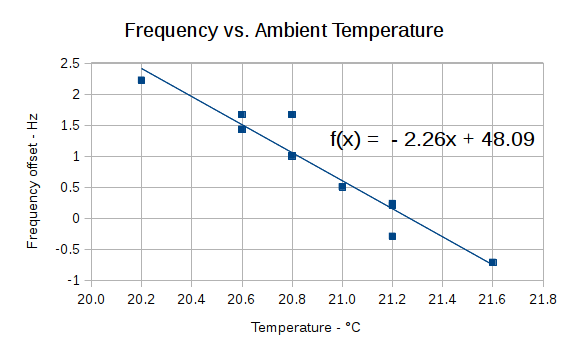
    While tinkering with the SPI code for the AD9850 DDS module, I wrote down the ambient temperature and the frequency tweak required to zero-beat the 10 MHz output with the GPS-locked oscillator. A quick-n-dirty plot summarizing two days of randomly timed observations ensued:

    AD9850 DDS Module - Frequency vs Temperature
    AD9850 DDS Module – Frequency vs Temperature

    The frequency offset comes from the tweak required to zero-beat the output by adjusting the initial oscillator error: a positive tweak produces a smaller count-per-hertz coefficient and reduces the output frequency. As a result, the thermal coefficient sign is backwards, because increasing temperature raises the oscillator frequency and reduces the necessary tweak. I think so, anyway; you know how these things can go wrong. More automation and reliable data would be a nice touch.

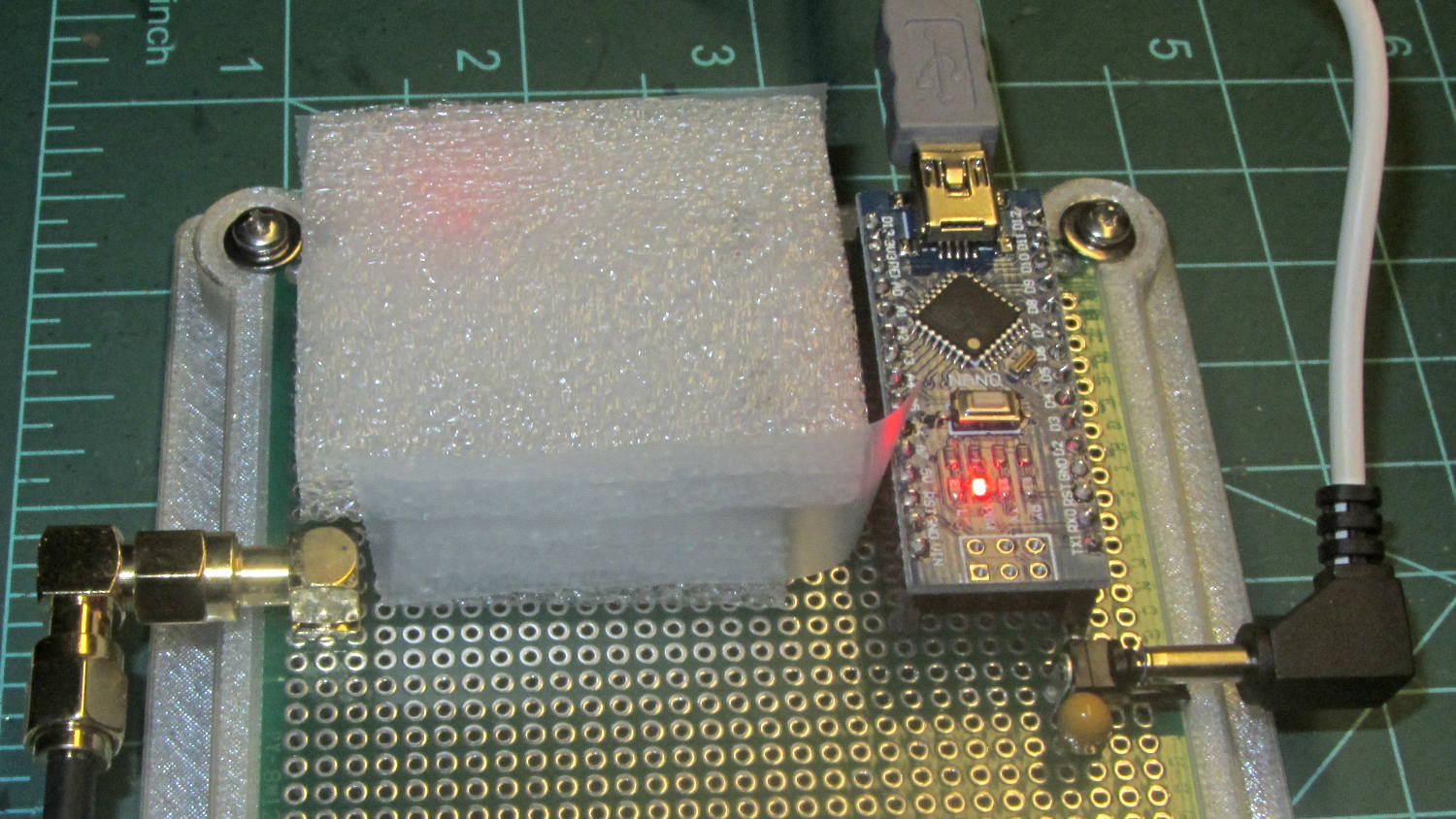
    Foam sheets formed a block around the DDS module, isolating it from stray air currents and reducing the clock oscillator’s sensitivity:

    AD9850 DDS module - foam insulation
    AD9850 DDS module – foam insulation

    I used the ambient temperature, because the thermocouple inside the foam (not shown in the picture) really wasn’t making good contact with the board, the readings didn’t make consistent sense, and, given a (nearly) constant power dissipation, the (average) oscillator temperature inside the foam should track ambient temperature with a constant offset. I think so, anyway.

    The coefficient works out to 0.02 ppm/°C. Of course, the initial frequency offset is something like -400 Hz = 3 ppm, so we’re not dealing with lab-grade instrumentation here.

  • AD9850 DDS Module: Hardware Assisted SPI and Fixed-point Frequency Stepping

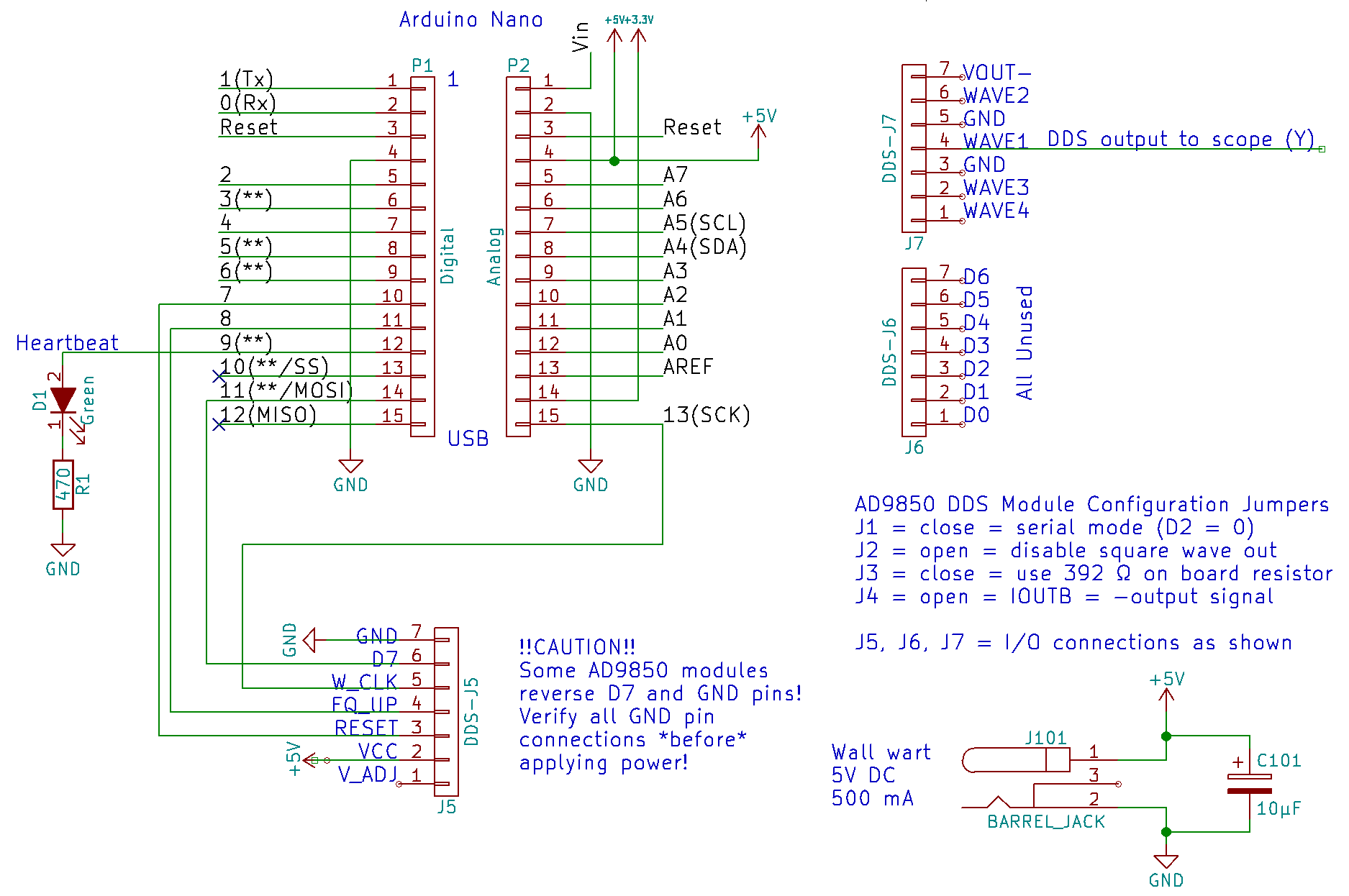
    Having conjured fixed-point arithmetic into working, the next step is to squirt data to the AD9850 DDS chip. Given that using the Arduino’s hardware-assisted SPI doesn’t require much in the way of software, the wiring looks like this:

    Nano to DDS schematic
    Nano to DDS schematic

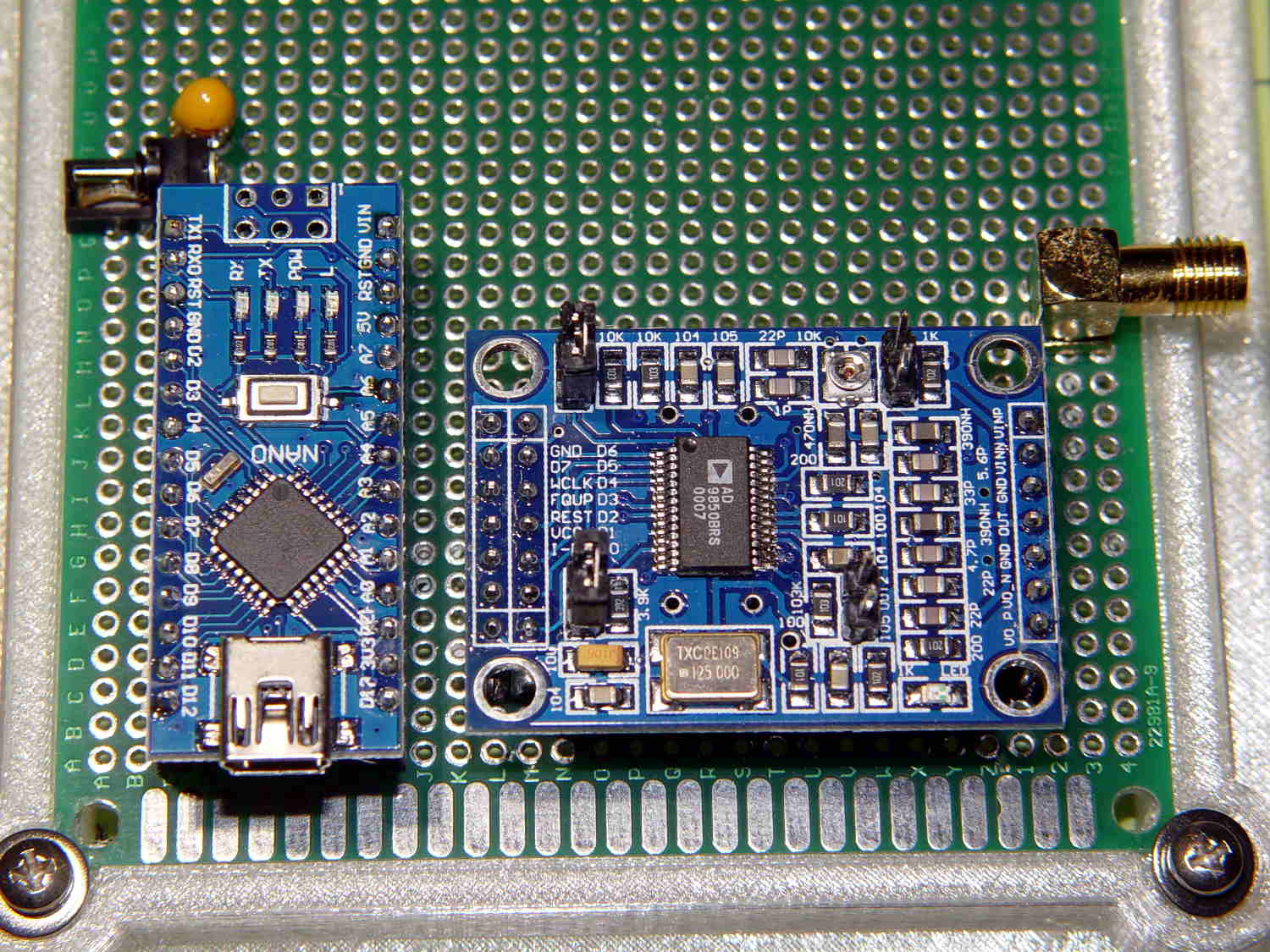
    Not much to it, is there? For reference, it looks a lot like you’d expect:

    AD9850 DDS Module - swapped GND D7 pins
    AD9850 DDS Module – swapped GND D7 pins

    There’s no point in building an asynchronous interface with SPI interrupts and callbacks and all that rot, because squirting one byte at 1 Mb/s (a reasonable speed for hand wiring; the AD9850 can accept bits at 140+ MHz) doesn’t take all that long and it’s easier to have the low-level code stall until the hardware finishes:

    #define PIN_HEARTBEAT    9          // added LED
    
    #define PIN_RESET_DDS    7          // Reset DDS module
    #define PIN_LATCH_DDS    8          // Latch serial data into DDS
    
    #define PIN_SCK        13          // SPI clock (also Arduino LED!)
    #define PIN_MISO      12          // SPI data input
    #define PIN_MOSI      11          // SPI data output
    #define PIN_SS        10          // SPI slave select - MUST BE OUTPUT = HIGH
    
    void EnableSPI(void) {
      digitalWrite(PIN_SS,HIGH);        // set SPI into Master mode
      SPCR |= 1 << SPE;
    }
    
    void DisableSPI(void) {
      SPCR &= ~(1 << SPE);
    }
    
    void WaitSPIF(void) {
      while (! (SPSR & (1 << SPIF))) {
        TogglePin(PIN_HEARTBEAT);
        TogglePin(PIN_HEARTBEAT);
        continue;
      }
    }
    
    byte SendRecSPI(byte Dbyte) {           // send one byte, get another in exchange
      SPDR = Dbyte;
      WaitSPIF();
      return SPDR;                          // SPIF will be cleared
    }
    

    With that in hand, turning on the SPI hardware and waking up the AD9850 looks like this:

    void EnableDDS(void) {
    
      digitalWrite(PIN_LATCH_DDS,LOW);          // ensure proper startup
    
      digitalWrite(PIN_RESET_DDS,HIGH);         // minimum reset pulse 40 ns, not a problem
      digitalWrite(PIN_RESET_DDS,LOW);
      delayMicroseconds(1);                     // max latency 100 ns, not a problem
    
      DisableSPI();                             // allow manual control of outputs
      digitalWrite(PIN_SCK,LOW);                // ensure clean SCK pulse
      PulsePin(PIN_SCK);                        //  ... to latch hardwired config bits
      PulsePin(PIN_LATCH_DDS);                  // load hardwired config bits = begin serial mode
    
      EnableSPI();                              // turn on hardware SPI controls
      SendRecSPI(0x00);                         // shift in serial config bits
      PulsePin(PIN_LATCH_DDS);                  // load serial config bits
    }
    

    Given 32 bits of delta phase data and knowing the DDS output phase angle is always zero, you just drop five bytes into a hole in the floor labeled “SPI” and away they go:

    void WriteDDS(uint32_t DeltaPhase) {
    
      SendRecSPI((byte)DeltaPhase);             // low-order byte first
      SendRecSPI((byte)(DeltaPhase >> 8));
      SendRecSPI((byte)(DeltaPhase >> 16));
      SendRecSPI((byte)(DeltaPhase >> 24));
    
      SendRecSPI(0x00);                         // 5 MSBs = phase = 0, 3 LSBs must be zero
    
      PulsePin(PIN_LATCH_DDS);                  // write data to DDS
    }
    

    In order to have something to watch, the loop() increments the output frequency in steps of 0.1 Hz between 10.0 MHz ± 3 Hz, as set by the obvious global variables:

          PrintFixedPtRounded(Buffer,ScanFreq,1);
    
          TestCount.fx_64 = MultiplyFixedPt(ScanFreq,CtPerHz);
          printf("%12s -> %9ld\n",Buffer,TestCount.fx_32.high);
    
          WriteDDS(TestCount.fx_32.high);
    
          ScanFreq.fx_64 += ScanStep.fx_64;
    
          if (ScanFreq.fx_64 > (ScanTo.fx_64 + ScanStep.fx_64 / 2)) {
            ScanFreq = ScanFrom;
            Serial.println("Scan restart");
          }
    

    Which produces output like this:

    DDS SPI exercise
    Ed Nisley - KE4ZNU - May 2017
    
    Inputs: 124999656 = 125000000-344
    Osc freq: 124999656.000000000
    Hz/Ct: 0.029103750
    Ct/Hz: 34.359832926
    0.1 Hz Ct: 3.435983287
    Test frequency:  10000000.0000
    Delta phase: 343598329
    
    Scan limits
     from:   9999997.0
       at:  10000000.0
       to:  10000003.0
    
    Sleeping for a while ...
    
    Startup done!
    
    Begin scanning
    
      10000000.0 -> 343598329
      10000000.1 -> 343598332
      10000000.2 -> 343598336
      10000000.3 -> 343598339
      10000000.4 -> 343598343
      10000000.5 -> 343598346
      10000000.6 -> 343598349
      10000000.7 -> 343598353
      10000000.8 -> 343598356
      10000000.9 -> 343598360
      10000001.0 -> 343598363
      10000001.1 -> 343598367
      10000001.2 -> 343598370
      10000001.3 -> 343598373
    <<< snippage >>>
    

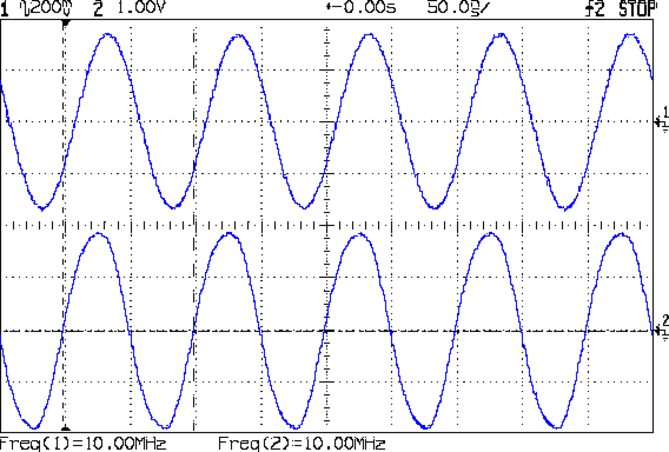
    The real excitement happens while watching the DDS output crawl across the scope screen in relation to the 10 MHz signal from the Z8301 GPS-locked reference:

    DDS GPS - 10 MHz -48 Hz offset - zero beat
    DDS GPS – 10 MHz -48 Hz offset – zero beat

    The DDS sine in the upper trace is zero-beat against the GPS reference in the lower trace. There’s no hardware interlock, but they’re dead stationary during whatever DDS output step produces exactly 10.0000000 MHz. The temperature coefficient seems to be around 2.4 Hz/°C, so the merest whiff of air changes the frequency by more than 0.1 Hz.

    It’s kinda like watching paint dry or a 3D printer at work, but it’s my paint: I like it a lot!

    The Arduino source code as a GitHub Gist:

    // SPI exercise for 60 kHz crystal tester
    #include <avr/pgmspace.h>
    //———————
    // Pin locations
    // SPI uses hardware support: those pins are predetermined
    #define PIN_HEARTBEAT 9 // added LED
    #define PIN_RESET_DDS 7 // Reset DDS module
    #define PIN_LATCH_DDS 8 // Latch serial data into DDS
    #define PIN_SCK 13 // SPI clock (also Arduino LED!)
    #define PIN_MISO 12 // SPI data input
    #define PIN_MOSI 11 // SPI data output
    #define PIN_SS 10 // SPI slave select – MUST BE OUTPUT = HIGH
    char Buffer[10+1+10+1]; // string buffer for long long conversions
    #define GIGA 1000000000LL
    #define MEGA 1000000LL
    #define KILO 1000LL
    struct ll_fx {
    uint32_t low; // fractional part
    uint32_t high; // integer part
    };
    union ll_u {
    uint64_t fx_64;
    struct ll_fx fx_32;
    };
    union ll_u CtPerHz; // will be 2^32 / 125 MHz
    union ll_u HzPerCt; // will be 125 MHz / 2^32
    union ll_u One; // 1.0 as fixed point
    union ll_u Tenth; // 0.1 as fixed point
    union ll_u TenthHzCt; // 0.1 Hz in counts
    // All nominal values are integers for simplicity
    #define OSC_NOMINAL (125 * MEGA)
    #define OSC_OFFSET_NOMINAL (-344LL)
    union ll_u OscillatorNominal; // nominal oscillator frequency
    union ll_u OscOffset; // … and offset, which will be signed 64-bit value
    union ll_u Oscillator; // true oscillator frequency with offset
    #define SCAN_WIDTH 6
    #define SCAN_SETTLE 2000
    union ll_u ScanFrom, ScanTo, ScanFreq, ScanStep; // frequency scan settings
    union ll_u TestFreq,TestCount; // useful variables
    #define HEARTBEAT_MS 3000
    unsigned long MillisNow,MillisThen;
    //———–
    // Useful functions
    // Pin twiddling
    void TogglePin(char bitpin) {
    digitalWrite(bitpin,!digitalRead(bitpin)); // toggle the bit based on previous output
    }
    void PulsePin(char bitpin) {
    TogglePin(bitpin);
    TogglePin(bitpin);
    }
    // SPI I/O
    void EnableSPI(void) {
    digitalWrite(PIN_SS,HIGH); // set SPI into Master mode
    SPCR |= 1 << SPE;
    }
    void DisableSPI(void) {
    SPCR &= ~(1 << SPE);
    }
    void WaitSPIF(void) {
    while (! (SPSR & (1 << SPIF))) {
    TogglePin(PIN_HEARTBEAT);
    TogglePin(PIN_HEARTBEAT);
    continue;
    }
    }
    byte SendRecSPI(byte Dbyte) { // send one byte, get another in exchange
    SPDR = Dbyte;
    WaitSPIF();
    return SPDR; // SPIF will be cleared
    }
    // DDS module
    void EnableDDS(void) {
    digitalWrite(PIN_LATCH_DDS,LOW); // ensure proper startup
    digitalWrite(PIN_RESET_DDS,HIGH); // minimum reset pulse 40 ns, not a problem
    digitalWrite(PIN_RESET_DDS,LOW);
    delayMicroseconds(1); // max latency 100 ns, not a problem
    DisableSPI(); // allow manual control of outputs
    digitalWrite(PIN_SCK,LOW); // ensure clean SCK pulse
    PulsePin(PIN_SCK); // … to latch hardwired config bits
    PulsePin(PIN_LATCH_DDS); // load hardwired config bits = begin serial mode
    EnableSPI(); // turn on hardware SPI controls
    SendRecSPI(0x00); // shift in serial config bits
    PulsePin(PIN_LATCH_DDS); // load serial config bits
    }
    // Write delta phase count to DDS
    // This comes from the integer part of a 64-bit scaled value
    void WriteDDS(uint32_t DeltaPhase) {
    SendRecSPI((byte)DeltaPhase); // low-order byte first
    SendRecSPI((byte)(DeltaPhase >> 8));
    SendRecSPI((byte)(DeltaPhase >> 16));
    SendRecSPI((byte)(DeltaPhase >> 24));
    SendRecSPI(0x00); // 5 MSBs = phase = 0, 3 LSBs must be zero
    PulsePin(PIN_LATCH_DDS); // write data to DDS
    }
    //———–
    // Round scaled fixed point to specific number of decimal places: 0 through 8
    // You should display the value with only Decimals characters beyond the point
    // Must calculate rounding value as separate variable to avoid mystery error
    uint64_t RoundFixedPt(union ll_u TheNumber,unsigned Decimals) {
    union ll_u Rnd;
    // printf(" round before: %08lx %08lx\n",TheNumber.fx_32.high,TheNumber.fx_32.low);
    Rnd.fx_64 = (One.fx_64 / 2) / (pow(10LL,Decimals));
    // printf(" incr: %08lx %08lx\n",Rnd.fx_32.high,Rnd.fx_32.low);
    TheNumber.fx_64 = TheNumber.fx_64 + Rnd.fx_64;
    // printf(" after: %08lx %08lx\n",TheNumber.fx_32.high,TheNumber.fx_32.low);
    return TheNumber.fx_64;
    }
    //———–
    // Multiply two unsigned scaled fixed point numbers without overflowing a 64 bit value
    // The product of the two integer parts mut be < 2^32
    uint64_t MultiplyFixedPt(union ll_u Mcand, union ll_u Mplier) {
    union ll_u Result;
    Result.fx_64 = ((uint64_t)Mcand.fx_32.high * (uint64_t)Mplier.fx_32.high) << 32; // integer parts (clear fract)
    Result.fx_64 += ((uint64_t)Mcand.fx_32.low * (uint64_t)Mplier.fx_32.low) >> 32; // fraction parts (always < 1)
    Result.fx_64 += (uint64_t)Mcand.fx_32.high * (uint64_t)Mplier.fx_32.low; // cross products
    Result.fx_64 += (uint64_t)Mcand.fx_32.low * (uint64_t)Mplier.fx_32.high;
    return Result.fx_64;
    }
    //———–
    // Long long print-to-buffer helpers
    // Assumes little-Endian layout
    void PrintHexLL(char *pBuffer,union ll_u FixedPt) {
    sprintf(pBuffer,"%08lx %08lx",FixedPt.fx_32.high,FixedPt.fx_32.low);
    }
    // converts all 9 decimal digits of fraction, which should suffice
    void PrintFractionLL(char *pBuffer,union ll_u FixedPt) {
    union ll_u Fraction;
    Fraction.fx_64 = FixedPt.fx_32.low; // copy 32 fraction bits, high order = 0
    Fraction.fx_64 *= GIGA; // times 10^9 for conversion
    Fraction.fx_64 >>= 32; // align integer part in low long
    sprintf(pBuffer,"%09lu",Fraction.fx_32.low); // convert low long to decimal
    }
    void PrintIntegerLL(char *pBuffer,union ll_u FixedPt) {
    sprintf(pBuffer,"%lu",FixedPt.fx_32.high);
    }
    void PrintFixedPt(char *pBuffer,union ll_u FixedPt) {
    PrintIntegerLL(pBuffer,FixedPt); // do the integer part
    pBuffer += strlen(pBuffer); // aim pointer beyond integer
    *pBuffer++ = '.'; // drop in the decimal point, tick pointer
    PrintFractionLL(pBuffer,FixedPt);
    }
    void PrintFixedPtRounded(char *pBuffer,union ll_u FixedPt,unsigned Decimals) {
    char *pDecPt;
    //char *pBase;
    // pBase = pBuffer;
    FixedPt.fx_64 = RoundFixedPt(FixedPt,Decimals);
    PrintIntegerLL(pBuffer,FixedPt); // do the integer part
    // printf(" Buffer int: [%s]\n",pBase);
    pBuffer += strlen(pBuffer); // aim pointer beyond integer
    pDecPt = pBuffer; // save the point location
    *pBuffer++ = '.'; // drop in the decimal point, tick pointer
    PrintFractionLL(pBuffer,FixedPt);
    // printf(" Buffer all: [%s]\n",pBase);
    if (Decimals == 0)
    *pDecPt = 0; // 0 places means discard the decimal point
    else
    *(pDecPt + Decimals + 1) = 0; // truncate string to leave . and Decimals chars
    // printf(" Buffer end: [%s]\n",pBase);
    }
    //———–
    // Calculate useful "constants" from oscillator info
    // Args are integer constants in Hz
    void CalcOscillator(uint32_t Base,uint32_t Offset) {
    union ll_u Temp;
    Oscillator.fx_32.high = Base + Offset; // get true osc frequency from integers
    Oscillator.fx_32.low = 0;
    HzPerCt.fx_32.low = Oscillator.fx_32.high; // divide oscillator by 2^32 with simple shifting
    HzPerCt.fx_32.high = 0;
    CtPerHz.fx_64 = -1; // Compute (2^32 – 1) / oscillator
    CtPerHz.fx_64 /= (uint64_t)Oscillator.fx_32.high; // remove 2^32 scale factor from divisor
    TenthHzCt.fx_64 = MultiplyFixedPt(Tenth,CtPerHz); // 0.1 Hz as delta-phase count
    if (true) {
    printf("Inputs: %ld = %ld%+ld\n",Base+Offset,Base,Offset);
    PrintFixedPt(Buffer,Oscillator);
    printf("Osc freq: %s\n",Buffer);
    PrintFixedPt(Buffer,HzPerCt);
    printf("Hz/Ct: %s\n",Buffer);
    PrintFixedPt(Buffer,CtPerHz);
    printf("Ct/Hz: %s\n",Buffer);
    PrintFixedPt(Buffer,TenthHzCt);
    printf("0.1 Hz Ct: %s",Buffer);
    }
    }
    //– Helper routine for printf()
    int s_putc(char c, FILE *t) {
    Serial.write(c);
    }
    //———–
    void setup ()
    {
    pinMode(PIN_HEARTBEAT,OUTPUT);
    digitalWrite(PIN_HEARTBEAT,HIGH); // show we got here
    Serial.begin (115200);
    fdevopen(&s_putc,0); // set up serial output for printf()
    Serial.println (F("DDS SPI exercise"));
    Serial.println (F("Ed Nisley – KE4ZNU – May 2017\n"));
    // DDS module controls
    pinMode(PIN_LATCH_DDS,OUTPUT);
    digitalWrite(PIN_LATCH_DDS,LOW);
    pinMode(PIN_RESET_DDS,OUTPUT);
    digitalWrite(PIN_RESET_DDS,HIGH);
    // configure SPI hardware
    SPCR = B01110001; // Auto SPI: no int, enable, LSB first, master, + edge, leading, f/16
    SPSR = B00000000; // not double data rate
    pinMode(PIN_SS,OUTPUT);
    digitalWrite(PIN_SCK,HIGH);
    pinMode(PIN_SCK,OUTPUT);
    digitalWrite(PIN_SCK,LOW);
    pinMode(PIN_MOSI,OUTPUT);
    digitalWrite(PIN_MOSI,LOW);
    pinMode(PIN_MISO,INPUT_PULLUP);
    TogglePin(PIN_HEARTBEAT); // show we got here
    // Calculate useful constants
    One.fx_64 = 1LL << 32; // Set up 1.0, a very useful constant
    Tenth.fx_64 = One.fx_64 / 10; // Likewise, 0.1
    // Calculate oscillator "constants"
    CalcOscillator(OSC_NOMINAL,OSC_OFFSET_NOMINAL);
    TogglePin(PIN_HEARTBEAT); // show we got here
    // Set up 10 MHz calibration output
    TestFreq.fx_64 = One.fx_64 * (10 * MEGA);
    PrintFixedPtRounded(Buffer,TestFreq,4);
    printf("\nTest frequency: %s\n",Buffer);
    TestCount.fx_64 = MultiplyFixedPt(TestFreq,CtPerHz); // convert delta phase counts
    TestCount.fx_64 = RoundFixedPt(TestCount,0); // … to nearest integer
    PrintFixedPt(Buffer,TestCount);
    printf("Delta phase: %lu\n",TestCount.fx_32.high);
    // Set up scan limits
    ScanFreq = TestFreq;
    ScanStep.fx_64 = One.fx_64 / 10; // 0.1 Hz = 3 or 4 tuning register steps
    ScanFrom.fx_64 = ScanFreq.fx_64 – SCAN_WIDTH * (One.fx_64 >> 1); // centered on test freq
    ScanTo.fx_64 = ScanFreq.fx_64 + SCAN_WIDTH * (One.fx_64 >> 1);
    Serial.println("\nScan limits");
    PrintFixedPtRounded(Buffer,ScanFrom,1);
    printf(" from: %11s\n",Buffer);
    PrintFixedPtRounded(Buffer,ScanFreq,1);
    printf(" at: %11s\n",Buffer);
    PrintFixedPtRounded(Buffer,ScanTo,1);
    printf(" to: %11s\n",Buffer);
    // Wake up and load the DDS
    EnableDDS();
    WriteDDS(TestCount.fx_32.high);
    Serial.println("\nSleeping for a while …");
    delay(15 * 1000);
    Serial.println("\nStartup done!");
    Serial.println("\nBegin scanning\n");
    MillisThen = millis();
    }
    //———–
    void loop () {
    MillisNow = millis();
    if ((MillisNow – MillisThen) >= SCAN_SETTLE) {
    TogglePin(PIN_HEARTBEAT);
    MillisThen = MillisNow;
    if (true) {
    PrintFixedPtRounded(Buffer,ScanFreq,1);
    TestCount.fx_64 = MultiplyFixedPt(ScanFreq,CtPerHz);
    printf("%12s -> %9ld\n",Buffer,TestCount.fx_32.high);
    WriteDDS(TestCount.fx_32.high);
    ScanFreq.fx_64 += ScanStep.fx_64;
    if (ScanFreq.fx_64 > (ScanTo.fx_64 + ScanStep.fx_64 / 2)) {
    ScanFreq = ScanFrom;
    Serial.println("Scan restart");
    }
    }
    }
    }
    view raw DDSSPITest.ino hosted with ❤ by GitHub
    DDS SPI exercise
    Ed Nisley – KE4ZNU – May 2017
    Inputs: 124999656 = 125000000-344
    Osc freq: 124999656.000000000
    Hz/Ct: 0.029103750
    Ct/Hz: 34.359832926
    0.1 Hz Ct: 3.435983287
    Test frequency: 10000000.0000
    Delta phase: 343598329
    Scan limits
    from: 9999997.0
    at: 10000000.0
    to: 10000003.0
    Sleeping for a while …
    Startup done!
    Begin scanning
    10000000.0 -> 343598329
    10000000.1 -> 343598332
    10000000.2 -> 343598336
    10000000.3 -> 343598339
    10000000.4 -> 343598343
    10000000.5 -> 343598346
    10000000.6 -> 343598349
    10000000.7 -> 343598353
    10000000.8 -> 343598356
    10000000.9 -> 343598360
    10000001.0 -> 343598363
    10000001.1 -> 343598367
    10000001.2 -> 343598370
    10000001.3 -> 343598373
    view raw DDSSPITest.txt hosted with ❤ by GitHub