The Smell of Molten Projects in the Morning

Ed Nisley's Blog: Shop notes, electronics, firmware, machinery, 3D printing, laser cuttery, and curiosities. Contents: 100% human thinking, 0% AI slop.

Author: Ed

  • LF DDS Sine Generator With 0.1 Hz Steps

    Gutting the crystal tester program and grafting a simple joystick interface onto the corpse produces an LF sine wave generator with 0.10 Hz steps:

    FG085 vs AD9850 DDS frequencies
    FG085 vs AD9850 DDS frequencies

    The FG085 function generator shows 60000 Hz and the AD9850 shows 60001.58 Hz, but they’re running at exactly the same frequency:

    DDS 1.58 FG085 0.0
    DDS 1.58 FG085 0.0

    I trust the AD9850 readout, because I just finished zero-beating it against the GPS-locked 10 MHz frequency reference: it’s dead on. The scope’s frequency measurement is clearly out of its depth at this resolution.

    The “user interface” doesn’t amount to much. The DDS starts at 60.000 kHz, as defined by a program constant. Push the joystick left-right to step by 0.1 Hz (actually, multiples of 0.0291 Hz, so either 0.087 or 0.116 Hz, whichever makes the answer come out closer to the next multiple of 0.1 Hz). Push it up-down to step by 1.0 Hz (insert similar handwaving here). Push the button inward to reset to 60.000 kHz.

    The OLED displays the frequency (in big digits), the output of the log amplifier (which isn’t hooked up here) in dB (over 4 μV), the DDS clock oscillator temperature, and a few lines of static prompting. The camera shutter blanked the last line, which should read “Button = reset”.

    There’s no amplitude adjustment, other than the DDS current-control twiddlepot and the buffer amp’s gain-setting jumpers, but I (think I can) gimmick up an adequate inductive kicker for the fake preamp antenna circuit.

    Not much to look at, but now I can (manually) probe the frequency response of the 60 kHz preamp with sufficient resolution to figure out if / how the tuning fork resonator filter behaves.

    The Arduino source code as a GitHub Gist:

    // Sine wave generator
    // Ed Nisley – KE4ZNU
    // 2017-09-20
    #include <avr/pgmspace.h>
    #include <U8g2lib.h>
    #include <U8x8lib.h>
    #include <Adafruit_MCP4725.h>
    //———————
    // Pin locations
    #define PIN_SYNC 5
    #define PIN_CX_SHORT 6
    #define PIN_DDS_RESET 7
    #define PIN_DDS_LATCH 8
    #define PIN_HEARTBEAT 9
    #define PIN_LOG_AMP A0
    #define PIN_JOYBUTTTON A1
    #define PIN_JOY_Y A2
    #define PIN_JOY_X A3
    // SPI & I2C use hardware support: these pins are predetermined
    #define PIN_SS 10
    #define PIN_MOSI 11
    #define PIN_MISO 12
    #define PIN_SCK 13
    #define PIN_IIC_SDA A4
    #define PIN_IIC_SCL A5
    // IIC Hardware addresses
    // OLED library uses its default address
    #define LM75_ADDR 0x48
    #define SH1106_ADDR 0x70
    #define MCP4725_ADDR 0x60
    // Useful constants
    #define GIGA 1000000000LL
    #define MEGA 1000000LL
    #define KILO 1000LL
    #define ONE_FX (1LL << 32)
    #define CALFREQ (10LL * MEGA * ONE_FX)
    // Structures for 64-bit fixed point numbers
    // Low word = fractional part
    // High word = integer part
    struct ll_fx {
    uint32_t low; // fractional part
    uint32_t high; // integer part
    };
    union ll_u {
    uint64_t fx_64;
    struct ll_fx fx_32;
    };
    // Define semi-constant values
    union ll_u CenterFreq = {(60000 – 0) * ONE_FX}; // center of scan
    //union ll_u CenterFreq = {(32768 – 2) * ONE_FX}; // center of scan
    #define NOMINAL_OSC ((125 * MEGA) * ONE_FX)
    union ll_u Oscillator = {NOMINAL_OSC}; // oscillator frequency
    int16_t OscOffset = 287; // offset from NOMINAL_OSC at room-ish temperature
    // Coefficients for oscillator offset as function of temperature
    #define TC_SQUARE ((1340 * ONE_FX) / 1000)
    #define TC_LINEAR ((-1474 * ONE_FX) / 10)
    #define TC_INTERCEPT ((3415 * ONE_FX) )
    // Frequency range & step size
    uint16_t TestWidth = 5*2; // width must be an even integer
    union ll_u StepSize = {ONE_FX / 10}; // 0.1 Hz is smallest practical decimal step
    union ll_u NomFreq, ActualFreq; // displayed vs actual DDS frequency
    union ll_u TestFreq;
    // Global variables of interest to everyone
    union ll_u CtPerHz; // will be 2^32 / oscillator
    union ll_u HzPerCt; // will be oscillator / 2^32
    char Buffer[10+1+10+1]; // string buffer for fixed point number conversions
    union ll_u Temperature; // read from LM75A
    // Hardware library variables
    U8X8_SH1106_128X64_NONAME_HW_I2C u8x8(U8X8_PIN_NONE);
    //U8X8_SH1106_128X64_NONAME_4W_HW_SPI u8x8(PIN_DISP_SEL, PIN_DISP_DC , PIN_DISP_RST);
    //U8X8_SH1106_128X64_NONAME_4W_SW_SPI u8x8(PIN_SCK, PIN_MOSI, PIN_DISP_SEL, PIN_DISP_DC , PIN_DISP_RST);
    #define DAC_WR false
    #define DAC_WR_EEP true
    #define DAC_BITS 12
    #define DAC_MAX 0x0fff
    Adafruit_MCP4725 XAxisDAC; // I²C DAC for X axis output
    uint32_t XAxisValue; // DAC parameter uses 32 bits
    union ll_u LogAmpdB; // computed dB value
    // Timekeeping
    #define HEARTBEAT_MS 3000
    unsigned long MillisNow,MillisThen;
    //———–
    // Useful functions
    // Pin twiddling
    void TogglePin(char bitpin) {
    digitalWrite(bitpin,!digitalRead(bitpin)); // toggle the bit based on previous output
    }
    void PulsePin(char bitpin) {
    TogglePin(bitpin);
    TogglePin(bitpin);
    }
    // These may need debouncing in some circuits
    void WaitButtonDown() {
    word ai;
    do {
    ai = analogRead(PIN_JOYBUTTTON);
    } while (ai > 600);
    }
    void WaitButtonUp() {
    word ai;
    do {
    ai = analogRead(PIN_JOYBUTTTON);
    } while (ai < 400);
    }
    void WaitButton() {
    Serial.print(F("Waiting for button:"));
    WaitButtonDown();
    delay(10);
    WaitButtonUp();
    delay(100);
    Serial.println(F(" done"));
    }
    // Hardware-assisted SPI I/O
    void EnableSPI(void) {
    digitalWrite(PIN_SS,HIGH); // set SPI into Master mode
    SPCR |= 1 << SPE;
    }
    void DisableSPI(void) {
    SPCR &= ~(1 << SPE);
    }
    void WaitSPIF(void) {
    while (! (SPSR & (1 << SPIF))) {
    // TogglePin(PIN_HEARTBEAT);
    // TogglePin(PIN_HEARTBEAT);
    continue;
    }
    }
    byte SendRecSPI(byte Dbyte) { // send one byte, get another in exchange
    SPDR = Dbyte;
    WaitSPIF();
    return SPDR; // SPIF will be cleared
    }
    //————–
    // DDS module
    void EnableDDS(void) {
    digitalWrite(PIN_DDS_LATCH,LOW); // ensure proper startup
    digitalWrite(PIN_DDS_RESET,HIGH); // minimum reset pulse 40 ns, not a problem
    digitalWrite(PIN_DDS_RESET,LOW);
    delayMicroseconds(1); // max latency 100 ns, not a problem
    DisableSPI(); // allow manual control of outputs
    digitalWrite(PIN_SCK,LOW); // ensure clean SCK pulse
    PulsePin(PIN_SCK); // … to latch hardwired config bits
    PulsePin(PIN_DDS_LATCH); // load hardwired config bits = begin serial mode
    EnableSPI(); // turn on hardware SPI controls
    SendRecSPI(0x00); // shift in serial config bits
    PulsePin(PIN_DDS_LATCH); // load serial config bits
    }
    // Write delta phase count to DDS
    // This comes from the integer part of a 64-bit scaled value
    void WriteDDS(uint32_t DeltaPhase) {
    SendRecSPI((byte)DeltaPhase); // low-order byte first
    SendRecSPI((byte)(DeltaPhase >> 8));
    SendRecSPI((byte)(DeltaPhase >> 16));
    SendRecSPI((byte)(DeltaPhase >> 24));
    SendRecSPI(0x00); // 5 MSBs = phase = 0, 3 LSBs must be zero
    PulsePin(PIN_DDS_LATCH); // write data to DDS
    }
    //————–
    // Log amp module
    #define LOG_AMP_SAMPLES 10
    #define LOG_AMP_DELAYMS 10
    uint64_t ReadLogAmp() {
    union ll_u LogAmpRaw;
    LogAmpRaw.fx_64 = 0;
    for (byte i=0; i<LOG_AMP_SAMPLES; i++) {
    LogAmpRaw.fx_32.high += analogRead(PIN_LOG_AMP);
    delay(LOG_AMP_DELAYMS);
    }
    LogAmpRaw.fx_64 /= LOG_AMP_SAMPLES; // figure average from totally ad-hoc number of samples
    LogAmpRaw.fx_64 *= 5; // convert from ADC counts to voltage at 5 V/1024 counts
    LogAmpRaw.fx_64 /= 1024;
    LogAmpRaw.fx_64 /= 24; // convert from voltage to dBV at 24 mV/dBV
    LogAmpRaw.fx_64 *= 1000;
    return LogAmpRaw.fx_64;
    }
    //———–
    // Read LM75A and convert to signed fixed point
    // Returns signed value in something otherwise used as unsigned
    // Blithely ignores most IIC error conditions
    int64_t GetTemperature() {
    union ll_u Temp;
    Wire.requestFrom(LM75_ADDR,2);
    if (Wire.available() == 2) {
    Temp.fx_32.high = Wire.read();
    Temp.fx_32.low = (uint32_t)Wire.read() << 24;
    if (Temp.fx_32.high & 0x00000080L) { // propagate – sign
    Temp.fx_32.high |= 0xffffff00L;
    }
    }
    else {
    Temp.fx_64 = 256 * ONE_FX; // in-band error flagging: 256 C
    }
    return Temp.fx_64;
    }
    //———–
    // Compute frequency offset from oscillator temperature
    // This is an ordinary signed integer
    // Because 1 Hz resolution at 125 MHz is Good Enough
    int16_t ComputeOffset() {
    union ll_u Temperature;
    union ll_u T1;
    Temperature.fx_64 = GetTemperature();
    T1.fx_64 = TC_SQUARE;
    if (TC_SQUARE) // skip multiply for linear fit
    T1.fx_64 = MultiplyFixedPt(T1,Temperature);
    T1.fx_64 += TC_LINEAR;
    T1.fx_64 = MultiplyFixedPt(T1,Temperature);
    T1.fx_64 += TC_INTERCEPT;
    PrintFixedPtRounded(Buffer,Temperature,3);
    printf("Offset: %d at %s C\n",(int16_t)T1.fx_32.high,Buffer);
    return (int16_t)(T1.fx_32.high); // extract integer part
    }
    //———–
    // Zero-beat oscillator to 10 MHz GPS-locked reference
    void ZeroBeat() {
    union ll_u TempFreq,TempCount;
    printf("Zero beat DDS oscillator against GPS\n");
    TempFreq.fx_64 = CALFREQ;
    u8x8.clearDisplay();
    byte ln = 0;
    u8x8.drawString(0,ln++,"10 MHz Zero Beat");
    u8x8.drawString(0,ln++," <- Jog -> ");
    u8x8.drawString(0,ln++," ^ recalc ");
    u8x8.drawString(0,ln++," Button = set ");
    int32_t OldOffset = -OscOffset; // ensure first update
    while (analogRead(PIN_JOYBUTTTON) > 500) {
    TogglePin(PIN_HEARTBEAT); // show we got here
    int ai = analogRead(PIN_JOY_Y) – 512; // totally ad-hoc axes
    if (ai < -100) {
    OscOffset += 1;
    }
    else if (ai > 100) {
    OscOffset -= 1;
    }
    ai = analogRead(PIN_JOY_X) – 512;
    if (ai < -100) {
    OscOffset = ComputeOffset();
    }
    if (OscOffset != OldOffset) {
    ln = 5;
    sprintf(Buffer,"Offset %9d",OscOffset);
    u8x8.drawString(0,ln,Buffer);
    CalcOscillator(OscOffset); // recalculate constants
    TempCount.fx_64 = MultiplyFixedPt(TempFreq,CtPerHz); // recalculate delta phase count
    WriteDDS(TempCount.fx_32.high); // DDS output should be exactly 10 MHz
    OldOffset = OscOffset;
    }
    Temperature.fx_64 = GetTemperature();
    PrintFixedPtRounded(Buffer,Temperature,3);
    ln = 7;
    u8x8.drawString(0,ln,"DDS Temp");
    u8x8.drawString(16-strlen(Buffer),ln,Buffer);
    delay(100);
    }
    printf("Oscillator offset: %d at %s C\n",OscOffset,Buffer);
    WaitButtonUp();
    u8x8.clearDisplay();
    }
    //———–
    // Round scaled fixed point to specific number of decimal places: 0 through 8
    // You should display the value with only Decimals characters beyond the point
    // Must calculate rounding value as separate variable to avoid mystery error
    uint64_t RoundFixedPt(union ll_u TheNumber,unsigned Decimals) {
    union ll_u Rnd;
    Rnd.fx_64 = (ONE_FX >> 1) / (pow(10LL,Decimals)); // that's 0.5 / number of places
    TheNumber.fx_64 = TheNumber.fx_64 + Rnd.fx_64;
    return TheNumber.fx_64;
    }
    //———–
    // Multiply two unsigned scaled fixed point numbers without overflowing a 64 bit value
    // Perforce, the product of the two integer parts mut be < 2^32
    uint64_t MultiplyFixedPt(union ll_u Mcand, union ll_u Mplier) {
    union ll_u Result;
    Result.fx_64 = ((uint64_t)Mcand.fx_32.high * (uint64_t)Mplier.fx_32.high) << 32; // integer parts (clear fract)
    Result.fx_64 += ((uint64_t)Mcand.fx_32.low * (uint64_t)Mplier.fx_32.low) >> 32; // fraction parts (always < 1)
    Result.fx_64 += (uint64_t)Mcand.fx_32.high * (uint64_t)Mplier.fx_32.low; // cross products
    Result.fx_64 += (uint64_t)Mcand.fx_32.low * (uint64_t)Mplier.fx_32.high;
    return Result.fx_64;
    }
    //———–
    // Long long print-to-buffer helpers
    // Assumes little-Endian layout
    void PrintHexLL(char *pBuffer,union ll_u FixedPt) {
    sprintf(pBuffer,"%08lx %08lx",FixedPt.fx_32.high,FixedPt.fx_32.low);
    }
    // converts all 9 decimal digits of fraction, which should suffice
    void PrintFractionLL(char *pBuffer,union ll_u FixedPt) {
    union ll_u Fraction;
    Fraction.fx_64 = FixedPt.fx_32.low; // copy 32 fraction bits, high order = 0
    Fraction.fx_64 *= GIGA; // times 10^9 for conversion
    Fraction.fx_64 >>= 32; // align integer part in low long
    sprintf(pBuffer,"%09lu",Fraction.fx_32.low); // convert low long to decimal
    }
    void PrintIntegerLL(char *pBuffer,union ll_u FixedPt) {
    sprintf(pBuffer,"%lu",FixedPt.fx_32.high);
    }
    void PrintFixedPt(char *pBuffer,union ll_u FixedPt) {
    PrintIntegerLL(pBuffer,FixedPt); // do the integer part
    pBuffer += strlen(pBuffer); // aim pointer beyond integer
    *pBuffer++ = '.'; // drop in the decimal point, tick pointer
    PrintFractionLL(pBuffer,FixedPt);
    }
    void PrintFixedPtRounded(char *pBuffer,union ll_u FixedPt,unsigned Decimals) {
    char *pDecPt;
    FixedPt.fx_64 = RoundFixedPt(FixedPt,Decimals);
    PrintIntegerLL(pBuffer,FixedPt); // do the integer part
    pBuffer += strlen(pBuffer); // aim pointer beyond integer
    pDecPt = pBuffer; // save the point location
    *pBuffer++ = '.'; // drop in the decimal point, tick pointer
    PrintFractionLL(pBuffer,FixedPt); // do the fraction
    if (Decimals == 0)
    *pDecPt = 0; // 0 places means discard the decimal point
    else
    *(pDecPt + Decimals + 1) = 0; // truncate string to leave . and Decimals chars
    }
    //———–
    // Calculate useful "constants" from oscillator info
    void CalcOscillator(int16_t Offset) {
    Oscillator.fx_64 = NOMINAL_OSC + (Offset * ONE_FX); // offset may be negative, It Just Works
    HzPerCt.fx_32.low = Oscillator.fx_32.high; // divide oscillator by 2^32 with simple shifting
    HzPerCt.fx_32.high = 0;
    CtPerHz.fx_64 = -1; // Compute (2^32 – 1) / oscillator
    CtPerHz.fx_64 /= (uint64_t)Oscillator.fx_32.high; // remove 2^32 scale factor from divisor
    }
    //———–
    //– Helper routine for printf()
    int s_putc(char c, FILE *t) {
    Serial.write(c);
    }
    //———–
    void setup () {
    union ll_u TempFreq,TempCount;
    pinMode(PIN_HEARTBEAT,OUTPUT);
    digitalWrite(PIN_HEARTBEAT,LOW); // show we got here
    pinMode(PIN_SYNC,OUTPUT);
    digitalWrite(PIN_SYNC,LOW);
    Serial.begin (115200);
    fdevopen(&s_putc,0); // set up serial output for printf()
    Serial.println (F("60 kHz Sine Generator"));
    Serial.println (F("Ed Nisley – KE4ZNU – September 2017\n"));
    // DDS module controls
    pinMode(PIN_DDS_LATCH,OUTPUT);
    digitalWrite(PIN_DDS_LATCH,LOW);
    pinMode(PIN_DDS_RESET,OUTPUT);
    digitalWrite(PIN_DDS_RESET,HIGH);
    // Light up the display
    Serial.println("Initialize OLED");
    u8x8.begin();
    u8x8.setFont(u8x8_font_artossans8_r);
    // u8x8.setPowerSave(0);
    u8x8.setFont(u8x8_font_pxplusibmcga_f);
    u8x8.draw2x2String(0,0,"Sine Gen");
    u8x8.drawString(0,3,"Ed Nisley");
    u8x8.drawString(0,4," KE4ZNU");
    u8x8.drawString(0,5,"2017-09-20");
    u8x8.drawString(0,6,"Press Button …");
    // configure SPI hardware
    pinMode(PIN_SS,OUTPUT); // set up manual controls
    digitalWrite(PIN_SS,HIGH);
    pinMode(PIN_SCK,OUTPUT);
    digitalWrite(PIN_SCK,LOW);
    pinMode(PIN_MOSI,OUTPUT);
    digitalWrite(PIN_MOSI,LOW);
    pinMode(PIN_MISO,INPUT_PULLUP);
    SPCR = B00110000; // Auto SPI: no int, disabled, LSB first, master, + edge, leading, f/4
    SPSR = B00000000; // not double data rate
    TogglePin(PIN_HEARTBEAT); // show we got here
    // Set up X axis DAC output
    XAxisDAC.begin(MCP4725_ADDR); // start up MCP4725 DAC at Sparkfun address
    // XAxisDAC.setVoltage(0,DAC_WR_EEP); // do this once per DAC to set power-on at 0 V
    XAxisDAC.setVoltage(0,DAC_WR); // force 0 V after a reset without a power cycle
    // LM75A temperature sensor requires no setup!
    // External capacitor in test fixture
    // Turn relay off to keep the heat down
    pinMode(PIN_CX_SHORT,OUTPUT);
    digitalWrite(PIN_CX_SHORT,LOW);
    // Frequencies
    PrintFixedPtRounded(Buffer,CenterFreq,1);
    printf("Center freq: %s Hz\n",Buffer);
    NomFreq = CenterFreq;
    // Wake up and load the DDS
    OscOffset = ComputeOffset();
    CalcOscillator(OscOffset);
    Serial.print("\nStarting DDS: ");
    TempFreq.fx_64 = CALFREQ;
    TempCount.fx_64 = MultiplyFixedPt(TempFreq,CtPerHz);
    EnableDDS();
    WriteDDS(TempCount.fx_32.high);
    Serial.println("running\n");
    WaitButton(); // pause until button release
    u8x8.setPowerSave(0);
    u8x8.clearDisplay();
    Serial.println("\nStartup done\n");
    MillisThen = millis();
    ZeroBeat(); // compensate for oscillator clock offset
    TempCount.fx_64 = MultiplyFixedPt(NomFreq,CtPerHz); // set up initial frequency
    WriteDDS(TempCount.fx_32.high);
    u8x8.drawString(0,5," <- Jog -> ");
    u8x8.drawString(0,6," ^ 1 Hz v ");
    u8x8.drawString(0,7," Button = reset ");
    }
    //———–
    void loop () {
    byte ln;
    union ll_u DDSCount;
    TestFreq = NomFreq; // assume no change
    if (analogRead(PIN_JOYBUTTTON) > 500) { // button unpushed?
    int ai = analogRead(PIN_JOY_Y) – 512; // X axis = left-right
    if (ai < -100)
    TestFreq.fx_64 = NomFreq.fx_64 + StepSize.fx_64;
    else if (ai > 100)
    TestFreq.fx_64 = NomFreq.fx_64 – StepSize.fx_64;
    else {
    ai = analogRead(PIN_JOY_X) – 512; // Y axis = up-down
    if (ai < -100)
    TestFreq.fx_64 = NomFreq.fx_64 + ONE_FX;
    else if (ai > 100)
    TestFreq.fx_64 = NomFreq.fx_64 – ONE_FX;
    }
    }
    else
    TestFreq = CenterFreq; // reset on button push
    DDSCount.fx_64 = MultiplyFixedPt(TestFreq,CtPerHz); // compute DDS delta phase
    DDSCount.fx_32.low = 0; // truncate count to integer
    ActualFreq.fx_64 = MultiplyFixedPt(DDSCount,HzPerCt);
    if (TestFreq.fx_64 != NomFreq.fx_64) { // avoid writing same value
    WriteDDS(DDSCount.fx_32.high);
    NomFreq = TestFreq; // set up new value
    }
    ln = 0;
    PrintFixedPtRounded(Buffer,ActualFreq,2); // display actual frequency
    u8x8.draw2x2String(0,ln,Buffer);
    ln = 3;
    LogAmpdB.fx_64 = ReadLogAmp(); // show current response
    PrintFixedPtRounded(Buffer,LogAmpdB,1);
    u8x8.drawString(0,ln,"Response");
    u8x8.drawString(16-strlen(Buffer),ln++,Buffer);
    Temperature.fx_64 = GetTemperature(); // and temperature
    PrintFixedPtRounded(Buffer,Temperature,3);
    u8x8.drawString(0,ln,"DDS Temp");
    u8x8.drawString(16-strlen(Buffer),ln++,Buffer);
    delay(100);
    }
  • 60 kHz Preamp: Power Supply Noise

    This took entirely too long to figure out:

    Ground noise - 24 VDC wall wart - probe on gnd lug
    Ground noise – 24 VDC wall wart – probe on gnd lug

    That’s with the scope probe ground clip connected to the wall wart coax connector barrel and the scope probe tip on the ground clip. It’s not the noise on the 24 VDC supply, it’s the noise injected into the ground connection!

    Huh. Makes it tough to sort out low-level signals, it does indeed.

    Consider one of my bench power supplies at 24 V:

    Ground noise - bench supply 24 V - probe on gnd lug
    Ground noise – bench supply 24 V – probe on gnd lug

    Nice & quiet, the way power should be. One might quibble about the residual noise, but at least it’s not blasting out horrific bursts at 120 Hz.

    For completeness, the PCB inside the offending SMAKN 24 V wall wart:

    SMAKN 24 VDC wart - PCB
    SMAKN 24 VDC wart – PCB

    “High Quality Commercial Grade” my aching eyeballs.

    [Update: Edits based on eagle-eyed observations in the comments. ]

    Not as many missing components as I expected, though, if the truth be told. The missing transformer common-mode choke seems odd and, AFAICT, the resistor inductor angling out from the R1 callout doesn’t connect to anything, connects directly to the AC line because  C5 is missing and the pad joining them doesn’t go anywhere else it replaces the jumper (?) to the bottom-left pad and the missing parts. The red LED in the upper right isn’t visible through the black case, although it might serve as a voltage regulator.

    Over on the far right, beyond the transformer and between the two capacitor cans, is a component marked C9 with an oddly angled part. Seen from the other end, it’s a ferrite bead:

    SMAKN 24 VDC wart - output ferrite
    SMAKN 24 VDC wart – output ferrite

    I don’t know why that spot has an inductor symbol with a capacitor part callout.

    The other side of the PCB looks clean:

    SMAKN 24 VDC wart - PCB solder side
    SMAKN 24 VDC wart – PCB solder side

    It’ll probably serve well in a noise-tolerant application, maybe an LED power supply.

    As pointed out in the comments, there’s a UL mark:

    SMAKN 24 VDC wart - label
    SMAKN 24 VDC wart – label

    Not sure what I’ll replace it with, although a small 24 V power supply brick may suffice.

  • 60 kHz Preamp: Tuning Fork Resonator Protection

    Limiting the resonator drive to about 1 μW in the face of wildly varying RF from the antenna (or the occasional finger fumble) requires brute force. A nose-to-tail pair of Schottky diodes seems to do the trick:

    Tuning Fork Resonator Filter - protection and biasing
    Tuning Fork Resonator Filter – protection and biasing

    The 100 Ω resistor blunts the drive from the LM353 op amp (implementing a bandpass filter) when the signal peaks exceed 200-ish mV in either direction from the Vcc/2 bias stored in the 10 μF cap.

    The 11.5 kΩ resistor downstream of the resonator isolates it from the Vcc/2 bias, with the 100 nF cap sinkholing the signal and the 4.7 kΩ resistor preventing feedback into the bias supply. The cap looks like 26 Ω at 60 kHz, so the feedback runs -52 dB from the output and the bias supply knocks it down a bit more. The preceding amps apply 40-ish dB of gain from the antenna terminals, so the loop gain looks OK.

    It’s another few components on the board:

    LF Crystal Tester - resonator protection
    LF Crystal Tester – resonator protection

    The blue twiddlecap should allow pulling the tuning fork’s series resonance upward to exactly 60 kHz.

    Applying way too much signal to the antenna terminals in order to get 1 Vpp from the LM353 shows the limiter in action:

    BP and Xtal filter out - 10.0 v sine 10 Meg xfmr
    BP and Xtal filter out – 10.0 v sine 10 Meg xfmr

    The resonator sees no more than 200 mV in either direction from the bias level, so it’s all good.

    On the low end, the diodes have no effect:

    BP and Xtal filter out - 1.1 v sine 10 Meg xfmr
    BP and Xtal filter out – 1.1 v sine 10 Meg xfmr

    Pay no attention to all that noise.

    My first thought was to put the diodes across the resonator, a Bad Idea: straight up, doesn’t work. The 1N5819 datasheet shows they have about 300 pF of junction capacitance at zero bias and a pair of ’em will swamp the resonator’s internal 0.8 pF parallel capacitance and punch it out of the circuit.

  • Mystery Eggs on Glass

    An array of tiny eggs appeared on the outside of our bedroom window:

    Insect eggs on glass - 2017-09-17
    Insect eggs on glass – 2017-09-17

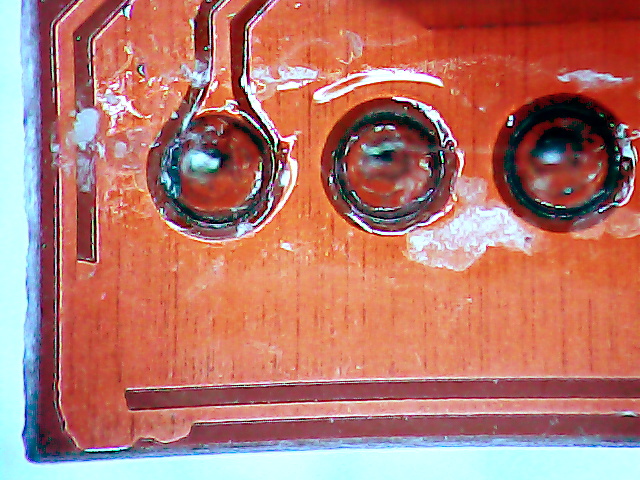
    The patch measures 12 mm across and 14 mm tall. From across the room, it looks like a smudge, but it consists of hundreds of eggs, each on a tiny stalk glued to the glass:

    IMG_20170919 vs 0917- Insect eggs on glass
    IMG_20170919 vs 0917- Insect eggs on glass

    The bottom image is two days later than the top one, both are scaled to about the same size and contrast. The critters look about the same, although I think the lines have more prominent ripples or bumps.

    We have no idea what they’ll turn into, but they certainly look like they have two eyes and wings …


  • Burnett Blvd at Rt 55: Passing on the Right, Redux

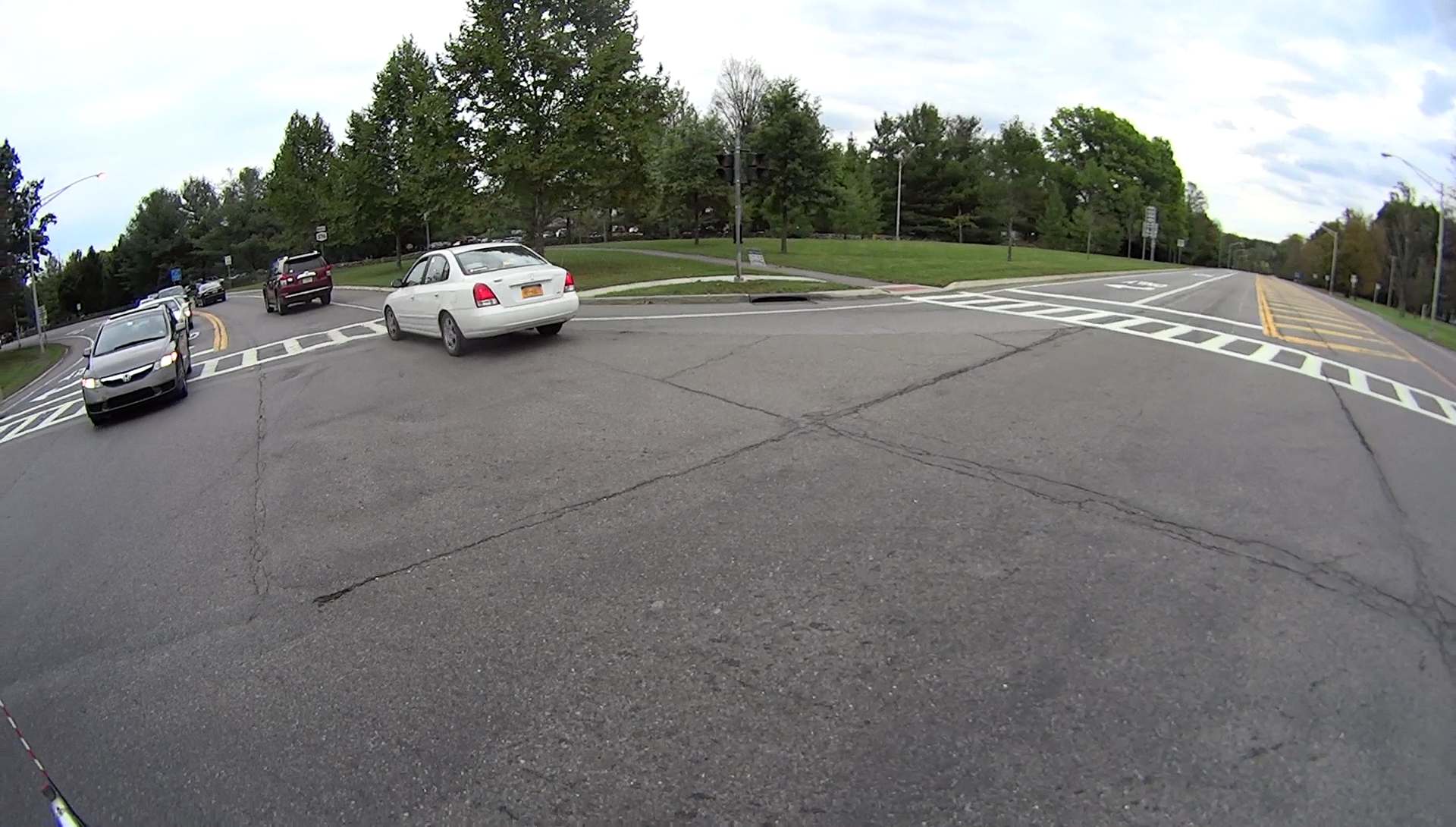
    As usual, we’re at the Rt 55 end of Burnett Blvd, returning home from a grocery trip; I’m hauling two full bags of chow in the trailer. The white car pulling up immediately to our left will make a left turn from the left lane:

    Burnett at Rt 55 - Right Pass - 2017-09-19 - 01
    Burnett at Rt 55 – Right Pass – 2017-09-19 – 01

    The more distant white car, turning left out of Overocker, is eases past us in the right lane to make a right turn:

    Burnett at Rt 55 - Right Pass - 2017-09-19 - 02
    Burnett at Rt 55 – Right Pass – 2017-09-19 – 02

    We’re on the left side of the right lane, rather than the right, to avoid right hook collisions with drivers who flat-out do not stop before turning. Been there, had that happen, we know better.

    The car approaching in the right lane will attempt to pass us on the right:

    Burnett at Rt 55 - Right Pass - 2017-09-19 - 03
    Burnett at Rt 55 – Right Pass – 2017-09-19 – 03

    That’s happened before, too, so I’m watching this happen in  my mirror. My line will pass to the right of the inconveniently placed manhole cover in the intersection:

    Burnett at Rt 55 - Right Pass - 2017-09-19 - 04
    Burnett at Rt 55 – Right Pass – 2017-09-19 – 04

    Mary’s nearing the right side of the lane, I’m in the middle, and the driver jams to a stop rather than run up over the sidewalk:

    Burnett at Rt 55 - Right Pass - 2017-09-19 - 05
    Burnett at Rt 55 – Right Pass – 2017-09-19 – 05

    The passenger window is rolling down, which is always a Bad Sign:

    Burnett at Rt 55 - Right Pass - 2017-09-19 - 06
    Burnett at Rt 55 – Right Pass – 2017-09-19 – 06

    It’s all the way down and I know what’s about to happen:

    Burnett at Rt 55 - Right Pass - 2017-09-19 - 07
    Burnett at Rt 55 – Right Pass – 2017-09-19 – 07

    So I preempt the discussion by pointing out she was passing in an intersection and the license plate on the silver Chevy say FEX-4194:

    Burnett at Rt 55 - Right Pass - 2017-09-19 - 08
    Burnett at Rt 55 – Right Pass – 2017-09-19 – 08

    She passes Mary and stops directly ahead of us in the middle of the right-hand lane. We jam to a stop behind her. The black car approaching us swerves into the middle lane:

    Burnett at Rt 55 - Right Pass - 2017-09-19 - 09
    Burnett at Rt 55 – Right Pass – 2017-09-19 – 09

    She pulls around the corner onto Manchester and stops in the intersection. I stop well behind her to remain visible from Rt 55, which turns out to be a Good Idea:

    Burnett at Rt 55 - Right Pass - 2017-09-19 - 10
    Burnett at Rt 55 – Right Pass – 2017-09-19 – 10

    Mary eases beside the drivers window, which rolls down. The driver says she’s going to call the police, “because we pulled directly in front of her”. Mary points out we have video of the entire encounter. The window rolls up and the driver pulls away.

    Overocker, Burnett, and a short sprint on Rt 55 to Manchester is the only route from the grocery store to Rt 376 and home, so it’s not like we’re looking for trouble.

    No helmet camera video, alas, because I tried those piece-of-crap Wasabi batteries in the Sony HDR-AS30V and the second one was flat-out dead. The first one, in the camera when I left home, showed empty after the half-hour ride to the grocery store, so they really are junk; “Premium Japanese cells” my foot.

  • Google Pixel XL: Google Play Services Phone Number Update

    This notification appeared every day after I got my shiny-new / soon-to-be-obsolete Google Pixel XL:

    Screenshot_20170906-085931 - Update Your Phone Number - detail
    Screenshot_20170906-085931 – Update Your Phone Number – detail

    Fast-forward through nearly a month of doing the obvious things to no avail:

    • Tap the notification to update my phone number
    • Update my phone number from Firefox on the Pixel
    • Update my phone number from Firefox on my desktop
    • Ditto, from Chromium
    • Just dismiss the notification, repeatedly
    • Change my phone number in various Google places
    • Ditto, in various ways

    Searching on the obvious keywords provided very few hits and none with a resolution. I followed one suggestion to flush the Google Play and Google Play Services caches, to no visible effect.

    So I started a chat with Google Support by coredumping the entire list of Things Already Tried. After ten minutes of pleasantries, mostly spent idling while Holmes (great name for a tech support guy) read my coredump (and, most likely, timeshared a dozen other support chats), this transpired:

    11:36:01​ ​ Holmes:​ ​ I ​ ​ see​ ​ that​ ​ you’ve​ ​ tried​ ​ almost​ ​ all​ ​ the​ ​ things​ ​ to​ ​ get​ ​ rid​ ​ of​ ​ the​ ​ notification​ ​ for​ ​ Google​ ​ play services.
    11:36:05​ ​ Holmes:​ ​ Is​ ​ that​ ​ right?
    11:36:57​ ​ Ed​ ​ Nisley:​ ​ It’s​ ​ everything​ ​ I ​ ​ could​ ​ think​ ​ of,​ ​ plus​ ​ a ​ ​ bit​ ​ of​ ​ searching​ ​ the​ ​ usual​ ​ forums.​ ​ A ​ ​ few​ ​ other folks​ ​ have​ ​ the​ ​ same​ ​ problem,​ ​ but​ ​ none​ ​ have​ ​ a ​ ​ resolution.
    11:38:04​ ​ Holmes:​ ​ Sure,​ ​ I ​ ​ understand​ ​ that.​ ​ Please​ ​ don’t​ ​ worry​ ​ at​ ​ all,​ ​ we’ve​ ​ a ​ ​ dedicated​ ​ team​ ​ of​ ​ experts​ ​ for Play​ ​ related​ ​ concern.​ ​ I’m​ ​ from​ ​ hardware​ ​ nexus​ ​ Support​ ​ team.
    11:38:15​ ​ Holmes:​ ​ I’d​ ​ connect​ ​ you​ ​ directly​ ​ with​ ​ them.

    I’ve never gotten to Level 2 that fast in my entire life!

    Fifteen minutes later (again, mostly his reading & timesharing):

    11:54:37​ ​ Calvin​ ​ S:​ ​ The​ ​ issue​ ​ might​ ​ be​ ​ due​ ​ to​ ​ some​ ​ residual​ ​ files​ ​ that​ ​ might​ ​ hinder​ ​ the​ ​ download​ ​ process.
    Lets​ ​ try​ ​ to​ ​ clear​ ​ cache​ ​ of​ ​ Google​ ​ Play​ ​ Store,​ ​ to​ ​ see​ ​ if​ ​ the​ ​ issue​ ​ can​ ​ be​ ​ resolved.
    11:55:06​ ​ Calvin​ ​ S:​ ​ I ​ ​ can​ ​ help​ ​ you​ ​ with​ ​ the​ ​ steps,​ ​ if​ ​ you​ ​ want​ ​ to.
    11:55:10​ ​ Ed​ ​ Nisley:​ ​ As​ ​ I ​ ​ said​ ​ in​ ​ the​ ​ initial​ ​ description,​ ​ I’ve​ ​ already​ ​ done​ ​ that.
    11:55:39​ ​ Calvin​ ​ S:​ ​ I ​ ​ appreciate​ ​ your​ ​ efforts​ ​ to​ ​ fix​ ​ this​ ​ issue.
    11:56:08​ ​ Ed​ ​ Nisley:​ ​ Blew​ ​ away​ ​ all​ ​ the​ ​ caches​ ​ for​ ​ anything​ ​ to​ ​ do​ ​ with​ ​ Google​ ​ Play​ ​ anything!
    11:56:20​ ​ Calvin​ ​ S:​ ​ Could​ ​ you​ ​ please​ ​ let​ ​ me​ ​ know,​ ​ what​ ​ all​ ​ troubleshooting​ ​ steps​ ​ you​ ​ have​ ​ tried?
    11:57:05​ ​ Ed​ ​ Nisley:​ ​ Did​ ​ you​ ​ read​ ​ the​ ​ initial​ ​ description​ ​ I ​ ​ sent​ ​ to​ ​ start​ ​ this​ ​ chat?​ ​ Took​ ​ Holmes​ ​ five​ ​ minutes to​ ​ chew​ ​ through​ ​ it.
    11:58:11​ ​ Calvin​ ​ S:​ ​ I ​ ​ see​ ​ that​ ​ you​ ​ have​ ​ cleared​ ​ cache​ ​ of​ ​ Play​ ​ services.
    11:58:50​ ​ Calvin​ ​ S:​ ​ Let​ ​ us​ ​ uninstall​ ​ updates​ ​ for​ ​ the​ ​ Play​ ​ Store​ ​ app​ ​ Play​ ​ Store​ ​ and​ ​ Google​ ​ Play​ ​ Services.

    At which point it became obvious I was going to spend the rest of the day dinking around:

    12:00:58​ ​ Ed​ ​ Nisley:​ ​ Given​ ​ that​ ​ this​ ​ notification​ ​ appears​ ​ in​ ​ the​ ​ morning,​ ​ doing​ ​ this​ ​ step​ ​ by​ ​ step​ ​ will​ ​ take days.​ ​ Give​ ​ me​ ​ a ​ ​ list​ ​ of​ ​ everything​ ​ you​ ​ will​ ​ suggest​ ​ so​ ​ I ​ ​ can​ ​ do​ ​ it​ ​ without​ ​ wasting​ ​ hours​ ​ typing​ ​ at​ ​ you.
    12:02:22​ ​ Calvin​ ​ S:​ ​ Respecting​ ​ your​ ​ time,​ ​ I’ll​ ​ follow​ ​ up​ ​ with​ ​ you​ ​ over​ ​ an​ ​ email​ ​ with​ ​ all​ ​ the​ ​ possible troubleshooting​ ​ steps.

    The “troubleshooting steps” look like a generic list of progressively more desperate measures applicable to any mysterious Android problem:

    Clear app data for the Play Store

    Go to Settings > Apps.
    Tap Google Play Store > Storage > Clear data > Ok.
    At the top left, tap the Back arrow to go to the “App info” screen.
    At the top right, tap More (3 dots) > Uninstall updates > Ok > Ok to restore the app to its factory version.
    Note: The Play Store will update automatically within 48 hours. If “Uninstall updates” is dimmed, you can skip this step.
    Note: If you’ve changed the Google Play Store app settings (content filters, password protection, etc.), you’ll need to set them up again.

    Clear the app data of Google Play services

    Warning: Clearing the app data of Google Play services can reset settings, affect app performance, and cause unpredictable behavior across the device.

    Go to Settings > Apps or Application Manager.
    At the top right, tap More (3 dots) > Show system apps (on Android versions lower than 6.0, go to All instead).
    Tap Google Play services.
    Note: If you don’t see “Google Play services,” check Show all system apps and make sure that both Google Play Framework and Google Play Services are enabled. ​​If they aren’t enabled, download the Google Play Service from Play Store.
    Tap Storage > Clear cache.
    Then tap Manage Space > Clear All Data > Ok.

    After completing this step, you should check the settings on your apps to see if they’re still configured correctly.

    Remove and re-add your Google Account

    Note: This may reset settings and remove in-app content. However, your purchases and synced data (Gmail, Google contacts, etc.) are tied to your account and will be available after re-adding your account.

    Go to Settings > Accounts > Google.
    Tap the name of the account you wish to remove.
    Important: Make sure you remember your account password. You’ll need it to sign back in to your account.
    At the top right, tap More (3 dots) > Remove account > Remove account.
    At the top left, tap the Back arrow > Add account > Google.
    Sign in to your Google Account.

    Uninstall and reinstall Play Store updates

    Temporarily uninstalling updates to the Google Play Store app can help fix some issues.

    To revert the Play Store app to the previous version:

    Go to Settings.
    Tap Apps or Application manager (depending on the device).
    Tap Google Play Store (depending on the device, you may need to go to All).
    Tap on the menu button, and then Uninstall updates.
    If the Uninstall updates button isn’t available, skip the rest of this step and continue troubleshooting.
    When prompted to change the Play Store app back to the factory version, tap OK.
    Go back to the device’s home screen and relaunch the Play Store. Your Play Store app should update to the latest version within a few minutes.
    If the Play Store app doesn’t update, tap on the menu button from within the app and go to Settings. Scroll down until you see Play Store Version. Tap on that to check for an update. If none is available, continue to the next step.

    Uninstall updates for Google Play Services

    Go to Settings.
    Tap Apps or Application manager (depending on the device).
    Tap Google Play Services (depending on the device, you may need to go to All).
    Tap on the menu button, and then Uninstall updates.
    If the Uninstall updates button isn’t available, skip the rest of this step and continue troubleshooting.
    When prompted to change the Play Store app back to the factory version, tap OK.

    Reset your device to factory settings

    If you’d like help with resetting your device, contact us from another device and we’ll walk you through it.

    To reset your device:

    If you have an SD card, remove it to save the data on the card.
    Reset your Android device to factory settings.
    Sign in to your device with a Google Account that was signed in before the reset.
    If you removed an SD card, reinsert it.

    To reload your apps and data:

    Open the Play Store app.
    Tap the Menu (3 lines) > My apps & games > Library.
    Next to the apps that you’d like to install, tap Install or Enable.

    If the issue still persist after performing all the troubleshooting steps I request you to reply to this email with the screenshot.

    As it turned out, blowing away “the app data of the Google Play services” did the trick; the notification Went Away and hasn’t returned.

    I hope I never need that information again …

  • Tour Easy Headset Wrench

    The headset on my Tour Easy ‘bent worked its way loose, which led to a disturbing discovery: the headset wrench I made from a discarded flat wrench vanished with the shop tools donated to MakerSmiths.

    Fortunately, we live in the future:

    Tour Easy Headset Wrench - Slic3r preview
    Tour Easy Headset Wrench – Slic3r preview

    A thin plastic wrench is absolutely no good for torquing down the locknut, but that’s not what it’s for. Adjust the bearing race to the proper preload with this wrench, hold it in place, then torque the locknut with the BFW.

    The OpenSCAD source code as a GitHub Gist:

    // Tour Easy Headset Wrench
    // Ed Nisley KE4ZNU – September 2017
    /* [Extrusion] */
    ThreadThick = 0.25; // [0.20, 0.25]
    ThreadWidth = 0.40; // [0.40]
    function IntegerMultiple(Size,Unit) = Unit * ceil(Size / Unit);
    Protrusion = 0.01; // [0.01, 0.1]
    HoleWindage = 0.2;
    //- Sizes
    /* [Dimensions] */
    WrenchSize = 32.0; // headset race across-the-flats size
    NumFlats = 8;
    JawWidth = 10.0;
    JawOD = 2*JawWidth + WrenchSize;
    echo(str("Jaw OD: ",JawOD));
    StemOD = 23.0;
    WrenchThick = 5.0;
    HandleLength = 2*JawOD;
    HandleWidth = 25.0;
    //- Build things
    difference() {
    linear_extrude(height=WrenchThick,convexity=4) {
    hull() { // taper wrench body to handle
    circle(d=JawOD);
    translate([0.75*JawOD,0,0])
    circle(d=HandleWidth);
    }
    hull() { // handle
    translate([0.75*JawOD,0,0])
    circle(d=HandleWidth);
    translate([HandleLength,0,0])
    circle(d=HandleWidth);
    }
    }
    translate([0,0,-Protrusion])
    rotate(1*180/NumFlats) { // cosine converts across-flats to circle dia
    cylinder(d=WrenchSize/cos(180/NumFlats),h=(WrenchThick + 2*Protrusion),$fn=NumFlats);
    }
    translate([-StemOD,0,WrenchThick/2])
    cube([2*StemOD,StemOD,(WrenchThick + 2*Protrusion)],center=true);
    translate([WrenchSize,0,WrenchThick – 3*ThreadThick])
    linear_extrude(3*ThreadThick + Protrusion,convexity=10)
    text(text=str("TE Headset"),size=8,spacing=1.20,font="Arial",halign="left",valign="center");
    }

    Now, I’d like to say that was easy, but in actual point of fact …

    First, I forgot to divide by cos(180/6) to convert the across-the-flats size to the diameter of OpenSCAD’s circumscribed hexagon-as-circle, which made the wrench uselessly small:

    Tour Easy Headset Wrench - v1
    Tour Easy Headset Wrench – v1

    If you have a 28 mm nut with low torque requirements, though, I’ve got your back.

    While I had the hood up, I slenderized the handle into a much shapelier figure:

    Tour Easy Headset Wrench
    Tour Easy Headset Wrench

    Trotting off to the garage with a warm plastic wrench in hand, I discovered the blindingly obvious fact that the headset nuts have eight sides. On the upside, the number of sides became a parameter, so, should you happen to need a five-sided wrench (perhaps on Mars), you can have one.

    So, yeah, it’s rapid prototyping in full effect:

    Tour Easy Headset Wrench Iterations
    Tour Easy Headset Wrench Iterations

    Remember, kids, never design while distracted …