The Smell of Molten Projects in the Morning

Ed Nisley's Blog: Shop notes, electronics, firmware, machinery, 3D printing, laser cuttery, and curiosities. Contents: 100% human thinking, 0% AI slop.

Tag: Mini-lathe

Tweaking an LMS 5200 Mini-Lathe

  • Umbrella Strut Splinting, Round Two

    Two more umbrella struts snapped and required the same repair, but, having drained all the suitable snippets from the Box o’ Brass Cutoffs, some lathe work was in order:

    Umbrella strut splint - cutting
    Umbrella strut splint – cutting

    I used the carbide insert in the mistaken belief it’d be less grabby, then applied the cutoff tool.

    Break the edges, slide splints over the ribs, slobber epoxy on the struts, slide splints into place, apply masking tape for a bit of compression & alignment, and let it cure:

    Umbrella strut splint - curing
    Umbrella strut splint – curing

    Three down, five to go …

  • Lathe-Turned Almond Butter

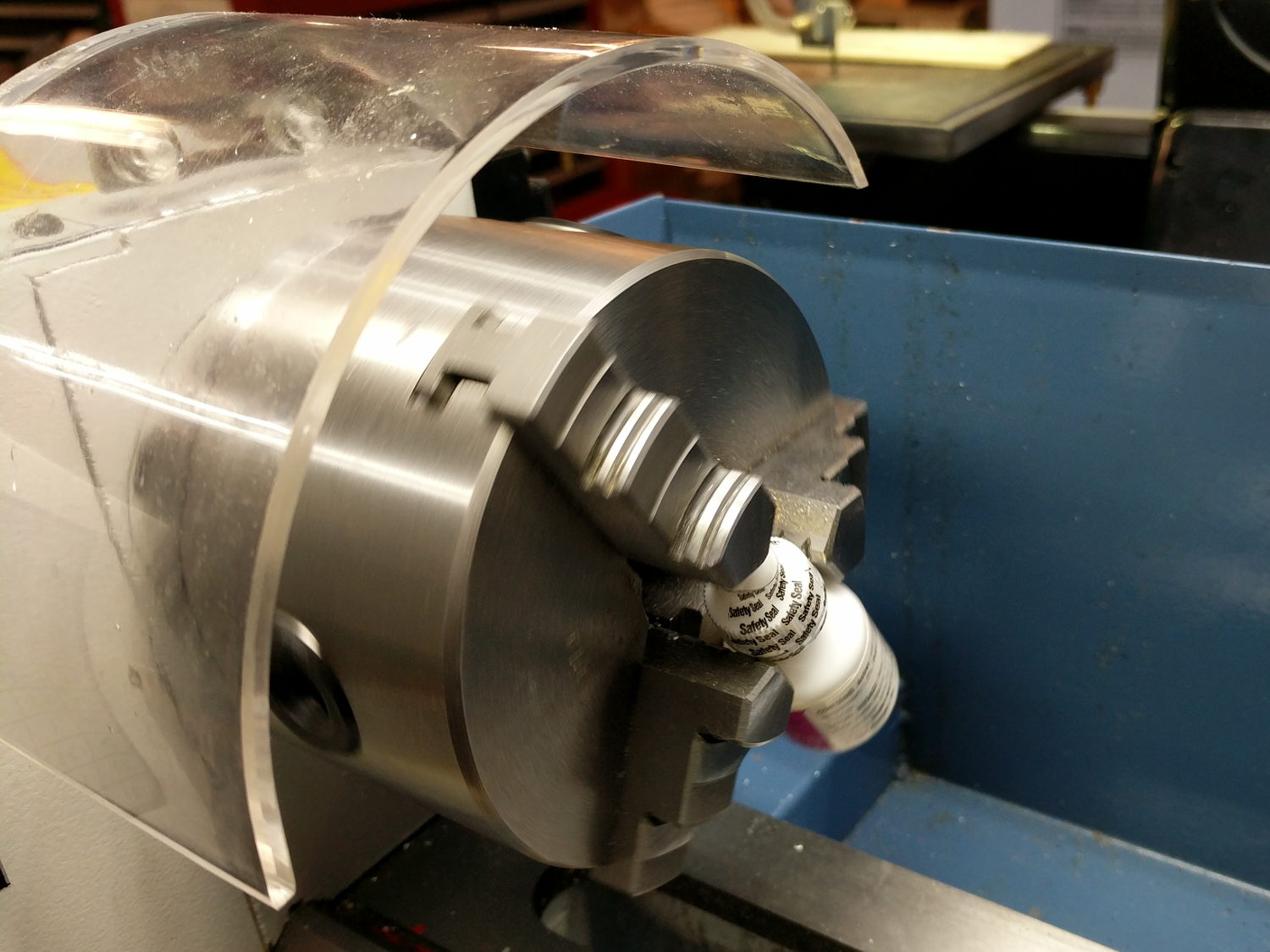
    Pure almond butter comes with the somewhat stilted admonition “Must stir product. Oil separation occurs naturally.” I’d just opened a new jar and was busily (and laboriously) stirring when I realized we have the technology:

    Lathe-turned Almond Butter
    Lathe-turned Almond Butter

    I installed the chuck’s outside jaws to grab the jar lid.

    About three hours at 50 rpm, the lathe’s slowest speed, did the trick. We now have the smoothest, creamiest, best-mixed almond butter ever.

    In a month or so, I’ll chuck up an unopened jar to see how well it works without any manual intervention.


  • T-shirt Shop Rags

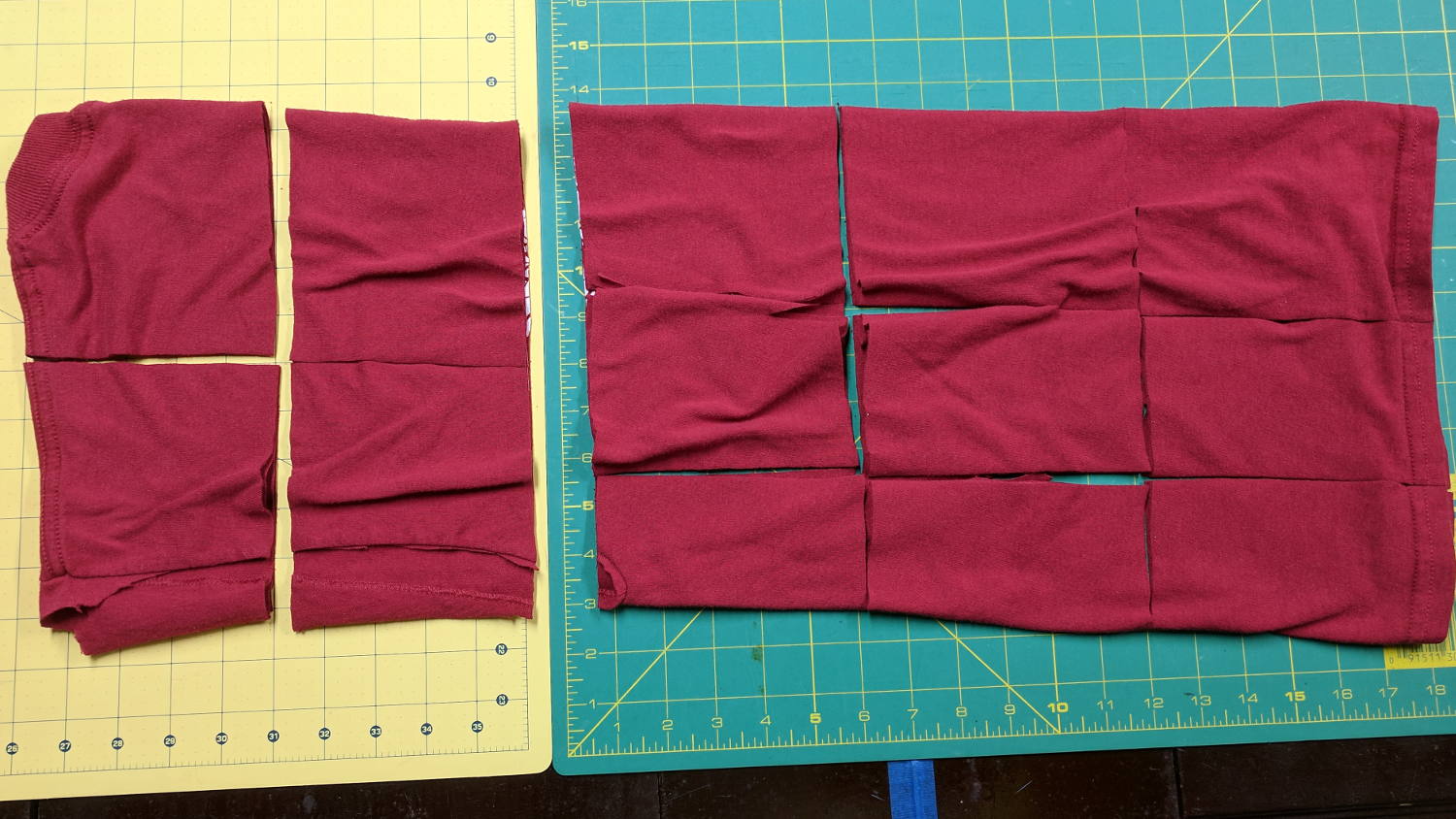
    Small wipes made from worn-out cotton t-shirts absorb most shop liquids, don’t overstay their welcome after short projects, and prevent the deep emotional attachment leaving swarf in the clothes washer. Scissors cutting gets tedious, so mooch a rotary cutter and slash away:

    T-shirt shop rags
    T-shirt shop rags

    Synthetic fabrics don’t work nearly as well as cotton, so pay attention to the labels.


  • Shortening a 2MT-to-1MT Morse Taper Sleeve

    The hulking 1/2 inch Jacobs chuck is grossly oversized for most of the holes I poke in things spinning in the lathe. I already have several smaller Jacobs chucks for the Sherline’s 1 MT spindle, so I got some Morse Taper Sleeve Adapters for the mini-lathe’s 2MT tailstock. They’re longer than the “short” 2MT dead center:

    1MT to 2MT adapter - vs 2MT dead center
    1MT to 2MT adapter – vs 2MT dead center

    Because they’re longer, the tailstock ram loses nearly an inch of travel it can’t afford.

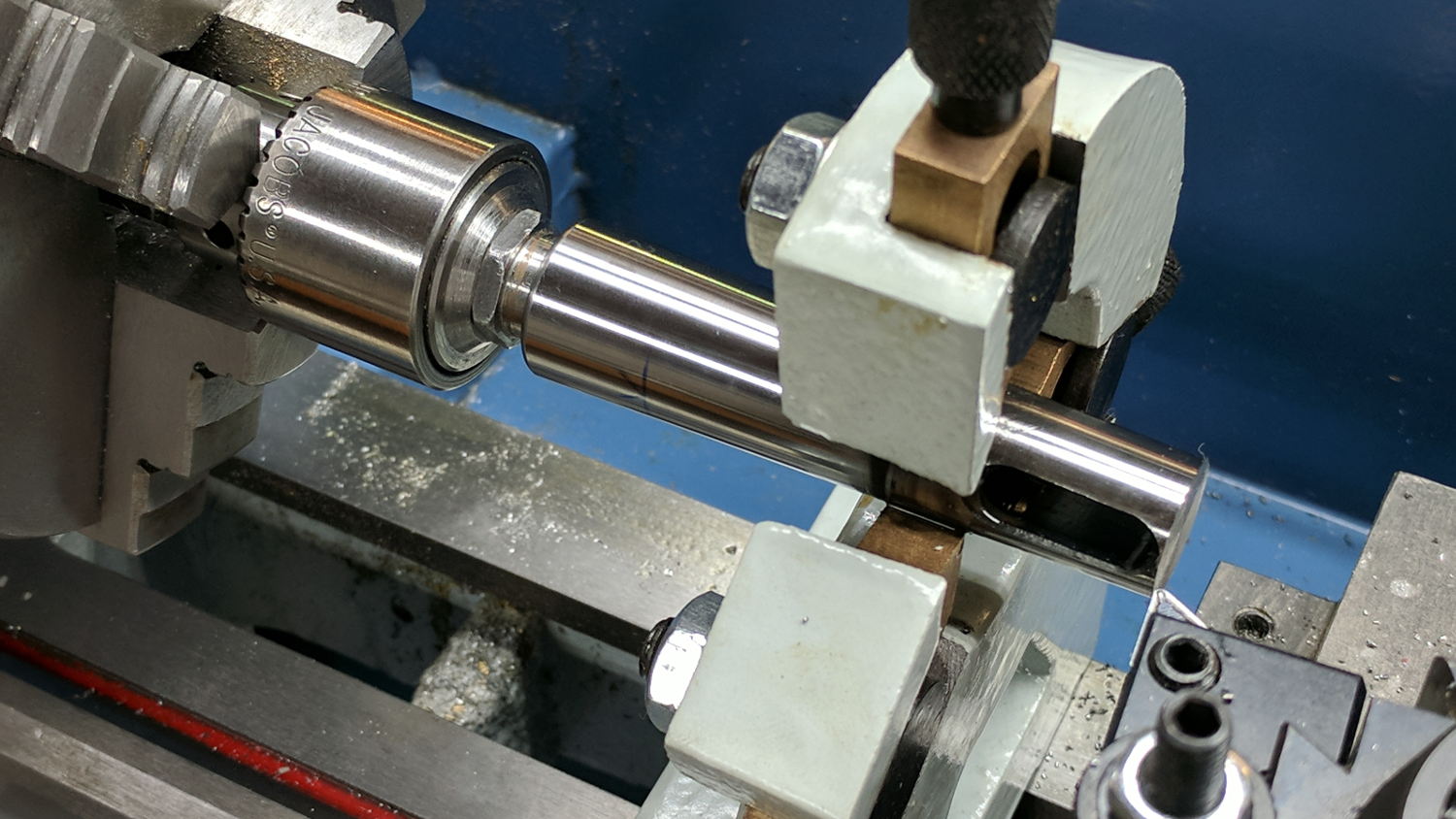
    So I hacksawed the taper just beyond the opening at the tang and faced off the ragged end:

    1MT to 2MT adapter - facing
    1MT to 2MT adapter – facing

    The steady rest jaws don’t match the Morse taper angle, but they’re way better than assuming the nose of the Jacob chuck can hold such an ungainly affair.

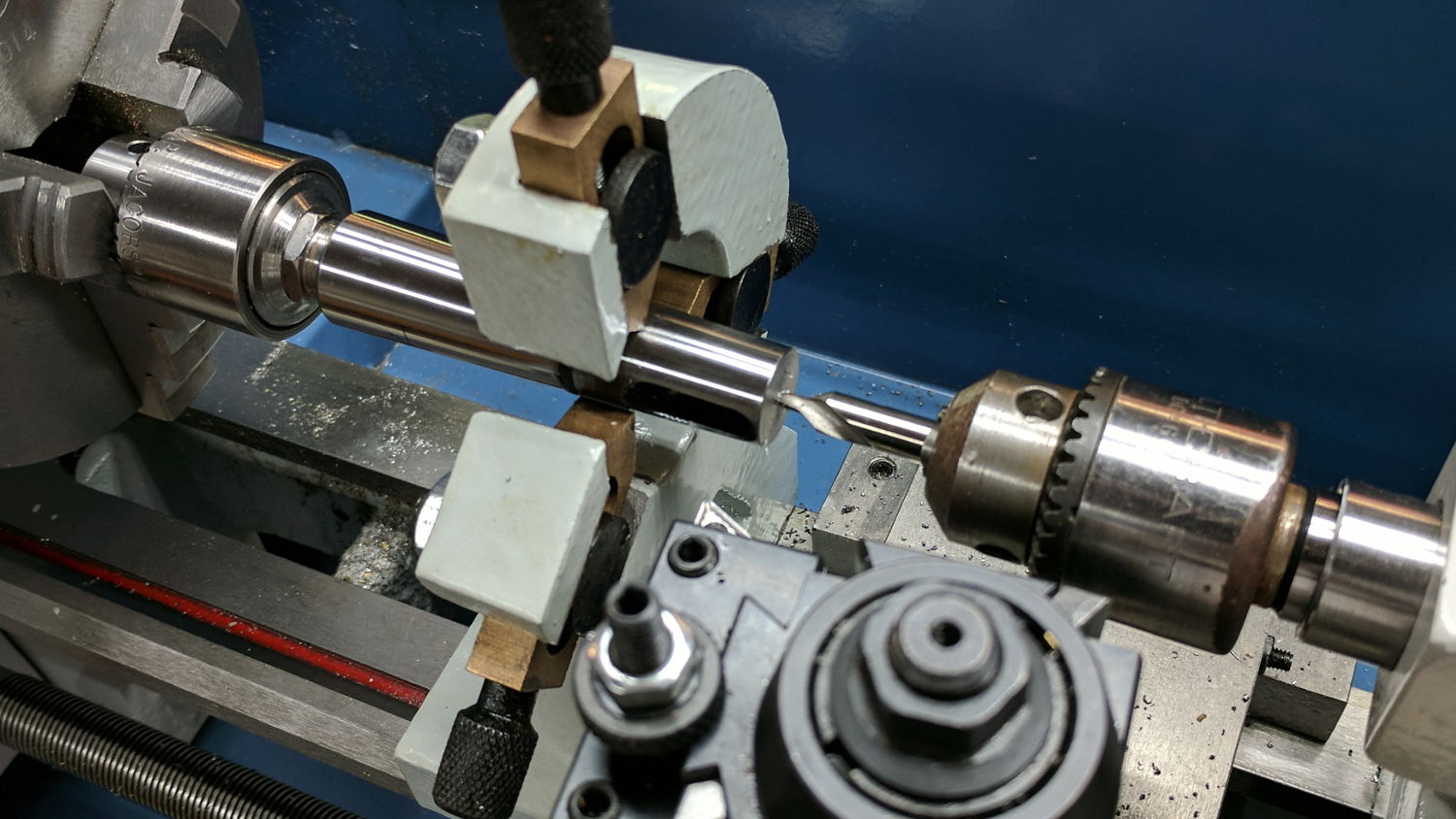
    The short 1MT taper on the drill chuck doesn’t extend to the opening: when it’s firmly pushed into the socket, there’s no simple way to eject it. So, drill a small hole for a pin punch to pop it out:

    1MT to 2MT adapter - center drilling
    1MT to 2MT adapter – center drilling

    I hate hammering on tooling, which means I must eventually enlarge the hole to clear a 5 mm bolt, make a square-ish nut to fit inside the slot, and gimmick up a plug for the 1/4-20 socket in the 1MT taper (used by the Sherline mill drawbar). More work than I want to take on right now, but it’ll provide some Quality Shop Time.

    If the truth be known, I also got a 3/8-16 thread to 2MT adapter for the mid-size Jacobs chuck seen in the pictures, thus eliminating the thread-to-1MT adapter and plugging the chuck directly into the tailstock. The 1MT adapter will come in handy for the least Jacobs chuck; although LMS has a 0JT-to-2MT adapter, the less I monkey with that tiny taper, the better off we’ll both be.

  • Plotter Grit Wheel Bushings

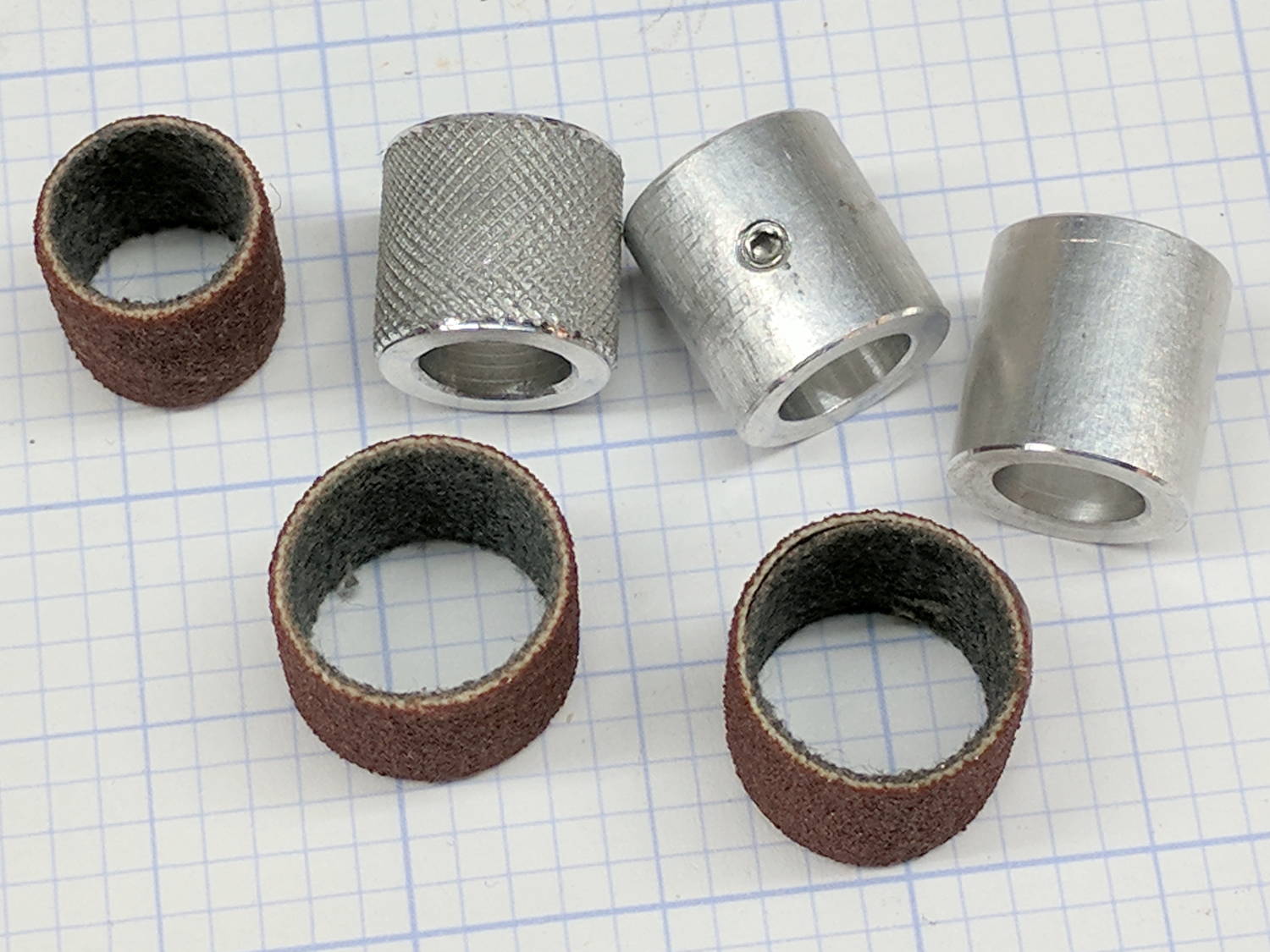
    As part of recommissioning the lathe tailstock, I made some bushings to adapt Dremel sanding drums bands to an 8 mm shaft (in imitation of the grit drive wheels on the HP plotter):

    Plotter Y bushing - samples
    Plotter Y bushing – samples

    They’re not all the same because the lad who’s building the plotter got to turn out his own bushings. We think the knurled version, with a setscrew to lock it on the shaft, will work better than adhesive-bonding the drum to the bushing.

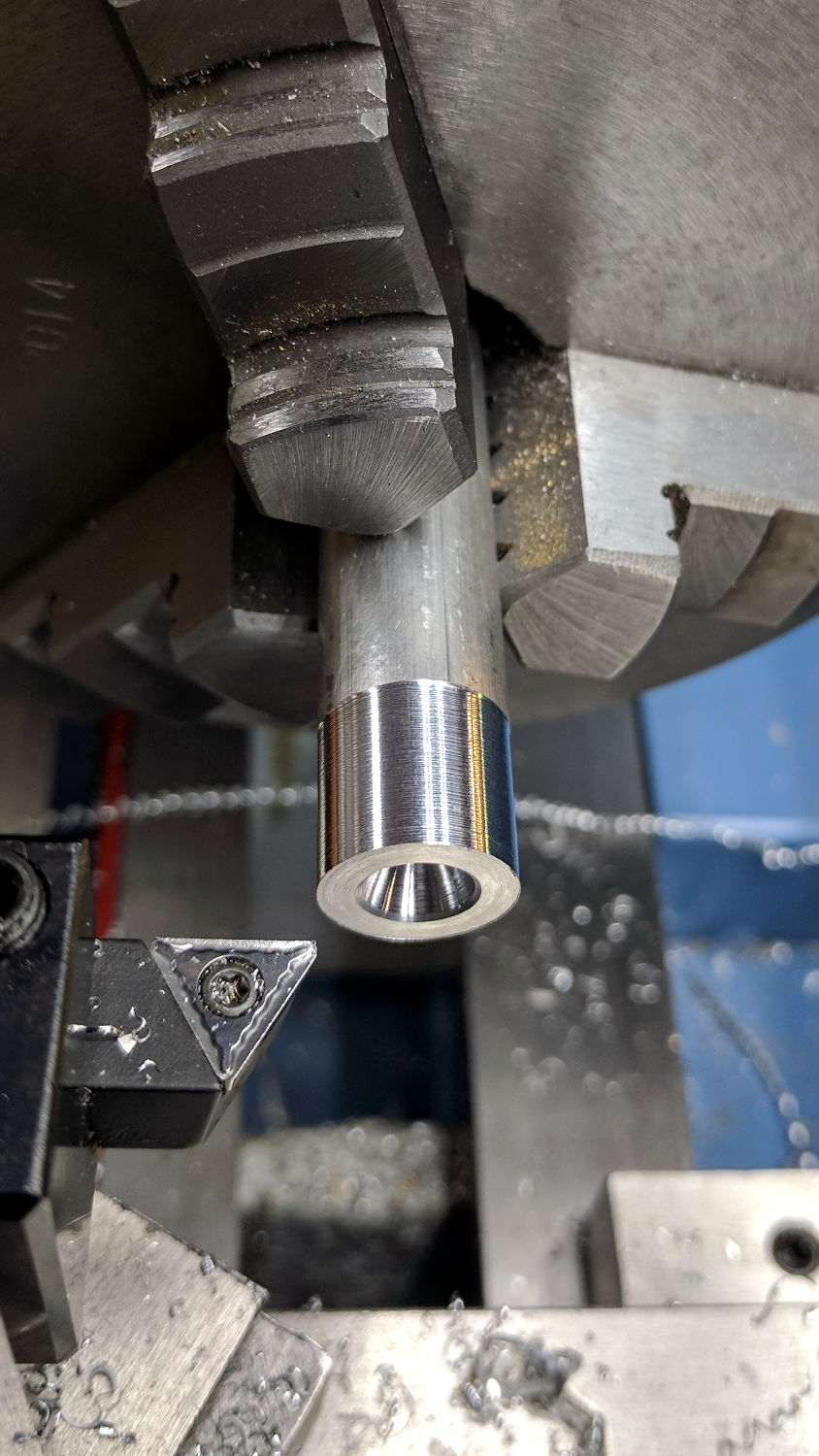
    The overall process starts with a rough 1/2 inch aluminum rod. Skim-cut to get a concentric surface and face the end smooth:

    Plotter Y bushing - facing
    Plotter Y bushing – facing

    Then knurl it:

    Plotter Y bushing - knurling
    Plotter Y bushing – knurling

    The skim cut makes the aluminum rod a loose fit inside the sanding band, but the knurling enlarges the diameter enough to make it a firm press fit and I think it’ll have enough traction to stay in place.

    FWIW, the wheels in the LittleMachineShop knurling tool seem pretty bad: the central holes aren’t quite concentric with the cutting edge, the bores are a loose fit on the mounting screws, the wheels are much narrower than the slots they ride in, so they wobble uncontrollably. It’s not a fatal flaw, but they definitely produce a sub-par knurl.

    Face off the front, cut the knurling down at each end, then part it off:

    Plotter Y bushing - cutoff
    Plotter Y bushing – cutoff

    Clamp it in the Sherline mill, laser-spot the edges, set the origin in the middle, and center drill:

    Plotter Y bushing - center drill
    Plotter Y bushing – center drill

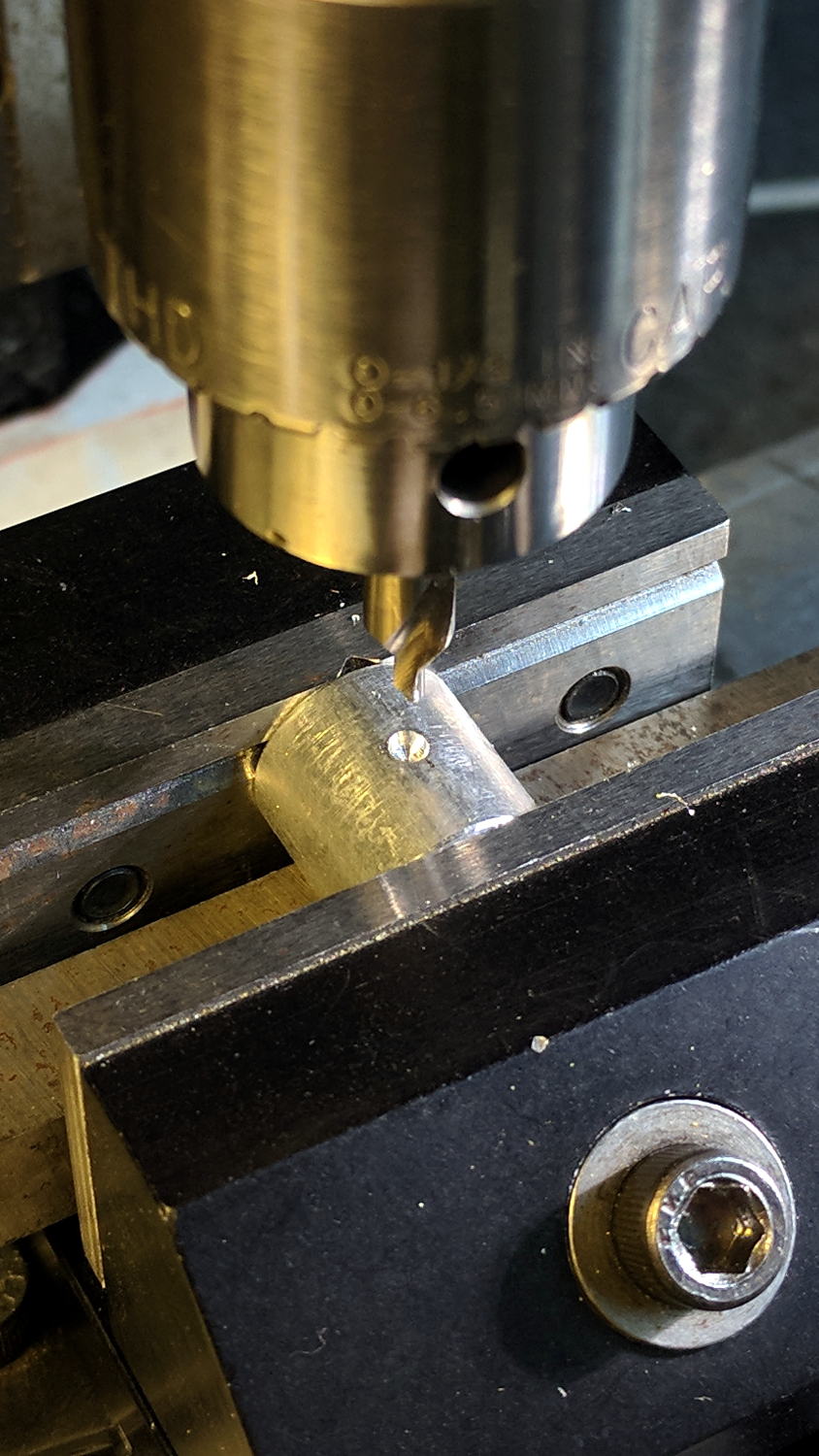
    Drill and tap for a teeny M3 setscrew:

    Plotter Y bushing - tapping
    Plotter Y bushing – tapping

    Clean out the chips, debur the hole, install the setscrew, and you’re half-done: do it again to get the second drive roller!


  • Mini-Lathe Tailstock: Alignment

    After dismantling the tailstock to apply the tweaks, it was grossly out of alignment, as seen from the top:

    Tailstock - initial H offset
    Tailstock – initial H offset

    Seen from the side, the tailstock center is way too high:

    Tailstock - initial V offset
    Tailstock – initial V offset

    No surprises there.

    The object of the game is to make the tailstock bore collinear with the spindle bore in all four degrees of freedom:

    • Front-back
    • Up-down
    • Yaw angle
    • Pitch angle

    The first step is to match those two points, then measure the angular error.

    Loosen the (new!) screws holding the tailstock top & bottom castings together:

    Tailstock - modified screws
    Tailstock – modified screws

    I set them snug enough to prevent casual motion and loose enough to allow adjustment with gentle taps from a plastic hammer. Tapping the top casting forward lined up the dead centers horizontally, leaving only the vertical alignment.

    Then I clamped the tailstock’s bottom casting to the lathe bed:

    Tailstock - clamp for shimming
    Tailstock – clamp for shimming

    Loosening the screws a bit more let me tilt the top casting to the left and slide a brass shim between the two castings, adding just a little more height to the left side to move the tailstock center downward.

    This could do any or all of:

    • Correct a pre-existing pitch angle so everything is fine again
    • Pitch the tailstock ram axis out of line with respect to the spindle axis
    • Confuse the issue

    I started with a 6 mil = 0.15 mm shim that didn’t quite do enough and a 16 mil = 0.4 mm shim was a bit too much. Pinching a brass shimstock snippet between the centers show how they match front-back and don’t match up-down, with the tailstock center now too low:

    Tailstock - alignment too low
    Tailstock – alignment too low

    Some back-and-forth fiddling showed a 10 mil = 0.25 mm sheet came out about right:

    Tailstock - perfect point alignment
    Tailstock – perfect point alignment

    With the two linear degrees of freedom accounted for, measure the yaw angle by comparing the position of the tailstock ram’s far end:

    Tailstock - vertical angle measurement - 1
    Tailstock – vertical angle measurement – 1

    With its near end:

    Tailstock - vertical angle measurement - 2
    Tailstock – vertical angle measurement – 2

    Note: measure the offset by sliding the tailstock along the ways, not by retracting the ram. Reassuringly, the ram slides out parallel to its axis.

    Measure the pitch angle, similarly:

    Tailstock - vertical angle measurement
    Tailstock – vertical angle measurement

    As it turns out, the far end of the ram is 5 mils down and front from its base near the tailstock. Over 1.5 inches of travel, 5 mils works out to 0.19°.

    Although it’s a small angle, the huge Jacob chuck supplied with the lathe puts a typical drill 125 mm from where you see the tailstock dead center’s tip. In round numbers, the drill point will be 16 mils low-and-front,  about 25 mils radially off-center, which agrees reasonably well with what I actually see:

    Tailstock - misaligned drill chuck
    Tailstock – misaligned drill chuck

    Because I don’t do much turning between centers, I retinkered the alignment to put a point held in the drill chuck on center. Deep hole drilling won’t work quite right, because the ram extends along those 0.19° angles, but it’s Good Enough for now. It’ll be much easier to correct the yaw misalignment than the height mismatch.

    Those of you who read image metadata surely noticed the pix aren’t in ascending temporal order. Verily, this was an iterative process, with pix happening all along the way.

  • Mini-Lathe Tailstock: Cleanup

    Filling the mini-lathe’s tailstock ways with epoxy made it slide easily and lock firmly. Some upcoming projects urged me to perform The Canonical Mini-Lathe Tailstock Upgrades, as shown nearly everywhere on the Intertubes and detailed in various HSM articles.

    For unknown reasons, the screw clamping the tailstock’s top and bottom castings together threads into the top casting from below:

    Tailstock way repair - blue Sharpie
    Tailstock way repair – blue Sharpie

    Although it’s faintly possible you could adjust it by reaching up from below the bed, it’s easier to just drill out the threads for a clearance fit around a 5 mm SHCS:

    Tailstock - drilling clamp screw clearance
    Tailstock – drilling clamp screw clearance

    The drill went through the tailstock so easily I think the hole had been capped with body filler, which would eliminate the need for a bottoming tap.

    Then build a square nut from a slice of 7/16 inch square stock:

    Tailstock - drilling square nut
    Tailstock – drilling square nut

    … and be done with it:

    Tailstock underside - square clamp nut
    Tailstock underside – square clamp nut

    If the tailstock ever needs more adjustment range, I can knock those corners down a bit.

    The screw clamps the castings vertically, with a second screw under the tailstock ram handwheel forcing the top and bottom not-quite dovetails together horizontally. I replaced both with 5 mm socket head cap screws:

    Tailstock - modified screws
    Tailstock – modified screws

    Tightening a cup-end SHCS against the square not-a-dovetail tends to shift the upper casting; the original screw had a narrow pin end to reduce the torque. Having brass rod close at hand, this seemed easier than machining the screw:

    Tailstock slide lock screw
    Tailstock slide lock screw

    The little tip comes from using a square-ended cutoff tool. Purists will dress the tool at a slight angle to cut off one side first. Of course, which way one dresses it depends on whether you want the remaining stub on the stock or the cut-off part. Sooo, I still have a square tool.

    The tailstock has a cam lock handle clamping a square-ish plate against the bottom of the bed ways. Unfortunately, the manufacturer cut the plate with a dull shear, producing two beveled edges:

    Tailstock clamp plate - OEM bevels
    Tailstock clamp plate – OEM bevels

    Flipping it over dramatically improved the clamping action, although I must eventually scrape the paint and grunge off the bottom of the ways. While I had it off, I turned a small aluminum bushing to replace the pair of washers:

    Tailstock - clamp plate bushing
    Tailstock – clamp plate bushing

    The plate hangs lower toward the rear because the clamping bolt isn’t in the middle. The tailstock originally had a mighty spring holding it level, but the spring tended to snag against the front side of the bed, so I removed it.

    The lever handle actuating the tailstock cam lock had no stops and rotated freely counterclockwise when loosened. The tailstock casting had enough meat for a 5 mm threaded brass insert in a useful location, so I drilled a suitable hole:

    Drilling for tailstock lever stop
    Drilling for tailstock lever stop

    The vacuum hose slurped up the cast iron dust, which is a Very Good Idea.

    Butter up the insert with JB Kwik epoxy, slide into the hole, wipe off most of the excess, then pause to admire the result:

    Tailstock lever - insert installed
    Tailstock lever – insert installed

    The lever stopper won’t win any design awards, even though it’s a dramatic usability improvement:

    Tailstock lever bumper - installed
    Tailstock lever bumper – installed

    The finger-tight nut serves to lock the SHCS in place against the lever’s impact. I conjured a small bumper around the head from a rubber foot intended to fit under a random box of electronics.

    Pushing the lever leftward to the stop lets the tailstock slide freely and pushing it to the right clamps the tailstock to the bed. The cam’s limited rotation keeps the plate close enough to the underside of the bed to prevent it from tipping left-to-right as the tailstock slides, so it no longer snags.

    While I had the tailstock up on jackstands, this is what the ram thrust bearing looks like:

    Tailstock ram screw thrust bearing
    Tailstock ram screw thrust bearing

    The flange over on the left bears against the steel disk on the right, with no real thrust bearing to be seen. A dab of grease improved its disposition.

    Now, to realign the thing …