Ed Nisley's Blog: Shop notes, electronics, firmware, machinery, 3D printing, laser cuttery, and curiosities. Contents: 100% human thinking, 0% AI slop.
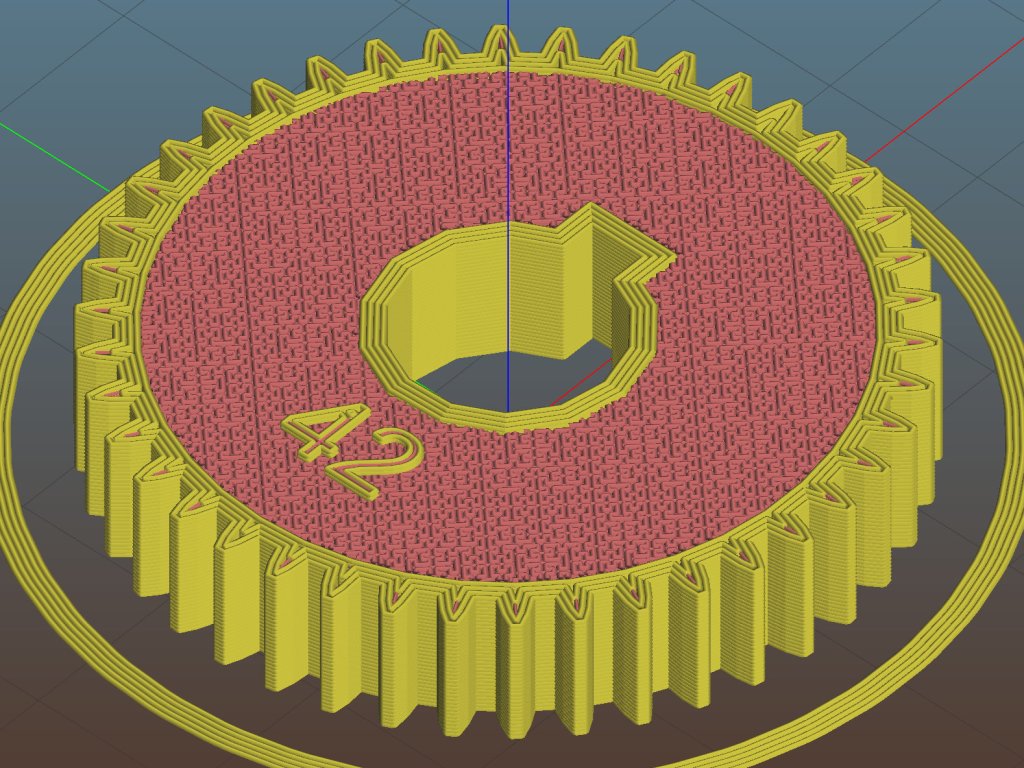
While not strictly necessary for metric threading on a USA-ian mini-lathe, a 32 tooth gear can produce reasonable approximations, so I printed a pair from a Thingiverse collection:
Mini-lathe 32 tooth change gear – Slic3r
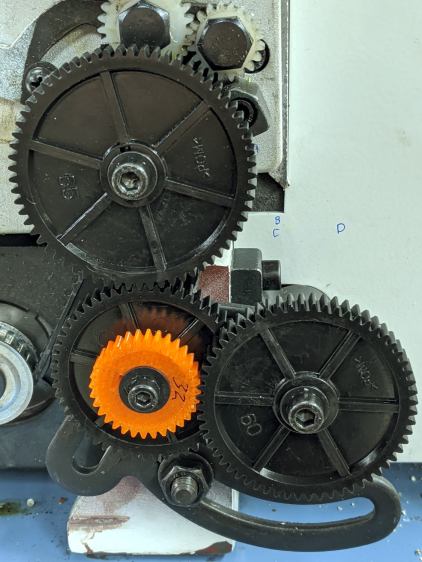
The model was designed for a slightly different mini-lathe, as it includes a short boss and thinner plate, but it did fit on the shaft:
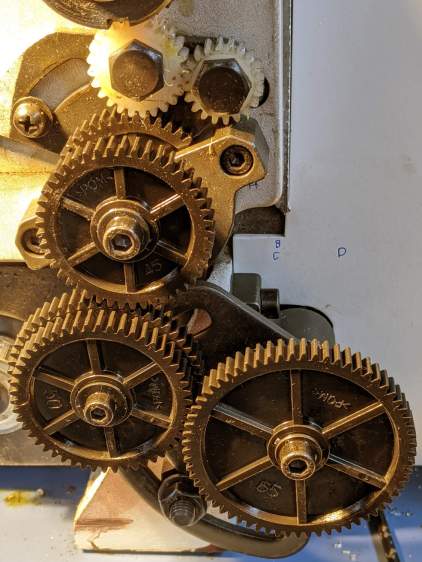
Mini-Lathe change gears – 1 mm – bad 32 60 65 55
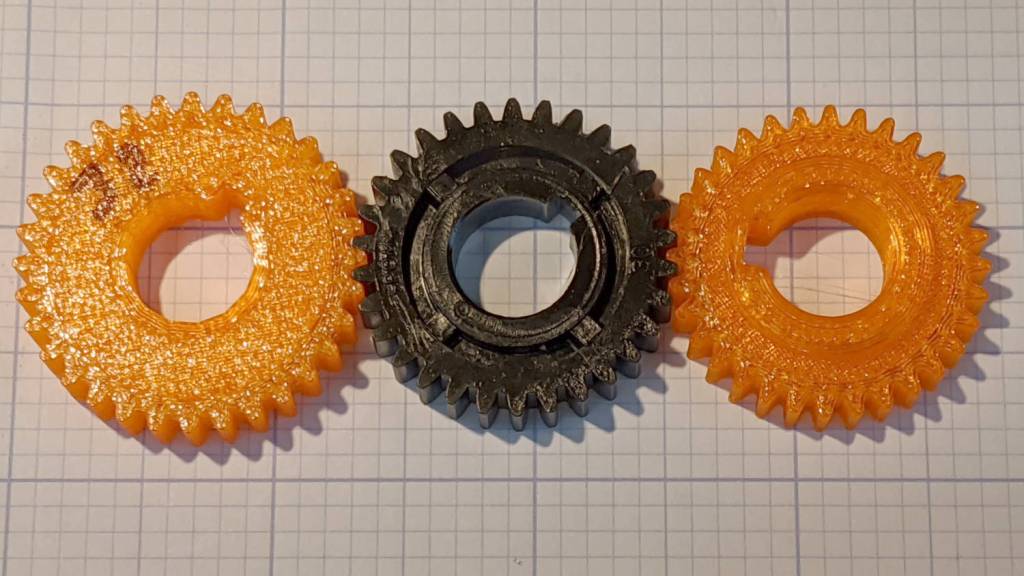
The gear mesh seemed odd, though, and comparing it with a standard 30 tooth gear and a different printed 32 tooth gear (about which, more later) showed it was definitely not compatible:
Mini-lathe change gears – 32 30 odd 32
Yes, the 32 tooth Thingiverse gear on the right is slightly smaller than the stock 30 tooth gear in the middle.
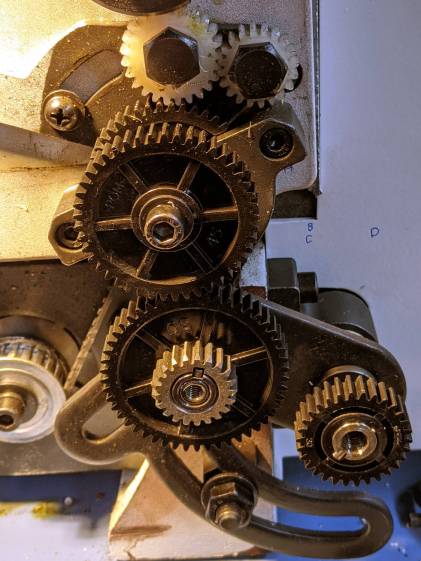
The larger 32 tooth gear (on the left, above) meshes better:
The real reason you need a 32 tooth gear is for exact 25, 50, and 100 TPI threads with a 1/16 inch leadscrew. I don’t foresee much need for those around here, but you can never have too many change gears …
Mini-lathes sold everywhere except the USA have hard-metric leadscrews with a 1.5 mm pitch, so they can cut metric threads without any trouble at all. USA-ian mini-lathes have hard inch leadscrews with a 1/16 inch pitch and require gymnastics to cut decent metric threads.
For inch threads:
Mini-lathe – inch thread equation
For metric threads, it’s upside-down and converted:
Mini-lathe – metric thread equation
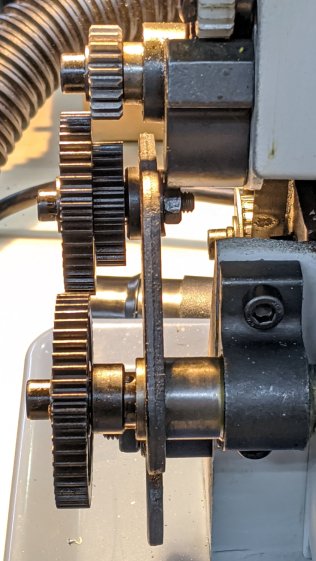
Including a 21 tooth change gear at A or C in the train will get closer to metric threads, but the stud holding the B-C gears on my lathe imposes a minimum B gear size. Here’s a 1 mm thread with a 21-30-45-50 train:
Mini-Lathe change gears – 1 mm – 21 vs 30 tooth – AB
Oops.
You can interchange the AB and CD gear pairs, but the CD pair also has a minimum spacing:
Mini-Lathe change gears – 1 mm – 21 vs 30 tooth – CD
If it worked, the 1 mm thread would be off by -125 ppm, which is surely close enough.
Without the 21 tooth gear, the LittleMachineShop gear calculator produces a 45-55-50-65 train that fits much better, albeit with +875 ppm thread error:
Mini-Lathe change gears – 1 mm – 45 55 50 65
Dropping the 21 tooth gear into the LMS calculator produces a (barely) workable 21-50-60-40 train with -125 ppm error:
Mini-Lathe change gears – 1 mm – 21 50 60 40
The very very snug fit of the screw (omitted here) on the 21 tooth gear nearly hits the 60 tooth gear. Your mileage may vary, of course.
Varioussourcessuggest the gears are module 1, 20° pressure angle, 12 mm bore, and 8 mm thick (mine measure a scant 7.75 mm), with a 3 × 1.4 mm keyway (the key itself is 3 mm square, but it’s half-buried in the shaft).
After trimming off all the extraneous bits, the larger half of the connector (male pins) fits through the tubing and the smaller half (female sockets) barely fits through the bottom bushings.
It turns out half-inch copper pipe fittings (ID = 15.9 mm) almost exactly fit the tubing (OD = 15.7 mm):
Floor Lamp – copper 45° elbow
A quick test showed the 45° (actually, it’s 135°, but we’re deep into plumbing nomenclature) positioned the lamp head too high and with too much reach:
Floor Lamp – gooseneck exercise
So shorten the tube attached to the head and deburr the cut:
Floor Lamp – tube deburring
The 45° fitting is too high and a 90° fitting is obviously too low, so cut a 20° slice out of a 90° fitting:
Floor Lamp – copper 90° elbow – 20° cutout
Cut a snippet of brass tubing to fit, bash to fit, file to hide, buff everything to a high shine, silver-solder it in place, and buff everything again:
Floor Lamp – copper 90° elbow – 20° fill strip
The 5/8 inch aluminum rods serve to stiffen the fitting, smooth out the torch heating, and generally keep things under control.
Wrap the obligatory Kapton tape around the butt ends of the tubes to fill the fitting’s oversize hole, put everything together, and it’s just about perfect:
Floor Lamp – copper 70° elbow – installed
I immobilized the fitting with black Gorilla tape, but it really needs something a bit more permanent. One of these days, maybe, a pair of setscrews will happen.
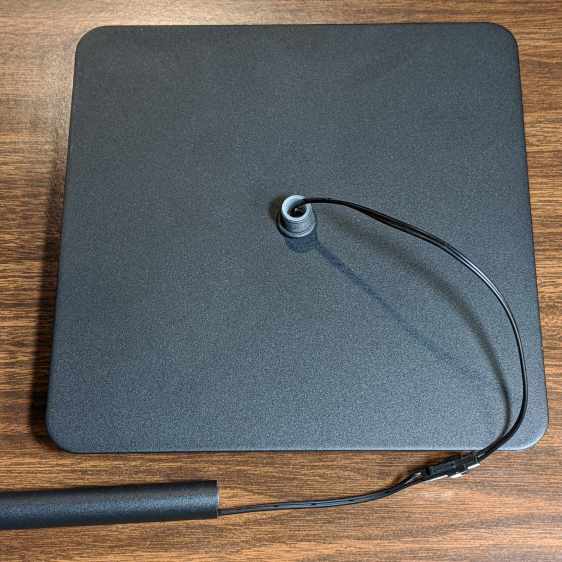
The additional reach required a little more counterweight on the far side for security, so I added the broken stub of a truck leaf spring. It should be secured firmly to the base plate, but no tool I own can put a dent in those three pounds of spring steel. Maybe it’ll merit a fancy enclosure wrapped around the base?
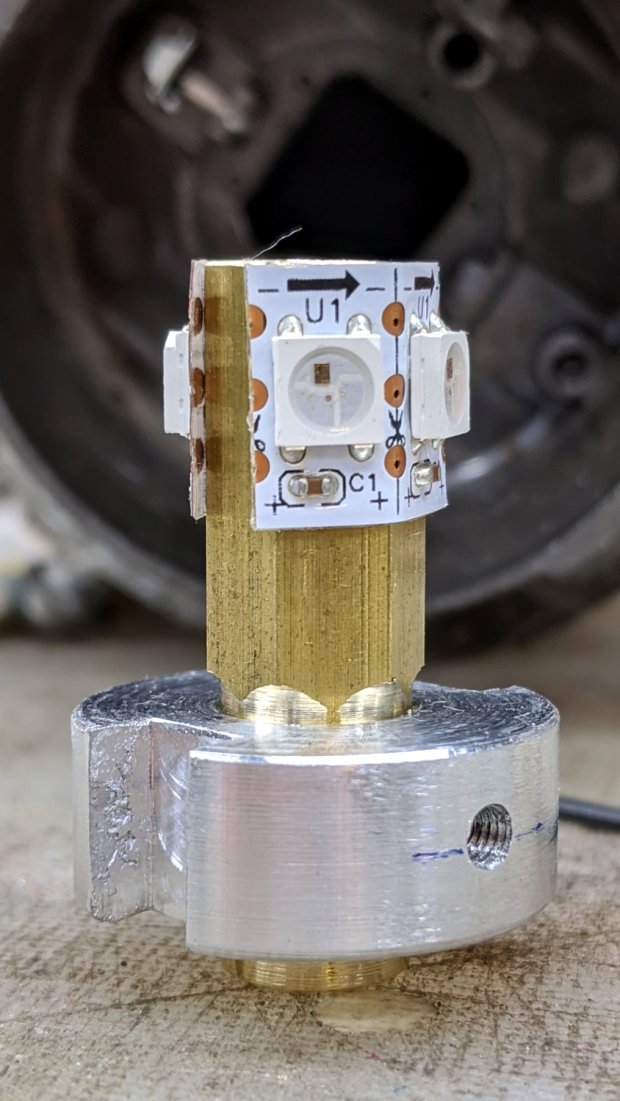
The brass hex rod has plenty of thermal conductivity, particularly clamped into an aluminum disk connected more-or-less well to the fog lamp’s base.
Nissan Fog Lamp – RGB LED lamp
The two short wires linking the two LED strips (the purple wire is data into the first LED) hold them in place around the hex, despite their desire to straighten out, pull free of their adhesive, and fall off.
The general idea was to put the LEDs at about the same level as the halogen bulb filament, thereby spreading enough light to fill the reflector housing:
Nissan Fog Lamp – LED vs halogen
I drilled a hole through the hex as a cable “conduit”, turned the end into a nice rod, then machined a stub of aluminum to fit:
Nissan Fog Lamp – parting off LED base
A pair of slots milled along the sides of the aluminum disk fit the housing’s locating features:
Nissan Fog Lamp – LED bulb trial fit
Nissan used an elaborate spring latch to clamp the halogen bulb’s sheet-metal base in place, but its 50 mil wire didn’t have nearly enough give for my chunky aluminum disk. My version of a spring latch came from a length of 24 mil music wire, which definitely beats the epoxy I was planning to use.
Heat transfer seems to be a non-issue, as the LEDs get barely warm to the touch. Until they drop dead, I’ll assume it’s all good in there.
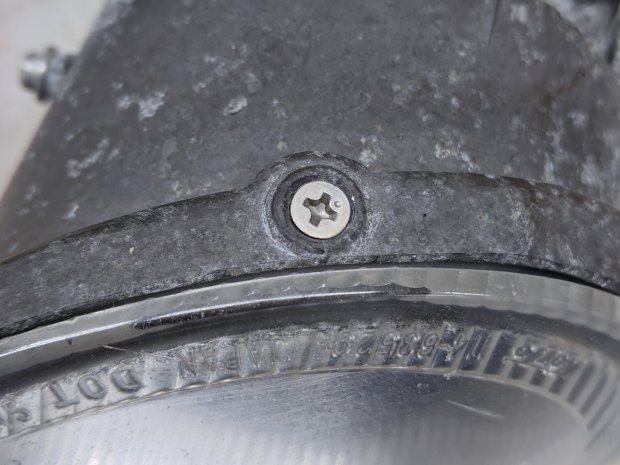
Two screws hold the lens in place, but the collision seems to have stripped their grip on the plastic and they didn’t un-screw:
Nissan Fog Lamp – lens retaining screw
Jamming a utility knife blade under the screw head and prying upward while turning the screwdriver persuaded them out of their sockets, after which the lens popped out of its form-fitted silicone gasket with surprisingly little effort:
Nissan Fog Lamp – reflector stains
The lamp spent a week or so beside the road, out in the weather, and shipped a few drops of rainwater through the rectangular hole under the spring latch anchor. Some delicate cotton-swab action removed most of the grime without too much damage, but the reflective film on those corrugations won’t ever be the same again.
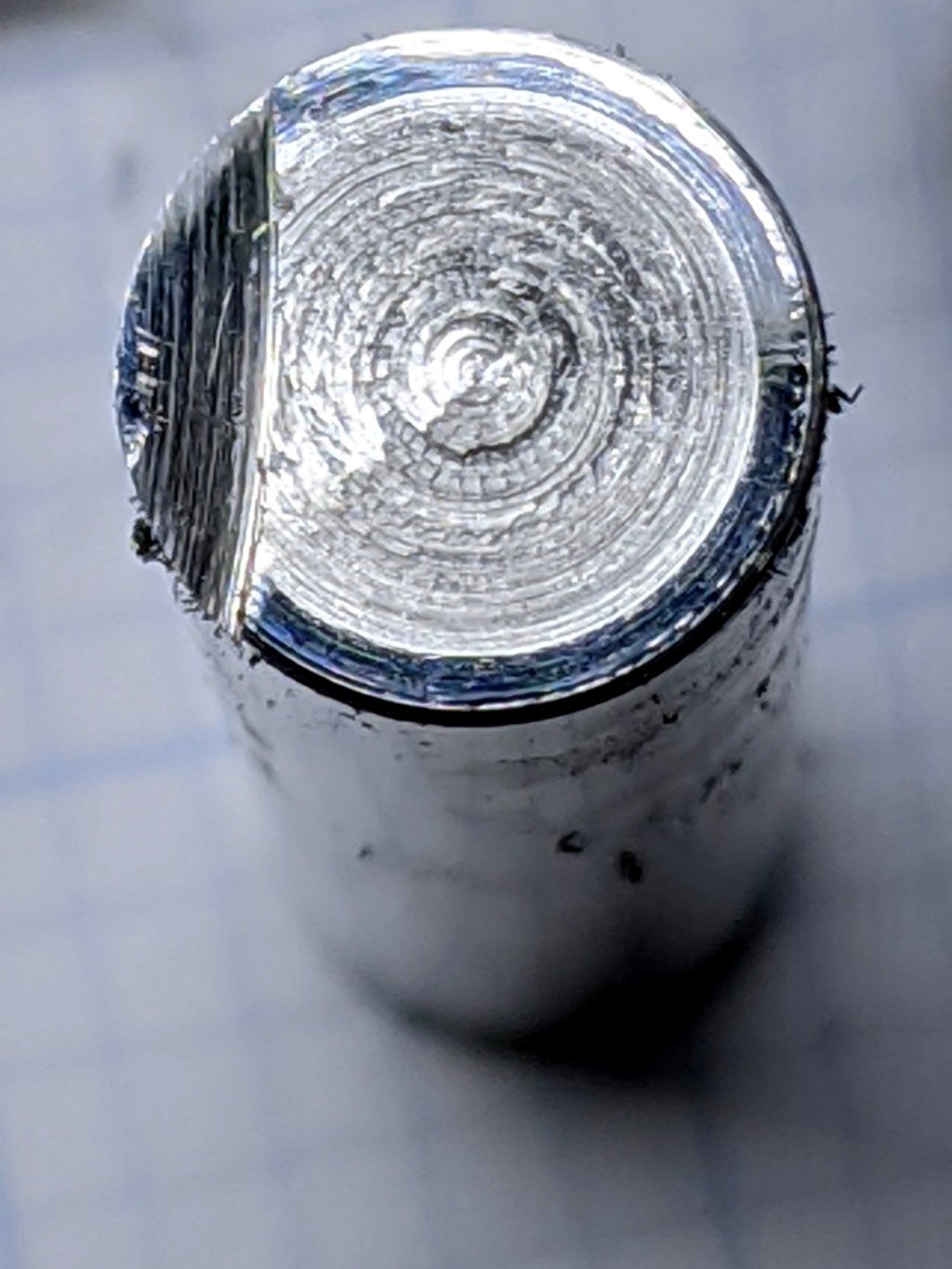
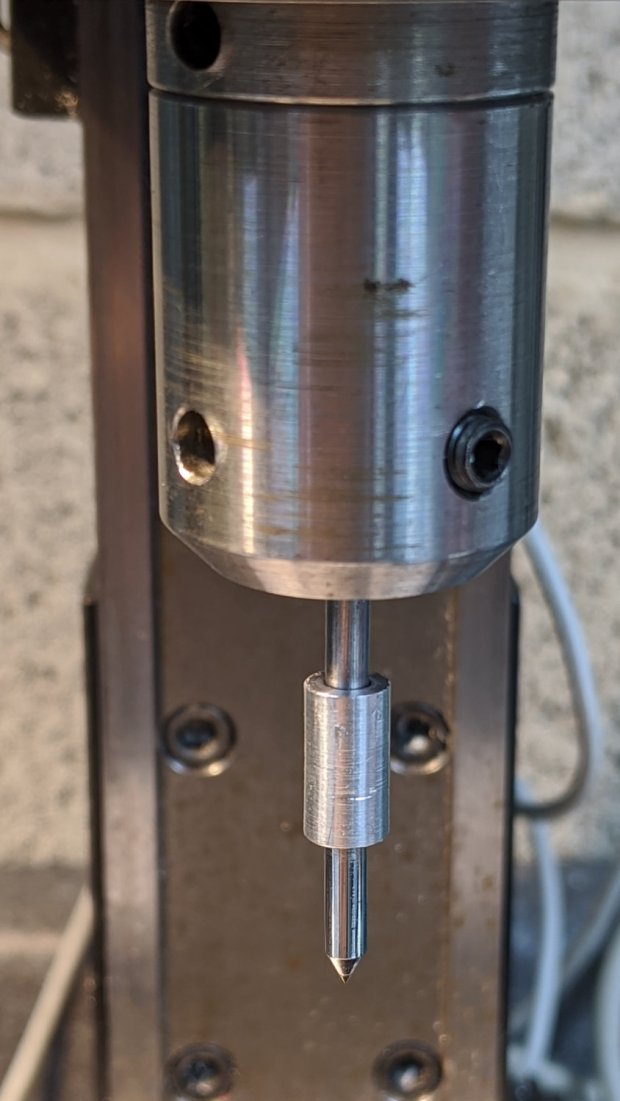
While doodling a drag knife holder for the Sherline, I figured a 3/8 inch shaft would hold all the parts and fit neatly into a standard Sherline tool holder, which it did:
Although the mini-lathe’s carbide insert gnawed at the shaft’s case-hardened shell, it obviously wasn’t making much progress against that step.
Back to the abrasive cutoff saw:
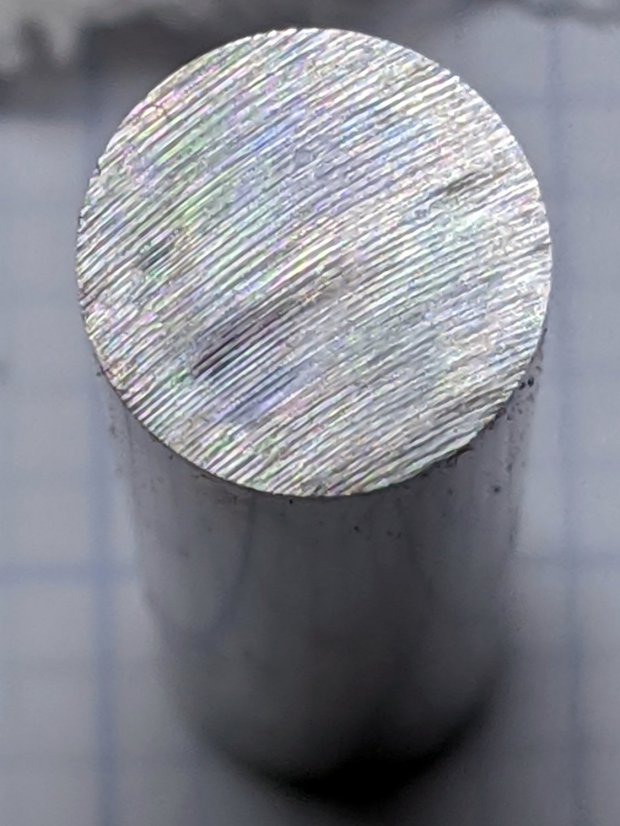
Hardened shaft facing – abrasive flattening
Which looked better, although it still wasn’t quite perpendicular to the shaft axis.
Back to the lathe:
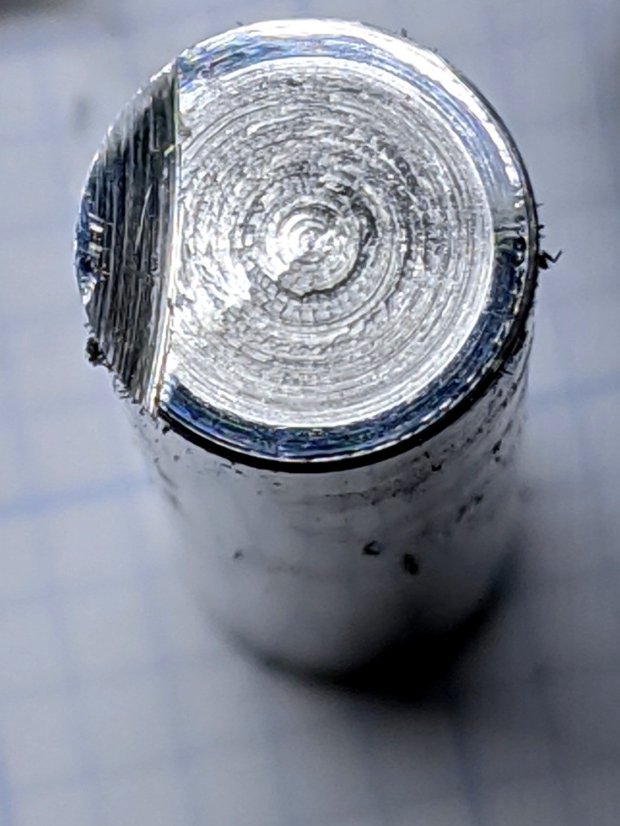
Hardened shaft facing – lumpy face
Well, it’s better, but it sure ain’t pretty.
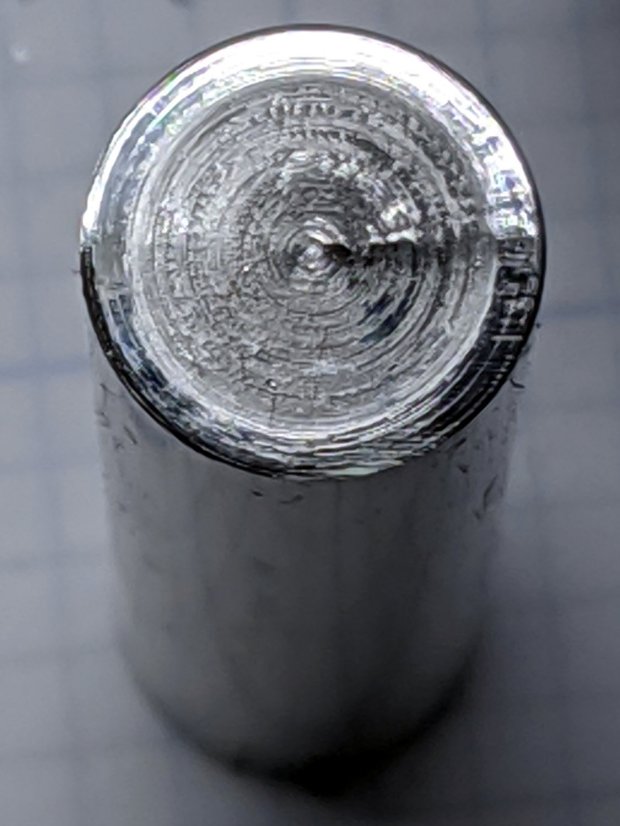
Put gently, the mini-lathe’s lack of rigidity doesn’t help in the least. The compound was a-reelin’ and a-rockin’ on every revolution and eventually turned a slight tilt into a distinct radial step.
Our Young Engineer recently rented a house, now knows why our sinks have CNC-machined strainers, and asked for something better than the disgusting stainless mesh strainer in the kitchen sink.
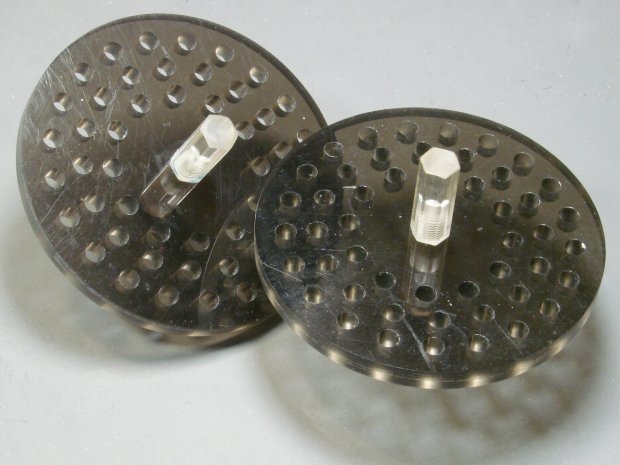
Being a doting father, I turned out a pair to get a pretty one:
CNC Sink Strainer – overview
They’re made from the same scrap smoked acrylic as the ones in our sinks:
CNC Sink Strainer
They’re definitely upscale from the (not watertight!) 3D printed version I built for a Digital Machinist column to explain OpenSCAD modeling:
Strainer plate fill
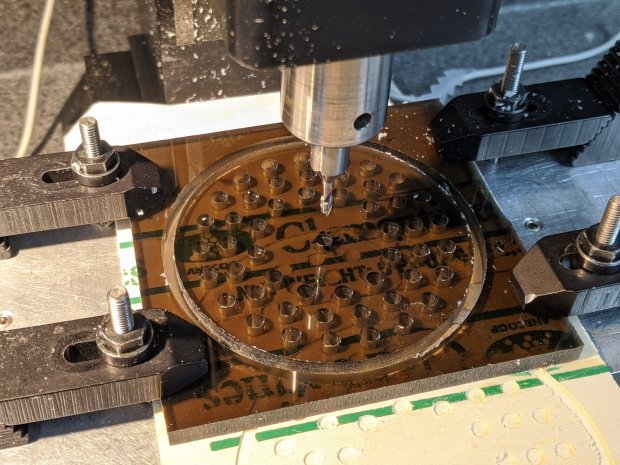
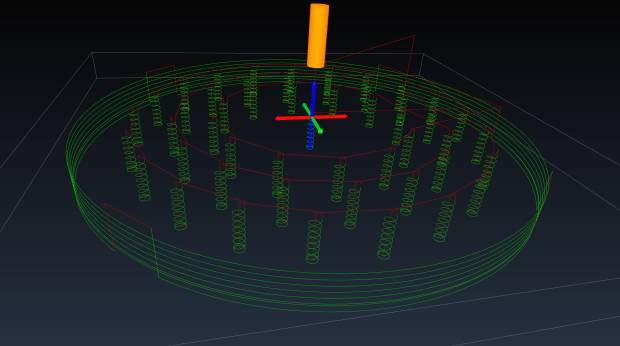
This time around, though, I rewrote the subtractive design in GCMC, with helical milling for all the holes to eliminate the need to change tools:
Sink Strainer – tool path simulation – CAMotics
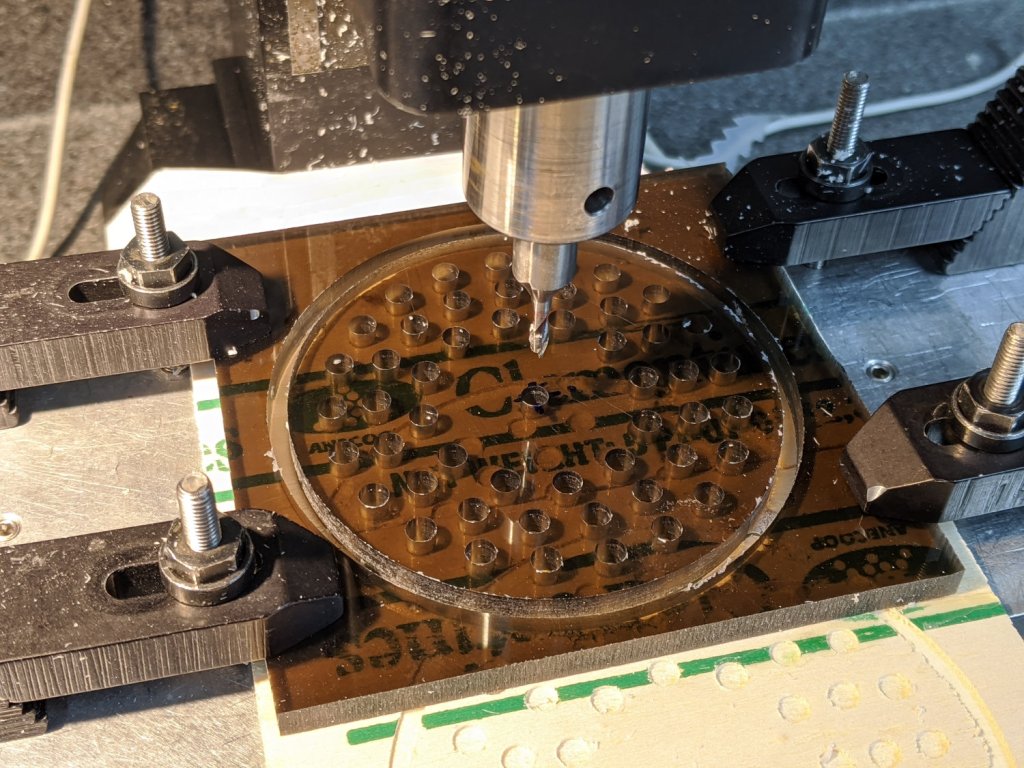
They’re done on the Sherline, because it has real clamps:
CNC Sink Strainer – on Sherline
Four tabs eliminated the need to reclamp the stock before cutting the perimeter, but I should have ramped, not plunged, through the final cut between the tabs:
CNC Sink Strainer – tab surface fracture
The handles come from the same chunk of hex acrylic as before, eyeballed to length, tapped 8-32, and secured with acrylic adhesive.
This file contains hidden or bidirectional Unicode text that may be interpreted or compiled differently than what appears below. To review, open the file in an editor that reveals hidden Unicode characters.
Learn more about bidirectional Unicode characters
I’ve always wondered what’s inside a metal-case vacuum tube:
Dual rectifier tube 5T4 – metal case opened
The cutter last saw action on the EMT used in the MPCNC, so it’s intended for use on steel tubes. I thought about parting the case off in the lathe, but a tubing cutter sufficed for a first attempt, even if it couldn’t cut quite as close to the flange as I wanted.
A 5T4 tube is a full-wave rectifier with two sections:
Dual rectifier tube 5T4 – upright
Unsurprisingly, the guts resemble those of glass-envelope rectifier tubes in my collection, like this 5U4GB:
5U4GB Full-wave vacuum rectifier – cyan red phase
The metal case would be far more rugged than a glass bottle and, perhaps, the flange locked the tube into its socket against vibration.
The filaments surely weren’t thoriated, so it’s all good …