The Smell of Molten Projects in the Morning

Ed Nisley's Blog: Shop notes, electronics, firmware, machinery, 3D printing, laser cuttery, and curiosities. Contents: 100% human thinking, 0% AI slop.

Tag: Improvements

Making the world a better place, one piece at a time

  • WWVB Reception: 60 kHz Tuning Fork Resonator Filter

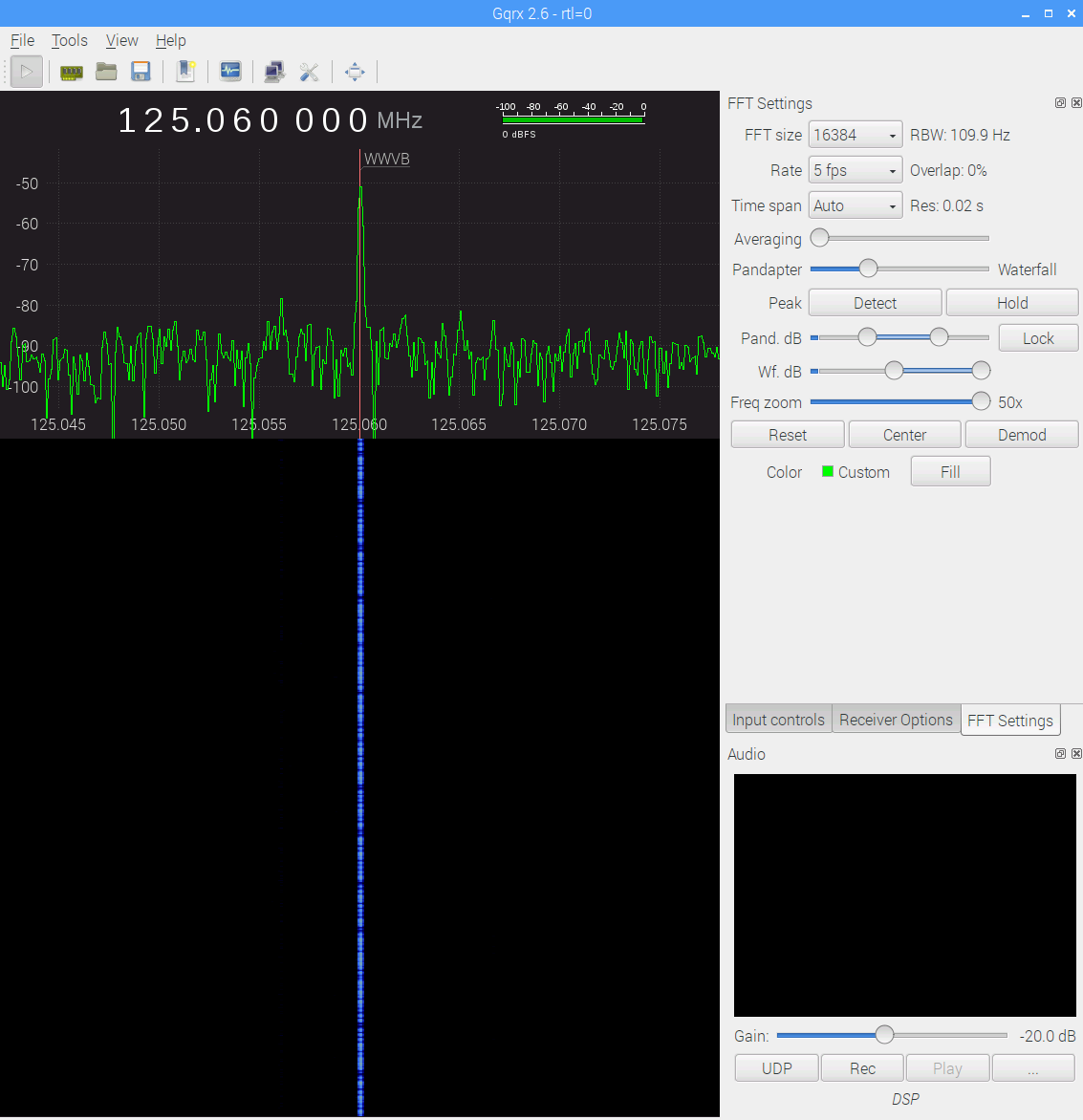
    Some early morning data from the WWVB preamp with the 60 kHz tuning fork resonator filter in full effect (clicky for more dots):
    WWVB - xtal filter - waterfall 5 fps RBW 109.9 Hz Res 0.02 s - gqrx window - 20171116_103542
    WWVB – xtal filter – waterfall 5 fps RBW 109.9 Hz Res 0.02 s – gqrx window – 20171116_103542

    The dotted line comes from WWVB’s 1 Hz PWM (-ish) modulation: yeah, it works!

    The filter cuts out the extraneous RF around the WWVB signal, as compared with a previous waterfall and some truly ugly hash:

    WWVB - 24 hr reception AGC - 2017-01-16 to 17 - cropped
    WWVB – 24 hr reception AGC – 2017-01-16 to 17 – cropped

    Well, not quite all the hash. Enabling the SDR’s hardware AGC and zooming out a bit reveals some strong birdies:

    WWVB - xtal filter - waterfall - hardware AGC - 2017-11-16 0612 EST
    WWVB – xtal filter – waterfall – hardware AGC – 2017-11-16 0612 EST

    The big spike over on the left at 125.000 MHz comes from the Ham-It-Up local oscillator. A series of harmonics starting suspiciously close to 125.032768 kHz produces the one at 125.066 MHz, just to the right of the WWVB signal, which leads me to suspect a rogue RTC in the attic.

    There is, in fact, a free running “Test Signal Source” on the Ham-It-Up board:

    Ham-It-Up Test Signal source - schematic
    Ham-It-Up Test Signal source – schematic

    Although I have nary a clue about that bad boy’s frequency, measuring it and cutting the inverter’s power trace / grounding the cap may be in order.

    The SDR’s AGC contributes about 30 dB of gain, compresses the hottest signals at -25 dB, and raises those harmonics out of the grass, so it’s not an unalloyed benefit. Manually cranking on 10 dB seems better:

    WWVB - xtal filter - waterfall - 10 dB hardware preamp - 2017-11-16 0630 EST
    WWVB – xtal filter – waterfall – 10 dB hardware preamp – 2017-11-16 0630 EST

    The bump in the middle shows the WWVB preamp’s 2 kHz bandwidth around the 60 kHz filter output, so the receiver isn’t horribly compressed. The carrier rises 30 dB over that lump, in reasonable agreement with the manual measurements over a much narrower bandwidth:
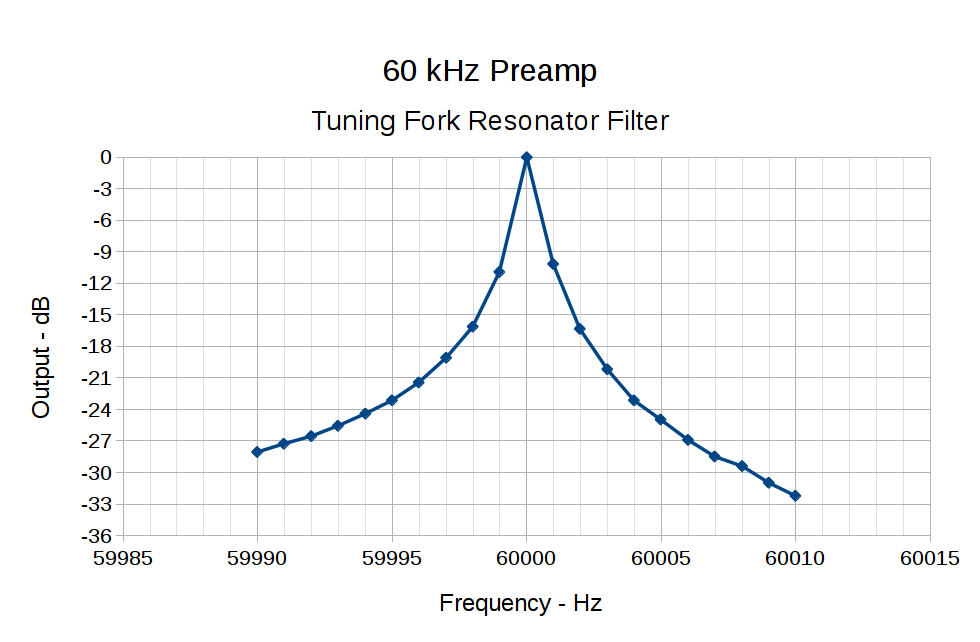
    60 kHz Preamp - Bandwidth - 1 Hz steps
    60 kHz Preamp – Bandwidth – 1 Hz steps

    With all that in mind, a bit of careful tweaking produces a nice picture:

    WWVB - xtal filter - waterfall - 10 dB hardware preamp - 2017-11-16 0713 EST
    WWVB – xtal filter – waterfall – 10 dB hardware preamp – 2017-11-16 0713 EST

    I love it when a plan comes together …
  • RAMPS 1.4: Simulated Heater

    Epoxying a 100 kΩ thermistor to a 909 Ω resistor (because I have a bunch of them) serves as a simple heater tester:

    Simulated heater - thermistor bonding
    Simulated heater – thermistor bonding

    It dissipates 450 mW, raising the temperature enough to let the PWM control kick in, but not enough to get scary hot.

    Some heatstink tubing prevents reduces the likelihood of horrible accidents involving the 20 V motor / heater power supply:

    RAMPS 1.4 - Simulated heaters
    RAMPS 1.4 – Simulated heaters

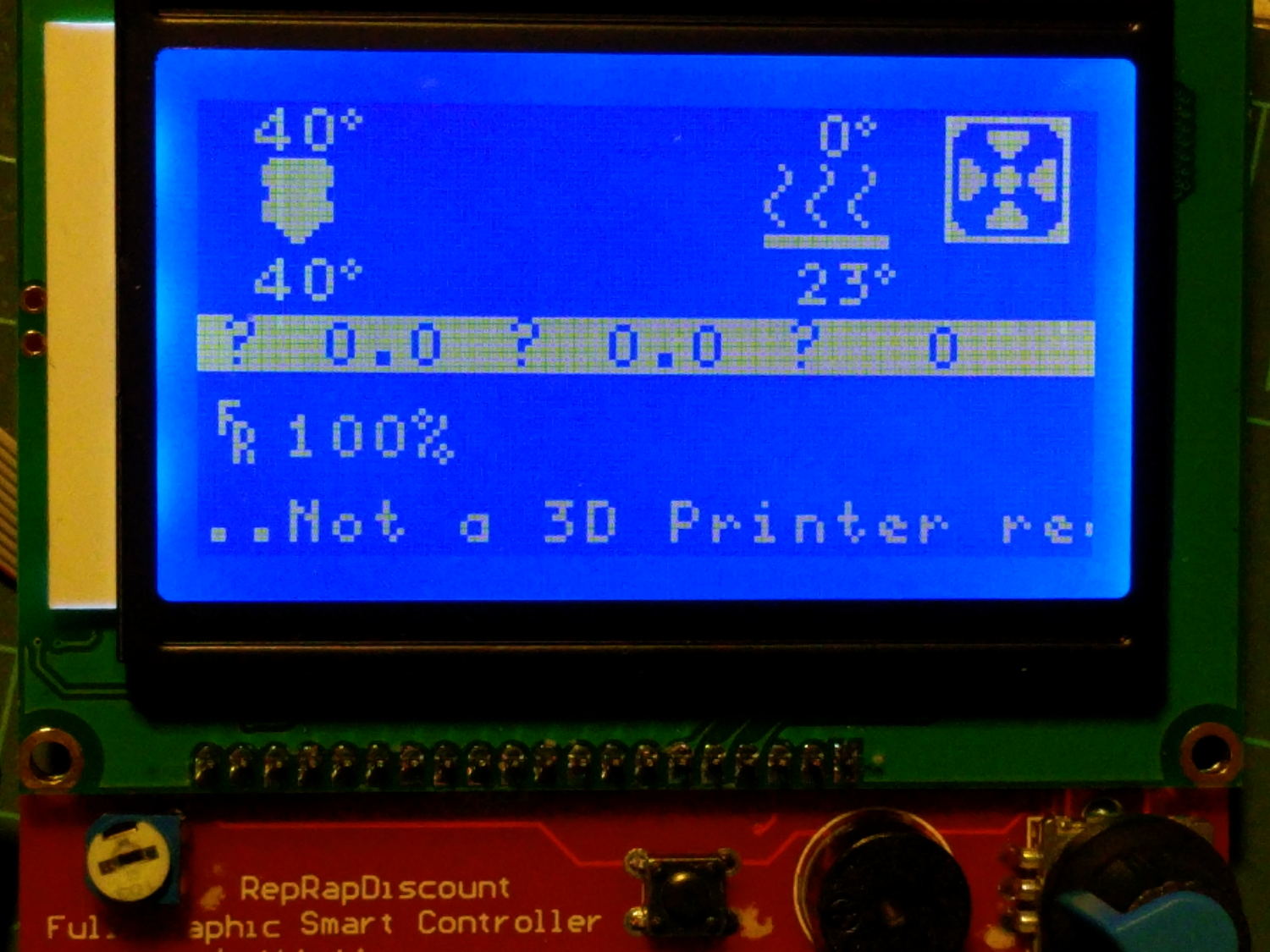
    Keeping it under 50 °C seems like a Good Idea:

    RAMPS 1.4 - Simulated heater - LCD
    RAMPS 1.4 – Simulated heater – LCD

    Not that I have a need to heat anything, but the MOSFETs work!


  • Monthly Science: 60 kHz Preamp Resonator Bandwidth

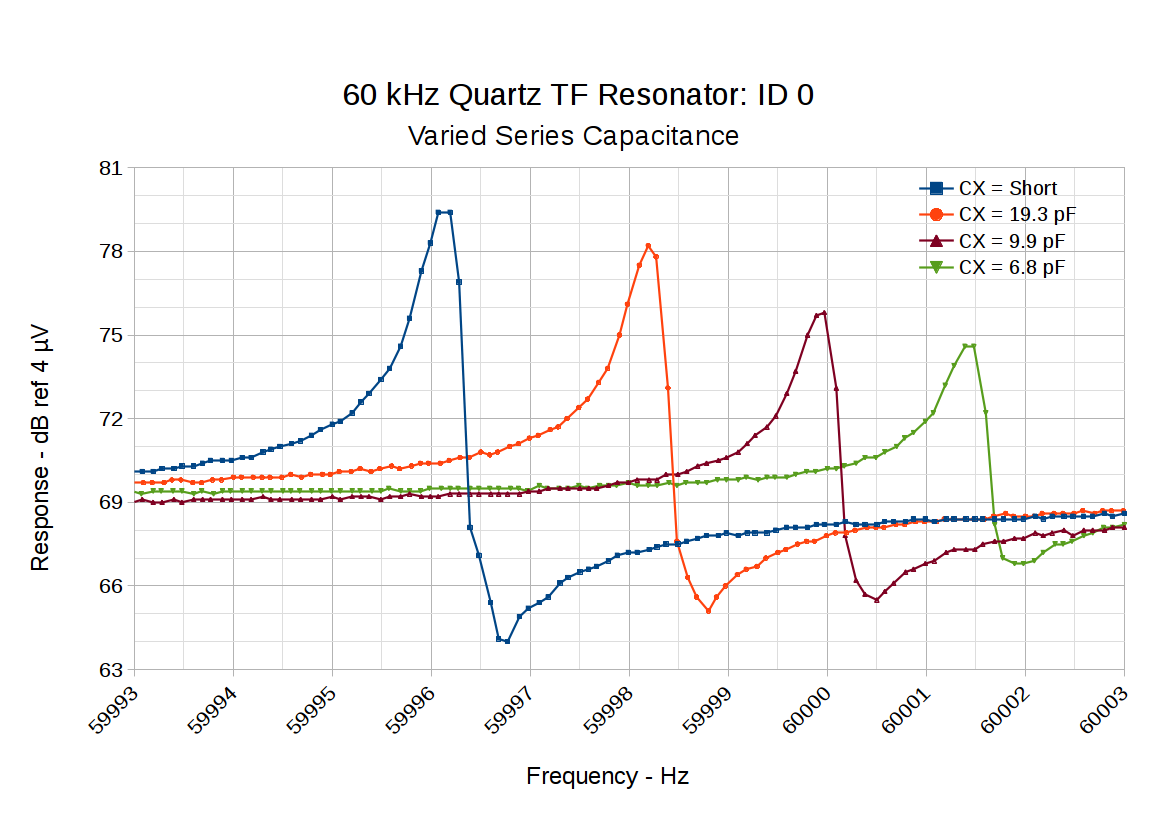
    Putting a small capacitor in series with the tuning fork resonator pulls the series resonant frequency upward and reduces the amplitude:

    60 kHz Quartz TF Resonator - CX variations
    60 kHz Quartz TF Resonator – CX variations

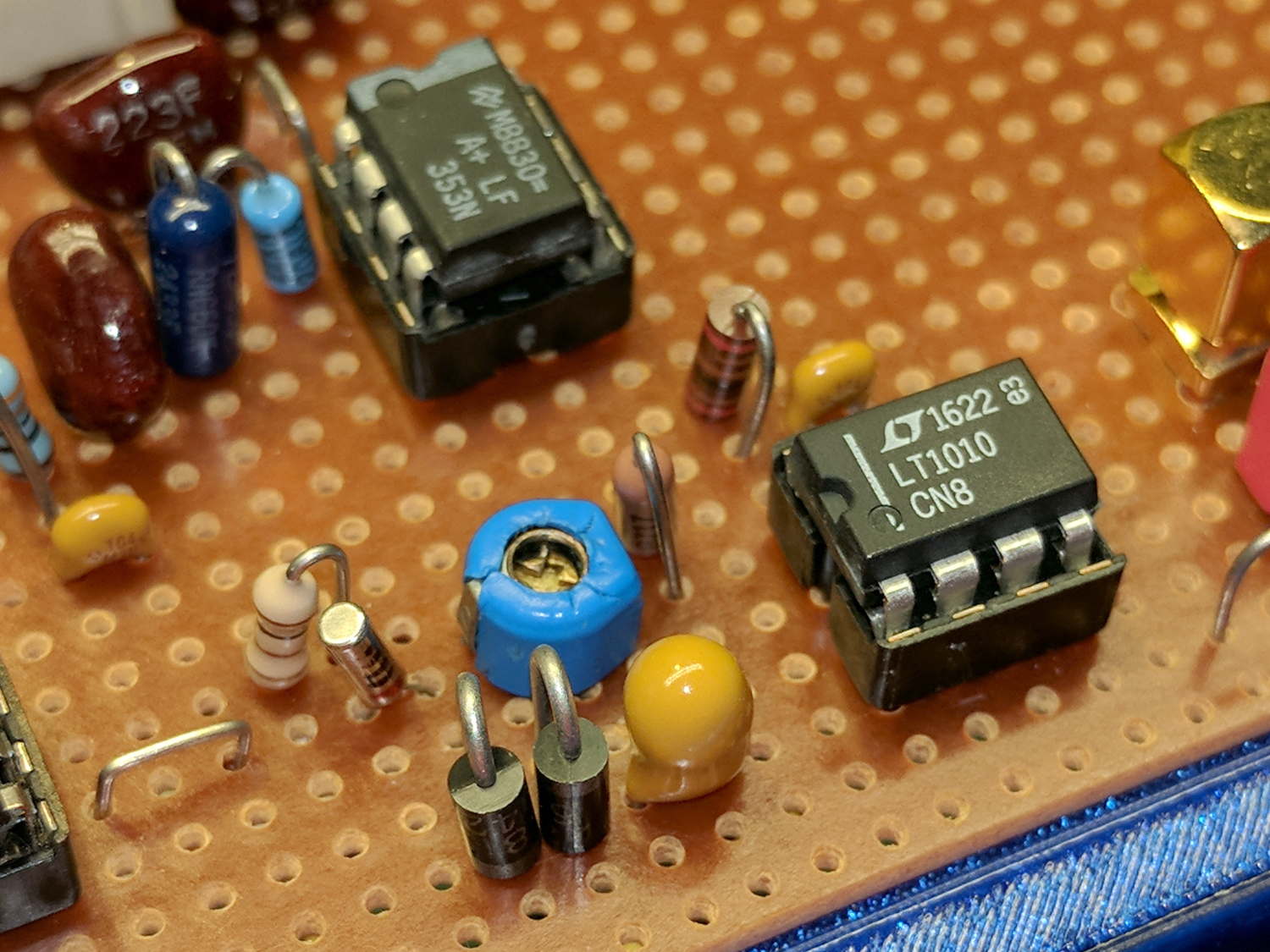
    So something around 10 pF, net of stray capacitance and suchlike, should suffice. Plunk a small twiddlecap on the preamp board and tune for best picture:

    LF Crystal Tester - resonator protection
    LF Crystal Tester – resonator protection

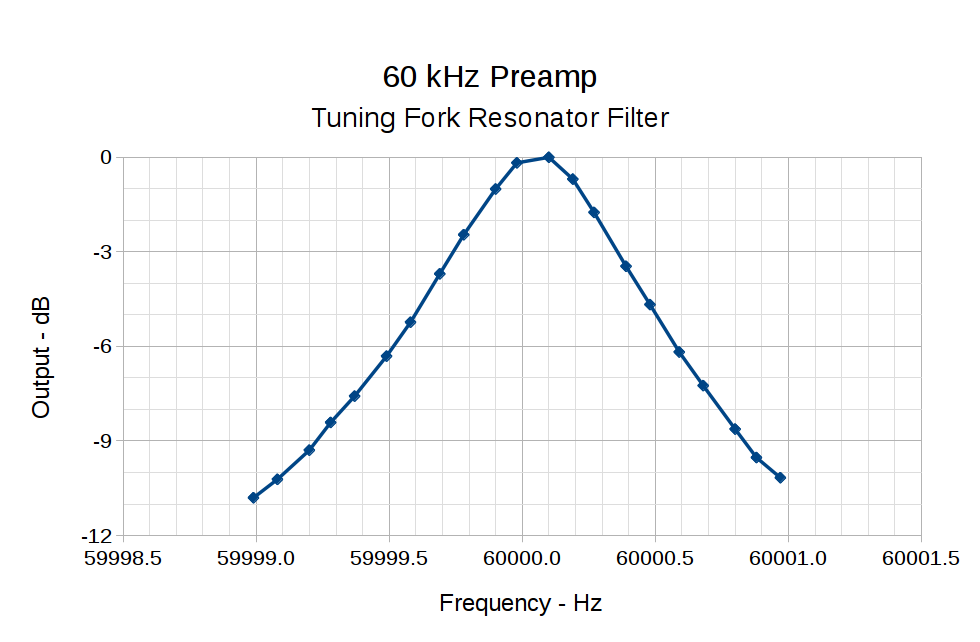
    Using the DDS generator as a manual signal source with 1.0 Hz step size shows the resonator tightens up the preamp’s response quite nicely:

    60 kHz Preamp - Bandwidth - 1 Hz steps
    60 kHz Preamp – Bandwidth – 1 Hz steps

    I’m not convinced the preamp will have filter skirts that low farther away from the peak, but it’ll do for a start.

    Zoom in on the peak with 0.1 Hz steps:

    60 kHz Preamp - Bandwidth - 100 mHz steps
    60 kHz Preamp – Bandwidth – 100 mHz steps

    The bandwidth looks like 0.6 Hz, centered just slightly above 60.000 kHz, which should be fine for a first pass.

    I’m tickled: all the hardware & firmware fell neatly into place to make those graphs possible!

    Next step: install it in the attic and see whether the filter cuts back the RF clutter enough to stabilize the SDR’s AGC gain.

  • Hickory Shells for Bacon Smoking

    Hickory trees run on a triennial cycle and 2017 produced a huge crop of nuts. My trusty Vise-Grip makes short work of the otherwise impenetrable shells:

    Hickory Nuts - cracking in Vise-Grip
    Hickory Nuts – cracking in Vise-Grip

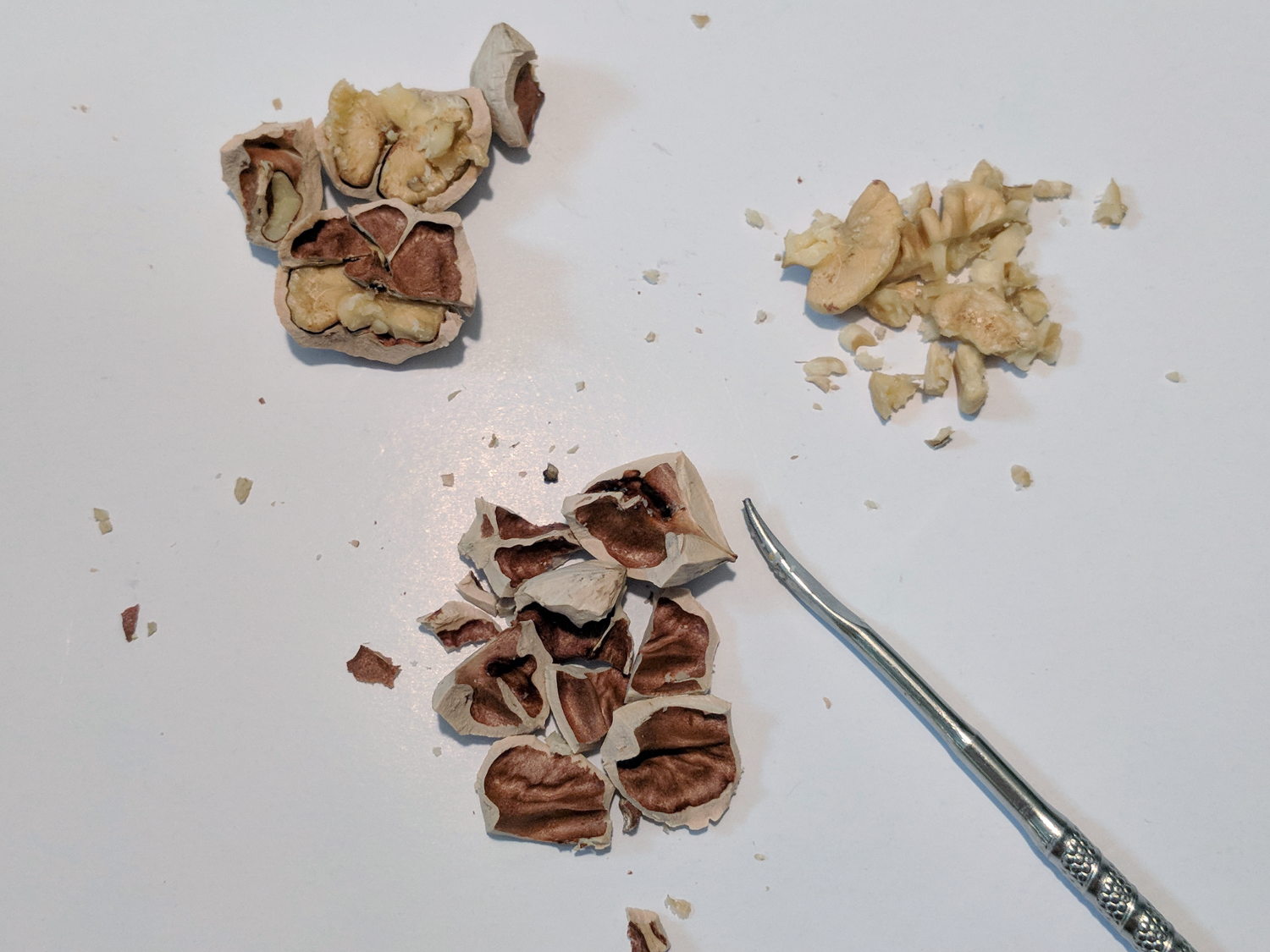
    A nut pick extracts the good stuff:

    Hickory Nuts - cracked
    Hickory Nuts – cracked

    In round numbers, you get twice as much shell as you do nut meat, so there’s plenty of shells left over.

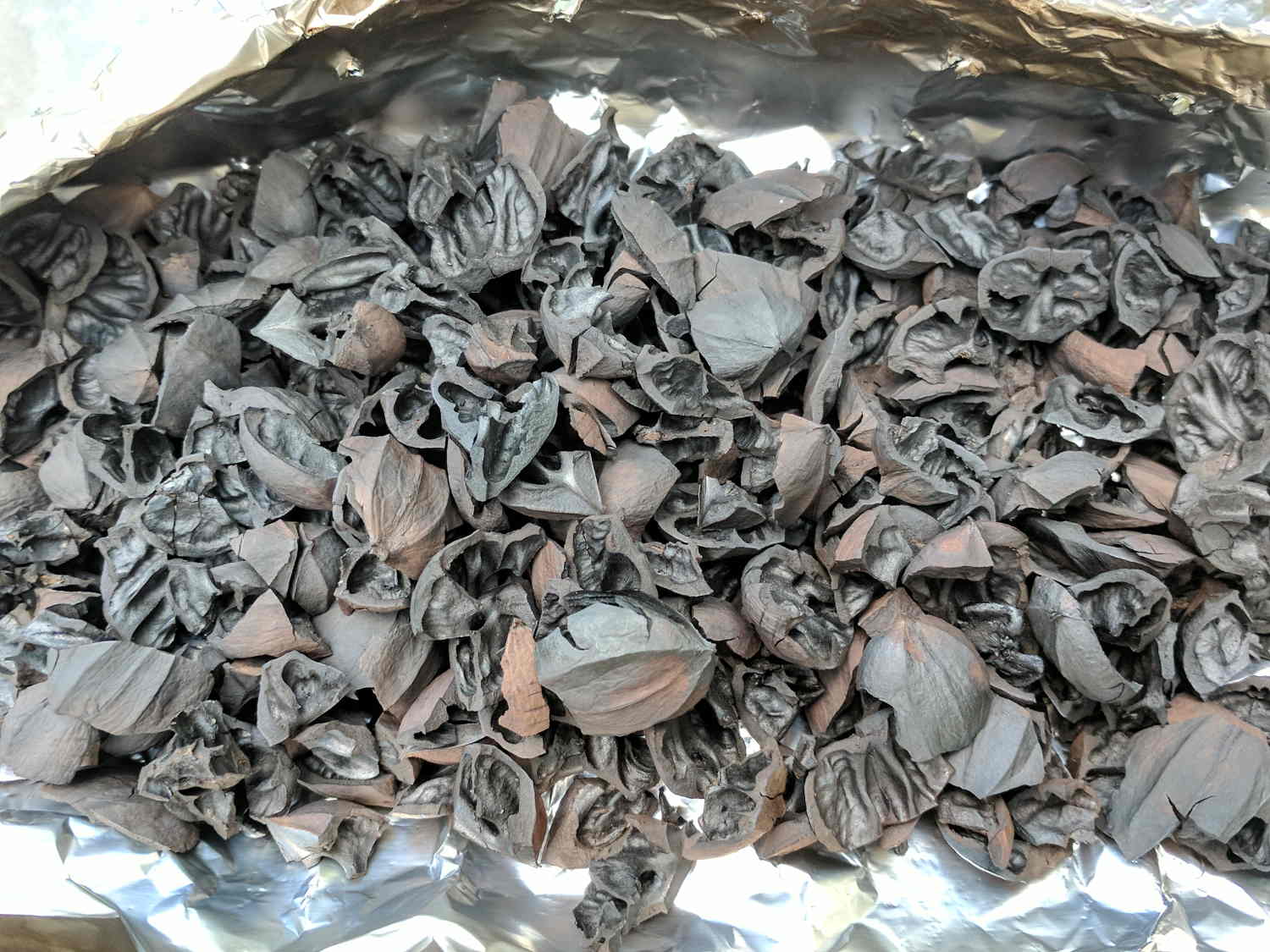
    I wrapped 10 ounces of shells in a double layer of aluminum foil, poked two rows of air holes along the package, dropped it holes-up atop the “flavorizer” bars in the propane barbie, and smoked 5 pounds of cured pork belly into some of the finest bacon we’ve ever eaten.

    Heated and starved for air inside the aluminum wrapper, the shells became charcoal:

    Carbonized hickory shells
    Carbonized hickory shells

    Yum!

  • T-shirt Shop Rags

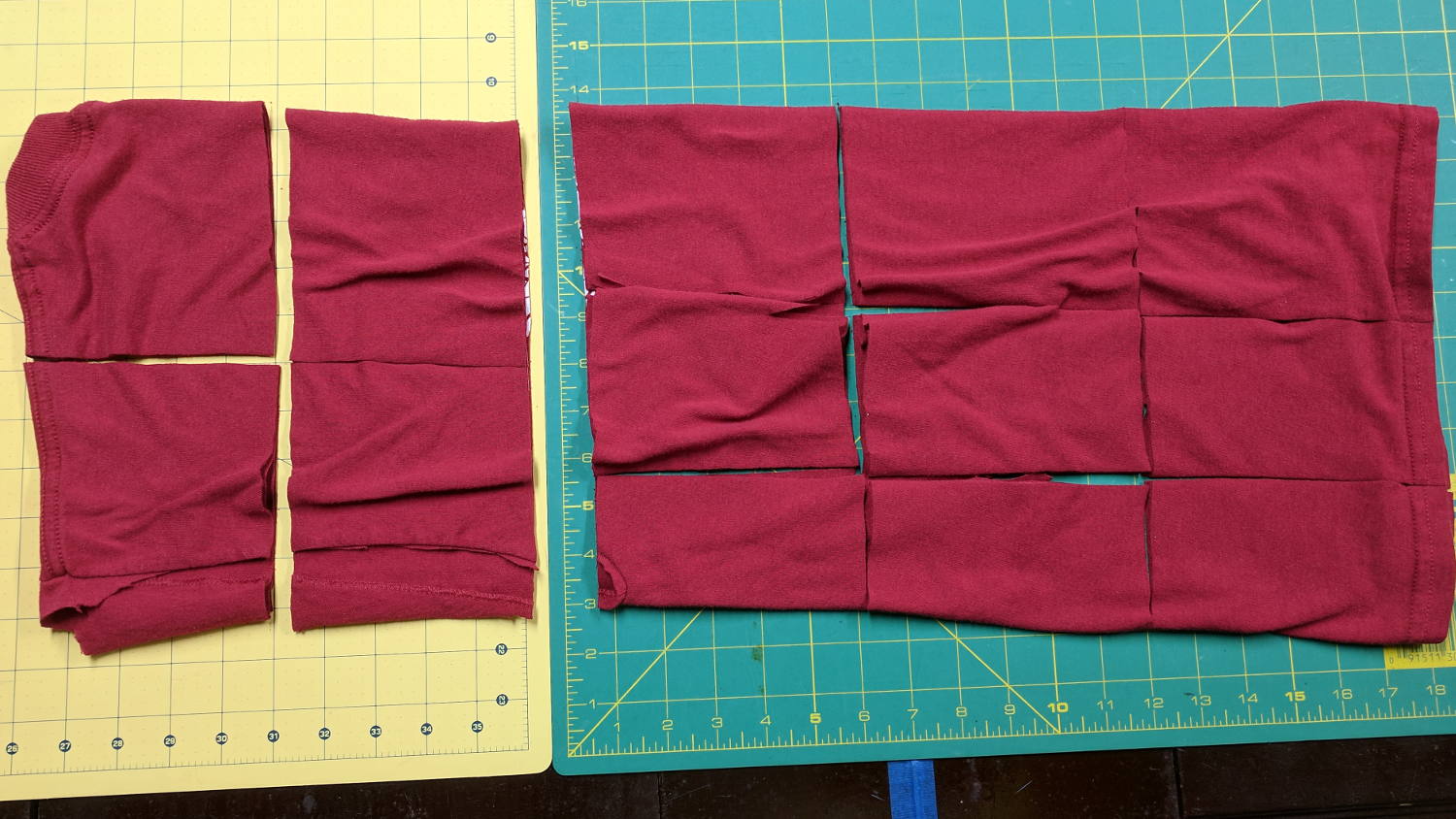
    Small wipes made from worn-out cotton t-shirts absorb most shop liquids, don’t overstay their welcome after short projects, and prevent the deep emotional attachment leaving swarf in the clothes washer. Scissors cutting gets tedious, so mooch a rotary cutter and slash away:

    T-shirt shop rags
    T-shirt shop rags

    Synthetic fabrics don’t work nearly as well as cotton, so pay attention to the labels.


  • Vacuum Tube LEDs: PAR30 Halogen Spotlight

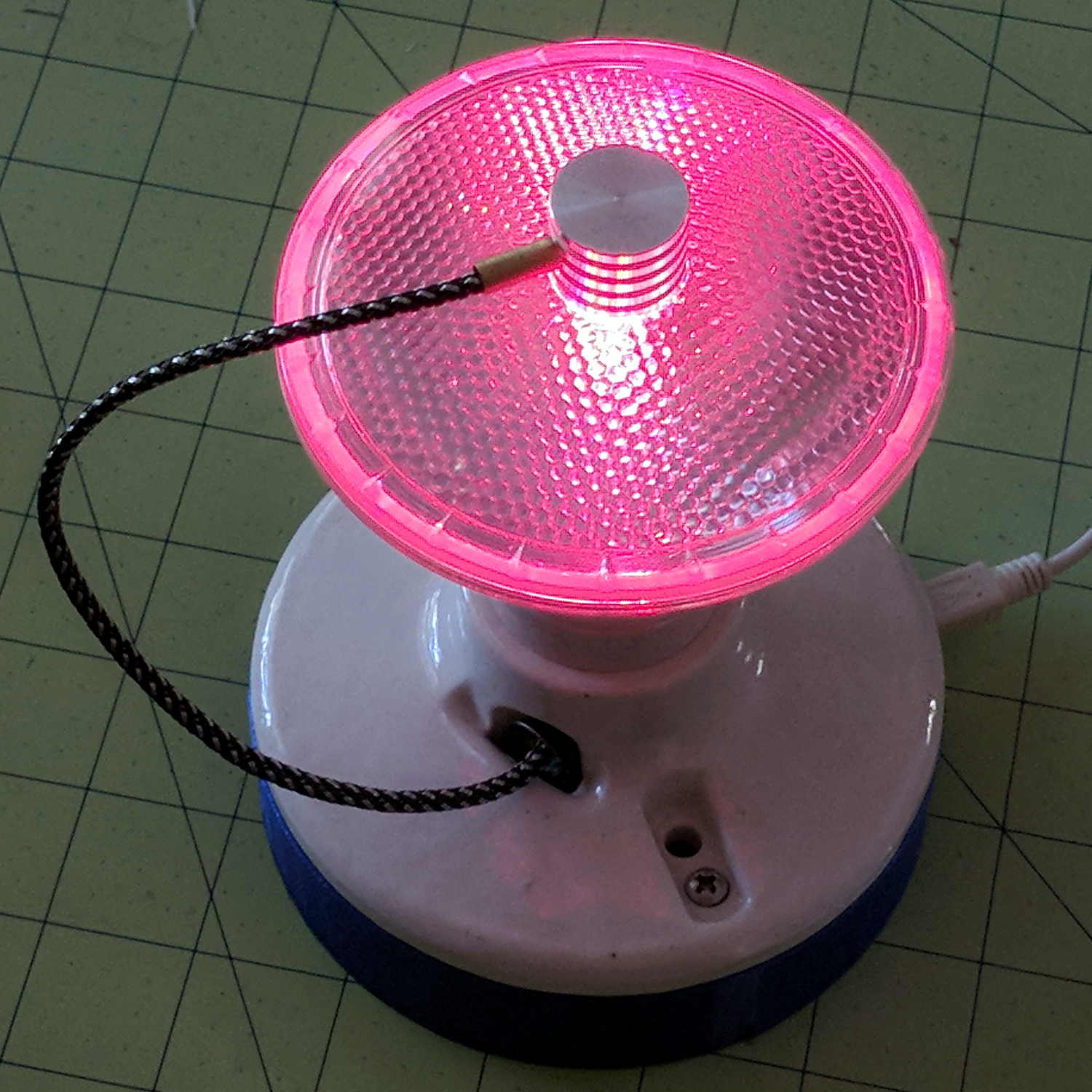
    Breaking the fake heatsink off the big floodlight, drilling out the guts, and rebuilding it with a WS2812 RGBW LED left the PET braid too short for a nice curve from socket to bulb, so I swapped in a smaller and equally defunct PAR30 halogen spotlight:

    PAR30 Halogen - red phase
    PAR30 Halogen – red phase

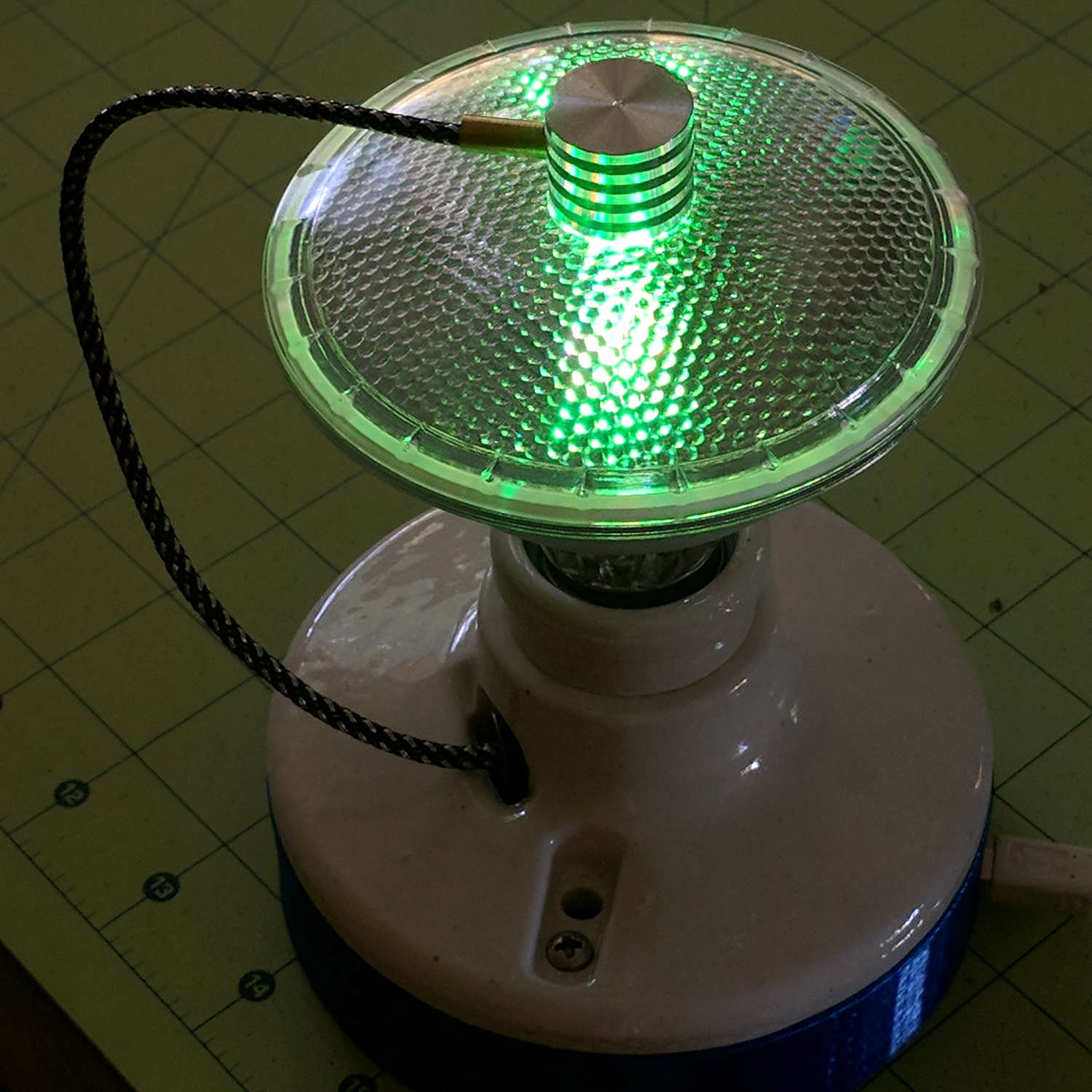
    And in green:

    PAR30 Halogen - green phase
    PAR30 Halogen – green phase

    The white glass frit ring around the perimeter lights up nicely in the dark.

    The knockoff Arduino Nano now runs the RGBW program, with Morse transmissions disabled and the white LED dialed back to MaxPWM = 32.

  • Shortening a 2MT-to-1MT Morse Taper Sleeve

    The hulking 1/2 inch Jacobs chuck is grossly oversized for most of the holes I poke in things spinning in the lathe. I already have several smaller Jacobs chucks for the Sherline’s 1 MT spindle, so I got some Morse Taper Sleeve Adapters for the mini-lathe’s 2MT tailstock. They’re longer than the “short” 2MT dead center:

    1MT to 2MT adapter - vs 2MT dead center
    1MT to 2MT adapter – vs 2MT dead center

    Because they’re longer, the tailstock ram loses nearly an inch of travel it can’t afford.

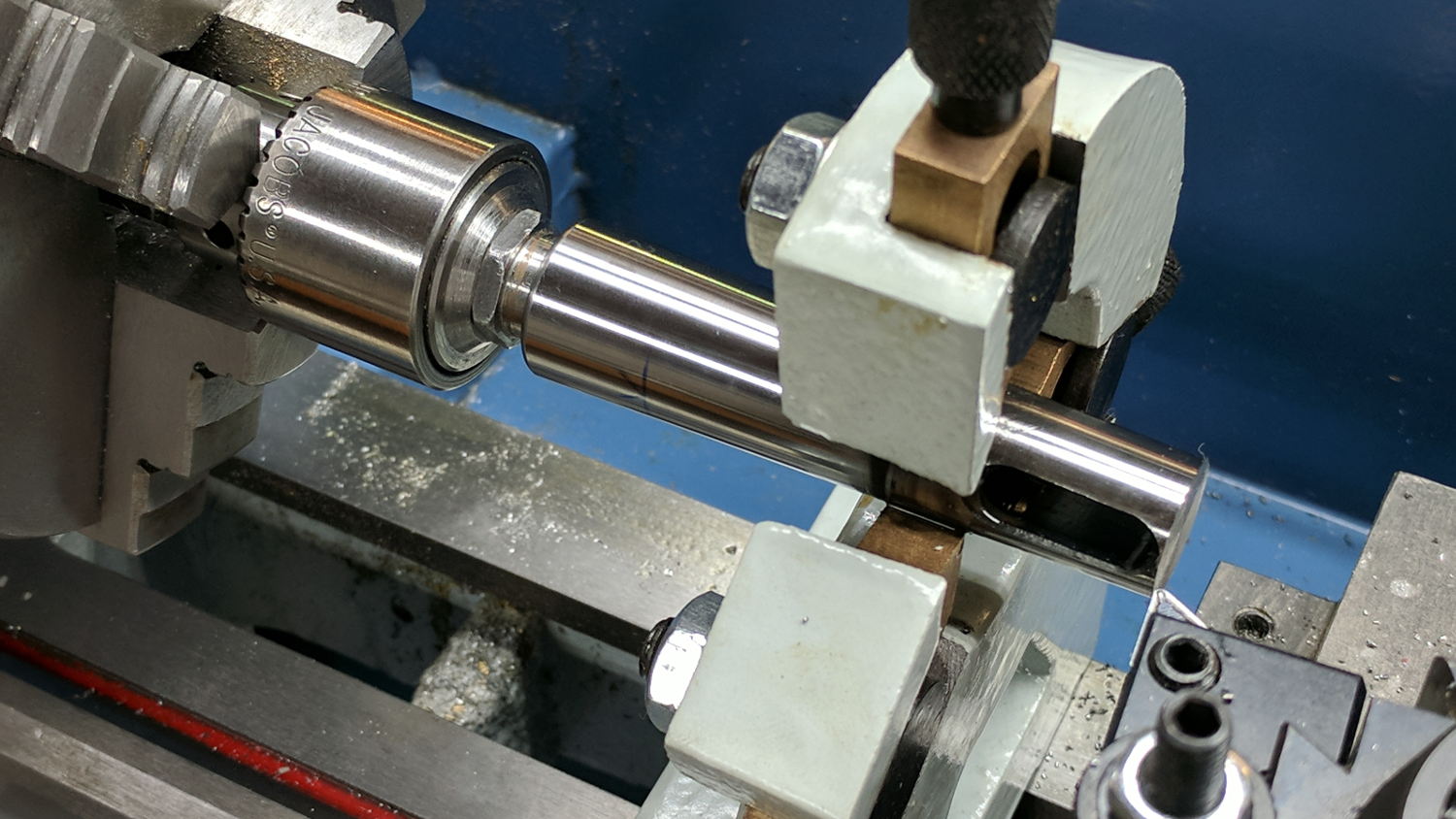
    So I hacksawed the taper just beyond the opening at the tang and faced off the ragged end:

    1MT to 2MT adapter - facing
    1MT to 2MT adapter – facing

    The steady rest jaws don’t match the Morse taper angle, but they’re way better than assuming the nose of the Jacob chuck can hold such an ungainly affair.

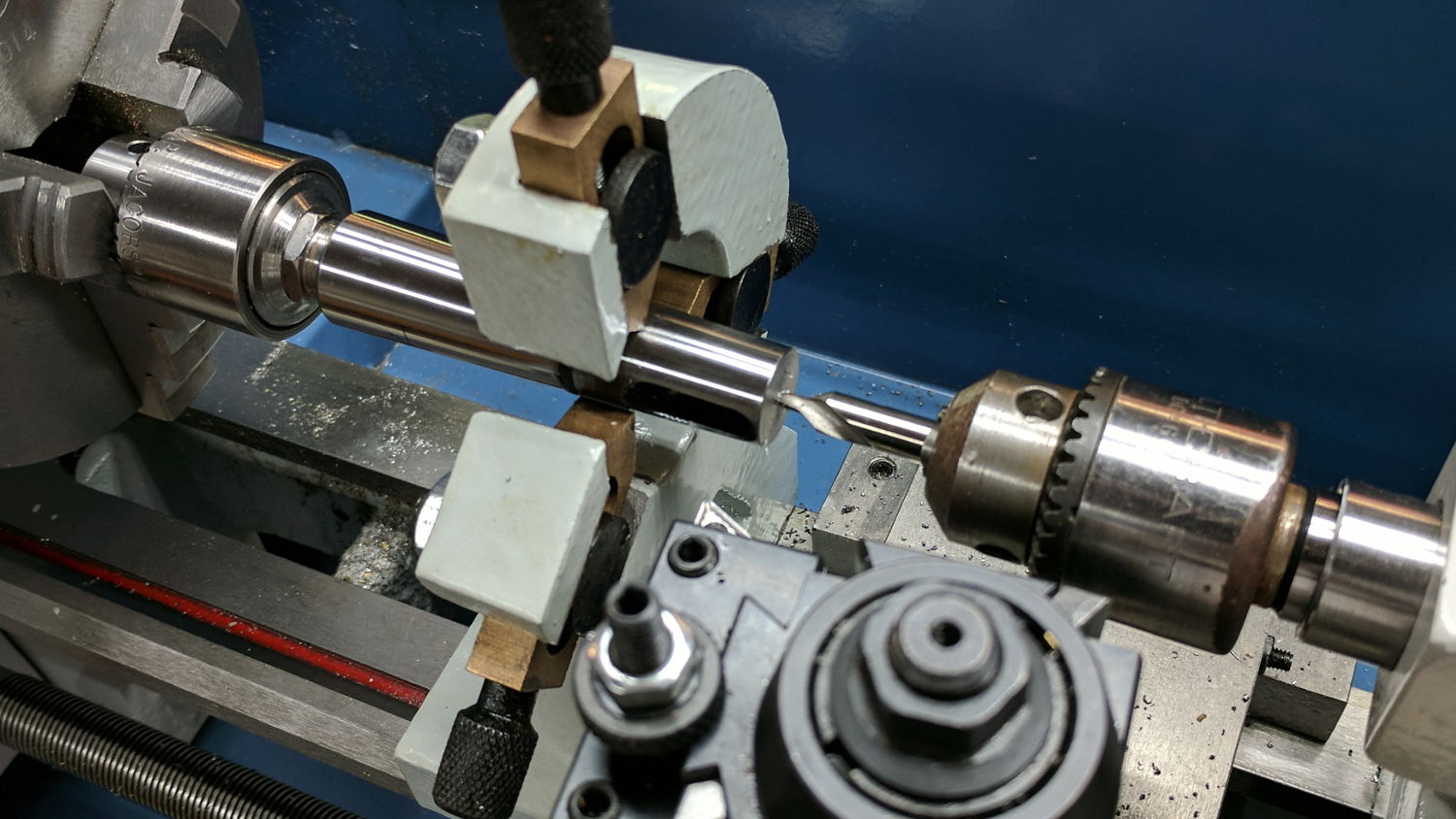
    The short 1MT taper on the drill chuck doesn’t extend to the opening: when it’s firmly pushed into the socket, there’s no simple way to eject it. So, drill a small hole for a pin punch to pop it out:

    1MT to 2MT adapter - center drilling
    1MT to 2MT adapter – center drilling

    I hate hammering on tooling, which means I must eventually enlarge the hole to clear a 5 mm bolt, make a square-ish nut to fit inside the slot, and gimmick up a plug for the 1/4-20 socket in the 1MT taper (used by the Sherline mill drawbar). More work than I want to take on right now, but it’ll provide some Quality Shop Time.

    If the truth be known, I also got a 3/8-16 thread to 2MT adapter for the mid-size Jacobs chuck seen in the pictures, thus eliminating the thread-to-1MT adapter and plugging the chuck directly into the tailstock. The 1MT adapter will come in handy for the least Jacobs chuck; although LMS has a 0JT-to-2MT adapter, the less I monkey with that tiny taper, the better off we’ll both be.