The Smell of Molten Projects in the Morning

Ed Nisley's Blog: Shop notes, electronics, firmware, machinery, 3D printing, laser cuttery, and curiosities. Contents: 100% human thinking, 0% AI slop.

Category: Science

If you measure something often enough, it becomes science

  • Monthly Science: Bottled Water Evaporation

    These emerged from a hidden corner of a basement shelf, where they’ve been sitting undisturbed for far too long:

    Bottled Water Evaporation
    Bottled Water Evaporation

    I’ve known for a while that the PETE plastic used for nearly all bottles isn’t completely waterproof, but never had occasion to measure the results.

    The laser-etched date code  on the bottles says they “expired” in late August 2012, so, assuming one year of shelf life, they’ve been quietly evaporating for five years.

    Sampling a few bottles shows a nearly uniform weight of 459 g. A drained bottles weighs 13 g, so let’s say the bottles now contain 445 g of water. They should start out with 500 g, although I’d be mildly surprised if it wasn’t a bit over that to prevent some dork from complaining about getting only 498 g.

    Rounding in all the right directions, losing 60 g during five years works out to a tidy 1 g/month in a basement room at 60% RH.

    The surface area of those wonderfully convoluted bottles might be 300 cm², so they lose 3 mg/cm²·month.

    They’re near enough to 0.10 mm thick, which I’m sure is a compromise between reducing weight (and, thus, plastic cost) and incurring messy failures during normal handling. The evaporation rate surely varies as an inverse exponential of thickness, but I’m not going there.

    I’m certain water bottlers know those numbers to several decimal places and can plot them versus all the interesting variables.

    Memo to Self: don’t lose track of the water bottles!

  • Cast Iron Pan Seasoning After Two Weeks of Use

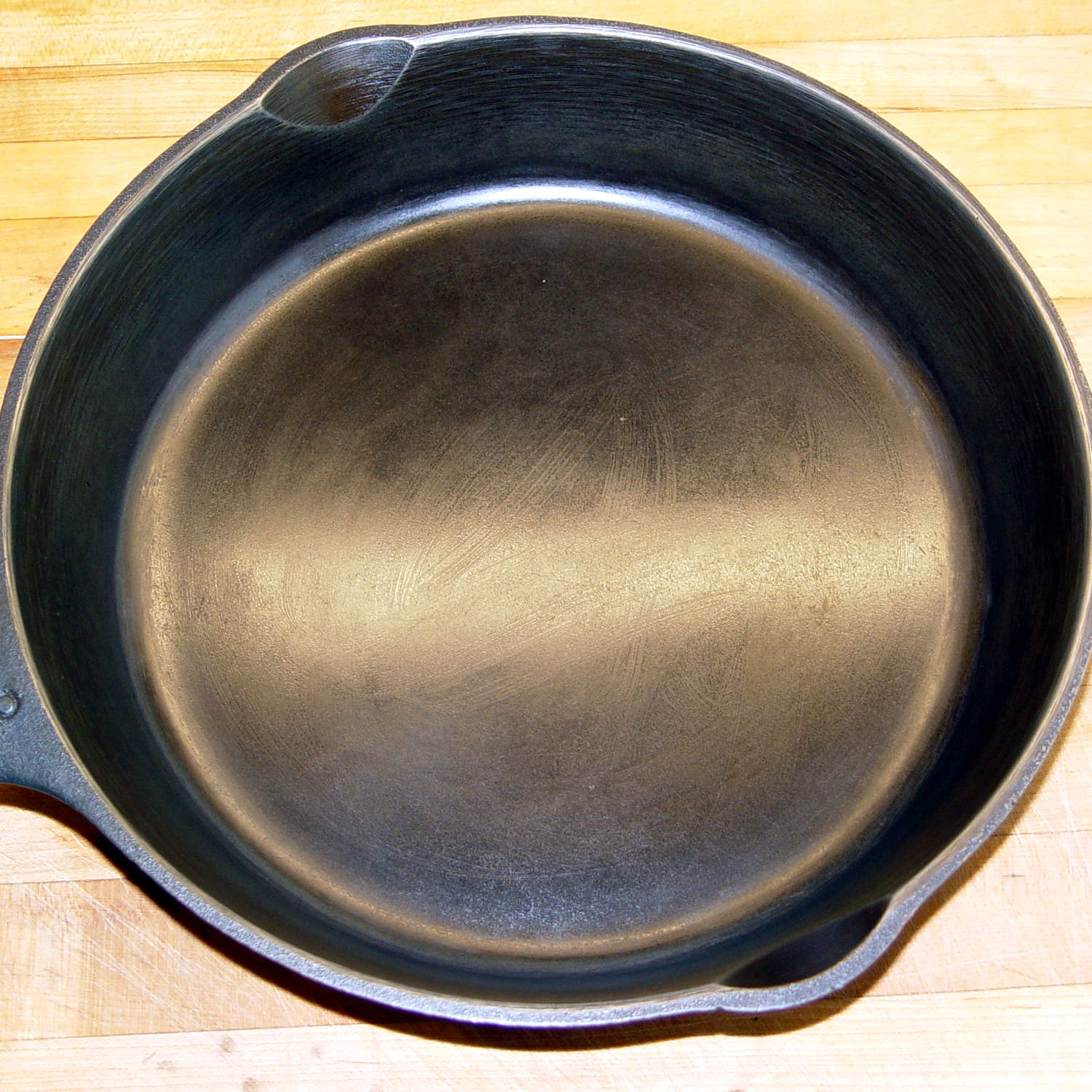
    After two weeks of more-or-less daily use, without any further seasoning:

    Wagner skillet - two weeks of use
    Wagner skillet – two weeks of use

    The seasoning in between the scuffs & scrapes remains in fine shape. Running the Scotchbrite pad around the perimeter obviously wears the coating, but, on the whole, nothing sticks anywhere.

    I’ve started re-seasoning it after each use, which isn’t a big deal, and we’ll see how the scratches level out.

    The lovely gray-black patina on the nubbly outside surface from the original moderate-woo oven seasoning requires no further attention.


  • Wearable Electronics: Connections

    Although I’m not the type of guy who thinks twinkly LEDs will enhance his apparel, one of Mary’s quilting thread sources had a closeout deal on their “wearable electronics”, including a large cone of stainless steel thread / yarn:

    Stainless steel thread
    Stainless steel thread

    … CR2032 lithium cells & holders, plus assorted LEDs on small PCBs.

    The usual advice for connecting the thread seems to involve knotting it through the PCB holes, then sewing it to the backing fabric. Alas, I’m bad with knots and the stainless steel yarn isn’t all that cohesive:

    Emerald LED - Stainless steel thread - knotted
    Emerald LED – Stainless steel thread – knotted

    The holder has an even smaller hole, but Mary gave me a needle threader that helped:

    CR2032 - Stainless steel thread - knotted
    CR2032 – Stainless steel thread – knotted

    Some advice found on The InterTubes suggests using copper crimp beads (perhaps with solder) to prevent the thread from completely unraveling and keep the thread loop tight around the PCB hole:

    Rose LED - Stainless steel thread - Crimp bead - Wire Glue
    Rose LED – Stainless steel thread – Crimp bead – Wire Glue

    Beadworkers use crimping pliers that leave a tidy dent; I mashed the beads with a needlenose pliers and called it good.

    The LEDs seem to be white LEDs with filters or, perhaps, blue / violet LEDs with different phosphors: their forward voltages look more blue than red or green. Everybody in this field depends on the minor miracle that lithium cell voltages match blue LED forward drops closely enough that you can get away without a ballast resistor.; the cell’s 20-ish Ω internal resistance doesn’t hurt in the least. An interesting white paper (SWRA349) from TI explores the effect of current on cell capacity and how to size a parallel capacitor that reduces the peak battery current.

    The black gunk is Wire Glue, which costs about five bucks for a lifetime supply in a small jar (or nigh onto 15 bucks via Amazon Prime) and is basically carbon powder in a water-based binder. Apply a dab to the connection and the water evaporates to leave the carbon + binder behind.

    That works better on joints that don’t move, which is precisely what you don’t have in a wearable electronic situation. You can see the crumbling Wire Glue after the trip back from a Squidwrench meeting:

    CR2032 - Stainless steel thread - Crimp bead - Wire Glue
    CR2032 – Stainless steel thread – Crimp bead – Wire Glue

    I also picked up a Permatext Rear Window Defogger repair kit (09117, if you’re looking) that seems to be a staggeringly expensive way to get a tenacious high-current conductive adhesive. More on that later.

    The yarn runs 3.5 Ω/ft, much lower than Adafruit’s three-ply yarn (10 Ω /ft), and suggests itself for flexible connections, EMI gaskets, and suchlike.

    Those LEDs are taped to the kitchen window, where they cast a cool light over the table, with the battery holders sitting on the sash. I’d just replaced some data logger CR2032 cells, so they’re running from nearly dead lithium batteries.

    For future reference: 2.77 V and falling, pushing less than 2 mA through the LEDs.

  • Compose Key Sequences for Useful Unicode Characters

    If you activate a Compose key on your keyboard:

    Compose key selection
    Compose key selection

    Then you can insert Unicode characters without memorizing their hex values. Of course, you must memorize the Compose key sequences. Fortunately, they’re more-or-less mnemonic for the ones I occasionally use, which are hereby cherrypicked from that list.

    Press-and-release the Compose key (right-Win), then type the characters as shown to get the symbol in quotes:

    • o c “©” copyright # COPYRIGHT SIGN
    • o o “°” degree # DEGREE SIGN
    • o r “®” registered # REGISTERED SIGN
    • t m “™” U2122 # TRADE MARK SIGN
    • s m “℠” U2120 # SERVICE MARK
    • . . “…” ellipsis # HORIZONTAL ELLIPSIS
    • . – “·” periodcentered # MIDDLE DOT
    • . = “•” enfilledcircbullet # BULLET
    • + – “±” plusminus # PLUS-MINUS SIGN (∓ MINUS-PLUS is U2213)
    • x x “×” multiply # MULTIPLICATION SIGN
    • < < “«” guillemotleft # LEFT-POINTING DOUBLE ANGLE QUOTATION MARK
    • > > “»” guillemotright # RIGHT-POINTING DOUBLE ANGLE QUOTATION MARK
    • c / “¢” cent # CENT SIGN
    • – – . “–” U2013 # EN DASH
    • – – – “—” U2014 # EM DASH
    • < – “←” U2190 # LEFTWARDS ARROW
    • | ^ “↑” U2191 # UPWARDS ARROW
    • – > “→” U2192 # RIGHTWARDS ARROW
    • | v “↓” U2193 # DOWNWARDS ARROW
    • = > “⇒” U21D2 # RIGHTWARDS DOUBLE ARROW
    • ? ! “‽” U203D # INTERROBANG
    • p o o “💩” U1F4A9 # PILE OF POO
    • m u “µ” mu # MICRO SIGN
    • d i “⌀” U2300 # DIAMETER SIGN
    • 1 4 “¼” onequarter # VULGAR FRACTION ONE QUARTER
    • 1 2 “½” onehalf # VULGAR FRACTION ONE HALF
    • 3 4 “¾” threequarters # VULGAR FRACTION THREE QUARTERS
    • 1 1 0 “⅒” U2152 # VULGAR FRACTION ONE TENTH (and similar)
    • ^ 1 “¹” onesuperior # SUPERSCRIPT ONE (also 0 2 3 + -…)
    • _ 1 “₁” U2081 # SUBSCRIPT ONE (also 0 2 3 + -…)
    • e ‘ “é” eacute # LATIN SMALL LETTER E WITH ACUTE
    • e ` “è” egrave # LATIN SMALL LETTER E WITH GRAVE

    Producing Greek letters requires a “dead_greek” key, so it’s easier to start with bare hex Unicode values at U0391 (Α) and U03b1 (α) and work upward until you find what you need:

    • U03A3 Σ uppercase sigma
    • U03a9 Ω uppercase omega
    • U03C3 σ lowercase sigma
    • U03c9 ω lowercase omega
    • U03c4 τ lowercase tau
    • U03c0 π lowercase pi
    • U0394 Δ uppercase delta
    • U03F4 ϴ uppercase theta
    • U03B8 θ lowercase theta
    • U03D5 ϕ phi math symbol
    • U03A6 Φ uppercase phi
    • U03C6 φ lowercase phi

    Odds and ends:

    • U00a0 | | non-breaking space
    • U2007 | | figure space (invisible digit space)
    • U202F | | narrow space
    • U2011 ‑ non-breaking hyphen
    • U2030 ′ prime (not quote)
    • U2033 ″ double-prime (not double-quote)
    • U2018 ‘ left single quote
    • U2019 ’ right single quote
    • U201C “ left double quote
    • U201D ” right double quote
    • U2245 ≅ approximately equal
    • U2264 ≤ less-than or equal
    • U2265 ≥ greater-than or equal
    • U221A √ square root
    • U221B ∛ cube root
    • U221C ∜ fourth root (yeah, right)
    • U221D ∝ proportional to
    • U2300 ⌀ diameter
    • U25CA ◊ lozenge

    If you set the keyboard layout to US International With Dead Keys, maybe you (definitely not I) could remember all the dead keys.

  • Monthly Image: Potholes in Wappinger Creek at Red Oaks Mill

    The Mighty Wappinger Creek runs low after months with very little rain and we saw more of the rocky streambed than any time in recent memory:

    Wappinger Creek - streambed at Red Oaks Mill - 2016-09-23
    Wappinger Creek – streambed at Red Oaks Mill – 2016-09-23

    Much of the deteriorated Red Oaks Mill Dam stands high and dry:

    Wappinger Creek - Red Oaks Mill Dam - 2016-09-23
    Wappinger Creek – Red Oaks Mill Dam – 2016-09-23

    Just upstream from the bridge, you can see how water carves potholes into the rock:

    This slideshow requires JavaScript.

    Back in the day, my parents took us to see the far more impressive Susquehanna River potholes (*) near Harrisburg. They range from finger-size pits up to craters large enough to comfortably hold an adult. I’m sure one of their photo albums, now tucked in our closet, contains similar pictures of those holes.

    Searching for red oaks mill dam will turn up previous posts and pictures for comparison.

    (*) Exploration of the pages linked there will show how, with sufficient mental effort, one can force-fit a non-erosion-based explanation of eroded potholes to match a pre-conceived timeline and narrative. Your opinion of that narrative and the effort required to fit evidence into it may differ from mine.

  • Money For Nothing: Gfk MRI TV Survey

    This arrived a week ago:

    GfK MRI postcard
    GfK MRI postcard

    You cannot imagine my excitement when the actual survey arrived, complete with a crisp $5 bill:

    GfK MRI Survey
    GfK MRI Survey

    These folks are cheapskates; Nielsen paid better, although I haven’t gotten anything further from them.

    It didn’t take long to fill out; my fat Sharpie slashed through the NO columns at a pretty good clip. I did attach a note saying we didn’t have a TV and regarded all TV programs as crap, just in case they didn’t get the message.

    Now they know.

    FWIW, I did not fill out the form that would enter us in a drawing for one of five $500 prizes, because that would let them associate my name with my response without fattening my wallet. The survey itself probably encodes my identity, even though it didn’t have any obvious bar codes or other ID; they could simply print the questions in a unique order in each survey.

  • Cast Iron Pan Seasoning: Low-woo Results

    The original cast-iron seasoning recipe, after half a dozen iterations of flax seed oil & high-temperature baking, produced disappointing results:

    Wagner cast iron skillet - washed - top
    Wagner cast iron skillet – washed – top

    The key point of seasoning seems to require heating the oil enough to polymerize its molecular thingies, with (IMO) pretty nearly everything else boiling down to woo.

    Since that rusting incident, I’ve done this after every use:

    • Wipe the pan clean with the same hot soapy water I use for everything else
    • Remove crud with the same Scotchbrite / sponge pad I use for everything else
    • Rinse and wipe dry with the sponge side of the pad
    • Set stove timer for 3 minutes
    • Put pan on simmer burner, set to high flame
    • Continue cleanup until timer sounds
    • Set stove timer for 3 minutes
    • Wipe half a dozen drops of flax seed oil around pan with cotton cloth scrap
    • Continue cleanup until timer sounds
    • Turn off simmer burner
    • Wipe pan with that oily cotton scrap

    The pan reaches about 300 °F after 3 minutes. The “opening the pores” thing is woo, but a completely dry pan doesn’t spit back and that’s a major plus.

    The pan tops out at a bit over 400 °F after a total of 6 minutes. There’s no smoke, no excitement, just a hot pan on the back burner.

    Given that I’m washing the pan anyway, the whole “seasoning” operation adds maybe two minutes to the process. By now, it’s entirely automatic.

    Nota Bene: Set the timer before turning on the burner and before adding the oil, because you will become distracted and will not remember the pan quietly heating on the back burner. You have been warned.

    After two months of doing that about once a day:

    Wagner Cast Iron Skillet - Low Woo Seasoning
    Wagner Cast Iron Skillet – Low Woo Seasoning

    Granted, it looks about the same as the previous results, but this uniform dull black coating repels water, doesn’t rust, loves oil, wipes clean without scouring, and the daily omelet doesn’t stick hardly at all. Obviously, the key difference is that I’ve polymerized a gazillion coats of oil, rather than half a dozen.

    Although I have no idea whether I’m exposing us to lethal free radicals created by the polymerization process, I doubt anybody else knows anything on that subject with regard to their own seasoning technique, so we’re pretty much even. As with most such worries, It Doesn’t Matter.

    Next, I’ll just wipe the pan and let it dry in the rack. That coating should eventually wear off, at least in the high-traffic areas; let’s see how little maintenance it requires.