Ed Nisley's Blog: Shop notes, electronics, firmware, machinery, 3D printing, laser cuttery, and curiosities. Contents: 100% human thinking, 0% AI slop.
Category: Science
If you measure something often enough, it becomes science
This relentlessly organized doodle happened while reading some tech docs on the Comfy Couch:
Sakura Pen Width Examples
The first two lines obviously belong in their own group, but, hey, it’s a doodle.
The two Uni-Ball Kuru Toga pencils, in 0.5 and 0.7 mm, have diamond-impregnated lead that’s supposed to be much more break-resistant than usual. I fear that they’ll land point-downward and wreck the rotating sleeve surrounding the lead, so I’ve managed zero drops so far. Even I hesitated at the 0.3 mm version.
Just for fun, I measured the J5 V2 flashlight’s current, by the simple expedient of unscrewing the cap and bridging the battery-to-case-threads gap with a multimeter:
J5 V2 Flashlight – negative cell terminal
The results:
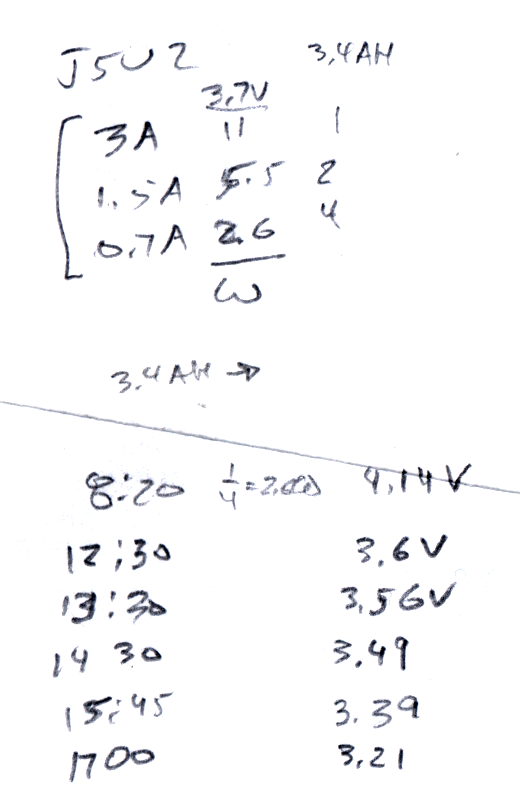
High: 3 A
Medium: 1.5 A
Low: 0.7 A
As nearly as I can tell, they’re connecting the 18650 cell directly across the LED for High and PWM-ing it down to 50% and 25%. The PWM frequency is low enough to be visible during eye saccades and flashlight motions.
The flashlight knows how to do all five modes without its tail cap, so the controller + FET must live behind the LED. I can’t tell if the switch in the tail cap is just a dumb pushbutton (with, it seems, a surprising & ill-controlled resistance) or doing something clever with resistive levels (because the resistance varies with each push); at some point this thing will fail in an amusing manner and I’ll take it apart to find out.
The High setting dissipates 11 W (!) that pushes the flashlight well beyond uncomfortably warm within five minutes, so that’s not a useful long-term setting. The little alien egg beside the LED melted into a puddle during those five minutes; at least it won’t be moving anywhere else.
Setting it to Low = 25% PWM duty cycle = 0.7 A (average, sorta-kinda), a freshly charged 18650 cell lasts for about five hours down to 3.6 V, which is pretty close to the cell’s 3.4 A·h rating (kinda-sorta, ignoring the decreasing cell voltage, etc). That suggests Medium would last maybe two hours, tops, and there’s not enough heatsinking to discover how long High would last.
After 8.5 hours the cell was down to 3.2 V and the LED was, as you’d expect, rather dim. You could click to High for more light, of course, trading off runtime for brightness.
The square LED emitter array produces a square light pattern that’s not aligned with the flats on the body, so if you happened to be thinking of clamping a holder onto those flats, be prepared for some custom rotation to align the pattern with the outside world. That obviously doesn’t matter in a hand-held flashlight, but a bike headlight might look weird.
The zoom slider goes from a focused square (at full extension) to a well-filled round disk (at minimum length) with a diameter about five times the square’s side. I think the smooth zoom motion comes from grease-on-O-ring viscosity rather than precision machining.
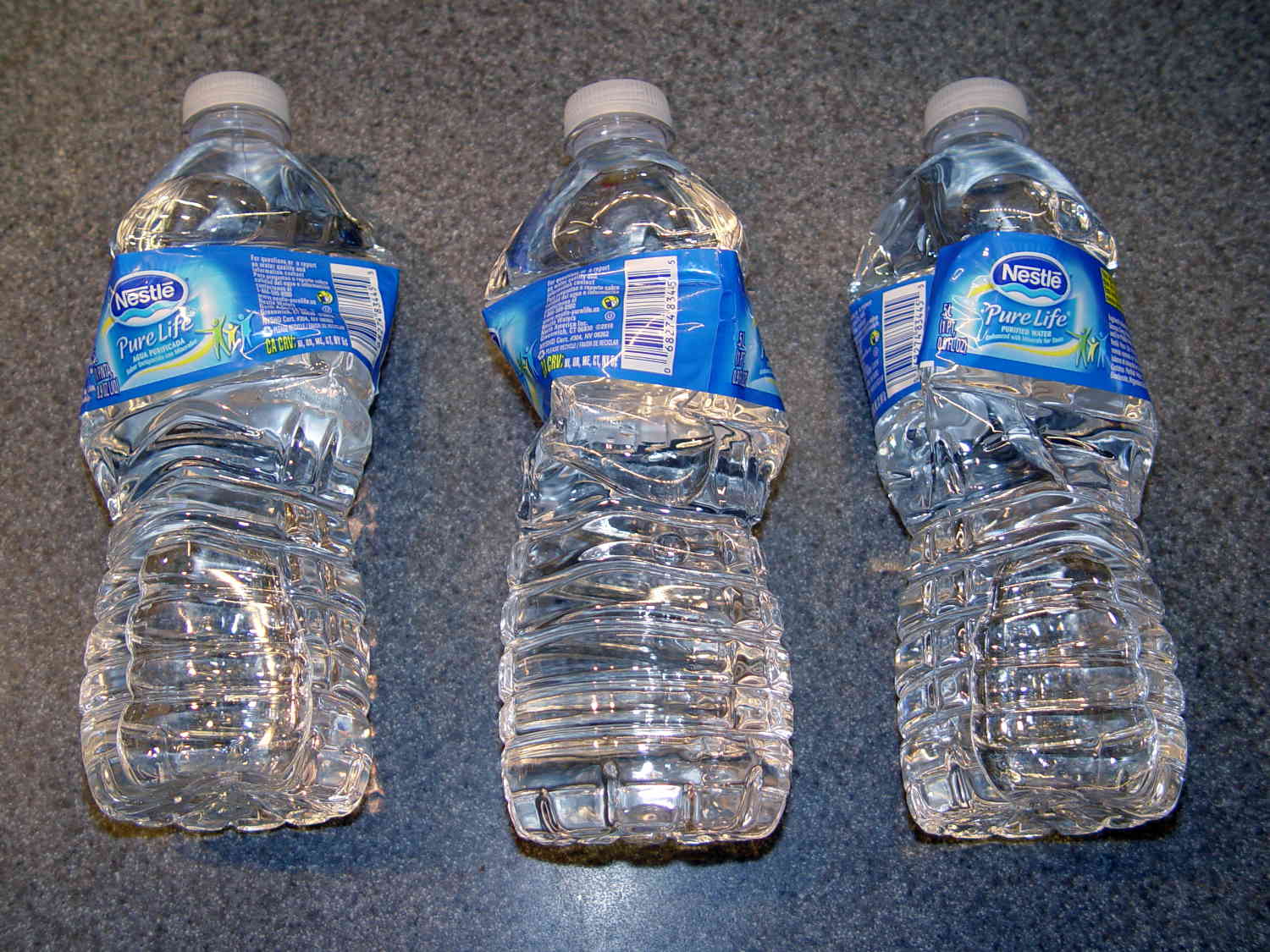
These emerged from a hidden corner of a basement shelf, where they’ve been sitting undisturbed for far too long:
Bottled Water Evaporation
I’ve known for a while that the PETE plastic used for nearly all bottles isn’t completely waterproof, but never had occasion to measure the results.
The laser-etched date code on the bottles says they “expired” in late August 2012, so, assuming one year of shelf life, they’ve been quietly evaporating for five years.
Sampling a few bottles shows a nearly uniform weight of 459 g. A drained bottles weighs 13 g, so let’s say the bottles now contain 445 g of water. They should start out with 500 g, although I’d be mildly surprised if it wasn’t a bit over that to prevent some dork from complaining about getting only 498 g.
Rounding in all the right directions, losing 60 g during five years works out to a tidy 1 g/month in a basement room at 60% RH.
The surface area of those wonderfully convoluted bottles might be 300 cm², so they lose 3 mg/cm²·month.
They’re near enough to 0.10 mm thick, which I’m sure is a compromise between reducing weight (and, thus, plastic cost) and incurring messy failures during normal handling. The evaporation rate surely varies as an inverse exponential of thickness, but I’m not going there.
I’m certain water bottlers know those numbers to several decimal places and can plot them versus all the interesting variables.
Memo to Self: don’t lose track of the water bottles!
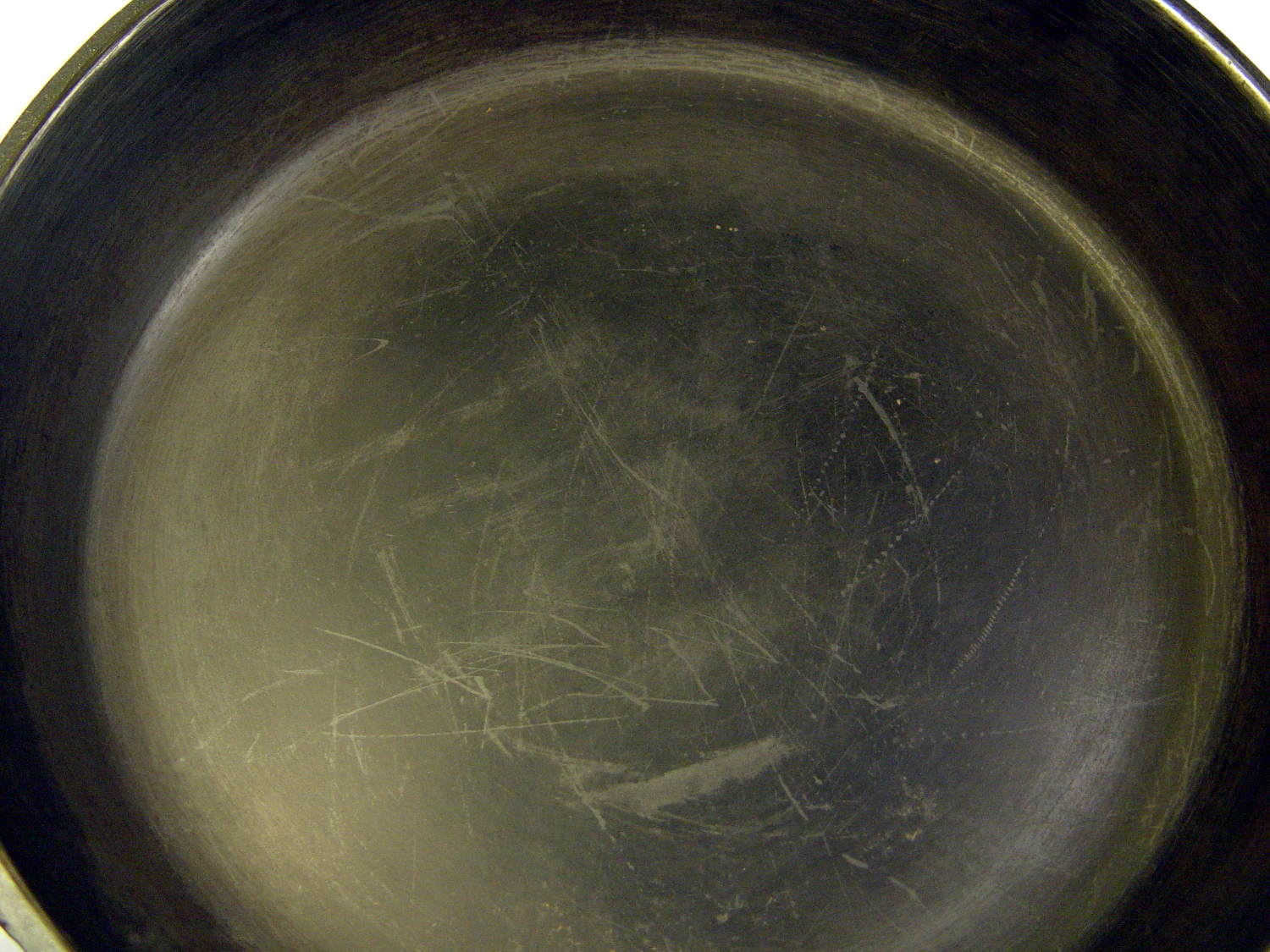
The seasoning in between the scuffs & scrapes remains in fine shape. Running the Scotchbrite pad around the perimeter obviously wears the coating, but, on the whole, nothing sticks anywhere.
I’ve started re-seasoning it after each use, which isn’t a big deal, and we’ll see how the scratches level out.
The lovely gray-black patina on the nubbly outside surface from the original moderate-woo oven seasoning requires no further attention.
Although I’m not the type of guy who thinks twinkly LEDs will enhance his apparel, one of Mary’s quilting thread sources had a closeout deal on their “wearable electronics”, including a large cone of stainless steel thread / yarn:
Stainless steel thread
… CR2032 lithium cells & holders, plus assorted LEDs on small PCBs.
The usual advice for connecting the thread seems to involve knotting it through the PCB holes, then sewing it to the backing fabric. Alas, I’m bad with knots and the stainless steel yarn isn’t all that cohesive:
Emerald LED – Stainless steel thread – knotted
The holder has an even smaller hole, but Mary gave me a needle threader that helped:
CR2032 – Stainless steel thread – knotted
Some advice found on The InterTubes suggests using copper crimp beads (perhaps with solder) to prevent the thread from completely unraveling and keep the thread loop tight around the PCB hole:
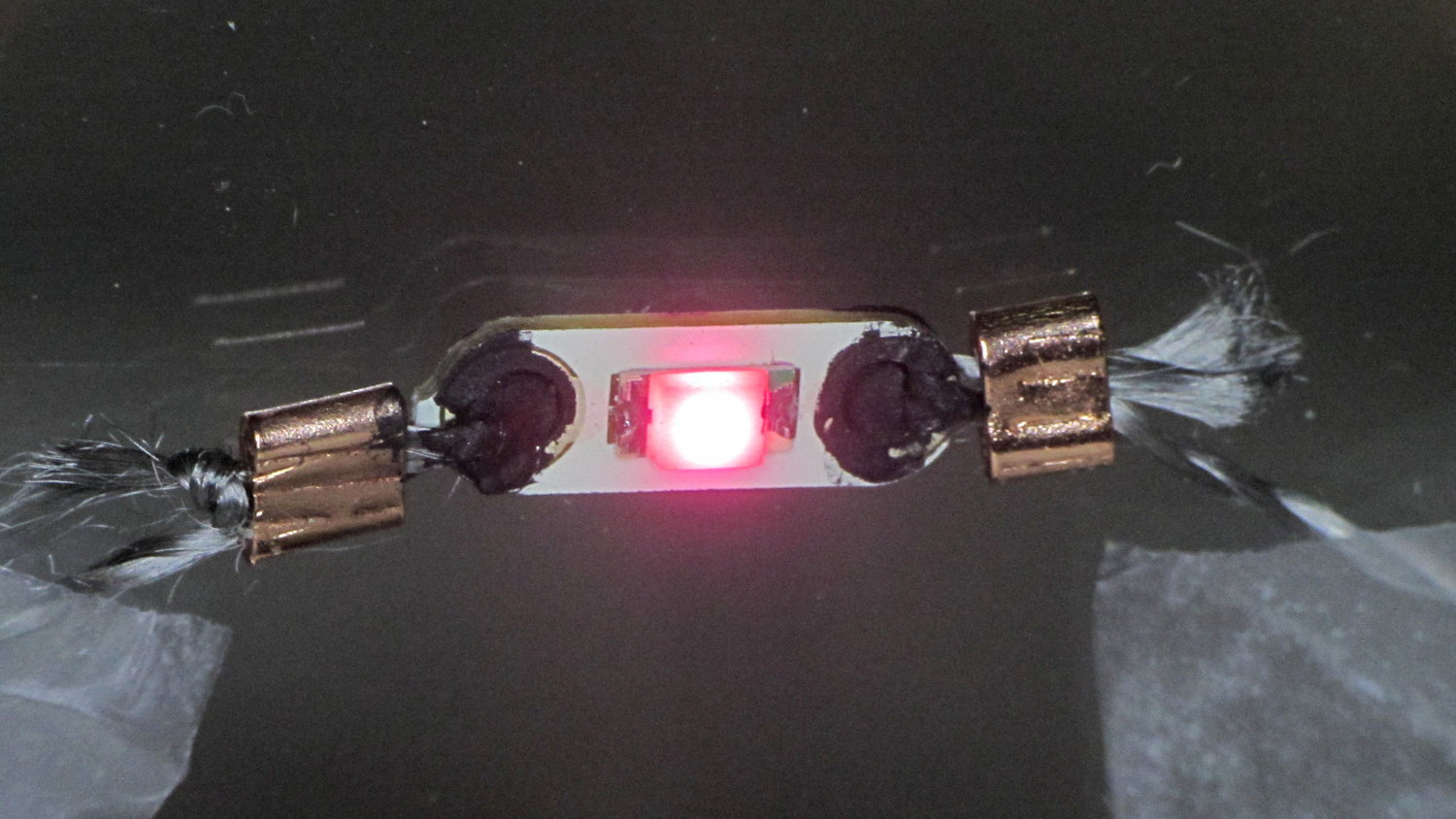
Rose LED – Stainless steel thread – Crimp bead – Wire Glue
Beadworkers use crimping pliers that leave a tidy dent; I mashed the beads with a needlenose pliers and called it good.
The LEDs seem to be white LEDs with filters or, perhaps, blue / violet LEDs with different phosphors: their forward voltages look more blue than red or green. Everybody in this field depends on the minor miracle that lithium cell voltages match blue LED forward drops closely enough that you can get away without a ballast resistor.; the cell’s 20-ish Ω internal resistance doesn’t hurt in the least. An interesting white paper (SWRA349) from TI explores the effect of current on cell capacity and how to size a parallel capacitor that reduces the peak battery current.
The black gunk is Wire Glue, which costs about five bucks for a lifetime supply in a small jar (or nigh onto 15 bucks via Amazon Prime) and is basically carbon powder in a water-based binder. Apply a dab to the connection and the water evaporates to leave the carbon + binder behind.
That works better on joints that don’t move, which is precisely what you don’t have in a wearable electronic situation. You can see the crumbling Wire Glue after the trip back from a Squidwrench meeting:
I also picked up a Permatext Rear Window Defogger repair kit (09117, if you’re looking) that seems to be a staggeringly expensive way to get a tenacious high-current conductive adhesive. More on that later.
The yarn runs 3.5 Ω/ft, much lower than Adafruit’s three-ply yarn (10 Ω /ft), and suggests itself for flexible connections, EMI gaskets, and suchlike.
Those LEDs are taped to the kitchen window, where they cast a cool light over the table, with the battery holders sitting on the sash. I’d just replaced some data logger CR2032 cells, so they’re running from nearly dead lithium batteries.
For future reference: 2.77 V and falling, pushing less than 2 mA through the LEDs.
Then you can insert Unicode characters without memorizing their hex values. Of course, you must memorize the Compose key sequences. Fortunately, they’re more-or-less mnemonic for the ones I occasionally use, which are hereby cherrypicked from that list.
Press-and-release the Compose key (right-Win), then type the characters as shown to get the symbol in quotes:
Producing Greek letters requires a “dead_greek” key, so it’s easier to start with bare hex Unicode values at U0391 (Α) and U03b1 (α) and work upward until you find what you need:
U03A3 Σ uppercase sigma
U03a9 Ω uppercase omega
U03C3 σ lowercase sigma
U03c9 ω lowercase omega
U03c4 τ lowercase tau
U03c0 π lowercase pi
U0394 Δ uppercase delta
U03F4 ϴ uppercase theta
U03B8 θ lowercase theta
U03D5 ϕ phi math symbol
U03A6 Φ uppercase phi
U03C6 φ lowercase phi
Odds and ends:
U00a0 | | non-breaking space
U2007 | | figure space (invisible digit space)
U202F | | narrow space
U2011 ‑ non-breaking hyphen
U2030 ′ prime (not quote)
U2033 ″ double-prime (not double-quote)
U2018 ‘ left single quote
U2019 ’ right single quote
U201C “ left double quote
U201D ” right double quote
U2245 ≅ approximately equal
U2264 ≤ less-than or equal
U2265 ≥ greater-than or equal
U221A √ square root
U221B ∛ cube root
U221C ∜ fourth root (yeah, right)
U221D ∝ proportional to
U2300 ⌀ diameter
U25CA ◊ lozenge
U2E3A ⸺ 2-em dash
U2E3B ⸻ 3-em dash
If you set the keyboard layout to US International With Dead Keys, maybe you (definitely not I) could remember all the dead keys.
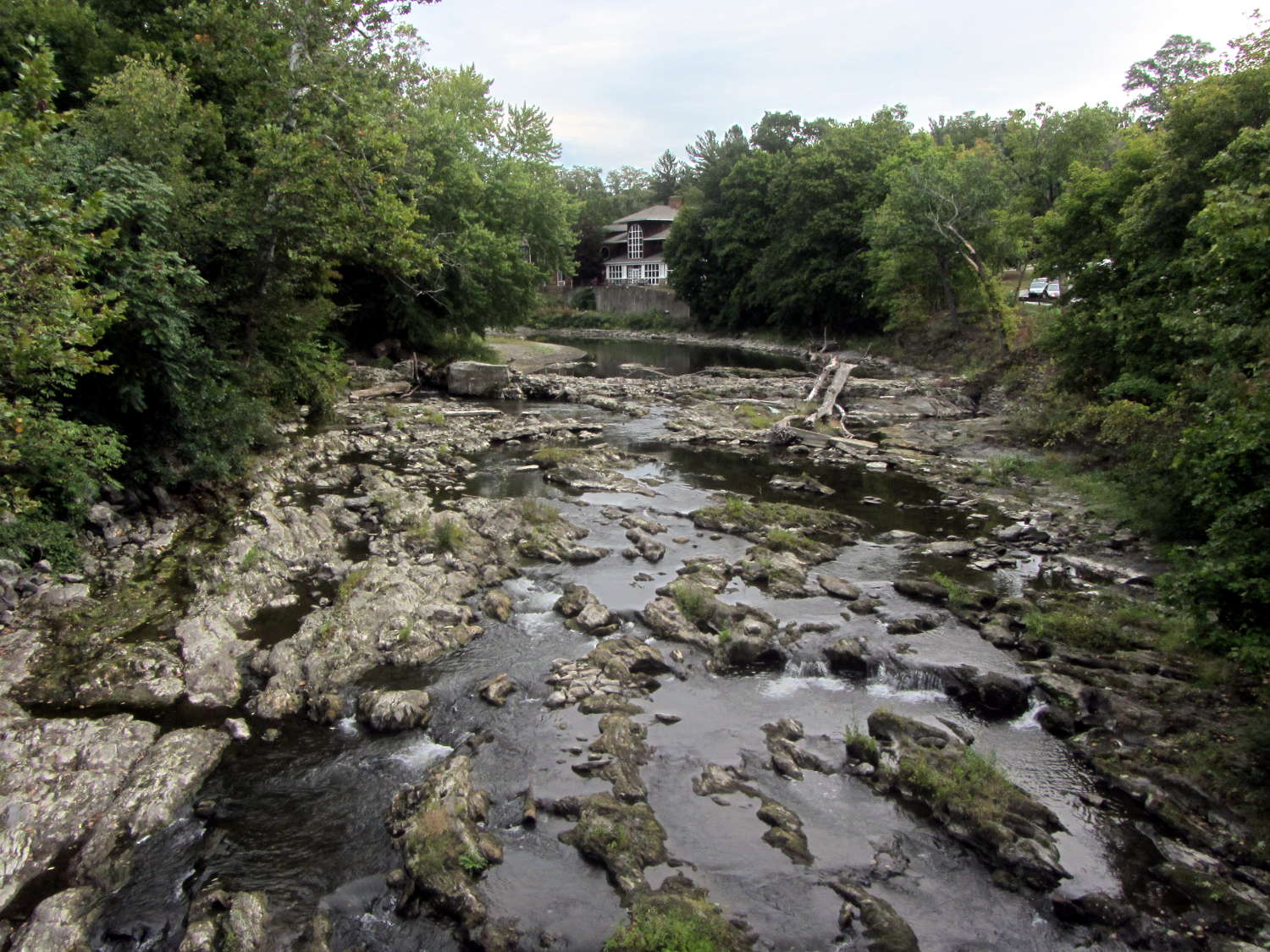
The Mighty Wappinger Creek runs low after months with very little rain and we saw more of the rocky streambed than any time in recent memory:
Wappinger Creek – streambed at Red Oaks Mill – 2016-09-23
Much of the deteriorated Red Oaks Mill Dam stands high and dry:
Wappinger Creek – Red Oaks Mill Dam – 2016-09-23
Just upstream from the bridge, you can see how water carves potholes into the rock:
This slideshow requires JavaScript.
Back in the day, my parents took us to see the far more impressive Susquehanna River potholes (*) near Harrisburg. They range from finger-size pits up to craters large enough to comfortably hold an adult. I’m sure one of their photo albums, now tucked in our closet, contains similar pictures of those holes.
Searching for red oaks mill dam will turn up previous posts and pictures for comparison.
(*) Exploration of the pages linked there will show how, with sufficient mental effort, one can force-fit a non-erosion-based explanation of eroded potholes to match a pre-conceived timeline and narrative. Your opinion of that narrative and the effort required to fit evidence into it may differ from mine.