Ed Nisley's Blog: Shop notes, electronics, firmware, machinery, 3D printing, laser cuttery, and curiosities. Contents: 100% human thinking, 0% AI slop.
The little red shift indicator tab in the SRAM X.9 rear shifter on Mary’s bike snapped:
SRAM Shift Indicator – broken tab
In a triumph of hope over experience, I tried gluing the pieces with a bit of fixturing and a dab of IPS #3 solvent:
SRAM Shift Indicator – gluing
Didn’t work any better than the last time, of course. Every gear shift snap must apply 1000 G to that poor little tab…
What’s new & different: one can now obtain Official Repair Kits consisting of the indicator tab, the plastic cover, and the two screws for $6.47 delivered from eBay.
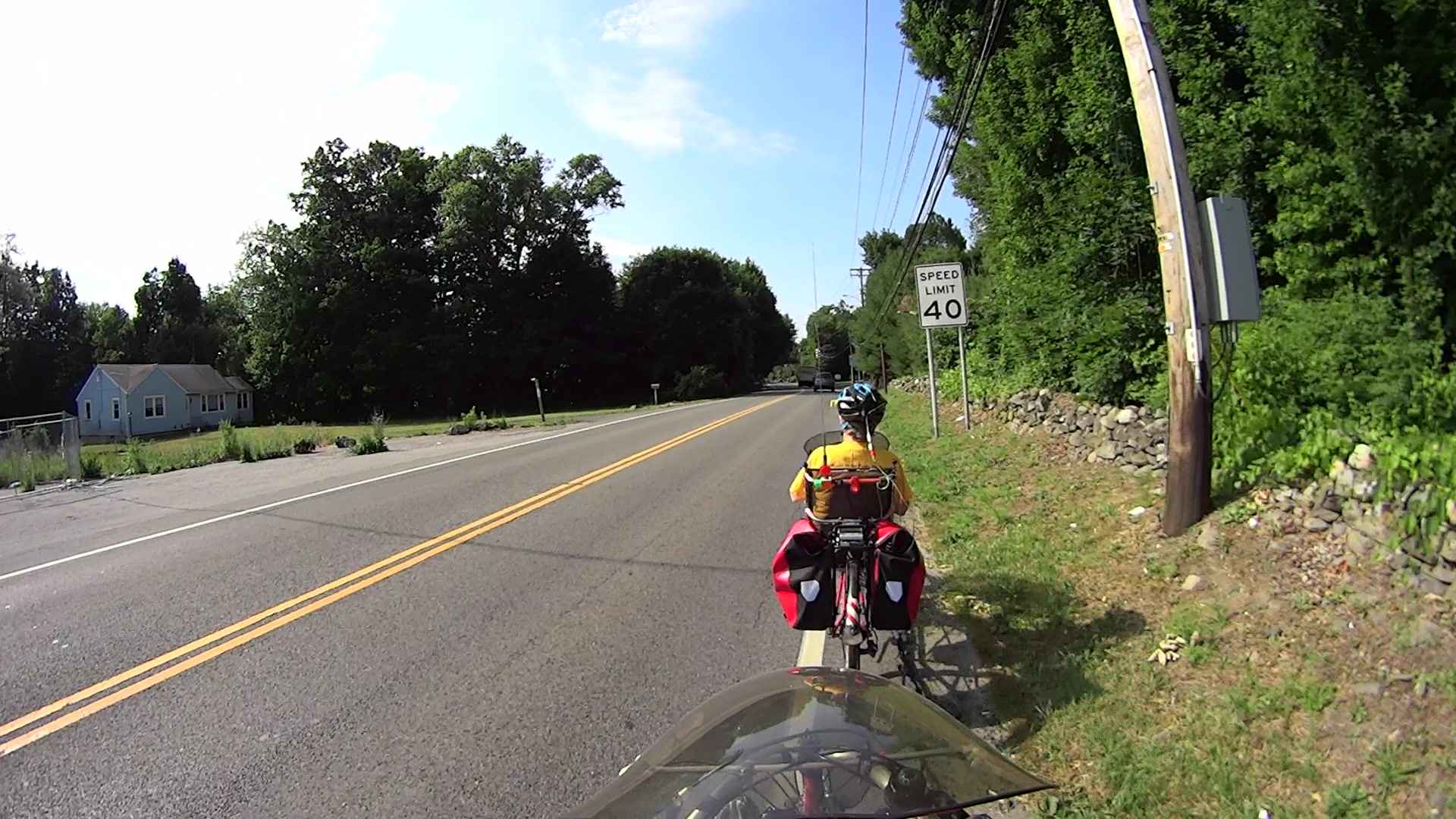
We often see Red Tailed Hawks circling high above the area, but this one came closer than most (clicky for more dots):
Red Tailed Hawk Red Oaks Mill 2016-06-27 – 0195
Surely you can see it, just to the left of the speed limit sign? It took us by surprise, too!
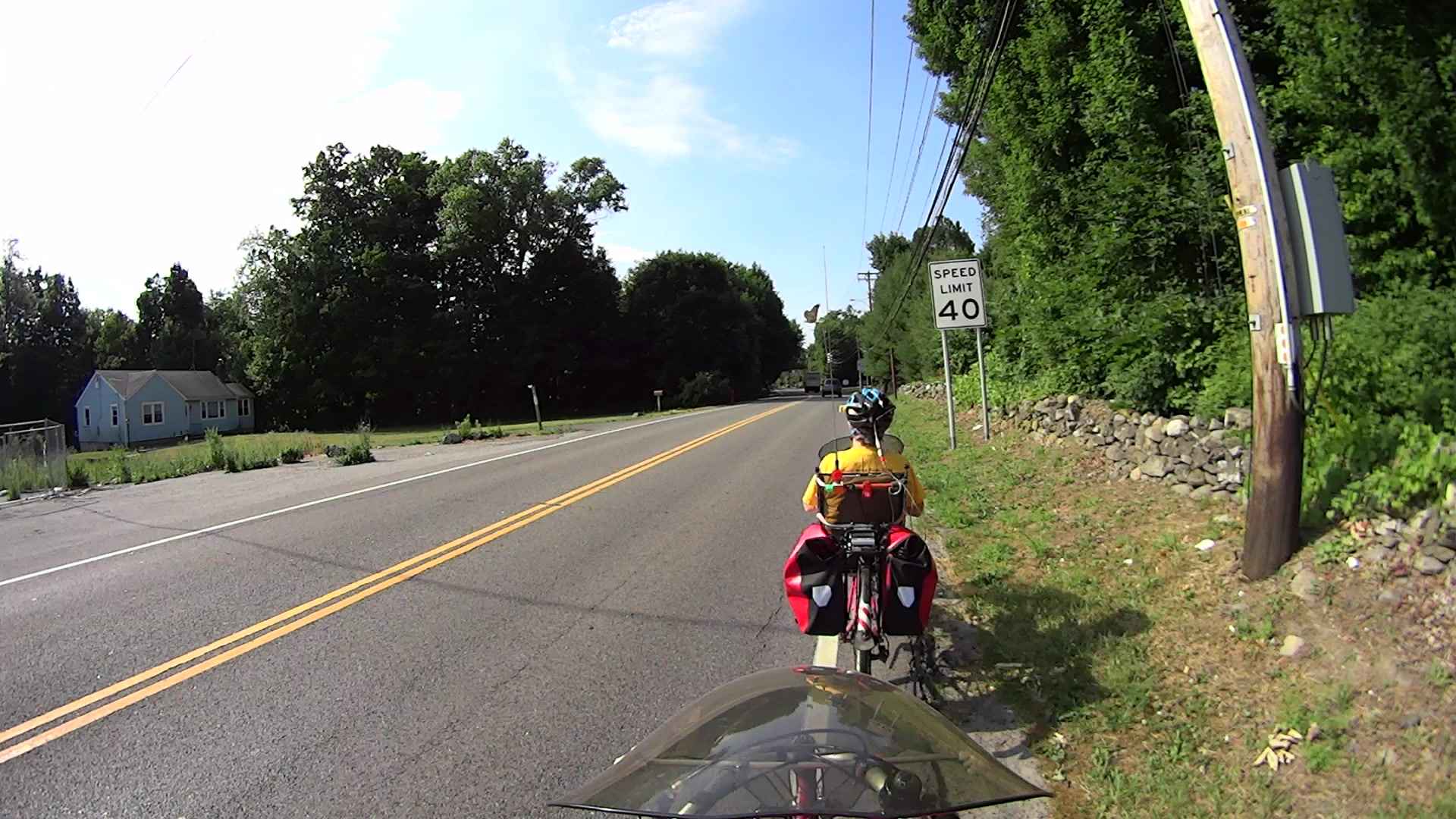
Near the middle of the road:
Red Tailed Hawk Red Oaks Mill 2016-06-27 – 0211
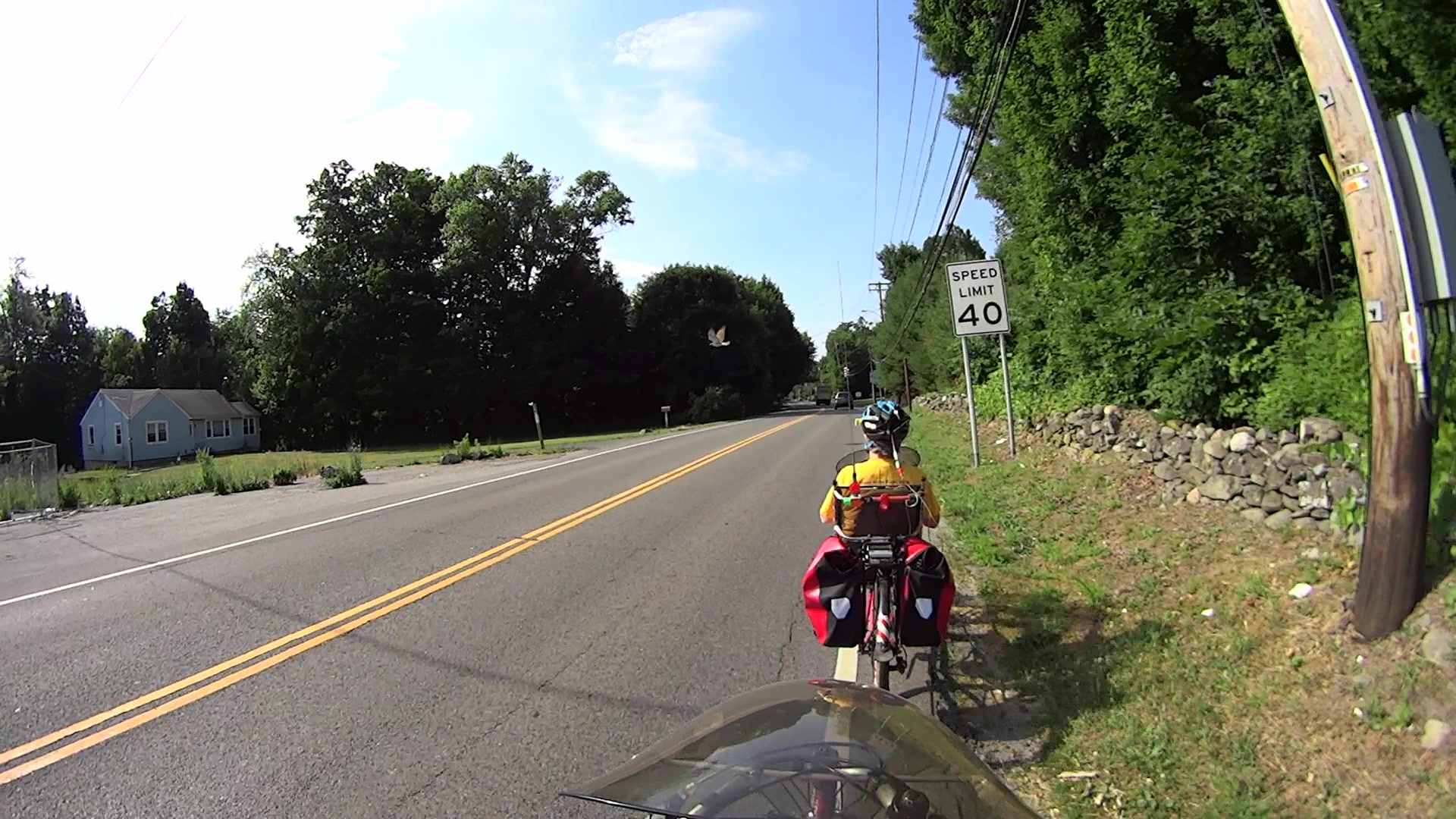
And away:
Red Tailed Hawk Red Oaks Mill 2016-06-27 – 0227
Perhaps it’s taking a break to enjoy just flying around? That’s about what we were doing; it was a fine morning for that sort of thing.
Squinting at a few more frames, it’s flying at 18 mph with 4 wingbeats per second. Not in a hurry, that’s for sure, and still traveling faster than we were.
We spotted a few Gas Hawks above the airport, too, but they stayed too far away for pictures…
I reported this short cycle time to the Dutchess County DPW, back in September 2015, and got this response:
Thank you for contacting Dutchess County DPW about this matter. I will ask our Traffic Engineer to review the signal timing at CR 104/CR110 (New Hackensak/Jackson) to see if adjustments can be made. The primary factors used to set the current signal timing are operational efficiency, safety and Level of Service for motor vehicles. If there are signal timing adjustments which can achieve these goals and provide for safer passage of bicycles, we will explore those options. I will also ask our Traffic Engineer to investigate altering the sensitivity of the detector system to detect bicycles. I will share our findings with you. Thank you again for your comments.
Robert H. Balkind, P.E.
Deputy Commissioner
Dutchess County Department of Public Works
Emphasis mine, of course. Translation: “It’s not going to happen.”
I pinged him a few weeks later:
That review has not been done yet. I will advise you when our investigation is complete.
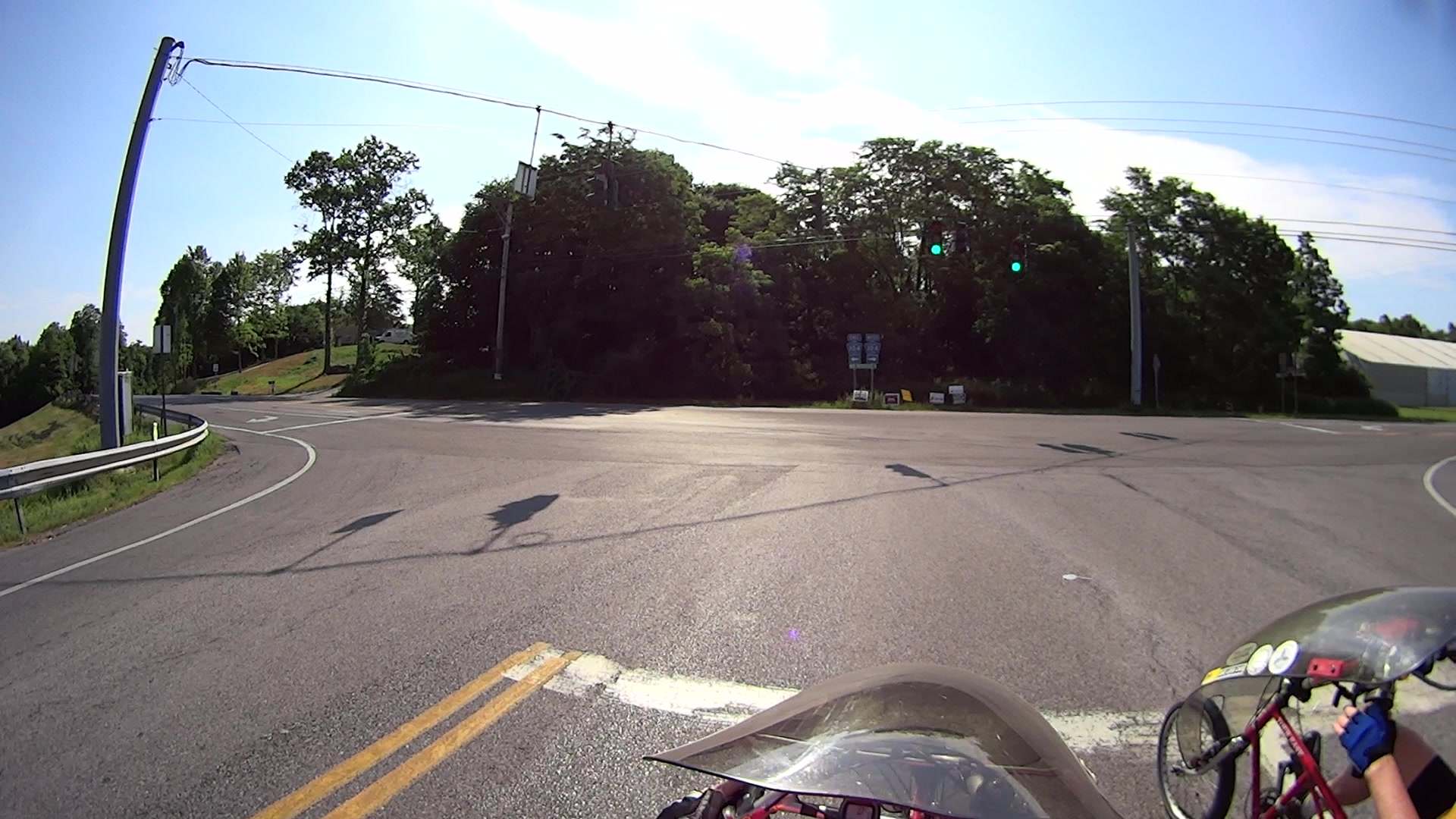
So, here’s what the signal timing looks like these days…
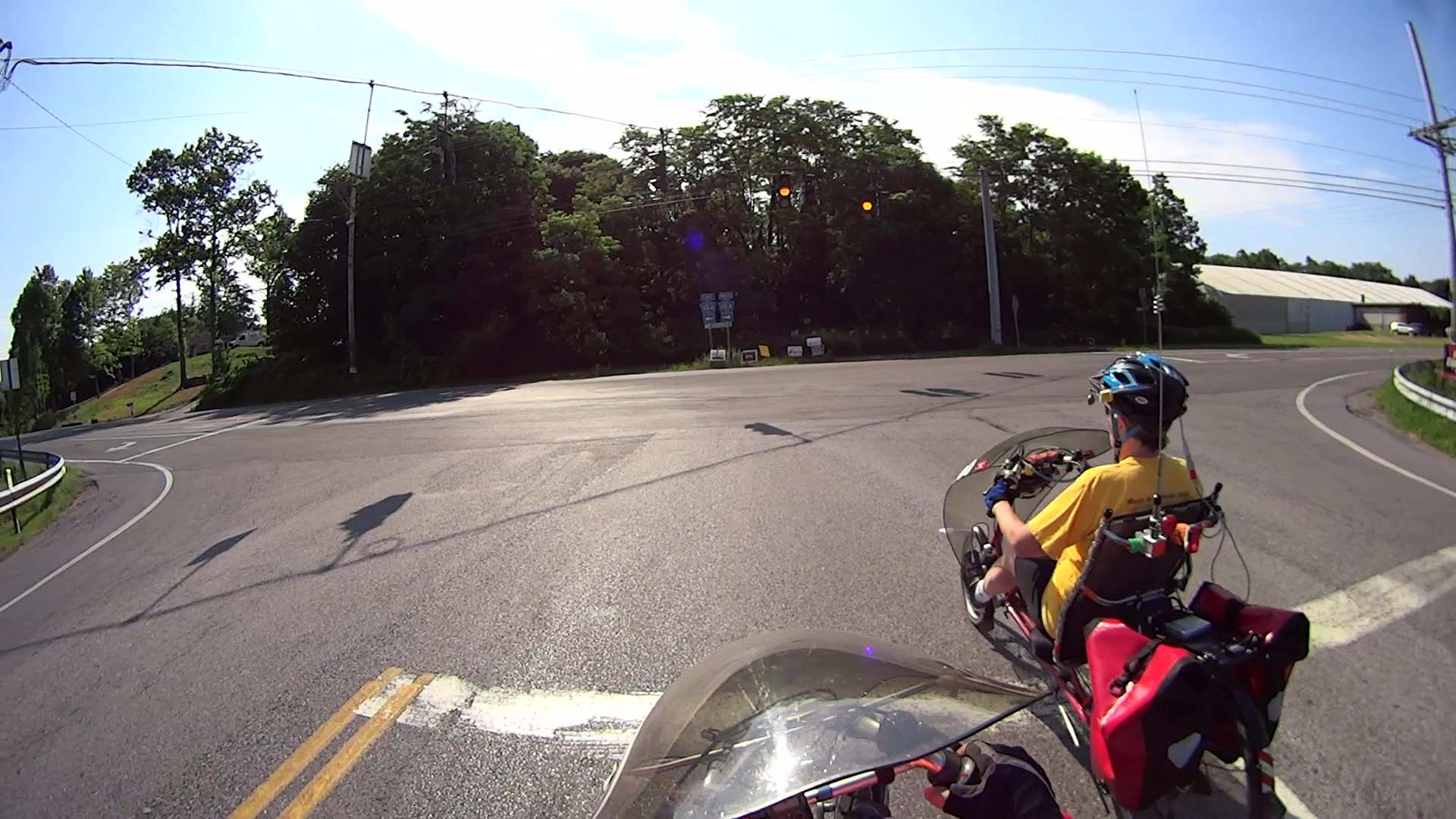
T = 0.000 s – Green
Jackson at New Hackensack – Signal Timing 2016-06-27 – 0218
On the positive side, a pair of big long wheelbase recumbents stopped in the middle of the lane seem sufficient to trigger the traffic detector!
T = 3.150 s – Yellow
Jackson at New Hackensack – Signal Timing 2016-06-27 – 0407
We’re definitely not fast enough off the block; Mary thought she had time for a sip of water. We started rolling less than two seconds after the green appeared, which is as fast as one should enter an intersection around here.
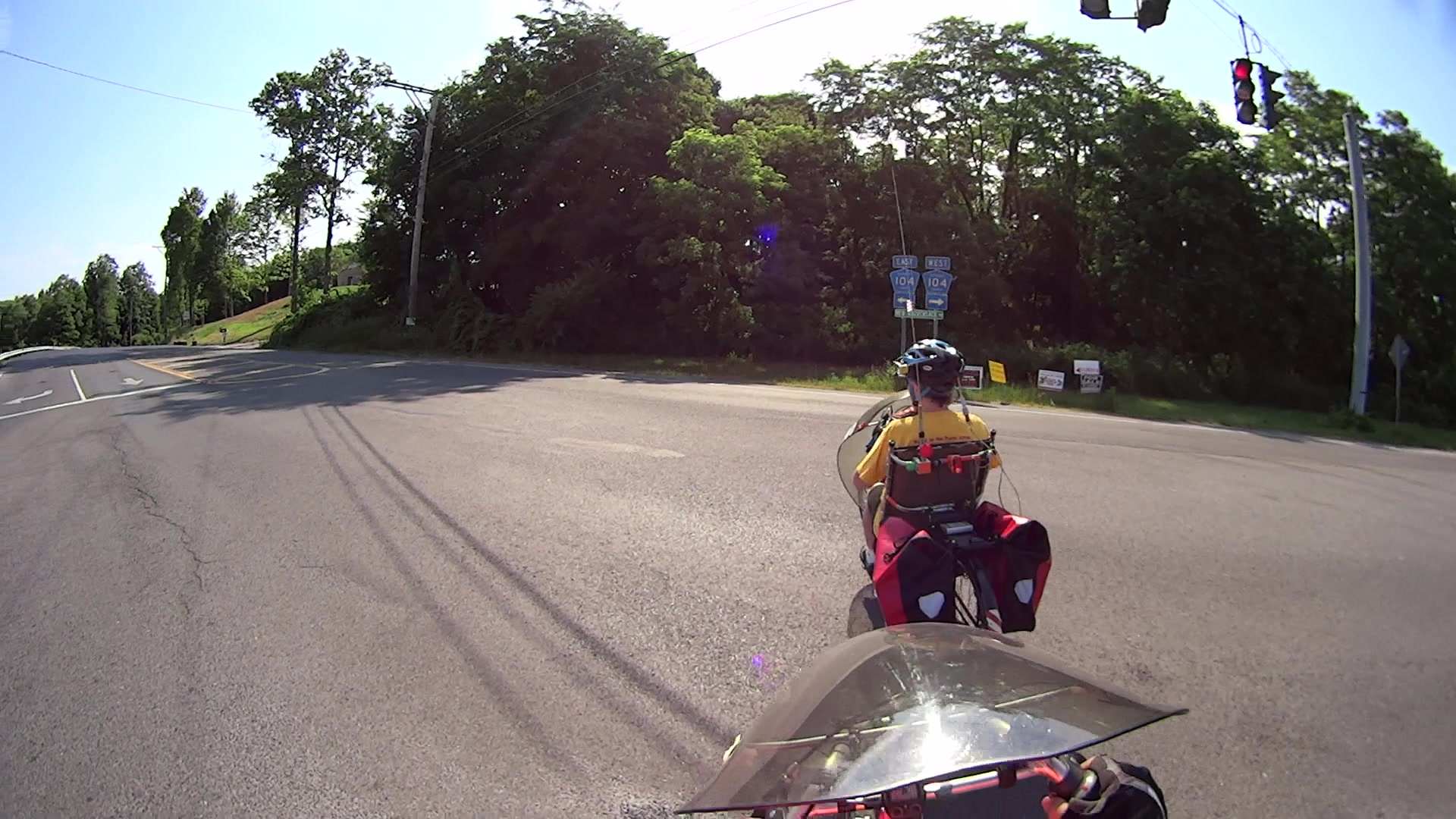
T = 8.000 s – Red
Jackson at New Hackensack – Signal Timing 2016-06-27 – 0698
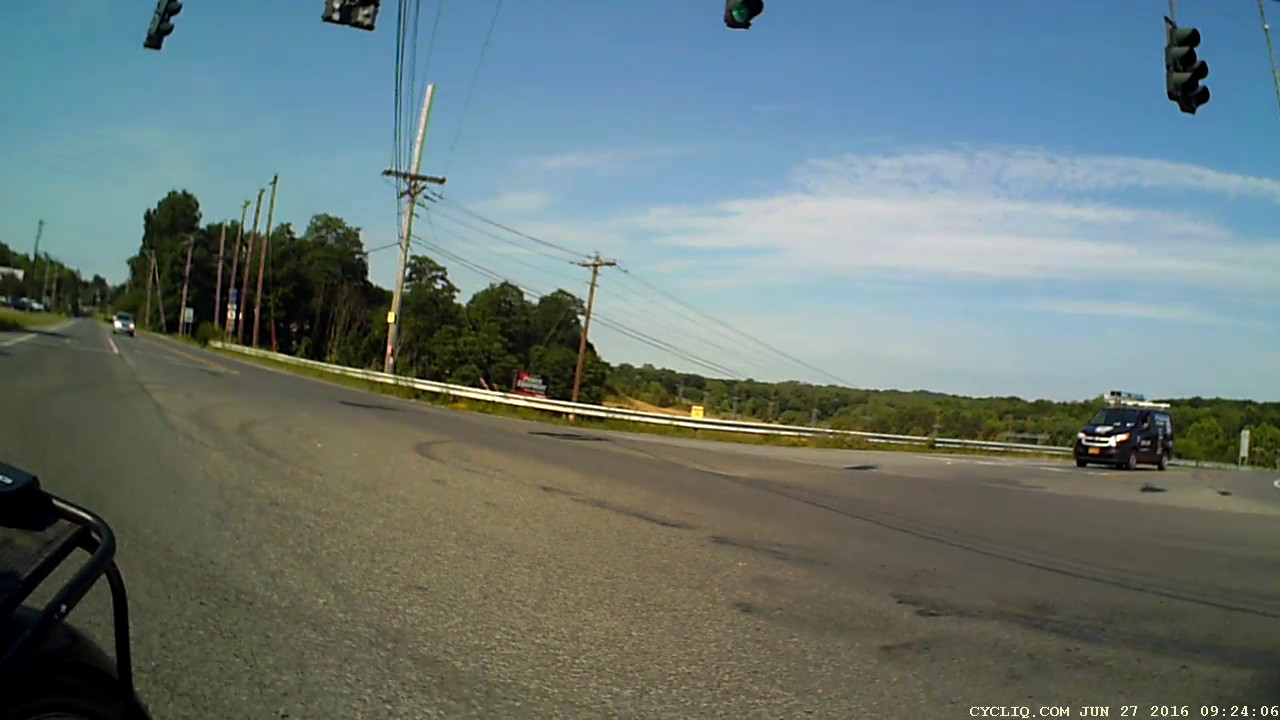
T = 13.000 s – Opposing Green
Jackson at New Hackensack – Signal Timing 2016-06-27 – 13 s – rear
In round numbers, it takes us about 15 seconds from a cold start to reach the far side of that intersection. I can do it in a bit less, but Mary can’t, even though we’re in pretty good shape for the shape we’re in.
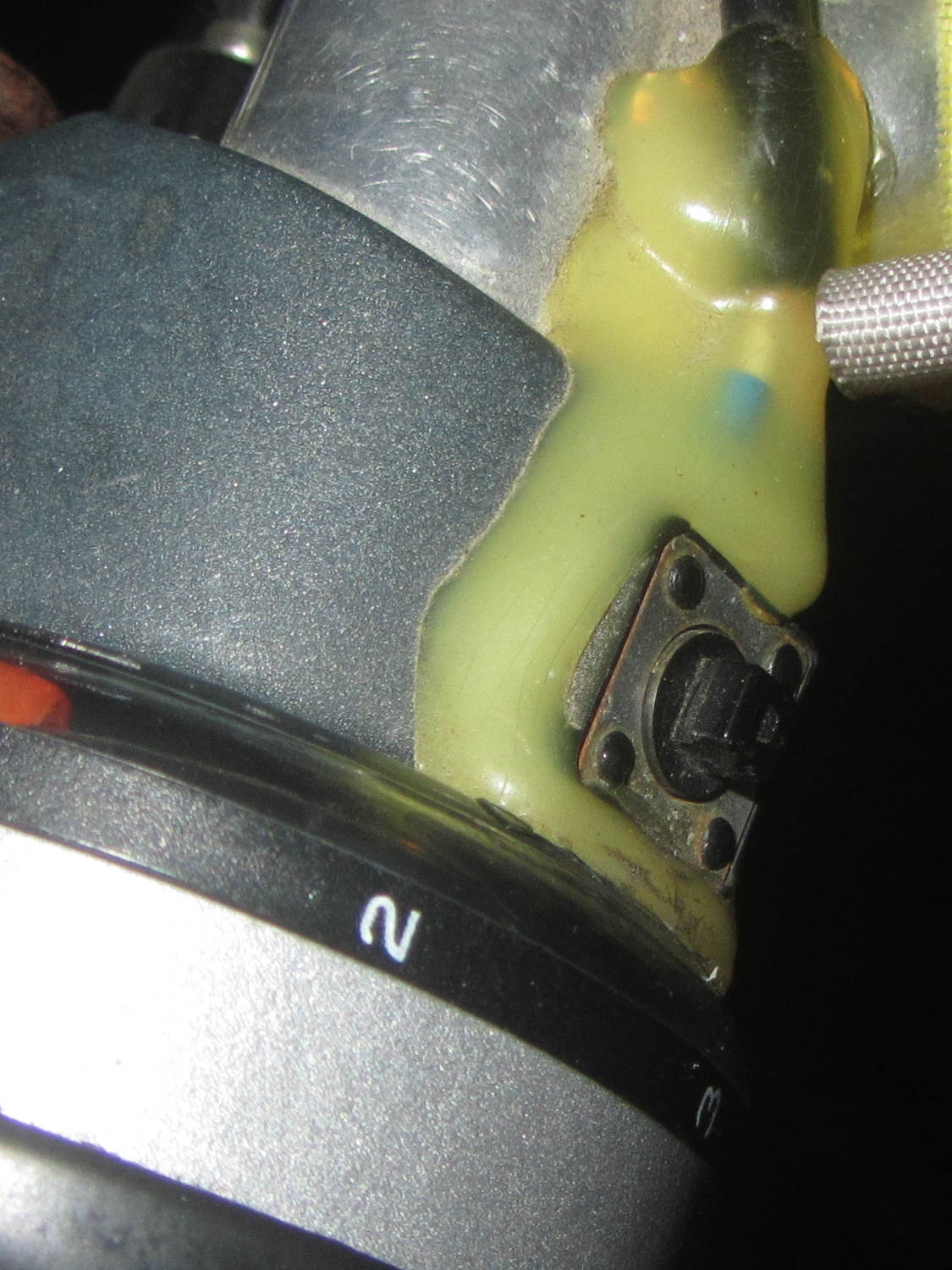
Long ago, Mary picked out a PTT switch with a raised, square post that provided a distinct shape and positive tactile feedback:
PTT Button – bare post
Time passes, she dinged her thumb in the garden, and asked for a more rounded button. I have some switches with rounded caps, but replacing the existing switch looked a lot like work, sooooo:
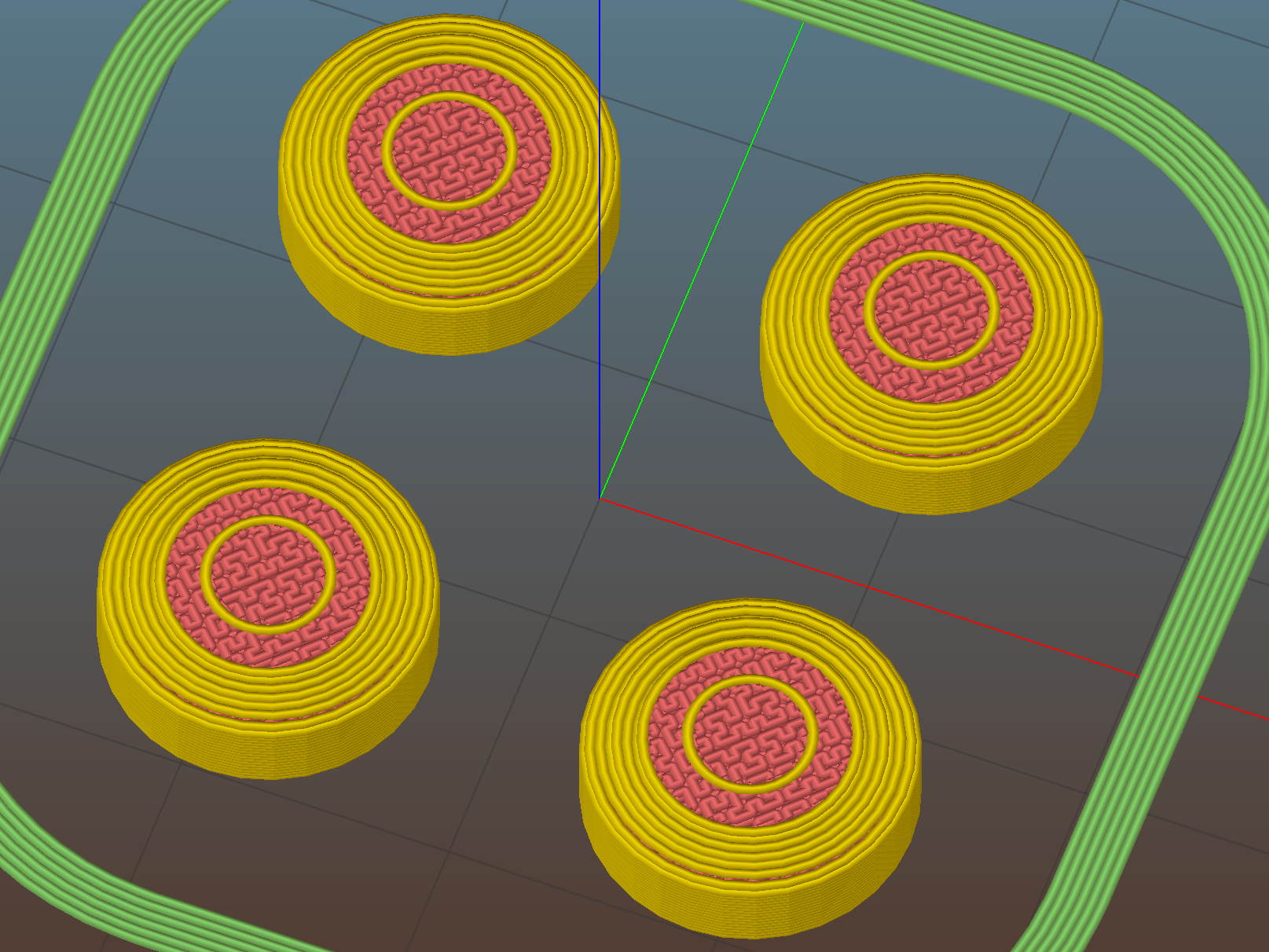
PTT Button Cap – Slic3r preview
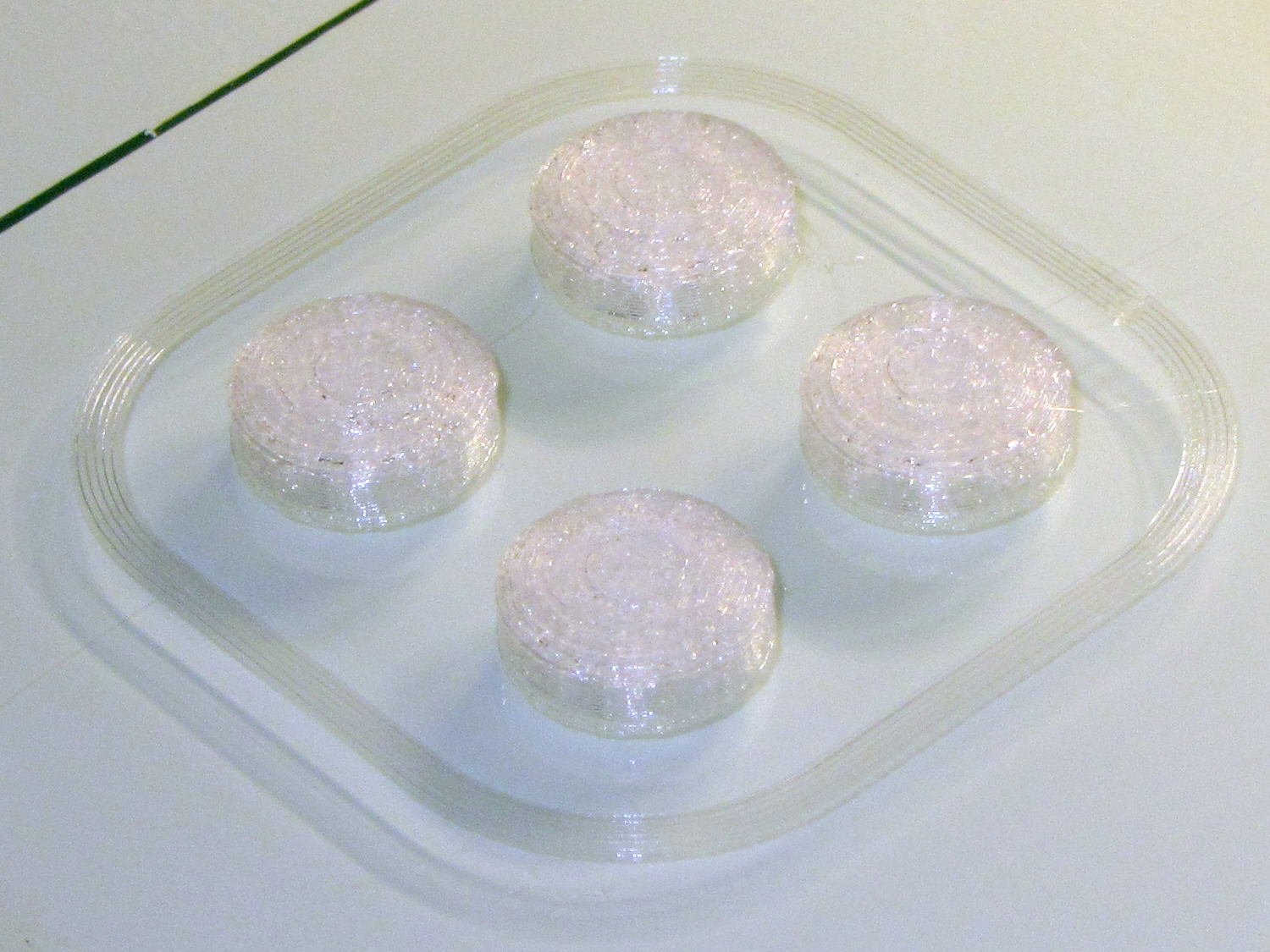
As with all small objects, building them four at a time gives the plastic in each one time to cool before slapping the next layer on top:
PTT Button – on platform
The hole in the cap is 0.2 mm oversize, which results in a snug press fit on the small ridges barely visible around the post in the first image:
PTT Button – rounded cap
Rather than compute the chord covering the surface, I just resized a sphere to twice the desired dome height (picked as 6 threads, just for convenience) and plunked it atop a cylinder. Remember to expand the sphere diameter by 1/cos(180/sides) to make it match the cylinder and force both to have the same number of sides.
This file contains hidden or bidirectional Unicode text that may be interpreted or compiled differently than what appears below. To review, open the file in an editor that reveals hidden Unicode characters.
Learn more about bidirectional Unicode characters
Yes. Yes, it does, at least from a grass-like ground cover.
I’d leaned the bike against a Blue Loo, turned my back, took four steps, and wham down it went.
The upper front rim of the skeleton case ended up firmly pressed against the ground, with the lens safe. A slight smear from the greenery wiped off easily, with dirt embedded between the fake fur and the case, exactly where the lens would stick out in its normal orientation.
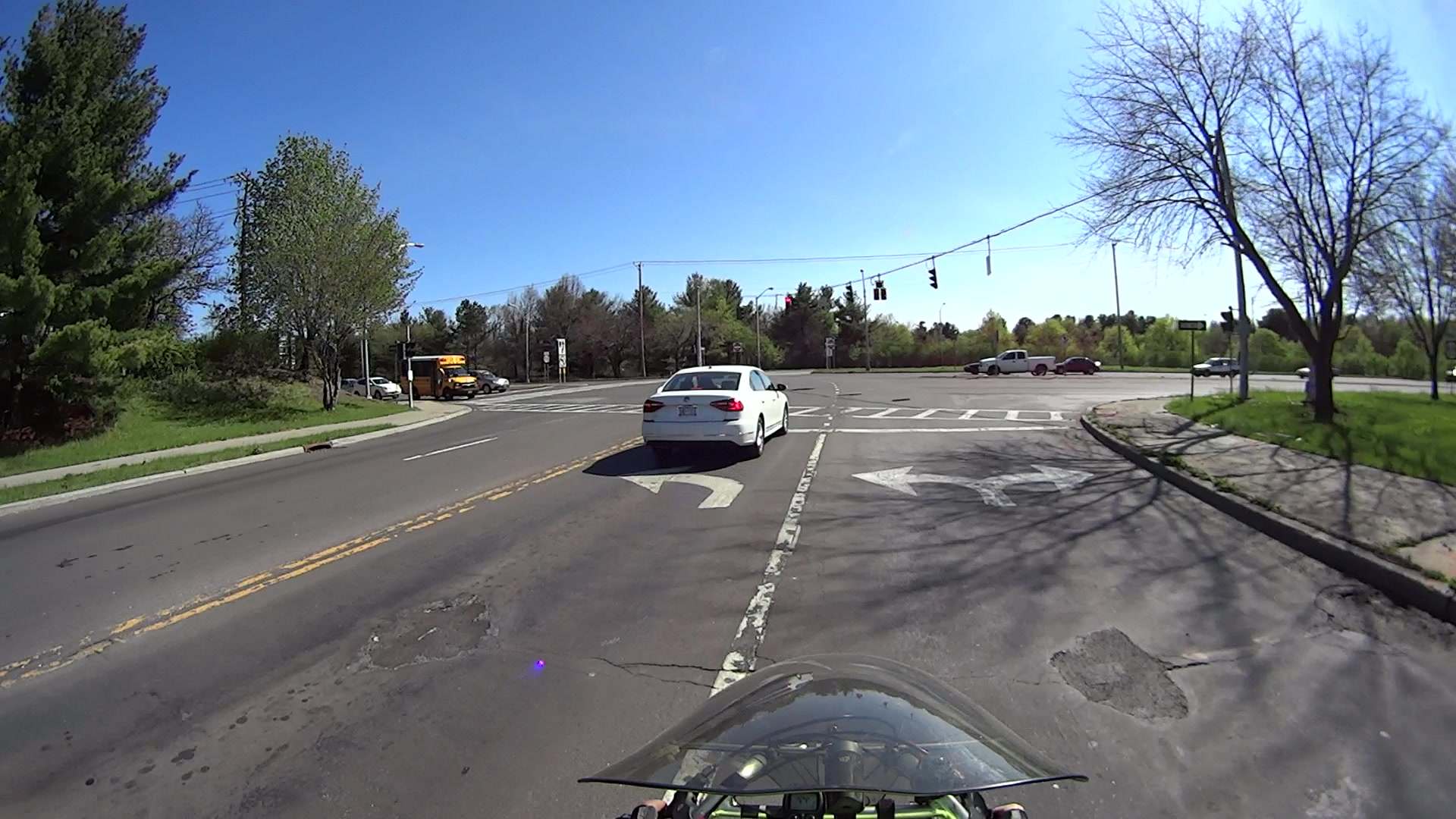
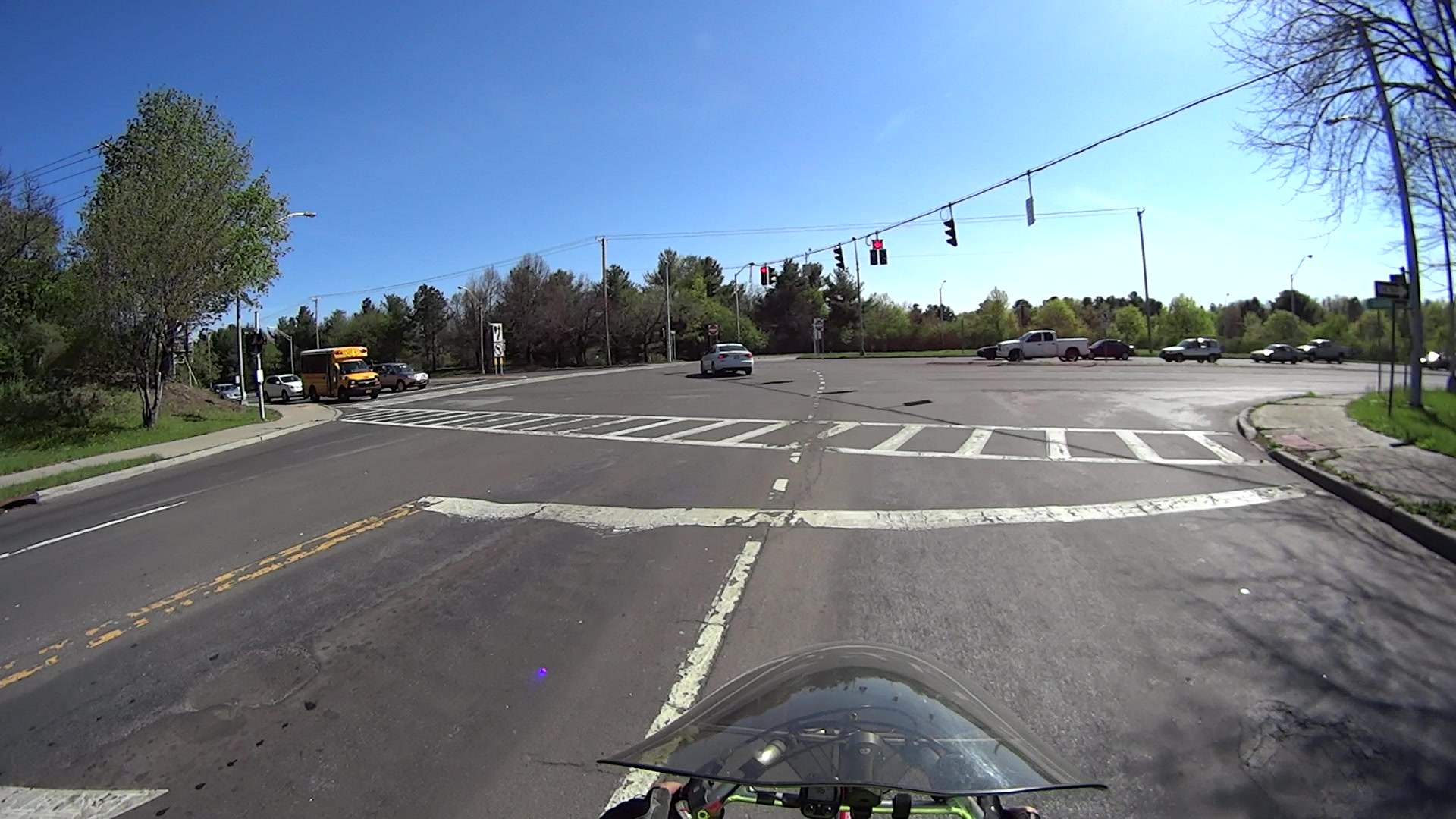
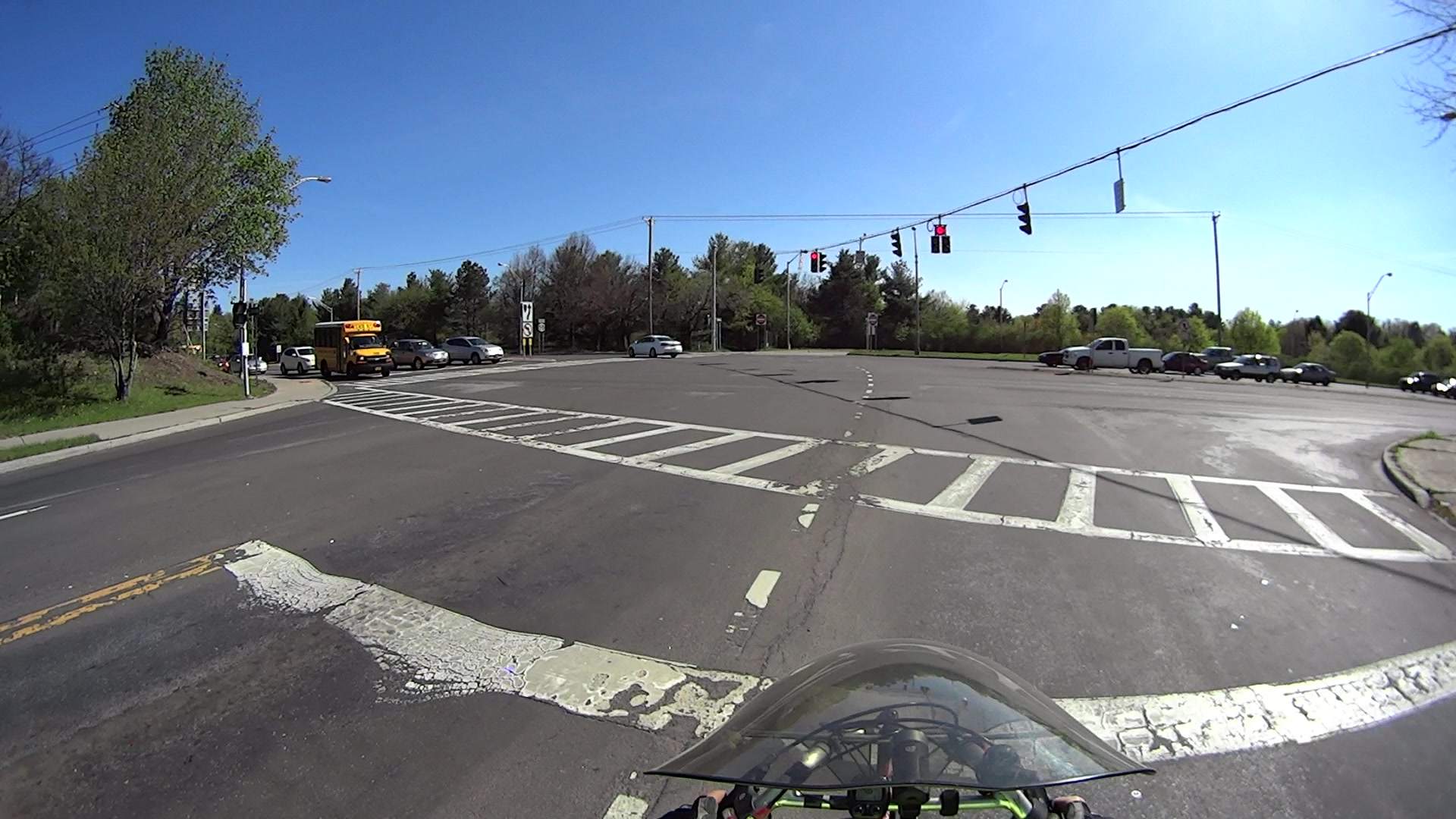
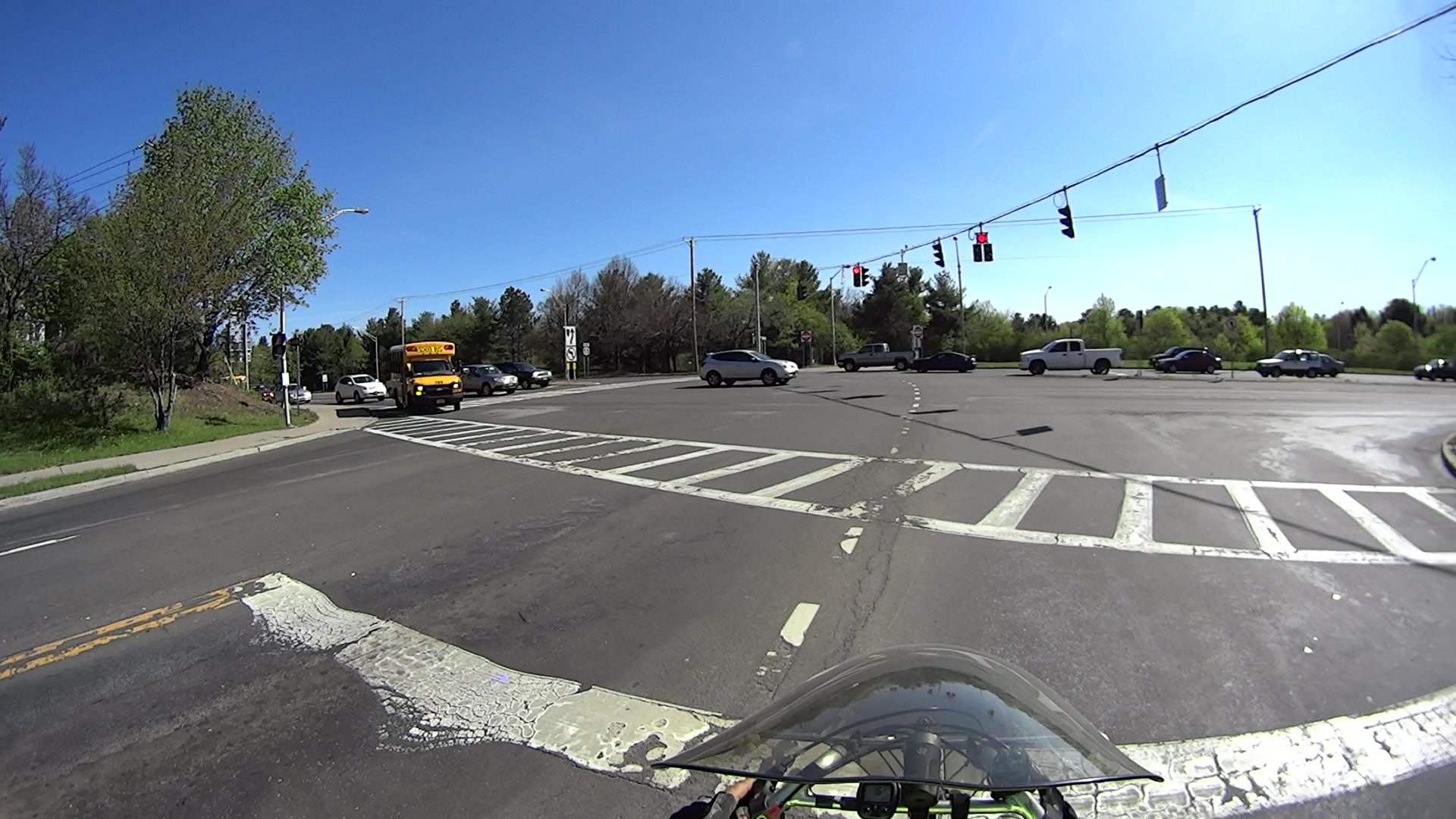
Word from the BPAC meeting says that NYSDOT re-timed the signals on both ends of Burnett Blvd, because of the increased traffic from the closed bridges on Degarmo Rd. Here’s what that looks like from a bicyclist’s perspective; you may want to compare this with othermeasurements in the recent past.
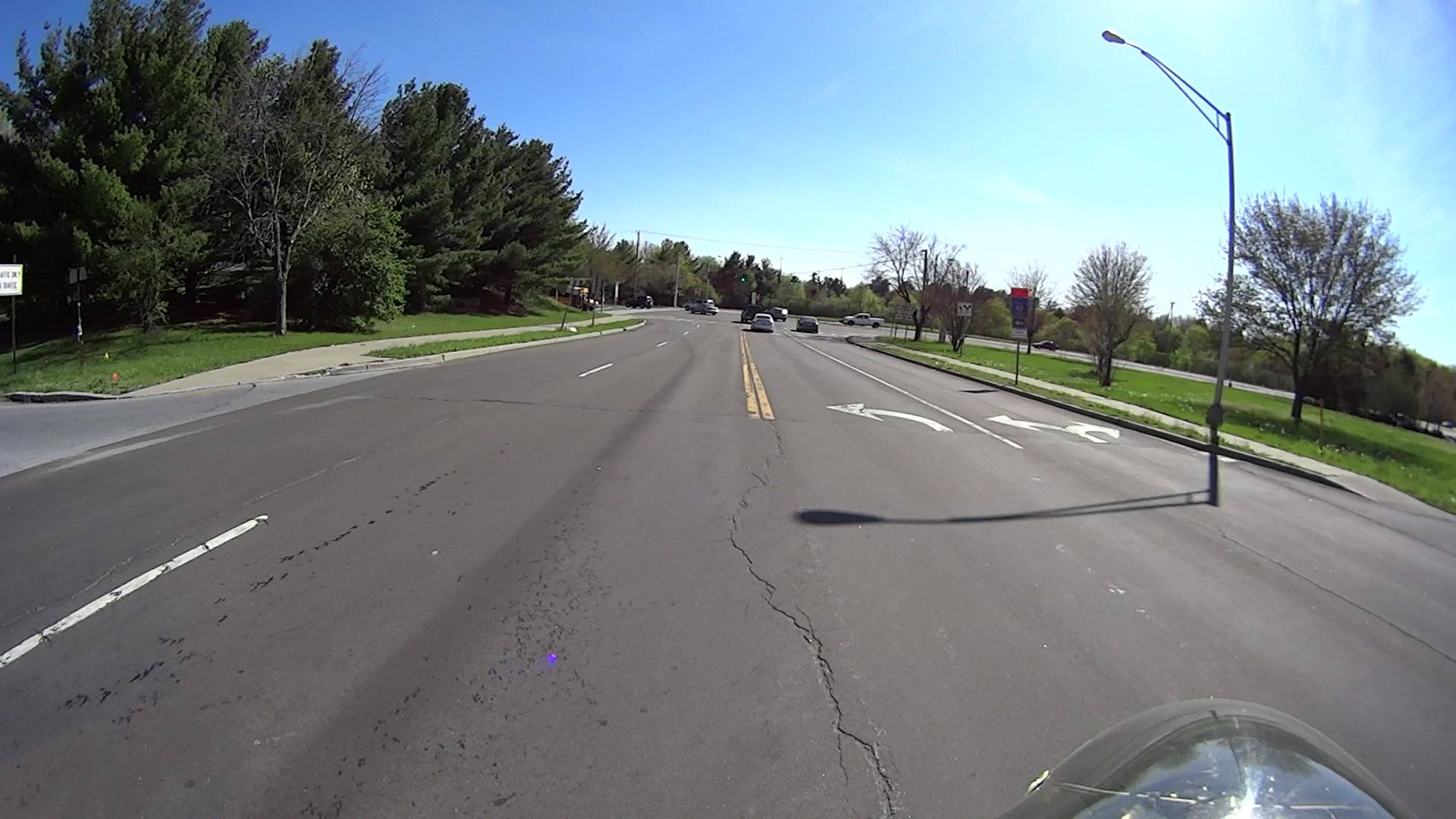
T=0.00 – I’m approaching the light and obviously won’t get through on the current cycle. However, the car in the left lane is just clearing the sensor loop, so we know the sensor has been triggered:
As nearly as I can tell, the green-to-yellow change has decreased from about 7 s to maybe 4 s; that may be influenced by the car position / speed across the loop. NYSDOT definitely hasn’t increased the minimum delay to provide additional time for bicyclists.
The yellow-to-red transition may have decreased from 5 s to 4 s; it definitely hasn’t increased.
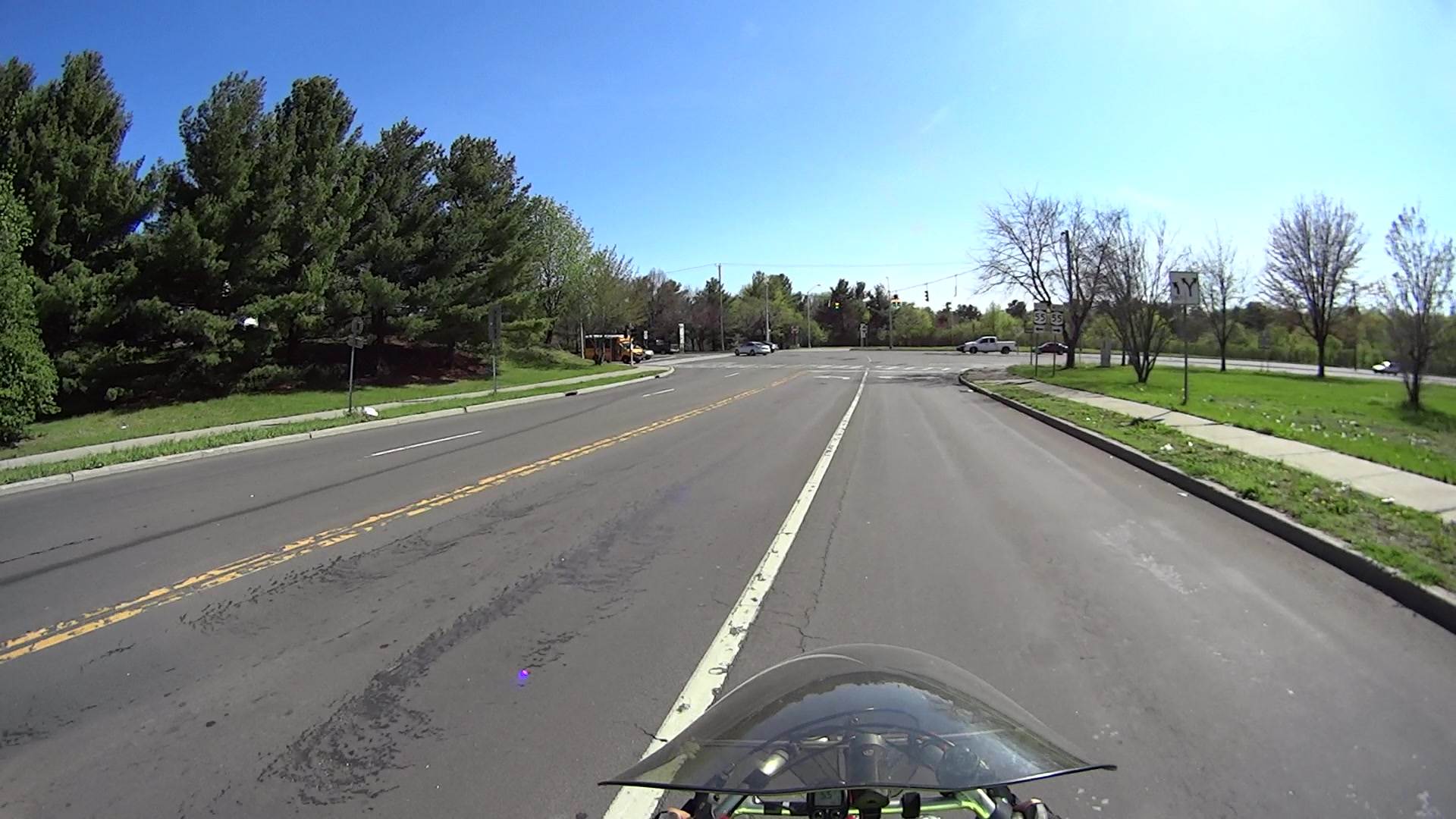
T=10.433 – The white car deliberately blew through the yellow and red signals:
T=12.000 – The white car has almost cleared the intersection, 3.567 s after blowing through the red light, and cross traffic in Rt 55 has started to move:
It’s impossible to tell from my position when the Rt 55 traffic saw their green signals, but they started moving 3.5 s from the time the signal in our direction turned red. I’d previously measured that at 1.333 s, so NYSDOT seems to have lengthen the all-red overlap.
T=14.433 – Cross traffic on Rt 55 fills the intersection:
That’s 10.3 s from the Burnett signal turning yellow, which usually happens when we’re just barely into the intersection; we need at least 15 s to reach the far side of all six lanes. Obviously, cross traffic on Rt 55 must notice that we haven’t cleared the intersection when their signals turn green and avoid running over us; that’s legally required, but it’s obvious NYSDOT (still) isn’t helping bicyclists get across the intersection.
The NYSDOT regional office behind my right shoulder has a bike rack. We’ve never seen any bikes in it, so it’s equally obvious NYSDOT doesn’t practice dogfooding. I’ve never been able to invite / persuade / shame anyone from NYSDOT to ride along with us, so they can show me why their design really does “mak[e] our highway systems safe and functional for all users“.
It didn’t involve waiting: by random chance, a fifth NYSDOT road repair crew happened to be in that area when Mary rode by. She stopped directly atop the sinkhole and screamed at the flagger until he came over. She explained the problem and, wonder of wonders, this time they put asphalt in the right spot.
The patch looks hand-tamped and will pop out after a while, but it’ll be great while it lasts.