Ed Nisley's Blog: Shop notes, electronics, firmware, machinery, 3D printing, laser cuttery, and curiosities. Contents: 100% human thinking, 0% AI slop.
So I picked up a J5-V2 Tactical Flashlight as a possible bike headlight, on the basis of a 750 (“max output”) lumen LED, zoomable beam, and use of standard 18650 lithium cells (rather than USB charging). The geometry required to stick it on the Tour Easy remains a puzzle, but an az-el dingus replacing an upper fairing mount may work well enough.
Anyhow, it seems the LED in this flashlight fell on the floor during assembly, where the (silicone?) LED emitter lens picked up a remarkable amount of dirt:
J5-V2 Flashlight – LED crud
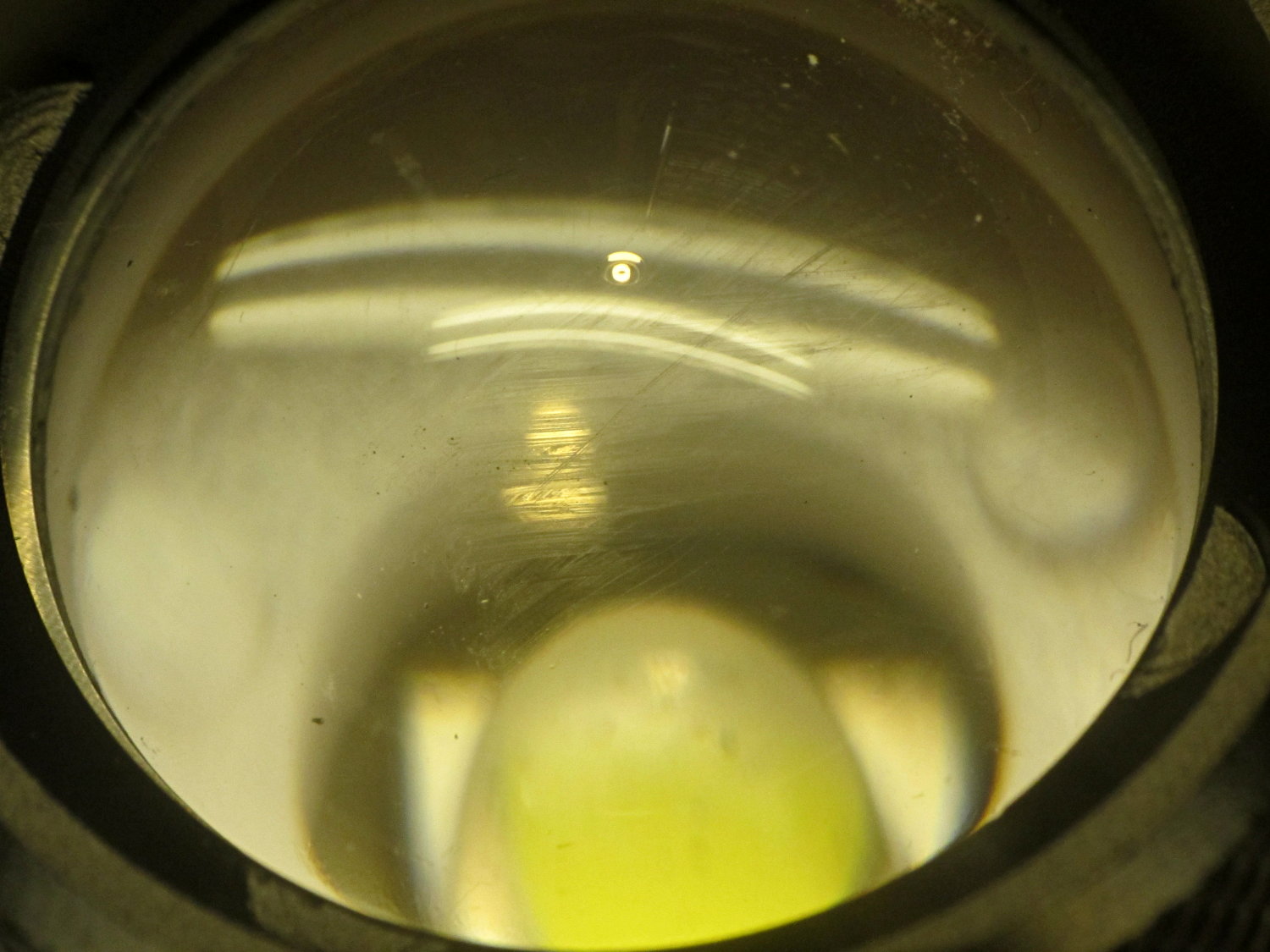
The inside of the front focusing lens carries an array of scratches or, perhaps, a greasy fingerprint that serves the same purpose:
J5-V2 Flashlight – internal lens scratches
All vendors tell you to contact them before posting a critical review, although they often don’t provide much in the way of contact information. I sent a note with photos to J5 through their website’s contact info; having not heard anything after three days, I’ll fire up the Amazon return process …
To judge from the shattered stems lining the route, NYSDOT positioned an articulated rotary mower vertically and ran it along the guide rail, cutting the Japanese knotweed more-or-less flush with the rail, then cleaning up most of the debris. Absent glyphosate treatment, the bushes will return in full force next summer.
Even though the disintegrating pavement isn’t any more rideable than before, not having weeds brush our elbows and grab for our eyes makes for a much more comfortable riding experience; now, we’re set for the peak Halloween-to-Groundhog-Day riding season.
As NYSDOT says: “Maintaining roads goes far beyond the edge of the pavement.“
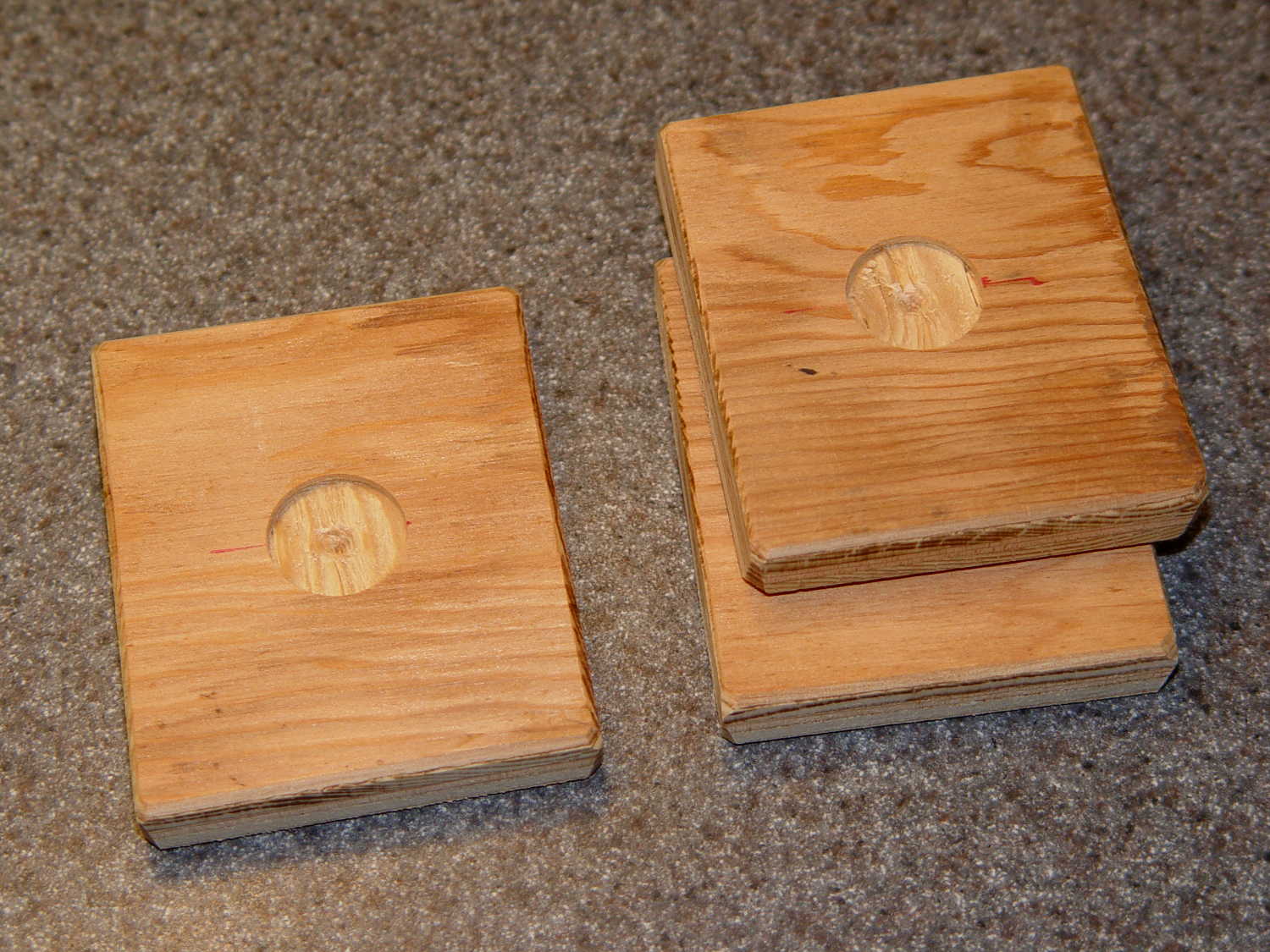
The slightly rectangular shape extracted four plates from of a scrap of 3/8 inch plywood, with almost nothing left over. The fourth plate had already found its way into the under-seat bag by the time I thought of a picture.
My can of fluorescent red paint having lost its mojo since the most recent application, these shall remain unpainted forever more; as even forget-me-not red seems to have little effect, that may not matter.
New Cadillacs have thin white LED running lights along the front edges, with angular chromed trim below:
Cadillac running lights
Their SUVs have matching vertical-stripe taillight / markers; it’s obviously a stylin’ thing. If it weren’t for the power, I’d run LED strips along the edge of the fairing & seat frame on our ‘bents.
We recently had one of those rare “Get the fuck off the road” incidents on Raymond. To set the stage, we’re on our way for groceries and I’m towing the trailer.
The rear view shows the second car behind us veering far to the right side of the lane, trying to see around the car ahead of him, with much blowing of horn:
Raymond Ave – Impatience – 2016-09-27 – 1
The big GMC had been following us at a reasonable distance from the Juliet roundabout as we trundled along Raymond at about 12 mph, riding out of the Door Strike Zone for well and good reason.
The GMC passed us at the end of the median, which let the impatient driver zoom up next to us. You can’t hear the horn that will blow as he pulls up next to me:
Raymond Ave – Impatience – 2016-09-27 – 2
Our usual route takes us into Davis St, so Mary’s already leaning into the right turn. I think he intended to go straight on Raymond for at least another block to the arterial, but he made an abrupt right turn into Davis St directly in front of me:
Raymond Ave – Impatience – 2016-09-27 – 3
Perhaps that’s to Teach Us A Lesson after all the horn-blowing?
I always ride behind Mary and slightly to her left, so that if / when bad shit goes down, I can bring it down on me, rather than her. In this case, she was safely beyond what was about to happen:
Raymond Ave – Impatience – 2016-09-27 – 4
The wide-angle lens is deceiving, as I’m less than three feet from the car and closing rapidly; I’m obviously not turning as sharply as he expected and I’m not slowing to avoid a collision. There’s a parked car just ahead of Mary, to her right, and her path is as far to the right as it can get.
He apparently realized that Teaching Me A Lesson would produce a nasty scuff on the side of his shiny black car and, perhaps having spotted the helmet camera, a nasty loss in the ensuing insurance squabble. He also wasn’t willing to swing wide, head-on into the oncoming lane of Davis, so he stopped dead in the intersection:
Raymond Ave – Impatience – 2016-09-27 – 5
That’s fine with me.
I continued wide past the parked car on Davis. He accelerated hard, decided, once again, not to ram me from behind, turned abruptly left into the parking lot, and proceeded to the eastbound arterial:
Raymond Ave – Impatience – 2016-09-27 – 6
I’m stopped in that picture to aim the helmet camera backwards over my left shoulder. The car behind the white one is parked near the intersection, just to my right in the previous picture.
As nearly as I could make out, he shouted, in addition to the usual obscenities, “Roads are for automobiles!”, a surprisingly articulate word under the circumstances. Evidently, he hadn’t noticed NYSDOT’s “Share the Road” signage helpfully posted on the far end of Raymond.
Elapsed time from the Juliet roundabout to the parking lot: 45 seconds.
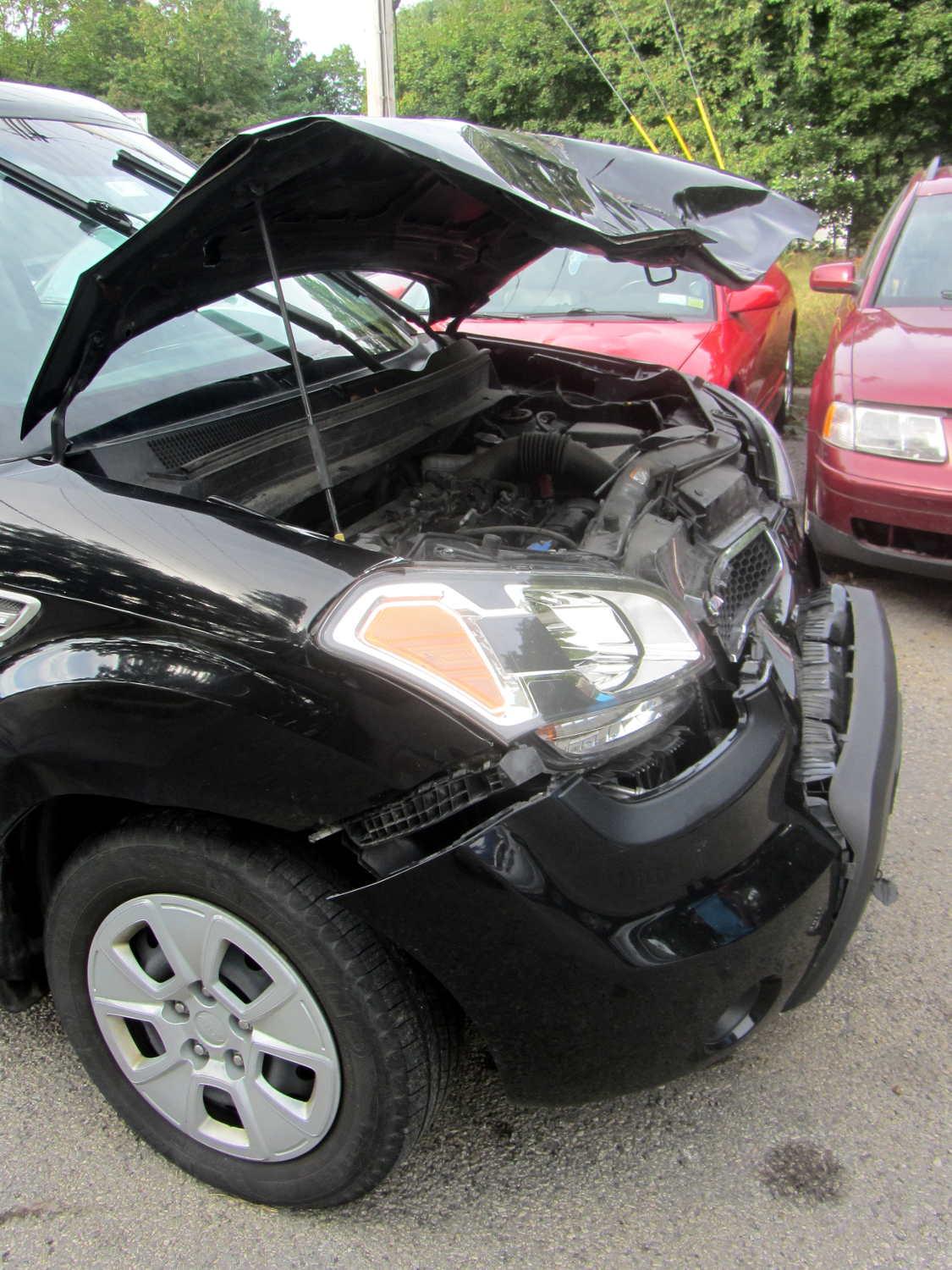
We spotted a classic example of deer damage at the corner gas / repair station:
Deer-smashed car
The undamaged bumper below the smashed grill and hood is diagnostic; the legs bounce off the bumper, while the body punches the grill back through the radiator. The airbags didn’t fire, but I’m pretty sure that car is just as dead as the deer.
Plenty of deer-colored fur clinches the diagnosis:
Deer-smashed car – hair detail
A few days later, a vulture overflew me on Hooker Avenue:
Vulture – 2016-09-25 – Hooker Ave
It was flapping strongly, powering its way up to cruising altitude, which seemed odd that far into the urban heat island. On the return leg of the ride, I saw what had its attention:
Deer carcass – 2016-09-25 – Hooker Ave
All swoll up, as the saying goes, and ready for the carcass disposal crew…
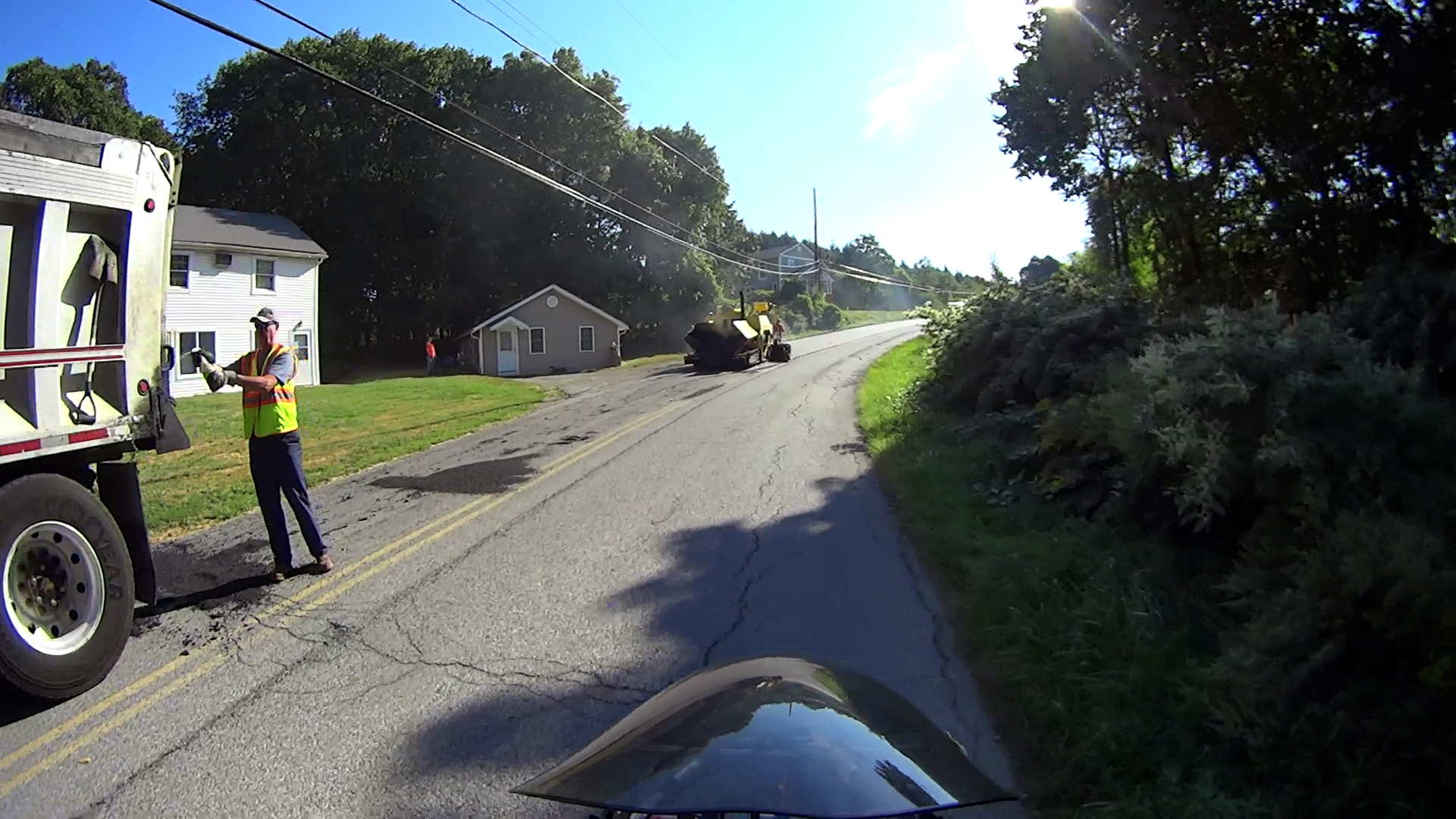
The Wappinger DPW laid asphalt along Maloney Rd, from side to side and end to end (well, to the end of their jurisdiction at the Lagrange town boundary). We passed the crew putting down the first layer on the westbound side:
Maloney Road Paving – 2016-09-14
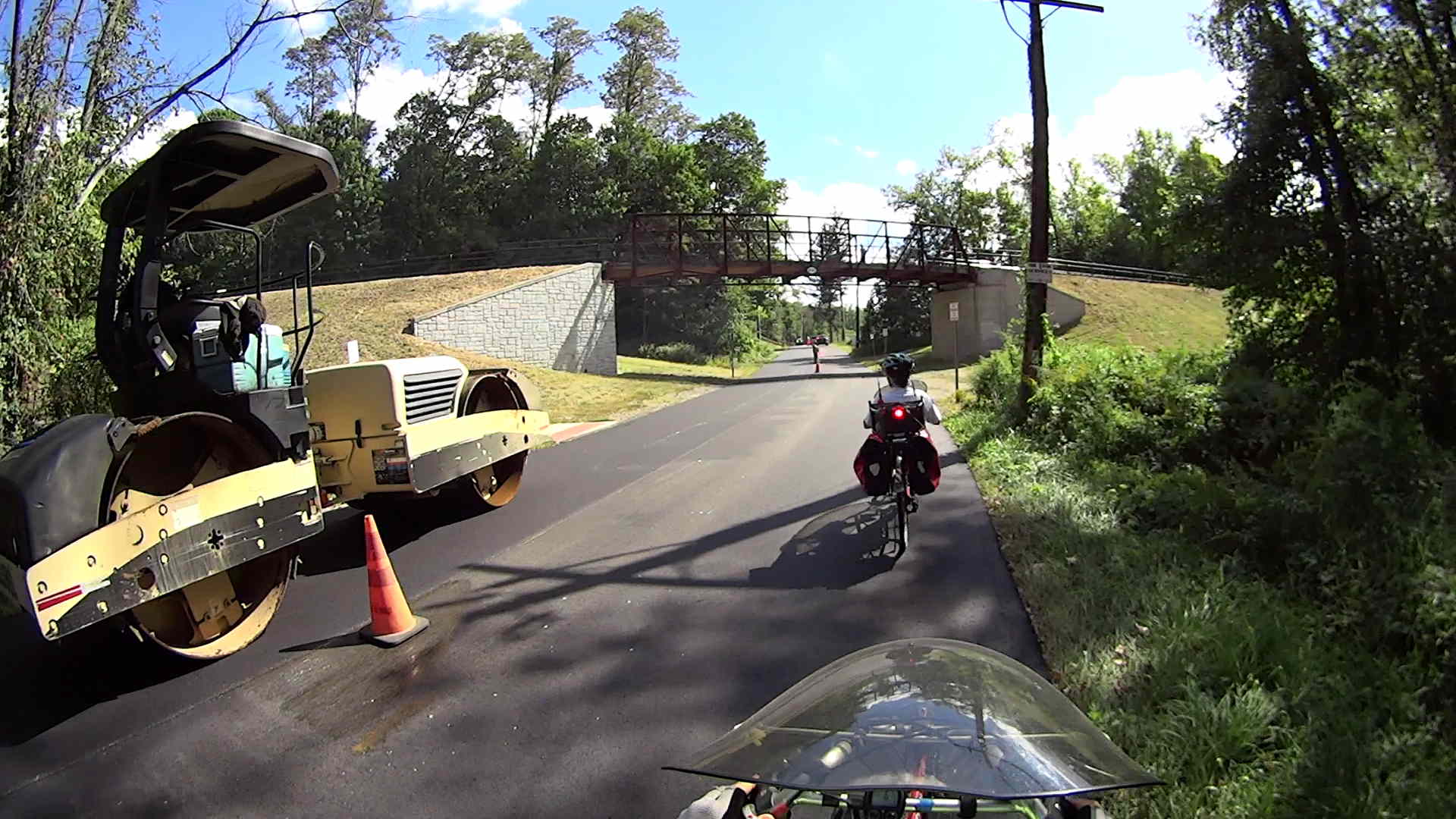
A few days later, they were doing the final layer on that side as we approached the Rail Trail entrance:
Maloney Road Paving – 2016-09-17
Sometimes, good things happen out there on the roads!
[Update: Vedran points to a Youtube video of paving:
By the looks of it they are from (almost) your neck of the woods (NYCDOT). They have a mighty impressive machine going but if you watch the lower right corner for about 10 seconds you’ll spot them paving right over a manhole cover :) Guess no matter how smart the tech, users will always find a way.
I’ve seen that done, too, but a guy should immediately dig out the cover (using the paint marks on the curb to find it) and taper the edges. That way, the paving machine produces a smooth surface along the street and the cover isn’t (shouldn’t be!) too deeply recessed.
Sometimes they just spraypaint a circle over the buried cover and wait until somebody must go into that hole before digging it out. That makes a nice, smooth paving job, but eventually produces a steep-walled pit in the pavement which enlarges and crumbles into gravel.
They should add a ring to the manhole to bring the cover flush with the new surface, but nobody (except the WDPW above!) does that around here until after the third or fourth paving job. Until then, it’s just like a pothole with a slick metallic bottom …