Ed Nisley's Blog: Shop notes, electronics, firmware, machinery, 3D printing, laser cuttery, and curiosities. Contents: 100% human thinking, 0% AI slop.
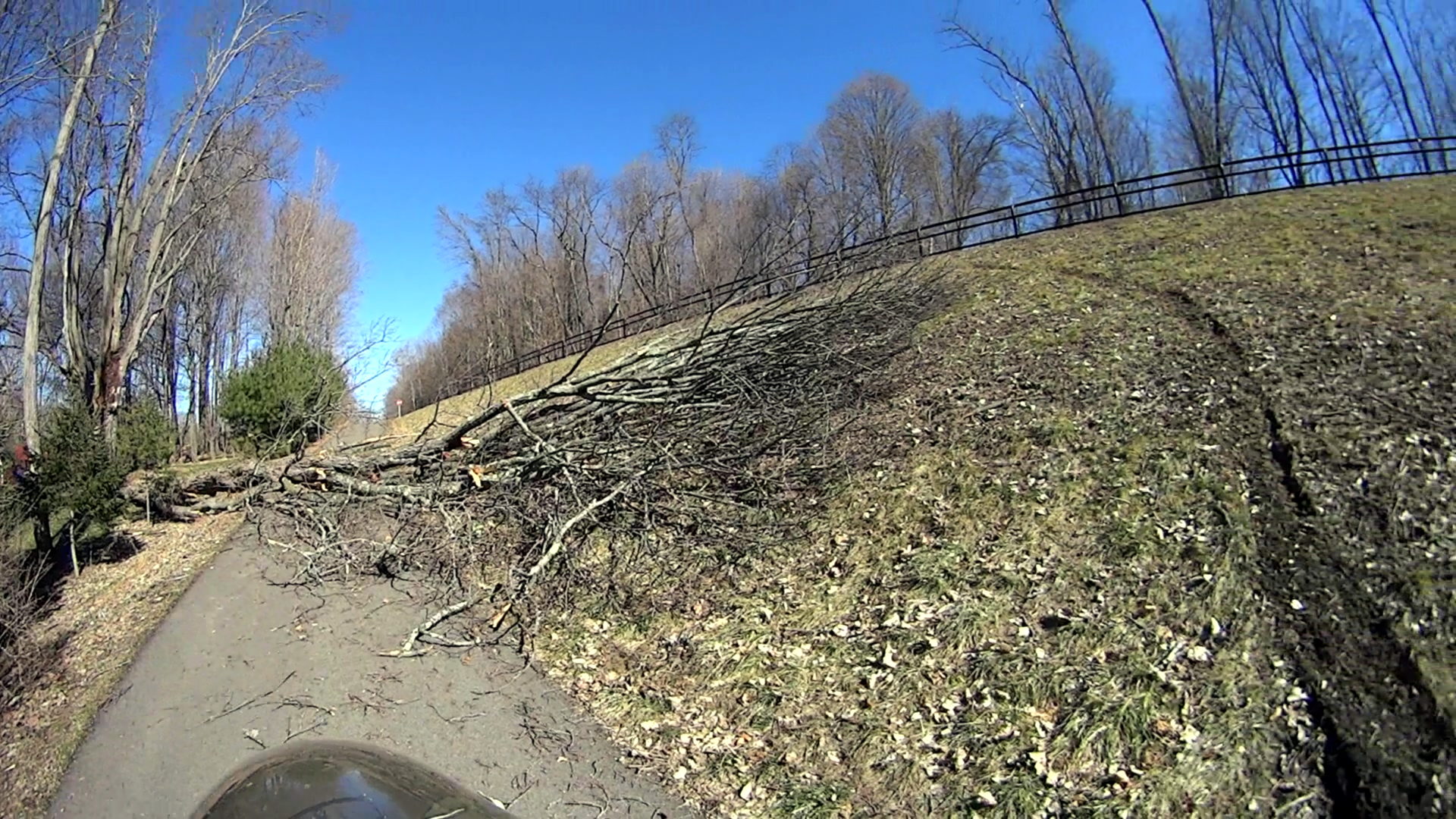
This big branch must have landed with a mighty thump across the Maloney Road entrance to the Dutchess Rail Trail:
DCRT – Maloney Rd – tree down – 2017-02-20
Yeah, some jerk ran a snowmobile up the slope around the tree, leaving a pile of dirt on the ramp. So it goes.
We took an alternate route, I emailed The Right Folks, and (most of) the tree vanished two days later; evidently, the property owner gets to deal with everything to the left of the line of trees.
The lumpy surface of the Michelin Pro-Tek Max tubes now in the back tire of our bikes can’t be patched, which means (being that type of guy) I must carry along a spare tube in addition to a handful of CO2 cartridges. So, having cleaned out my tube stash, I ordered a pair from an Amazon supplier, not my usual bottom-dollar eBay suppliers, clearly described as fitting the Schwalbe Marathon Plus 700x35C tires.
The Amazon listing and the box label agreed, but (being that type of guy) I just had to extract the tube to see what I got:
Meetlocks tube size mismatch
Huh.
According to the seller, who speaks and writes English far better than I can handle Mandarin (or whatever):
Yes, you are right, you also didn’t bought wrong items for your tire. we marked the 700×28-32, just for our manufacture to difference from another big size from 700/35-45C, because if we marked the size 700×28-35C, sometimes , the worker will packing 700×35-45c into the packing, and let the tube can not used for the 700x35c customer..
Huh.
It turns out the tube has 35-38 embossed into the rubber, so it’s not obvious the tube would fit into the smaller 28-32 size tires as labeled. It all depends on what you trust: the mold, the tube’s stamp, the box label, or the advertising.
Next time around, an event I hope (but do not expect) lies far in the future, I’ll spend a bit more for what will undoubtedly be the same tube from the same factory, but from a vendor buying enough QC to ensure the workers know what they’re packing. Having all the labels match would be a definite bonus.
We biked to some errands on an unseasonably warm 4 January and, a few days later, I noticed the rear tire on Mary’s bike was flat. A bit of Quality Shop Time later:
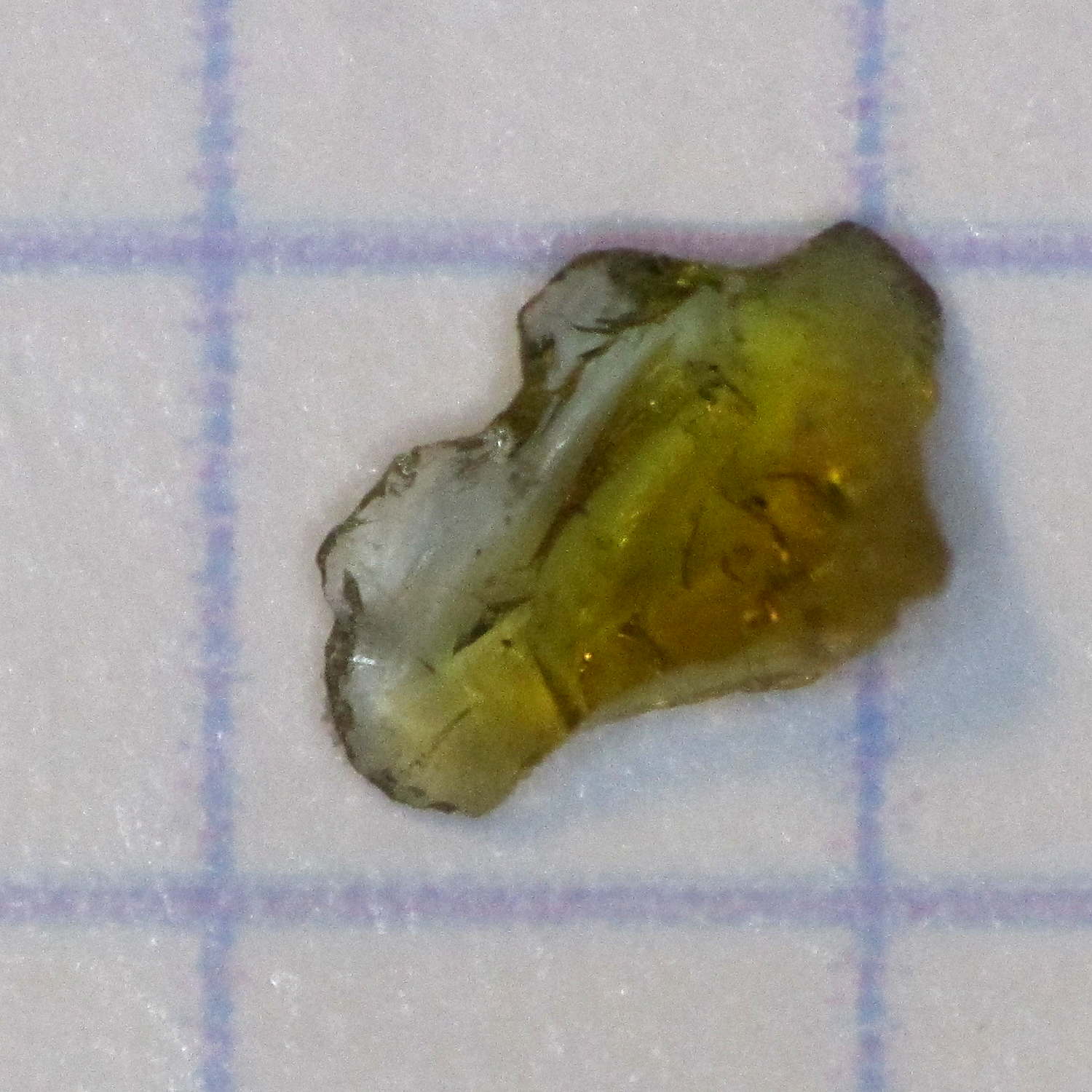
Brown Glass Chip
On the upside, I found it in the garage and fixed it in the basement.
The chip emerged from one of two adjacent gashes in the middle of the tread, but hadn’t quite cut through the tire. A somewhat larger chip (that’s a 0.1 inch grid) in the other gash cut through the Schwalbe Marathon’s protective belt to puncture the tube, then fell out.
The rear wheel of her bike now sports a Michelin Pro-Tek Max tube inside a Schwalbe Marathon Plus tire, as does mine. The wheel + tube + tire probably weighs as much as some entire carbon-fiber bikes, but it doesn’t matter.
Searching for the obvious keywords will produce many other instances…
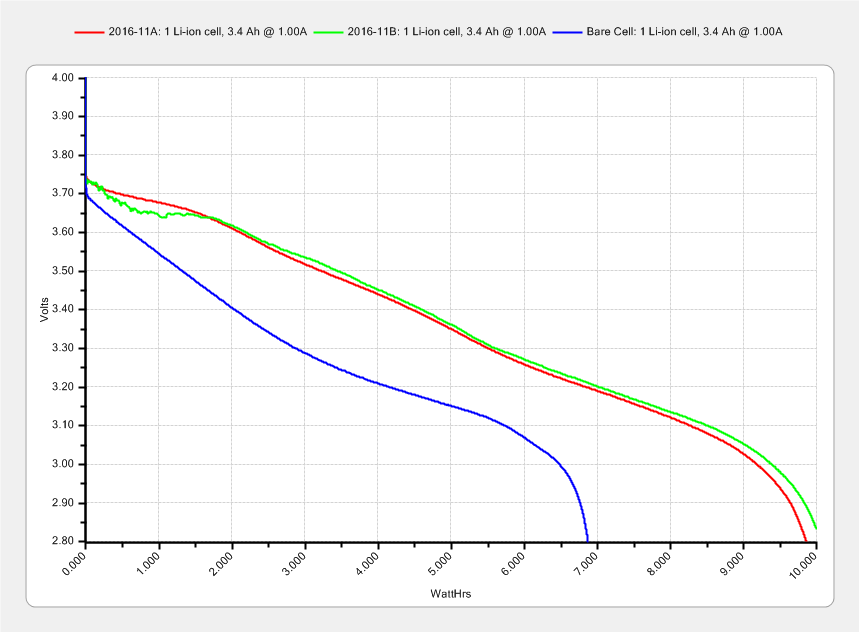
The lower curve comes from an old unprotected cell harvested from a defunct media player and retrieved from the to-be-recycled pile.
I picked 1 A as a reasonable value for their intended use in flashlights and maybe a helmet camera. Unlike some other cells in the recent past, these deliver 3.0 A·h, reasonably close to their rated 3.4 A·h capacity at a (presumably) lower current.
Replotting the voltage vs. energy delivered doesn’t show any surprises:
The voltage declines more-or-less linearly, without the relatively flat discharge curve for smaller cells, which explains why the J5 V2 flashlight becomes seriously dim after a few hours. On the upside, that allows a reasonably accurate state-of-charge display.
Assuming the Sony HDR-AS30V camera burns 0.1 W·h/min while recording (which is a fancy way of saying it dissipates 6 W), then it should run for (10 W·h)/(0.1W·h/min) = 100 min from one of these cells fitted as an outrigger. The best of the NP-BX1 cells for the camera delivers something like 90 minutes from a measured capacity of 4 A·h at 500 mA; I don’t know what to make of those numbers. Perhaps the camera runs the NP-BX1 cells below the 2.8 V cutoff I’ve been assuming?
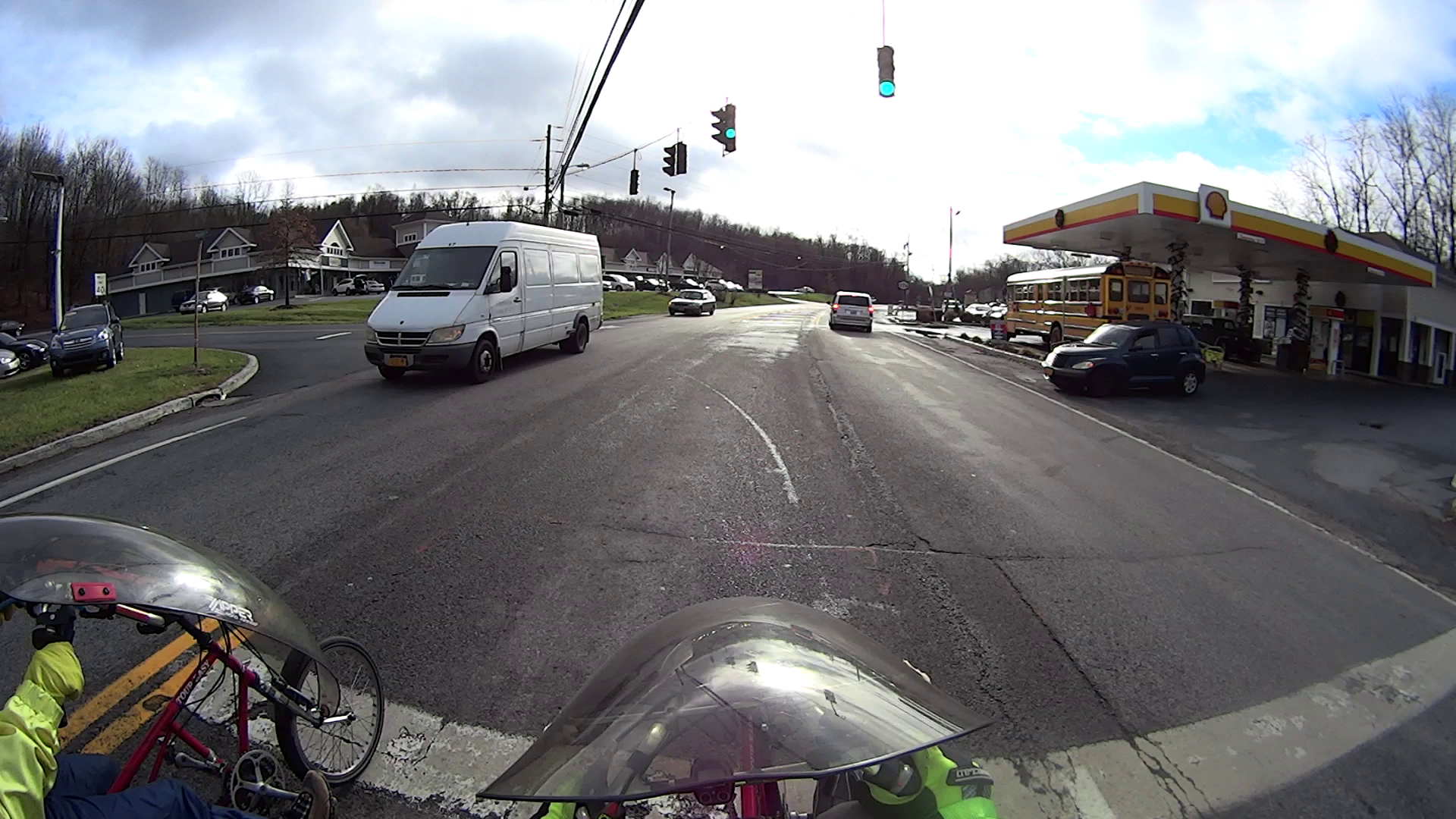
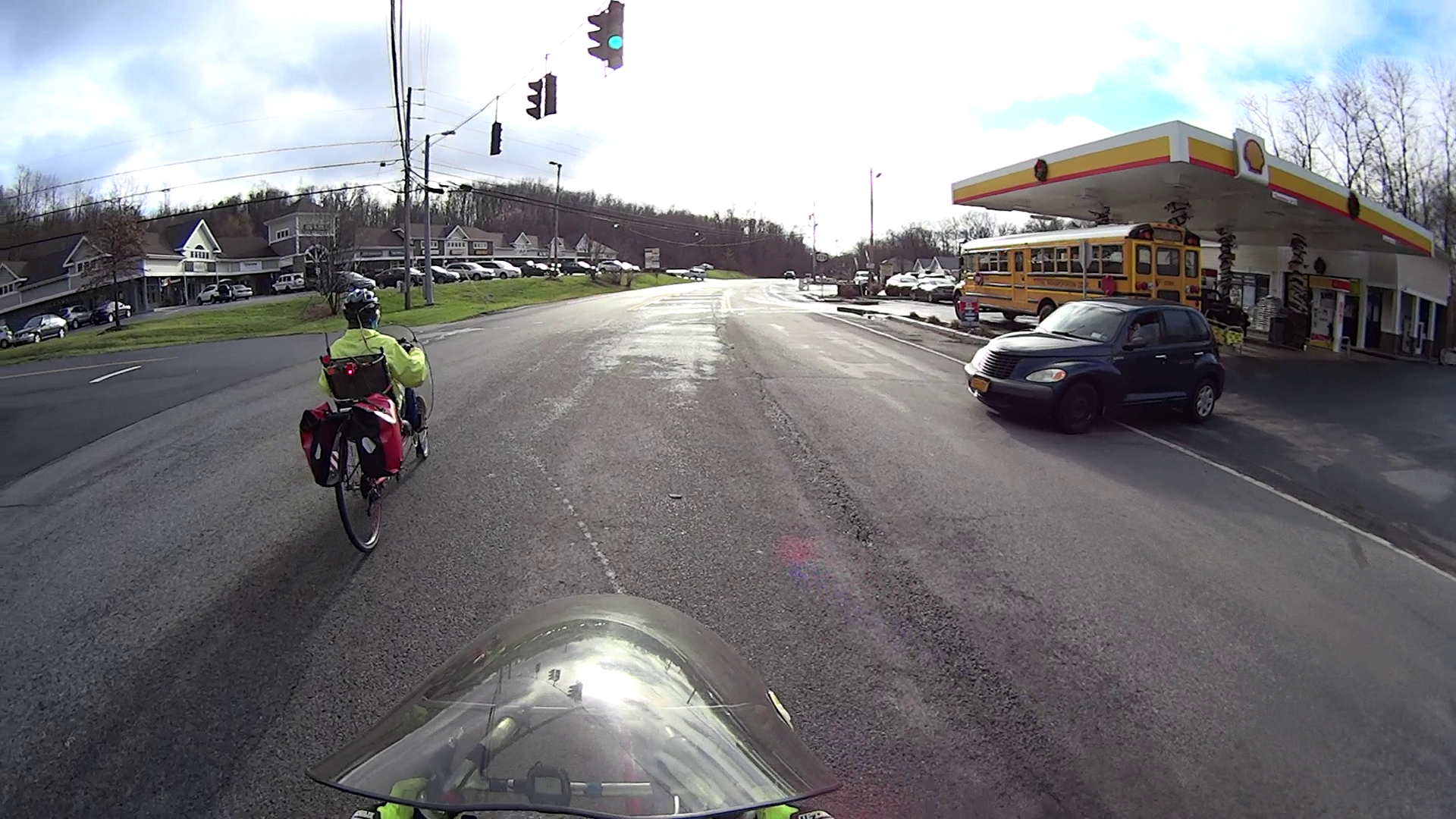
There’s no signal aimed into the gas station, so you must use your best judgement to determine when to enter the intersection. I’m not in enough of a hurry to (try to) ace out a truck, but ya never know …
These items came near enough to produce an irresistible force:
Sony HDR-AS30V vs 18650 cells – side view
How can you look at that layout and not jump to the obvious conclusion?
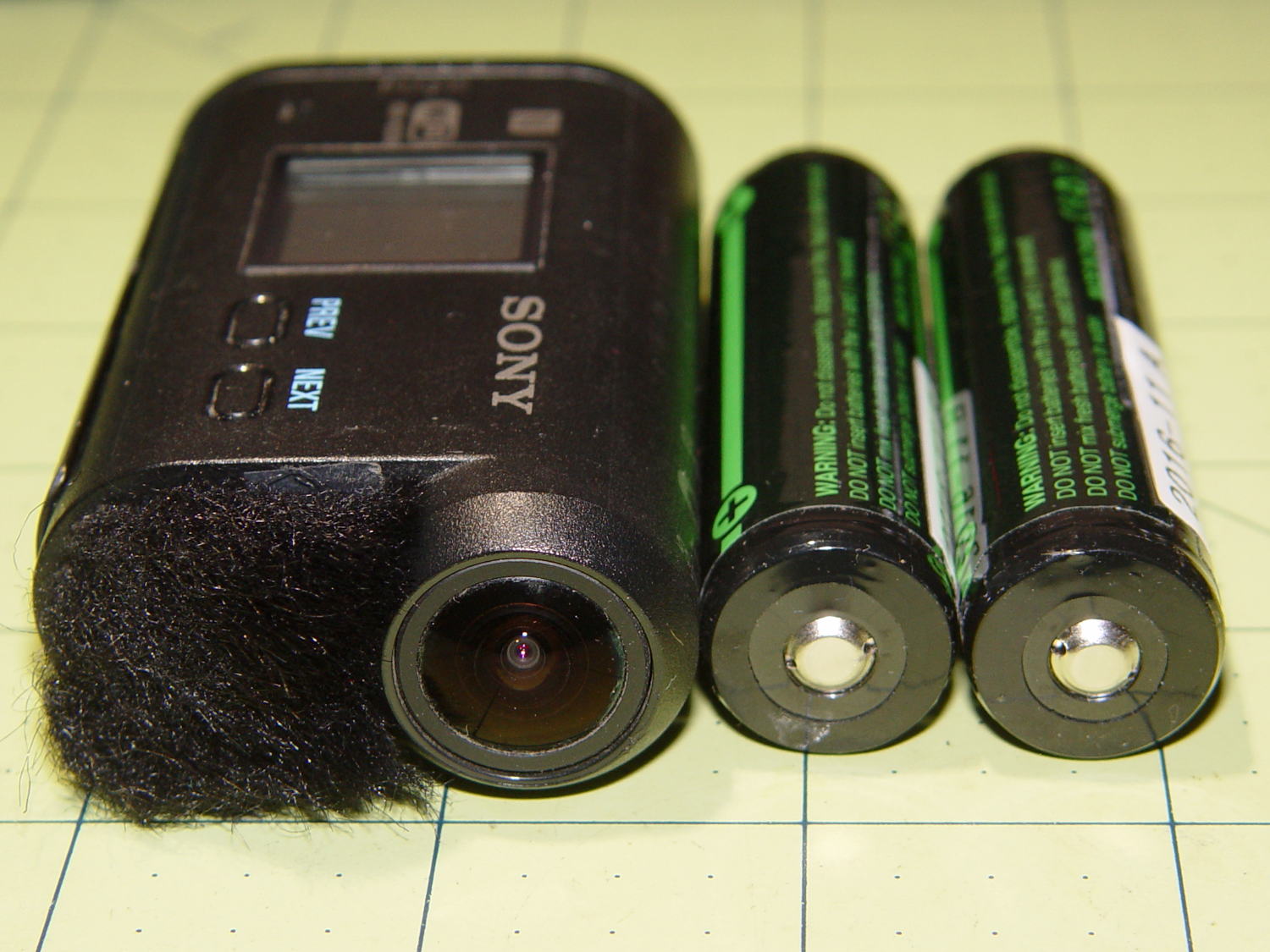
The front view suggests enough room for a stylin’ case:
Sony HDR-AS30V vs 18650 cells – end view
You’d need only one cell for the camera; I happened to have two in my hand when the attractive force hit.
The camera is 24.5 ⌀ x 47 tall x 71.5 overall length (67.8 front-to-door-seating-plane).
The ATK 18650 cells are 19 ⌀ x 69 long, with the overlong length due to the protection PCB stuck on the + end of the cylinder. You can get shorter unprotected cells for a bit less, which makes sense if you’re, say, Telsa Motors and building them into massive batteries; we mere mortals need all the help we can get to prevent what’s euphemistically called “venting with flame“.
Although I like the idea of sliding the cell into a tubular housing with a removable end cap, it might make more sense to park the cell over the camera in a trough with leaf-spring contacts on each end and a lid that snaps over the top. That avoids threaded fittings, figuring out how to get an amp or so out of the removable end cap contact, and similar imponderables.
I think it’s possible to drill a hole through the bottom of the camera at the rear of the battery compartment to pass a cable from a fake internal cell to the external cell. Some delicate probing will be in order.
In round numbers, those 18650 cells allegedly have three times the actual capacity of the camera’s flat battery and cost about as much as the not-so-cheap knockoff camera cells I’ve been using.