The Smell of Molten Projects in the Morning

Ed Nisley's Blog: Shop notes, electronics, firmware, machinery, 3D printing, laser cuttery, and curiosities. Contents: 100% human thinking, 0% AI slop.

Category: Recumbent Bicycling

Cruisin’ the streets

  • Tour Easy Handlebar Hydration Mount

    Handlebar-mounted hydration pack
    Handlebar-mounted hydration pack (fairing removed for visibility)

    My esteemed wife returned from a shopping expedition with the crushed remains of a water bottle that fell out of her Tour Easy’s under-handlebar cage. Fortunately, the truck flattened the bottle, not her, but Something Had To Be Done. She also had trouble maneuvering those newfangled long-body bottles around the rear edge of the Zzipper fairing.

    My TE has a hydration pack attached behind the seat with the hose passing around my arm to a Velcro (nah, it’s generic hook-and-loop) strip safety-pinned to my shirt. Mary didn’t like that arrangement, because it required some fiddling when she sat down and poked pinholes in her shirt. She wanted an arrangement that Just Worked.

    Recycle pack support plate
    Recycled pack support plate

    I removed the under-the-handlebar bottle cages from her bike and bolted a salvaged aluminum plate to the four tapped ferrules. The numbered holes on the plate originally held coaxial cable connectors, but I think they give the plate that snooty, high-tech, drilled-out, weight-weenie look.

    A 50-ounce hydration pack (“Styled for women!”) fits neatly atop the plate, below the cables, and between the handlebars. We wrapped a two-inch-wide Velcro bellyband around the pack, Velcroed the bag’s top loop to the handlebar’s crosspiece, and secured the valve with another Velcro strap that doubles as her parking brake. The whole affair looks quite tidy under the fairing.

    Now she simply picks up the hose and takes a sip: no acrobatics, no dropped bottles, no hassle. Life is good!

  • Recumbent Bike Kickstand Ground Plate

    Kickstand ground plate in action
    Kickstand ground plate in action

    Have you ever done this? You pull up to a rest stop, flip down the kickstand, walk off to snarf some snackage, and crash your ‘bent falls over behind your back. Not only is it tough to look cool when that happens, even a zero-mph drop can scuff up your bike.

    A long recumbent leaning heavily on its kickstand will inexorably push that spike right into mowed turf, bike-tour mire, or sun-softened asphalt. The small plywood square shown in the first photo solves that problem: the kickstand fits into a shallow recess and the plate spreads the bike’s weight so it simply can’t penetrate the ground.

    The plate is a 3-inch square of 1/2” plywood, painted bright forget-me-not yellow. I used a 3/4” Forstner bit to drill a flat-bottomed recess through the top veneer layer, but you can poke several shallow holes with a 1/4” drill and then carve out the rest with a knife or chisel. The recess captures the end of the kickstand so the bike can’t slide off the block.

    The parking brake shown in the second photo will keep your bike firmly in place even when you park on a slope. It’s a hook-and-loop (a.k.a Velcro) strip pulling the brake lever to the handgrip. Your nearby big-box retail store’s computer department mislabels these as “cable organizers” and a single package will provide enough parking brakes for your entire fleet.

    Bicycle parking brake strap
    Bicycle parking brake strap

    Notice that dark extension on the kickstand? Just after I got my Tour Easy, I decided that the kickstand was about an inch too short. Rather than buy a new kickstand, I jammed a few inches of 1/2” copper water pipe on the end, trimmed it to the proper length, and sealed the top with glue-filled heatshrink tubing. Aluminum plus copper equals corrosion, but that lasted for about five years before the entire kickstand failed.

    The small plate on the kickstand hinge holds a switch that lights an LED on the handlebars when the kickstand is down. It’s surprising how far you can slide on your forearms along a steep downhill asphalt road when you forget to flip the kickstand up, but that’s a story for another time.

    A slightly different version of this note appeared in Recumbent Cyclist News back in early 2006, more or less, but everybody keeps asking me about that little yellow plate when we’re on organized rides.

  • Tour Easy Rack Mounting Hack

    Photo 1 - Spherical Washer
    Photo 1 – Spherical Washer in Action

    A recumbent’s comfy seat doesn’t have a seat post, so standard rear racks don’t fit very well. The usual solution involves nylon cable ties and some cursing, but that just didn’t appeal to me. Here’s how I mounted an ordinary JandD rear rack on our Tour Easy ‘bents.

    Because both the angle and position of the seat support struts changes change with each seat adjustment, you can’t simply bolt the rack to a plate across the struts. This is a job for spherical washers, as shown in Photo 1, which allow both angular adjustment and rigid mounting.

    Photo 2 - Rack Mount Parts
    Photo 2 – Rack Mount Parts

    Even if you’ve never heard of a spherical washer before, your bike parts box may already have some: one old brake pad provides the two washers you’ll need for one rack. Each washer has one convex and one concave piece, which you must assemble with the curved surfaces nested together and the flat sides out. You need one washer on each side of the angled plate. The six spherical washers in Photo 2 show the details.

    You’ll also need a ¼x½-inch rectangular aluminum bar long enough to span the seat support struts just in front of the rack, three 10-32 or 5-mm stainless-steel machine screws and washers, and a pair of padded tubing clamps. You can get all that from your favorite home-repair store.

    Drill a hole in the middle of the bar and a matching hole in the middle of the rack’s front face. I used a 10-32 tap to put threaded holes in the rod, but you can drill clearance holes and use nuts.

    Photo 3 - Mounting Screw
    Photo 3 – Mounting Screw

    Put a spherical washer on a screw, insert the screw through the rack, add another washer, put the screw into the crossbar, align the crossbar on the seat struts, and finger-tighten the screw. Photo 3 shows the screw from the top of the rack.

    Slip the tubing clamps on the seat struts as shown in Photo 4, mark the clamp openings on the crossbar, remove the crossbar, and drill the two holes.

    Photo 4 - Bottom View
    Photo 4 – Bottom View

    Reassemble everything, apply Loctite to the threads, and tighten the screws. Remember to loosen all three screws before you adjust your seat position!

    I wrote this a while back for the late, lamented Recumbent Cyclist News, but it never got into print. I found the files while looking for something else; seems like this might be useful to somebody.

  • AA Cell Dimensions

    Ever wonder why rechargeable AA cells don’t quite fit in older flashlights & gizmos? Somewhat to my surprise, the dimension specs for alkaline and rechargeable cells aren’t quite the same.

    At the bottom of the Wikipedia AA battery page, we find “brand-neutral” drawings (allegedly) based on ANSI specs:

    • Alkaline: 14.0 ± 0.5 dia x 49.85 ± 0.65
    • Rechargeable: 14.1 ± 0.6 dia x 48.9 ± 1.6

    A rechargeable cell can thus be 0.2 mm larger in diameter, but should have the same maximum length.

    Based on my collection, alkalines seem to be near their nominal and NiMH cells near their maximum. Across a four-cell layer, the difference adds up to 1 mm or so, which is enough to strain the plastic.

    8-cell NiMH AA pack
    8-cell NiMH AA pack

    Hint: Put some paper on the negative terminal when you measure the cell length. Steel calipers are pretty good conductors and the short-circuit ratings (even for alkalines) are surprisingly high  …

    When I make up NiMH packs for our bike radios, I lash the cells in place with cable ties. It’s not pretty, but the plastic cases don’t split.

    Connector? Anderson Powerpoles FTW! Make sure you align them properly to mate with anybody’s radio.

  • Park MTB-7 Rescue Tool Repair

    Too-short Stud
    Too-short Stud
    Goobered Screw Threads
    Goobered Screw Threads

    Once upon a time I deployed the 6 mm hex wrench on my trusty Park MTB-7 Rescue Tool, applied some torque to a handebar stem bolt, and crunch something broke inside the tool.

    [Update: Fixed a dead link; Park evidently reshuffled their website.]

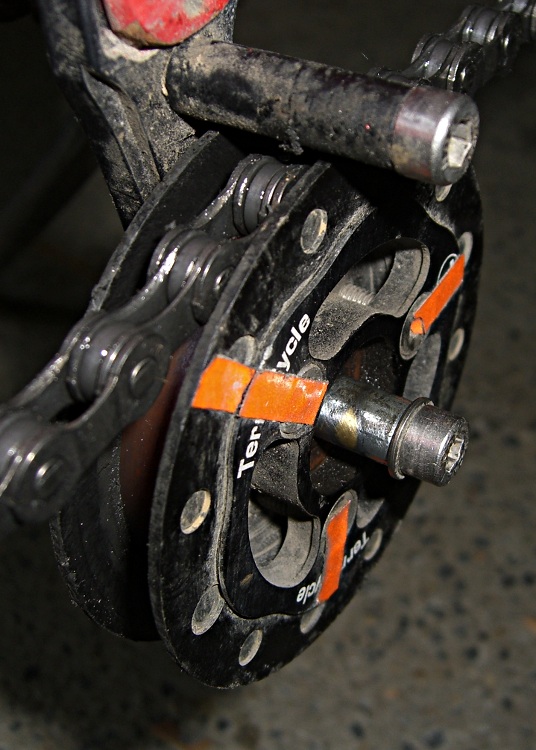
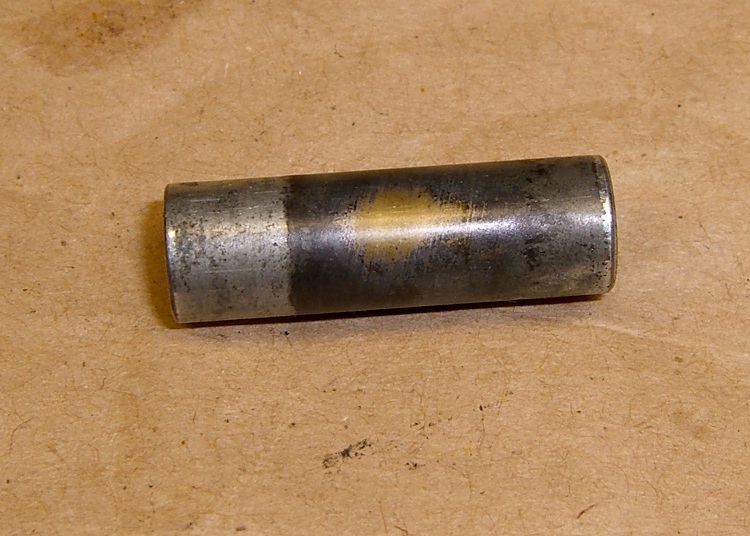
    The essential problem is that the studs holding the tools in place are too short: they don’t seat fully into the plastic housing at the far end, because they’re 2 mm too short. The photo showing the stud at an angle gives an idea of the situation I saw when I took the tool apart.

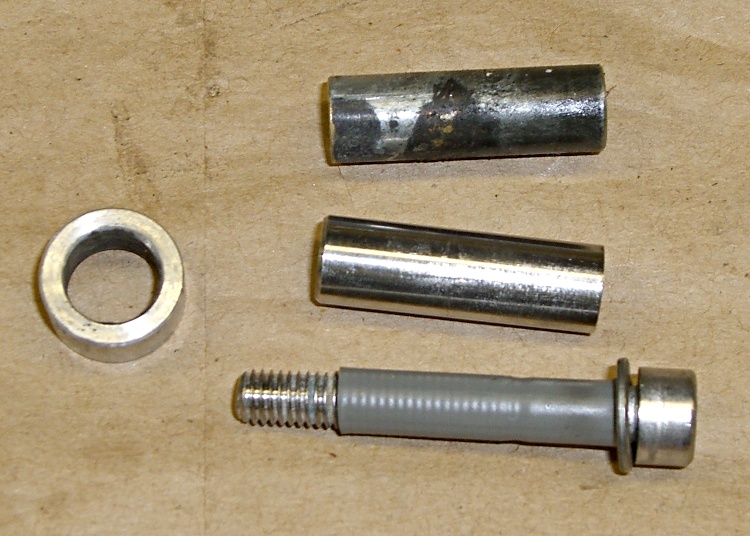
    The crunching sound I heard was the screw tearing out as the stud shifted in the housing. The studs seem to be swaged into shape in one operation, but without quite enough material: the threaded end isn’t flat and the internal threads are crap. The photo showing the studs and screws can’t really show how off-center and feeble the internal threads really are, but you can see the junk lodged in the external screw’s threads where it tore out. Note the poor fit between the other stud’s end and its screw: it’s firmly seated against the stud, so that’s how far off square the end is!

    Better Screw and Sleeve
    Better Screw and Sleeve

    The fix was easy enough. I cut some brass tubing to the proper length, trimmed stainless-steel 10-32 screws to fit, and put everything together with red Loctite. The photo showing the all the parts indicates how much longer my sleeves are than the original studs: basically, that’s the thickness of the plastic housing on one side.

    But, sheesh, you’d expect a Park tool to be better than that. I sent ’em a note with pictures and maybe they’ll smack the factor who shorted ’em on the Quality bullet item upside the head.

    I got to spend some time playing with my toys, so it wasn’t a dead loss.

  • Spoke Wrenching

    I recently rebuilt the back wheel on my bike, which had been breaking the odd spoke and getting more & more out of true.

    Spoke wrenches are so tedious when one’s fingers don’t fit in between the spokes like they should. I figured, hey, if the pros can use power drivers, so can I…

    Dug a goobered #2 Philips bit out of the ziplock baggie labeled “NFG Bits” and applied it to the bench grinder. The strip of tape on one flat makes turn-counting easy enough that I can actually get it right. It’s not hardened, so it probably won’t last for more than a few wheels, but this is the first scratch-built wheel I’ve done in decades and that baggie is nowhere near empty.

    Homebrew Spoke Wrench Bit
    Homebrew Spoke Wrench Bit

    I read through Jobst Brandt’s The Bicycle Wheel to get prepped for the job, removed the old spokes, laced up the new ones, lubed the threads & rim washers, and the wheel trued up almost perfectly just by counting turns.

    Did the spoke aligning & stress-relieving tricks, applied some final tweaking, and it’s perfect!

  • Bicycle Performance

    Back in 2006 I biked to the Main Event Criterium in Po-town to watch real bicycle crazies in action. Despite the name, the course was literally around the blocks near the Poughkeepsie High & Middle Schools on Forbus St & College Ave: about 0.75 miles per lap.

    Now, most places, folks give ‘bent riders a smile and maybe chat ’em up. Not here. Talk about a cold shoulder: the local-resident bystanders were friendly, but the real riders and their main squeezes obviously regarded my pimped-out recumbent as a Hostile Gesture. Barely even a sideways look; it’s as if I didn’t exist.

    I timed a few laps of the Masters 40/50+ race: Olde Fartes like me, but still players. They did 15 laps (maybe a dozen miles) at 16-17 mph. Two guys duked it out for the lead all the way to the finish, with the rest of the pack half a lap behind and fading.

    In my ordinary rides I can cover a dozen or so miles at 15-16 mph, riding with vigor but not an all-out, my-eyeballs-will-explode effort. That’s on open roads with actual hills, traffic signals, and no pace car to clear the way.

    Obviously, I’m nowhere near their well-chiseled physical condition.

    There’s no comparing the bikes, either.

    They’re riding the latest carbon-fiber weight-weenie frames on exotic aero wheels with pitifully few spokes. One guy blew a tire with a bang that sounded like a gunshot.

    I’m riding a steel-frame Tour Easy recumbent bicycle with a fairing, fat Kevlar-belted tires, tire liners, steel spokes (and lots of ’em), a rack, two baggage packs, a water bladder, ham radio, blinky lights, spare batteries, a tool kit, and fenders. Not to mention an aerobelly. Heck, my tool kit probably weighs more than their frame.

    Imagine what they could do on real bikes…

    Somebody mentioned that the TdF guys hit 70+ mph on downhills. I forebore to mention that the human-powered speed record is nearly 80 mph on the flats… I figured that would definitely be regarded as a Hostile Gesture.

    [Update: a friend accused me of riding while carrying more smug than legally permitted, even for Prius drivers. Guilty as charged.

    You’ll find more ‘bent posts by clicking on the “Recumbent Bicycling” category.]