Ed Nisley's Blog: Shop notes, electronics, firmware, machinery, 3D printing, laser cuttery, and curiosities. Contents: 100% human thinking, 0% AI slop.
As always, we knew this wouldn’t end well for the small lump just in front of the car’s rear wheel (clicky for more, albeit fuzzy, dots):
Turtle 0134 – Vassar Rd – 2018-05-20
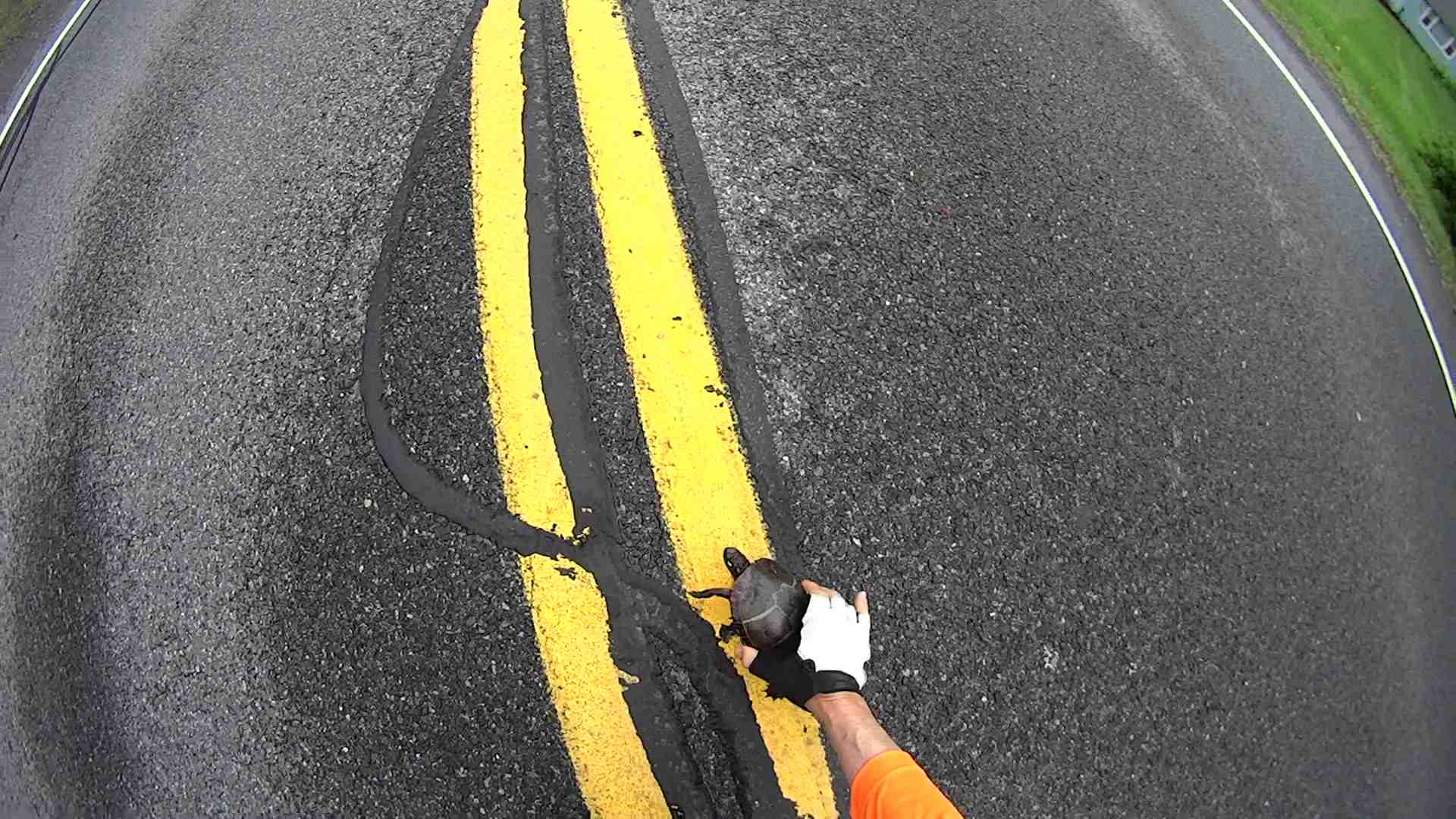
So I stopped to lend a hand:
Turtle 1280 – Vassar Rd – 2018-05-20
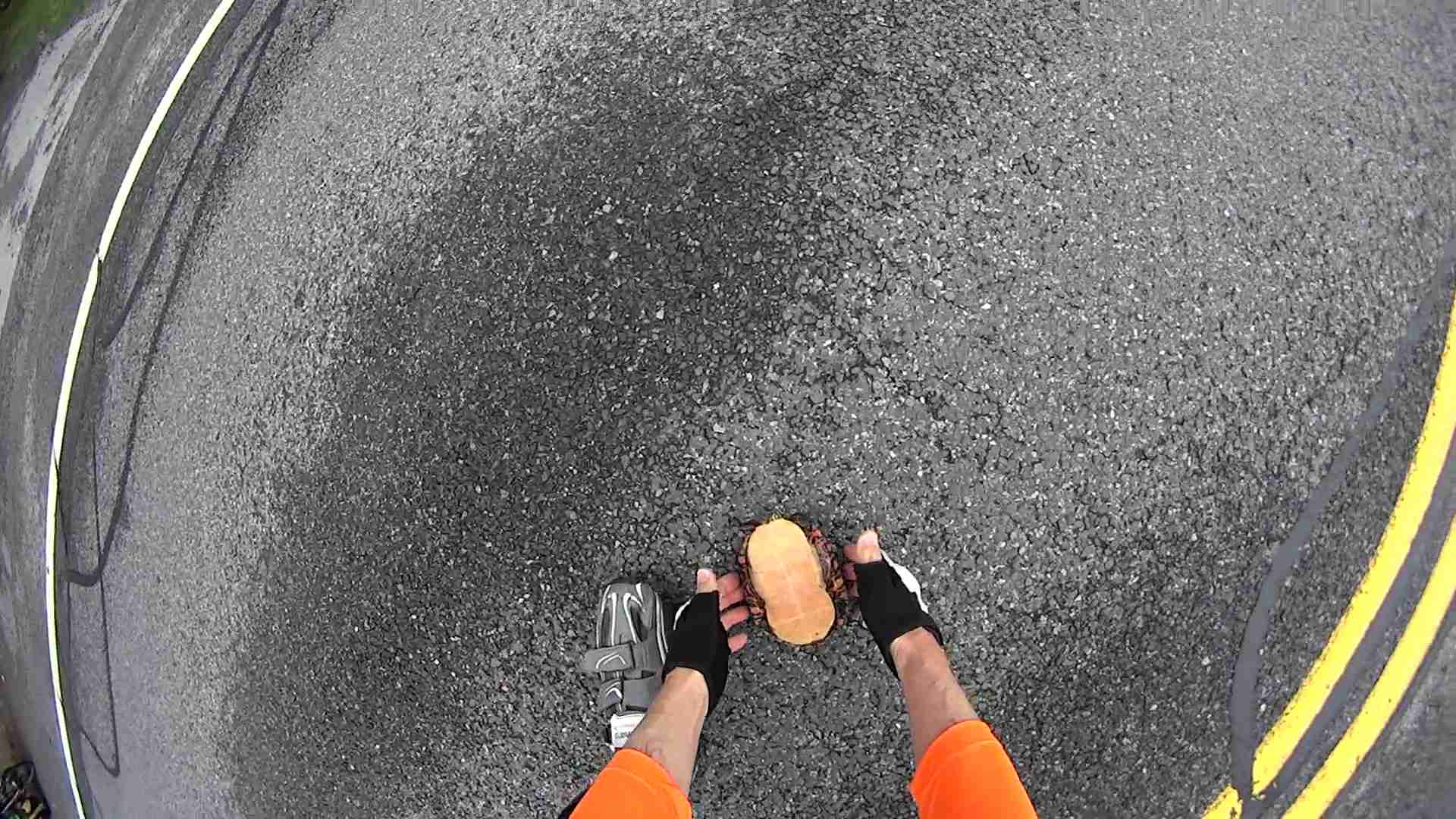
A fumbling hand, as it turned out, on the turtle’s slippery shell:
Turtle 1364 – Vassar Rd – 2018-05-20
A belly-up turtle in the middle of the road knows the solution to the Halting Problem.
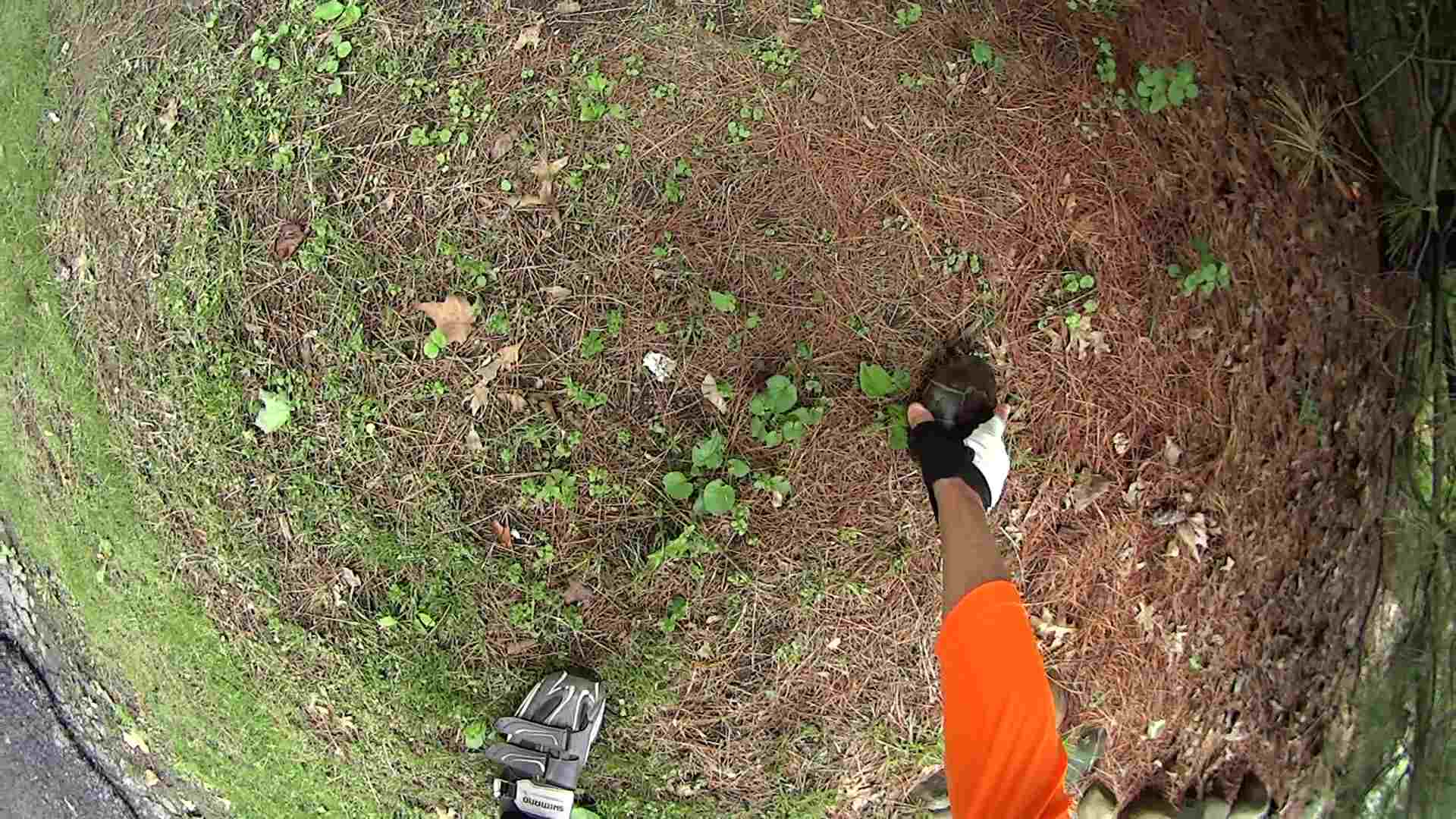
I hoped a secluded spot under a pine tree was closer to its destination:
Turtle 1724 – Vassar Rd – 2018-05-20
However, if the turtle is a female in search of an egg-laying site, then she and all her progeny must cross Vassar Road in the other direction to reach the Mighty Wappinger Creek.
The time-of-day clock in my M20 often resets when I change the battery in the middle of a bike ride.
I turn the camera off, wait for the status light to go out, remove the battery, install the new battery, turn it on, and the time-of-day displayed on the screen has reset to 2016-01-01 00:00:00.
I’m using firmware 1.3.1 (the latest), genuine and fully charged SJCAM batteries, and swap the batteries as fast as I can. Sometimes it works, but maybe half of my bike rides end years before they start! [grin]
It seems my turned-off M20 is extremely sensitive to the power fluctuations occurring during a battery change.
What do you recommend?
Thanks …
Their reply:
The capacity of internal memory battery on main board is very small due to hardware limitation so it can save date and setting for about 10 seconds after pulling out battery.
Would you please check it again ?
I’d call that a design screwup, not a “hardware limitation”. Perhaps I don’t understand how putting a slightly larger capacitor on the PCB, in place of the one that’s already there, would pose a problem.
They also recommend checking with my “re-seller”, but, seeing as how I bought it directly from their nominally official Amazon store, so:
In case they are not able to offer help, SJCAM Technical Department offers a maintenance service. The steps of such service are:
1. You ship the camera directly to our Technical Department address at your own cost (it is located in Shenzhen, China).
2. We check and repair the camera. The repair process usually takes about 3-5 working days.
3. We ship the camera back to you.
Note: The whole process usually takes about 20-30 days, and if your camera doesn’t have damage on the main-board, screen or lens, the maintenance will be free, but we charge 15$ as return shipping cost.
As usual, round trip shipping to Shenzen costs half the price of the M20 camera package, a fact I’m sure they’re well aware of. I did a warranty return to Australia with the Cycliq Fly6, before replacing the battery myself, and (re)learned valuable lessons about warranties and batteries.
I turned SJCam’s offer down, which prompted a curious proposal:
You can send back your camera to SJCAM factory and then we can replace internal memory battery for you.
So the “hardware limitation” has morphed into a (presumably inadequate) internal battery that, when replaced, will resolve the problem. Huh.
Note: you can’t use the M20’s “Car mode” with the timestamp function, because you must remove the battery to let the camera start when the USB power goes on. Unlike basically all other cameras-with-clocks, the M20 wasn’t designed to run its internal clock without a battery.
Improving my battery change speed definitely has the best ROI. Alas, my dexterity has a definite upper limit …
The back tire on my bike was flat when I rolled it out for a ride (the day after replacing the front shifter cable), which ought not be possible with a Michelin Protek Max tube inside. On the other paw, we’ve had zero flats in the not quite two years since installing the things, which says they’re doing very well, and I’ll take a flat in the garage over a flat on the road any day.
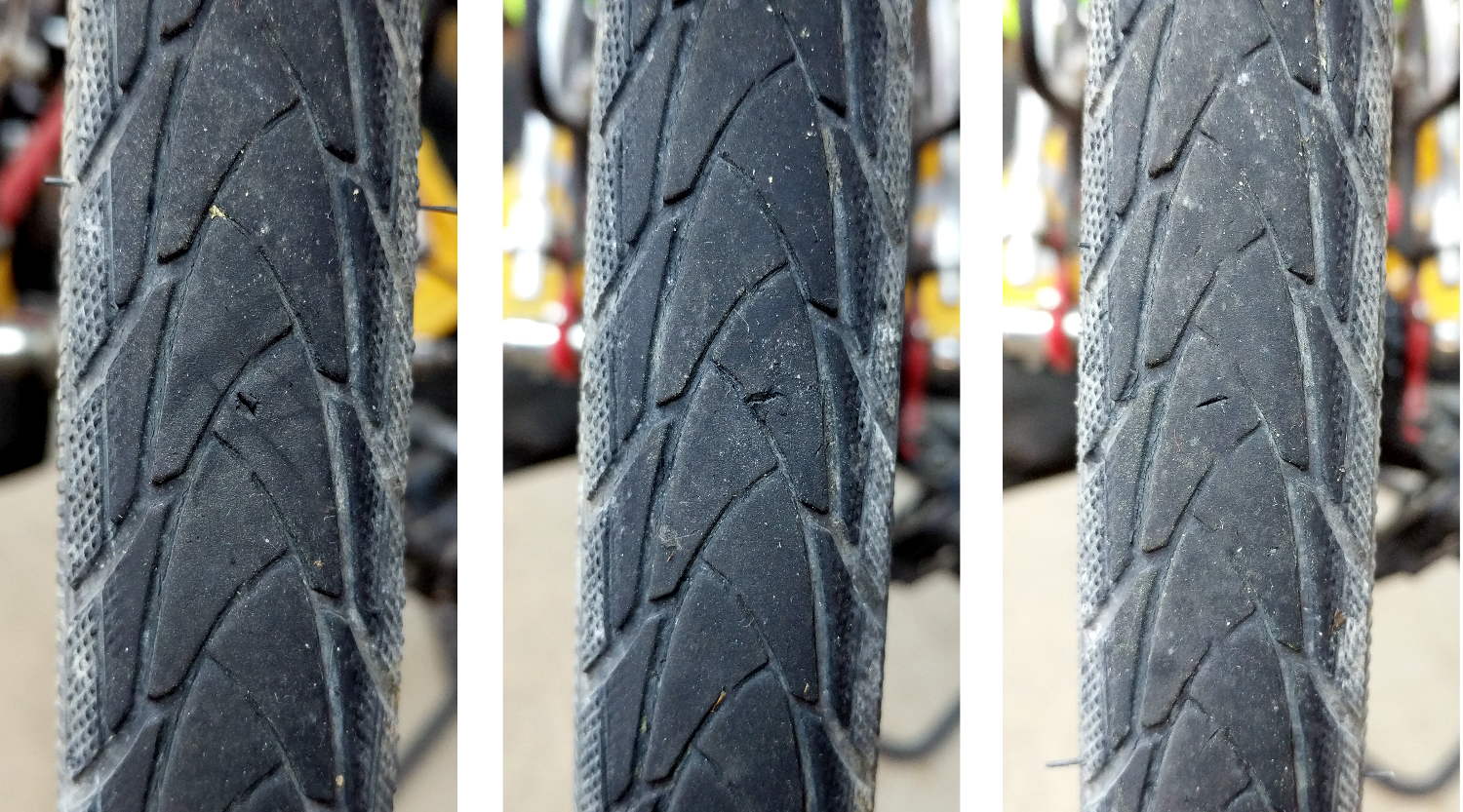
With the bike up on the stand, I didn’t spot the expected large glass chip or sharp wire, but I did find three smaller gashes:
Bike tire tread gashes – composite – 2017-05-13
… from which I extracted two small glass shards. Perhaps a wee puncture spent four days parked at the top of the wheel, with the ProTek’s internal goop drained away and unable to plug the slow leak.
Having spun the tire a few times while looking for trouble, I pumped it back up to 80 psi. After delaying the ride for half an hour, the tire pressure remained constant, and we enjoyed a fine ride around the block.
Because I’m writing this in the future, I know it’ll hold pressure just fine, which means I can declare victory and move on.
The tube & tire weigh more than some frames, but they’re worth it!
That’s what all dog owners say when their dog lunges at you:
Dog Lunge – DCRT 2017-05-13
We sounded our usual bike bell dings while approaching and moved as far to the left as we could. The group compressed to the right, which was unusually courteous, we said nothing, and they said nothing while their dog barked and lunged at both of us.
Perhaps we are easily startled, but we do not regard lunging and barking as friendly or sociable gestures. Even as pedestrians, we do not want our crotches explored, our hands licked, or our chests pawed.
AFAICT the only reason Mary didn’t get knocked over and gnawed was a good grip on a thin leash. Maybe the dog would just lick her to death, but it’s still unwanted aggression.
From what I’ve read, dog shoulders operate as front-to-back rotating pivots, rather than all-direction ball joints. Disabling an attacking dog thus requires grabbing its front legs and spreading them as far apart as possible, which is feasible because human arms are much stronger laterally than dog legs. While the process brings one’s head entirely too close to the dog’s jaws, it apparently breaks most of the dog’s ribs, collapses its lungs, and instantly puts it out of action.
I devoutly hope I need never test that maneuver under field conditions, as I can see serious repercussions. If it’s in Mary’s face, however, I will not err on the side of generosity.
Protip: if your dog isn’t well-trained enough to completely ignore strangers, don’t bring it near strangers who may not be dog people.
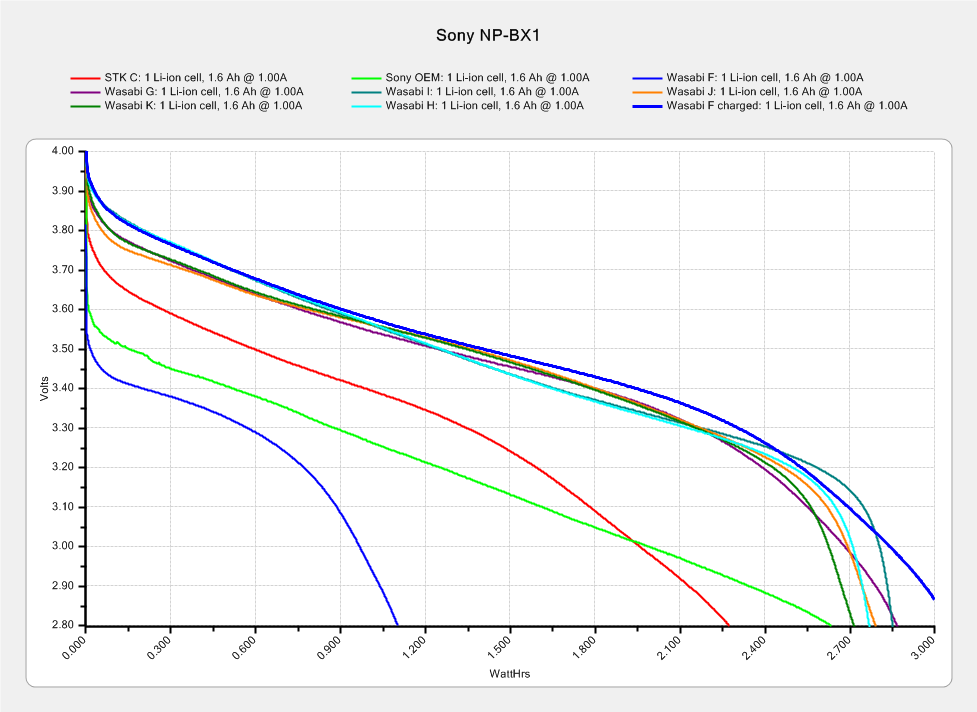
The genuine Sony NP-BX1 that came with the AS30V camera suffers from voltage depression (green trace) and no longer survives a typical ride:
Sony NP-BX1 – 2018-04-24
The STK C battery (red trace) is also pretty much kaput, so the two of them go into the recycle bag.
The very short blue trace is the Wasabi F battery after a ride, showing about 1 W·h remaining of the initial charge. After a full change, the upper blue trace shows it has a capacity in the same range as the others. Our rides are about an hour long, so the camera draws somewhat less than the 1 A test current, roughly what I’d estimated from other data.
The rear shifter on my Tour Easy stopped working when we were most of the way to the grocery store, due to what turned out to be due to a broken cable. I managed to yank the frayed end out of the shifter, pulled the derailleur into a middling gear, and belayed the cable into a deadly cactus:
SRAM X.9 Rear Shifter – frayed cable
A three-speed recumbent got me home again, albeit with spin-it-out high gear and a low gear barely sufficient for trailer hauling.
Attempting to remove the frayed cable from the SRAM X.9 grip shifter didn’t go well at all:
SRAM X.9 Rear Shifter – cable tangle
I managed to extract the lead pellet, but, while it may be possible to extract the remaining tangle, even pulling on individual wires wasn’t productive.
AFAICT, the shifter came as original equipment on the bike, so it’s been in constant use for the last 17-ish years. The nice soft grip material (and the cover over the cable port) turned into gummy sludge under the cheerful silicone tape I applied some years ago, so I sliced the old grip and pulled it off:
SRAM X.9 Rear Shifter – gummified grip
Popping a new-old-stock X.9 shifter from the Big Box o’ Bike Parts and installing it proceeded without problems. This being the rear shifter, I had to remove the shiny OEM cable and replace it with a PTFE-coated tandem-length rear cable, but that’s normal for a long wheelbase recumbent.
For the record, both black shift indicator tabs still show no signs of failing after half a year, so a bent piece of polypropylene sheet looks like a win.





 The Smell of Molten Projects in the Morning