Ed Nisley's Blog: Shop notes, electronics, firmware, machinery, 3D printing, laser cuttery, and curiosities. Contents: 100% human thinking, 0% AI slop.
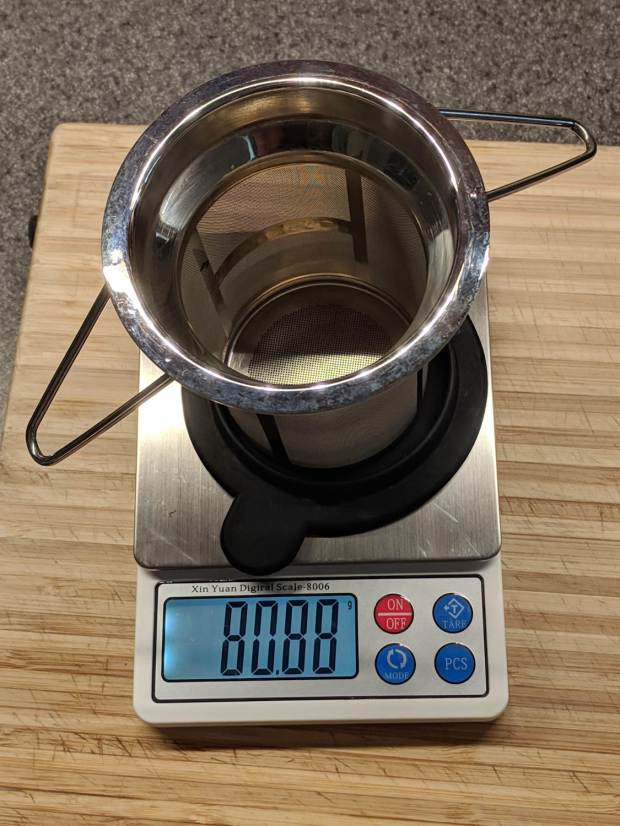
Being a responsible consumer, I carefully measure my daily green tea dosage. A laser-cut stainless steel strainer and silicone steam cap recently arrived, with a most auspicious tare weight:
Tea Strainer – 80.88 g
Before my Genuine IBM 5160 PC XT with an 8088 CPU, I scratch-built a Z80 “personal computer” and wrote a primitive multitasking OS. Plenty of electrons have flowed through the transistors since those days.
A great way to start the day; ya can’t make this stuff up!
Judging from the squirrel tracks on both sides of the scuffle, the squirrel lived to tell the tale:
Hawk vs. Squirrel – snow tracks
I think the squirrel came in from the right, the hawk stooped from a pine tree on the left and missed the catch, whereupon the squirrel departed leftward as fast as its little paws could go.
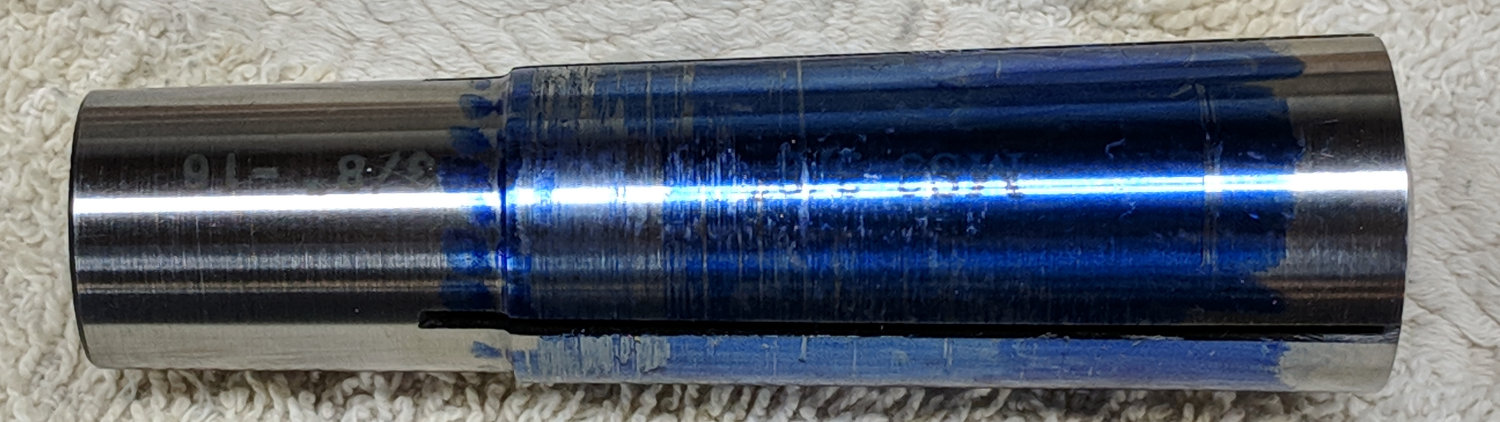
I’ve used the LMS set of inch-size MT3 spindle collets on occasion, but releasing them required an unseemly amount of drawbar battering. It recently occurred to me to check their fit in the spindle taper:
Minilathe – MT3 collet – taper test
Huh.
The only place they touch the spindle is right around the base, so it’s no wonder they clamp poorly and release grudgingly. I tried several others with the same result.
Cross-checking shows a much closer fit along the entire length of the dead center, so it’s not the spindle’s fault:
Minilathe – Dead Center – MT3 taper check
Stipulated: we’re not talking toolroom precision here
I set the collets on centers:
Minilathe – MT3 collet – drive setup
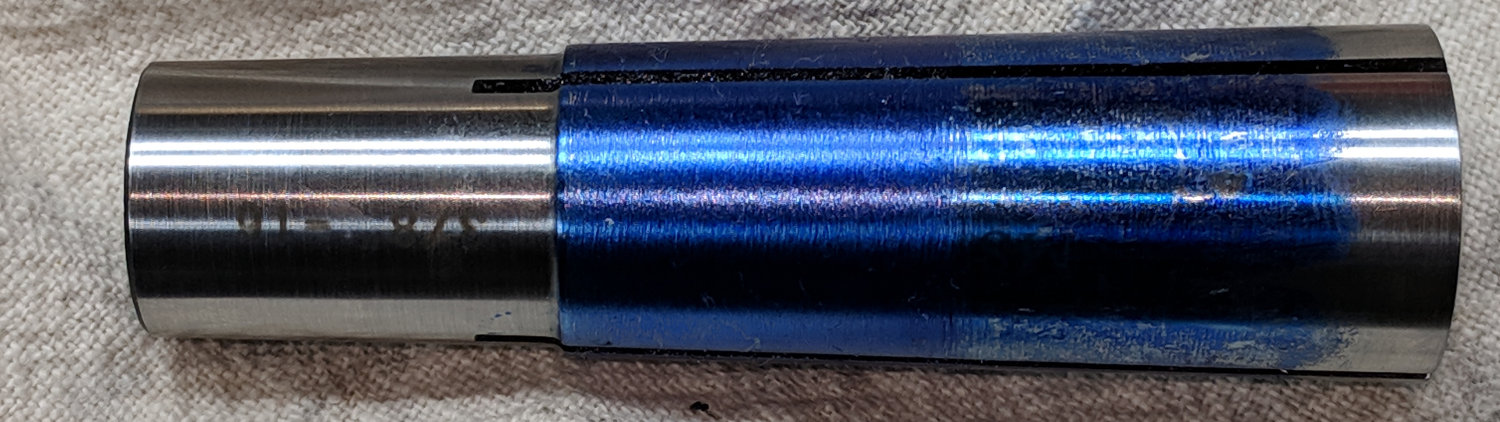
And proceeded to file away the offending section to move the clamping force closer to the business end of the collet:
Minilathe – MT3 collet – filed result
I did the small collets, the ones I’m most likely to need, and left the big ones for another rainy day.
They don’t have much clamping range and seem good only for exact-inch-size rods.
I should lay in a stock of ER16 and maybe ER32 collets for small stuff.
Spotted this in a mall built just before the 2008 financial implosion:
Round Lamp Post in Square Pavement Hole
Maybe the original catalog items went obsolete by the time they signed up enough tenants in that section to justify any lighting at all?
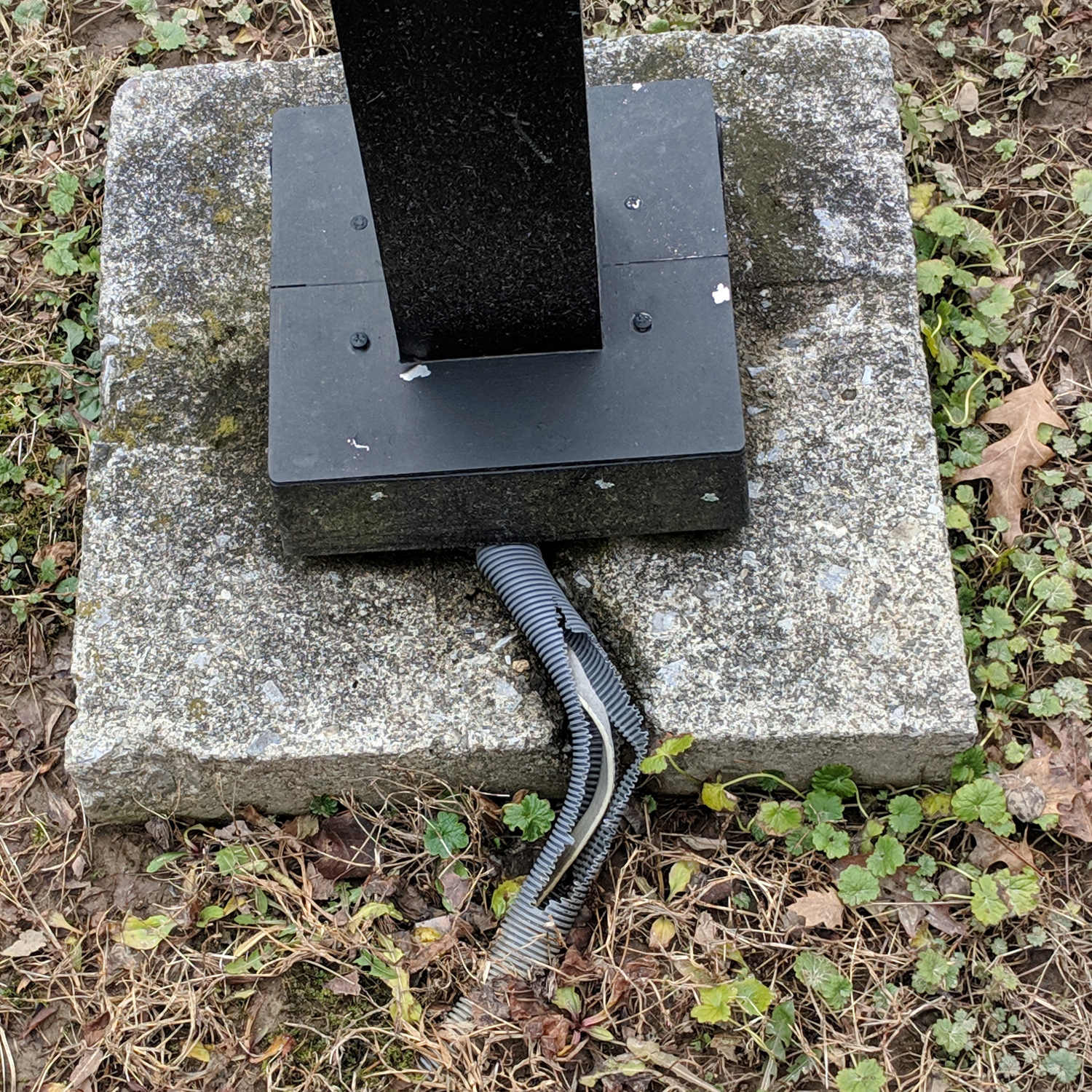
In related news, a facelift some years ago at the motel next to the decaying Red Oaks Mill dam installed square lamp posts on the existing square concrete pedestals, but replaced the original metal conduit with a plastic sheath:
Square Lamp Post with Cut Cable Shield
The cable may sit low enough in the recess to survive, but I wouldn’t bet my life on it.
A bag of 100 nF ceramic caps arrived from across the continent (“US Stock”) and failed incoming inspection:
Mislabeled 100 nF ceramic capacitor – actual 50 nF
The capacitor mark says 104, which is what you’d expect on a 100 nF cap, but the first half-dozen out of the bag measured around 55 nF, far outside even the loosest -20%/+50% tolerance.
Stipulated: the factory can ship every capacitor it makes with a proper mark.
Given their (lack of) provenance, they could be mis-marked 47 nF caps.
We hung a pine-cone wreath beside the back door (a.k.a. the only door we use), replacing a Welcome sign painted on a slate tile. Of course, the tile had long provided a sheltered spot against the house siding:
You’re looking downward from the edge of the communal meal countertop at the power and network cable ports in the floor. The cables snake into the counter legs and emerge at the countertop to provide AC power, USB charging, and wired network ports in addition to ubiquitous WiFi: all the conveniences of modern dining.
Alas, down at floor level, the poor cables get kicked against the edge of their cover plates, bent with no strain relief, and seem jammed under the sharp edges of the leg extrusions. I expect the connectors below the hatches also endure a nightly bath of gritty water, with bonus salt during the winter months.
And, yes, the AC power plug sits halfway out of its socket, with the blades exposed.