The Smell of Molten Projects in the Morning

Ed Nisley's Blog: Shop notes, electronics, firmware, machinery, 3D printing, laser cuttery, and curiosities. Contents: 100% human thinking, 0% AI slop.

Category: Oddities

Who’d’a thunk it?

  • Halogen Blinky Test

    Halogen Blinky Test

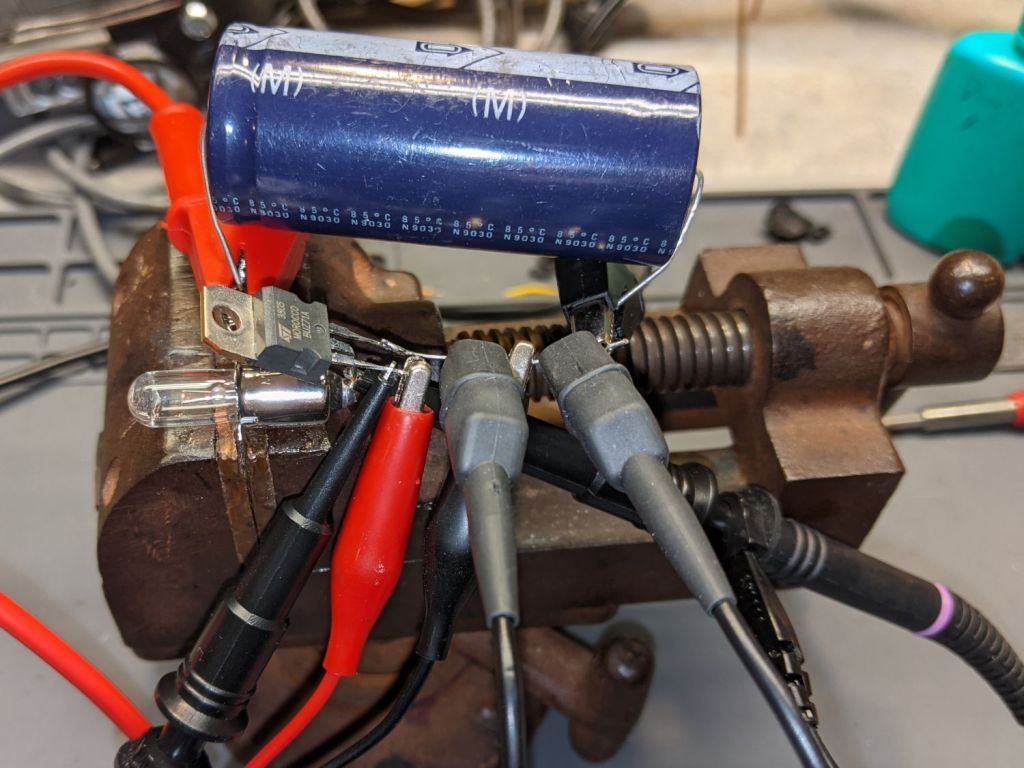
    Dropping the ordinary flashlight bulb into the drawer where it belonged revealed what I think is a halogen flashlight bulb, so I rebuilt the blinky test setup:

    Halogen flashlight bulb test setup
    Halogen flashlight bulb test setup

    This time I used a BUZ71A MOSFET (13 A, 100 mΩ RDS) driven with a 10 V gate pulse to make sure it acted like a switch instead of a current sink.

    The first attempt looked … odd:
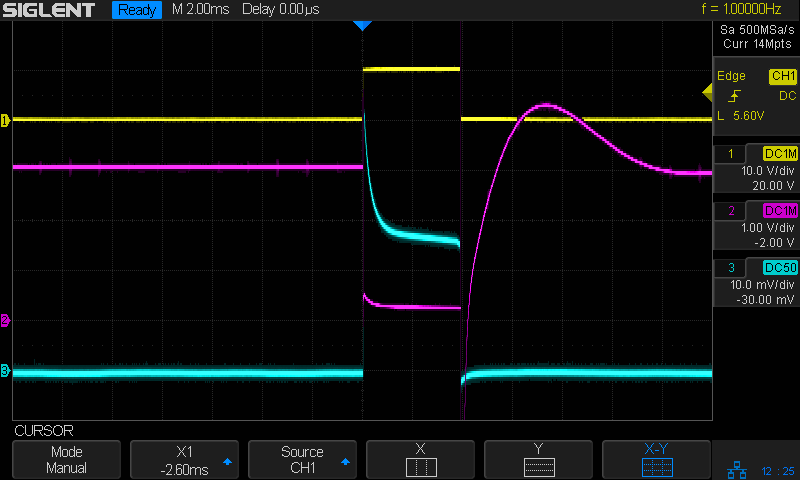
    Halogen 3V - no cap - 4ms 1A-div
    Halogen 3V – no cap – 4ms 1A-div

    The gate pulse is yellow, the drain voltage is magenta, the bulb current is cyan at 1 A/div, and the timebase ticks along at 2 ms/div.

    Moving the magenta trace to the supply voltage on the other side of the bulb produces even more weirdness:
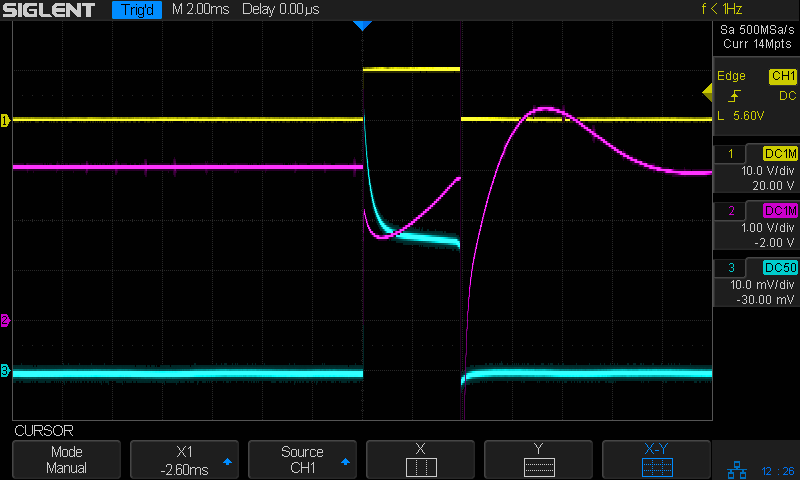
    Halogen 3V - no cap - Vsupply - 4ms 1A-div
    Halogen 3V – no cap – Vsupply – 4ms 1A-div

    Apparently, slugging a 3 A bench supply with a 3 A pulse lasting only 4 ms causes distress of the output tract.

    Kludging a hulking 22 mF (yes, 22000 µF) cap across the power supply provides enough local storage to make things work properly:

    Halogen 3V - 22000µF - Vsupply - 4ms 1A-div
    Halogen 3V – 22000µF – Vsupply – 4ms 1A-div

    With the cap in place, the drain terminal looks less unruly:
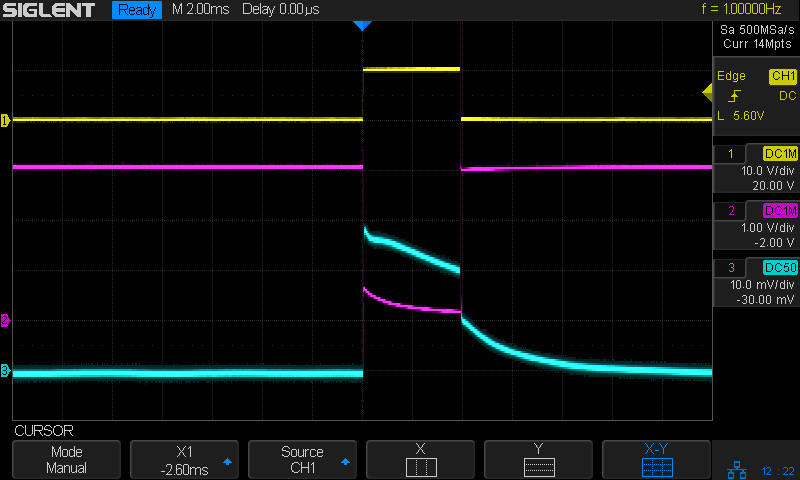
    Halogen 3V - 4ms 1A-div
    Halogen 3V – 4ms 1A-div

    The drain voltage starts at about 600 mV with the 3 A pulse, a bit more than you’d expect from the alleged 100 mΩ drain-source resistance, but those numbers are generally aspirational and the test setup leaves a lot to be desired.

    A 10 ms pulse produces a distinct flash, rather than a dull orange blip (timebase now at 10 ms/div):
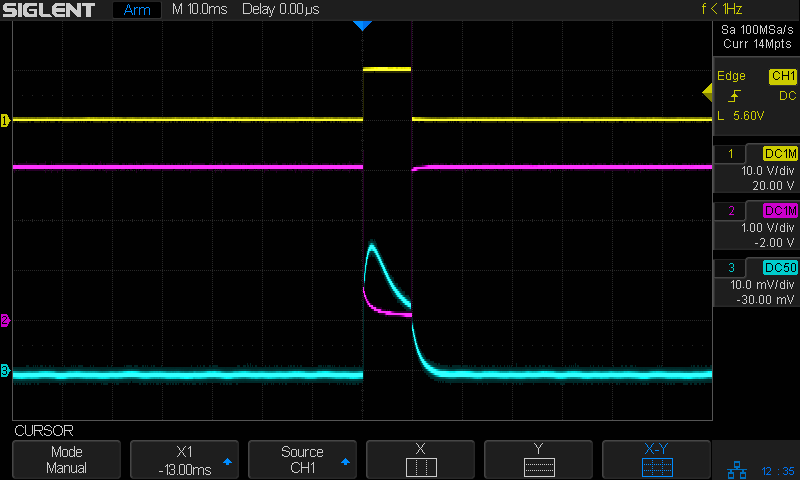
    Halogen 3V - 22000µF - 10ms 1A-div
    Halogen 3V – 22000µF – 10ms 1A-div

    A 30 ms pulse reaches full brightness as the filament settles at normal operating temperature:

    Halogen 3V - 22000µF - 30ms 1A-div
    Halogen 3V – 22000µF – 30ms 1A-div

    A 20 ms flash might suffice for decorative purposes, in which case each pulse requires 90 mW·s = 3 V × 1.5 A × 20 ms of energy. Running it all day requires 7.8 kW·s = 2.2 W·h, so it’s even less appealing than that old skool tungsten bulb.

    Which is, of course, why LED flashlight bulbs are a thing.
  • Raymond Avenue Road Furniture Graveyard

    Raymond Avenue Road Furniture Graveyard

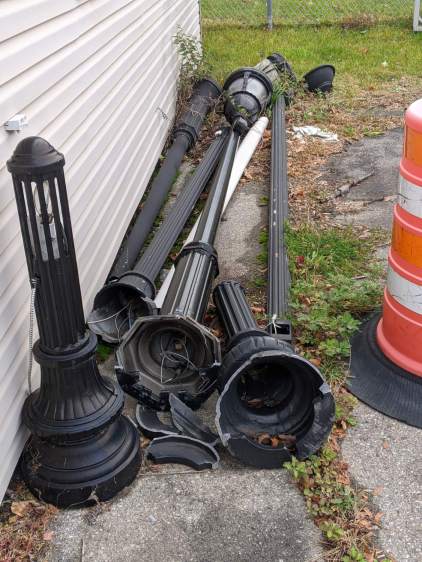
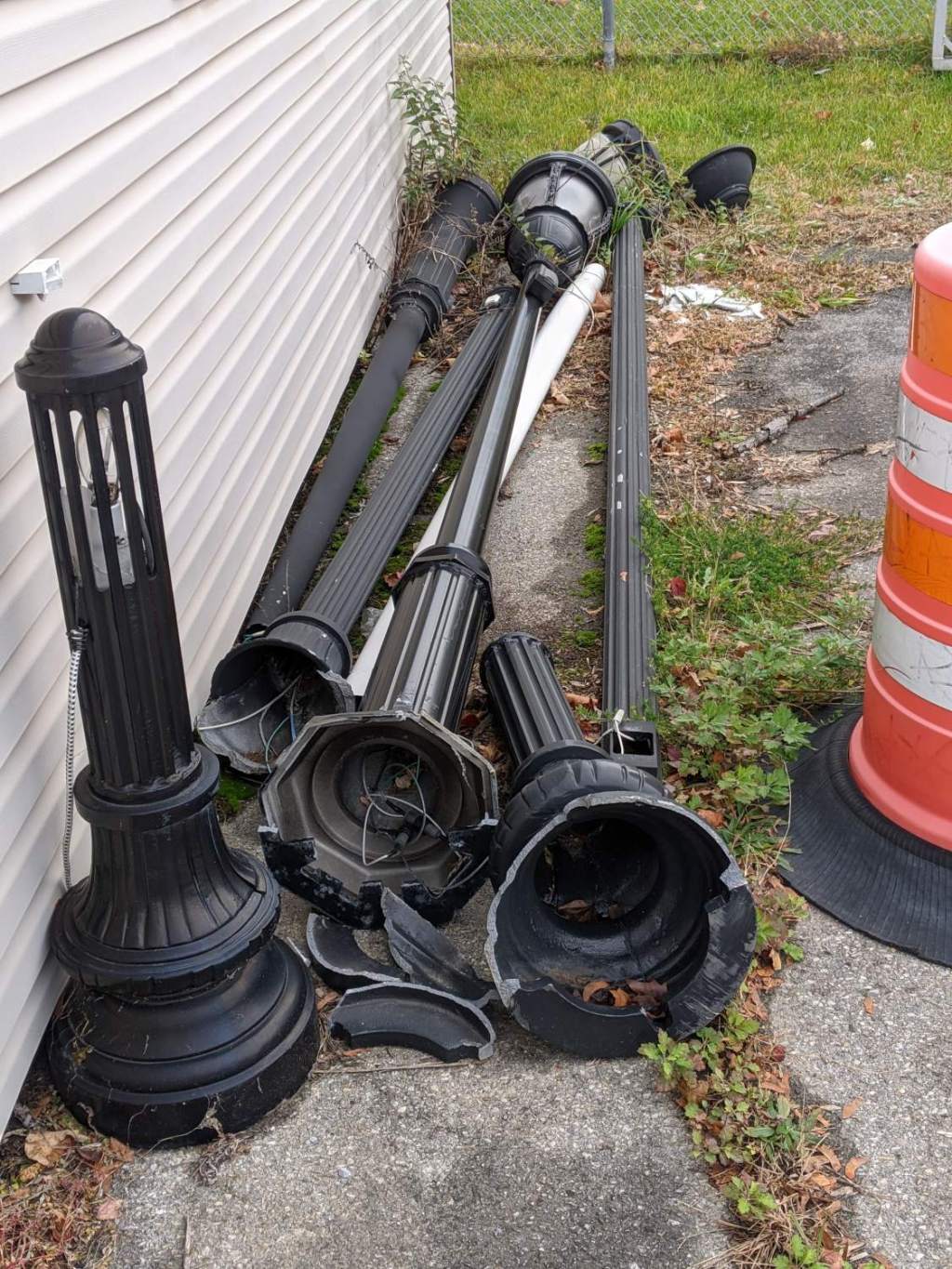
    Apparently the traffic calming features along Raymond Avenue sacrifice the road furniture:

    Smashed Raymond Avenue Road Furniture
    Smashed Raymond Avenue Road Furniture

    I hadn’t realized the “standards compliant” road design caused the death of so many street lights, but the dead bollard population is definitely under-represented. In round numbers, every traffic circle (“intersection”) always has at least one smashed bollard in addition to the vestigial stumps of those removed rather than being replaced.

    The upright bollard is a relic of the earliest installations, back before they realized a bollard with an eye-level light glaring into drivers’ eyes weren’t an effective design, particularly along a road lined with dead-black / non-reflective posts.

    Spotted in the Town of Poughkeepsie Highway Department compound.

  • Alpha Geek Clock: Battery Refresh

    Alpha Geek Clock: Battery Refresh

    A pair of D cells can power an obsolete / out of production C-Max CMMR-60 WWVB receiver for about five years and, having the plastic pieces for a blinkie at hand, junking the faded case in favor of a test lashup seemed appropriate:

    C-Max CMMR-60 WWVB receiver - AA alkaline test setup
    C-Max CMMR-60 WWVB receiver – AA alkaline test setup

    Given the fragility of that ferrite bar, I should conjure a wide D-cell base, a bar holder to cover the ends, and a PCB mount of some sort.

    The receiver data pin drives the red LED of an RGB piranha through a 2.2 kΩ SMD resistor, so it’s visible in a dim room. Given that the thing flickers constantly during WWVB’s poor-reception daylight hours, reducing the LED current counts for almost everything.

    The antenna has a cap under that heatshrink tubing, which called for a resonance check:

    C-Max CMMR-60 WWVB receiver - antenna peaking - driver coil
    C-Max CMMR-60 WWVB receiver – antenna peaking – driver coil

    The blue dingus is an RF sniffer driven three orders of magnitude below its frequency spec:

    C-Max CMMR-60 WWVB receiver - antenna peaking - function generator
    C-Max CMMR-60 WWVB receiver – antenna peaking – function generator

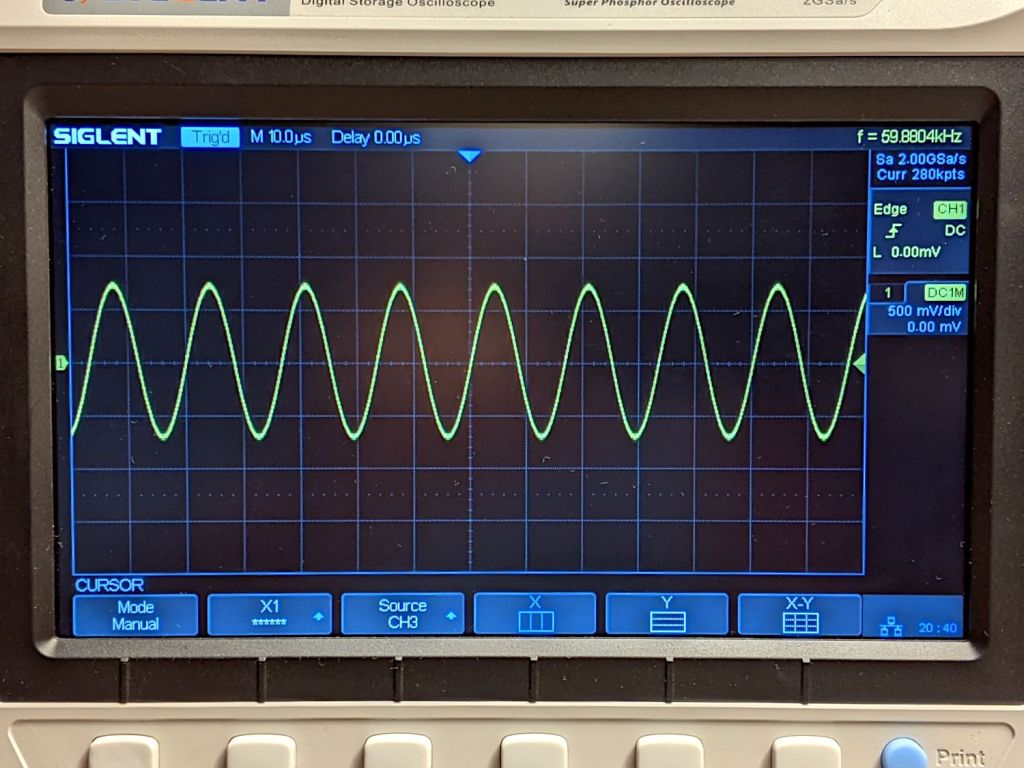
    The antenna response peaks where you’d expect:

    C-Max CMMR-60 WWVB receiver - antenna peaking - scope
    C-Max CMMR-60 WWVB receiver – antenna peaking – scope

    Given the broad peak and typical tolerances, it’s spot on.

  • Alpatronix iPhone XS Max Wireless Charging Case: Battery Capacity

    Alpatronix iPhone XS Max Wireless Charging Case: Battery Capacity

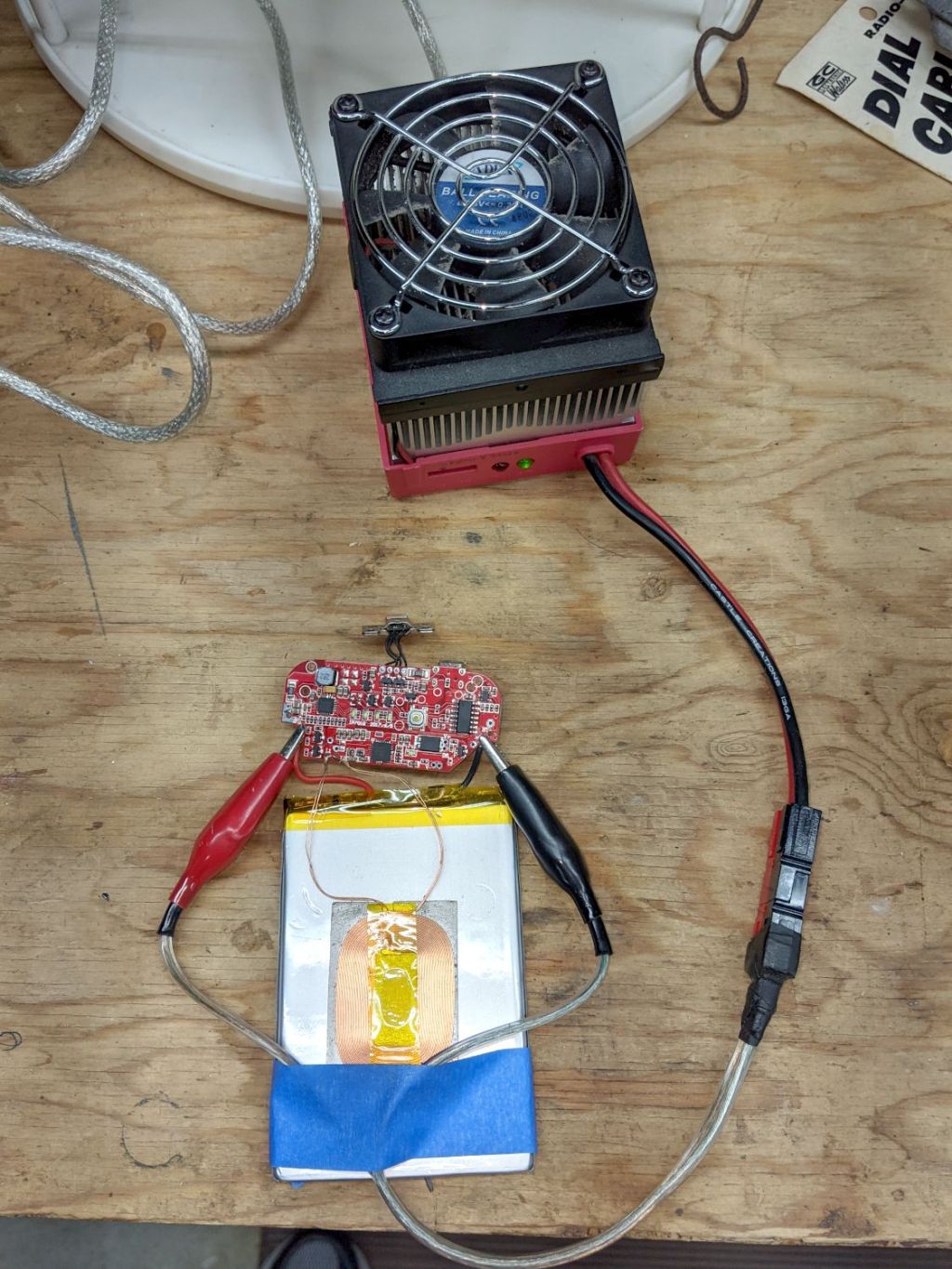
    Mostly because I have the technology, here’s a battery rundown test for the (guts of the) Alpatronix iPhone case:

    Alpatronix iPhone XS case - battery test setup
    Alpatronix iPhone XS case – battery test setup

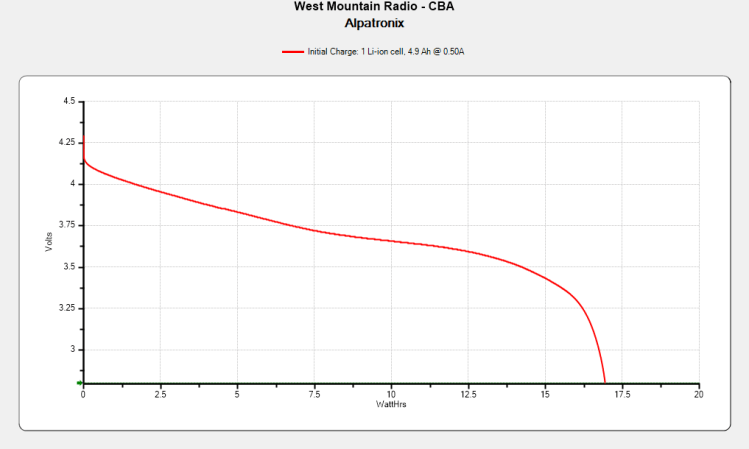
    Bypassing the entire battery controller doesn’t tell you when it thinks the lights should go out, but does give an indication of the raw battery capacity:

    Alpatronix iPhoneXS Charger - 2021-11-06
    Alpatronix iPhoneXS Charger – 2021-11-06

    Multiplying the nominal 3.7 V by the nominal 5 A·hr capacity says it should have a nominal 18.5 W·hr capacity at some unrealistically low discharge rate. Given that I found it at the end of the driveway with no provenance, I didn’t expect much.

    To my utter astonishment, it delivered 17 W·hr at 500 mA!

    It really ought to be good for something …

  • Alpatronix iPhone XS Max Wireless Charging Case Teardown

    Alpatronix iPhone XS Max Wireless Charging Case Teardown

    A battered Alpatronix iPhone XS Max wireless charging case emerged from the ground cover at the end of the driveway:

    Alpatronix iPhone XS case - overview
    Alpatronix iPhone XS case – overview

    The iPhone was nowhere to be found, so harvesting its organs seemed appropriate:

    Alpatronix iPhone XS case - opened
    Alpatronix iPhone XS case – opened

    I assume the four steel disks aligned the coil with the wireless charger.

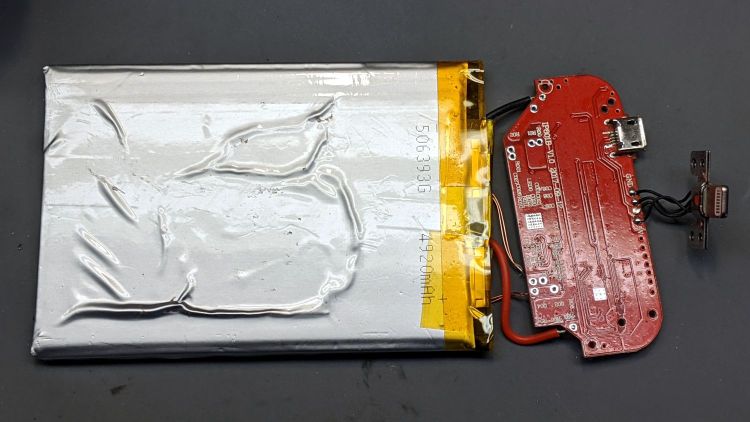
    A few hours of steady tension relieved enough of the sticky tape to release the battery:

    Alpatronix iPhone XS case - battery removal
    Alpatronix iPhone XS case – battery removal

    Although its bag now sports a few wrinkles:

    Alpatronix iPhone XS case - battery adhesion
    Alpatronix iPhone XS case – battery adhesion

    The alert reader will note the outside of case proudly proclaimed “Capacity: 5000 mAh” while the underside of the battery says “4920 mAh”, but that’s surely close enough for consumer electronics these days.

    The battery charges through either the Qi coil or a (mercifully standard Micro-B) USB jack and everything seems to work.

    Not sure what I’ll do with a bare lithium cell and its charger, but they ought to come in handy for something around here.

  • Mushrooms

    Mushrooms

    We spotted a plump mushroom cluster nestled at the base of a neighbor’s tree:

    Mushrooms at tree - A
    Mushrooms at tree – A

    Eight days later they’d started curling:

    Mushrooms at tree - B
    Mushrooms at tree – B

    Mushrooms growing on tree roots generally mean the tree is in trouble and, indeed, it’s a battered Black Locust.

  • Lyme Disease

    Lyme Disease

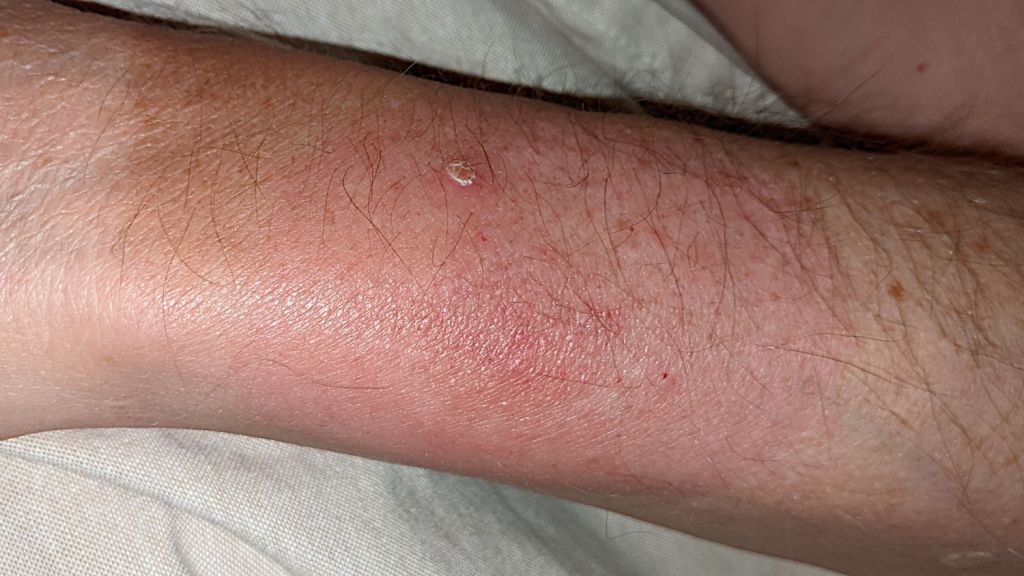
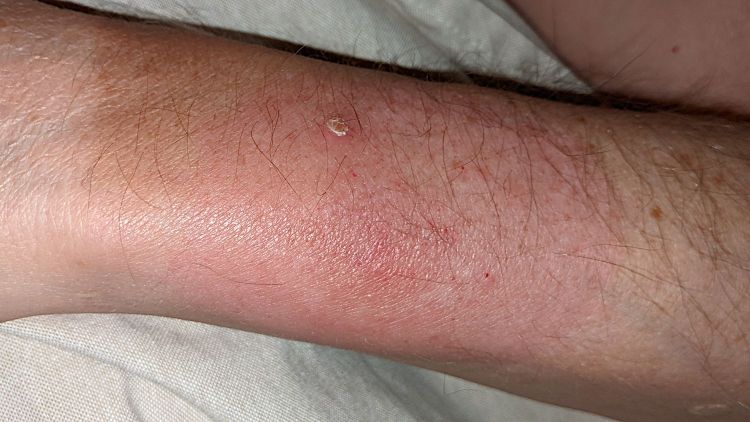
    For reasons that made sense at the time, two weeks ago I ventured outside the house. A few days later, this appeared:

    Lyme Disease - arm rash
    Lyme Disease – arm rash

    The pallid skin over on the left comes from a bike glove. The central bump is one of those annoying sebaceous hyperplasias appearing after a Certain Age and not relevant here.

    Having been around this particular block a few times, Mary recognized the diffuse red rash, sleeping 30 of 36 consecutive hours, and a day-long 103 °F fever as Lyme disease. I’m currently taking 100 mg of doxycycline twice a day and (after a week) feeling better, while sleeping a lot more than usual at random intervals during the day.

    We’re both highly aware of Lyme disease: Mary routinely dresses in a complete overlayer of permethrin-sprayed clothing and I generally strip-and-shower immediately after any yard work in similarly sprayed, albeit less enclosing, attire. In this case, we think a tiny Deer Tick nymph affixed itself to the outboard side of my wrist, where I could neither see nor feel it, and (because I didn’t take a shower after being outside for only a few minutes) remained attached long enough to infect me.

    Caught and treated early, Lyme disease generally does not progress into “post-treatment Lyme disease”, an ailment rife with what can charitably be described as serious woo, despite some evidence of actual disease.

    Some of Mary’s Master Gardener cronies have endured co-infections of Babesia microti and we’ll be watching for those symptoms after doxycycline tamps down the obvious problem.

    I’ll be puttering very carefully around heavy machinery and posting irregularly for a few weeks …

    Memo to Self: the Basement Shop has a lot to recommend it!