The Smell of Molten Projects in the Morning

Ed Nisley's Blog: Shop notes, electronics, firmware, machinery, 3D printing, laser cuttery, and curiosities. Contents: 100% human thinking, 0% AI slop.

Category: Machine Shop

Mechanical widgetry

  • Tour Easy: SRAM X.9 Grip Shift Replacement

    The rear shifter on my Tour Easy stopped working when we were most of the way to the grocery store, due to what turned out to be due to a broken cable. I managed to yank the frayed end out of the shifter, pulled the derailleur into a middling gear, and belayed the cable into a deadly cactus:

    SRAM X.9 Rear Shifter - frayed cable
    SRAM X.9 Rear Shifter – frayed cable

    A three-speed recumbent got me home again, albeit with spin-it-out high gear and a low gear barely sufficient for trailer hauling.

    Attempting to remove the frayed cable from the SRAM X.9 grip shifter didn’t go well at all:

    SRAM X.9 Rear Shifter - cable tangle
    SRAM X.9 Rear Shifter – cable tangle

    I managed to extract the lead pellet, but, while it may be possible to extract the remaining tangle, even pulling on individual wires wasn’t productive.

    AFAICT, the shifter came as original equipment on the bike, so it’s been in constant use for the last 17-ish years. The nice soft grip material (and the cover over the cable port) turned into gummy sludge under the cheerful silicone tape I applied some years ago, so I sliced the old grip and pulled it off:

    SRAM X.9 Rear Shifter - gummified grip
    SRAM X.9 Rear Shifter – gummified grip

    Popping a new-old-stock X.9 shifter from the Big Box o’ Bike Parts and installing it proceeded without problems. This being the rear shifter, I had to remove the shiny OEM cable and replace it with a PTFE-coated tandem-length rear cable, but that’s normal for a long wheelbase recumbent.

    For the record, both black shift indicator tabs still show no signs of failing after half a year, so a bent piece of polypropylene sheet looks like a win.
  • MPCNC: Tweaked GRBL Config

    These GRBL configuration constants seem to work well with the DW660 router in the MPCNC gantry:

    $$
    $0=10
    $1=255
    $2=0
    $3=2
    $4=0
    $5=0
    $6=0
    $10=1
    $11=0.010
    $12=0.002
    $13=0
    $20=1
    $21=1
    $22=1
    $23=0
    $24=500.000
    $25=2500.000
    $26=250
    $27=3.000
    $30=30000
    $31=0
    $32=0
    $100=100.000
    $101=100.000
    $102=400.000
    $110=8000.000
    $111=8000.000
    $112=3000.000
    $120=2000.000
    $121=2000.000
    $122=2000.000
    $130=635.000
    $131=465.000
    $132=103.000
    —–
    $n
    $N0=F150
    $N1=G10L2P1X-633Y-463Z-3
    —–
    $#
    [G54:-633.000,-463.000,-3.000]
    [G55:0.000,0.000,0.000]
    [G56:0.000,0.000,0.000]
    [G57:0.000,0.000,0.000]
    [G58:0.000,0.000,0.000]
    [G59:0.000,0.000,0.000]
    [G28:-418.670,-282.016,-3.000]
    [G30:-628.000,-3.000,-3.000]
    [G92:0.000,0.000,0.000]
    [TLO:0.000]
    [PRB:0.000,0.000,0.000:0]
    view raw MPCNC-GRBL.cfg hosted with ❤ by GitHub

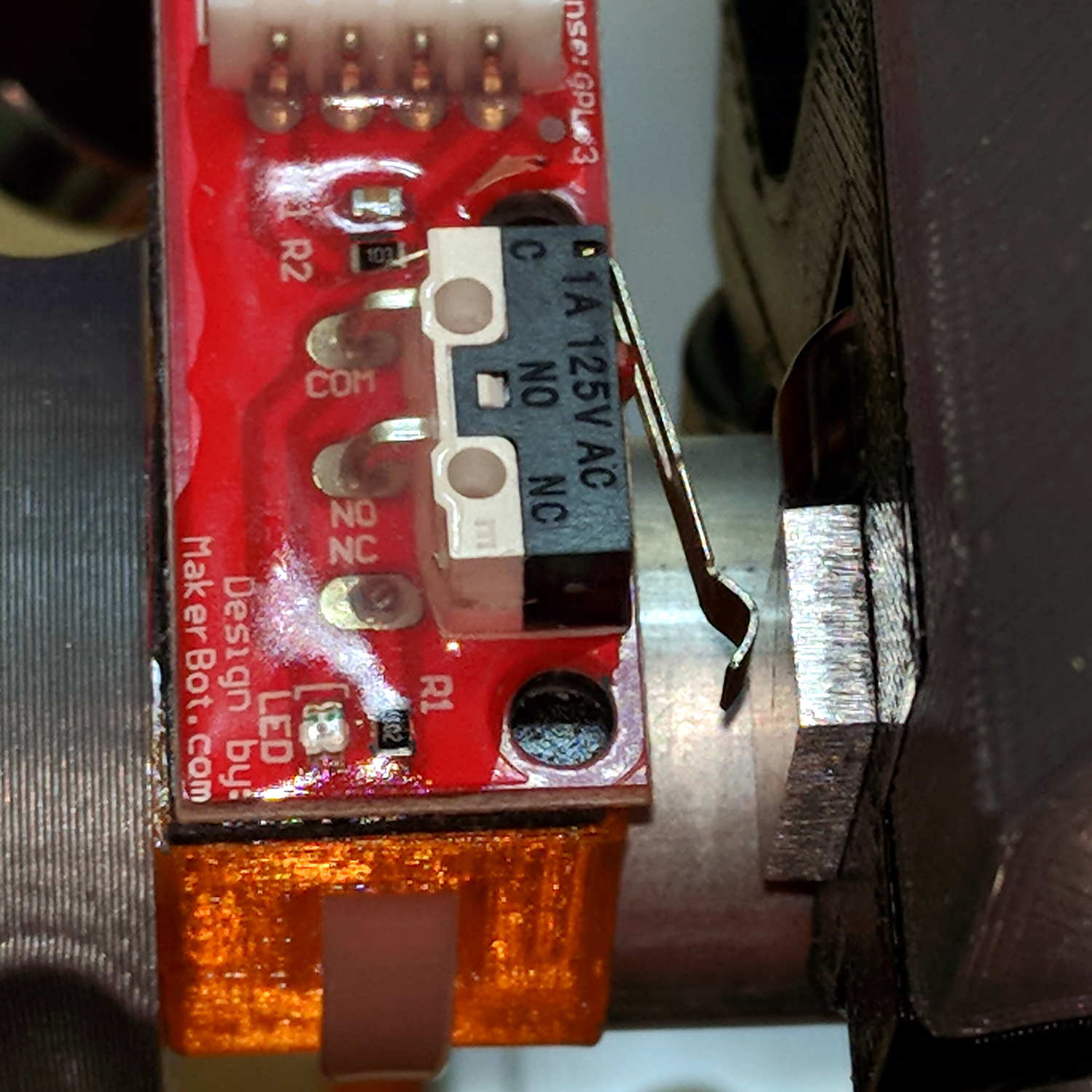
    The overall XY travel is slightly smaller than the initial configuration, because the router sticks out further than the penholder I’d been using. Increasing the $27 Homing Pulloff distance to 3 mm leaves a comfortable space beyond the limit switches after homing to the positive end:

    MPCNC - X-axis endstop - home
    MPCNC – X-axis endstop – home

    Adjusting the $13[01] XY travel distances and switch positions on the other end of the rail leaves a similar comfort zone at the negative end:

    MPCNC - X-axis endstop - X min
    MPCNC – X-axis endstop – X min

    Both switches now live on the rear X-axis rail and appear as seen from behind the bench; they just look backwards. The Y-axis switches are on the left rail and look exactly the same.

    The XY travel works out to 630 × 460 mm = 24.8 × 18.1 inch, which is Good Enough.

    Some fiddling with the Z axis limit switch tape mask produces a nice round 100 mm = 3.9 inch vertical travel. The Z-axis rails just barely clear the table at the lower limit and just barely stay in the bottom bearings at the upper limit, so it’s a near thing. In practical terms, the rails or the tool will smash into the workpiece sitting atop the table before the limit switch trips.

    Setting both $20=1 Soft Limits and $21=1 Hard Limits may be excessive, but I vastly prefer having the firmware detect out-of-range moves and the hardware forcibly shut down if the firmware loses track of its position, rather than letting it grind away until I can slap the BRS. The steppers aren’t powerful enough to damage anything, of course, so it’s a matter of principle.

    The $N0=F150 sets the initial speed, as the default F0 seems to (sometimes) confuse bCNC’s auto-level grid probing.

    The $N1=G10L2P1X-633Y-463Z-3 sets the default G54 coordinate origin to the front-left corner, with Z=0 at the home position up top, so as to prevent surprises. I expect to use G55 for most work holder touchoffs, although we’ll see how that plays out.

    The G28 and G30 settings depend on the tool change location and the Z-axis probe location, so they’re still not cast in concrete.

  • MPCNC: Relocated Camera

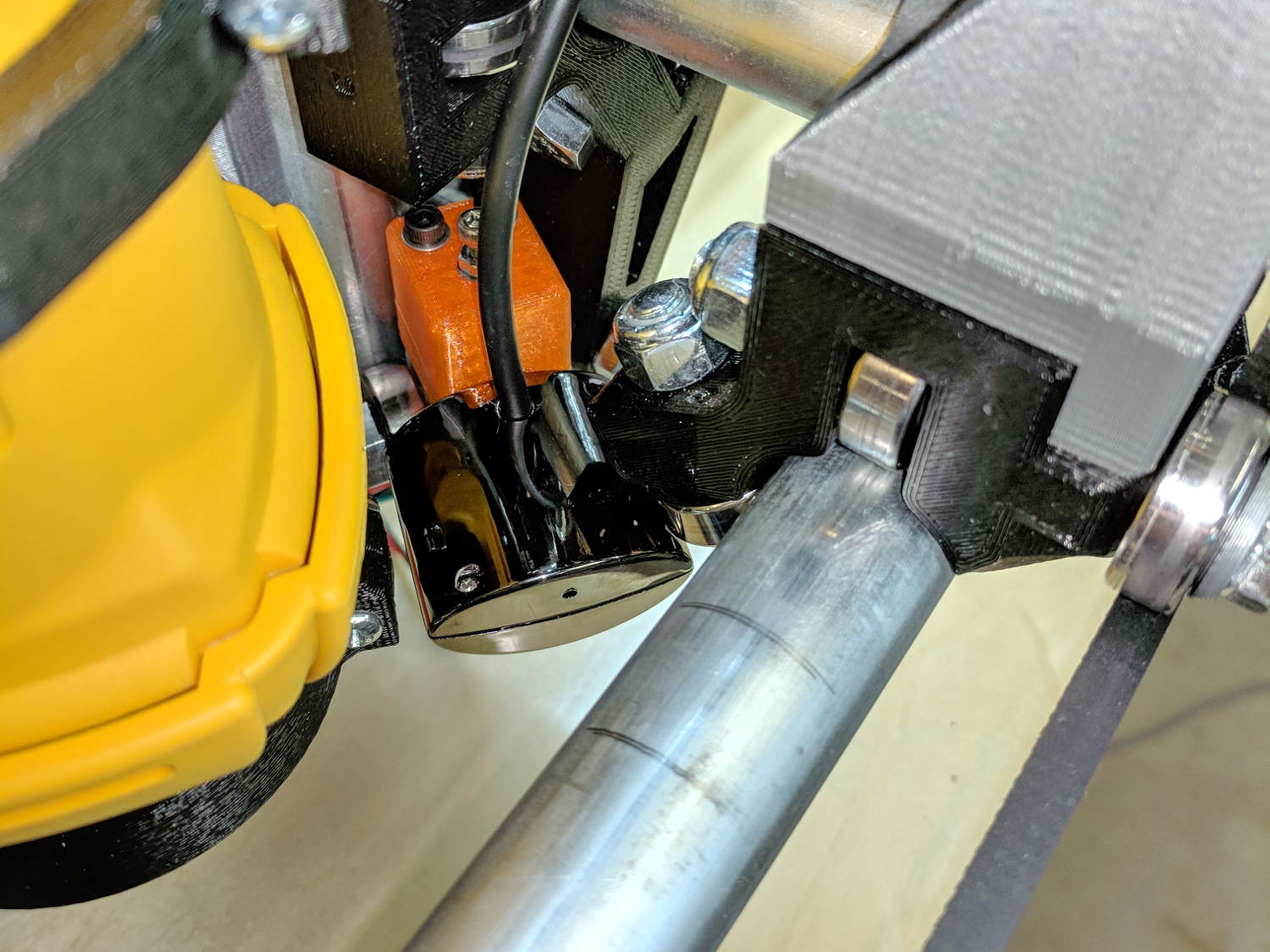
    The original camera position put it close to the MPCNC’s DW660 spindle:

    MPCNC - original camera location
    MPCNC – original camera location

    Unfortunately, it sat slightly too close to the gantry roller along the X-axis for comfort.

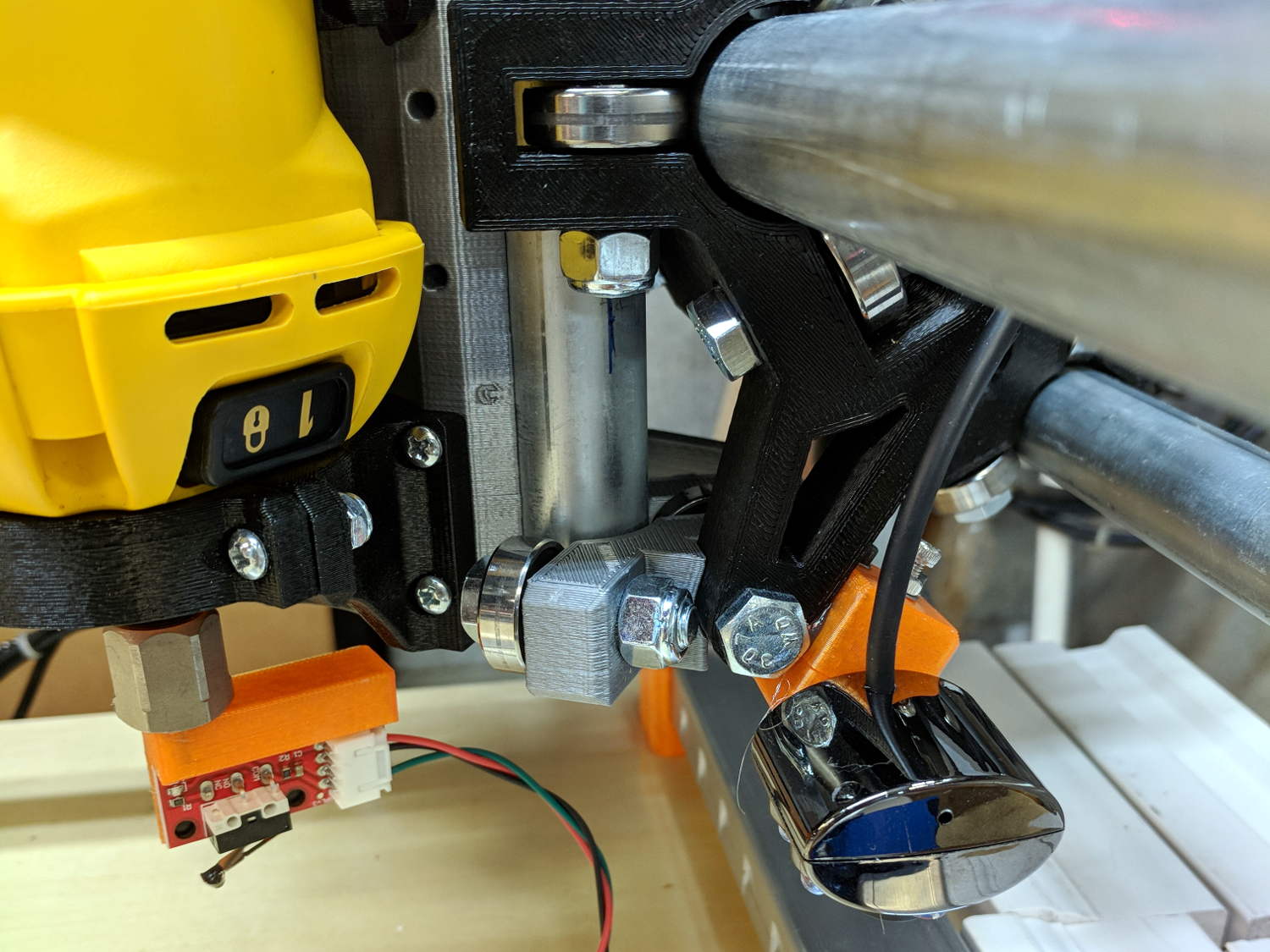
    The effort required to pry the mount off its hot-melt glue bed showed it wasn’t ever going to shake loose, so I fired up the glue gun and stuck it to a better spot on the XY assembly:

    MPCNC - relocated camera - front view
    MPCNC – relocated camera – front view

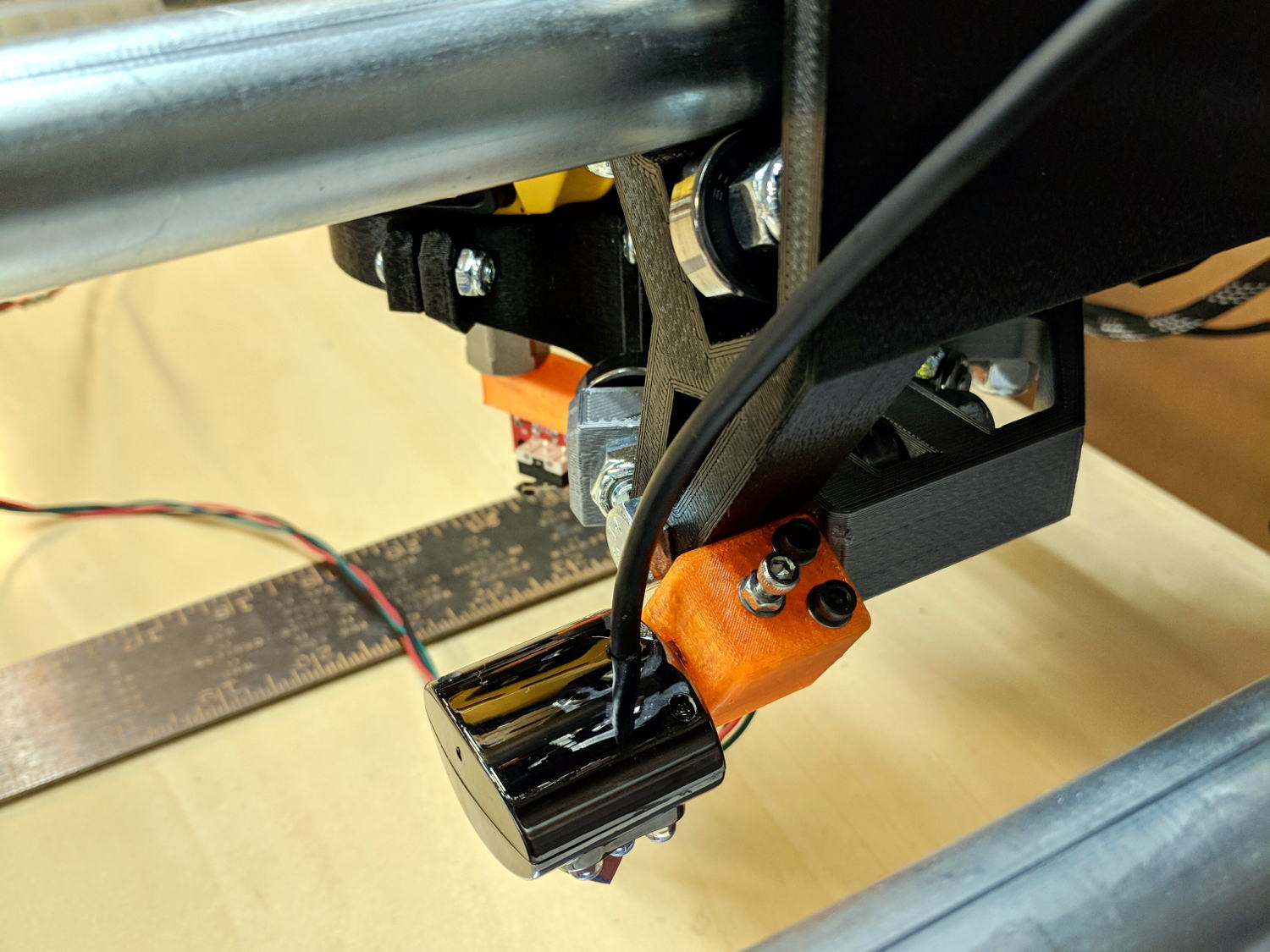
    Seen from the side:

    MPCNC - relocated camera - side view
    MPCNC – relocated camera – side view

    Bonus: it’s now trivially easy to tweak the locking screw!

    Realigning the camera and recalibrating its offset proceeded as before.

  • End of the Sienna

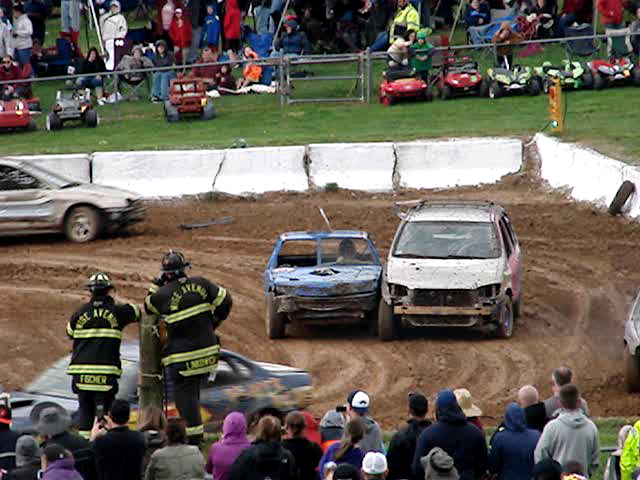
    Although I knew the Sienna showed signs of a leaky head gasket, the exhaust system needed some attention, and a sporty used car recently put it in the shade, this still came as a surprise:

    I’m trying to get a crew … together and live the demolition derby dream

    By the time I arrived, the dashboard trim had vanished and the air bags were safely out:

    Demolition Derby - Sienna dashboad prep
    Demolition Derby – Sienna dashboad prep

    Diligent application of a Harbor Freight “Professional Windshield Removal Kit” cut through the side window seals, but the rear window rested on four impossible-to-cut locating studs:

    Sienna - rear window locating stud
    Sienna – rear window locating stud

    I managed to pry the glass off using a Gasket Scraper and considerable muttering.

    With all the exterior trim, lights, and mirrors gone, the Sienna was in fine race trim:

    Sienna - Demo derby race trim
    Sienna – Demo derby race trim

    But, being no longer street-legal, it required trailering. For the record, not all huge pickup trucks have bulky guys with pot bellies behind the wheel:

    Demolition Derby - Tow Vehicle Rental
    Demolition Derby – Tow Vehicle Rental

    A few hours later, it was in the Short Track Full Size pack at the Upperco Volunteer Fire Company’s Demolition Derby:

    Sienna at Upperco VFC Demolition Derby - start
    Sienna at Upperco VFC Demolition Derby – start

    The driver required a few laps to shake off years of safe-driving indoctrination:

    Sienna - Demolition Derby - running alone - 2018-04-28
    Sienna – Demolition Derby – running alone – 2018-04-28

    But eventually the spirit of the thing took over:

    Sienna - Demolition Derby - right crunch - 2018-04-28
    Sienna – Demolition Derby – right crunch – 2018-04-28

    We now know the transmission oil cooler sat just ahead of the left front wheel, where it was exposed to damage by a glancing collision:

    Sienna - Demolition Derby - left crunch - 2018-04-28
    Sienna – Demolition Derby – left crunch – 2018-04-28

    The Sienna finished the race and made it almost all the way to the trailer before bleeding out through the ATF cooler.

    The driver emerged in fine shape, although the door didn’t work nearly as well as it had fifteen minutes earlier:

    Sienna - Driver exiting Van - 2018-04-28
    Sienna – Driver exiting Van – 2018-04-28

    A race staffer in a Bobcat aimed the carcass in the right general direction and shoved it onto the trailer for the return to base:

    Sienna - Final Trailer Tiedown - 2018-04-28
    Sienna – Final Trailer Tiedown – 2018-04-28

    You can find shaky low-res camera action documenting the event, because video-or-it-didn’t-happen.

    We piled the windows / parts / detritus into the back, a scrapper hauled it away the next morning, and that’s the end of our Sienna’s story.

    Toyota sold a lot of Siennas, which means the Hot Topics list over on the right will show a need for Sienna ABS trouble codes long into the future.

    In fact, the adjacent motel slot had a disconcerting sight:

    Yet Another Sienna
    Yet Another Sienna

    I think it was a 2001 model, but …

  • Zeiss Ikon Ikoflash 4

    A flash gun is hard to beat for straight-up nostalgia:

    Zeiss Ikon Ikoblitz 4 - box
    Zeiss Ikon Ikoblitz 4 – box

    This Zeiss Ikon Ikoblitz 4 is in fine shape:

    Zeiss Ikon Ikoblitz 4 - front
    Zeiss Ikon Ikoblitz 4 – front

    And no more grubby than one might expect after all those decades:

    Zeiss Ikon Ikoblitz 4 - back
    Zeiss Ikon Ikoblitz 4 – back

    I distinctly remember Flash Guide Numbers:

    Zeiss Ikon Ikoblitz 4 - guide-number calculator
    Zeiss Ikon Ikoblitz 4 – guide-number calculator

    The red dial scale has the Guide Numbers (aperture × feet) and the lower black dial scale gives the lens apertures. The manual doesn’t mention the black figures above the red Guide Numbers; they’re metric Guide Number (aperture × meters), which would have been obvious back in the day.

    The tidy shell slides off when you release a latch in the back:

    Zeiss Ikon Ikoblitz 4 - front - stowed
    Zeiss Ikon Ikoblitz 4 – front – stowed

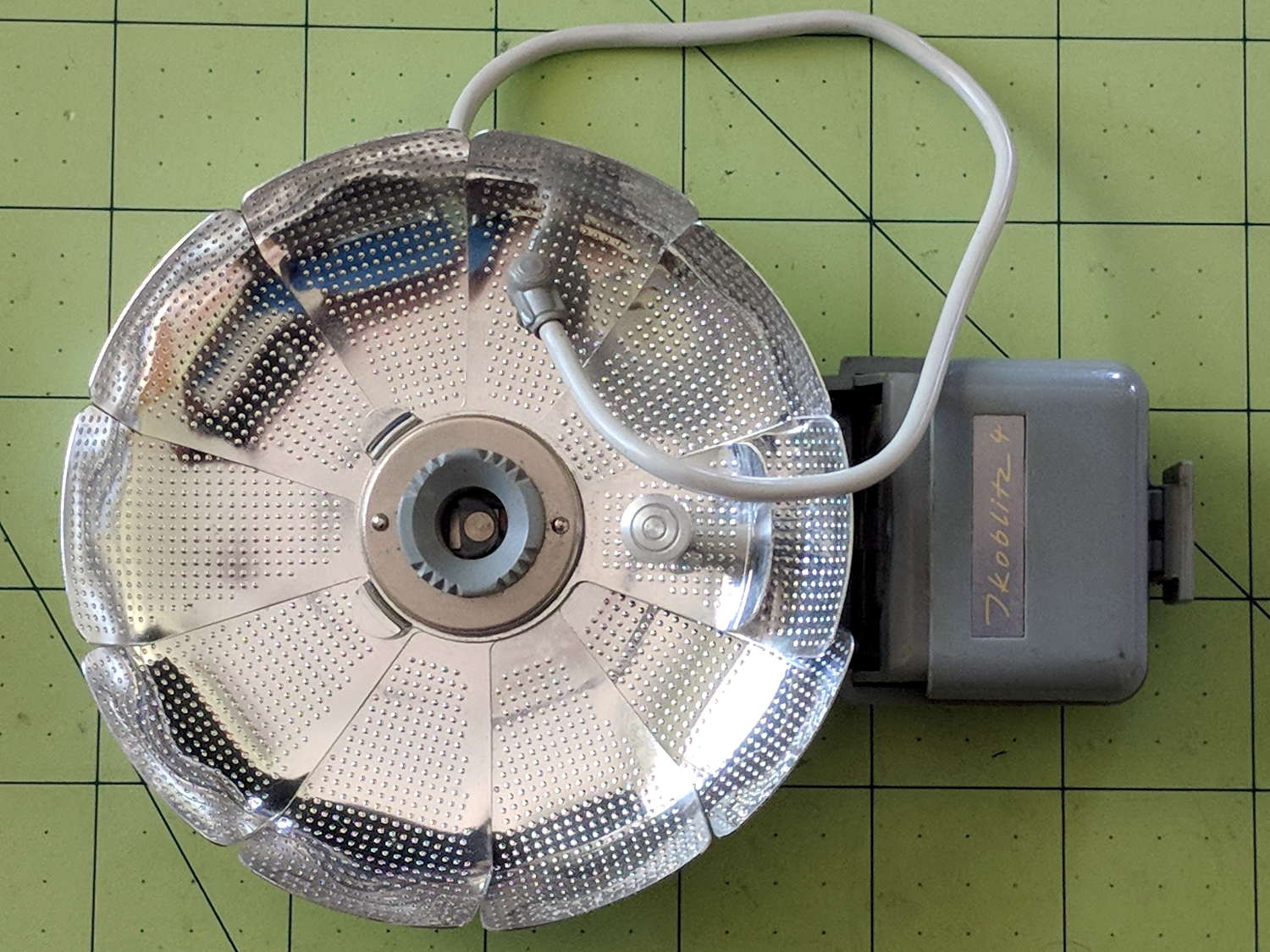
    Then the reflector unfurls:

    Zeiss Ikon Ikoblitz 4 - front unfurled
    Zeiss Ikon Ikoblitz 4 – front unfurled

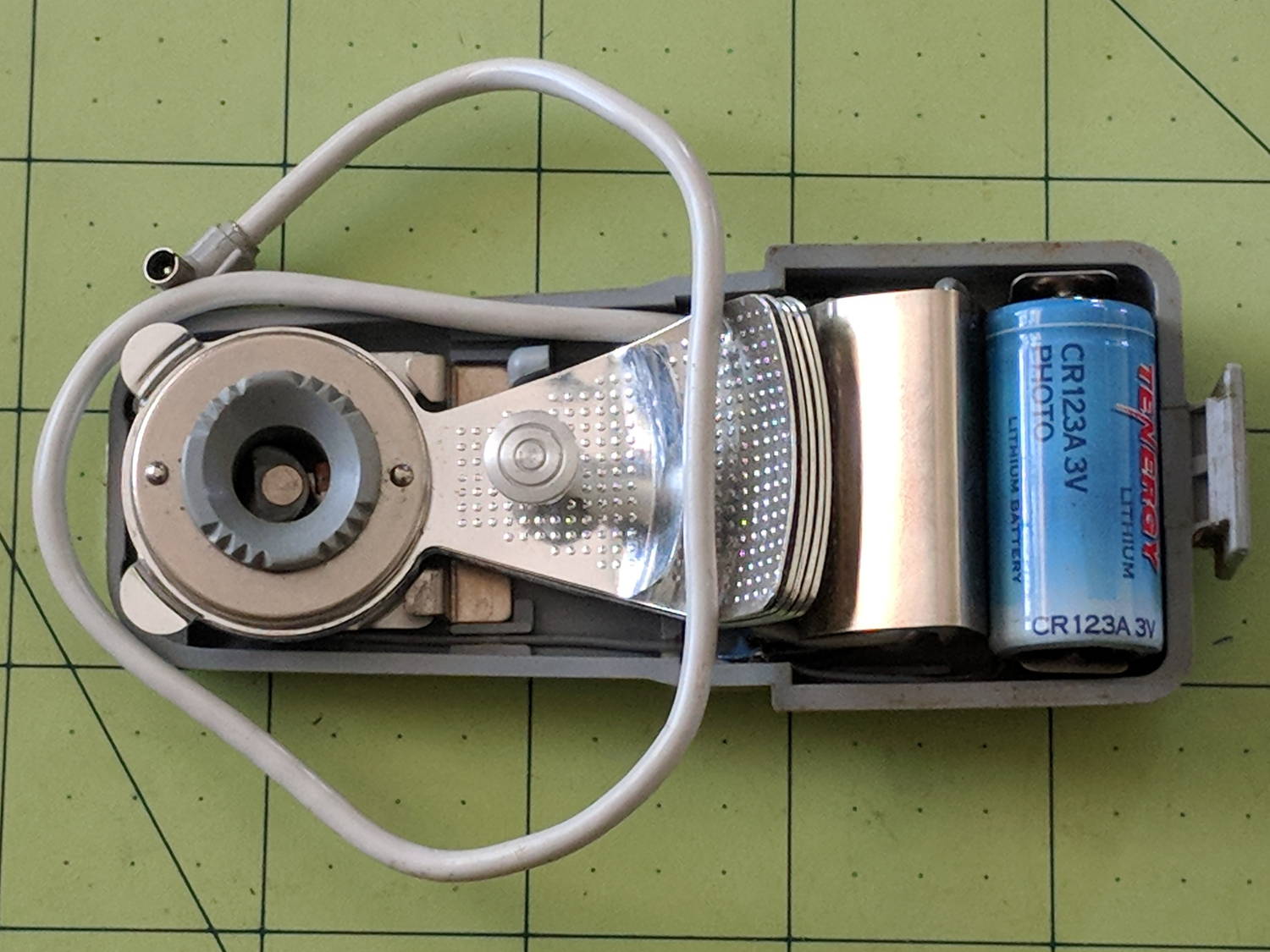
    Mirabile dictu, the previous owner removed the 15 V “hearing aid” battery (Eveready 504, 60 mA·h in the 504A alkaline version) before storing the flash, leaving the contacts in pristine condition:

    Zeiss Ikon Ikoblitz 4 - CR123A test fit
    Zeiss Ikon Ikoblitz 4 – CR123A test fit

    A 3 V CR123A primary lithium cell snaps perfectly into the battery holder, which I define as a Good Omen: a dab of circuitry could turn this into self-powered and highly attractive Art. This would be one of the very few applications well-suited for the coldest blue-white LEDs.

    One could adapt an A23 12 V alkaline battery (33 mA·h) to the holder, at the cost of half the capacity.

    The silver shield just to the left of the battery conceals a 250 μF (!) nonpolarized capacitor.

    One could build a bayonet-base (GE #5 / Press 25) adapter or poke a doodad with a 9 mm cylindrical base into the M2 bulb adapter (unrelated to my M2 printer):

    Zeiss Ikon Ikoblitz 4 - bulb adapter
    Zeiss Ikon Ikoblitz 4 – bulb adapter

    Herewith, the Zeiss Ikon Ikoblitz 4 – Instruction Manual, should you need more details.

    This hardware may be a progenitor of Gibson’s vat-grown Zeiss Ikon eyes.

  • Torque Drivers

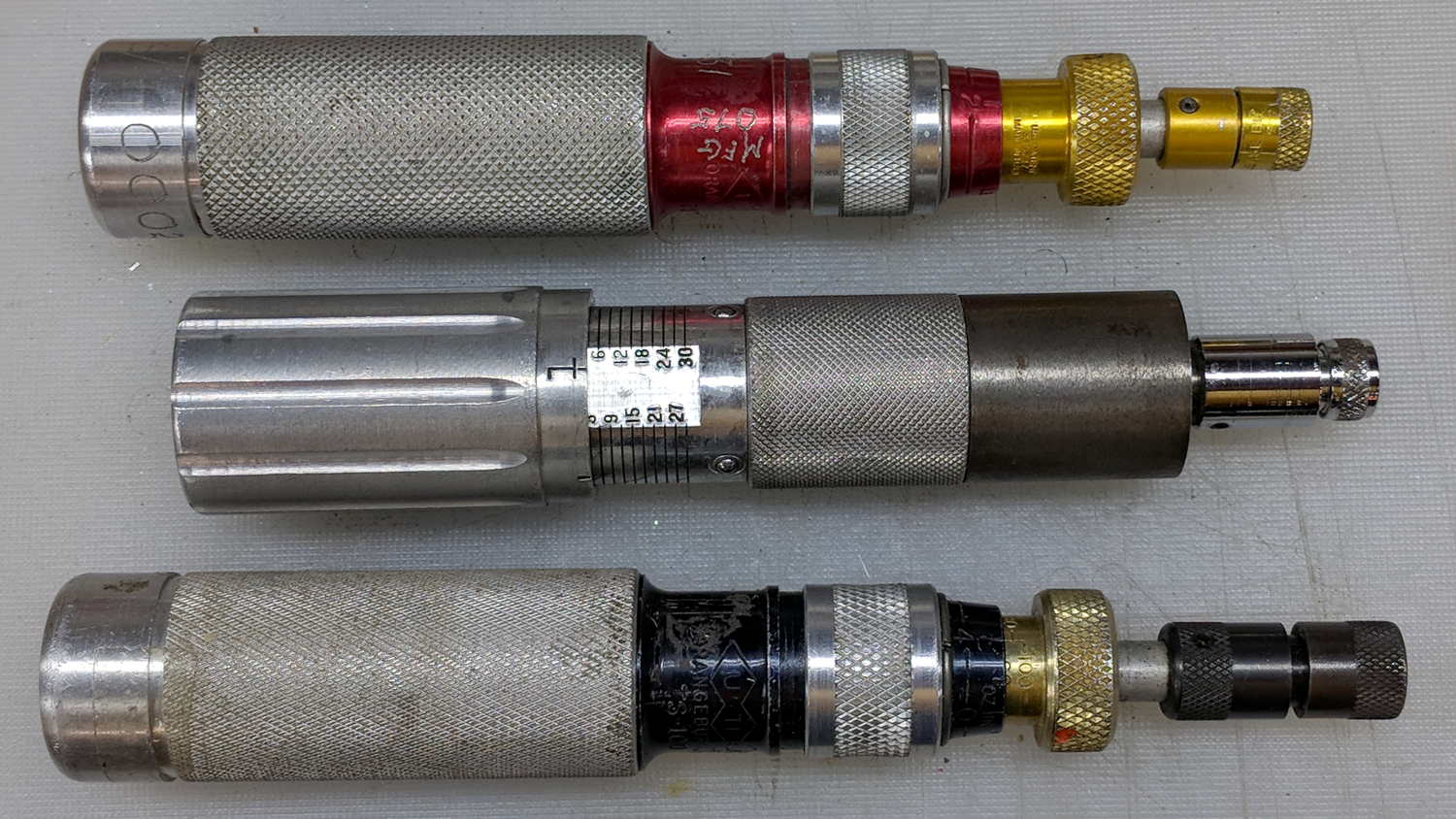
    A stack of loot boxes prize crates treasure chests on the Squidwrench Operating Table yielded a big box of torque drivers, two of which now grace my collection:

    Torque Drivers
    Torque Drivers

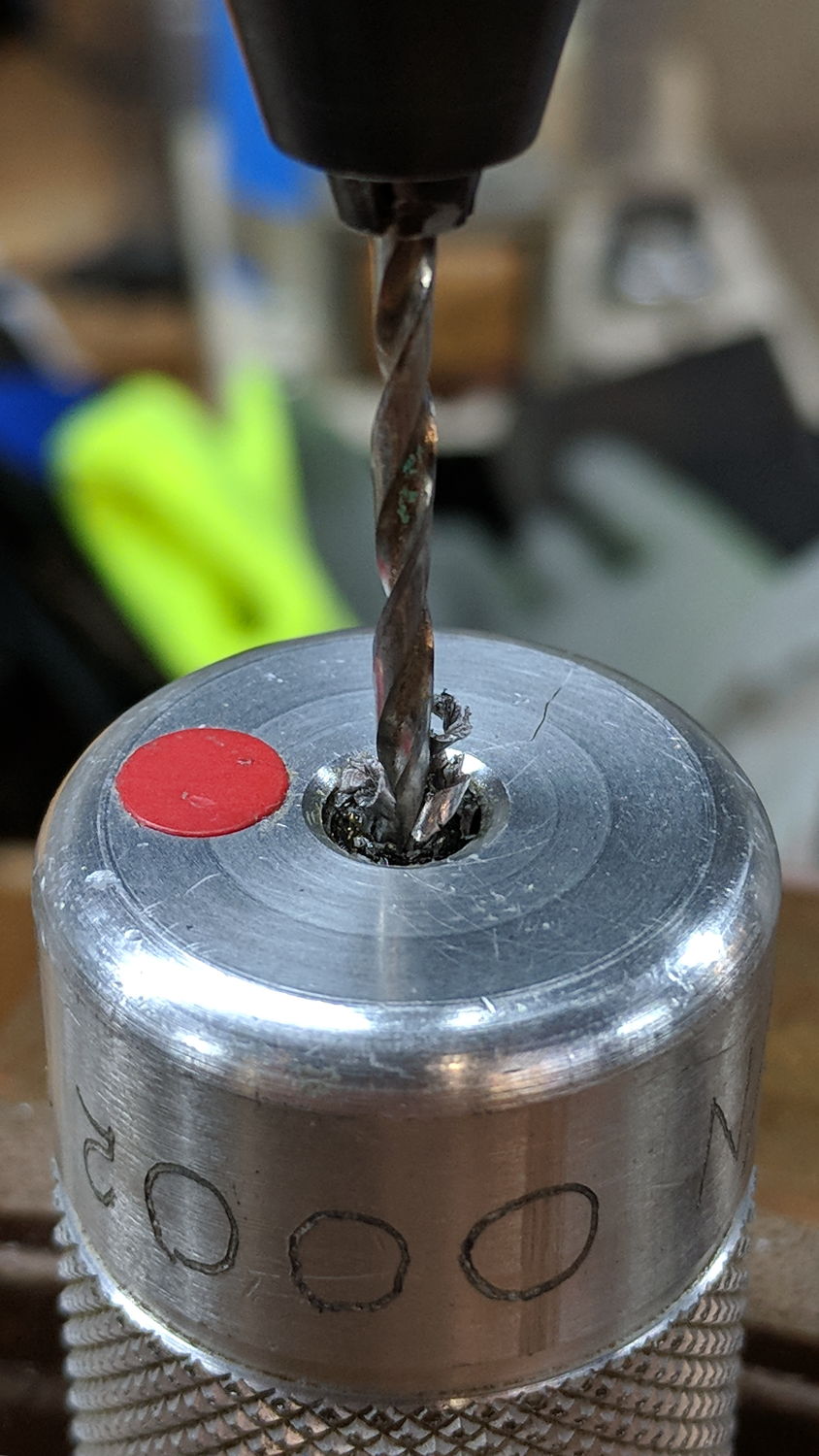
    As with clocks: when you have more than one torque wrench, you don’t know what torque it is. The black driver had a solder blob in its adjustment socket, obviously intended to prevent unqualified people (that would be me) from bungling a production-critical calibration.

    A suitable drill in a pin vise put a hole down the middle of the blob:

    Torque Driver - lead calibration seal
    Torque Driver – lead calibration seal

    Turning a tap into the hole produced enough traction to yank the solder shell straight out of the hex. Whew!

    The red driver goes to 30 lb·in, the silver to 30 lb·in, and the black to 100 oz·in. The red and black now agree to within maybe 4 oz·in, which I think is Good Enough, and both within 4 lb·ft of my Harbor Freight 200 lb·ft clicky wrench, which probably doesn’t mean much at the low end of the wrench’s scale.

    The silver driver refuses to agree with anything, which suggests somebody else monkeyed with its calibration before I laid hands on it.

    More calibration is needed.


  • Heavy Hauling

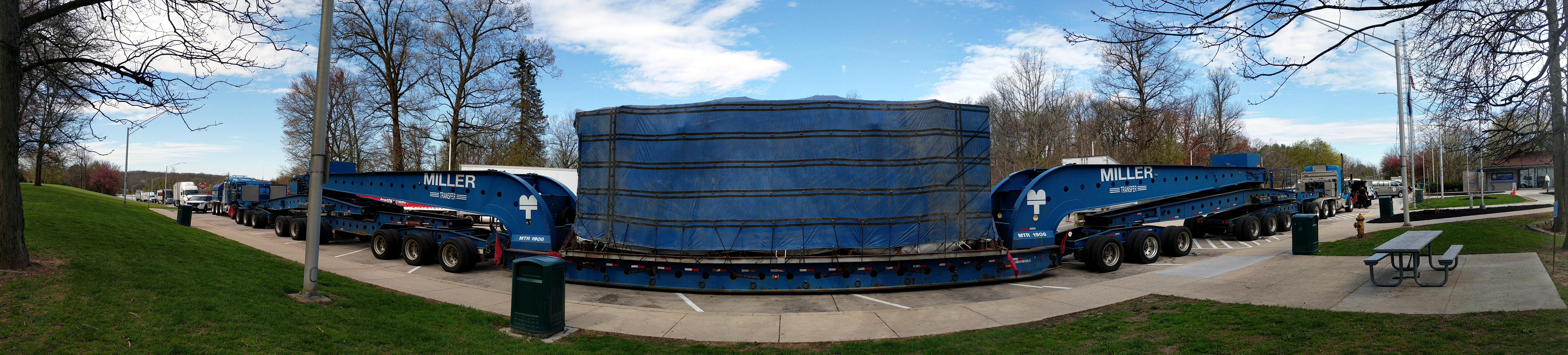
    A recent road trip presented this spectacle in the first Pennsylvania rest step on northbound I-83 (clicky for many more dots, then scroll to see it all):

    Heavy Hauling - panorama mid
    Heavy Hauling – panorama mid

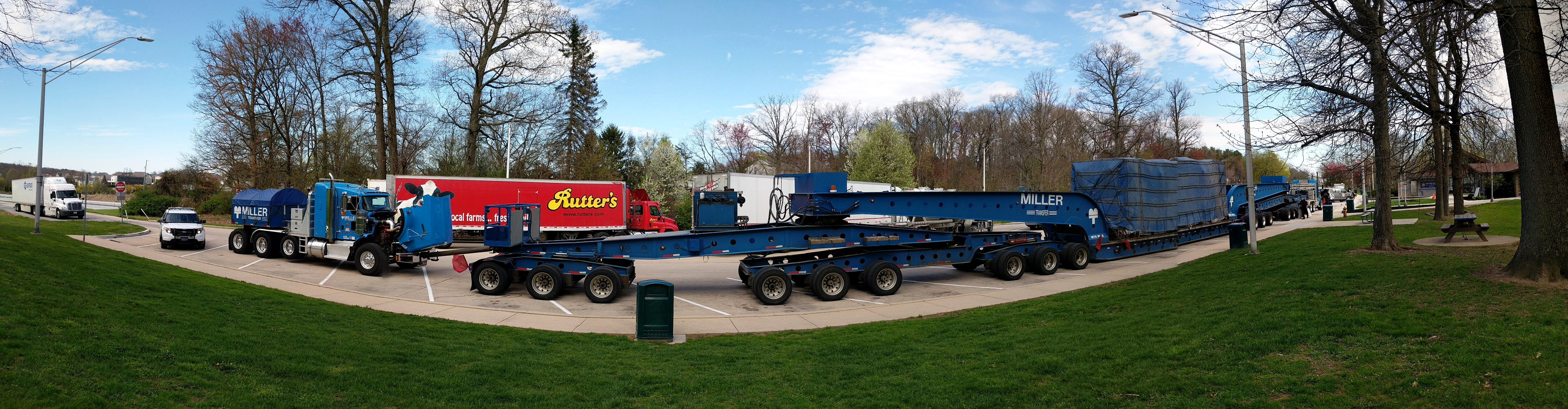
    It’s a 150 Ton Flat and Depressed Well 19 Axle Trailer, including four axles on the front truck:

    Heavy Hauling - front
    Heavy Hauling – front

    Another truck on the rear pushes uphill and provides lateral control downhill:

    Heavy Hauling - panorama rear
    Heavy Hauling – panorama rear

    The weight block on the rear truck provides more traction, because friction depends on normal force.

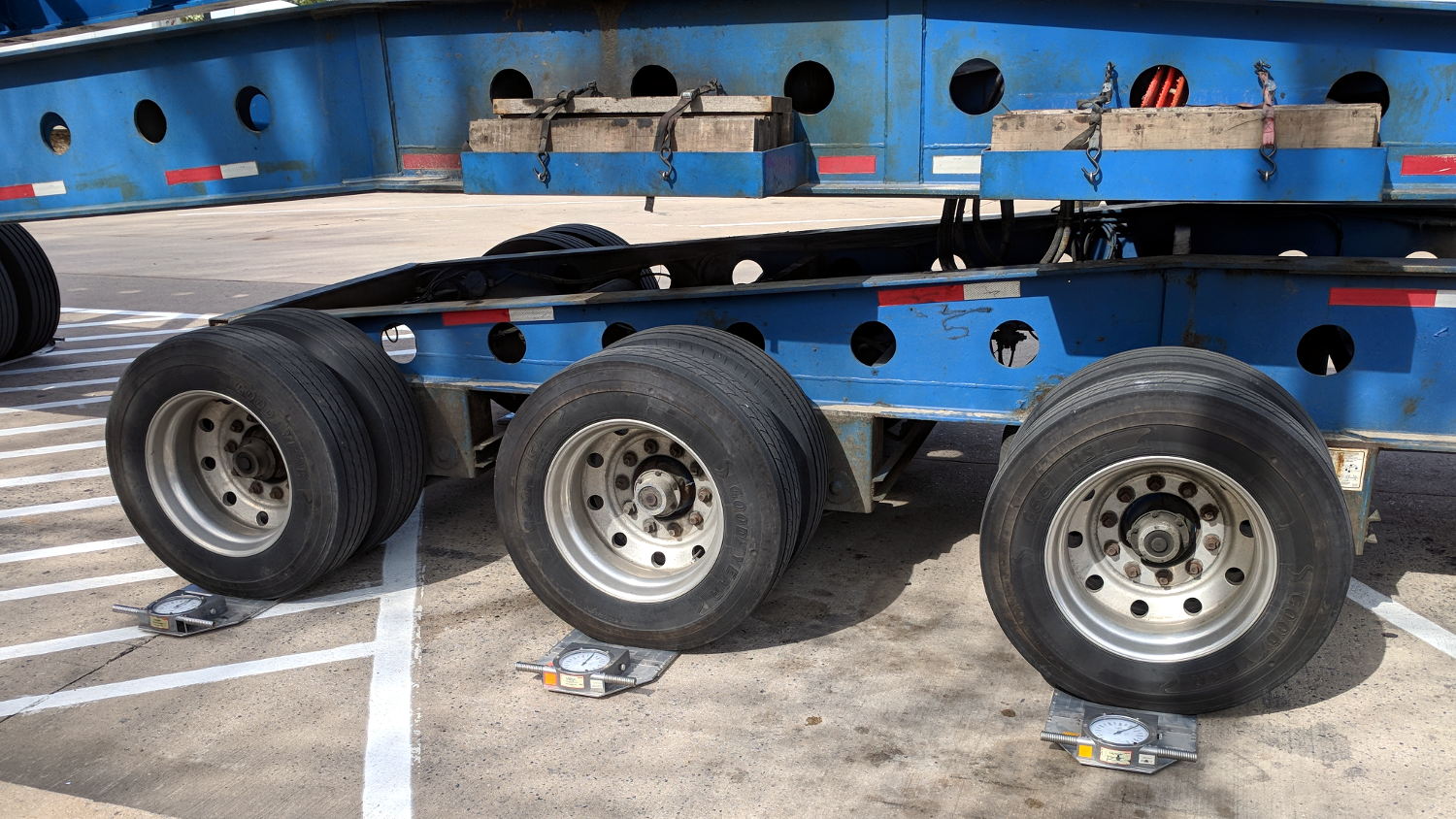
    The PA transportation folks were verifying the overall weight and per-axle distribution by weighing three axles at a time:

    Heavy Hauling - weight check
    Heavy Hauling – weight check

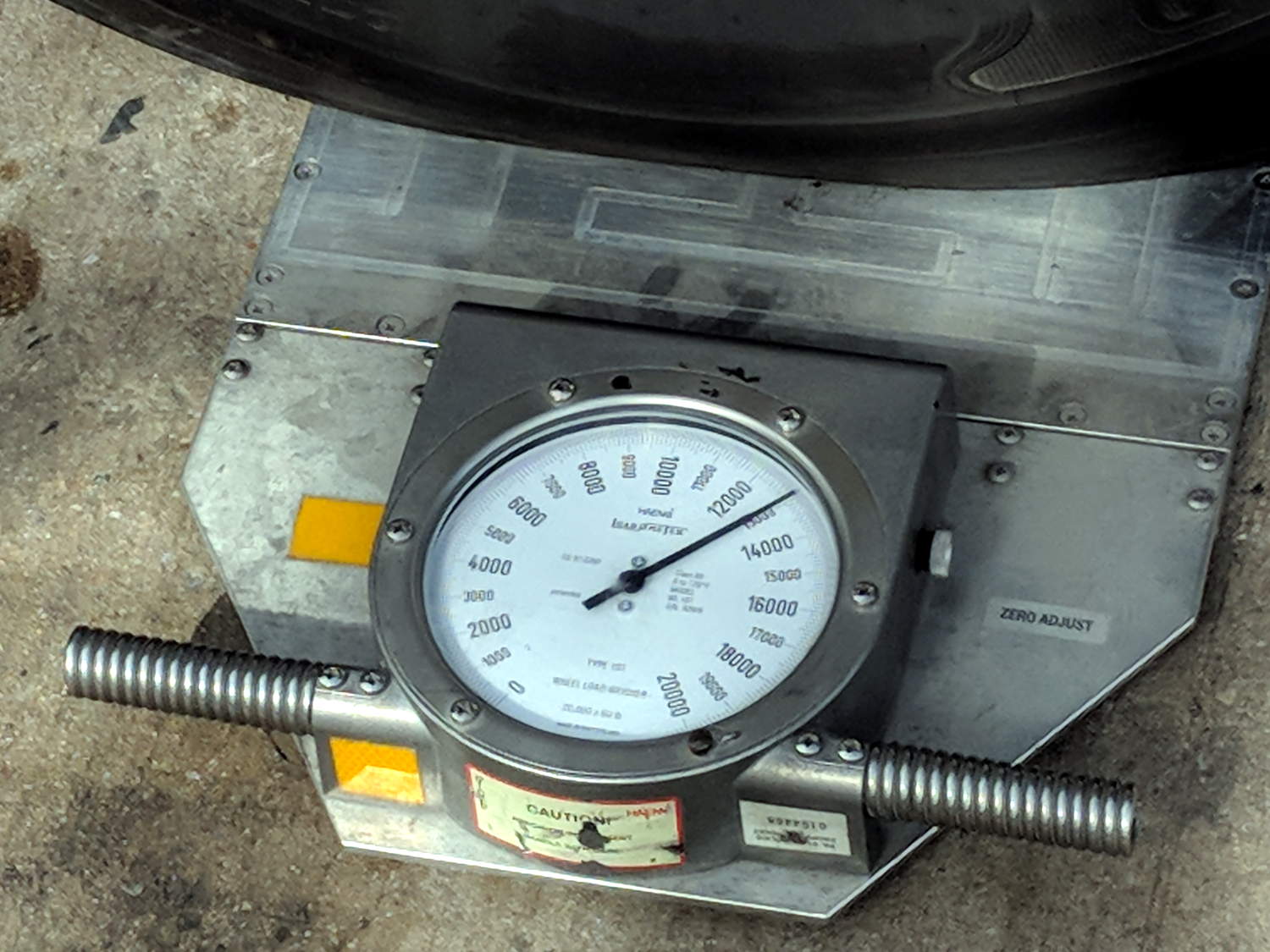
    Each scale has a 20 k pound range:

    Heavy Hauling - weight check - detail
    Heavy Hauling – weight check – detail

    The ones I saw reported 10-14 k pounds, so figure 24 k pounds per axle, then multiply by 19 to get 456 k pounds overall.

    The driver of the lead escort vehicle said the tarp covers a machined steel assembly weighing around 200 k pounds, with a total “vehicle” weight a bit under 500 k pounds. This is the second of four similar loads going from the Port of Baltimore to somewhere in Ohio where they’re assembling a huge press. It seems American manufacturing is still a thing.

    They’ll be driving for four or five days from Port o’ Baltimore to Ohio, following a route described in excruciating detail on four pages of notes, plus another 16 pages of permits for the series of bridges rated to carry however many axles will be on them simultaneously.

    Some searching produced a video of a similar load in transit, perhaps on the same trailer. Another video shows a different trailer jockeying into position beside a ferry (!).

    For the folks involved, it was just another day at the office.