Ed Nisley's Blog: Shop notes, electronics, firmware, machinery, 3D printing, laser cuttery, and curiosities. Contents: 100% human thinking, 0% AI slop.
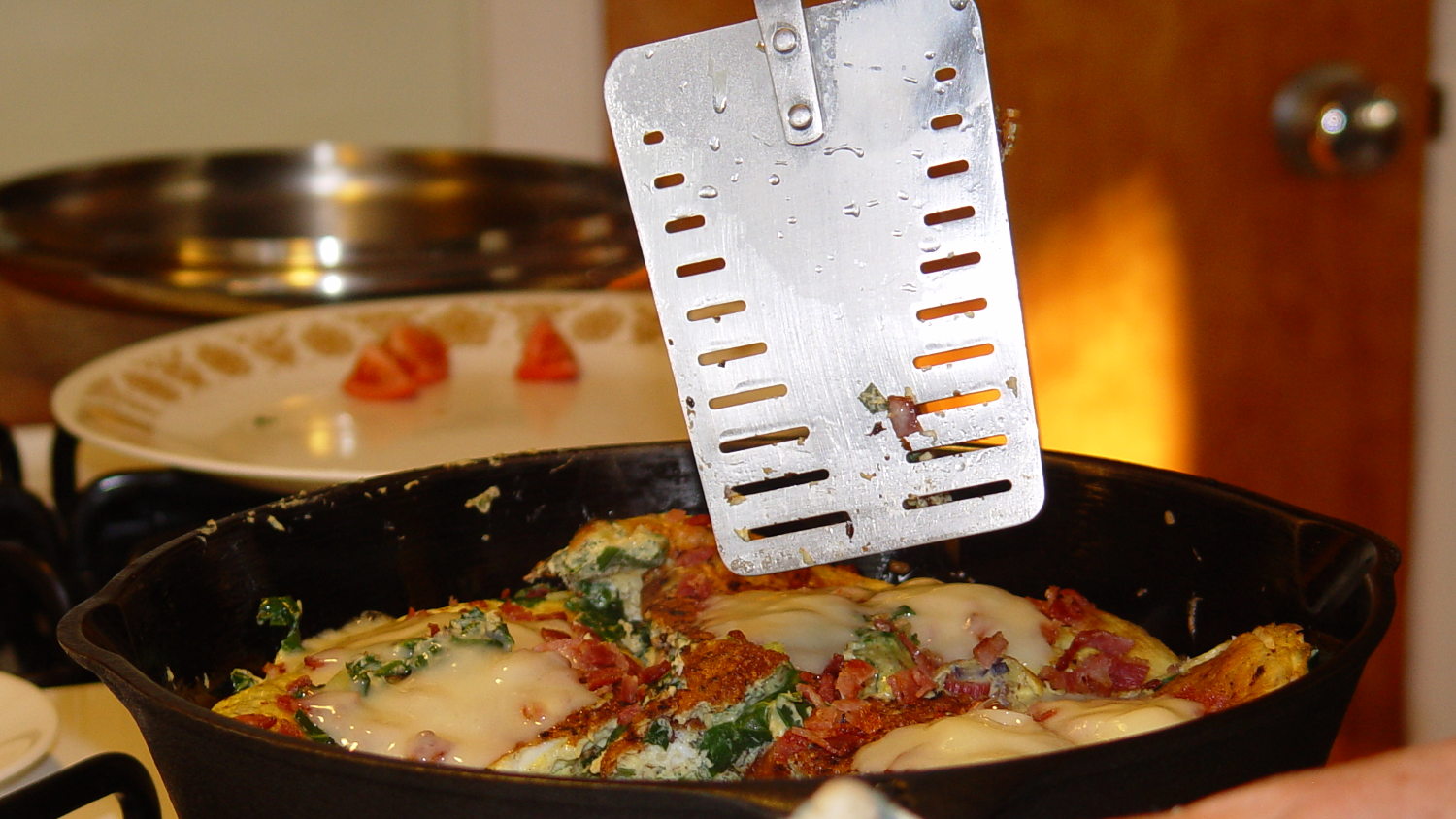
A Flint Arrow stainless steel spatula works exactly the way a spatula should:
Flint Arrowhead Stainless Spatula – in action
That is, of course, a used spatula from eBay. It cost slightly more than the various new spatulas we’ve tried, but not by very much, and should last (at least from our perspective) forever.
Thanks to all of you for aiming us in the right direction!
Mary couldn’t unscrew either of the two outlet hoses emerging from one of the (many) Y valves in her Vassar Farms plot. After deploying the Lesser Vise-Grip from my bike toolkit to no avail, I brought a Greater Vise-Grip from the shop and applied brute force. During that process, the plastic inlet hose fitting ripped off the valve and sprayed all but one of its latching teeth across the plot:
Gilmour hose Y valve – inlet fitting
As it turns out, the male outlet hose fittings on all the metal-body Gilmour Y valves in the plot have corroded:
Gilmour hose Y valve – thread corrosion
The scarred knurls show the force required to break the brass hose ring loose and unscrew it:
Gilmour hose Y valve – hose interior
Some of that crud may be hard water deposits, but the destruction of the male threads seems like a galvanic reaction among all the various metals in play.
The male fitting began rotating in the valve body, so I crushed it in the bench vise to make more headway. While I had the victim clamped down, I hacksawed a slit through the housing, pried back the edges, and freed the parts for one leg of the Y:
Gilmour hose Y valve – parts
You’d think “not corroding” would be high on the list of attributes for a garden hose valve…
Although I’m not the type of guy who thinks twinkly LEDs will enhance his apparel, one of Mary’s quilting thread sources had a closeout deal on their “wearable electronics”, including a large cone of stainless steel thread / yarn:
Stainless steel thread
… CR2032 lithium cells & holders, plus assorted LEDs on small PCBs.
The usual advice for connecting the thread seems to involve knotting it through the PCB holes, then sewing it to the backing fabric. Alas, I’m bad with knots and the stainless steel yarn isn’t all that cohesive:
Emerald LED – Stainless steel thread – knotted
The holder has an even smaller hole, but Mary gave me a needle threader that helped:
CR2032 – Stainless steel thread – knotted
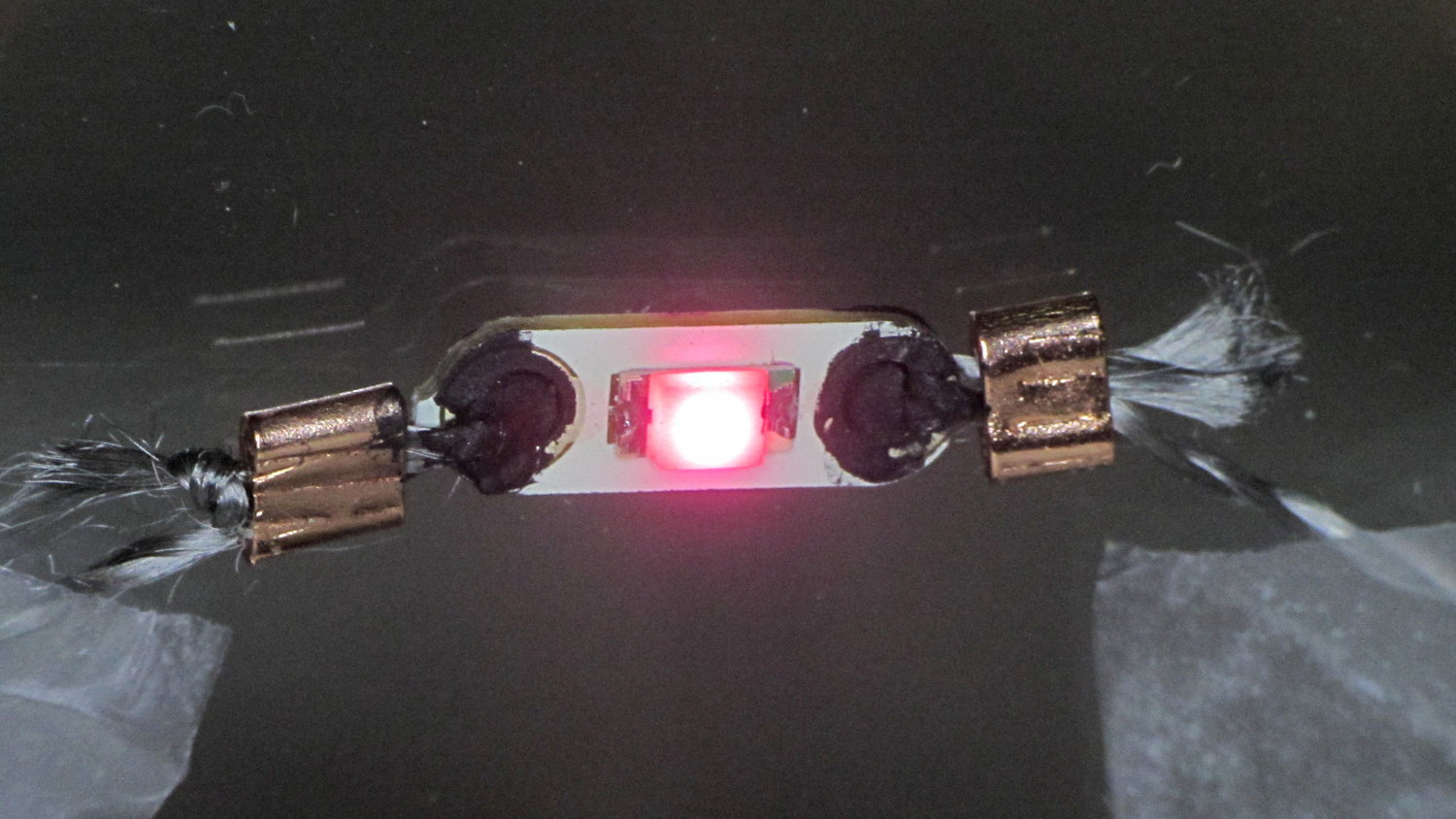
Some advice found on The InterTubes suggests using copper crimp beads (perhaps with solder) to prevent the thread from completely unraveling and keep the thread loop tight around the PCB hole:
Rose LED – Stainless steel thread – Crimp bead – Wire Glue
Beadworkers use crimping pliers that leave a tidy dent; I mashed the beads with a needlenose pliers and called it good.
The LEDs seem to be white LEDs with filters or, perhaps, blue / violet LEDs with different phosphors: their forward voltages look more blue than red or green. Everybody in this field depends on the minor miracle that lithium cell voltages match blue LED forward drops closely enough that you can get away without a ballast resistor.; the cell’s 20-ish Ω internal resistance doesn’t hurt in the least. An interesting white paper (SWRA349) from TI explores the effect of current on cell capacity and how to size a parallel capacitor that reduces the peak battery current.
The black gunk is Wire Glue, which costs about five bucks for a lifetime supply in a small jar (or nigh onto 15 bucks via Amazon Prime) and is basically carbon powder in a water-based binder. Apply a dab to the connection and the water evaporates to leave the carbon + binder behind.
That works better on joints that don’t move, which is precisely what you don’t have in a wearable electronic situation. You can see the crumbling Wire Glue after the trip back from a Squidwrench meeting:
I also picked up a Permatext Rear Window Defogger repair kit (09117, if you’re looking) that seems to be a staggeringly expensive way to get a tenacious high-current conductive adhesive. More on that later.
The yarn runs 3.5 Ω/ft, much lower than Adafruit’s three-ply yarn (10 Ω /ft), and suggests itself for flexible connections, EMI gaskets, and suchlike.
Those LEDs are taped to the kitchen window, where they cast a cool light over the table, with the battery holders sitting on the sash. I’d just replaced some data logger CR2032 cells, so they’re running from nearly dead lithium batteries.
For future reference: 2.77 V and falling, pushing less than 2 mA through the LEDs.
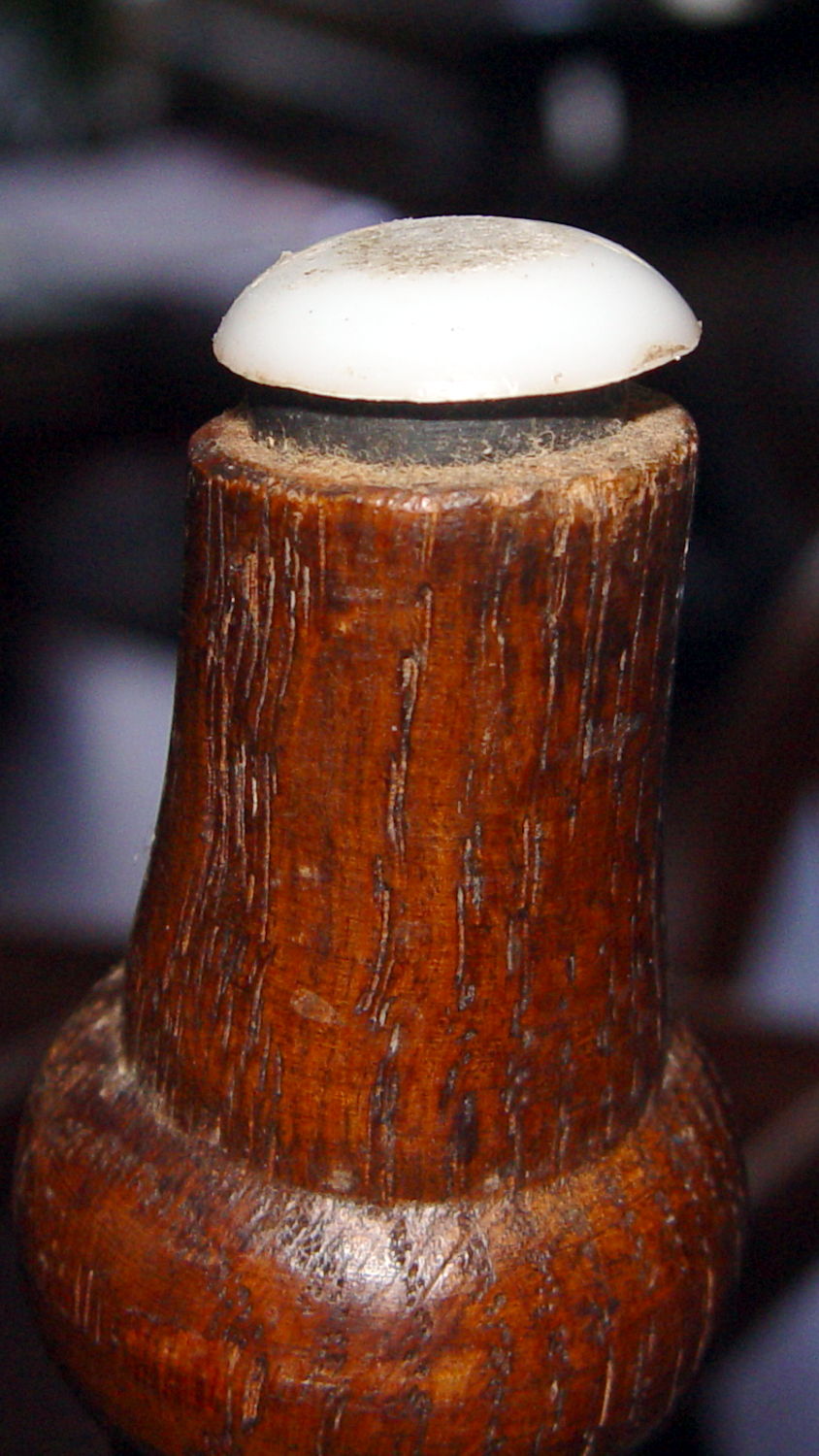
The white plastic glide / slide / foot / cap / whatever is molded around a simple nail that broke a divot out of the foot. Fortunately, I caught it before the nail gouged the kitchen floor.
Under normal conditions, I’d replace the foot from my heap, but, my heap having become somewhat depleted, I swapped in another chair, chipped out the broken plastic, undercut the divot, filled it with JB Kwik epoxy, gooshed the foot in place, and taped it until it cured.
To judge from the shattered stems lining the route, NYSDOT positioned an articulated rotary mower vertically and ran it along the guide rail, cutting the Japanese knotweed more-or-less flush with the rail, then cleaning up most of the debris. Absent glyphosate treatment, the bushes will return in full force next summer.
Even though the disintegrating pavement isn’t any more rideable than before, not having weeds brush our elbows and grab for our eyes makes for a much more comfortable riding experience; now, we’re set for the peak Halloween-to-Groundhog-Day riding season.
As NYSDOT says: “Maintaining roads goes far beyond the edge of the pavement.“
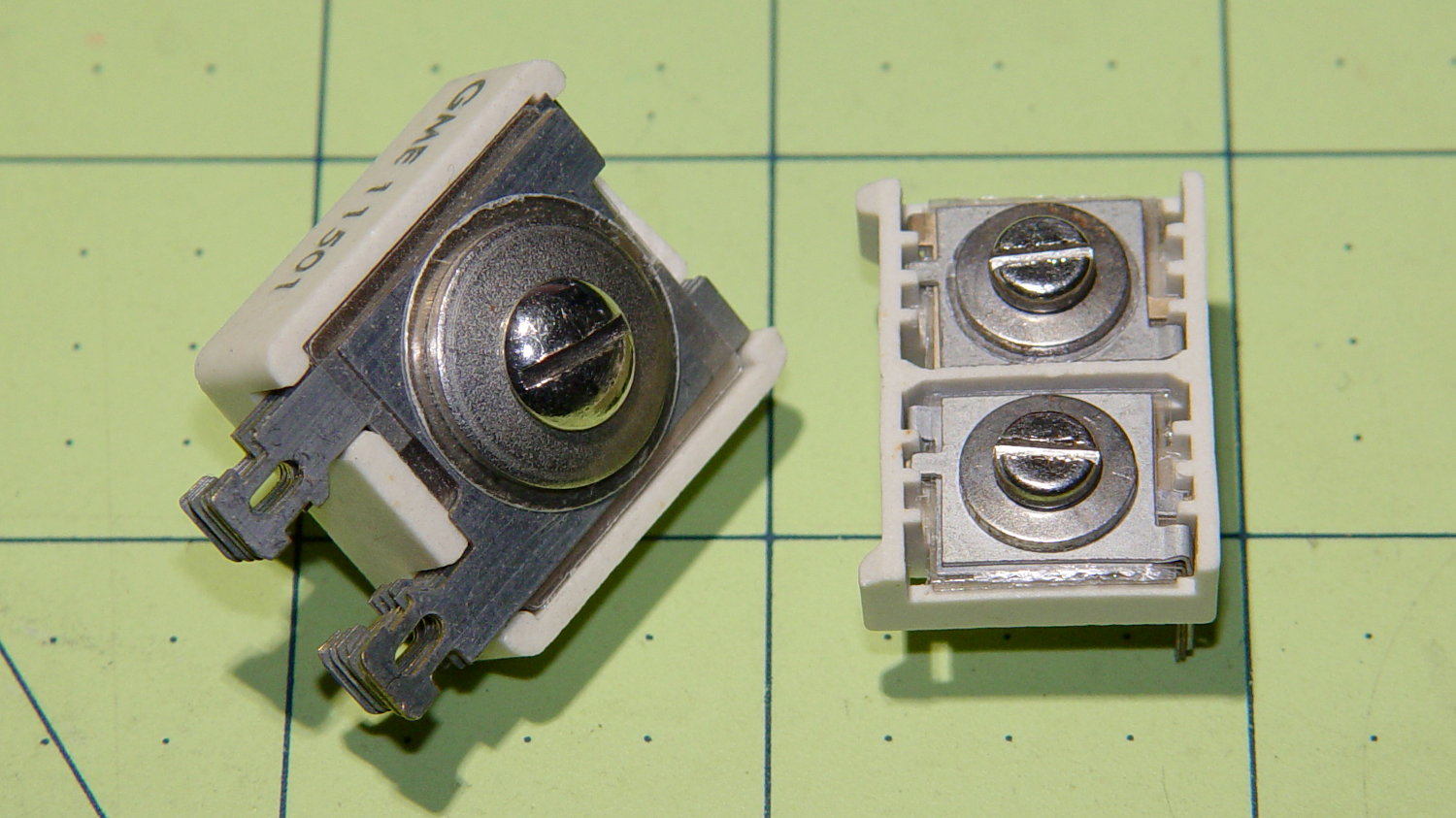
I picked up two sets of mica trimmer capacitors from eBay:
Mica trimmer capacitors
The big cap on the left goes from a bit under 1000 pF to just over 2500 pF, maybe a 50% range. I got four of the things, they can be disassembled, and I could reduce the total capacitance by maybe half; the tuning range would drop by even more, so it may not be worth it.
The smaller trimmer has different sections: 300-400 pF and 500-700 pF, with about 25% range. As nearly as I can tell, the 700 pF section has one more pair of plates than the 400 pF section.
Given that compression caps work by mashing a stack of mica sheets, I think more pressure makes them more stable and running near the high end of their range will be a Good Thing.
Soldering these New Old Stock relics may be challenging, as the stacked flat metal leads aren’t in pristine condition: properly wetting all the leaves will require plenty of flux.
Resonating the loop antenna requires an external capacitor around 1000 pF. Paralleling a 120 pF fixed cap with both sections of the dual-section cap should do the trick: 900 pF minimum, 1200 pF maximum. Putting the fixed cap on a jumper would reduce the total capacitance, which seems easy & sensible.





 The Smell of Molten Projects in the Morning