Ed Nisley's Blog: Shop notes, electronics, firmware, machinery, 3D printing, laser cuttery, and curiosities. Contents: 100% human thinking, 0% AI slop.
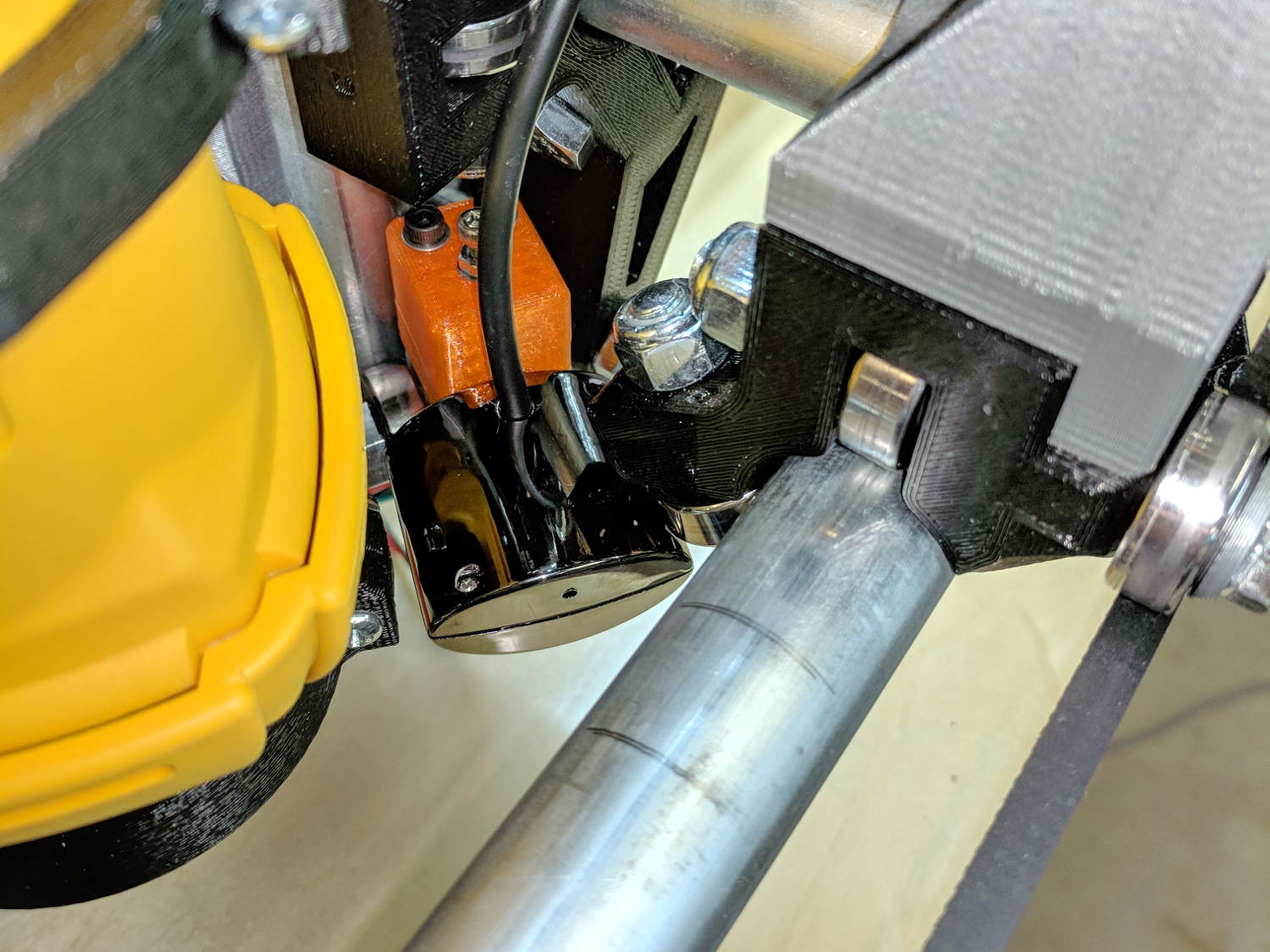
Unfortunately, it sat slightly too close to the gantry roller along the X-axis for comfort.
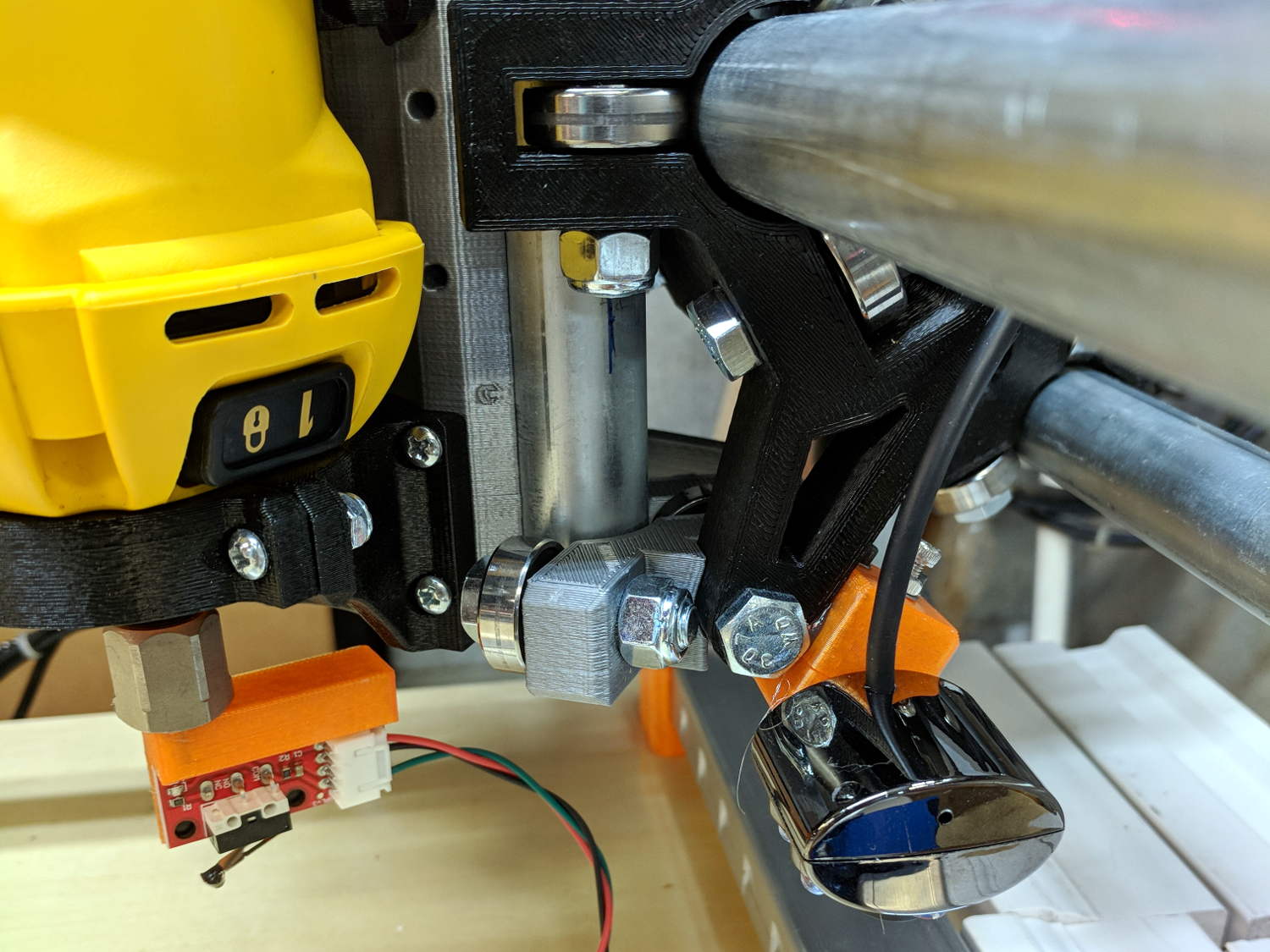
The effort required to pry the mount off its hot-melt glue bed showed it wasn’t ever going to shake loose, so I fired up the glue gun and stuck it to a better spot on the XY assembly:
MPCNC – relocated camera – front view
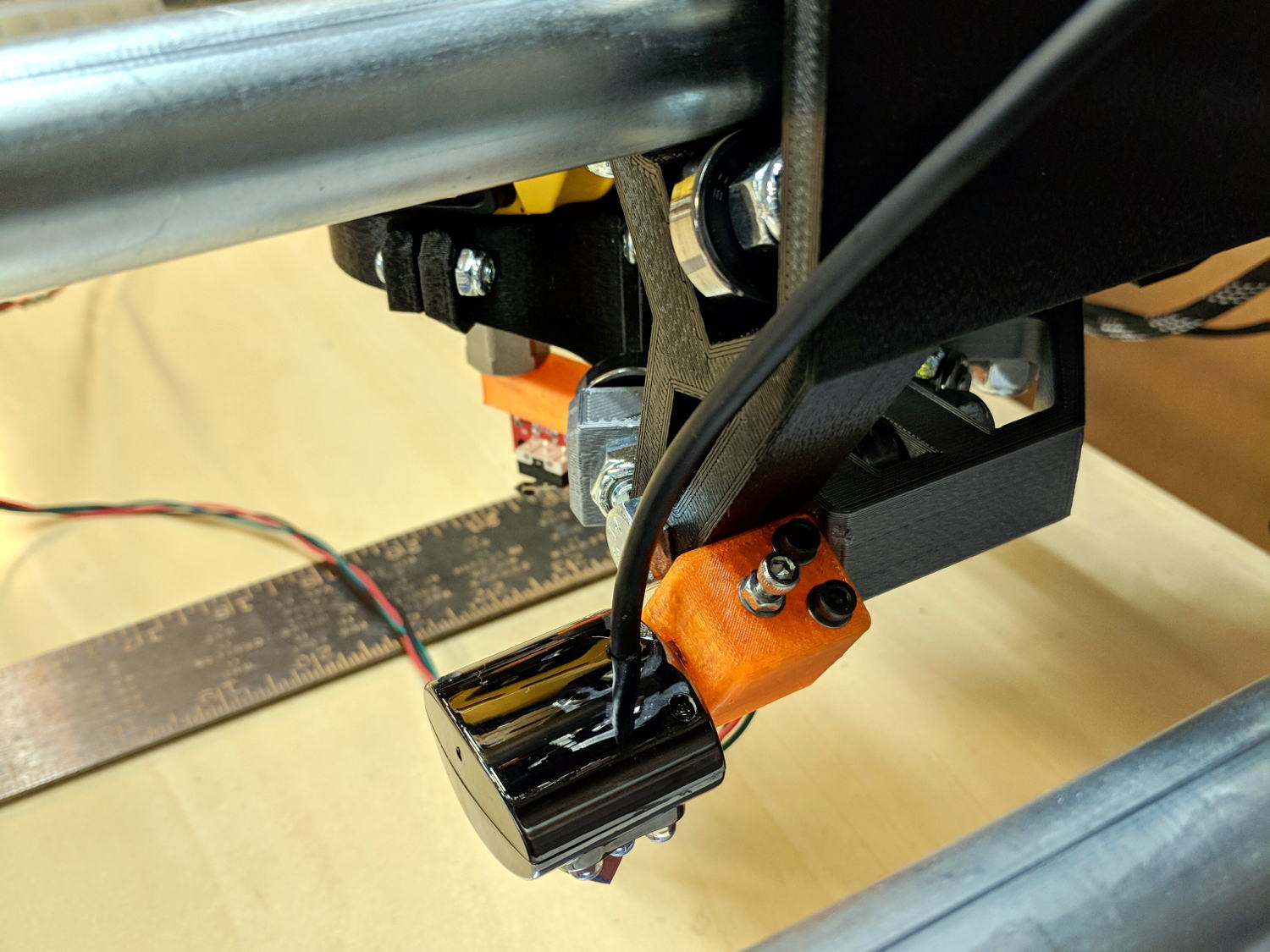
Seen from the side:
MPCNC – relocated camera – side view
Bonus: it’s now trivially easy to tweak the locking screw!
Realigning the camera and recalibrating its offset proceeded as before.
Anybody capable of fogging a mirror knows how this scam works:
TCU 100 – Giveaway teaser
The copious fine print says you can only see the actual fine print by traveling to Arizona:
TCU 100 – Giveaway fine print
I’m nowhere near hungry enough to like the odds, even for a $100 Walmart gift card.
An Auto-V.I.N Gauge (their choice of punctuation) must improve the response rate:
TCU 100 – Auto-VIN Gauge – activated
Is it any surprise the numbers match?
TCU 100 – scratch-off number
No. No, it’s not.
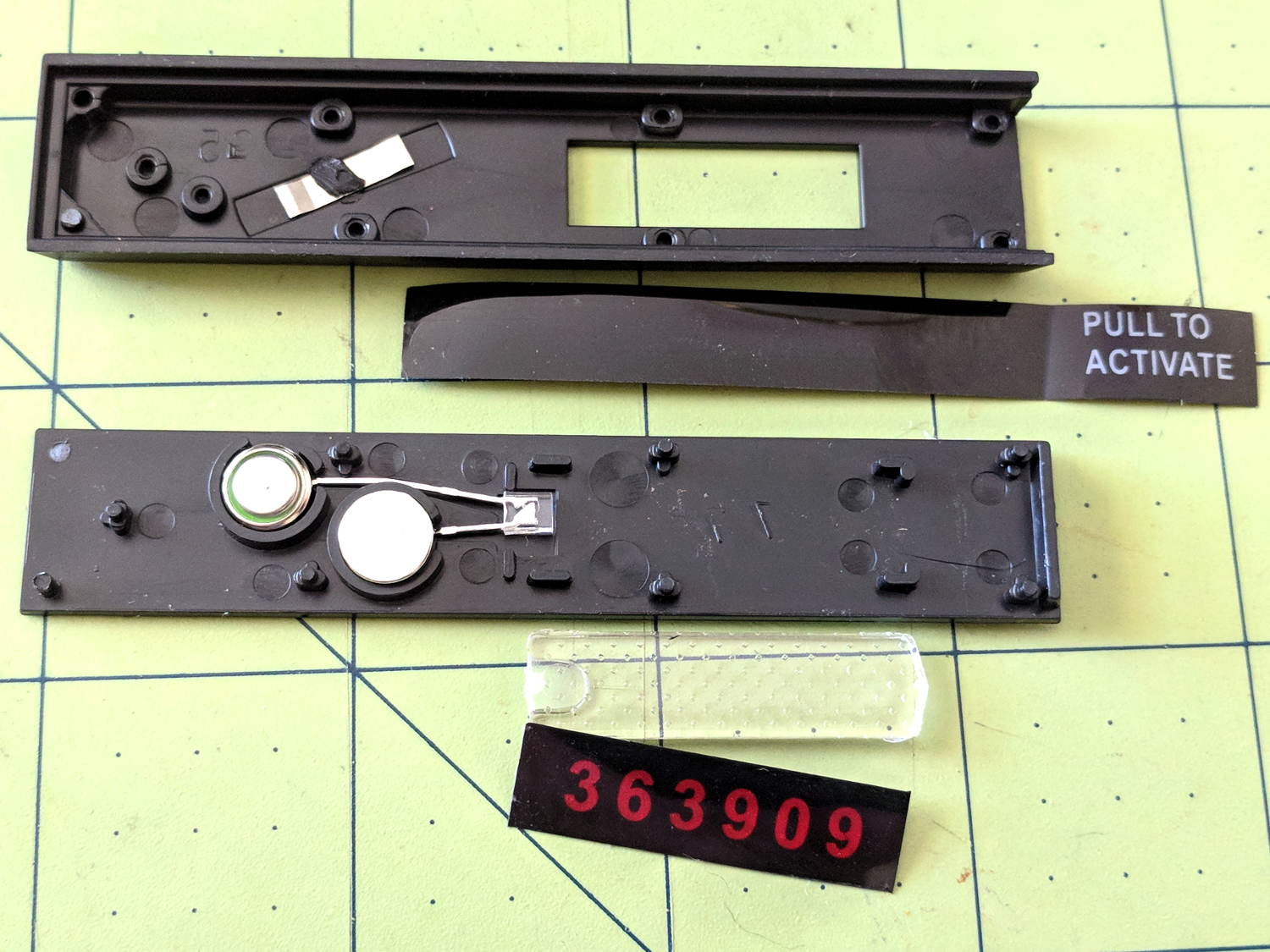
The “Gauge” actually contains parts, although fewer than IMO they want you to believe:
TCU 100 – Auto-VIN Gauge – components
It’ll serve to produce measurable current & voltage for an upcoming Squidwrench Electronics Workshop and, because it need not survive the experience, we will take considerable liberties with it.
Although I knew the Sienna showed signs of a leaky head gasket, the exhaust system needed some attention, and a sporty used car recently put it in the shade, this still came as a surprise:
I’m trying to get a crew … together and live the demolition derby dream
By the time I arrived, the dashboard trim had vanished and the air bags were safely out:
I managed to pry the glass off using a Gasket Scraper and considerable muttering.
With all the exterior trim, lights, and mirrors gone, the Sienna was in fine race trim:
Sienna – Demo derby race trim
But, being no longer street-legal, it required trailering. For the record, not all huge pickup trucks have bulky guys with pot bellies behind the wheel:
The red dial scale has the Guide Numbers (aperture × feet) and the lower black dial scale gives the lens apertures. The manual doesn’t mention the black figures above the red Guide Numbers; they’re metric Guide Number (aperture × meters), which would have been obvious back in the day.
The tidy shell slides off when you release a latch in the back:
Zeiss Ikon Ikoblitz 4 – front – stowed
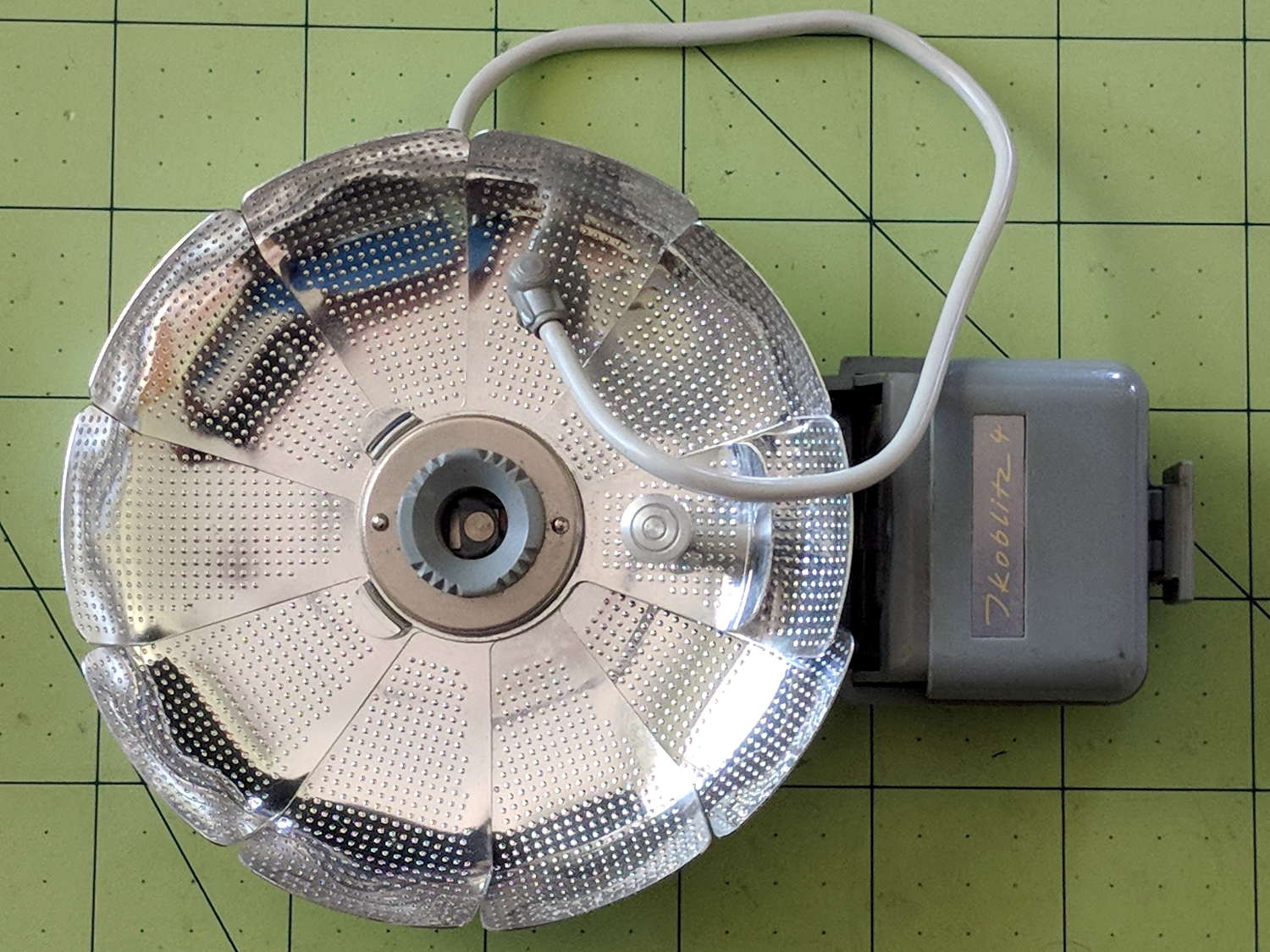
Then the reflector unfurls:
Zeiss Ikon Ikoblitz 4 – front unfurled
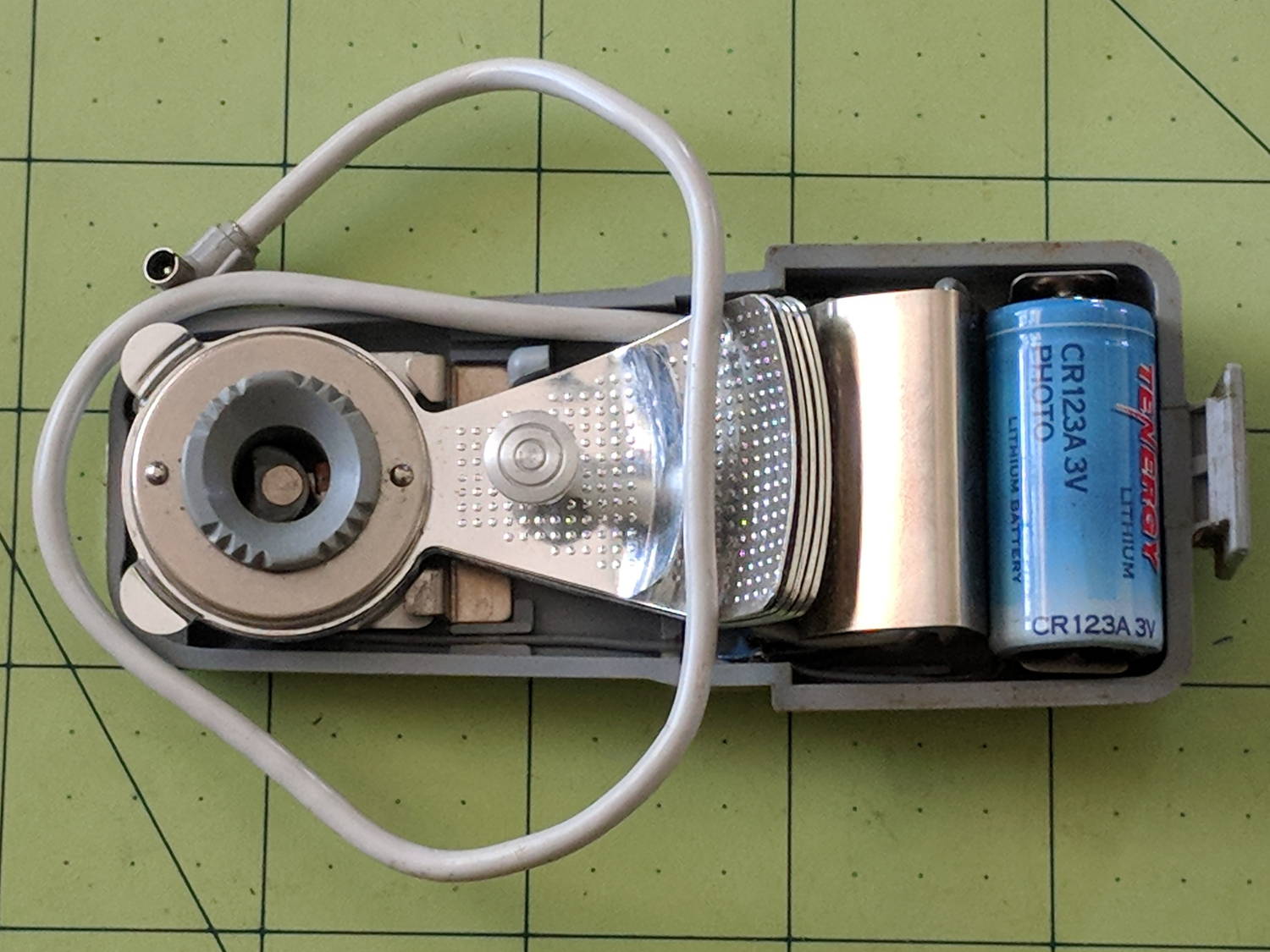
Mirabile dictu, the previous owner removed the 15 V “hearing aid” battery (Eveready 504, 60 mA·h in the 504A alkaline version) before storing the flash, leaving the contacts in pristine condition:
Zeiss Ikon Ikoblitz 4 – CR123A test fit
A 3 V CR123A primary lithium cell snaps perfectly into the battery holder, which I define as a Good Omen: a dab of circuitry could turn this into self-powered and highly attractive Art. This would be one of the very few applications well-suited for the coldest blue-white LEDs.
One could adapt an A23 12 V alkaline battery (33 mA·h) to the holder, at the cost of half the capacity.
The silver shield just to the left of the battery conceals a 250 μF (!) nonpolarized capacitor.
One could build a bayonet-base (GE #5 / Press 25) adapter or poke a doodad with a 9 mm cylindrical base into the M2 bulb adapter (unrelated to my M2 printer):
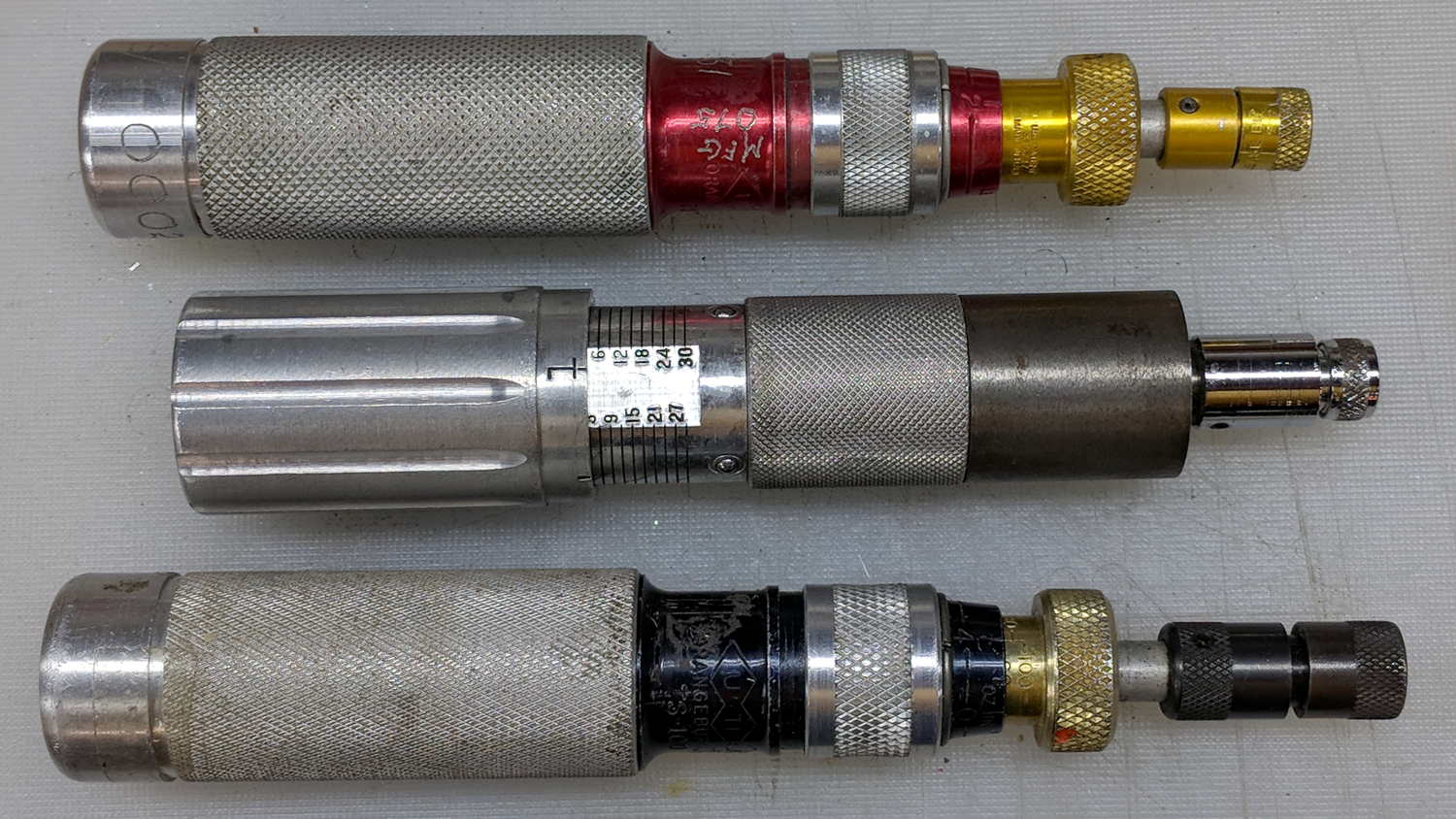
A stack of loot boxesprize crates treasure chests on the Squidwrench Operating Table yielded a big box of torque drivers, two of which now grace my collection:
Torque Drivers
As with clocks: when you have more than one torque wrench, you don’t know what torque it is. The black driver had a solder blob in its adjustment socket, obviously intended to prevent unqualified people (that would be me) from bungling a production-critical calibration.
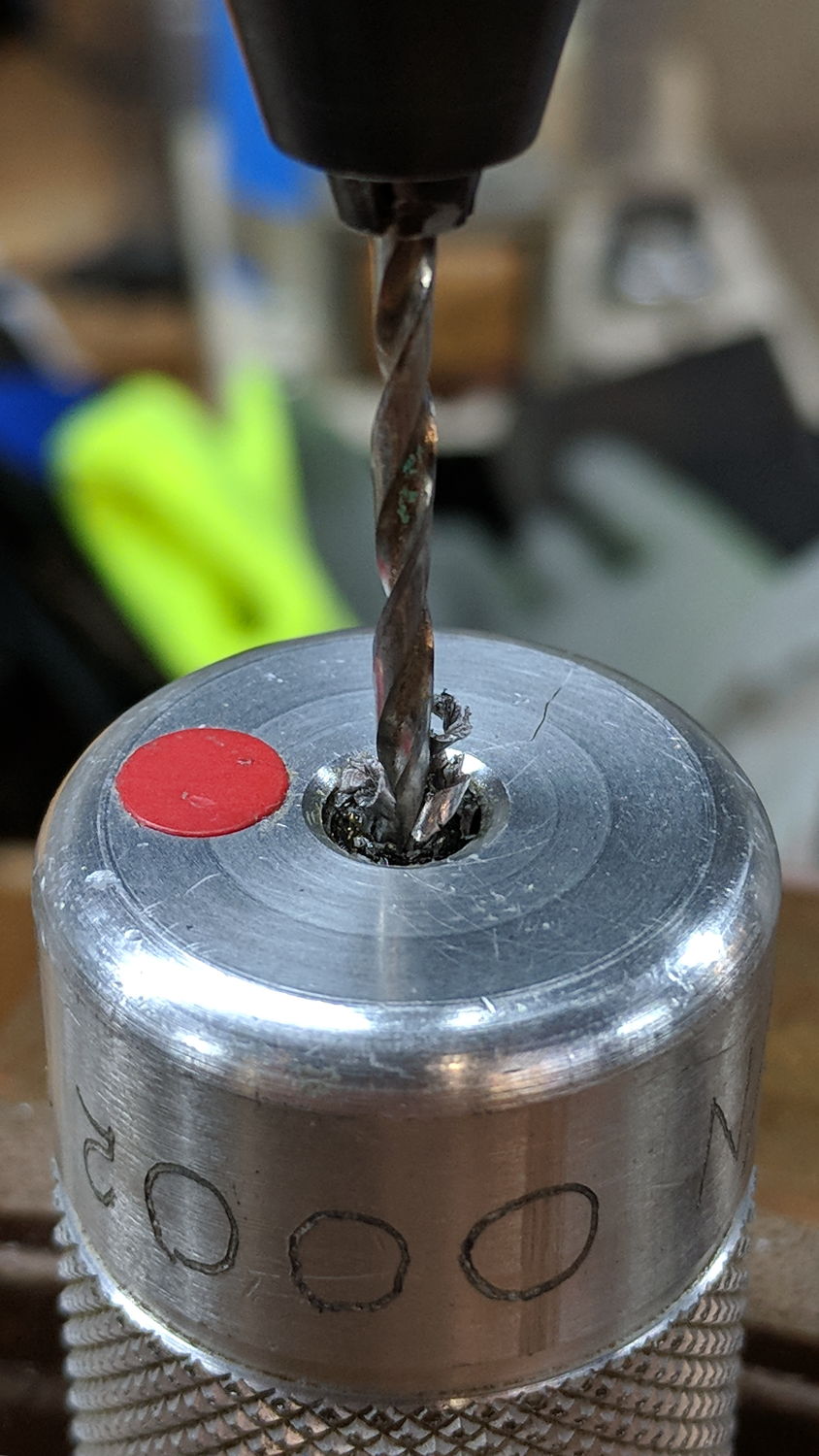
A suitable drill in a pin vise put a hole down the middle of the blob:
Torque Driver – lead calibration seal
Turning a tap into the hole produced enough traction to yank the solder shell straight out of the hex. Whew!
The red driver goes to 30 lb·in, the silver to 30 lb·in, and the black to 100 oz·in. The red and black now agree to within maybe 4 oz·in, which I think is Good Enough, and both within 4 lb·ft of my Harbor Freight 200 lb·ft clicky wrench, which probably doesn’t mean much at the low end of the wrench’s scale.
The silver driver refuses to agree with anything, which suggests somebody else monkeyed with its calibration before I laid hands on it.














 The Smell of Molten Projects in the Morning