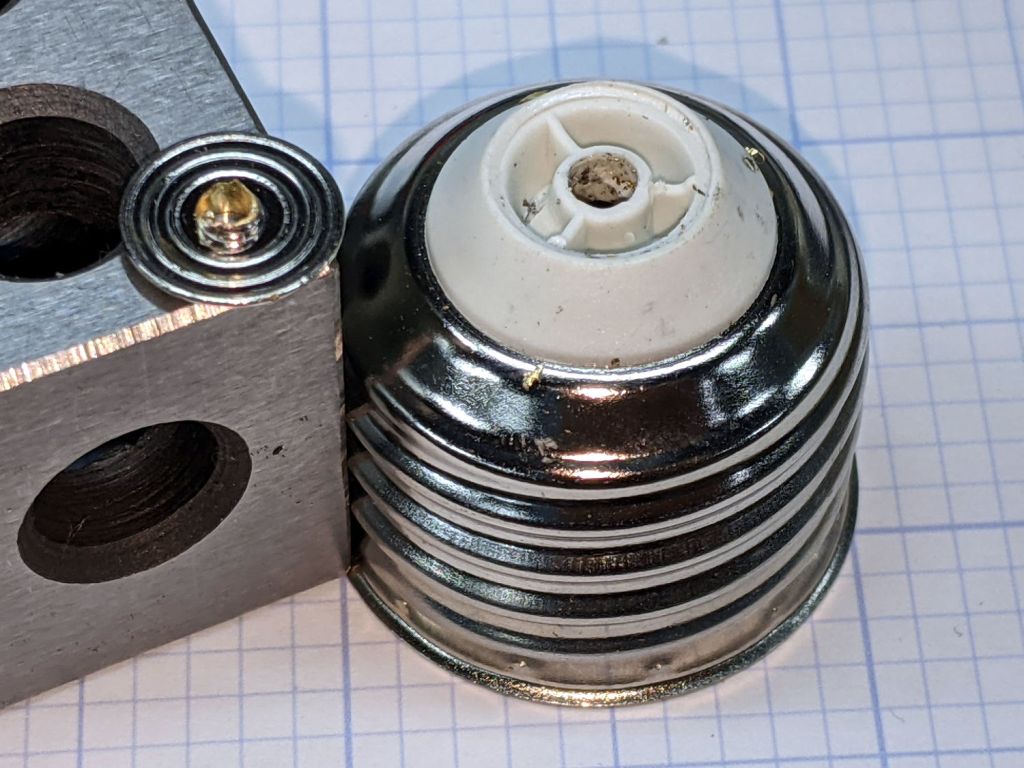
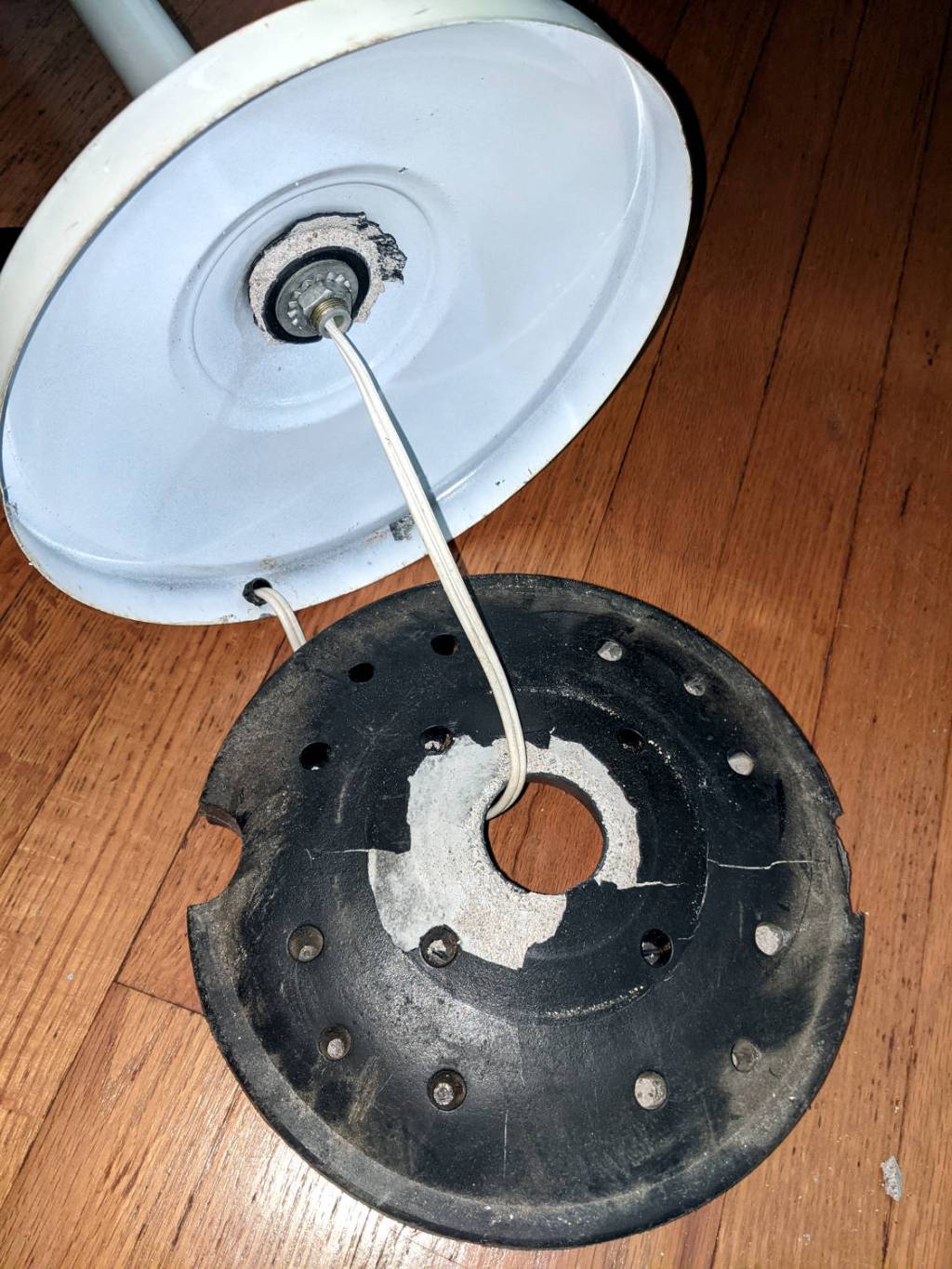
Replacing the second torchiere lamp shade required unscrewing its 100 W equivalent LED bulb, which required far too many turns and eventually felt sufficiently wrong to reveal the problem:
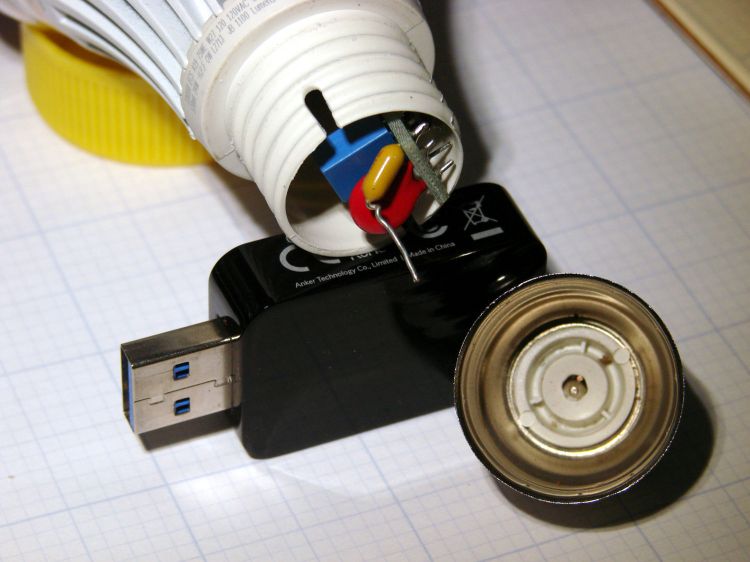
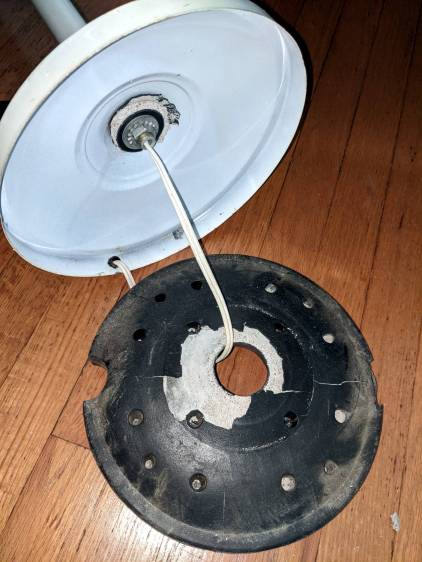
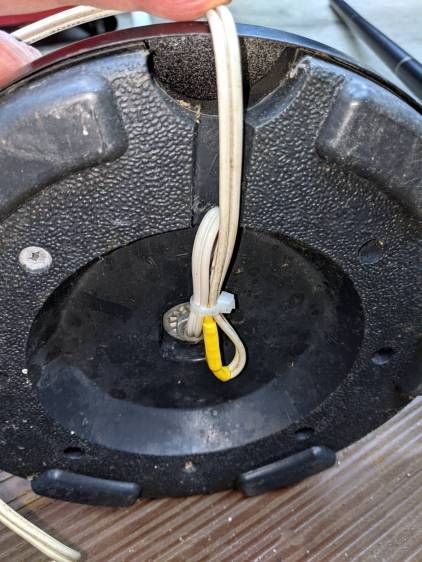
The entire metal base shell unscrewed from the plastic housing and twisted off the lead from what looks like a PTC fuse in series with the center contact; the cute little pigtail effect suggests I’ve wrecked the epoxy-to-wire seal.
It had a five year warranty which, alas, expired three years ago. This style of bulb has fallen out of favor, so I may as well get some Quality Shop Time out of it.
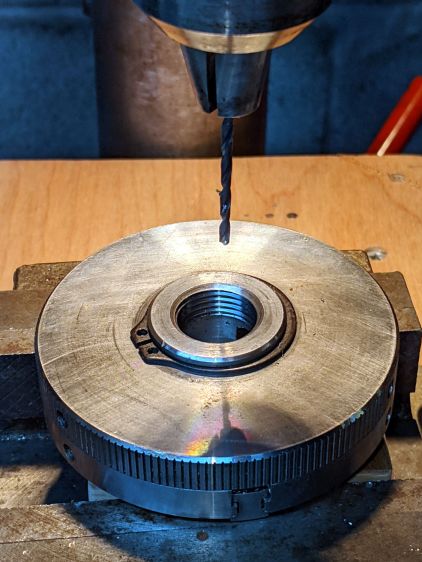
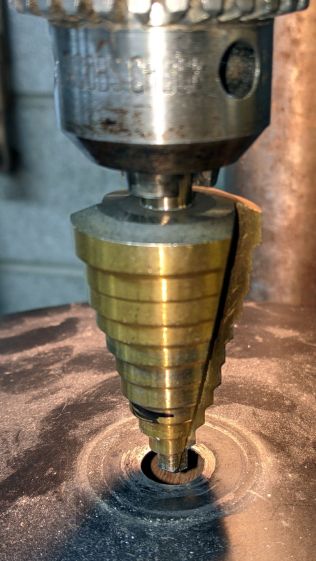
I don’t know how the factory machinery attached the lead to the contact button, but I’m going to go primal on it with some solder. The trick will be soldering it after assembly, so the first step is to drill through the middle of the button.
Grab it nose-down in the Sherline’s three-jaw chuck, flip it over, grab the chuck in the drill press vise, line it up, center-drill the button, then drill right through that sucker:
Of course, the contact came loose from the base, because I pretty much drilled right through the rivet flange holding it in place:
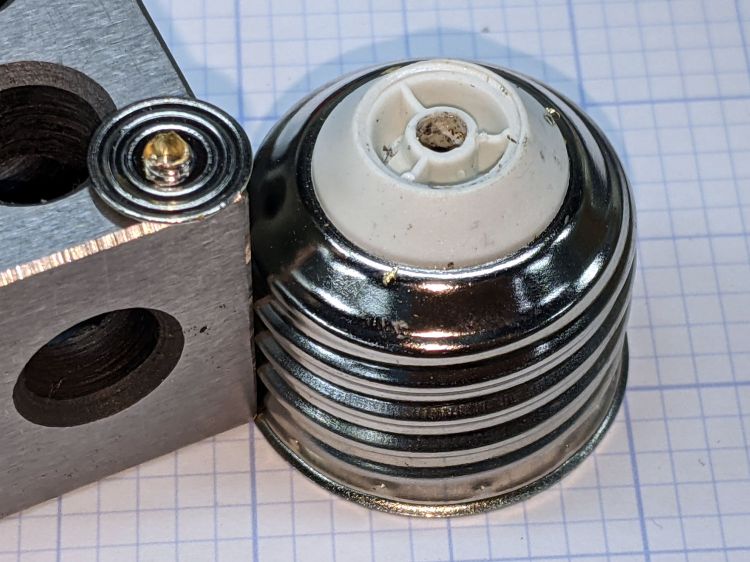
Nothing a dab of epoxy can’t fix, though. I scuffed up the outside of the contact to remove the nickel (?) plating and expose the underlying brass to improve its solderability.
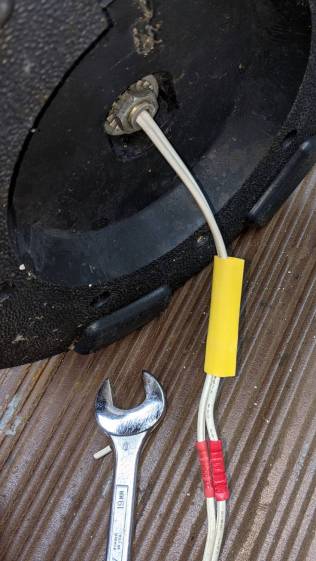
After the epoxy cured, align wire with hole, screw the base onto the lamp shell, and it’s ready for soldering:
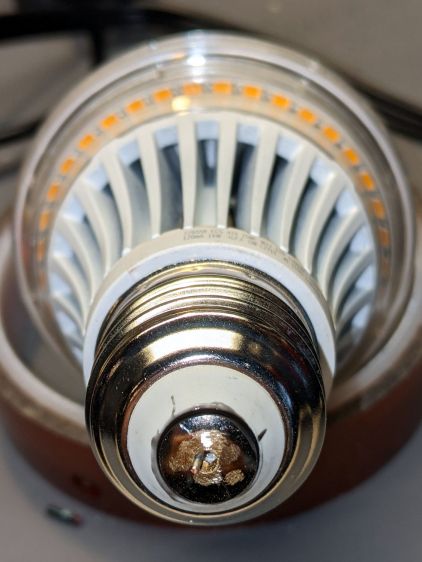
The hole is way too large for the wire, but I wasn’t about to wreck a tiny drill on what might have been a weld nugget. In any event, the bigger the blob, the better the job:
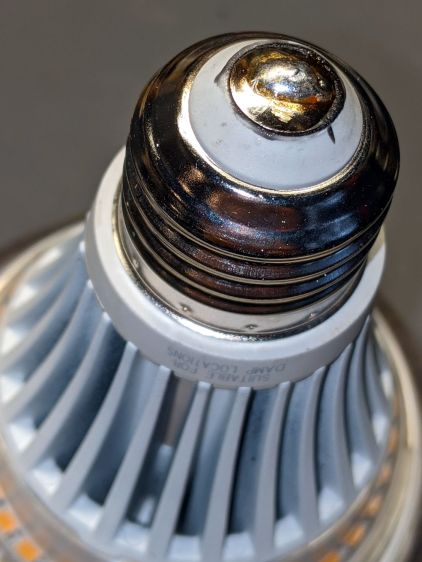
Just like light bulb bases used to look, back in the day.
With a bit of luck, it’ll sit in that socket for another seven years.
It could happen, ya never know.










 The Smell of Molten Projects in the Morning