Ed Nisley's Blog: Shop notes, electronics, firmware, machinery, 3D printing, laser cuttery, and curiosities. Contents: 100% human thinking, 0% AI slop.
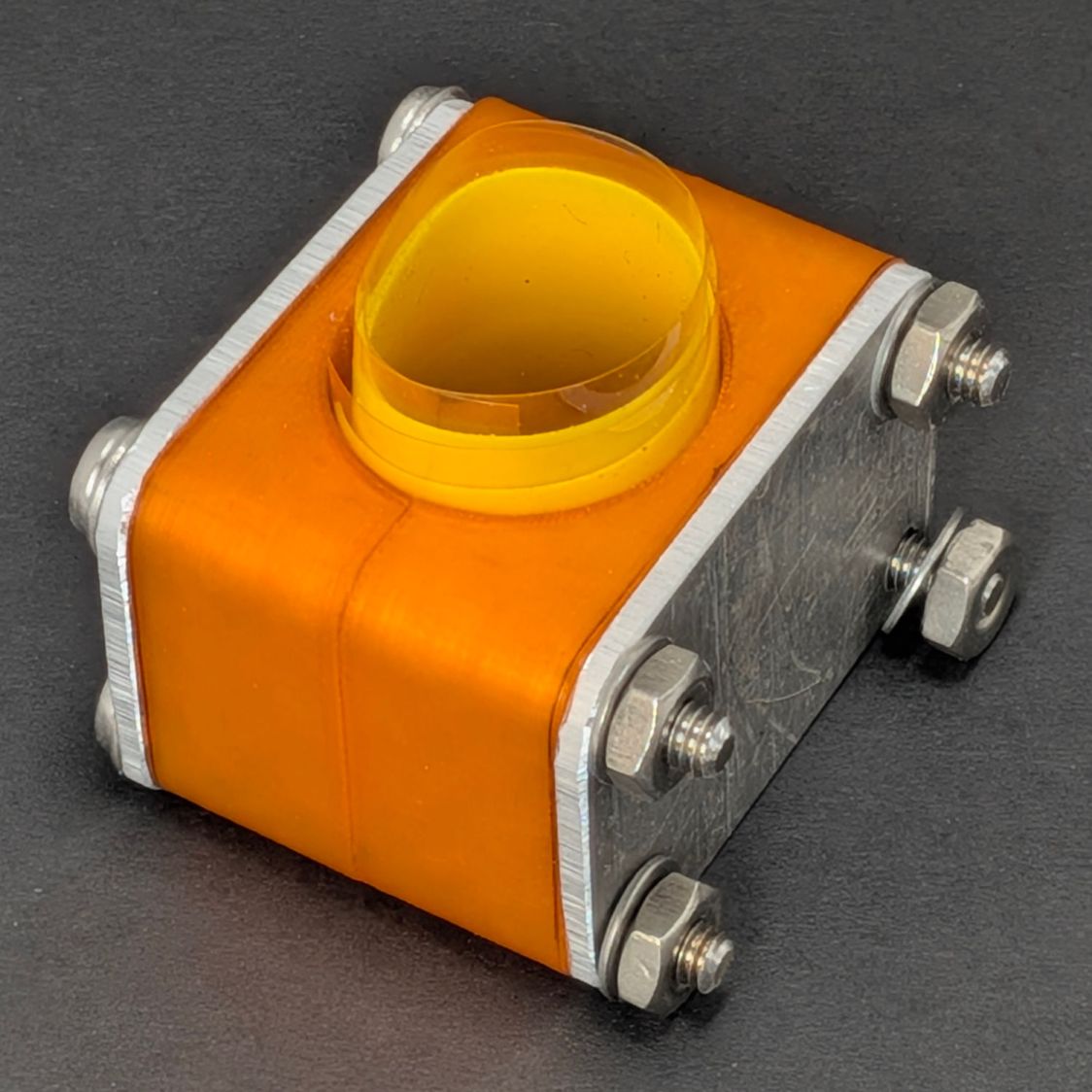
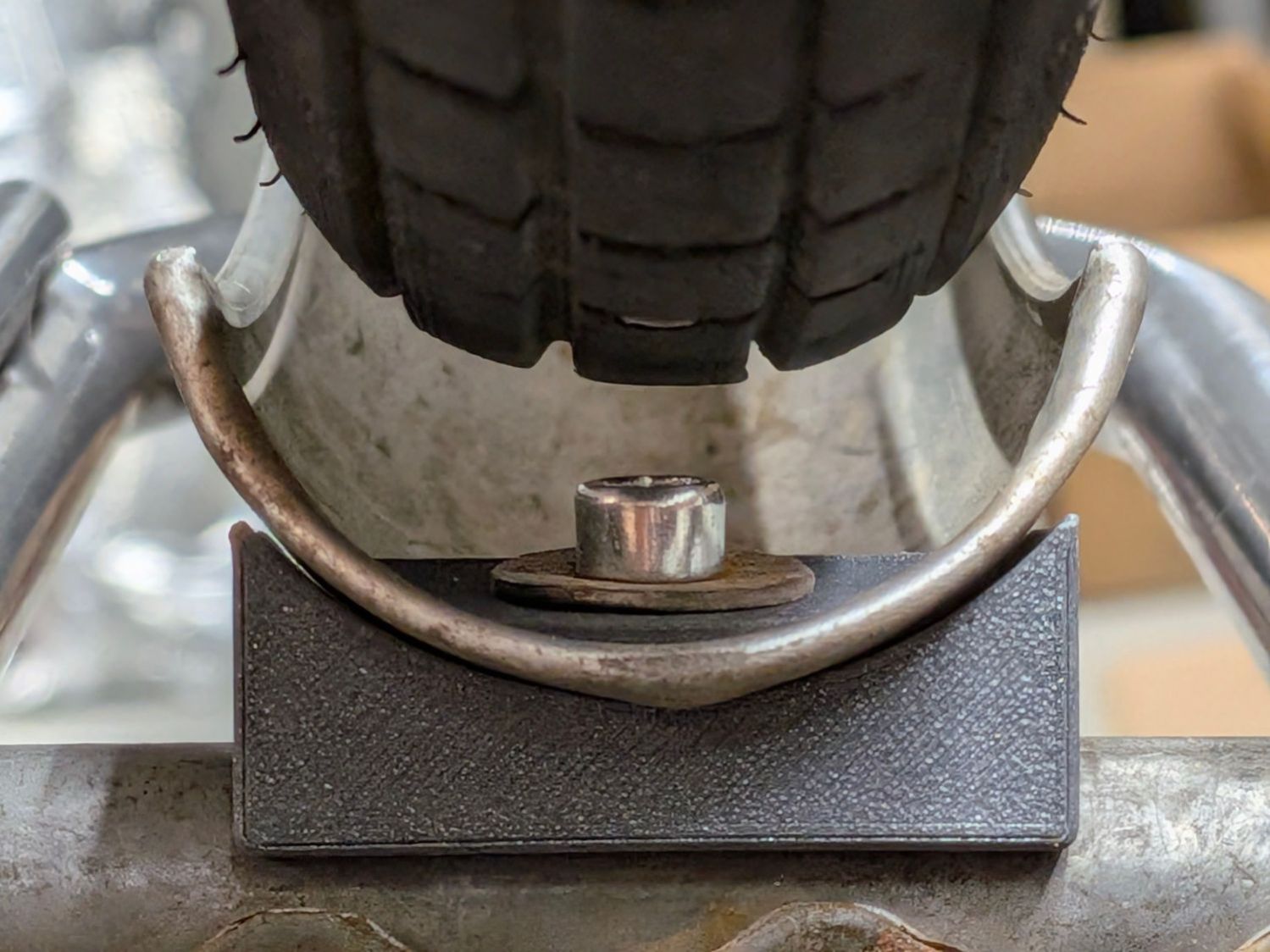
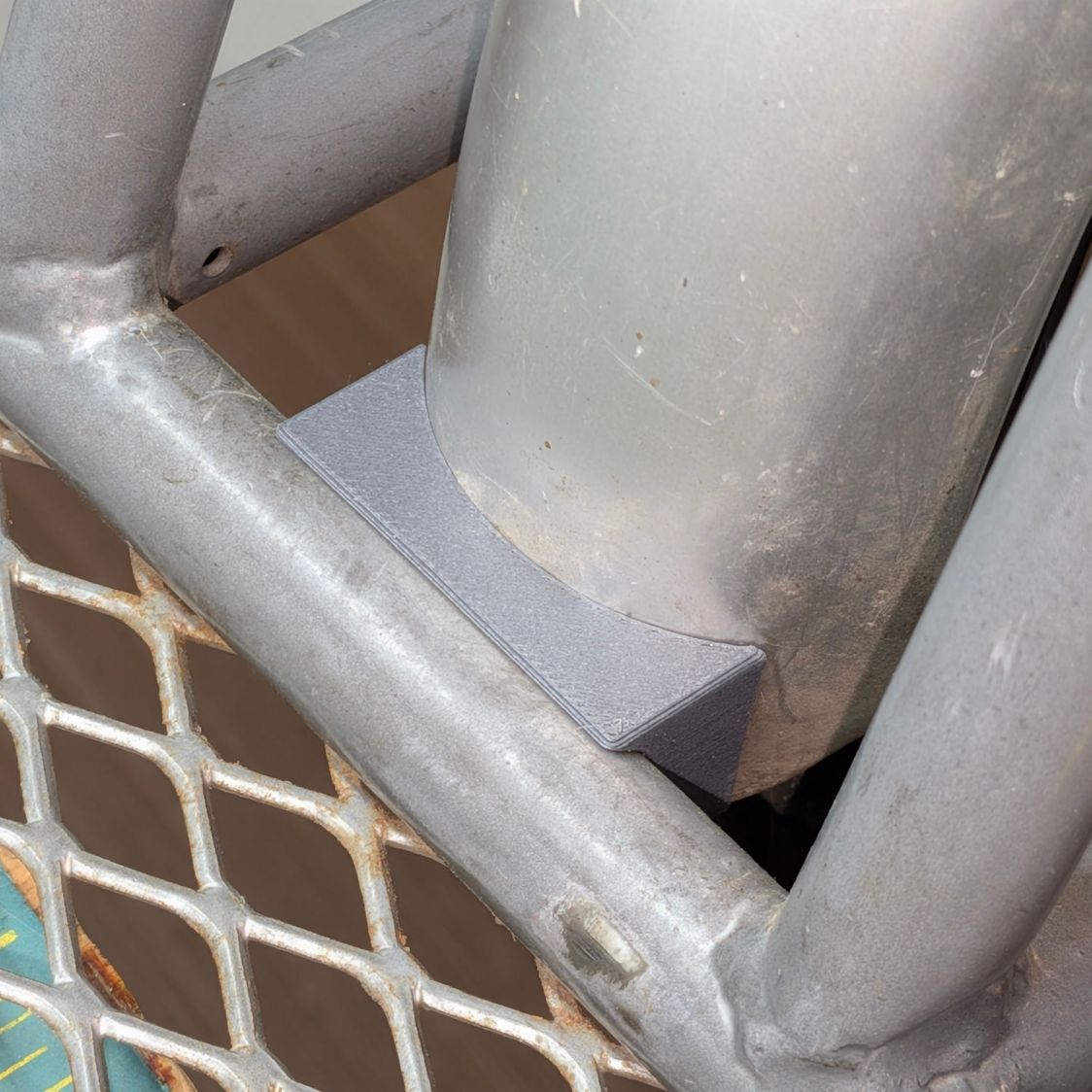
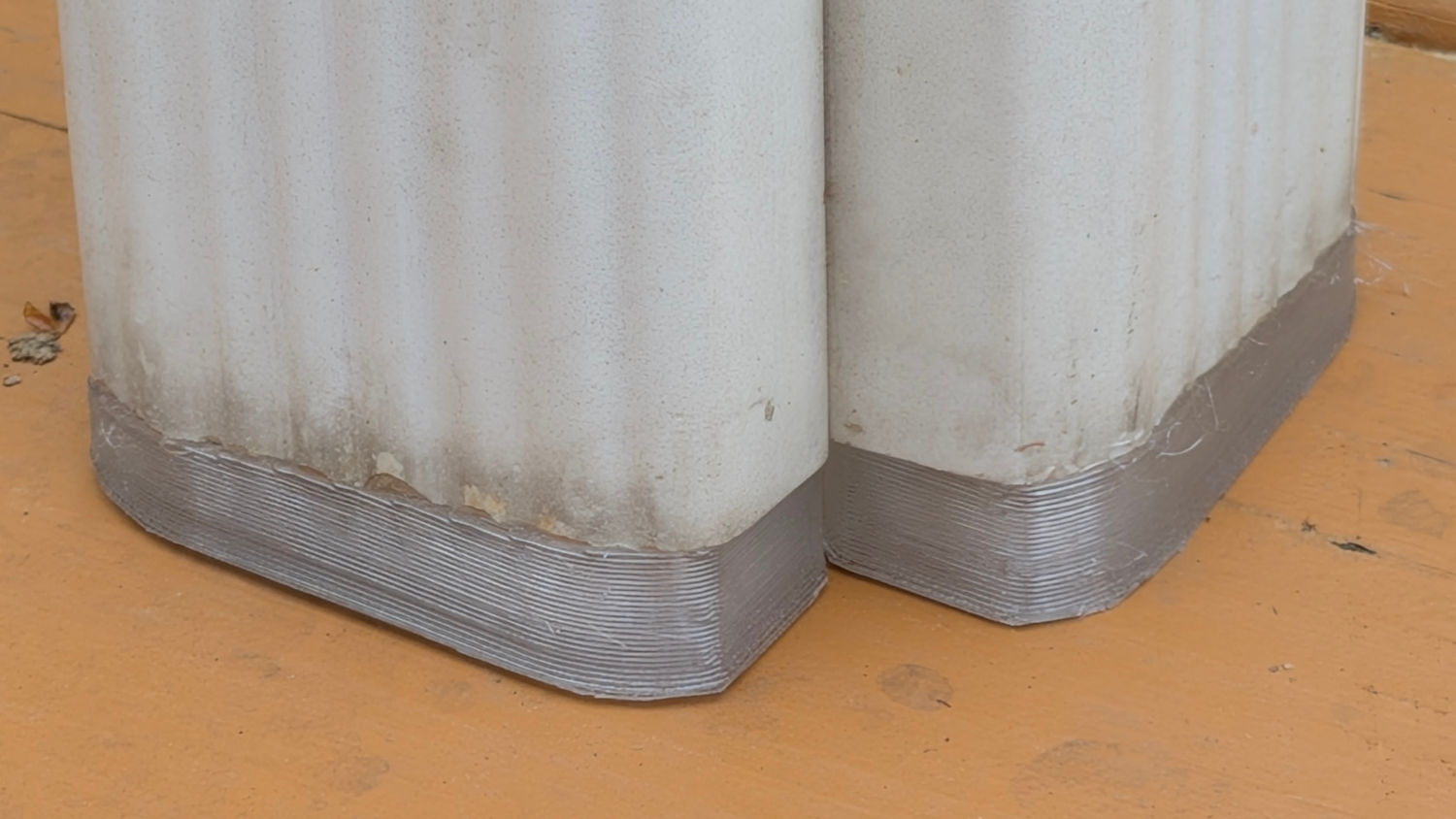
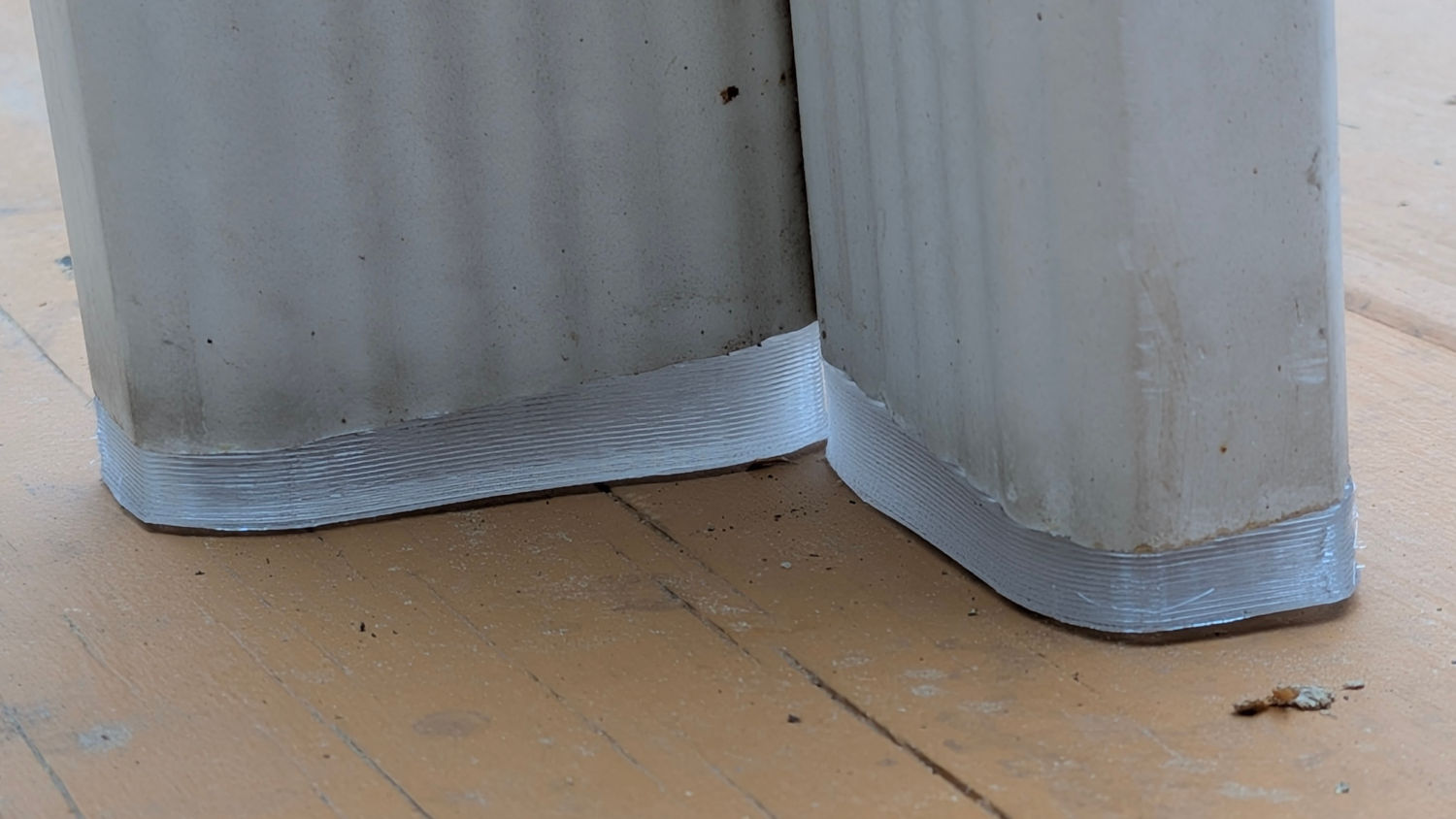
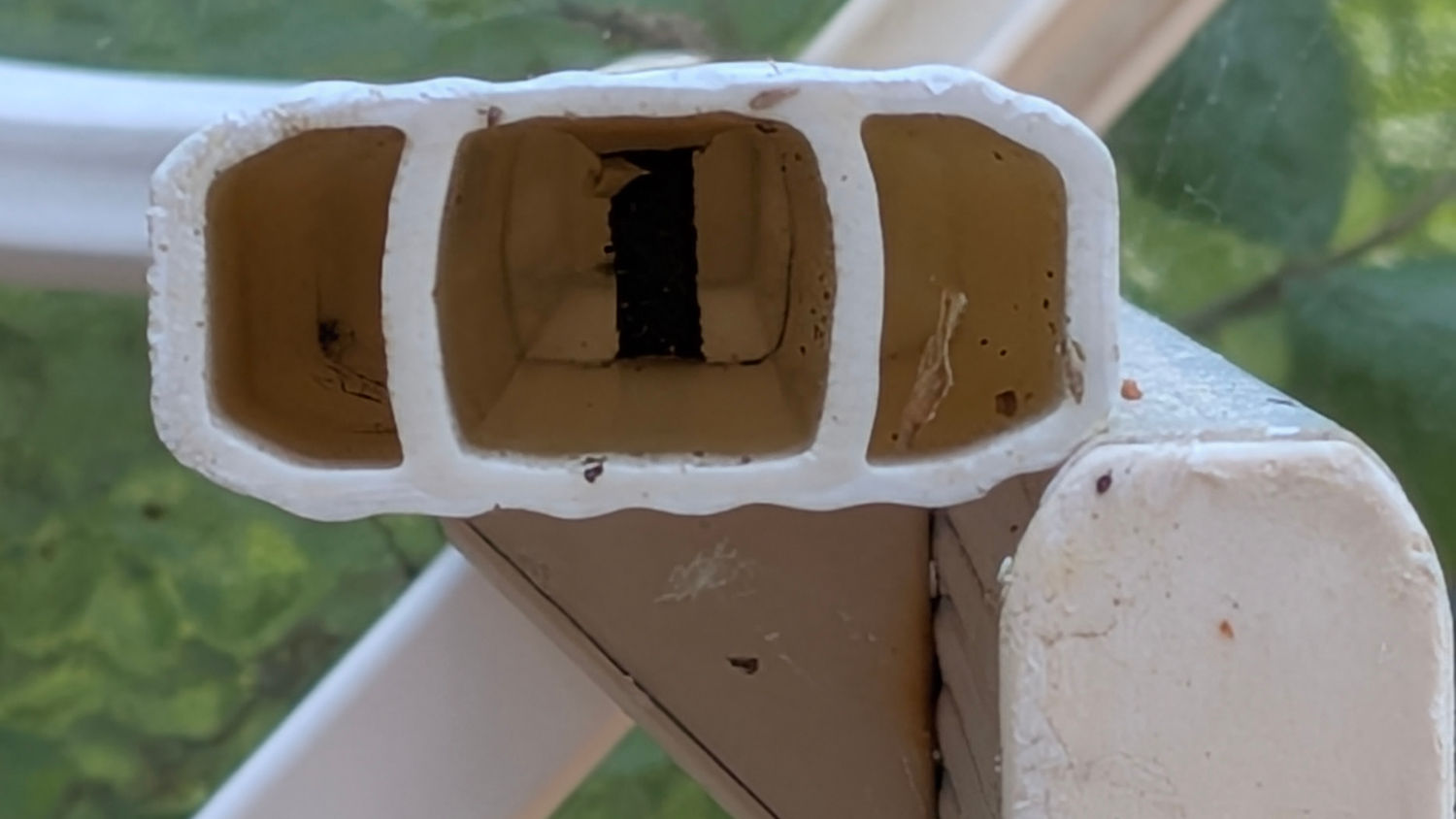
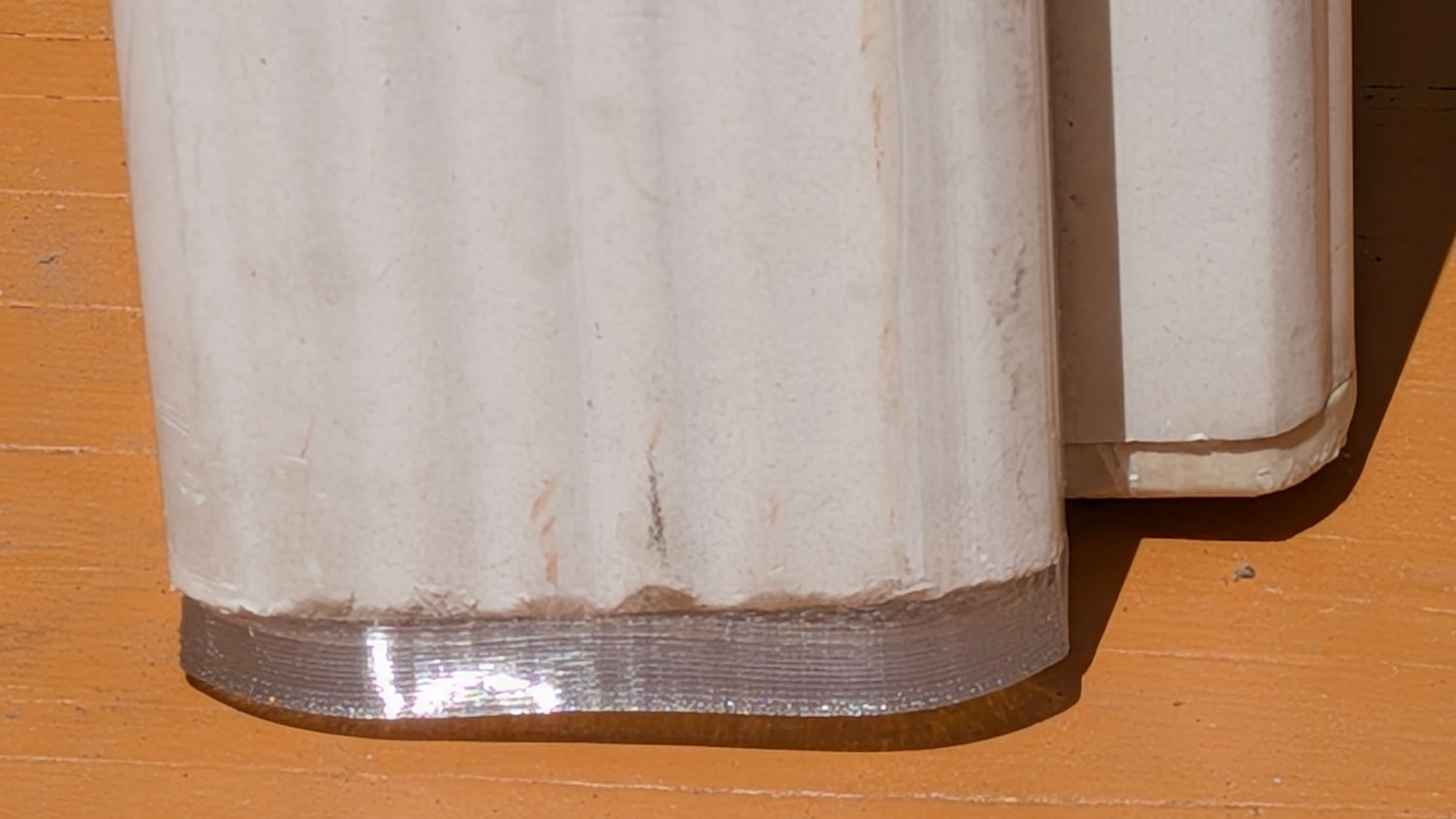
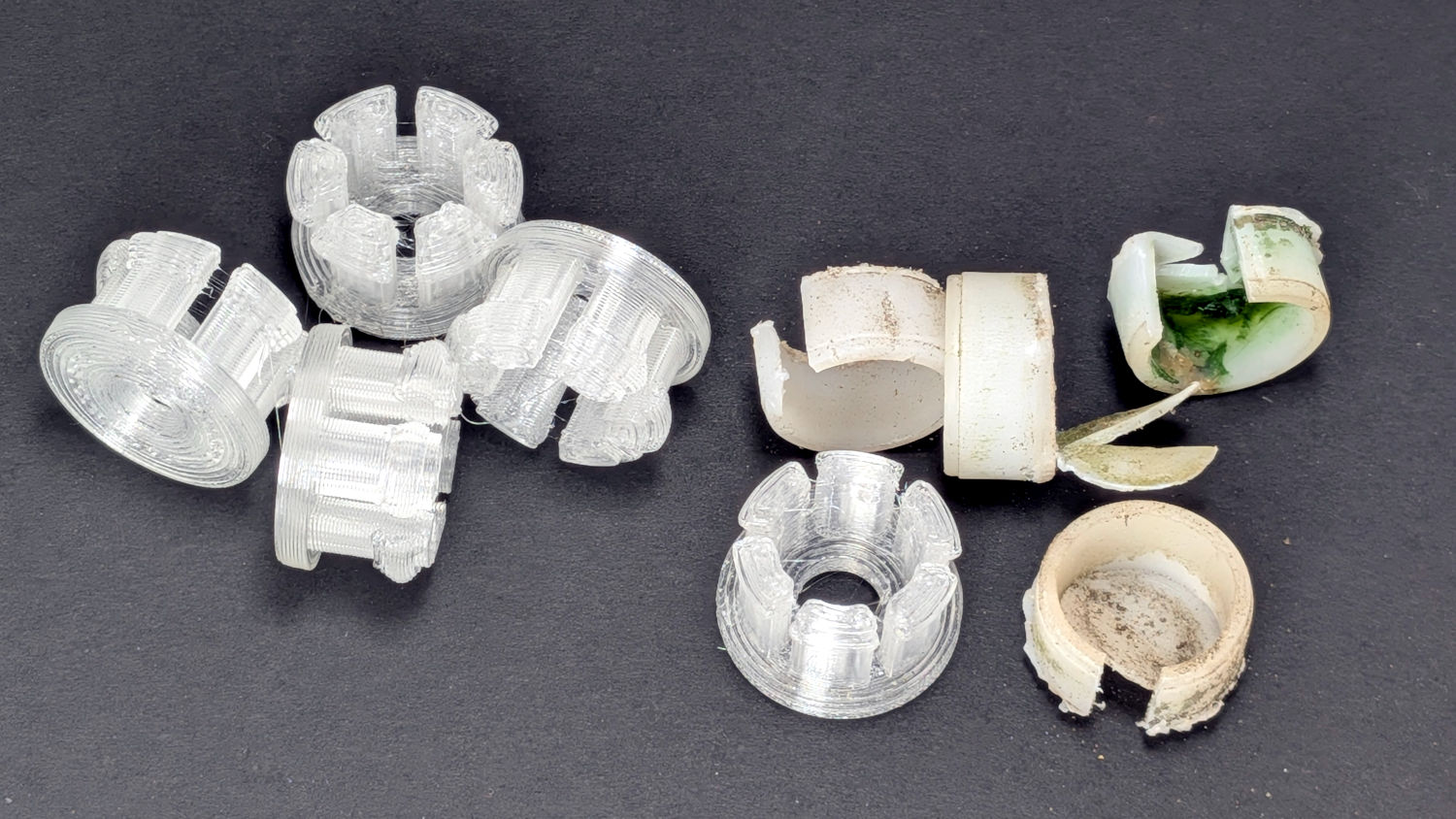
Seen with the shock cord in place, it’s obvious that combining moderately high temperature with steady compression sufficed to bend the PETG enough to pop those tabs loose from the vent.
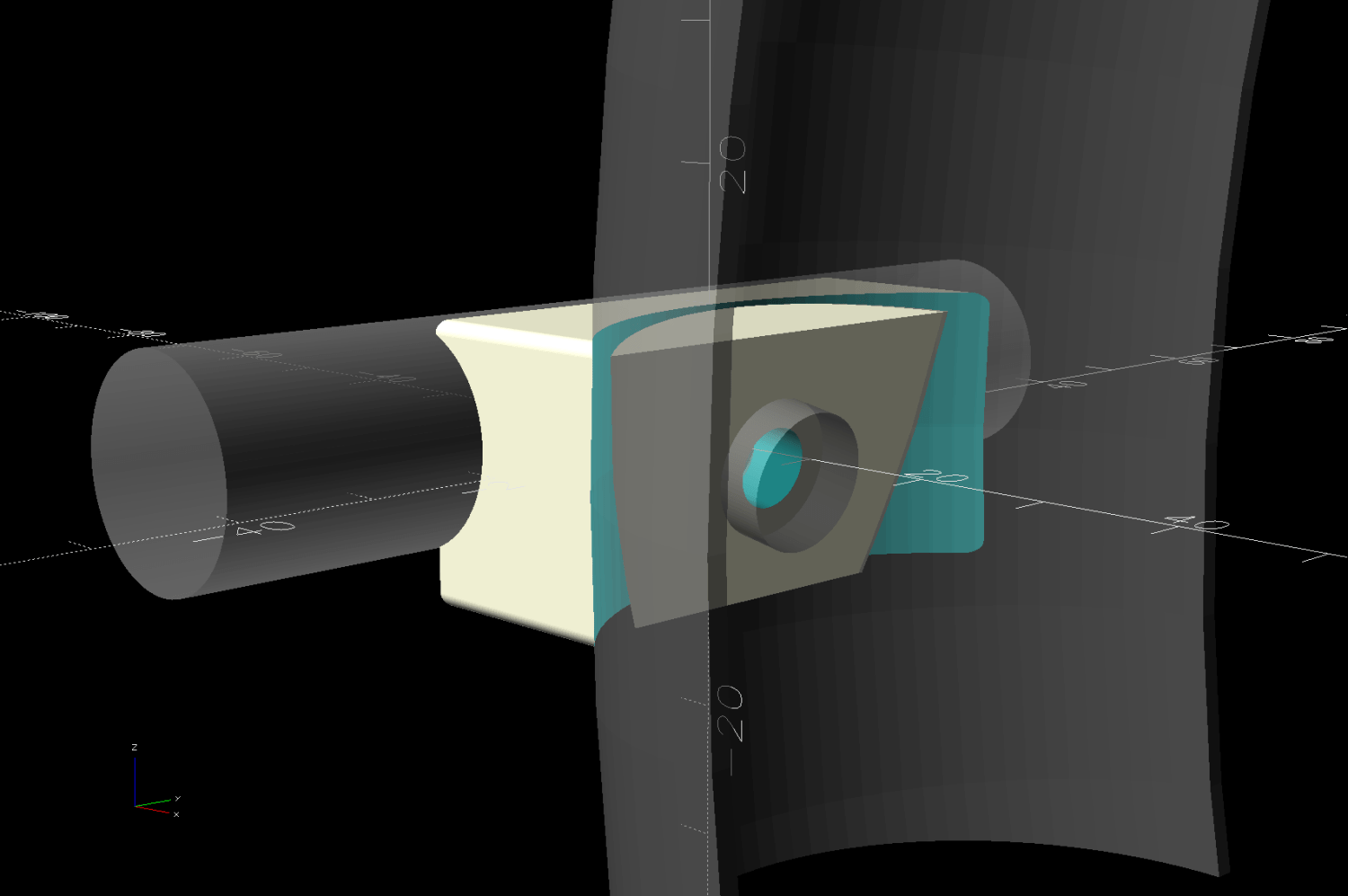
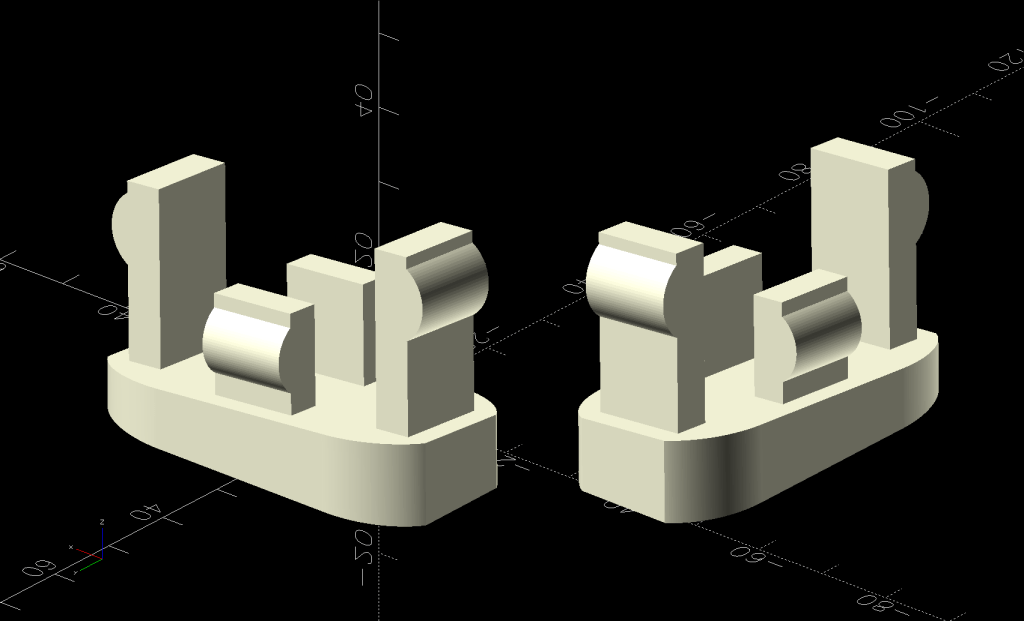
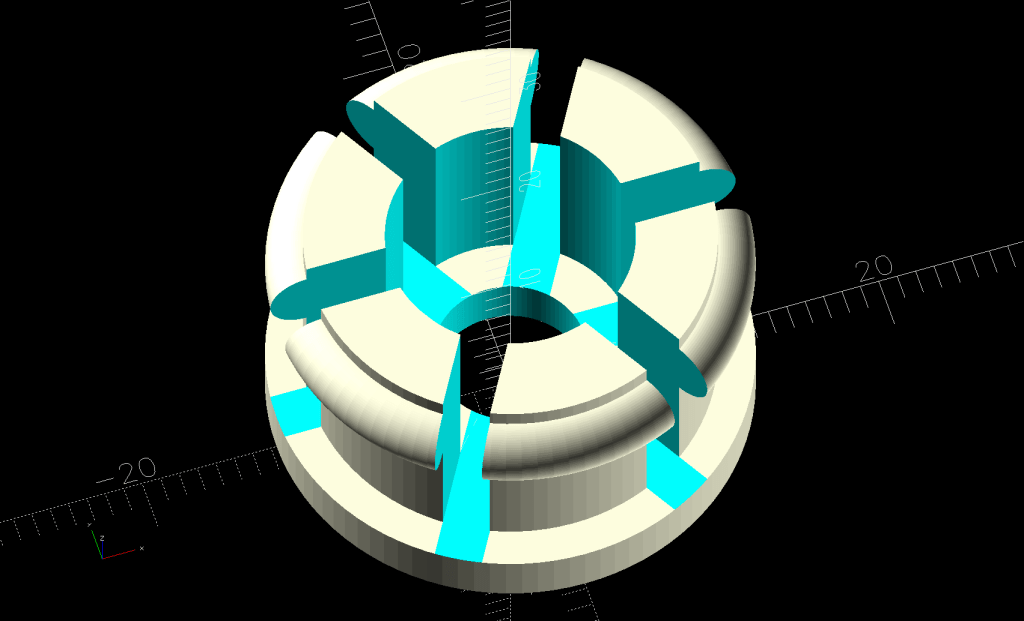
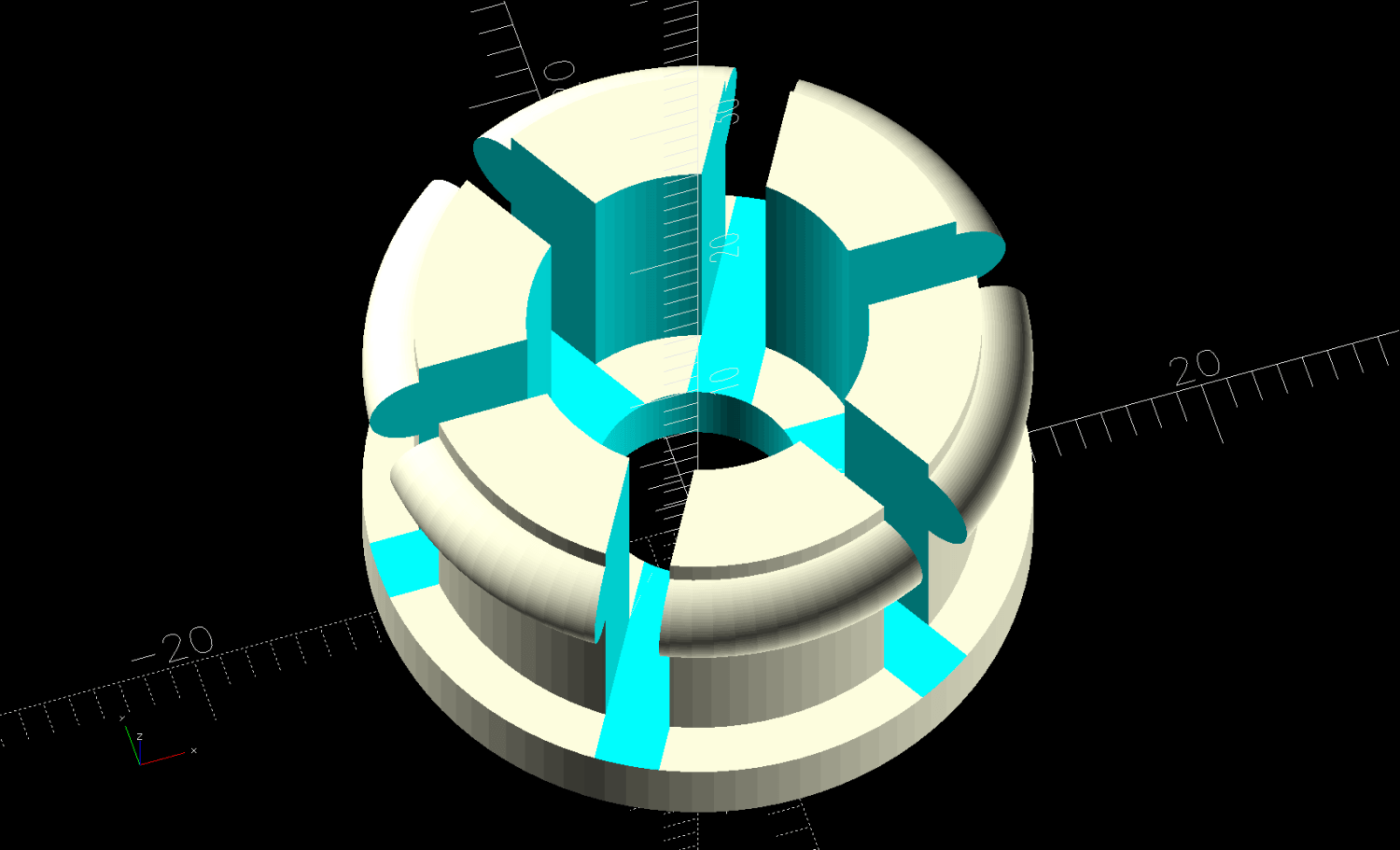
So the OpenSCAD model now produces a stiffening ring to be laser-cut from acrylic:
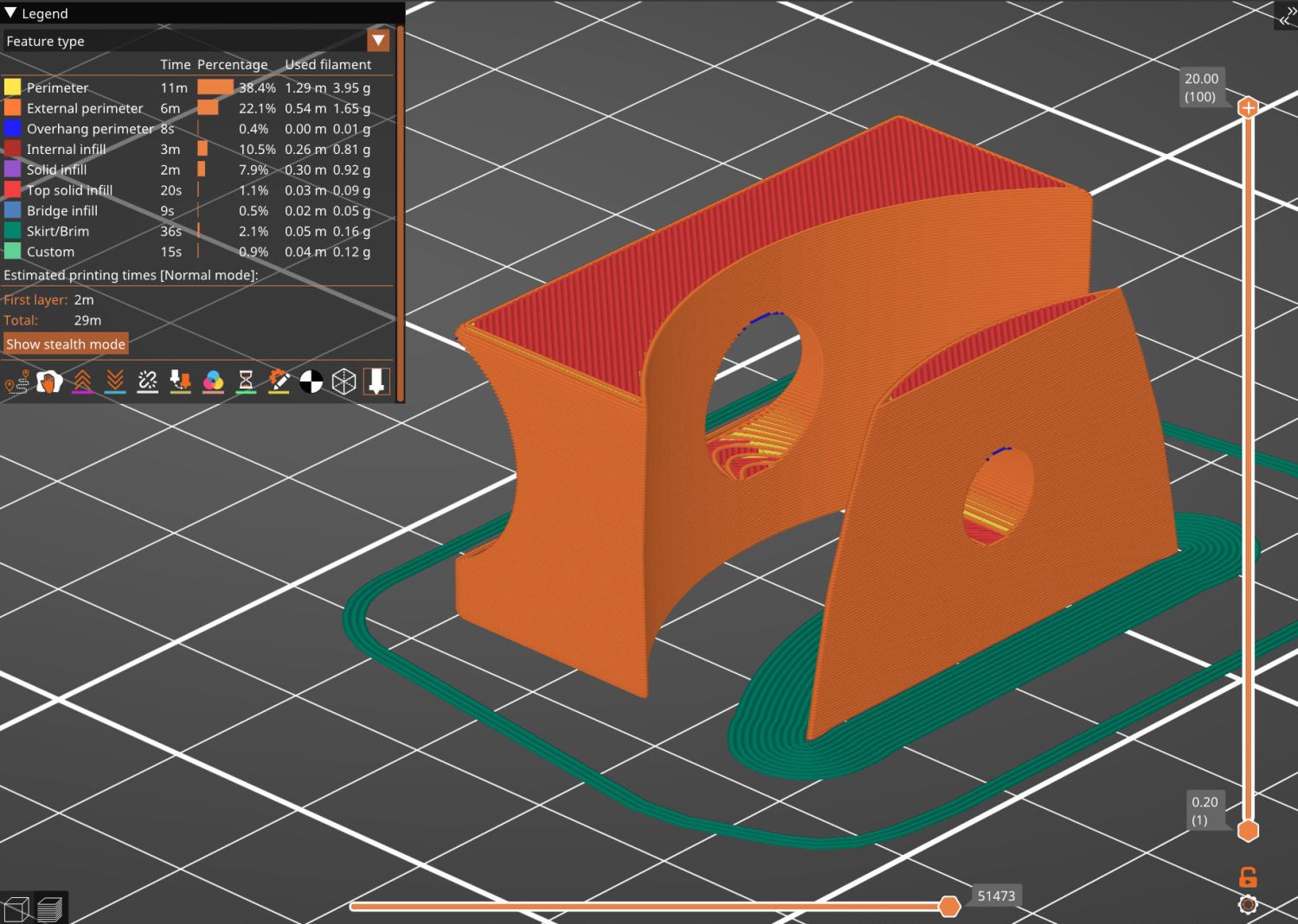
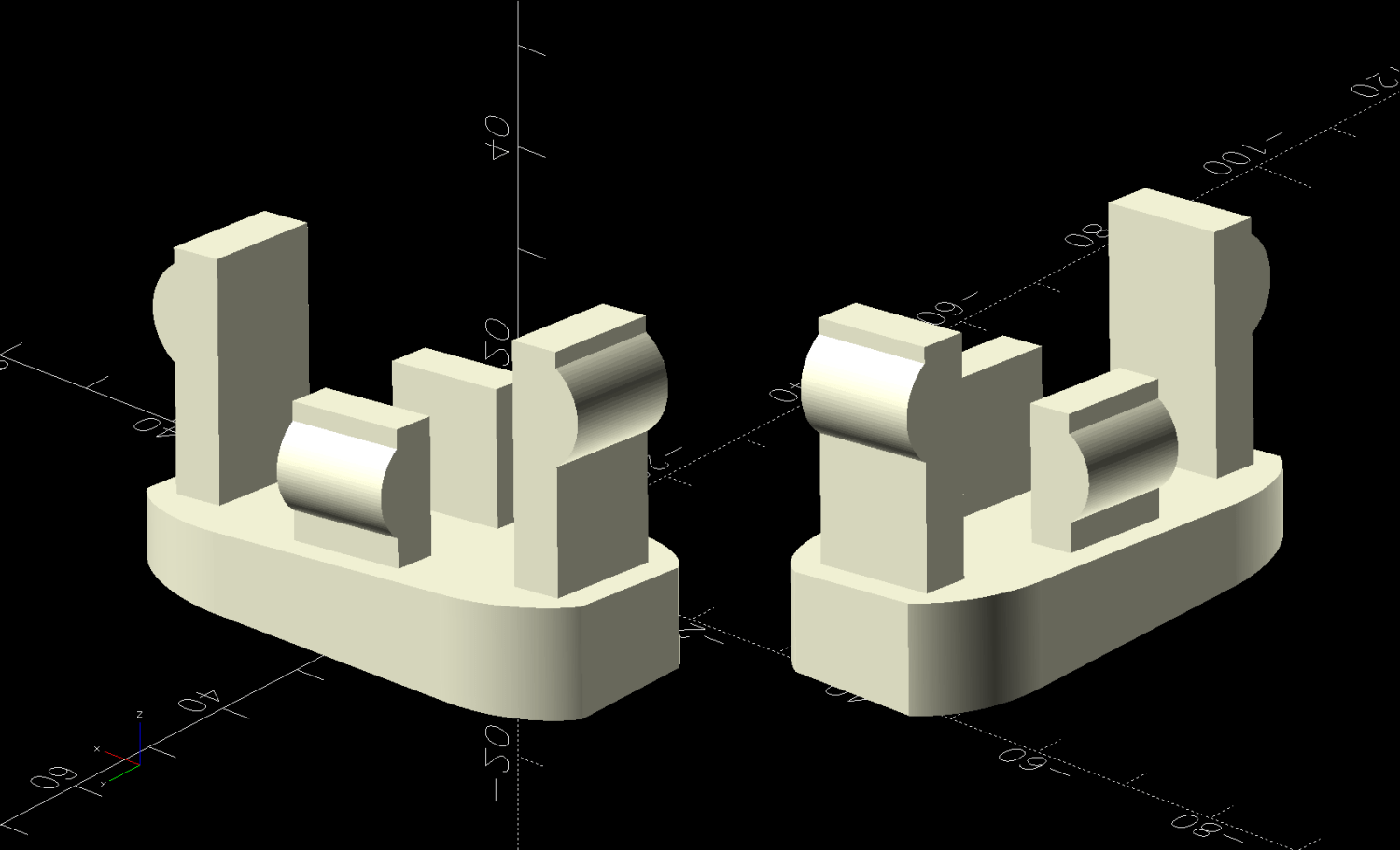
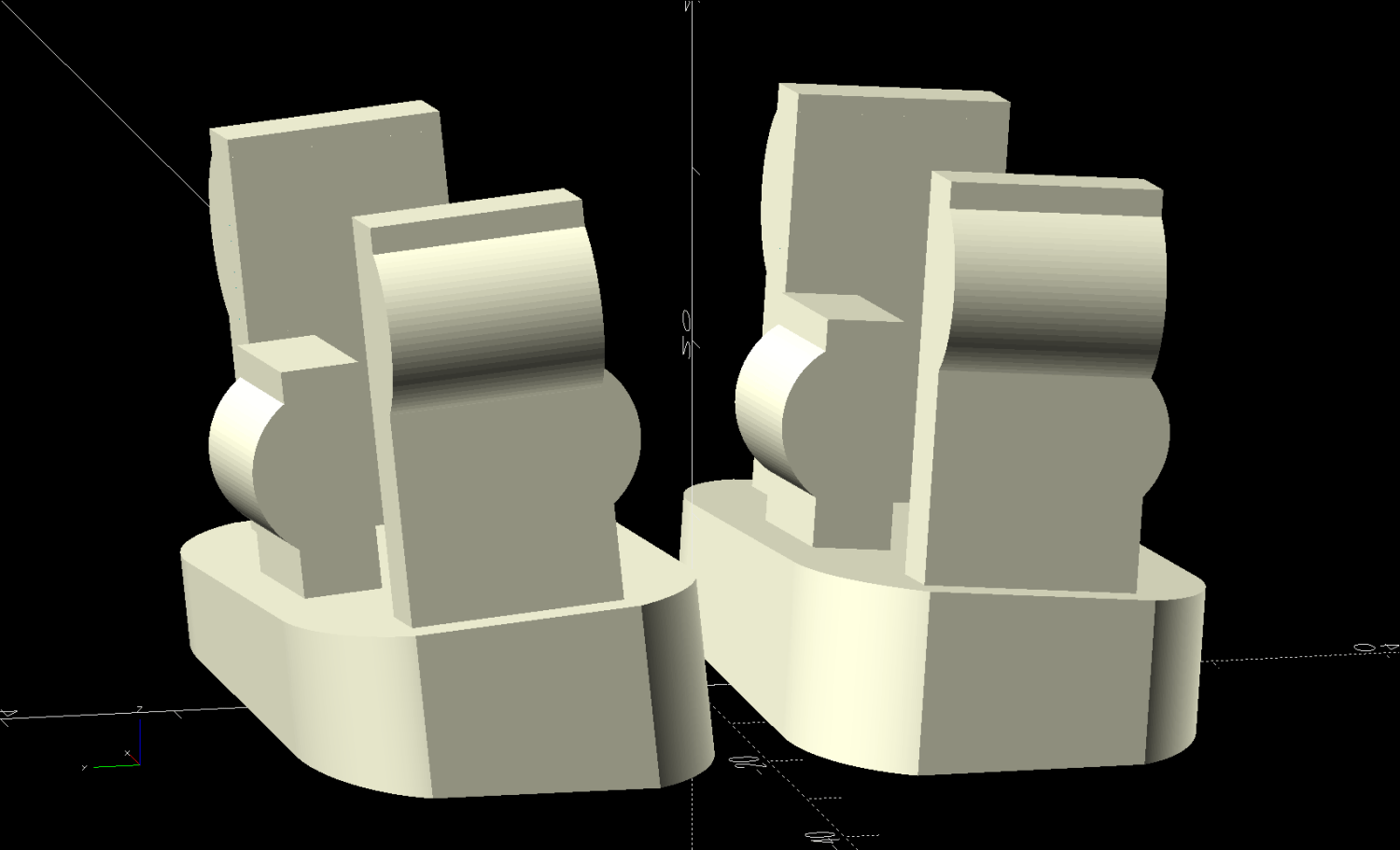
The whole snout builds as a single unit in the obvious orientation:
Clothes Dryer Vent Filter Snout – V2 – slicer
Because the part of the snout with the tabs is 7 mm tall, I glued a 4 mm acrylic ring to a 3 mm ring, with both of them glued to the snout:
Clothes Dryer Vent Filter Snout – acrylic gluing
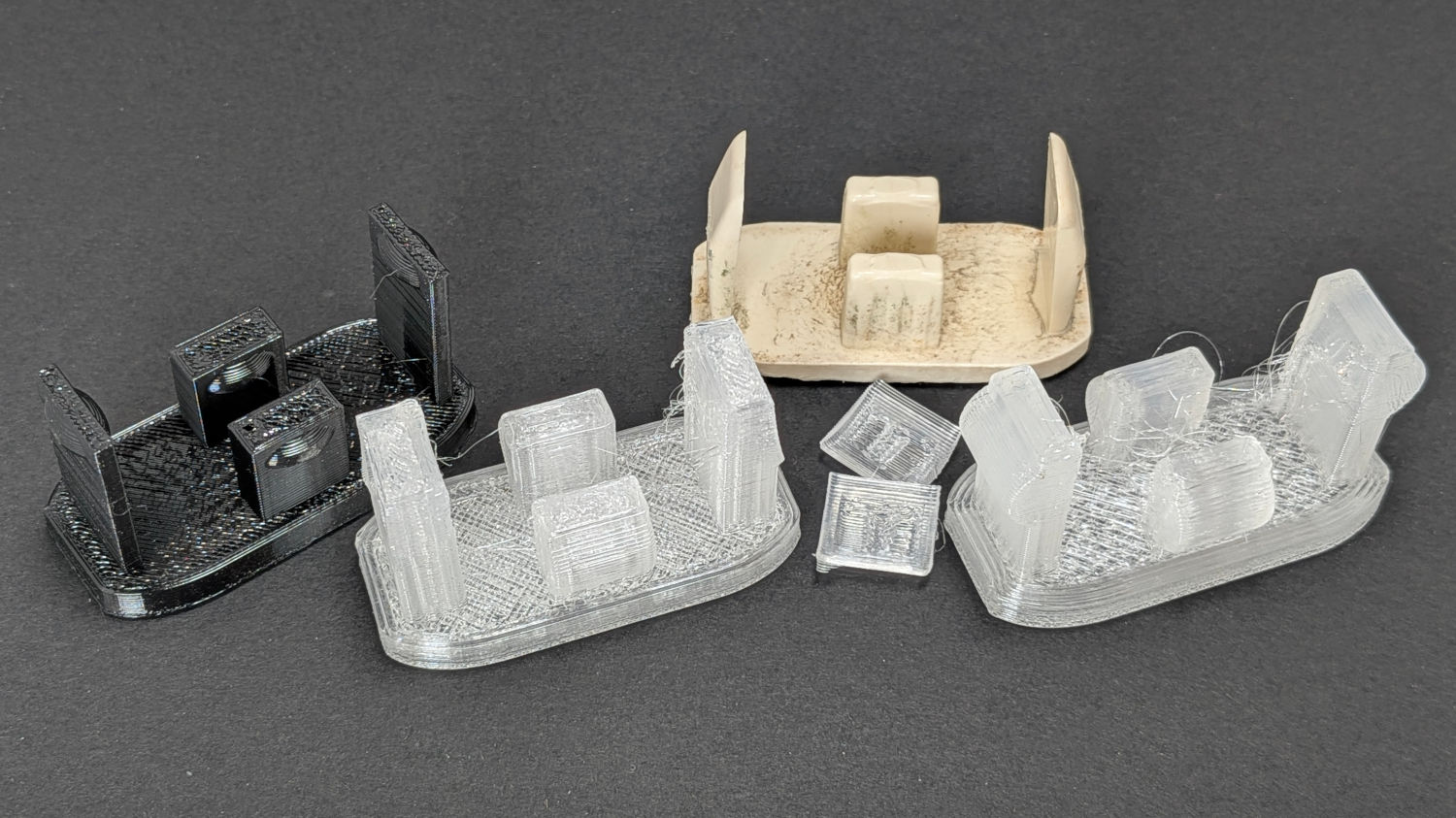
That’s “natural” PETG, which I expected to be somewhat more transparent, but it’s definitely not a dealbreaker.
Mary will sew up another cheesecloth filter and we’ll see what happens to this setup.
As the saying goes, “Experience is what you get when you don’t get what you want.”
Fortunately, living in the future makes it easy to iterate on the design & implementation until experience produces what should have been obvious at the start.
Some rummaging in the Big Box o’ String produced the spool of 1000 pound test Kevlar cord most recently applied to the seat back on Mary’s bike, so this happened:
Bob YAK trailer – Kevlar cords
Having re-confirmed that frayed Kevlar cannot be melted into a blob, another UV-stabilized cable tie at each end will control those tufts.
The cart in Mary’s Vassar Farm plot returned in need of repair:
Garden Seat – fractured body
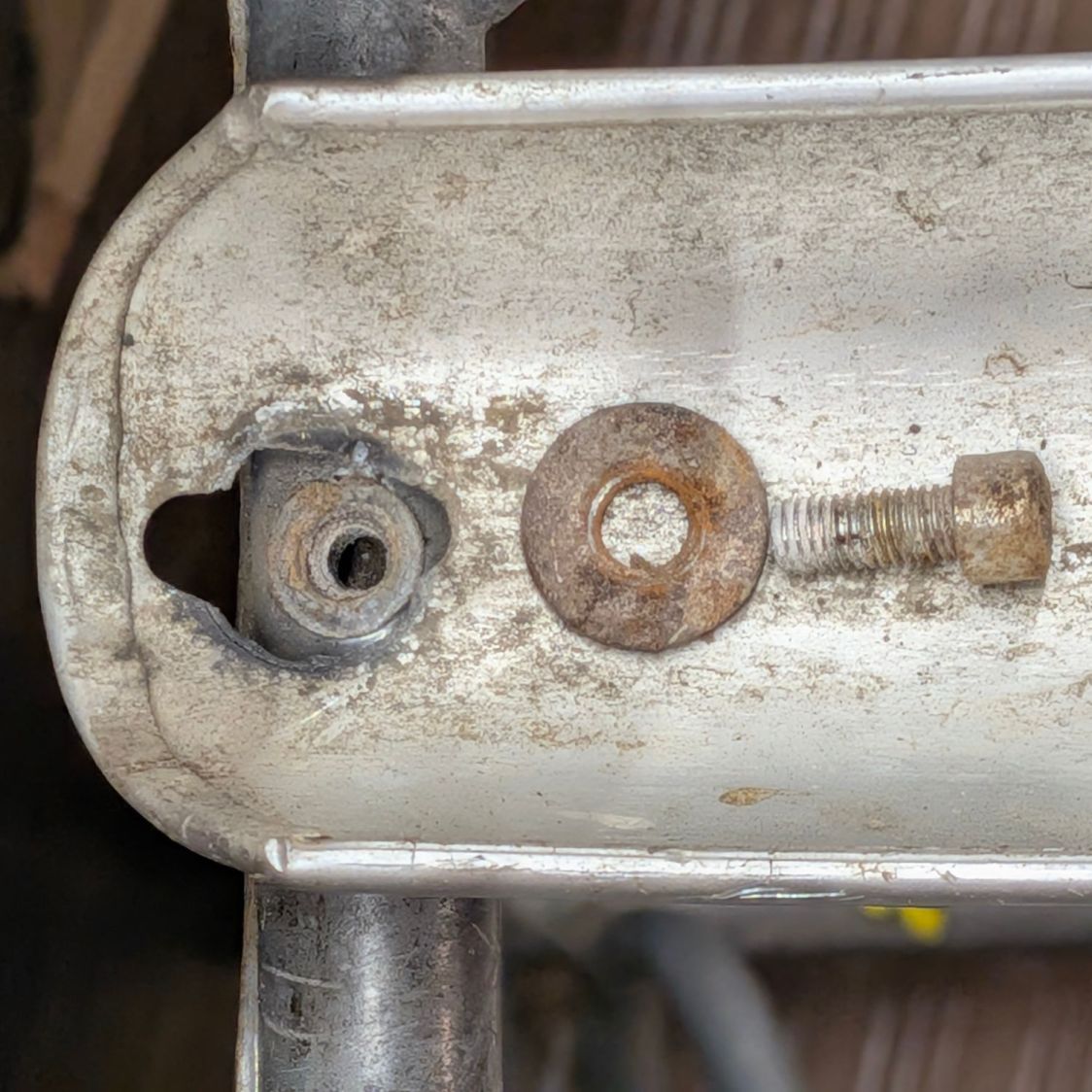
Those fractures near the end of the axle let the axle erode the side wall:
Garden Seat – eroded body
This will obviously require some sort of reinforcement on the body holding the axle, but the first challenge involved getting the wheels off the axle:
Garden Seat – axle cover
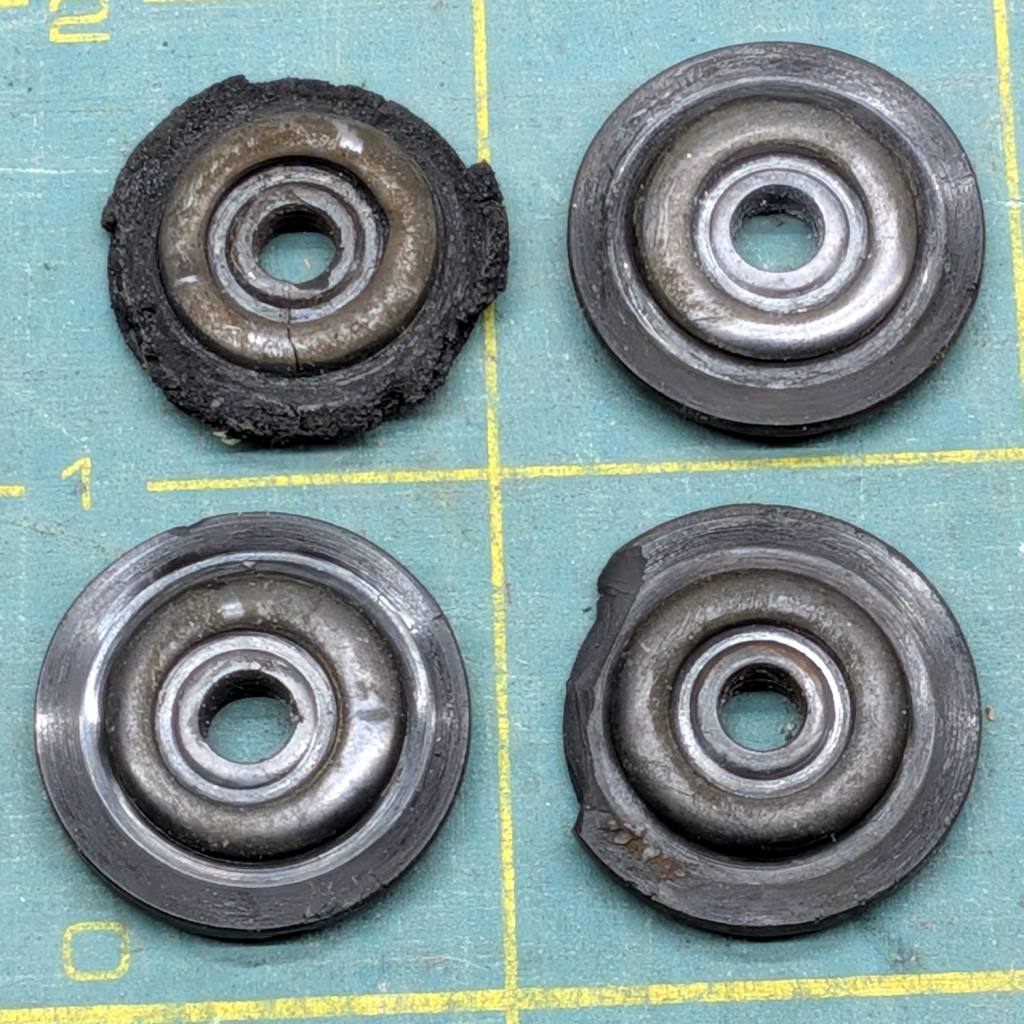
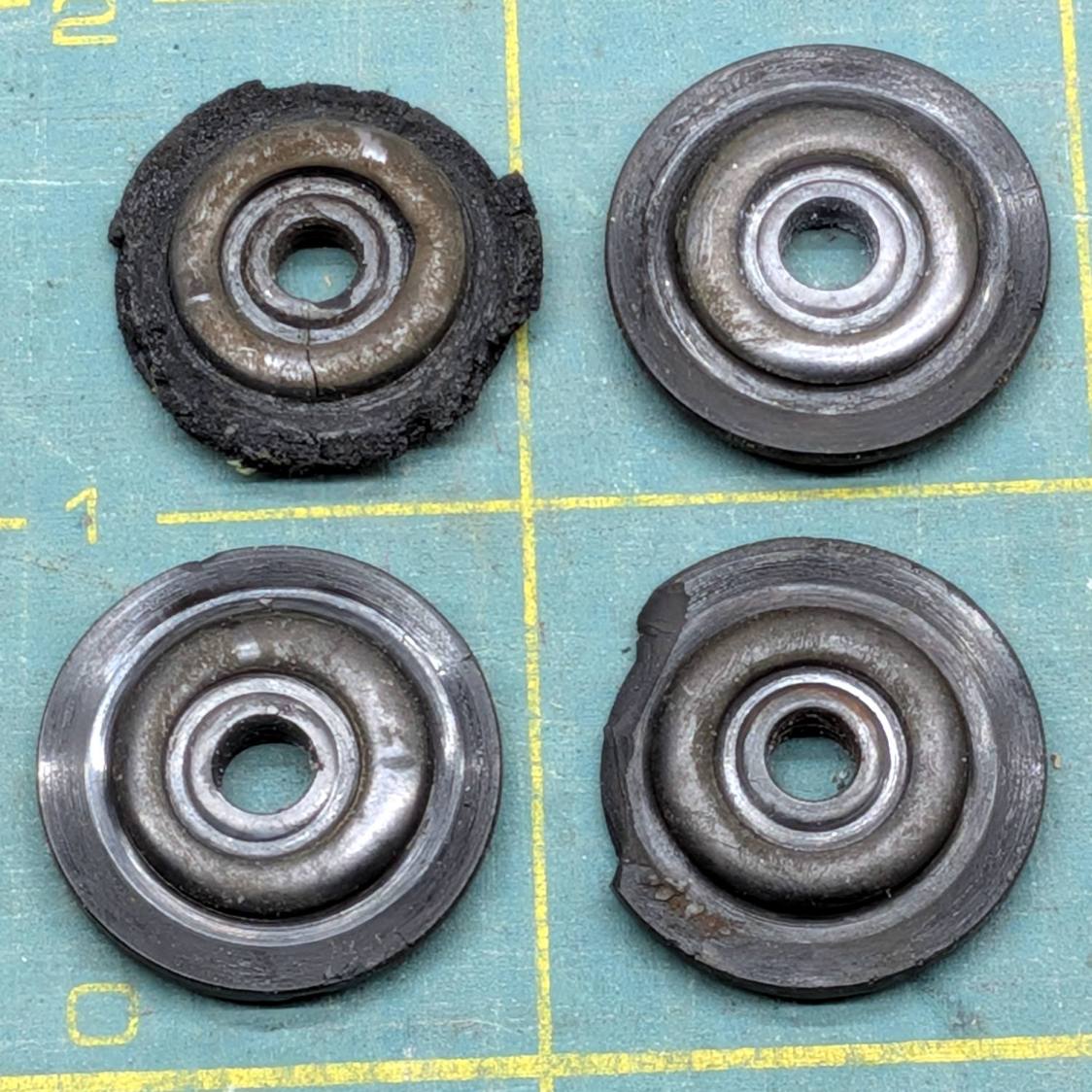
Some brute force revealed the hub covers snapped over an install-only locking fastener:
Garden Seat – axle retaining clip
More brute force cut those fasteners (a.k.a. star-lock washers) to get the wheels off the axles.
While contemplating the situation, a box of 606 bearings (as used in the PolyDryer auto-rewind spindles) failed to scamper out of the way and produced a victim fitting perfectly on the 8 mm axle:
Garden Seat – bearing idea
I regard such happenstance as a message from the Universe showing I’m on the right track. The alert reader will note the axle should not rotate, but does sport scars showing it’s done some turning in the recent past, so the bearing may not be a completely Bad Idea™.
Finding a Lexan snippet exactly as thick as the bearing suggested bolting a plate across the side of the body to support the bearing, like this:
Garden Seat – reinforcing plate installed
Some layout work in LightBurn produced a template to mark the body for hand-drilling the holes:
Garden Seat – drill marking template
In retrospect, that was a mistake. I should have:
Laser-cut an MDF sheet to make a drill jig
Drilled one hole and inserted a screw
Drilled the rest of the holes in exactly the right places
Instead, three of the holes in that nice Lexan sheet ended up slightly egg-shaped to adjust for mis-drilled holes in the body.
I squeezed 5 mm rivnuts into whatever fiber-reinforced plastic they used for the body, which worked better than I expected. They’re intended for sheet metal, so I set the tool for 5 mm compression and they seem secure. I hope using plenty of screws across a large plate will diffuse the stress on each screw.
In this situation, I regard JB KwikWeld epoxy as “removable with some effort”, as opposed to the destruction required with those star-lock washers. High-strength Locktite might also be suitable, but I do not anticipate ever having to remove these again for any reason and do not want the nuts to fall off in the garden.
While it’s possible to buy replacement caps, this seemed more appropriate:
Humidifier bottle cap reinforcement – installed
It’s PETG-CF, of course:
Bottle cap reinforcement – solid model
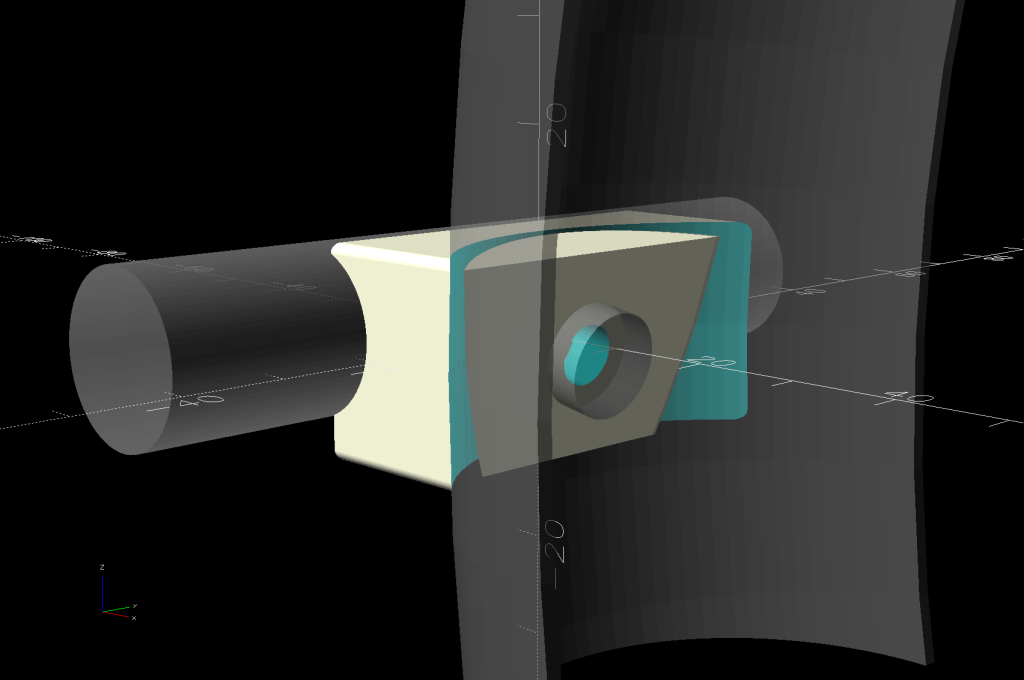
The shape is a ring with a simplified model of the cap removed from the middle:
Bottle cap reinforcement – lid solid model
It fits snugly over the cap atop a thin layer of JB PlasticBonder that should hold it in place forevermore:
Humidifier bottle cap reinforcement – bottom view
The other side shows the crack over on the right:
Humidifier bottle cap reinforcement – top view
Close inspection showed a few smaller cracks, so that cap was likely an original.
I made another ring for the other cap, only to find it was slightly larger with a black washer inside: apparently a previous owner had replaced one of the caps. The OpenSCAD program has measurements for both, not that you have either.
This file contains hidden or bidirectional Unicode text that may be interpreted or compiled differently than what appears below. To review, open the file in an editor that reveals hidden Unicode characters.
Learn more about bidirectional Unicode characters
The common fate of all “soft touch” silicone handles is to become sticky and gooey. While some goo may be removable, I’ve found that wrapping self-bonding silicone tape around the mess both encapsulates it and maintains the grippiness of the original silicone.
A few weeks ago, the house seemed unusually warm when I crawled out of bed. Checking the heat pump thermostat woke me right up:
Heat pump – battery critical
This, as they say, is not a nominal outcome.
A pair of AA alkaline cells powers the thermostat and, due to its wireless communication link to the heat pump’s air handler in the attic, it chews through two pairs a year. As you’d expect, it displays a “Battery Low” message for at least few days at the end of their lifetime, which was not the case for this failure.
After replacing the cells, the thermostat reported that, yes indeed, the house was much warmer than usual:
Heat pump – high temperature
A temperature monitor showed the heat had jammed on in the deep of the night:
Heat pump – runaway temperature
The heat pump exhaust temperature showed a similar event:
Heat pump – exhaust temperature
One of the AA cells showed about 1.3 V, but the other was around 0.25 V, suggesting an abrupt failure, rather than the normal gradual voltage decrease with plenty of time to replace the cells.
It’s reasonable to jam the heat on when the thermostat isn’t communicating, rather than let the house gradually freeze, but it did come as a surprise. I don’t know how the heat pump reacts to a battery failure during the cooling season; not refrigerating the house would be perfectly fine in most circumstances.
The Amazon Basics AA cells I’ve been using have worked as well as the Name Brand ones, so I was willing to write one off as happenstance.
However, during the recent Daylight Saving Time dance, I discovered the clock in Mary’s Long Arm Sewing Room had stopped, with an Amazon Basics AA alkaline cell from the same lot inside:
Failed clock AA cell
The date shows I’d replaced it in March, with the previous cell lasting an amazing 3-½ years. This one was completely dead, reading barely 0.1 V, after seven months. Mary hasn’t had a quilting project at the long-arm stage in recent months, so the clock may have been stopped for quite a while.
Perhaps something has gone badly wrong with Amazon’s battery supplier QC.
As the saying goes: Once is happenstance. Twice is coincidence. Three times is enemy action.
Because nobody will ever see the Radiator Sleds, I started a batch with the tail end of the white PETG spool and set up the Spool Join function to switch to the retina-burn orange PETG when the white filament ran out.
The two colors combined nicely on that layer:
Prusa MK4 MMU filament joining
Unfortunately, the Spool Join didn’t work out quite right and I had to extricate the white filament from the MMU3, then coerce the orange filament into position.
The Selector assembly rides on the smooth rods, driven by the stepper motor on the far end of the leadscrew. It stops at one of the five filament tubes (visible to the left of the upper smooth rod, with filament tips showing), whereupon a drive gear pushes the filament into the Selector, under the FINDA sensor (the threaded fitting sticking out of the top), into the PTFE tube, down to the Nextruder, through the idler to trip the Filament Sensor, then into the extruder’s planetary drive gear.
I think this happened:
The rear end of the white filament passed through the FINDA sensor
The MK4 reversed the Nextruder to drive the filament back into the MMU3
The rear end of the filament didn’t reenter its filament tube and escaped out to the side
The MMU3 drive gear couldn’t pull the filament backward, because the back end was misplaced
The Extruder planetary drive gear couldn’t pull the filament forward, because the front end was now above the gear
Both the FINDA and the Filament Sensor showed the filament was present, so the MK4 knew something was wrong
Fortunately, I was watching the whole operation and could intervene.
The MMU3 works well when the filament behaves properly, but it’s very sensitive to bends in the filament and misshapen ends. In this case, the white filament had the usual tight curve due to being would around the spool hub, which was enough to mis-align its end with the MMU3 tube while backing out.