The Smell of Molten Projects in the Morning

Ed Nisley's Blog: Shop notes, electronics, firmware, machinery, 3D printing, laser cuttery, and curiosities. Contents: 100% human thinking, 0% AI slop.

Tag: Mini-lathe

Tweaking an LMS 5200 Mini-Lathe

  • Acrylic Coasters: Edge Finishing, Round 2

    Acrylic Coasters: Edge Finishing, Round 2

    Because the Sherline mill can’t cut all the way around a 4 inch OD coaster clamped to its table, I set up the 4-jaw chuck on the rotary table and centered the nicely round fixture:
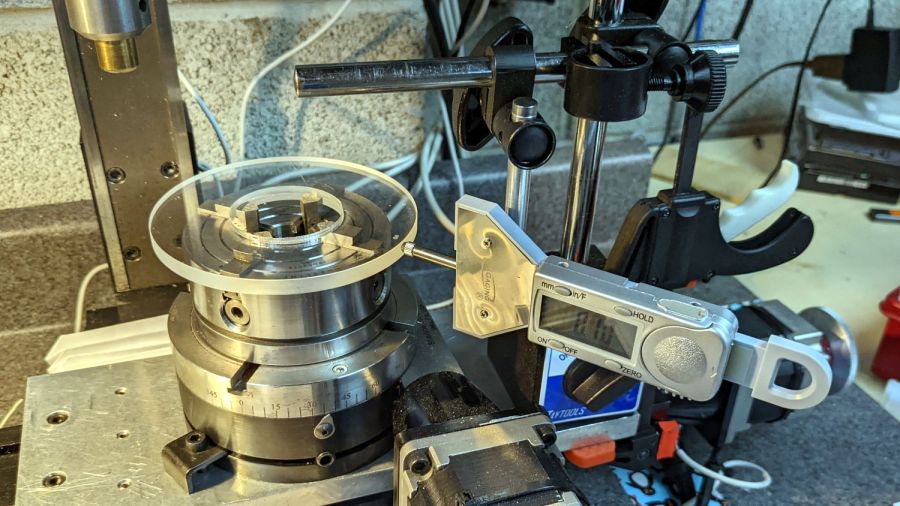
    Coaster Epoxy Rim - centering fixture plate
    Coaster Epoxy Rim – centering fixture plate

    Admittedly, the centering need not be so precise, but practice makes perfect.

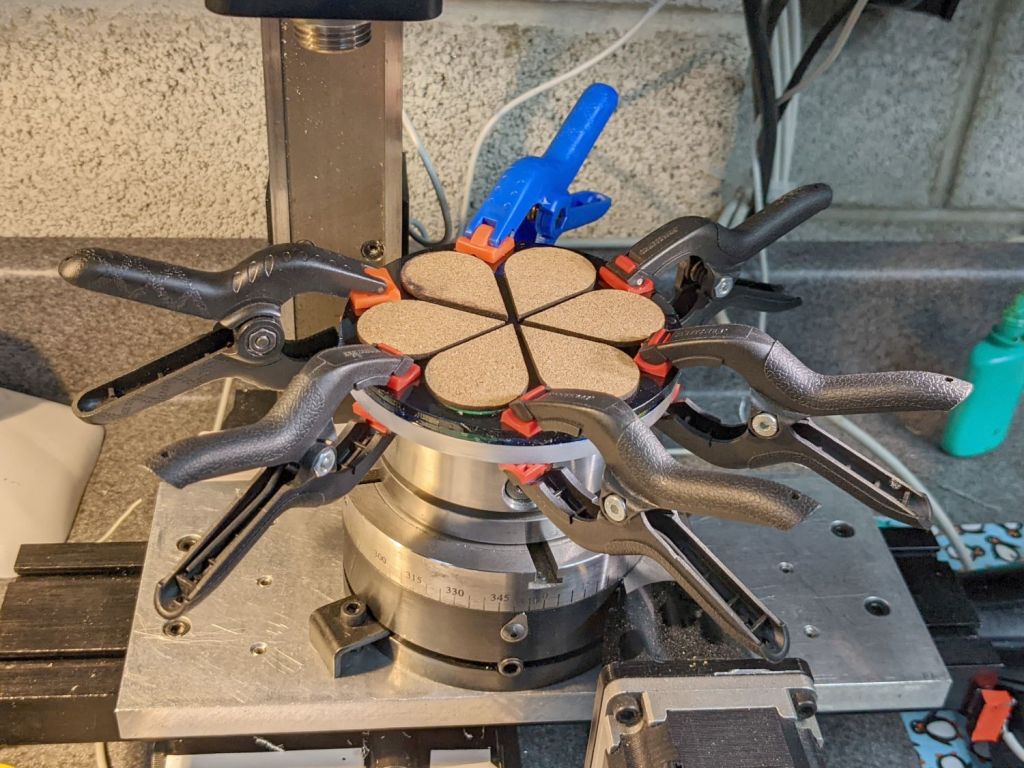
    A few strips of double-stick tape affixed the test coaster, with too many clamps applied to settle it in place:
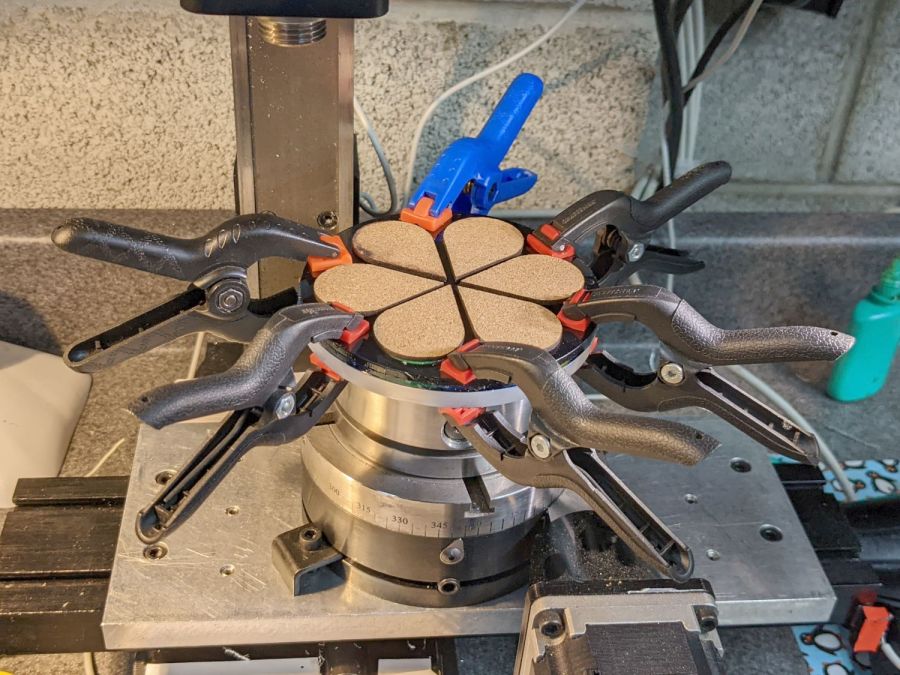
    Coaster Epoxy Rim - Sherline clamp setup
    Coaster Epoxy Rim – Sherline clamp setup

    A few sissy cuts demonstrated the tape lacked sufficient stickiness to hold the coaster in place against the milling cutter’s uplift. I managed to mill most of the perimeter with those clamps in place, moving each one from just ahead of the cutter to just behind the cutter.

    That way lies both madness and organic damage.

    There are better tapes and better adhesives, all trading off a really sticky fixture against difficulty extracting an undamaged part.

    A more complex circular fixture with built-in mechanical edge clamps extending around a major part of the perimeter seems like entirely too much of a diversion for a couple of obscene-gerund coasters.

    A live center in a lathe tailstock applies pressure in exactly the right place to hold a circular object against a fixture while slicing off the entire perimeter, with the only problem being centering the object.

    Maybe shimming the fixture against one chuck jaw will suffice?
  • Acrylic Coasters: Edge Finishing, Round 1

    Acrylic Coasters: Edge Finishing, Round 1

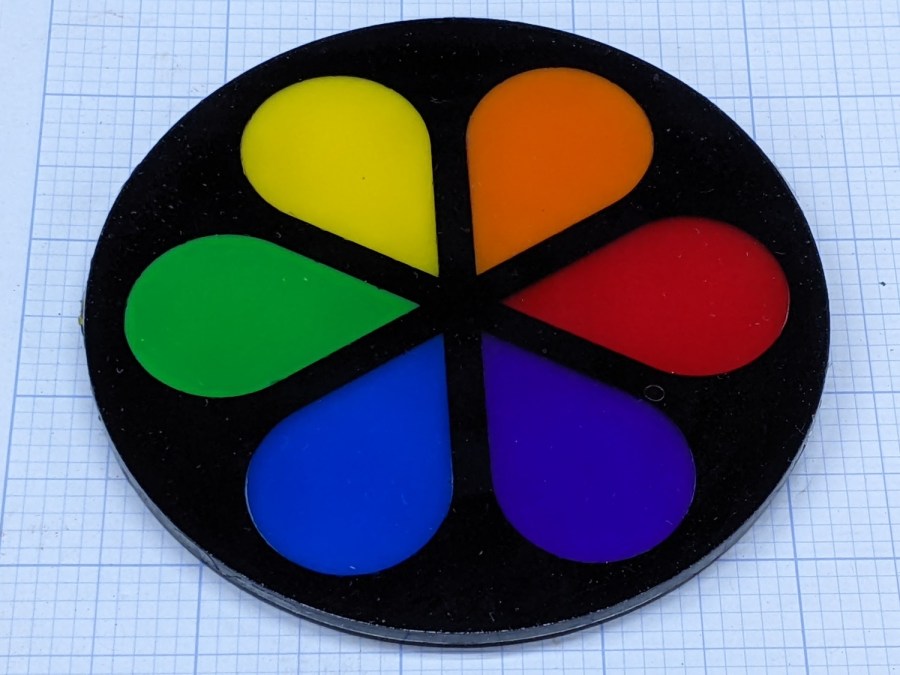
    Assembling acrylic pieces inside an epoxy-filled frame produces nice results:

    Cut Acrylic Coaster - bottom
    Cut Acrylic Coaster – bottom

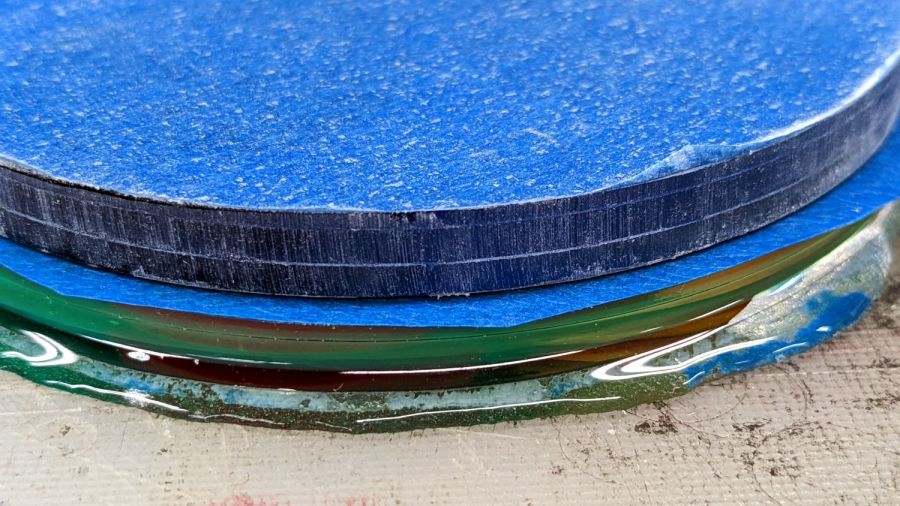
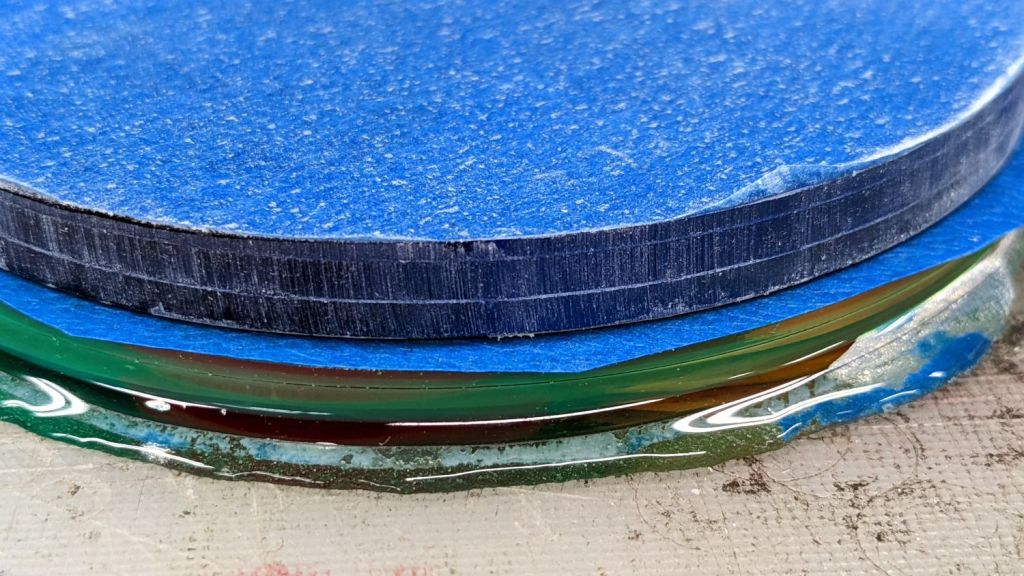
    The gotcha: epoxy oozes from between the layers to form a slobbery edge.

    I tried introducing a similar coaster to Mr Disk Sander with reasonable results:

    Coaster Epoxy Rim - disk sanded rim
    Coaster Epoxy Rim – disk sanded rim

    The coaster on the bottom has its original generous epoxy slobber around the acrylic disks.

    Assembling the layers inside a mold seems fraught with messiness, particularly if I eventually want to get it out of the mold.

    Using a finer abrasive disk would certainly help, but the whole process requires intense concentration and is utterly unforgiving of mistakes.

    I figured I could attach the coaster to a lathe fixture and turn the rim, so I made a fixture from scrap acrylic:

    Coaster Epoxy Rim - cutting fixture plate
    Coaster Epoxy Rim – cutting fixture plate

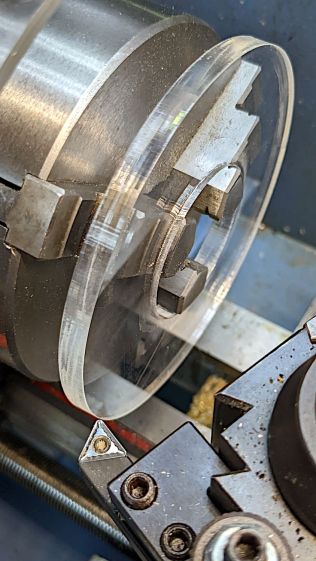
    The lathe chuck inside jaws fit inside the hole and I set up to turn the OD to a nice even diameter:

    Coaster Epoxy Rim - turning fixture rim
    Coaster Epoxy Rim – turning fixture rim

    The fixture sat flush against the middle step of the jaws with plenty of clearance from the outer step, so I could turn the OD without whacking the carbide insert.

    I planned to grab the OD and turn the ID to a (reasonably) concentric finish, but the outer jaws have an absolute diameter limit a few millimeters less than the 4 inch = 101.4 mm coaster OD.

    After some increasingly desperate attempts, I concluded that, lacking a 4-jaw lathe chuck, there was no way to mount the coaster on the fixture and have it sit it even approximately centered on the spindle axis.

    I do, however, have a 4-jaw chuck for the Sherline mill, normally used with the rotary table.

    Next up: Round 2.

  • OMTech 60 W Laser: Adjustable Honeycomb Stops

    OMTech 60 W Laser: Adjustable Honeycomb Stops

    When you (well, I) get fussy about angular alignment on the laser cutter’s honeycomb platform, an adjustable stop or two may come in handy:

    Laser Honeycomb - Adjustable Pins
    Laser Honeycomb – Adjustable Pins

    That’s a serving suggestion based on a true story, because I really wasn’t all that fussy about precise engraving alignment on those signs.

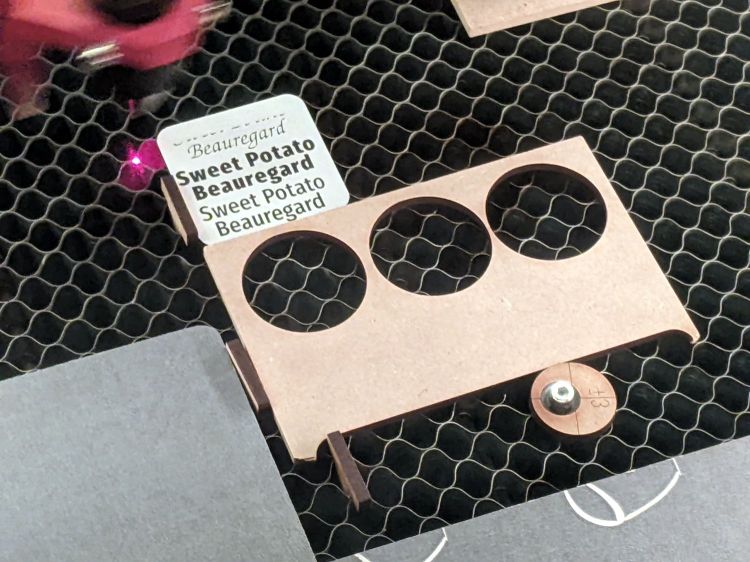
    A more typical situation on a smaller scale:

    Laser Honeycomb - Adjustable Pins - engraving
    Laser Honeycomb – Adjustable Pins – engraving

    The scrap of MDF with three holes provides angular alignment for the little two-color acrylic test coupon, so you can tuck successive squares into the corner, hammer them with slightly different patterns, then compare the results.

    The stops are an off-center hole (the ±3 text gives the offset) in an MDF disk with an acetal post:

    Laser Honeycomb - Adjustable Pins - detail
    Laser Honeycomb – Adjustable Pins – detail

    The 3 mm SHCS provides a convenient way to turn the post and disk, so the threading isn’t critical. Sufficiently snug threading will let you turn the screw counterclockwise without loosening it, but that surely depends on how tightly the 8 mm section fits into the honeycomb. The larger top section is 9mm, cleaned up from the rod’s nominal 3/8 inch OD, for a jam fit into the 8.8 mm + 0.1 mm kerf hole.

    The SVG images as a GitHub Gist:

    Loading
    Sorry, something went wrong. Reload?
    Sorry, we cannot display this file.
    Sorry, this file is invalid so it cannot be displayed.

    The ±5 mm offset disk may be more useful with larger items and now you know where those three holes came from.

  • Tour Easy: Terracycle Chain Idler Bushing

    Tour Easy: Terracycle Chain Idler Bushing

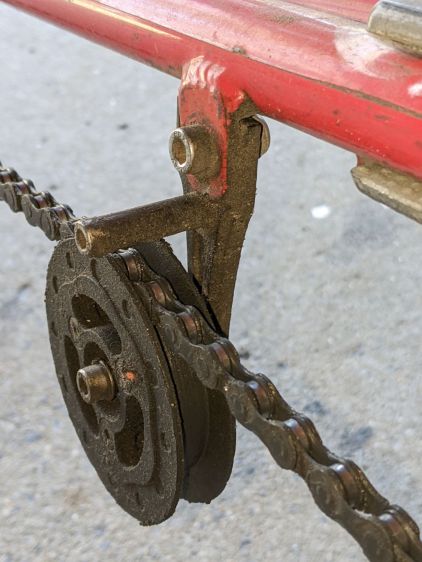
    It turns out that under rare conditions, triggered by fumbling a front derailleur shift, the upper chain section (out of the picture on the top) can whip vertically enough to jam between the Terracycle Idler’s mounting bolt and its longer chain retaining pin:

    Tour Easy - Terracycle idler
    Tour Easy – Terracycle idler

    Whereupon the chain falls off the chainring, jams firmly between the spider and the crank, and brings the proceedings to a halt.

    Having finally figured out the cause, I made a simple bushing to fit around the mounting bolt, reduce the gap, and (I hope) eliminate the problem:

    Tour Easy - Terracycle idler bushing
    Tour Easy – Terracycle idler bushing

    Given its rarity, I will need a few more years to verify the solution.

    Might get around to cleaning the chain one of these days, too …

  • MTD Snowthrower Friction Drive Rebuild

    MTD Snowthrower Friction Drive Rebuild

    During the last snowstorm of the season, the venerable MTD snowthrower carved a trench out of the garage and across the driveway, then abruptly stopped moving. The motor roared and the auger turned, but the drive clutch handle had no effect, so I dragged its carcass into the garage and we completed the mission by hand.

    Popping the belly plate on the next sunny day revealed the problem: the jam nut (part 34) anchoring the Friction Disk Wheel (part 28) to the Friction Wheel Bracket Assembly (part 32) had gone missing:

    MTD Snowblower - page 26 - friction drive parts
    MTD Snowblower – page 26 – friction drive parts

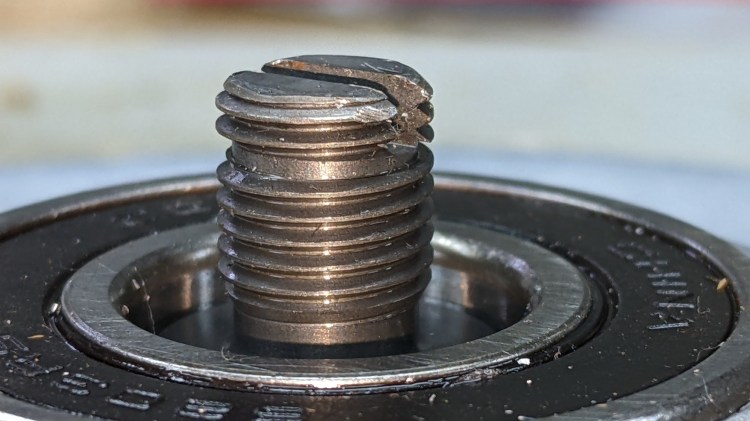
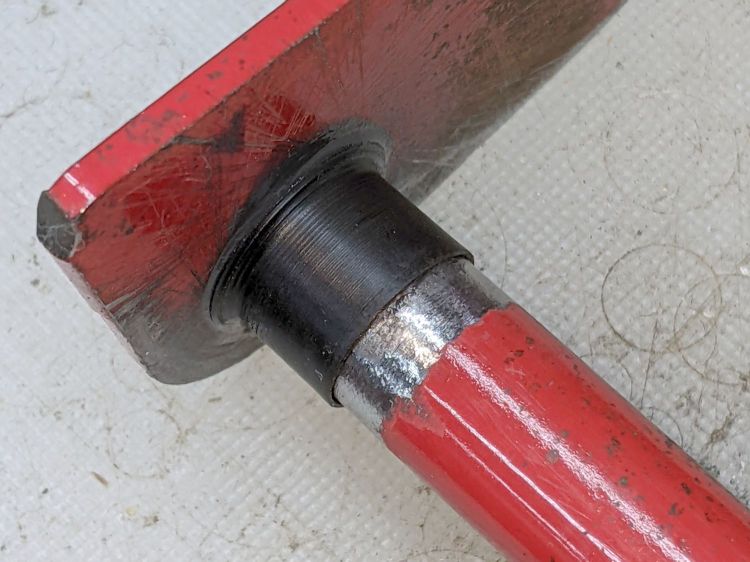
    Worse, the Wheel’s threaded shaft spent some time rattling around in the Bracket while chewing up its thread:

    MTD Snowthrower - friction disk wheel - damaged thread
    MTD Snowthrower – friction disk wheel – damaged thread

    This would ordinarily be No Big Deal, but what you see of the shaft is all you get: it rotates freely in the bearing embedded in the Wheel with no way to hold it while cleaning up its threads.

    Having already promised to replace the Wheel, I installed the new Wheel using a castle nut secured with a generous dollop of red Loctite, then tapped two of its castellations into the shaft’s slot as a mechanical anchor:

    MTD Snowthrower - friction disk wheel - castle nut
    MTD Snowthrower – friction disk wheel – castle nut

    I really wanted to lay a nice hard roll pin along that slot through the nut, but there’s no convincing way to secure such a thing without a second nut. Maybe next time?

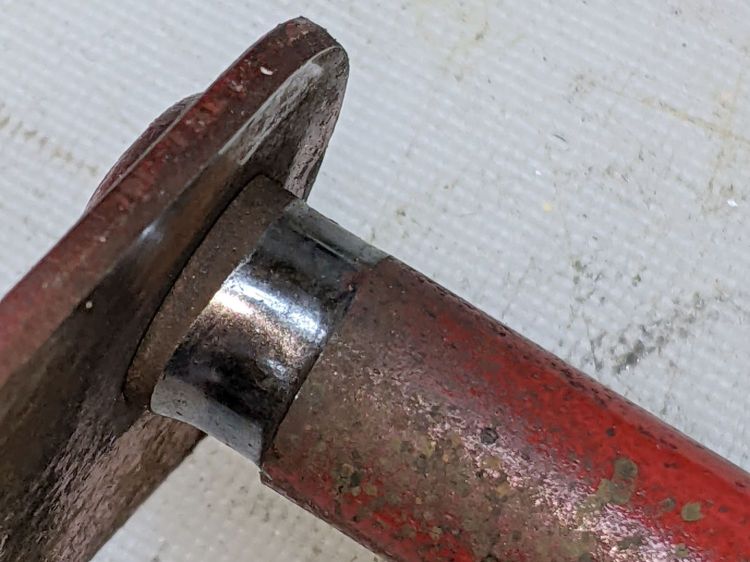
    While I had the drive train apart, the sad state of the Wheel Shift Rod Assembly (part 29) became apparent:

    MTD Snowthrower - wheel shift rod - worn
    MTD Snowthrower – wheel shift rod – worn

    I scuffed up the shiny wear mark, turned a suitable acetal bushing, filled the trench with epoxy, and squished the bushing in place:

    MTD Snowthrower - wheel shift rod - acetal bushing
    MTD Snowthrower – wheel shift rod – acetal bushing

    The flange might hold it in place against the Frame Shift Bracket (part 18), which snugly contains the rest of the bushing against the epoxy, so the whole affair might outlast the next season’s first snowstorm. We shall see.

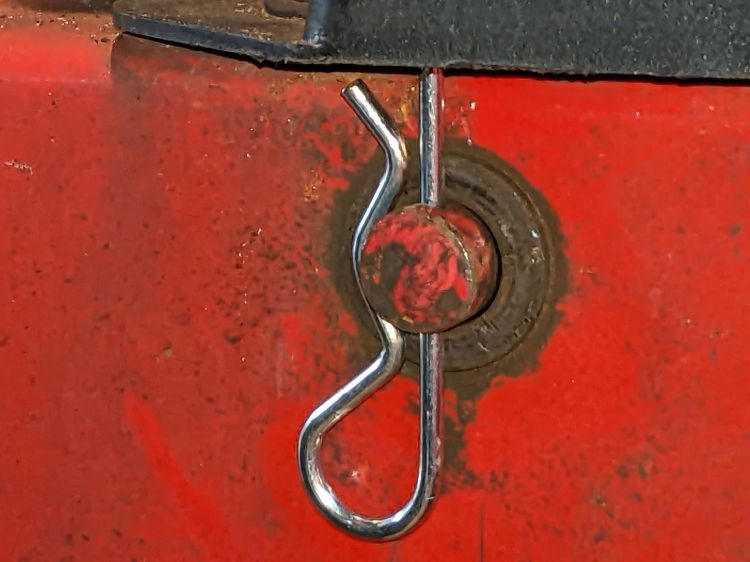
    A nice new R-clip secures the Friction Wheel Bracket Assembly in place against the old washer:

    MTD Snowthrower - friction bracket R-pin
    MTD Snowthrower – friction bracket R-pin

    You might want to insert it the other way, but the black plastic housing above it extends just far enough to thwart your (well, my) desire.

  • Ottlite Conversion: Mini-Lathe LED Lighting

    Ottlite Conversion: Mini-Lathe LED Lighting

    An ancient Ottlite fluorescent floor lamp (one of a pair bought during a closeout sale at a minute fraction of their absurd sticker price) finally aged out. Pondering what to do with the carcass led to this discovery:

    Ottlite conversion - LED panel fit check
    Ottlite conversion – LED panel fit check

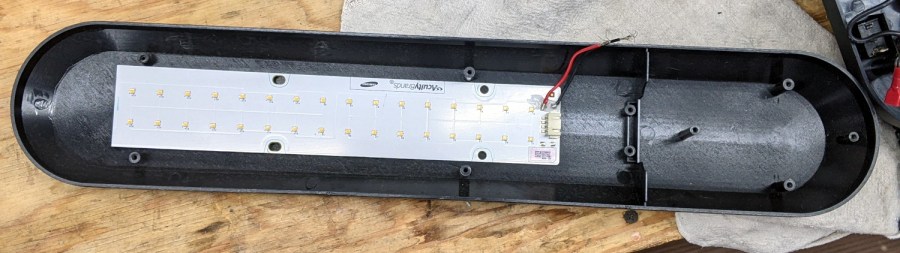
    Half of a Samsung (!) LED panel (presumably sheared by the surplus supplier) fit so perfectly in place of the fluorescent tube that I just had to make it happen.

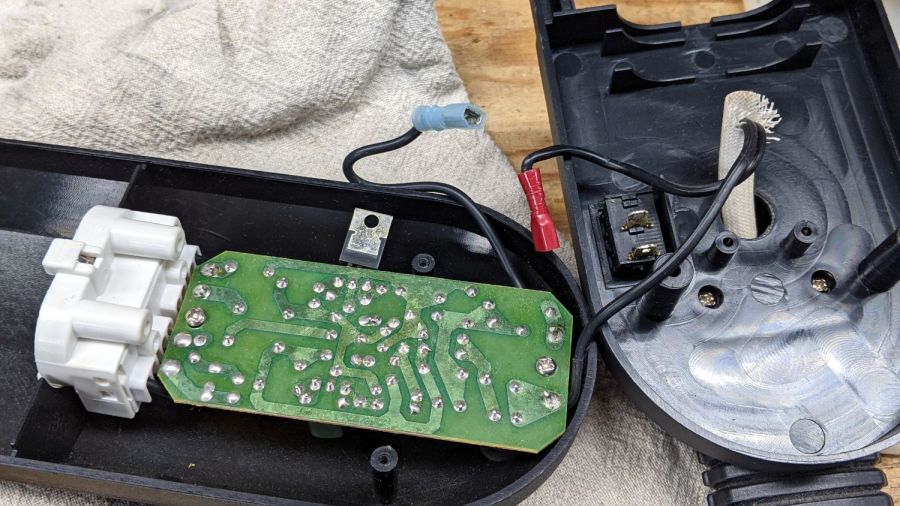
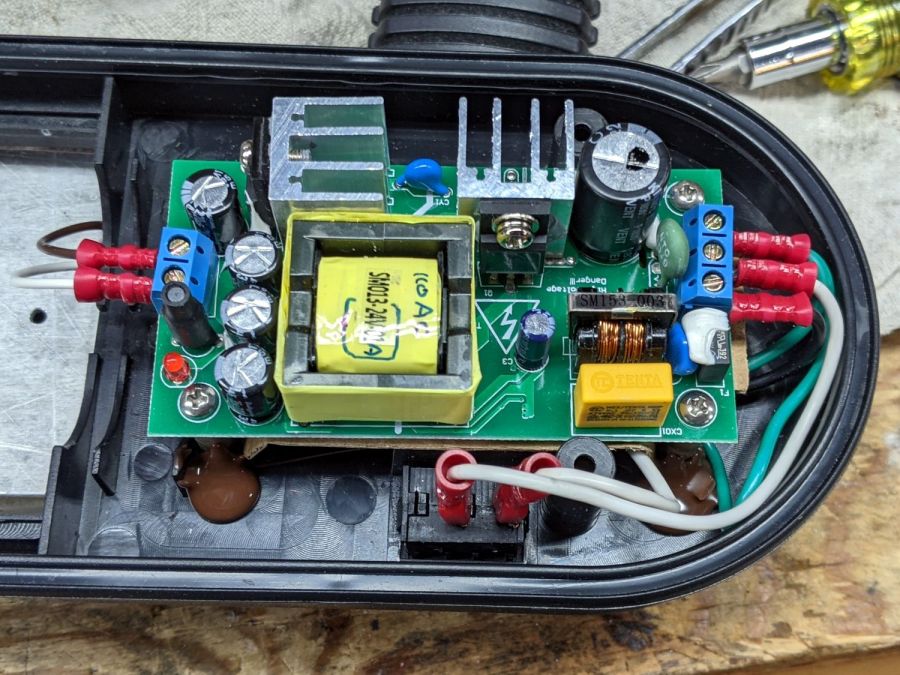
    The original fluorescent ballast mounted in the smaller compartment:

    Ottlite conversion - OEM fluorescent driver
    Ottlite conversion – OEM fluorescent driver

    I like the air-cooled triac sticking off the side of the PCB.

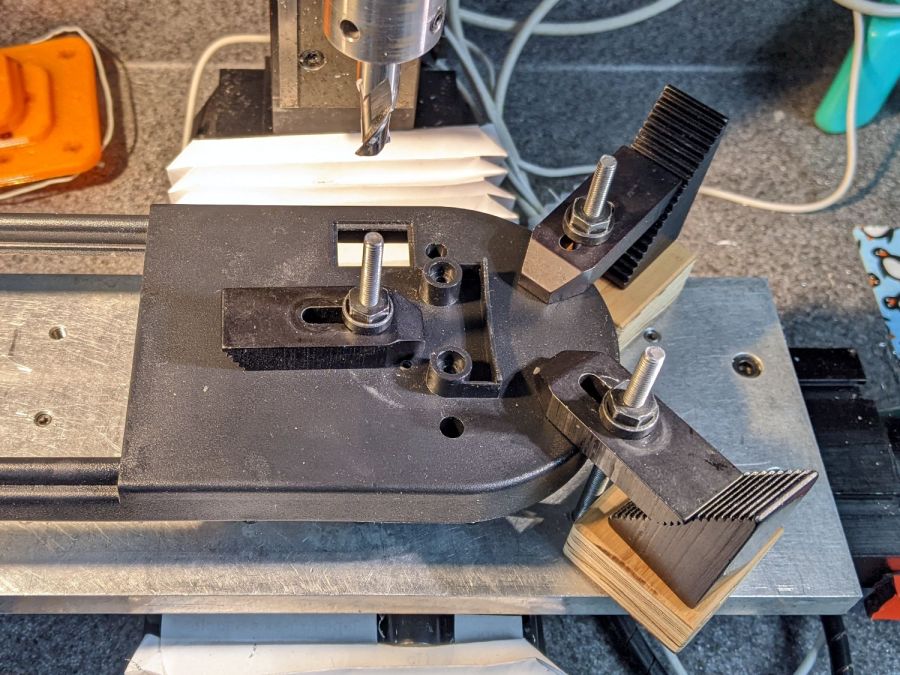
    The lamp originally mounted parallel to the flex arm, but I wanted it at a right angle, so the molded bracket had to go:

    Ottlite conversion - bracket milling setup
    Ottlite conversion – bracket milling setup

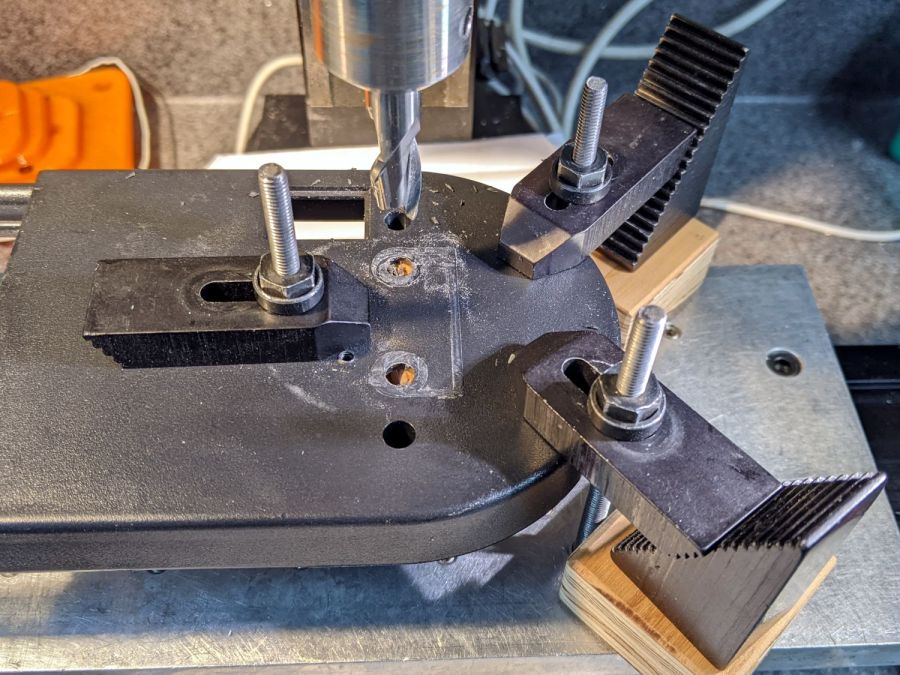
    Which required a few minutes of manual jogging:

    Ottlite conversion - bracket milled
    Ottlite conversion – bracket milled

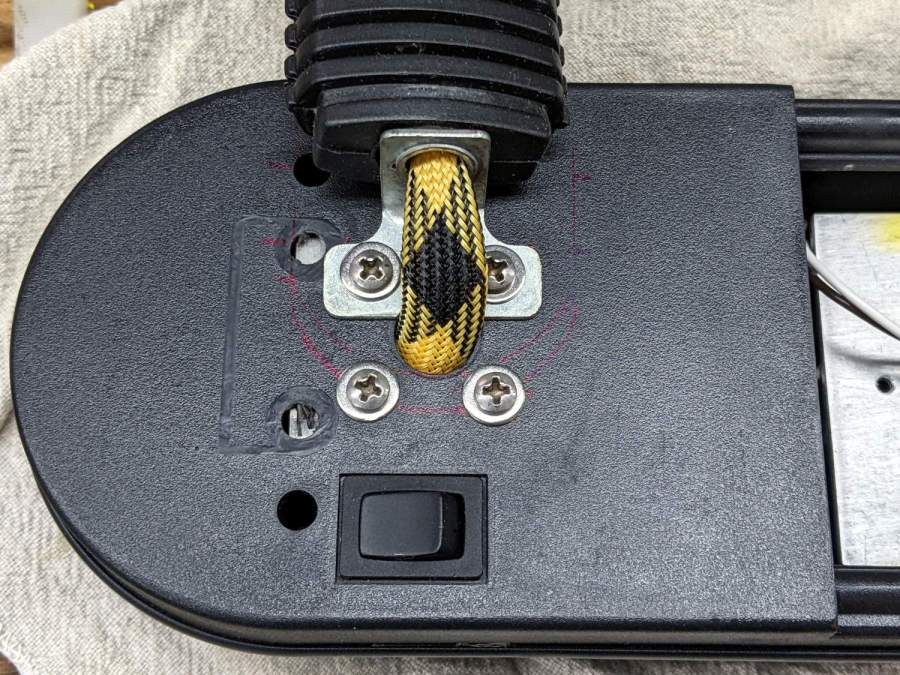
    Some coordinate drilling on the Sherline converted a rectangle of aluminum sheet into a backing plate inside the base (visible through the original holes) to spread the stress over a larger area:

    Ottlite conversion - flex arm mount
    Ottlite conversion – flex arm mount

    The new 24 V 1 A power supply mounts pretty much where the OEM ballast came from, although I had to hack out the molded screw bosses and perch the PCB atop four aluminum standoffs anchored in globs of high-temperature hot-melt glue:

    Ottlite conversion - power supply
    Ottlite conversion – power supply

    You might think the white and black wires on the right are interchanged, because you’re not supposed to switch the neutral, but only if you also insist anybody cares about the colors of wires inside a molded cord. This one came from a nominally good-quality cord with an IEC connector now in the e-waste box: trust yet always always verify.

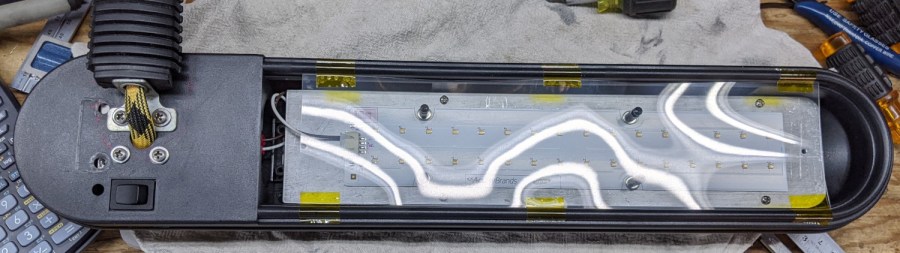
    The LED panel sticks to the aluminum sheet with thermal tape and is clamped in place with a quartet of M2.5 standoffs:

    Ottlite conversion - bottom view
    Ottlite conversion – bottom view

    I’ll eventually make a better cover than a strip of overhead projector film (remember overhead projectors?), as spattering the LEDs with cutting oil and random conductive swarf is Bad Practice™.

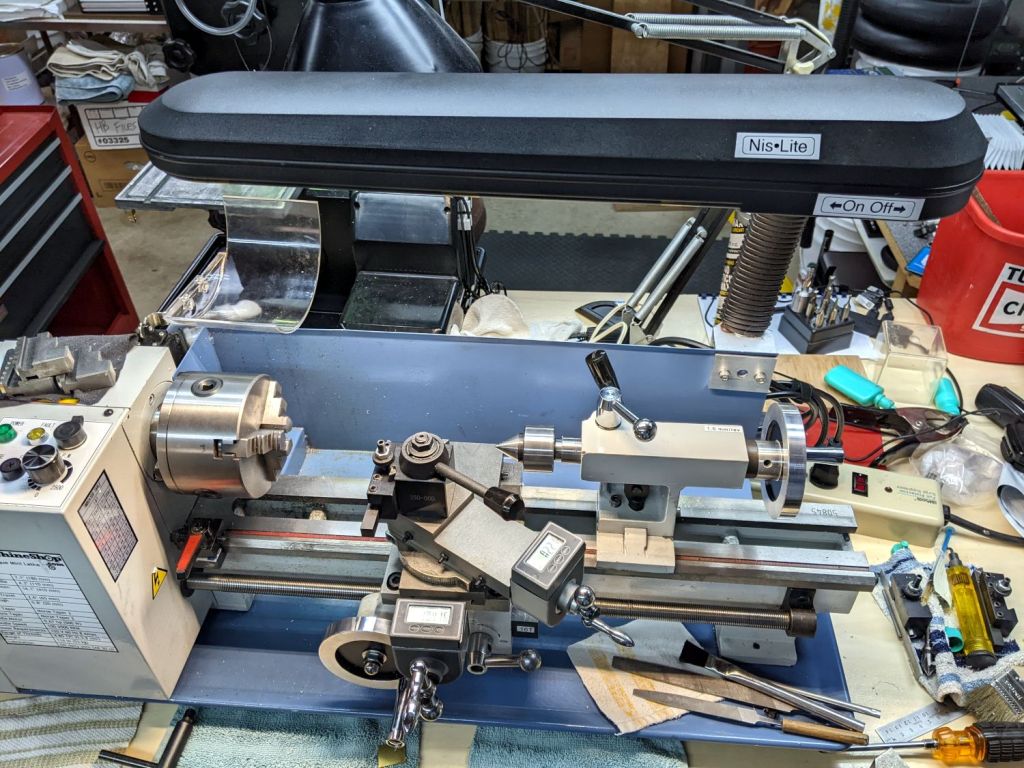
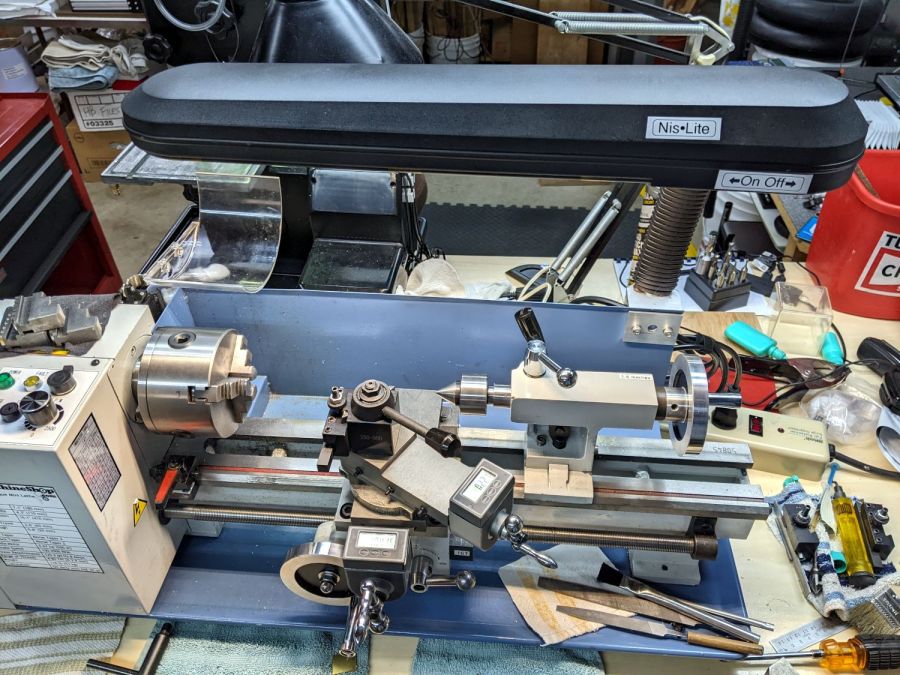
    A little more cutting and drilling produced an angle bracket for the lathe backsplash panel:

    Ottlite conversion - installed
    Ottlite conversion – installed

    Thing looks like it grew there, doesn’t it?

    The end of the backsplash might need a 3D printed bracket to stabilize its right-angle bends and prevent wobbulation, although I’ll wait until that becomes a real problem before solving it.

    The top of that stylin’ lamp shade tapers along its length and, unfortunately, appears directly in front of the MPCNC bench across the basement (out of sight at the top) as I stand at the lathe. Having the shade not align exactly parallel to the bench is more annoying than it really should be; perhaps I can get used to it after spending more time at the lathe.

    I loves me some good LED lighting …

  • Stylus Cover: Tiny Threading Tool

    Stylus Cover: Tiny Threading Tool

    For unknown reasons, Mary’s Pixel 3a phone sometimes does not react to her fingertip, so she now has a stylus for such occasions. The cap covers the delicate fine-tip end (with the weird clear disk), leaving the rounded mesh end exposed to dock the cap.

    I made a pair of covers for the mesh end, mostly because the styli came in a two-pack and I carry mine in a pocket pouch that will likely abrade the mesh:

    Stylus Covers
    Stylus Covers

    They’re made from 3/8 inch = 9.52 mm acetal / Delrin rod, turned down to match the 9.4 mm stylus OD. The thread resembles a standard M8×1.25 with very rounded crests:

    Stylus Covers - thread
    Stylus Covers – thread

    While it’s possible to tap such a thinwalled cylinder with some exterior reinforcement, the (standard / normal / regulation / crispy) thread form of the hitherto entirely unused M8×1.25 tap cowering in the back of the drawer seemed a poor fit and, not being a bottoming tap, it wouldn’t cut full threads where they’re needed.

    Besides, what’s the fun in that?

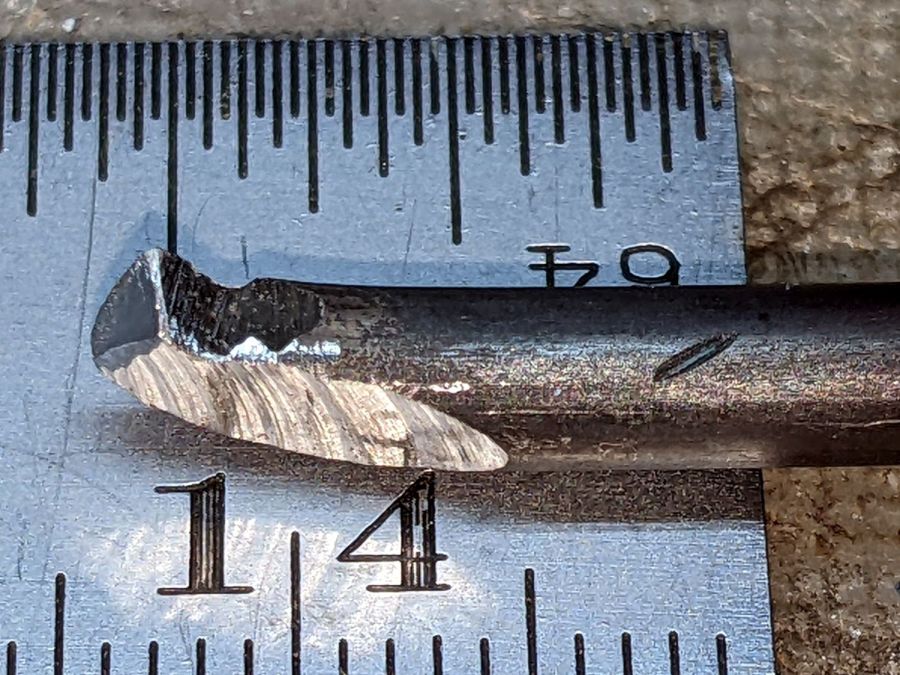
    Lacking a threading tool small enough to fit inside the 7.4 mm bore, I gnawed one from a snippet of spring steel wire harvested from a dead box spring. The first pass was much too wide, but gave me the opportunity to make a few mistakes while shaping the tip:

    Tiny Threading Tool - first pass
    Tiny Threading Tool – first pass

    The discoloration on the shank betrays the torching required to knock the hardness down to something file-able. A little more Dremel cutoff wheel / grinder / file action produced a tiny tooth matching the rounded thread form on the stylus:

    Tiny Threading Tool - second pass
    Tiny Threading Tool – second pass

    A side / bottom view shows the crude grinding and excessive angles:

    Tiny Threading Tool - side view
    Tiny Threading Tool – side view

    A real machinist would harden and temper it, but I didn’t bother for a tool cutting two non-critical threads in plastic.

    Somewhat to my surprise, the mini-lathe can cut a 1.25 mm thread without any fancy metric change gears: a simple 35-40-45-50 train did the trick. Running dead slow gave me enough time to poke the power button and let it coast down as it approached the carriage stop marking the end of the thread: cutting plastic is much less exciting than, say, Real Steel.

    When all the cutting was done, I beveled the cap for my stylus to fit better into the bottom of the pouch, but that’s definitely in the nature of fine tuning:

    Stylus Cover - bevels
    Stylus Cover – bevels

    The second one went much faster and I should have made a third while I was hot.

    A doodle giving the key dimensions:

    Stylus Cover - dimensions
    Stylus Cover – dimensions

    Another day of Quality Shop Time™!