Ed Nisley's Blog: Shop notes, electronics, firmware, machinery, 3D printing, laser cuttery, and curiosities. Contents: 100% human thinking, 0% AI slop.
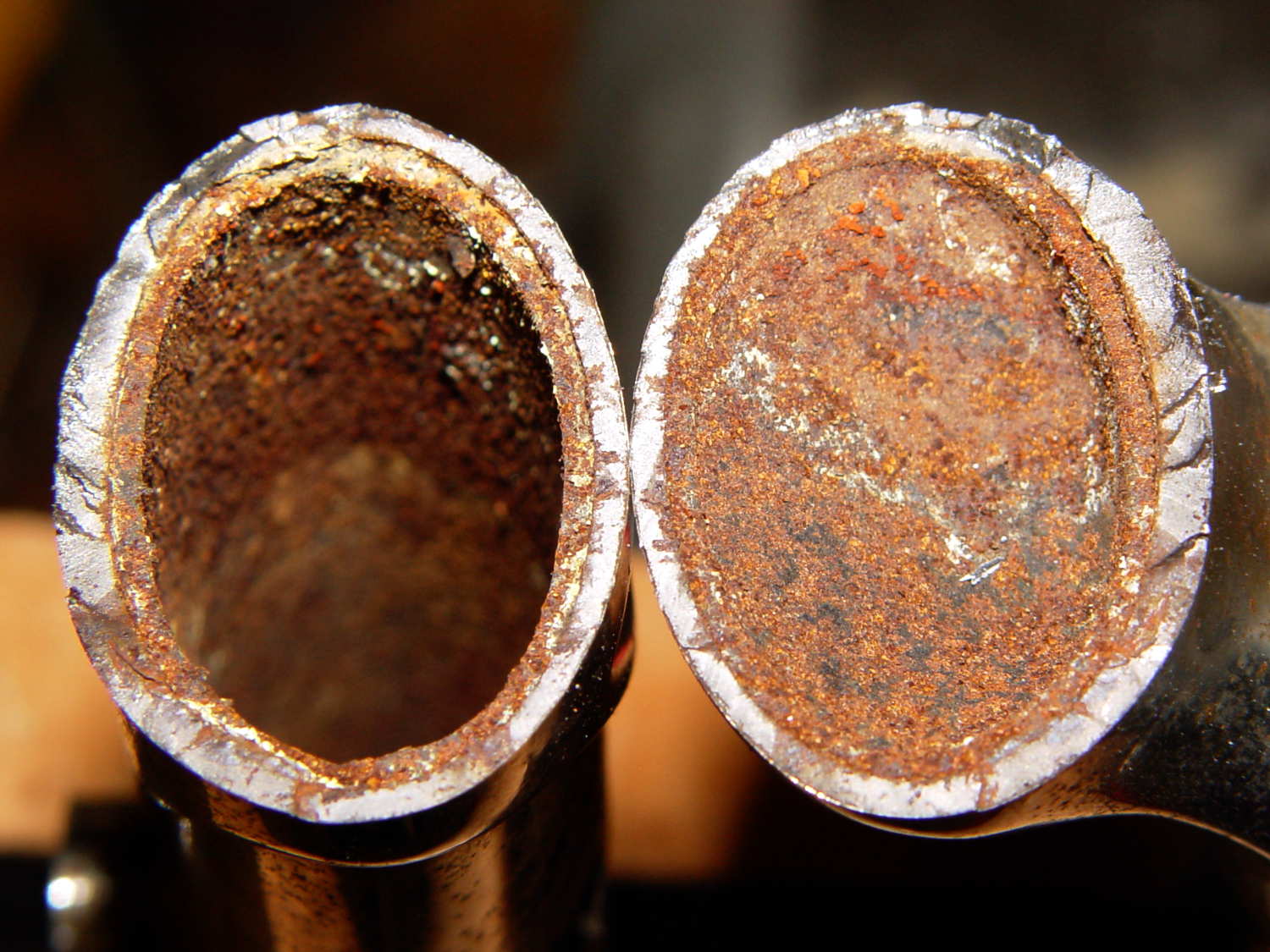
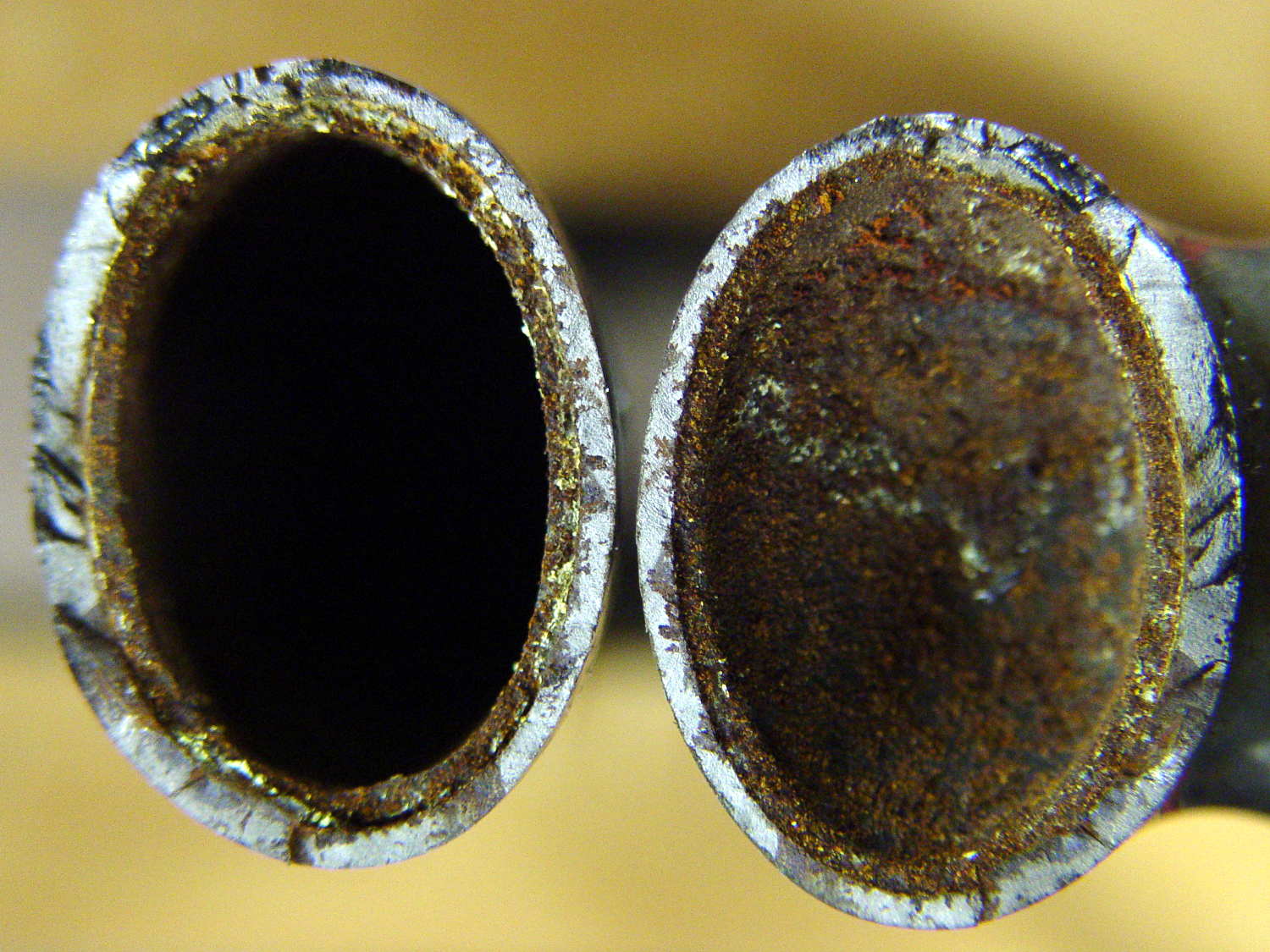
Looks rather grotendous in there, doesn’t it? Yeah, show me the interior of your fork…
The front is at the top, blade on the left and crown on the right. The little shiny rectangle at 1 o’clock on the crown was probably the last fragment holding the blade in place.
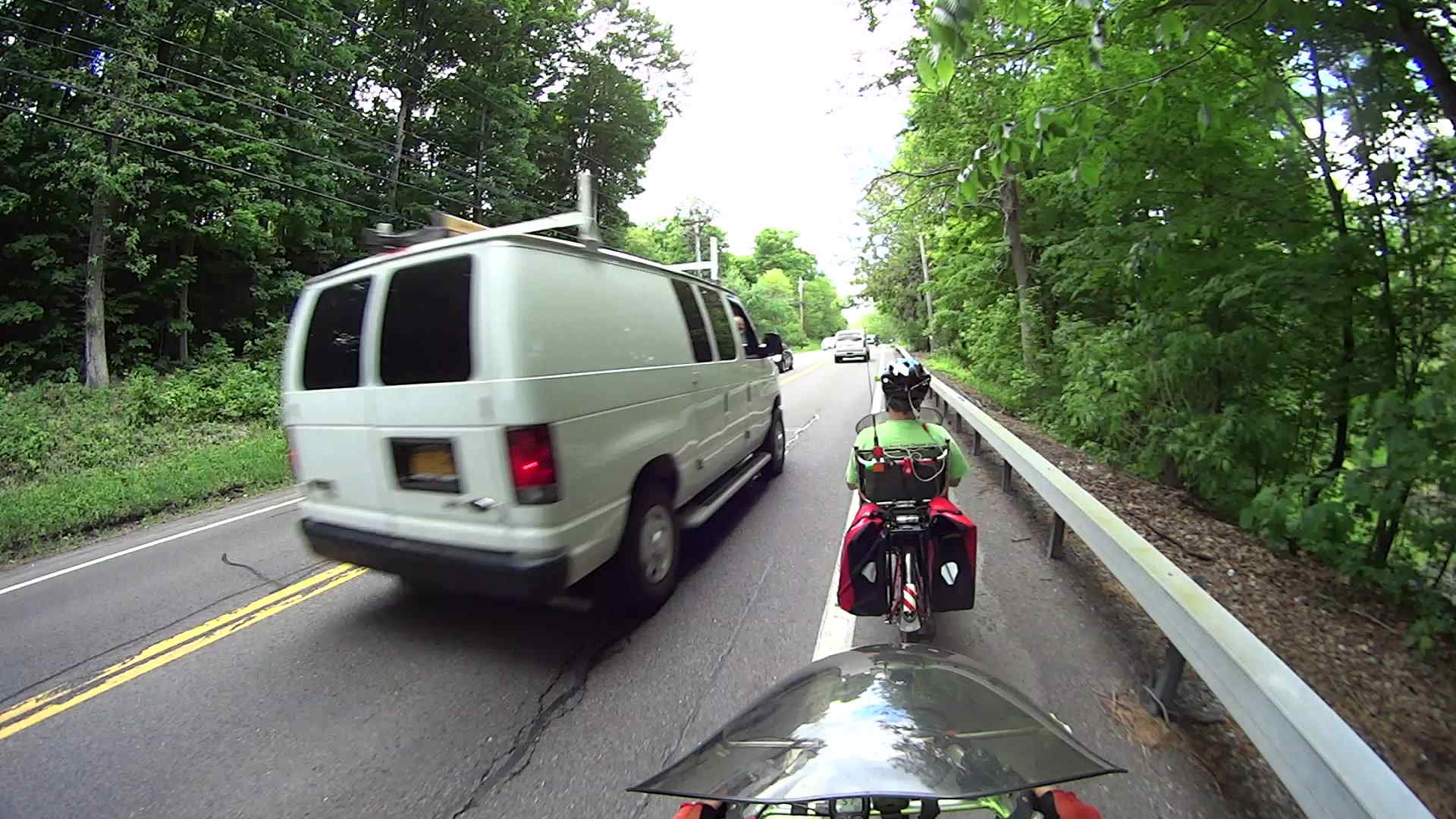
With the green left-turn arrow indicating red for opposing traffic, everybody’s in the proper position. I’m crossing the stop line and leaning into the turn at about 15 mph:
Right On Red – Tucker at Friendly – 0 sec
New York State allows a right turn on red, but you’re supposed to stop and yield to other traffic. In that picture, the oncoming car is definitely stopped.
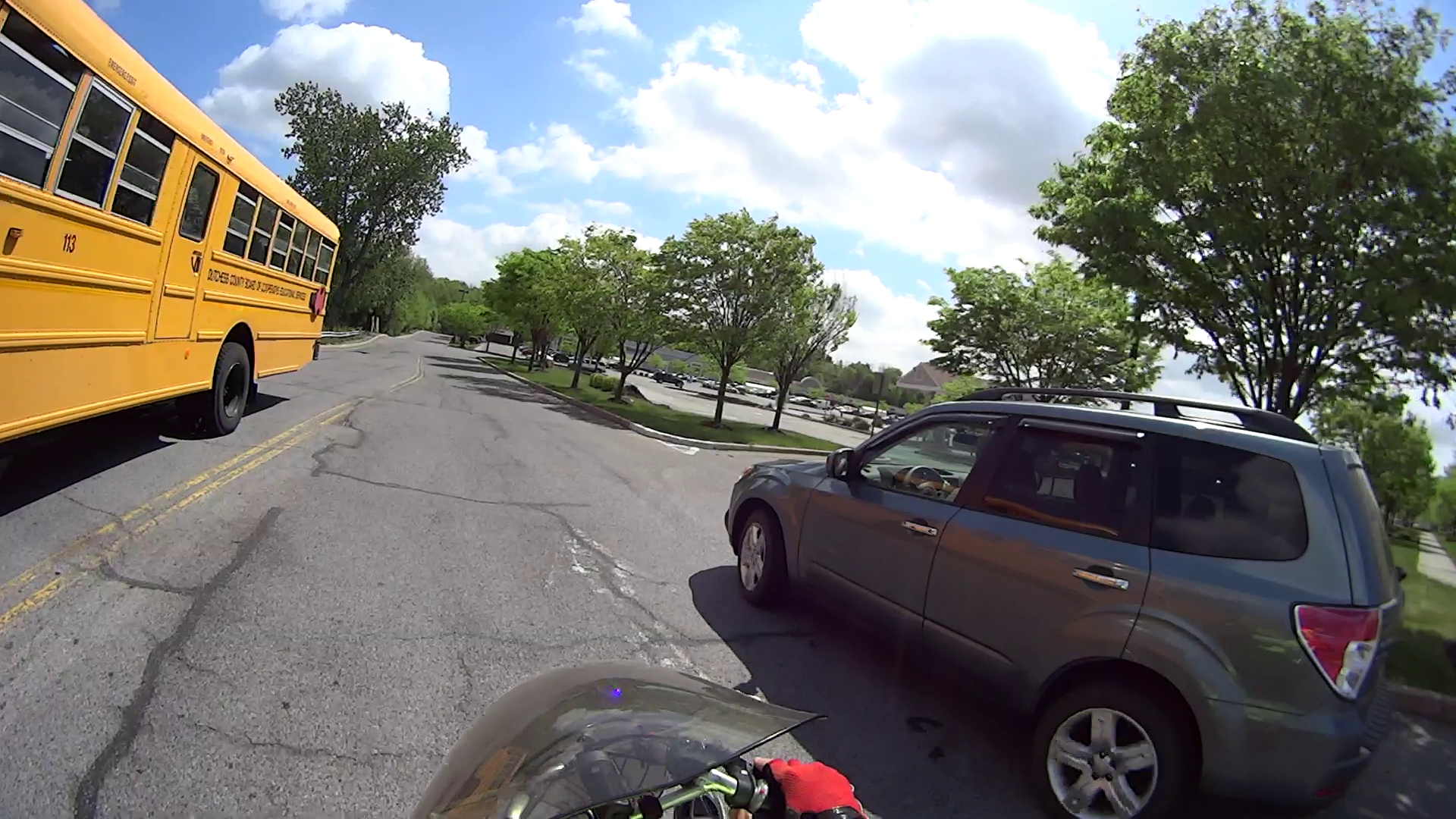
Three seconds later:
Right On Red – Tucker at Friendly – 3 sec
She hugged the curb to turn into the gas station entrance just to her right, which was the only thing that saved me. Braking hard in a turn slides you under the oncoming vehicle, ramming a school bus head-on is bad form, and sideswiping a car at speed never ends well.
I suppose I just don’t look nearly as fast as I am. Which, given the fairing and spinning feet, is hard to imagine.
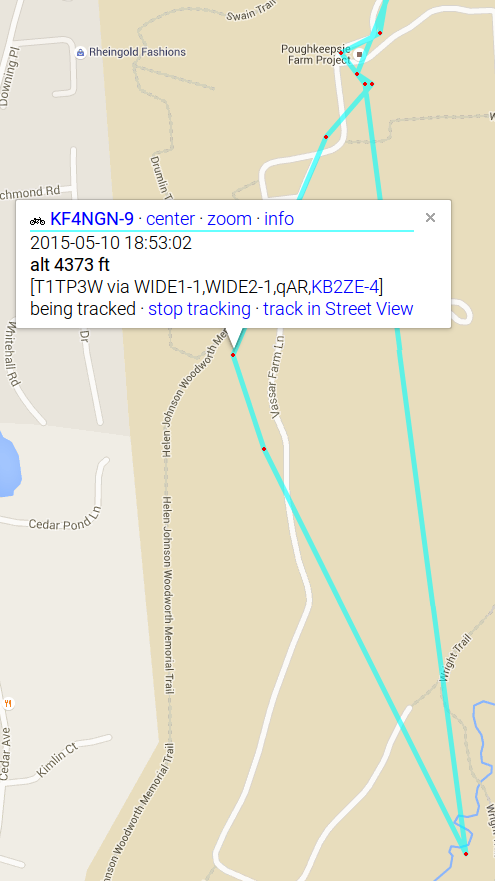
At first glance, I thought Mary had taken a tour of The Great Swamp south of the Vassar Farm gardens:
APRS Bicycle Tracking – Flying High
Having helped put the fence up, I’m absolutely certain nothing growing in the garden could get her to 4373 feet, much less boost the bike that high.
Before that, it seems she did some high-speed tunneling:
2015-05-10 18:17:31 EDT: KF4NGN-9>T1TP4X,WIDE1-1,WIDE2-1,qAR,KB2ZE-4:`eP}nAIb/"/k}
type: location
format: mice
srccallsign: KF4NGN-9
dstcallsign: T1TP4X
latitude: 41.67466666666667 °
longitude: -73.88283333333334 °
course: 345 °
speed: 42.596 km/h
altitude: -371 m
symboltable: /
symbolcode: b
mbits: 101
posresolution: 18.52 m
posambiguity: 0
The bike’s altitude began falling while she was on the way to the garden, from a reasonable 66 meters on the entrance road, bottoming out at -371 m as she hit 42.6 km/h (!), rising to 1341 meters with the bike leaning against a fence post, and returning to 53 meters as she started riding home.
Obviously, you shouldn’t trust consumer-grade GPS tracks without verification: it can get perfectly bogus numbers from fixes with poor satellite geometry. Altitude values tend to be only close, at best, even when you’re not too fussy about accuracy.
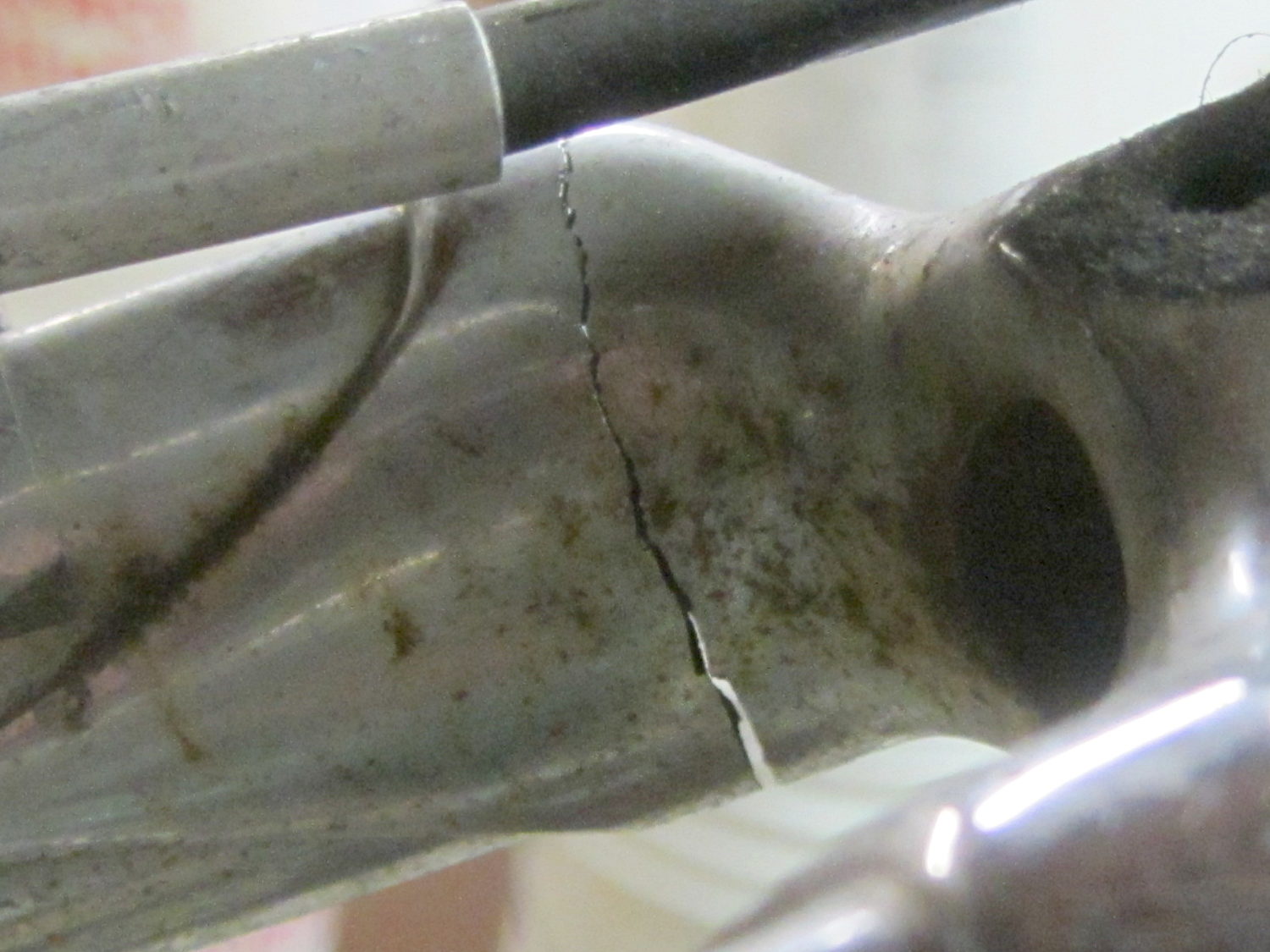
A view from the wheel side shows the crack in my Tour Easy’s fork lug had opened a bit more to the rear, which is about what you’d expect from the forces involved:
Tour Easy – cracked fork lug
Removing the handlebar stem from the fork steerer tube requires removing the fairing, its mounting brackets, the fender, a speed sensor, then snipping cable ties to release all the cables and wires. Minus the prep work, removing the fork from the bike isn’t anything special.
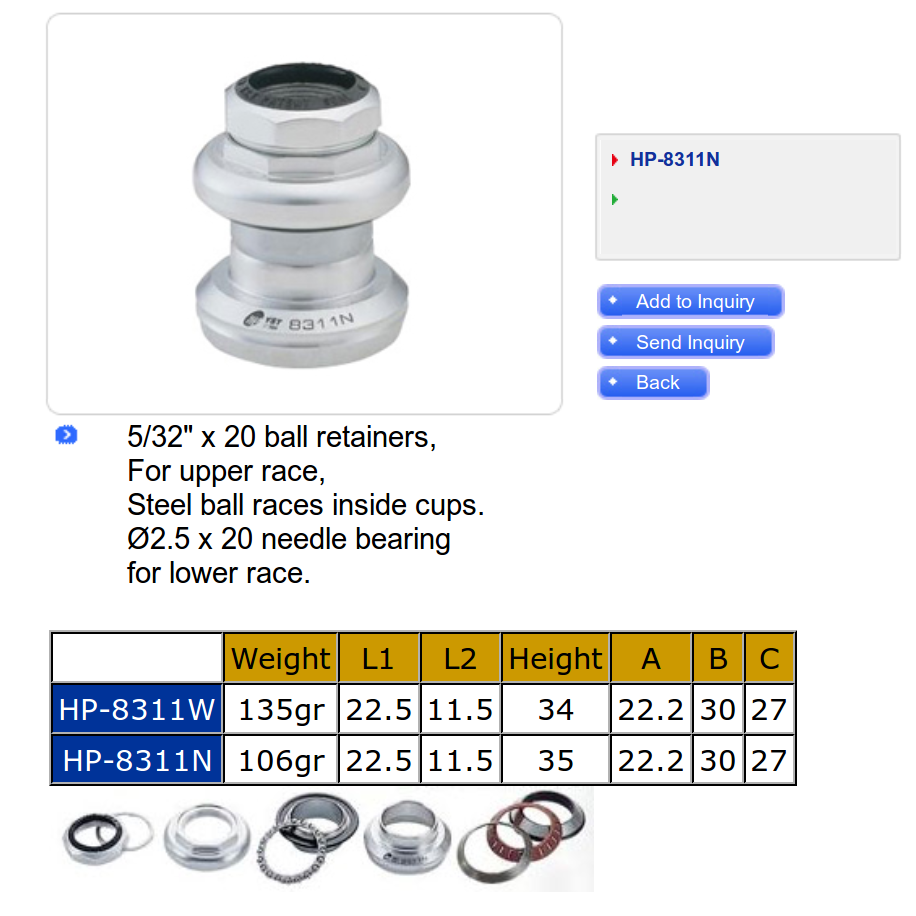
The lower bearing (a YST 8311N in black) has rollers, not balls. The headset has J.I.S. 1 inch dimensions, captured in a screen grab to forestall link rot:
YST 8311N headset data
Which means cheap & readily available ISO standard headsets aren’t a drop-in replacement. The incomparable Harris Cyclery has J.I.S. ball-bearing headsets in stock and their Tange Levin CDS HD1002 needs just 1.6 mm of additional washer to match the YST’s 35 mm stack height…
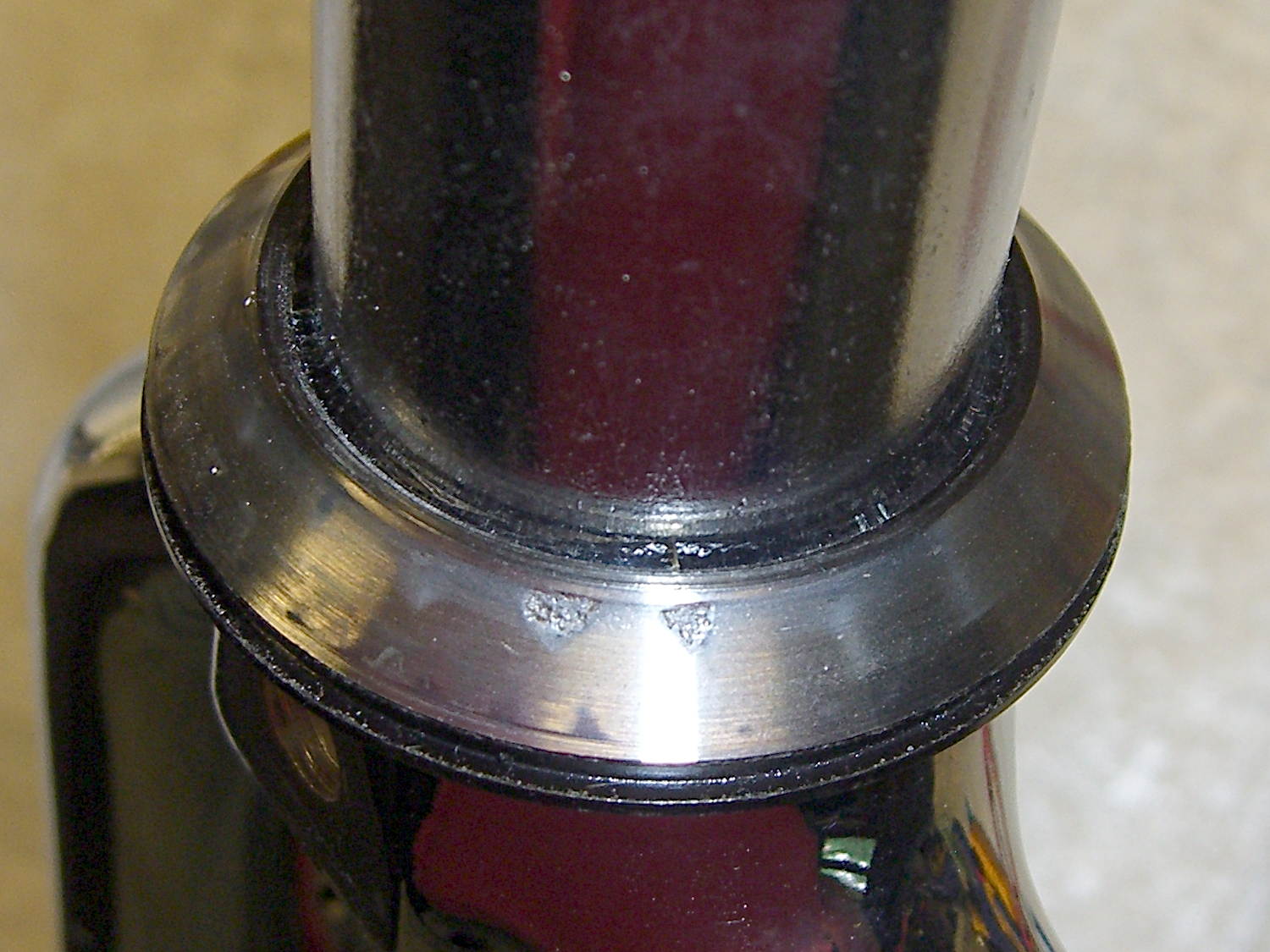
The front side of the crown got rather graunched over the last 14 years, but I punted the problem by rotating the race half a turn to put the eroded spots toward the rear, where they’ll be under minimal stress:
Tour Easy crown bearing – damage
Re-seating the race brought an ancient Headsetter tool from the drawer:
Tour Easy fork with Headsetter
It’s basically galvanized pipe, chamfered on one end, with a set of nuts & washers on a length of all-thread rod just slightly too short for the occasion: this might be the second time I’ve used the thing and I had to supply my own all-thread & nuts. Ah, well, it probably predates the Tour Easy’s design by a decade.
The lower headset race looked to be in pretty good shape, so I left it alone. Normally, such bearing damage gives you indexed steering, but Tour Easy handlebars provide so much lever arm that nothing interferes with the bike’s steering.
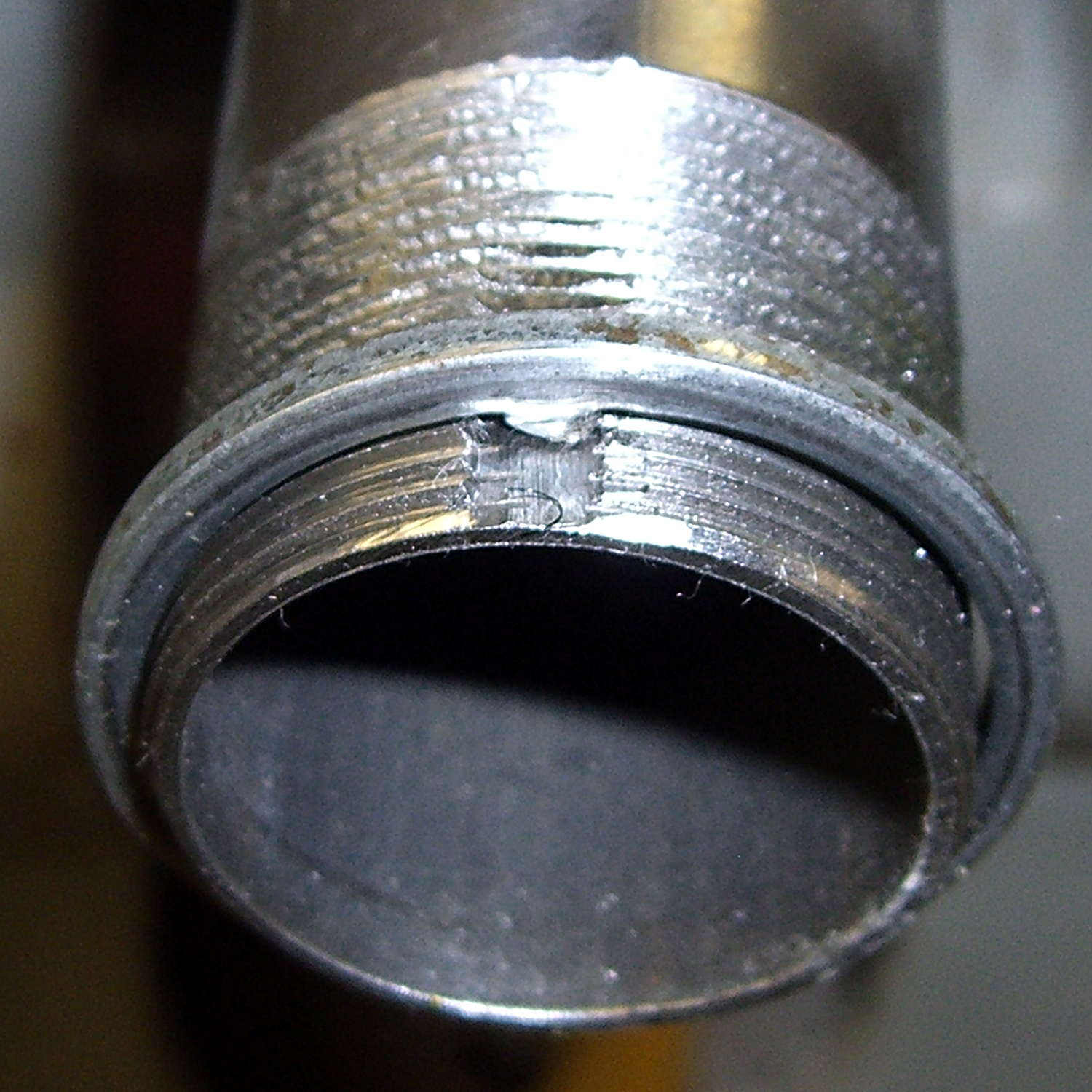
The new fork didn’t have a notch for the keyed washer isolating the locknut from the upper bearing race. The usual advice is to file off the key and apply threadlocker, which makes adjusting the two nuts tedious, so I restored the notch in the steerer threads:
Tour Easy – filed steerer tube key slot
Yes, that’s a lethally sharp steel shaving from the not-very-well-reamed ID curling up in the middle of the notch.
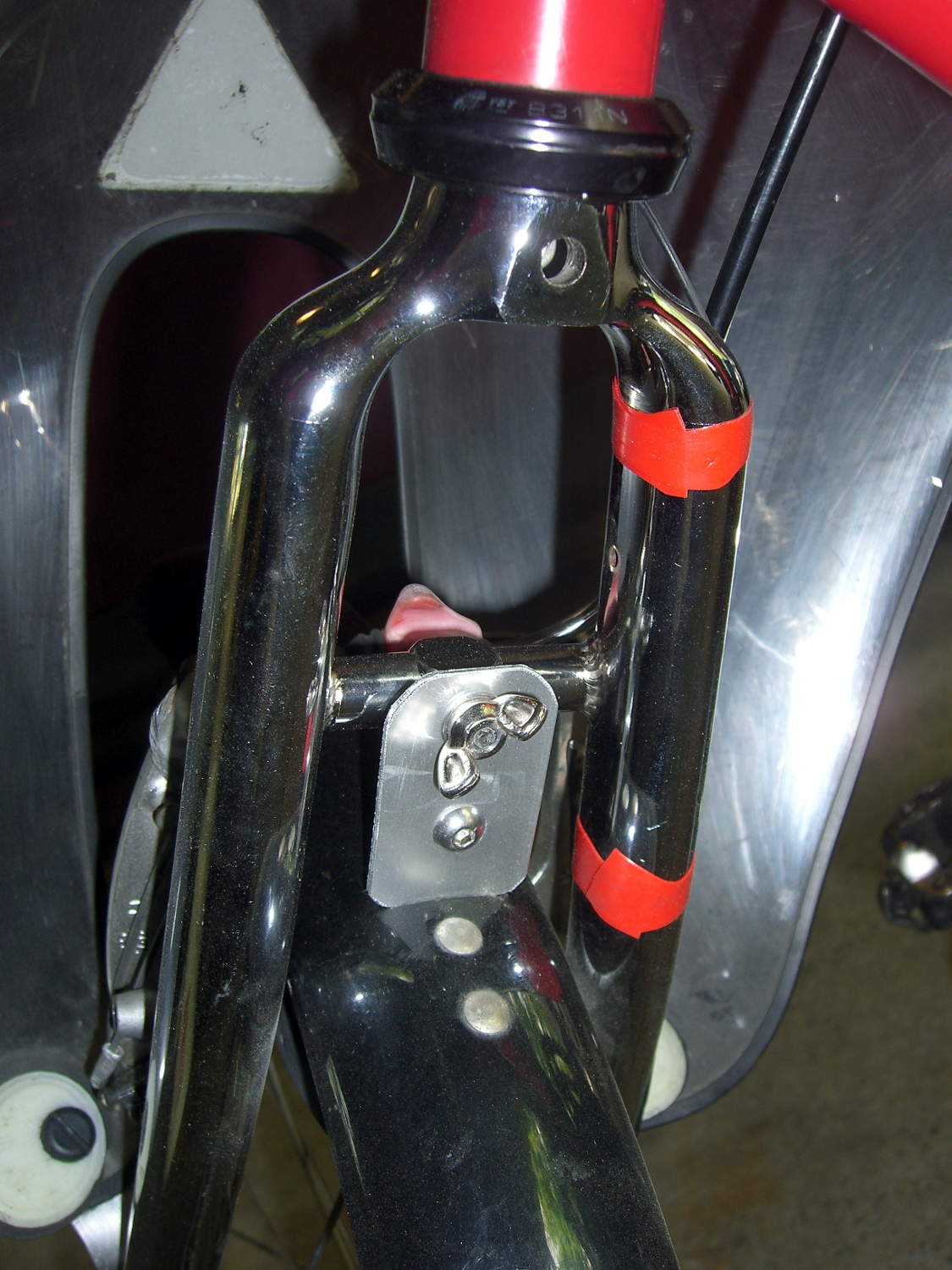
The fender mount bridge on the new fork sits half an inch higher in relation to the brake bosses, putting the fender against the V-brake cable hardware. Anything touching the V-brake messes up the pad-to-rim alignment, so I conjured a snippet of aluminum to lower the fender just enough to clear the brakes:
Tour Easy – new fork – fender extender
I think that calls for a nice 3D printed bracket, too, but the snippet got me back on the bike faster. When I preemptively replace the fork on Mary’s bike, then I’ll do a proper bracket for both of us.
The garish red silicone tape replaces the previous black cable ties. It matches the tube paint surprisingly well and doesn’t look good on the fork, so I’ll replace it with cable ties in due course.
A few miles of shakedown riding settled the crown race against the fork, another 1/6 turn of the upper race / lock nut snugged up the bearings, and it’s all good again.
Wow, it’s great to be back on the bike!
(Due to the vagaries of writing this stuff up ahead of time, there’s actually two weeks of realtime between the post that appeared on Monday and this one.)
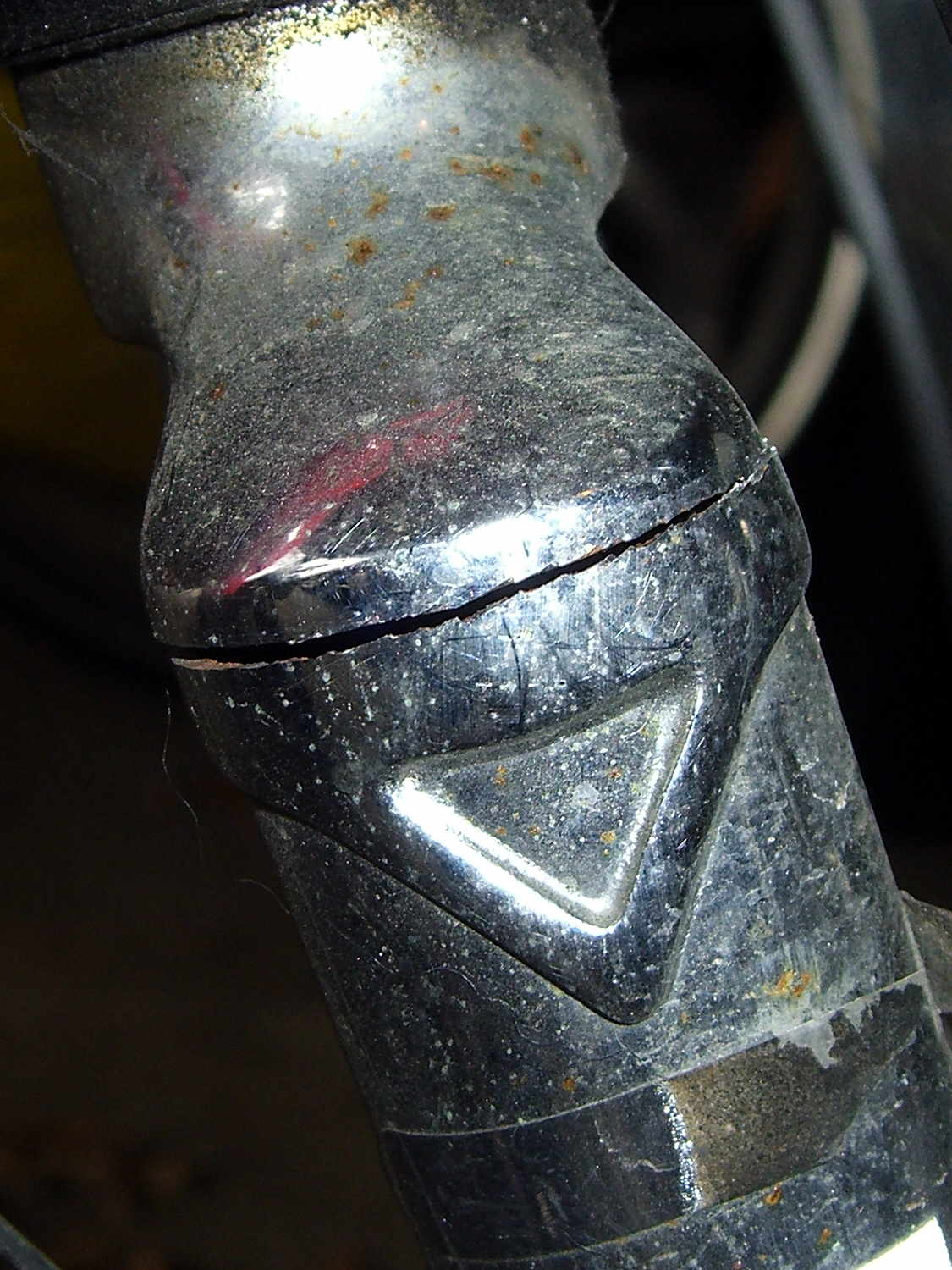
The fairing on my Tour Easy started making unusually loud booming sounds while we were out on an errand, so when we got home I poked around the front end to see what had worked itself loose. I finally managed to produce the sound, which turned out to be due to a very small motion in the fork:
Cracked Tour Easy Fork
That’s after 14 years and maybe 30,000 miles, so I’d say it did pretty well, all things considered.
On an upright bike a front fork failure kills you: the broken blade rotates forward, jams into the ground, and flips you over the handlebars. I rode about 8 miles with a broken fork and nothing exciting happened.
The Tour Easy’s design dates back to the mid-1970s, when custom bike parts weren’t readily available, and the front fork seems sized for 26 inch tires. A tubular bridge welded across just over the 20 inch (37-406) tire provides a fender mount, stiffens the blades, and, in my case, acts as a second bridge. On my bike, the fork supports the polycarbonate fairing and the Phil Wood hub provides an absolutely rigid connection between the blade dropouts.
For reference, the headset uses J.I.S 1 inch dimensions, with a 27.0 mm ID crown bearing. The stack height runs around 35 mm, but I don’t know the head tube ID.
A pair of forks are on their way; I’ll replace the one on Mary’s bike before it fails…