The Smell of Molten Projects in the Morning

Ed Nisley's Blog: Shop notes, electronics, firmware, machinery, 3D printing, laser cuttery, and curiosities. Contents: 100% human thinking, 0% AI slop.

Category: Recumbent Bicycling

Cruisin’ the streets

  • Tour Easy Daytime Running Light: 18650 Cell Extraction Tab

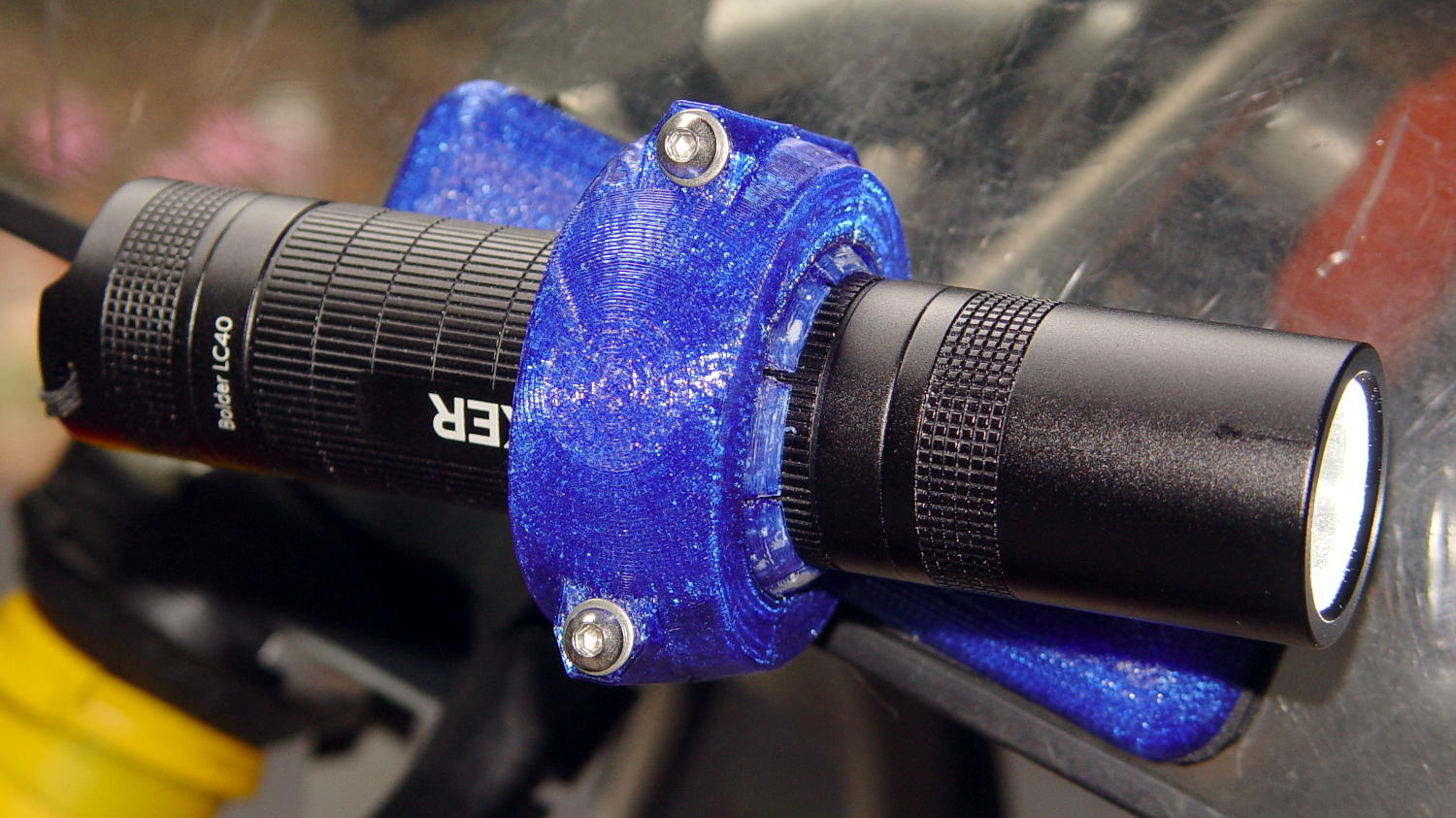
    The running lights on our Tour Easy fairing sit just about perfectly level, despite how they appear in relation to the fairing edge:

    Flashlight Mount - LC40 - finger ball - side
    Flashlight Mount – LC40 – finger ball – side

    And, because they’re firmly attached to the fairing mount, there’s no way to tilt them to extract the 18650 cell.

    This took entirely too long to figure out:

    Lithium 18650 Cell Extractor Tab
    Lithium 18650 Cell Extractor Tab

    The LC40 end caps have a recess exactly where it’ll do the most good: capturing the tab inside the cap means it can’t interfere with the rear contact spring:

    Lithium 18650 Cell Extractor Tab - Anker LC40
    Lithium 18650 Cell Extractor Tab – Anker LC40

    Swapping cells no longer requires muttering!

  • Tour Easy Front Fender Clip: Longer and Stronger

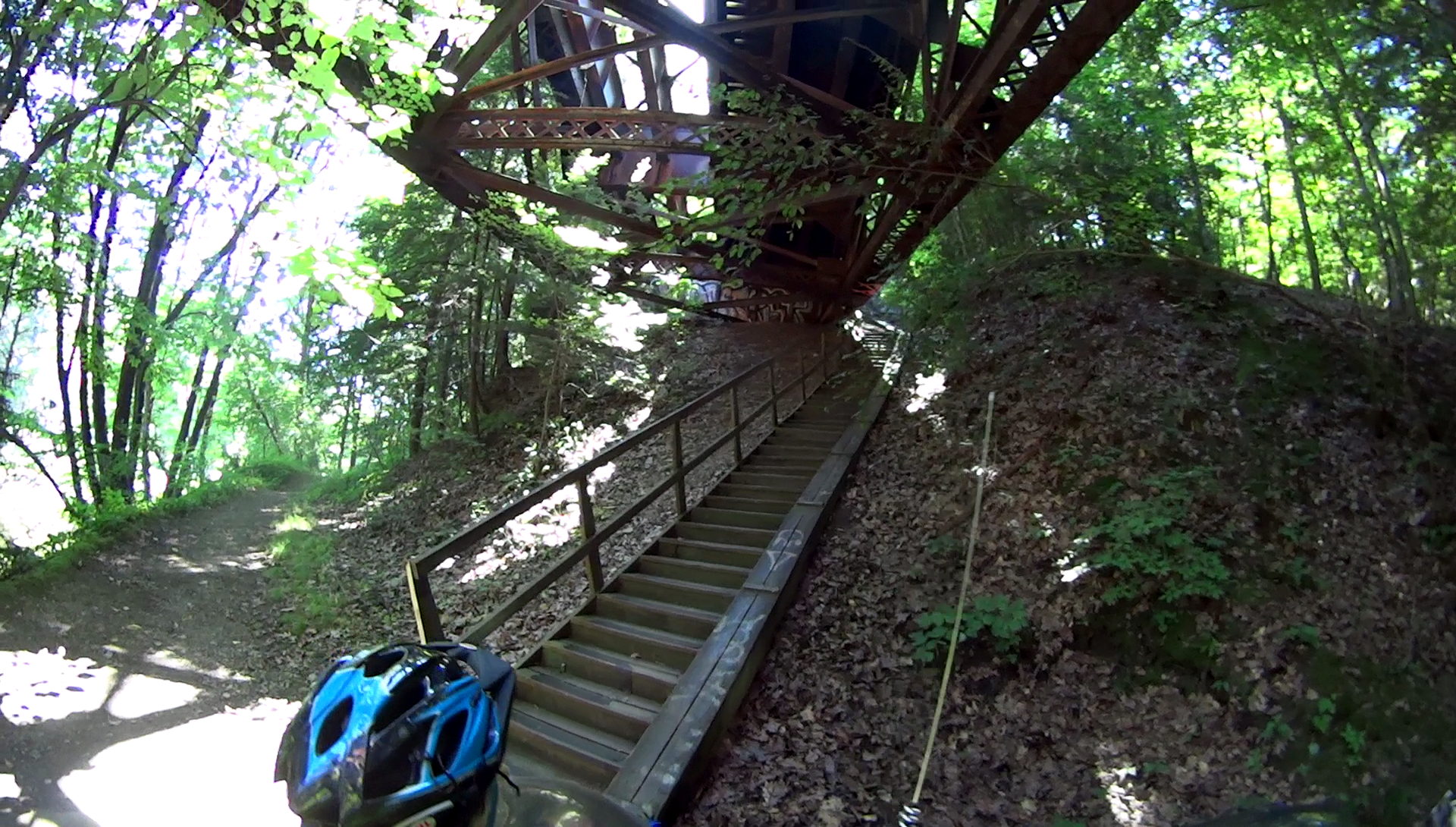
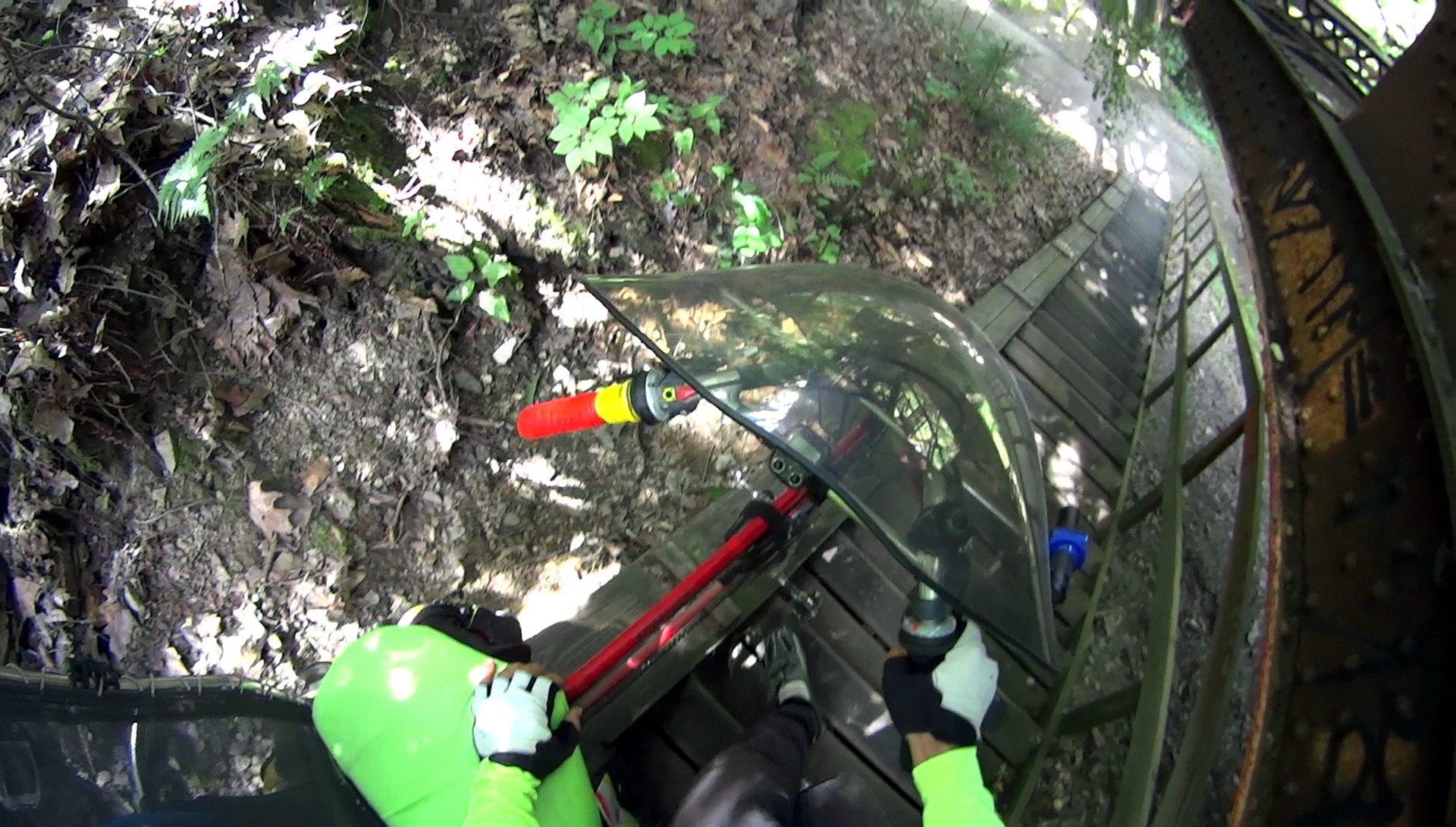
    We negotiated the Belmar Bridge connection stairway from the Allegheny River Trail to the Sandy Creek trail:

    Belmar Bridge Stairs - Overview
    Belmar Bridge Stairs – Overview

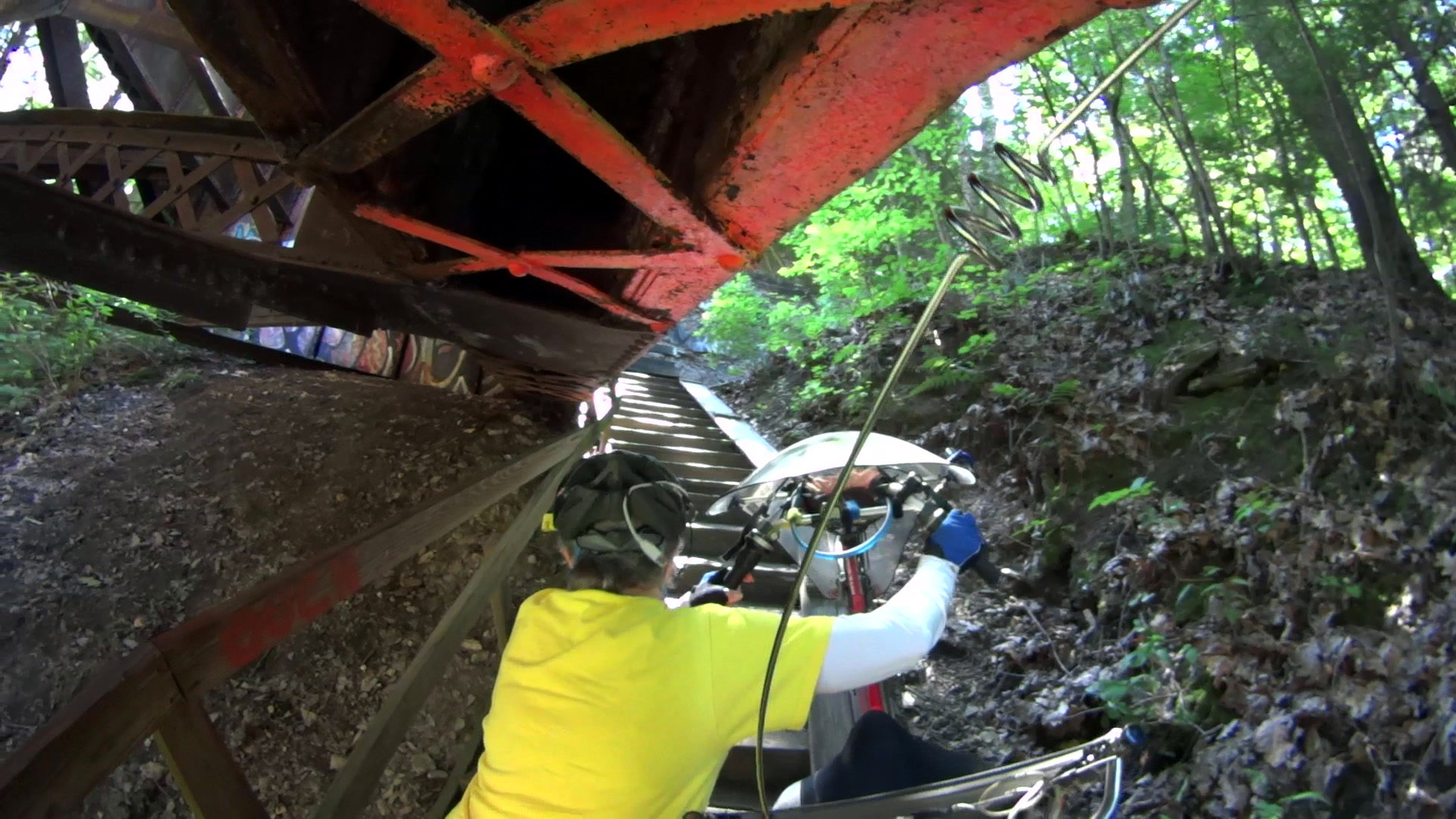
    We’re maneuvering Mary’s bike, but you get the general idea. Our bikes aren’t built for stairways, particularly ones with low overheads:

    Belmar Bridge Stairs - Low Overhead
    Belmar Bridge Stairs – Low Overhead

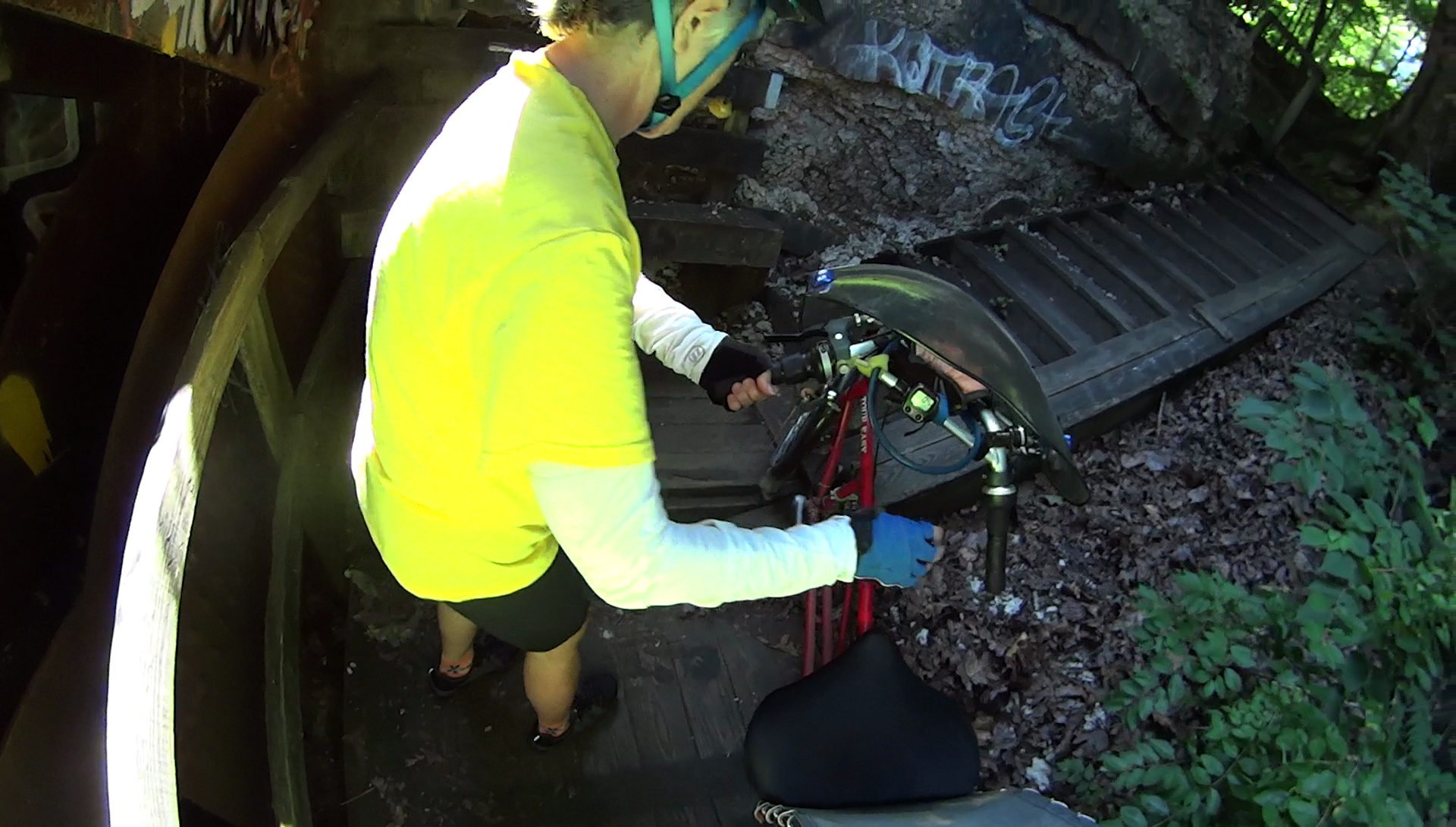
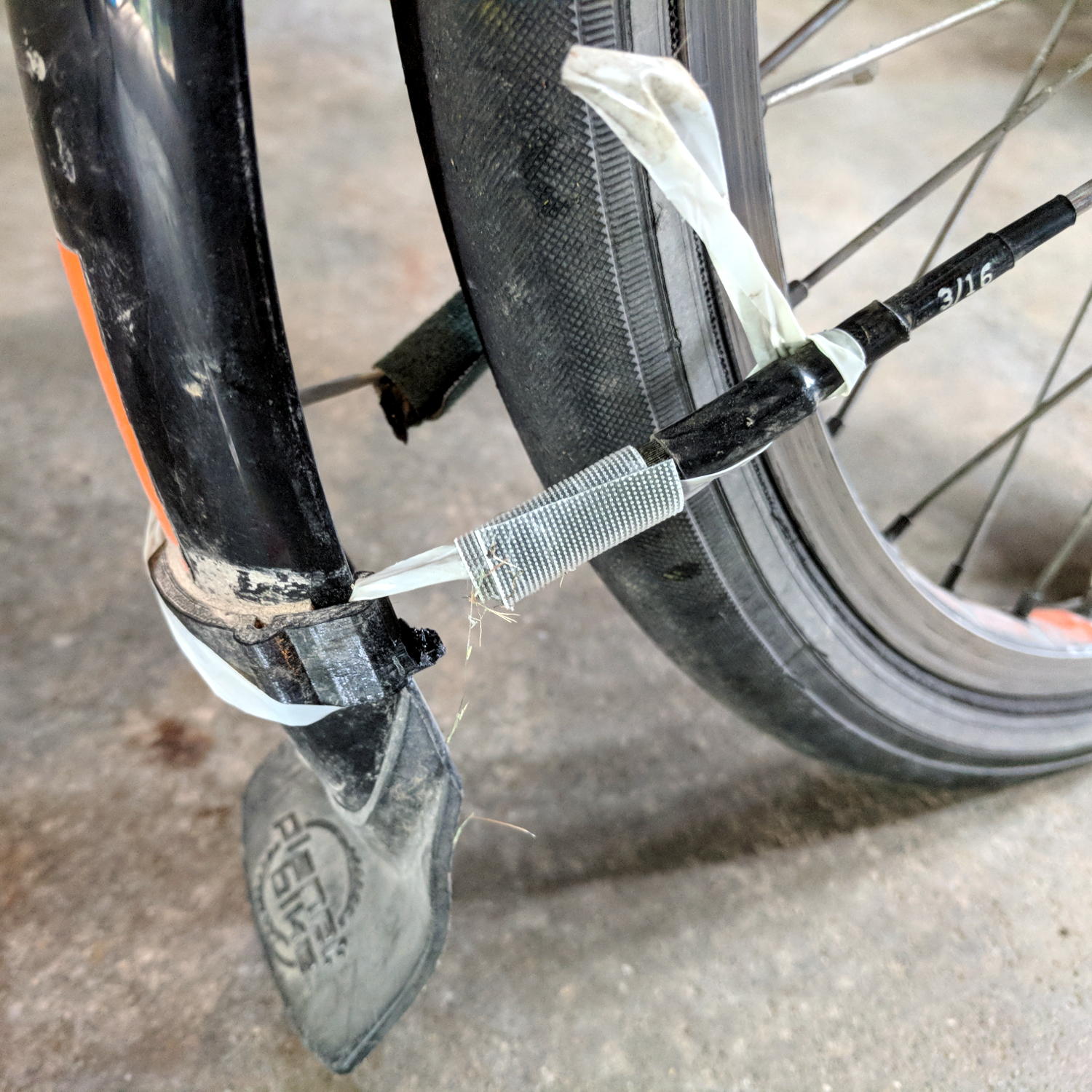
    The front fender clip on my Tour Easy snapped (at the expected spots) when the mudflap snagged on one of the angles:

    Belmar Bridge Stairs - First Turn
    Belmar Bridge Stairs – First Turn

    For some inexplicable reason, I didn’t have a roll of duct tape in my packs, so the temporary repair required a strip of tape from a battery pack, two snippets of hook-and-loop tape, and considerable muttering:

    Tour Easy front fender clip - expedient repair
    Tour Easy front fender clip – expedient repair

    It was good for two dozen more miles to the end of our vacation, so I’d say that was Good Enough.

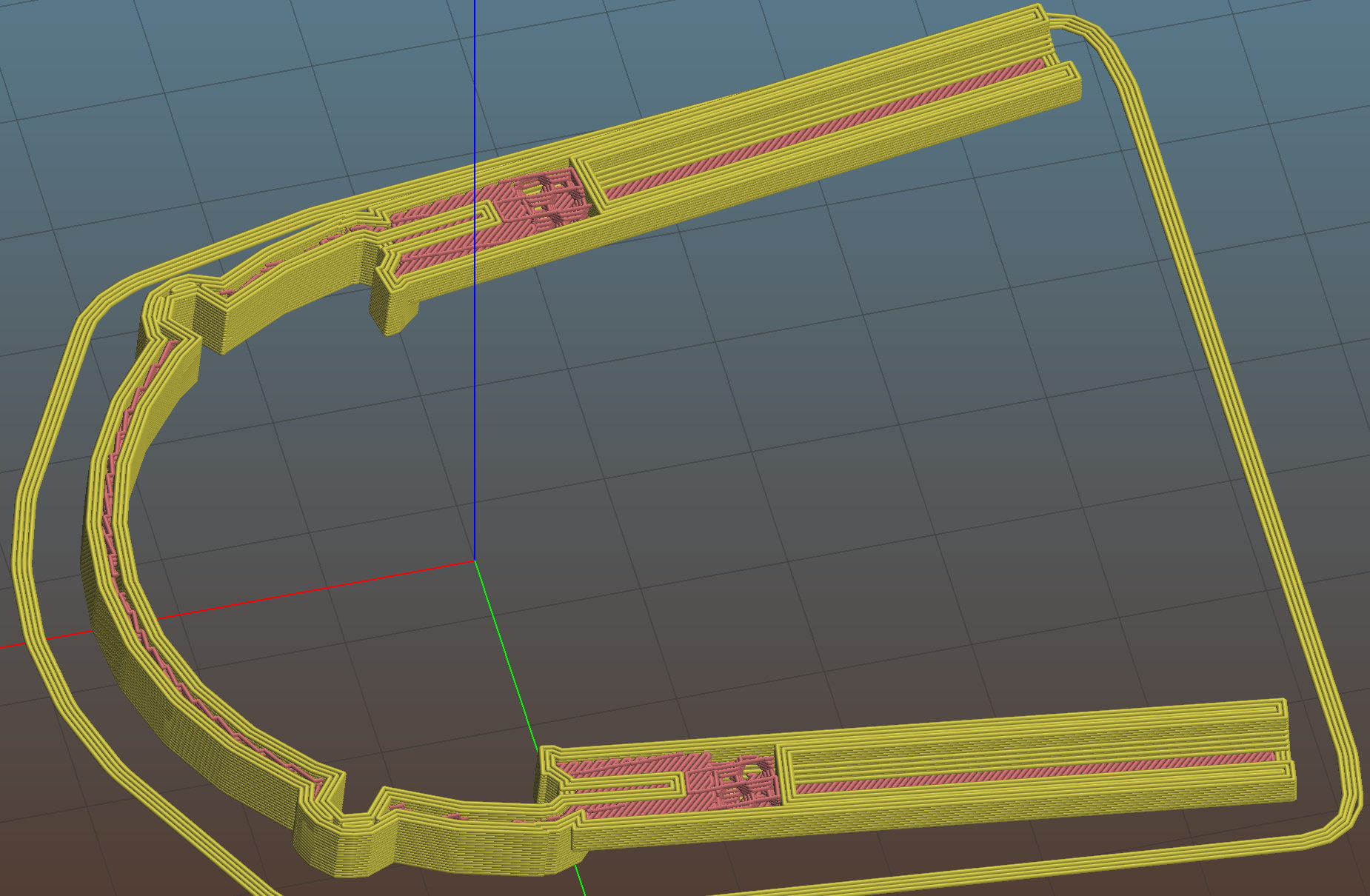
    The new version has holes in the ferrules ten stay diameters deep, instead of six, which might eliminate the need for heatstink tubing. I added a small hole at the joint between the curved hooks and the ferrules to force more plastic into those spots:

    Front Fender Clip - Slic3r
    Front Fender Clip – Slic3r

    I also bent the hanger extension to put the fender’s neutral position closer to the wheel.

    We’ll see how long this one lasts. By now, I now have black double-sticky foam tape!

    The OpenSCAD source code as a GitHub Gist:

    // Tour Easy front fender clip
    // Ed Nisley KE4ZNU July 2017
    Layout = "Build"; // Build Profile Ferrule Clip
    //- Extrusion parameters must match reality!
    ThreadThick = 0.25;
    ThreadWidth = 0.40;
    HoleWindage = 0.2;
    Protrusion = 0.1; // make holes end cleanly
    inch = 25.4;
    function IntegerMultiple(Size,Unit) = Unit * ceil(Size / Unit);
    //———————-
    // Dimensions
    // special case: fender is exactly half a circle!
    FenderC = 51.0; // fender outside width = chord
    FenderM = 21.0; // height of chord
    FenderR = (pow(FenderM,2) + pow(FenderC,2)/4) / (2 * FenderM); // radius
    echo(str("Fender radius: ", FenderR));
    FenderD = 2*FenderR;
    FenderA = 2 * asin(FenderC / (2*FenderR));
    echo(str(" … Arc: ",FenderA," deg"));
    FenderThick = 2.5; // fender thickness, assume dia of edge
    ClipHeight = 15.0; // top to bottom, ignoring rakish tilt
    ClipThick = IntegerMultiple(2.5,ThreadWidth); // thickness of clip around fender
    ClipD = FenderD; // ID of clip against fender
    ClipSides = 4 * 8; // polygon sides around clip circle
    BendReliefD = 2.5; // bend arch diameter
    BendReliefA = 2/3 * FenderA/2; // … angle from dead ahead
    BendReliefCut = 1.5; // factor to thin outside of bend
    ID = 0;
    OD = 1;
    LENGTH = 2;
    StayDia = 3.3; // fender stay rod diameter
    StayOffset = 15.0; // stay-to-fender distance
    StayPitch = -5; // angle from stay to fender arch
    DropoutSpace = 120; // stay spacing at wheel hub
    StayLength = 235; // stay length: hub to fender
    StaySplay = asin((DropoutSpace – FenderC)/(2*StayLength)); // outward angle to hub
    echo(str(" … Pitch: ",StayPitch," deg"));
    echo(str(" … Splay: ",StaySplay," deg"));
    FerruleSides = 2*4;
    Ferrule = [StayDia,3*FenderThick/cos(180/FerruleSides),10*StayDia + StayOffset]; // ID = stay rod OD
    FerruleHoleD = 0.1; // small hole to create solid plastic at ferrule joint
    //———————-
    // Useful routines
    module PolyCyl(Dia,Height,ForceSides=0) { // based on nophead's polyholes
    Sides = (ForceSides != 0) ? ForceSides : (ceil(Dia) + 2);
    FixDia = Dia / cos(180/Sides);
    cylinder(r=(FixDia + HoleWindage)/2,
    h=Height,
    $fn=Sides);
    }
    //———————-
    // Clip profile around fender
    // Centered on fender arc
    module Profile(HeightScale = 1) {
    linear_extrude(height=HeightScale*ClipHeight,convexity=5) {
    difference() {
    offset(r=ClipThick) // outside of clip
    union() {
    circle(d=ClipD,$fn=ClipSides);
    for (i=[-1,1])
    rotate(i*BendReliefA) {
    translate([ClipD/2 + BendReliefD/2,0,0])
    circle(d=BendReliefD,$fn=6);
    }
    }
    union() { // inside of clip
    circle(d=ClipD,$fn=ClipSides);
    for (i=[-1,1])
    rotate(i*BendReliefA) {
    translate([ClipD/2 + BendReliefCut*BendReliefD/2,0,0])
    circle(d=BendReliefD/cos(180/6),$fn=6);
    translate([ClipD/2,0,0])
    square([BendReliefCut*BendReliefD,BendReliefD],center=true);
    }
    }
    translate([(FenderR – FenderM – FenderD/2),0]) // trim ends
    square([FenderD,2*FenderD],center=true);
    }
    for (a=[-1,1]) // hooks around fender
    rotate(a*(FenderA/2))
    translate([FenderR – FenderThick/2,0]) {
    difference() {
    rotate(1*180/12)
    circle(d=FenderThick + 2*ClipThick,$fn=12);
    rotate(1*180/8)
    circle(d=FenderThick,$fn=8);
    rotate(a * -90)
    translate([0,-2*FenderThick,0])
    square(4*FenderThick,center=false);
    }
    }
    }
    }
    //———————-
    // Ferrule body
    module FerruleBody() {
    translate([0,0,Ferrule[OD]/2 * cos(180/FerruleSides)])
    rotate([0,-90,0]) rotate(180/FerruleSides)
    difference() {
    cylinder(d=Ferrule[OD],h=Ferrule[LENGTH],$fn=FerruleSides,center=false);
    translate([0,0,StayOffset + Protrusion])
    PolyCyl(Ferrule[ID],Ferrule[LENGTH] – StayOffset + Protrusion,FerruleSides);
    }
    }
    //———————-
    // Generate entire clip at mounting angle
    module FenderClip() {
    difference() {
    union() {
    translate([FenderR,0,0])
    difference() { // angle and trim clip
    rotate([0,StayPitch,0])
    translate([-(FenderR + ClipThick),0,0])
    Profile(2); // scale upward for trimming
    translate([0,0,-ClipHeight]) // trim bottom
    cube(2*[FenderD,FenderD,ClipHeight],center=true);
    translate([0,0,ClipHeight*cos(StayPitch)+ClipHeight]) // trim top
    cube(2*[FenderD,FenderD,ClipHeight],center=true);
    }
    for (j = [-1,1]) // place ferrules
    translate([Ferrule[OD]*sin(StayPitch) + (Ferrule[OD]/2)*sin(StaySplay),j*(FenderR – FenderThick/2),0])
    rotate(-j*StaySplay)
    FerruleBody();
    }
    for (i=[-1,1]) // punch stiffening holes
    translate([FenderThick/2,-i*(FenderR – FenderThick/2),Ferrule[OD]/2])
    rotate([0,-90,i*StaySplay])
    PolyCyl(FerruleHoleD,Ferrule[OD],FerruleSides);
    }
    }
    //———————-
    // Build it
    if (Layout == "Profile") {
    Profile();
    }
    if (Layout == "Ferrule") {
    FerruleBody();
    }
    if (Layout == "Clip") {
    FenderClip();
    }
    if (Layout == "Build") {
    FenderClip();
    }

    As a bonus for paging all the way to the end, here’s the descent on the same stairway:

    Belmar Bridge Stairs - Descent
    Belmar Bridge Stairs – Descent

    No, I wasn’t even tempted …

  • Anker LC40 Flashlight: Anodizing Fade

    The top surface of the Anker LC40 flashlight serving as the daytime running light on Mary’s bike sees plenty of sunlight, particularly when it’s sitting beside her garden plots, and the black anodized finish on the screw-in battery cap has begun fading:

    Anker LC40 Flashlight - Anodizing fade
    Anker LC40 Flashlight – Anodizing fade

    The bottom side of the cap is in fine shape, as is the main case, so the two parts came from different metal finishing lines.

    The light on my bike, a marginally newer and essentially identical Bolder LC40, remains all black. I have no idea what “Bolder” means in this context.

    Obviously, I must get out more …

  • Ortlieb Backroller Pack Drop

    Although the pair of Ortlieb Back-Roller packs on Mary’s bike make her look like a long-distance tourist, we’re actually on our way to her garden plot:

    AS30V-0285
    AS30V-0285

    The left-side pack suddenly seemed unusually floppy:

    AS30V-0300
    AS30V-0300

    One second later:

    AS30V-0360
    AS30V-0360

    Another second and it’s visible under my right hand:

    AS30V-0420
    AS30V-0420

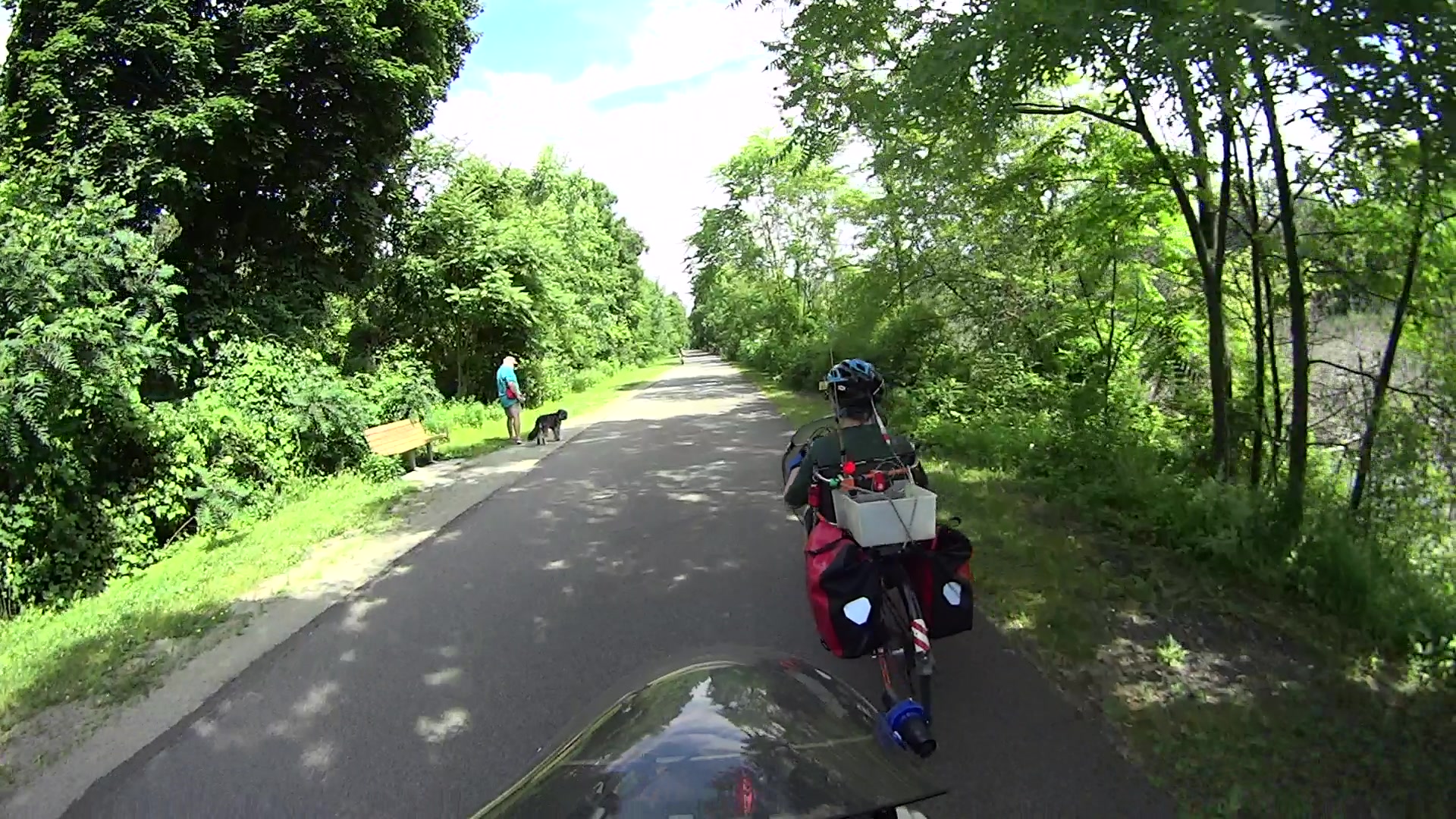
    The view from her bike at about the same time:

    Ortlieb-0158
    Ortlieb-0158

    I’m expecting to fall to my right, but it’d have been better if I hadn’t kicked the bag:

    Ortlieb-0169
    Ortlieb-0169

    The pack went under the rear wheel and out the far side:

    Ortlieb-0185
    Ortlieb-0185

    Where it came to rest in the middle of the trail:

    Ortlib pack drop - aftermath
    Ortlib pack drop – aftermath

    Elapsed time from the first picture: just under 5 s.

    Did you notice the other cyclist in the other pictures? She’s why I veered so hard to my right!

    A pair of these latches hold the pack onto the rear rack:

    Ortlieb pack drop - QL latch detail
    Ortlieb pack drop – QL latch detail

    When they’re properly engaged, they look like this:

    Ortlieb pack drop - QL latch - secure
    Ortlieb pack drop – QL latch – secure

    When they’re not, they look like this:

    Ortlieb pack drop - QL latch - whoopsie
    Ortlieb pack drop – QL latch – whoopsie

    Which is obvious in the picture and inconspicuous in real life.

    The strap emerging from the top of the latch serves as both a carrying handle and latch release: pull upward to open the latches and release them from the bar, lift to remove the pack, and carry it away as you go. Installing the pack proceeds in reverse: lower the pack onto the rack bar, release the handle, and the latches engage.

    Unless the pack is empty enough to not quite fully open the latches as you carry it, in which case the closed latches simply rest on the bar. We’ve both made that mistake and I generally give her packs a quick glance to ensure sure they’re latched. In this case, the plastic drawer atop the racks (carrying seedling pots on their way to the garden) completely concealed the pack latches.

    Tree roots have been creasing the asphalt along that section of the rail trail: the bike finally bounced hard enough to lift the drawer and fall off the rack rod.

    Memo to Self: In addition to the visual check, lift the packs using the strap across the middle holding the rolled-down top in place. Remember, don’t check by lifting the carrying handle, because it just releases the latches; another easy mistake to make.

    Whew!

  • Copying Action Camera Video: Now With UUIDs

    Having tired of manually decoding UDEV’s essentially random device names produced for the various USB action cameras and card readers, I put the device UUIDs in /etc/fstab and let the device names fall where they may:

    UUID=B40C6DD40C6D9262	/mnt/video	ntfs	noauto,uid=ed 0 0
    UUID=0FC4-01AB	/mnt/Fly6	vfat	noauto,nodiratime,uid=ed	0	0
    UUID=0000-0001	/mnt/M20	vfat	noauto,nodiratime,uid=ed	0	0
    LABEL=AS30V	/mnt/AS30V	exfat	noauto,nodiratime,uid=ed	0	0
    

    You get those by plugging everything in, running blkid, and sorting out the results.

    The 64 GB MicroSD card from the Sony AS30V camera uses Microsoft’s proprietary exfat file system, which apparently doesn’t associate a UUID/GUID with the entire device, so you must use a partition label. The Official SD Card Formatter doesn’t (let you) set one, so:

    exfatlabel /dev/sdd1 AS30V
    

    It turns out you can include spaces in the partition label, but there’s no way to escape them (that I know of) in /etc/fstab, so being succinct counts for more than being explanatory.

    One could name the partition in the Windows device properties pane, which would make sense if one knew it was necessary while the Token Windows Laptop was booted with the card in place.

    I think this is easier then trying to persuade UDEV to create known device names based on the USB hardware characteristics, because those will depend on which USB card / device / reader I use. I can force the UUIDs to be whatever I want, because they’re just bits in the disk image.

    With all that in place, you plug in All. The. Gadgets. and run the script (as seen below). The general idea is to verify the bulk video drive mounted OK, attempt to mount each memory card and fire off a corresponding rsync copy, wait until they’re all done, tidy the target filenames, then delete all the source files to get ready for the next ride.

    Funneling all three copies to a single USB hard drive probably isn’t the smartest thing, but the overall write ticks along at 18 MB/s, which is Good Enough for my simple needs. If the drive thrashes itself to death, I won’t do it again; I expect it won’t fail until well outside the 1 year limited warranty.

    If any of the rsync copies fail, then nothing gets deleted. I’m a little queasy about automagically deleting files, but it’s really just video with very little value. Should something horrible happen, I’d do the copies by hand, taking great care to not screw up.

    After all, how many pictures like this do we need?

    Ed signalling on Raymond
    Ed signalling on Raymond

    The Bash script as a GitHub Gist:

    UUID=B40C6DD40C6D9262 /mnt/video ntfs noauto,uid=ed 0 0
    UUID=0FC4-01AB /mnt/Fly6 vfat noauto,nodiratime,uid=ed 0 0
    UUID=0000-0001 /mnt/M20 vfat noauto,nodiratime,uid=ed 0 0
    LABEL=AS30V /mnt/AS30V exfat noauto,nodiratime,uid=ed 0 0
    view raw fstab hosted with ❤ by GitHub
    #!/bin/bash
    # This uses too many bashisms for dash
    thisdate=$(date –rfc-3339=date)
    echo Date is $thisdate
    date
    # MicroSD / readers / USB drive defined in fstab
    # … with UUID or PARTID as appropriate
    echo Mounting bulk video drive
    sudo mount /mnt/video
    if [ $? -ne 0 ]; then
    echo '** Cannot mount video storage drive'
    exit
    fi
    # Show starting space available
    df -h /mnt/video
    #– Sony AS30V
    printf "\n— AS30V\n"
    as30v=/mnt/AS30V
    sudo mount $as30v
    if [ $? -eq 0 ]; then
    echo " start AS30V transfer on $as30v"
    mkdir /mnt/video/AS30V/$thisdate
    rsync -ahu –progress –exclude "*THM" $as30v/MP_ROOT/100ANV01/ /mnt/video/AS30V/$thisdate &
    pid1=$!
    echo " PID is $pid1"
    else
    echo " skipping"
    as30v=
    fi
    #– Cycliq Fly6
    printf "\n— Fly6\n"
    fly6=/mnt/Fly6
    sudo mount $fly6
    if [ $? -eq 0 ]; then
    echo " start Fly6 transfer on $fly6"
    rsync -ahu –progress $fly6 /mnt/video &
    pid2=$!
    echo " PID is $pid2"
    else
    echo " skipping"
    fly6=
    fi
    #– SJCAM M20
    printf "\n— M20\n"
    m20=/mnt/M20
    sudo mount $m20
    if [ $? -eq 0 ]; then
    echo " start M20 transfer on $m20"
    mkdir /mnt/video/M20/$thisdate
    # See if any still images exist to avoid error messages
    n=$( ls $m20/DCIM/Photo/* 2> /dev/null | wc -l )
    if [ $n -gt 0 ] ; then
    echo " copy M20 photos first"
    rsync -ahu –progress $m20/DCIM/Photo/ /mnt/video/M20/$thisdate
    fi
    rsync -ahu –progress $m20/DCIM/Movie/ /mnt/video/M20/$thisdate &
    pid3=$!
    echo " PID is $pid3"
    else
    echo " skipping"
    m20=
    fi
    printf "\n—– Waiting for all rsync terminations\n"
    rc=0
    for p in $pid1 $pid2 $pid3 ; do
    wait -n
    rc=$(( rc+$? ))
    echo RC so far: $rc
    done
    date
    if [ $rc -eq 0 ] ; then
    echo '—– Final cleanups'
    echo Fix capitalized extensions
    find /mnt/video -name \*AVI -print0 | xargs -0 rename -v -f 's/AVI/avi/'
    find /mnt/video -name \*MP4 -print0 | xargs -0 rename -v -f 's/MP4/mp4/'
    if [ "$as30v" ]; then
    echo Remove files on $as30v
    rm $as30v/MP_ROOT/100ANV01/*
    sudo umount $as30v
    fi
    if [ "$fly6" ]; then
    echo Remove files on $fly6
    rm -rf $fly6/DCIM/*
    sudo umount $fly6
    fi
    if [ "$m20" ]; then
    echo Remove files on $m20
    rm $m20/DCIM/Movie/* $m20/DCIM/Photo/*
    sudo umount $m20
    fi
    echo '—– Space remaining on video drive'
    df -h /mnt/video
    sudo umount /mnt/video
    echo Done!
    else
    echo Whoopsie! Total RC: $rc
    fi
    view raw savevideo.sh hosted with ❤ by GitHub
  • Rt 376 at Red Oaks Mill: Re-repaving

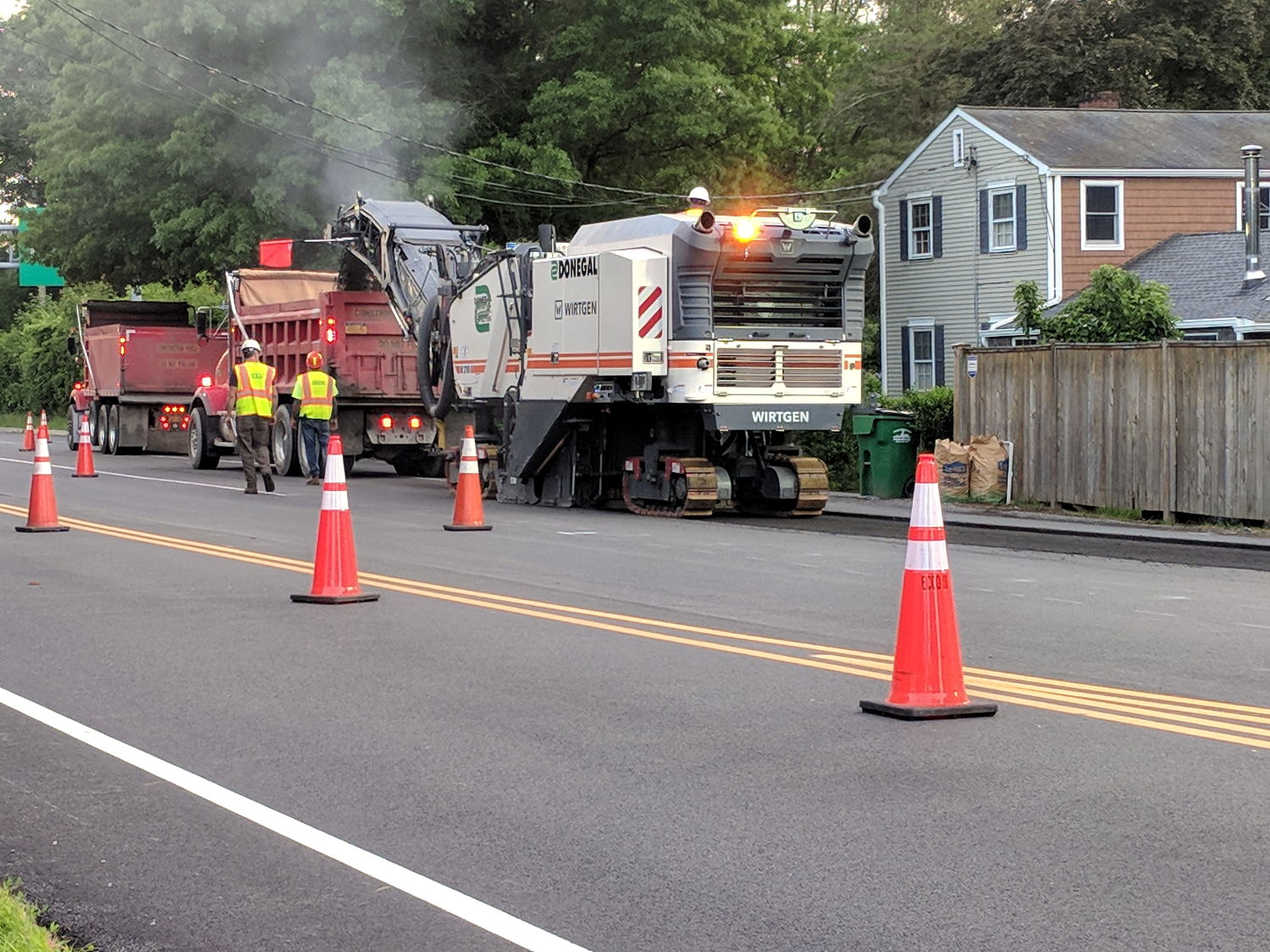
    For unknown reasons, NYS DOT milled away some of the newly laid asphalt north of Red Oaks Mill:

    Rt 376 Red Oaks Mill - New Pavement Milling
    Rt 376 Red Oaks Mill – New Pavement Milling

    Then laid it down again:

    Rt 376 Red Oaks Mill - New Pavement - 2018-06-14
    Rt 376 Red Oaks Mill – New Pavement – 2018-06-14

    As far as we can tell, there’s absolutely no difference, other than the opportunity for a huge longitudinal crack between the shoulder and the travel lane.

    My guess: the contractor shorted them an inch of asphalt, got caught, and had to do it over again.

    It’s only NYS Bike Route 9, so you can’t expect much in the way of bicycle-friendly design or build quality.

  • Side Mirror Turn Signal

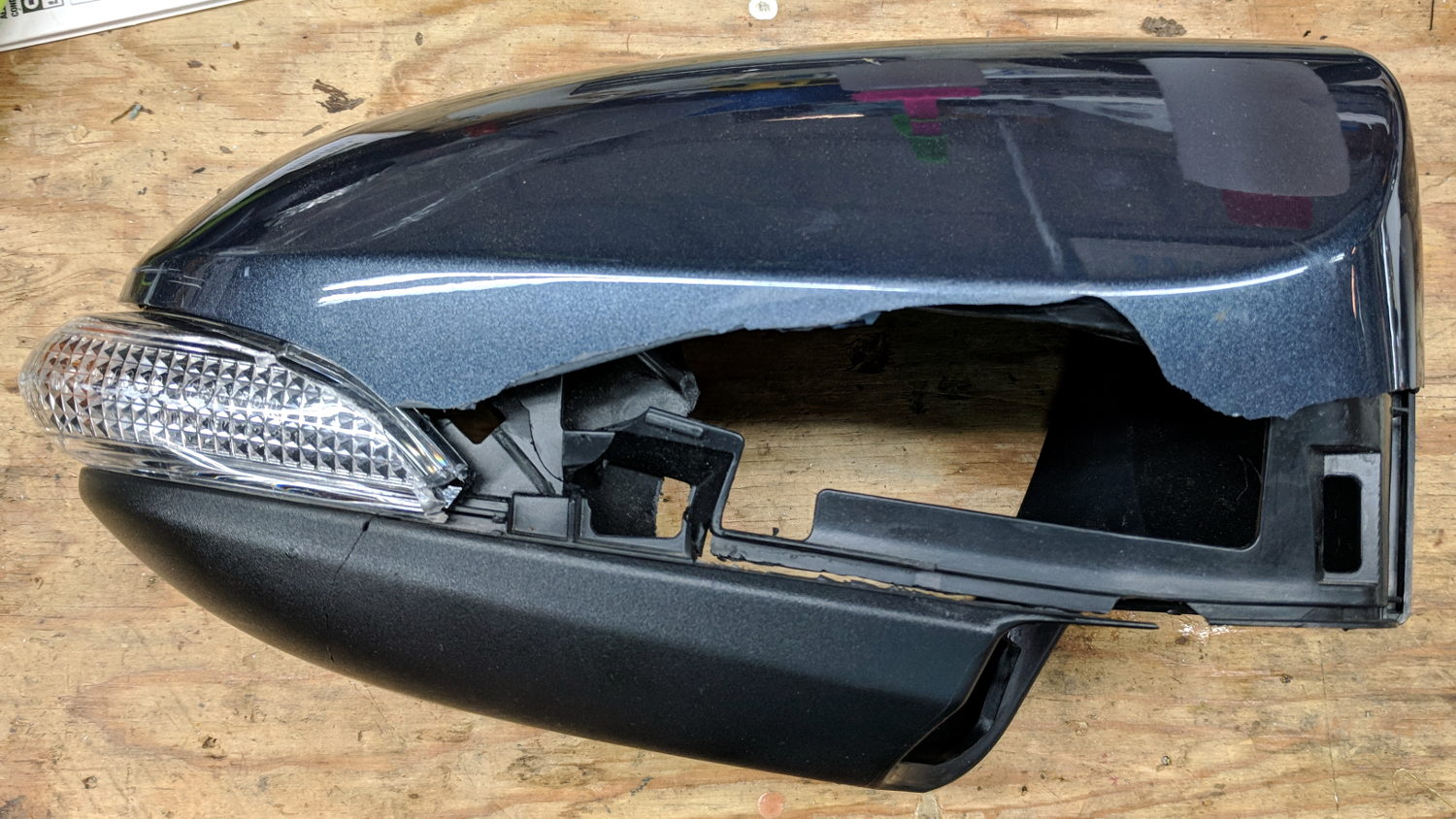
    I hoped this bit of roadside debris would yield a shiny new amber LED and driver:

    Car mirror - shattered housing
    Car mirror – shattered housing

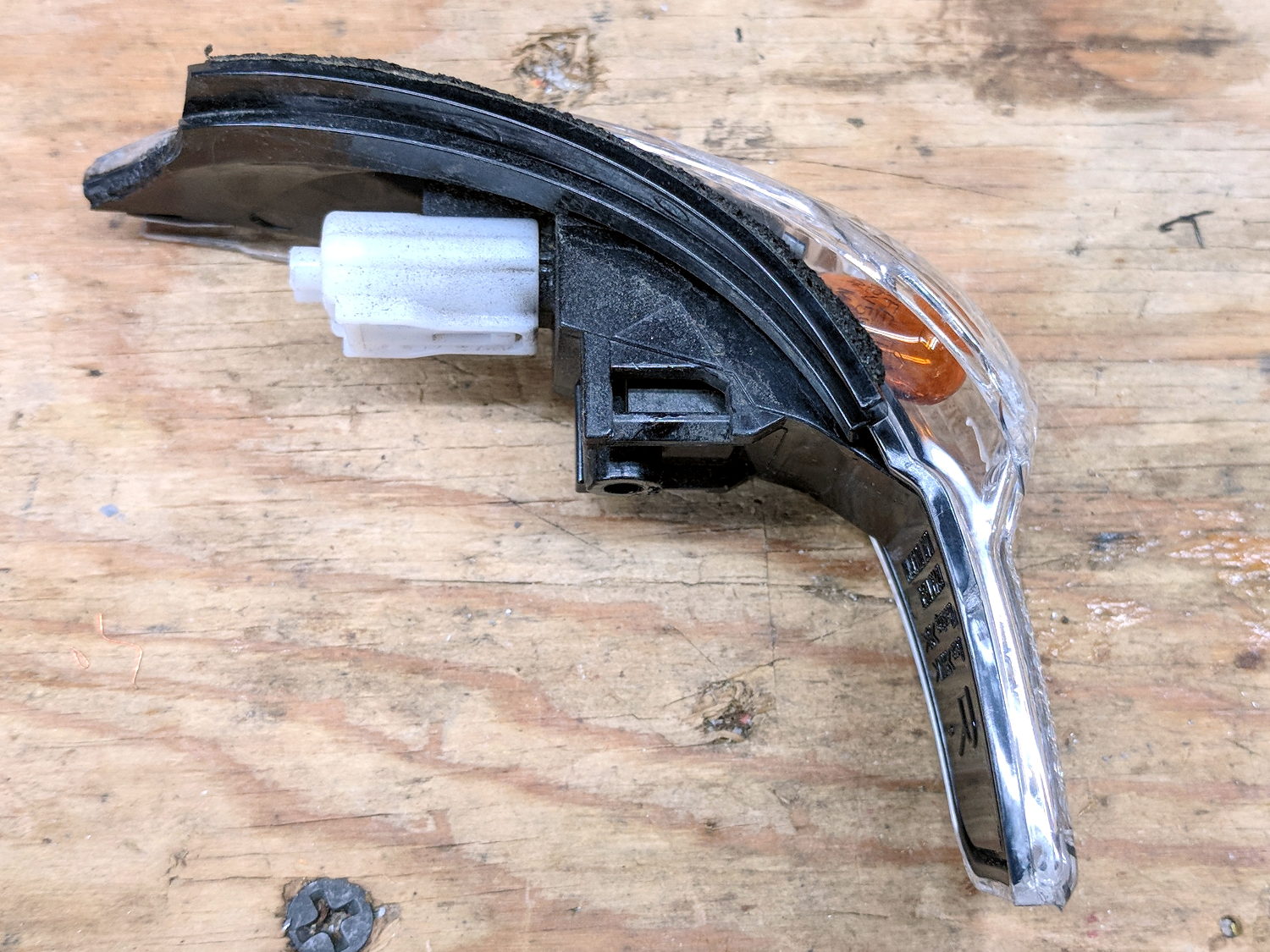
    But, alas, it uses an ordinary WY5W incandescent bulb:

    Car mirror - turn signal
    Car mirror – turn signal

    That whole assembly seems to be the replaceable unit, as the lens is firmly snapped-and-glued to the housing. The white shell used to hold the wires, but those vanished when the collision ripped the mirror off the car.

    After I pried off the shattered lens and extracted the bulb, I found a broken filament.

    Ah, well, now we won’t be riding through plastic shards along the shoulder.