Ed Nisley's Blog: Shop notes, electronics, firmware, machinery, 3D printing, laser cuttery, and curiosities. Contents: 100% human thinking, 0% AI slop.
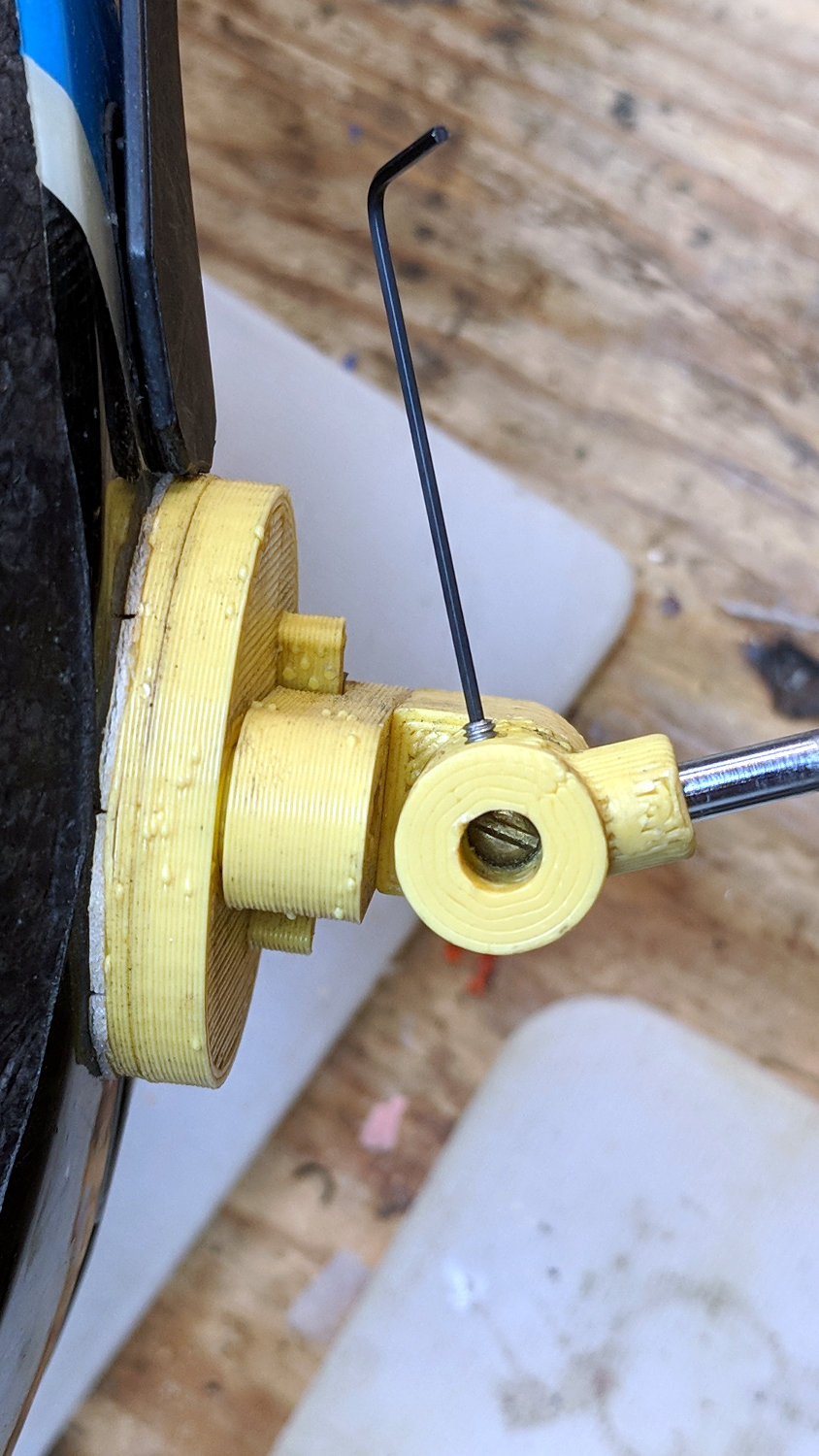
That’s a 0.035 inch = 35 mil hex wrench, of which Eks reminds me “Any time your design requires a tiny [obscene gerund] wrench, you’re doing it wrong”.
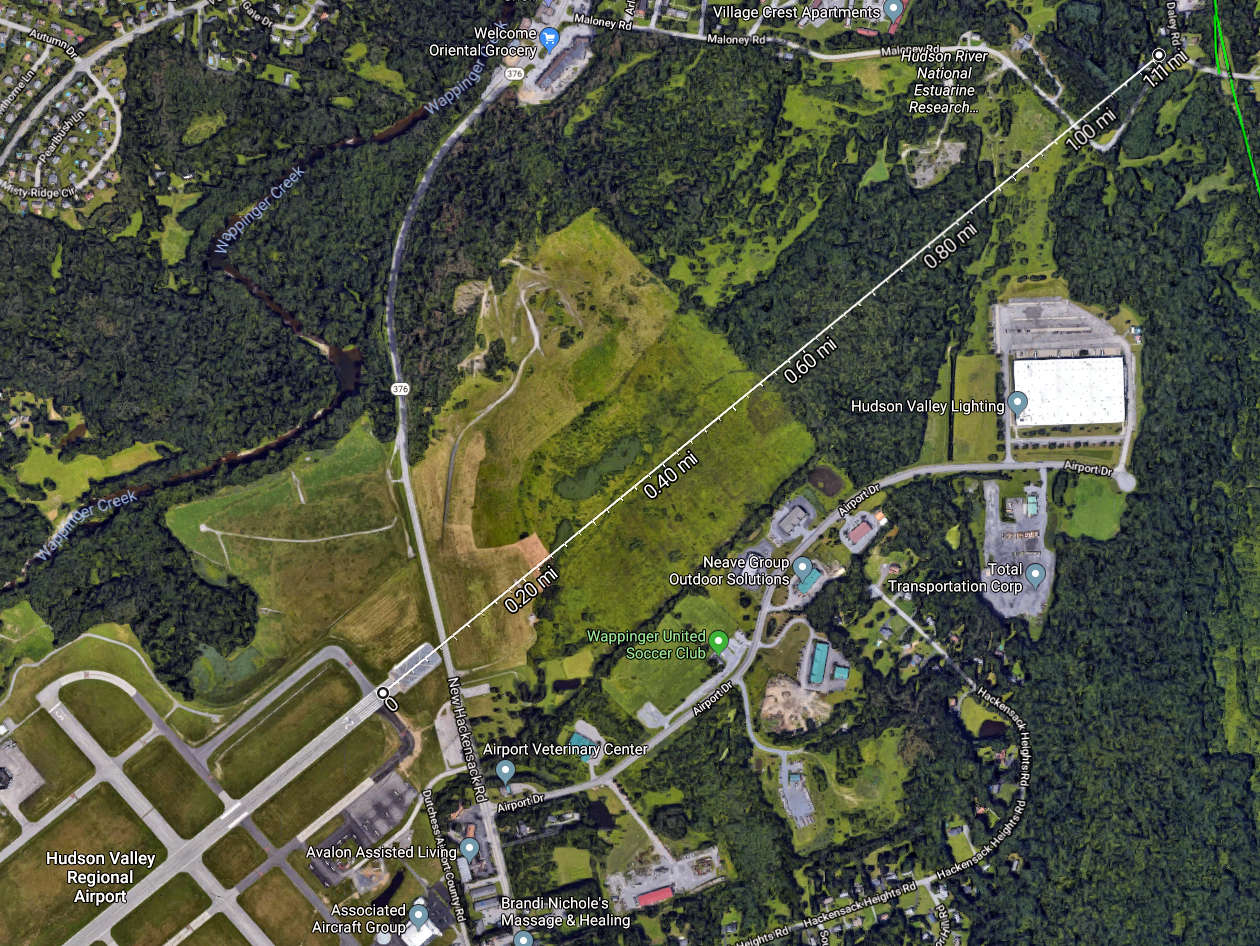
So it’s not unusual to ride under a small plane on final approach. Having a Gulfstream V fly directly overhead, however, is a real attention-getter:
Gulfstream V on final – Maloney Rd – 2018-08-26
What’s not at all obvious from the picture is how big a GV looks when seen directly overhead through those trees just ahead on the corner where our paths crossed. There’s a 360 ft (above sea level) hill directly on the flight path, so it’s at maybe 600 ft ASL and 400-ish ft AGL.
Thrust-reversal thunder rolled over us 50 seconds later, as we rode up the rail trail access ramp. Figuring we’re 15 sound-seconds from the strip, the GV was 30 seconds from touchdown.
After a few days of downtime, an Official Makergear Thermistor arrived and is now installed amid a dab of heatsink compound:
M2 – Thermistor with heatsink compound
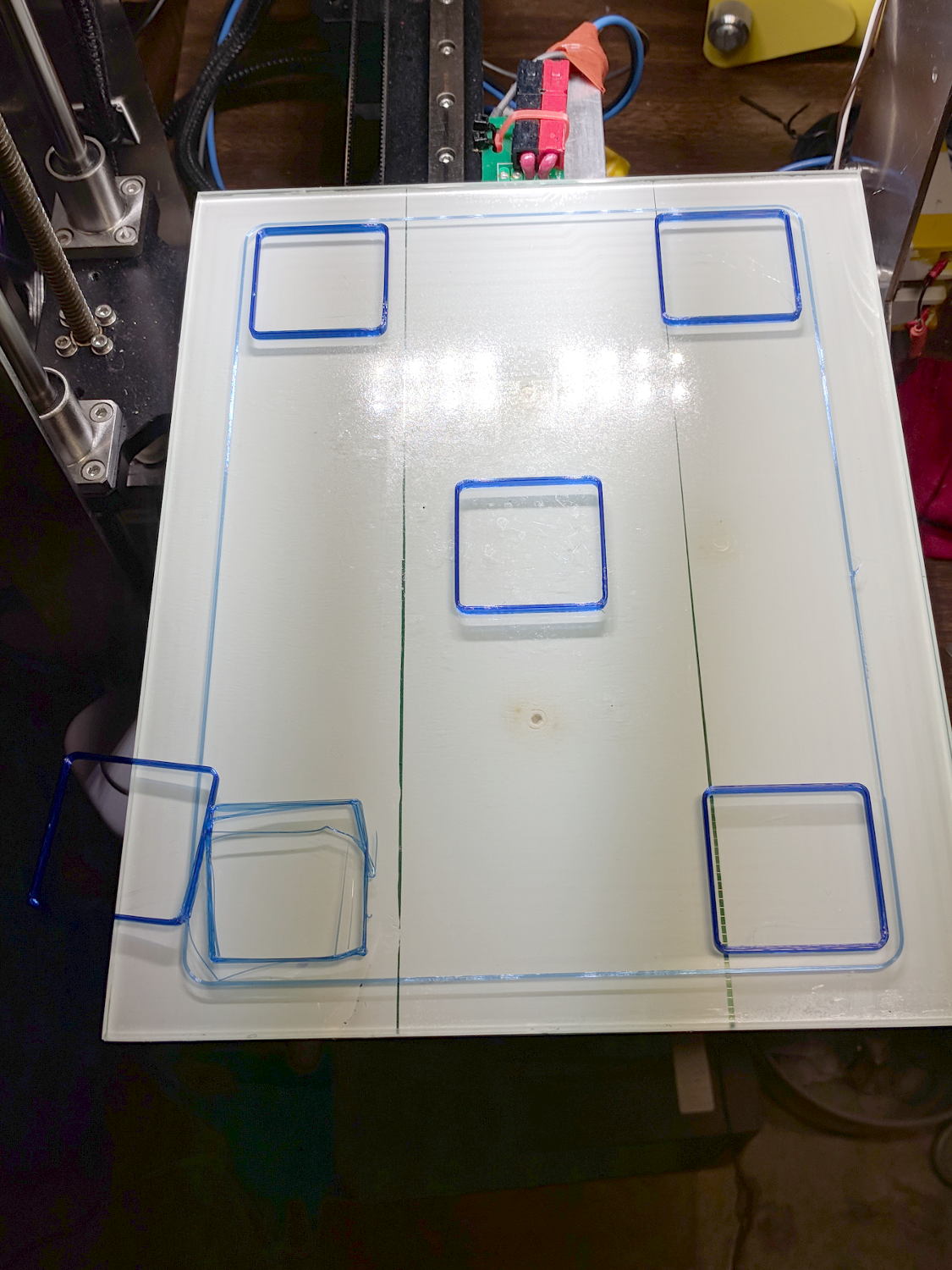
With the hot end set a bit higher than usual, position the platform at Z=0, lower the nozzle to be flat on the platform, tighten the lock screw, then run off a set of large calibration squares:
M2 – Nozzle Z Offset Recal – first test
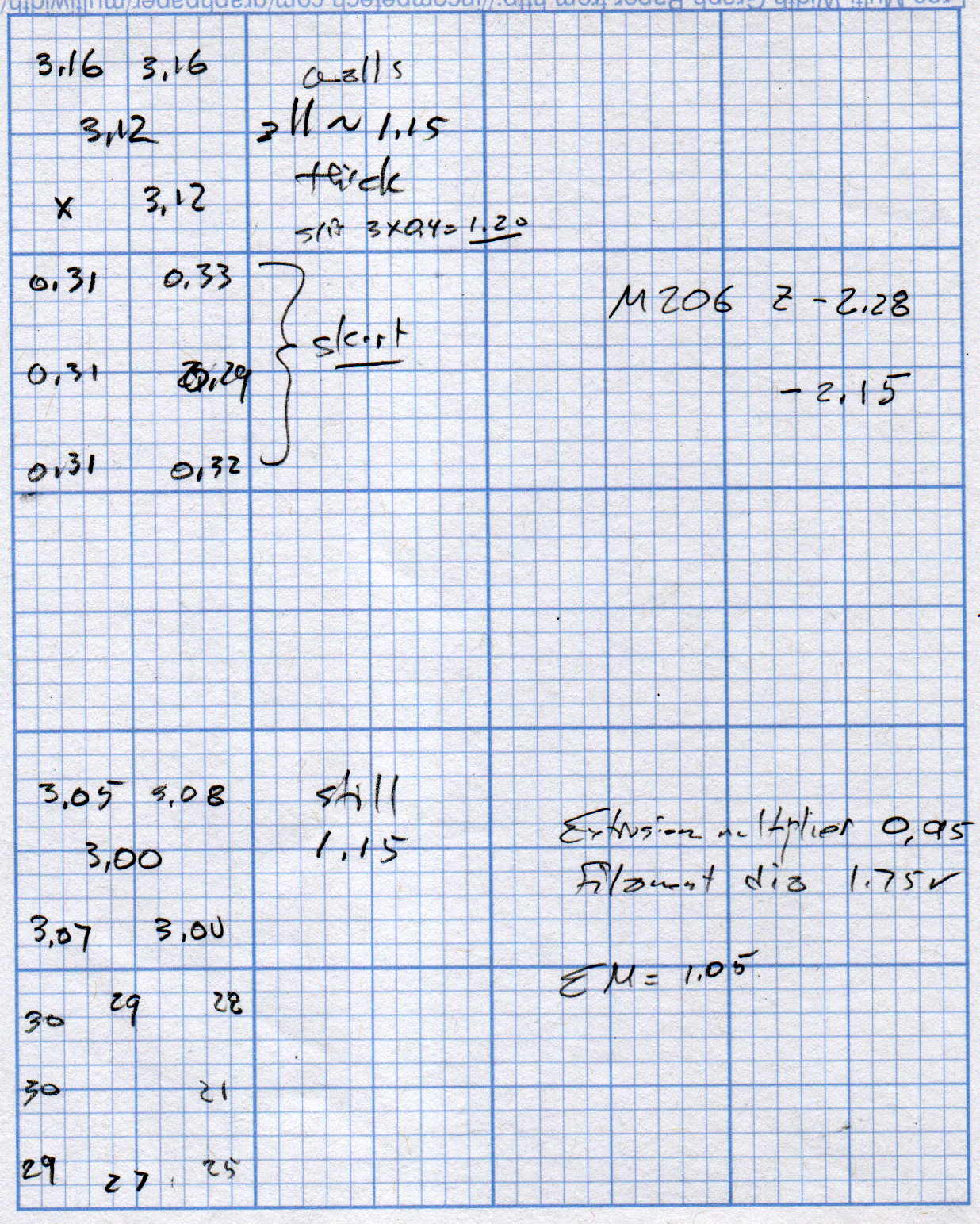
The scrambled square in the front left says the Z=0 nozzle position came out just a bit too far above the platform and, indeed, the measurements (upper left numbers) say it’s off by 0.15-ish mm:
M2 Nozzle and Platform Re-Cal Measurements
Probably a little PETG stuck to the nozzle; I hate adjusting things when they’re burning hot.
The walls are also thin by a smidge, but the first order of business is to reset the Z offset with M206 Z=-2.15. With that in hand, the second set of squares came out at 3.00 to 3.08 mm (lower left numbers), which I defined to be Close Enough.
The 0.08 mm variation across the platform isn’t enough to worry about.
The first skirt threads were too thick and not solidly bonded together, but the second skirt came out normally, with a thickness from 0.21 through 0.30, which is also Good Enough.
The three-thread walls were still 1.15 mm, rather than 1.20 mm, so the EM should go from 0.95 to 0.95*1.20/1.15 = 1.05.
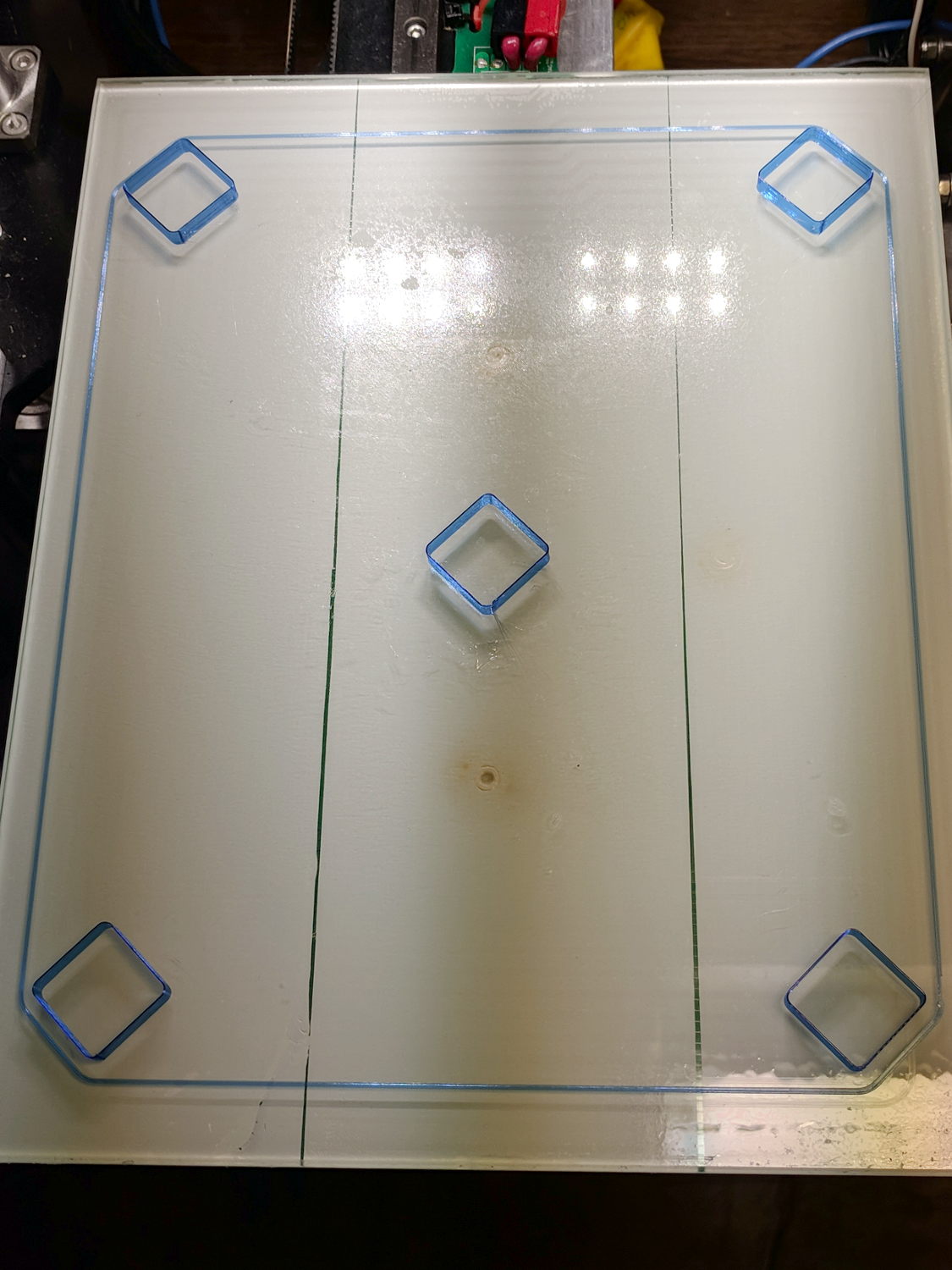
Next, a set of single-thread thinwall boxes to verify the Z offset and recheck the Extrusion Multiplier:
M2 – Nozzle Z Offset Recal – thinwall test
They’re dead on 3.00 mm tall, varying by not enough to worry about.
Their single-thread walls are 0.38 mm, not the intended 0.40, which suggests the EM should become 0.95*0.40/0.35 = 1.00.
It turns out the filament diameter at this part of the roll is scant of 1.75 mm, maybe 1.73 mm, so I decided to not fiddle with the EM.
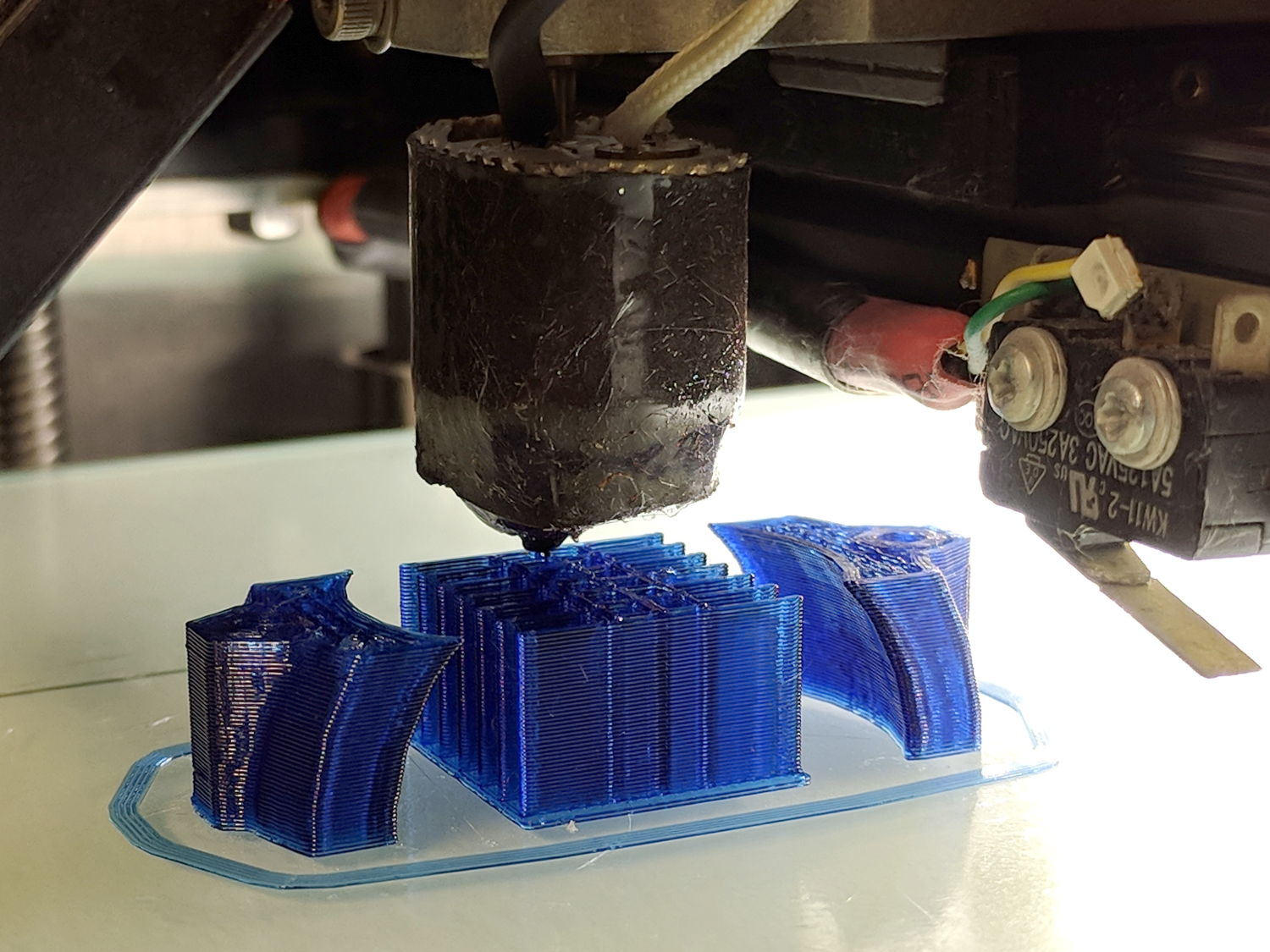
The flange around the bottom of the arch support grid (in the middle) is intentional; it’s not an overstuffed first layer. The clamp sections rise from the platform just like they grew there.
So the M2 is back in operation and I have a spare thermistor on the shelf!
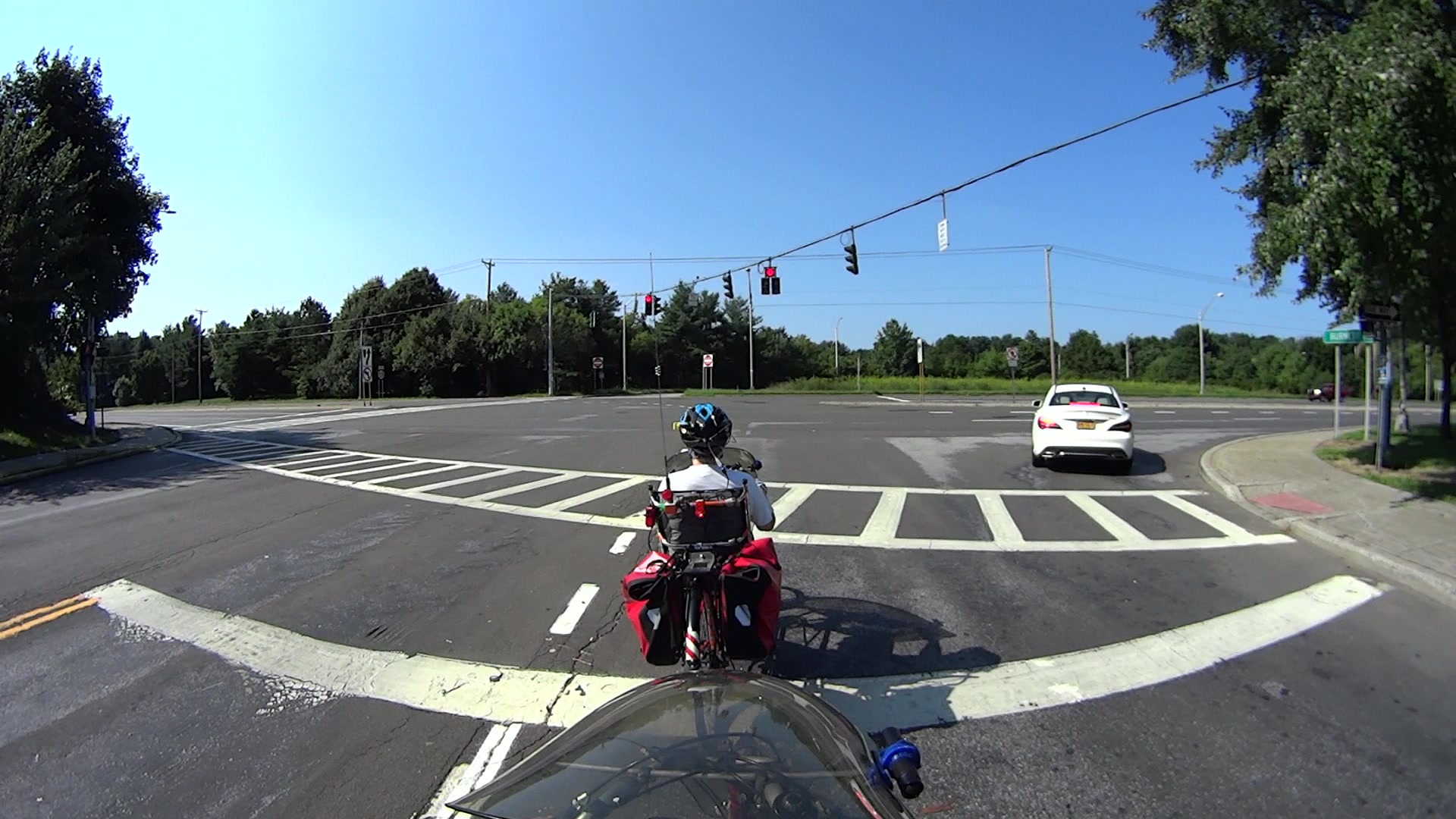
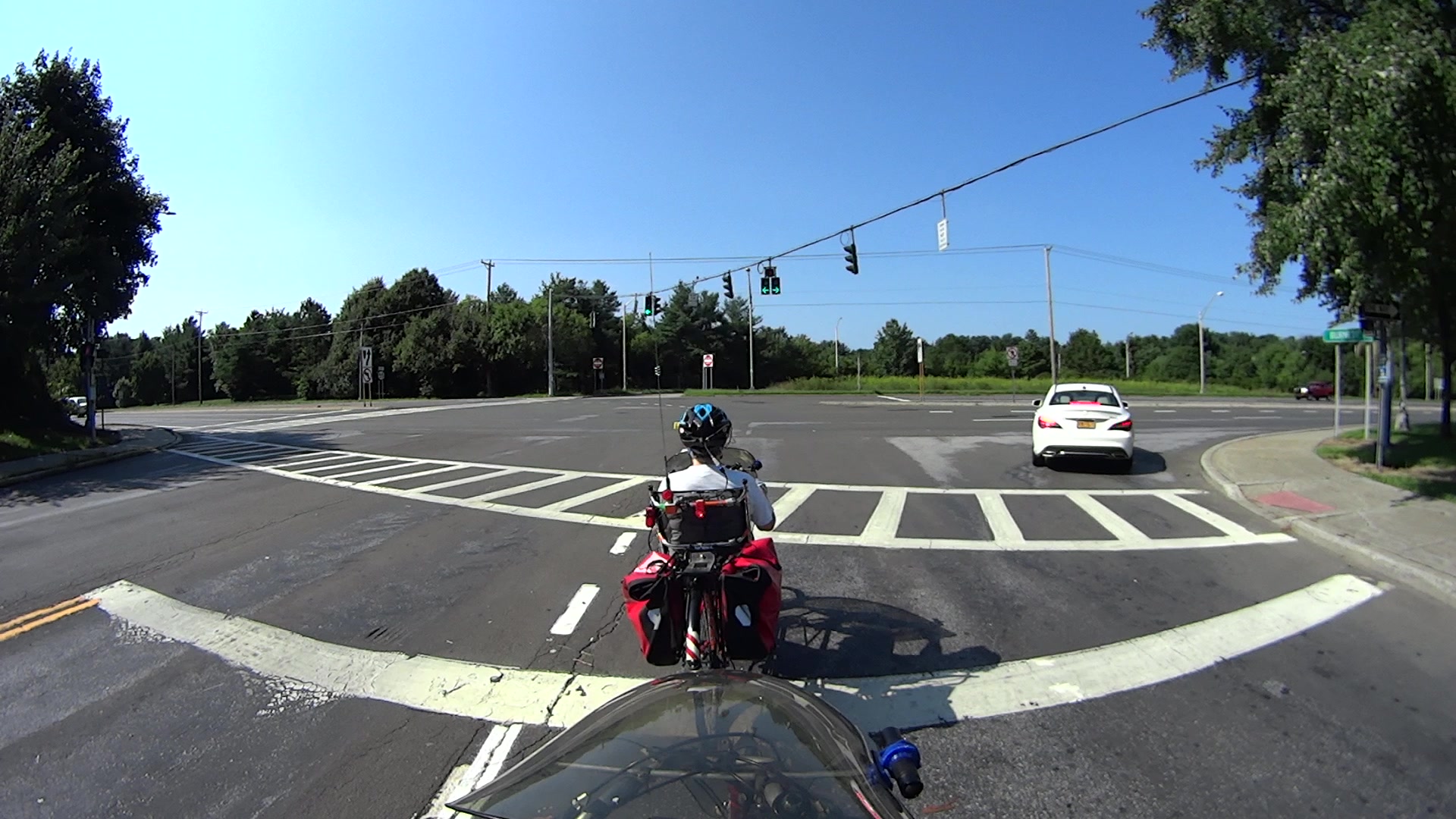
We’re waiting at the end of Burnett Blvd, with the signal red and the clock at T = -0.17 seconds (photo numbers in 1/60 second frames):
RedRunner-0194
You can’t hear the car (barely visible) approaching on the far left, but we can.
T = 0.00 – We get a green light and the (more visible) car is accelerating hard:
RedRunner-0204
T = 1.00 – The car reaches the crosswalk:
RedRunner-0264
Note that the driver of the car to our right isn’t moving, either.
T = 2.03 – Car passes through intersection:
RedRunner-0326
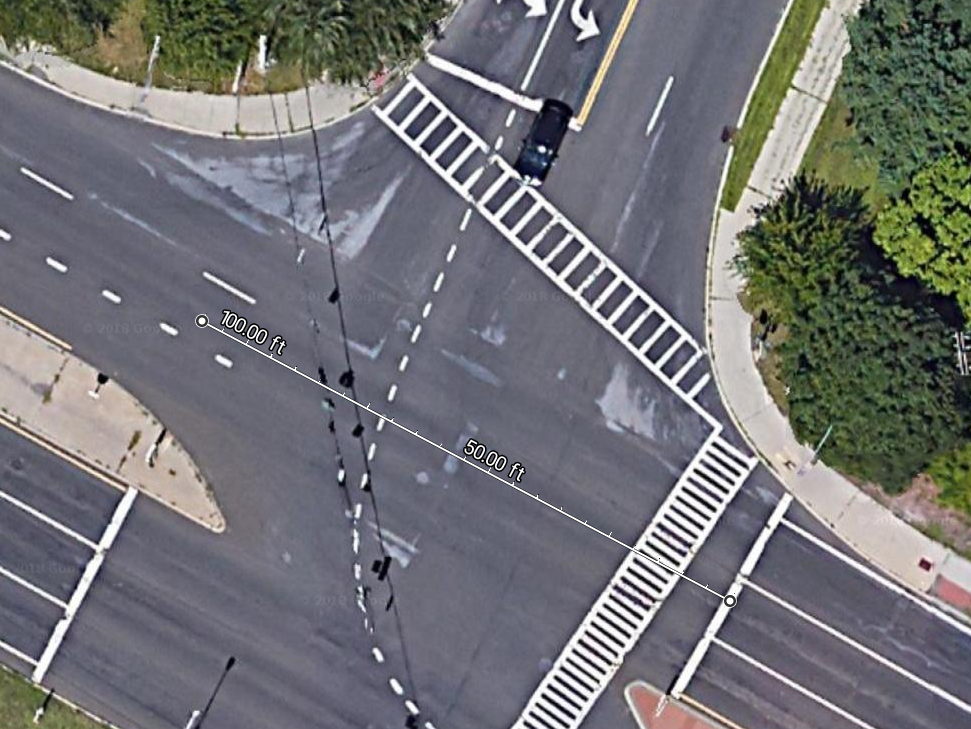
The view from above, showing the distance between those two positions is 100 feet:
Burnett at Rt 55 – Distance along Rt 55
Do the math: 100 ft / 1.03 s = 97 ft/s = 66 mph.
There’s a reason we don’t start moving instantly when a traffic signal turns green.
T = 3.17 – We start moving, as does the car to our right, with our signal still green:
RedRunner-0394
T = 4.88 – Whoops, our signal turns yellow:
RedRunner-0497
T = 9.28 – Our signal turns red:
RedRunner-0761
The signal timing hasn’t changed over the years:
Green = 4.88 s
Yellow = 4.40 s
Elapsed time from green to red: 9.28 seconds. No problem if you’re a car, death if you’re a bike.
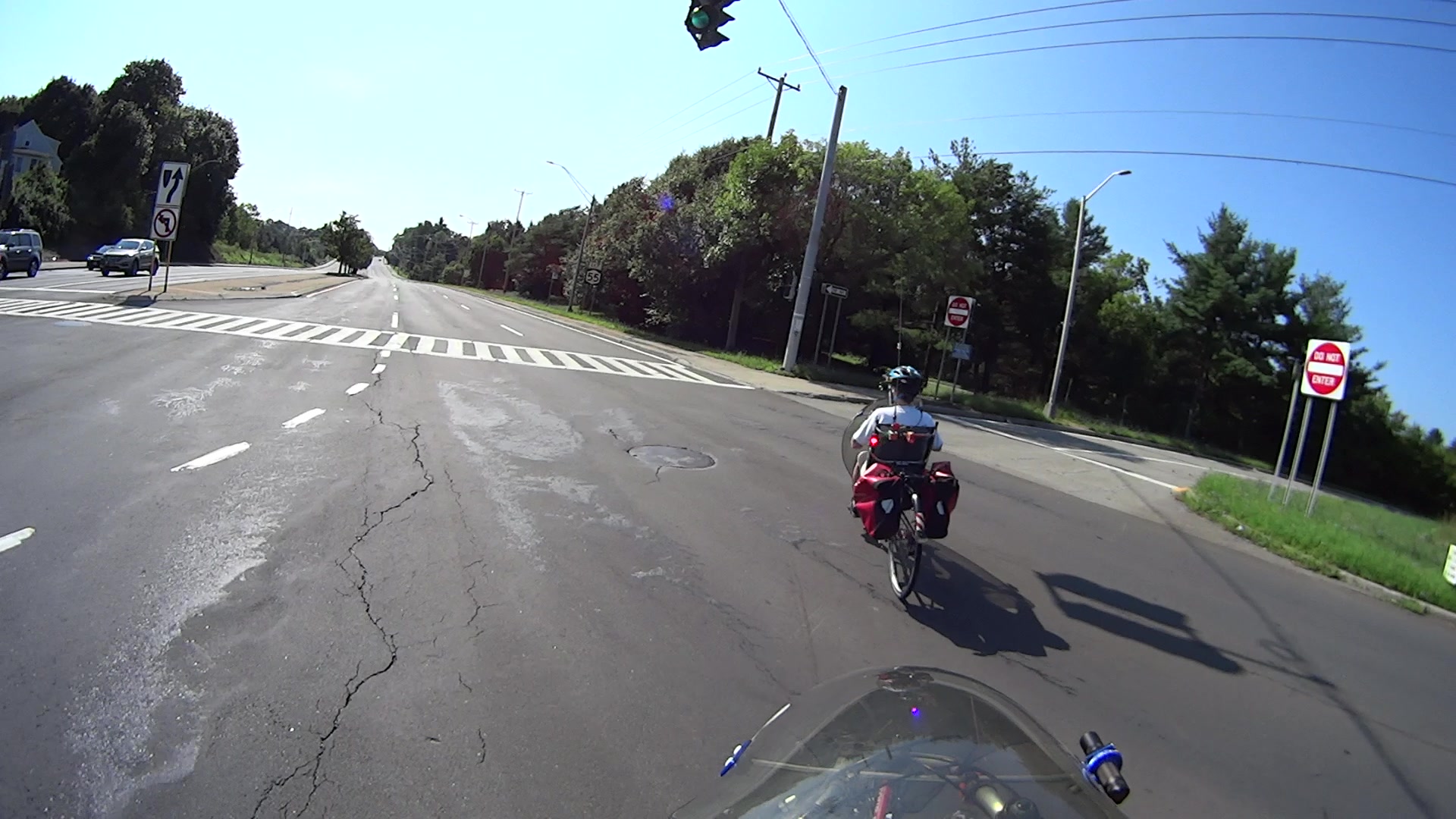
T = 10.42 – We’re pedaling hard in the intersection:
RedRunner-0829
The white car to our far right started moving into the intersection about the time we did. If you’re going to say we shouldn’t run the light, you gotta deal with cars first, OK?
Note the car approaching from the right on the far side of Rt 55. That’s a 40 mph zone, the driver sees a green light, and we’re still in the intersection.
T = 12.50 – We’ve been moving for 9.33 s, which puts Mary directly in the path of the oncoming car:
RedRunner-0954
T = 14.83 – The oncoming driver having spotted us and slowed down, we’re asymptotically approaching the right-hand lane of Rt 55, passing beyond the steel manhole cover:
RedRunner-1067
If you plunk “burnett signal” into the search box at the upper right, you’ll find plenty of previous incidents along these lines.
Despite bringing this hazard to their attention many times (“We appreciate and share your interest in making our highway systems safe and functional for all users.“), NYS DOT obviously doesn’t care.
If any of their employees commuted to their office building (which overlooks this very intersection), perhaps they would care, but they don’t: we have yet to see a bicycle in the DOT’s token bike rack.
DOT says they’re in favor of Complete Streets, but, seven years on, it’s just another day on the only route between Arlington and the Overocker Trailhead of the Dutchess County Rail Trail.
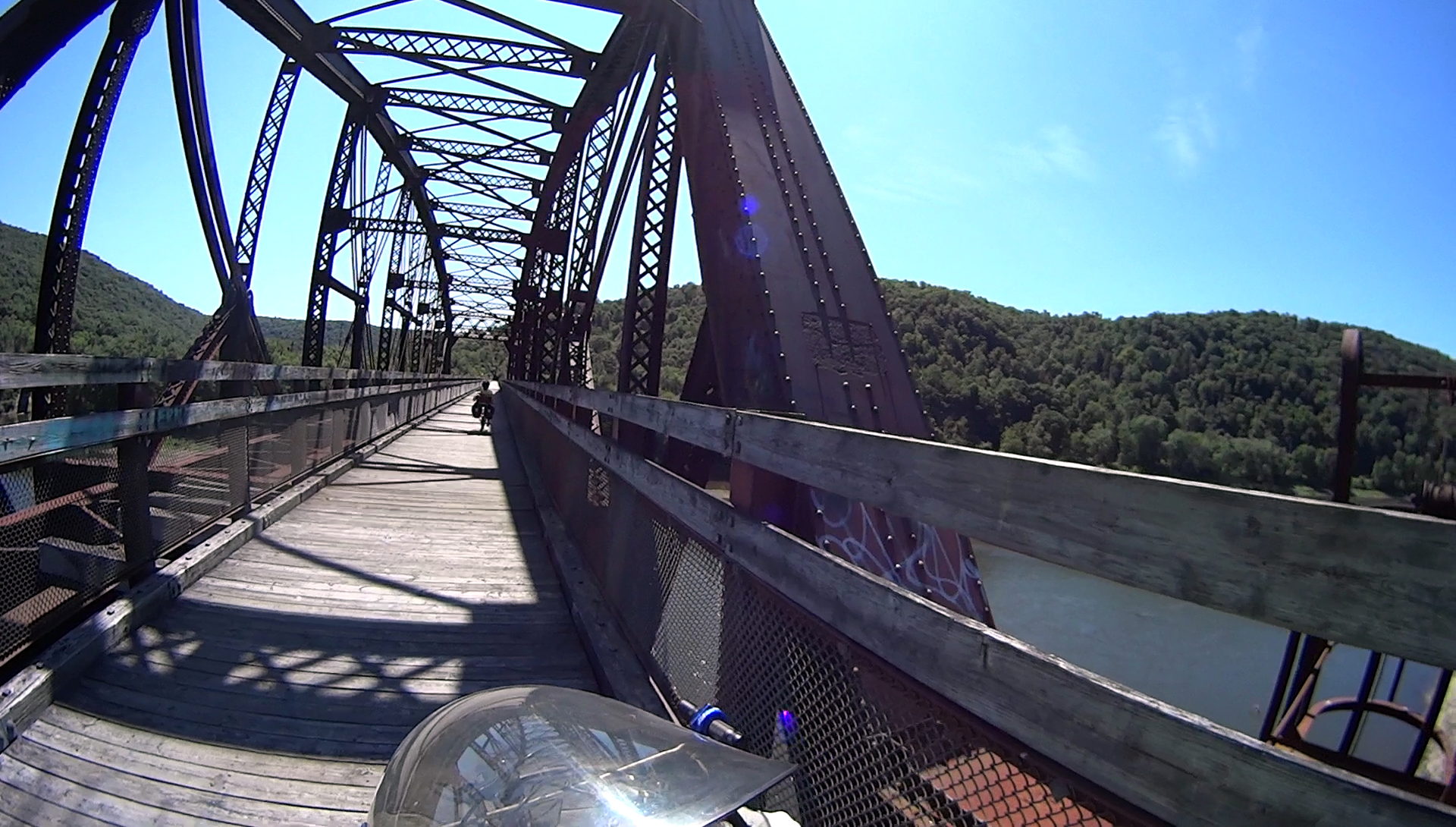
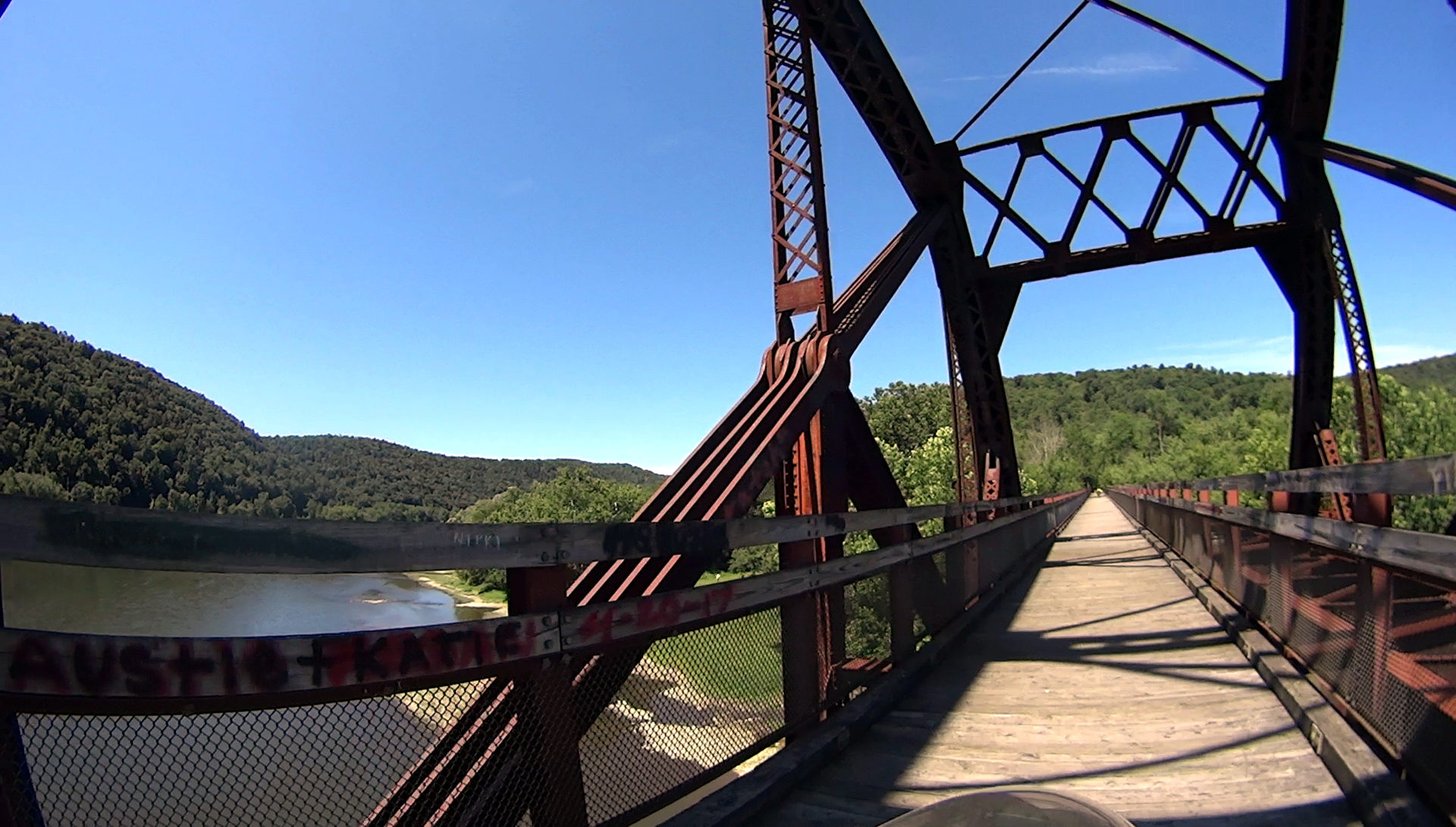
The gap in the rivets along the main truss show where someone pried off the bronze plaque surely commemorating the bridge. The scarred surface suggests a bronze-steel battery was in effect for quite some time.
It’s a look at engineering done in the days of slide rules and limited data, when overengineering wasn’t nearly as bad as ensuring the thing never, ever fell down.
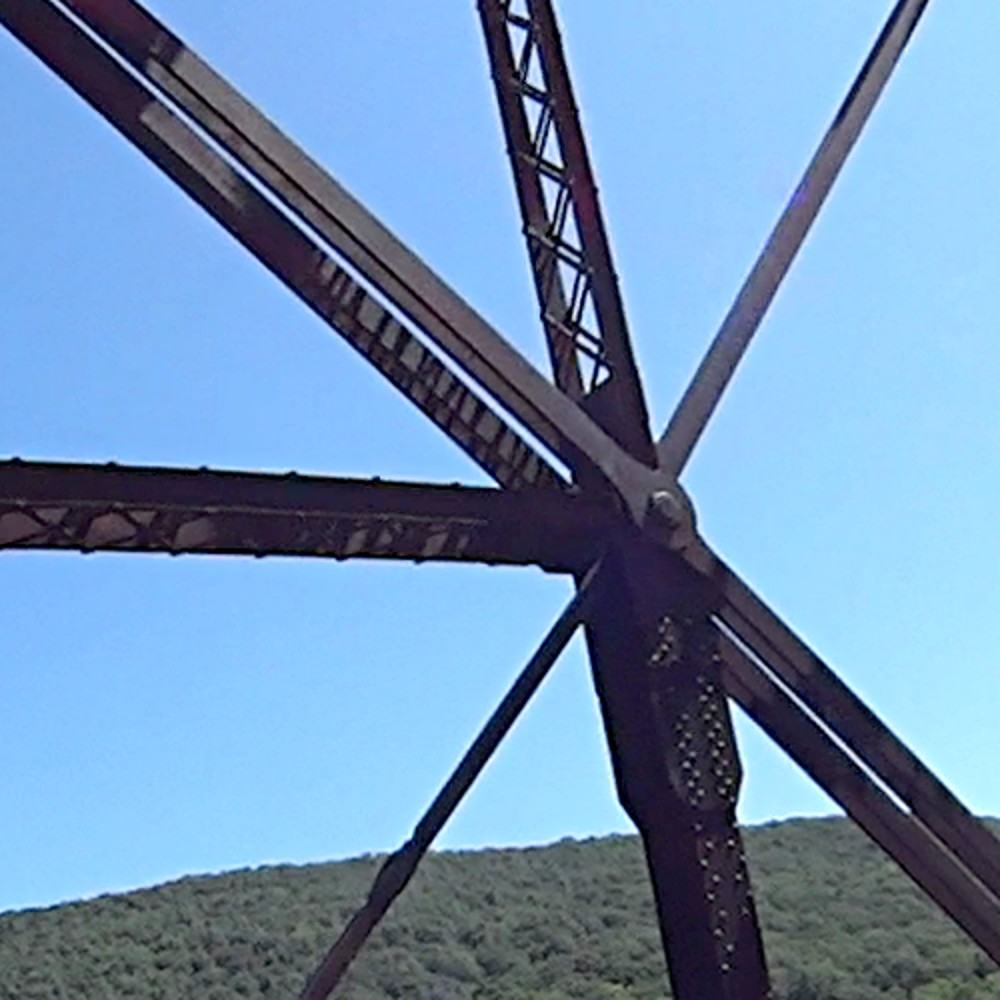
The bolts holding the beams and struts together show considerable confidence:
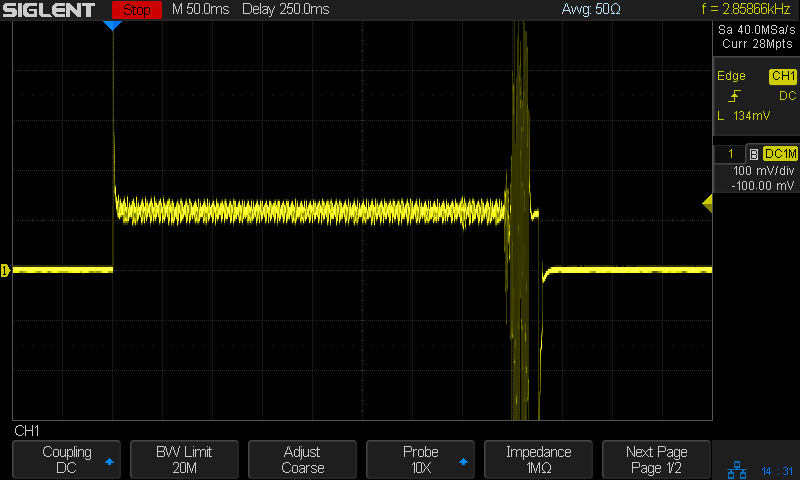
Baofeng UV-5 radios can (mostly) eliminate the loud hiss heard at the end of a transmission before the squelch kicks in after the received carrier drops: Menu → 34 STE → ON. A detailed description of the option suggests it’s a 55 Hz subaudible tone sent for 250 milliseconds after the sender releases the PTT and before the transmitter stops sending, with the receiver muting its audio during the tone. Obviously, this requires a Baofend radio at each end of the conversation, which applies to our bikes.
Saying “laaaa” while kerchunking (into a smaller dummy load than the hulk) with STE OFF:
Baofeng – STE OFF – laaaa
Compared to the received audio, the squelch tail hiss is really really loud.
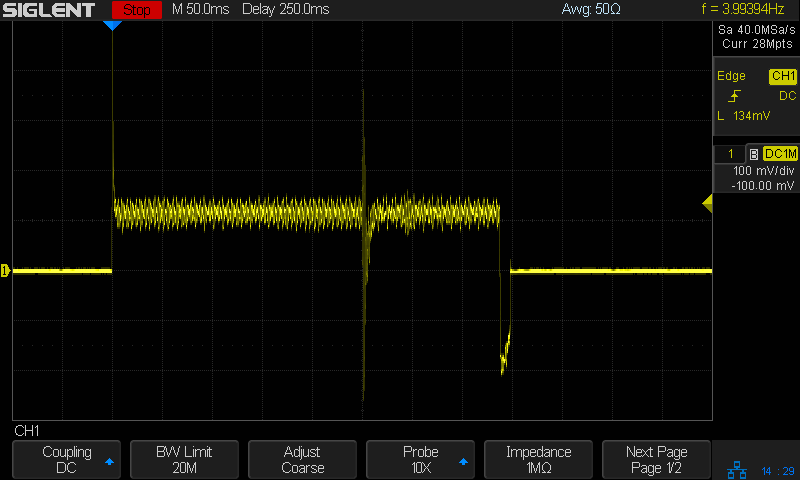
Then with STE ON:
Baofeng – STE ON – laaaa
You can see the STE tone reception start about 250 ms before the audio cuts off, although it’s not at all clear the audio is muted on either end. In any event, there’s no squelch tail worth mentioning, even if there’s an audible tick when the STE tone starts.
Saying nothing with STE ON:
Baofeng – STE ON – silent
It’s unlikely the audio output would include the subaudible tone, but you might convince yourself something happens in the 250 ms between the STE blip near midscreen and the final pop (now clipped) as the audio drops.







 The Smell of Molten Projects in the Morning