Ed Nisley's Blog: Shop notes, electronics, firmware, machinery, 3D printing, laser cuttery, and curiosities. Contents: 100% human thinking, 0% AI slop.
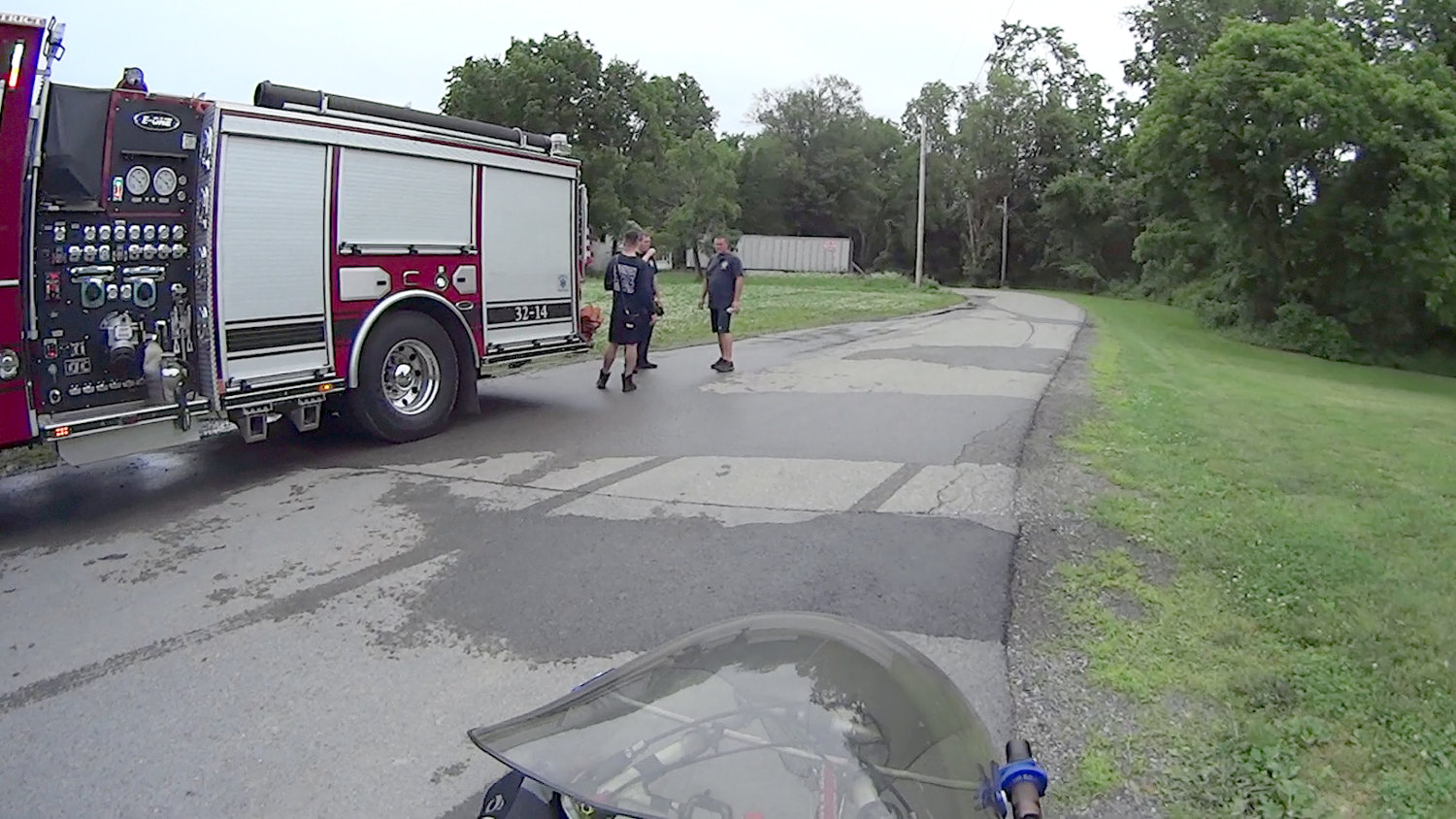
The normal Vassar Farm exit was blocked by Arlington Fire District equipment, but the scene was calm and nobody objected when I asked to ride through:
Fire Department Practice – Hose Engine
They were practicing hose deployment and structure entry in a soon-to-be-demolished building:
Fire Department Practice – Theatrical Smoke
That’s theatrical smoke, not a real fire; the folks off the right of the picture told me it’s impossible to burn down old structures for practice nowadays, what with all the environmental regulations.
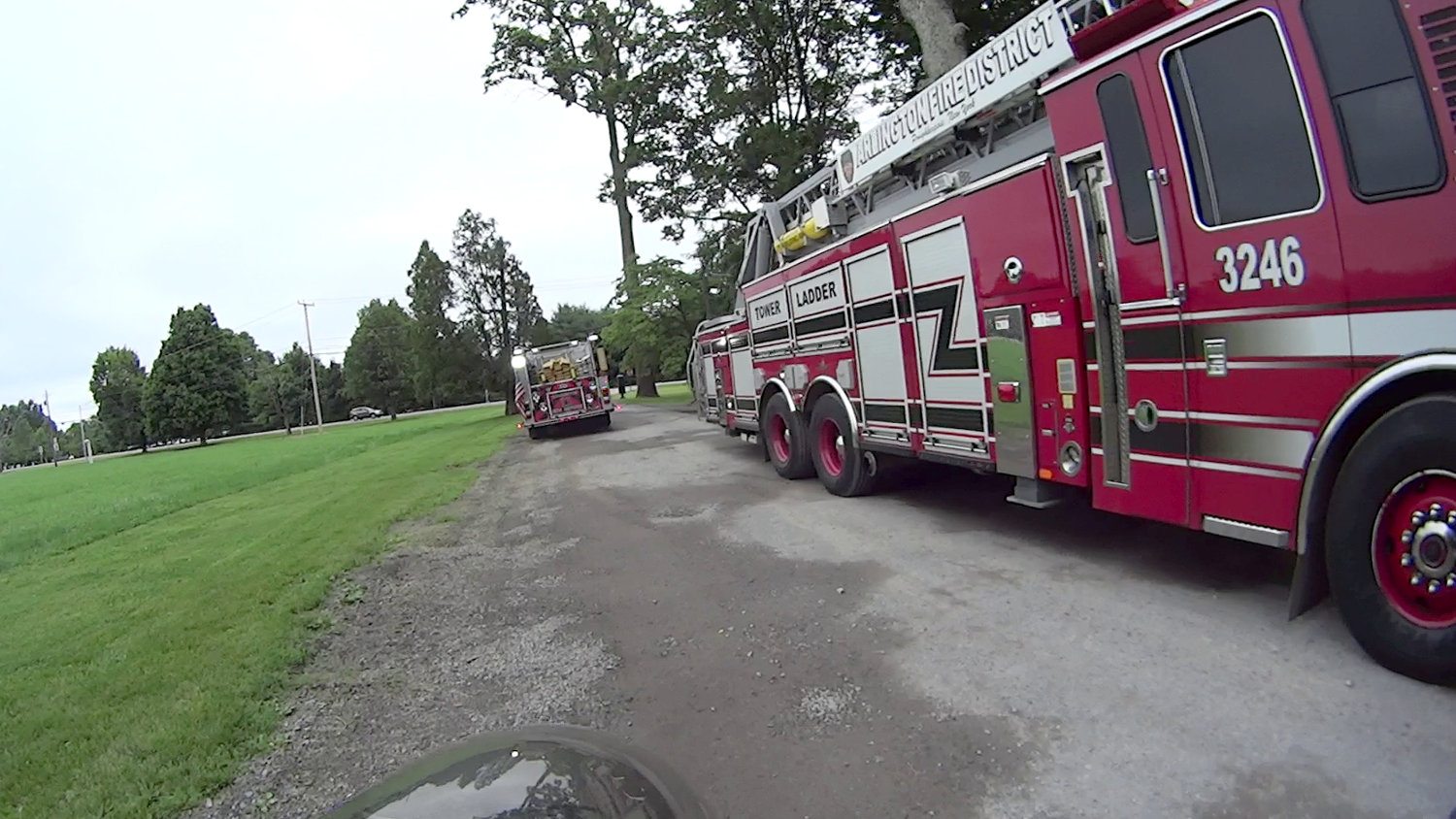
The Tower Truck obviously has more reach than they’ll need for the second floor:
On the other paw, the eyeballometric trend line since mid-April slopes at -1 lb/month and arrives at just over 150 lb in December, so progresscontinues apace.
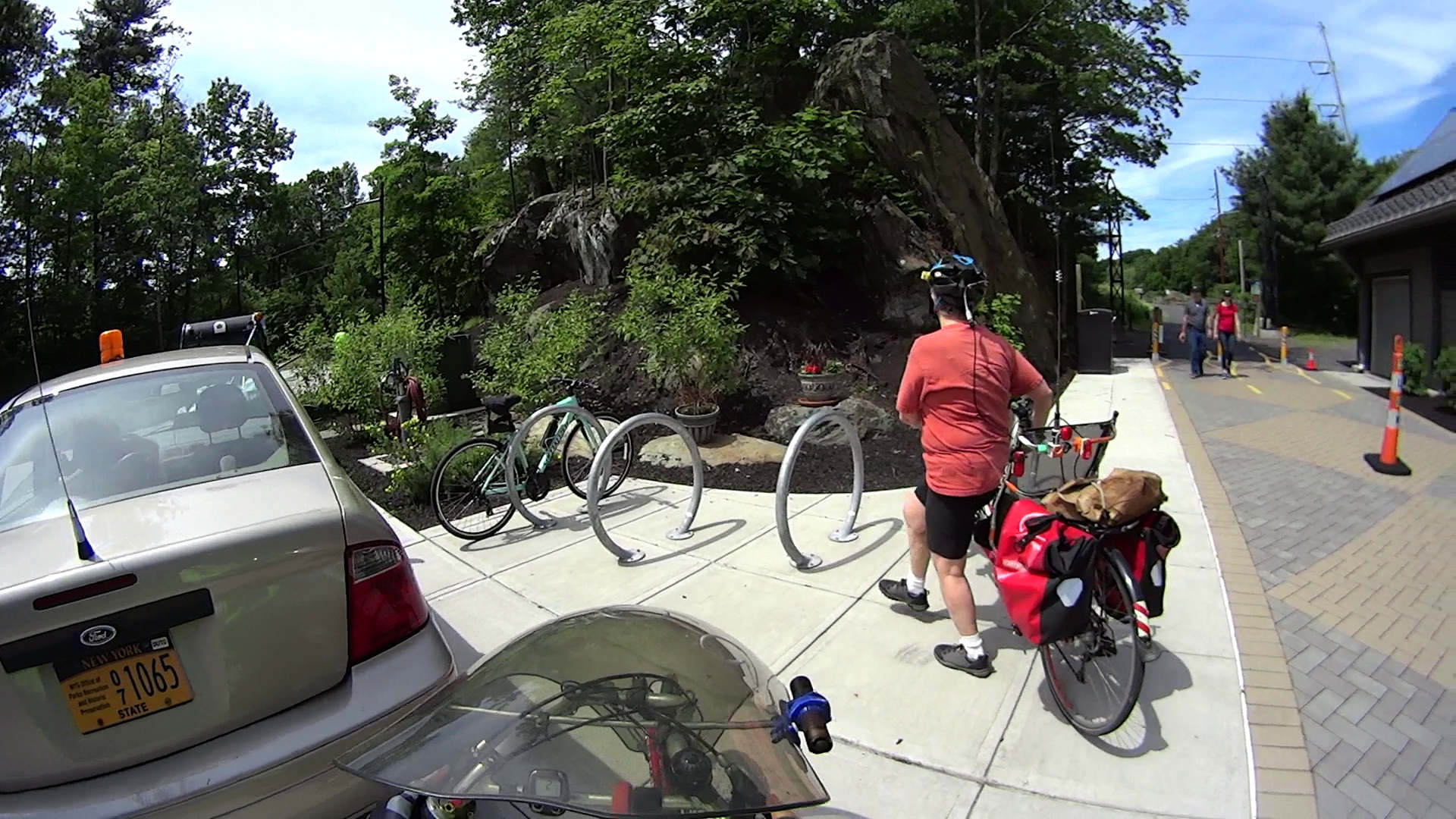
Although different rules apply to the Park staff, so they can drive back & forth across a crowded Walkway with impunity, it’d be courteous if they didn’t block the bike rack with their vehicles. After we parked our bikes in the rack, the woman riding the third bike couldn’t get out and two other riders simply leaned their bikes against the Welcome Center.
Privilege is one thing, flaunting it seems entirely unnecessary.
I’ve yet to understand why the staff must drive over the Walkway at any time, not just park on the pedestrian plaza, as there’s a perfectly serviceable bridge designed specifically for motor vehicles barely half a mile to the south. Heck, on a clear day, you can even see it from the Walkway. [grin]
Our bikes get us from one end to the other in under ten minutes, about as fast as the Park staff can drive, so using a car doesn’t provide any speed advantage. I can carry a week’s worth of groceries in my bike trailer and rarely see the staff carrying anything bigger in the car, so a “we must haul stuff” excuse seems self-serving.
Every “unintended acceleration” mass-casualty incident involves a vehicle, a bunch of pedestrians, and a driver who never thought it could happen. Proactively eliminating vehicle traffic from the Walkway seems much easier than explaining why you didn’t.
Parking vehicles in appropriate places doesn’t require any explanation.
Thanks …
Email to Walkway Over the Hudson
I should have sent it to the sprawling NYS Office of Parks, Recreation, and Historic Preservation, but I hoped the Walkway staff could forward it to the right person. Haven’t heard anything back; I should have saved the electrons.
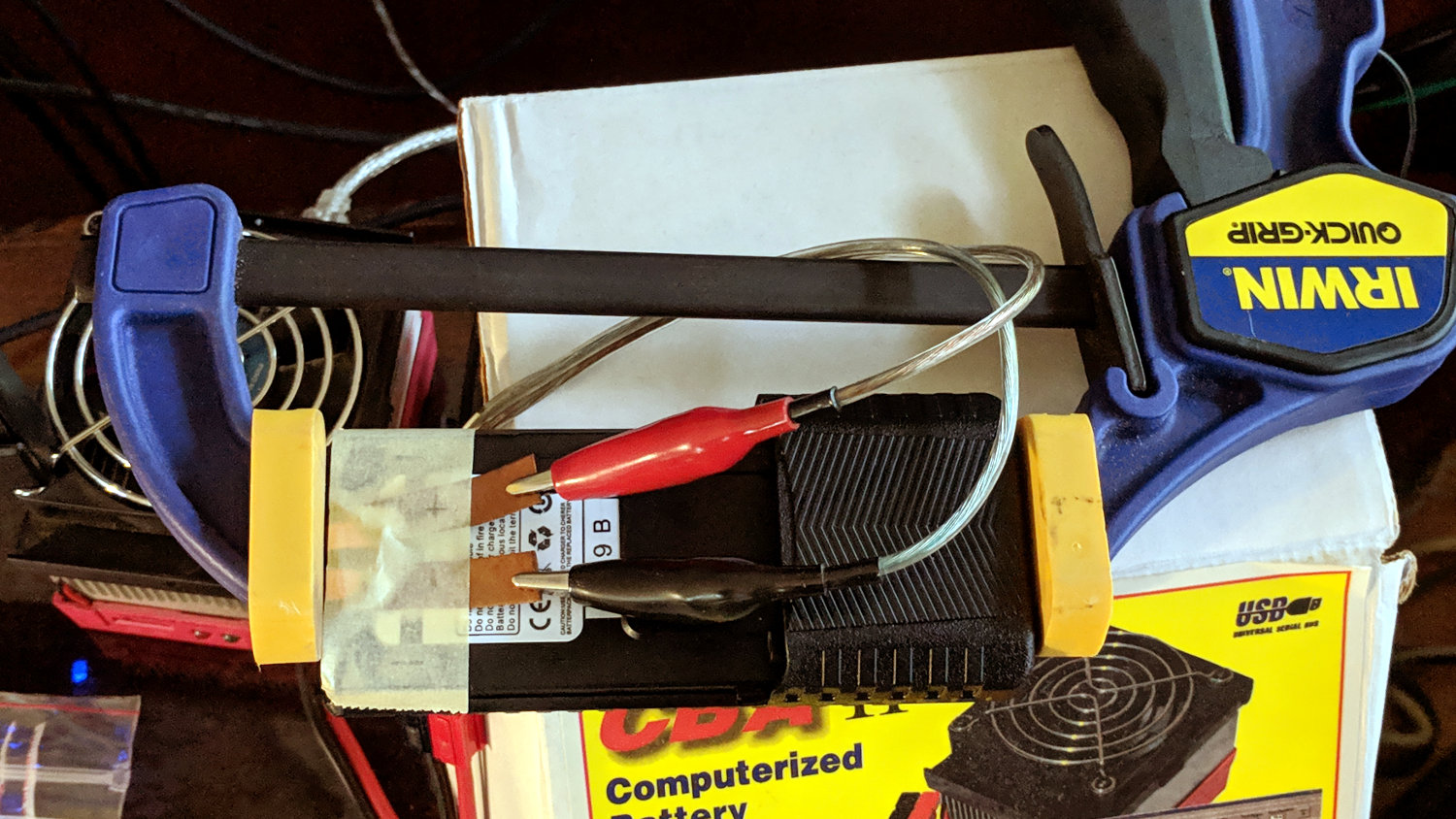
I conjured a “test fixture” from a clamp, copper sheet, and copper tape snippets:
Baofeng battery – test setup
Which produced interesting results:
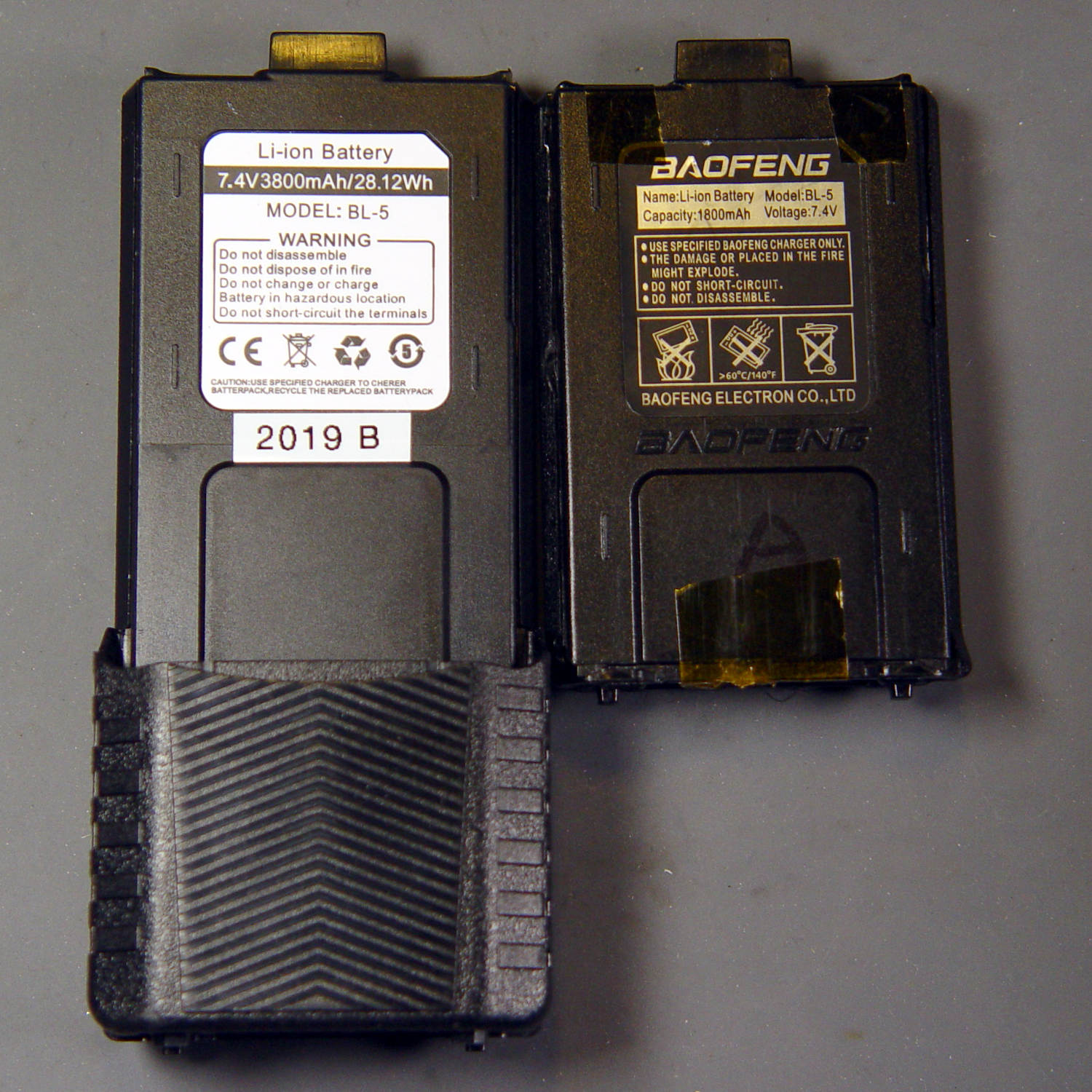
Baofeng BL-5 3800 mAh packs – Ah – 2019-05
The 250 mA load = 15 hour rate seemed reasonable to simulate radios spending most of their time in power-save mode, but the packs still delivered only 2.8 A·h.
The packs also claim an unnaturally precise 28.12 W·h, but they’re still underperformers at 20 W·h:
Baofeng BL-5 3800 mAh packs – 2019-05
Anyhow, I can run the radios for a week without (worrying about) running out of juice during a ride.
A reader asked how the M20 camera mount on my bike works with respect to the camera’s clock; this description explains a few things missing from the original writeup.
SJCAM M20 Mount – Tour Easy side view
Do you have to set the time & date at start of every ride?
The internal clock shuts down about ten seconds after you pull the battery. If-and-only-if you swap batteries fast enough, it’ll keep time forever. Screw up once and it snaps back to Epoch Zero.
“Car mode” automagically begins recording when USB power goes on, but the manual advises:
TIP: When using your camera as a dashcam, use a car charger cable and remove the internal battery to make sure it does not die out while you travel.
That’s because the M20 continues to run from its internal battery when USB power drops. After recording an hour of a parking lot or your garage wall, the battery dies and so does the clock.
Of course, without the internal battery, the clock dies ten seconds after you turn off the car.
The internal battery has many days of capacity with the camera turned off (whew!), so I conjured the case & PowerCore battery tray to handle our normal rides. The internal battery keeps the clock alive overnight and during the rain we’ve had for the last week, the PowerCore supplies juice during the ride, and I recharge the PowerCore every few weeks.
The M20 doesn’t draw charging current when I turn it on, but poking the PowerCore’s status button also turns on its outputs, whereupon the M20 decides it should begin charging and, bonus, draw power from the PowerCore during the entire ride. The M20 finishes charging while we ride, but the PowerCore continues supplying power and, when I turn the M20 off, the PowerCore sees no current draw and shuts itself off.
Only a geek could love a lashup like that, but it works around the M20’s broken clock and removes its battery maintenance hassle.





 The Smell of Molten Projects in the Morning