Ed Nisley's Blog: Shop notes, electronics, firmware, machinery, 3D printing, laser cuttery, and curiosities. Contents: 100% human thinking, 0% AI slop.
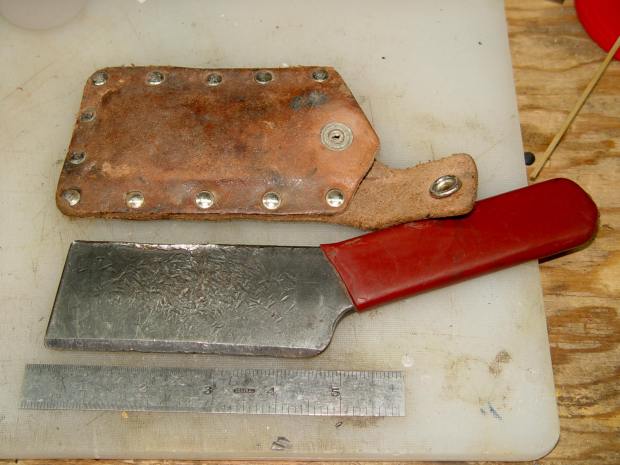
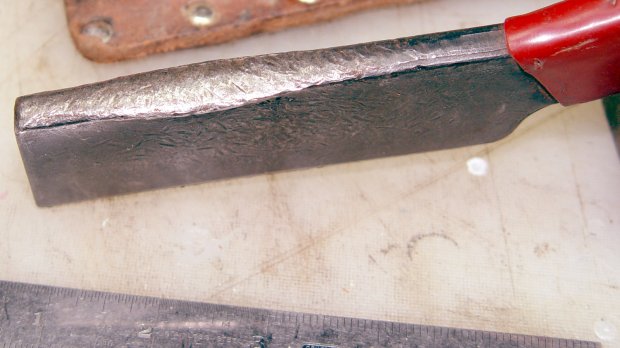
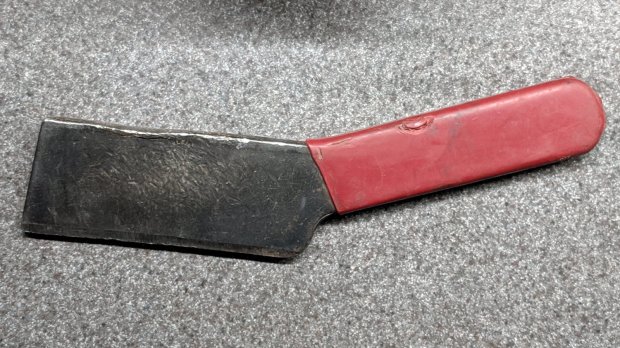
After a few days of topping off the rear tire on Mary’s bike, with no gashes or debris in the tire, I finally replaced the Michelin Protek tube and autopsied it:
Michelin Protek tube autopsy
While it’s possible to extract the valve and perhaps even clean / replace it, I think that’s just delaying the inevitable. The rubber shreds may be necessary to fill large punctures, but they seem to wreck the valve seal.
Her bike now has an ordinary (pronounced “cheap”) tube inside the Schwalbe Marathon Plus armored tire. We’ll see how long this lasts.
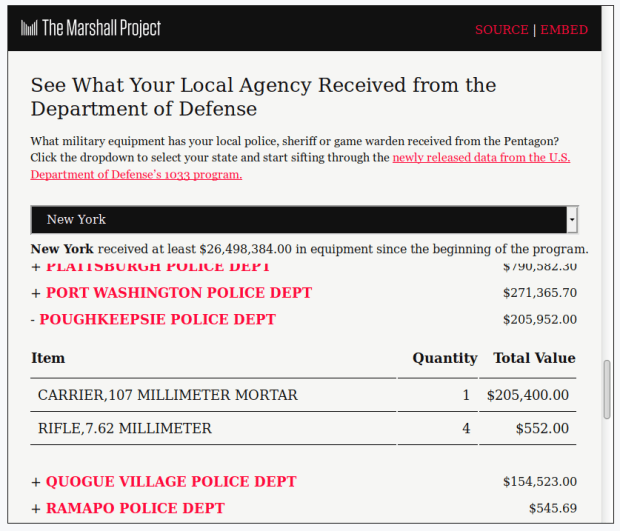
Marshall Project – Poughkeepsie 107 mm Mortar Carrier
The M106 is an impressive hunk of tracked armor, although it seems unsuited for urban warfare and would certainly scuff up the streets pretty badly. I don’t know if they scrapped the M106 in favor of the MRAP.
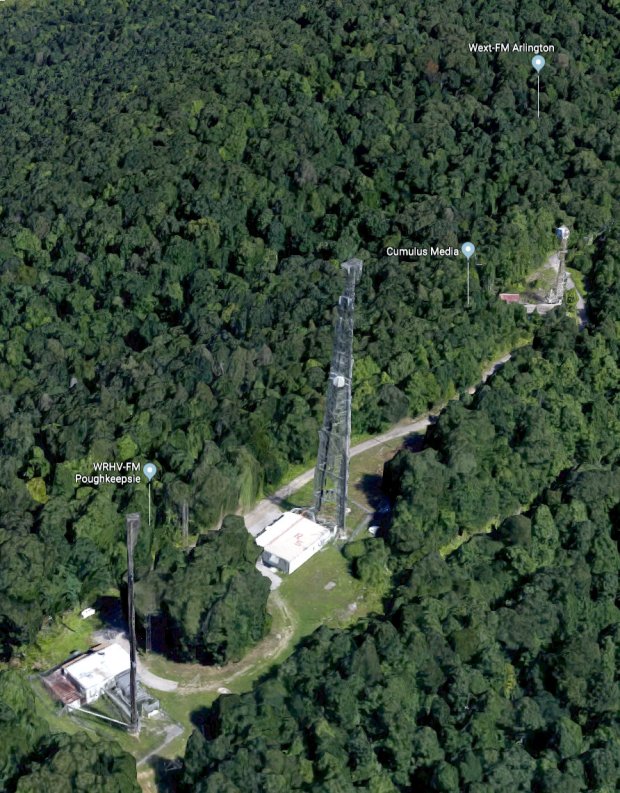
The Baofeng UV-5R radios on our bikes seem absurdly sensitive to intermodulation interference, particularly on rides across the Walkway Over the Hudson, which has a glorious view of the repeaters and paging transmitters atop Illinois Mountain:
Walkway Over The Hudson – Illinois Mountain Antennas
A better view of the assortment on the right:
Illinois Mountain – North Antennas
And on the left:
Illinois Mountain – South Antennas
Not shown: the Sheriff’s Office transmitter behind us on the left and the Vassar Brothers Hospital / MidHudson pagers on either side at eye level. There’s plenty of RFI boresighted on the Walkway.
Anyhow, none of the Baofeng squelch settings had any effect, which turned out to be a known problem. The default range VHF covered a whopping 6 dB and the UHF wasn’t much better at 18 dB, both at very low RF power levels.
We use the radios in simplex mode, generally within line of sight, so I changed the Service Settings to get really aggressive squelch:
Baofeng UV-5R – Improved Squelch Settings
I have no way to calibrate the new signal levels, but I’d previously cranked the squelch up to 9 (it doesn’t go any higher) and, left unchanged, the new level makes all the previous interference Go Away™. Another ride over the Walkway with the squelch set to 4 also passed in blissful silence.
If the BF-F9 levels mean anything on a UV-5R, that’s about -100 dBm, 20 dB over the previous -120 dBm at squelch = 9.
The new squelch levels may be too tight for any other use, which doesn’t matter for these radios. As of now, our rides are quiet.
[Update: Setting the squelch to 5 may be necessary for the Walkway, as we both heard a few squawks and bleeps while riding eastbound on a Monday afternoon. ]
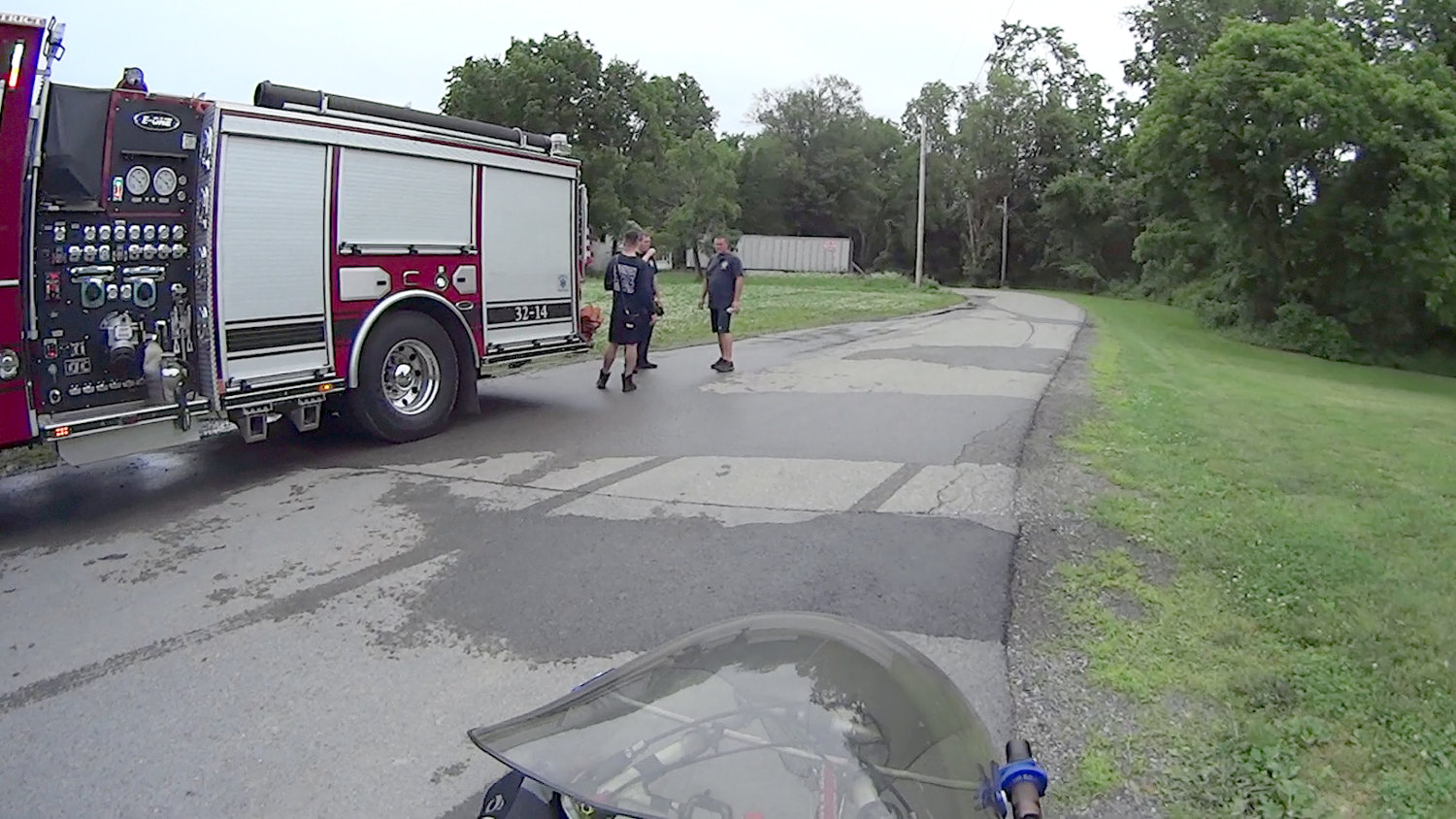
The normal Vassar Farm exit was blocked by Arlington Fire District equipment, but the scene was calm and nobody objected when I asked to ride through:
Fire Department Practice – Hose Engine
They were practicing hose deployment and structure entry in a soon-to-be-demolished building:
Fire Department Practice – Theatrical Smoke
That’s theatrical smoke, not a real fire; the folks off the right of the picture told me it’s impossible to burn down old structures for practice nowadays, what with all the environmental regulations.
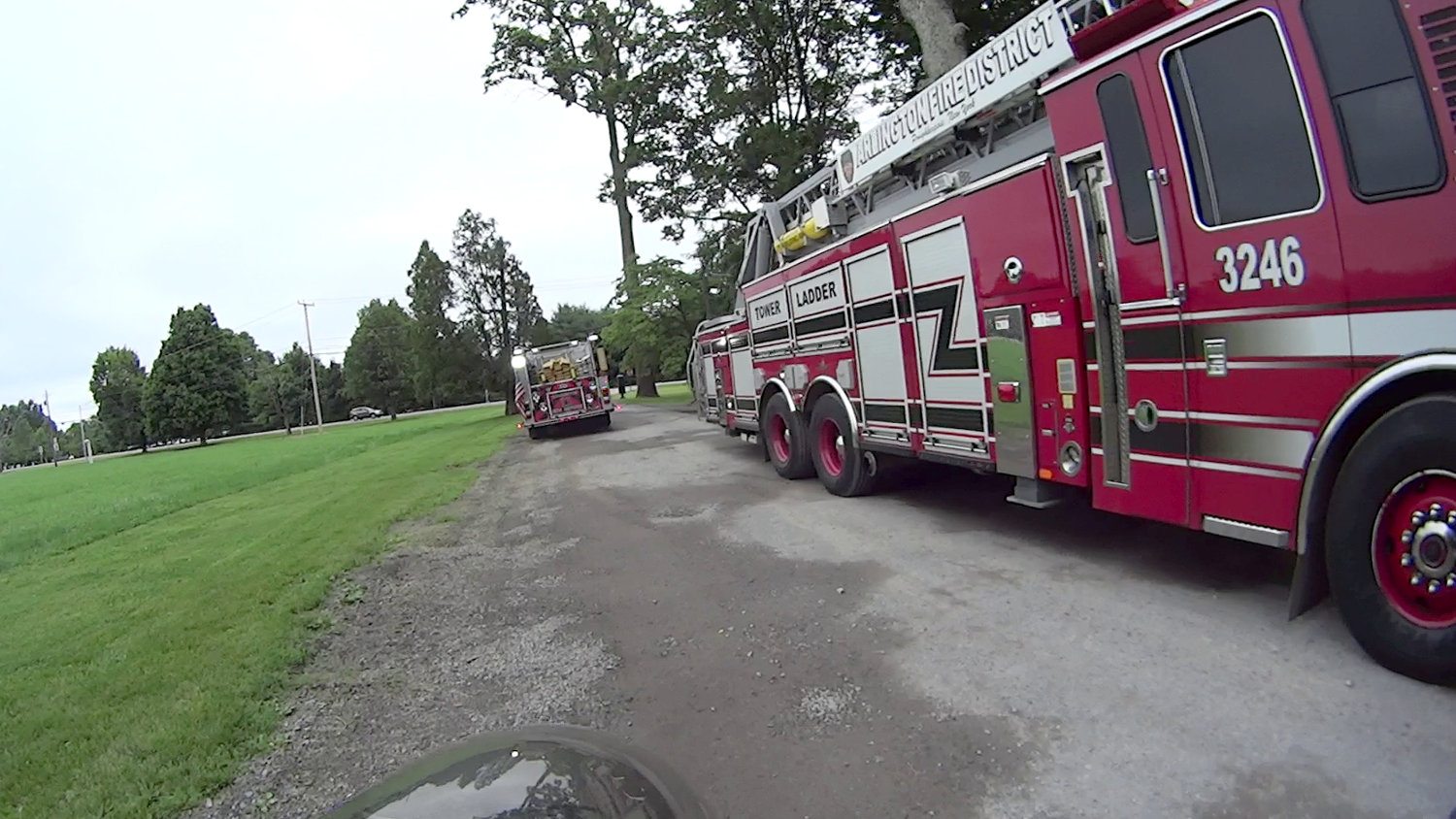
The Tower Truck obviously has more reach than they’ll need for the second floor: