Ed Nisley's Blog: Shop notes, electronics, firmware, machinery, 3D printing, laser cuttery, and curiosities. Contents: 100% human thinking, 0% AI slop.
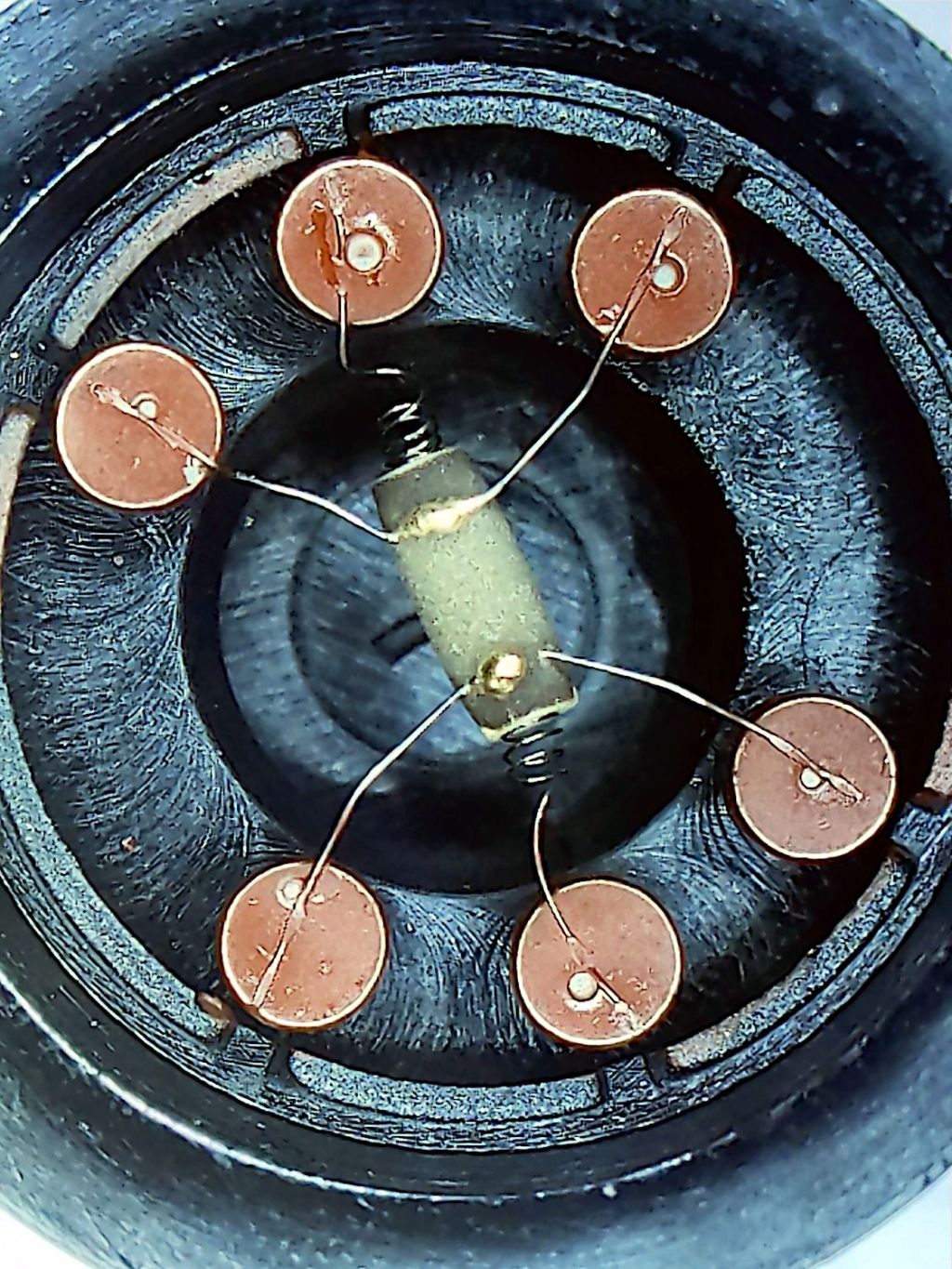
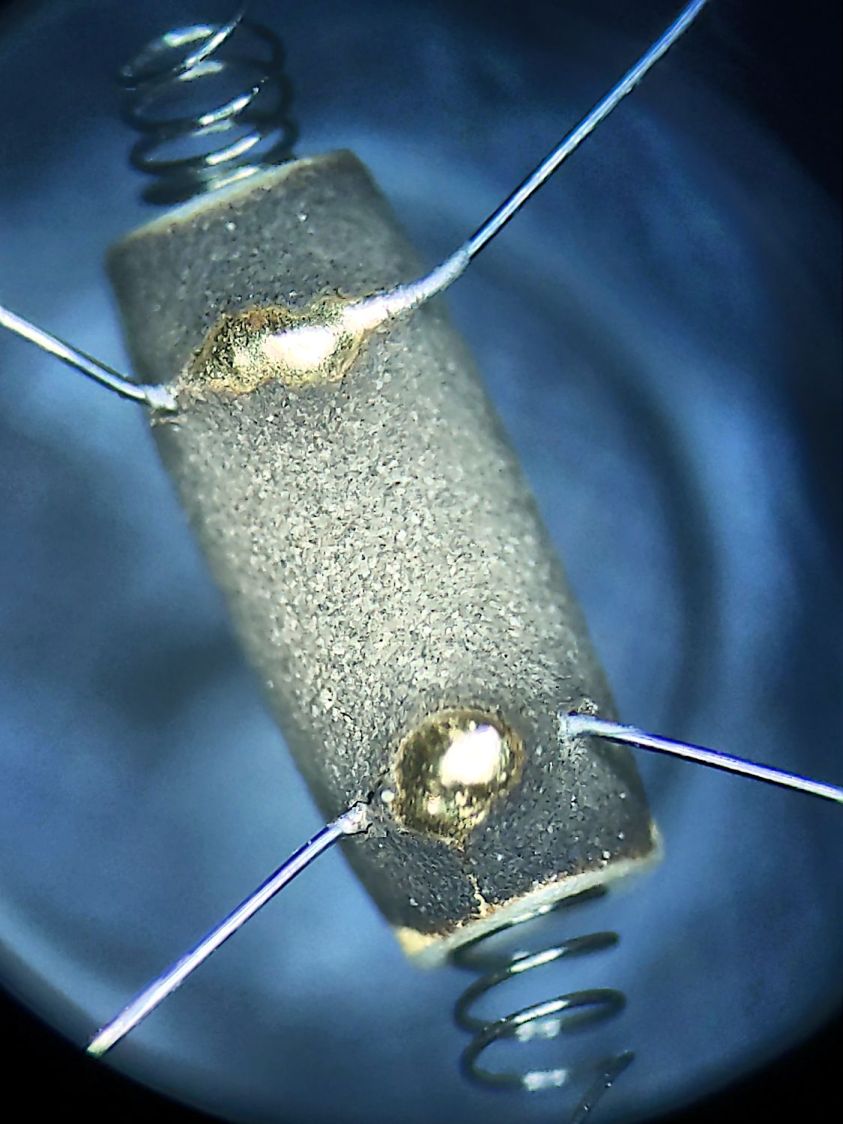
The granular surface does not get along well with the 5× digital zoom required to fill the phone’s sensor, but you get the general idea:
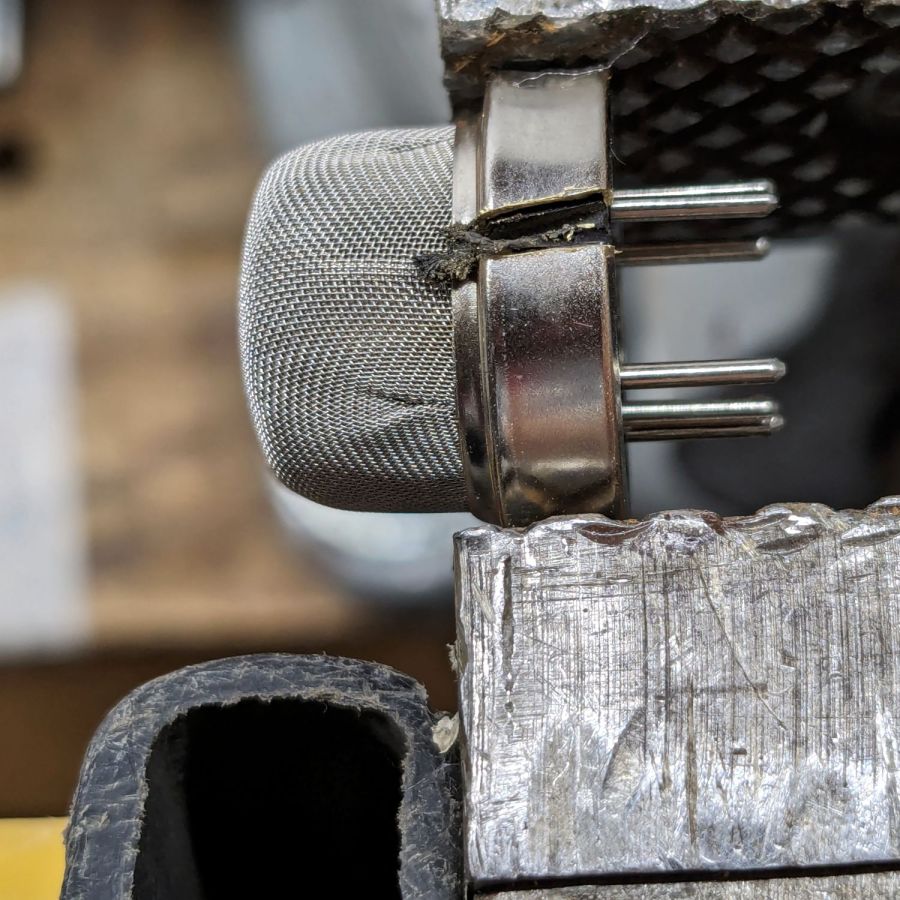
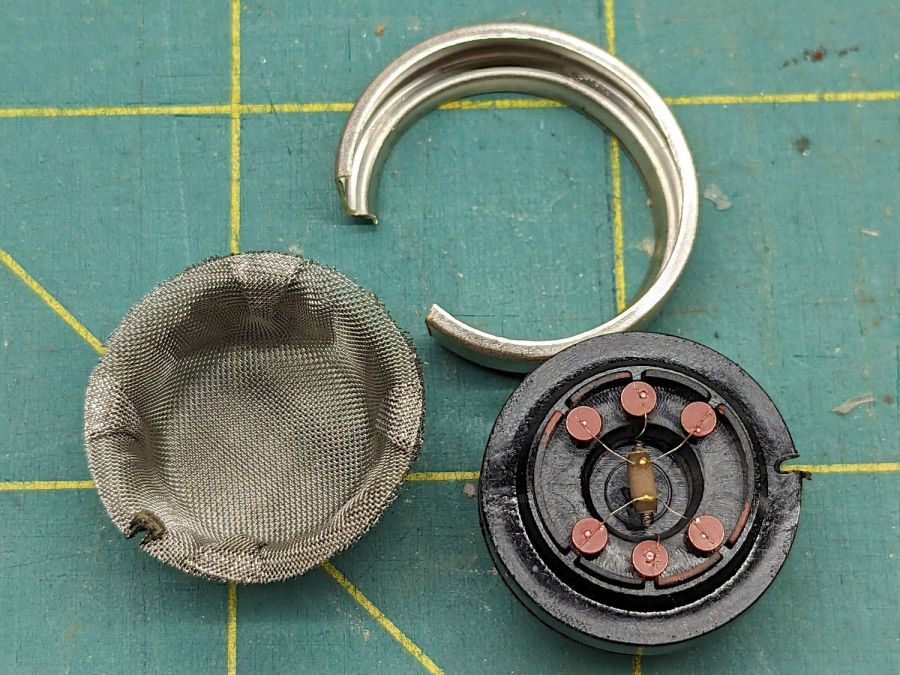
Figaro TGS880 – element detail
The heater measured 30 Ω on the dot and the sensor was an open circuit on the 100 MΩ range. Connecting the heater to a 5 V supply dropped the sensor resistance to 800 kΩ @ 50 %RH and a warm breath punched it to about 2 MΩ. That’s with an ohmmeter because I haven’t yet unpacked the Electronics Bench, but seems far above the spec of 20-70 kΩ in air.
So it’s still a sensor, even if it’s not within spec.
The WordPress AI-generated image for this post is … SFnal:
Figaro TGS-880 Gas Sensor – AI generated image
My pictures apparently aren’t up to contemporary blog standards …
The Samsung over-the-range microwave (ME18H704SFS, should you care) that Came With The House™ coughed up a C-11 error code resolving to “replace the gas / humidity sensor”. Replacement DE32-60013A sensors are readily available, although if you’re expecting a Genuine Samsung Part from Amazon, that is not the universe I live in.
You can remove the upper front bezel from the microwave to reveal the slotted front cover of the compartment containing the sensor, but you cannot replace the sensor without extracting the microwave from above the stove and removing its shell. The bottom of the microwave sits about 18 inches above the stove, so I put a 16 inch cubical moving box (of which we have a near-infinite supply) on the stove to reduce the risk of dropping the mumble thing while removing it.
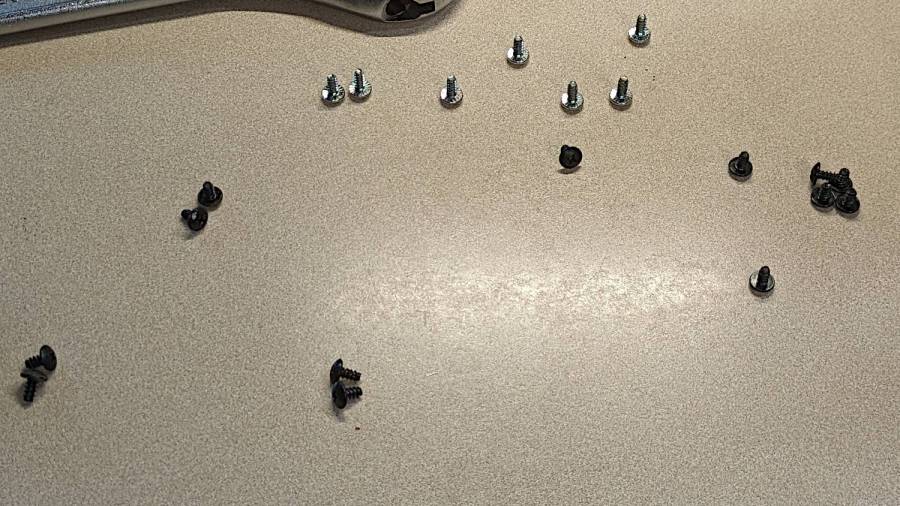
A total of 20 screws, here laid out in roughly geographic order, hold the shell to the inner frame:
Samsung microwave – cabinet screws
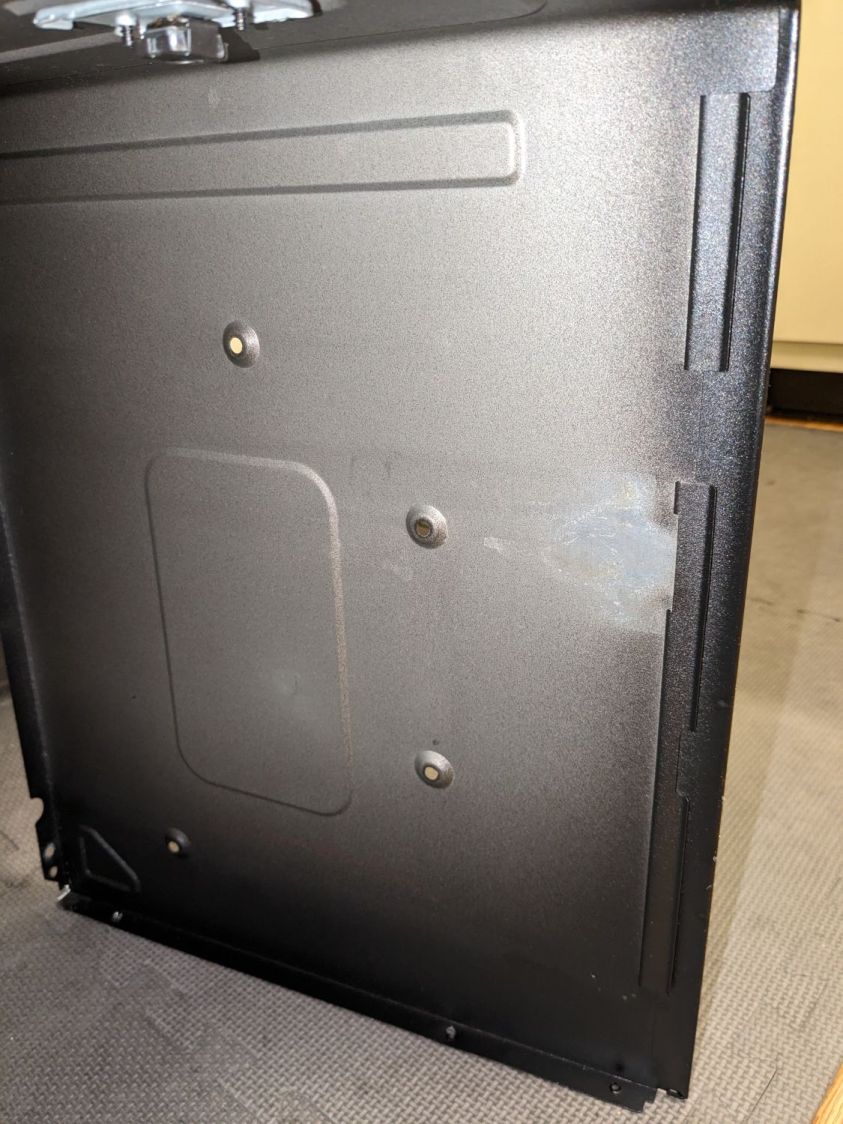
With all the screws out, slide the shell toward the rear by more than you might think to clear the latches along both sides. The latches along the front of the right side look like this:
Samsung microwave – shell side latches
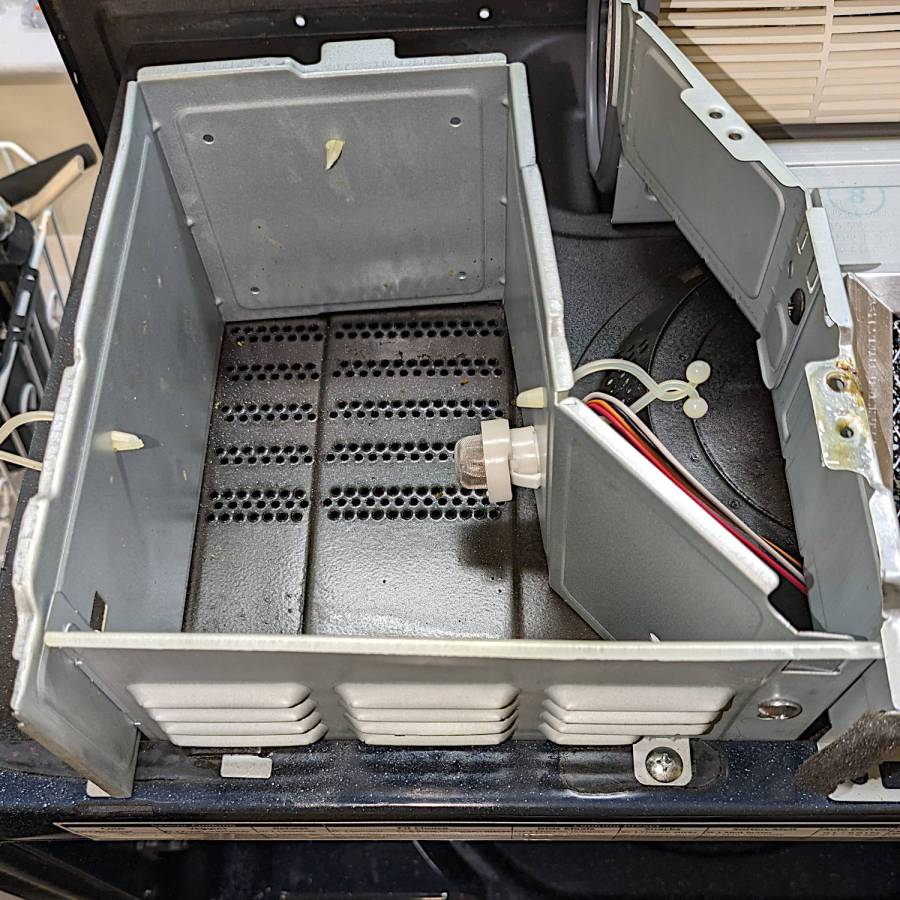
With the shell off, the sensor compartment on the top of the microwave enclosure is revealed:
Samsung microwave – TGS880 enclosure
Although you might think removing those two screws would grant access to the sensor compartment and let you replace the sensor (if you have very long fingers), that is not the case: the small tab toward the left side of the louvered front plate prevents you from sliding it and the plate is not hinged along its left side.
The sensor is held into the socket by a clip snapping into the arms that, in turn, hold the socket into the side wall:
Samsung microwave – TGS880 mount detail
A small screwdriver will assist in releasing the latches on the clip arms; squeezing them in the obvious way didn’t get the job done.
The old sensor then unplugs and the new one plugs in the obvious manner; it is not polarized and either orientation works.
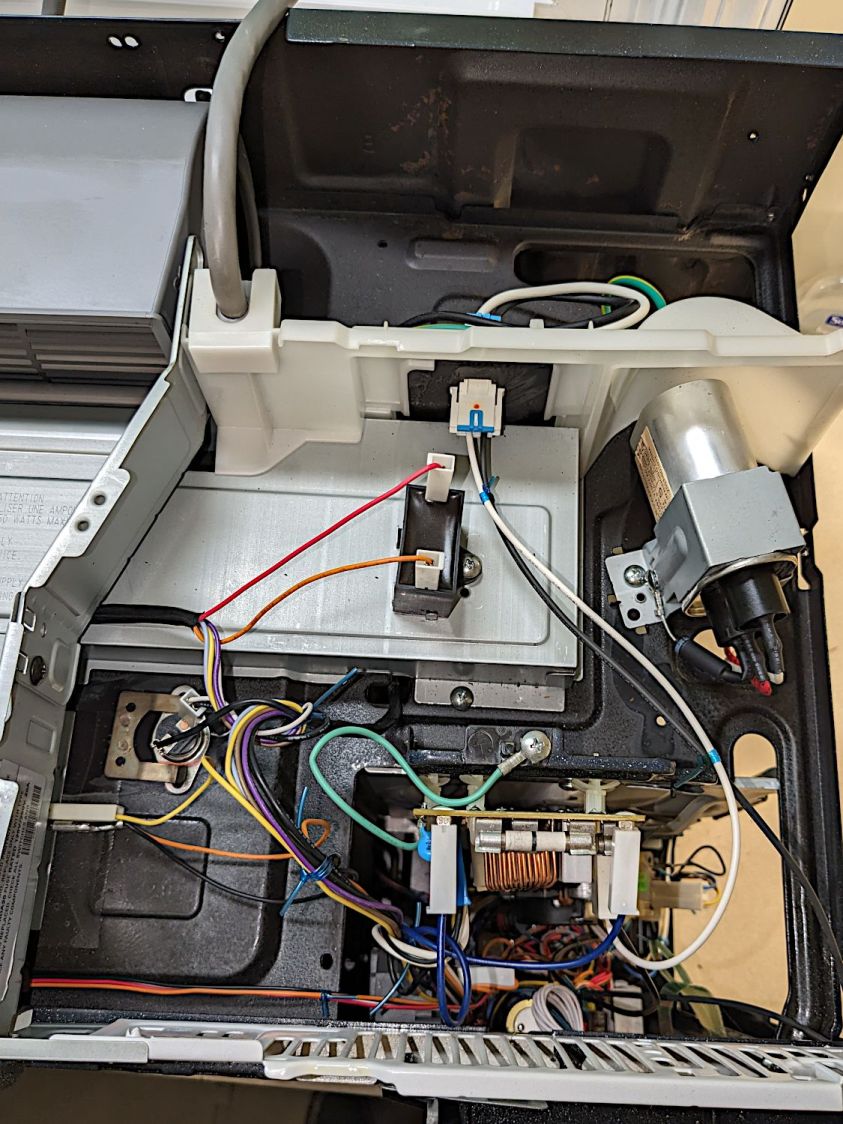
For completeness, the top of the electronics bay:
Samsung microwave – top interior
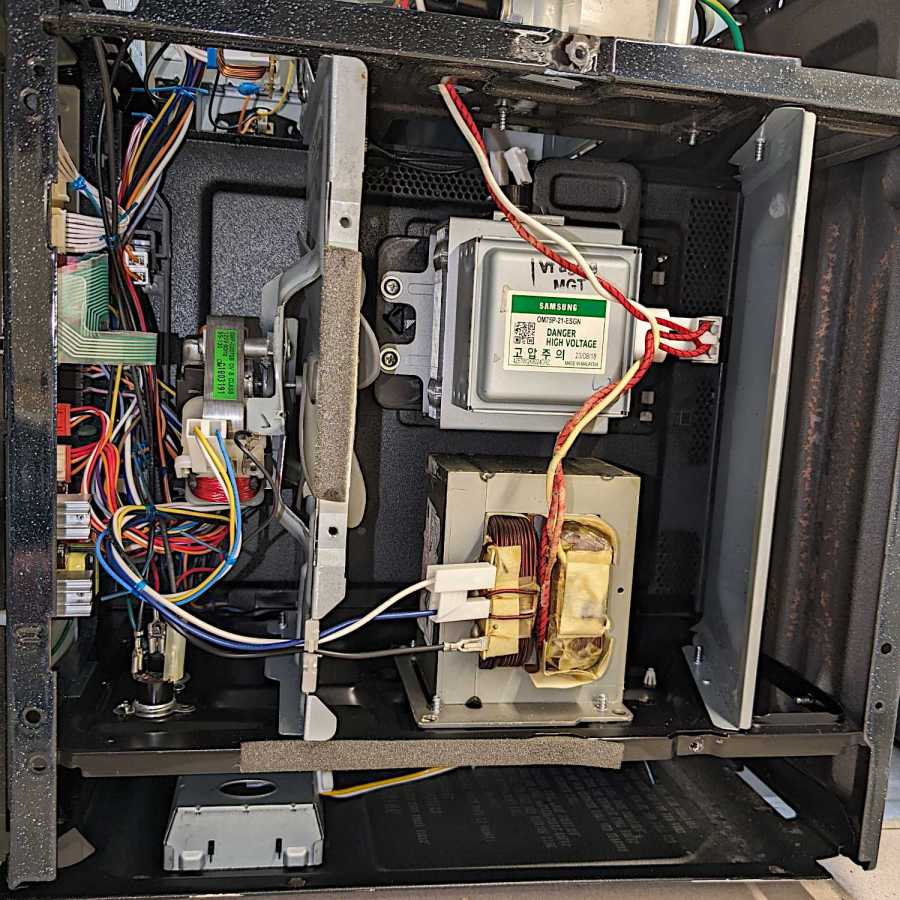
The magnetron and HV transformer live on the right side:
Samsung microwave – left interior
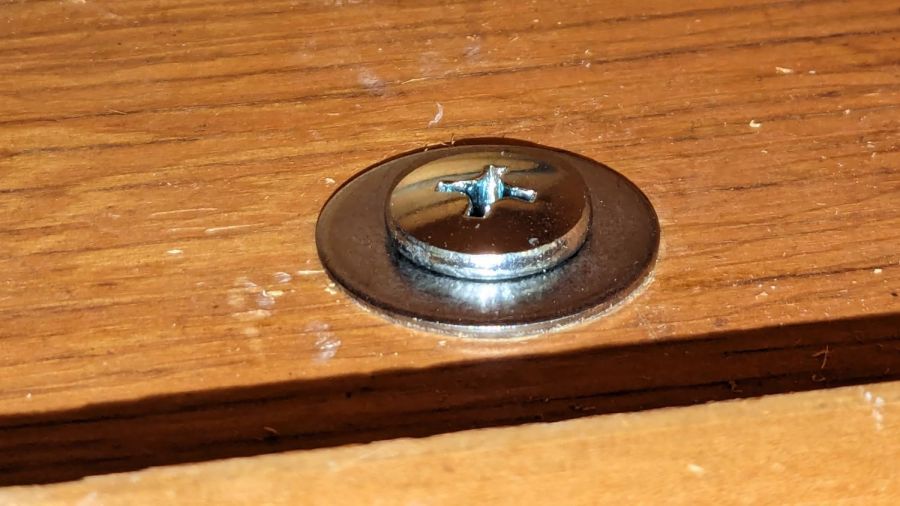
Then you reassemble in reverse order, heave the microwave atop the 16 inch cubical box, hoist it onto the rail along the back, and install the two loooong screws from the top while holding the front upward with one knee. I took the liberty of replacing the janky steel plates pretending to be washers with actual fender washers:
Samsung microwave – mounting screw
And now it works the way it should.
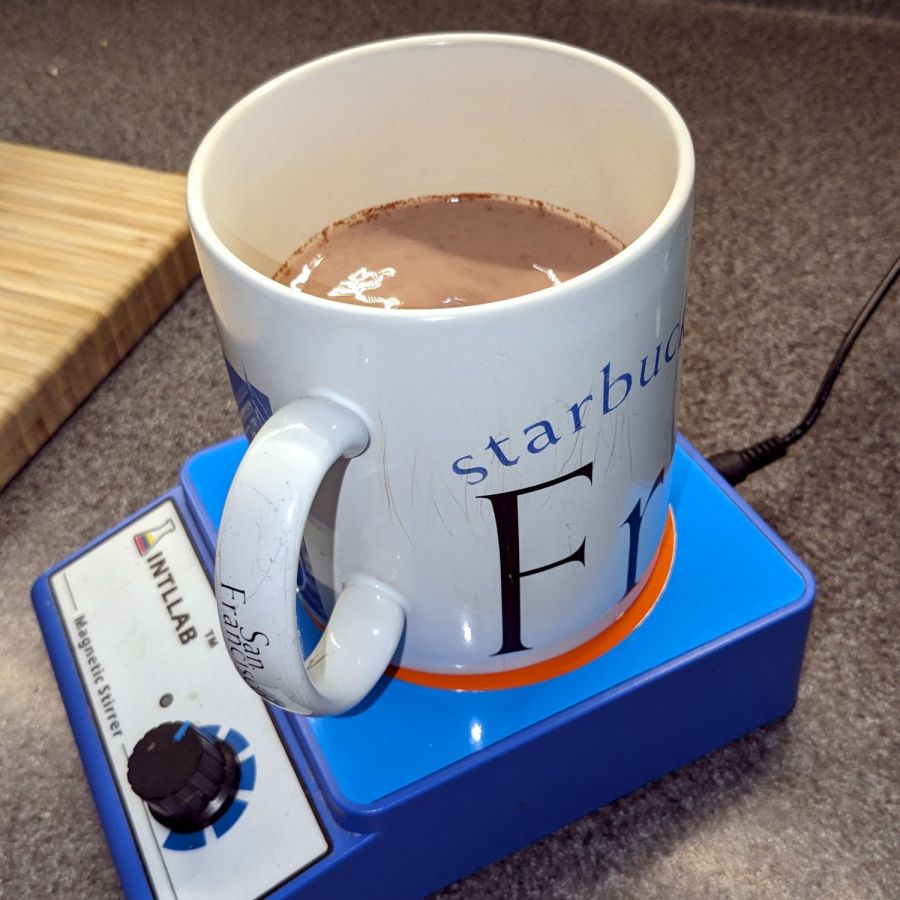
Of course, the microwave’s “beverage” mode assumes you’re drinking a piddly 8 ounces, rather than sipping from a manly 20 ounce mug:
Magnetic stirrer – vinyl surface
It heats 9 ounces of milk + cocoa just fine, but those 18 ounces of water for tea become just barely tepid.
WordPress has gone full-frontal AI and suggested I use this AI creation as the Featured Image:
The WordPress AI generated this evaluation of my writing:
The content provides a detailed guide on replacing the gas/humidity sensor in a Samsung over-the-range microwave. Consider adding subheadings to break down the process for easier reading. Additionally, including a brief introduction and a conclusion summarizing the key points would enhance the post. The technical details and images greatly support the instructions. Great job!
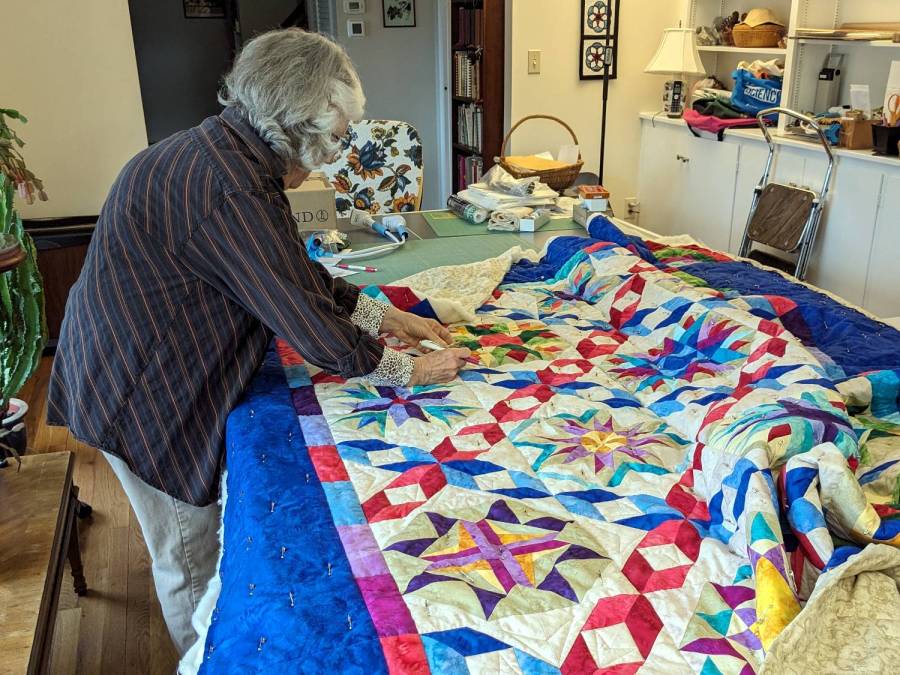
Mary redesignated the Prince Tournament 6800 ping-pong table that Came With The House™ as her quilting layout table, so it now fills much of the Sewing Room (f.k.a. the Living Room):
Mary with quilt on ping-pong table
For reasons lost in the table’s history, the two halves of the top surface weren’t quite flush on one side, by a matter of a few millimeters. This bothered me far more than it did her, so the delay until I finally fixed it wasn’t critical:
Prince ping-pong table leveler
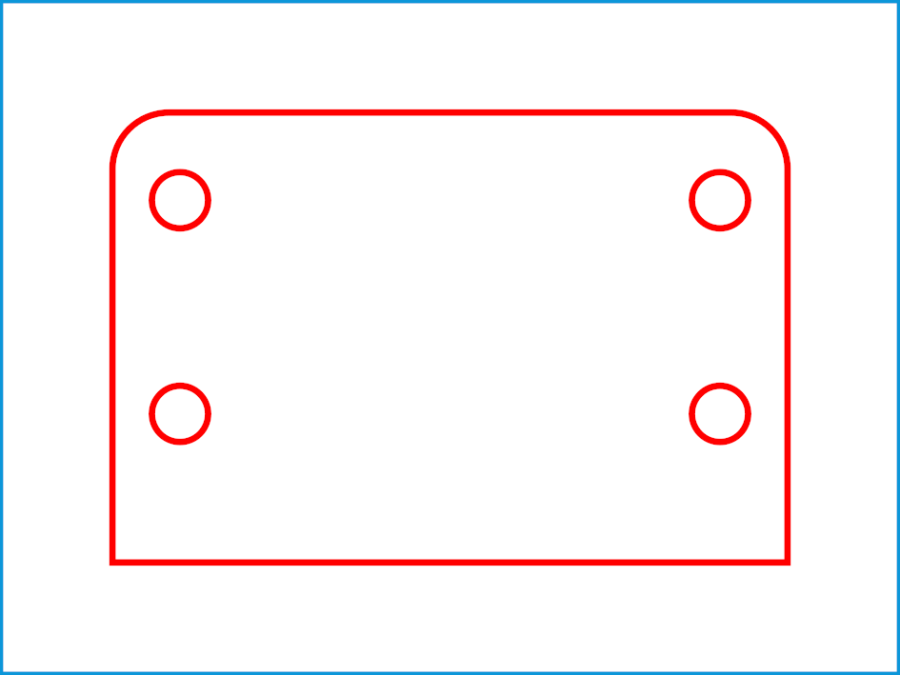
That’s 3 mm plywood + 1.5 mm Trocraft Eco pushing the surface upward just enough to almost make the joint (visible near the bottom of the picture) flush within +2 -1 mm across the table width, making it obvious that neither piece is exactly planar.
The shape has mixed metric and inch dimensions, for no reason I know:
Prince ping-pong table leveler
If you ever need such a thing, remember to use screws about 4 mm longer than the ones you took out.
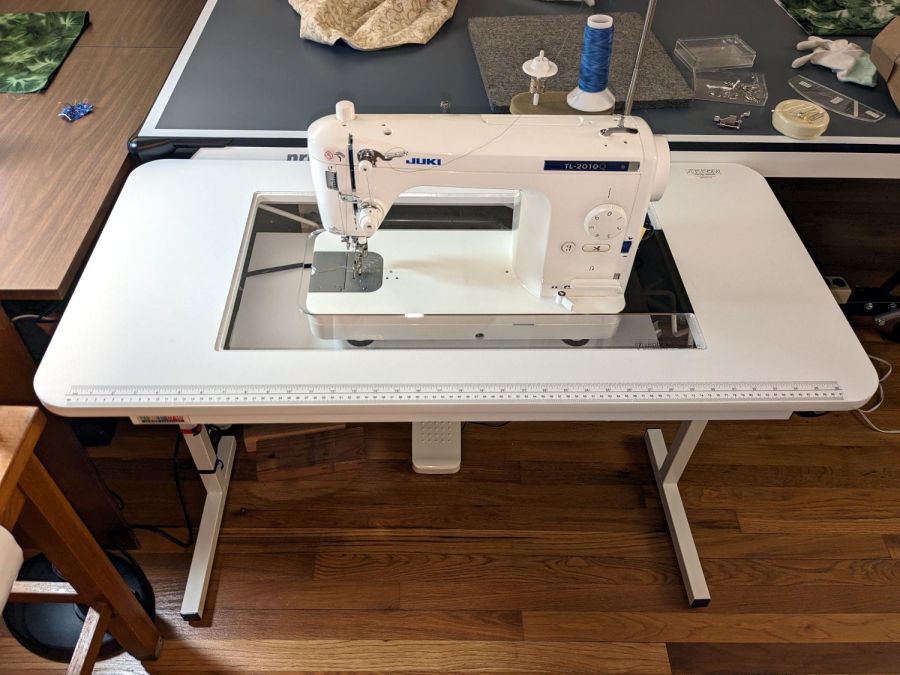
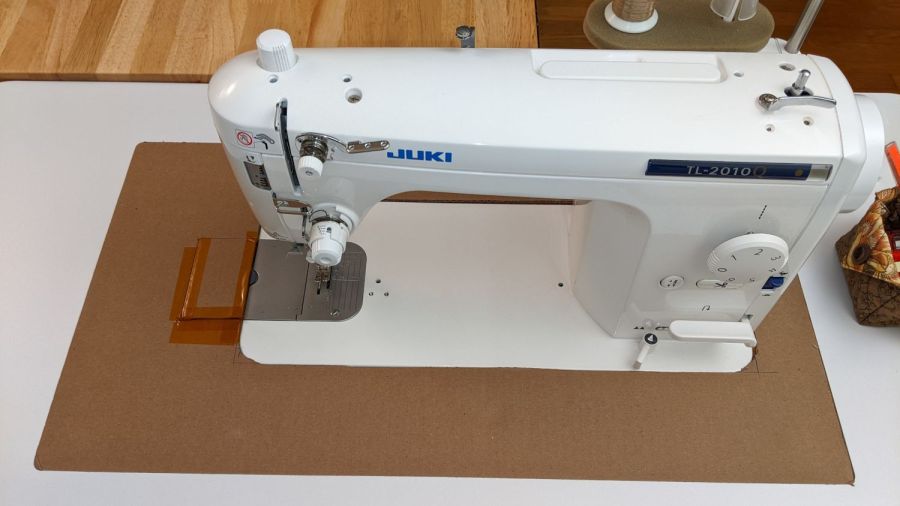
Although it may not be obvious from the picture, unlike my cardboard insert, the acrylic insert does not fill the tabletop hole to the immediate right of the machine:
Custom Inserts are U-shaped, designed to fit around all 3 sides of your sewing machine
Shortly after the insert arrived I hacked a temporary filler, for which no pictures survive, to keep pins / tools / whatever from falling to their doom. This turned out to be a blessing in disguise, because she wanted the machine positioned an inch to the right of its intended spot to leave enough space for a finger to reach the bobbin hatch latch.
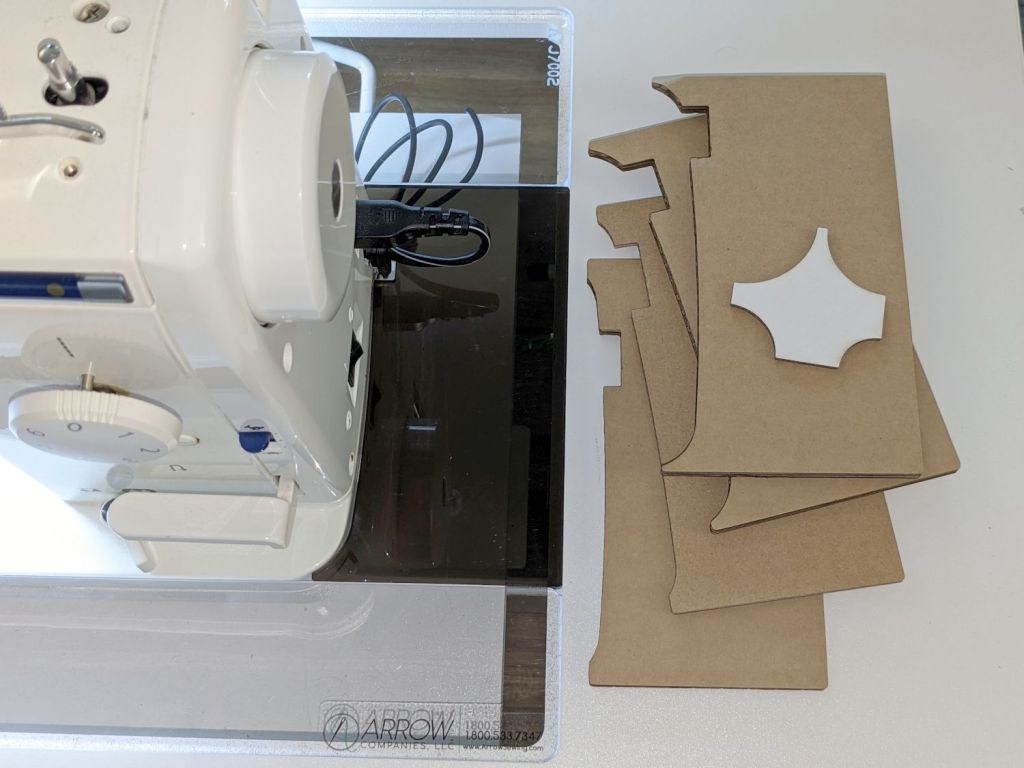
I then promised to replace the ugly cardboard filler with a less awful acrylic filler and finally got it done:
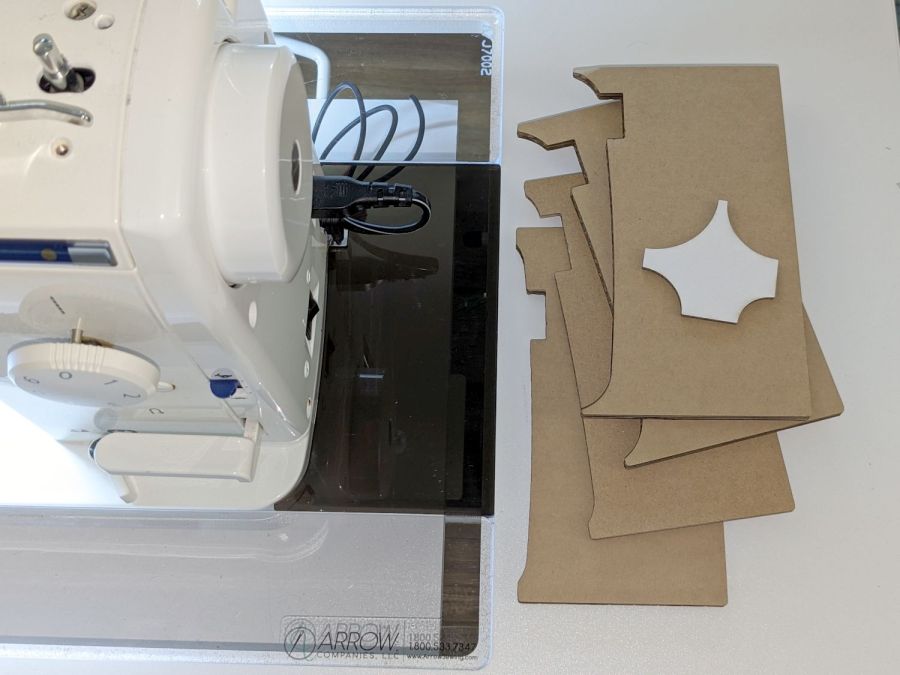
Juki TL-2000Q in Gidget II table – insert filler
The stack of cardboard prototypes show iterative fit-and-finish improvements, with the odd shape on the top serving to measure the machine’s 25 mm corner radius by comparison with known circles.
The insert filler is made from smoked gray acrylic, because I have yet to unpack the acrylic stockpile and may not, in fact, have any clear 6 mm acrylic, so we’ll regard this as a final prototype pending further developments. It did, however, confirm the laser survived the move, which was pretty much the whole point.
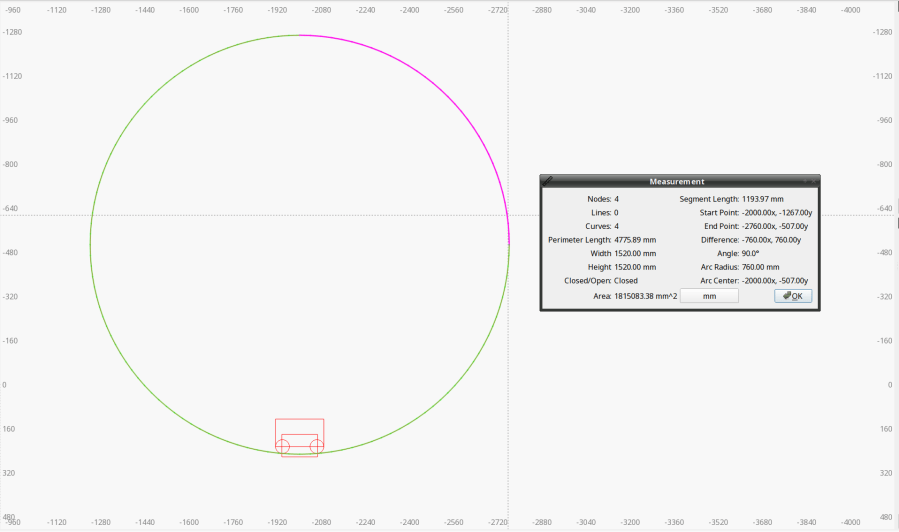
The end of the machine is not a straight line. Part of the iteration was measuring the curve’s chord height to calculate the circle’s radius, which turned out to be 760 mm:
Juki Insert Filler – end chord circle
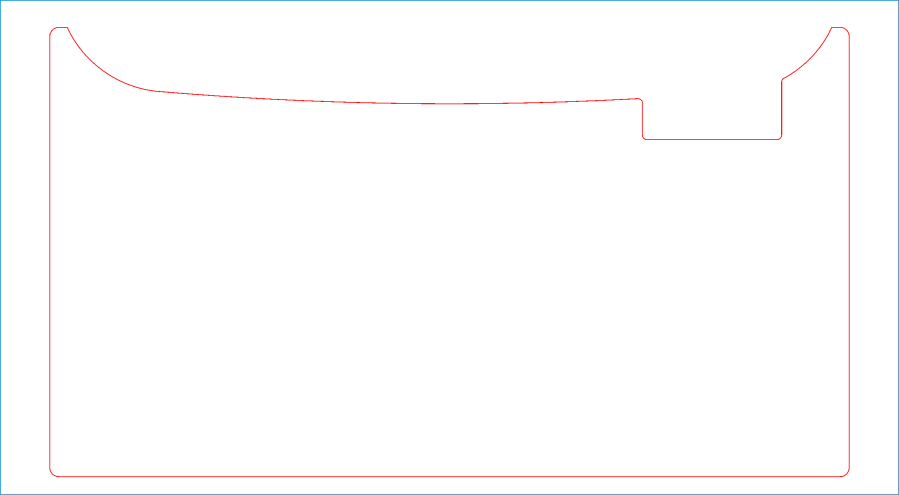
With that in hand, a few Boolean operations produced the filler shape:
Juki Insert Filler
A pair of silicone bumper feet stuck to the side of the Juki hold the left edge of the filler at the proper level.
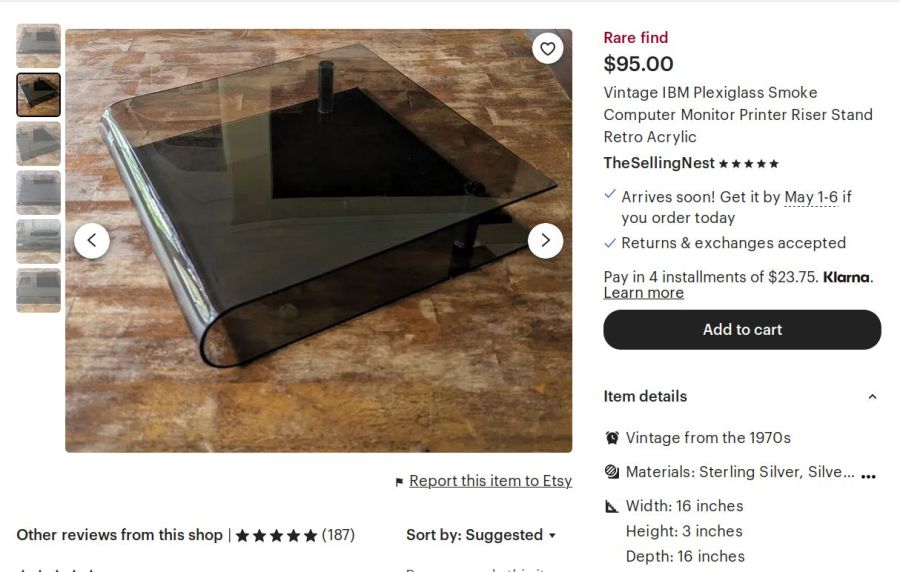
For the record, the smoked acrylic came from a fragment of a Genuine IBM Printer stand I’ve had in the scrap pile since The Good Old Days:
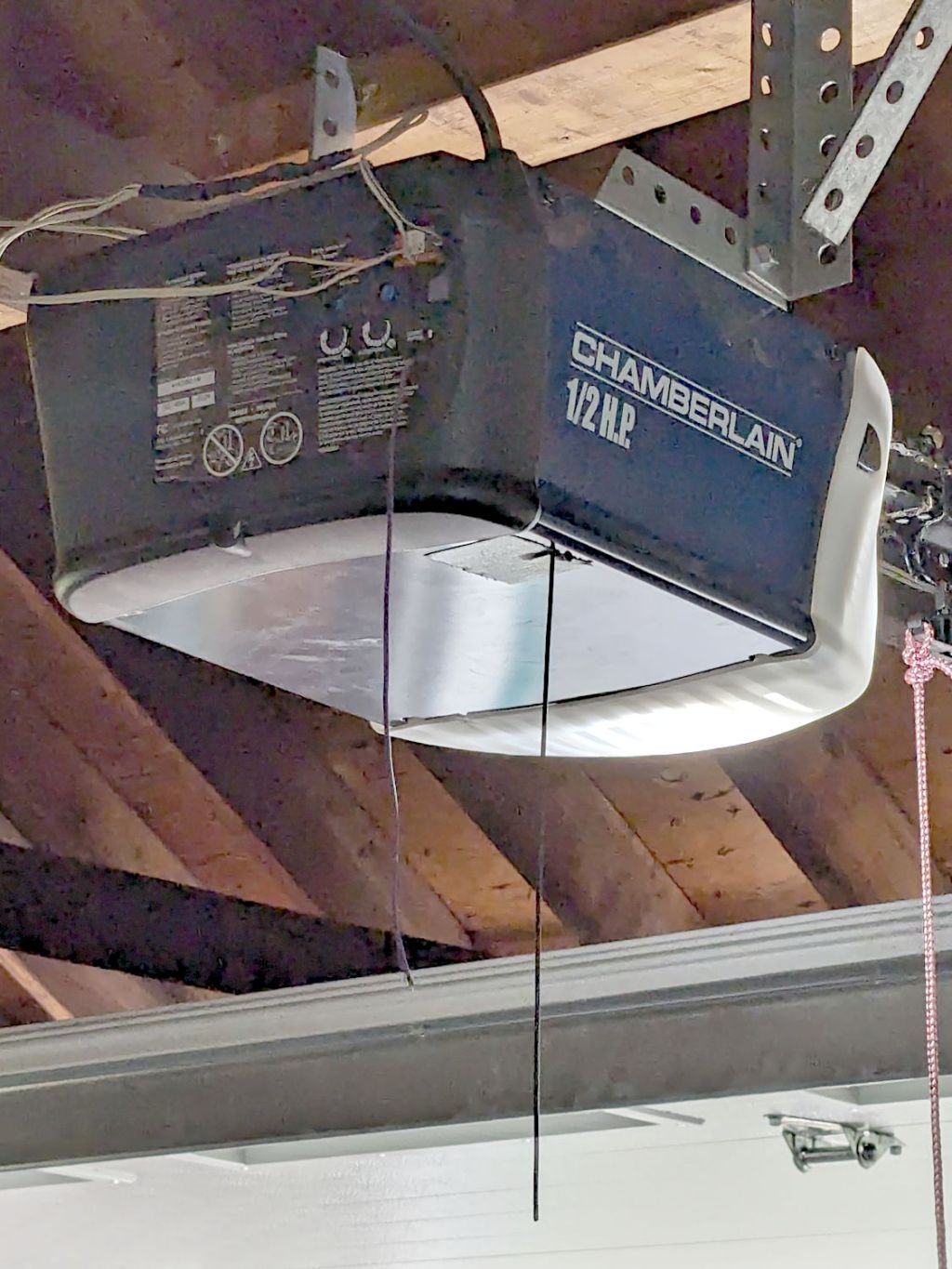
By a quirk of fate, the Chamberlain garage door opener in our new house has the same “purple learn button” as the Sears opener in our old house, so I introduced it to our remotes and they work just fine.
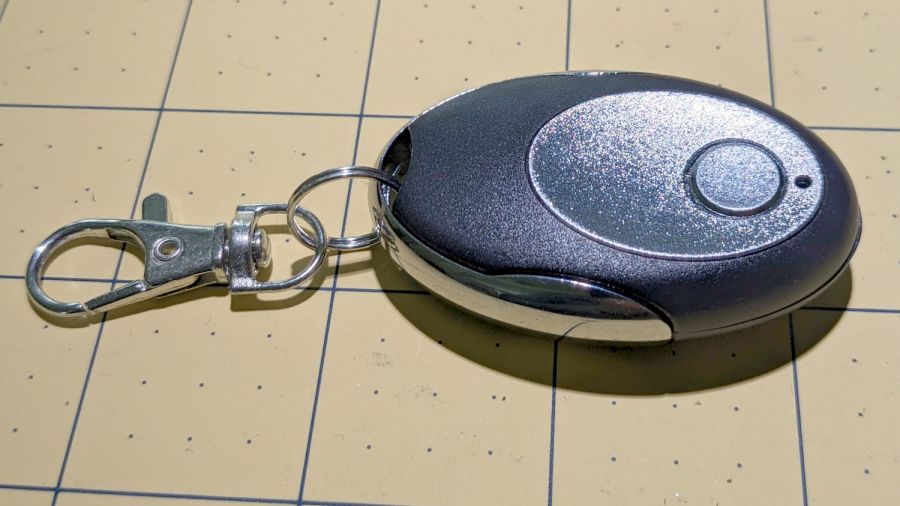
I then replaced the four-button remote in my bike pack with a new single-button remote to reduce the dexterity required to hit the button:
Garage Opener – one button
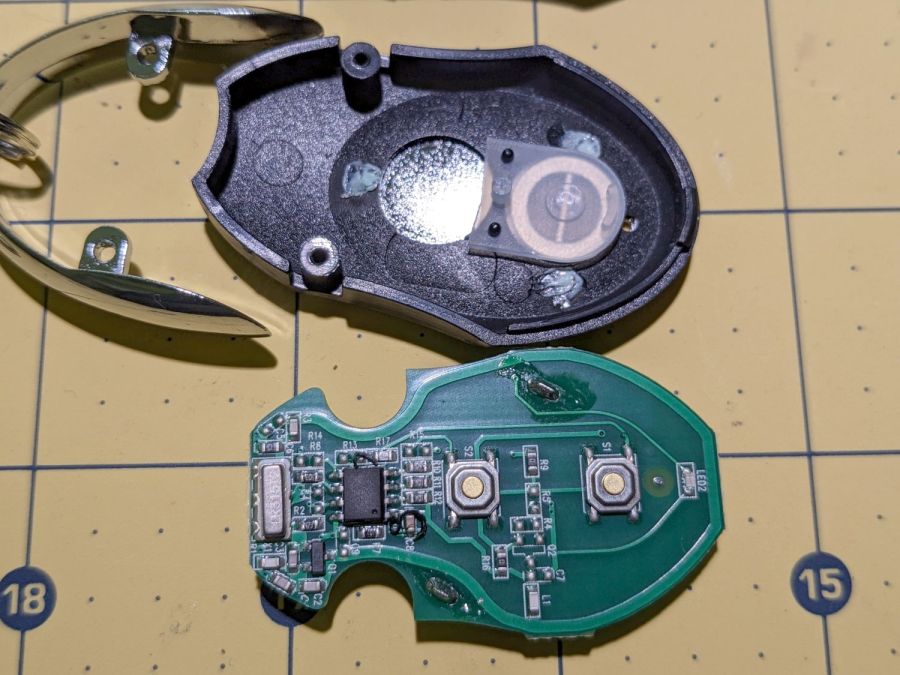
Alas, the opener only responded when the remote was immediately outside the aluminum garage door. Checking the battery (because sometimes “new” does not mean what you think it means) reminded me we live in an age when hardware is free compared with bookkeeping:
Garage Opener – interior
Maybe the second button doesn’t work and this is how they monetize their QC reject pile?
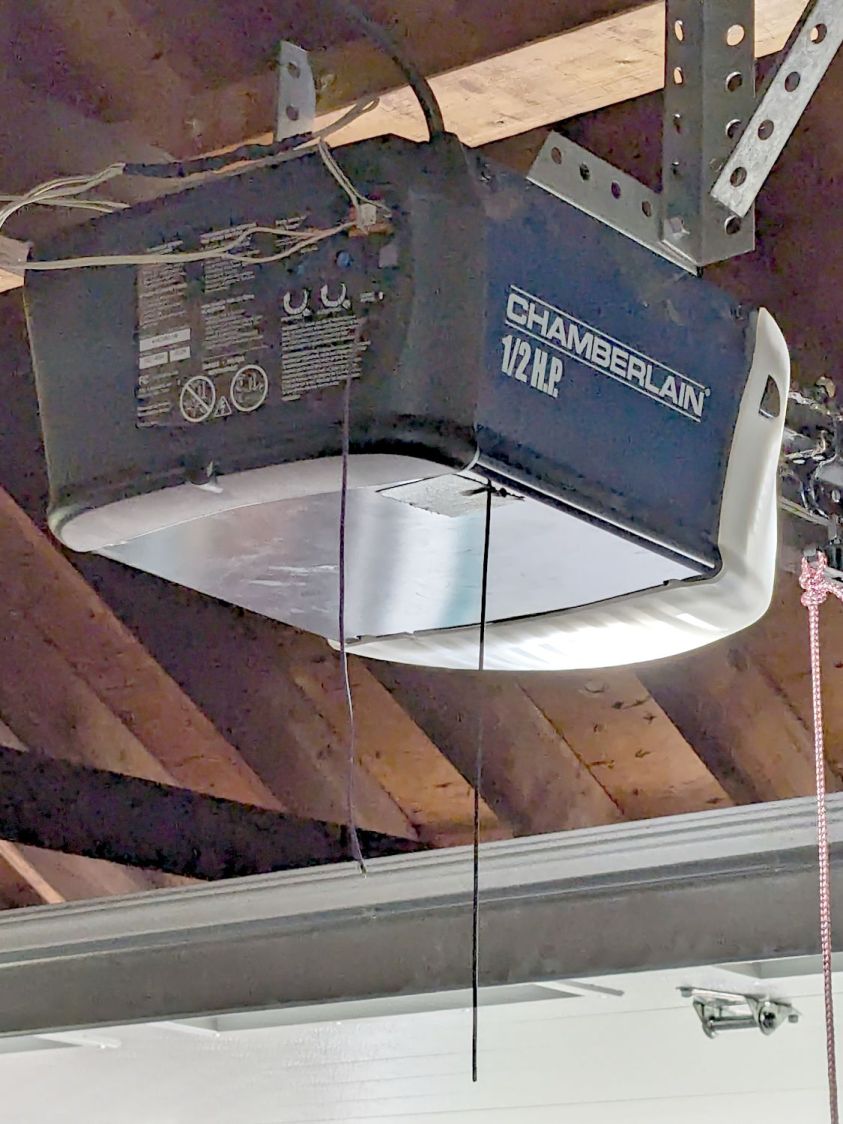
I want the door to start moving when I’m at the end of the driveway, giving it enough time to get all the way up so I can bike right in. You can actually buy remote / extension antennas, although for fancier openers with SMA antenna connectors, but sometimes a little RF black magic will suffice:
Garage Opener – crude antenna director
The wavy wire hanging down from the opener’s rear panel is the original antenna, which might be kinda-sorta omnidirectional. The opener operates around 433 MHz= 69 cm, so a quarter-wave antenna will be 17 cm = 7 inch long; the (unbent) wire is maybe 10 inches long from the hole in the panel.
So I taped 11 inches of wire to the opener to form a very very crude Yagi-Uda antenna. It’s too long to be a director element, it’s about right (albeit in the wrong place) to be a reflector element, it might be neither.
What it does do is warp the antenna’s pattern just enough to let the remote reliably trigger the opener as I approach the end of the driveway.
Do not even begin to think about polarization mismatch from what looks like the tiny loop antenna on the remote’s PCB.
Our ancient Kenmore microwave has a three-armed turntable drive:
Kenmore Microwave – turntable installed
After all these years the (white) rollers have worn to the extent they fall off the (brown) drive arms all too easily. They ride in a recessed track in the glass plate that holds them in place during normal operation, but having once again found a roller wandering around when I put the turntable back in, it’s time for at least a temporary fix.
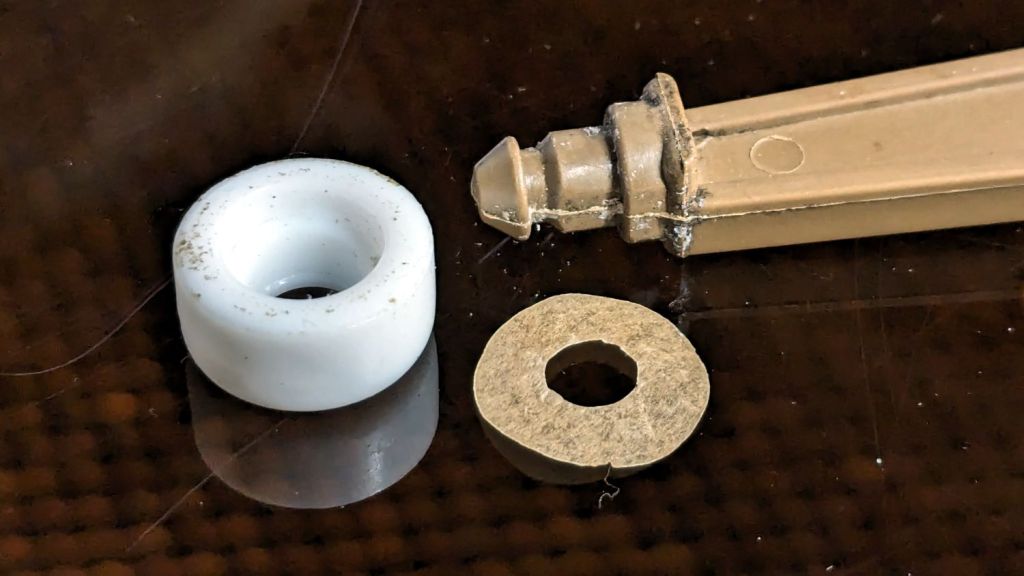
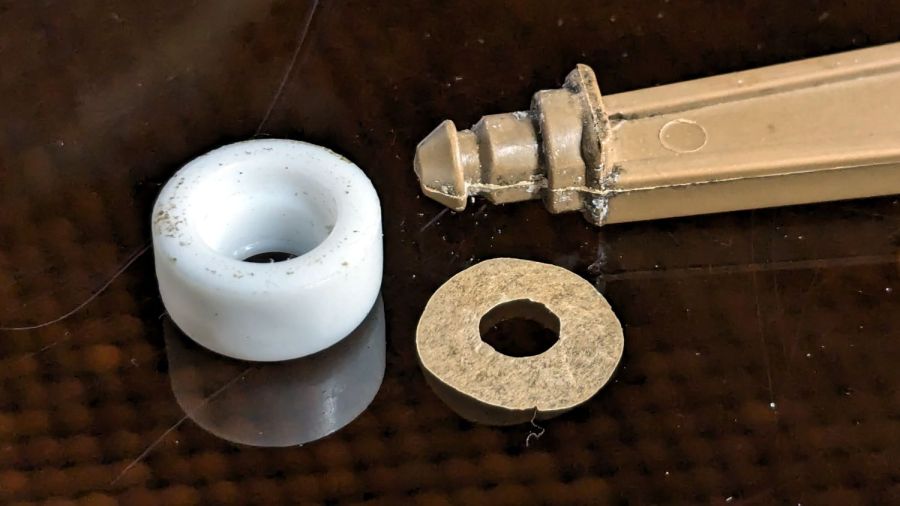
Everything is, of course, plastic:
Kenmore Microwave – turntable drive roller parts
I considered drilling the end of the axle and tapping it for a nylon screw + washer, but came to my senses just in time:
Kenmore Microwave – turntable drive
The laser-cut parchment paper disk (barely) fits over the axle against the outside of the roller, while allowing the hot-melt glue to glom onto the undercut and hold everything in place:
Kenmore Microwave – roller glopped
I expect the paper to wear / fall off in short order, but the HDPE roller won’t bind against the glue and the blob should remain latched in place for a while.
When those hideous glue blobs do fall off, I’ll reconsider drilling & tapping. More likely, I’ll just fire up the glue gun again.
Actual use required trimming the blob from the upper side of the roller / hub, because the track in the glass plate fits very close against the edge of the roller. The hideous glue blob slid freely on the roller, but jammed firmly against the plate, causing it to turn at half speed.
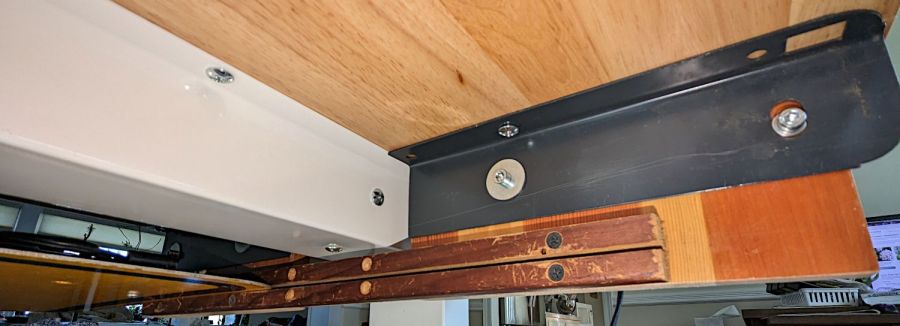
The gray angle brackets came from a long-gone (and sorely missed) radial arm saw, hacksawed to fit on either side of the central beam supporting the workbench top, and held with machine screws in those inserts. Yes, the rear bracket has only a single screw, but it doesn’t support much of a load and it’s not going anywhere.
With that in place, the drawers kicked around the basement for a few weeks and eventually ended up under a workbench that Came With The House™ and was likely built by the original owners half a century ago:
Desk keyboard tray – workbench drawers installed
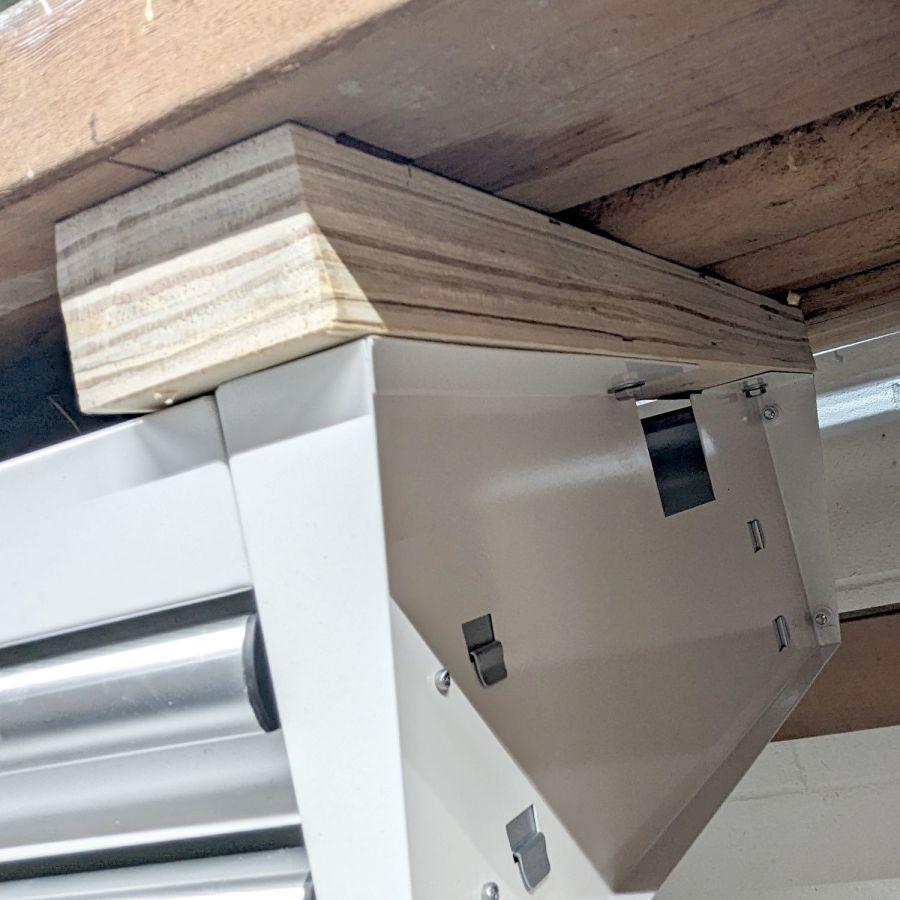
The top is made of 2×6 boards, now topped with laminate planks (left over from when I re-floored the previous kitchen), so the 2×6 board in the middle holds the whole top together and is not removable. I conjured strips at the ends to support the drawer assembly:
Desk keyboard tray – workbench drawers end block
The strips came from the crate around the laser cutter, so they’re made of the cheapest Chinese plywood and entirely suitable for the purpose. The drawers hang from 1/4-20 bolts screwed into tee nuts recessed in the top surface of the strips, with the strips held by deck screws in those benchtop 2×6 planks.
Yeah, both of those are bodges, but they ought to work just fine.













 The Smell of Molten Projects in the Morning
