Ed Nisley's Blog: Shop notes, electronics, firmware, machinery, 3D printing, laser cuttery, and curiosities. Contents: 100% human thinking, 0% AI slop.
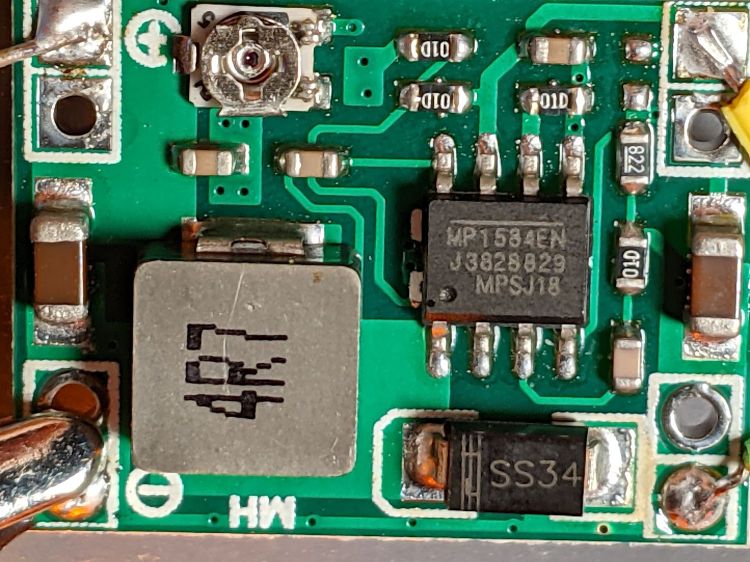
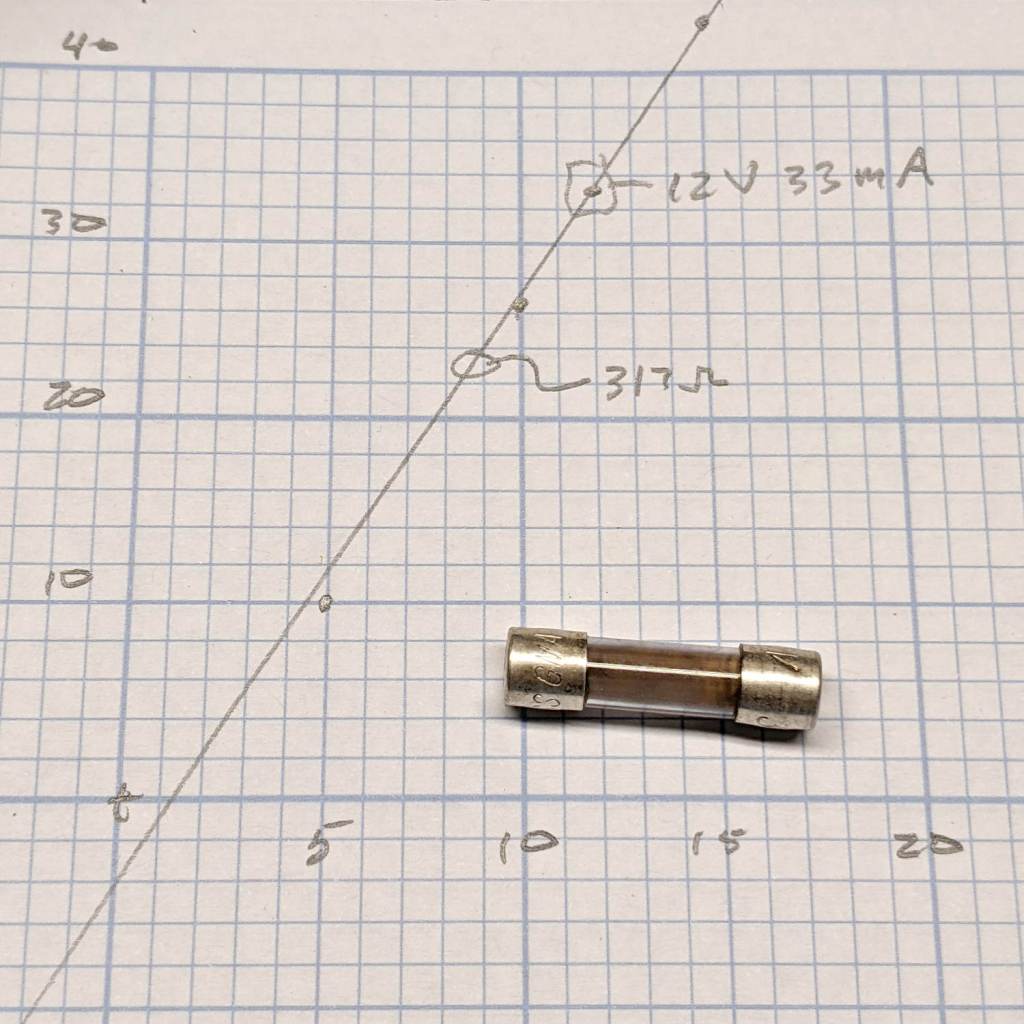
The slope suggests a 330 Ω resistor, but the internal PCB sports a pair of 150 Ω SMD resistors.
I don’t believe the X-axis intercept for a moment, but 1.5 V seems about right for an amber LED.
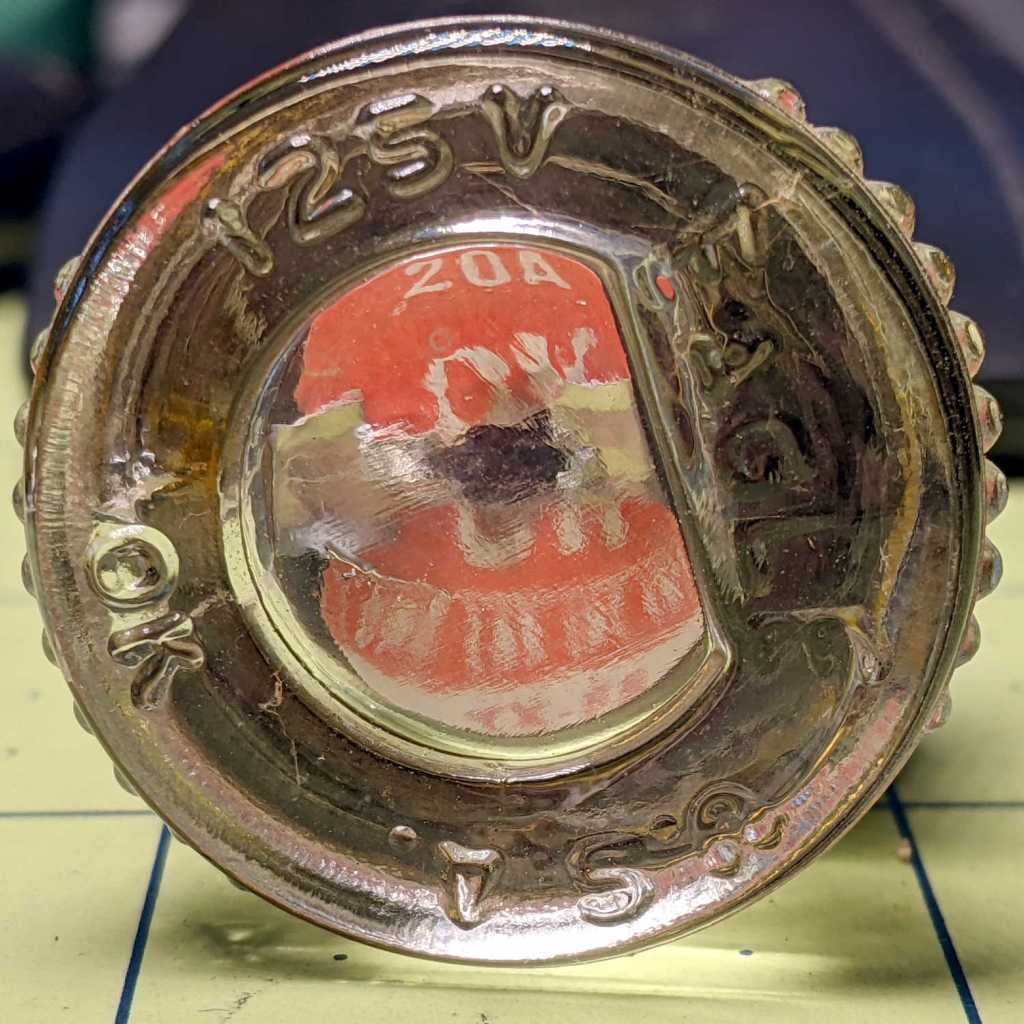
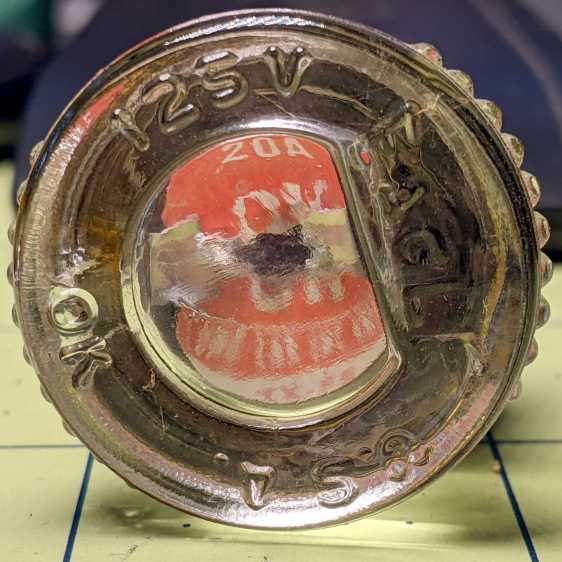
Oh, and the DMM fuse doesn’t have a ceramic body. You’re seeing the vaporized remains of a 315 mA fuse neatly deposited over the inside of the glass tube after being shorted across a 3 A bench supply.
I hate it when that happens. Replacing it emptied the little bag of those meter fuses; next time it’ll get a half amp fuse.
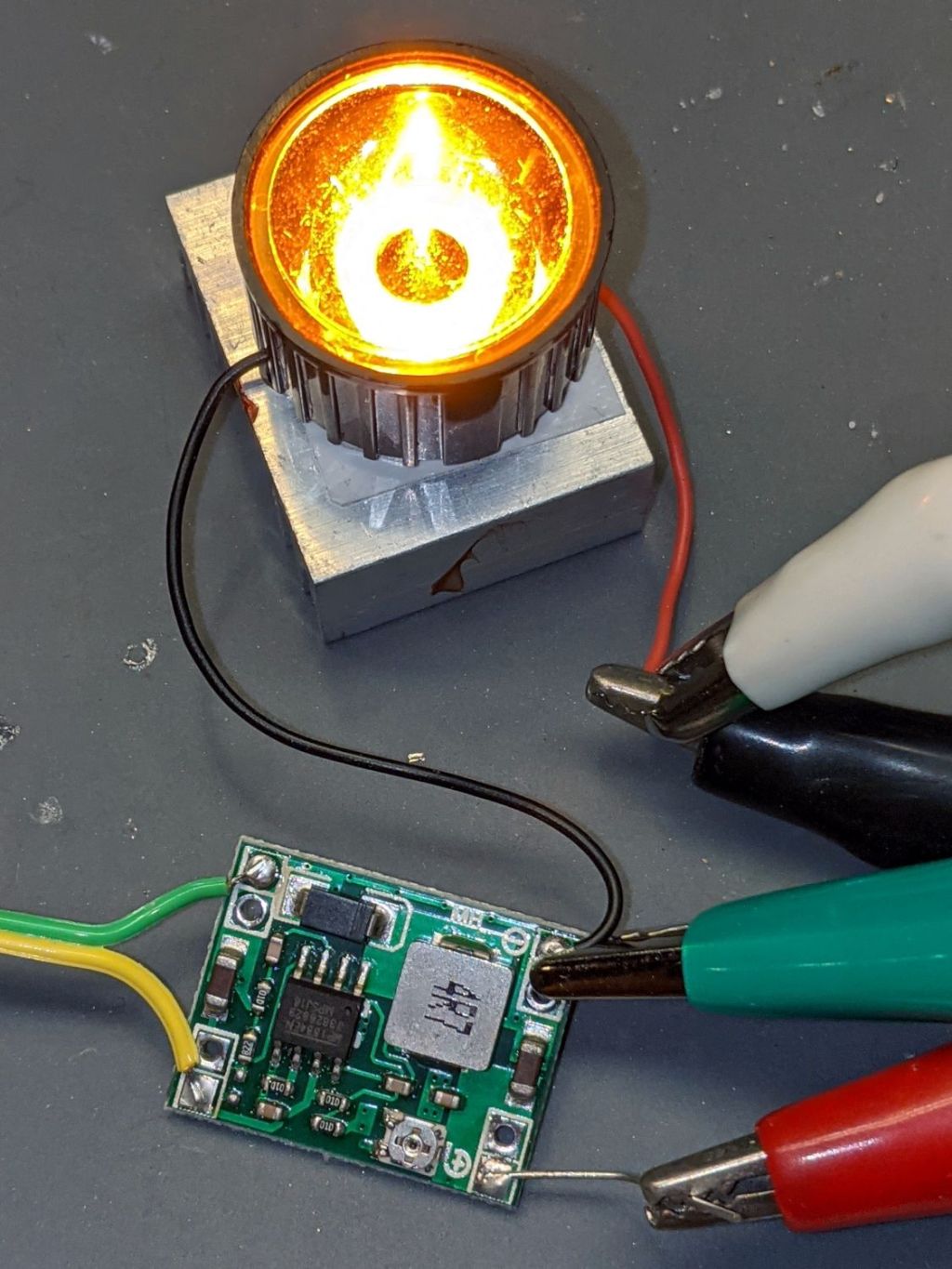
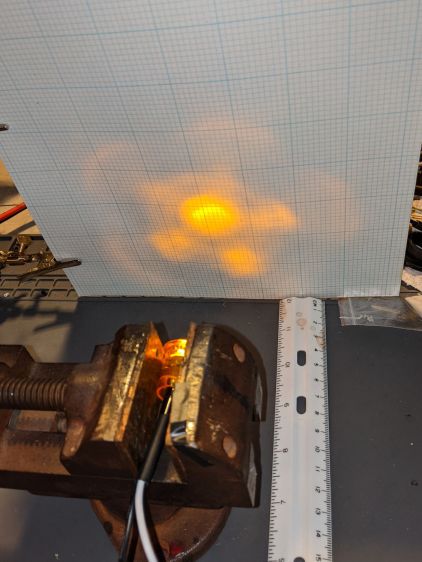
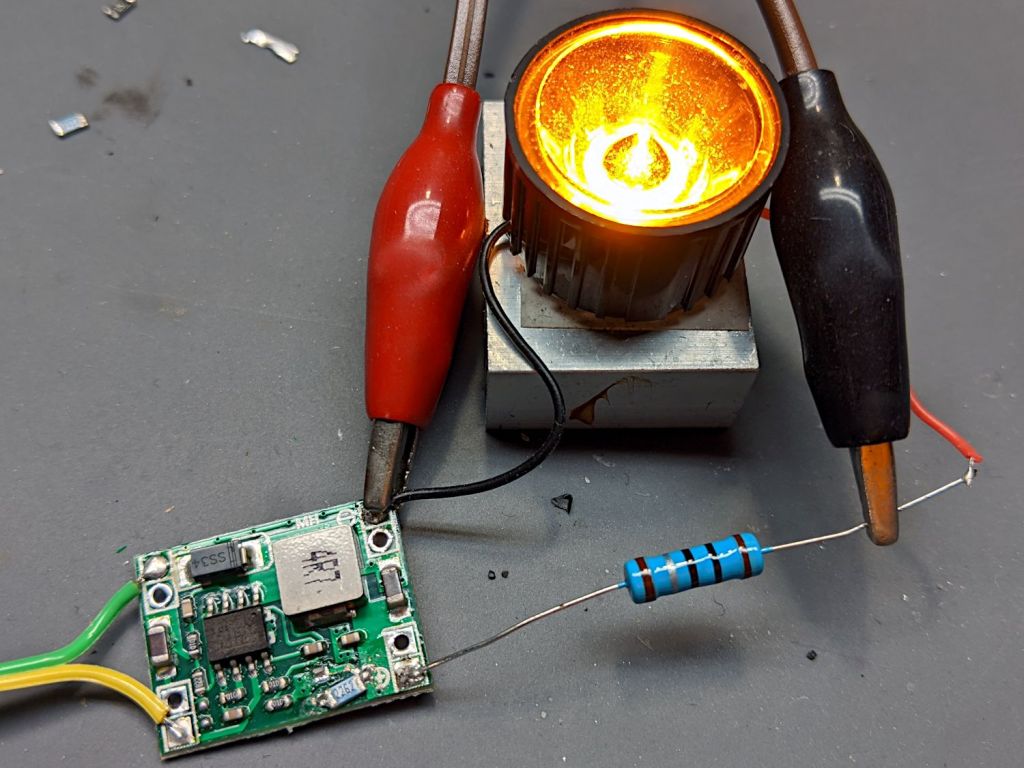
Having seen a few bikes with amber “headlights” and being desirous of reducing the number of batteries on Mary’s bike, this seems like an obvious first step:
The rest of the code gets a few cleanups you’d expect when you compile code untouched for a few years using the latest OpenSCAD.
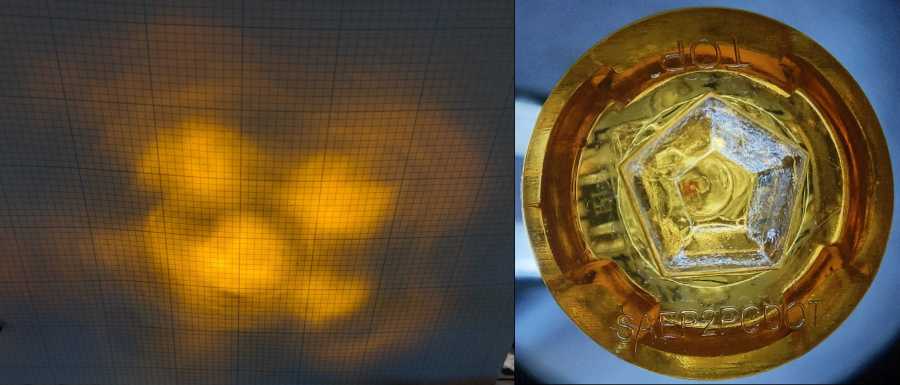
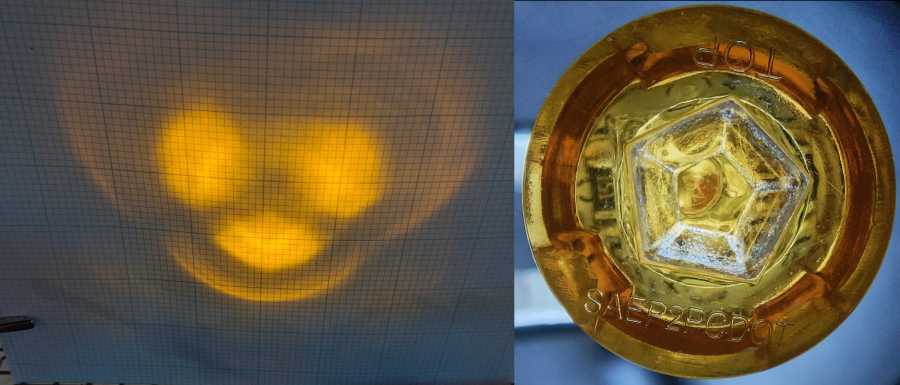
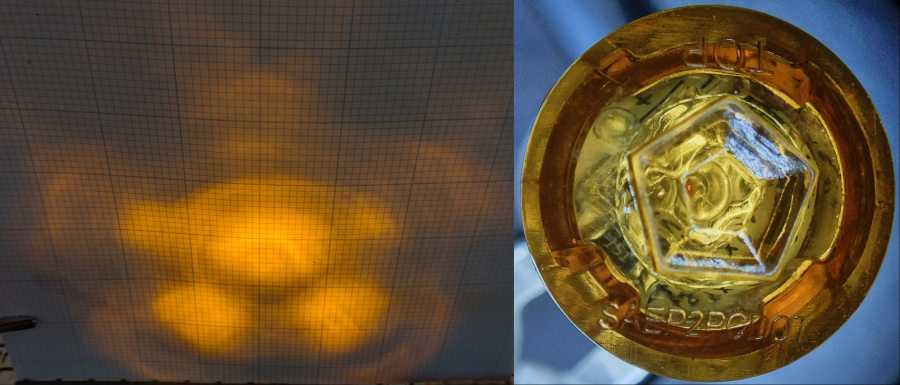
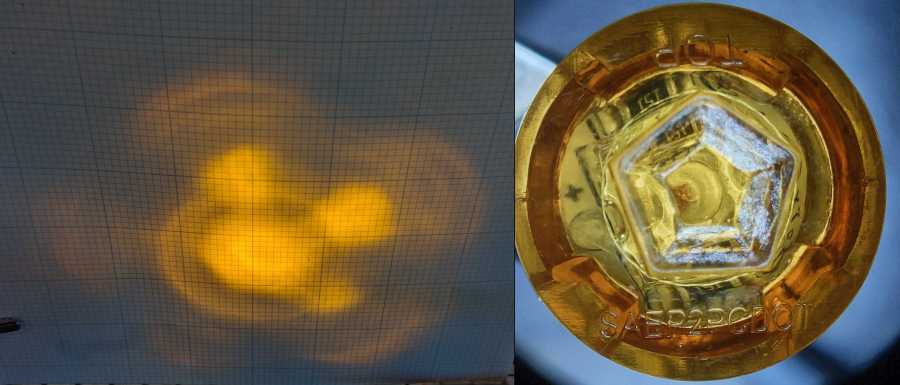
The markers are allegedly DOT rated, which matters not for my use case: SAEP2PCDOT.
The mount is grossly overqualified for a wide-beam light with little need for aiming:
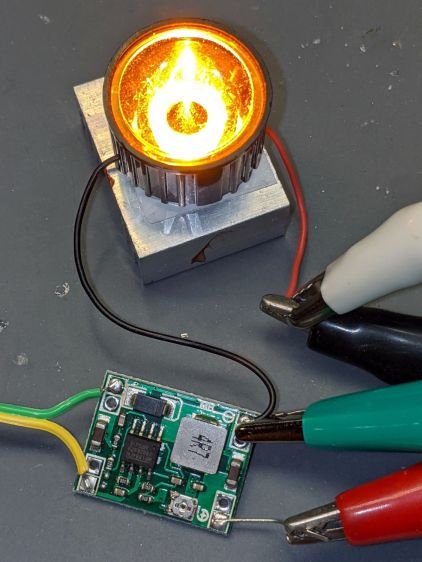
Fairing Mounted Side Marker – test light
Eventually, the marker should slip into a prealigned cylindrical holder, with a dab of epoxy to keep it there.
The lights are a buck apiece, so there’s no reason to form a deep emotional attachment. They are the usual poorly molded and badly assembled crap, although the next step up from a nominally reputable supplier is a factor of five more expensive.
It’s generated for the left side of the fairing, although I think having a pair of them would improve conspicuity:
Fairing Mounted Side Marker – installed
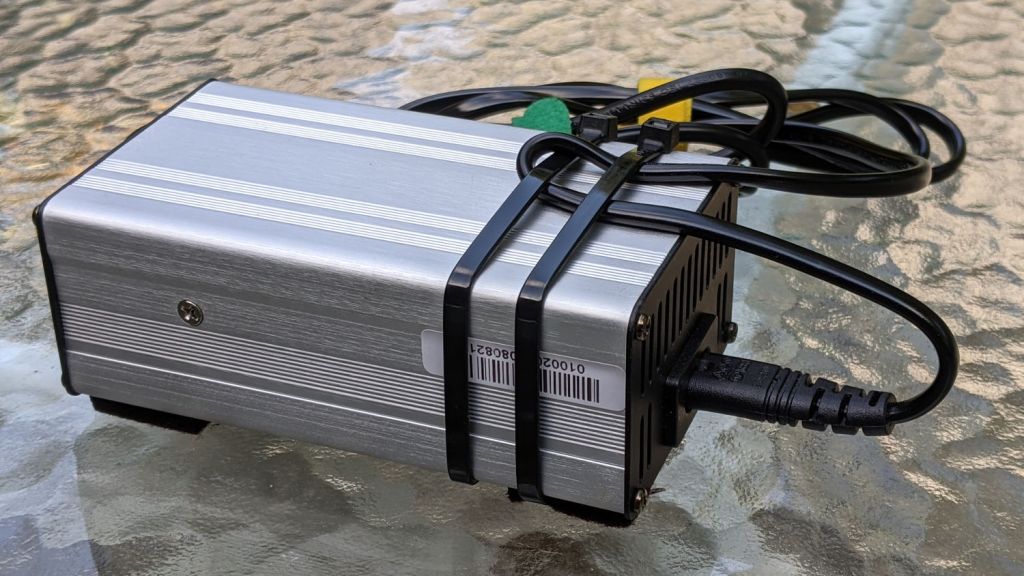
Being automotive, it runs from a 12 V supply, which comes from a boost converter driven by the Bafang 6 V headlight output. The absurdity of bucking a 48 V lithium battery to a 6V switched headlight output, then boosting it to 12 V to drive a single amber LED with a 1.5 V forward drop does not escape me.
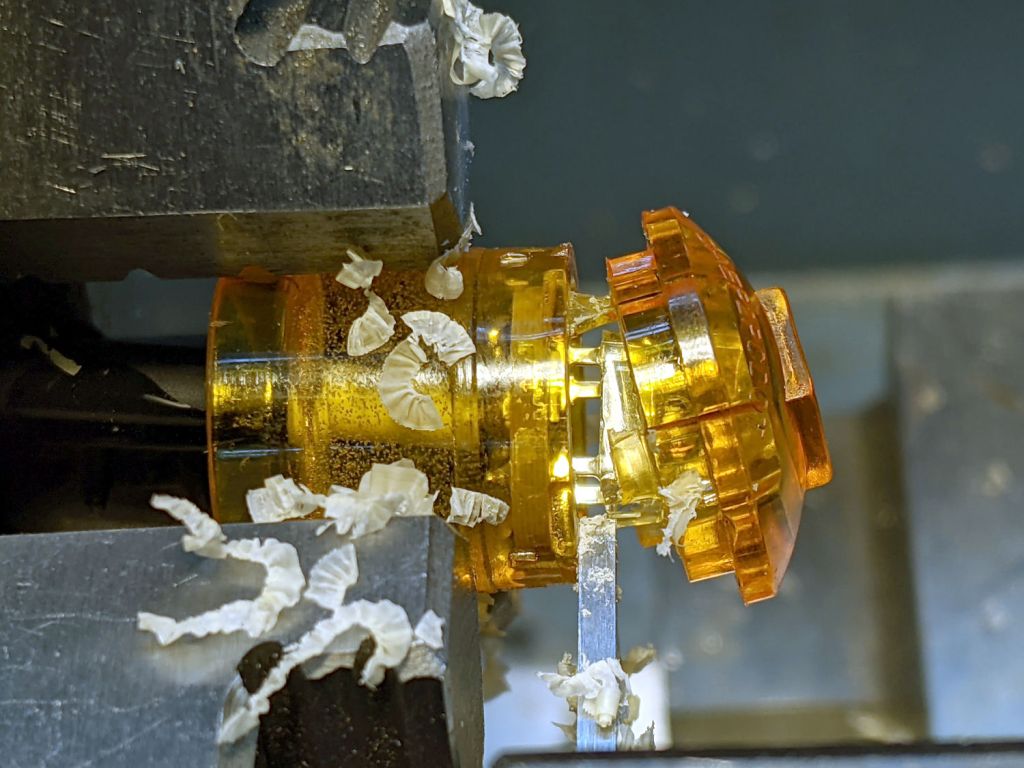
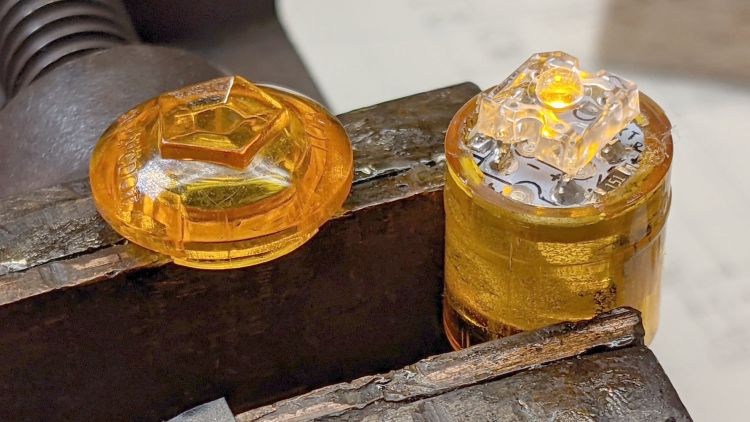
It’s possible to slice the lens off (using a lathe), remove / replace the resistor, then glue it back together, which would be worthwhile if you were intending to drive it from, say, an Arduino-ish microcontroller to get a unique blink pattern.
Given the overall lack of build quality, it might make more sense to slap a condenser lens in front of a Piranha LED.
Although Gee’s Terry Symmetry is sized for female bodies, I managed to ride it up and down the driveway while watching the power display:
Voltage
52.5
Rated Current
24
Max current
18
Power
Power
PAS
Assist
Amp
Calc
Observed
Ratio
0
0%
0.0
0
0
~
1
4%
0.7
38
26
69%
2
6%
1.1
57
52
92%
3
9%
1.6
85
78
92%
4
13%
2.3
123
104
85%
5
20%
3.6
189
182
96%
6
30%
5.4
284
258
91%
7
50%
9.0
473
453
96%
8
85%
15.3
803
675
84%
9
100%
18.0
945
900
95%
Bafang BBS02 on Terry Symmetry – actual voltage
The variations in the last column suggest my data-taking is … wobbly, at best.
I think the displayed power does not come from actual current and voltage measurements, because recalculating the power using the nominal 48 V battery value produces an unnatural agreement:
Voltage
48
Rated Current
24
Max current
18
Power
Power
PAS
Assist
Amp
Calc
Observed
Ratio
0
0%
0.0
0
0
~
1
4%
0.7
35
26
75%
2
6%
1.1
52
52
100%
3
9%
1.6
78
78
100%
4
13%
2.3
112
104
93%
5
20%
3.6
173
182
105%
6
30%
5.4
259
258
100%
7
50%
9.0
432
453
105%
8
85%
15.3
734
675
92%
9
100%
18.0
864
900
104%
Bafang BBS02 on Terry Symmetry – nominal voltage
The motor controller may measure the actual winding currents while generating the BLDC waveforms, but the values may not be available to the display at the end of the cable. If Bafang documented the commands & responses, we’d know for sure, but they don’t.
Those assist values come from Mary’s Tour Easy, a much heavier bike than the Symmetry, but the first few levels work well in my limited tests. The highest levels may be too peppy for Gee’s normal routes, but having some serious boost in reserve can defang (hah) the worst hills.
Terry Symmetry – Tour Easy
IMO, the bike would burn rubber at the motor’s full 24 A current …
These two discrete LM3909 circuits recently stopped blinking:
LM3909 AA alkaline – Green and Blue
The green LED (on the left) took six months to wear its pair of not-dead-yet AA alkalines from 2.7 V down to nearly zero.
The blue LED in the radome took two months to go from 1.0 V (!) to nearly zero. It didn’t start very bright and went decidedly dim along the way, but the LM3909 circuitry still managed to jam a few microamps through the LED.
In both cases, one of the cells was reverse-charged by a few hundred millivolts, although neither leaked.
Both got another set of not-quite-dead AA cells and they’re back in action.
My friend rides about the same way we do, except from a much higher perch, so I’ll start her off with a configuration similar to the one we settled on for Mary’s Tour Easy.
My old Aceco FC1002 frequency meter stopped working without being plugged into the charger. It runs from a quartet of NiMH cells taped into a tray I made seven years ago:
The faceplate bears the scars of its cracked acrylic (?) coating, so I pushed it out, traced the outline on a flat piece of polypropylene clamshell packaging, cut it out, and stuck it in place with tapeless sticky:
Aceco FC1002 – polypropylene faceplate
That removes the branding, but IMO improves the appearance.
It should continue working for another half decade or so!
The new cable on the left seemed like it might match the canonical colors:
Bafang BBS02 display cable pinout
It comes heartbreakingly close:
Bafang Display Cable – extension colors
Brown and Orange connect as the naive user might expect, which does reduce the likelihood of incinerating the motor controller / USB adapter / laptop by connecting the 48 V battery directly to the logic-level electronics.
However, White wasn’t on the original menu, Green is now TXD, and Black has become, comfortingly, GND.
Verily, it is written: Hell hath no fury like that of an unjustified assumption.
This socket connector has a watertight shell making it extremely difficult to mate and unmate with the pin connector on the bike. Watertightness being unnecessary, a little razor-knife action seems in order:
Bafang Display Extension Cable – shroud trimming
Visually, they’re both green-ish, but sometimes the Pixel camera accentuates any differences.