The Smell of Molten Projects in the Morning

Ed Nisley's Blog: Shop notes, electronics, firmware, machinery, 3D printing, laser cuttery, and curiosities. Contents: 100% human thinking, 0% AI slop.

Author: Ed

  • Red Oaks Mill Dam Ice

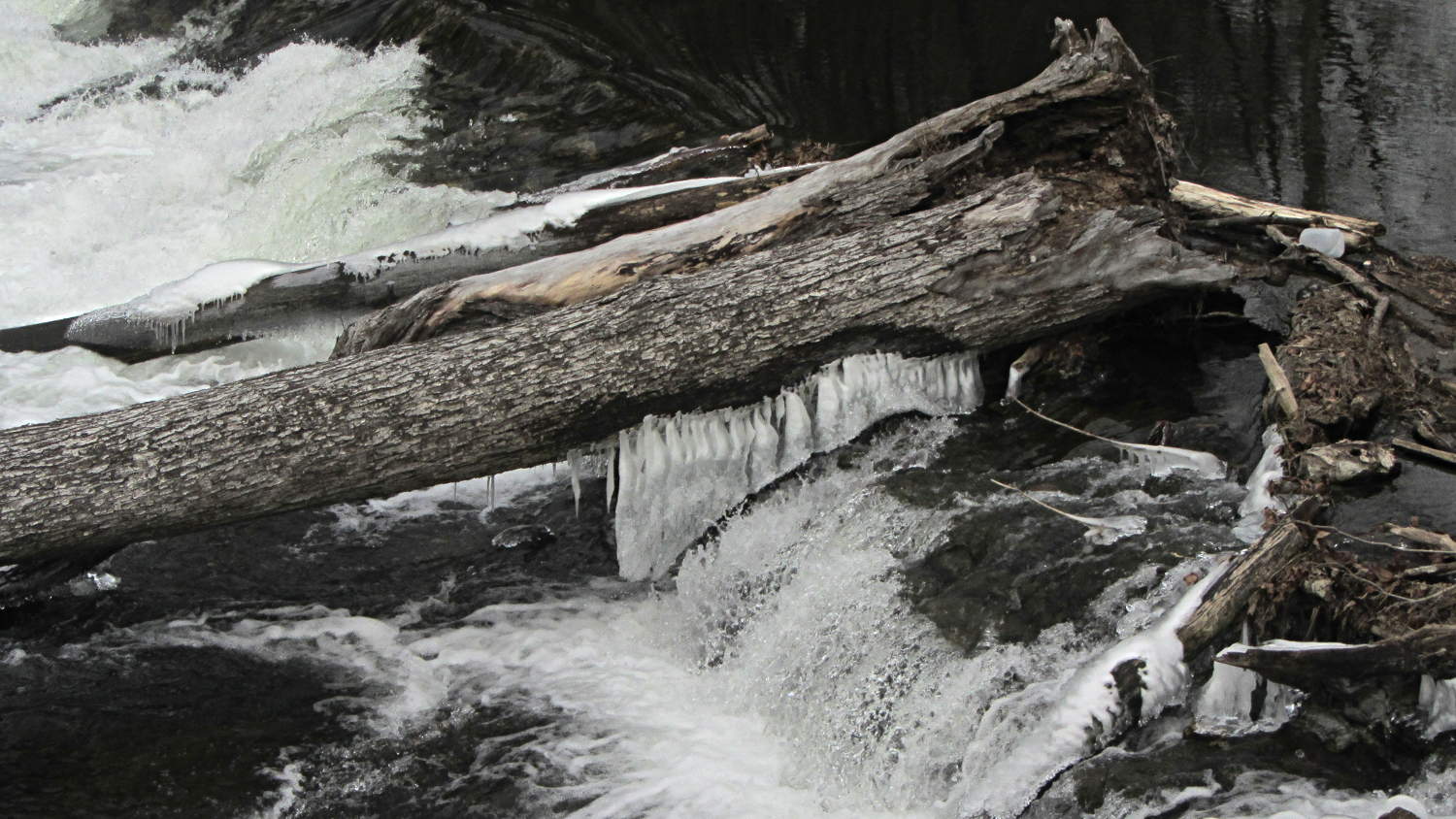
    Custom-trimmed icicles festoon a tree trunk lodged over the crumbling Red Oaks Mill dam:

    Red Oaks Mill Dam - ice formation
    Red Oaks Mill Dam – ice formation

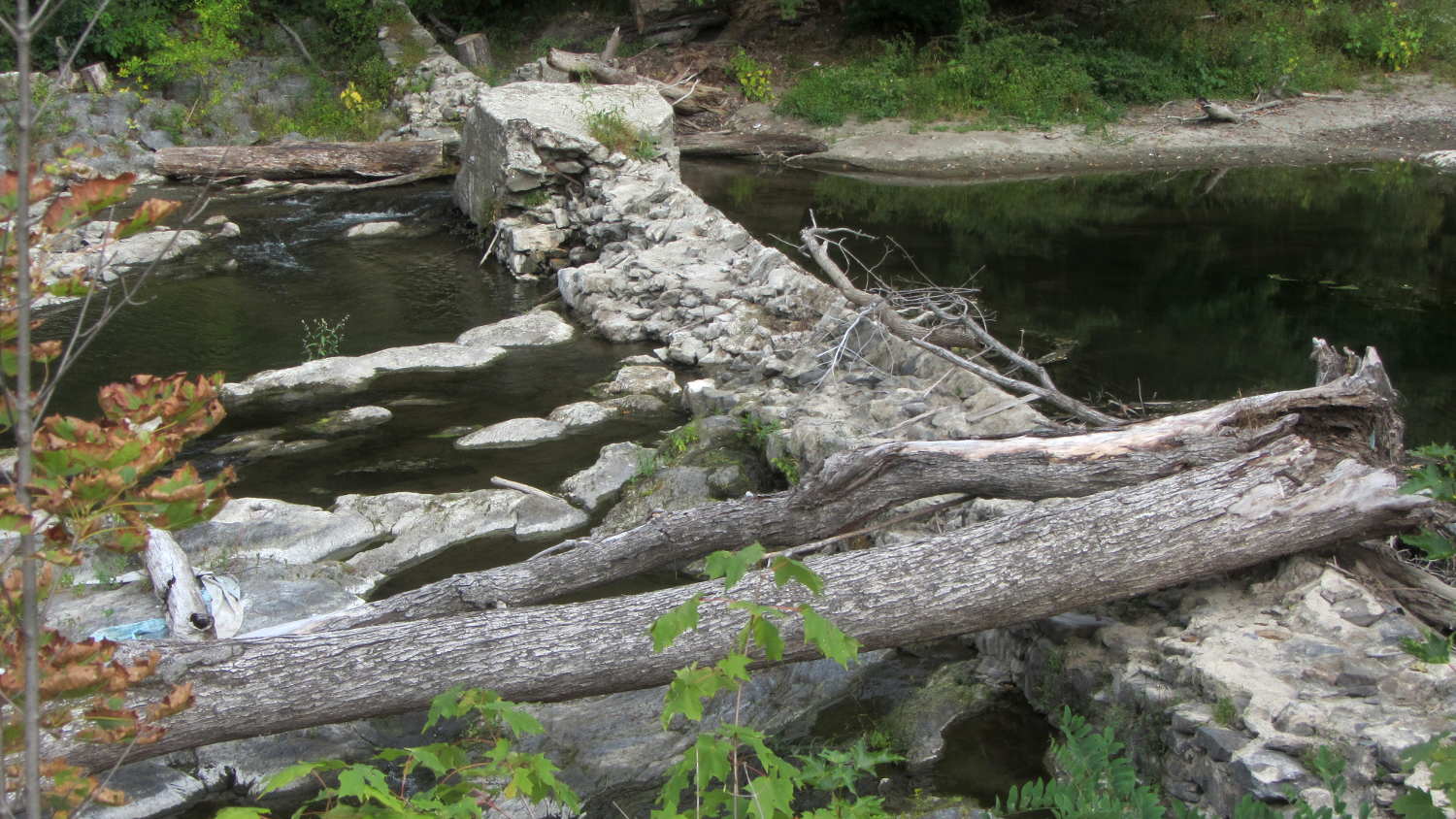
    Last September those logs were in the same position:

    Wappinger Creek - Red Oaks Mill Dam - 2016-09-23
    Wappinger Creek – Red Oaks Mill Dam – 2016-09-23

    The lighter debris comes and goes at the whim of the waters.

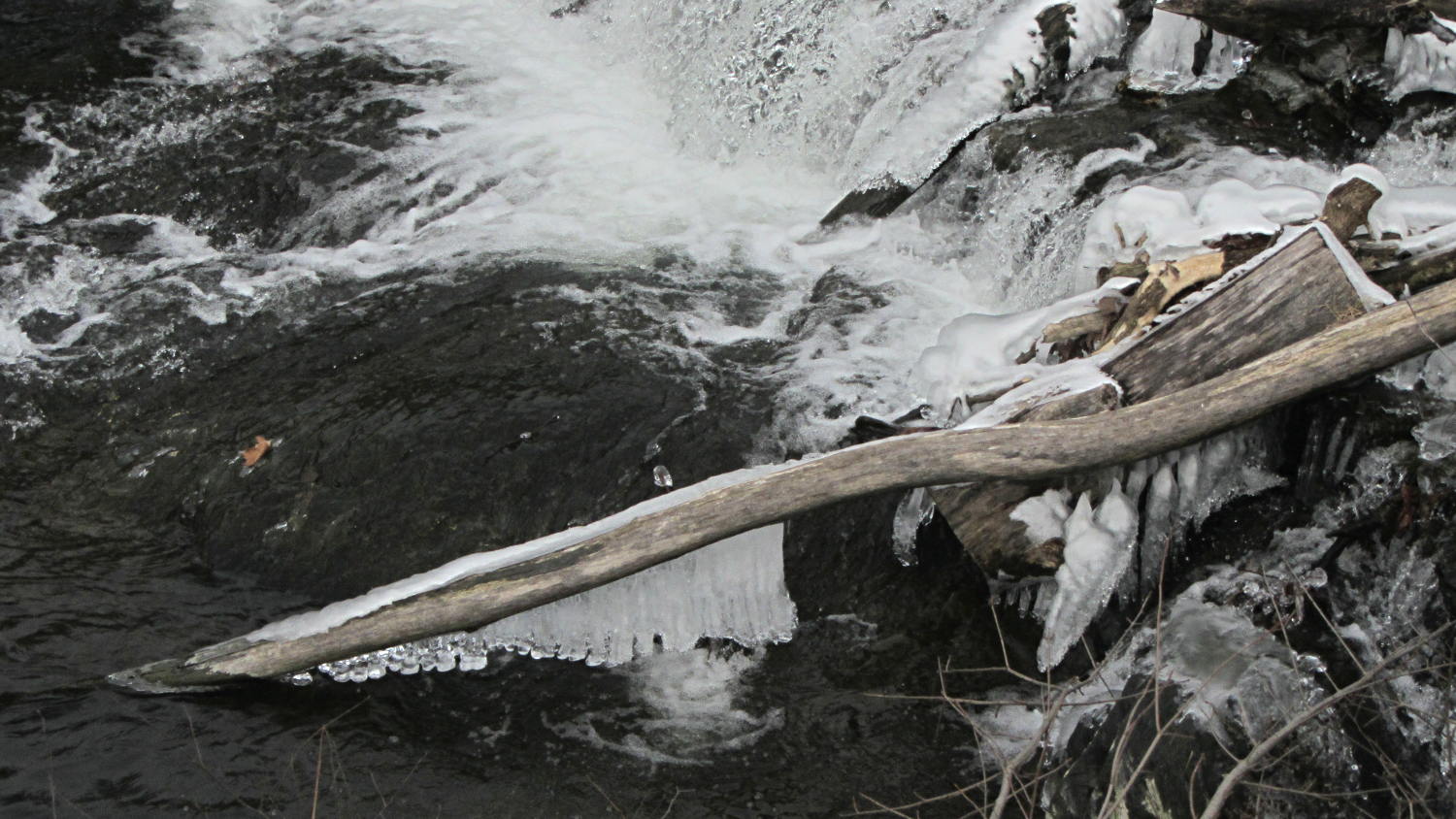
    The sprayward side of this branch must have an inch of ice wrapped around it:

    Red Oaks Mill Dam - ice coated branch
    Red Oaks Mill Dam – ice coated branch

    A quiet day for a walk…

  • Turkeys in the Snow

    These guys looked completely disgusted with the situation:

    Turkeys on rail fence in snow
    Turkeys on rail fence in snow

    They’re about 130 feet away in a heavy snowstorm that eventually deposited about a foot of wet snow on the area.

    The top rail really does slant downward: the tenon on the right end broke and fell out of the mortise.

    The DSC-H5 carries the 1.7× teleadapter, zoomed all the way tight through two layers of 1955-ish window glass, hand-held, braced against the pane.

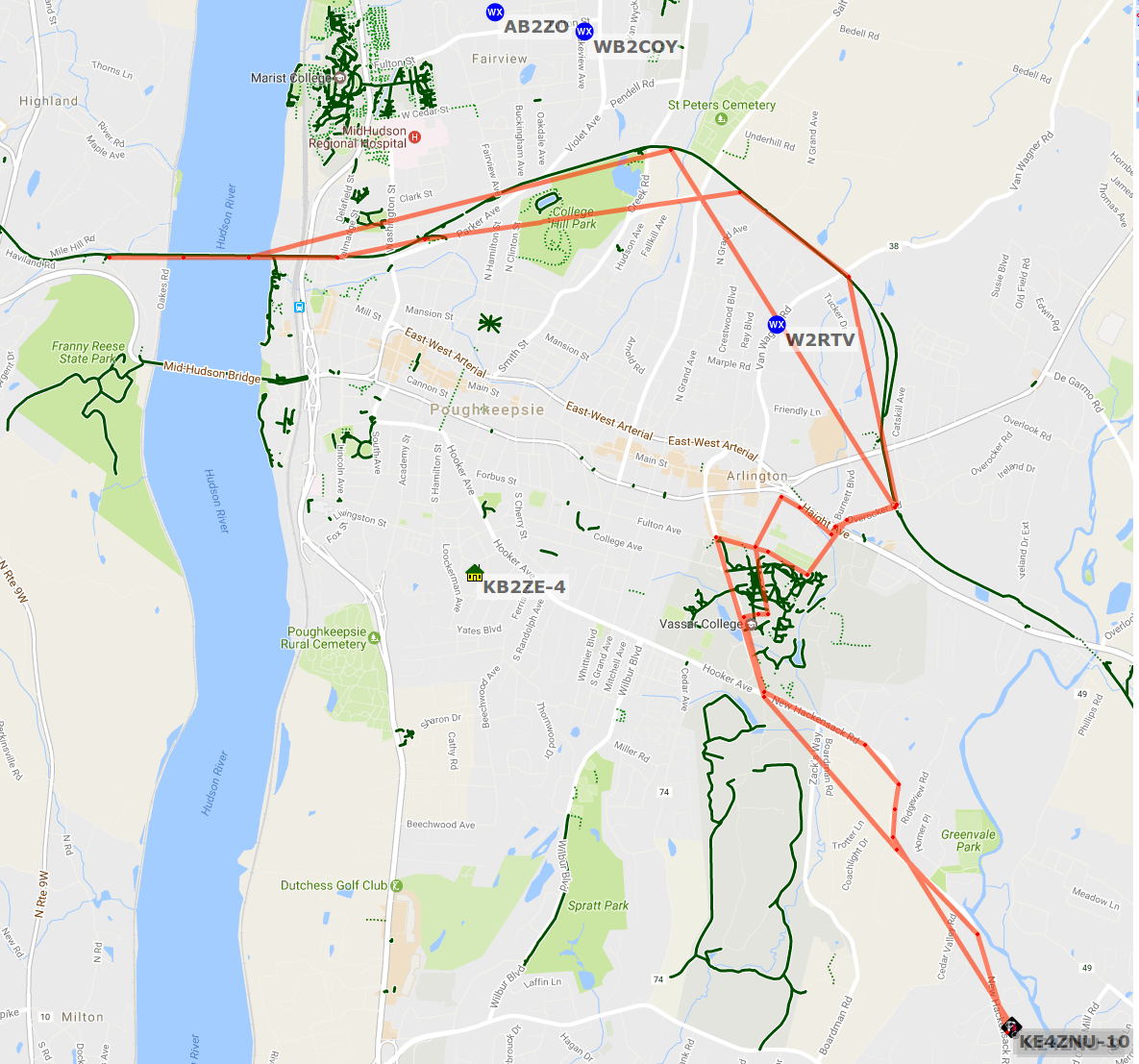
    The day before that snowstorm, we biked 18 miles out-and-back over the Walkway in beautiful, sunny, mid-50s (°F) weather:

    KE4ZNU-9 - APRS track - 2017-02-08
    KE4ZNU-9 – APRS track – 2017-02-08

    We ride when we can and shovel when we must!

  • Screw Cutting Fixture vs. Lathe Ways

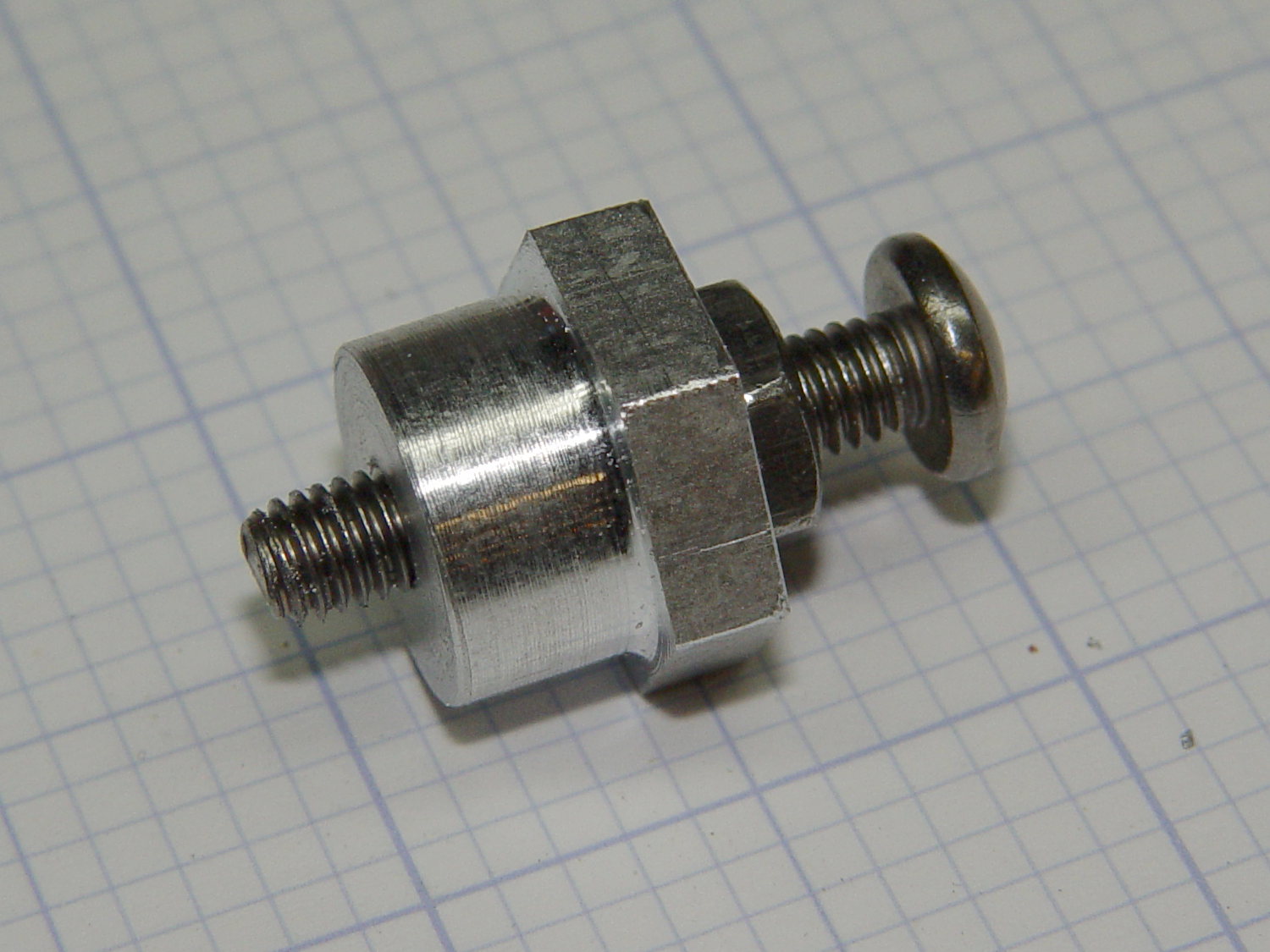
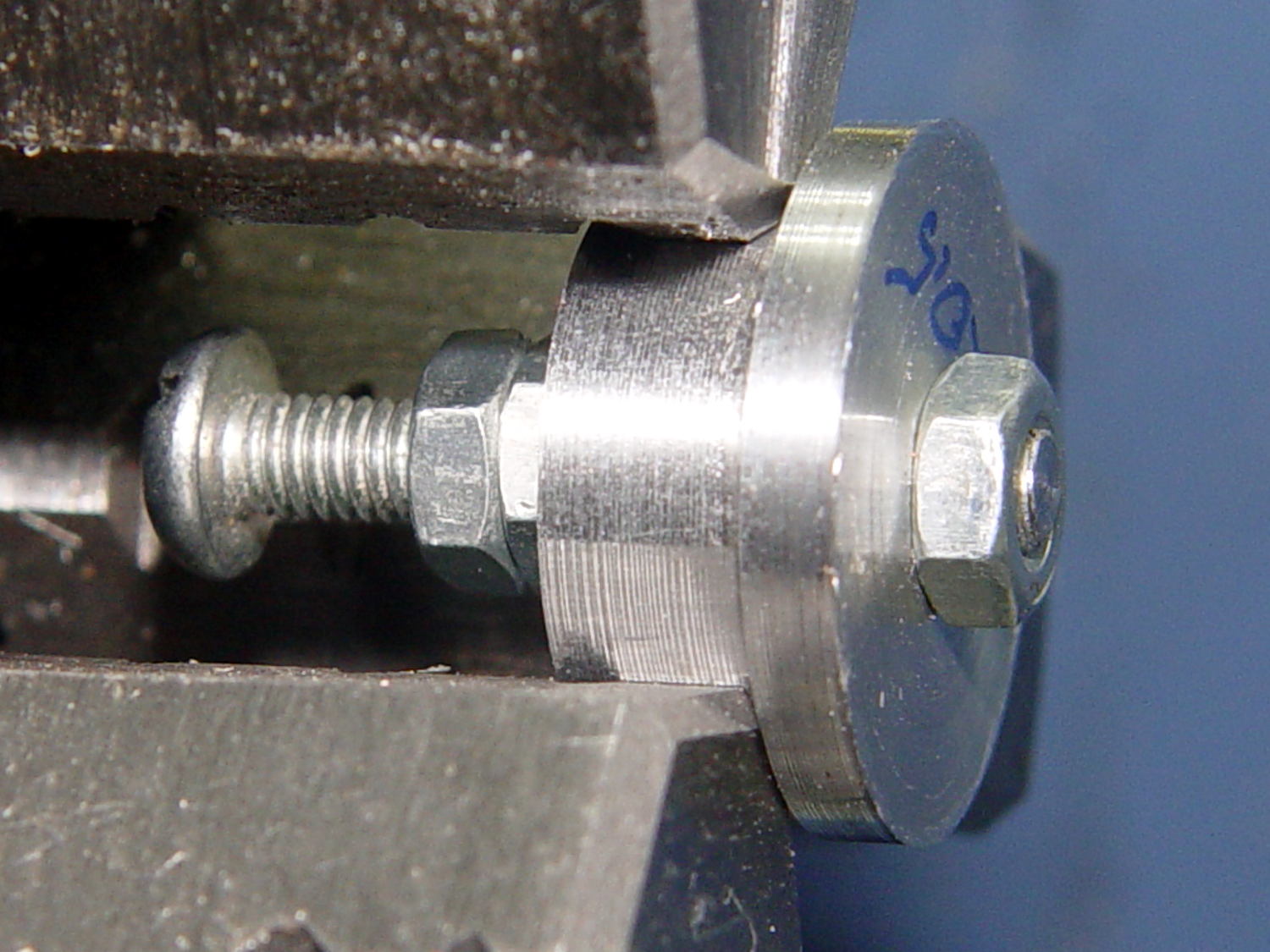
    A length of aluminum hex bar became a nice 10-32 screw trimmer:

    Screw cutting fixture - 10-32 - first cut
    Screw cutting fixture – 10-32 – first cut

    The hex neatly fits a 5/8 inch wrench, so I can tighten the jam nuts enough to run the lathe forward, part off the screw, and clean up the end just fine.

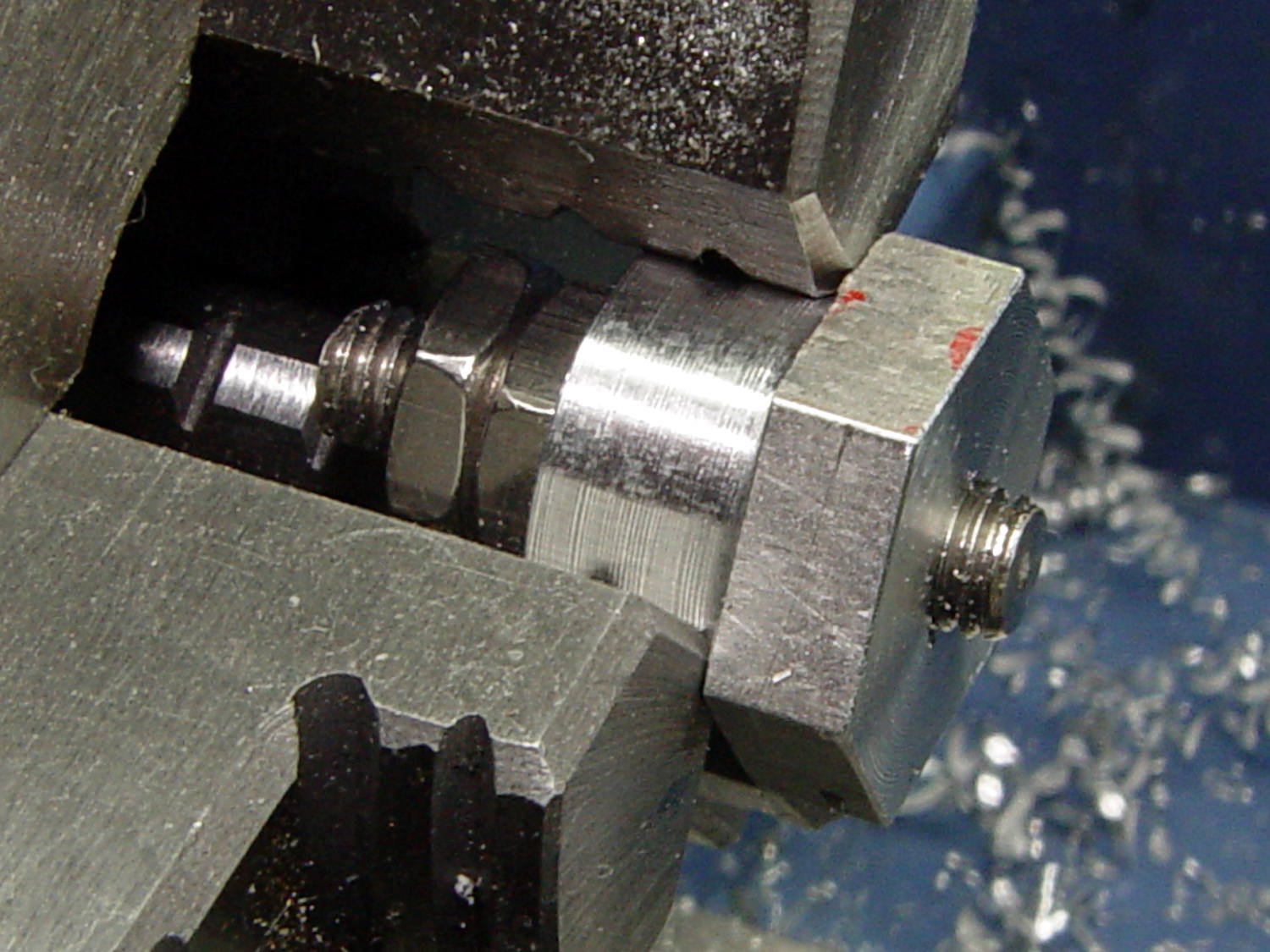
    Unfortunately, the second test cut didn’t work nearly so well:

    Screw cutting fixture - 10-32 - wrecked
    Screw cutting fixture – 10-32 – wrecked

    With the cross-slide gib adjusted to the snug side of easy, the cut put enough pressure on the parting tool to lift the way on the tailstock side about 4 mil = 0.1 mm. The parting tool submarined under the cut, dislodged the fixture, and didn’t quite stall the motor while the chuck jaws ate into the aluminum.

    Well, that was a learning experience.

    After tightening the cross-slide gib to the far side of hard-to-turn:

    • Put a longer screw in the fixture
    • Grab it in the tailstock drill chuck
    • Crunch the hex end of the fixture in the spindle chuck
    • Remove the screw through the spindle (*)
    • Put a slight taper on the end of the fixture threads with a center drill
    • Deploy the live center to support the fixture

    Like this:

    Screw cutting fixture - 10-32 - rechucked
    Screw cutting fixture – 10-32 – rechucked

    Turns out that angling the bit by 10° dramatically reduces chatter. If I had BR and BL turning tools, I’d be using them with the QCTP set to 0°, but they weren’t included in the set that came with the lathe.

    It’s a good thing I’m not fussy about the diameter of that cylindrical section:

    Screw cutting fixture - 10-32 - reshaped
    Screw cutting fixture – 10-32 – reshaped

    I knew the craptastic lathe ways needed, mmmm, improvement and it’s about time to do something.

    (*) By concatenating all my ¼ inch socket extension bars into an absurd noodle capped with square-to-hex adapter holding a Philips bit.

  • Improved Cable Clips

    Those ugly square cable clips cried out for a cylindrical version:

    LED Cable Clips - round - solid model
    LED Cable Clips – round – solid model

    Which prompted a nice button:

    LED Cable Clips - button - solid model
    LED Cable Clips – button – solid model

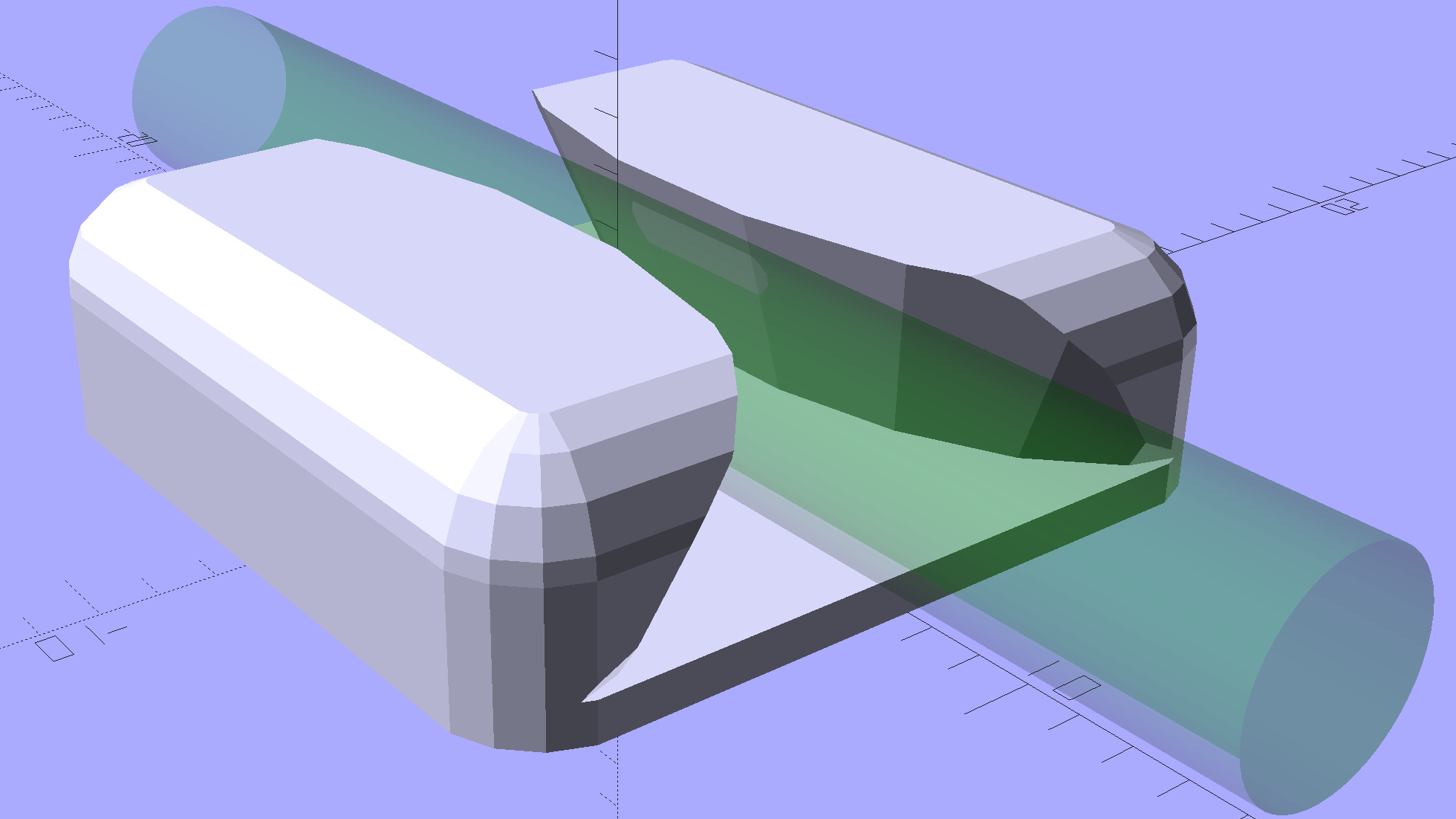
    Which suggested the square version needed some softening:

    LED Cable Clips - square - solid model
    LED Cable Clips – square – solid model

    Apart from the base plate thickness, all the dimensions scale from the cable OD; I’ll be unsurprised to discover small cables don’t produce enough base area for good long-term foam tape adhesion. Maybe the base must have a minimum size or area?

    I won’t replace the ones already on the saw, but these will look better on the next project…

    The OpenSCAD source code as a GitHub Gist:

    // Cable Clips
    // Ed Nisley – KE4ZNU – October 2014
    // February 2017 – adapted for USB cables
    Layout = "Show"; // Show Build
    Style = "Button"; // Square Round Button
    //- Extrusion parameters must match reality!
    ThreadThick = 0.25;
    ThreadWidth = 0.40;
    HoleWindage = 0.2; // extra clearance
    Protrusion = 0.1; // make holes end cleanly
    function IntegerMultiple(Size,Unit) = Unit * ceil(Size / Unit);
    //———————-
    // Dimensions
    CableOD = 3.8; // cable jacket
    Base = [4*CableOD,4*CableOD,3*ThreadThick]; // overall base and slab thickness
    CornerRadius = CableOD/2; // radius of square corners
    CornerSides = 4*4; // total sides on square corner cylinders
    NumSides = 6*3; // total sides for cylindrical base
    //– Oval clip with central passage
    module CableClip() {
    intersection() {
    if (Style == "Square")
    hull()
    for (i=[-1,1], j=[-1,1])
    translate([i*(Base[0]/2 – CornerRadius),j*(Base[1]/2 – CornerRadius),0])
    rotate(180/CornerSides) {
    cylinder(r=CornerRadius,h=Base[2] + CableOD/2,$fn=CornerSides,center=false);
    translate([0,0,Base[2] + CableOD/2])
    sphere(d=CableOD,$fn=CornerSides);
    }
    else if (Style == "Round")
    cylinder(d=Base[0],h=Base[2] + 1.00*CableOD,$fn=NumSides);
    else if (Style == "Button")
    resize(Base + [0,0,2*(Base[2] + CableOD)])
    sphere(d=Base[0],$fn=NumSides);
    union() {
    translate([0,0,Base[2]/2]) // base defines slab thickness
    cube(Base,center=true);
    for (j=[-1,1]) // retaining ovals
    translate([0,j*(Base[1]/2 – 0.125*(Base[1] – CableOD)/2),(Base[2] – Protrusion)])
    resize([Base[0]/0.75,0,0])
    cylinder(d1=0.75*(Base[1]-CableOD),
    d2=(Base[1]-CableOD)/cos(0*180/NumSides),
    h=(CableOD + Protrusion),
    center=false,$fn=NumSides);
    }
    }
    if (Layout == "Show")
    color("Green",0.2)
    translate([0,0,Base[2] + CableOD/2])
    rotate([0,90,0])
    cylinder(d=CableOD,h=2*Base[0],center=true,$fn=48);
    }
    //———————-
    // Build it
    CableClip();


  • Monthly Image: Turkeys in the Trees

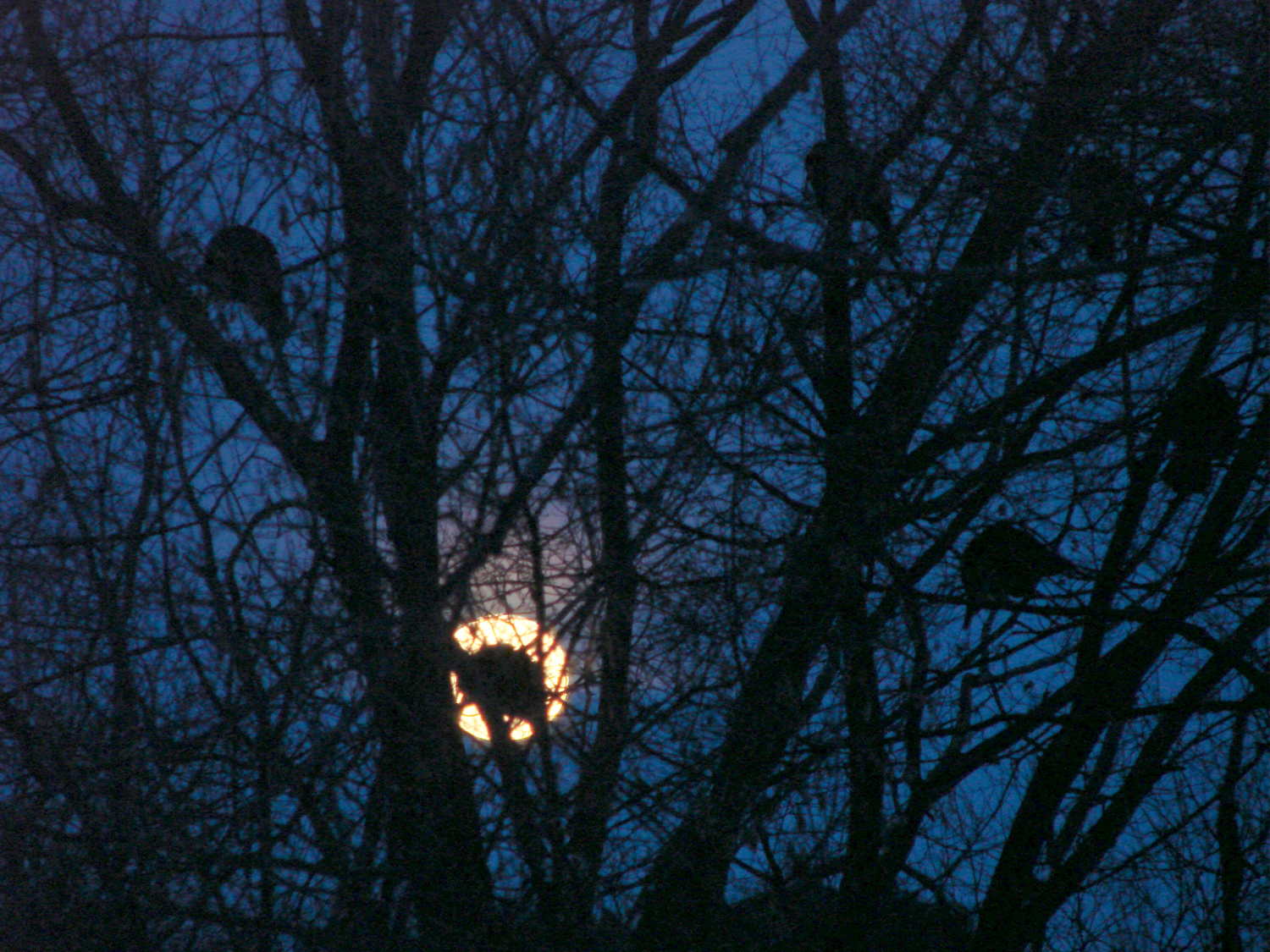
    A turkey flock forages through the bottomlands along the Wappinger Creek and, at night, roosts in the trees at the far end of our driveway:

    Roosting Turkeys - visible
    Roosting Turkeys – visible

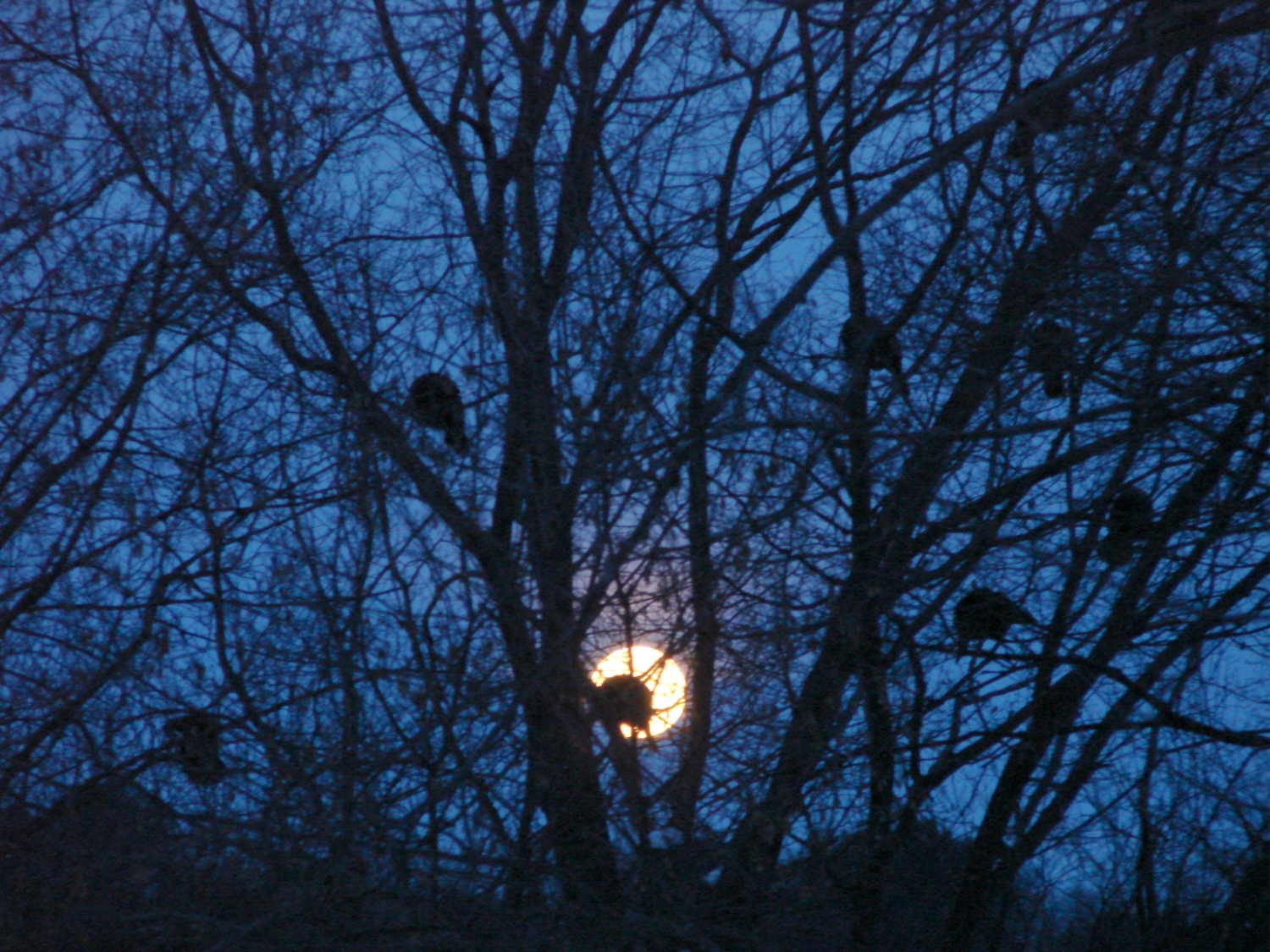
    I’m a sucker for that moon:

    Roosting Turkeys - visible
    Roosting Turkeys – visible

    It’s rising into the eastward-bound cloud cover bringing a light snowfall, so we missed the penumbral eclipse.

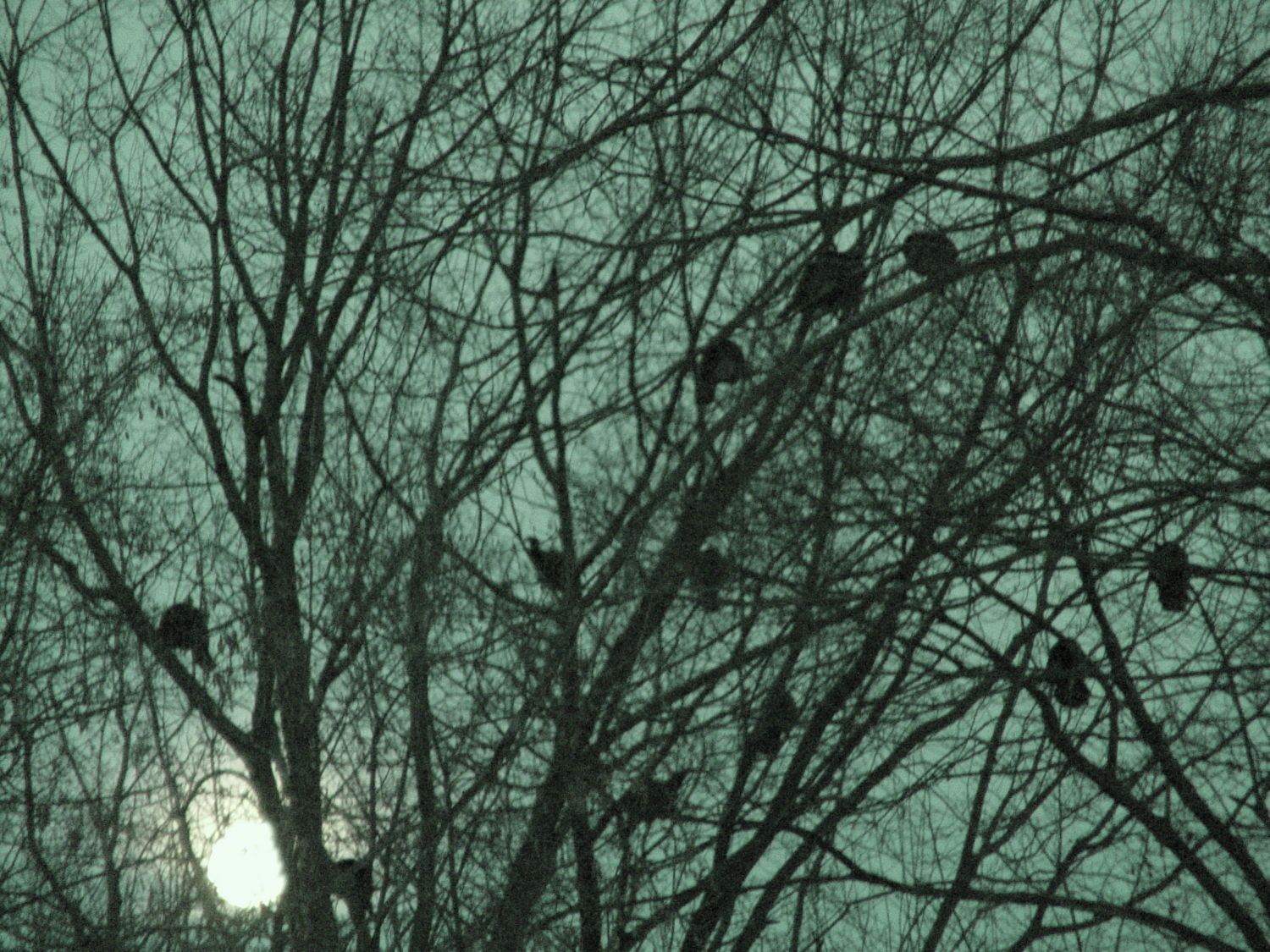
    If you’re counting turkeys, it’s easier with a contrasty IR image:

    Roosting Turkeys - infra-red mode
    Roosting Turkeys – infra-red mode

    Mary recently counted forty turkeys on the ground, so that’s just part of their flock. I think their air boss assigns one turkey per branch for safety; they weigh upwards of 10 pounds each!

    Taken with the DSC-H5 and DSC-F717, both the the 1.7× teleadapter, hand-held in cold weather.

    Searching the blog for turkey will turn up more pix, including my favorite IR turkey shot.

  • Screw Cutting Fixture: Full-thread Aluminum

    By and large, when you follow the recipe, you get the expected result:

    Screw cutting fixture - M3x0.5 aluminum - side view
    Screw cutting fixture – M3x0.5 aluminum – side view

    That’s another length of the same aluminum rod, this time with a full-length M3x0.5 thread down the middle, and a screw with a neatly trimmed end.

    Running the lathe spindle in reverse prevents the screw from loosening the jam nuts on the left:

    Screw cutting fixture - M3x0.5 aluminum - in lathe chuck
    Screw cutting fixture – M3x0.5 aluminum – in lathe chuck

    Running the spindle forward does move the screw enough to loosen the nuts. Perhaps I should put wrench flats on the big end of the fixture so I can really torque the nuts.

    That front nut was mostly decorative, rather than tight, because I didn’t expect the first attempt to work nearly as well as it did. A bit of filing to taper the end of the thread and it was all good.

    That was easy…


  • Cheap WS2812 RGB LEDs: Continuing Failures

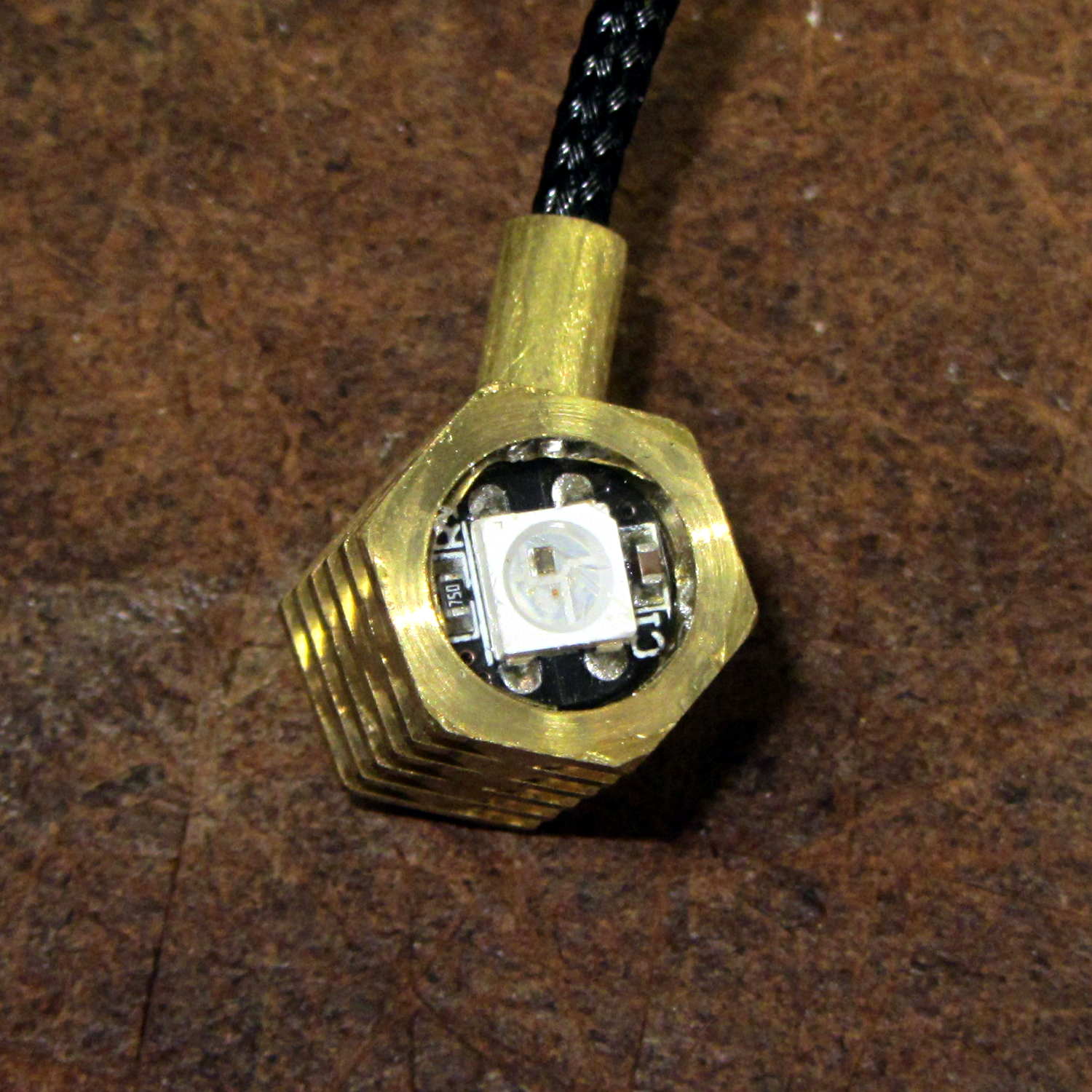
    Three more knockoff Neopixels failed in the last few weeks, including one that can’t possibly suffer any thermal stress:

    Halogen bulb brass cap - overview
    Halogen bulb brass cap – overview

    I wrapped the halogen bulb in a shop towel, laid the ersatz heatsink against an anvil (actually, it was a microwave transformer on the Squidwrench operating table), whacked a chisel into the epoxy joint, and met with complete success:

    Failed WS2812 LED - ersatz heatsink
    Failed WS2812 LED – ersatz heatsink

    Having epoxied the PCB and braid in place, there was nothing for it but to drill the guts out of the brass cap:

    Failed WS2812 LED - drilling
    Failed WS2812 LED – drilling

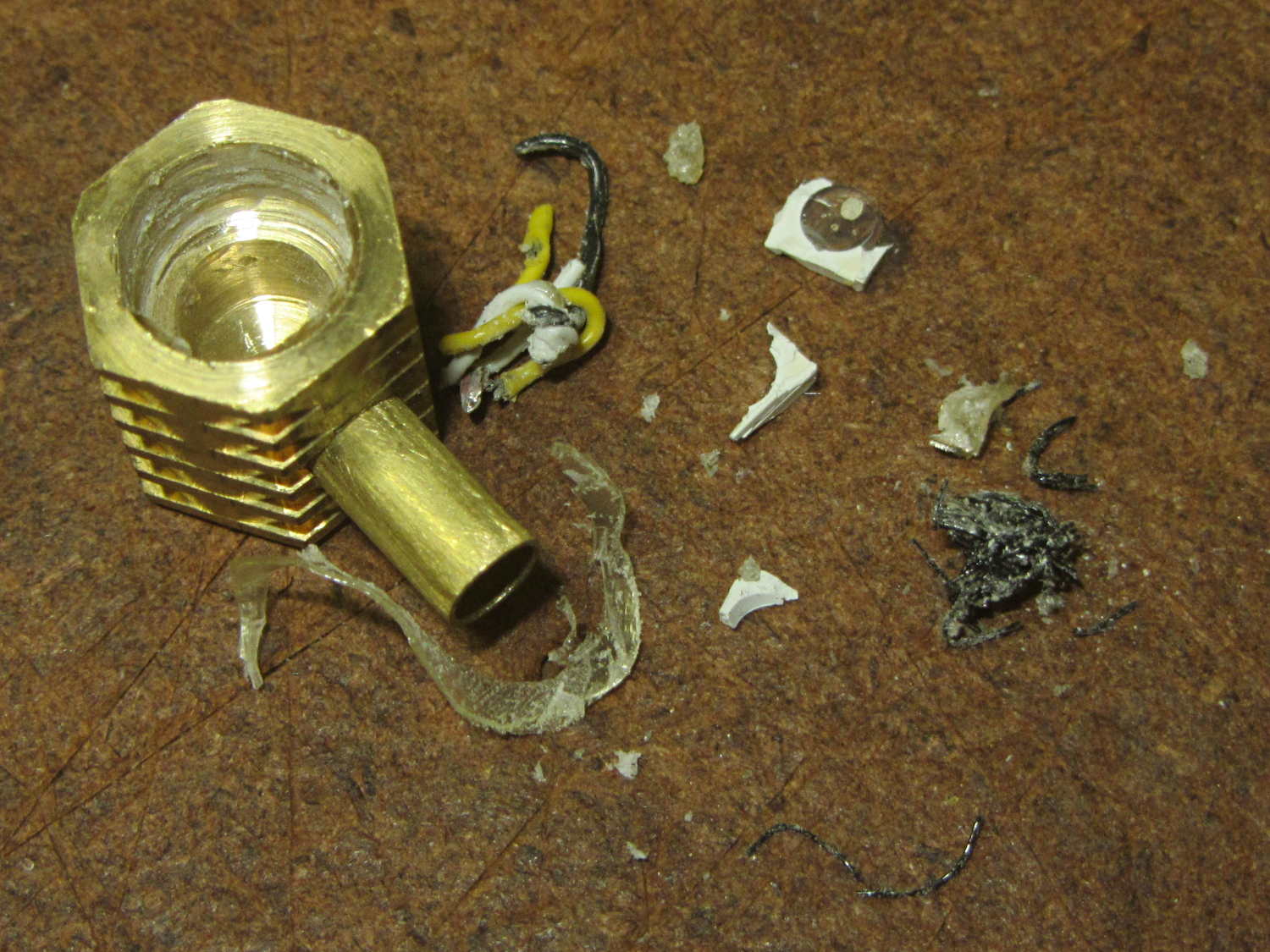
    Which produced a pile of debris in addition to the swarf:

    Failed WS2812 LED - debris
    Failed WS2812 LED – debris

    The brass cap emerged unscathed, which was just about as good as I could possibly hope for.

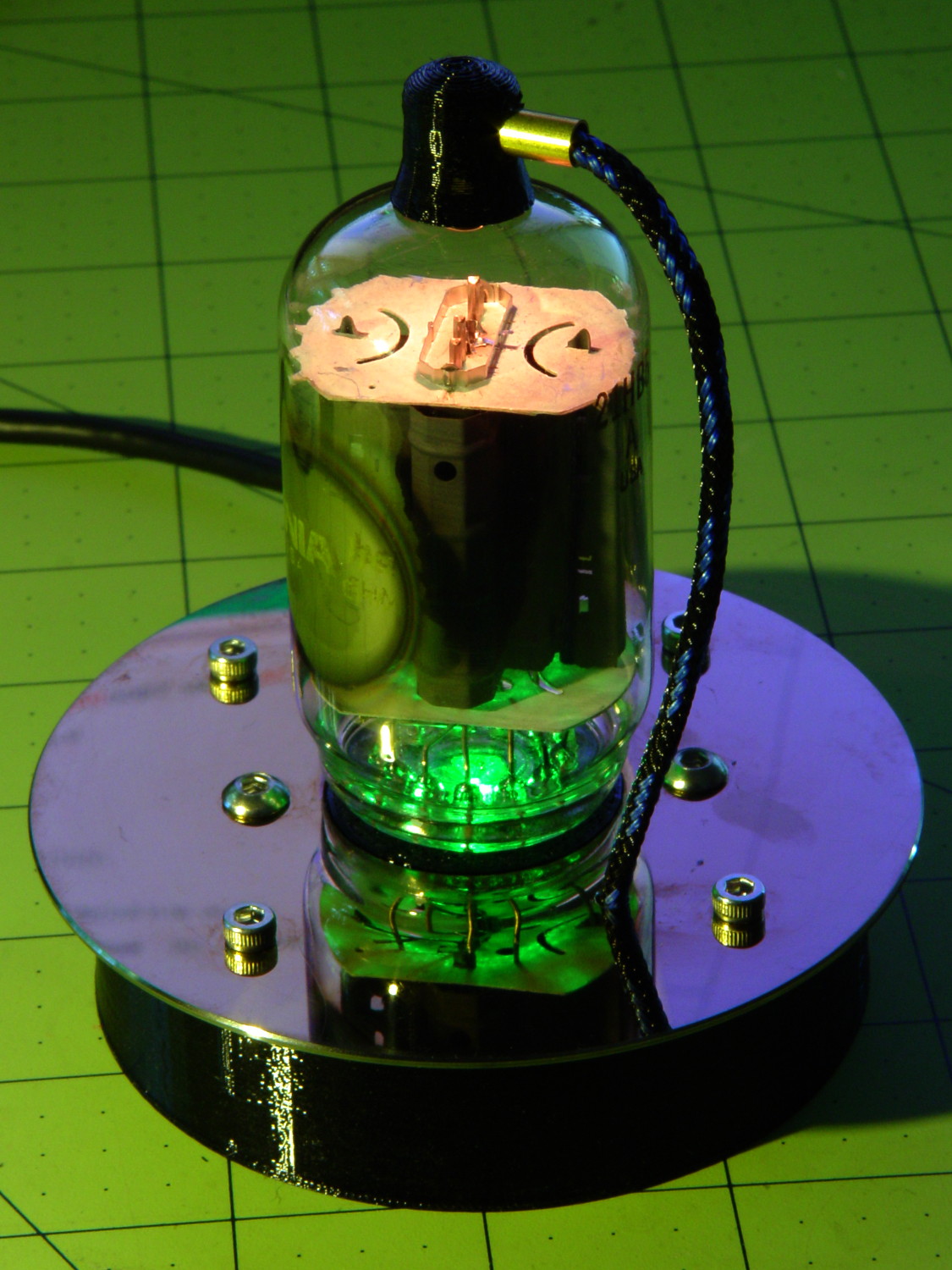
    The base LED in this 21HB5A also failed:

    21HB5A on platter - orange green
    21HB5A on platter – orange green

    Soooo I had to unsolder the plate lead and Arduino connections to extract the bottom PCB; fortunately, that was just a press-fit into the base.

    I should mount a 3.5 mm stereo jack on the platter and run the plate lead into a nice, albeit cheap, knurled metal plug, so I can dismount both the tube and the plate lead without any hassle. Right now, the tube can come out of the socket, but the plate lead passes through the platter.

    For whatever it’s worth, all of the dead WS2812 LEDs pass the Josh Sharpie Test, so these failures don’t (seem to) involve poor encapsulation.