The Smell of Molten Projects in the Morning

Ed Nisley's Blog: Shop notes, electronics, firmware, machinery, 3D printing, laser cuttery, and curiosities. Contents: 100% human thinking, 0% AI slop.

Author: Ed

  • SMA Attenuators vs. Broadcast FM vs. NooElec SDR

    Four SMA attenuators arrived from halfway around the planet:

    SMA Attenuators
    SMA Attenuators

    The top line has ATTENUATOR wrapped around the body. They’re rated for 2 W = +33 dBm, suitable for antennas and SDR and suchlike, not real radios or even HTs.

    That assortment provides 39 dB of attenuation in 3 dB steps:

    • 3 6 9
    • 10 13 16 19
    • 20 23 26 29
    • 30 33 36 39

    Sweeping them on the spectrum analyzer shows they’re doing what they claim, to within the resolution of the analyzer, and remain flat through 1.5 GHz, where my cheap N-to-SMA adapter cables roll off by 3 dB. Stacking them produces 38 dB of attenuation, which is certainly the small difference of large values and fine for my simple needs.

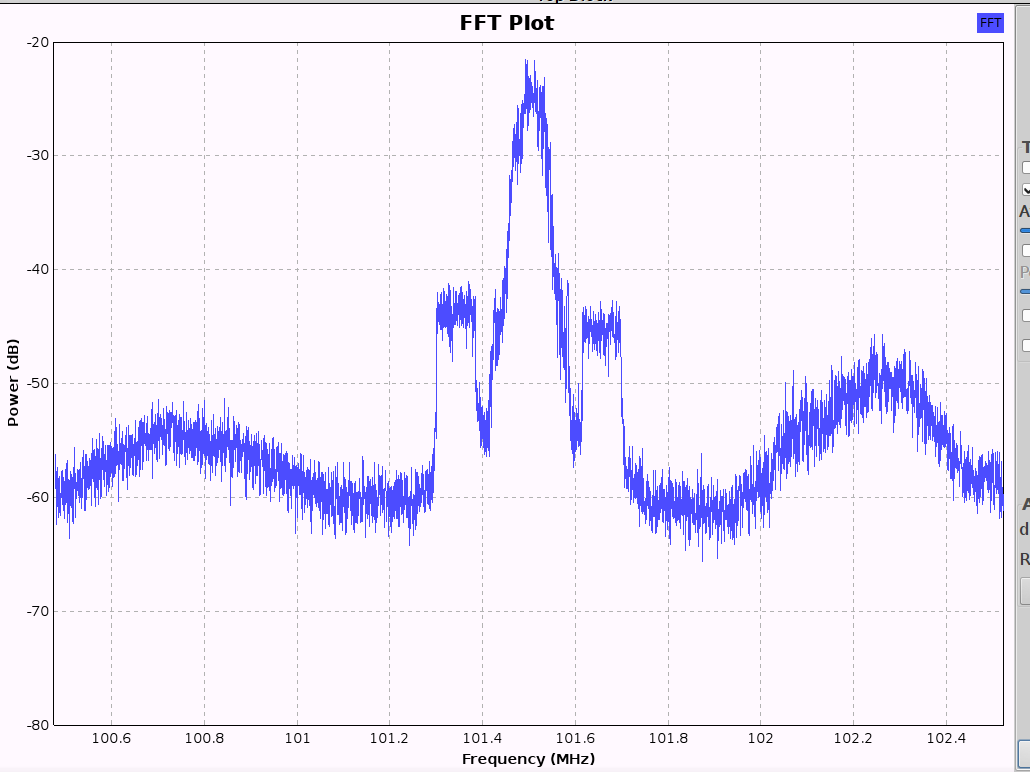
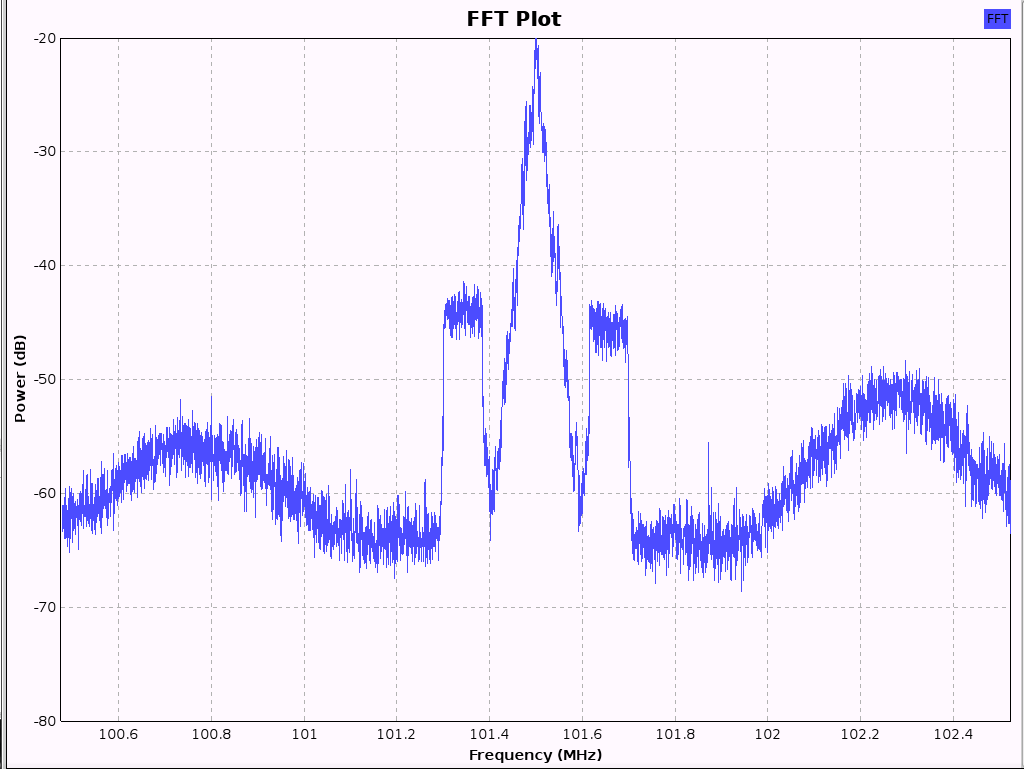
    Conversely, a quick test with a NooElec SDR shows plenty of hocus-pocus betwixt antenna and display: the RF doesn’t attenuate nearly the way you’d (well, I’d) expect.

    Direct from the antenna, with AGC off and 50 dB of RF gain:

    WPDH Spectrum - 0 dB atten
    WPDH Spectrum – 0 dB atten

    3 dB attenuator:

    WPDH Spectrum - 3 dB atten
    WPDH Spectrum – 3 dB atten

    6 dB attenuator:

    WPDH Spectrum - 6 dB atten
    WPDH Spectrum – 6 dB atten

    10 dB attenuator:

    WPDH Spectrum - 10 dB atten
    WPDH Spectrum – 10 dB atten

    20 dB attenuator:

    WPDH Spectrum - 20 dB atten
    WPDH Spectrum – 20 dB atten

    Ain’t nothin’ simple…

  • Tour Easy Rear Fender Clip

    One of the clips holding the rear fender on my Tour Easy broke:

    Rear fender clip - broken
    Rear fender clip – broken

    Well, if the truth be told, the fender jammed against the tire when I jackknifed the trailer while backing into a parking spot, dragged counterclockwise with the tire, and wiped that little tab right off the block. After 16 years of service, it doesn’t owe me a thing.

    Although the clip around the fender sits a bit lower than it used to (actually, the entire fender sits a bit lower than it should be), you can see the tab had a distinct bend at the edge of the aluminum block supporting the underseat bag frame: the block isn’t perpendicular to the tire / fender at that point.

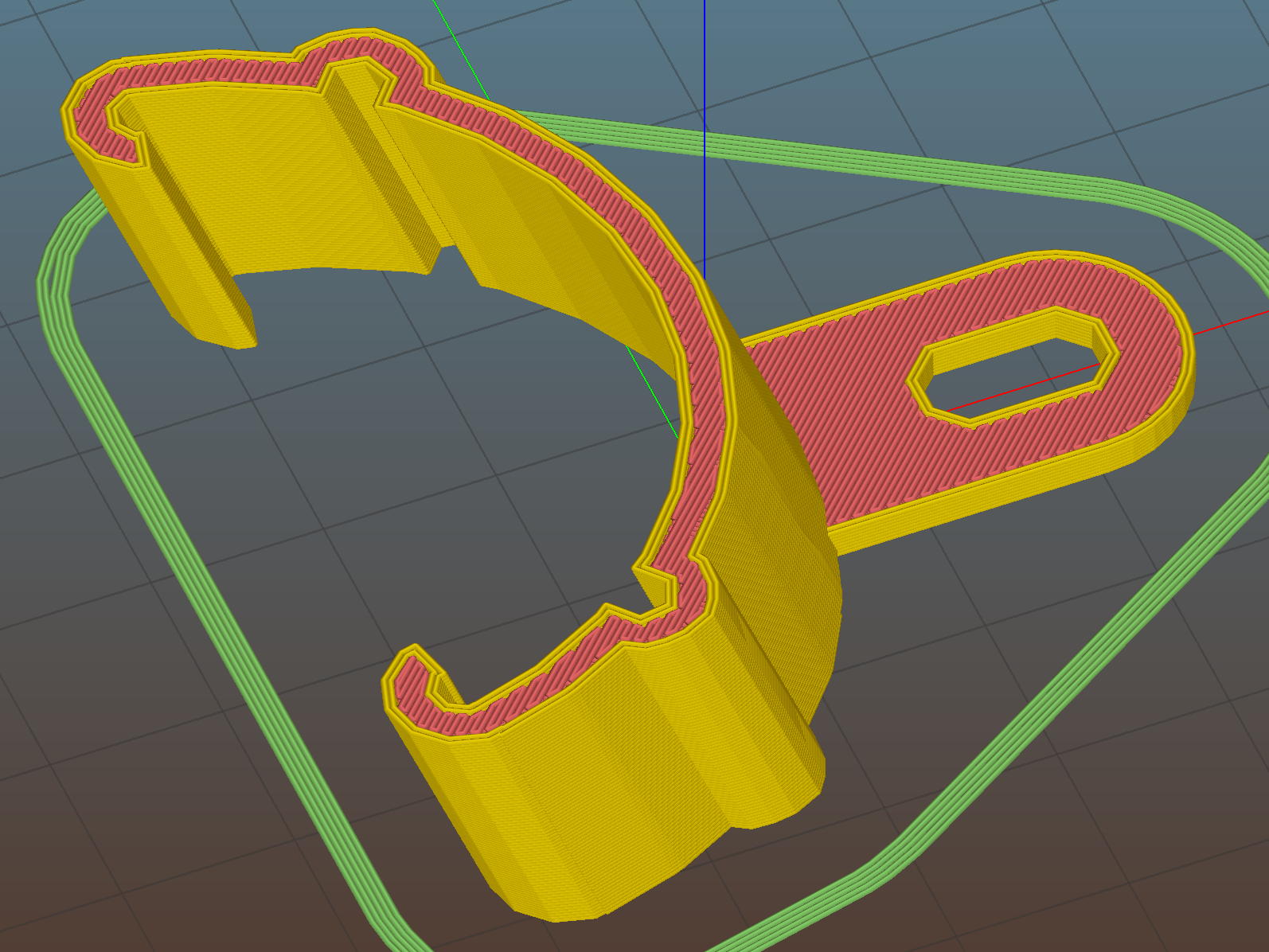
    After devoting far too long to thinking about how to angle the tab relative to the clip, I realized that I live in the future and can just angle the clip relative to the tab. Soooo, the solid model has a rakish tilt:

    Fender Clip - Slic3r preview
    Fender Clip – Slic3r preview

    The original design had a pair of strain relief struts where the tab meets the clip, but I figured I’ll add those after the PETG fractures.

    I mooched the small bumpouts along the arc from the original design; they provide a bit of stretch & bend so to ease the hooks around the fender.

    The hooks meet the clip with very slight discontinuities that, I think, come from slight differences between the 2D offset() operation and the circle() diameter; the usual 1/cos(180/numsides) trick was unavailing, so I tinkered until the answer came out right.

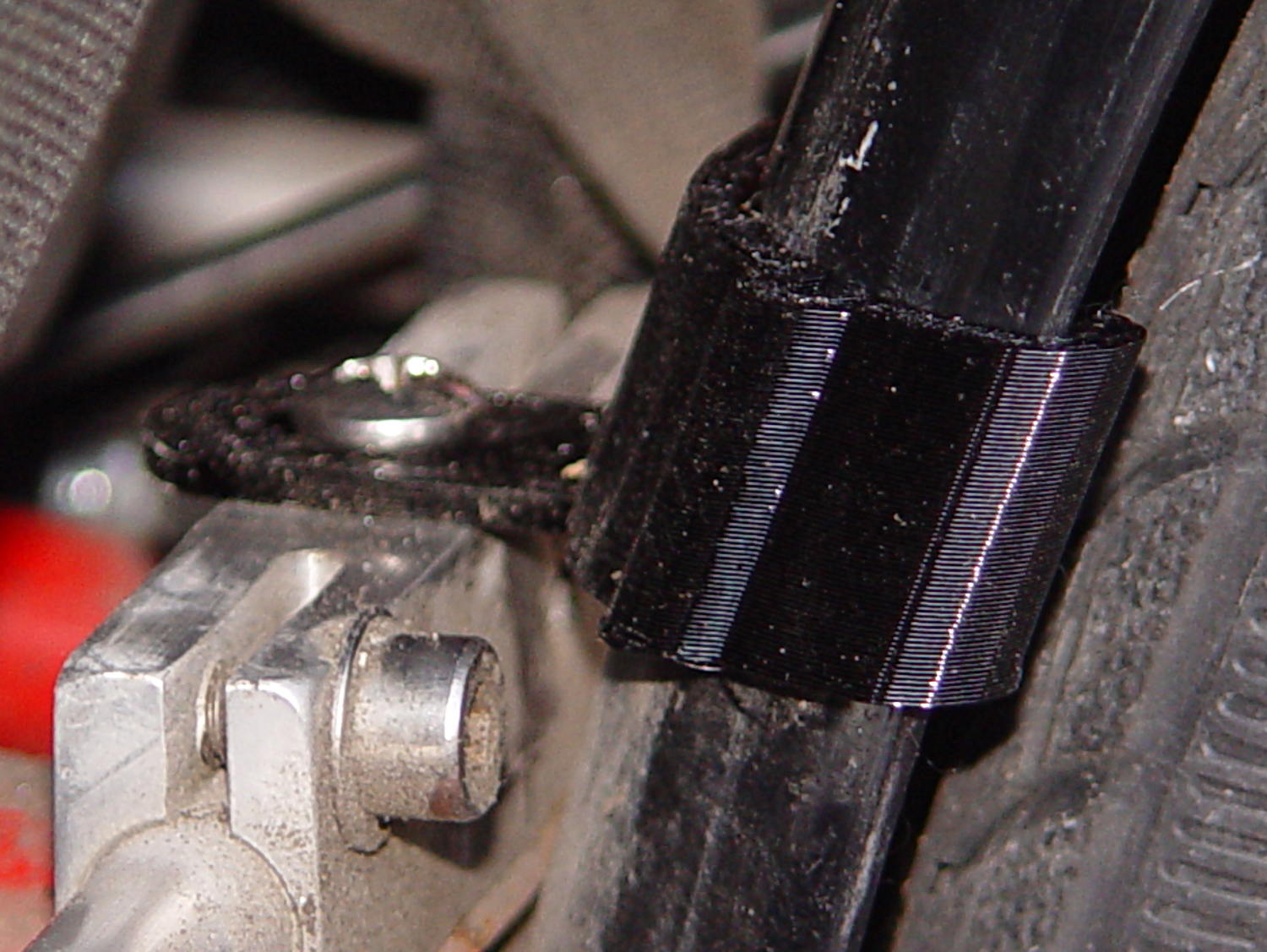
    Despite those stretchy bumps, it took three iterations, varying the chord height by about 1.5 mm, to securely snap those hooks onto the fender:

    Rear fender clip - 3D printed improvement
    Rear fender clip – 3D printed improvement

    Yeah, sorry ’bout the fuzzy focus on the screw head.

    It’s impossible to measure the chord height accurately enough in that position and I was not going to dismount the rear tire just to get a better measurement.

    You can see how the clip’s rakish tilt matches the fender’s slope, so the tab isn’t bent at all. It’ll probably break at the block the next time I jackknife the trailer, of course.

    I heroically resisted the urge to run off a lower fender mount.

    The OpenSCAD source code as a GitHub Gist:

    // Tour Easy rear fender clip
    // Ed Nisley KE4ZNU February 2017
    Layout = "Build"; // Build Profile Tab Clip
    //- Extrusion parameters must match reality!
    ThreadThick = 0.25;
    ThreadWidth = 0.40;
    HoleWindage = 0.2;
    Protrusion = 0.1; // make holes end cleanly
    inch = 25.4;
    function IntegerMultiple(Size,Unit) = Unit * ceil(Size / Unit);
    //———————-
    // Dimensions
    // special case: fender is exactly half a circle!
    FenderC = 47.0; // fender outside width = chord
    FenderM = 18.5; // height of chord
    FenderR = (pow(FenderM,2) + pow(FenderC,2)/4) / (2 * FenderM); // radius
    echo(str("Fender radius: ", FenderR));
    FenderD = 2*FenderR;
    FenderA = 2 * asin(FenderC / (2*FenderR));
    echo(str(" … arc: ",FenderA," deg"));
    FenderThick = 2.5; // fender thickness, assume dia of edge
    ClipHeight = 18.0; // top to bottom, ignoring rakish tilt
    ClipThick = 3.0; // thickness of clip around fender
    ClipD = FenderD; // ID of clip against
    ClipSides = 4 * 8; // polygon sides around clip circle
    BendReliefD = 2.5; // bend arch diameter
    BendReliefA = 2/3 * FenderA/2; // … angle from dead ahead
    BendReliefCut = 1.0; // factor to thin outside of bend
    TabAngle = -20; // angle from perpendicular to fender
    TabThick = 2.0;
    TabWidth = 15.0;
    ScrewOffset = 15.0; // screw center to fender along perpendicular
    ScrewD = 5.0;
    ScrewSlotLength = 2*ScrewD;
    //———————-
    // Useful routines
    module PolyCyl(Dia,Height,ForceSides=0) { // based on nophead's polyholes
    Sides = (ForceSides != 0) ? ForceSides : (ceil(Dia) + 2);
    FixDia = Dia / cos(180/Sides);
    cylinder(r=(FixDia + HoleWindage)/2,
    h=Height,
    $fn=Sides);
    }
    //———————-
    // Clip profile around fender
    // Centered on fender arc
    module Profile(HeightScale = 1) {
    linear_extrude(height=HeightScale*ClipHeight,convexity=5) {
    difference() {
    offset(r=ClipThick) // outside of clip
    union() {
    circle(d=ClipD,$fn=ClipSides);
    for (i=[-1,1])
    rotate(i*BendReliefA) {
    translate([ClipD/2 + BendReliefD/2,0,0])
    circle(d=BendReliefD,$fn=6);
    }
    }
    union() { // inside of clip
    circle(d=ClipD,$fn=ClipSides);
    for (i=[-1,1])
    rotate(i*BendReliefA) {
    translate([ClipD/2 + BendReliefCut*BendReliefD/2,0,0])
    circle(d=BendReliefD/cos(180/6),$fn=6);
    translate([ClipD/2,0,0])
    square([BendReliefCut*BendReliefD,BendReliefD],center=true);
    }
    }
    translate([(FenderR – FenderM – FenderD/2),0]) // trim ends
    square([FenderD,2*FenderD],center=true);
    }
    for (a=[-1,1]) // hooks around fender
    rotate(a*(FenderA/2))
    translate([FenderR – FenderThick/2,0]) {
    difference() {
    rotate(1*180/12)
    circle(d=FenderThick + 2*ClipThick,$fn=12);
    rotate(1*180/8)
    circle(d=FenderThick,$fn=8);
    rotate(a * -90)
    translate([0,-2*FenderThick,0])
    square(4*FenderThick,center=false);
    }
    }
    }
    }
    //———————-
    // Mounting tab
    module Tab() {
    linear_extrude(height=TabThick,convexity=3)
    difference() {
    hull() {
    circle(d=TabWidth,$fn=ClipSides);
    translate([(ScrewSlotLength – ScrewD)/2 + (FenderR + ScrewOffset),0,0])
    circle(d=TabWidth,$fn=ClipSides);
    }
    circle(d=ClipD,$fn=ClipSides); // remove fender arc
    hull() // screw slot
    for (i=[-1,1])
    translate([i*(ScrewSlotLength – ScrewD)/2 + (FenderR + ScrewOffset),0,0])
    rotate(180/8)
    circle(d=ScrewD/cos(180/8),$fn=8);
    }
    }
    //———————-
    // Combine at mounting angle
    module Clip() {
    difference() {
    union() {
    translate([-FenderR,0,0])
    Tab();
    rotate([0,TabAngle,0])
    translate([-FenderR,0,0])
    Profile(2); // scale upward for trimming
    }
    translate([0,0,-ClipHeight]) // trim bottom
    cube(2*[FenderD,FenderD,ClipHeight],center=true);
    translate([0,0,ClipHeight*cos(TabAngle)+ClipHeight]) // trim top
    cube(2*[FenderD,FenderD,ClipHeight],center=true);
    }
    }
    //———————-
    // Build it
    if (Layout == "Profile") {
    Profile();
    }
    if (Layout == "Tab") {
    Tab();
    }
    if (Layout == "Clip") {
    Clip();
    }
    if (Layout == "Build") {
    Clip();
    }

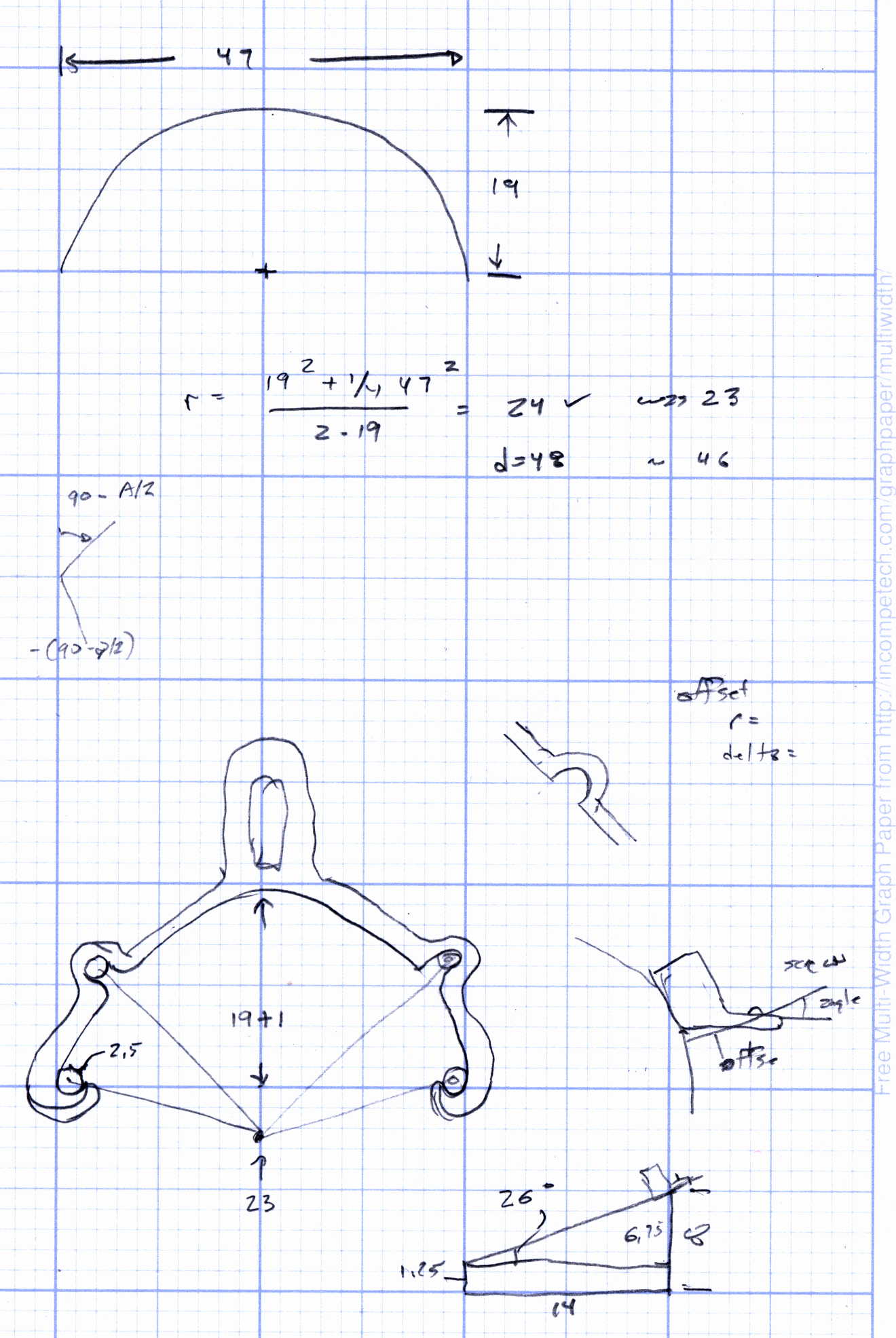
    The original doodle, with some measurements unable to withstand the test of time:

    Rear Fender Clip - measurement doodles
    Rear Fender Clip – measurement doodles
  • Cheap WS2812 LEDs: Test Fixture Failure 1

    Well, that didn’t take long:

    WS2812 array - failure 1
    WS2812 array – failure 1

    The red spot in the next-to-bottom row of the test fixture (*) marks a failed WS2812 LED. All of the LEDs above it, plus the LED just to its left, are in pinball panic mode: random colors flicker across the panel as the LED’s controller transmits garbled data and the downstream LEDs pass it on.

    This failure provides several bits of information:

    • The LED sees the same power supply as all the rest, so it’s not a power thing
    • The LED gets data from the adjacent WS2812, so it’s not an Arduino output thing
    • It failed after about four days = 100 hours of continuous operation

    I connected the previous LED’s output (#6) to the next one’s input (#8), so the failed LED (#7, now with output disconnected) continues to flicker, but doesn’t influence any of the downstream LEDs.

    (*) The LEDs are daisy-chained from lower right to upper left, row by row, so that’s LED #7 of 28.

  • Epoxy Mixing Pads

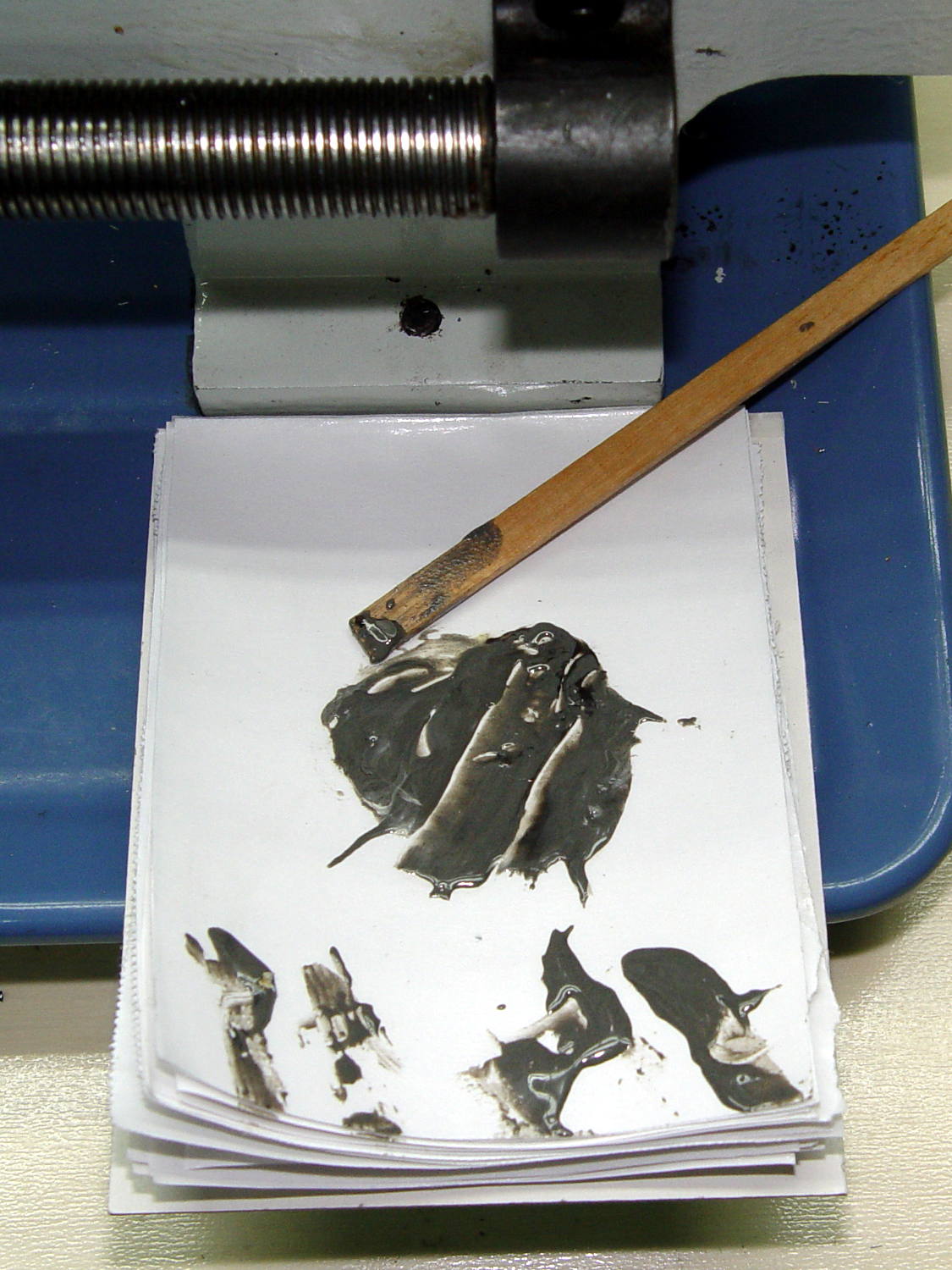
    Quilters hold fabric in place with freezer paper while piecing their blocks; it’s basically plastic-coated paper that gets tacky at ordinary clothes iron temperatures.

    It’s useful in the shop, too. Cut a length of freezer paper into small pages, pad them plastic-side-up atop a sheet of cardboard, and you get a great place to mix small amounts of epoxy:

    Epoxy mixing pad
    Epoxy mixing pad

    Let the pad stay next to whatever you’re epoxying (like, say, the lathe tailstock ways), then test the leftover epoxy for hardness… rather than messing up the joint you so laboriously created by moving the parts an hour too soon.

    Works for me, anyhow. Highly recommended!

  • Squirrel vs. Bird Feeder

    After months of attempts and (occasionally) spectacular failures, one of the backyard squirrels managed to climb aboard the bird feeder:

    Squirrel on bird feeder
    Squirrel on bird feeder

    The shutter closes when more than two cardinals and a titmouse perch on the wood bar, so the squirrel didn’t get anything. However, back in 2008, one of that critter’s ancestors mastered the trick:

    Not a Squirrel-Proof Feeder
    Not a Squirrel-Proof Feeder

    Since then, I’ve raised the feeder about five feet and inverted a big pot over two feet of loose PVC pipe around the pole.

    Given the number of squirrel-training videos on Youtube, however, it’s only a matter of time until the critters put all the tricks together!

  • Mini-Lathe Carriage Stop: Spring Counterbore

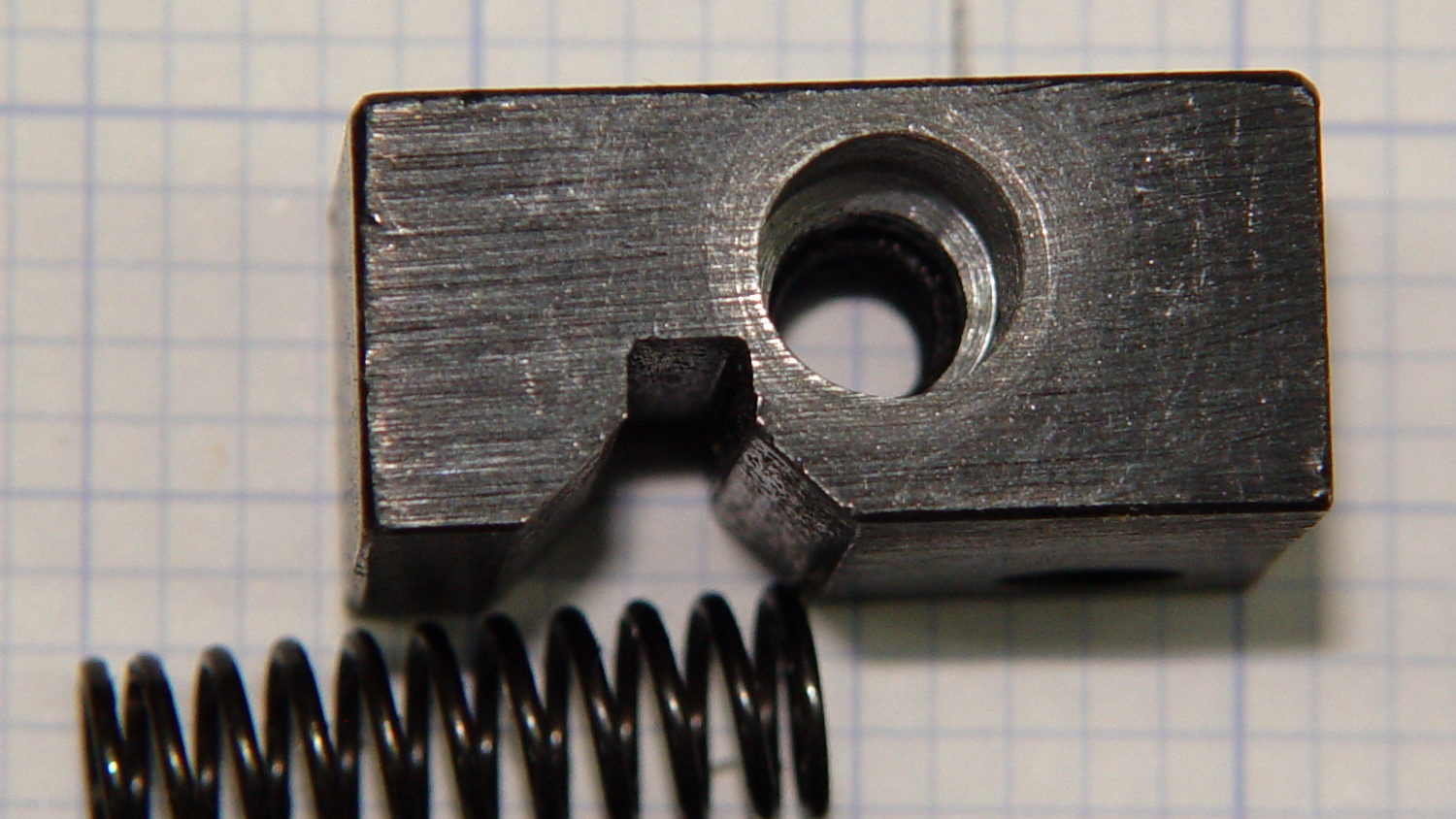
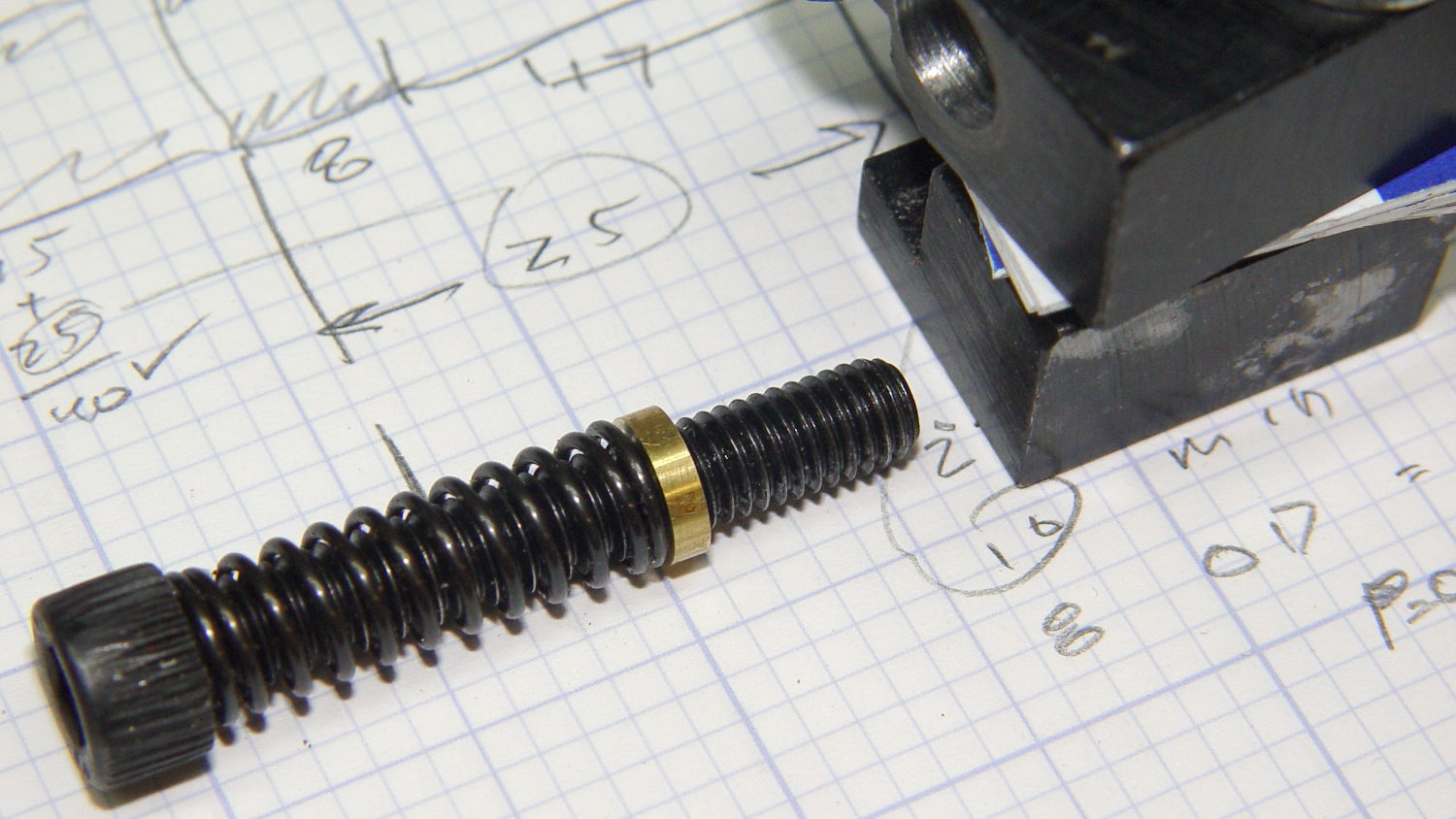
    While pondering the tailstock ways, I realized the spring on the LMS Adjustable Carriage Stop just needed a counterbore to make it work right:

    LMS Carriage Stop - spring counterbore
    LMS Carriage Stop – spring counterbore

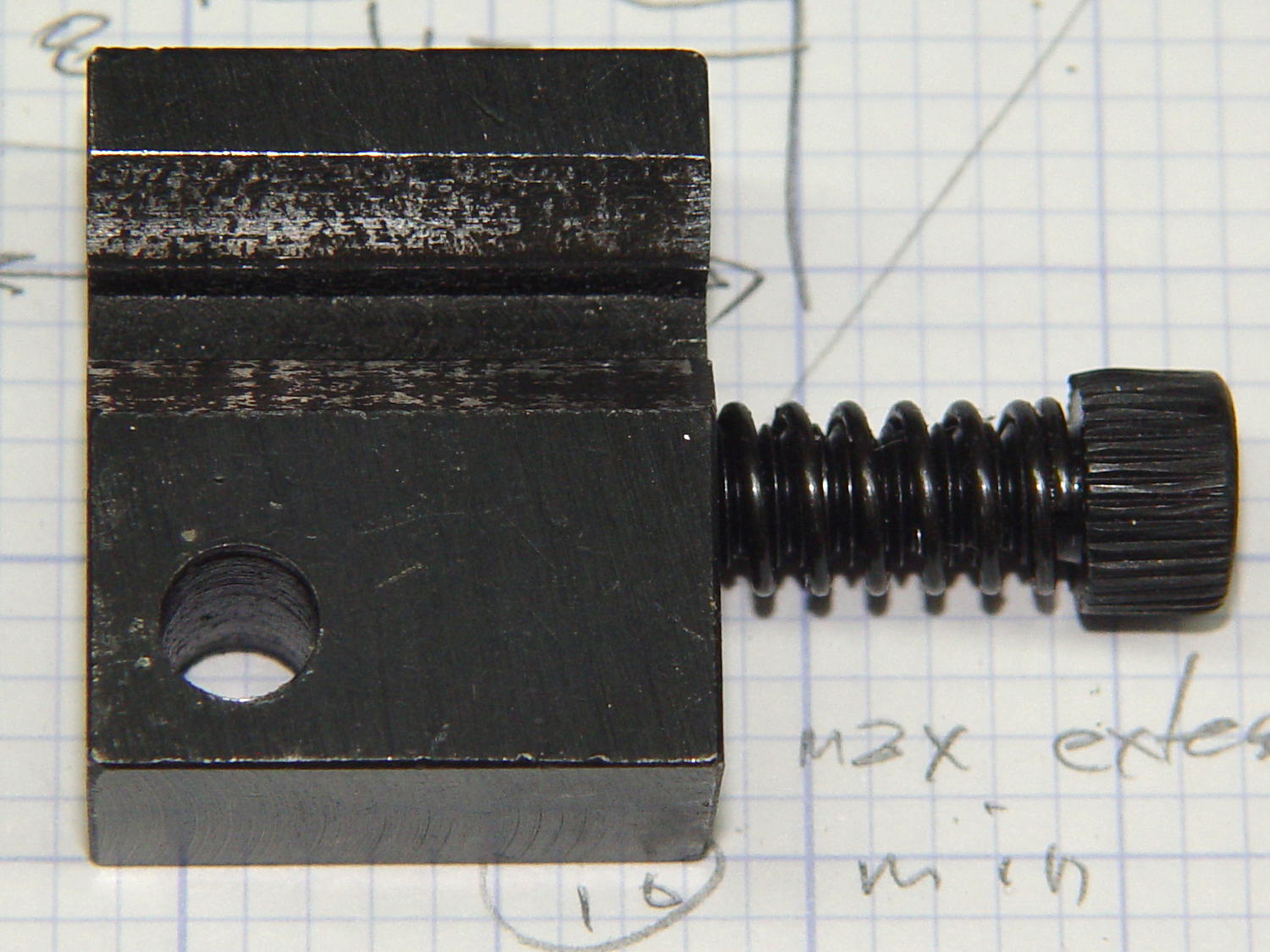
    The OEM spring now sits slightly compressed with the screw tip flush at the far end of the block:

    LMS Carriage Stop - reassembled
    LMS Carriage Stop – reassembled

    That OEM screw head knurling leaves a bit to be desired, doesn’t it?

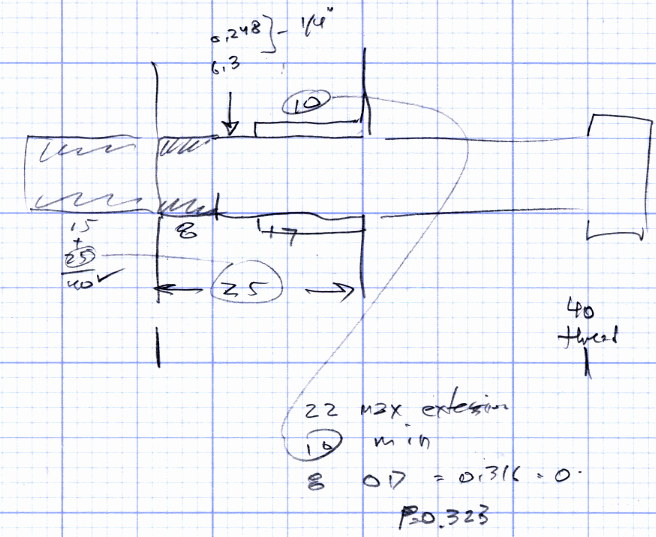
    Actually boring the hole would be a remarkably tedious process for little gain. Instead, I lined up the block in the drill press using a ¼ inch drill (the OEM hole isn’t hard metric!) in the unthreaded section, enlarged it with progressively larger drills up to an O (0.316 inch = 8 mm), then finished with a P (0.323 in = 8.2 mm).

    As it turned out, my guesstimated relaxed spring length was a bit off, so I turned a brass bushing to shorten the hole by 2 mm:

    LMS Carriage Stop - screw bushing
    LMS Carriage Stop – screw bushing

    If I don’t mention it, nobody will ever know!

    The original doodle, with close-enough sizes:

    LMS Carriage Stop - spring counterbore doodle
    LMS Carriage Stop – spring counterbore doodle
  • Another Numeric Keypad Snowflake

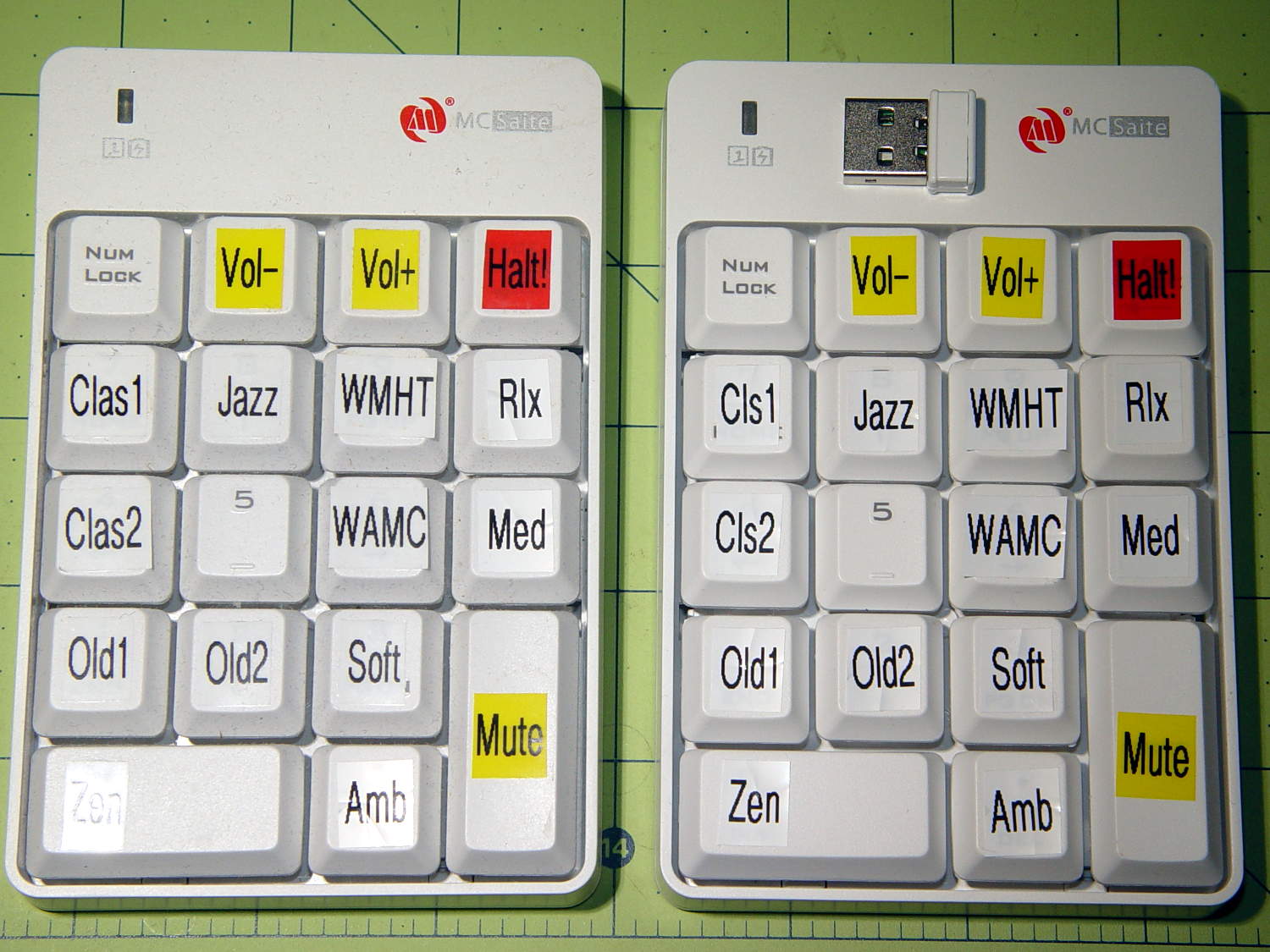
    I got another batch of wireless keypads that, from the outside, look identical to the previous set:

    Wireless USB Numeric keypads
    Wireless USB Numeric keypads

    The keypad on the right reports Model ID 0x4182, the same as the black plastic batch, and different from the 0x4101 of the previous batch (on the left). Apparently, the small USB dongle carries the Model ID data and the keypads can carry anybody’s logo.

    The Vendor ID, of course, still shows Creative Lab’s 0x062a and all the serial numbers are 1.

    Fortunately, the udev rules already have that combination and the streaming player can’t tell the difference.

    Those labels on the keytops still don’t quite fit, but we’re coping as best we can.