Ed Nisley's Blog: Shop notes, electronics, firmware, machinery, 3D printing, laser cuttery, and curiosities. Contents: 100% human thinking, 0% AI slop.
With more snow on the schedule, Mary’s bike finally got a new rear shifter:
Tour Easy – SRAM X.0 grip shifter installed
It’s an old-school SRAM X.0 grip shifter, evidently compatible with SRAM X.9 and X.7 derailleurs, and seems to work OK. The wavy ridges may be more prominent than necessary for our road riding, though.
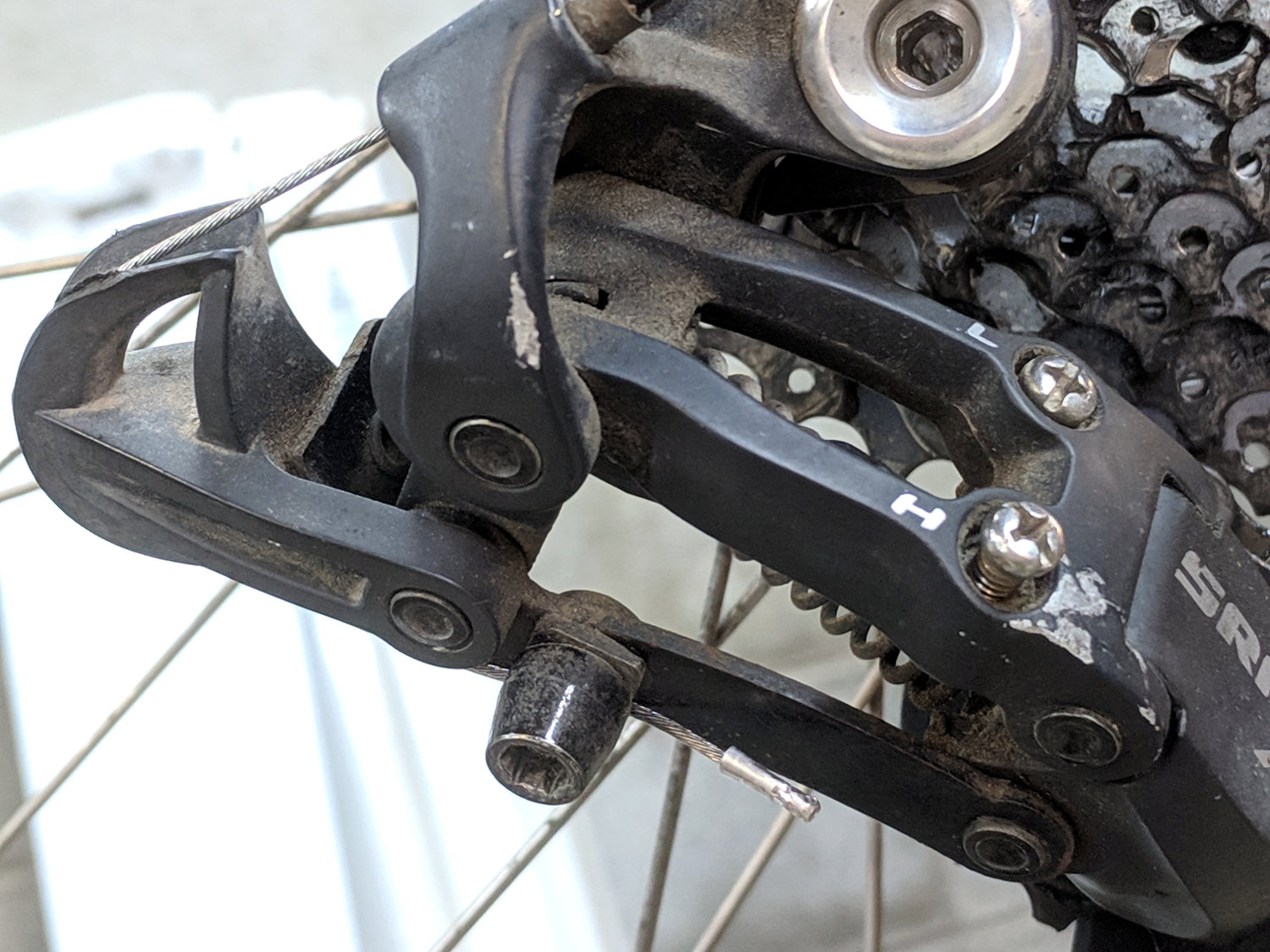
In a miracle of rare device, the preinstalled cable turned out to be exactly long enough:
Tour Easy – SRAM X.0 cable length
Twiddling the length for perfect shifting requires on-the-road testing and the chain wrap may need tweaking (I may not have gotten it right when I installed the derailleur), but at least the shifter stops at every detent along the way.
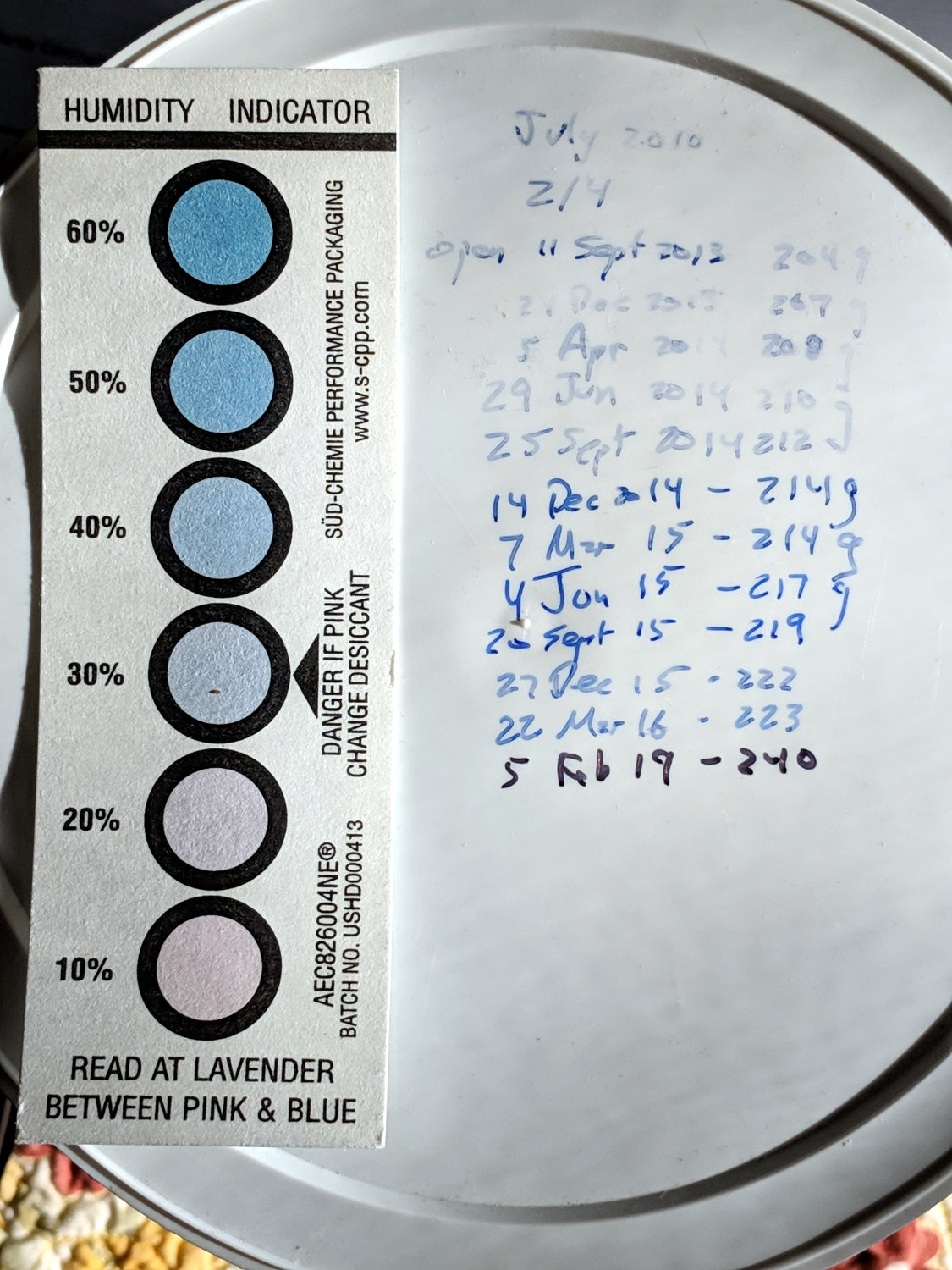
Being that type of guy, I tucked a bag of silica gel desiccant and a humidity indicator card into a #10 can of baking powder, then recorded the bag weight whenever I refilled the kitchen container:
Baking Powder Can with Data
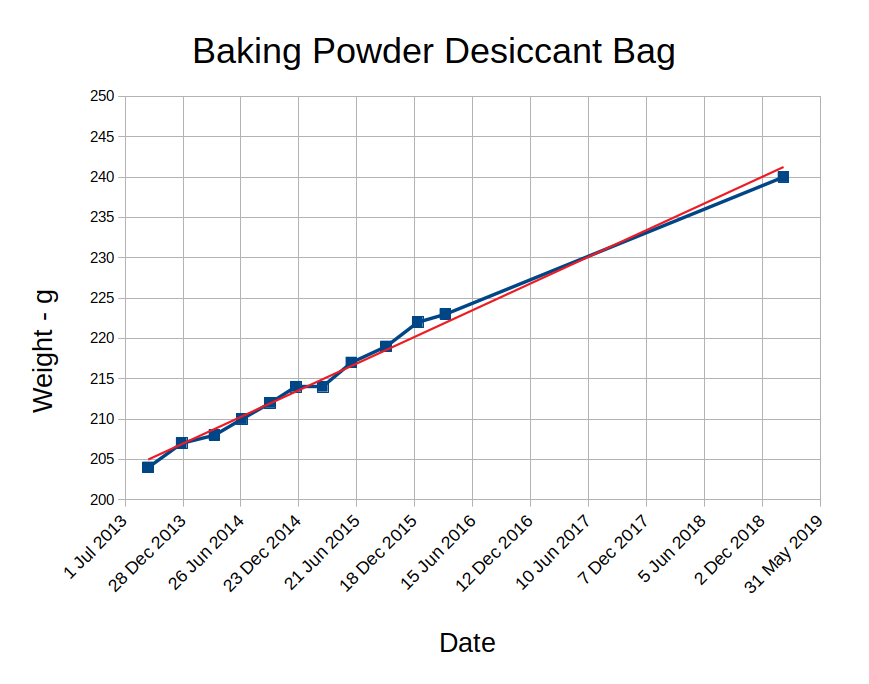
For reasons not relevant here, we pretty much stopped using baking powder a couple of years ago, so there’s a protracted silence between the last two data points:
That last point emptied the can and, after a few days in the 60% RH basement, the bag weighed 243 g. The slope of the line suggests it’s been near 240 g for a while, although the humidity card showed the air was reasonably dry in there.
At our current rate, we’ll open the next can in a year or so …
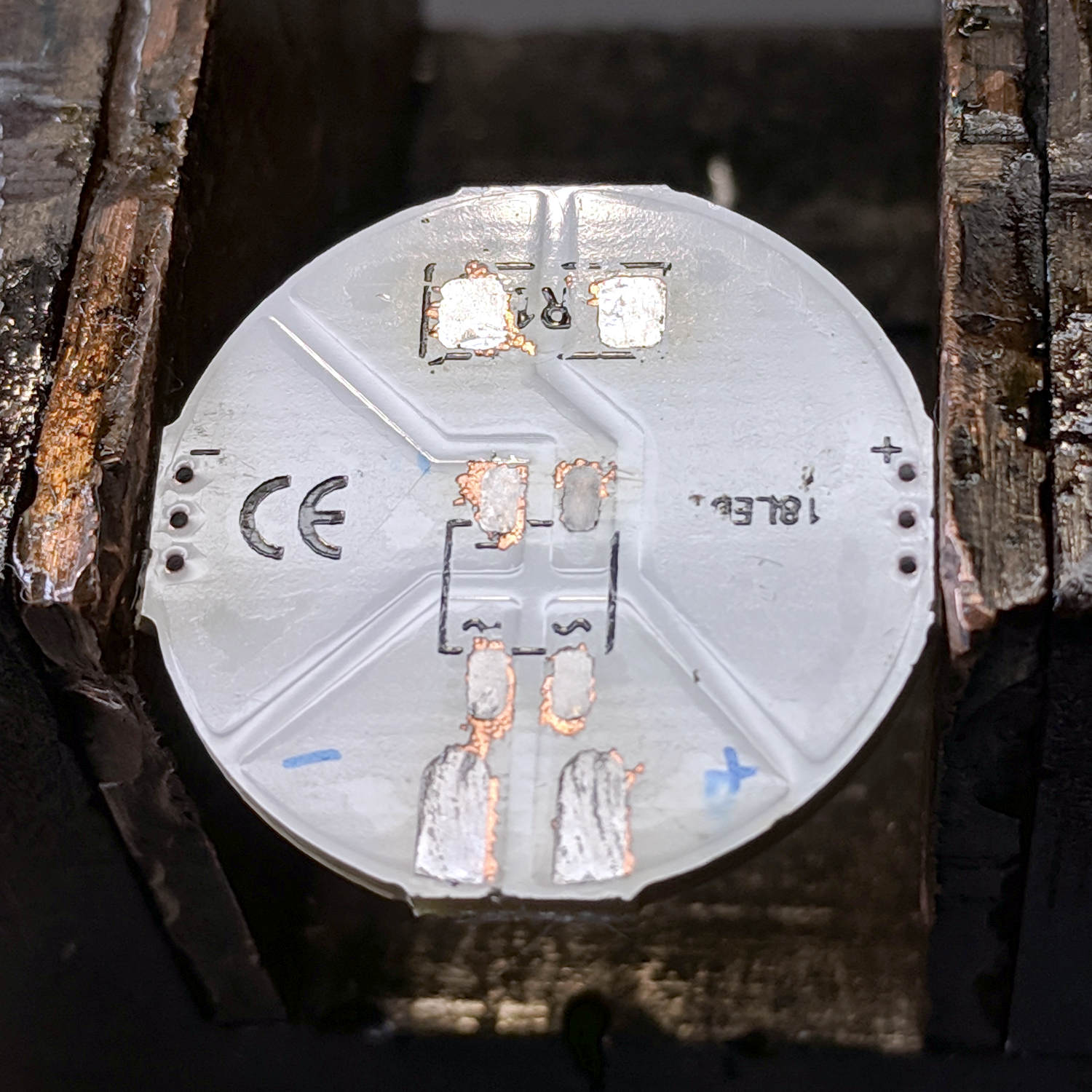
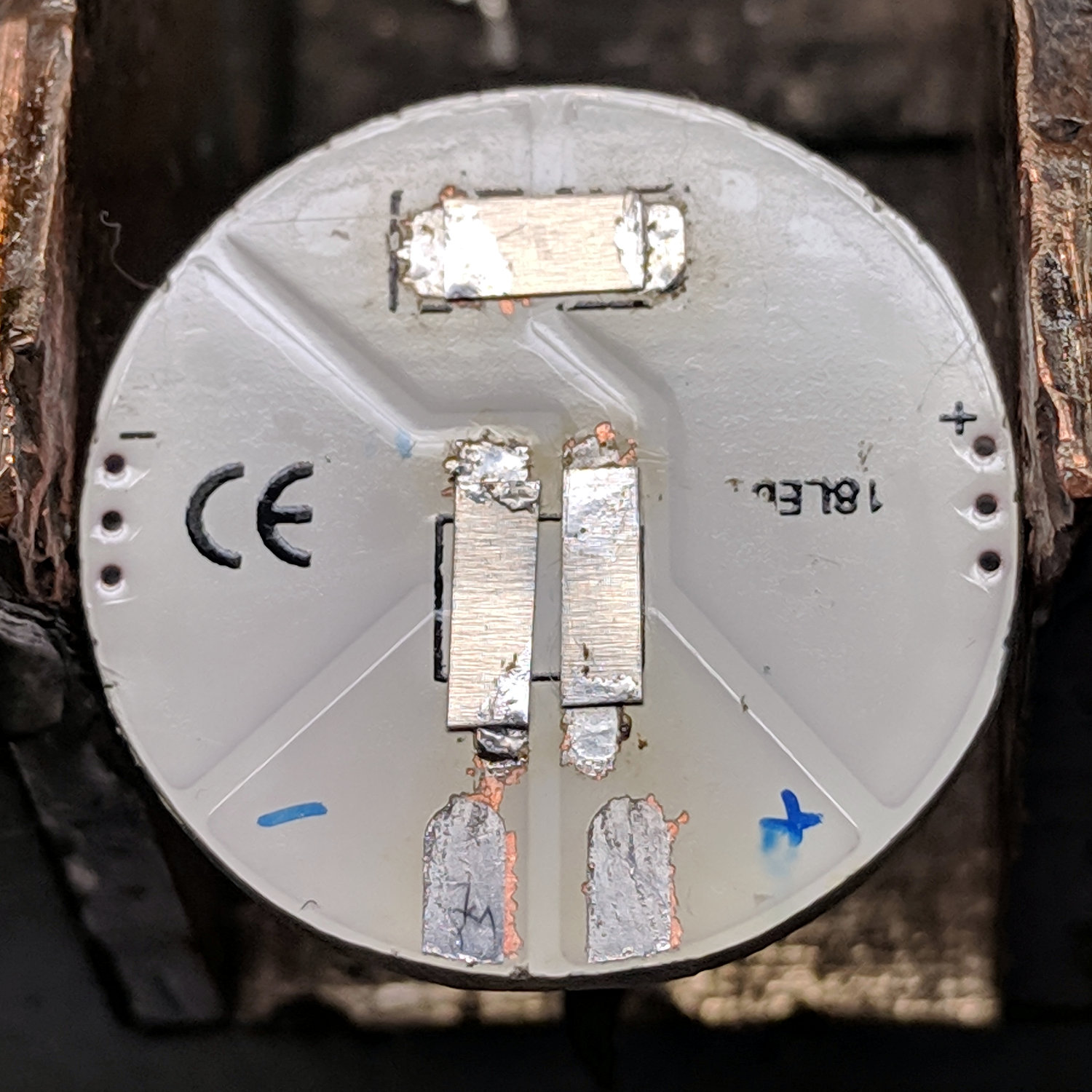
Stripping the components from the back of a “5 W” COB LED gets it ready for action:
G4 COB LED PCB – stripped
Jumpering the pads with nickel strips harvested from various NiMH and lithium cells restores the original contact pads to service:
Juki TL-2010Q Needle LEDs – COB LED jumpers
A bit of bandsaw artistry produced a replacement for the OEM LED bracket:
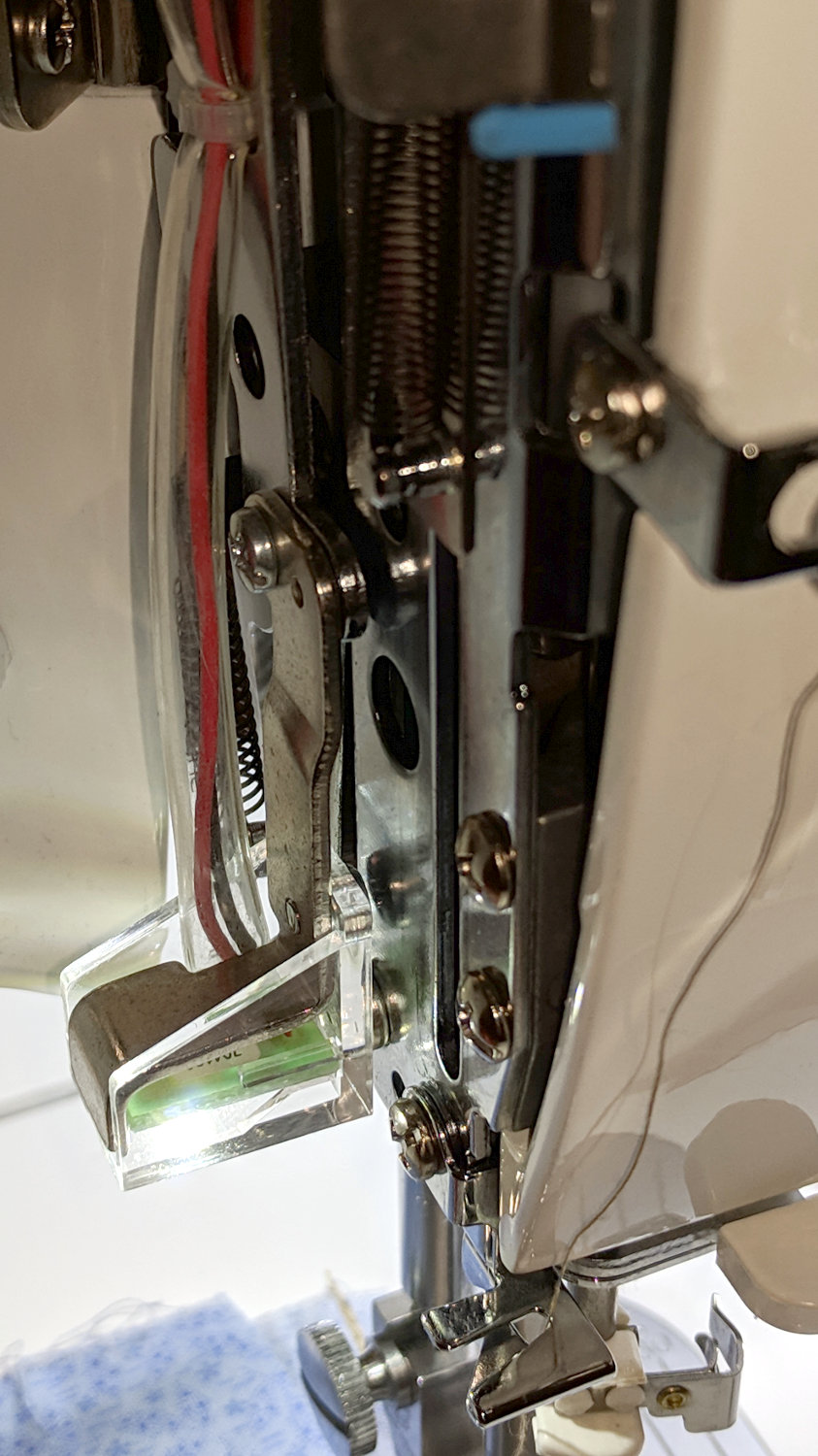
Juki TL-2010Q Needle LEDs – trial installation
The epxoy bonding the LED to the heatsink happens a few paragraphs ahead in this story, but the view justifies it. The 2 mm hole just to the right of the 3 mm SHCS aligns the heatsink to a pin in the machine’s frame, ensuring it doesn’t twist around under vibration.
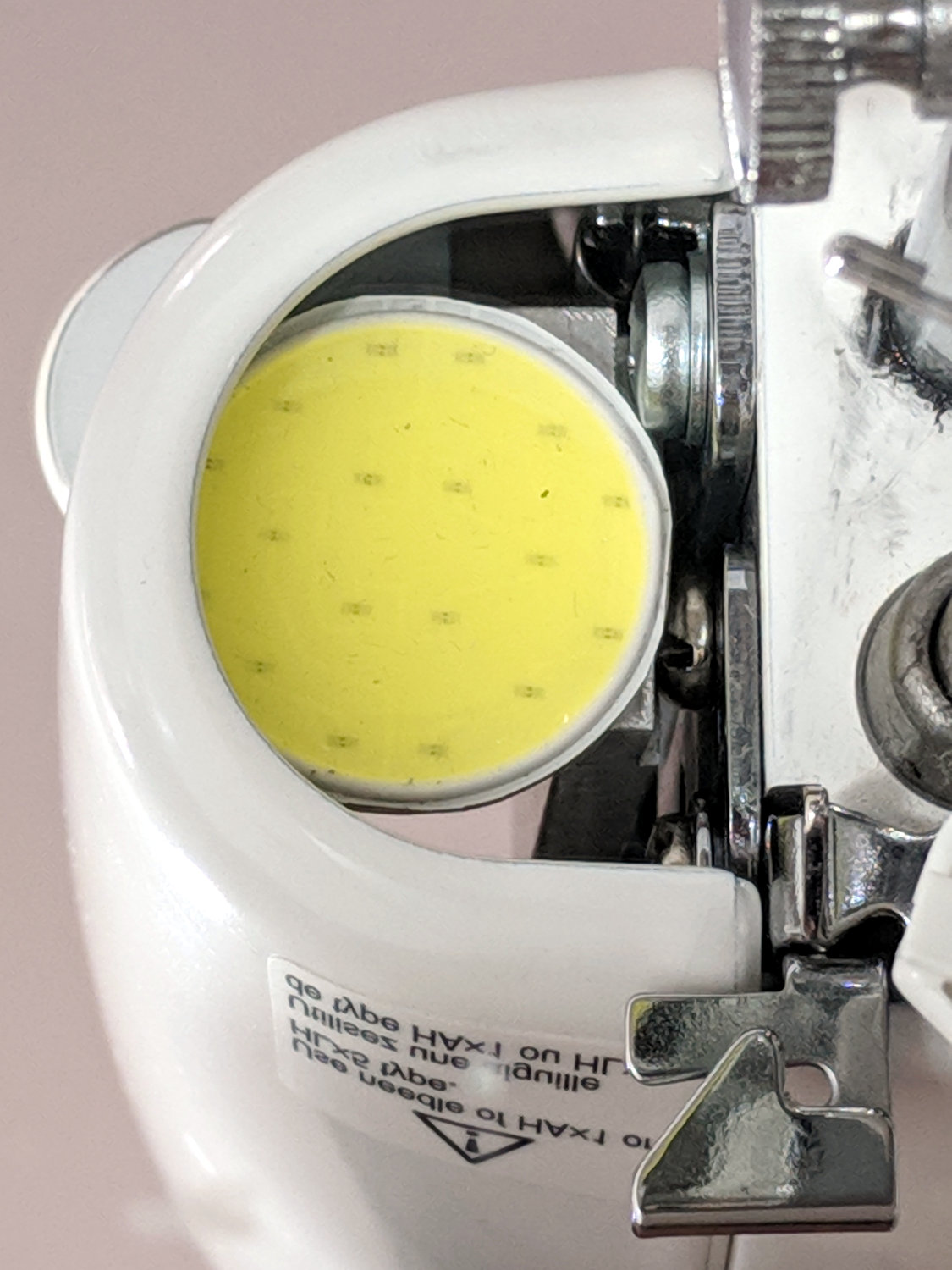
The view from below (in a mirror on the machine’s bed) shows the COB LED just barely fits in the opening:
Juki TL-2010Q Needle LEDs – trial fit
I screwed the bare heatsink into the Juki, applied double-stick tape to the COB LED, aligned LED with opening, and stuck it in place. Back in the shop, I traced around the LED to figure out what part of the heatsink needed removing, introduced it to Mr Disk Sander, and contoured it to match the LED.
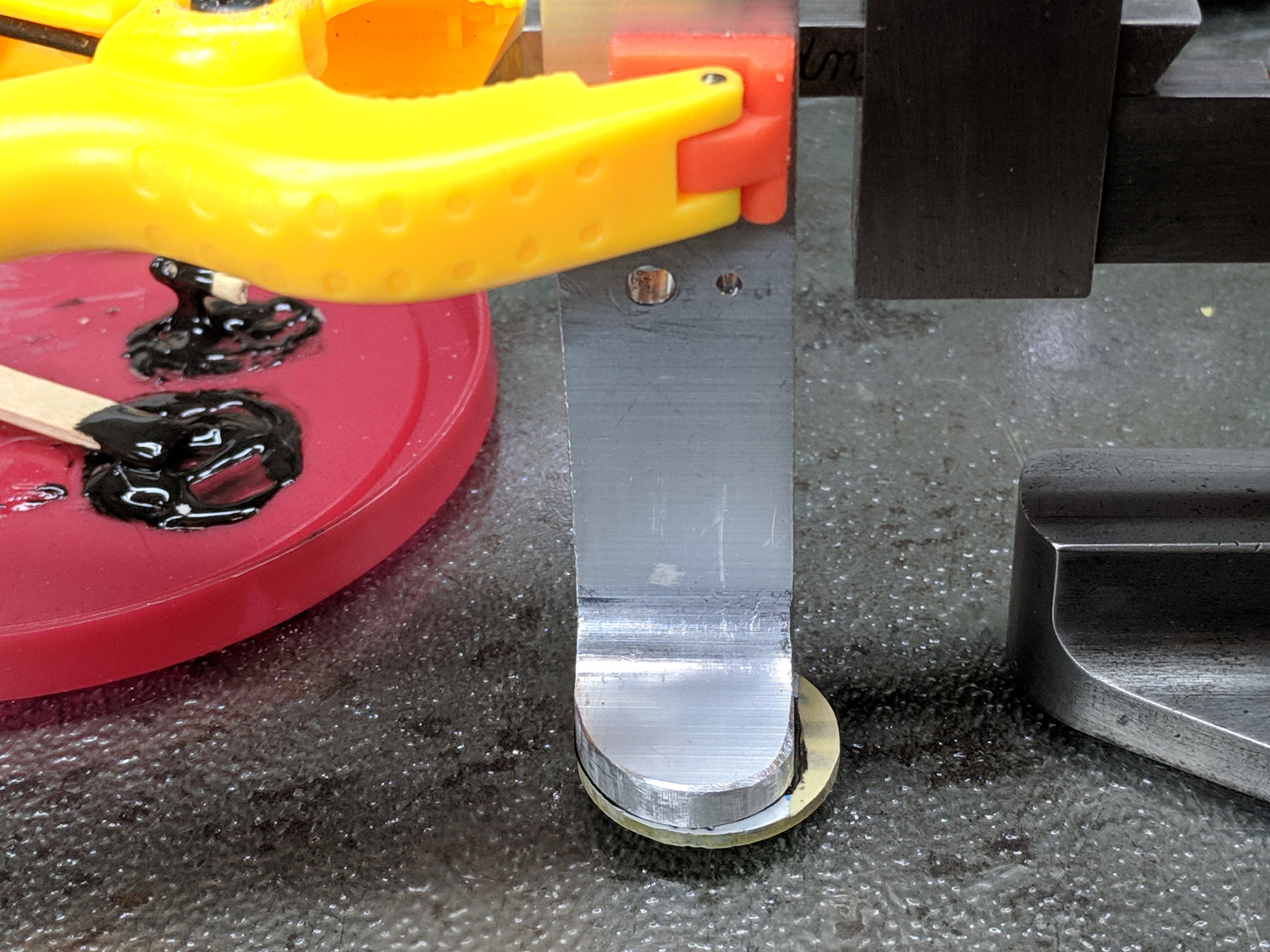
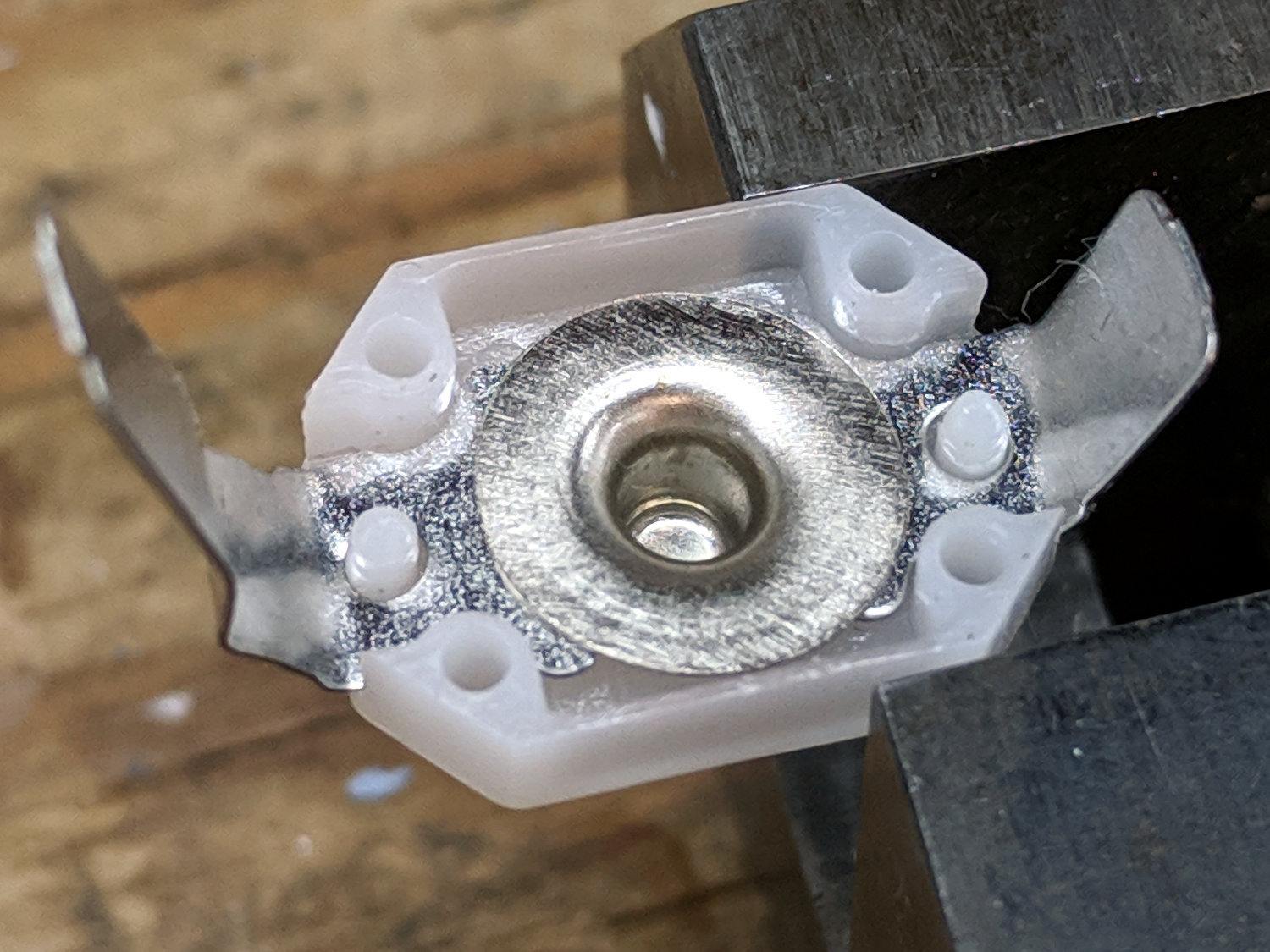
Clean everything with denatured alcohol, put the heatsink on a glass plate, and clamp it to the height gauge:
Juki TL-2010Q Needle LEDs – heatsink alignment
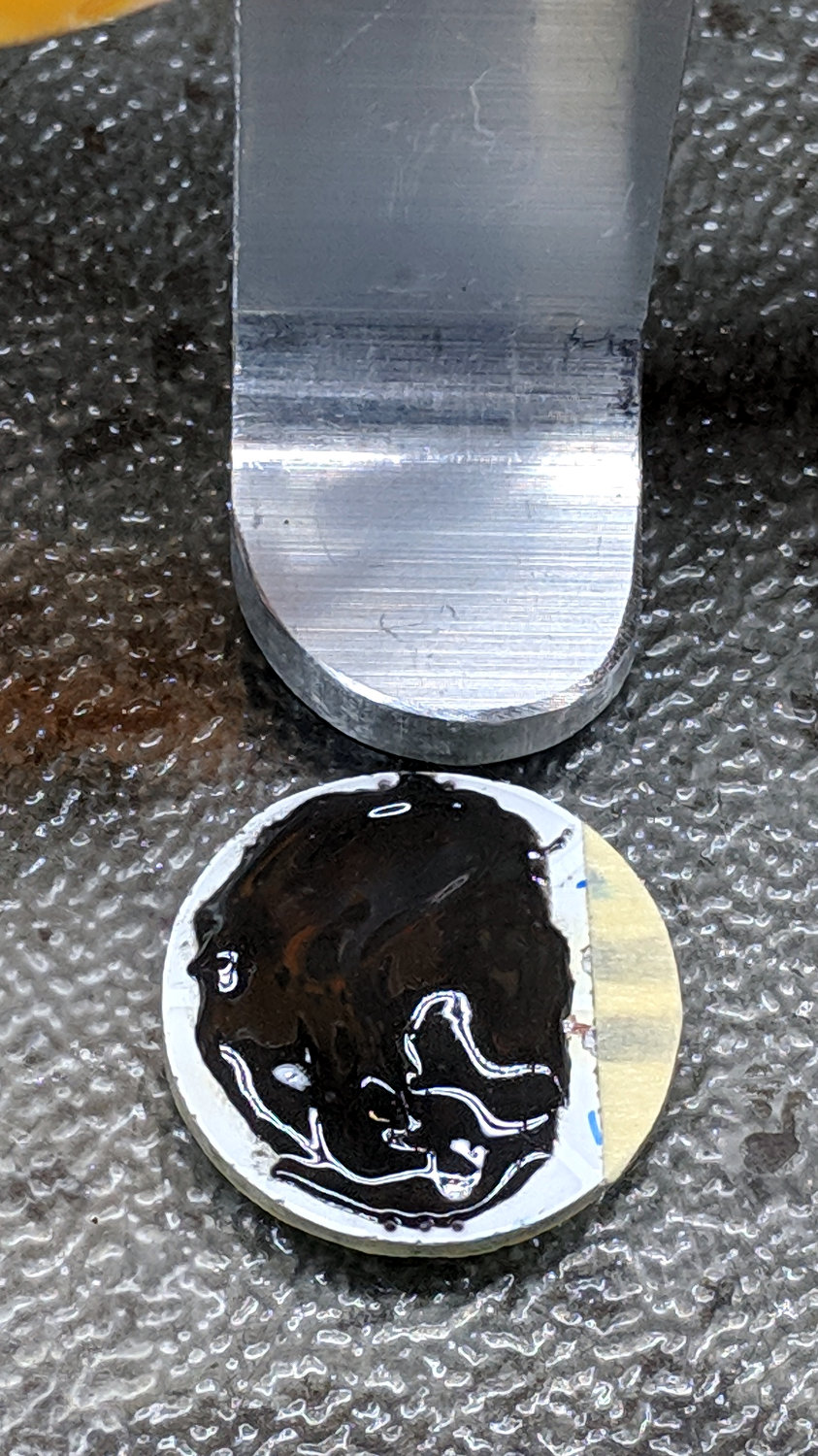
Butter up the LED PCB with JB Kwik epoxy, having previously masked the contact pads (with masking tape!) to prevent oopsies:
Juki TL-2010Q Needle LEDs – epoxy on COB LED
Raise the height gauge, align LED & heatsink, lower height gauge to squish epoxy into an even layer, raise slightly to ensure the aluminum heatsink doesn’t short the nickel strips, and fast forward a few hours:
Juki TL-2010Q Needle LEDs – heatsink curing
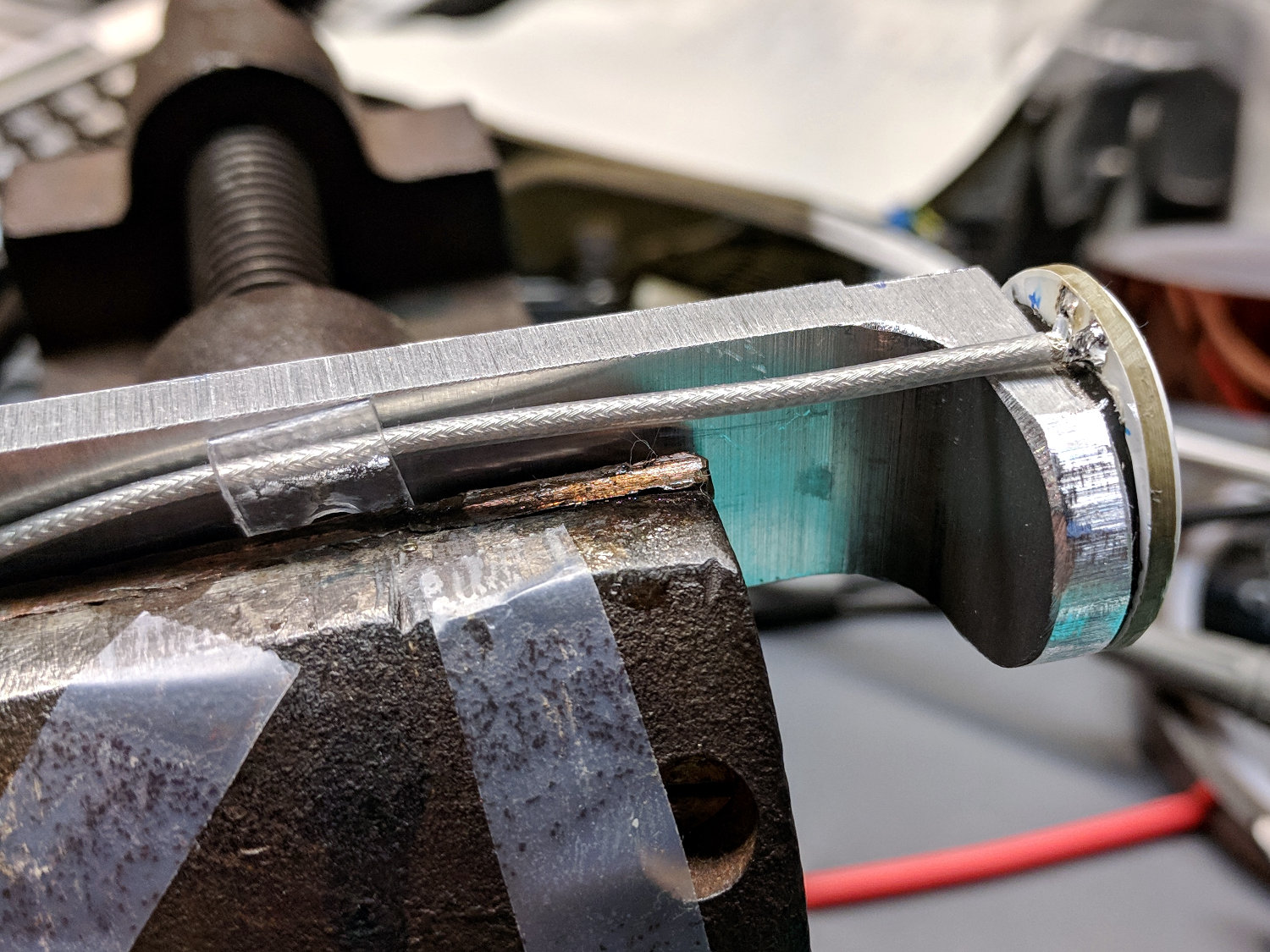
Peel off the masking tape and solder a cable in place:
Juki TL-2010Q Needle LEDs – cable installation
The transparent doodad around the cable is a PET clamp snipped from a consumer electronics clamshell package, then punched and folded to suit. It didn’t work particularly well, so more rummaging will be required.
Foreshadowing: all this went swimmingly and looks pretty good (in a techie sort of way), but I’ve been running a nasty cold (stipulated: there being no pleasant colds). Building While Stupid is never a good idea, as the part of your brain in charge of telling you you’re about to do something catastrophically wrong is the first thing to go.
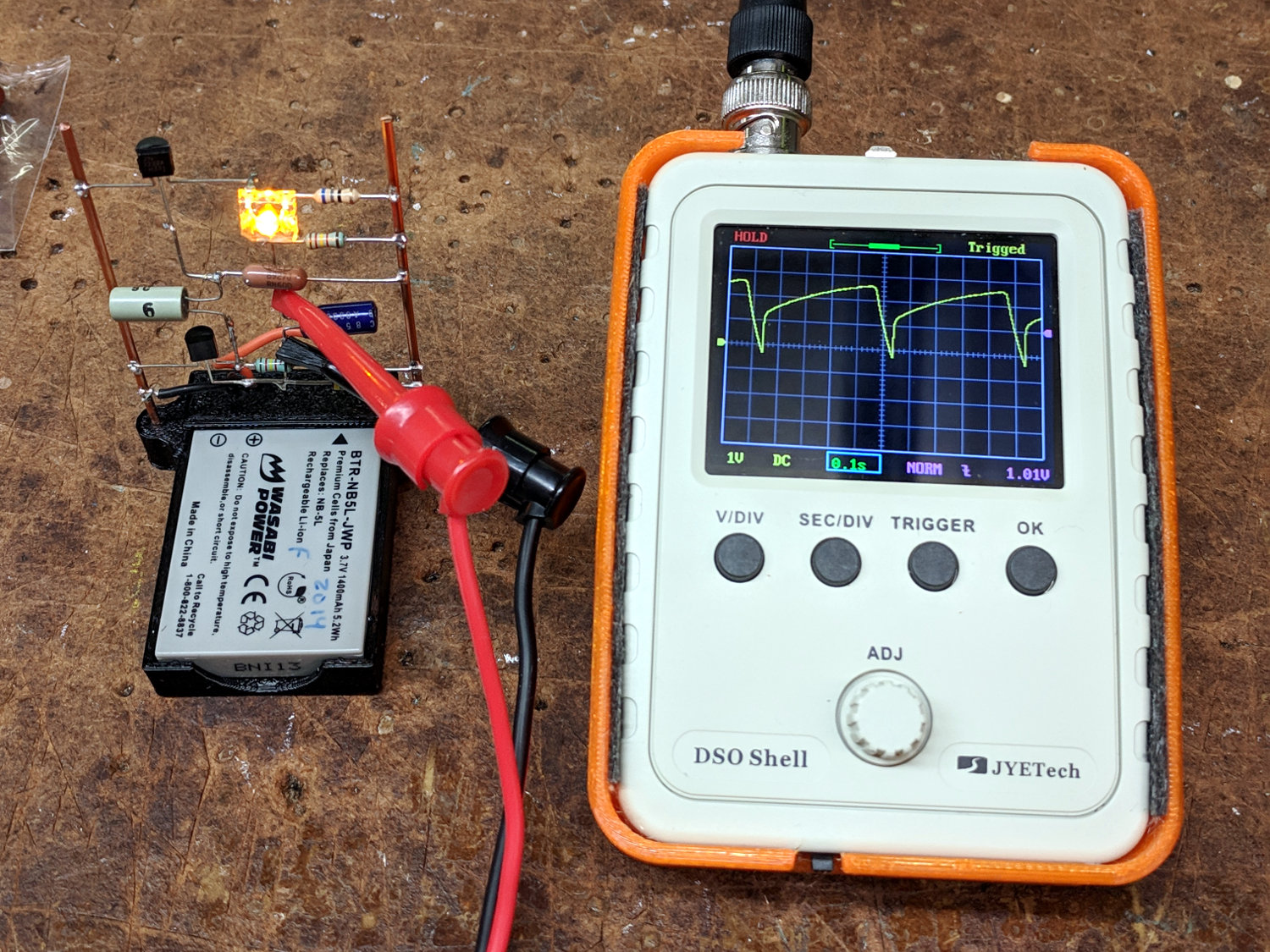
A bipolar transistor version of the astable multivibrator with a yellow Pirhana LED required absurdly large capacitors for a reasonable blink rate and, seeing as how I need a demo circuit for Show-n-Tells, it seemed a good candidate for a faster blink. I replaced a 100 µF cap with the 22 µF electrolytic cap from the other side, installed a 2 µF cap (which, judging from the lack of polarity indicators, may be a film cap) from the Squidwrench junk heap parts bin in its place, and hitched up the DSO150 because I brought it along:
DSO150 with fast LED blinky
Worked the first time and caught it in mid-blink! [grin]
The DSO150’s triggering remains a mystery, as it seems difficult to get a stable trace from a perfectly reasonable waveform. The scope didn’t trigger well on the astable’s original seconds-long pulses, perhaps due to a DC blocking cap in the triggering circuitry (whatever it may look like), but this waveform should be dead simple.
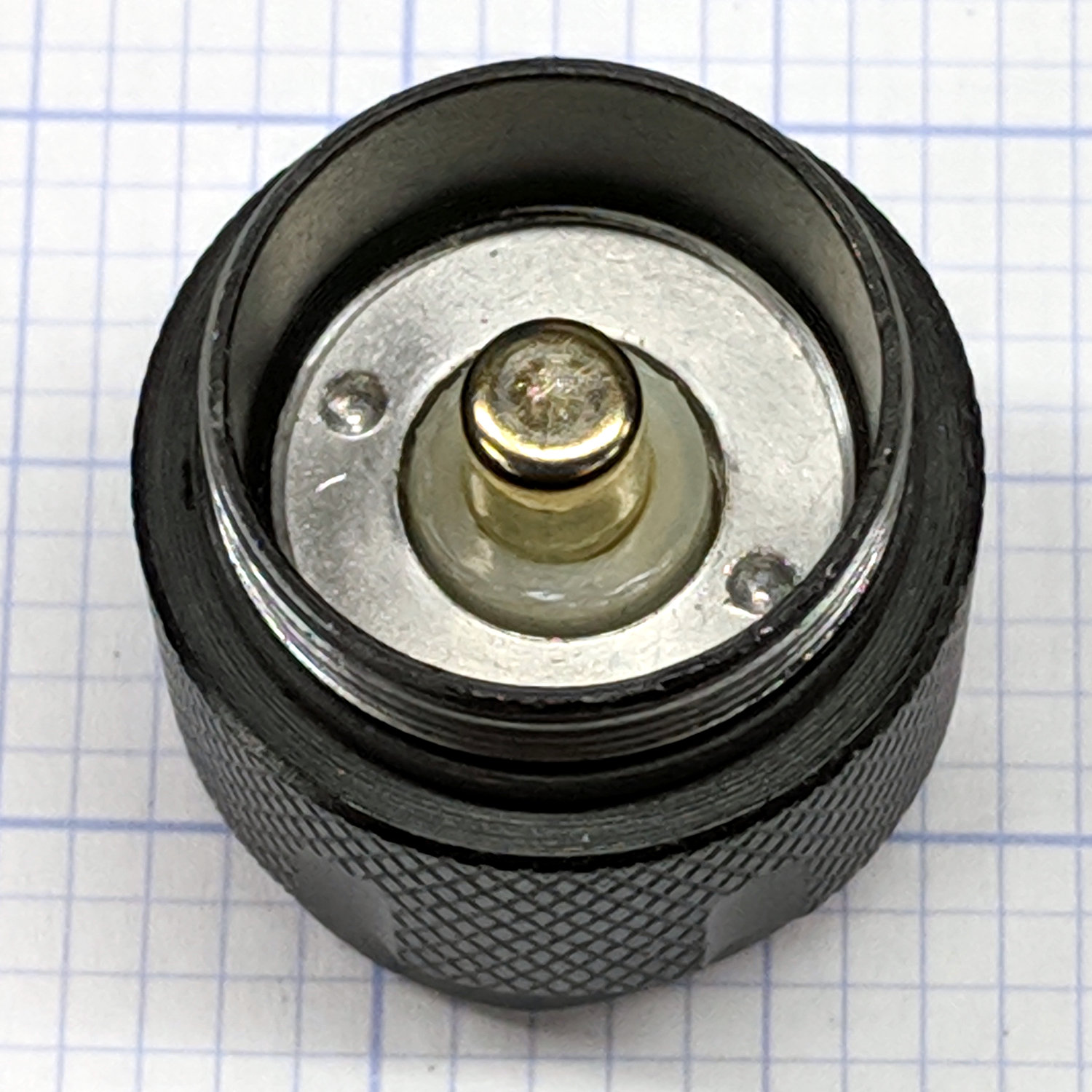
Mashing the LED PCB into place didn’t entirely solve the weak beam problem, so I unscrewed the tailcap holding the switch on the other end of the body:
J5 Tactical Flashlight – tailcap
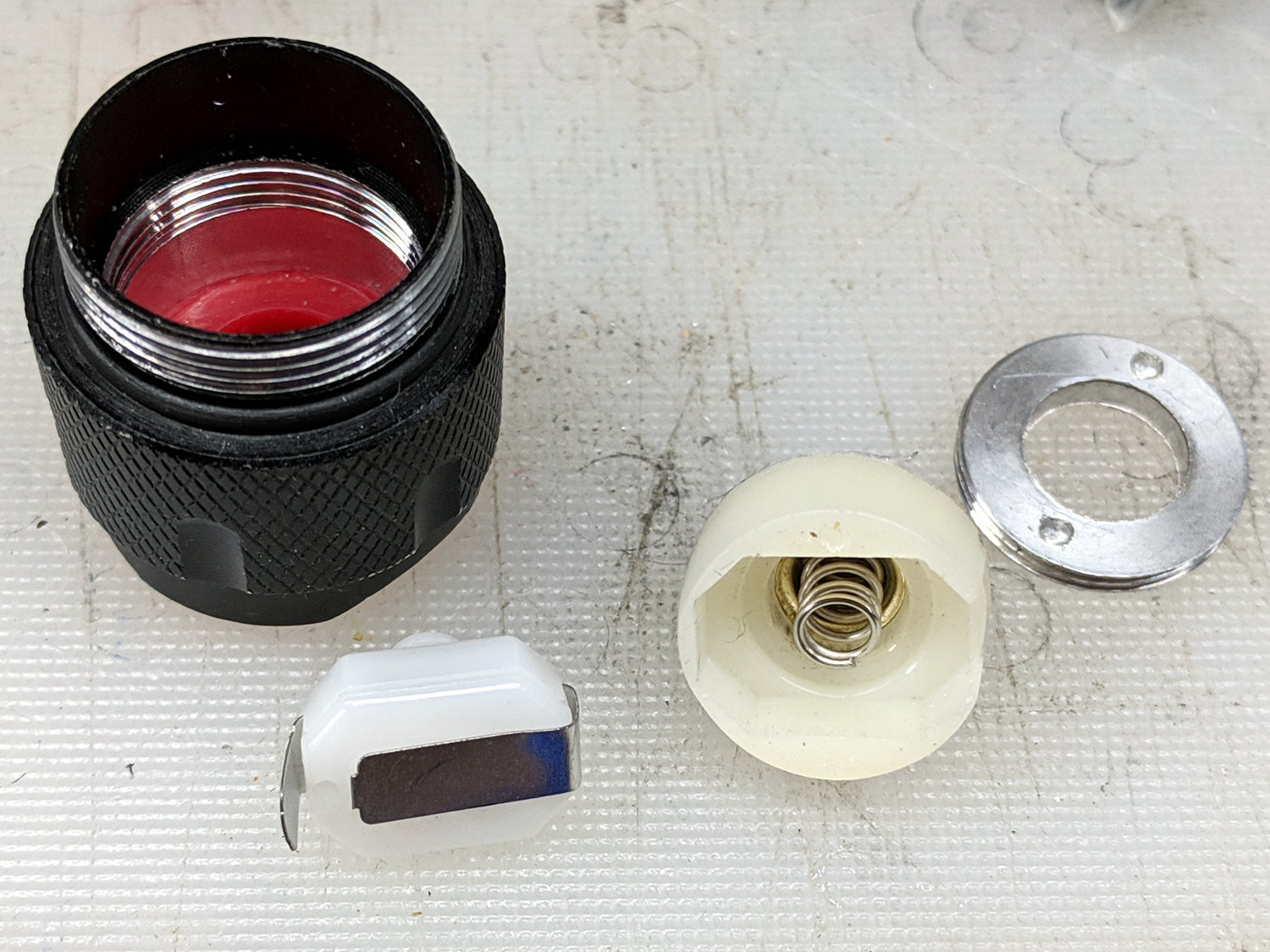
Unscrewing the lock ring releases the switch assembly:
J5 Tactical Flashlight – tailcap parts
I suspect the tab sticking out from the side of the switch doesn’t make / never made good contact with the aluminum tailcap body, but having gone this far there’s no reason to stop. The plastic housing around the spring-loaded brass battery contact pops off to reveal the actual switch:
J5 Tactical Flashlight – switch contacts
The long tab on the front of the switch sits under the spring, so that’s the negative battery contact. The LED current goes through:
battery negative to contact + spring
switch tab + moving contact + tab
tab to tailcap pressure fit
tailcap threads
front tube threads
LED pill to PCB
spring to battery positive
So. Many. Aluminum. Joints.
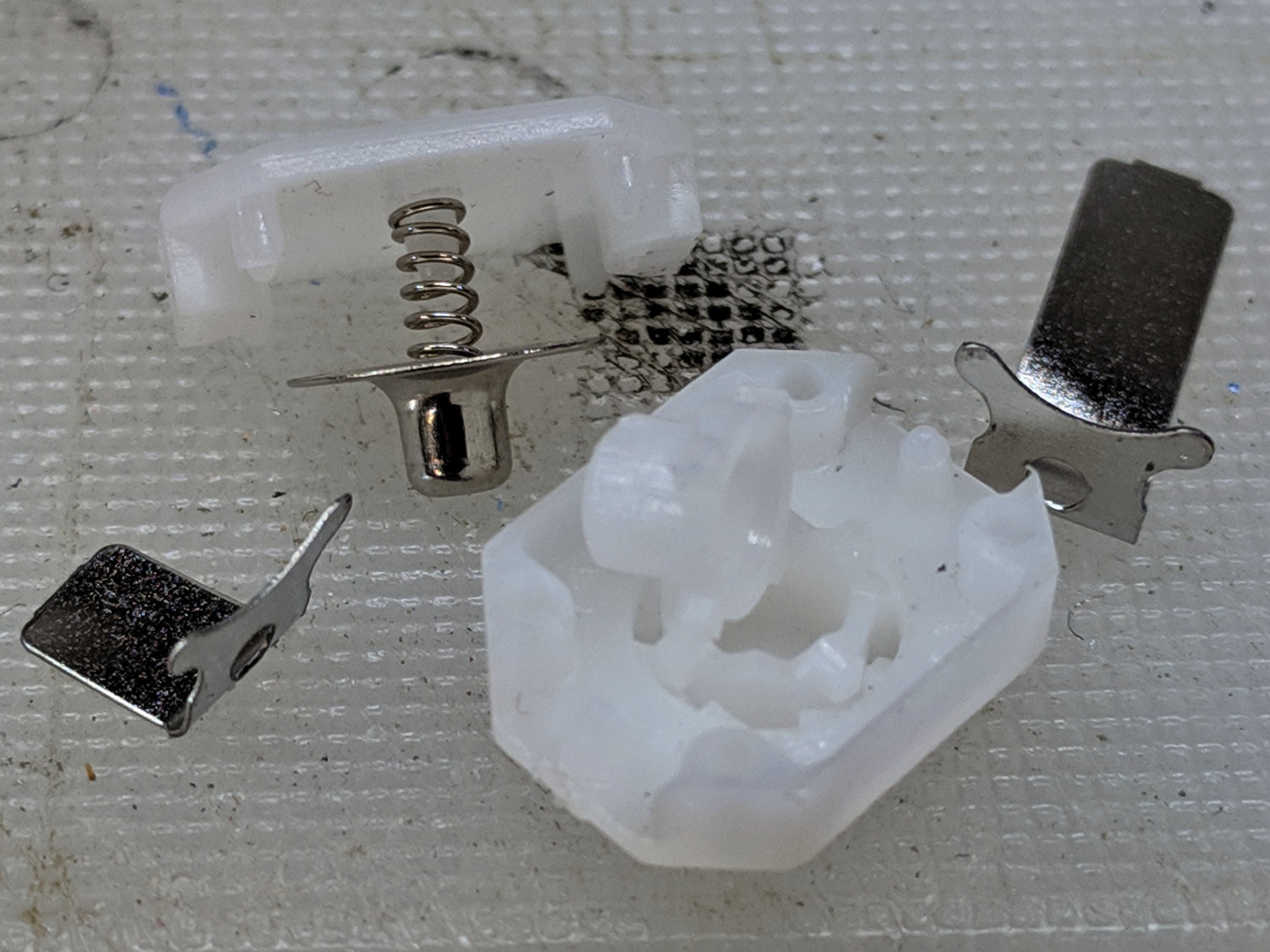
The switch body snaps apart to disgorge a remarkable number of parts:
J5 Tactical Flashlight – tailcap switch parts
Nothing looked out of order, so I applied a thin layer of DeoxIT Red to all the contacting parts and reassembled everything.
For the record, the switch’s internal parts have many plausible assembly sequences; the workable one goes a little something like this:
J5 Tactical Flashlight – tailcap switch contacts
Contrary to what you (well, I) might think, the switch is off when the central contact is pushed forward, away from the side contacts.
I bent a slight angle into the tailcap contact (on the right in the picture) to make better / firmer contact with the tailcap body, cleaned all the threads with a cotton swab carrying a dab of DeoxIT, and screwed it all together.
With everything back together, the beam seems bright and steady again. We’ll see how long it lasts.
I’ve been using the J5 Tactical flashlight as a “walking light” on our walks around the neighborhood, because its bright white spot has definitely caused a few drivers to look up from their phones at the last moment and swerve away.
Of late, however, it turned on with a weak light and operated erratically. Removing the lens and unscrewing the front end revealed one mmmm potential problem:
J5 Tactical Flashlight – loose LED PCB
It looks like they’re depending on the “gold” in cutaway plated-through holes to make electrical contact with the aluminum mount, then through the threads to the case. The PCB joint would work much better with consistent pressure all the way around its perimeter.
I mashed the PCB into place with a machinists vise, but, given the number of problems I’ve had with J5 flashlights (one a QC reject), they’re on my Non-Preferred Vendor list; if I’m going to get junk, I may as well pay bottom dollar.






 The Smell of Molten Projects in the Morning