The Smell of Molten Projects in the Morning

Ed Nisley's Blog: Shop notes, electronics, firmware, machinery, 3D printing, laser cuttery, and curiosities. Contents: 100% human thinking, 0% AI slop.

Author: Ed

  • LED Nightlight Base Teardown & Simulation

    I volunteered to take a look inside a small LED nightlight base to see how well it might work as a power supply for other circuitry:

    Nightlight - overview
    Nightlight – overview

    Note: the AC plug is not polarized. Either blade can contact the hot side of the AC line.

    The cadmium-selenide photocell in front turns the white LED on when it sees darkness and off when it sees lightness, with a more-or-less proportional response during dimness. The LED has an obvious 60 Hz flicker, particularly during its partially on phase, so I didn’t expect much inside.

    The component side of the PCB faces toward the blades, which you’re looking along the lengths of:
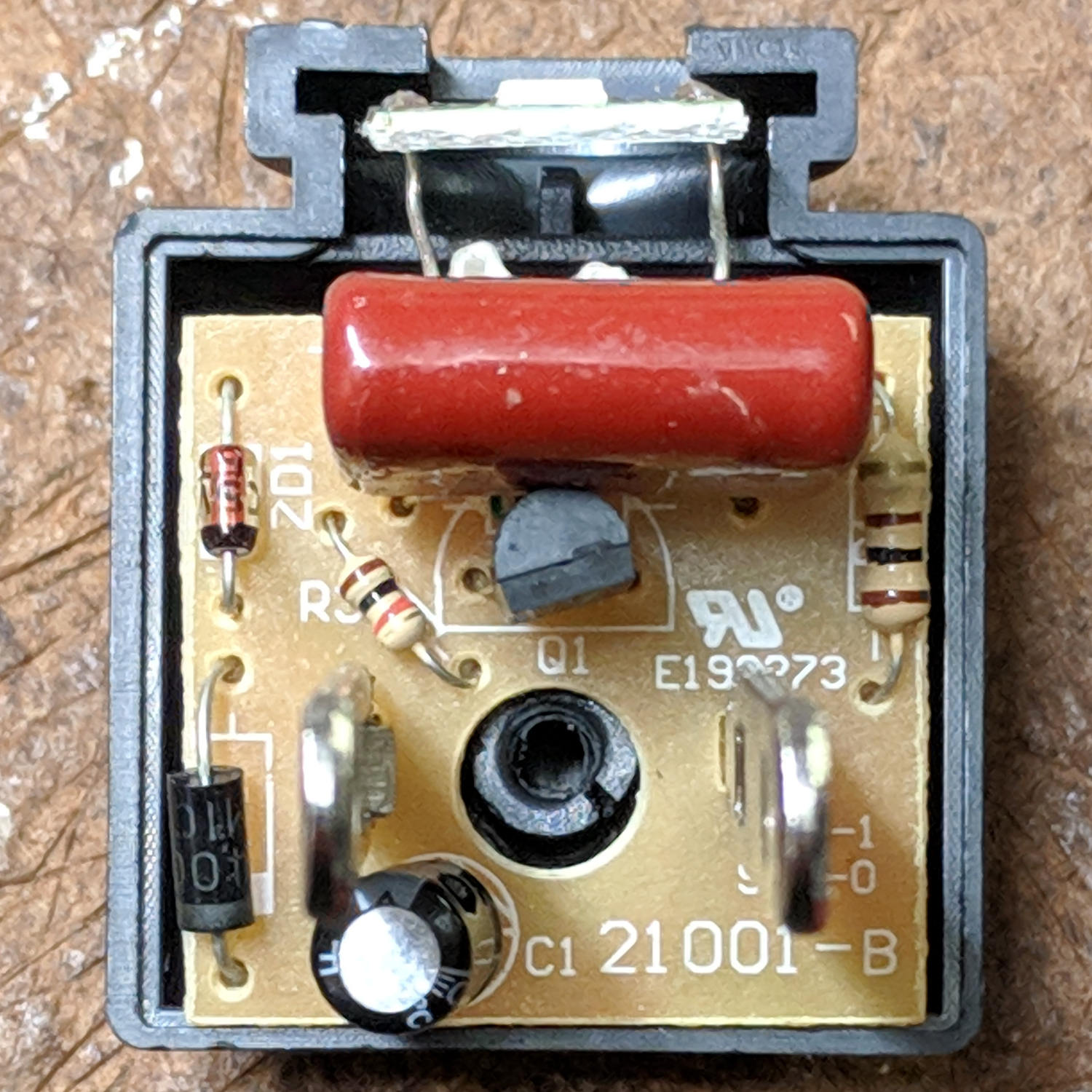
    Nightlight - PCB component side
    Nightlight – PCB component side

    The solder side faces away from the outlet:
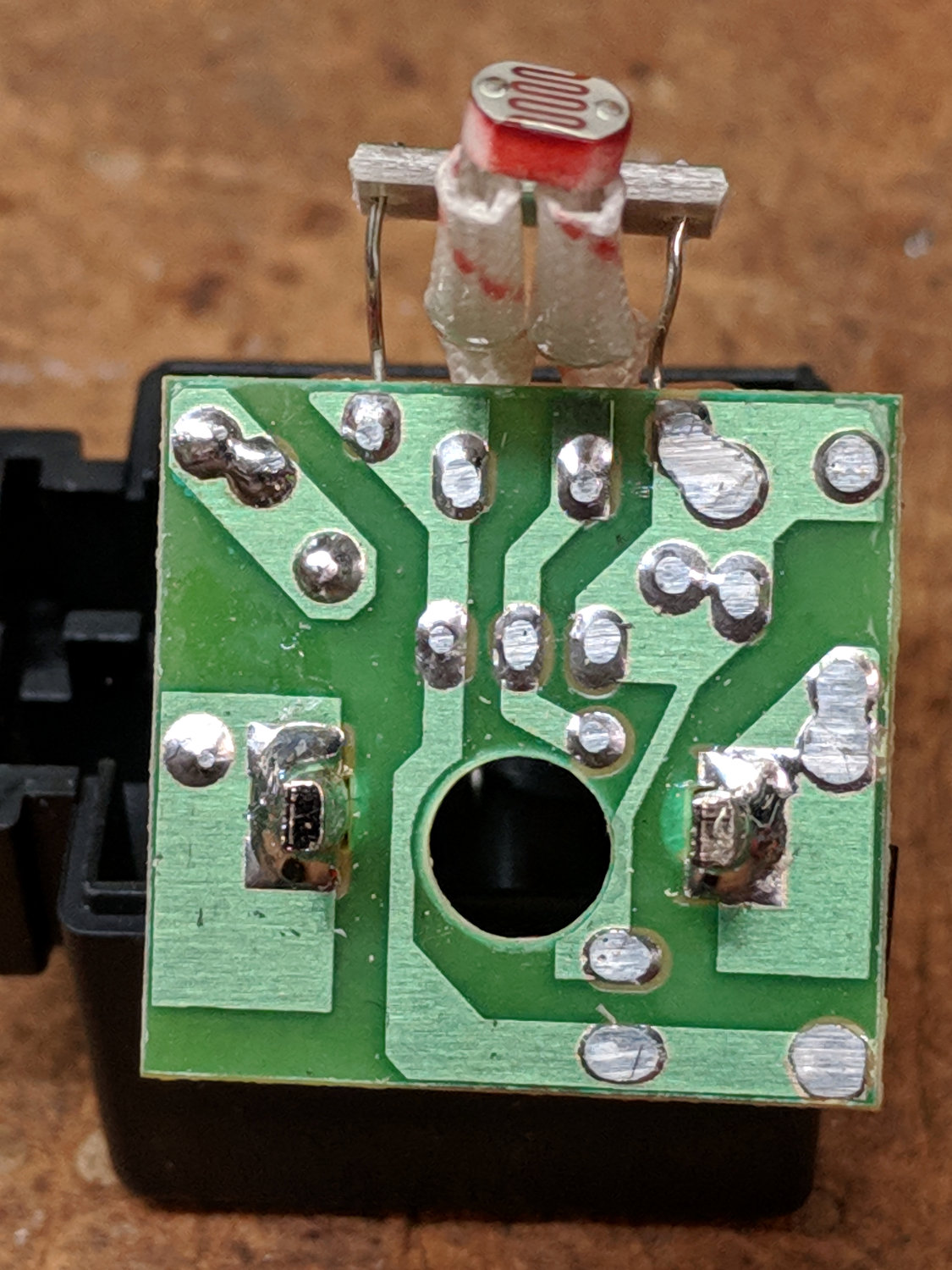
    Nightlight - PCB solder side
    Nightlight – PCB solder side

    Flipping the solder side left-to-right and overlaying the two images produces an X-ray-ish view useful for tracing the circuitry:
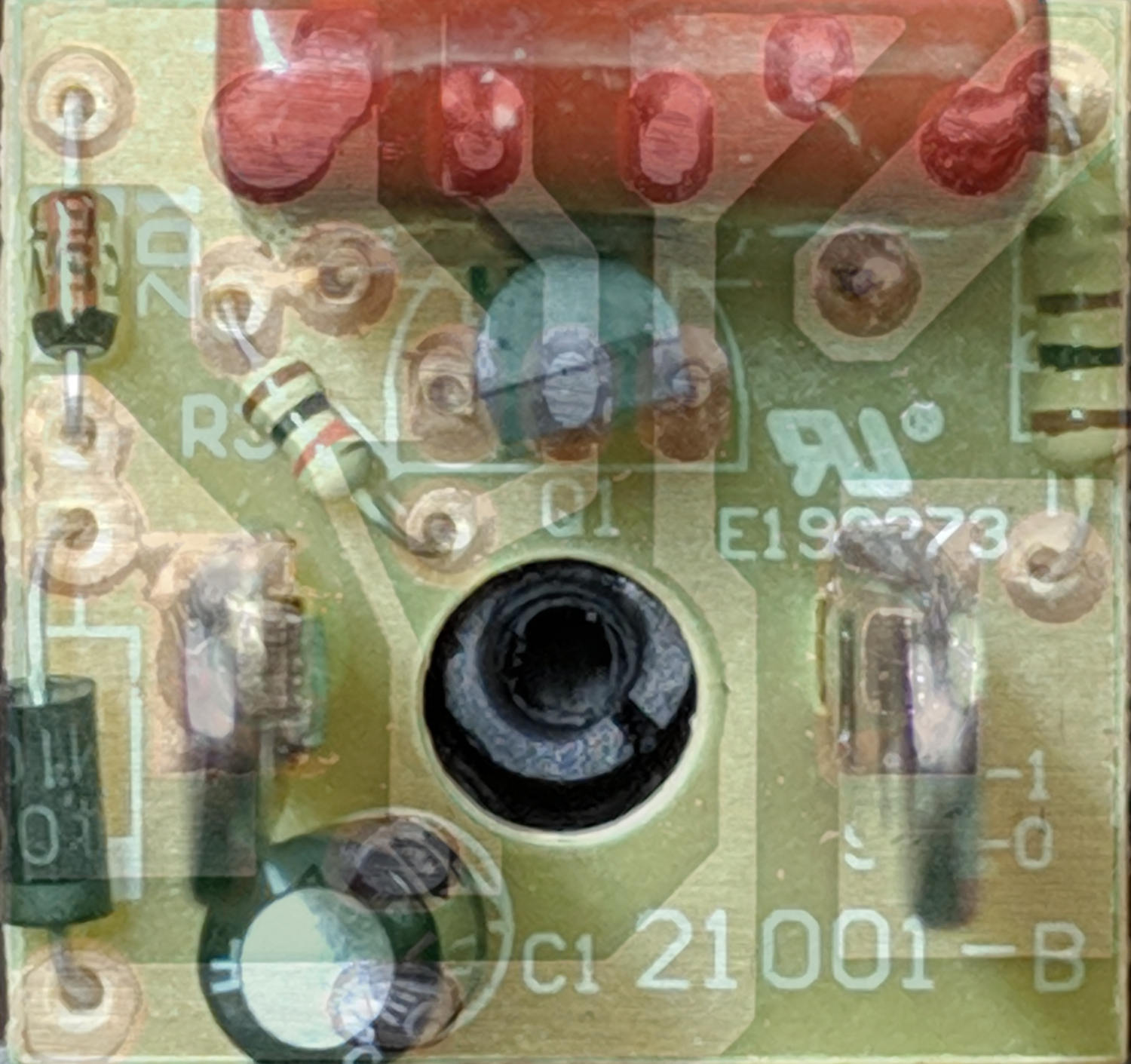
    Nightlight - PCB trace overlay
    Nightlight – PCB trace overlay

    Some doodling extracts an LTSpice schematic:

    Nightlight schematic
    Nightlight schematic

    None of the component values seem particularly critical; the diodes and transistor are close approximations to what’s really inside. I think the 100 Ω resistor also serves as a fuse, should anything else go wrong.

    Setting the CdS cell to 1 MΩ = “dark” turns the LED on:
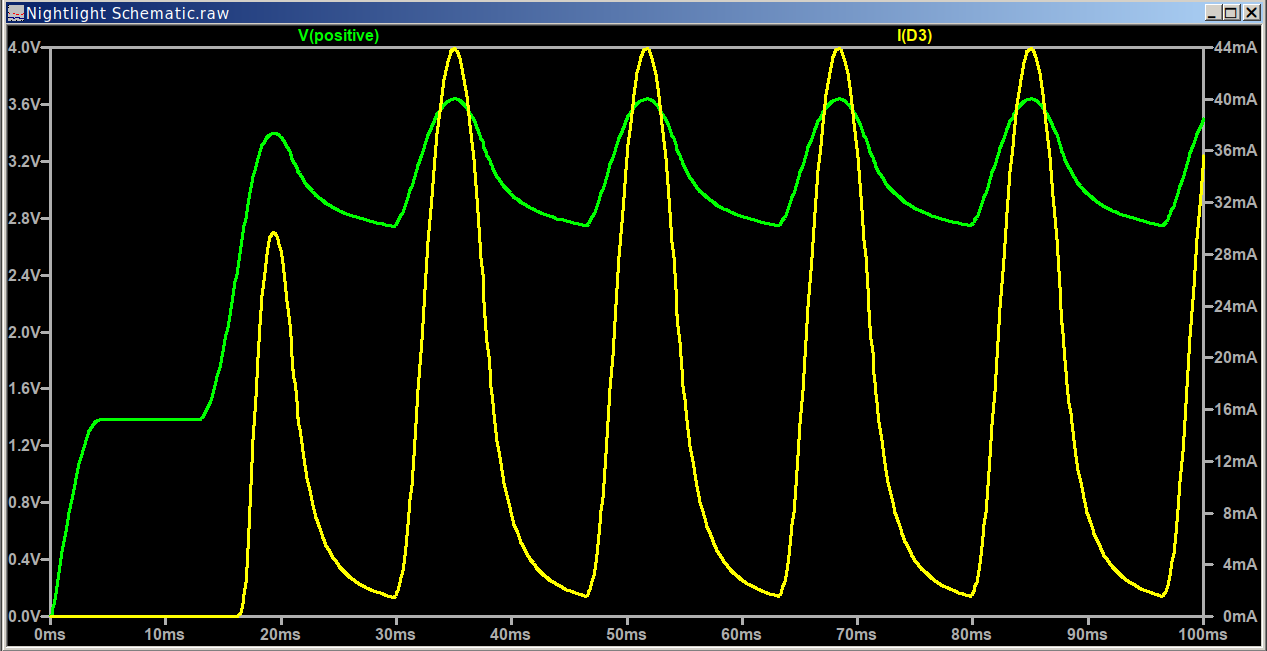
    Nightlight - ON waveforms
    Nightlight – ON waveforms

    Although I don’t trust the numbers very far, the LED current waveform definitely suggests the flicker isn’t all in my head.

    Setting the cell to 10 Ω = “light” turns the LED off, by the simple expedient of clamping the filter capacitor voltage well below the LED’s forward drop:

    Nightlight - OFF waveforms
    Nightlight – OFF waveforms

    When the LED is off, the transistor current is slightly higher than the LED’s on-state current, because saturation voltage:

    Nightlight - OFF - transistor current
    Nightlight – OFF – transistor current

    The current runs right through the 820 nF capacitor, which serves as a more-or-less 3.2 kΩ ballast resistor:

    Nightlight - OFF - 820 nF cap current
    Nightlight – OFF – 820 nF cap current

    It’s a nice film cap and should have a low ESR, but this seems a bit sketchy to me.

    So, basically, the nightlight doesn’t really have a power supply in the usual meaning of the term and isn’t suited for driving anything other than the white LED inside the case. Relocating the LED outside the case is an Extremely Bad Idea™, because the anode is one diode away from what might well be the hot AC line; one little oopsie and you’ve got a lethal shock hazard.

  • Reversible Belt Buckle Re-staking

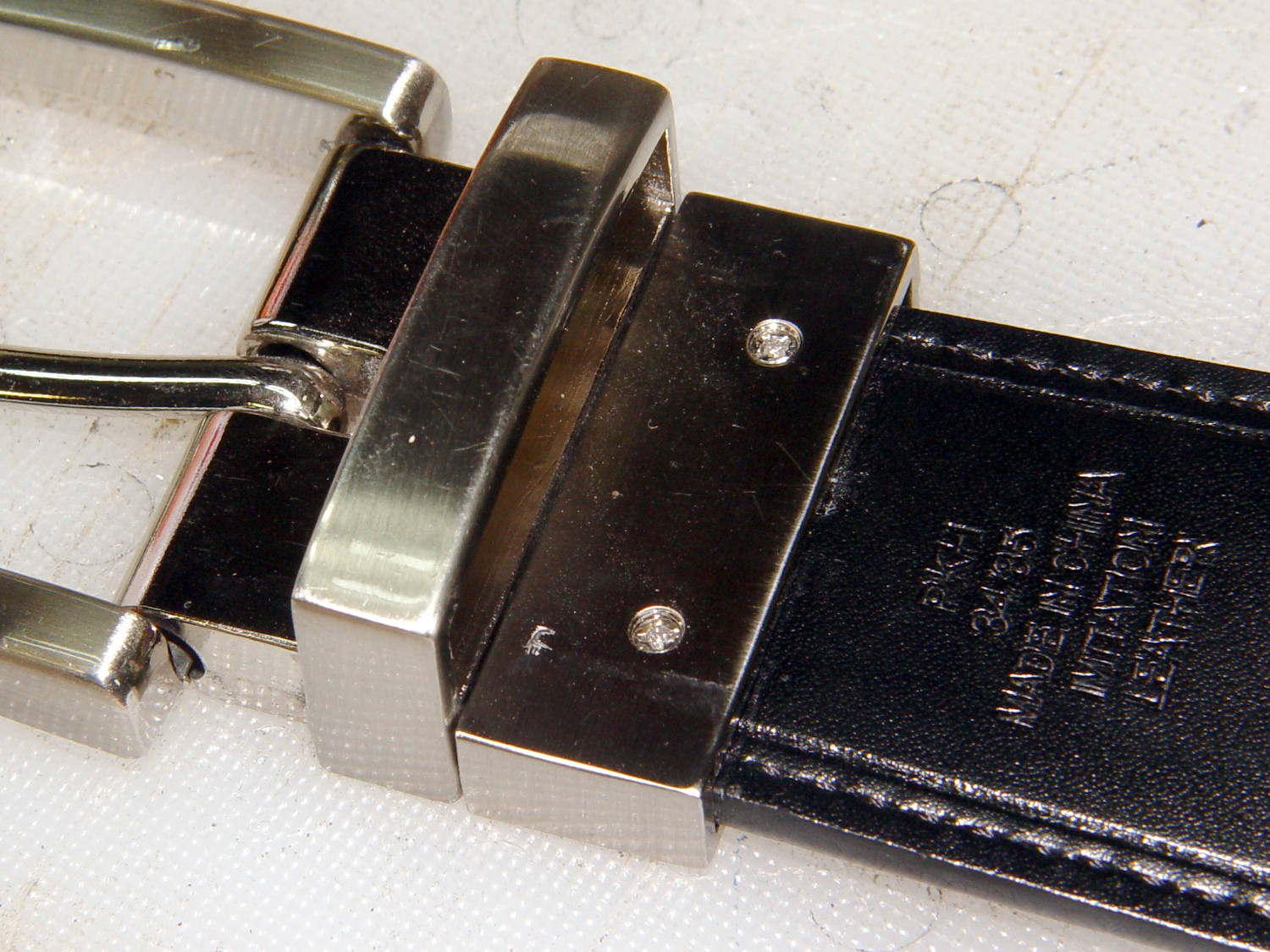
    It’s a shorter belt with the same failure mode:

    Reversible belt buckle - parts
    Reversible belt buckle – parts

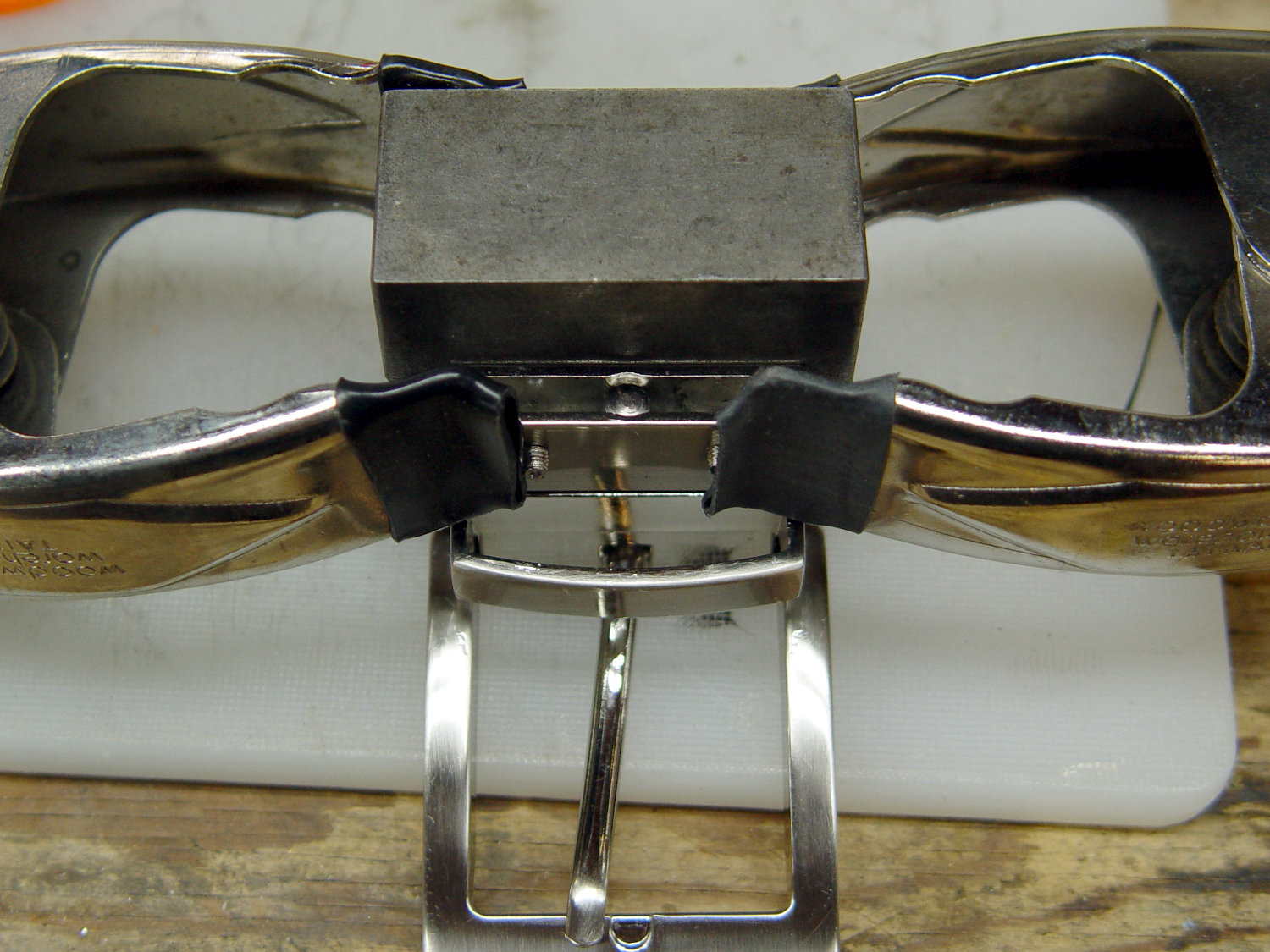
    I clamped the whole affair on a block to align all the parts:

    Reversible belt buckle - alignment clamping
    Reversible belt buckle – alignment clamping

    Drop the pin and spring in place, whack it with a punch, and it’s all good:

    Reversible belt buckle - restaked
    Reversible belt buckle – restaked

    That was easy …

  • Pedal Spindle Wrench Flat Tweakage

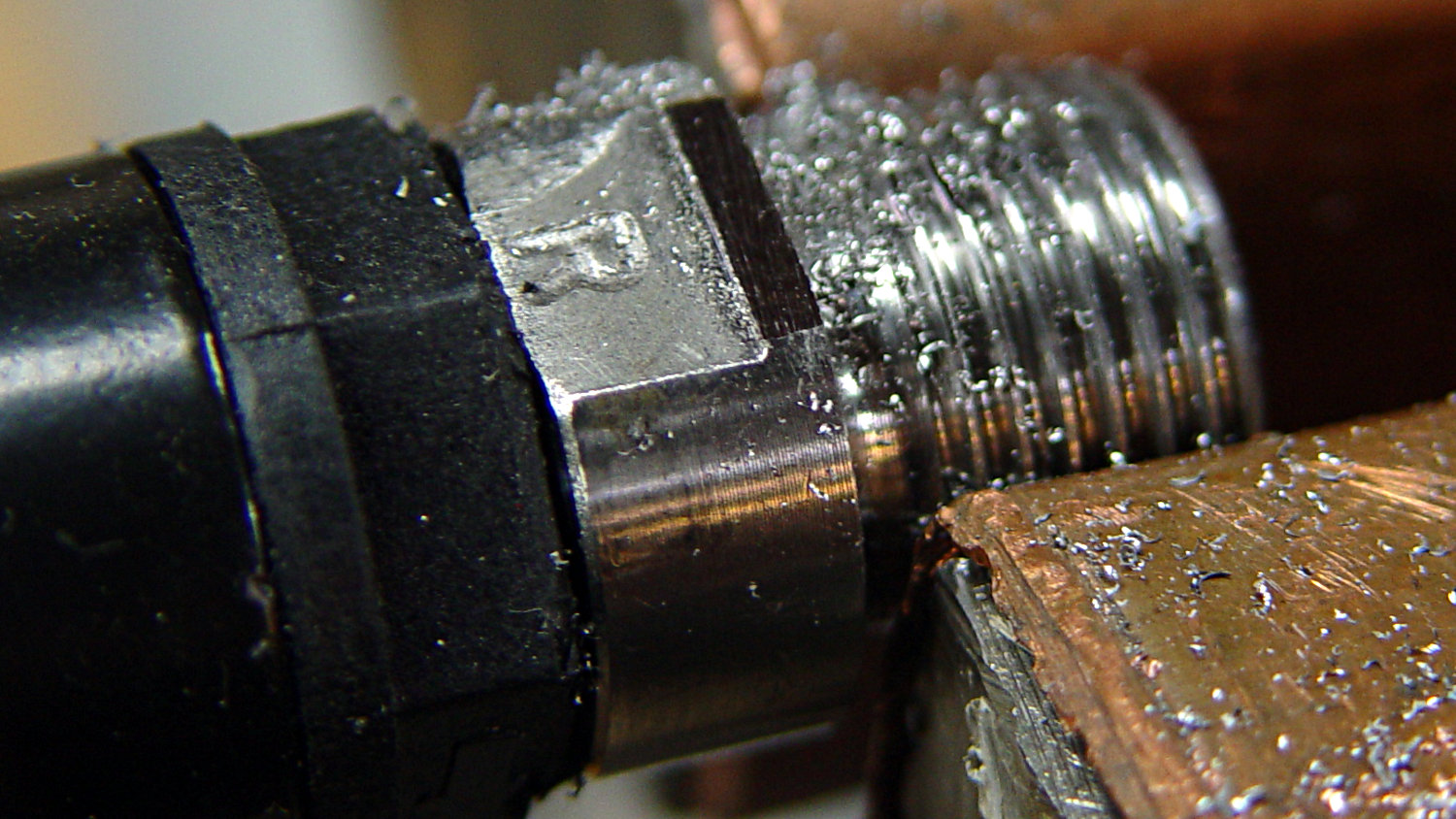
    A new-old-stock pair of pedals for Mary’s bike had wrench flats just slightly too narrow for my 15 mm wrench:

    Titanium pedal spindle - as built
    Titanium pedal spindle – as built

    Well, that’s easy to fix:

    Titanium pedal spindle - filed to flats
    Titanium pedal spindle – filed to flats

    For reasons lost in the mists of time, those are titanium spindles. They file just like steel; I’m not fussy.

  • Epson R380 Printer: Waste Ink Counter Reset

    Following the same drill as before, the Epson R380 printer once again thinks I’ve changed its diaper before resetting its waste ink counter. Instead, I’ve poured what would be a moderate fortune of waste ink down the drain from the external tank, had I not grafted a continuous flow ink supply onto the thing.

    To judge from how often I must reset the counters, I’m expected to buy a new printer every three years. For sure, it’s uneconomical to have anybody else (the nearest Epson Authorized Customer Care Centers is 68 miles away on Long Island) do the deed. As Epson delicately puts it “replacement of ink pads may not be a good investment for lower-cost printers”.

    Epson now provides a utility allowing you to reset the counters exactly one time. Having a scrap Windows PC ready to go, I didn’t bother capturing the partition before firing off the previous Sketchy Utility™, nor did I restore it, so the whole process took about half an hour.

    The hard drive platters will eventually become nightlights.

  • Equipping an Electronics Lab on the Cheap

    I described how to take advantage of Living in the Golden Age of Electronic Making for HVOpen:

    Although you don’t get my patter, perhaps the linkies will make up for the silence:

    I filled a table with Show-n-Tell widgets and a good time was had by all: hardly anybody fell asleep.

    [Update: The talk addressed folks interested in starting out with electronic projects who have no test equipment at all. The choices would be different for other audiences, but … boat anchors aren’t appropriate here.]

  • Monthly Science: Weight

    Progress is our most important product:

    Weight Chart 2019-04 - Ed
    Weight Chart 2019-04 – Ed

    Now that we’ve begun bicycling more regularly, Winter Bloat is transmogrifying into thigh muscle.

    The hills around here become noticeably steeper during winter; we attribute the additional elevation to frost heaves …

  • Hiatus

    We’ll be tackling several long-delayed household projects during the next month. As a consequence, I won’t be doing my usual techie tinkering and will post shop notes only occasionally.

    There’s not much to say about scraping, priming, and repainting, other than that it’s an ugly job which must get done!

    Turkey on patio rail
    Turkey on patio rail

    If only we could train the turkeys to scrape the rail …