Ed Nisley's Blog: Shop notes, electronics, firmware, machinery, 3D printing, laser cuttery, and curiosities. Contents: 100% human thinking, 0% AI slop.
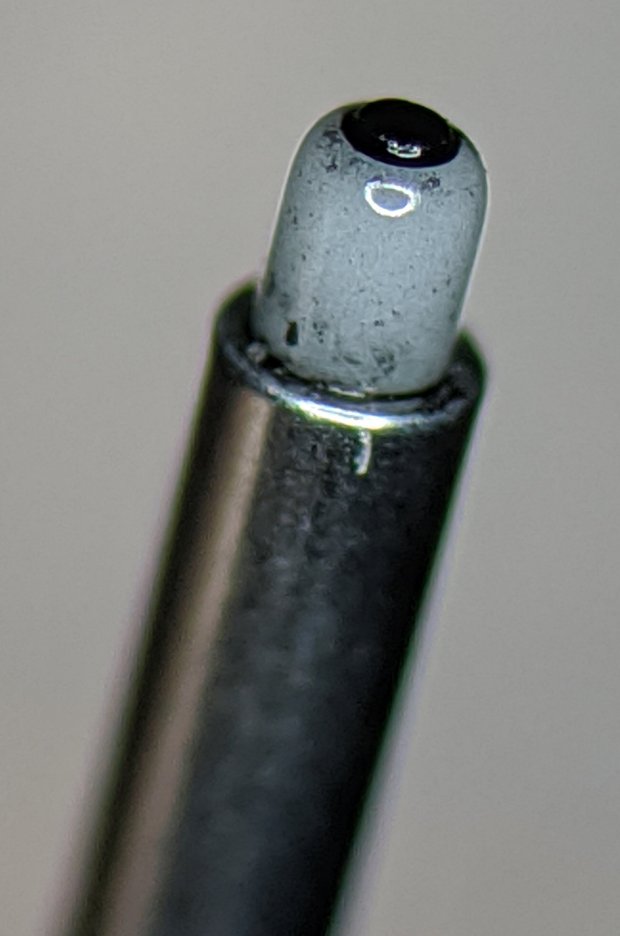
As expected, the defunct pen’s ink supply core had worn down to the surrounding ceramic nib:
HP 7475A Ceramic-tip pen – worn core
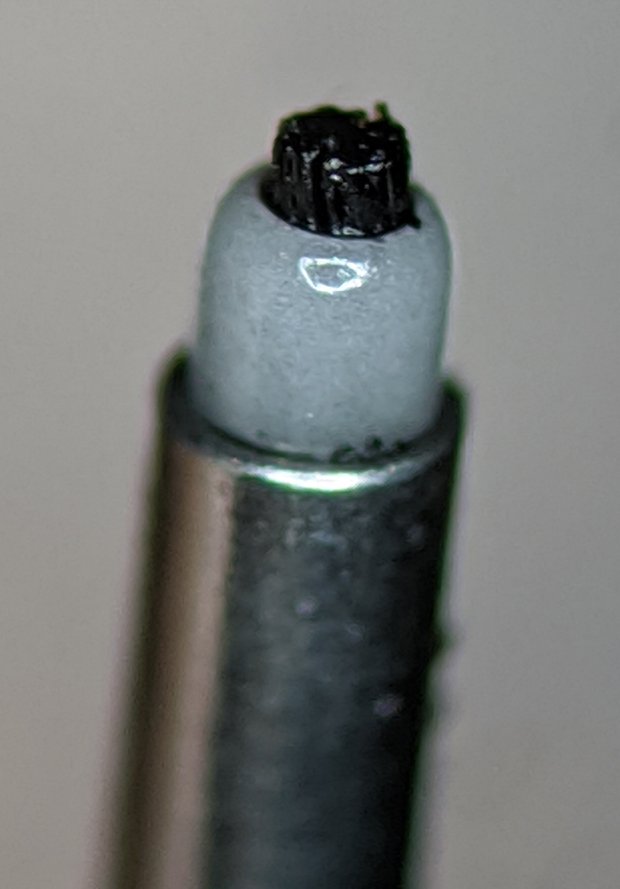
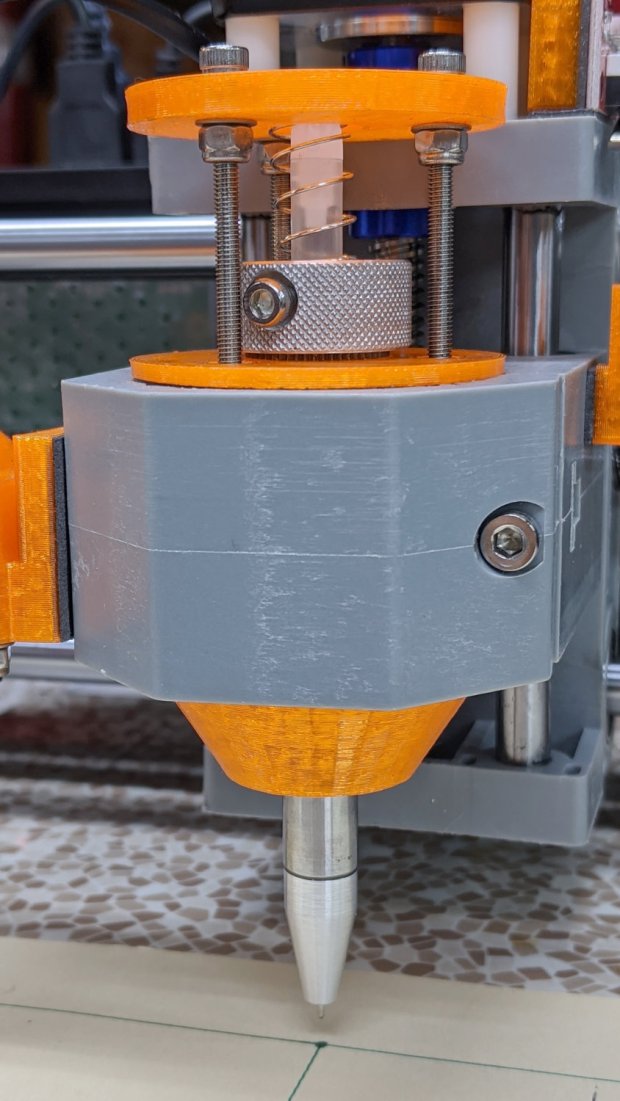
The new pen looks like it has a brush sticking out:
HP 7475A Ceramic-tip pen – fresh core
The new pen’s core looks slightly larger and, in fact, it’s labeled as 0.4 mm rather than 0.3 mm. The new-old-stock pen stash includes a few 0.2 mm ceramic pens; I should think of something requiring hairline detail.
It passed the manual scribble test and promptly ran out of ink during its first plot. I injected some blue ink and it’s now plotting happily for the first time in its life.
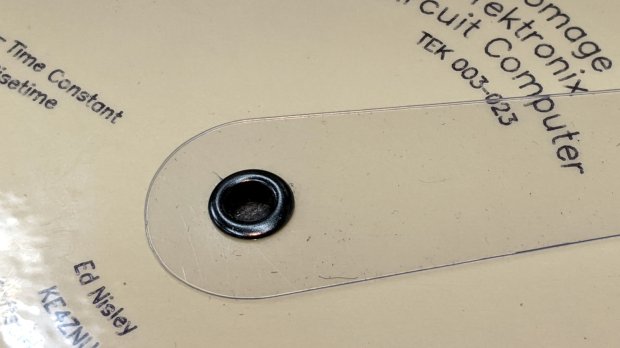
Although a sex bolt works as a central pivot, even the shortest one available in a cheap assortment is too long for three paper decks and an acrylic cursor:
That’s the front side, with the stylin’ rounded head, in “gunmetal” gray. The shank is 5 mm ID (the advertised size), 5.5 mm (-ish) OD, 4 mm long beyond the 10 mm OD head. All dimensions vary unpredictably between sellers, so expect nothing in particular and you won’t be disappointed.
The back side gets the washer:
Tek CC – eyelet pivot – rear
The entire stack is 1.7 mm tall: three 0.4 mm laminated decks and the 0.5 mm polypropylene cursor. The 4 mm shank length seems excessive, but works out well in practice, even if I need more practice at smoothly swaging shank over washer. It’s sufficiently good looking in person.
Note: the washer goes on convex side outward!
The set includes a hole punch suitable for leather work and slightly too small for paper, plus the swaging punch and die required for the washer.
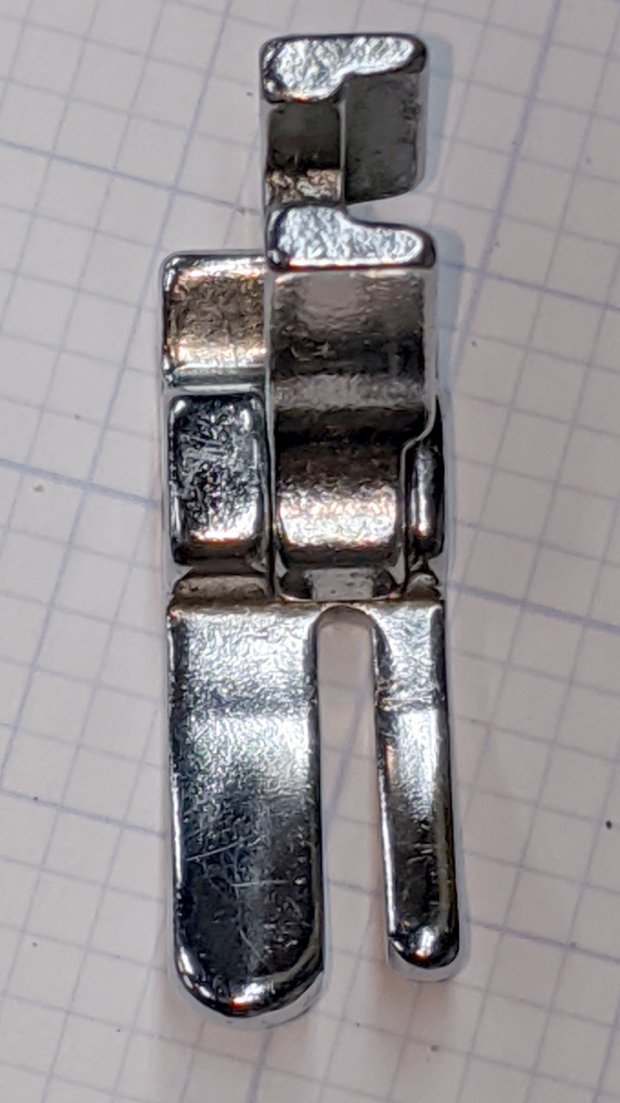
I was given a spare presser foot to demonstrate my case:
Kenmore 158 Presser Foot – original – front
The overhead light in the shop produces glare from the nice, shiny steel surfaces similar to what Mary sees from the sewing machine.
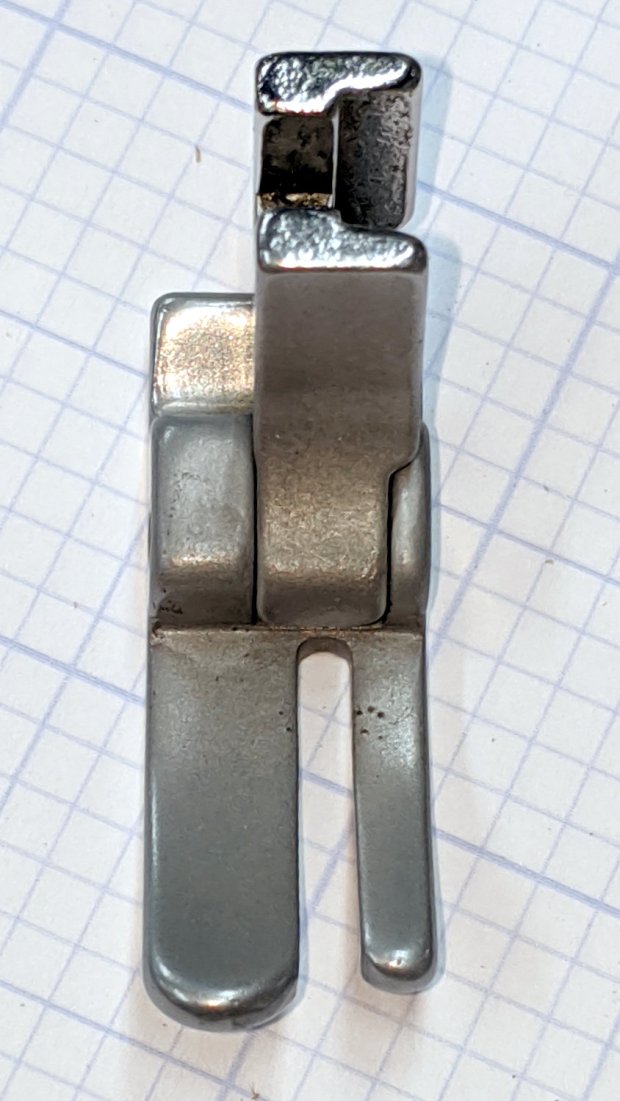
A few minutes applying 220 grit blast media with Tiny Sandblaster™ definitely changed its appearance:
Kenmore 158 Presser Foot – sandblasted – front
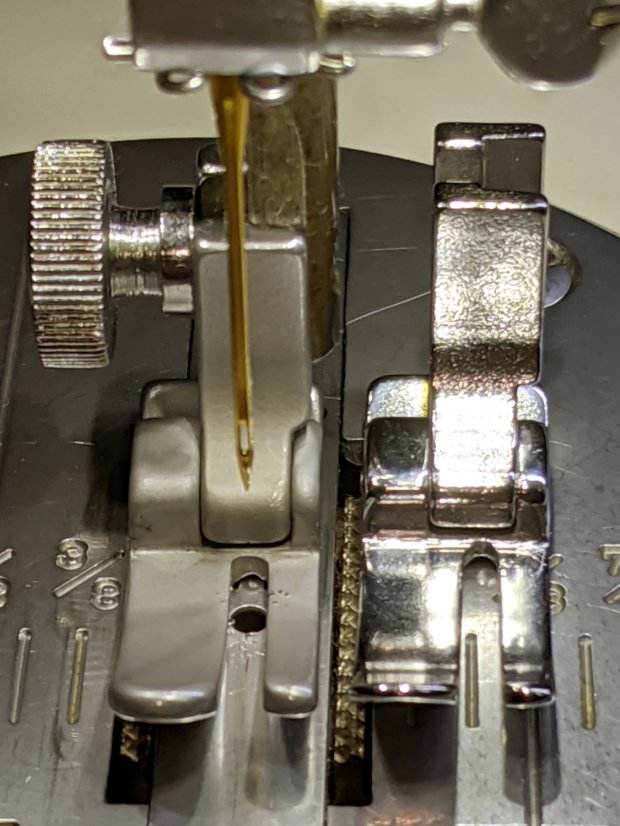
In person, the finish is neutral gray overall, with those odd brown areas appearing only in photographs, perhaps due to the various lights in the shop. The slight texture variations seem to correspond to minor differences in the plating (?) over the steel surface. It definitely cuts down the glare:
Kenmore 158 Presser Foot – sandblasted vs original
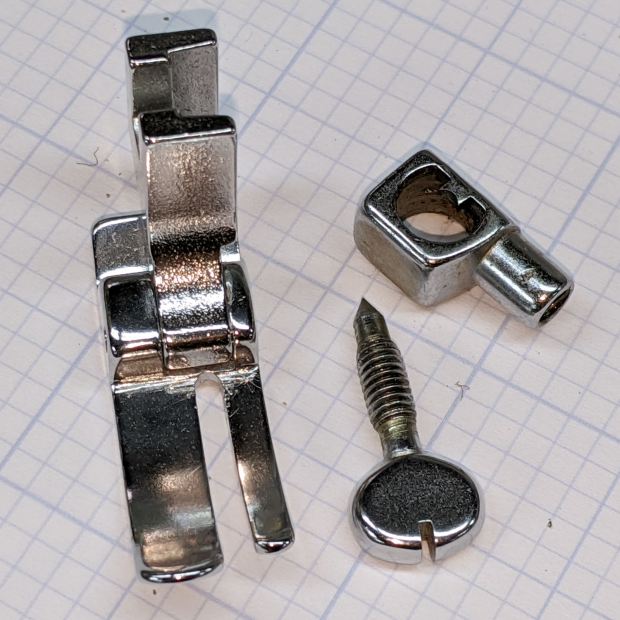
The needle clamp and screw across the top of that picture travel up and down, so we decided to deglare them along with the “good” foot:
Kenmore 158 – foot with needle clamp – original
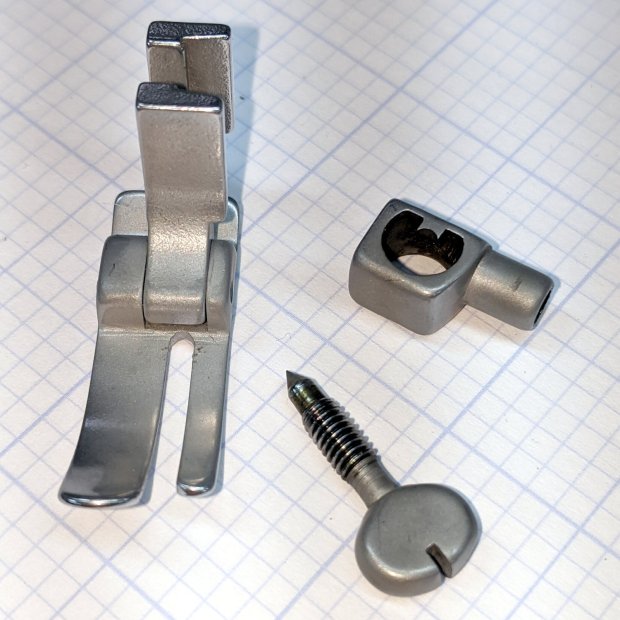
Another Tiny Sandblaster™ session knocked back their shine:
Kenmore 158 – foot with needle clamp – sandblasted
Those parts came out slightly less matte, perhaps due to reduced pressure in the propellant can. Seeing as how I’ve had the sandblaster for a couple of decades, I figured it’s time to use the propellant but, as expected, the in-can valve doesn’t re-seal properly, so I’ll be using compressed air the next time around.
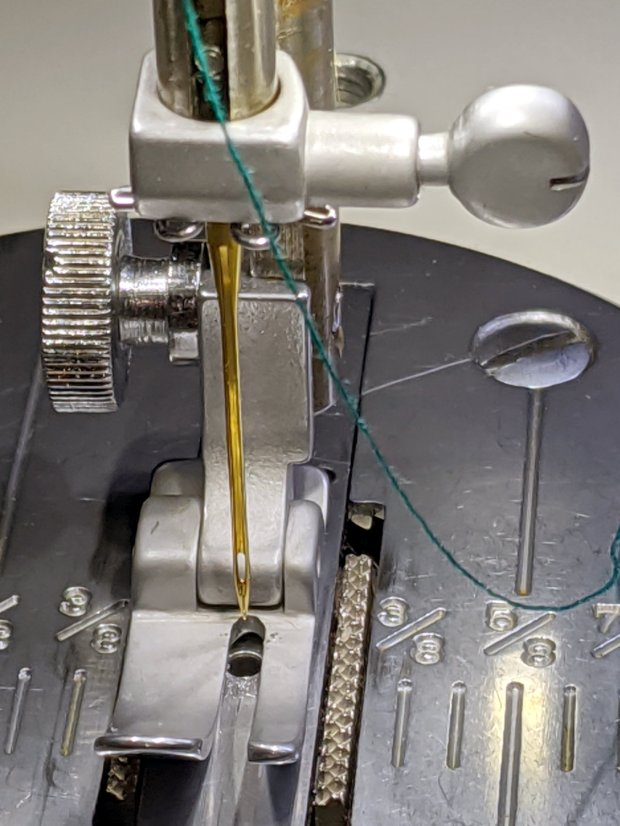
After rinsing and blowing and rinsing and blowing the grit out of the threads, everything went back together as expected:
Kenmore 158 – sandblasted hardware installed
I’m not doing either of the plates until we have more experience with the matte hardware, but it looks pretty good to me.
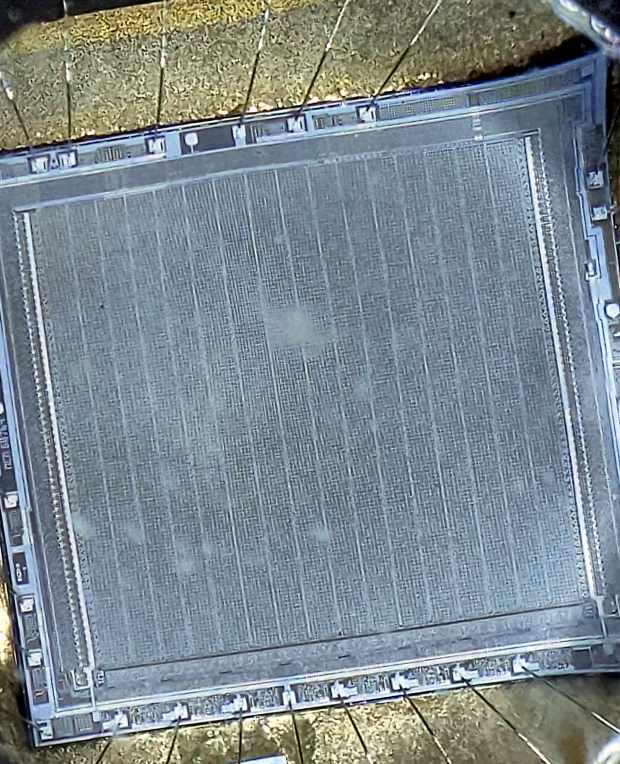
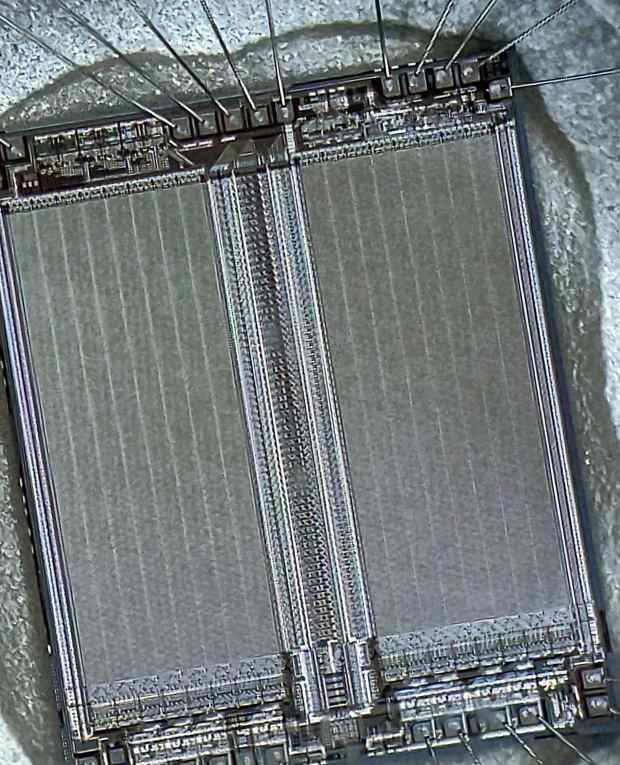
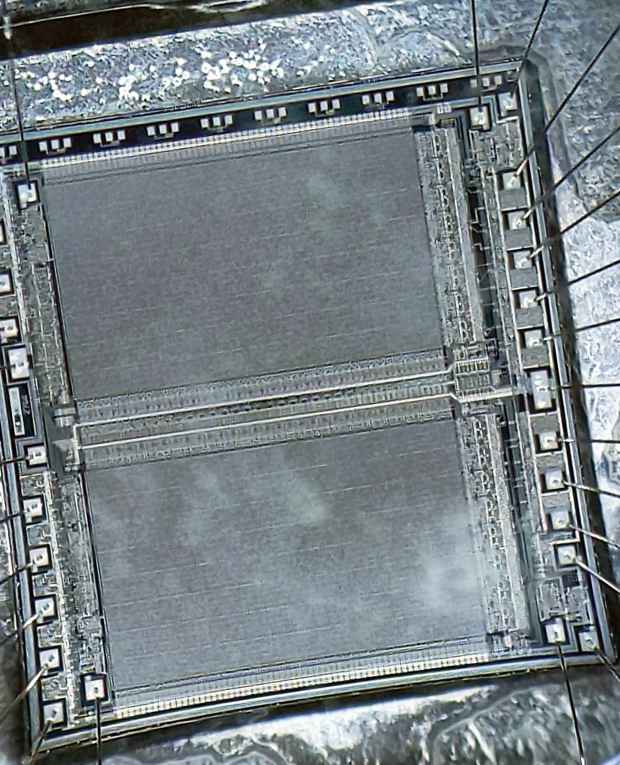
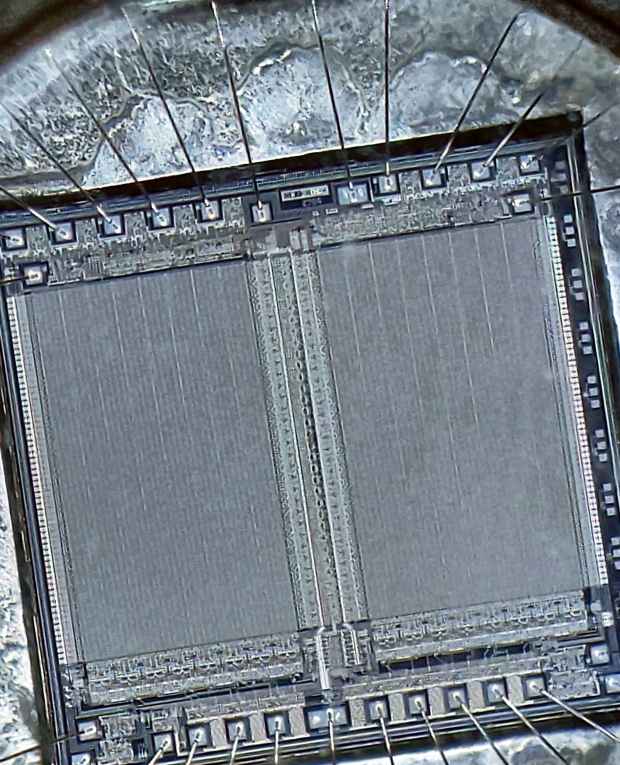
A quartet of defunct 64 KB EEPROMs (*) emerged from a box of microscope doodads, so I stuck ’em under the stereo zoom scope for final pictures.
The oldest one, an MCM68764, came from Motorola with a 8313 date code. The next three, all TMS2764JL-25, came from TI with date codes in 84 and 85, so they have slightly different layouts.
MCM68764C EPROM
TMS2764JL-25 A EPROM
This one is rotated 90° counterclockwise:
TMS2764JL-25 B EPROM
TMS2764JL-25 C EPROM
The hideous compression artifacts come from the original Pixel 3a images, because they’re (digitally) zoomed in all the way, plus bonus optical distortion from the quartz windows. The chips definitely look better in person, although the (optical) magnification isn’t nearly enough to show the tiniest details.
(*) Uh, they’re just EPROMs. It’s been so long since I’ve typed it that the extra “E” just stuttered right out. That’s my story and I’m sticking with it … at least I got the image names right!
Spotted at the corner gas station, where they collectwrecks before harvesting their organs:
Car vs Pole
As far as we can tell, the car clipped the pole off at the base, whereupon it smashed down across the roof, leaving the trunk unscathed. The lack of blood on the airbag suggests the driver lived to tell the tale, although we’ll never know the rest of the story.
A collection of random stuff tossed on the back seat included a license plate bent into a surprisingly gentle curve.




 The Smell of Molten Projects in the Morning