A white 1.3 inch I²C OLED turns out to be much more readable than the yellow-blue 0.96 inch version:
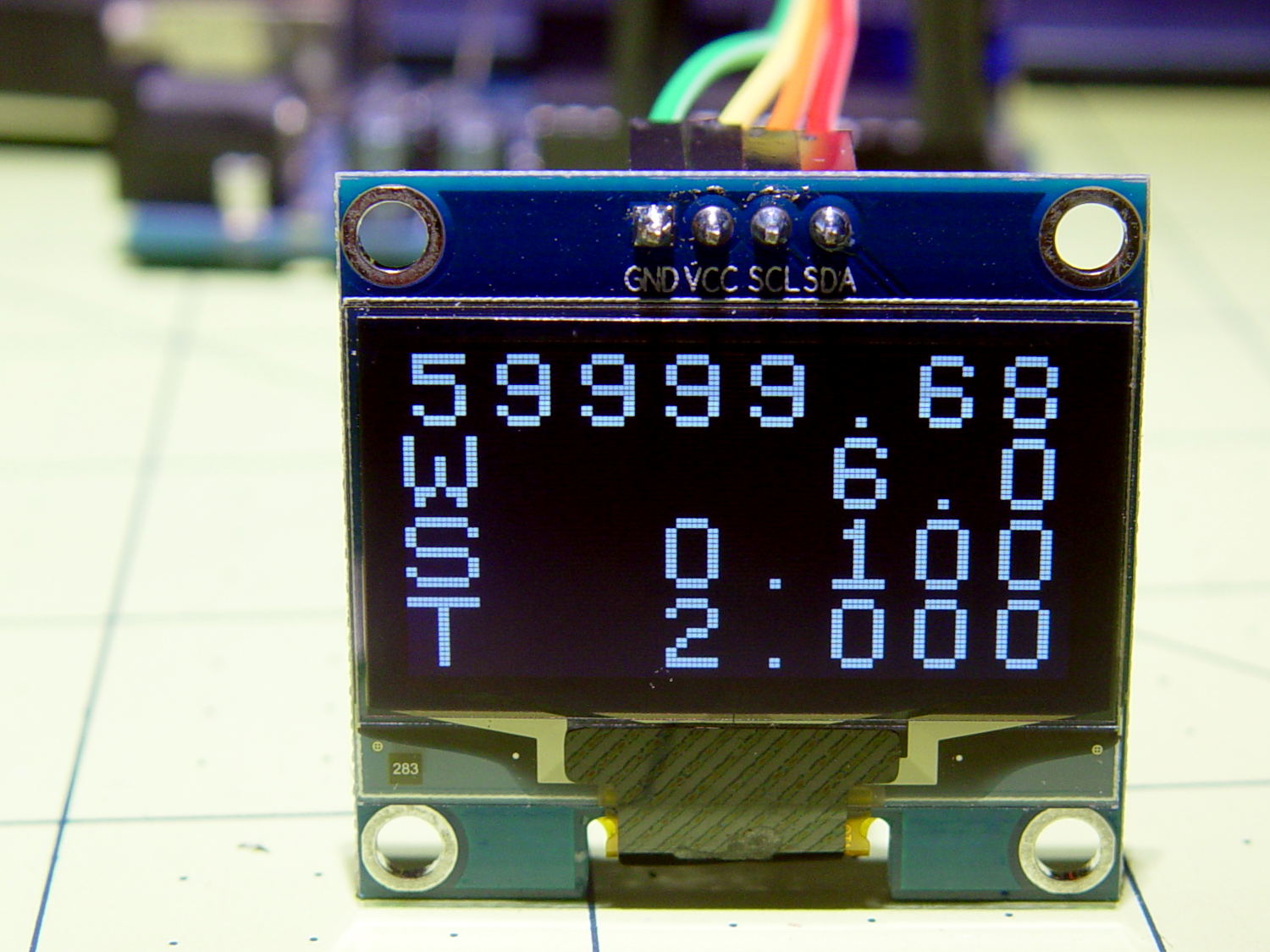
Of course, after you make it readable, you immediately make room to cram more data on it:
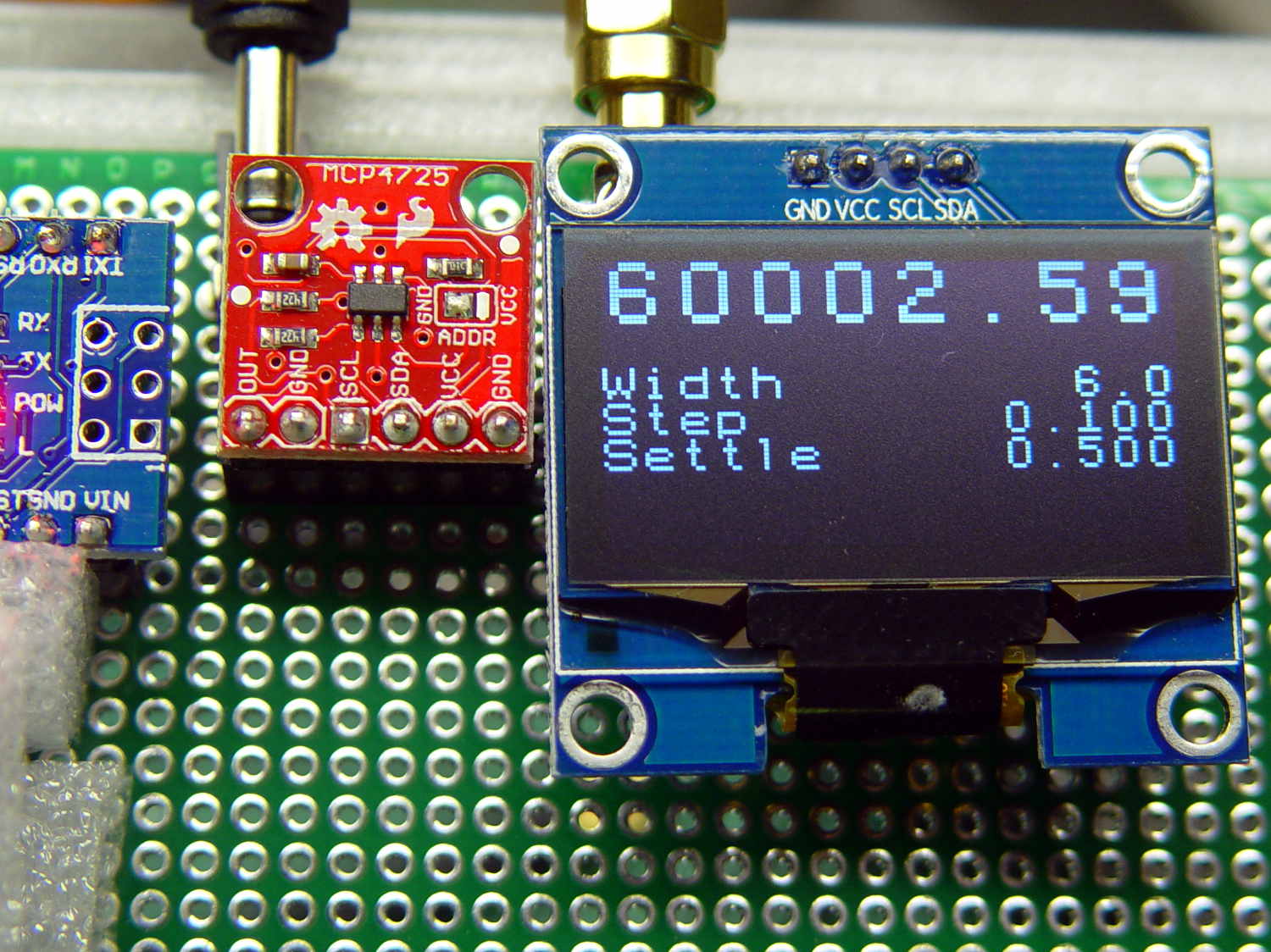
That’s on the proto board with the Arduino and AD9850 DDS ticking away on the left; the bright red MCP4725 DAC will eventually drive the scope’s X axis. Shifting the display to the I²C interface and cleaning up my SPI initialization code worked wonders: the DDS now steps a sine wave at 0.1 Hz (pretty nearly) intervals from 57.0 to 60.3 Hz.


Comments
5 responses to “AD9850 DDS Module: 1.3 inch I²C OLED FTW”
“Drive the scope’s X axis”? Hmm, you’ve been playing with resonance and a log amplifier, methinks you’ve given away the plot!
Dang, somebody must’a leaked my Secret Plans to the Interwebs!
I’ve had those DACs lying around for a while, so it seemed reasonable to at least try building a simpleminded and very narrow-band spectrum analyzer. Calling the DDS a “tracking generator” definitely overstates the case, as there’s no tunable front-end to track, but I think the lashup ought to work reasonably well for this very very very simple case.
Having so few frequency samples across the crystal’s bandwidth will make for a sketchy display, because the minimum 0.029 Hz/step in a 6 Hz bandwidth produces a whopping 200 points. The HP scope has a storage mode, so it should be at least amusing, if not informative.
[…] A batch of 1.3 inch white I²C OLED displays arrived from halfway around the planet, so I figured I could run a quick acceptance test by popping them into the socket on the crystal tester proto board: […]
[…] the fragile glass front plate of that OLED managed to put itself flat against a small box inside the otherwise empty bag. it wasn’t […]
[…] OLED display refresh contributes 100 Hz noise pulses to the low-level sine wave from the crystal test […]