Ed Nisley's Blog: Shop notes, electronics, firmware, machinery, 3D printing, laser cuttery, and curiosities. Contents: 100% human thinking, 0% AI slop.
The neighborhood raccoons made off with our steel-cage suet feeder, leaving a dangling chain, several puzzled woodpeckers, and a potential gap in Mary’s FeederWatch data. A quick Thingiverse search turned up a likely candidate and a few hours of 3D printing produced a replacement:
3D printed suet feeder
The cheerful party colors just sort of happened after I realized orange wasn’t the new steel.
I bandsawed the top plate from an acrylic sheet, rather than devote several hours to printing a simple disk with two slots. Said slots came from a bit of freehand work with the drill press, a step drill bit, and a nasty carbide milling bur(r).
The loops holding the chains won’t last for long, as hairy and red-bellied woodpeckers land with thump.
It hangs from the stub of a former ski pole, loosely secured to the bracket holding the former feeder, and extending another two feet over the abyss beyond the patio. I doubt the raccoons will remain daunted for long, but maybe they’ll catch a heart attack when it collapses.
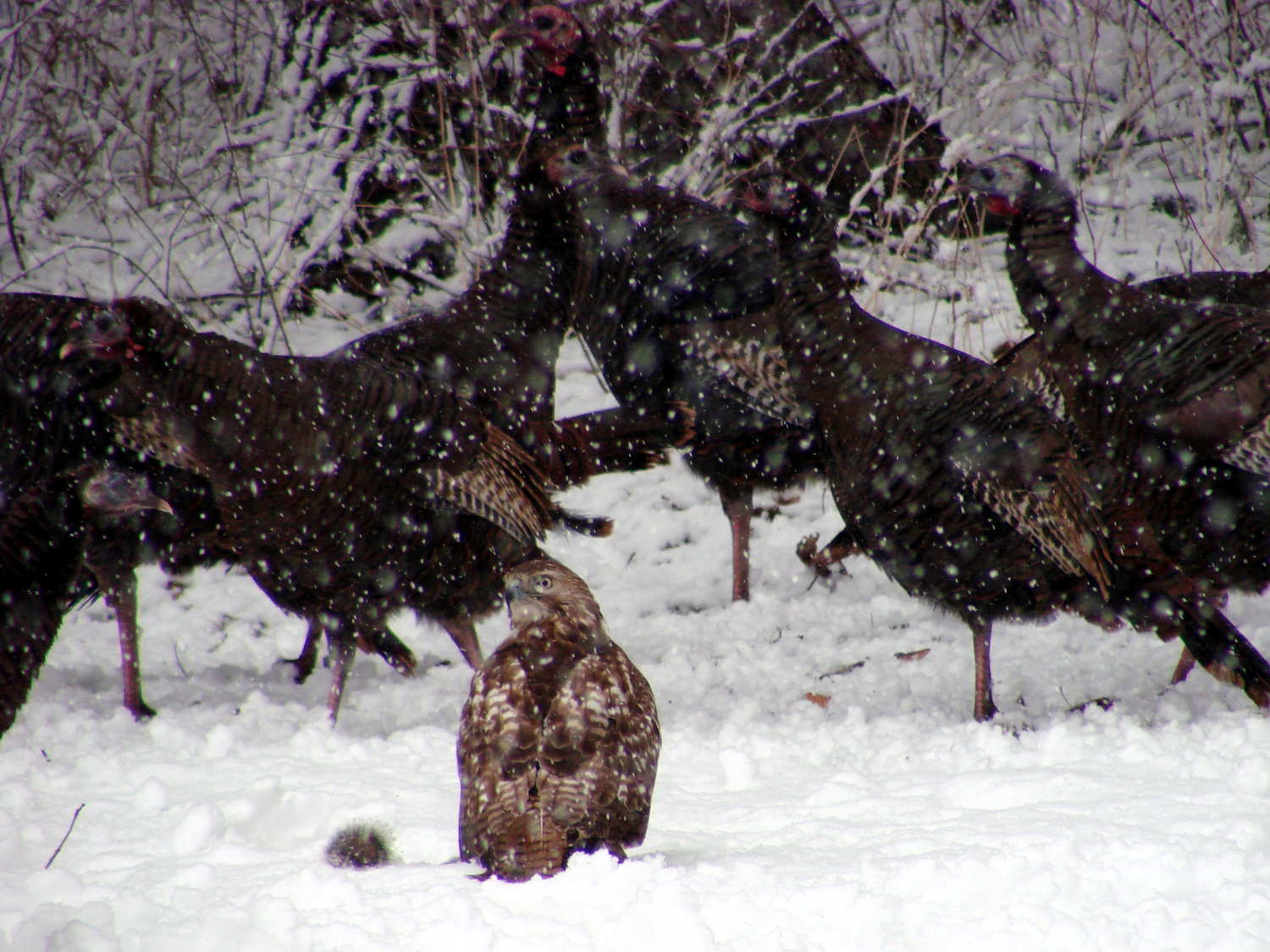
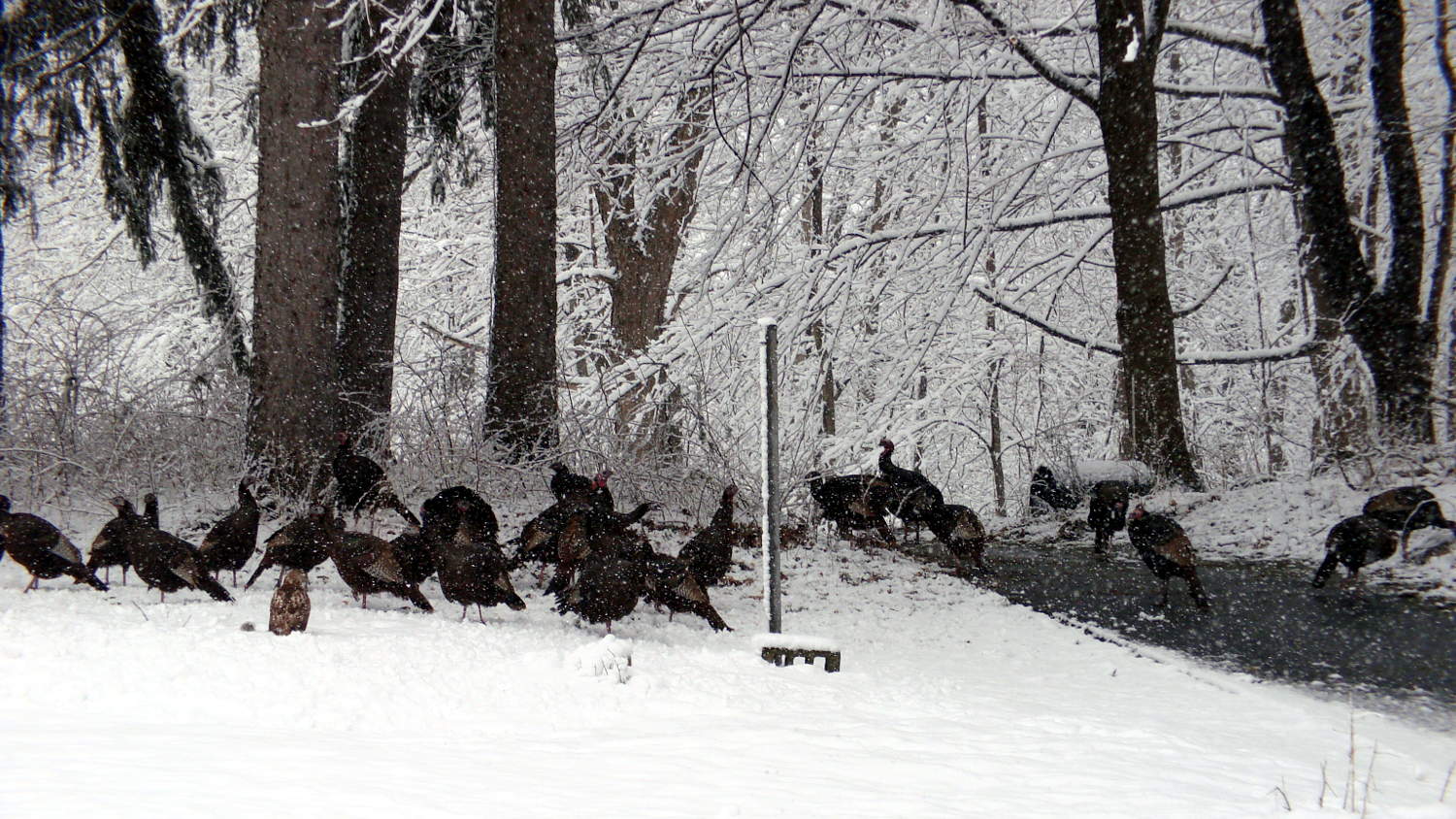
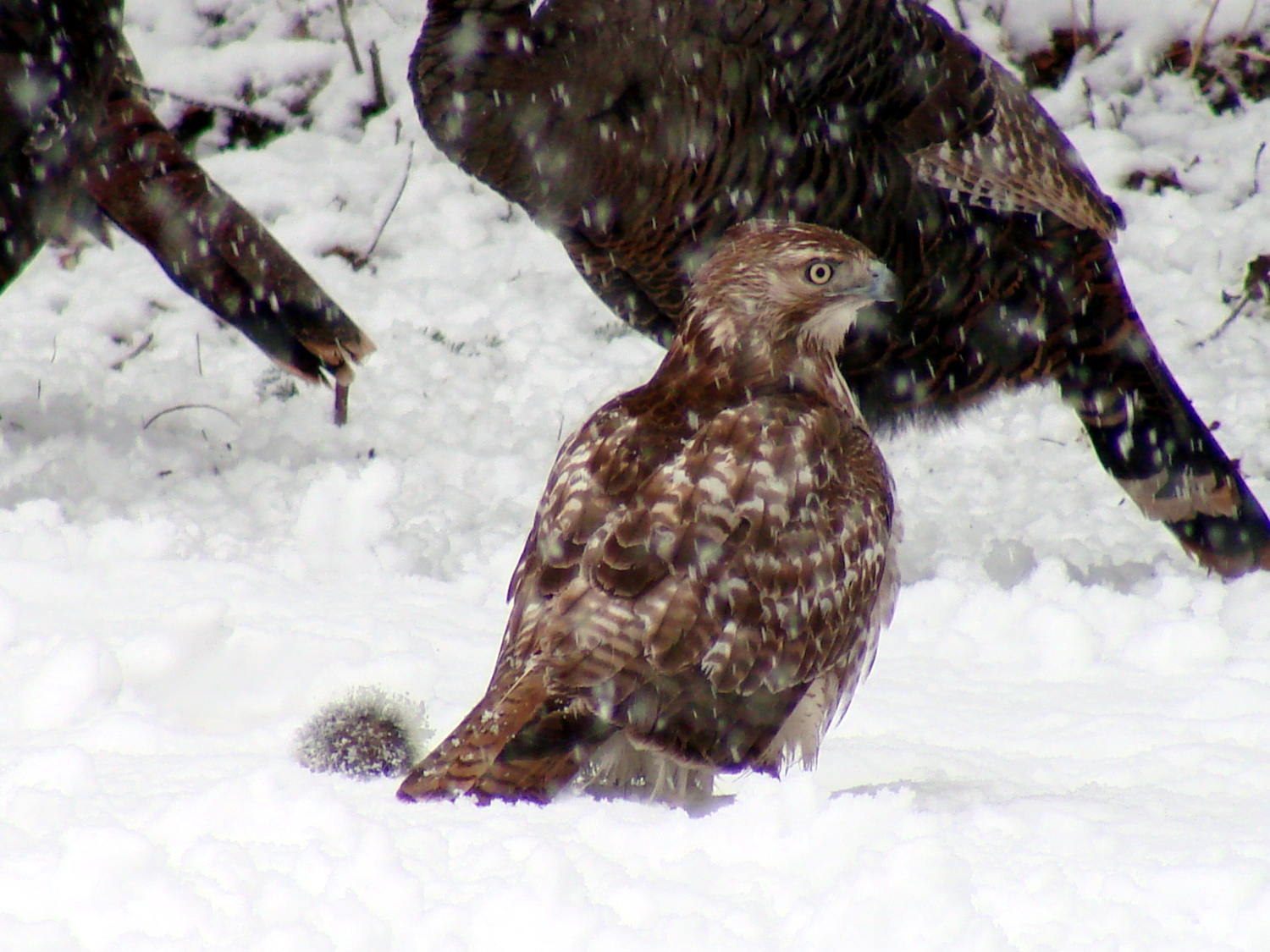
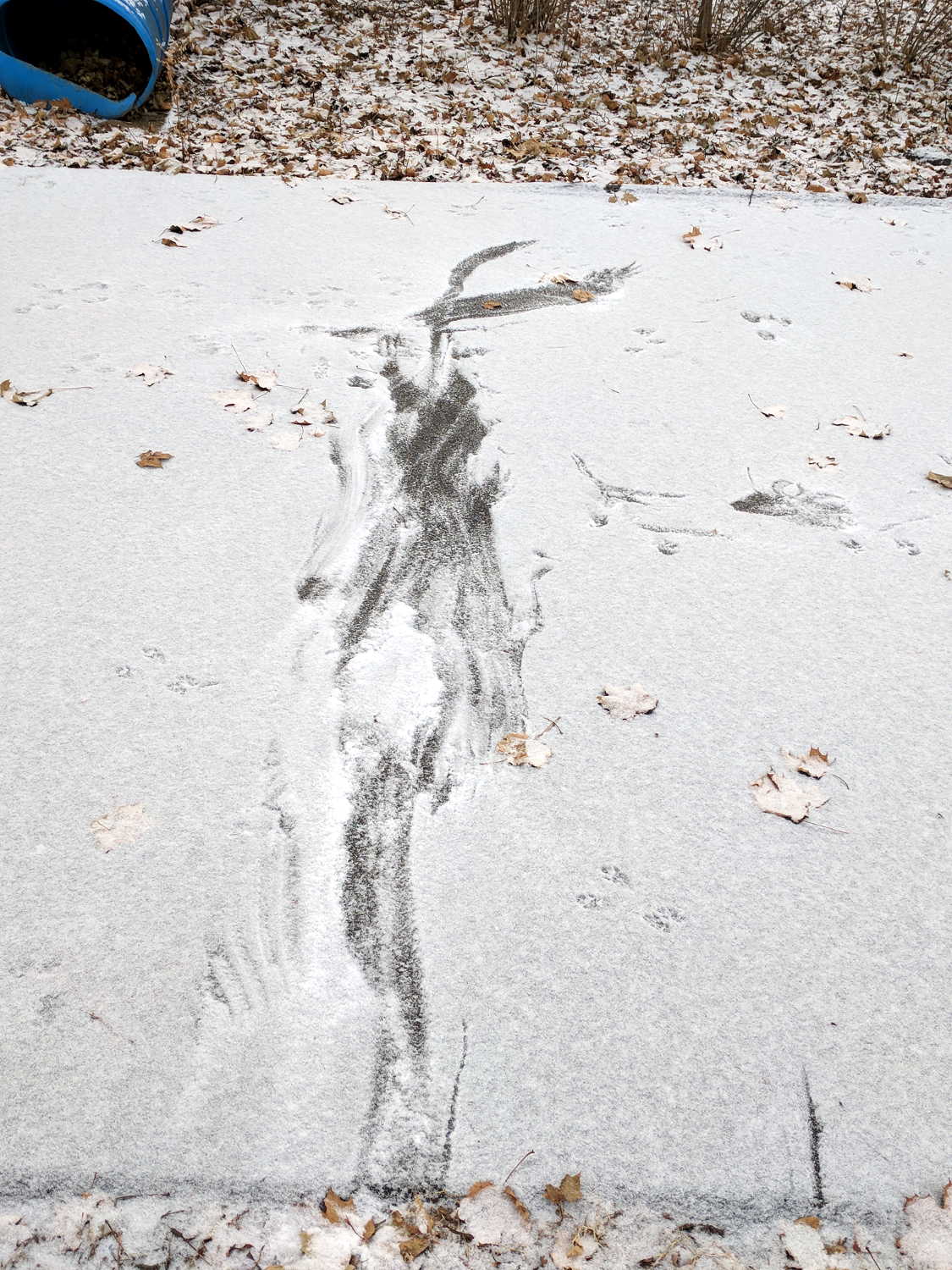
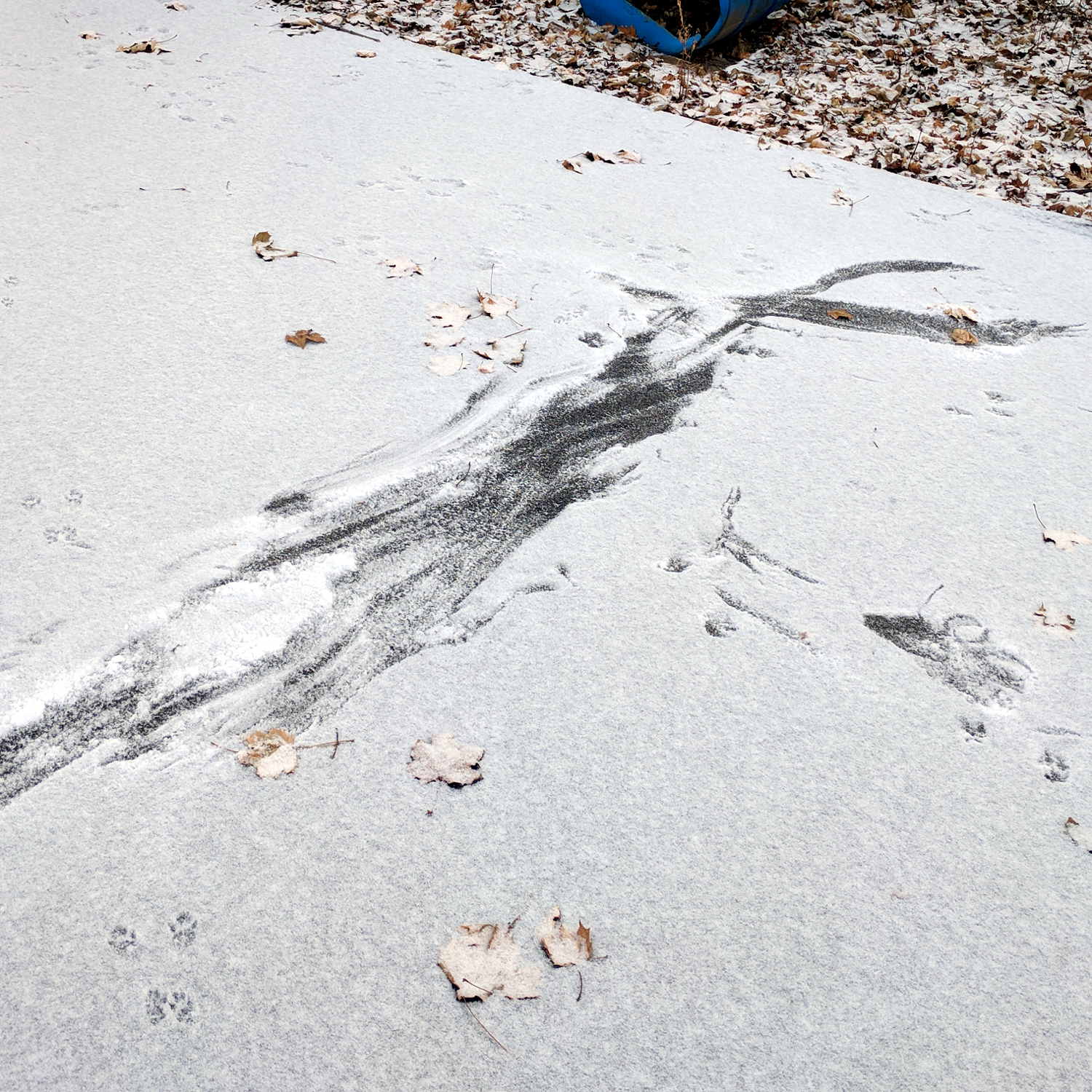
A light overnight snowfall revealed an early morning drama:
Hawk vs squirrel scuffle – overview
I think a hawk stooped on a squirrel, perhaps launching from the utility pole by the garden, scuffled across the driveway to the right, and hauled breakfast off to a nearby tree:
Hawk vs squirrel scuffle – approach
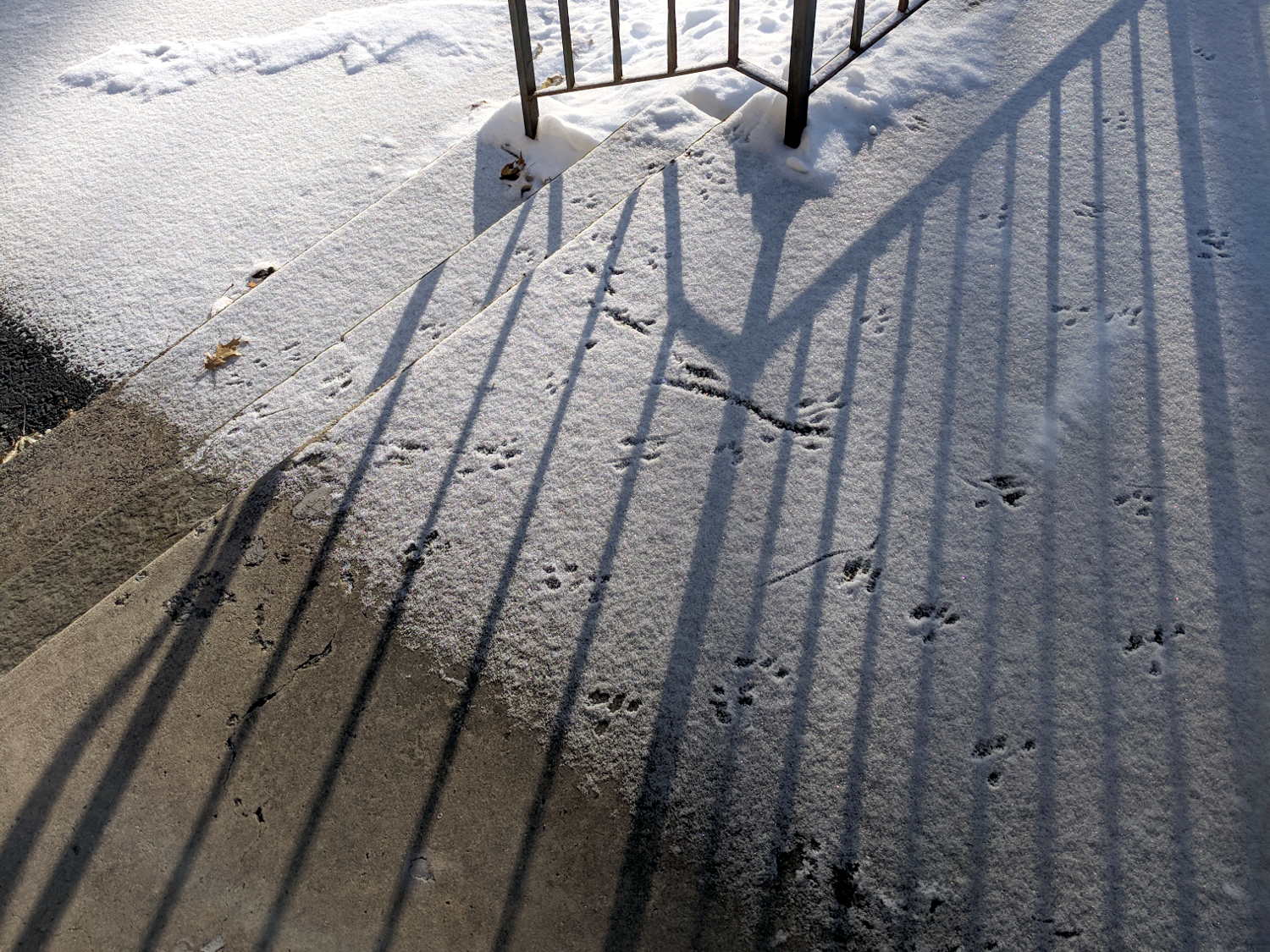
The driveway always shows many tracks, but the ones entering from the center-right don’t continue out the left:
Hawk vs squirrel scuffle – tracks right
Another view:
Hawk vs squirrel scuffle – tracks left
A pair of squirrel pups appeared in the last week. They’d make a good, easily carried hawk breakfast.
I recently bought a pair of pork belly packages, one labeled “Local” at an additional buck a pound. They were packaged skin side downward, so the USDA inspection stamps came as a surprise:
Pork Belly Skin – USDA Stamps
Turns out the digits give the “establishment number”, which you can look up online. These came from a processor in Pine Plains.
We presume they keep track of their pigs …
The meat is curing even as I type. Next week: smoking.
We often have supper on the patio, with a fly swatter at the ready, but honeybees get special treatment:
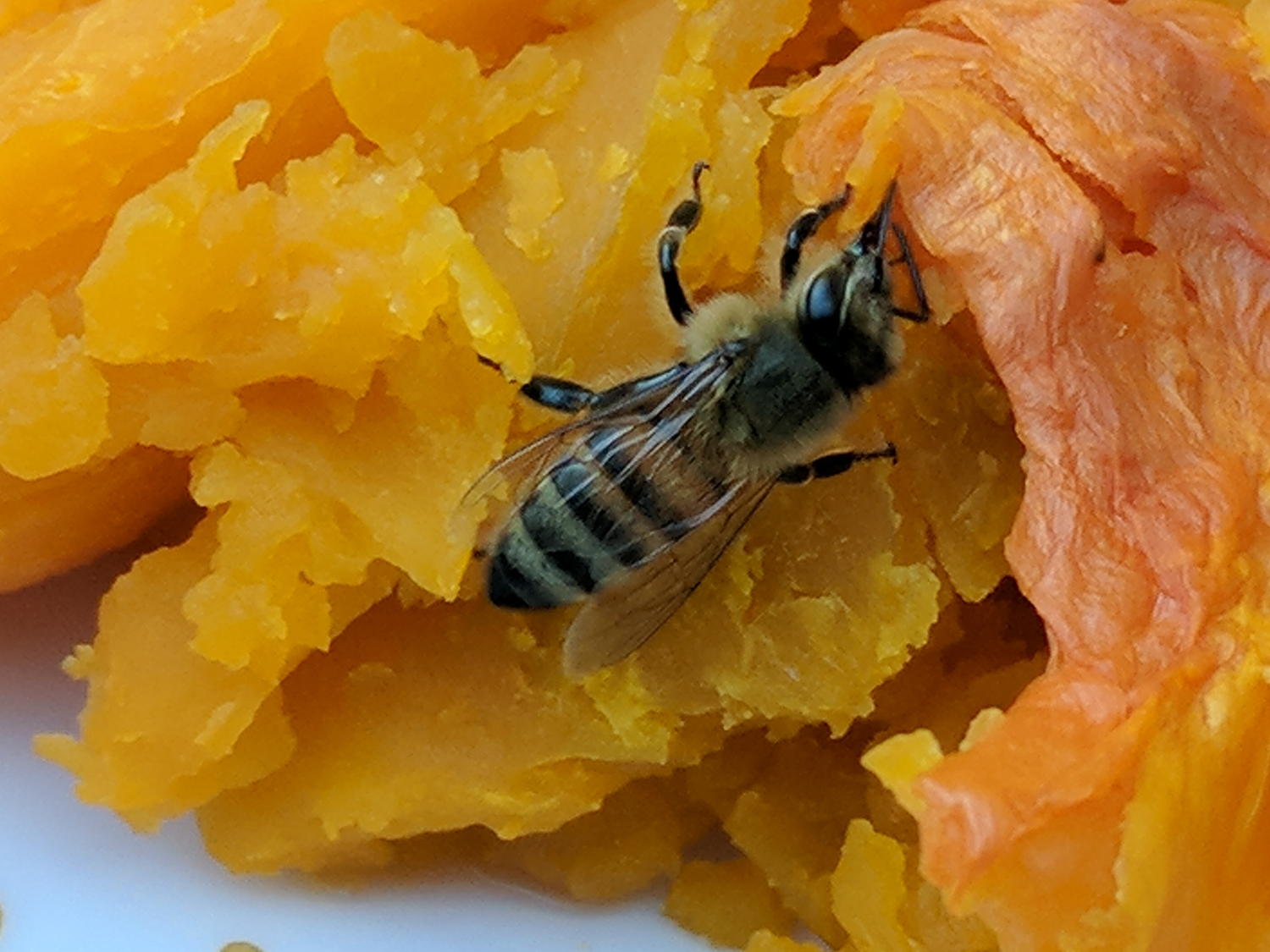
Honeybee on cooked squash
She surveyed both our plates, landed on my cooked squash, and probed into the crevices as she would to extract nectar from a flower. The weather has been dry for the last few days and we think she was looking for anything providing a bit of moisture.
I splashed some water on the table and plopped that part of the squash nearby, in the hopes she’d find what she needs. We’ll never know the end of the story.
We kept fresh milkweed branches in a vase and the caterpillar ate almost continuously:
Monarch caterpillar – 2017-08-13
By August 15, the caterpillar was ready for the next stage in its life. At 10 in the morning it had attached itself to the screen covering the aquarium and assumed the position:
The discarded skin remained loosely attached until I carefully removed it.
What look like small yellow spots are actually a striking metallic gold color.
Eleven days later, on August 26 at 9 AM, the chrysalis suddenly became transparent:
Monarch chrysalis – ready – left
And:
Monarch chrysalis – ready – right
The shape of the butterfly becomes visible in reflected light:
Monarch chrysalis – ready – ventral detail
The gold dots and line remained visible.
The magic happened at 3 PM:
Monarch chrysalis – emerging – unfolding
The compacted wings emerge intense orange on the top and lighter orange on the bottom:
Monarch unfolding – left
The butterfly took most of the day to unfurl and stiffen its wings into flat plates:
Monarch unfolding – dorsal
And:
Monarch unfolding – right
By 8 PM it began exploring the aquarium:
Monarch unfolded – right
As adults, they sip nectar from flowers, but don’t feed for the first day, so we left it in the aquarium overnight.
At 10 AM on August 27, we transported it to the goldenrod in the garden, where it immediately began tanking operations:
Monarch on Milkweed – left
A few minutes later, it began sun-warming operations:
Monarch on Milkweed – dorsal
Mary watched it while she was tending the garden and, an hour or so later, saw it take off and fly over the house in a generally southwest direction. It will cross half the continent under a geas prohibiting any other action, eventually overwinter in Mexico with far too few of its compadres, then die after producing the eggs for a generation beginning the northward journey next year.
Godspeed, little butterfly, godspeed …
In the spirit of “video or it didn’t happen”, there’s a 15 fps movie of the emergence taken at 5 s/image.