Ed Nisley's Blog: Shop notes, electronics, firmware, machinery, 3D printing, laser cuttery, and curiosities. Contents: 100% human thinking, 0% AI slop.
A pair of barred owls have been doing call-response “Who cooks for you” chants during the late afternoon, we finally spotted one, and I have a Pixel XL in my pocket:
Barred owl – overview
That’s with the camera zoomed all the way, so it’s blowing up the raw pixels by a factor of four. Cropping out the middle and resizing by 300% shows the result doesn’t have much detail:
Barred owl – zoomed 3x cropped
We snagged the binoculars on the way out the door, so we got a better look than you do. The camera you have is much better than the camera you don’t, but big glass always wins over tiny optics!
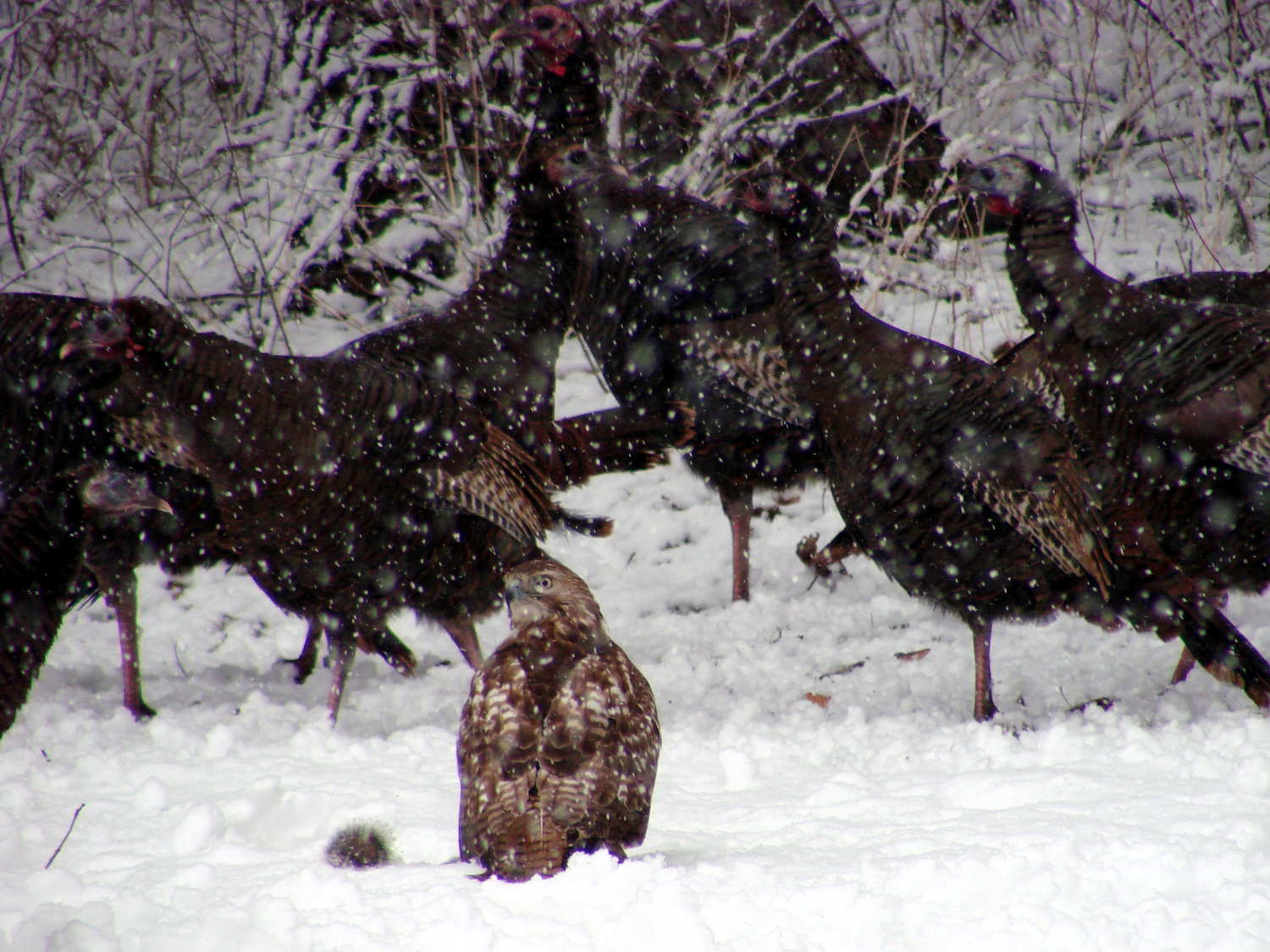
All of the local turkeys come together during snow storms, often lingering in the circle of pine trees in our back yard to get some protection from the wind. Mary spotted a Cooper’s Hawk in the midst of the turkey flock, with its wings spread around a recently captured meal:
Hawk with squirrel – wings spread
When she first saw it, the hawk had its back to us and looked like a cluster of dead pine branches; the recent back-to-back storms have cleared out quite a bit of deadwood.
When I quietly opened the back door for a better view, the hawk noticed and gave me the stinkeye from 100 feet away:
Hawk with squirrel – 2
The flock had moved out of the pine circle to surround the hawk and examine the situation, although they weren’t harassing it:
Hawk with squirrel – 3
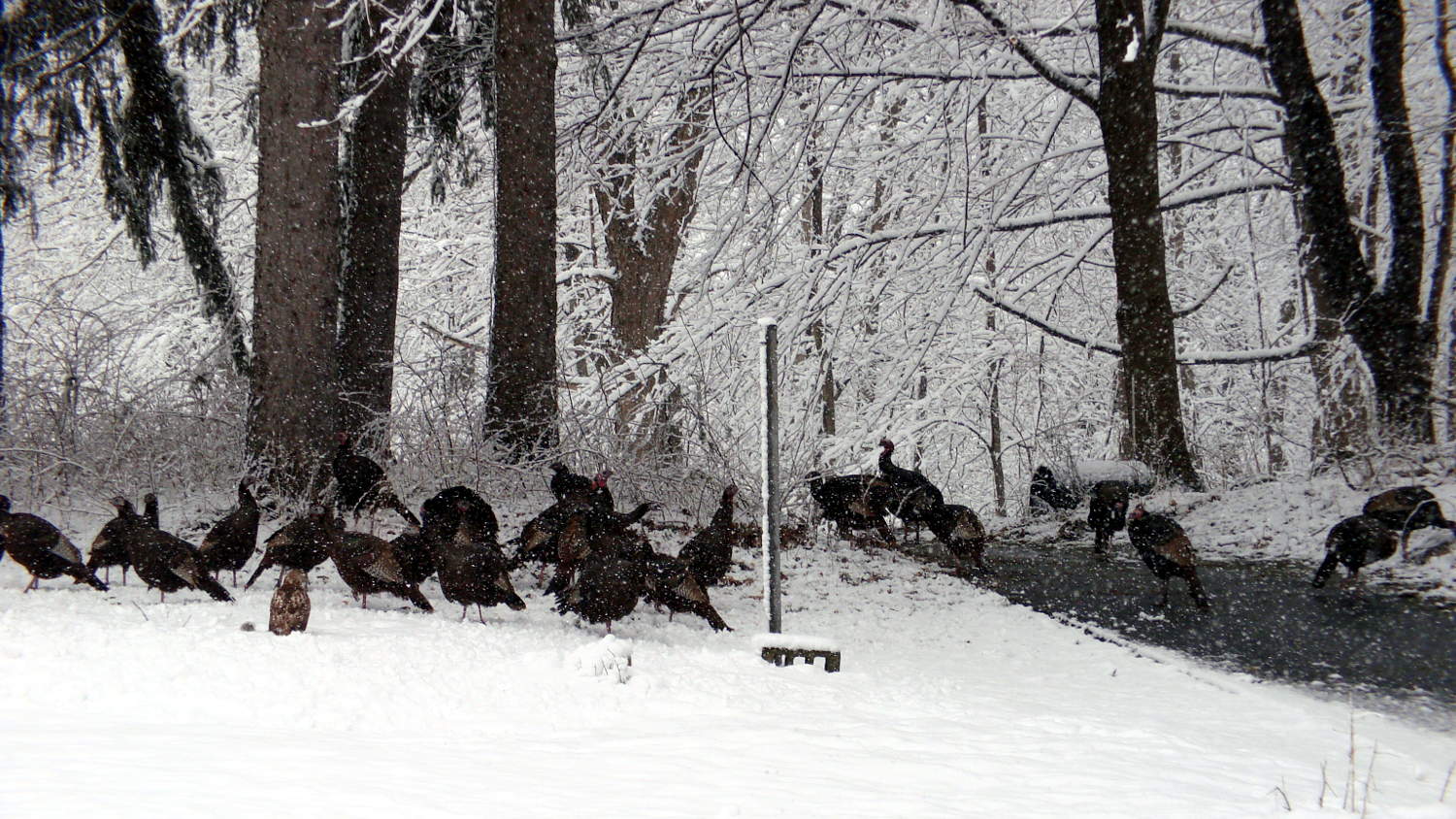
We’ve counted 27 turkeys, more or less, on some days, well and truly outnumbering the hawk:
Hawk with squirrel – overview
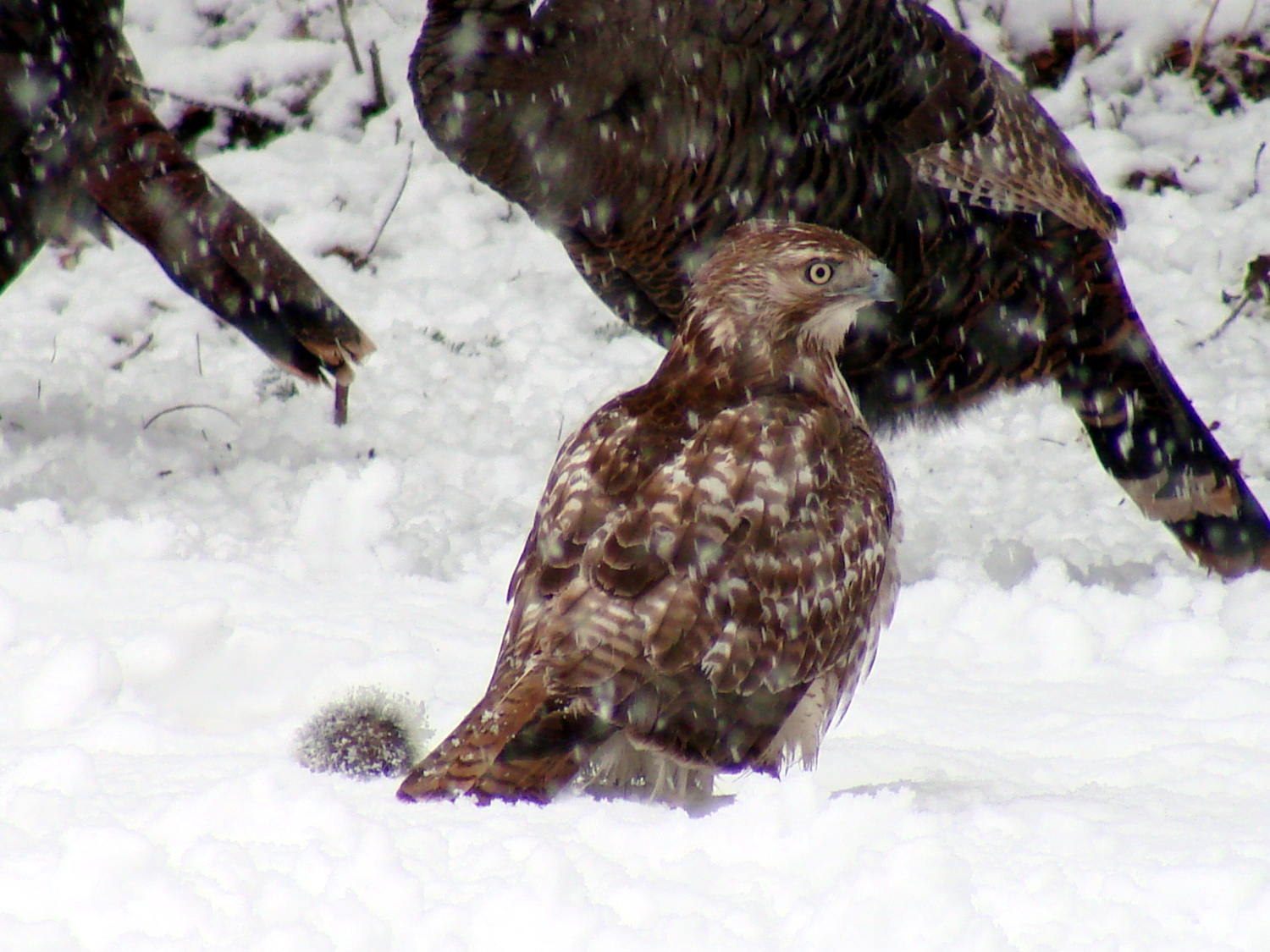
Fortunately, turkeys feed mainly on insects and seeds, rather than tearing into carrion, so they’re not competing for the prize:
Hawk with squirrel – detail
Shortly after I gave up and went back inside, the hawk sank her (?) talons into the squirrel, lifted heavily into the air, circled around the pines, and flew off toward the Mighty Wappinger Creek out back.
A casual search suggests both the hawk and the squirrel weigh about 1 lb = 500 g: I’ll never complain about heavy grocery bags again!
The neighborhood raccoons made off with our steel-cage suet feeder, leaving a dangling chain, several puzzled woodpeckers, and a potential gap in Mary’s FeederWatch data. A quick Thingiverse search turned up a likely candidate and a few hours of 3D printing produced a replacement:
3D printed suet feeder
The cheerful party colors just sort of happened after I realized orange wasn’t the new steel.
I bandsawed the top plate from an acrylic sheet, rather than devote several hours to printing a simple disk with two slots. Said slots came from a bit of freehand work with the drill press, a step drill bit, and a nasty carbide milling bur(r).
The loops holding the chains won’t last for long, as hairy and red-bellied woodpeckers land with thump.
It hangs from the stub of a former ski pole, loosely secured to the bracket holding the former feeder, and extending another two feet over the abyss beyond the patio. I doubt the raccoons will remain daunted for long, but maybe they’ll catch a heart attack when it collapses.
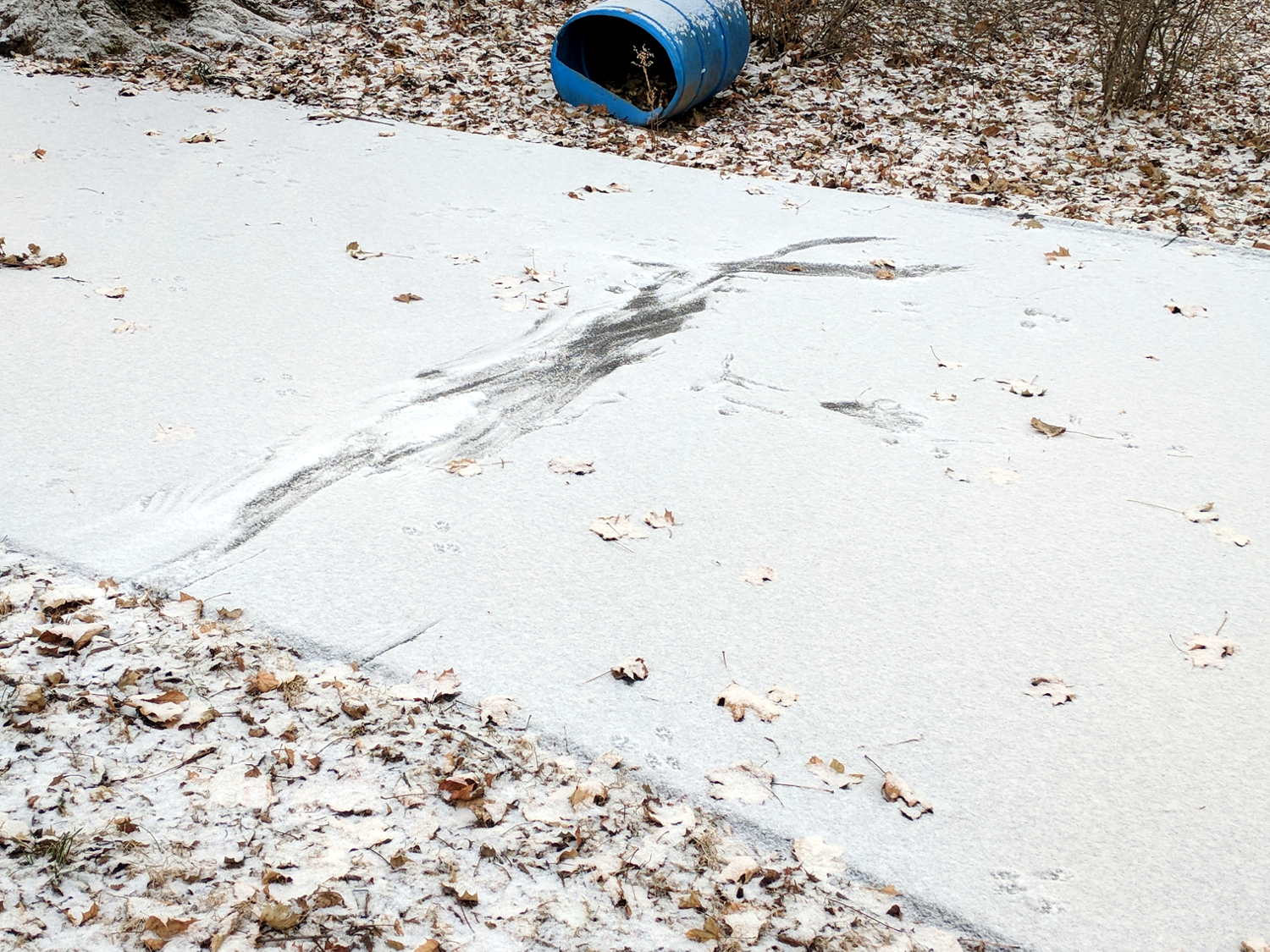
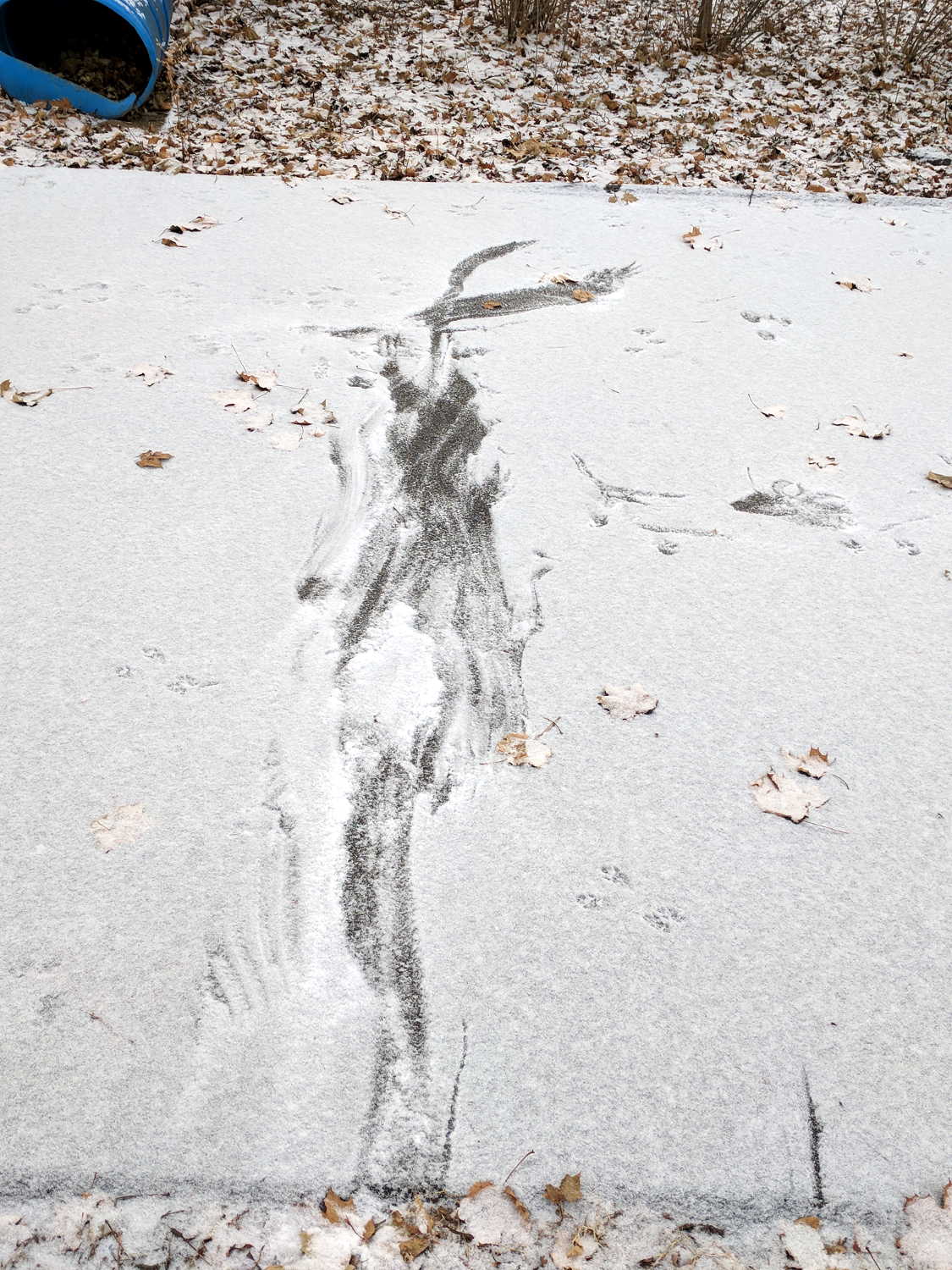
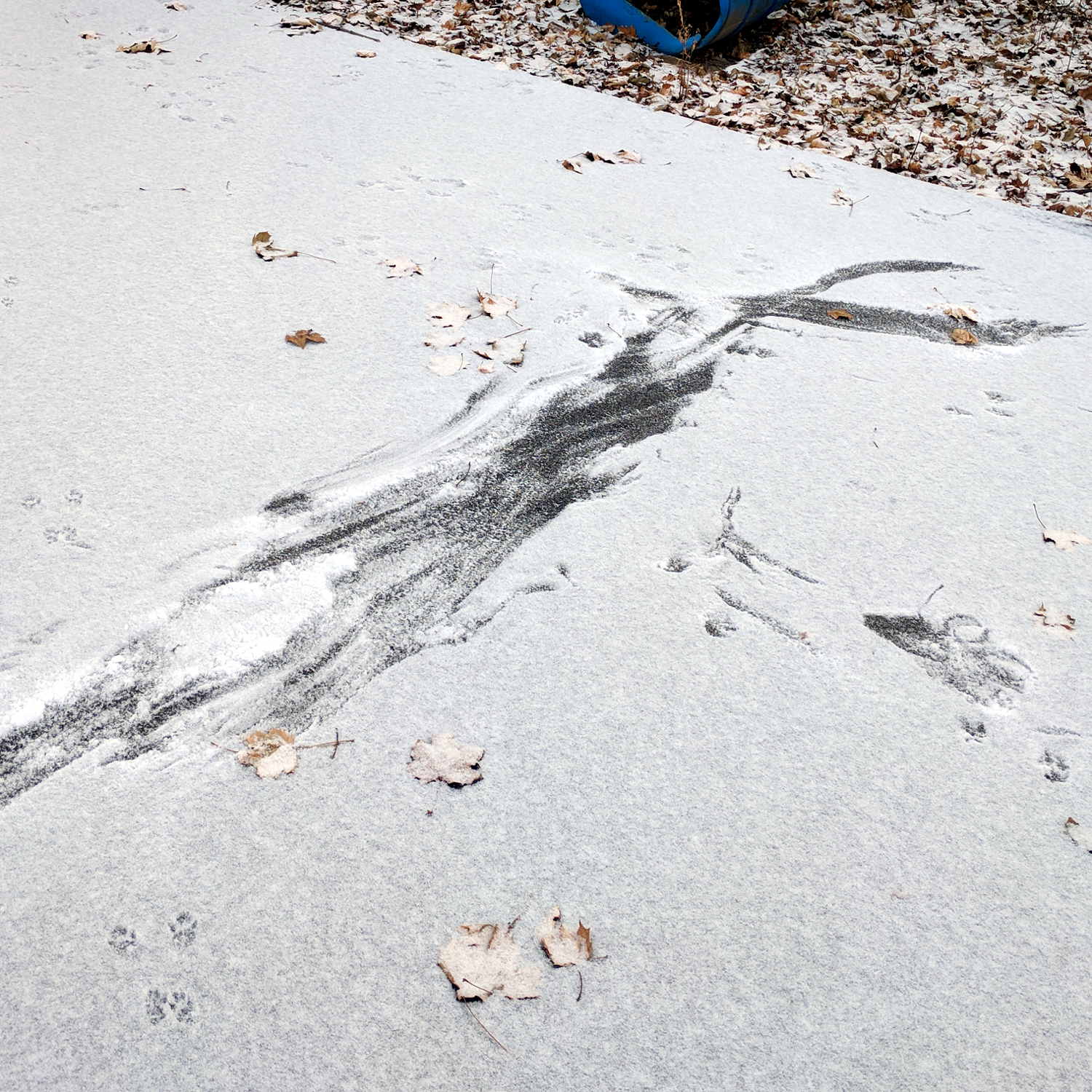
A light overnight snowfall revealed an early morning drama:
Hawk vs squirrel scuffle – overview
I think a hawk stooped on a squirrel, perhaps launching from the utility pole by the garden, scuffled across the driveway to the right, and hauled breakfast off to a nearby tree:
Hawk vs squirrel scuffle – approach
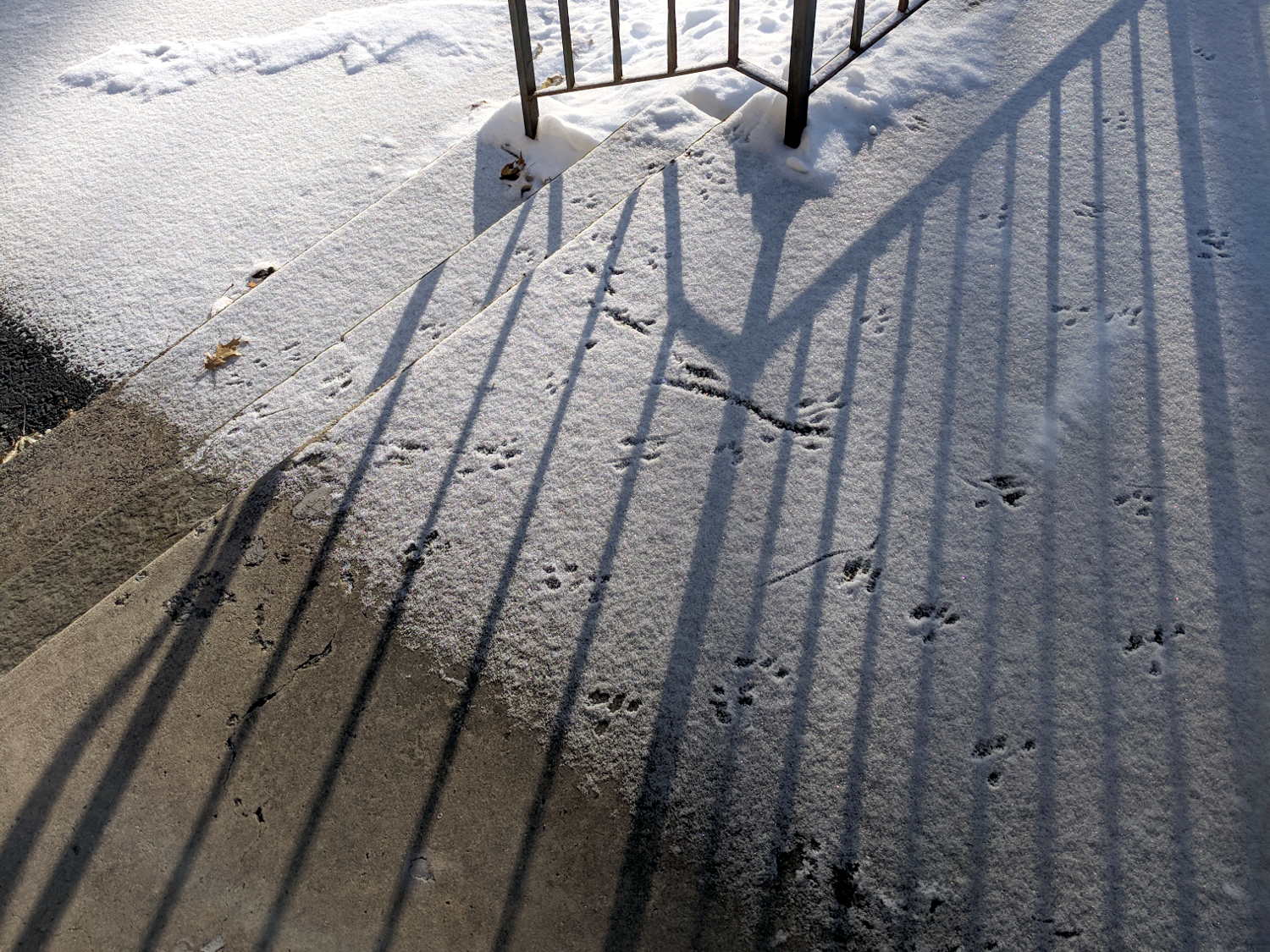
The driveway always shows many tracks, but the ones entering from the center-right don’t continue out the left:
Hawk vs squirrel scuffle – tracks right
Another view:
Hawk vs squirrel scuffle – tracks left
A pair of squirrel pups appeared in the last week. They’d make a good, easily carried hawk breakfast.